




Abstract
The attempt to rapidly increase access to primary education in developing countries like India over the past decade has created a need to commensurately increase the number of teachers in the system. In order to meet the burgeoning demand for additional teachers amidst fiscal constraints, India has chosen to actively promote the hiring of contract teachers. This paper reviews the appointments, salary structure, and training of contract teachers, and presents the argument that the salary and work conditions of contract teachers in India as well as the lack of adequate training negatively impacts their motivation, morale and long-term commitment to teaching, with potentially serious implications for education quality. A synthesis of the literature on teacher preparation in the United States is also presented in order to analyze how this body of knowledge can better inform the contract teacher debate in India.
I. Introduction
Over the past decade, developing countries such as India have made the attainment of Universal Primary Education (UPE) a policy priority. The impetus for this policy originated with the United Nations Millennium Development Goals, which promote the goal of achieving UPE by the year 2015. The need to rapidly increase access to primary education has created a teacher shortage in many developing countries, including India. India has chosen to actively promote the hiring of contract teachers to address this teacher shortage amidst fiscal constraints. However, the appointment of contract teachers has been a highly controversial policy that has been critiqued by scholars who argue that it promotes inequality and lowers the quality of education (Duthilleul, 2005; Fyfe, 2007; Govinda and Josephine, 2004). Arguably, there are underlying problems with the quality of teaching and learning in India. The Education for All Global Monitoring Report (2009), for example, states that “in India, a large-scale assessment found that 45% of children in grade 3 could not read a text designed for grade 1 students” (EFA, 2009: 12). Similarly, the State Report Card for Uttar Pradesh issued by the National University for Education Planning and Administration (NUEPA) for the year 2009–10 indicates that less than half the students assessed in grades 4 and 5 had scores above 60% (District Information System on Education (DISE), 2009–10). It is questionable whether the new trend of hiring contract teachers in lieu of regular civil service teachers will resolve this underlying issue of quality, and may instead exacerbate it.
The issue of contract teacher motivation has great relevance for any discussion on education quality in India because these teachers constitute a significant and growing portion of the teacher labor force there. According to data from DISE, in 2006–07 there were 514,000 contract teachers nationwide, constituting approximately 9.9% of all basic school teachers in the country (DISE, 2007–08). In the year 2009–10, contract teachers constituted 10.97% of all teachers. Provisional estimates for the year 2010–11 indicate that contract teachers constituted 11.22% of total teachers (NUEPA, 2012: 22), demonstrating an increasing trend of hiring contract teachers in India. Some states, such as Uttar Pradesh, Jharkhand, Chhattisgarh and Orissa, have placed a greater emphasis on hiring contract teachers than other states. In these states the percentage of contract teachers to total teachers in all schools far exceeds the national average. In the year 2009–10 for example, the percentage of contract teachers in Uttar Pradesh was 25.1% as compared with the national average of 10.97%. Similarly, in Jharkhand the figure was 50.75%, in Chhattisgarh it was 35.87% and in Orissa it was 37.27% (NUEPA, 2011a: 19).
Although contract teachers form a growing cadre of the teacher labor force, much of the existing literature on contract teachers focuses on a general overview of contract teacher policy (Fyfe, 2007; Govinda and Josephine, 2004; Kingdon and Sipahimalani-Rao, 2010; Pritchett and Pande, 2006; Snehi and Nath, 2004). More recently, some scholars have evaluated contract teacher policy from the perspective of cost-effectiveness and efficiency (Atherton and Kingdon, 2010; Kingdon, 2010). What is missing from this body of literature is a focus on the impact of contract teacher policy on contract teacher motivation and morale.
In this paper, I examine concerns about the quality of education raised by the growing appointment of contract teachers through the lens of teacher motivation, morale, and training rather than student outcomes, because teachers are at the forefront of education provision. It has been noted elsewhere in the literature that teacher salaries constitute the biggest expenditure in education making it difficult for developing countries to increase teacher supply (Bennell & Akeampong, 2007; Fyfe, 2007). Although hiring contract teachers ostensibly lowers the salary component of recruitment, there is also the issue of how a dual system of pay (low salaries for contract teachers vis-à-vis regular teachers for the same work) impacts contract teacher motivation and morale with potentially damaging implications for the most disadvantaged children. The delivery of a quality education is dependent on having a sufficient supply of properly trained, motivated and driven teachers (Bennell & Akeampong, 2007; Pandey, 2006). Given this backdrop, it is important that policy makers keep the trade-off between quantity and quality in mind when making policy decisions regarding teacher supply.
The main objective of this paper is to research the dual concerns of contract teacher motivation and morale and contract teacher preparation. I focus on salary and teacher preparation because low pay and little or no pre-service preparation characterize all contract teacher schemes across India. A brief synthesis of the literature on teacher preparation in the United States is presented to better inform the current debate and the future trajectory of the contract teacher policy in India.
The following section provides a brief overview of contract teachers in India in order to familiarize the reader with basic information on the subject. Section III discusses a few key determinants of teacher morale/motivation and, drawing on the work of Maslow, illustrates how his conceptual framework for motivation is applicable to contract teachers. Section IV presents evidence about the degree of teacher preparation among contract teachers. Section V synthesizes literature on teacher preparation from the United States and demonstrates how this literature can better inform future policy pertaining to contract teachers in India. Section VI concludes with some policy implications of this analysis.
II. The status of contract teachers in India
Until recently, the term ‘contract teacher’ in India referred to all teachers appointed on a renewable contract basis without a guarantee of contract renewal. However, contracts are no longer considered a defining feature of contract teacher schemes because some states, such as Bihar, have begun to hire a large number of contract teachers on permanent tenure without the qualifications and training required of regular civil service teachers (Kingdon and Sipahimalani-Rao, 2010). It may therefore be more appropriate to define contract teachers as those “appointed on contract and/or on terms and conditions which are different from the regular cadre of teachers in the state” (National Council for Applied Economic Research, 2008, in Kingdon and Sipahimalani-Rao, 2010: 60).
The rationale for the appointment of contract teachers ranges from cost-effectiveness (Kingdon and Sipahimalani-Rao, 2010; Kingdon, 2010) to increasing access to education in remote underserved areas (Govinda and Josephine, 2004; Robinson and Gauri, 2010). Though the role of contract teachers is not restricted to remote villages, an overwhelmingly large proportion of them are assigned to remote locations. The NUEPA 2007–08 report shows that 92% of all contract teachers are appointed in rural areas (NUEPA, 2010). When contract teachers are appointed as aides to regular teachers, they may also help to reduce adverse pupil–teacher ratios.
An analysis of the available literature on the subject reveals that the recruitment and retention of contract teachers is characterized by a lack of consistency across different states in India (Govinda and Josephine, 2004). There is also considerable variation in the tenure of this cadre of teachers. One reason for the lack of consistency in recruitment is that contract teachers may be appointed either by village-level local governments known as ‘panchayats’, or by district-level bodies known as ‘zila parishads’ (as is the case in the states of Gujarat, Maharashtra, and Himachal Pradesh).
The basic level of academic qualification required for the majority of contract teachers is higher secondary or grade 12 education, though many of them have a Bachelor’s degree. In the case of contract teachers working in rural schools the rules are further relaxed. For example, the “Shiksha Karmi” project in Rajasthan requires only 8 years of education as a teaching qualification for contract teachers. More importantly, there is a big difference in the pre-service professional training requirement for regular and contract teachers. A regular teacher is required to complete a 2-year program of teacher training before appointment as a teacher in a primary school. By contrast, with the exception of Gujarat and Maharashtra, the pre-service training for contract teachers varies from 7 days in Andhra Pradesh to 37 days in Rajasthan (Govinda and Josephine, 2004; Snehi and Nath, 2004). Further, many contract teachers receive little training in pedagogy (Lewin and Stuart, 2003; Pandey, 2006; Sood, 2002).
Comparison of pay scales (2007–08) for regular and contract teachers by state
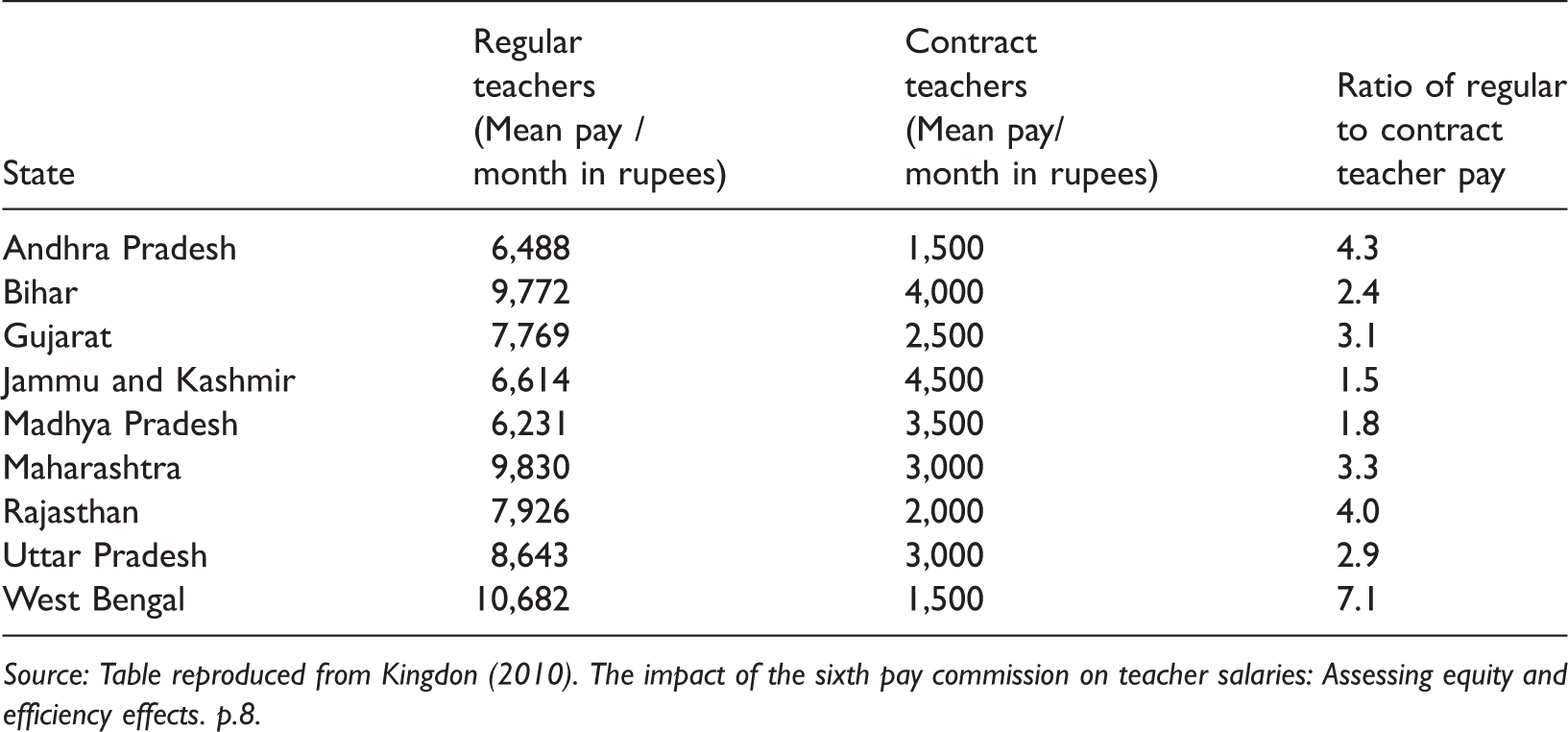
Source: Table reproduced from Kingdon (2010) . The impact of the sixth pay commission on teacher salaries: Assessing equity and efficiency effects. p.8.
Low salaries vis-á-vis civil service teachers are a key factor generating discontent among contract teachers, and possibly also a cause for low morale among these teachers. Contract teachers have been known to “publicly confront the government with complaints about their poor pay and tenuous job security in confrontational, and sometimes violent, demonstrations” (Robinson and Gauri, 2010: 1). In the year 2009–10 for example, there were several strikes organized by contract teachers petitioning the government for higher pay. An article in the Hindustan Times by Sahoo (2009) is a case in point. It talks about 142,000 contract teachers on strike in Chhattisgarh for the regularization of their service and an increase in their salary. A similar story appears in The Telegraph in Ranchi (Telegraph, 2009), where more than 77,000 contract teachers agitated to increase their monthly honorarium from Rs.2500–Rs3500 to Rs.15,000 (figures taken from The Telegraph Ranchi, October 9, 2009). In their report on teacher motivation in sub-Saharan Africa and South Asia, Bennell and Akyeampong (2007) state that “increasingly frequent official and unofficial strikes are a clear signal of growing levels of dissatisfaction with pay and other conditions of service” (Bennell and Akyeampong, 2007: xi). The authors indicate that poor pay and difficult work conditions lie at the heart of the teacher motivation crisis in these developing countries.
Kingdon mentions that even “modest levels of inequality are known to powerfully reduce subjective well being” (Kingdon, 2010: 10). The recent agitations by large groups of contract teachers in India appear to corroborate this contention. Poorly paid contract teachers have to find additional sources of income and are therefore far more likely to have low levels of commitment to the teaching profession. Many of these teachers are unemployed graduates. Abysmally low pay scales and the lack of opportunities for better employment contribute to low morale and, consequently, low motivation to help all students reach their full potential (Bennell and Akyeampong, 2007).
III. A theoretical framework for teacher motivation
The competence and commitment of teachers is a key determinant of student learning (Bennell and Akyeampong, 2007). It is well established that the teacher plays a pivotal role in promoting student learning (Barber and Mourshed, 2007; Leithwood and McAdie, 2007). How well teachers teach, in turn, greatly depends on a combination of teacher ability, their motivation, morale and their preparation to teach. Thus, it may be argued that teacher motivation is an important component of teacher effectiveness (VSO, 2002). However, the issue of motivation and morale among contract teachers remains relatively under-researched. Very few studies have delved into the issue of teacher motivation in developing countries (Bennell and Akyeampong, 2007; Ramachandran et al., 2005; VSO, 2002; Welmond, 2002). Of these, only the study by Ramachandran et al. (2005) focuses exclusively on India, and even this study does not specifically center on contract teacher motivation.
In this paper, I assume that a variety of factors such as pay, tenure, status, work conditions and pre-service preparation influence contract teacher motivation and morale. I define motivation as those factors that energize teachers to remain interested in and committed to the job of teaching and to the goal of maximizing student learning. Maslow’s theory of human motivation (Maslow, 1943), which enumerates a ‘hierarchy of needs,’ provides a useful theoretical framework within which to research the issue of motivation among contract teachers in India.
Maslow proposed five levels of human needs. These are (i) basic physiological needs such as food, (ii) the need for safety (stability and protection), (iii) the need for belongingness, (iv) the need for self-esteem, and (v) the need for self-actualization. The basis for Maslow’s theory is that human beings are motivated by unsatisfied needs and that certain “lower-order” needs like food and safety need to be realized before “higher-order” needs can be met. Once a need is satisfied it stops acting as a motivator and the next level of need becomes the motivating force.
At the bottom of the pyramid of needs lie physiological needs which are required to sustain life, such as air, water, food and sleep. The next level of need is that pertaining to safety. These needs include job security, finance and secure living conditions. If a person feels threatened in any way, then needs further up the pyramid do not receive attention until the need for safety is fulfilled. Social needs constitute the first level of the higher-order needs. They relate to interaction with others and feelings of belonging to a group. Esteem needs pertain to the urge to attain a degree of respect and recognition among peers. These needs may also be categorized as external motivators and internal motivators. Internal motivators are self-esteem, accomplishment and self-respect. External motivators are reputation and recognition. At the apex of Maslow’s pyramid of needs is the need for self-actualization. Self-actualization may be categorized as reaching one’s full potential as a person. Figure 1 provides an illustration of Maslow’s pyramid of needs.
Maslow’s hierarchy of needs.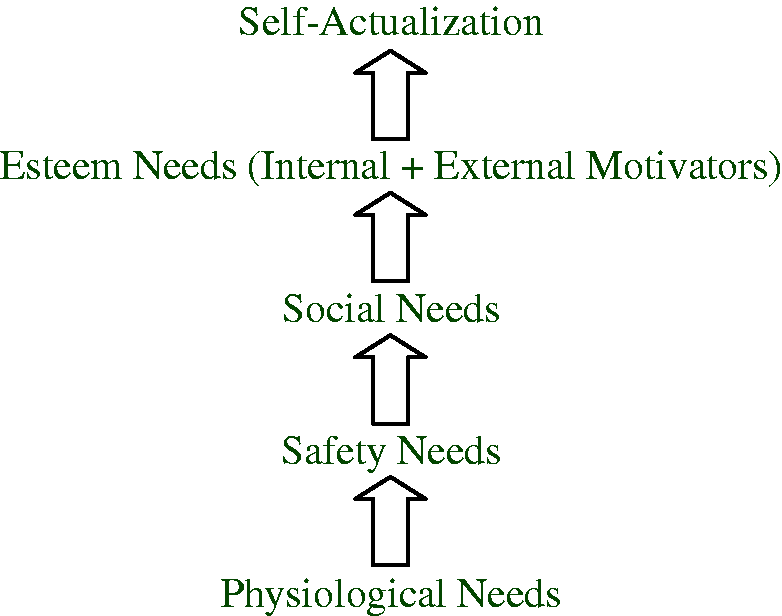
Arguably, in the case of contract teachers in India, violations to their “lower-order” needs of safety through lack of job security (since they function on a contract basis with no guarantee of contract renewal), very low salary levels (one-quarter or one-fifth of the salary of regular civil service teachers) and in many cases poor working conditions (since the majority of contract teachers are sent to remote rural schools with inadequate instructional materials/support available) prevent progress toward “higher-order” needs such as a sense of individual and collective professional efficacy, positive student–teacher interaction, teacher collaboration, and teacher professional development for example, that are critical to improving the overall quality of teaching and learning in India.
It may be argued that the creation of a two-tier teacher labor market in which contract teacher salaries constitute a fraction of the wages of civil service teachers (for the same work) serves to exacerbate the sense of injustice experienced by contract teachers while negatively affecting their motivation, morale and long-term commitment to the teaching profession. This creates a situation of “relative deprivation” among contract teachers. Relative deprivation is a term used by Runciman and Gurr to explain the discrepancy between “value expectations” (what a person thinks they are entitled to receive) “and value capabilities” (what they are actually receiving given the environment) (Gurr, 1970; Runciman, 1966).
A second factor associated with teacher motivation is teacher competence. Teacher competence in turn is arguably influenced by the level of teacher preparation, one aspect of which is adequate pre-service training. In the absence of quality pre-service training and support, “teachers can quickly lose motivation” (Bennell and Akyeampong, 2007: 17). Accordingly, the next section presents data evaluating the extent of pre-service training and in-service training among contract teachers in different states in India.
IV. Evidence on contract teacher preparation
Percentage distribution of trained regular and contract teachers in government schools (2009–10)
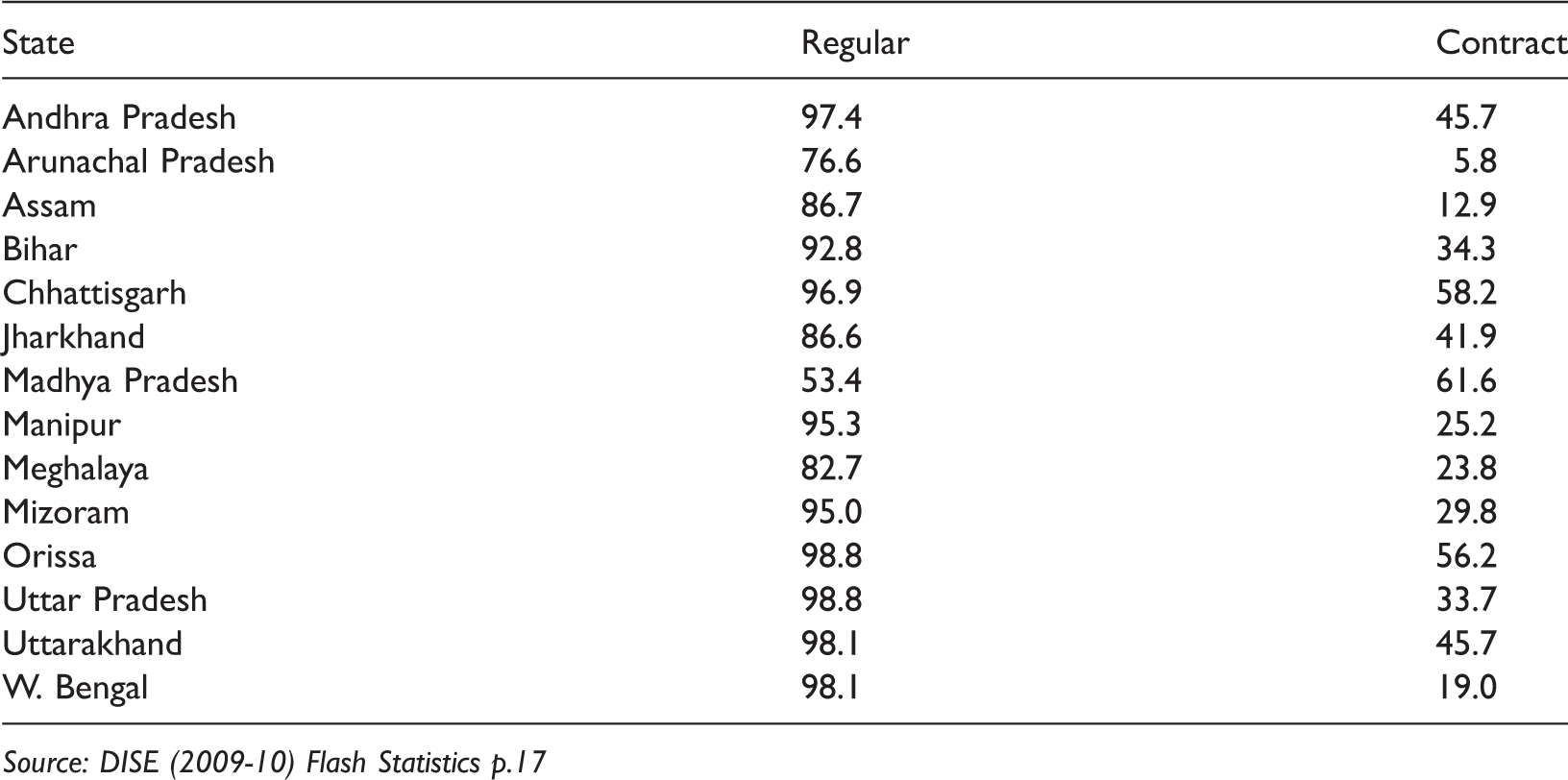
Source: DISE (2009-10) Flash Statistics p.17
Percent of contract teachers (2009–10) by professional training qualifications
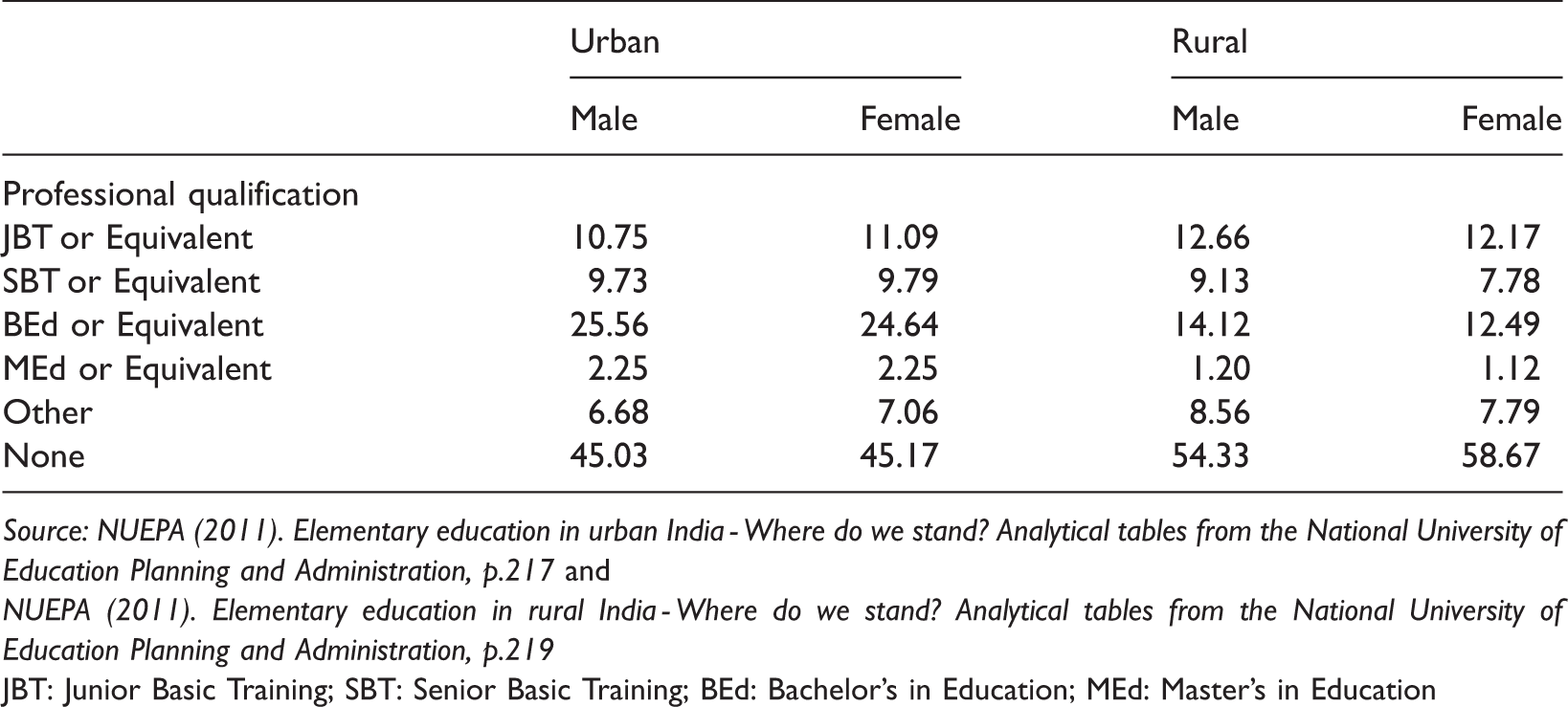
Source: NUEPA (2011) . Elementary education in urban India - Where do we stand? Analytical tables from the National University of Education Planning and Administration, p.217 and
NUEPA (2011) . Elementary education in rural India - Where do we stand? Analytical tables from the National University of Education Planning and Administration, p.219
JBT: Junior Basic Training; SBT: Senior Basic Training; BEd: Bachelor's in Education; MEd: Master's in Education
Comparison of the academic qualifications of regular vs. contract teachers (2007–08)
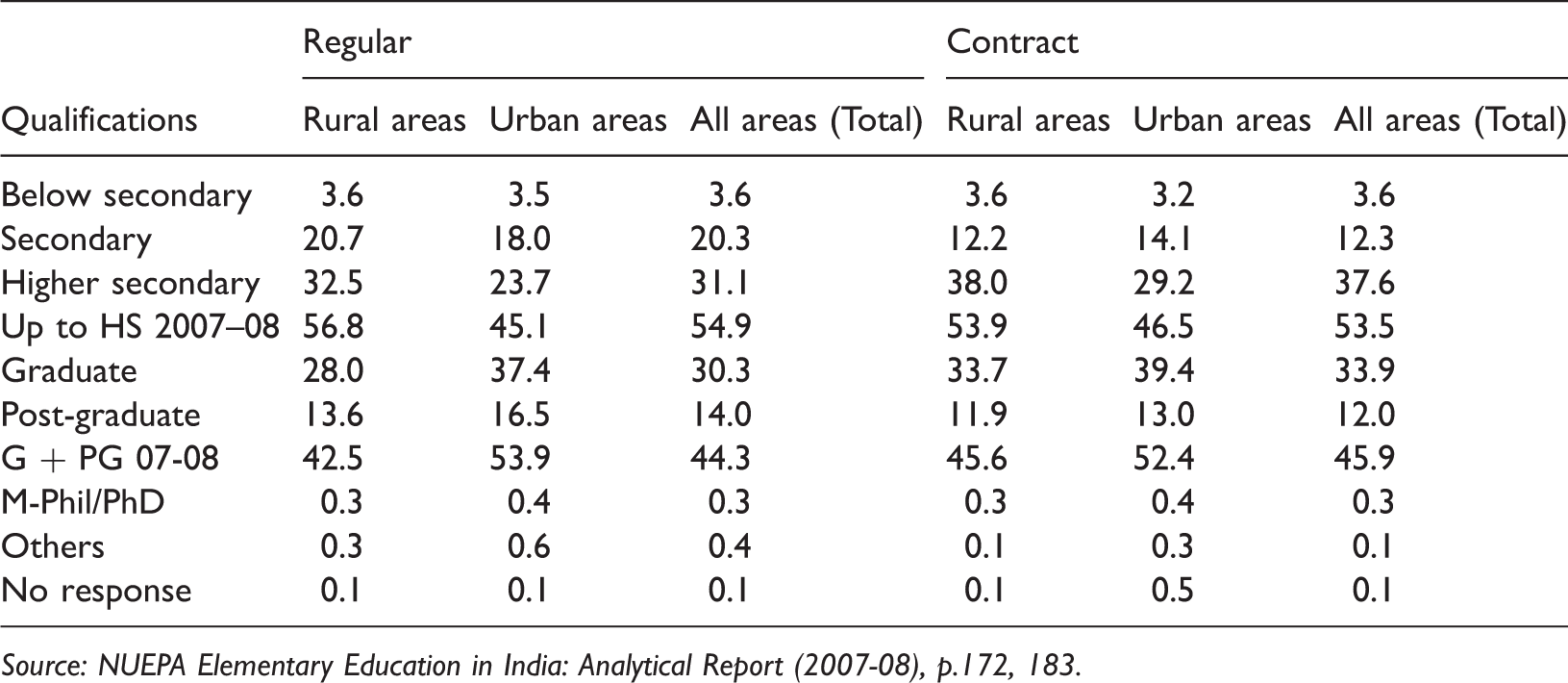
Source: NUEPA Elementary Education in India: Analytical Report (2007-08), p.172, 183.
In addition to inadequate pre-service training among contract teachers, there is great variation in the amount and quality of in-service teacher training provided. Fewer than 48% of all teachers in government schools in the year 2009–10 received in-service training (NUEPA, 2011a: 18). Based on these statistics, it appears that the absence of training among the majority of contract teachers needs to be addressed. The next section reviews the literature on teacher preparation in the United States and analyzes whether this body of literature can better inform the contract teacher debate in India.
V. Research on teacher preparation in the United States
Research has shown that the quality of education is associated with a teacher’s ability and motivation (Bennell and Akyeampong, 2007; Ramachandran et al., 2005; Rowan et al., 1997). Arguably both teaching ability and motivation to teach are in turn influenced by teacher preparation, one aspect of which is adequate pre-service training. Much of the literature on teacher preparation in the United States of America focuses on the association between teacher preparation and student achievement rather than on teacher motivation. For example, Darling-Hammond et al. (2005) find that “certified teachers consistently produce significantly stronger achievement gains that do uncertified teachers” (Darling-Hammond et al., 2005: 1). They use certification as a proxy for variables that pertain to a teacher’s knowledge and skills, such as content knowledge, pedagogical knowledge, classroom management and the ability to work with diverse learners.
Most teacher preparation programs in the United States of America consist of some training in curriculum, instructional methods, classroom management, special needs education and pedagogical knowledge. This array of coursework enhances teacher effectiveness such that those who complete the training are more effective than those who do not complete it (Darling-Hammond et al., 2005). The authors conclude that “teachers’ effectiveness is strongly related to the preparation they receive for teaching” (Darling-Hammond et al., 2005: 1).
Arguably, teacher preparation matters because of its effect on teacher practice as well as its long-term impact on student achievement. Those who enter the field with little professional preparation tend to experience greater difficulty in the classroom and are more likely to leave the profession than teachers who have had professional preparation (Darling-Hammond, 2000; Darling-Hammond et al., 2001). Darling-Hammond et al. (2002) contend that teachers prepared in teacher education programs feel significantly better prepared across most dimensions of teaching as compared with those without any preparation. More importantly, the extent to which teachers feel prepared when they start teaching is significantly correlated with their motivation to teach and commitment to continue in the profession (Darling-Hammond and Youngs, 2002; Darling-Hammond et al., 2002). Thus, “teacher preparation – including the student teaching and methods coursework… contributes … to outcomes ranging from teacher effectiveness to teacher retention” (Darling-Hammond and Youngs, 2002: 23).
The effects of teacher training on academic achievement become much clearer when the focus is subject matter knowledge as opposed to certification per se. Previous research has consistently shown that high school mathematics and science teachers with a major in their field of instruction have higher-achieving students than teachers who are teaching out of field (Goldhaber and Brewer, 2000; Rowan et al., 1997). In the case of mathematics specifically, students clearly learn more from teachers with certification, degrees and prior coursework in mathematics (Darling-Hammond et al., 2001; Wayne and Youngs, 2003; Wilson et al., 2001).
Some scholars have found that teachers for whom entry requirements into teaching were relaxed were less effective in raising student achievement in mathematics and English language as compared with teachers who underwent a university-based teacher education program (Boyd et al., 2006). However, these differences were not large (approximately 2–5% of a standard deviation) and they disappeared over time. Other research conducted by the same group of scholars seems to suggest that preparation programs vary in the effectiveness of teachers they prepare (Boyd et al., 2009). Policy makers therefore need to be cognizant that it is not merely the existence of teacher preparation programs that matters, but also the quality of teacher preparation in terms of how well the program addresses the specific needs of the teachers.
The extant literature on teacher preparation in the United States evaluates teacher preparation primarily from the perspective of its impact on student achievement. While we cannot conclude from this body of research that teacher preparation is necessary for student achievement, there is support among scholars for the view that teacher preparation gives new teachers necessary skills which improve their sense of self-efficacy in teaching and their professional commitment to stay in the profession. This in turn has an effect on teacher motivation in the long term.
V. Conclusion
In summary, low pay for contract teachers vis-à-vis civil service teachers and lack of attention to contract teacher preparation in India may negatively affect contract teacher morale and motivation in the long term. One way to stave off the damaging consequences of growing dissatisfaction among this expanding section of the teacher labor force is to ensure more equitable pay scales across the profession. A complementary and more long-term solution is to provide adequate support mechanisms for novice teachers via pre-service teacher preparation and mentoring. Research has shown that improving professional qualifications is a key pre-requisite for progress up the career ladder. Adequate teacher training in combination with ongoing mentoring support is a way for contract teachers to progress from the “lower-order” needs defined by Maslow to “higher-order” needs such as a sense of professional efficacy and teacher collaboration, which are essential to sustain teacher motivation and education quality in the long term. Well-designed teacher pre-service and in-service programs can go a long way toward enabling contract teachers to negotiate the trials and tribulations of working in rural areas, multi-grade teaching, inadequate classroom materials, and poor infrastructure. Providing non-monetary compensation (such as the eventual security of tenure) for the more difficult work conditions that contract teachers encounter can also help mitigate a growing sense of injustice among this increasingly important group of teachers. A constructive alternative to the current lack of job security and poor pay for contract teachers might be to establish a structure for their promotion (perhaps with progressively increasing pay and mentoring) and a well-defined plan for their eventual incorporation into the mainstream of regular teachers.
A statement put forth in the VSO report eloquently expresses the necessity of addressing inequities in the pay and training of contract teachers. The VSO report declares that: …there is an urgent need for policy makers to recognize the fact that educational quality is very largely dependent on the willingness and ability of teachers to accommodate and implement change. Thus, support for their livelihoods, professional development, and morale is not an optional extra but a central component of effective policy-making (VSO, 2002: 42).
Policy makers need to be cognizant of the fact that, over time, inadequate remuneration and lack of preparation among contract teachers in India may erode teaching commitment among this section of the teacher labor force to the detriment of education quality in government schools.
Footnotes
Funding
This work was partially supported by a Pre-doctoral training grant from the Institute of Educational Sciences, U.S. Department of Education (Award no. R305B090011) to Michigan State University. Research funds in the form of Summer Research Development Funding (SRDF 2010) from the College of Education at Michigan State University are also gratefully acknowledged. The opinions expressed here are those of the author alone and do not represent the views of the Institute, the U.S. Department of Education, or Michigan State University.
Acknowledgements
The author gratefully acknowledges valuable insight and feedback provided by Dr. Amita Chudgar, Dr. Robert Floden, and Dr. Peter Youngs.
Research interests
Social Context of Education and Health; Quantitative Methods in Education Research; Inequality in Educational and Health Outcomes for Children.