



Abstract
The accreditation of liberal adult education in Finland encourages teachers to integrate competence-based education (CBE), aligning with broader European initiatives that promote adult learning and the recognition of competences. Such a shift challenges traditional pedagogies and calls for educational transformation. This study investigates how language teachers in Finnish adult education centres experience and interpret CBE, focusing on its perceived benefits and practical challenges. Despite their central role in implementing CBE, little research has explored language teachers’ classroom-level experiences. The study explores (1) language teachers’ perceptions of the benefits of implementing CBE and (2) the challenges they encounter in competence-based classroom practice. Drawing on teacher professional identity theory, the study analyzes how the alignment between policy expectations and teachers’ professional identities shapes their engagement with CBE. Employing a mixed-methods approach, the study combines questionnaire and interview data. Thematic analysis identified five key areas of challenge: professional development, quality frameworks, administrative policies, operational practices, and educational ecosystems. While teachers recognized certain benefits of CBE, many reported tensions between competence-based approaches and their pedagogical values and established practices. The findings highlight the complexity of CBE reform and underscore the importance of supporting teachers’ professional identity development amid ongoing educational change.
Keywords
Introduction
The European Union (EU) has played a leading role in advancing adult education through continuous development initiatives. Following the European Council Recommendation (EU, 2012), the EU member states strive for system-level progress in recognizing prior learning and validating non-formal and informal learning. Alongside international organizations such as UNESCO (2023) and the OECD (2021, 2024), the EU continues to promote lifelong learning and adult education (EU, 2015; Council of the European Union [CEU], 2022). In addition, scholars have examined adult education from both theoretical and practical perspectives, including lifelong learning and initiatives such as upskilling and reskilling to enhance learners’ competitiveness (Jarvis, 2024; Mikulec, 2019; Pätäri et al., 2019; Singh, 2015). The Finnish Association of Adult Education Centres (2025), a non-governmental umbrella organization representing adult education centres, has further contributed by supporting the professionalization of adult educators. These efforts aim to provide adult learners with flexible learning opportunities to renew their competences, acquire new skills to meet labour market demands, foster social equity, and support potential pathways to higher education.
In alignment with the Council Recommendation, the Finnish Ministry of Education and Culture (Opetus- ja Kulttuuriministeriö [OKM]) introduced a new education policy (OKM, 2019, 2020, 2021, 2022) that officially recognized liberal adult education within the Finnish education system. These national initiatives build on broader European developments such as the European Qualifications Framework for Lifelong Learning (2008) and earlier reforms in higher and vocational education, which promoted the recognition of learning outcomes across diverse contexts. Within this framework, the study examines language teachers’ perspectives, classroom-level practices, and the challenges they face in responding to reforms introduced by the new adult education policy.
The reform introduced an outcome-oriented competence-based education (CBE), enabling adult learners to develop skills that foster lifelong learning, enhance employability, and facilitate mobility. It reshaped the course structure of liberal adult education (OKM, 2021, 2022) and recognized competencies as study credits transferable to the national data repository for study rights and completed studies (Finnish National Agency for Education, 2021; OKM, 2024), emphasizing outcome-oriented learning to support adult learners’ progress. Following the policy amendment, adult education centres, the largest institutions by student numbers and key players in liberal adult education, began implementing the competence-based model (Ministry of Economic Affairs and Employment, 2020, p. 40). While this policy change redefines liberal adult education, it also places new demands on teachers, who are central in translating its competence-based objectives into classroom practice.
This study draws on the theory of teacher professional identity (TPI) to examine language teachers’ perceptions of interpreting and implementing a new educational policy as key actors in CBE within adult education centres. The aim is to identify challenges in the implementation of CBE and to examine how language teachers respond to these reforms. When teachers see that their identities, values, and experiences are threatened by an educational policy, they tend to resist change and obstruct its implementation (OECD, 2022, p. 7). The implementation of new educational policy is more effective if proposals are considered through the lens of TPI, and when policymakers actively support the development of professional identities (Day et al., 2005; Karousiou, 2019). In the Finnish context, CBE is shown to impose new professional expectations on teachers, influencing how they construct and negotiate their professional roles (Tapani & Salonen, 2019). Although their study focused on vocational education, these findings are relevant for adult education centres, where teachers similarly adapt their classroom practices to implement competence-based objectives. These increased demands highlight the importance of supporting teachers in developing a strong professional identity that enables them to respond and act flexibly on change (Mockler, 2020; Sachs, 2016).
The implementation of CBE in the context of adult education centres has received limited scholarly attention, and research focusing on classroom-level practices remains scarce. While previous studies have focused primarily on policy and institutional perspectives, this study takes a pioneering approach by examining language teachers’ lived experiences of implementing CBE. To fill this gap, the present study provides empirical evidence on the impact of accreditation and offers novel insights into their educational transformation through two research questions: (1) How do language teachers perceive the benefits of implementing competence-based education in adult education centres? (2) What challenges do language teachers encounter in competence-based classroom teaching, and how do these challenges influence their professional identity amid educational transformation?
Theoretical Framework
This study explores challenges in implementing CBE in adult education centres and how language teachers experience and respond to anxiety during educational reforms, using professional identity as an analytical lens to examine how contextual factors shape their work.
Teacher Professional Identity: Core Components and Development
Teacher professional identity encompasses the perceptions, beliefs, emotions, motivations, and attitudes that teachers associate with their professional role (Cordingley, 2019; Karousiou, 2019; Sachs, 2005). These elements influence teacher’s commitment to the profession, their pedagogical choices, and, ultimately, student learning outcomes (Day et al., 2005). Importantly, TPI is not a static concept; rather, it evolves through personal and professional experiences, and the influence of institutional structures and support systems (Cordingley, 2019). According to Mockler (2020), developing a well-defined identity enhances teaching practice and professional confidence. A strong TPI is associated with higher levels of self-efficacy, adaptability, and resilience in educational roles (Hanna et al., 2019; Mockler, 2020). Furthermore, social belonging and collaboration contribute to TPI formation, reinforcing teachers’ sense of purpose and professional agency (Davey, 2013; OECD, 2019, 2020). In particular, teacher collaboration serves as an important foundation for enhancing the components of TPI and fostering teacher self-efficacy. Collegial relationships help shape professional identity – especially in adult education centres, where teachers often work independently and may rely on peer networks for guidance. This socially constructed sense of belonging is important for the development of professional identity both at the individual teacher level and within educational institutions. These dimensions underscore the importance of TPI in supporting teachers during educational reforms.
TPI in Adult Education Centres
Unlike formal education systems, adult education centres offer teachers more autonomy and flexibility, but they also face unique professional identity challenges. Research on non-formal education suggests that TPI in this context is shaped by less rigid institutional structure, diverse student populations, and the need for adaptability in pedagogical approaches (Desjardins, 2017). One key feature of TPI in non-formal education is the blurring of traditional teacher roles. Teachers of adult education often shift between facilitator, mentor, and subject expert, depending on student needs (Guo, 2013). This fluidity can strengthen professional identity for teachers who value autonomy but may also create uncertainty and anxiety when faced with policy-driven educational transformations (Milana, 2017). Furthermore, professional development opportunities are often more fragmented in non-formal education, meaning that teachers may rely more on peer networks and informal learning to shape their identity (Desjardins, 2017; Egetenmeyer & Strauch, 2020). These dynamics highlight the significance of collaborative learning and collegial networks in shaping TPI.
Implementing CBE Through the Lens of TPI
This study approaches CBE through the lens of language teachers’ professional identity examining how competence-oriented reforms are interpreted and exercised in everyday teaching practice. This section outlines the working definitions of competence and CBE that guide the analysis.
Competence is understood as an integrated, context-dependent combination of knowledge, skills, and dispositions mobilized in practice, rather than as a set of predefined and measurable learning outcomes. This perspective aligns with critical views highlighting the conceptual ambiguity and contested nature of competence in contemporary curriculum debates (Tahirsylaj & Sundberg, 2020; Willbergh, 2015).
CBE is conceptualized primarily as a curriculum-oriented policy approach that shifts the educational focus from content-based instruction towards competence-oriented learning goals and assessment expectations (Tahirsylaj & Sundberg, 2025). Although often framed in pedagogical terms emphasizing learner-centredness and flexibility (Schleicher, 2018), CBE fundamentally represents a curriculum reform that redefines what counts as valued learning and how outcomes are assessed.
In Finnish non-formal adult education, specifically in adult education centres examined in this study, CBE is not implemented through nationally prescribed curricula. Instead, it is exercised through institutional practices such as course descriptions, defined learning outcomes, study credit allocations, and assessment requirements (OKM, 2019, 2020, 2021). In this context, a course description typically structures a single course lasting approximately 3 months (around 24 contact hours), for which study credits are allocated. Consequently, competence-oriented expectations are embedded at the level of individual courses rather than within a broader curricular framework. Teachers therefore primarily encounter CBE through course-level pedagogical and assessment-related expectations, which may explain why it is often experienced as a pedagogical rather than a curriculum reform.
In teaching practice, CBE foregrounds learner-centredness, recognition of prior learning, flexible learning pathways, and outcome-oriented assessment (Gervais, 2016; OECD, 2021; OKM, 2019, 2020; Vitello et al., 2021). In language education, this means using the target language in authentic communicative situations rather than demonstrating grammatical knowledge. Viewed through the lens of TPI, these competence-oriented expectations imply significant shifts in pedagogy, assessment practices, and teacher autonomy. Policy-driven reforms such as CBE often generate uncertainty and anxiety when they challenge teachers’ established beliefs, values, and self-concepts (Karousiou, 2019). While alignment between reform initiatives and TPI can encourage teacher engagement, misalignment may lead to resistance or disengagement (Sachs, 2001). In adult education centres, where assessment has not traditionally been central to teaching practice, the introduction of CBE-related assessment responsibilities may therefore be particularly demanding for language teachers.
Liberal Adult Education and Adult Education Centres in Finland
Liberal adult education encompasses non-formal educational institutes such as adult education centres, summer universities, folk high schools, educational centres, and sports institutes (Ministry of Education and Culture [OKM], 2024; Finnish National Agency for Education, 2023a, 2023b). This educational sector attracts over 1.1 million citizens annually from diverse educational backgrounds (Finnish National Agency for Education, 2023a, 2023b). As part of the national lifelong learning framework, liberal adult education promotes equal opportunities for learning and civic participation. While partly publicly funded, institutions maintain pedagogical autonomy to address local needs (OKM, 2024), with a mission centred on personal growth, social inclusion, and community well-being.
Among these institutions, adult education centres constitute the largest sub-sector and serve as the focus of this study in the context of ongoing educational transformation driven by recent policy developments. The study concentrates on foreign language education, which is highly popular among adult learners and central to implementing CBE in adult education centres. There are 181 adult education centres operating across Finland, each independently designing its course descriptions to reflect local cultural and educational needs (Finnish Association of Adult Education Centres, 2025). In line with the Ministry of Education and Culture’s guidelines (OKM, 2021, 2024), these institutions may incorporate diverse worldviews and address regional needs. Each centre exercises pedagogical autonomy, determining its own course content and learning objectives, which has resulted in considerable variation and limited central standardization (OKM, 2024).
Evolving Roles and Teacher Development in Liberal Adult Education
Liberal adult education in Finland has traditionally supported holistic well-being and societal integration. Recent policies have introduced accreditation to allow learners to earn transferable credits, creating potential pathways to formal education and lifelong learning. Pätäri et al. (2019, p. 311) observed that methods were being developed to recognize and credit these studies, facilitating learners’ transition to formal education. If widely adopted, this shift could expand adult learners’ educational and career opportunities and transform classroom practices, requiring teachers to engage in continuous professional development. Recognizing the evolving nature of liberal adult education, the Ministry of Education and Culture established a working group to assess CBE implementation and define key elements of related teacher training (OKM, 2019). The resulting model introduced professional development programmes involving online lectures, workshops, and distance assignments (OKM, 2020). Effective implementing of CBE requires teachers to understand its principles, design credit-based course descriptions, and assess competencies. However, language teachers reported insufficient practical guidance, limiting the applicability of training to adult education centre contexts, as reflected in interview quotations in the Results section.
Competence-Based Education (CBE) in Adult Education Centre
CBE has gained increasing attention in adult education centres as a way to address diverse learner needs and support professional development. CBE emphasizes the transition from conventional teacher-centred pedagogy to learner-centred learning (Schleicher, 2018). This learner-centred model aligns well with the principles of adult education, focusing on practical competencies relevant to individual goals and labour market needs. One of the key strengths of CBE is its flexibility (Gervais, 2016; Le et al., 2014; Vitello et al., 2021; Wijnia et al., 2016). Learners in adult education centres often have varied backgrounds, prior knowledge, and individual learning paces. By focusing on competencies rather than time spent in classroom, CBE allows learners to progress at their own speed, validating their existing skills and targeting for areas needing improvement.
Learners aiming to earn study credits typically indicate this during course registration. Course descriptions specify learning objectives and assessment methods for demonstrating competencies. Teachers retain autonomy in selecting instructional approaches and designing assessments. Formative assessment supports learning progress while summative assessment may include assignments such as learning diaries or short presentations. Once a learner’s achievement is approved, the teacher reports the outcome to the administrative office, which records the credits in the national data repository. The adoption of CBE fosters lifelong learning and professional development but also places significant responsibility on teachers to interpret learning objectives, design meaningful assessments, and balance non-formal learning with formal credit recognition. Its flexibility can further increase teachers’ workload as they adapt course structure and assessment practices to diverse learner needs and institutional requirements.
Accreditation and Quality Assurance
Although the accreditation framework supports learning development, implementing CBE presents challenges, particularly in classroom practice. A central concern is the integration of credit-seeking and non-credit-seeking learners within the same class. Finnish adult education centres, characterized by open access, attract learners of various ages and educational backgrounds who pursue learning for personal enrichment, vocational development, and academic advancement (Finnish Association of Adult Education Centres, 2025). While some learners aim to obtain study credits, others participate without seeking formal recognition. Currently, all learners follow a common course description in shared classrooms, which may not fully address their diverse objectives. This situation raises the question of whether differentiated course designs are needed to better support those pursuing formal recognition. Some teachers have suggested grouping learners based on their learning goals (see teacher interviews), arguing that CBE requires an optimal learning environment to maximize learners’ potential.
From language teachers’ perspectives, further challenges relate to quality assurance and the transferability of study credits. As adult education centres operate outside the scope of the national curriculum, their courses are not externally regulated. Recently, these centres have been encouraged to upload course descriptions to the eRequirements platform (ePerusteet, 2022), a digital service of the Finnish National Agency for Education that publishes curricula and qualifications across basic, upper secondary education, vocational education, and liberal adult education. However, as this information is based on self-reports from each teacher and course planner, some uncertainty remains regarding consistency and comparability (Finnish Government, 2022). Although progress has been made, the transferability and recognition of study credits across institutions are still not fully established. The Ministry of Economic Affairs and Employment (2020, p. 41) noted uncertainty about how competences acquired in these centres transfer to professional contexts, leading government officials to emphasize shared quality principles and clearly defined proficiency levels to enhance the credibility. Building on these initiatives, recent policy documents further underscore the importance of embedding quality assurance within the broader framework of Finnish liberal adult education, highlighting providers’ capacity to recognize and validate learners’ competencies (Finnish government publication, 2022, p. 74).
Methods
The study employed an explanatory sequential mixed method (Creswell & Creswell, 2018; Creswell and Plano Clark, 2011) to analyze survey results. By integrating quantitative and qualitative data, mixed methods provided a more comprehensive perspective, offering the limitations of each while leveraging their strengths (Creswell and Plano Clark, 2011; Heigham & Croker, 2009). The approach was instrumental in capturing language teachers’ multifaceted views on CBE. The quantitative phase provided a broad overview of teachers’ attitudes towards CBE implementation in adult education centres, while the qualitative phase built on these results to offer a deeper understanding of the phenomenon identified, namely language teachers’ perspectives on the benefits and challenges of CBE. The survey findings also informed the development of the interview guide, allowing for a more targeted exploration of key themes. Accordingly, this study addressed the following research questions: (1) How do language teachers perceive the benefits of implementing competence-based education in adult education centres? (2) What challenges do language teachers encounter in competence-based classroom teaching, and how do these challenges influence their professional identity amid educational transformation? The quantitative survey focused on three key areas, forming the basis of its research questions: the pedagogical values of CBE, the benefits of CBE in adult education centres, and teachers’ awareness levels of CBE. The findings from this phase were then used to structure the qualitative interviews, enabling a more in-depth investigation of language teachers’ experiences and concerns regarding CBE implementation.
Data Collection
The data collection took place in 2022–2023, about 6 months after CBE had been formally introduced in adult education centres. While the reform did not mandate changes, it encouraged language teachers to rethink their educational approach and consider new practices. The first stage of this research investigated language teachers’ perspectives on CBE through a 37-item online questionnaire divided into four sections: Teacher background (5 items), Pedagogical value of CBE (10 items), General benefits of CBE for adult education centres (8 items), and Teachers’ awareness levels of CBE (14 items). Responses were measured on a Likert scale from 1 (‘strongly disagree’) to 5 (‘strongly agree’). The structure of the questionnaire was informed by the research aims and the theoretical framework of teacher identity: background items situate identity within personal and professional histories; pedagogical value items connect to teachers’ beliefs and self-conceptions; general beliefs relate to how teachers position their role within institutional contexts; awareness items address how teachers negotiate new roles and adapt to changes associated with CBE. Survey items addressing the pedagogical value of CBE were inspired by Vitello et al. (2021).
The online questionnaire, accompanied by a letter of inquiry, was initially sent to the principals of 40 Finnish adult education centres offering diverse foreign language courses beyond English, Finnish, and Swedish. The principals subsequently distributed the questionnaire to language teachers within their institutions. A total of 41 language teachers participated in the survey, most engaged in professional training on competence-based curriculum development and assessment, with experience ranging from 0 to 42 years. This pioneering study explored the classroom-level implementation of CBE in adult education centres, representing one of the first studies in this context.
In the next stage, semi-structured interviews were conducted with five language teachers from various adult education centres in the capital region of Finland. These participants were selected based on their availabilities for interviews and their responses to ensure a diverse range of perspectives on CBE. The interviews, guided by seven open-ended questions provided to participants in advance (see Supplemental Material), allowed them to elaborate on their survey responses, offering deeper insights into their pedagogical experiences and challenges. The interviews aimed to uncover the reasons behind their survey responses and challenges they face in practice. All interviews were audio-recorded, transcribed verbatim, and anonymized for the data analysis. Interview quotations are cited using participant pseudonyms (e.g., Teacher 1, interview) to protect anonymity, and specific interview dates are omitted to ensure confidentiality.
Before commencing the actual data collection, a pilot study was conducted with three language teachers. This preliminary investigation encompassed a survey comprising 37 question items, alongside evaluative inquiries regarding respondents’ opinions on question readability and their satisfaction with participating in the survey. Prior to the research, this study was approved by the Education Division of the City of Helsinki (approval no. HEL 2022-012057) on October 20, 2022, and received ethical approval from the University of Helsinki (approval no. TIETO-03584876) on August 27, 2022. The research followed the Guidelines of the Finnish National Board on Research Integrity (Finnish National Board on Research Integrity TENK, 2023) in all survey-related aspects. Following data collection, all gathered information was anonymized and securely stored.
Data Analysis
Quantitative data were analyzed using frequencies and descriptive statistics to capture language teachers’ perspectives on CBE implementation, identify central tendencies, and highlight any conflicting viewpoints. This phase aimed to address the research questions by exploring how educational transformation influence teachers’ beliefs, readiness, and professional identity. These findings then served as a basis for designing a subsequent semi-structured interview to explore teachers’ beliefs, readiness, and willingness to integrate CBE into their classroom practices.
For qualitative data analysis, I used Atlas.ti to code and identify key themes. Using in-vivo coding (Saldaña, 2016), I captured participants’ direct quotes, which were then inductively coded and thematically analyzed to uncover patterns and insights within transcribed data (Braun & Clarke, 2006). Based on this process, I created a network map to conceptualize the data by connecting related elements. This analysis identified five themes, highlighting the key challenges language teachers face in implementing CBE and the interconnections among them. Theoretical perspectives of TPI guided the analysis, providing a framework to understand how external expectations from educational reforms challenged teachers’ professional identities and adaptability. During the coding process, I identified specific TPI-related themes such as personal beliefs about teaching, professional roles, and external expectations. This study began by exploring how teachers’ beliefs had been examined in previous research and used this as a basis for developing the study´s conceptual framework. The findings highlighted tensions between institutional requirements and teachers’ beliefs, influencing teaching practices. Integration of the quantitative and qualitative findings concluded in a comprehensive interpretation, enabling contextualized understanding of language teachers’ perspectives on the implementation of CBE, alongside their lived experiences and challenges in classroom practice.
Reflexivity
As a language teacher in an adult education centre, the author possesses firsthand experience of the pedagogical and institutional contexts examined in this study, complemented by participation in four professional training courses on CBE. This background informed the research design and analysis. To ensure that participants’ perspectives remained central, continuous reflexivity was maintained through systematic memo-writing, peer discussions, and critical examination of how this professional background might have influenced interpretations.
Results
Most language teachers had a positive view of implementing CBE in adult education centres. They expressed enthusiasm for professional development opportunities, demonstrated interest in adopting a competence-based approach, and acknowledged the perceived benefits of integrating CBE in adult education centres. However, the findings also revealed a range of challenges encountered. These challenges encompassed aspects such as professional development initiatives, mechanisms for ensuring quality control, administrative issues, the operational purpose of adult education centres, and their broader educational ecosystem, including the policy, institutional, and social environments in which they operate.
Means and standard deviations of the items in three dimensions of CBE
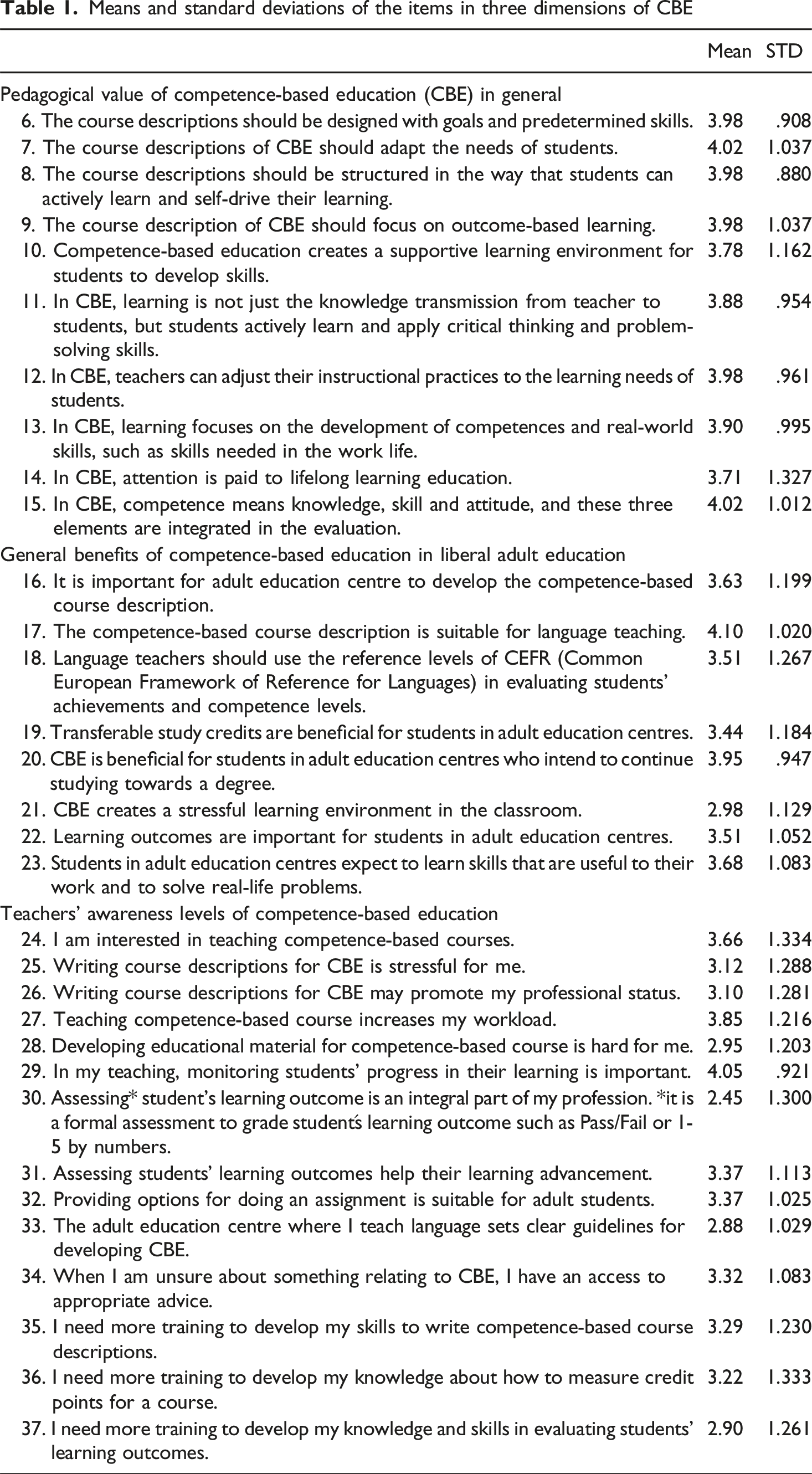
Table 1 presents the descriptive statistics derived from the survey questions (SQ), illustrating the means and STD of items across three dimensions relating to CBE. Respondents rated items on a scale from 1 (strongly disagree) to 5 (strongly agree). Notably, the dimension reflecting the pedagogical value of CBE obtains the highest mean score, suggesting that language teachers possess a strong understanding of fundamental CBE concepts and express favourable attitudes towards them. Moreover, the mean rating of 4.10 for SQ17 reveals teachers support for integrating CBE into language teaching. This question examines teachers’ alignment with course descriptions that integrate outcome-based teaching with educational assessment. Conversely, a notable finding emerges regarding language teachers’ perceptions of assessment, as most express a misalignment with this aspect of their responsibilities. This is evidenced by the mean rating of 2.45 for SQ30, the lowest among all question items. This finding suggests that language teachers have a positive attitude towards integrating CBE in adult education centres (as shown in SQ17). However, they are reluctant to engage in assessment in their classroom practices (as shown in SQ30), despite assessment being a fundamental aspect of CBE.
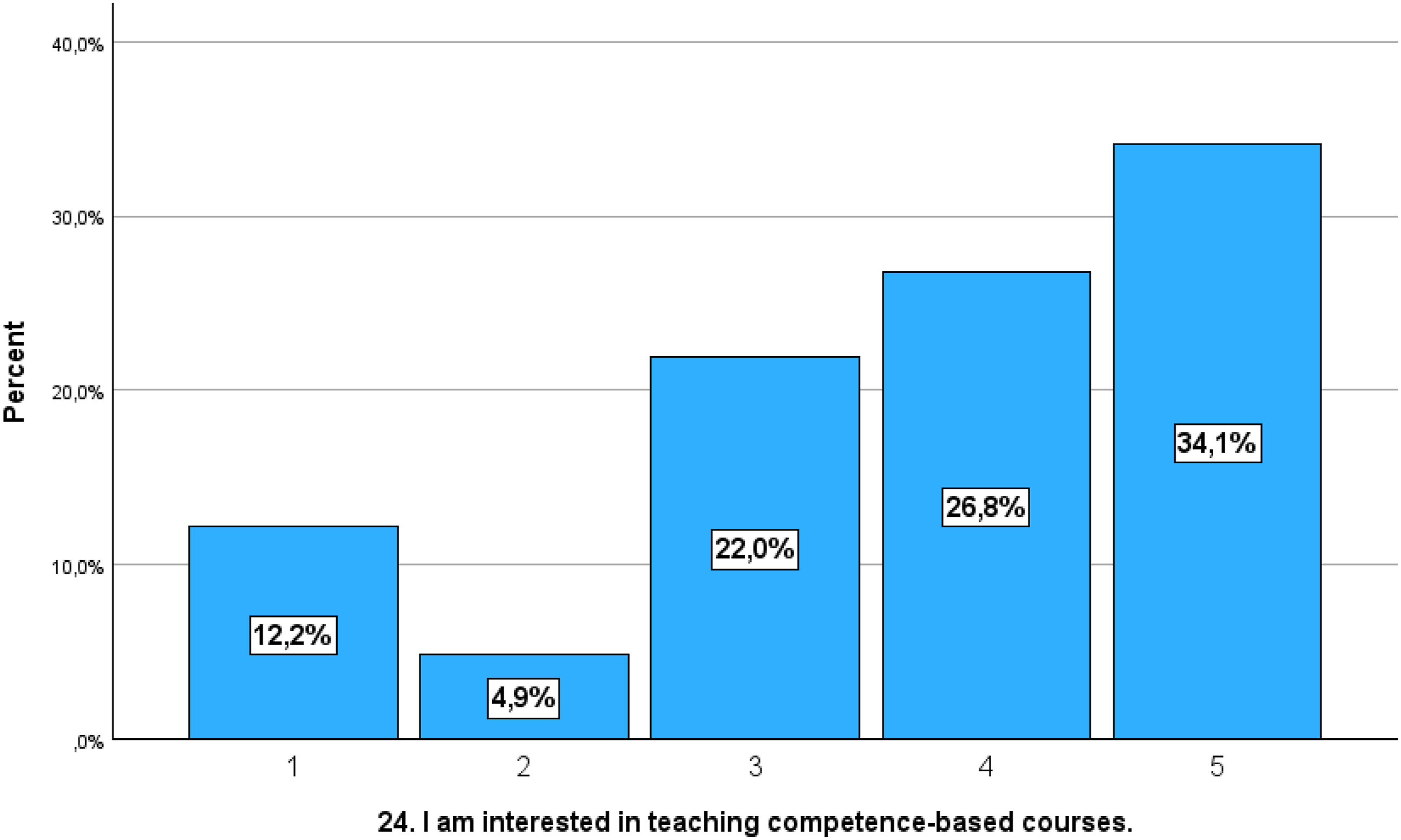
Analysis of responses collected through the Likert-scale questionnaire reveals that a majority of language teachers perceive the implementation of CBE as essential with a notable 60.9% rating (Figure 1, 34.1% agree, 26.8% strongly agree). Likewise, an equivalent proportion express a keen interest in teaching competence-based courses as evidenced by a corresponding rating of 60.9% (Figure 2). The importance of developing the competence-based course description Teacher enthusiasm in teaching the competence-based courses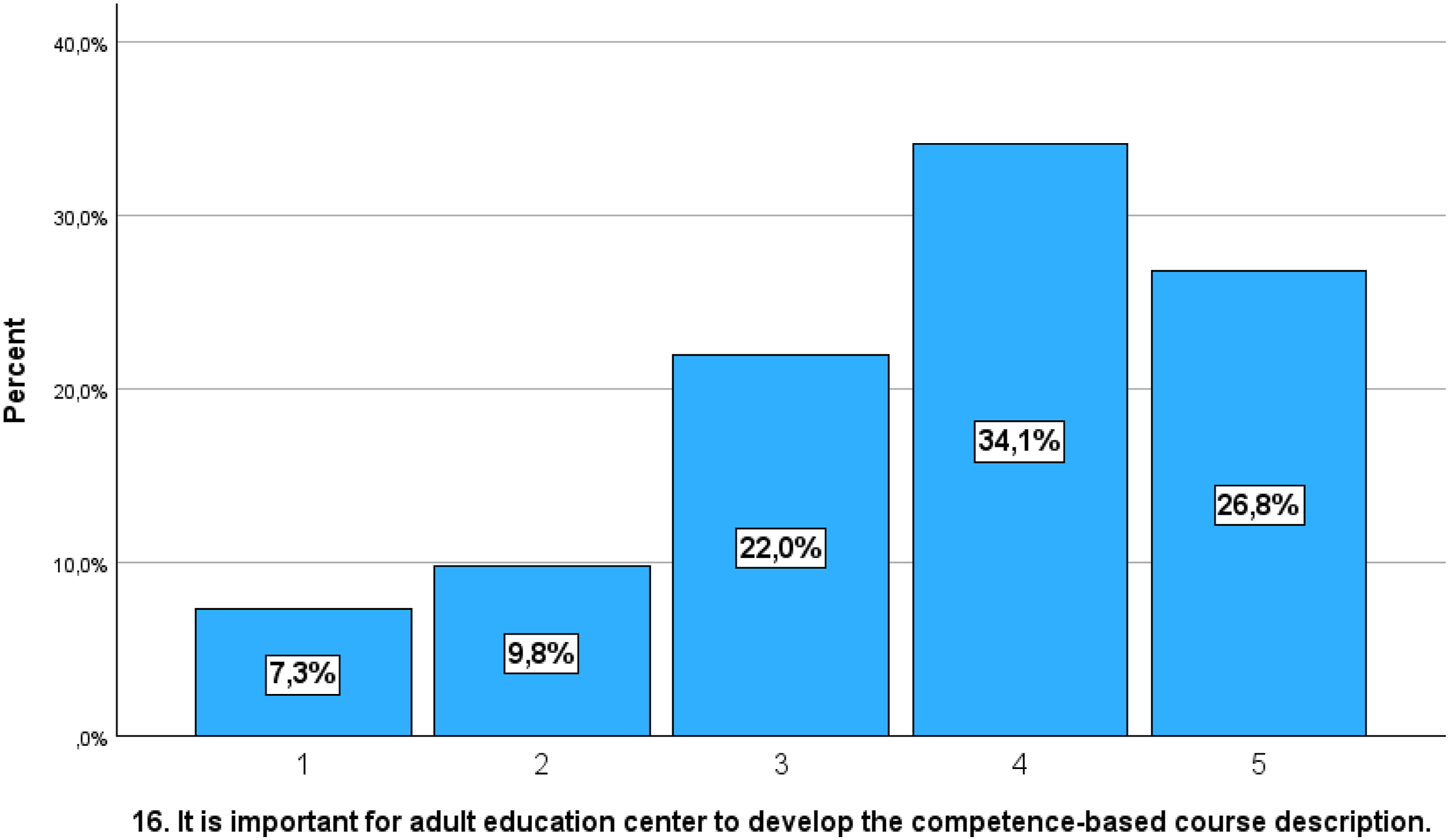
Moreover, an examination of Figure 3 reveals teachers’ positive initial value beliefs concerning CBE, with a substantial 80.5% (39.0% agree, 41.5% strongly agree) affirming the suitability of adopting this educational approach for language teaching. A noteworthy proportion of respondents indicate strong agreement, surpassing that of mere agreement. The suitability of adopting competence-based course for language teaching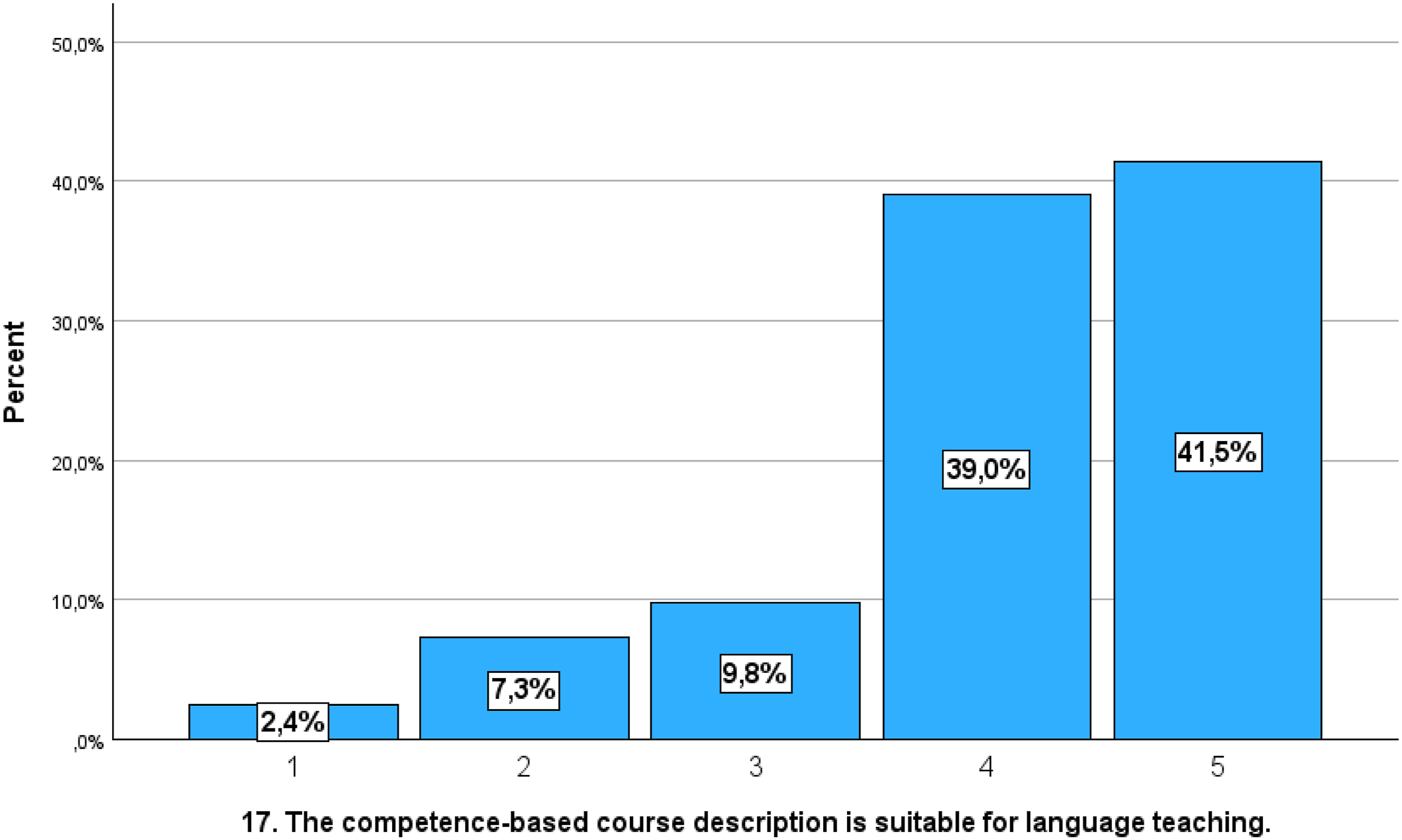
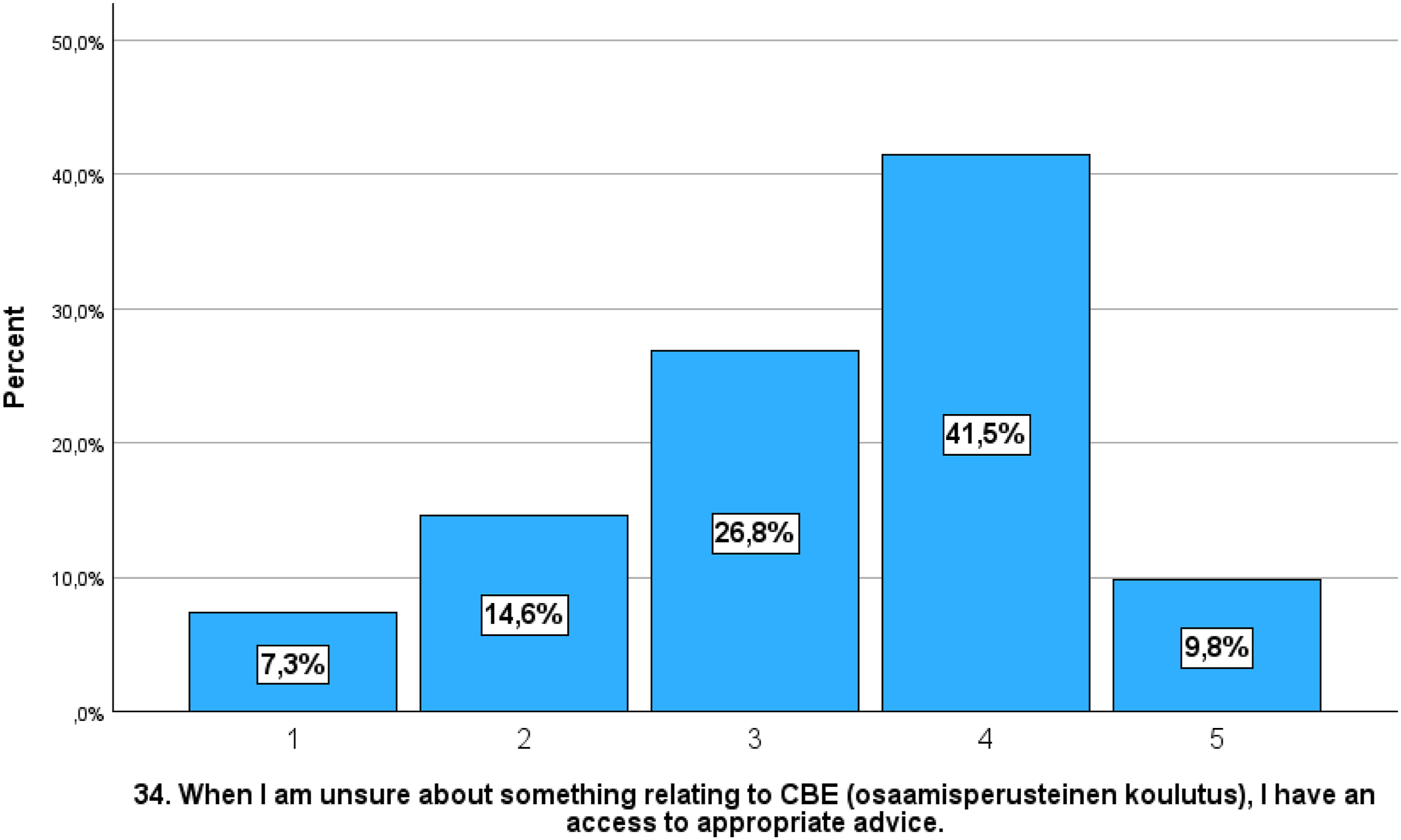
However, alongside the perceived benefits, several challenges have also emerged. In particular, language teachers expressed uncertainty about cooperative development in CBE, as reflected in their neutral responses. This highlights the need for stronger internal and external collaboration to clarify classroom practices. Findings from SQ33 (Figure 4) and SQ34 (Figure 5) emphasize the importance of reinforcing the educational ecosystem through collective efforts. The mean ratings of 2.88 (SQ33 in Table 1) and 3.32 (SQ34 in Table 1) suggest scepticism among teachers, particularly regarding institutional CBE guidelines and the need for clearer guidance. These findings highlight the need for further investigation into their underlying causes, which were examined in greater depth through semi-structured interviews. Setting clear guidelines for developing competence-based education Access to appropriate advice about competence-based education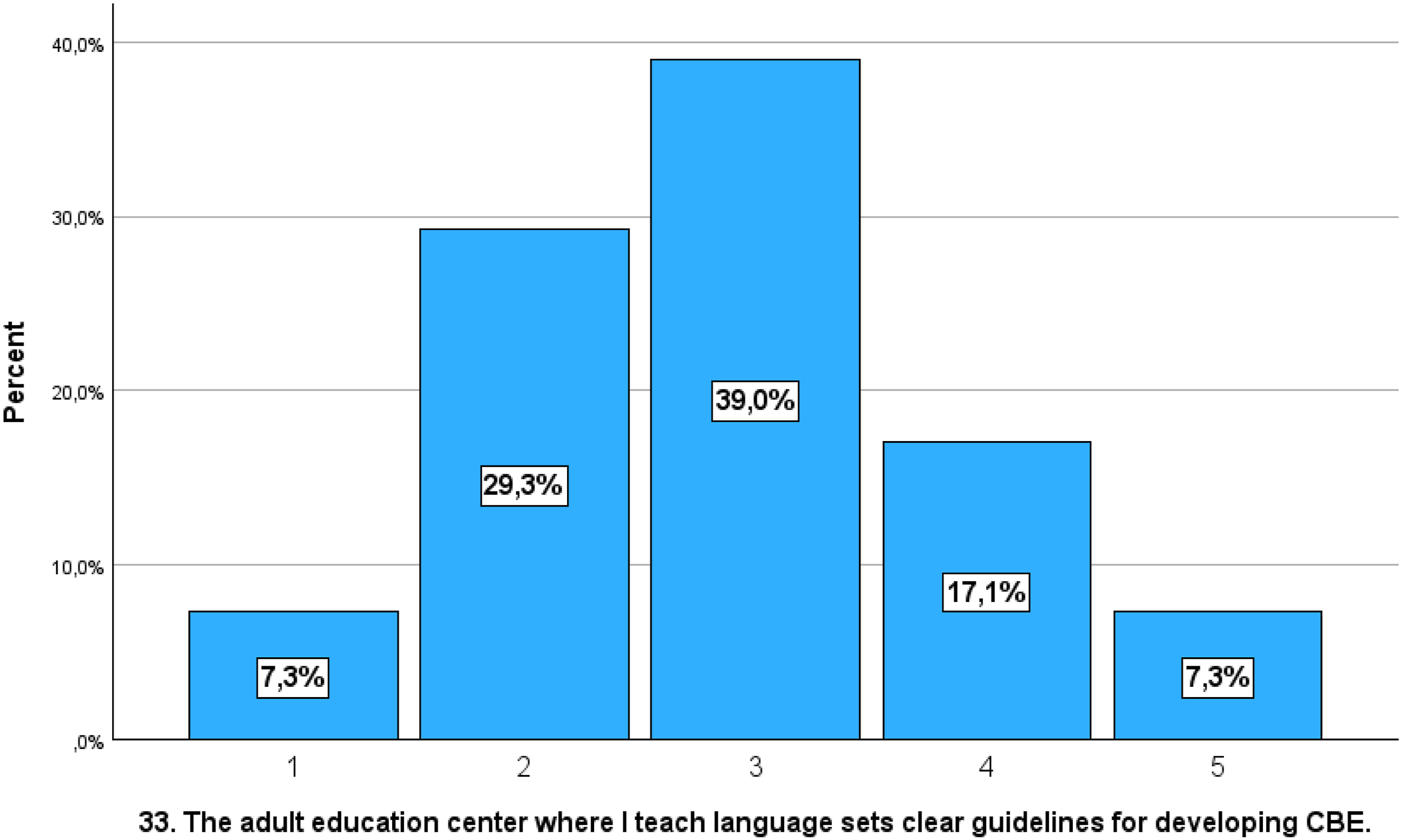
Most adult education centres offer a wide range of languages courses, not only in Finland’s national languages but also in major European, Asian, and African languages. These courses are structured at various proficiency levels based on the Common European Framework of Reference for Languages (CEFR). The integration of CBE in adult education centres requires language teachers to assess learners’ outcome according to CEFR level at the end of each course. While teachers recognize the importance of monitoring learners’ progress (SQ29, mean rating: 4.05), they exhibit a weak attitude towards assessment (SQ 30, mean rating: 2.45). In semi-structured interviews, SQ18, which concerns assessment and the use of CEFR reference levels, was examined in more detail. Teachers discussed the adaptability of CEFR for assessment at adult education centres, as illustrated in the following quotations: CEFR is too massive for the curriculum of adult education centre. The students in adult education centre have different motivation and purpose to learn language than in formal education. Adult education centre needs to use a smaller scale than CEFR. The use of CEFR should be examined taking consideration into the features of different languages. (Teacher 1, interview) CEFR is a good criterion and it can be used for those people who want to obtain the recognition in the work place or continue studying towards a degree. But, I wonder who needs assessment based on the CEFR in adult education centre. (Teacher 2, interview)
Referring to Research Question 2 – What challenges do language teachers encounter in competence-based classroom teaching, and how do these challenges influence their professional identity amid educational transformation? – this study identified significant challenges in implementing CBE in adult education centres. The survey was the initial step in identifying key areas for further examination through semi-structured interviews. After conducting a thematic analysis, I used Atlas.ti to create a network map to visualize the findings. Figure 6 summarizes the research findings on challenges in implementing CBE, represented at the centre of the diagram and categorized into five areas: professional development, quality control, administrative issues, operational purpose, and the educational ecosystem. Additionally, it illustrates the underlying connections among these five areas. The following presents an analysis of findings and interpretations for the five categorized areas, supported by quotations from teacher interviews. Five distinct areas of challenges in the implementation of CBE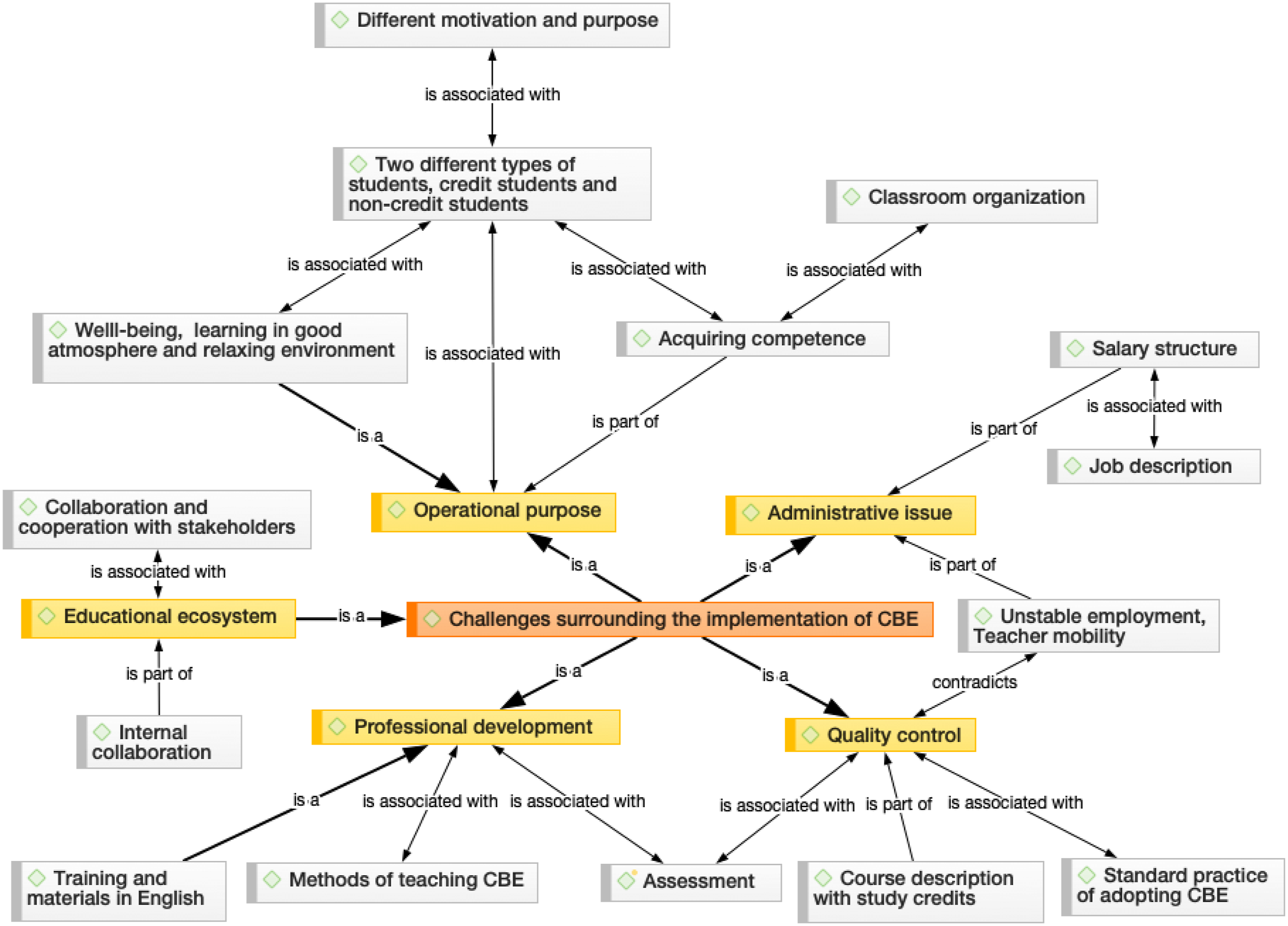
Regarding The training was useful and helpful to obtain the data. But, the application of certain things is not suitable for adult education centre. (Teacher 1, interview) The contents are not applicable to studies of adult education centres. They should realize the difference of educational purpose between adult education centres and universities. Actually, no training mentions about how to teach the competence-based courses. (Teacher 3, interview) The training provides the framework, but it does not provide practical techniques. I gain some theoretical knowledge, but there is no concrete information that I can use for classroom teaching. There is a gap between the content of the training and the reality of classrooms in adult education centre. (Teacher 5, interview)
Furthermore, the interviews highlighted potential barriers to the CBE implementation. Non-native Finnish-speaking teachers called for CBE training in English to support their professional development: I would like to join a training course, but there are no courses for non-native Finnish-speaking teachers. All courses are in Finnish. There should be courses available in English. (Teacher 2, interview)
Given that most of foreign language teachers in adult education centres are non-native Finnish speakers, professional development and instructional materials for CBE should be offered in both Finnish and English to ensure equitable access. Limited linguistic accessibility may otherwise restrict participation in professional learning communities, potentially affecting teachers’ professional identity and agency. As Beijaard et al. (2004) argue, professional identity encompasses teachers’ agency, including their active engagement in professional development through collaborative learning. Ensuring that training materials are accessible to all language teachers can therefore support the development of professional identity and contribute to the more effective implementation of CBE.
Related to Assessment is difficult in my role. Workload has increased. Lesson planning now requires more detailed work. Teachers need to have discussion about how this is acknowledged. Implementation of CBE just feels like additional work without any compensation. (Teacher 1, interview) I am not going to implement CBE in my class because there is no compensation for the additional work. Assessment has become extra work, and that makes it difficult to stay motivated. (Teacher 5, interview)
Another administrative issue relates to teacher mobility, which can affect continuity in monitoring learners’ learning progression. High mobility in the teaching profession may also present challenges for maintaining consistent instructional quality. It is difficult to assess learning achievements because teachers work on a temporary contract basis for one course. I am unsure about the assessment standard and method of teaching competence-based education. (Teacher 3, interview)
In relation to It is important to establish clear assessment criteria to ensure reliability. We need guidance on how learning outcomes should be assessed. (Teacher 2, interview) I have assessed students' learning in elementary and high school, but not in adult education centre. I think the evaluation standards differ across contexts, and I need to know how to assess in adult education centre. (Teacher 5, interview)
Some teachers emphasized the significance of classroom organization in facilitating competence-based learning. Currently, credit-seeking and non-credit learners share the same courses, and to better address their differing objectives, some teachers proposed separate classes. They also observed that the When students’ purposes of learning languages are hobbies, and they have to study in the same class with credit-students, it changes the atmosphere of classrooms. Mixing these two groups makes lesson planning difficult. I think credit courses and traditional classes should be separate. (Teacher 4, interview) In adult education centres, students' enthusiasm and well-being is important. Assessing is not the most important thing. Learning together in relaxing environment is more important. Adult education centre is not about the competence. (Teacher 5, interview)
The Teachers need peer supports in how to teach competence-based education. Teachers need an access to get an advice. (Teacher 1, interview) We need to create opportunities where we can share our ideas and experiences of competence-based teaching. (Teacher 4, interview)
Analyzing the educational ecosystem of adult education centres, including collaboration and peer support mechanisms, is essential for strengthening professional identity. A well-functioning ecosystem helps language teachers clarify their roles in a dynamic environment shaped by societal expectations and adapt their practices to evolving needs. As Sachs (2016) states, teachers need support to develop a professional identity that enables flexibility and responsiveness to change. Professional growth, however, is not only an individual process but also embedded in the collective mission and culture of liberal adult education. Recognizing the broader educational ecosystem encourages collaboration among teachers, administrators, and other stakeholders, cultivating a culture that reinforces both individual and shared identity development. Such collaborative cultures are vital, as professional identity is shaped through a sense of belonging and connection to a community (Davey, 2013; Flores & Day, 2006; OECD, 2020). By promoting shared professional development, strong networks, and collective engagement, adult education centres can shift the focus from individual identity construction to collective professional communities – laying the foundation for more sustainable professional practices.
Discussion and Conclusion
Summary of Results in Light of Prior Research
This study contributes to debates on CBE by examining how language teachers experience competence-oriented expectations in non-formal adult education. In this context, CBE operates primarily through course descriptions, shaping both institutional practices and course-level requirements. Adult education centres in Finland operate without nationally defined curricula and instead rely on locally designed course descriptions, which guide how competence-oriented expectations are exercised. Prior research has noted the conceptual ambiguity of competence in loosely structured educational contexts (Tahirsylaj & Sundberg, 2020; Willbergh, 2015). The present findings extend this discussion by illustrating how such ambiguity is experienced by language teachers in practice.
The findings indicate that teachers’ professional identity (TPI) is shaped by external expectations, including institutional expectations and diverse learner needs. In relation to the first research question, teachers negotiate a balance between these demands and their personal teaching values, echoing prior research on tensions between institutional and individual dimensions of teacher identity (Day et al., 2005; Sachs, 2001, 2005). The introduction of CBE has reshaped teachers’ professional roles: they are now expected to design course descriptions specifying learning goals, study credit allocations, assessment methods, and final evaluations. These expanded responsibilities reposition teachers as assessors and course designers, thereby redefining what it means to be a language teacher in non-formal adult education.
In addition to identity negotiations, the findings to the second research question show that most teachers viewed CBE positively, acknowledging its potential to support learner-centred and flexible teaching (Gervais, 2016; Vitello et al., 2021), and expressed willingness to further develop their professional skills. However, their perspectives were not uniform. Five key challenges influencing CBE integration were identified: limited professional development opportunities, unclear pedagogical frameworks, unstable work conditions, ambiguous institutional missions, and insufficient collaboration. These challenges illustrate the context-dependent and evolving nature of TPI in adult education (Cordingley, 2019; OECD, 2019, 2020, 2022).
Against this backdrop of contextual challenges, teachers’ tendency to describe CBE primarily in pedagogical and assessment-related terms reveals how competence-oriented expectations are exercised through classroom practices rather than formal curriculum frameworks. This finding suggests that, in adult education centres, CBE operates primarily through pedagogical interpretation rather than through formal regulation. As a result, teachers engage in ongoing interpretation and negotiation to integrate competence-oriented requirements into their teaching, echoing prior research on the contested nature of competence-based reforms (Willbergh, 2015).
However, this negotiation does not occur solely at the classroom level; it must be understood within the broader professional context of non-formal adult education. Teaching roles are often fluid, teachers move between the roles of facilitator, mentor, and subject expert in response to learners’ needs (Guo, 2013). While this role flexibility may strengthen professional identity for teachers who value autonomy, it can also generate uncertainty and anxiety when policy-driven transformations occur (Karousiou, 2019; Milana, 2017). In Finland, liberal adult education has traditionally emphasized pedagogical freedom. Recent developments, such as national accreditation systems, have increased stronger accountability requirements (Finnish National Agency for Education, 2023a, 2023b; UNESCO Institute for Lifelong Learning, 2023). These conditions suggest the importance of collaborative educational cultures in supporting teachers’ engagement with change (Flores & Day, 2006; Tapani & Salonen, 2019).
By foregrounding teachers’ professional identity, this study illustrates how CBE reshapes teachers’ roles in non-formal adult education and highlights the importance of conceptual clarity and contextual sensitivity when competence-oriented reforms extend beyond formal education systems. Building on these findings, the following section reframes competence in non-formal adult education as a travelling discourse – an idea that moves across policy and acquires new meanings as it interacts with teachers’ professional identity.
Competence Discourse and Professional Identity in Non-formal Adult Education
Taken together, the findings position CBE in non-formal adult education not as a stable policy model but as a travelling discourse that acquires meaning through local interpretation. In this context, CBE does not function as a tightly regulated curriculum model but as a set of expectations that acquire meaning through teachers’ practices. Given its conceptual indeterminacy, competence discourse often shifts attention away from questions of educational content and meaning (Tahirsylaj & Sundberg, 2020; Willbergh, 2015). In voluntary and heterogeneous learning environments, teachers negotiate competence-related expectations alongside learners’ objectives and broader educational purposes. These negotiations are not merely practical adjustments but constitutive of teachers’ professional identity, shaping how they position themselves as educators, define their roles, and interpret the aims of their work.
Non-formal adult education therefore emerges as a particularly rich context for examining the interplay between competence discourse and professional self-understanding. At the same time, the findings underscore the continued importance of liberal adult education principles, including learner autonomy, personal growth, and meaningful engagement with knowledge. Competence-oriented reforms do not replace these principles but intersect with them, sometimes reinforcing and sometimes challenging them. Supporting CBE in non-formal adult education therefore requires attention not only to implementation structures but also to the professional and normative dimensions of teachers’ work.
Practical Implications
The findings highlight that TPI is central to implementing CBE, particularly in contexts that require teacher interpretation and adaptability. Supporting TPI is therefore important for sustainable educational change (Day et al., 2005; Sachs, 2016). In Finnish adult education centres, competence-oriented expectations are more meaningfully enacted when institutional practices integrate teachers’ professional judgement and align with the core values of liberal adult education, including personal growth, participation, and educational equality.
Strengthening collegial collaboration and developing a coherent pedagogical framework can reduce uncertainty and workload. Collaborative professional cultures enable shared reflection and collective role negotiation, positioning teachers as active agents of educational change (Flores & Day, 2006). At the course level, clearer alignment between learning outcomes, pedagogy, and assessment supports sustainable and context-sensitive integration of competence-oriented expectations in heterogeneous classrooms. Such alignment requires sustained institutional support and continuous professional development to reinforce teachers’ professional identity as active interpreters of reform rather than passive implementers.
Limitations and Future Research
This study offers insights into the interplay between TPI and the implementation of CBE. Although limited to language teachers in Finnish adult education centres, the findings underscore that TPI must be understood within its specific context rather than as a universal construct. Employing a mixed-methods approach – where the survey informed the focus of subsequent interviews – the study generated a nuanced understanding of teachers’ experiences. As an initial exploration of a relatively underexamined field, it provides a valuable foundation for future research in adult education contexts.
Future research could extend this study by including larger and more diverse samples within Finland and internationally. Comparative studies across institutional contexts would further illuminate how teacher identity and CBE interact in various settings. While this study offers a cross-sectional view, longitudinal approaches could reveal how teachers’ experiences and professional identities evolve over time amid changing polices and institutional conditions. Moreover, exploring learners’ experiences with CBE could deepen understanding of institutional practices and how language teachers adjust their pedagogy in adult education centres. Addressing these directions would contribute to a more comprehensive and contextualized understanding of teacher identity and educational transformations in the implementation of CBE.
Supplemental Material
Supplemental Material - Language Teachers’ Experiences and Professional Challenges in Integrating Competence-Based Education in Finnish Liberal Adult Education
Supplemental Material for Language Teachers’ Experiences and Professional Challenges in Integrating Competence-Based Education in Finnish Liberal Adult Education by Masayo Hayade in Journal of Adult and Continuing Education.
Footnotes
Acknowledgements
I extend my sincere gratitude to all the language teachers who generously participated in the online questionnaires and interviews. Your invaluable contributions have been instrumental in enriching this research and advancing our understanding of competence-based education in adult education centres.

Ethical Considerations
This study was approved by the Education Division of the City of Helsinki Research Ethics Committee (approval no. HEL 2022-012057) on October 20, 2022, and received ethical approval from the University of Helsinki (approval #TIETO-03584876#) on August 27, 2022. The research followed the Guidelines of the Finnish National Board on Research Integrity TENK (2023) in all survey-related aspects, ensuring ethical approval. Following data collection, all gathered information was anonymized and securely stored.
Consent to Participate
Verbal informed consent was obtained from all interview participants in accordance with ethical research practices.
Funding
The authors received no financial support for the research, authorship, and/or publication of this article.
Declaration of conflicting interests
The authors declared no potential conflicts of interest with respect to the research, authorship, and/or publication of this article.
Data Availability Statement
The datasets generated and analyzed during the current study are not publicly available. The main findings are presented within the manuscript and in supplementary files, including bar charts, tables, a network map, and illustrative interview quotations.
Supplemental Material
Supplemental Material for this article is available online.