



Abstract
This qualitative narrative review describes the learning needs of the target group for university continuing education (UCE) as perceived by professionals on the one hand and by educationalists on the other. Moreover, the study describes the needs of professionals as a subgroup of adult learners. With this research, we aim to support designers of UCE. To relate the findings to design, they were categorized using the design components of the spiderweb framework (van den Akker, 2013). The findings indicate that professionals’ needs, which may influence their interest in specific UCE offerings, are largely aligned with those perceived by educationalists, showing two major points of attention: the need for relevance across various design components and the need for collaborative learning activities. Two key differences were identified: UCE size and assessment. The findings underscore the importance of embedding information exchange with the professional field into the work processes of a university. Based on the findings, this study recommends that universities incorporate knowledge of educational theories into the UCE design team and raise professionals’ awareness of what constitutes quality education, so they are better informed to make choices that benefit them in the long term.
Introduction
Across Europe, lifelong learning (LLL) is increasingly viewed as essential from national, economic, societal, and individual perspectives, including personal well-being and labour-market position. To remain future-proof, the workforce benefits from continuously updating and maintaining its competencies. In the Netherlands, policy efforts to stimulate LLL intensified from December 2019 onward, following recognition by the national government of insufficient prior policy direction (OCW, 2019). Action plans were subsequently launched to support LLL (EZK, 2019; SZW, 2022). From 2020 onward, governmental attention and public funding for LLL increased accordingly. At that time, the Dutch government considered it necessary to increase adult participation in formal and non-formal education from 57.1% (2016) to 62% by 2030 to meet evolving labour-market demands (SZW, 2022). However, participation among the labour force has continued to decline (Eurostat, 2025).
Despite policy efforts, participation in LLL remains below target due to persistent barriers. Research on low LLL engagement among Dutch professionals identifies factors related to ability, awareness, and motivation. Ability is constrained by time – often due to work or caregiving responsibilities – and by financial limitations (Grijpstra et al., 2019; Kuijpers & Draaisma, 2020; Maslowski, 2019).
Awareness is also low: many employees are unaware of the relevance of continuous development, employer or labour-market expectations, or available training and development opportunities (Grijpstra et al., 2019; Maslowski, 2019). Motivational barriers include a lack of incentives, often due to the absence of a workplace learning culture (Künn-Nelen et al., 2022), and uncertainty about the return on investment – in terms of career advancement, financial reward, or recognition (Grijpstra et al., 2019; Sociaal-Economische Raad, 2017; SZW, 2016). Additionally, negative past learning experiences contribute to reluctance among a subset of the workforce. In this context, educational institutions can help increase LLL participation by offering accessible and appealing programmes.
With their unique strengths, universities can – and intend to – contribute to the collective effort to expand participation in LLL in the Netherlands (UNL, 2023). To do so effectively, they need to understand how to design university continuing education (UCE) that is both appealing and conducive to learning – engaging professionals while addressing their development needs. This article aims to describe the learning needs of professionals, which may influence their interest in specific UCE offerings. Indications for these needs have already been found in the literature on adult education and learning.
Adult Learning and Adult Education
Since the mid-20th century, research on adult education has examined how it differs from childhood education (Merriam, 2017). This research focused on personal growth and the development of the individual adult learner. From this humanistic perspective, the concepts of andragogy, self-directed learning, and transformative learning emerged.
Andragogy is a concept that Knowles contrasted with pedagogy, arguing that adult and child education should differ (Knowles et al., 2020). Although initially criticized as a theory (Knowles et al., 2020), it is better understood as a set of six assumptions about adult learners that guide the design of effective adult education (Merriam, 2017). These include: (1) adults need to know why they must learn something; (2) their self-concept supports the capacity and desire for self-directed learning; (3) they want their prior experiences acknowledged and seek to make meaning of them; (4) readiness to learn depends on the immediate relevance of content; (5) they prefer problem-centred over subject-centred learning to cope with real-life situations; and (6) adults are intrinsically motivated. Andragogy does not address adult learning objectives. These, along with individual and situational differences, may lead adults to deviate from these assumptions.
Self-directed learning (SDL), though related to andragogy, is a distinct theory grounded in research on adult self-planned learning. It centres on learners systematically taking control of their own learning as part of daily life, independent of an instructor (Merriam, 2017).
Transformative learning emphasizes the cognitive process of making sense of experience, rather than focusing on learner characteristics. It relies on adults’ more advanced cognitive functioning. According to Mezirow (as cited in Merriam, 2017), a disorienting dilemma challenges existing assumptions and beliefs, prompting sensemaking that can lead to changes in belief, attitude, or perspective.
Research Question
In the previous section, we described insights into the characteristics and needs of adult learners in general. However, notions about learners must be adapted to the needs of specific learners and learning contexts when designing education. This study aims to describe the needs of the specific group of adult learners who are both interested in and capable of participating in UCE. It also outlines the educational theories and didactic principles that are relevant for UCE design according to educationalists. This leads to the following research question that includes both perspectives: What are the needs reported by and for professionals that need to be considered in the design of university continuing education?
The following paragraph defines the elements of the research question and describes the methods used in this review study.
Methods
The research question addresses needs from two perspectives: that of professionals and that of educationalists. Here, professionals are defined as members of the labour force (employed or not) who have completed an initial degree and operate at research university level. The Dutch distinction between research universities and universities of applied sciences is not always reflected in the literature, due to differences in international higher education systems. Where possible, we distinguished between references specific to research universities. The term ‘professional’ refers to both potential participants and their employers (e.g. managers and HRM staff), unless their needs diverge. Second-chance students who have not completed an initial study are excluded, as UCE targets reskilling and upskilling (UNL, 2023).
The learning needs reported
UCE is goal-oriented, planned education aimed at achieving defined learning objectives. The focus is therefore on formal and non-formal learning, rather than informal learning.
Inclusion and Exclusion Criteria
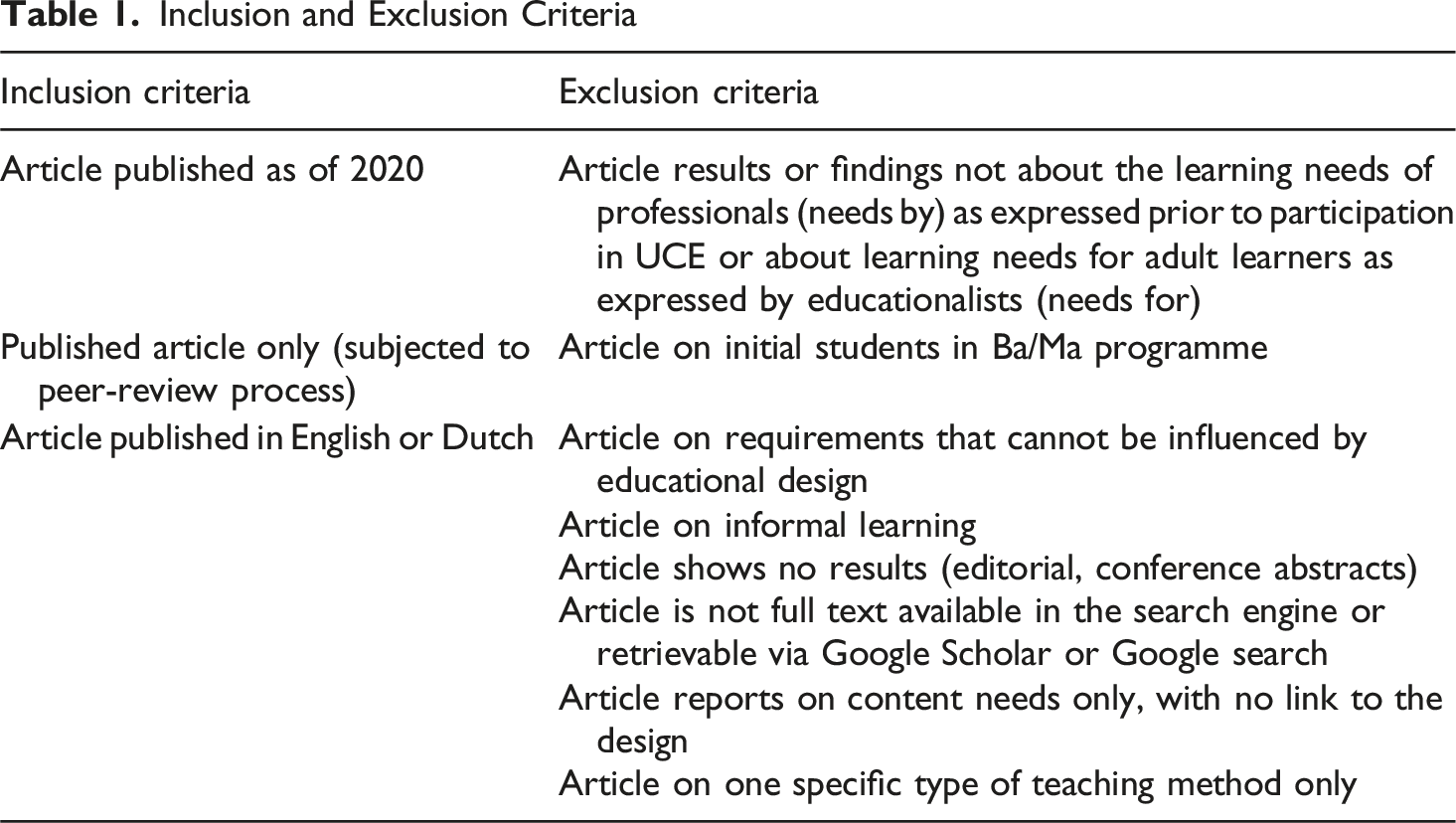
The search yielded 891 articles; after deduplication, 795 remained. These were screened for eligibility, resulting in the inclusion of 65 articles (see Figure 1). PRISMA diagram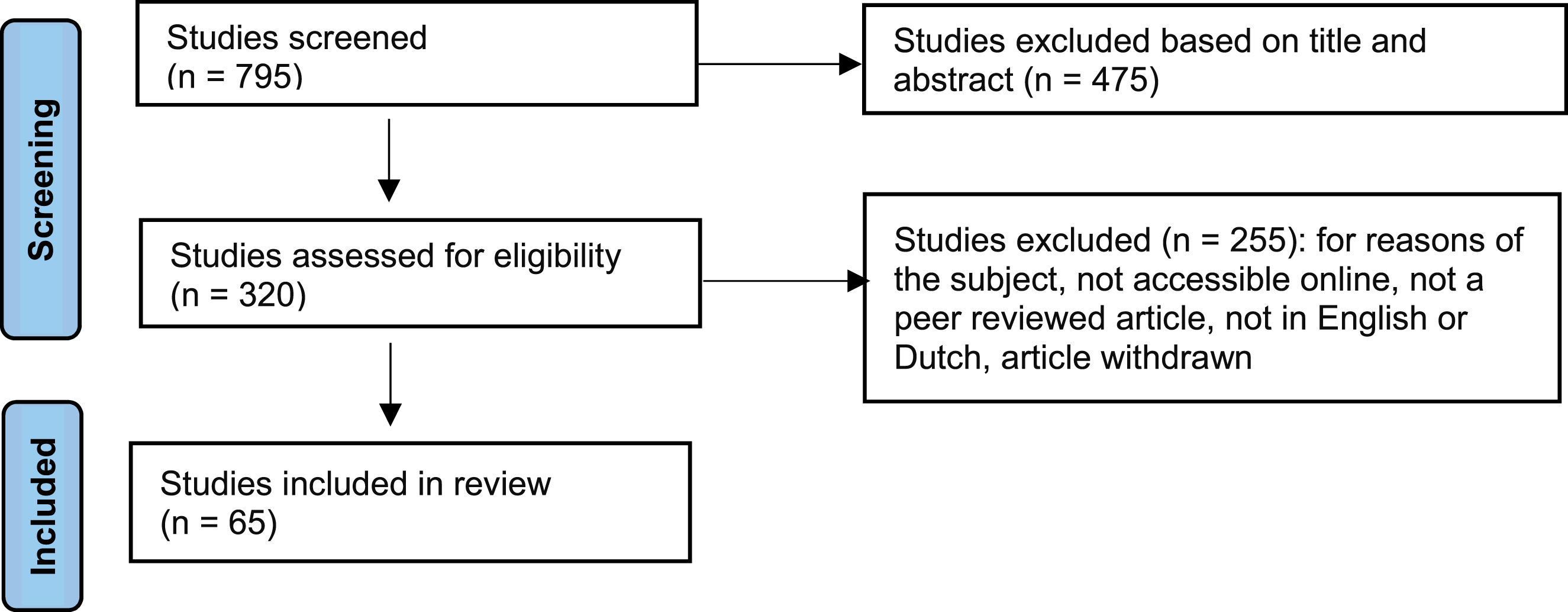
The articles were manually coded in NVivo, distinguishing between needs by and needs for professionals. During coding, empirical data were separated from other text. Conclusions about professionals’ needs were based solely on empirical data, while for educationalists’ needs, both empirical data and cited theory were considered. Article characteristics were recorded in Excel, including context variables such as region, discipline, and type of research.
Results
The dataset of 65 articles includes 62 empirical studies and 3 literature reviews. The empirical research is predominantly qualitative (n = 41), with fewer quantitative (n = 17) and mixed-methods studies (n = 4). Of the 65 articles, 21 focus on teacher training, which is not surprising given that the searches focus on educational research. Additionally, 13 articles address medical sciences, a field with a strong emphasis on training due to the importance of continuous development. About one-third of the articles (n = 19) originate from Asia, followed by Europe (n = 16) and North America (n = 13).
Spiderweb Framework
The spiderweb framework by van den Akker (2013) was used to categorize the findings and relate these to UCE design. This framework outlines 10 interrelated course design components that must be balanced to ensure curricular alignment: rationale, objectives, content, assessment, learning activities, teacher role, materials and resources, grouping, location, and time. For clarity, the components are clustered in this article (see Figure 2). Spiderweb framework (van den Akker, 2013) with categorization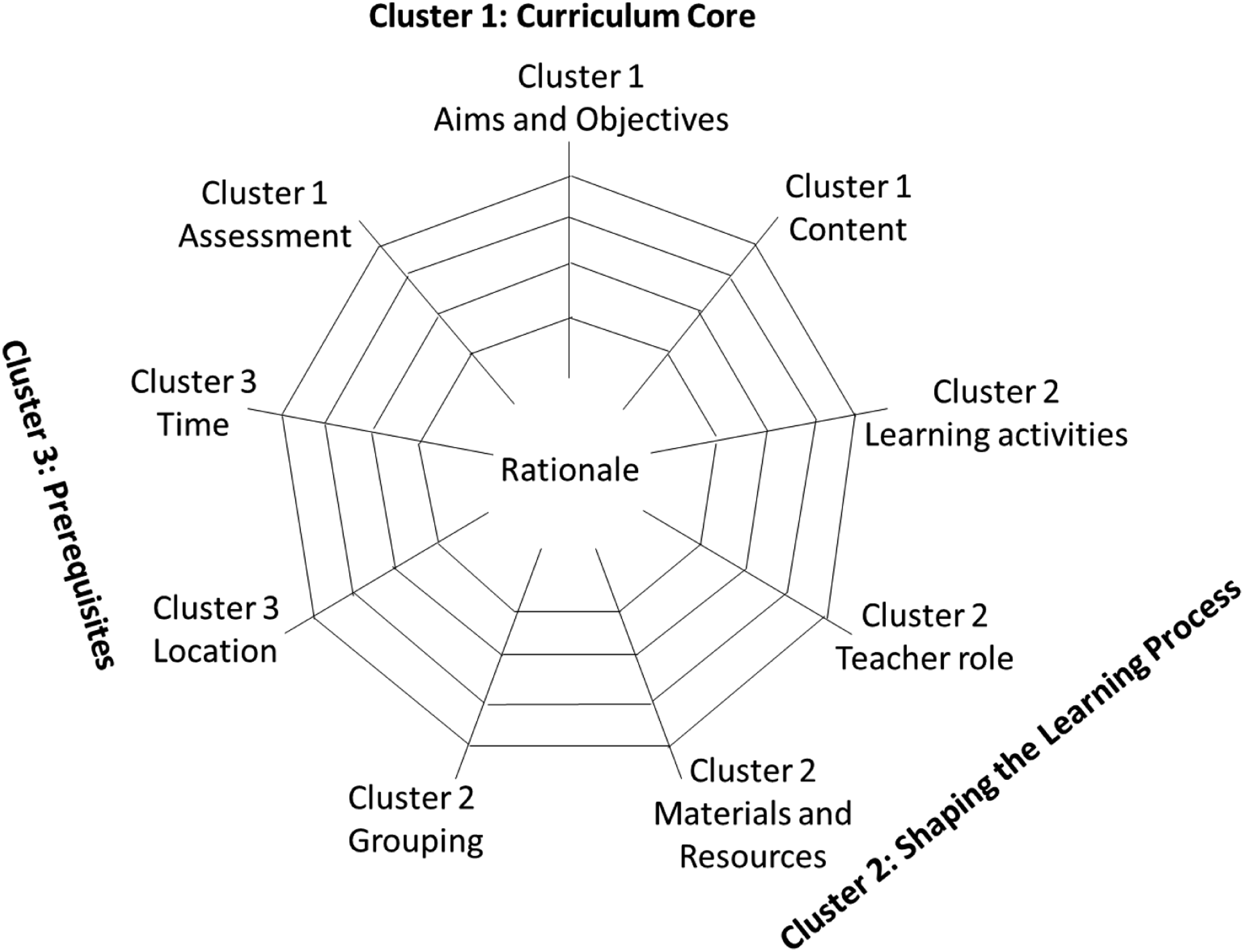
The component ‘rationale’ – which is placed at the centre of the framework and refers to why professionals are learning – is not discussed separately. In all articles in the dataset, the central curriculum aim is LLL – to maintain up-to-date knowledge and skills. Its implications for UCE design are addressed through the remaining nine components.
Cluster 1: Curriculum Core
Cluster 1 covers the core elements of educational design: objectives, content, and assessment. As this study focuses on general guidelines for curriculum components, needs related to specific content are excluded.
A key need regarding UCE objectives and content, expressed by both employers (Cronholm, 2021) and professionals (Arévalo Gross et al., 2023; Darwish et al., 2023; Uzorka et al., 2023), is
Several measures can enhance relevance. First, professionals want UCE to be demand-driven (Cronholm, 2021; Mozelius et al., 2024), which may also involve a preference for personal goals (Boulay et al., 2023; Koskimäki et al., 2021; Nuttall, 2024). To develop demand-driven UCE, professionals emphasize the importance of a systematic needs analysis (Koskimäki et al., 2021; Mozelius et al., 2024; Vural & Başaran, 2021). Ideally, input is collected from a diverse range of stakeholders (Cronholm, 2021; Ercan & Ivanova, 2020; Quilliam et al., 2023), especially when they represent different roles in the supply chain and vary in organizational size (Cronholm, 2021). In addition, analysis of professional practice ensures content specificity (Boulay et al., 2023; Erarslan, 2020; Koskimäki et al., 2021), while context specificity requires a separate analysis (Kimav & Kürüm-Yapicioğlu, 2021; Quilliam et al., 2023; Uzorka et al., 2023). Educationalists likewise view needs analysis and professional practice analysis as essential in UCE design, as they facilitate the alignment of objectives, content, and assessment with the needs of (potential) participants and enhance the impact on learning outcomes (Cronholm, 2021; Fergusson et al., 2022; Pavlyk & Lysohor, 2021).
Another measure to enhance relevance is to meet professionals’ need for co-creation in both the UCE design phase (Cronholm, 2021; Darwish et al., 2023; Erarslan, 2020; Mozelius et al., 2024) and the assessment phase (Cronholm, 2021). Educationalists also advocate involving companies (Cronholm, 2021; Fergusson et al., 2022; Quilliam et al., 2023) and participants (Stojanović & Yelich Biniecki, 2023) in course development and in evaluating intended learning outcomes. Cronholm (2021) and Mozelius et al. (2024) emphasize the added value of treating companies as partners rather than mere information providers. Collaboration in UCE development and evaluation fosters mutual learning, benefitting both course development and the exchange of business knowledge (Cronholm, 2021). To safeguard course relevance, academia is advised to establish ongoing collaboration and conduct regular reality checks (Cronholm, 2021; Erarslan, 2020; Fergusson et al., 2022). However, maintaining academic standards in both course content and development remains essential in joint university-company partnerships (Cronholm, 2021; Mozelius et al., 2024).
Regarding
Educationalists underscore the value of assessment for both in-course and long-term learning when it includes regular reflection and feedback (Boyle, 2023; Cronholm, 2021; Sood et al., 2024). Assessment for learning helps professionals understand their strengths and needs and supports continued LLL – especially when authentic assessment is used, replicating workplace tasks and performance standards (Boulay et al., 2023; Fergusson et al., 2022; Sood et al., 2024).
Professionals express specific expectations of research universities as providers of continuing education. They seek academic depth, a strong theoretical foundation, and insight into recent developments (Beqiri, 2020; Khilukha et al., 2020; Takagi & Marroquin-Serrano, 2024). This desire for in-depth knowledge may conflict with professionals’ need to allocate time for peer exchange. However, it aligns with the quality standards emphasized by educational experts, who stress the importance of building a solid canonical knowledge base in UCE (Arévalo Gross et al., 2023; Du et al., 2020; Mozelius et al., 2024).
Cluster 2: Shaping the Learning Process
This section clusters the design components that shape the learning process during the course: learning activities, grouping, teacher role, and materials and resources. Professionals express two clear needs regarding the learning process: practical relevance and collaborative activities.
The need for
Critical reflection on past experiences, combined with conceptual knowledge development, fosters meaningful learning according to educationalists (Aarto-Pesonen & Piirainen, 2020; de Freitas & Días, 2023; Du et al., 2020). It enables reinterpretation of prior experiences and integration of new information with prior knowledge (Aarto-Pesonen & Piirainen, 2020; de Freitas & Días, 2023; Du et al., 2020).
Gaining experiences during UCE also holds practical value, which enhances professionals’ motivation (Anderson, 2020; Lyngdorf et al., 2022; Peters et al., 2022). Professionals report that learning from experience during UCE is most effective when it takes place in learning environments that mirror their work context (Eraslan, 2020; Kimav & Kürüm-Yapicioğlu, 2021; Quilliam et al., 2023). Educationalists support this view (Du et al., 2020), emphasizing the importance of authentic tasks and the contextual specificity of the learning environment to facilitate workplace implementation (Anderson, 2020; Ciampolini et al., 2020; Lyngdorf et al., 2022; Santos-Meneses et al., 2023). Seeing successful applications by peers enhances professionals’ motivation for learning (Anderson, 2020), and experiential learning clarifies the value of learning objectives (Aarto-Pesonen & Piirainen, 2020; Du et al., 2020). Practice should be combined with learning activities that help professionals structure and evaluate experiences, connect them to theory, identify areas for improvement (Fergusson et al., 2022; Ibáñez-Carrasco et al., 2020), and deepen knowledge (Aarto-Pesonen & Piirainen, 2020; Buseyne et al., 2023). A safe learning space is essential and must be actively safeguarded by educators (Kimav & Kürüm-Yapicioğlu, 2021; Lash et al., 2024; Vural & Başaran, 2021). Reforming beliefs and understanding their relevance for personal and professional identity can provoke dissonant emotions (Aarto-Pesonen & Piirainen, 2020; Lash et al., 2024; Lyngdorf et al., 2022). Educators may contribute to this development process by offering emotional support (Aarto-Pesonen & Piirainen, 2020; Boateng et al., 2022) and fostering motivation, confidence (Abou Said & Abdallah, 2024; Du et al., 2020), and learner autonomy (Abou Said & Abdallah, 2024; Du et al., 2020), enabling professionals to take risks (Aarto-Pesonen & Piirainen, 2020; Boulay et al., 2023; Lash et al., 2024). Moreover, educators can play an important role in demonstrating the value of change, as learners often revert to familiar habits under pressure (Boyle, 2023; Du et al., 2020).
Anticipating post-UCE application also strengthens practical relevance. Learning activities in which professionals design products or practices for future use link formal and informal learning and facilitates transfer and continued learning (Ambler et al., 2020; Lyngdorf et al., 2022; Peters et al., 2022). Community-forming activities that extend into post-course networks help professionals address implementation challenges and sustain learning beyond the course itself (Aarto-Pesonen & Piirainen, 2020; Anderson, 2020; Boulay et al., 2023).
Beyond practical relevance, professionals value
In addition to peer input, professionals value instructor feedback for its external perspective on practice (Erarslan, 2020; Kimav & Kürüm-Yapicioğlu, 2021) and the opportunity to engage with a subject specialist (Quilliam et al., 2023; Toran & Yağan Güder, 2020). Preferred instructors combine subject and theoretical expertise with up-to-date professional knowledge and a participatory, interactive style (Kimav & Kürüm-Yapicioğlu, 2021; Toran & Yağan Güder, 2020; Uzorka et al., 2023).
Co-creation during implementation is another valued form of collaboration. Participants contribute their own expertise (Abou Said & Abdallah, 2024), while guest teachers or co-supervisors from the field offer additional professional perspectives (Cronholm, 2021; Mozelius et al., 2024; Tulloch et al., 2023). Co-creation is appreciated by both professionals and educationalists. Professionals value the opportunity to contribute with their experience (Khilukha et al., 2020) and to propose programme ideas they consider beneficial for their professional development (Cronholm, 2021; Ibáñez-Carrasco et al., 2020). Educationalists, in turn, value co-creation for the opportunities it provides to enhance relevance for professionals and to empower them, both of which positively affect the learning process (Cronholm, 2021; Darwish et al., 2023). Furthermore, educationalists appreciate the enrichment of course design that results from professionals’ input (Cronholm, 2021). Both professionals and educationalists value the sense of mutuality in the learning process that co-creation fosters among professionals from diverse backgrounds and educationalists (Cronholm, 2021; Stojanović & Yelich Biniecki, 2023).
Cluster 3: Prerequisites
Cluster 3 addresses professionals’ needs related to when (time) and where (location) learning takes place. Time-related needs refer to scheduling, duration, and timeliness. Location-related needs refer to the accessibility and quality of the training venue. Additionally, cost emerges as a critical design-related prerequisite.
Of all design components, professionals are most outspoken about
To accommodate time constraints, professionals prefer short, small-scale courses (Collins & Zacharakis, 2022; Eriksen et al., 2022; Nashwan et al., 2022), partly because they want to quickly apply what they have learned (Ennerberg, 2021). However, some – particularly trainee teachers and medical professionals – question the effectiveness of few-hour trainings and prefer continuous training (Toran & Yağan Güder, 2020; Voronenko et al., 2020). Such concerns are expected: teachers in training are taught to consider learning outcomes, while medical professionals emphasize the importance of accurate performance. Educationalists share these concerns, emphasizing the need for extended, regular learning (Anderson, 2020; Boulay et al., 2023; Boyle, 2023) and sustained time-on-task to support individual learning and achievement (Boulay et al., 2023; Kücherer et al., 2021). Rather than compromising on duration and size, they advocate flexibility, enabling professionals to learn in their own time and at their own pace (Mozelius et al., 2024; Neves & Henriques, 2020; Prachyapruit, 2023).
Another time-related need mentioned by professionals is timeliness. They report that training often does not align with their immediate learning needs (Koskimäki et al., 2021). Educationalists recommend just-in-time learning, offering training at the moment of need (Quilliam et al., 2023; Uzorka et al., 2023). Professionals also expect employer-mandated courses to be purposefully timed. Instead of ad hoc, fragmented, and isolated courses, they prefer consistent, structured programmes that support real change (Boulay et al., 2023; Koskimäki et al., 2021; Quilliam et al., 2023).
Accessible
Finally,
Discussion and Implications
Discussion
This narrative review outlines the learning needs of professionals as potential participants in UCE. To inform the design of appealing and effective UCE, these needs are examined from two perspectives: those articulated by professionals themselves and those identified by educationalists.
In relation to the principles of adult education and adult learning discussed earlier (Knowles et al., 2020; Merriam, 2017), our findings indicate that professionals’ needs are, in general, not fundamentally different. The distinction lies in the specific content and context that need to be addressed to ensure relevance. This applies not only to professionals but also to any other specific group of learners. Notably, professionals did not articulate needs related to SDL. This may be because we focused only on their needs prior to engaging in an LLL activity. Except for teachers in training and medical staff, most professionals are not concerned with how the learning process is directed beforehand. It is likely that they only recognize a misalignment between learning methods and their preferences during the activity itself.
The findings of this study indicate that, broadly speaking, the learning needs of professionals – as perceived by themselves and by educationalists – overlap, though typically for different reasons. A key theme is professionals’ emphasis on relevance, which enhances their commitment to learning and therefore promotes both learning outcomes and application in practice. In addition, both parties support collaborative activities and co-creation in the design and implementation of UCE. However, in some areas, these perspectives diverge. While professionals prefer short, small-size UCE programmes, educational theories emphasize the need for active processing, practice, and repetition. These require sustained engagement and extended time-on-task to foster deep learning. According to educational experts, deep learning supports knowledge retention and the development of critical thinking skills, both of which are essential for applying new knowledge effectively in practice (Biggs & Tang, 2011; Bryce & Blown, 2024).
Additionally, while educational theory stresses the value of assessment of learning, professionals do not mention a need for summative assessment. One possible explanation is that professionals prioritize immediate applicability over formal course completion (Knowles et al., 2020; Merriam, 2017). Alternatively, they may lack awareness of the conditions necessary for effective learning.
The articles on which this review is based come from different regions in the world. However, this article is framed within Dutch and European LLL policy, and the findings are written with this specific context in mind. Some findings that we present may turn out differently in other contexts. For instance, co-creation in UCE design can be less effective in a culture in which hierarchy between managers and employees prevents equal input.
This study focused on professionals’ needs prior to UCE. Post-participation satisfaction was not examined. Given the goal of promoting UCE uptake, this is a logical focus: course design needs to appear attractive during the search phase. However, future research on satisfaction during or after participation could further clarify professionals’ needs throughout the learning process – which is also crucial for maximizing educational impact.
The use of the spiderweb framework (van den Akker, 2013) could have limited the analysis to aspects predefined by the model. However, by applying the framework only after the coding phase, this limitation was avoided. This approach allowed themes such as affordability to emerge more clearly.
Implications
This study contributes to the knowledge about the target group’s needs and the design of UCE, an area in which scientific research remains limited (Cendon, 2018; Thunnissen, 2025). It also demonstrates the relevance of the spiderweb framework (van den Akker, 2013) for UCE design. Although originally developed for initial education, the framework proves well suited to describing design-related needs in the context of UCE.
This study highlights that meeting professionals’ needs requires embedding relevance to and alignment with work practice in all design components across all stages of UCE – design, implementation, and completion. This entails 1. gathering input on learning needs from various stakeholders to understand participants’ professional contexts and pressing development issues, and involving them in the design process, 2. designing learning activities that offer directly applicable and well-substantiated insights, facilitate the actual application of newly acquired knowledge in practice, and link to informal learning to sustain learning beyond the course itself, 3. involving professionals actively in the implementation phase, enabling them to share experiences and pursue personal learning goals, 4. engaging trainers who understand participants’ work contexts and draw upon their existing knowledge and experience during the course, 5. offering certification that provides value for professional practice, either through societal recognition or as a stepping stone for further education, and 6. identifying – once specific participants are known – individual learning goals, prior knowledge and experience, key characteristics relevant to the course subject, and any useful case material they can contribute.
Compared to formal, accredited education, the greater degree of freedom of non-formal education offers more opportunities to adapt the design to these professional learning needs.
To ensure relevance, this study underscores the importance of designing UCE in coordination or co-creation with the professional field. Mutual exchange between universities and practitioners enhances UCE design by deepening the understanding of each other’s contexts. Frequent contact with the professional field enables universities to stay informed about current developments and emerging needs, allowing for a timely response. However, in higher education institutions where teaching schedules for initial education are fixed before the summer, it is challenging to engage teachers with relevant content expertise throughout the year. Regular collaboration within a community involving universities and the professional field can create opportunities to anticipate UCE requests. Such collaboration also encourages employers to develop professionalization plans with their staff, reducing ad hoc training and fostering more sustainable change. Further research is needed to determine the optimal format, frequency, and responsible actors for contact between universities and the professional field. Ideally, ideas for UCE development arise from ongoing collaboration – such as communities of practice or practice-oriented research – so that contact to initiate new programmes does not require additional time or effort. In some research university programmes, such as teacher education, medical science, and veterinary science, continuing education has long been developed in close cooperation with the professional field. Based on our experience, this is less common in other programmes at research universities, where UCE remains largely supply driven and often repurposed from existing courses in initial education. Stronger examples of collaboration with the professional field may therefore already exist within universities themselves.
The needs of professionals and those identified by educationalists do not always align, nor do the needs among professionals themselves. However, it is important that the perspectives of educationalists are given precedence, as they offer the pedagogical expertise required to ensure effective learning – provided that the design also responds adequately to professionals’ needs so that it is appealing to them. A solid understanding of educational theory is essential for making sound design choices that respond to professionals’ needs without compromising the achievement of learning objectives. Therefore, combining subject-matter expertise with educational design knowledge within the development team contributes to more effective course development.
There is value in informing professionals about the rationale behind UCE design aimed at fostering deep learning and promoting transfer to practice. Marketing materials for UCE can include such information to help professionals make informed choices about LLL activities that maximize outcomes, enabling them to make efficient use of their limited time. Similarly, explanations of key design choices at the start of a UCE activity can support the learning process. When professionals understand what is required for effective learning, it enhances their engagement and helps them shape their own LLL trajectory more deliberately – benefiting their development over the long term.
Conclusion
This study shows that both professionals and educationalists recognize the importance of relevance to work practice and collaborative learning activities in UCE design, though typically for different reasons. Professionals prefer short, small-scale courses that accommodate time constraints and enable immediate application of new knowledge. Educationalists, by contrast, express concern about such formats, emphasizing the need for extended, regular learning and sustained time-on-task to support individual learning and achievement. They also highlight the importance of assessment, combined with reflection and feedback, for both in-course and long-term learning – whereas professionals rarely articulate specific needs in this area. Professionals value the university for its academic depth, recent developments, and credibility.
Designing relevant UCE requires integrating information exchange with the professional field into the university’s operational processes. Universities can support professionals in making choices that contribute to their long-term development by clarifying what high-quality education requires. This includes explaining the rationale behind specific design choices and learning activities, both in course descriptions and during implementation. Representing educational theory within the design team enhances the ability to make well-informed decisions that align with professionals’ needs while maintaining educational quality. These insights can inform the formulation of design principles for UCE development, supporting universities in positioning themselves as attractive providers of continuing education. Further research may explore to what extent these principles generate the intended effects in practice.
Reflexivity
The four authors acknowledge that their experience in various UCE roles (designer, trainer, advisor, researcher, dean) may have influenced their interpretation. To minimize bias, the second author reviewed the first author’s screening of eligible articles. Furthermore, before the analysis phase, the first author documented prior experiences with effective UCE design to be aware of personal preferences. In addition, all research steps were discussed within the team. We believe that our understanding of the UCE professional domain has enabled us to elucidate the implications of the study’s outcomes for UCE design and UCE practice in the Discussion and Implications as well as the Conclusion sections of this article.
Footnotes

Funding
The authors disclosed receipt of the following financial support for the research, authorship, and/or publication of this article: This research is funded by Utrecht University.
Declaration of Conflicting Interests
The authors declared no potential conflicts of interest with respect to the research, authorship, and/or publication of this article.