



Abstract
Introduction
Gender equality is a priority highlighted in the United Nations’ Sustainable Development Goals of 2015. Although positive changes have been reported worldwide, there is still much to be done to achieve this goal (Seguino, 2016). South Africa has had its own unique history of inequalities relating to the Apartheid regime that include gender inequalities (Engel-Hills & Ibsen, 2020). Amongst others, the COVID-19 pandemic exasperated gender inequalities in the country. Women were more likely to report employment loss than their male counterparts, as well as forgoing work to take care of others, including their children and families (Carli, 2020). Women were also exposed to increased gender-based violence (Flor et al., 2022). During the COVID-19 pandemic, there was a decline in some women’s scholarly productivity in universities (Kibbe, 2020; Krukowski et al., 2021). This phenomenon emphasised challenges experienced by working females in the higher education sector, such as managing work while also having to take care of children, homeschooling children, and fulfilling domestic and other duties (Amano-Patino et al., 2020).
Universities in South Africa, including universities of technology (UoTs), continue to grapple with achieving gender equality (De Welde & Stepnick, 2023). While female enrolment in studies is on the rise, women remain underrepresented in leadership positions and certain academic disciplines (Cross, 2004; Engelbrecht, 2022). The burden of childcare and domestic responsibilities often falls disproportionately on women, hindering their research productivity and advancement opportunities (De Welde & Stepnick, 2023; Taşli, 2007). Furthermore, unconscious bias and a culture that may not fully support flexible work arrangements can create additional barriers for female faculty (Walters et al., 2022). These challenges pose a significant obstacle to creating a truly equitable environment for women to thrive in the academic landscape. This was the main motivator to understand the experiences of female employees in a UoT in the central region of South Africa in relation to gender equality, as some matters pertaining to gender inequalities had been brought to the attention of the University’s Council.
The South African higher education sector is committed to achieving the United Nations’ Sustainable Development Goals (Banda, 2005; Nhamo & Mjimba, 2020). Goal 5 specifically advocates for the empowerment of women and girls with the aim of achieving gender equality. For higher education to contribute to sustainable development in South Africa, there should be gender equality within the university structure itself (Chankseliani & McCowan, 2021). Gender equity implies addressing imbalances in the benefits available to males and females. It entails the fair allocation of programmes, resources, and decision-making to males and females without discriminating based on gender (Pathania, 2017).
In terms of the South African Constitution of 1996, Section 9, all discrimination based on gender, race, and religion is prohibited. This section of the Constitution stipulates that the South African government is committed to redressing gender equality in the country and workplace. It further states that no one should be maltreated or discriminated against, and that everyone has a right to equal opportunity (RSA, 1996). Although the process to eradicate gender inequalities seems slow, South Africa still shows advances in the global endeavour to eliminate gender inequalities (Musetsho et al., 2021). The South African Department of Education adopted the law on discrimination in its White Paper (RSA, 1996). This is an important policy document that addresses transformation in higher education in South Africa post 1994 (Luescher et al., 2021). South Africa has also enacted various measures to address gender disparities, including the National Plan for Higher Education. This plan specifically targets historical inequalities and imbalances within the higher education system.
Addressing gender inequality in higher education in South Africa – specifically also universities of technology – adopts a multifaceted approach, with higher education playing a crucial role (Badat, 2004). Firstly, it is essential to promote inclusivity and diversity within academic institutions (Smith, 2020). This involves challenging discriminatory practices, fostering a supportive environment for women, and implementing policies that ensure equal opportunities. Moreover, integrating gender perspectives into the curriculum can contribute to dismantling stereotypes and promoting a more balanced representation of achievements and contributions in various fields (Badat, 2004).
Background
Gender inequality in South Africa is deeply rooted in historical and cultural factors, stemming from a legacy of Apartheid and patriarchal norms (Musetsho et al., 2021). During this time, women demonstrated against many inequalities such as poor working conditions, discrimination, child labour, and gender inequalities in the workplace (Bozzoli, 2015).
The country’s transition to democracy in 1994 marked a significant turning point, but the impact of past discrimination continues to influence societal structures (Gordon, 1996). Traditional gender roles and stereotypes persist, contributing to disparities in various aspects of life, including education, employment, and representation in decision-making roles. Culture and traditions still affect gender perceptions and roles in South Africa (Ngarava et al., 2022, Endendijk et al., 2013). Persisting stereotypes include convictions that women are inferior to men. Strong patriarch systems prevail. In tribes, men still have control over women, including their bodies. The colonialism culture strengthened this behaviour (Morell et al., 2012). Recently, there is an attempt to move away from colonialism back to African roots. However, religious beliefs continue to exist in African societies that women, by nature, are wicked and weak (Wood, 2019). The duties of South African women are still focused on their household and community contributions. This work that goes without monetary compensation is frequently underestimated and goes unnoticed within the financial system (Johnson et al., 2019; Kabeer & Natali, 2013; Maviza & Thebe, 2023).
The higher education sector in South Africa faces unique challenges (Czerniewicz et al., 2020). Amongst others, gender inequalities have long been prevalent in the sector (Walters et al., 2022). To achieve gender equality in higher education requires the use of various tools, policies to be implemented, institutional commitment, and knowledge and expertise in bringing about organisational change (Mabokela & Mlambo, 2017; Walters et al., 2022). In higher education, gender inequality manifests in multiple ways (Dang & Viet Nguyen, 2020). Despite efforts to increase access to education, women still face challenges in pursuing certain fields of study (Ceci & Williams, 2011; Tereshchenko et al., 2023) and being appointed in leadership positions within academic institutions (Silva et al., 2023). Discrimination, stereotyping, and unequal opportunities hinder the full participation of women in academic and research activities (Ceci & Williams, 2011; Mousa, 2022; Williams, 2013). Additionally, there is a persistent gender pay gap among academic staff, reflecting broader societal inequalities (Carli, 2020; Dang & Viet Nguyen, 2020; De Welde & Stepnick, 2023).
In universities of technology in South Africa, gender inequality remains a pressing issue that has historical roots (Morrell et al., 2012). Historically, higher education in the country has been dominated by patriarchal structures and traditions that have perpetuated gender disparities. These institutions have often prioritised male students and faculty, resulting in limited opportunities for women to access and excel in technical and scientific fields (Ceci et al., 2014). Additionally, there has been a persistent lack of gender-sensitive policies and practices, which has further marginalised female students and staff (Mdleleni et al., 2021). Despite advancements in recent years, universities of technology continue to grapple with gender imbalances in enrolment, academic representation, and leadership positions, highlighting the need for targeted interventions to address these longstanding challenges.
Since gender inequalities have long been prevalent in higher education (De Welde & Stepnick, 2023; Walters et al., 2022), greater insight into the experiences of women working in the South African higher education context, and how higher education institutions can ensure greater gender equality, is required. Higher education institutions have a responsibility to respond to the SDGs, including gender equality. Persisting stereotypes and challenges that continue to undermine gender equality within the South African higher education system also need to be addressed.
A University of Technology (UoT) in the central region of South Africa was tasked by its Council to investigate matters pertaining to gender inequality within the university. This article stems from this request, but also addresses broader gender inequalities in higher education.
Theoretical framework
In this article, female staff’s experiences of higher education are examined through the lens of Gender and Development (GAD) theory. This theory asserts that genuine economic and social progress is hindered as long as gender inequalities endure (Momsen, 2019; Russel, 2019). Power relations and gender inequalities impact negatively on the development and experiences of women in higher education. The GAD theory emerged in the late 20th century as a critical framework to analyse and address gender inequalities in development processes (Miller & Razavi, 1995). While not attributed to a single founder, feminist scholars and activists played a pivotal role in shaping this theory (Miller & Razavi, 1995).
GAD theory goes beyond simplistic notions of women’s empowerment, emphasising the need to address power dynamics, social structures, and cultural norms that perpetuate gender disparities (Bedford, 2020; Taşli, 2007). It promotes a holistic approach, recognising that development interventions must consider the diverse experiences and roles of both men and women (March et al., 1999; Pless & Maak, 2004). Applied across various disciplines, GAD theory advocates for policies and initiatives that challenge gender norms, empower women economically and socially, and foster inclusive development strategies (Connelly, 2000; Taşli, 2007). By recognising the interconnectedness of gender and development, the theory aims to create more equitable and sustainable societies.
Methodology
Approach and design
The study was conducted at a University of Technology in the Free State Province of South Africa where the researchers are employed. The study was qualitative in nature. Qualitative data gathering was used as it enabled an in-depth insight into the perceptions and experiences of women employed in this university (Sutton & Austin, 2015). Online focus group discussions using Microsoft Teams were held with female staff at different staff levels on their experiences in relation to gender equality matters. This article focuses on evaluating gender equality at the university, responding to the need for a targeted approach to gender equality within the institution.
At the time of data gathering, it was still amidst the COVID-19 pandemic. It was therefore valuable to gain an understanding of the perceptions of women in higher education during this phenomenon in relation to gender equality.
Qualitative research offers a nuanced lens through which the multifaceted landscape of gender equality in higher education can be explored. By delving into individuals’ experiences, perceptions, and narratives, subtle nuances, challenges, and triumphs could be uncovered that quantitative data alone might overlook. This method allowed the researchers to understand the lived realities of female university staff, shedding light on the intricate dynamics shaping gender dynamics within academic institutions (Wright & Geroy, 1988). Through qualitative inquiry, the researchers aimed to capture the depth of personal stories and perspectives, providing a richer understanding of the barriers to gender equality and paving the way for more informed and effective interventions.
Participants
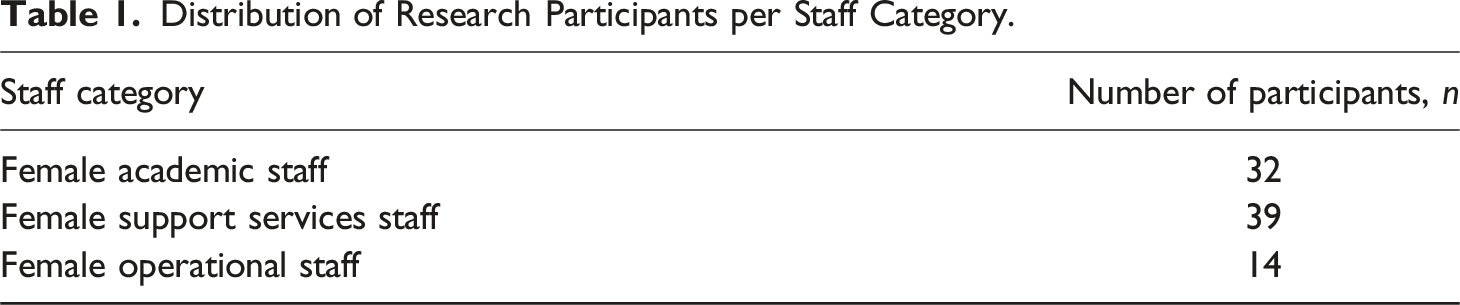
The purposive (qualitative) sampling method was used. A total of 85 female staff members participated in the study on a voluntary basis. Informed consent was obtained from all participants. Participants were informed how the data would be utilised. Three focus group discussion sessions were held with female academic staff, female support services staff, and female operational staff.
Academic staff are staff responsible for teaching, research, and scholarly activities. Their responsibilities usually entail delivering lectures, seminars, and tutorials, conducting research, publishing scholarly work, and supervising postgraduate students.
Support services staff are responsible for providing administrative, technical, or other support services that enable the core functions of teaching and research.
Distribution of Research Participants per Staff Category.
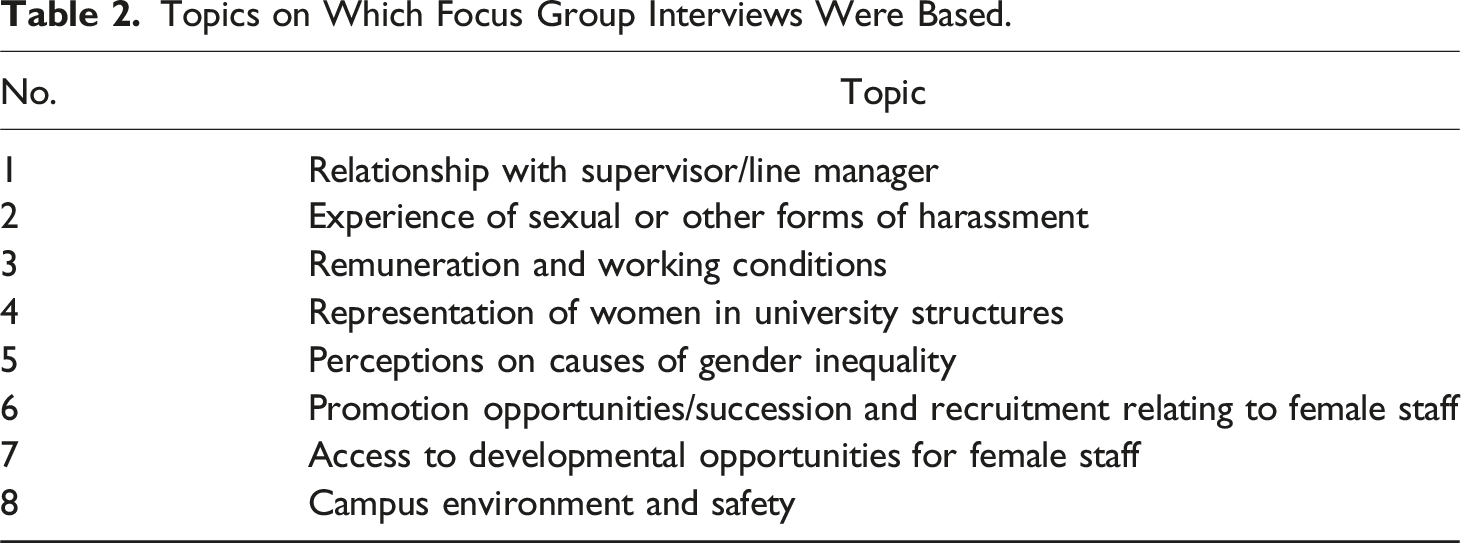
Topics on Which Focus Group Interviews Were Based.
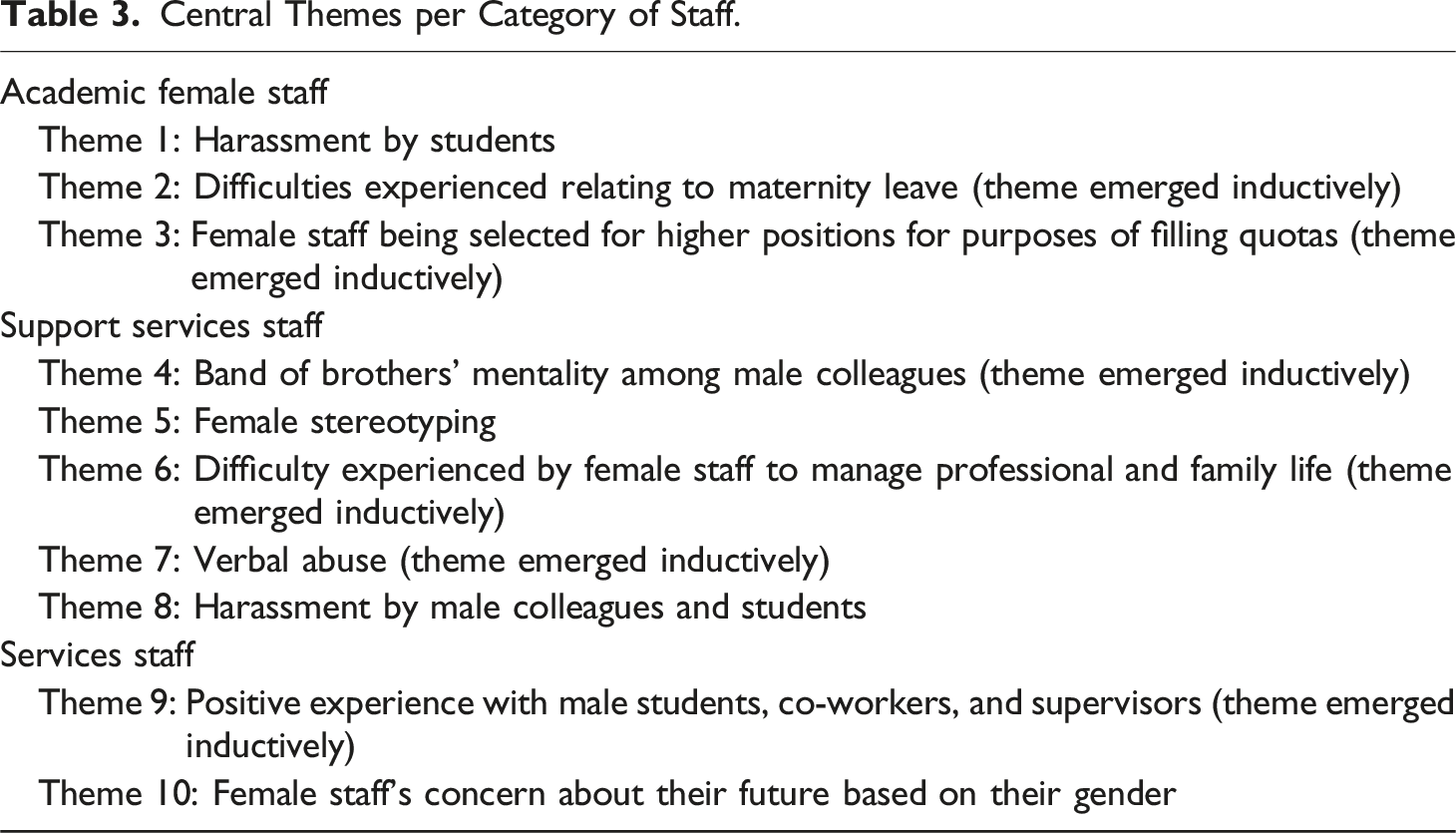
Central Themes per Category of Staff.
The research participant distribution was as follows:
Data collection
To collect the data, qualitative information was collected from the focus group discussions held with participants. The author who conducted the interviews is an institutional researcher and as such is experienced in conducting qualitative research. Facilitating questions were used to guide the conversations. This approach facilitated an in-depth exploration of the lived experiences and challenges of female academics navigating the pandemic’s disruptions to their academic and personal lives. The focus group discussions were held via Microsoft Teams, as contact sessions were not permitted as a result of the COVID-19 pandemic. Recent investigations into online platforms for qualitative focus group discussions suggest that utilising these platforms improves the collection and quality of data. This is because they are user-friendly and budget-friendly, provide data management functionalities, and offer security features (Archibald et al., 2019). Discussions were recorded and transcribed.
The focus group interviews were facilitated around the following topics:
By utilising focus group discussions as the primary method of data collection, a comprehensive analysis of the challenges faced by working female academics during the COVID-19 pandemic was made possible. The urgent need to prioritise and re-imagine gender equality within higher education reform agendas emerged.
Ethical considerations
The researchers obtained permission from the institution to conduct the study. Participants were made aware of the purposes for which the data would be used – amongst others to inform the institution’s Council of the outcome and to write a research article following the study.
Prior to initiating interviews, informed consent was obtained from all participants, emphasising voluntary participation and participants’ right to withdraw from the research at any stage without repercussion. The researchers ensured that all ethical considerations were addressed in the data collection process. Ethical standards were upheld, recognising the importance of transparency and respect for the voices and perspectives of the participants and ensuring their well-being, privacy, and dignity. Confidentiality measures were rigorously upheld, and the identity of participants was protected. Additionally, steps were taken to minimise power differentials, fostering an open and supportive environment that encouraged candid sharing of participants’ experiences.
Data analysis
Thematic analysis was conducted to identify recurring themes and patterns within the focus group discussions. Interview texts were transcribed, and thematic analyses were applied to identify central themes (Braun & Clarke, 2019, 2022, 2023). Thematic analysis was selected since it is a flexible theoretical tool and most effective to analyse transcribed interview discussions (Braun & Clarke, 2019). The procedure of coding and theme development was used. The thematic analysis presented an opportunity for both inductive and deductive approaches to analysis. It allowed for coding explicit (semantic or descriptive) meanings as well as implicit (latent or conceptual) meanings (Braun & Clarke, 2022).
Results
The research confirmed that the COVID-19 pandemic exasperated some gender inequalities experienced by female employees. The results highlight experiences of female staff within a South African university of technology by focussing on their employment conditions, treatment, representation, caregiving responsibilities, gender-based discrimination, and promotion opportunities. The themes that emerged are discussed below per category of staff members who participated in the study.
Academic female staff
Theme 1: Harassment by students
Four academic female participants indicated that they were harassed by students more often than their male counterparts. The participants eluded that they were fearful that students would obtain their cellular phone numbers or harass them on WhatsApp or other platforms. A participant made mention of female colleagues breaking down after being harassed by students: They use WhatsApp to disrespect you and I remember even with my female colleagues in the department they would literally breakdown because of how students will address them.
One participant stated that the harassment of female academic staff by students is something that other staff members warned her about: I learned from other lecturers about some of these things that were even exposed by the media.
All the participants agreed that women should protect themselves from students, especially on social media.
Participants also shared specific instances of harassment where students have made comments on their appearance, took photos of them, searched for pictures of them online, and contacted them at inappropriate times, as is evident from the following response of a participant: Students will say you are so beautiful and also even take my picture. I stopped putting my pictures on platform now as well as on LinkedIn.
Theme 2: Difficulties experienced relating to maternity leave
A participant who had applied for maternity leave indicated that at times, her line manager and supervisor did not respect her maternity leave and asked her to perform tasks: We are on maternity leave and we would get emails to do work and get requests from other colleagues that are standing in for us to come to campus and assist them with some of the things, and you are still healing because we just gave birth.
The participant’s reference to “we” gives a sense that more women may have had the same experience.
The biggest problem that the majority of participants alluded to was the cumbersome administrative process of applying for maternity leave, from completing the forms to applying for Unemployment Insurance Fund (UIF) benefits, especially if they took longer maternity leave. The following quote elaborates on this: Our paperwork was never on point. Especially if you prolong your stay, but if you stay on maternity leave only for two months everything is fine because you [sic] still getting paid. But if it gets to a point that you add an extra month you must run around to UIF and you'll find out that you are not registered at the UIF.
Another participant added that: Sometimes the papers are missing. They are not filled in correctly, so you feel like you are the first female to go on leave or maternity leave for a prolonged time.
Theme 3: Female staff being selected for higher positions for purposes of filling quotas
The majority of the participants who applied to and successfully gained a higher position stated that they felt like they were appointed for the sake of filling quotas. One participant stated the following: After a few months, I realized that you know, I was there just to tick the box of the organisation to say there is transformation, there's women specifically women of colour.
Support services female staff
Theme 4: Band of brothers’ mentality among male colleagues
The support services female staff agreed that some of their male colleagues form a ‘band of brothers’ and are not enthusiastic to work with female colleagues. Some of the participants mentioned concerning instances where they were treated different and with disrespect because they are female. One participant mentioned that a colleague requested female colleagues to complete extra forms and go through additional processes that were not required from their male counterparts: I would ask my supervisor how these steps are important and he would go on and be rude. I would go to the male colleagues and ask them if they were also asked to do these things and they would always say that they did not have to write anything, while I would have to produce a report, a conference paper from that.
A participant stated to which the others agreed that during their interaction with male colleagues, they are at times shrugged off: When I say something, he would always reply with something smug to a point where I felt that I would rather not ask anymore, because I don't want to deal with this guy.
A participant mentioned a specific male colleague in whose presence she kept quiet or whom she avoided because of how he treated her: I know another woman and she's doing her best to stay away from him. So, whenever we are in meetings these days, I just keep quiet if he's available. If he is not there, yes, I will say something.
Theme 5: Female stereotyping
Another theme that emerged is female stereotyping where female support services staff indicated that they are undermined by male colleagues. Some participants felt they are stereotyped as emotional and are deemed by males to be prone to overreact, as is evident from the following statement made: My male colleagues think I exaggerate when I’m trying to express the seriousness of something, or an issue, or trying to raise a point in a meeting.
Participants also indicated that they sometimes would avoid raising a concern or contributing to meetings because their opinions are dismissed: Especially if the supervisor or line manager is a male, the moment you raise something they rally the troops, so to speak and then there's a wall.
Another participant stated the following: The minute a woman talks, it's a problem. It's like a woman should shut up. She should know her place. It's like a woman should be in a kitchen.
Two participants eluded that women become targets if they speak up, especially when they work for a male line manager, as is evident from the following statements: We become a target. You get marginalized. It's like there's this misogynistic culture. When you as a woman speak up you will find that even men who aren’t necessarily friends will gang up on you. It is like woman are the universal enemy and then they [men] gang up against women.
A few participants indicated that men would make meetings chaired by female colleagues ungovernable, as is evident from the following feedback of a participant: Some of our female colleagues are chairpersons at other committees and then in those meetings, every time there will be a cohort of these males that will just be making the meetings ungovernable.
The participants eluded that they feel sorry for women who chair meetings or occupy higher positions because they are undermined and bulldozed. One participant stated the following: They want to show the chairperson that they can actually sit where they are sitting.
Another participant indicated that: You are so depleted you don't know even how to move on with this committee.
Theme 6: Difficulty managing professional and family life
The female support staff mentioned that managing their personal lives as working mothers is difficult, as is evident from the following statement: I am required to work after hours, we are mothers, but we are called on the weekend.
One participant stated that she is made to feel incompetent by her male manager when she cannot perform a task over a weekend: It makes you feel like we're incompetent or you have failed, or you are nothing. And then you'll be sent an email on a Saturday saying, ‘I want it on my table Monday morning’. They tend to forget that you know we are juggling these other responsibilities like the parents of kids.
Theme 7: Verbal abuse
Participants also indicated that when they were unable to meet unrealistic deadlines, they were reprimanded like children by their supervisors: You know when my boss phones me he will talk to me like you won’t even talk to a child.
Another participant agreed that male line managers will talk to female employees in an abusive manner, but not to their male colleagues, and that male colleagues at times shout at female colleagues: And then he will use my time over Saturday to shout at me.
Theme 8: Harassment by male colleagues and students
Women in the support services experienced various forms of harassment and sexual harassment from colleagues, as is evident from the following statement made by a participant: We have been forced to change our behaviour so we don't lead men on and it's not fair that we have to change our personalities in order to make our male colleagues think we’re not interested.
One participant indicated that male colleagues would sometimes ask females to post more photos of themselves on social media. Another participant indicated that she approached Human Resources about challenges with and harassment by male colleagues only to find out that HR had shared the information with other staff members: I have spoken to HR and then I hear other people at work know about my issue. You wonder where did this person here about this?
During the focus group discussions participants were, amongst others, asked to provide any additional comments in relation to being harassed. The following question was posed to them: ‘Will you feel comfortable to report harassment?’ Almost all the participants indicated that they would not. It was also mentioned in a group discussion that women who have disagreed with male colleagues are constantly harassed via e-mail and other correspondence.
Operational staff
Theme 9: Positive experience with male students, co-workers, and supervisors
The female operational staff were mostly positive about their experiences working with male colleagues, students, and supervisors. They did, however, allude that the main reason might be that most staff and students were working and studying off campus due to COVID-19, and that the campus was therefore quiet at the time.
Theme 10: Female staff’s concern about their future based on their gender
Some of the operational staff were concerned that they would be overlooked for permanent positions because they are female.
Discussion
The research findings concur with other literature on gender inequality (Dang & Viet Nguyen, 2020; De Welde & Stepnick, 2023; Walker, 2018) and the experiences of female employees and their struggle to balance work and duties at home (Amano-Patino et al., 2020; Carli, 2020). Similar to other studies conducted (Kibbe, 2020; Krukowski et al., 2021; Walters et al., 2022), participants reported that the number and quality of their scientific publications are essentially incompatible with caring for children, while academics with fewer care duties are aiming for the stars.
Four of the academic and support services participants reported that they were harassed by students, whilst the majority of participants from academic, support services, and operational staff focus groups indicated that they had difficulty to apply for maternity leave and were requested to work during their maternity leave. The majority of participants in managerial positions from the academic and support services staff focus groups indicated that they were selected for higher positions for purposes of filling quotas, and that they were undermined by male colleagues and supervisors. This view was supported by participants in non-managerial positions. Other studies (Byron & Roscigno, 2014; MacKinnon, 2015; Oyenwunmi, 2013) also echoed these experiences of female staff.
Most of the support services female staff reported or agreed that some male colleagues prefer to work solely with other male colleagues; that they feel voiceless in the presence of male colleagues; that women who speak up become targets; that they had difficulty managing professional and family life; that they were treated as unequal and unfit; and that they were at times harassed by students. These findings were also reflected in the literature (Amano-Patino et al., 2020; Anthony, 2018; Badat, 2004; MacKinnon, 2015).
All the operational staff participants reported that they had a positive experience with male students, co-workers, and supervisors, but that they are concerned about their future as a result of prevailing gender stereotypes. Badat (2004) also reported on the presence of gender stereotypes in higher education.
Almost all the participants indicated that they did not feel comfortable reporting harassment to the institution’s Human Resources Section.
The results show some gaps within the institution in relation to applying the principles of GAD theory, which underpins this research, and underscore the urgency of breaking down gender stereotypes and aligning higher education policies with gender equality imperatives, ultimately contributing to a more just and sustainable society. The results emphasise the need for true transformation in higher education institutions in relation to gender matters and in alignment with GAD theory. It is evident from the research results that power relations and gender inequalities endure within the particular higher education institution (Momsen, 2019), impacting negatively on the experiences of women working in the institution. It is imperative to address the power dynamics, social structures, and cultural norms that emerged and perpetuate gender disparities (Bedford, 2020; Taşli, 2007).
The themes that emerged highlight power imbalances between genders (Wingood & DiClemente, 2002). Students and male colleagues may feel entitled to behave inappropriately due to traditional gender roles where men hold more power. This can create a hostile environment that impedes women’s ability to thrive in higher education.
In conclusion, all of these themes illustrate how power relations and gender inequalities create a complex landscape for women in higher education. By acknowledging these challenges, institutions can work towards dismantling these barriers and fostering a more equitable environment where women can reach their full potential.
Limitations and recommendations for future research
The researchers acknowledge the limitations of the study, such as potential participant bias and the qualitative nature of the research. The study was conducted within a South African University of Technology, and its findings are therefore limited to this specific context. Proposed avenues for future research include conducting longitudinal studies to assess the long-term impact of the COVID-19 pandemic on gender equality in higher education and the impact of gender inequality on the long-term sustainability of universities.
Conclusion
Drawing on empirical data, policy analysis, and qualitative insights specific to universities of technology in central South Africa, this article emphasises the urgent need to re-imagine gender equality within the context of higher education reform in the country (Shanyanana, 2014). Power relations and gender inequalities have a detrimental impact on the development of women in these institutions. For universities of technology to contribute effectively to the Sustainable Development Goals (SDGs) and fulfil their role in national development, gender equality must be prioritised and reconceptualised. This involves acknowledging and addressing women’s unique traditional and cultural burdens within the higher education sector.
Gender equality is not just a moral imperative but is crucial for achieving a just and equitable society. Aligned with SDG 5, which focuses on gender equality, addressing disparities faced by women employed in the South African higher education sector is paramount (Franco et al., 2020). Sustainable economic and social development in central South Africa hinges on addressing gender disparities, necessitating a comprehensive and multifaceted approach to integrating gender equality principles within higher education reform agendas, as advocated by the GAD theory.
Higher education institutions can actively engage in research and advocacy to address gender inequality and its root causes. This includes conducting studies on the experiences of women in academia, collaborating with external organisations, and disseminating information to raise awareness. By leveraging their intellectual and research capabilities, universities can contribute to the development of evidence-based solutions that go beyond individual empowerment to address systemic issues.
A comprehensive strategy is required to tackle gender inequality in central South Africa, considering its historical context and involving higher education institutions actively. Through creating an inclusive and equitable academic environment, promoting gender-sensitive research and education, and advocating for systemic change, these institutions can play a pivotal role in shaping a more gender equal society.
By prioritising gender equality, higher education institutions can contribute to national development goals and pave the way for a transformative and inclusive educational landscape that empowers all genders. The research findings underscore the urgency of aligning higher education policies with gender equality imperatives, ultimately contributing to a more just and sustainable society. Addressing gender inequality is therefore essential for the long-term sustainability of universities. By implementing gender-responsive policies and practices, promoting gender equity in all aspects of university life, and fostering a culture of inclusivity and respect, universities can create an environment that attracts and retains diverse talents, nurtures creativity and innovation, and contributes to the advancement of knowledge and societal progress.
Achieving gender equality within universities will not only benefit the institutions themselves but also strengthen their impact on society by modelling inclusive practices, promoting social justice, and preparing graduates who are equipped to address complex global challenges in a sustainable manner (Milem et al., 2005). This underscores the importance of prioritising gender equality within higher education institutions to foster an environment towards the realisation of SDG 5 (Jeevanasai et al., 2023).
Furthermore, by embracing gender equality, universities can contribute to multiple SDGs beyond Goal 5. Gender equality is intricately connected to other goals, such as Goal 1 (No Poverty), Goal 4 (Quality Education), Goal 8 (Decent Work and Economic Growth), and Goal 10 (Reduced Inequalities). For instance, promoting gender equality in higher education can improve access to quality education for women, which in turn can lead to poverty reduction and economic empowerment. Furthermore, by addressing gender disparities in academic and professional settings, universities can contribute to reducing inequalities and creating more inclusive and diverse learning and working environments.
In conclusion, this research article addresses the concern of the Council of a University of Technology in the central region of South Africa in relation to gender inequality by providing a comprehensive analysis and recommendations tailored to universities of technology in central South Africa, aiming at fostering an environment that is equitable, inclusive, and aligned with the Sustainable Development Goals.
Footnotes
Declaration of Conflicting Interests
The author(s) declared no potential conflicts of interest with respect to the research, authorship, and/or publication of this article.
Funding
The author(s) disclosed receipt of the following financial support for the research, authorship, and/or publication of this article: The authors received financial support from the Central University of Technology, Free State for the publication of this article.
