




Abstract
Youth wellbeing is a pressing international problem, and it is a key concern of educational institutions, considering the substantial amount of time that youth spend in school. Educators require empirically validated and theoretically sound methods to support students’ wellbeing. This article critically examines the literature on youth wellbeing and interventions in positive education and proposes an innovative, social ecological approach to promoting wellbeing in education. Personal Projects Analysis is a complementary approach addressing several gaps identified in existing interventions (e.g. lack of consideration of ecological and cultural contexts, need for a person-centred approach to support unique goals of diverse students). Implications and applications are discussed to demonstrate how school leadership and educators can apply Personal Projects Analysis to promote the wellbeing of all students.
Introduction
Mental health is an indicator of the overall wellbeing of youth around the world (e.g. Global Youth Wellbeing Index; Sharma, 2017). Half of youth participating in a large international survey conducted in 30 countries reported that their lives are too stressful (Sharma, 2017). Youth in Canada and the United States report some of the lowest levels of life satisfaction among developed nations, while those in the United Kingdom report slightly higher levels of life satisfaction (UNICEF, 2013). Canada ranks in the bottom third among developed nations in terms of youth life satisfaction equality, with relatively large differences in life satisfaction levels among Canadian youth (UNICEF, 2016a). The United Kingdom and the United States rank in the middle third (UNICEF, 2016a). In contrast to the United States and the United Kingdom where youth life satisfaction has increased between 2001/2002 and 2009/2010, in Canada, data show a decline in life satisfaction, which has been more significant than in other countries (UNICEF, 2013). Importantly, youth experiencing barriers such as low socioeconomic status and food insecurity are more likely to report lower wellbeing (UNICEF, 2016a, 2016b) and experience inequitable access to opportunities to have happy and healthy lives.
These indices of relatively low levels of youth wellbeing are indicative of barriers to flourishing among this age bracket, and it is a critical health concern that needs to be addressed through evidence-based interventions. Throughout primary and secondary education, students spend approximately 7475 hours in school (Organisation for Economic Co-Operation Development, 2014). Given the extensive amount of time spent in educational settings, the influence that schools have on student wellbeing from an early age is undeniable (Alford, 2017; Morrison and Peterson, 2013; Seligman et al., 2009). The field of positive education emphasizes the role that educational settings can have in promoting youth wellbeing in addition to teaching traditional cognitive skills (Morrison and Peterson, 2013; Seligman et al., 2009). Schools have been identified for this responsibility as they have the potential to provide wellbeing enhancement opportunities early in life to students of all backgrounds (Morrison and Peterson, 2013; Seligman et al., 2009). As traditional models of education are being adapted to incorporate the promotion of wellbeing, it is important to thoroughly understand current intervention models and explore innovative methods of improving and maintaining student wellbeing. As the nature of wellbeing and its determinants have been and are still debated on a theoretical level, it is also essential to understand current intervention models against the backdrop of the theories that underpin interventions.
This article explores prevalent interventions and frameworks that have been developed and implemented worldwide to support the wellbeing of students at school. Focusing on research conducted from the standpoint of one of the most prominent contemporary theoretical perspectives on wellbeing – the approach of positive psychology – we review several interventions and identify the gaps in current programming and research. While several interventions have been developed to address the social issue of student wellbeing, we conclude that there is a need for more contextualized social ecological approaches embedded within school settings to support the wellbeing of the increasingly diverse student body. Building upon the work of Little (2014), we then propose Personal Projects Analysis (PPA) as a complementary framework and intervention tool to support youth wellbeing in a person-centred, social ecological manner. PPA is informed by a comprehensive, evidence-informed framework, which is critical to the success of any intervention programme (Weissberg et al., 2015; White and Murray, 2015).
Positive psychology and wellbeing
Positive psychology is an increasingly recognized field of psychology with the primary goals of defining and promoting what makes individuals and communities experience wellbeing (Seligman and Csikszentmihalyi, 2000). A review of the literature identified that between 1999 and 2013, 1336 positive psychology articles were published in peer-reviewed journals, focused on wellbeing, character strengths, hope, gratitude, resilience and growth (Donaldson et al., 2015), and in these studies, wellbeing was the construct most often examined (Donaldson et al., 2015).
A core construct in positive psychology, wellbeing is broadly defined as ‘a positive state of affairs, brought about by the simultaneous and balanced satisfaction of diverse objective and subjective needs of individuals’ (Prilleltensky, 2012: 2). Wellbeing comprises two distinct components: hedonic and eudaimonic wellbeing. Hedonic wellbeing (i.e. feeling good) refers to experiencing positive emotions such as joy and satisfaction with life (Keyes and Annas, 2009; Ryan and Deci, 2001). Eudaimonic wellbeing (i.e. functioning well) refers to actualizing one’s potential through positive personal functioning such as character development, purpose in life and personal growth as well as through positive social functioning such as meaningful relationships and community engagement (Keyes and Annas, 2009; Ryan and Deci, 2001; Ryff et al., 2006). Hedonic and eudaimonic wellbeing have been found to be interrelated but conceptually and empirically distinct (Joshanloo, 2016; Keyes and Annas, 2009). As hedonic and eudaimonic wellbeing have differential patterns of correlations with other variables, they have different determinants (Karademas, 2007; Ryff et al., 2006) that education policy and interventions should target to promote students’ holistic wellbeing.
Despite previous intellectual debates regarding the existence of a distinction between hedonic and eudaimonic wellbeing and its usefulness, several researchers (Keyes, 2006, 2013; Seligman, 2011) now advocate for an approach integrating both components (Henderson and Knight, 2012). This integrated approach is applied in the popular Positive Emotion, Engagement, Relationships, Meaning and Accomplishments (PERMA) model developed by Seligman (2011), which is a multidimensional model of wellbeing (also labelled ‘flourishing’) that encompasses aspects that relate to both hedonic and eudaimonic wellbeing: Positive emotions, Engagement, Relationships, Meaning, and Achievement. This model includes several similarities with other existing frameworks (Hone et al., 2014). Like other frameworks, it focuses on multiple hedonic and eudaimonic aspects of wellbeing (Hone et al., 2014), and scores obtained with its associated measurement tool (PERMA-profiler; Butler and Kern, 2016) correlates very highly with an existing measure of wellbeing (i.e. subjective wellbeing, including life satisfaction, positive affect and lack of negative affect; Goodman et al., 2018). A unique advantage of the model lies in the fact that its associated measurement tool is relatively comprehensive, yet brief, and that the tool includes more than one item per construct (Hone et al., 2014). Furthermore, the short list of aspects included in this parsimonious model is an advantage because each aspect can be connected to existing interventions to recommend to people in order to promote their wellbeing (Seligman, 2018). For more information on the model, its comparison with other wellbeing models and its applicability with students, readers are invited to consult Goodman et al. (2018), Hone et al. (2014), Kern et al. (2015b) and, Seligman (2018).
Although the conceptualization of wellbeing as encompassing hedonic and eudaimonic wellbeing is considered relevant for understanding student wellbeing (Norrish et al., 2013; Shoshani and Steinmetz, 2014; Slee and Skrzypiec, 2016) and we adhere to this conceptualization, there is limited empirical research distinguishing experiences of hedonic and eudaimonic wellbeing in youth. The few available studies suggest that adolescents have high levels of hedonic wellbeing, while experiencing a deficit in eudaimonic wellbeing, and they particularly report lower levels of positive social functioning (Keyes, 2013; Public Health Agency of Canada, 2011). Research with adults and college students identifies the importance of achieving high levels of both hedonic and eudaimonic wellbeing as the two are necessary to achieve optimal outcomes, including high academic performance and fewer mental health issues (Keyes, 2006, 2013; Keyes et al., 2012). Although the presence of wellbeing is different from the absence of psychological disorders (Keyes, 2002), findings suggest that, if elevated, wellbeing will reduce the risk of future psychological disorders (Keyes, 2006, 2013).
Positive education
Promotion of wellbeing among youth has become an increasingly popular topic, with several studies and intervention programmes focused on positive youth development (Bonell et al., 2016; Lerner et al., 2002), resilience (Cohen, 2013), strengths and moral education (Kristjánsson, 2012, 2014). Positive education focuses on skill development for wellbeing and achievement in education (Seligman et al., 2009). Several educators and researchers in education use a positive psychology lens in their work (Boniwell and Ryan, 2012; White, 2016). The field is becoming increasingly organized with several associations being created around the world, such as the International Positive Education Network and the Positive Education Schools Association. The primary goals of positive education are to enhance student wellbeing through harnessing academic growth and promoting student retention and engagement (White, 2016).
In line with this movement, policy in education is increasingly prioritizing students’ wellbeing in schools in addition to the overarching educational goals of promoting students’ cognitive abilities. This shift has been identified within the Canadian context (e.g. Alberta School Board Association, 2017; Ontario Ministry of Education, 2014; Province of New Brunswick, 2014), as well as internationally (National Children’s Bureau, 2015; Tasmanian Government Department of Education, 2018; United Nations Educational, Scientific, & Cultural Organization (UNESCO), 2016). Two examples of high-quality student wellbeing strategies can be found in Bhutan and Peru. Bhutan was one of the first nations to have developed and implemented a school curriculum focused on educating for happiness, in line with their national policy of the Gross National Happiness (Seligman, 2017). A similar curriculum has been implemented across educational institutions in Peru, and it has been associated with improved academic performance and wellbeing 15 months later (Adler, 2016; Seligman, 2017). These successful policy changes suggest that there is a demand in educational settings for wellbeing promoting interventions to enhance student functioning. The field of positive education seeks to address this demand by developing and evaluating the efficacy of interventions to ensure evidence-informed approaches are used to maximize student wellbeing.
Current intervention approaches
Several positive education intervention programmes have been found to be effective in promoting student wellbeing (Seligman et al., 2009; White, 2016; White and Murray, 2015). Positive education interventions have been developed in many forms, including but not limited to mindfulness, character strength development, and whole school approaches.
Mindfulness
Mindfulness interventions, such as Mindfulness Based Stress Reduction (Kabat-Zinn, 1990), are widespread approaches to enhancing wellbeing across the lifespan, and these interventions are being increasingly applied to support the wellbeing of youth in educational settings (Zoogman et al., 2015). Mindfulness is defined as ‘the self-regulation of attention so that it is maintained on immediate experience [. . .] characterized by curiosity, openness, and acceptance’ (Bishop et al., 2004: 232). Mindfulness interventions have been applied in educational settings with demonstrated success for improving student functioning (e.g. Flook et al., 2010; Kuyken et al., 2013; Viafora et al., 2014). Positive outcomes, such as decreased stress (Mendelson et al., 2010) and increased self-acceptance (Abrams, 2007), relaxation and focus (Singh et al., 2003), and optimism (Schonert-Reichl and Lawlor, 2010) have been identified in mindfulness interventions with children and youth.
The efficacy of school mindfulness interventions likely vary between different developmental periods. A meta-analysis of 24 studies focused on school-based mindfulness suggests positive effects of the intervention on mental health and wellbeing, but these effects were larger for late adolescents and, in contrast, small or null for middle childhood or early adolescents (Carsley et al., 2018). This highlights the potential need for further adaptations to mindfulness programmes for younger students. However, a more recently published systematic review of the literature of school-based mindfulness interventions for early adolescents has identified 13 published articles, of which 11 reported improvements on youth wellbeing indicators (McKeering and Hwang, 2019). However, citing established criteria for the demonstration of evidence-based practices in education, the authors determined that these criteria have not been fully met yet for mindfulness with this population. For example, some of the reviewed studies identified effect sizes smaller than 0.25 while other studies reported null or negative results. More research is needed to understand these findings and further establish the efficacy of mindfulness with different age groups.
The effect may also vary as a function of the specific intervention that was implemented. The implementation of mindfulness based intervention programmes in school contexts vary widely in terms of delivery and content. In the review conducted by McKeering and Hwang (2019), 6 of the 13 retrieved study publications indicated that the intervention was delivered by a teacher and six by an external facilitator, and little details were often provided with regards to the facilitators’ levels of mindfulness training. Programmes ran from 4 to 12 weeks, through which short daily sessions and/or longer weekly sessions were offered to students. All programmes included some combination of both didactic (e.g. breath awareness exercise) and experiential learning (i.e. instructor-presented content) activities. Their literature review also identified barriers to the implementation and success of mindfulness programmes at school, including student disengagement, time pressure and an already heavy curriculum to cover in class.
Further concerns regarding the applicability of mindfulness based interventions in school settings have been identified (Chadwick and Gelbar, 2016). For example, it is important to adapt the intervention to the developmental stage of students, and to recognize that multiple ecological factors (e.g. family, resources) might impact the students’ motivation and possibility to engage in mindfulness practice (Chadwick and Gelbar, 2016). Cultural factors may also present challenges to teaching mindfulness, for example, some notions underlying mindfulness may not be compatible with some cultural beliefs (García-Campayo et al., 2017).
Character strength development
Character strength development interventions seek to foster social emotional skills and non-cognitive attributes to enhance long-term success (Sokatch, 2017). Peterson and Seligman (2004) describe six overarching virtues (i.e. humanity, wisdom and knowledge, temperance, transcendence, justice, and courage) with 24 subordinate character strengths. Following the initial assertion made by Peterson and Seligman (2004), character strengths have recently been empirically shown to be morally valued even in the absence of beneficial outcomes (Stahlmann and Ruch, 2020), suggesting that their development among youth is important in its own right. It has also been found that increased levels of some character strengths (e.g. persistence, honesty, and love) are correlated with decreased anxiety, aggression, and depression (Park and Peterson, 2008), therefore, demonstrating additional benefits of developing and applying these strengths across the lifespan.
The use of character strength development programmes in preschools has been associated with positive longitudinal impacts in adulthood (e.g. higher levels of employment and decreased involvement with the criminal justice system; Heckman et al., 2013; Schweinhart et al., 2005). Future research will need to consider the longitudinal impacts of these programmes when applied in educational settings for older children and youth. An example of a character strength development intervention is the Strengths Gym programme (Proctor et al., 2011) which is designed to help children develop and cultivate their own strengths and identify strengths in others through in-class activities, open discussion, and homework activities. Supported by the use of a booklet, the activities are integrated into the curriculum of any of three academic years (Years 7, 8 and 9 of the British school curriculum) with exercises adapted to the appropriate developmental level. The programme contains 24 lessons, one for each strength from Peterson and Seligman’s (2004) classification. Proctor et al. (2011) identified that students from Great Britain who participated in Strengths Gym had higher overall life satisfaction and self-esteem when compared to a matched-sample control group. In their study, the programme, facilitated by teachers (with no additional training other than the intervention booklet and an informational handout), was either implemented during class time or offered during morning tutor periods. The booklet exercises could be completed individually or collaboratively, based on the specific needs of the class.
Although Proctor and colleagues’ results seem promising, more studies are needed to further validate school-based character strengths development programmes as evidence-based interventions. In their attempts to review empirical evidence on school-based interventions focused exclusively on character strengths, Lavy (2020) retrieved only four publications reporting what they considered to be statistically valid results suggesting positive impacts on hope, life satisfaction, need satisfaction, social skills and academic performance. However, Lavy (2020) highlights that ‘strengths interventions are widely used in schools, but the effects of most of these interventions are not examined in rigorous, empirical, quantitative research’ (p. 584).
Whole school wellbeing
Whole school approaches aim to create an environment of wellbeing promotion within the school, regardless of the child’s situation outside of school (Rowe et al., 2007). To achieve this, connectedness is promoted across all stakeholders including students, families and school staff (Rowe et al., 2007). Key competencies that can serve as protective factors against adversity such as resilience, agency, positive relationships, are taught and practised within the school (Noble et al., 2008; Roffey, 2015, 2016). The greatest impacts of this programme are seen for students who experience adversity in their home and communities outside of school (Roffey, 2016).
While the specific frameworks engaged by whole school wellbeing approaches vary, the PERMA model of wellbeing (Seligman, 2011) has been cited as a source for many of these approaches, including the St. Peter’s College whole school wellbeing approach in Australia (White and Waters, 2015). This approach included comprehensive positive education training for all leadership and teachers at the school, with curriculum developed to teach ‘preventative skills for mental health and character development’ (White and Kern, 2017: 20). Parental and educator wellbeing have been identified as influential to students’ wellbeing (Kern et al., 2015a); therefore, in addition to the curriculum for the students, positive education workshops and training sessions are also available for parents and school staff. Similarly, a whole school approach was implemented in Tecmilenio High School in Mexico, which seeks to promote wellbeing through the development of mindfulness, healthy habits, goals and achievement, resilience, positive relationships, engagement, as well as other character strengths (Escamilla, 2017). Both of these approaches have been associated with positive outcomes, including increases in academic performance, positive emotions, engagement and overall wellbeing (Escamilla, 2017; White and Kern, 2017).
Reflection on existing programmes
In the decade since the onset of the field, the progress in positive education has been impressive, and it is clear that students and educational communities benefit from fostering wellbeing in schools. While these programmes have had success in supporting student wellbeing as previously highlighted, it is important to consider areas for development and additional approaches to increasing efficacy of positive education interventions.
To encompass the diverse needs and desires of students, future positive education interventions should be developed with the participation of youth, focusing on the specific needs and diverse experiences within the student population and rooted in local contexts (Nastasi and Borja, 2016). According to White (2016), ‘too many wellbeing programs are imposed without the care taken to consider existing values within communities before they are integrated’ (p. 4). The involvement of students and school stakeholders is critical in development of wellbeing interventions to ensure the values and needs of those represented in the environment are considered (White, 2016). The involvement of students in shaping interventions may also address another gap in existing approaches, which is the assumption that the outcomes of interventions will be the same for all students. There is an expectation that through teaching core skills and strengths, wellbeing will be increased for every student, without specific consideration of the unique needs and aspirations of each student. By promoting wellbeing in this one-size-fits-all manner, positive education interventions have neglected to account for individual differences in what is important for wellbeing for each person. Although students come from diverse contexts and have unique needs, programs most often provide a pre-established curriculum of wellbeing lessons with specific content that should be addressed in class (e.g. Boniwell and Ryan, 2012; Proctor et al., 2011; White and Waters, 2015). Understanding students’ needs and goals and including youth in designing the interventions that they will be involved in allows for an increased opportunity for diverse students to feel represented in the programming.
Similarly, it is important to encompass cultural differences in wellbeing programmes. Positive education interventions are primarily based in Western positive psychology pedagogy (e.g. focus on individual resilience, Kern et al., 2015a; Weissberg et al., 2015; Wilson-Strydom, 2017). For example, while mindfulness programmes are based on values and principles from spiritual Buddhist practices, the adoption of mindfulness in intervention programmes is often secularized (Hyland, 2016). Positive psychology research overall has been critiqued for underrepresenting the unique experiences of diverse cultural groups (Christopher and Hickinbottom, 2008; Rao and Donaldson, 2015). In a recent review of 75 peer-reviewed studies that was conducted by Waters and Loton (2019) on school-based positive education interventions, lack of diversity was found to be pervasive (i.e. only two retrieved studies had been conducted in collectivistic cultures). Due to a lack of representation of diverse cultural identities in existing positive education literature, it is possible that prescriptive interventions may be imposing Western values for wellbeing on increasingly diverse student populations (Rao and Donaldson, 2015; Ungar, 2012). For example, character strength development interventions that focused on the 24 character strengths classification proposed by Peterson and Seligman (2004) may not be entirely adequate for students from diverse cultural backgrounds because some of these specific strengths could be considered more or less adaptive depending on the cultural context (Lavy, 2020).
The prescriptive nature of positive psychology interventions may limit the efficacy of the wellbeing promotion to students whose lived experiences are reflected in the available research (i.e. Caucasian, middle to upper class, and predominantly heterosexual and cisgender; Rao and Donaldson, 2015); however, youth who are not represented in this existing literature may not benefit in the same way from these interventions. It is critical to consider the perspectives of diverse students engaged in positive education interventions to ensure that these programmes are not imposing Western values and ideals about wellbeing onto youth and allow for the inclusion of the complexity of ecological systems that influence a student’s wellbeing (Lavy, 2020; Ungar, 2012).
An additional concern with many school-based wellbeing interventions is that they often place responsibility on the student to alter their perceptions and reactions to stressful situations, without systems-level support to change their circumstances (Reveley, 2016; Ungar, 2012). Individualistic interventions that seek to foster coping or resiliency skills to handle adverse circumstances focus ‘less on processes of social production that create conditions of risk and growth than [. . .] on the individual’s temperament that makes him or her amenable to change’ (Ungar, 2012: 14). To illustrate this point, we can turn to Water and Loton (2019) who recently introduced a meta-framework to support positive education science and practice, highlighting the following six overarching pathways to wellbeing that interventions can target: (1) strengths, (2) emotional management, (3) attention and awareness, (4) relationships, (5) coping and (6) habits and goals. All of these pathways (albeit to a lesser extent for the relationship pathway) focus on building students’ qualities, skills or abilities, rather than directly addressing their living circumstances.
To address this, as is modelled in the whole school approaches, there is a need for a systemic approach which engages wellbeing promoting factors from the entire social ecology of the educational setting. However, whole school approaches are still relatively infrequent compared to other positive education interventions, at least in the scholarly literature; in their review of 75 positive education interventions studies, only 2% of the interventions retrieved by Waters and Loton (2019) were using a whole school approach, and the vast majority (83%) were run in the classroom. Programmes need to move beyond the classroom setting to involve the whole school environment and all relevant stakeholders (i.e. administration, parents and siblings, community organizations; Kern et al., 2015a). While the benefits of the whole school approaches are undeniable, the available literature on these interventions mostly includes private schools (e.g. Escamilla, 2017; White and Kern, 2017). Based on our review, these approaches have rarely been implemented in public schools (see Halliday et al., 2019, for an exception), which may be attributable to the large resource commitment required to provide these programmes. The settings in which these interventions have been implemented to date limit the generalizability of the results. Therefore, systemic approaches that promote youth wellbeing that are more accessible for implementation in diverse educational settings are necessary to holistically consider the diverse needs of students and other educational stakeholders.
Need for a social ecological approach
From a systemic, social ecological perspective, youth development has long been recognized as emerging from the interaction of people with their life contexts (Bronfenbrenner, 1979). It has been identified that prevention and promotion efforts should target not only risk and protective factors at the individual level, but also in the environment (see Elias, 1987; take on Albee, 1982, prevention/promotion formula, in Kloos et al., 2012). Most positive education interventions focus on youth’s development of their personal skills and qualities, neglecting environmental factors such as cultural context, neighbourhood, socioeconomic status, physical space and other social ecological factors that impact wellbeing.
We argue that positive education researchers and practitioners’ work will be advanced by more comprehensively integrating social ecological theories and concepts from education and developmental and educational psychology which examine the impacts of the school environment on youth development and wellbeing (Bronfenbrenner, 1979; Cohen, 2013; Eccles et al., 1993; Eccles and Roeser, 2009). One such concept is school climate. School climate, referring to ‘the quality and character of school life’ (Cohen et al., 2009: 10), is influenced by both social and physical aspects of the school setting and has been associated with students’ social and academic outcomes (Slee and Skrzypiec, 2016). The most commonly studied aspects of school climate include order, safety and discipline, social relationships, school facilities, and school connectedness (Zullig et al., 2010). Although informative, school climate is often considered to be a propriety of the school relevant for all students (Cohen et al., 2009; Van Horn, 2003); therefore, this construct does not account for how well the school environment fits the idiosyncratic situations (i.e. personally salient aspects, Little, 2014) of each student (Bahena et al., 2015), not accounting for the diversity of the student population.
Eccles and colleagues (Eccles and Midgley, 1989; Eccles and Roeser, 2009) have made a strong case for the importance of exploring the fit between students’ situation and school features, considering elements at multiple levels of the system: classroom, school building, school district and the larger community (Eccles and Roeser, 2009). Students’ needs and goals shift as they develop, and school contexts need to change accordingly to sustain engagement and motivation (Eccles and Midgley, 1989; Eccles and Roeser, 2009). At each level of a student’s environment, a wide array of features are influential to their wellbeing, for example teacher’s beliefs, the nature of academic work and extra-curricular activities, students’ experience of discrimination, school size and resources (Eccles and Roeser, 2009). These aspects go beyond the targeted components of most positive education approaches and, to our knowledge, the person-environment fit notion from Eccles and Roeser (2009) has not been formally integrated with the focus on positive psychological wellbeing that characterizes positive education approach.
While schools are perhaps the most critical setting in promoting the wellbeing of students, the skills and behaviours learned in school can be reinforced, or alternatively, punished or hindered, in external settings, including family life and community engagement (e.g. sports teams, health settings; Alford, 2017). Positive education interventions must, therefore, consider how to engage the additional core settings influencing students to foster youth wellbeing. Interventions that integrate the experiences of students in a diversity of settings allow for wellbeing to be fostered not only in the school, but through the synergistic interrelation of systems and settings within which a student is connected (White and Buchanan, 2017). This proposition is echoed in recently published work proposing a new perspective on positive psychology (in general, not only in the education domain) to better recognize the complex, systemic and dynamic nature of human wellbeing (i.e. Systems Informed Positive Psychology (SIPP), Kern et al., 2020). The SIPP approach has been shaped by systems’ principles including boundaries, adaptation and self-organization and includes epistemological, political and ethical assumptions based on the broader concept of shared purpose. SIPP ‘aims to foster a personalized, collective, strategic, and systemic approach to creating the conditions that allow human social systems to thrive, while simultaneously empowering individuals within the system’ (Kern et al., 2020: 708). Applying SIPP to the classroom context, Allison et al. (2020) recently introduced the Flourishing Classroom Systems Model, focused on helping teachers to identify and implement strategies to change their classroom context in order to boost collective students’ wellbeing at the classroom level. Through the consideration of system-based principles, SIPP as well as its application to the classroom context demonstrate the critical importance of integrating broad systems approaches into wellbeing interventions to support a collective and cohesive result. Despite that it is systems-informed, the Flourishing Classroom Systems Model, however, does not explicitly connect the multiple systems that students are part of (e.g. family, local community, cultural group), in addition to the classroom context. While Waters (2020) recently studied interventions implementing SIPP with a focus on family happiness, to our knowledge, integrated social ecological frameworks or interventions that would comprehensively consider and connect the wellbeing of youth in their multiple life contexts are still lacking.
Personal projects analysis as an integrative approach
An insightful foundation for the development of a comprehensive social ecological framework for students’ wellbeing in diverse environments is the social ecological model of wellbeing (Little, 2000a, 2014; Little and Ryan, 1979). Our review of the literature shows that this is the only available comprehensive social ecological model shown to support both hedonic and eudaimonic components of wellbeing. Furthermore, it is supported by strong methodological foundations and is associated with promising individual-level and system-level applications (Little, 1983, 2000b, 2007; Little and Coulombe, 2015). Designed to be applicable within diverse contexts, populations and age groups, this model states that wellbeing is influenced by the features of people and their social ecological contexts (Little, 2000a, 2014). Personal projects are the actions, concerns and goals that are salient (i.e. important) for individuals (Little, 2007). The originality of the model resides in the focus on a first-person idiosyncratic perspective by positioning personal projects as the conduit through which people and their contexts (objective aspects and subjective appraisals) collectively influence wellbeing (Little, 1983, 1999).
Personal projects vary from one person to another, and they can include relatively inconsequential actions of daily life (e.g. return a library book) as well as long-term commitments (e.g. have kids with a loving partner). Personal projects are labelled personal because they are idiosyncratic conceptual templates through which people view their life contexts (Little, 2007), in connection to Kelly’s (1955) work on personal constructs. Projects can concern individual (e.g. school, recreational) and social domains of life (i.e. relationships, community; Little and Gee, 2007). Studies conducted with youth have demonstrated great variability in the projects that are pursued, although consistent themes have been identified.
Potential explanations for the variation in projects among youth are developmental stages, individual life challenges and the contexts in which research has been conducted. For example, a study with adolescents in the United States found that academic projects are most frequently reported, followed by self-improvement projects, health and sport-related projects (Helgeson and Takeda, 2009). In contrast, another study with secondary school students in New Zealand found academic projects to be most frequently reported, followed by hobbies and sports, as well as planning for the future and life transitions (Harré and Bullen, 2010). Friend-related projects were also regularly mentioned in other studies (Salmela-Aro, 2001; Salmela-Aro et al., 2003). A Canadian study of young adolescents conducted by Wilmut (1993) found that youth had different projects based on gender, with boys more likely to report media entertainment and activities with close friends/peers, and girls more likely to report other hobbies/interests. In contrast to healthy peers, adolescents with physical illness were found more likely to mention appearance-related projects (Helgeson and Takeda, 2009) and health projects (Schwartz and Parisi, 2013). Cultural context also impacts project pursuit. For example, Chinese undergraduate students’ projects were more likely than those of matched Canadian students to have been generated by their family and their social settings, rather than self-initiated (Xiao, 1986 in Little and Grant, 2007). The wide array of personal projects that students report varies based on their own personal and cultural contexts, and this diversity is usually not sufficiently represented in one-size-fit-all approaches to wellbeing promotion.
Personal project pursuit is central to wellbeing. Research has consistently shown that people experience more wellbeing when they appraise their projects as more meaningful, manageable, associated with more positive affect relative to negative affect and positively connected to other people (Little and Gee, 2007; see also Little, 1989, 2011b). In addition, both hedonic and eudaimonic wellbeing are promoted through personal projects pursuit (Little, 2014; Little and Coulombe, 2015). Project pursuit can create a cyclic effect for wellbeing, as goal attainment has been identified as a predictor for increased self-esteem, and self-esteem, in turn, has been found to be a predictor of further goal progress (Vasalampi et al., 2010).
Formative evidence from a study conducted in Scotland found that youth conduct a significant amount of their personal projects in the school environment, demonstrating that educators and the overall school environment have roles to play in supporting youth in project pursuit (Roe and Aspinal, 2012). Furthermore, the personal project approach recognizes that projects represent a system in which each project can positively or negatively influence other ones (Little and Coulombe, 2015). As such, academic projects are likely to be influenced by other projects conducted outside of school (e.g. in the family or friend microsystems), representing a mesosystemic influence (e.g. relationship between family and school) on students’ wellbeing (Bronfenbrenner, 1979). The influence of parental support on student wellbeing was identified in research conducted with youth in Finland, which found parental affect to predict higher self-esteem and increased educational attainment (Upadyaya and Salmela-Aro, 2013), demonstrating the correlation between parental engagement and wellbeing at school. As personal projects are identified by the students as personally salient, these projects are more likely than predetermined goals or measures (e.g. achieving specific grades or a set score on a specific happiness measure) to organically relate to parents, significant others and other contextual influences that are important for students. It is critical to examine best practices for engaging and supporting parents and other significant people from students’ lives in positive education interventions (Alford, 2017). The personal projects approach has potential to explore innovative ways in which to connect the home, school and community settings for youth and increase empirical understanding of parental/community engagement in education.
In line with the general goal of positive education, which focuses on developing students’ skills from a holistic perspective beyond academics (Seligman et al., 2009), building students’ competencies for project pursuit is a critical goal for educational settings. Although this has not been applied directly to the school context, Little (2011a) identifies two such competencies: self-regulatory skills to manage one’s personal projects and the social ecological awareness necessary to perform, reformulate and sometimes abandon one’s projects so they are aligned with features of one’s context.
The personal project construct is a unique, middle-range approach along a continuum, ranging from an individual focus to a school/community or population-based focus (Little, 2007). It differs from other similar concepts (such as personal goals, life tasks and concerns) because it integrates people’s internal and self-defining features, as well as their external contexts (Little, 2007, 2011b). While the personal projects approach places a strong emphasis on people’s agency to define and pursue projects they aspire to, it also recognizes that these are hindered or supported by social, physical, temporal, economical and cultural aspects of their environment (Little, 2014). Indeed, several scholars have used the personal project notion as an efficient way of operationalizing person-environment fit by focusing on environmental support for people’s projects and how this relates to wellbeing (Sugiyama and Thompson, 2006, 2007; Wallenius, 1999, 2004). Linking this back to Eccles and Roeser’s (2009) person-environment fit theory, we propose that a personal project approach could inform positive psychology interventions that harness the broad school system environment to support the unique projects that are relevant and meaningful to students, considering the diversity of contexts in which youth are embedded. For this purpose, the PPA methodological tool is promising for promoting wellbeing in educational settings.
Overview of personal projects analysis
PPA is a comprehensive and flexible measurement device that is closely linked to the social ecological model of wellbeing (Little, 1983, 2007). It focuses on personally salient aspects of wellbeing (i.e. projects), instead of implementing a set of predetermined items established by researchers, which are often employed in traditional wellbeing intervention research (Little, 2000b, 2014). The device also results in ecologically representative social indicators, quantifying the quality of social and physical contexts influencing wellbeing, while simultaneously providing policy-relevant data (Little, 2000b). In addition, compared to more elusive or abstract constructs, personal projects are concrete, and thus, actionable in wellbeing interventions (Little, 2000b). Finally, results obtained with this device can be analysed at multiple levels: idiographic (i.e. description of a single person’s multiple projects, their social ecology and the way they are interrelated) and normative (i.e. description of the projects of the whole group of participants in the setting, thus providing a general portrait for the social ecology of the setting).
PPA (Little, 1983) includes several modules. The first module (project elicitation module) provides a broad definition and examples of personal projects to the respondent and invites them to list their personal projects. PPA’s focus on students’ self-definition of their projects contrasts with character education programmes as implemented in several schools in which, in some cases, according to Dishon and Goodman (2017), ‘strengths become instrumental means of accomplishing predetermined ends (e.g. college completion), but do not help students set their own goals or choose among goals in future contexts’ (p. 194).
As a second step, they are invited to select a certain number of projects (number that varies depending how much time is available) that are most representative of who they are. The second module (appraisal module) invites participants to rate each project on a scale from 0 to 10 on a series of cognitive and affective dimensions which have been found to constitute five distinct themes related to wellbeing (Little and Gee, 2007; see also Little, 1989, 2011b): meaningfulness (e.g. self-identity), manageability (e.g. likelihood of successful completion), connection (e.g. support), positive affect (e.g. enjoyment) and negative affect (e.g. stress). PPA also includes a module in which people rate the extent to which each of their projects impact each other (i.e. cross-impact matrix; Little and Gee, 2007), which has applications in educational contexts (e.g. to examine how students’ academic projects are influenced by projects in other domains and contexts).
Several studies with adolescents have applied PPA or an adapted version of this approach (Harré and Bullen, 2010; Helgeson and Takeda, 2009; Salmela-Aro, 2001; Salmela-Aro et al., 2003; Schwartz and Parisi, 2013; Wilmut, 1993). Using responses from the first two modules, a study with Canadian adolescents found that projects that are highly related to one’s identity were also rated as highly connected to other people (Little, 1987, 2014). This emphasizes the importance of considering the social context of students’ projects and ensuring that these contexts are supportive of project pursuit and overall wellbeing. PPA was designed to be adaptable so practitioners and researchers could easily replace and add ad hoc questions to make the instruments appropriate to their own contexts and populations (Little and Gee, 2007), creating opportunities for education researchers and practitioners to add questions relevant to their work (e.g. perceived support within the school climate) and cultural context. In addition to its use for research, the PPA tool has been designed to have applications at the individual (i.e. clinical, counselling; Little, 2011b) and group or policy level (Little and Grant, 2007).
Distinguishing PPA from project-based learning
While conceptually distinct, the lexical and conceptual similarities between PPA and Project-Based Learning (PBL) warrant some comparison of the two notions. PBL is a well-established, widely implemented educational approach that promotes learning through student-driven problem solving and project completion (Kokotsaki et al., 2016; Thomas, 2000). Thomas (2000) identifies five key tenets of PBL: (1) centrality to the curriculum (i.e. projects are central to the curriculum, rather than ‘enrichment’), (2) driving question (i.e. projects should be based on questions that inspire students to consider core concepts), (3) constructive investigation (i.e. projects require the acquisition of new skills and knowledge), (4) student driven (i.e. students have autonomy, unsupervised work-time and responsibility), and (5) realism (i.e. the projects and the students’ roles in accomplishing them are authentic).
Although PPA and PBL are very different, they do share some features. Notably, both models are ‘project-based’ and ‘student-driven’, emphasizing student independence in the process of pursuing/completing projects. However, the models differ greatly in their ultimate goals; PBL is a framework used to facilitate curriculum learning, while PPA aims to promote goal-directed behaviour and wellbeing with diverse outcomes depending on the students’ personal projects, which concern education as well as any other domains of life. As a result, PPA allows students to decide the content of their projects based on personal values and experiences, while PBL restricts the content of the projects to curriculum-based material. In this way, PPA puts a stronger emphasis on the unique needs of each student and affords students more autonomy than PBL. Fundamentally, both PBL and PPA have a place in educational settings, with PBL being a tool for traditional learning and PPA promoting overall wellbeing in students.
Applications of personal projects analysis in educational interventions and research
As discussed in the next section, PPA has clear applicability to promote youth wellbeing in the school environment. While research on the application of PPA in positive education is still in its infancy, we argue that PPA can be advantageously used as a tool to complement other existing positive education interventions. Combining PPA and other interventions or tools could have synergistic effects. For example, recent research suggests that mindfulness is related to setting more self-concordant goals and to facilitated goal progress (Smyth et al., 2020). Thus, an intervention integrating mindfulness with PPA in the school context would have some potential to strengthen PPA’s effects by supporting students’ identification of more meaningful projects. However, we also propose that it would be possible to use PPA as a stand-alone intervention approach in which individual- and policy-level PPA interventions are implemented, with a core focus on students’ projects for the whole intervention process.
Individual-level intervention
The PPA device can be used as part of one-on-one sessions with a school or career counsellor, or in small group activities followed by discussion with peers, which can be facilitated by educators or school mental health practitioners. Similar to the idea that the PPA device in itself is modular (Little and Gee, 2007), beyond simply inviting students to use the PPA device, additional intervention modules can be conceptualized. This could involve, for example, student-parent discussions or student-teacher conversations facilitated by a list of prompts to help students express their personal projects to adults in their lives and to raise these adults’ awareness on the support roles they can play.
For illustrative purposes, we have included (Figure 1) a fictional PPA based on projects that a 16-year-old student could report. The fictional student will be referred to as Caroline. In this illustrative PPA, 40% of the 10 projects listed are related to education or school, with additional projects pertaining to a diversity of content categories (e.g. health, work, media entertainment, social activities). By averaging Caroline’s appraisal scores on the support dimension, we would be able to assess the overall level of social support received by people in her network with regard to her projects. Let us imagine her average support score would fall exactly on the neutral point on the answering scale (M = 5). In such a case, having a conversation with Caroline on the supports available in her social network may lead to diverse suggestions, for example, trying to activate some additional resources available in her networks (i.e. by telling close people around her about her projects), developing new social connections to increase the support available to her, and so on. However, performing an idiographic analysis of her PPA ratings would also help provide a more nuanced understanding of the dynamics underlying her projects. As an illustration, one result of such an analysis could be that, at the project level, her appraised scores of project support is positively correlated with her appraised scores of project importance, indicating that the support she receives may be adequate (i.e. proportionate to the importance of the project). Correlations may also indicate, for example, that the projects that Caroline most identifies with are also the ones in which she is experiencing the largest amount of stress. Sharing this finding with Caroline could help initiate a discussion in order to understand better sources of stress in her life (i.e. at school, at home, in other settings) and to develop a plan to support her, including engaging parental and community-based support, in the pursuit of these personally important projects.
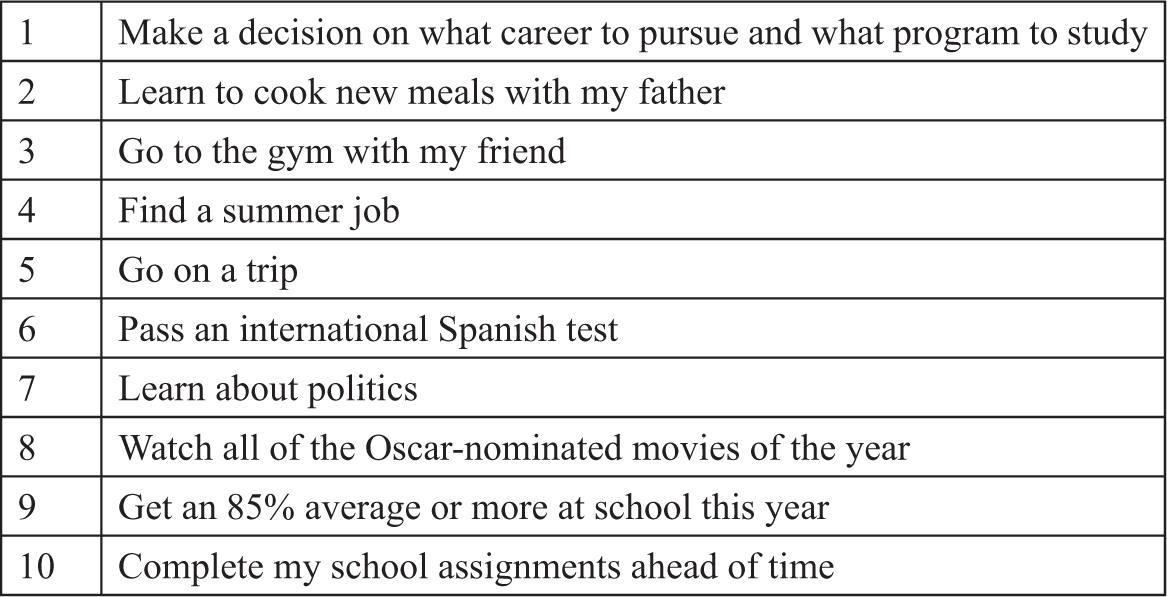
Caroline’s Personal Projects (PPA, Module 1). This figure includes 10 personal projects that could be identified by a fictional 16-year-old student.
When asked to identify aspects in her school environment that support her most important projects, Caroline may mention, for example, that the school and teachers are supportive in her career choice process as part of her project entitled ‘Make a decision on what career to pursue and in which program to study’. It is possible that the teachers have reminded students of the deadlines for university program applications, informed them of opportunities for scholarships and provided career guidance. Related to the project of achieving an 85% average, Caroline may answer, for example, that teachers were helpful when answering questions and providing exam preparation. Such answers would indicate that Caroline feels overall supported at school for these particular projects and highlight ecological assets that should be maintained and reinforced in the school environment. However, questions on the aspects of the school environment that could be improved to better support her projects should also be asked to provide a nuanced picture. When answering such questions, it is possible, for instance, that Caroline would focus on the career decision-making project, mentioning, for example, that even if students in her school have career guidance sessions in a class setting, this is not sufficient. In addition, individualized support could be valuable to Caroline.
Let us imagine that, based on her completed cross-impact matrix, her career decision-making project is the one having the most significant impact on the largest amount of her other life projects. In that context, the lack of individual career guidance service mentioned earlier would negatively impact her other projects indirectly, making the issue of great importance to address. It is important to acknowledge that Caroline’s answers would not represent the diversity of all students’ pursuits in a school. However, we believe that if insights similar to the ones provided by Caroline’s PPA (i.e. lack of individual career guidance service) are shared by other students of the school, it would create a rationale for conducting a group discussion with students to better understand their needs or for a school-level reflection among school staff and administration on career guidance programming at the school. The illustrative wellbeing-relevant information shared by Caroline would not have been known by asking her to fill out a traditional measurement focused on general aspects of wellbeing, out of context.
Collective and policy-level implications
As part of a whole school approach to wellbeing, PPA could be advantageously used to provide a group-level information (e.g. class, grade, whole school or school board) about the primary aspirations and concerns of students. From its inception, PPA was designed to inform policy-level decisions through aggregating personal project ratings provided by several users of a setting (Little, 2007). Many individual schools and school boards across the globe are implementing annual surveys. While the inclusion of standardized school climate and wellbeing scales in those surveys is useful, asking personal projects questions (e.g. through a full or abbreviated version of PPA) would provide insightful data that more adequately reflect students’ concerns and their diverse contexts.
In the school context, such data would be useful for educators and school leadership to monitor the PPA appraisal themes found to be related to wellbeing (i.e. how students are doing overall based on their average ratings of project meaningfulness, manageability, connection, positive and negative affect). This could lead to identifying areas of strengths that could be maintained and reinforced (i.e. indicated by positive scores on average for the group of students), as well as other areas to be improved (i.e. indicated by negative average scores for the group of students). Subgroup analyses (i.e. comparing students along social dimensions such as gender, sexual orientation, cultural identity, socioeconomic status, etc.) would also be useful to inform interventions that should be implemented to better address the needs of students experiencing marginalization. Additional open-ended questions about supportive aspects of the school environment and improvement suggestions, such as the ones from Caroline’s PPA, can also be powerful when aggregated in order to further improve student services and to guide change in the school physical and social environment.
Although a computer version of the general PPA has been developed for individuals to use (Little and Gee, 2007), future work is needed to develop a dashboard or other visualization tools applicable for a whole school setting (e.g. for a classroom or a school). This would allow schools and staff to visualize the collected PPA data in a flexible manner that also respects privacy and ethical considerations, given that personal project content can be highly idiosyncratic. Similarly, a dashboard including wellbeing indicators related to the PERMA model has shown to have promising potential to visualize the level of wellbeing of students and staff across time and inform programming decision accordingly (Kern et al., 2015a). Adding personal project-related data would further enrich that dashboard, making it more comprehensive, person-centred and contextualized.
As a White and Kern (2018) expressed, ‘while positive education can have benefits, it is not a silver bullet, and it is not a quick-fix solution’ (p. 11); similarly, it is not to be expected that PPA will necessarily be applicable to all contexts and that it will solve all issues that are often deeply rooted in the organization of school systems. For example, in addition to their main role as educators, teachers are now faced with the challenge of dealing with increasing rates of mental health issues among students (White and Kern, 2018). Given that personal project pursuit is central to wellbeing (Little and Gee, 2007; see also Little, 1989, 2011b), harnessing the power of PPA in the school system could help reduce rates of mental health issues. However, as it is also the case with other positive education and wellbeing promotion initiatives (Cowen, 2000; White and Kern, 2018), it is likely that some of the most significant benefits of PPA (e.g. preventing the development of mental health issues) in the school context may be seen only in the long term. In the meantime, it is important that educators and other school employees are provided with the necessary supports to deal with the challenges currently experienced in their work. If introduced in schools, PPA should be presented with the caution necessary to help set realistic expectations. Adequate human and financial resources should be put in place to support its implementation in a way that does not further increase the burden and stress of educators and staff members. Their levels of stress represent an important current occupational health issue (Arvidsson et al., 2019) and could have negative impacts for students (Ramberg et al., 2020). Although PPA has been presented here with a focus on students’ wellbeing, future research and application should also investigate its usefulness for promoting the mental health of educators and other staff by supporting them in identifying and pursuing the goals and projects that are meaningful to them in their work.
Theoretical and research implications
Beyond practical applications, the PPA perspective holds great potential to help refine existing theories of student wellbeing, including its determinants and how its components (hedonic and eudaimonic wellbeing) interact. When it comes to the determinants of wellbeing among students and other populations, a first large body of empirical and theoretical publications (e.g. Grégoire et al., 2012; Marcionetti and Rossier, 2016; Park, 2004; Peterson and Seligman, 2004; Wagner et al., 2020) has allowed to identify personal characteristics (e.g. character strengths, mindfulness disposition, other personality traits) that are conductive to higher levels of wellbeing. In contrast, another significant body of research, from the perspectives of social ecological, person-environment fit and school climate theories, has helped to identify contextual factors impacting wellbeing in school and community settings (Bronfenbrenner, 1979; Cohen, 2013; Eccles and Roeser, 2009; Eccles et al., 1993). While these two bodies of literature are extremely informative and useful, they are mostly fragmented from each other. By its focus on personal action in context, the PPA framework offers an integrative perspective, emphasizing at the same time both personal and environmental factors affecting human wellbeing (Little, 2004). Applied to positive education research and theory, PPA offers the advantage of helping to comprehensively elucidate the ways wellbeing is influenced by the interactions between students’ personal factors and daily behaviours, as well as school, home and community factors. Furthermore, by offering the opportunity for students to rate dimensions related to both hedonic (i.e. enjoyment) and eudaimonic themes (i.e. self-identity) for each of their projects (Little and Gee, 2007; see also Little, 1989, 2011b), PPA provides a unique opportunity to examine if and how hedonic and eudaimonic wellbeing are interrelated (Little, 2014) in vivo in the context of the daily projects that matter for students.
Conclusion
Youth wellbeing represents a pressing global issue that educational researchers, practitioners and policymakers can help address. Promoting hedonic and eudaimonic wellbeing through personal project pursuit is expected to benefit student wellbeing, while also supporting the development of competencies that will equip students for continued project pursuit and wellbeing in the future. The field of positive education offers promising intervention avenues to support wellbeing at school; however, future programmes need to intentionally include a more comprehensive consideration of students’ ecological contexts (including within and outside of the educational setting) and to support the agency of students to identify what matters for their wellbeing, according to their own socioecological contexts. Most education stakeholders and researchers would agree that every student is unique. This uniqueness, expressed through the idiosyncratic projects students pursue, should be celebrated. It represents a powerful, yet mostly unexplored, source of inspiration for the promotion of wellbeing for all students. It is the purpose of this article to stimulate further research and practice to better integrate the large body of knowledge on the social ecology of human development and person-environment fit at school within the positive education framework.
Footnotes
Acknowledgements
The authors wish to thank Dr Brian Little and Dr Manuel Riemer who provided feedback on several ideas included in that article. They are also grateful to Ted Zavitz who helped with proofreading, as well as to Rebecca Hardy for her assistance.
Author’s note
Simon Coulombe is also affiliated with Vitam – Centre de recherche en santé durable, Centre intégré universitaire de santé et services sociaux de la Capitale-Nationale.
Declaration of conflicting interests
The author(s) declared no potential conflicts of interest with respect to the research, authorship and/or publication of this article.
Funding
The author(s) disclosed receipt of the following financial support for the research, authorship and/or publication of this article: The work involved in writing this article has been supported by a grant from the Social Sciences and Humanities Research Council of Canada (Insight Development Grant 430-2018-0994).