



Abstract
We examined whether Norwegian prison officer students’ educational motives, attitudes towards prisoners and views on punishment aligned with the official penal policy in Norway, which emphasises rehabilitation and humane treatment of prisoners. Moreover, we investigated whether students with prison work experience differed from other students in this regard. The target sample comprised all freshmen students in Norway in 2022 and 2023. Data were collected through electronic questionnaires, (response rate: 86%, n = 300). Nearly all the students expressed a wish to help others, which was by far the most frequently reported educational motive. Only a tiny fraction had a desire to exert authority. Positive, tolerant and lenient attitudes towards prisoners were highly predominant, yet a sizable minority acknowledged that interacting with prisoners presents safety risks and other challenges. Rehabilitation of offenders was regarded as an important purpose of punishment by virtually all students. Very few held the same view on deterrence. Punitive attitudes were also present, and a small minority was in favour of the death penalty. However, such attitudes, as well as having a desire to exert authority, were nearly always accompanied by tolerant and empathetic views of prisoners and support for rehabilitation. The attitudes of students with prison work experience and those without showed little variation, but there were indications that the former group was less likely to support punitive views. They also seemed to hold more nuanced attitudes towards prisoners. In conclusion, an overwhelming majority of the students held attitudes that aligned with the humane values underpinning the official penal and prison policy in Norway.
Keywords
Introduction
In the early days of prison research, the focus was almost exclusively on incarcerated people. It gradually expanded, however, reflecting a growing interest in prison officers and the nature of their work (Butler et al., 2019; Coyle, 2005). This broadening of the research scope was likely driven by a trend towards humanisation of prison regimes in many countries, whereby prison officers became increasingly involved in the rehabilitation of offenders (Arnold, 2016; Crewe, 2011; Santorso, 2021). Their work tasks thus became more complex, requiring skills pertaining to both dynamic and static security. The high prevalence of mental health and substance use disorders in the prison population (Fazel et al., 2017; Fazel and Seewald, 2012; Sirdifield et al., 2009) further underscores the need for well-qualified staff. However, even in many high-income countries, only some weeks of basic training are required to become a prison officer (Celi et al., 2024; Council of Europe, 2017; Government of Canada, 2024). Moreover, despite the obvious importance of recruiting the ‘right’ individuals, the extent to which aspiring prison officers’ attitudes towards prisoners and punishment align with the ethos of their future positions has barely been scrutinised. This study of Norwegian prison officer students pursued the issue.
It should be noted that we use the term ‘students’ rather than ‘recruits’ or ‘trainees’ for individuals qualifying to work as prison officers in Norway. This is not an arbitrary choice. Becoming a prison officer requires completion of a two-year accredited programme at the Norwegian University College of Correctional Service, with general studies in upper secondary education as a prerequisite (Johnsen and Sørli, 2025).
The prison officer education in Norway is likely one of the most comprehensive of its kind globally, which aligns with Pratt's (2008, 2022) and Pratt and Eriksson's (2013) Scandinavian/Nordic exceptionalism thesis. This thesis posits that, in addition to far lower imprisonment rates in the Nordic countries compared to Anglophone countries, the prison conditions are exceptionally good, with a strong focus on rehabilitation and humane treatment of prisoners. The exceptionalism thesis has been criticised, however (see e.g. Barker, 2013; Shammas, 2014; Ugelvik and Dullum, 2012), and it has been pointed out that important differences between the Nordic countries have been ignored (Mathiesen, 2012). Among other factors, the prison officer education varies markedly, with the Norwegian programme being by far the most extensive (Brun et al., 2017).
Why examine prison officer students’ attitudes?
The staff's relationship with prisoners is widely recognised as crucial to prisoners’ quality of life during incarceration (e.g. Crewe, 2011; Harvey, 2007; Liebling and Arnold, 2004). Respect, fairness, friendliness and support have been identified as particularly significant in this context. But to what extent do prison officer students possess attitudes and views that are likely to foster such relational qualities? Do they perceive prisoners primarily as fellow human beings, as outcasts unworthy of respect, or as something in between? What about their views on the treatment of offenders, the purpose of punishment, and their motives for choosing the occupation?
Inspired by the importation model on prisonisation (see e.g. Thomas, 1977), Burton et al. (2024) argued that similar to how preprison characteristics influence individuals’ adjustment to incarceration, the characteristics of prospective prison officers likely impact their future work performance. They highlighted attitudes towards inmates as especially important, because ‘if officers do not see them as capable of change, they may not engage in rehabilitative tasks’ and if they ‘view inmates negatively, they may orient themselves in a punitive or custodial way’ (Burton et al., 2024: 302). According to Nilsen and Bagreeva (2020), such attitudes may also deteriorate the psychosocial prison climate for both inmates and staff. Others have proposed that the significant discretion involved in prison work allows the staffs’ attitudes towards punishment – whether they are punitive, custodial or rehabilitation-oriented – to manifest themselves in impactful ways (Kelly, 2014).
However, attitudes are multidimensional and do not consistently guide behaviour. In addition to a behavioural component, they include a cognitive component (beliefs) and an affective or evaluative component (feelings, likes/dislikes), which can operate independently of each other (Jain, 2014). For example, a prison officer may believe in offenders’ capacity for change and hold favourable views towards rehabilitation programmes yet still refrain from delivering them. Other work tasks may be considered more urgent, less challenging, or prioritised for other reasons. Moreover, when it comes to behavioural choices and courses of action, individuals’ personal views may be overridden by more powerful influences, including perceived social norms and group pressure.
Generally, the likelihood that attitudes translate into action is elevated if they are salient and easily recalled, possess strong emotional anchoring, are formed through direct experience, and are closely linked to the behaviour in question (Ajzen et al., 2018; Glasman and Albarracín, 2006). When such characteristics are present, attitudes tend to be resistant to change (Eagly and Chaiken, 1995; Nickerson, 1998). Modifying individuals’ attitudes is generally easier than fundamentally changing them, which highlights the importance of assessing views towards prisoners and other occupation-relevant issues when selecting candidates for the prison officer education.
Studies on the link between attitudes and behaviour have predominantly relied on individual-level data (Cooper et al., 2001). Aggregate-level associations may be stronger, as the attitudinal climate of a group can significantly influence the behaviour of its members. It follows that cross-prison variations in care and treatment of prisoners may reflect differences in the predominant social norms and attitudes among staff. It is conceivable that personal views remain important, as they can contribute to shaping the behavioural norms of a group – particularly in small groups with interacting members. In this context, it is worth mentioning that most prison officers in Norway work in small teams with identical rotating shifts.
The potential importance of prison work experience
As noted, attitudes shaped by firsthand experience are generally more predictive of behaviour than those formed in other ways. Direct experiences can also change people's attitudes. Allport's (1954) intergroup contact thesis, originally developed in the era of racial segregation in the United States, is relevant in this context. It posits that social interaction between members of antagonistic groups can reduce prejudice and hostility, improve intergroup relations, and foster empathy – especially when certain conditions are met. This thesis has evolved and expanded over time and has generally been empirically supported (Paluck et al., 2019; Pettigrew and Tropp, 2005).
Studies of U.S. criminal justice students who attend organised field trips to correctional facilities suggest that even brief interpersonal encounters can promote more tolerant attitudes towards prisoners and foster support for a humane penal policy – at least in the short term (Calaway et al., 2016; Stacer et al., 2017; Sutton, 2024). Working in a prison and interacting with inmates on a daily basis likely has a much greater impact on attitudes. Moreover, the attitudinal changes observed among students attending prison field trips may reflect that the prisoners selected for these arrangements are likely well-adjusted and socially skilled, leaving a favourable impression and influencing attitudes accordingly.
It is conceivable that prison officer students who have worked as unskilled prison staff tend to hold attitudes that differ from those of fellow students who are new to the field. Drawing on Allport's (1954) thesis, one can expect prison work experience to be associated with more positive and tolerant attitudes towards prisoners. On the other hand, the social climate among groups of prisoners may be characterised by hostility and conflict, causing safety concerns and distress among staff. Moreover, interacting with prisoners involves exposure to anger, frustration and despair, as well as a risk of being physically assaulted (Konda et al., 2012; Lahm, 2009; Nylander et al., 2011). The high prevalence of personality disorders in the prison population (Fazel and Danesh, 2002) also poses challenges, including complex relational dynamics and difficulties in establishing trust. Therefore, students with prison work experience may hold more nuanced views of prisoners than those without such experience.
Researchers and inspection authorities have identified a gap between the humanitarian principles of the official penal policy and the realities of prison life in Norway. The European Committee for the Prevention of Torture (2025) has repeatedly criticised Norwegian authorities for the extensive use of solitary confinement. Many prisoners spend a significant amount of time involuntarily in their cells, where they feel the weight of imprisonment most intensely (Johnsen et al., 2023). Moreover, despite the high and increasing prevalence of mental disorders in the prison population (Bukten et al., 2024), the treatment options remain fragmented and insufficient (Wynn, 2021). Students with prison work experience have likely gained insights into these adversities and observed that incarceration causes pain. They have probably also gained insights into the disadvantaged upbringings, vulnerabilities and difficult lives of many prisoners. Altogether, this may have softened their views on punishment.
The Norwegian context
The official purpose of criminal punishment in Norway is utilitarian. The humane values underpinning the penal policy and a belief in every person's potential for growth and change have support across political parties (Stortingsmelding (Government white paper) 2024–2025, 2014–2015 and 2007–2008). There is also political consensus regarding the fact that prisoners have the same rights as other citizens and with respect to the principle that prison life should resemble ordinary life as much as possible. A recent study indicated that the policy is widely supported by the general public in Norway (Frøyland et al., 2022). For instance, a solid majority is supportive of the current level of punishment and consider rehabilitation the most important objective of punishing offenders.
Prison officers seem to be generally well-regarded in Norway, similar to nurses, kindergarten teachers and other professions working with people in institutions (Pratt and Eriksson, 2013). The University College of the Norwegian Correctional Service is the only institution that offers prison officer education in Norway, and the students receive a full-time wage while studying. The programme covers topics from criminology, sociology, psychology, social work, law, human rights and ethics. Issues related to dynamic security are just as central as those concerning static security. The aim is to educate generalists who can work with all categories of prisoners and at any security level. The students spend their first and fourth semesters on campus, while the second and third semesters are spent as trainees in a high-security facility (see Johnsen and Sørli, 2025 for more details).
In recent years, the number of formally qualified applicants has been approximately three times higher than the number of students admitted (Johnsen and Sørli, 2025). A semi-structured personal interview is a crucial part of the comprehensive selection process. It addresses issues such as the applicants’ educational motives, relevant work and personal experiences, and confidence in exercising authority. Candidates who are seen as likely to balance care and empathy with control and authority are prioritised.
How Norwegian prison officers handle the complexities and contradictory aspects of their occupational role has not been systematically examined. It may be noted, however, that a delegation from the European Committee for the Prevention of Torture and Inhuman or Degrading Treatment or Punishment (2025: 42), that recently visited Norway, observed ‘very qualified and caring prison staff working in all the prisons visited, which had positive results on the prison culture and the dynamic security in place’.
Aims
Our main aim was to examine whether the educational motives and occupation-relevant attitudes of prison officer students in Norway align with the humanistic ideals and rehabilitation-oriented approach of the Norwegian Correctional Service. For two reasons, we assumed that this would be the case for the vast majority: First, prison officer students are highly selected, and applicants who display questionable attitudes are dismissed. Second, because rehabilitation of offenders is widely supported and punitive attitudes are rare in the general population (Frøyland et al., 2022), this is likely true for those who chose this education as well. Another aim of our study was to examine whether the attitudes towards prisoners and punishment among students with prison work experience differed from those of who were new to the field.
Methods
At the start of the first semester, all freshmen prison officer students in 2022 and 2023 were asked to respond to an electronic survey. In addition to written information, the principal investigator gave an oral presentation about the research project, the study aims, the content of the questionnaire, the participants’ rights, and the measures taken to safeguard participant privacy and confidentiality.
The study was conducted in accordance with the guidelines provided by the National Committee for Research Ethics in the Social Sciences and the Humanities (2024) and approved by the Norwegian Agency for Shared Services in Education and Research.
Response rate and sample description
The vast majority (86%) of the students responded to the survey (n = 300). The high response rate likely reflects that we collected data at the end of a compulsory lecture, with virtually all students physically present. They all had their laptops available, and the principal investigator explained, step by step, how to access the questionnaire link. In the final step, students had the option to choose a link to an article instead of activating the questionnaire, thereby upholding the principle of voluntary participation.
The participants’ ages ranged from 20 to 49 years, with two-thirds (67%) being under 25. The gender distribution was even. A bare majority (52%) had prison work experience, of whom 67% had been employed more than six months. Among those who had completed military service (42%), one-fifth (21%) had worked in the Armed Forces afterwards. Sixteen percent had been working as security guards, and a similar proportion (15%) had worked in mental health or addiction care. Fourteen percent had a college or university degree.
Measures
Educational motives
The students were asked about the perceived importance of five potential motives for choosing the prison officer education: (1) The education is relatively short, (2) The education is paid for, (3) ‘I want a job where I can exert authority’, (4) ‘I want to combat crime’, and (5) ‘I want a job where I can help others’. The response scale ranged from 1 (not important at all) to 5 (very important).
Attitudes towards prisoners
We applied a shortened version of the Attitudes Toward Prisoners (ATP) scale (Melvin et al., 1985), as specified and developed by Hogue and Harper (2019). The students reported to what extent they agreed or disagreed with 21 statements (see Table 1), of which 10 were positively formulated (e.g. ‘I think I will like a lot of prisoners’) and 11 were negatively formulated (e.g. ‘Prisoners are just plain immoral’). The answers were recorded on a scale that forced directional responses: Strongly disagree (coded 1), disagree (2), somewhat disagree (3), somewhat agree (4), agree (5) and strongly agree (6). When comparing the frequency distributions for students with and without prison work experience, we distinguished between those who strongly or moderately disagreed (scores ≤ 2), slightly disagreed or agreed (scores 3–4), and those who strongly or moderately agreed (scores ≥ 5). We also constructed an additive ATP index. First, negatively worded items were reverse-scored so that higher scores consistently reflected more positive, tolerant or lenient views. Next, responses to all 21 items were summed and averaged, preserving the original six-point scale to ensure easily interpretable results. The internal consistency of the resulting index was good (Cronbach's alpha = 0.80).
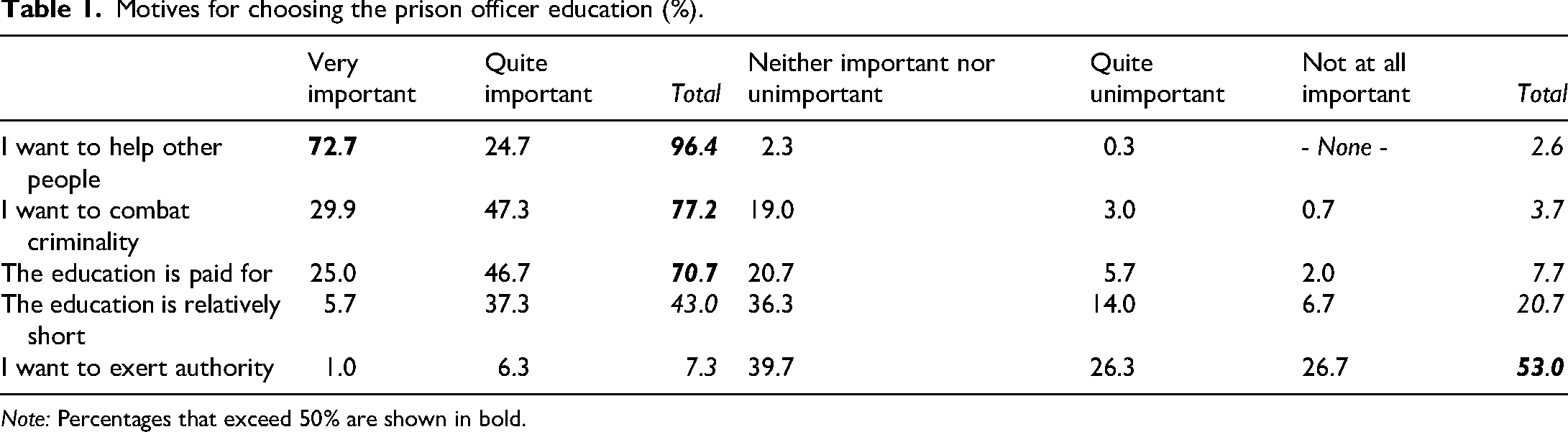
Motives for choosing the prison officer education (%).
Note: Percentages that exceed 50% are shown in bold.
Punitiveness
Punitiveness was assessed using items that appeared in various sections of the questionnaire. The respondents reported the extent to which they agreed or disagreed with six statements (see Table 3). Two of them were identical to those used by Frøyland et al. (2022): ‘I generally support longer prison sentences’ and ‘Violent crimes should be punished more severely’. Another item – ‘Offenders should be punished much more severely than they are currently’ – was taken from European Social Survey (2010). The remaining three items were self-constructed. The response scale ranged from 1 ('strongly disagree’) to 5 ('strongly agree’). Once again, when comparing students with and without prison work experience, we used trichotomised variables: strongly or moderately disagree (scores ≤ 2), neither agree nor disagree (score = 3), and strongly or moderately agree (scores ≥ 4). Additionally, we constructed a punitiveness index by summing and averaging the responses to the six items (Cronbach's alpha = 0.71). In some analyses, we distinguished between predominantly punitive views (scores ≤ 2.5) and predominant disagreement with such views (scores ≥ 3.5).
Purposes of punishment
The respondents considered the importance of these four purposes of criminal punishment: (1) Rehabilitation (‘to help and support the offender in desisting from crime’), (2) Restorative justice (‘to restore the harm caused by the offender’), (3) Deterrence (‘to deter others from committing crime’), and (4) Retribution (‘to impose revenge on the offender’). The item formulations are identical to those in the study by Frøyland et al. (2022). However, their respondents were asked to identify the single most important purpose, while we assessed the perceived importance of each purpose on a scale ranging from 1 (‘very important’) to 5 (‘not important at all’). Once again, we used trichotomised measures when examining whether the frequency distribution varied by prison work.
Item non-response
Although all questionnaire items were optional, the amount of missing data across the 36 variables was very small and unlikely to influence the results. Specifically, item non-response ranged from 0% (for 10 items) to a maximum of 3% (for one item).
Statistical analyses
The data were analysed using simple descriptive statistics. When comparing the results for students with prison work experience and those without, we conducted cross-tabulations with χ2-tests for categorical data while analyses of variance with F-tests were used to examine differences in mean values on continuous measures. Levene's test was employed to determine whether the variances were significant different for two groups, thus indirectly comparing standard deviations.
Results
Educational motives
Almost all students (96%) indicated that a desire to help others was an important reason for choosing the prison officer programme, and 73% rated it as very important (Table 1). For a solid majority (77%), ‘combating crime’ was also (quite or very) important, followed by ‘because the education is paid for’ (72%) and ‘because the education is relatively short’ (43%). Few (7%) were motivated by a desire to exert authority, and barely any (1%) reported that this motive was very important.
Additional analyses showed that all those who rated the exertion of authority as (quite or very) important also reported that helping others was an important reason for their educational choice. Furthermore, virtually none of the students (<1%) reported a practical reason (i.e. the payment) as the sole motive of importance.
Attitudes towards prisoners
The students’ mean score on the additive ATP index was 4.2 (SD = 0.44), suggesting that generally, their attitudes towards prisoners were moderately positive, tolerant, and lenient. Strongly held attitudes – either positive or negative – were rare: only 4% had scores of 5.0 or higher while none had scores of 2.0 or lower. A consistent pattern of negative, intolerant, and punitive views thus seemed to be non-existent.
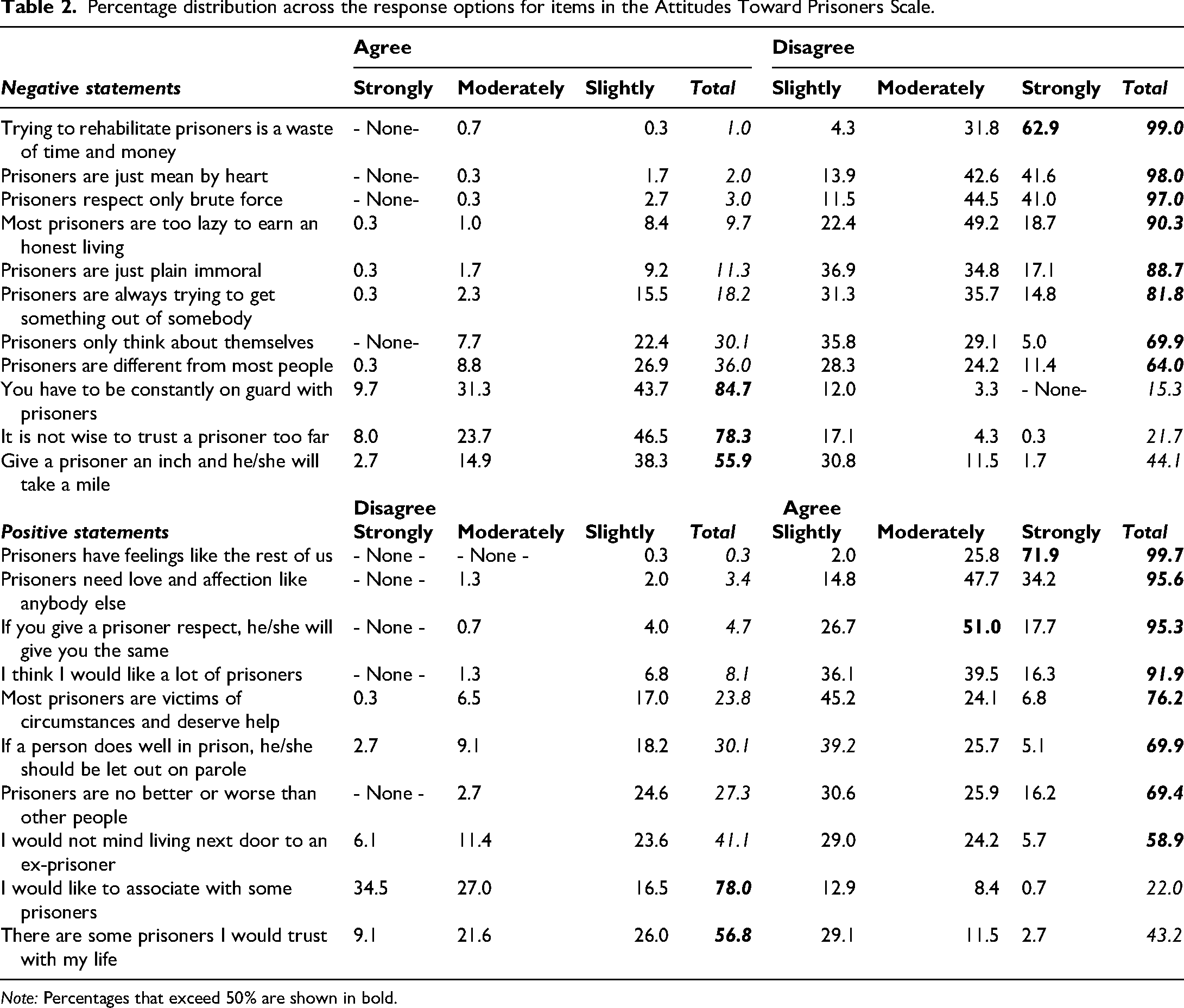
Table 2 displays the students’ responses to each of the 21 ATP items. It should be noted that the order of items differs from that in the original questionnaire, and that all the negatively worded statements are listed first.
Percentage distribution across the response options for items in the Attitudes Toward Prisoners Scale.
Note: Percentages that exceed 50% are shown in bold.
Virtually all students (99%) disagreed – slightly, moderately or strongly – with the statement that efforts to rehabilitate prisoners are futile. Regarding the statements that ‘prisoners are just mean by heart’ and that they ‘only respect brute force’, the corresponding percentages were also close to the maximum (98% and 97%, respectively). Moreover, most students (85%–90%) opposed statements portraying prisoners as lazy, immoral, and exploitative. One the other hand, three of the negatively framed statements were more often supported than rejected: 85% agreed that one always must be on guard with prisoners, 78% agreed that it is unwise to have high confidence in prisoners and 56% endorsed the notion that prisoners will take a mile if given an inch.
Regarding the positively formulated ATP-statements, the results clearly indicate that almost all students perceived people in prison as fellow human beings with the same feelings and psychological needs as others. For instance, 96% agreed (slightly, moderately, or strongly) with the statement that prisoners need love and affection like everyone else. A similar proportion (95%) acknowledged the relational value of showing prisoners respect, while slightly fewer (92%) expected that they would like many prisoners. A solid majority of the students also endorsed the view that prisoners are victims of circumstances and that their prison stay should be shortened for good behaviour (76% and 70%, respectively). Prisoners were viewed with greater scepticism in the context of the private sphere. Most students (78%) would prefer not to associate with prisoners, which is in accordance with the code of professional ethics for prison officers in Norway (Kriminalomsorgsdirektoratet, 2020). Moreover, 41% would not like to have an ex-prisoner as their neighbour.
Because strongly held attitudes are more likely to guide behaviour, one should pay special attention to the percentages at each endpoint of the response scale (i.e. scores of 1 or 6). The highest occurrence of such attitudes was observed in support of the statement that prisoners have feelings like the rest of us (77%), followed by disagreement with the statements that rehabilitation of offenders is futile (63%), that prisoners only respect brute force (42%) and that they are inherently mean (41%). The percentage agreeing strongly that prisoners need love and affection like anybody else was also quite high (34%).
Punitiveness
The mean score for the additive punitiveness index was 2.5 (SD = 0.61). A majority (55%) had scores ≥ 2.5, suggesting that they generally tended to disagree (moderately or strongly) with the punitive views that we assessed. Few (9%) had scores ≤3.5, which indicates at least a modest level of punitiveness.
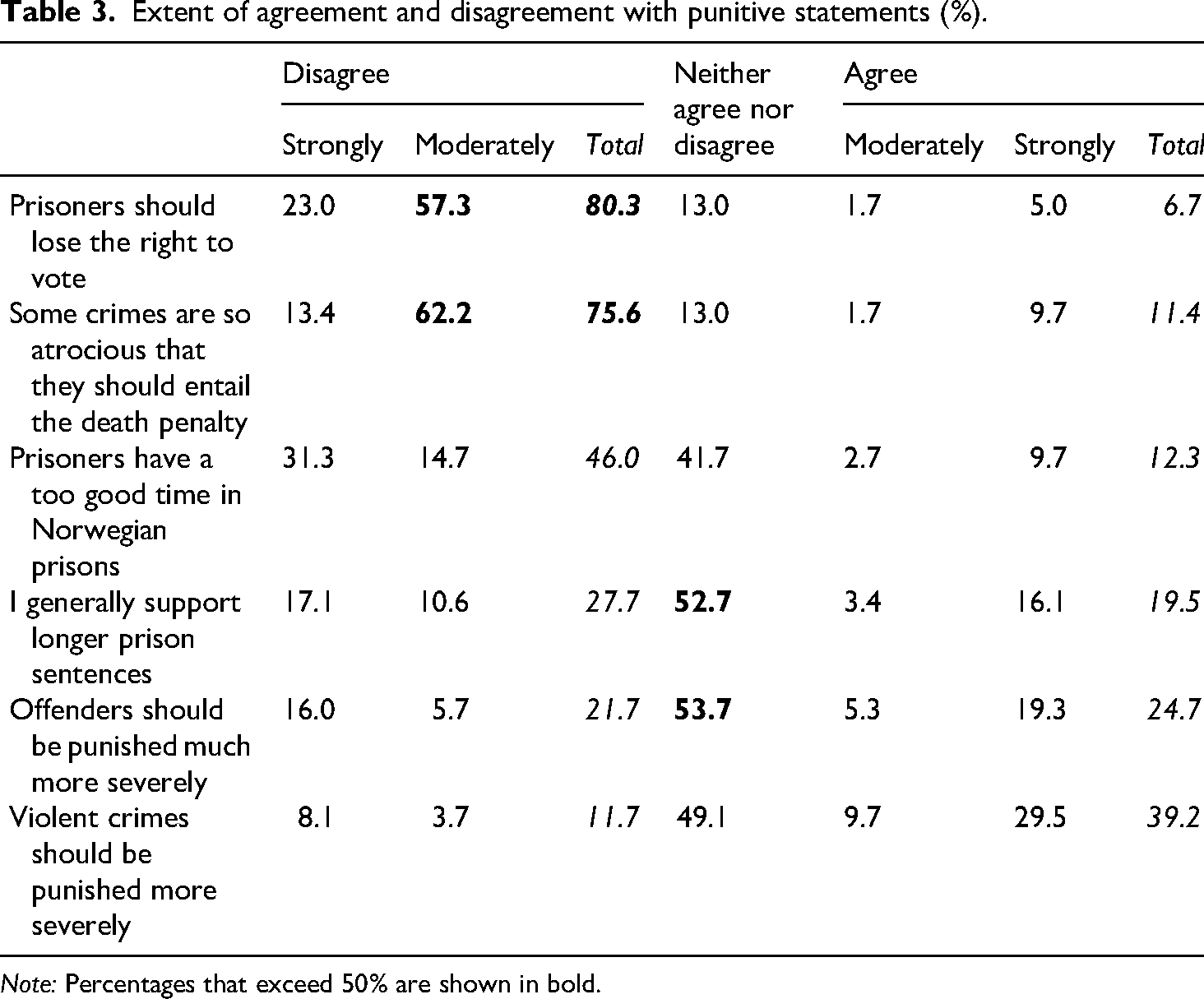
Table 3 presents the results for each individual item. A total of 11% agreed with the most extreme punitive statement, endorsing the death penalty for particularly atrocious crimes. Only 2% agreed strongly, however, and the vast majority (76%) disagreed – either moderately (18%) or strongly (62%). The students were even less likely to agree (moderately or strongly) with the statement that prisoners should lose their right to vote; 7% did so, while 80% disagreed. The highest percentage of students reporting moderate or strong agreement was observed for the statement that violent crimes should be punished more severely (39%), followed by general statements in support of stricter punishment (25%) and longer prison sentences (20%).
Extent of agreement and disagreement with punitive statements (%).
Note: Percentages that exceed 50% are shown in bold.
Table 3 also shows that the percentage of students reporting that they neither agreed nor disagreed varied considerably. It was notably high for the two statements concerning stricter criminal punishment (49% and 54%), and for the statement that prison conditions in Norway are overly comfortable (42%). In contrast, only 13% neither agreed nor disagreed with the statement about the death penalty, and equally few did so for the question about prisoners' voting rights.
Purposes of punishment
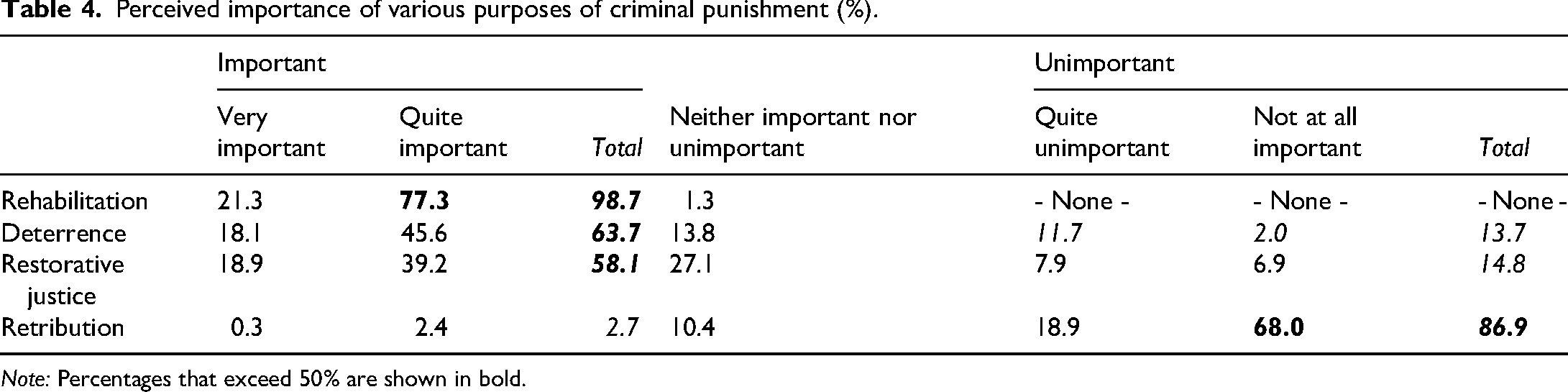
Virtually all students (99%) considered rehabilitation an important reason for punishment, with a solid majority (77%) viewing it as very important (Table 4). Deterrence and restorative justice were regarded as (very or moderately) important by 64% and 57%, respectively. Only 2% viewed retribution as important, which was considered unimportant by 88% and very unimportant by 77%. The proportion of students selecting the mid-point response option was relatively high for both deterrence (23%) and restorative justice (28%).
Perceived importance of various purposes of criminal punishment (%).
Note: Percentages that exceed 50% are shown in bold.
Further analyses showed that 11% of the students considered only one objective of punishment to be important, and they all viewed rehabilitation as the sole purpose of punishing offenders. Moreover, within the small group of students who considered retribution important (n = 8), all but one also regarded rehabilitation as significant.
Does prison work experience make a difference?
A series of analyses was conducted to examine whether the attitudes of students with and without prison work experience differed. First, we compared their mean scores on the ATP index and found no statistically significant difference between the two groups. However, the standard deviation was significantly larger among students with prison work experience (SD = 0.47) than among those without (SD = 0.40) (p = .031), indicating greater attitudinal diversity in the former group. There was no statistically significant difference between the two groups’ mean scores on the punitiveness index, but the proportion with high scores (≥ 3.5) was lower among those with prison work experience (6% vs 12%, p = .046). In other words, they were somewhat less likely to endorse punitive views than students without such work experience.
Next, we examined whether students’ responses to the single ATP and punitiveness items, and to the questions about the purposes of punishment, varied by prison work experience. As noted in the Methods section, the variables included in these analyses were all trichotomised. Of the 31 variables examined, only eight showed statistically significant differences in frequency distributions between the two student groups. None of the students’ perceptions of the purposes of punishment differed by prison work experience. The attitudinal differences between the two groups, as identified in analyses of single ATP and punitiveness items, are presented in Table 5.
Attitudinal differencesa between students with prison work experience (n = 155) and those without (n = 144).
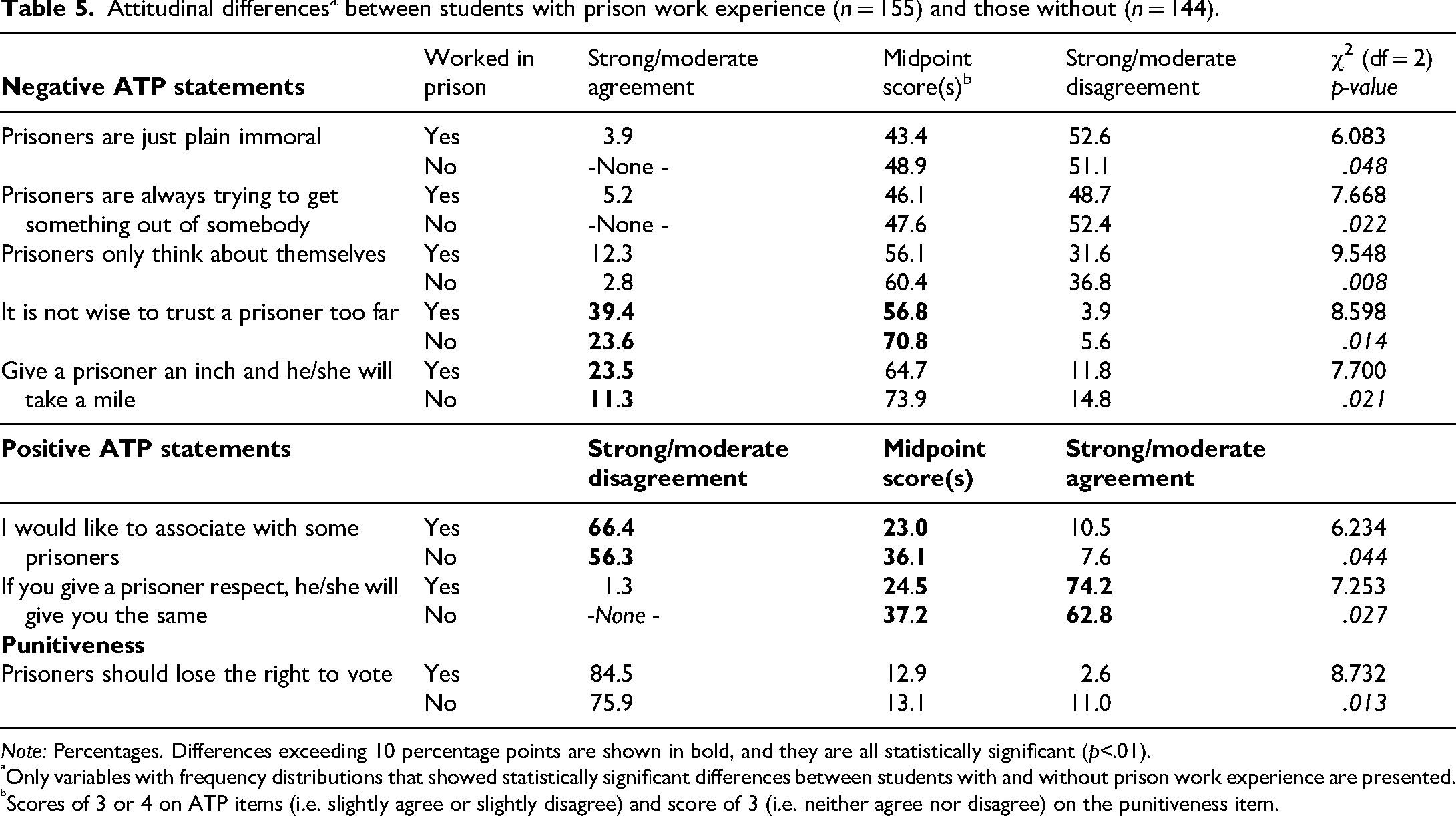
Note: Percentages. Differences exceeding 10 percentage points are shown in bold, and they are all statistically significant (p<.01).
Only variables with frequency distributions that showed statistically significant differences between students with and without prison work experience are presented.
Scores of 3 or 4 on ATP items (i.e. slightly agree or slightly disagree) and score of 3 (i.e. neither agree nor disagree) on the punitiveness item.
Compared with students new to the field, those with prison work experience were generally somewhat more likely to agree (strongly or moderately) with negatively framed ATP statements, but not necessarily more likely to disagree (strongly or moderately). The percentage-point differences in agreement were particularly high for the statements that ‘it is not wise to trust prisoners too far’ (39% vs 24%) and that ‘prisoners will take a mile if given an inch’ (24% vs 11%). Regarding the positively framed ATP items, the percentage of students who clearly opposed associating with prisoners was higher among those with prison work experience (66%) than among those without (55%). They were also less likely to express weakly held attitudes, that is, to only slightly agree or slightly disagree on this issue (23% vs 36%). Moreover, students with prison work experience more often expressed a clear acknowledgment of the relational benefits of showing respect to prisoners (74% vs 62%) and were less likely to report weakly held attitudes towards the issue (25% vs 37%). Finally, the percentage of students who opposed the idea that prisoners should lose their voting rights was somewhat higher among those with prison work experience (85%) than among those without (76%). The opposite was true for the percentage that supported this notion (11% and 3%, respectively).
Finally, we examined whether the observed differences were likely to reflect variations in the demographic composition of the two groups of students. They were not: prison work experience was unrelated to age, gender, and educational level, as well as to previous work in security or health-related services.
Discussion
We assumed that most prison officer students in Norway would hold attitudes consistent with the humanitarian principles underpinning official penal and prison policy. Generally, this assumption was supported, both in terms of the students’ educational motives and their attitudes towards prisoners and punishment. The present study also showed that the attitudinal differences between students with prison work experience and those without were few and far between.
A desire to help others was by far the most frequently reported reason for choosing the prison officer education. Few students endorsed highly derogatory stereotypes of prisoners, and the vast majority viewed them as fellow human beings. Moreover, almost all students appeared to believe in prisoners’ capacity for change and expressed support for efforts to rehabilitate offenders. At the same time, they seemed to recognise that interacting with prisoners poses safety risks and may also be challenging for other reasons. Our study also showed that most of the students either opposed or expressed uncertainty when asked whether stricter punishments should be implemented, but some punitive views were supported by a sizable minority.
Some of our results may appear contradictory. For instance, although most students supported the view that prisoners are no better or worse than other people, a clear majority reported that they would dislike living next door to an ex-prisoner. However, as discussed by Jain (2014), the components of attitudes can operate independently of each other. While some attitudes are shaped primarily by cognitive evaluations, others are more strongly influenced by emotional factors. Regarding the latter, attitudes towards issues that are personally relevant and associated with uncomfortable thoughts or feelings are a case in point.
Exceptional attitudes?
According to Pratt and Eriksson (2013), staff–prisoner relationships are generally closer and more relaxed in the Nordic countries than in Anglophone countries, where staff is more military-oriented. They also reported that the prison staff in Nordic countries is more value-based and reflective-oriented. Due to the lack of comparable studies, it remains unknown whether Norwegian prison officer students differ from their counterparts in other countries in similar ways. Whether their attitudes are exceptional in a cross-national context is also clouded with uncertainty. However, because becoming a prison officer in Norway requires a two-year accredited programme – rather than a few weeks or months of practical training as in many other countries – it is conceivable that they differ in several respects. The comprehensive applicant selection process and the high applicant-to-spot ratio are also likely relevant in this regard.
The attitudes of the Norwegian prison officer students likely mirror the relatively liberal public opinion on punishment in Norway (Frøyland et al., 2022), which appears to differ from that in many other countries. For instance, Van Kesteren (2009) found that the national score on a punitiveness scale was far lower in Norway than in the United States, United Kingdom and Canada. In a global context, support for the death penalty is also notably low in Norway (McCarthy and Brunton-Smith, 2024).
Why do penal policy and the related attitudinal climate in Norway appear to differ from those in many other countries? The Scandinavian/Nordic exceptionalism thesis offers potential explanations, pointing to the regions’ generous welfare systems and egalitarian societal values (see, e.g. Pratt and Eriksson, 2013; Smith and Ugelvik, 2017). Moreover, as noted, a rehabilitation-oriented approach to punishment is widely supported by the general population in Norway (Frøyland et al., 2022), and for many prisoners, successful reintegration into society depends on substantial support from public health and social welfare services. It is well established that prisoners in Norway generally constitute a vulnerable group, characterised by disadvantaged upbringings, poor mental health, and adverse living conditions (Bukten et al., 2016, 2024; Cramer, 2014; Revold, 2015). Our study indicated that a large majority of the prison officer students are aware of this, with three in four agreeing that most prisoners are victims of circumstances and deserve help (cf. Table 2). The emphasis on social equality, which lies at the core of the Nordic welfare state model (Greve, 2007), is vital because it implies a collective responsibility to provide care for the vulnerable and those at the margins of society.
We also wish to highlight that Norway has largely resisted the influence of ‘the new penology’ (Feeley and Simon, 1992, 1994), as the populist discourse centred on risk management and offender dangerousness has, for the most part, not taken root (Johnsen, 2006; Johnsen and Granheim, 2012). Core humane values and principles of sentencing – such as prevention, proportionality, and safety – have remained central for the Norwegian policy (Ministry of Justice, 2024–2025). Moreover, both institutional and interpersonal trust are exceptionally high in Norway (OECD, 2024; Ortiz-Ospina et al., 2016), which is also relevant for understanding the country's penal policy and its relatively low level of punitiveness (Balliet and Van Lange, 2013; Soot and Rootalu, 2017).
Problematic punitiveness and overly positive views
Some students held attitudes that might have disqualified them from entering the prison officer programme had they surfaced during the selection process. About one in 10 agreed that certain crimes should warrant the death penalty, and a smaller proportion supported the idea that prisoners should lose their right to vote. Such views contradict basic human rights and are at odds with the core principles of the Norwegian penal policy.
However, only a tiny fraction expressed strong support for these views. In this context, it is also essential to take other results of our study into account. The fact that virtually all students expressed a desire to help others, along with their near-unanimous support for the rehabilitation of offenders, implies that potentially disqualifying attitudes were almost always accompanied by empathetic and humanitarian views. The finding that all students who expressed a desire to exert authority also reported altruistic motives for their educational choice nicely illustrates this point.
Nevertheless, the University College of the Norwegian Correctional Service should reconsider the content of the semi-structured admission interview. At present, it contains no direct questions aimed at identifying attitudes that conflict with the core values of Norwegian penal policy. One potential improvement could be to supplement the interview with a standardised assessment tool, such as the ATP Scale.
Our study also showed that a small minority of the students seemed to hold unconditional favourable attitudes towards prisoners, as indicated by very high scores on the ATP index. These students are likely mentally unprepared for the risks and complexities inherent in their chosen profession and may experience substantial challenges when confronted with the demanding realities of prison work – especially in high-security facilities. Describing the process of becoming a prison officer in the United Kingdom, Crawley (2004) noted that it is often experienced as difficult and painful, involving both culture shock and a complex process of acculturation. Such distressing experiences may reflect a combination of overly positive ATP and limited awareness of the demanding nature of prison work.
Attitudinal uncertainty
The percentage of students selecting the midpoint option on the five-point response scales varied considerably, especially for the punitiveness items. About half of the students neither agreed nor disagreed with statements about stricter criminal punishment. In contrast, only one in eight selected this option when responding to statements supporting capital punishment and the deprivation of prisoners’ voting rights.
Rather than ambivalence or indifference, ‘neither/nor’ responses often reflect uncertainty due to lack of knowledge (Sturgis et al., 2014), which makes sense in the current context. Freshman prison officer students likely have limited factual knowledge about the penalty framework and typical sentence lengths for different crimes. Selecting the midpoint response option may also indicate that the question is perceived as too general to warrant a directional response. For instance, one may hold the view that some, but not all, crimes should be punished more strictly, implying that the most appropriate response would be ‘it depends’. Attitudes toward capital punishment and prisoners’ voting rights are of a different nature, as they are less likely to depend on contextual factors and do not presuppose factual knowledge. Rather, opinions on these issues are primarily grounded in ethical principles, views on basic human rights, and penal ideology.
Attitudinal variations by experiential knowledge?
Drawing on Allport's intergroup contact thesis (1954), we argued that attitudes towards prisoners might be more positive and tolerant among students with prison work experience than among those without such experience. However, prison work often involves interacting with inmates whose mental states and behaviours can be highly challenging. Therefore, we also suggested that, alternatively, the attitudes of students with prison work experience might be more nuanced – though not necessarily more positive.
Our results showed that the attitudinal similarities between the two groups of students were considerably more pronounced than the differences. Those with prison work experience and those without were about equally likely to oppose highly derogatory and dehumanising descriptions of prisoners and to endorse statements portraying prisoners as fellow human beings. Their views on the purposes of punishment were also virtually invariant.
However, students with prison work experience were more likely to agree that prisoners will ‘take a mile if given an inch’ and that prisoners should not be trusted too far. The proportion who reported that they would not like to associate with prisoners was also higher among those who had worked in prison, which – at least in part – may reflect their greater familiarity with the professional ethics of prison work. These students were also more likely to recognise the importance of showing respect to prisoners. Taken together, our findings suggests that the experience-based knowledge gained through the complex and multifaceted nature of prison work is indeed associated with more nuanced attitudes towards incarcerated people.
We argued that students who have worked in prison may be less inclined to hold punitive views, as they have likely gained a deeper understanding of the pains of imprisonment. Consistent with this assumption, the proportion showing at least a moderate level of punitiveness was lower among these students than among those without prison work experience. This result appears to align with some findings from a study on Norwegian prison officer students’ attitudes towards individuals convicted of sexual offences (Friestad et al., 2023). It showed that after the year of practical training, punitive attitudes towards this group of offenders had weakened. On the other hand, stereotypical perceptions had become more pronounced. Other studies also suggest that social interaction with offenders might foster more negative views. Cunha et al. (2021) assessed Portuguese police recruits before and after practical training and found a strengthening of negative, punitive, and intolerant attitudes.
Whether the attitudinal differences between students with and without prison work experience are likely to manifest behaviourally remains questionable. The differences were few and generally moderate, and the link between attitudes and behaviour is not straightforward (Ajzen et al., 2018; Glasman and Albarracín, 2006). The extent to which one agrees with broad stereotypes such as ‘prisoners take a mile if given an inch’ is generally a weak predictor of behaviour. Attitudes pertaining to specific behaviours, such as the extent to which respectful treatment of prisoners is considered important, tend to be more influential. However, the predictive power of the latter kind of attitudes is not necessarily strong in absolute terms.
Methodological considerations
Our study of prison officer students in Norway achieved a high response rate, and the occurrence of item non-response was negligible. The students’ responses to the questionnaire were likely more reliable than the viewpoints they presented during the admission interview. Since the education is paid for, this interview is, in fact, a type of employment interview. In such a setting, individuals tend to present themselves in an overly favourable light and may modify or conceal their true attitudes and beliefs (Preiss et al., 2015). Social desirability bias may also significantly reduce the validity of research data collected through personal interviews, but much less so when using anonymous questionnaires (Berzelak and Vehovar, 2018; Richman et al., 1999) – as we did.
The limitations of our study should also be kept in mind. Some response options for certain items were selected by very few students. Due to the likely inevitable presence of response errors, low-prevalence phenomena are generally susceptible to overreporting in survey research (Pape and Storvoll, 2006). Hence, the ‘true’ occurrence of very infrequently reported viewpoints may, in fact, be lower than observed or even non-existent.
Another limitation concerns the fact that we did not assess whether students with prison work experience had worked in open prisons, closed prisons, or both. It goes without saying that imprisonment conditions, prisoner characteristics, safety concerns and risk exposure differ between the two types of prisons. Related attitudes may be affected accordingly. One should also consider the possibility of reverse causality: the few attitudinal differences we identified between students with prison work experience and those without may, at least in part, reflect pre-existing differences between the two groups.
Conclusions
Norwegian prison conditions have been characterised as exceptionally humane, and an overwhelming majority of prison officer students expressed attitudes that are consistent with the ideals of the official penal and prison policy in Norway. Punitive attitudes were also present, though not prevalent, with a small fraction of students expressing support for capital punishment. This finding suggests that a more systematic assessment of applicants’ attitudes should be incorporated into the selection process for the prison officer programme. However, attitudes that might have disqualified applicants from admission to the programme were almost always accompanied by a desire to help others and support for a rehabilitation-focused correctional approach.
Students with prison work experience held somewhat more nuanced views of prisoners and were less supportive of punitiveness than those without such experience. Whether the students’ attitudes towards prisoners and punishment are exceptional in an international context remains unknown, but there is reason to believe that they do tend to stand out. The ethos of the Norwegian welfare state model, with its emphasis on equality and collective responsibility to care for people at the margins of society, likely plays a significant role in this regard.
Footnotes
Acknowledgements
We want to express our gratitude to Egil Jensen at the University College of the Norwegian Correctional Service (UCNCS) for his comments on an earlier version of this paper, which significantly helped improve its quality. We also wish to thank the other members of the research group at UCNCS for their insightful reflections.
Ethical considerations
The Norwegian Research Ethics Act requires researchers to ensure that all research is conducted in accordance with recognised norms of research ethics. It also imposes a duty on the research institutions to ensure that all research projects are conducted in accordance with these norms. For projects not covered by the Health Research Act, such as the present project, the individual researcher and institution are responsible for safeguarding research ethics, without any requirements for prior approval. I ensure that the research was carried out in accordance with the Norwegian Research Ethics Act, as well as good research practices, recognised scientific norms, and ethical principles (see the National Research Ethics Committees’ General Guidelines). Research ethics were considered with reference to the Guidelines for Research Ethics in the Social Sciences and the Humanities. It may also be noted that the present study was notified to Sikt's Data Protection Services (Norwegian Agency for Shared Services in Education and Research; see  , Ref. No. 338841) and was found to meet all their requirements.
Consent to participate
Participation was based on written informed consent. Additionally, the students received verbal information about the research project, the principle of voluntary participation, their rights as participants, and the measures taken to safeguard their privacy and confidentiality. They were also given the opportunity to ask the principal investigator questions before they gained access to the questionnaire.
Author contributions
Hilde Pape was the principal investigator of the research project, and collected the data, prepared the data files, conducted the statistical analyses, and wrote most of the text, incorporating comments and reflections from the co-author. Berit Johnsen has written parts of the text.
Funding
This study was funded by the University College of Norwegian Correctional Service.
Data availability
The study participants were informed that without a special permission, data would solely be available for researchers at the University College of Norwegian Correctional Service. Hence, the dataset is not freely available.