



Abstract
Until recently, older victims – and perpetrators – of domestic abuse were largely absent from both research and policy, leaving a lacuna of empirical and theoretical understandings of abuse in later life. This article presents the findings from the first study to use Crime Survey for England and Wales data on older adults to explore prevalence and risk factors for domestic abuse against adults aged 60–74 years old and, separately, adults aged 16–59 years. We find that risk factors for abuse are similar across the life course. In particular, socio-economic disadvantage, poor health and disability, and victim sex are constant correlates for victimisation, regardless of age. However, there are some important differences in the risk factors for partner and non-partner abuse in later life. Consistent with previous research involving all ages, we found that women were significantly more likely to be victimised by a partner than men (almost three times more likely in our study). However, when looking at abuse by non-partner family members, there was no statistically significant difference between the risk of victimisation for men and women. In other words, partner abuse disproportionately affects older women, but men and women are equally at risk of non-partner abuse. We propose that a move towards life course theories for understanding domestic abuse is required.
Introduction
The frequent observation that risk of violent victimisation declines with age has resulted in older victims being under-represented in victim research and policy (see Brown and Gordon, 2019; Lindquist and Duke, 1982; Mawby, 1982). The low risk of victimisation of older adults has become an accepted – and largely unchallenged – ‘fact’ (Cook and Cook, 1976; Pain, 1997; Satchell et al., 2023). This illustration of the aphorism, ‘absence of evidence is not evidence of absence’ is particularly true in the case of domestic abuse victimisation, where the prevalence and patterns of victimisation are not well established for older people (Bows et al., 2022). The lack of this essential evidence means that there is no platform from which to gauge the urgency of the problem or develop effective, equitable policy.
Outside of criminology, the field of ‘elder abuse’ has generated insight into victimisation of older adults by family members, caregivers and people in positions of power but has largely excluded abuse by intimate partners (Dong, 2015; Harbison, 2016). Over the last decade, attention has slowly turned to intimate partner violence and familial abuse of older adults. In England and Wales, systematic, national-level measurement of domestic abuse against older adults has only been in place since 2017 when the upper age limit for the domestic abuse self-completion module of the Crime Survey for England and Wales (CSEW) was raised from 59 to 74 years. This article uses the newly available data about this cohort to present evidence on the prevalence of and factors associated with domestic abuse against adults aged 60–74 years old in England and Wales. We also present the factors associated with domestic abuse victimisation in younger adults aged 16–59 to foreground future empirical testing of causal explanations of domestic abuse victimisation in older populations and to explore the implicit assumption that domestic abuse victimisation is categorically different in older age. From this essential information about the prevalence and patterns of domestic abuse victimisation in this population, we identify theoretical and practical implications for the understanding and prevention of domestic abuse.
Background and context
The lack of criminological research into the victimisation in the older population has empirical and conceptual explanations. First, the peak period for victimisation is between late adolescence and middle age. For example, the CSEW reports that, for the year ending March 2023, approximately 16.1% of adults aged 16 and over were a victim (once or more) of all crime, with the age groups with highest prevalence being 16–24 year olds (19.5%) and 25–34 year olds (18.2%). Conversely, for those aged 55–64, only 15.9% were victims, and this declined as age increased, with only 9.2% of those aged 75+ being victims (Office for National Statistics [ONS], 2023a). The period of higher risk has disproportionately been the focus for research and policy.
Second, conceptually, domestic abuse of older adults has been viewed as distinct from domestic abuse against younger adults (Kilbane and Spira, 2010; McCreadie, 1996; Penhale, 2003; Whittaker, 1995), and a separate ‘elder abuse’ field has emerged which locates abuse of older adults within a biomedically conceived ‘problem of aging’ (Goergen and Beaulieu, 2013; Harbison, 2016). The idea that abuse of older adults is qualitatively different from abuse of younger adults is cemented in the conceptual and ideological frameworks of ‘elder abuse’, which in turn has influenced policy and practice in this area. Yet, the field is heavily criticised, including by some of the founders, for the lack of theoretical development and an overemphasis on age as the ‘master status’ where older age overrides all other statuses and identities, bracketing them off from the rest of society into a separate and isolated subculture to the detriment of more nuanced understandings of their diverse life experiences (Leroux and Petrunik, 1990 cited in Harbison, 2016: 20). Theoretically, the causes of abuse are based on this master status, in stark contrast to criminological and victimological theories of domestic abuse against younger people which recognise the intersectional identities and characteristics that explain the persistence of domestic abuse (Brooks-Hay and Burman, 2018).
The ‘bracketing off’ (Holt and Shon, 2018) of elder abuse from domestic abuse has severely impacted our knowledge about domestic abuse against older adults. At a national level, until 2017/2018, the national victimisation survey run by the ONS 1 – the CSEW – had an age cap of 59 years on the self-completion domestic abuse module, meaning data on the prevalence, nature and factors associated with domestic abuse in later life was not collected.
The CSEW age cap was justified on conceptual and methodological grounds: Although the British Crime Survey [BCS – the predecessor name of the CSEW] includes respondents aged 16 and over, the questions on interpersonal violence were only asked of those aged between 16 and 59. This was for two main reasons. First, older people have greater difficulty with or resistance to using a computer in this way. […] Secondly, it was thought that issues of elder abuse (from family members other than intimates) might get confused with responses about violence from intimates and that these issues were more appropriately dealt with in a specialised survey. (Walby and Allen, 2004: 118)
Methodologically, the survey commissioners suggested that getting a sufficient sample in the older population may be difficult and defended their decision to limit questions to younger groups to protect the reliability of estimates. However, predominantly attributing this to older adults’ computer difficulties perpetuates ageist stereotypes and assumes younger peoples’ universal technology proficiency and willingness to complete the self-completion. A 2008/2009 trial to extend the age range to 69 reported that self-completion refusal rate was no higher among those aged 60–69 than those under the age of 60 (Bolling et al., 2009). However, because a high proportion of respondents (around a quarter) requested help from the interviewer to fill in the self-completion, the age range was not extended (Bolling et al., 2009). Nonetheless, it is worth noting that 12% of people across all age groups required some assistance from interviewers with the self-completion module, regardless of age. The approach in England and Wales also sits in contrast to that of the Scottish Crime and Justice Survey, where the partner abuse self-completion module removed age restrictions in 2003 (McVie et al., 2004), despite the survey having a smaller overall sample size than the CSEW.
Following several studies examining different forms of interpersonal abuse against older adults (e.g. Bows, 2018, 2019a, 2019b; Bows and Westmarland, 2017; De Donder et al., 2011; Penhale, 2021) and campaigning by domestic abuse and age charities, the age cap was increased to 74 years in the 2017/2018 survey, and from 2021, the ONS announced the age cap would be lifted altogether. This provided an opportunity to examine both the prevalence and factors associated with abuse among older adults in England and Wales. We obtained data from 2017/2018 to 2019/2020, capturing the first extension of the age cap to 74. Before presenting our analysis, we briefly review the literature on prevalence of and factors associated with domestic abuse in younger and older adults.
Domestic abuse prevalence and factors associated with victimisation
Data from the CSEW show that in the year ending March 2022, approximately 5% of adults (6.9% of women and 3% of men) aged 16 years and over experienced domestic abuse in England and Wales, equating to 1.7 million women and 699,000 men.
Traditionally, domestic abuse victimisation has been associated with being young and female, and most knowledge is confined to abuse by partners/ex-partners (typically referred to as intimate partner violence [IPV]). CSEW and police data have consistently shown that women aged 16–24 years are most at risk of experiencing domestic abuse, and those aged 20–24 years have the highest prevalence of victimisation (ONS, 2022b), and most policy and practice have concentrated on preventing and responding to abuse against young women and children (HM Government, 2021). Academic research has also largely focused on documenting the prevalence of abuse among different groups of (young) women and on identifying risk factors for domestic abuse in young(er) life (Rennison and Rand, 2003).
The literature on risk factors for domestic abuse victimisation in young and middle-aged populations is well established. Young age (16–24 years), low educational attainment, witnessing or experiencing abuse as a child, having a disability, poor mental health, poverty, harmful alcohol or drug use are associated with higher rates of victimisation (e.g. Mannell et al., 2022; ONS, 2022b). An umbrella review of meta-analyses identified several individual-level and relationship-level factors associated with IPV. These included, in decreasing order of magnitude, history of relationship abuse, perpetrator alcohol use, perpetrator attitudes supportive of gender inequality and violence, perpetrator experiencing acute stress and perpetrator exposure to violence (Fazel et al., 2018). Focusing on victim characteristics, a meta-analysis of longitudinal studies with women found that unplanned pregnancy and the education level of victims’ parents (less than high school) predicted future IPV victimisation, with young and unmarried women at greatest risk (Yakubovich et al., 2018).
As noted, most knowledge on abuse against older adults is derived from elder abuse researchers. Yon et al. (2017) found that, globally, around 1 in 6 older people (aged 60 years and over) experience some form of physical, sexual, financial, or psychological abuse, or neglect each year. Importantly for comparison to the CSEW, this estimate was robust when limiting the sampling method to face-to-face or telephone interviews (compared to self-administered surveys) and random sampling. However, the sample sizes (mean of 1345) were considerably smaller than would be typical for a single-year sweep of the CSEW. The same systematic review (Yon et al., 2017) reported no gender differences in the overall prevalence of victimisation, although prevalence of specific forms of abuse by victim sex/gender was not examined and around half of the included studies did not examine prevalence by sex. Additionally, the wide-ranging definitions used in elder abuse studies, particularly in relation to the relationship between victim and perpetrator, may have masked important sex differences.
The only UK-based elder abuse (66 and over) study reported a 2.6% 1-year prevalence rate of mistreatment involving a family member, close friend or care worker (O’Keeffe et al., 2007). A recently published study examining violence among older adults more generally, using data from the Adult Psychiatric Morbidity Survey (APMS) in England, found a past year prevalence of 1.5% for domestic abuse among those aged 60 and over (Fadeeva et al., 2024). In contrast, studies with specific IPV against older women tend to report higher prevalence rates and find differences in the forms of abuse. Cook et al. (2011) reported interpersonal violence ranged from 6% to 59% over a lifetime, from 6% to 18% since turning 50, and 0.8% to 11% in the past year. In another large study across five European countries involving a survey of 2880 women aged 60–97 years (Luoma et al., 2011), 28.1% of older women had experienced some form of violence or abuse by partners or other family members in the preceding 12 months.
When examining factors associated with domestic abuse victimisation, again much of the research is situated in the elder abuse field. Mikton et al. (2022) report that some of the factors associated with victimisation supported by the strongest evidence are at the level of the individual. These include functional dependence/disability, poor physical health, cognitive impairment, poor mental health and low income/socioeconomic status. Overall, they found the evidence supporting risk factors at the level of relationships, the community and society is generally weaker, including the type of relationship, marital status and levels of ageism in society. They also found that the evidence for risk related to sex and age of victims is mixed.
A systematic review by Gerino et al. (2018) found factors associated with IPV among adults aged 55 and over were: gender/sex (being female), age (the younger segment 55–69 years old), race (belonging to an ethnic minority), unemployment and low income. A lower level of education, poor physical or mental health and substance abuse (particularly alcohol) were also identified as factors associated with victimisation. Another systematic review of IPV violence among the elderly by Warmling et al. (2017) identified alcohol use as the most frequent factor associated with IPV, followed by depression. In terms of demographic and economic factors, low income, low educational attainment, being divorced, being on the younger end of older age, and witnessing parental violence in childhood were associated with increased violence.
One obvious limitation is that most studies examining IPV do not include or compare abuse by family members other than partners. For studies that have looked at this, the nature of abuse and characteristics tend to differ depending on the dynamic of the victim and perpetrator relationship. In a recent analysis of safeguarding enquiries for domestic abuse against an adult aged 60 and over (Bows et al., 2025), the perpetrators were most likely to be an adult son (45%) followed by an intimate partner (33%). The nature of abuse also differed where the perpetrator was an adult son/daughter compared with an intimate partner. Physical abuse, often alongside other forms of abuse, was a feature of almost all intimate partner abuse, whereas where the perpetrator was an adult son/daughter, the abuse tended to be more varied and included more emotional abuse, coercive control, financial abuse and harassment. Collectively, the prevalence of abuse by non-partner family members and differences in the nature of abuse and dynamics supports a comparative analysis of different contexts of abuse by different perpetrators.
Theoretical framework
There is a notable lack of theorising the causes and meaning of domestic abuse of older adults and elder abuse (Harbison, 2016). This is due, in part, to the dearth of descriptive data that is necessary to allow this phenomenon to be ‘understood’ before it can be ‘explained’ (Gerring, 2012). In the absence of strong descriptive data on domestic abuse in older populations, people interested in this phenomenon may be tempted to generalise from research about other types of victimisation, such as community violence (Ganpat et al., 2020), property or cybercrime, and elder abuse. This literature has narrowly focused on the ‘paradox’ between older people’s high fear of crime and low risk of victimisation (Köber et al., 2022) and continued to (re)enforce the message that older people are highly vulnerable but infrequently victimised (Penhale, 2003). In the absence of a research agenda examining domestic abuse in older adults, concepts associated with elder abuse have become the dominant frame for understanding domestic abuse of older adults, emphasising that abuse of older people is qualitatively and categorically different from abuse of younger people. Yet, these assumptions have not been examined empirically or theoretically and risk reinforcing an inaccurate understanding of this phenomenon, leading to incorrect explanations and ineffective or even harmful policies. Our study takes steps towards understanding domestic abuse in older adults by describing what we know about this phenomenon using the best sampling and data elicitation methods available.
The present study
This project sought to examine the prevalence and nature of domestic abuse against older adults and to identify risk factors for victimisation among older and younger adults. A second aim was to consider whether the current conceptual and theoretical distinction drawn between younger and older victims of domestic abuse is empirically supported by CSEW data. Specifically, the research objectives were to:
Describe the annual and lifetime prevalence of domestic abuse among 60–74 year olds in England and Wales; Describe the characteristics of older victims of intimate partner abuse and other family abuse; Present factors associated with past year victimisation for older adults aged 60–74 years and younger adults aged 16–59 years, separately for intimate partner abuse and other family abuse.
Data
The project involved secondary analysis of CSEW controlled self-completion data on domestic abuse, sexual violence and stalking (ONS, 2022a). The CSEW is a nationally representative annual household survey commissioned by the ONS. It samples around 35,000 people per year and collects data on criminal victimisation among adults aged 16 and over and has maintained a consistently high response rate of around 70% prior to the Covid-19 pandemic (ONS, 2023b). The self-completion module is offered to respondents after they complete the main face-to-face victimisation questionnaire, and data from this module are used to produce the official domestic abuse estimates published by the ONS; however, separate analyses of prevalence and risk of victimisation among 60–74 year olds have not been published and are the focus of this paper. Ethical approval was provided by Durham University Law School Ethics Committee.
Procedure
We pooled three sweeps of CSEW data (2017/2018, 2018/2019, 2019/2020) for this analysis to allow for larger sample sizes. The 2017/2018 sweep was the first sweep which included the increased age cap, and 2019/2020 was the last year of available data at the time of commencing analysis. We excluded respondents who received split sample pilot questions on coercive control during the 2017/2018 and 2018/2019 CSEW sweeps (ONS, 2019), focusing only on those receiving the original domestic abuse questions. After excluding 347 respondents who had missing data on age, this resulted in a combined sample size of 53,518 respondents (39,551 respondents aged 16–59 and 13,967 respondents aged 60–74).
Measures
Outcome variable(s)
Our outcomes of interest were domestic abuse, specifically intimate partner (including ex-partner) abuse, other family member abuse and any domestic abuse (partner and family abuse combined). We used a broad definition of domestic abuse, in line with what the ONS report on in their domestic abuse publications. This included any of the following types of abuse perpetrated by a domestic perpetrator: force, threats; sexual assault; stalking and non-physical abuse. Non-physical abuse included any of the following: preventing the respondent from having their fair share of the household money; stopping the respondent from seeing friends and relatives; and repeatedly belittling the respondent to the extent that they felt worthless. For prevalence estimates, we report on both past year victimisation and lifetime victimisation (since age 16), and for the rest of the analysis, we focus on past year victimisation only.
Respondent characteristics and factors associated with risk
Demographic and lifestyle factors
Sex was measured as binary (male or female), and respondent marital status was measured in three categories (married/civil partnered/cohabiting; single; separated/divorced/widowed). For respondent health-related variables, we included general self-reported health (very good or good; fair; very bad or bad) and whether the respondent reported having a disability or long-term illness (no disability or long-term illness; non-limiting disability or long-term illness; limiting disability of long-term illness). We also included respondent frequency of alcohol drinking as a five-category variable (no alcohol in the last 12 months; less than a day per month (but drank in the last year); once or twice per month; once or twice per week; and 3 or more days per week).
Socio-economic factors
The included socio-economic factors included both individual-level and area-level variables. Individual-level variables included respondent employment status (employed; retired; unemployed or inactive in the labour force due to reasons other than retirement (e.g. due to long-term ill health or caring responsibilities)) and highest achieved education (none; O level/GCSE; Apprenticeship or A/AS level; degree, diploma or other). We were unable to include personal- or household-level income variables in our analysis because variables measuring income were inadvertently omitted from data collection for the 2018/2019 sweep of the CSEW. However, we included respondent ability to get £100 at short notice (not a problem to find; a bit of a problem/impossible to find). The English and Welsh Multiple Deprivation Indices, measured in quintiles, were included to measure area-level deprivation.
Analysis
Prevalence estimates and description of victim characteristics were conducted for older adults aged 60–74 years. Prevalence estimates are reported with 95% confidence intervals (CIs), and victim characteristics are reported as weighted percentages. To allow for comparison of factors associated with victimisation between younger adults (aged 16–59) and older adults (aged 60–74), analyses of these factors were conducted for both age groups. They were conducted using binary logistic regression, and results are reported as unadjusted relative risk estimates with 95% CIs to align with the descriptive purpose of the paper. Analyses were conducted in Stata 17 (StataCorp, 2021), and forest plots used to compare factors associated with risk among younger and older adults were created in R (v 4.3.1; R Core Team, 2023) and RStudio (v2023.9.0.465; Posit Team, 2023) using ‘tidyverse’ (Wickham et al., 2019) and ‘ggplot2’ (Wickham, 2016). All analyses were weighted using individual weights and took into account the complex sampling structure of the CSEW using the Stata ‘svy’ command. Due to the small number of respondents aged 60–74 who disclosed intimate partner or other family abuse, we were limited in our analysis. This constraint led to the exclusion of variables like ethnicity, sexual orientation, nationality and the presence of children in the household and required collapsing some answer categories for analysis.
Findings
Prevalence
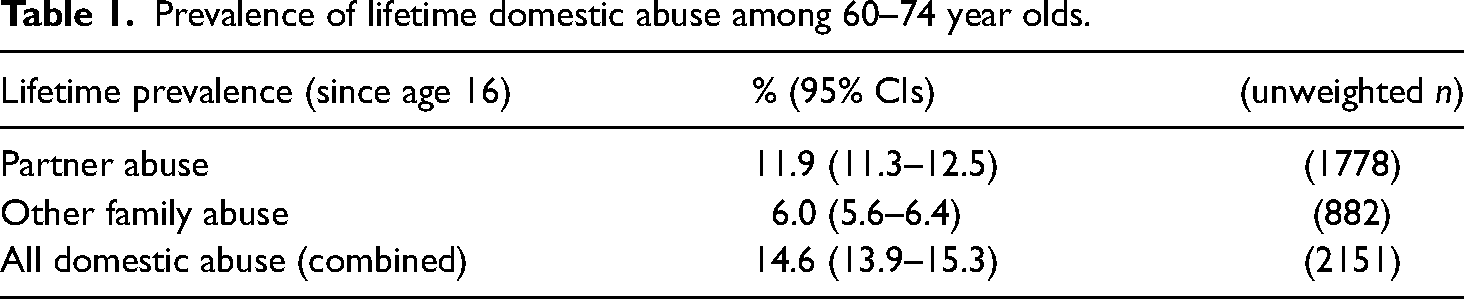
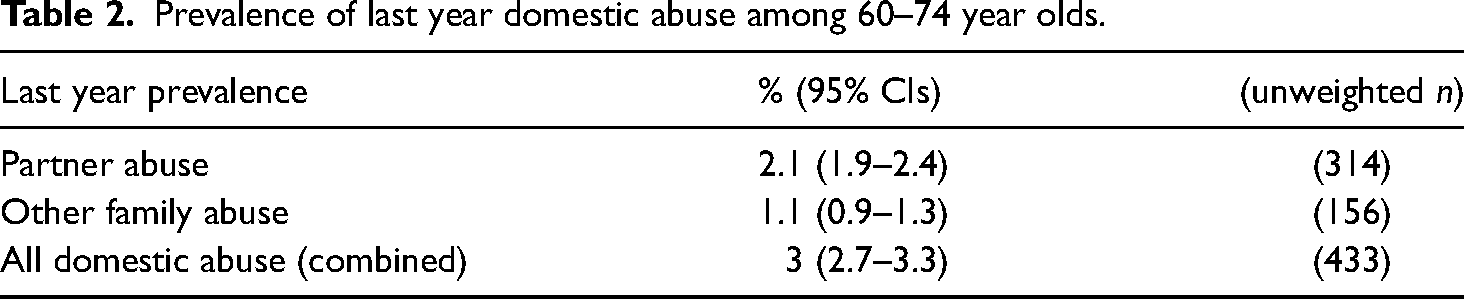
In England and Wales, 11.9% (95% CI 11.3–12.5) of adults aged 60–74 reported lifetime intimate partner abuse, while 6% (95% CI 5.6–6.4) reported lifetime family abuse (Table 1). For last year abuse, the prevalence of partner abuse (2.1%; 95% CI 1.9–2.4) also remained higher than that of family abuse (1.1%; 95% CI 0.9–1.3), with a combined any domestic abuse prevalence of 3% (95% CI 2.7–3.3) (Table 2). Subsequent results focus exclusively on experiences of last year abuse to focus specifically on victimisation that occurred during older age.
Prevalence of lifetime domestic abuse among 60–74 year olds.
Prevalence of last year domestic abuse among 60–74 year olds.
Victim characteristics
Table 3 describes the characteristics of older victims of last year domestic abuse, partner abuse and family abuse. The extent of gendered victimisation differs by type of domestic perpetrator: victims of intimate partner abuse were primarily women (75.6%), whilst a more balanced sex distribution was present for family abuse (52.9% female, 47.1% male). Further distinction in victim profiles is also visible, with a greater proportion of family abuse victims compared to partner abuse victims characterised by being single, having a limiting disability or long-term illness, being unemployed or economically inactive, and consuming alcohol 3 or more days a week.
Characteristics of 60- to 74-year-old victims of last year domestic abuse.
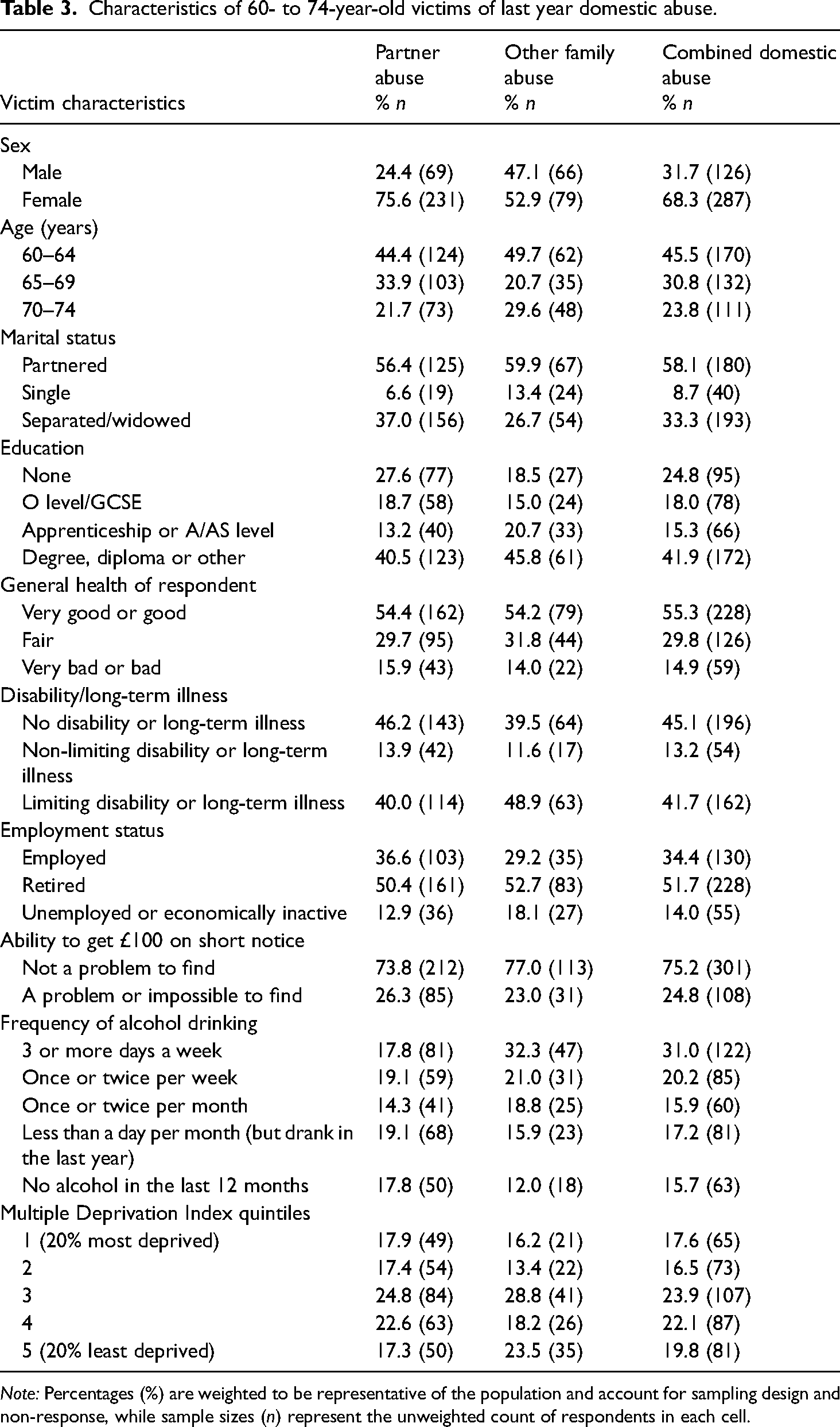
Note: Percentages (%) are weighted to be representative of the population and account for sampling design and non-response, while sample sizes (n) represent the unweighted count of respondents in each cell.
Factors associated with domestic abuse victimisation among older adults
Unadjusted relative risk estimates for last year victimisation of any domestic abuse, partner abuse and family abuse among older adults are presented visually in Figures 1–3 (precise estimates and CIs provided in Tables A1 and A2 in the Supplementary Appendix). Women were twice as likely as men to be victims (RR 2.09; 95% CI 1.58–2.74). Risk of victimisation was also approximately two times higher for single adults (RR 1.81; 95% CI 1.18–2.78) and separated or widowed adults (RR 2.29; 95% CI 1.77–2.95) compared to partnered adults. Having poorer health was also associated with increased risk of victimisation: older adults with very bad or bad reported general health and with limiting disabilities or long-term illnesses had an approximately three times higher domestic abuse victimisation risk (RR 2.95; 95% CI 2.03–4.30 and RR 2.82; 95% CI 2.16–3.68, respectively) compared to those reporting good general health and no limiting disabilities or long-term illnesses. Socio-economic factors also played a role, with more than a two-and-a-half times higher victimisation risk for the unemployed or economically inactive (RR 2.53; 95% CI 1.72–3.72) and for those who would struggle to find £100 to meet an unexpected expense on short notice (RR 2.70; 95% CI 2.03–3.60). At a wider area level, the risk of experiencing domestic abuse was 76% higher (RR 1.76; 95% CI 1.15–2.71) for those living in the most deprived 20% of areas compared to the least deprived. The highest achieved education level and frequency of alcohol drinking were not significant factors associated with domestic abuse victimisation among older adults.
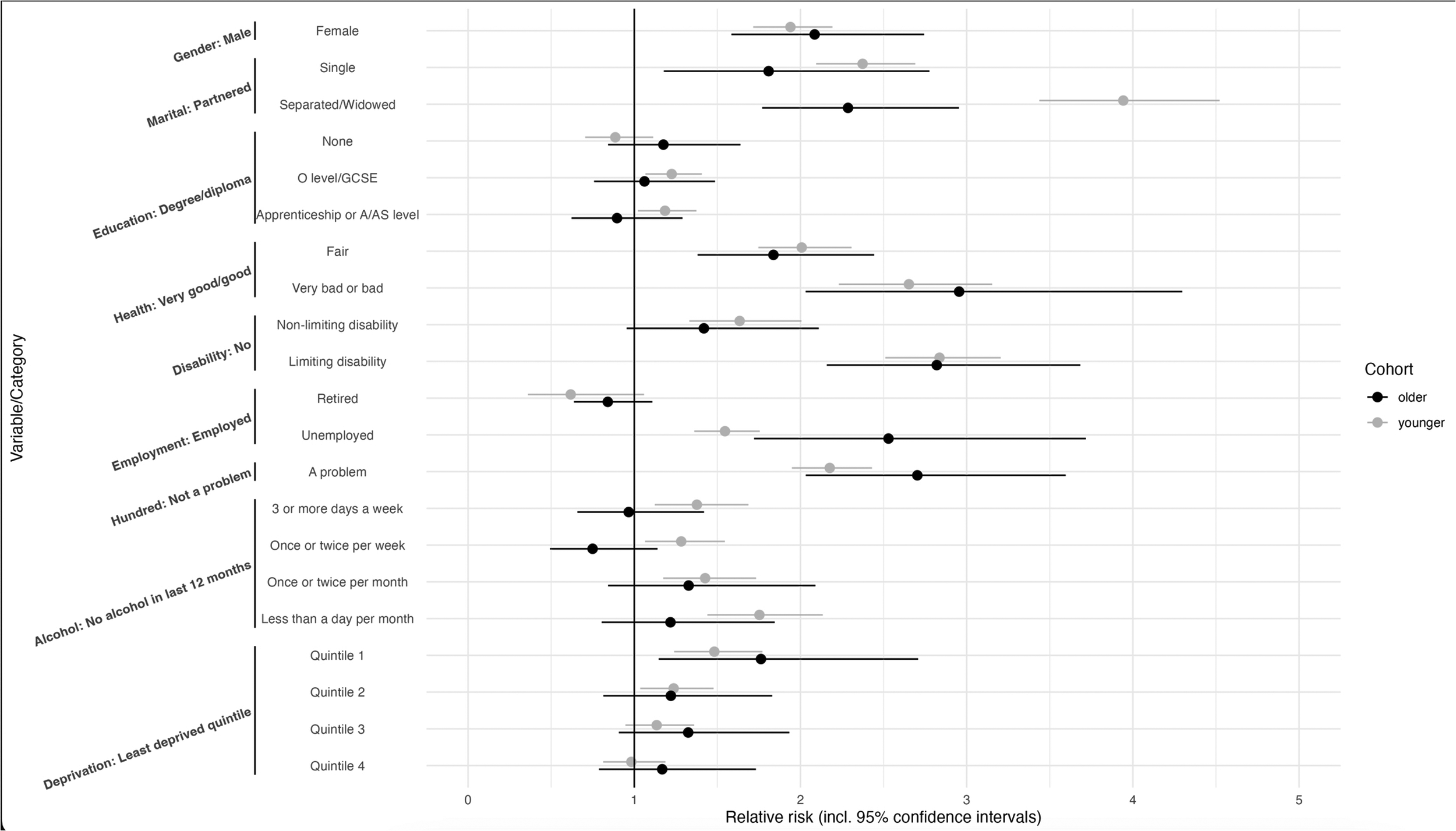
Unadjusted relative risk estimates for last year combined domestic abuse.
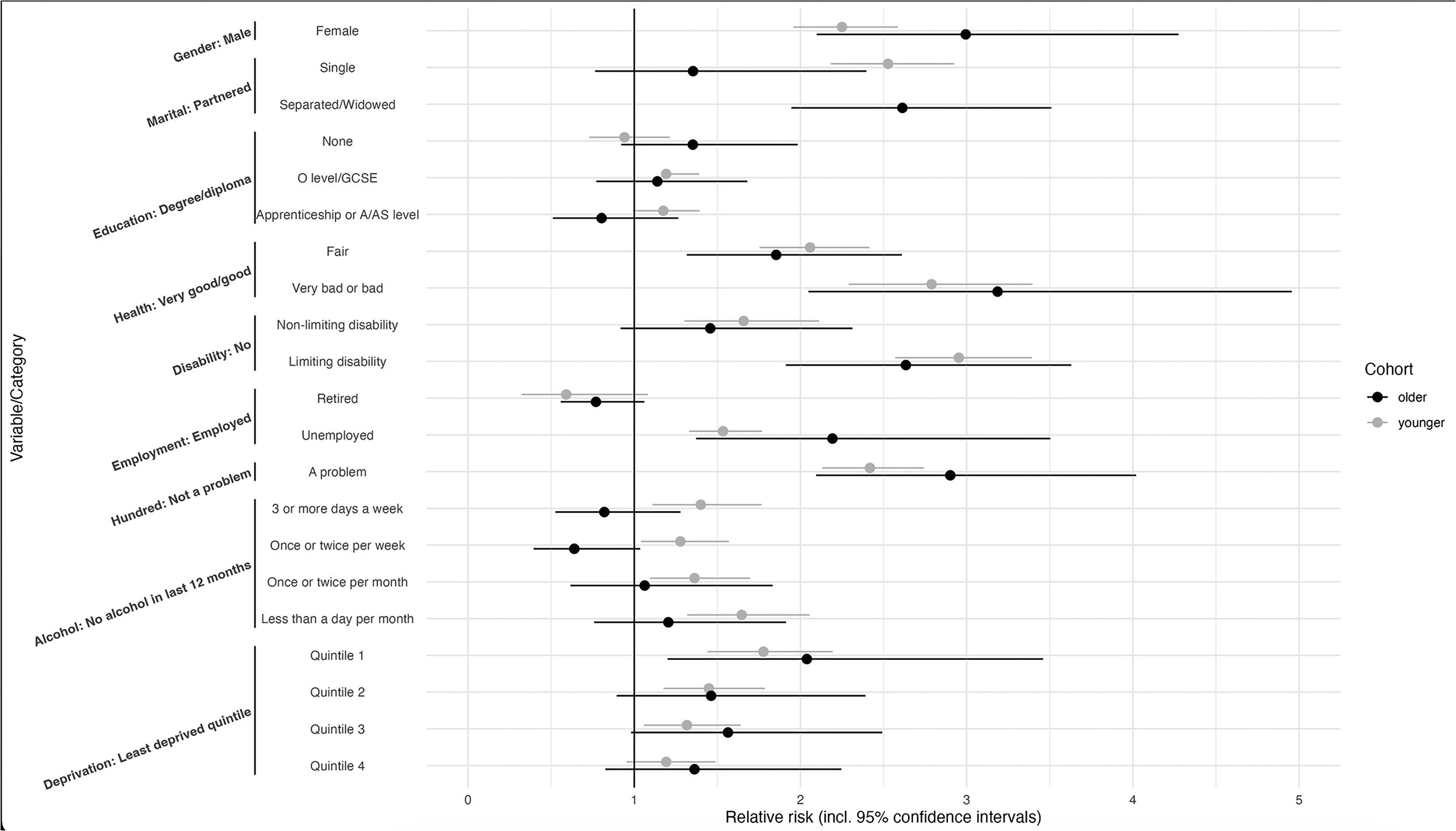
Unadjusted relative risk estimates for last year partner abuse.
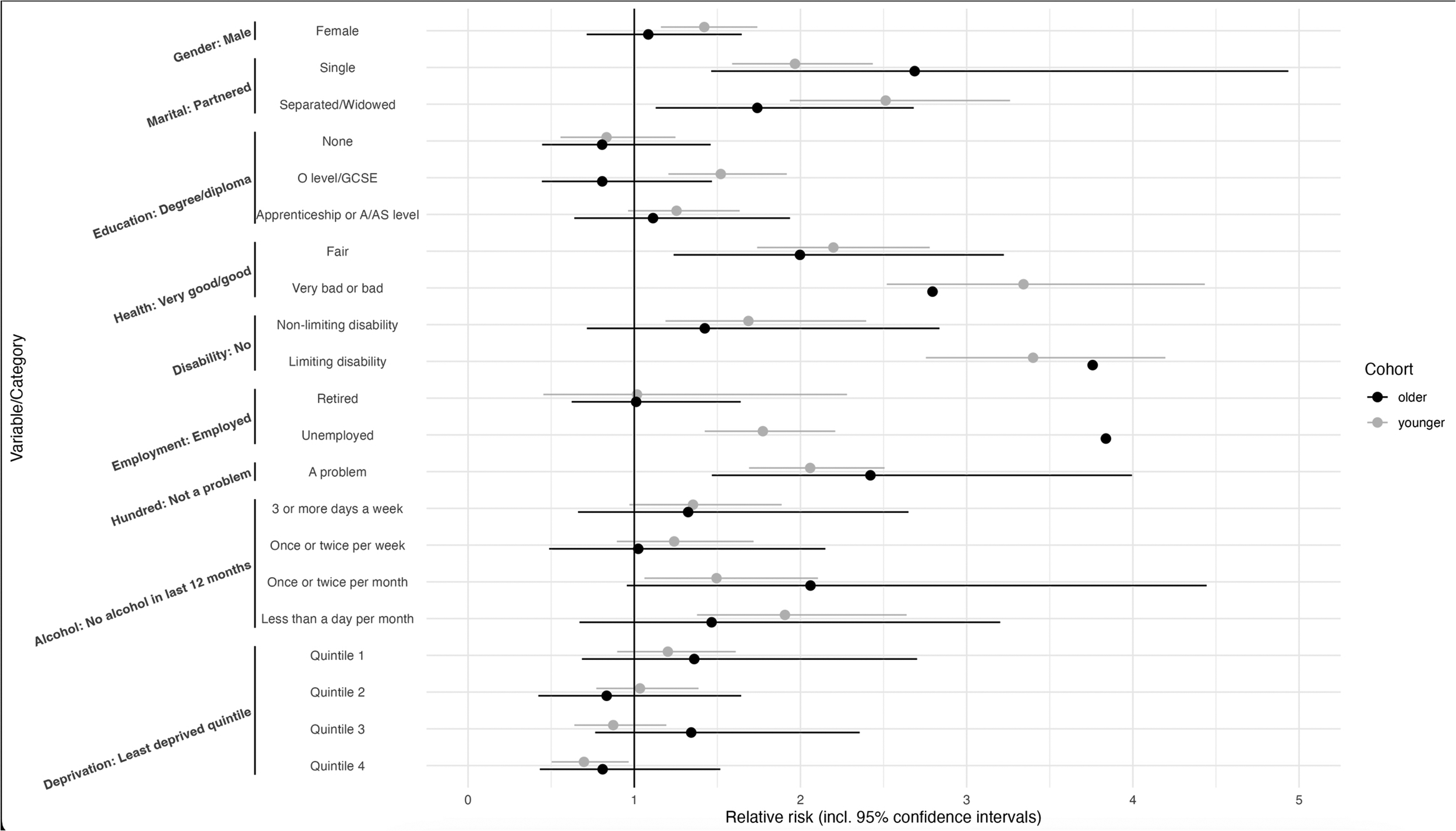
Unadjusted relative risk estimates for last year family abuse.
When analyses were separated by type of domestic perpetrator, some noteworthy differences were visible. Notably, sex of the victim remained a significant factor associated with partner abuse victimisation, with women having a three times higher risk of victimisation than men (RR 2.99; 95% CI 2.10–4.27), but it was not a significant factor for last year family abuse victimisation among older adults. This difference between abuse types was statistically significant. Further differences in factors associated with partner and family abuse were observed, although they did not reach statistical significance and should be interpreted with caution. Residing in the most deprived 20% of areas as compared to the 20% least deprived areas was a risk factor for partner abuse but lacked statistical significance in the context of family abuse victimisation. Examining risk factors separately also highlighted that while being single did not significantly increase the risk of partner abuse victimisation, single older adults had a two-and-a-half times higher risk of family abuse victimisation than partnered older adults (RR 2.69; 95% CI 1.46–4.94). Differences in the magnitude of risk were also visible: for example, older adults with limiting disabilities or long-term illnesses, as well as unemployed or economically inactive older adults, were over twice as likely to experience partner abuse compared to those without these attributes but nearly four times as likely to experience family abuse.
Comparison of risk factors for domestic abuse victimisation between younger and older adults
Finally, we compared risk factors for victimisation of any domestic abuse, partner abuse and family abuse between younger and older adults (see Figures 1–3). Limited variation was present in the overall risk factors for victimisation between older and younger adults. However, risk of victimisation differed between older and younger cohorts according to being separated/widowed: although this increased victimisation risk for combined domestic abuse and partner abuse for both younger and older adults, separated/widowed younger adults faced much higher relative risk of victimisation than did separated/widowed older adults (Figures 2 and 3). Additionally, for all three abuse outcomes, younger adults faced an elevated risk of victimisation if they had any disability or long-term illness; in contrast, among older adults, this heightened risk was only evident among those with limiting disabilities or long-term illnesses. Moreover, while risk of family abuse victimisation did not exhibit a gendered nature among older adults, younger women were at a higher risk of family abuse victimisation than younger men (Figure 3). Categories of education level and frequency of alcohol consumption, although not significant risk factors for victimisation in older adults, showed some statistical significance for younger adults (see Figures 2 and 3).
Discussion and conclusion
Domestic abuse against older adults continues to be under-researched, and in England and Wales, the previous age cap on the domestic abuse module in the CSEW has meant that there have never been robust estimates of domestic abuse against adults aged 60 and over. Following the raising of the age cap to 74 in 2017, we present data from the first three sweeps of the CSEW to sample adults aged 60–74. Our findings provide new and substantial evidence on the prevalence of, and factors associated with, domestic abuse among adults aged 60–74 and, critically, demonstrate common and different factors associated with domestic abuse of older adults by partners compared with family members and between older and younger victims for partner and family abuse.
The past year prevalence of domestic abuse among older adults is 3%, equal to around 280,000 older adults as victims each year. 2 Though lower than the 6.1–6.3% prevalence among those aged 16–59 in the same period (ONS, 2020), 3% is still a noteworthy statistic. As the number of older adults increases, so will the absolute number of victims, underlining the importance of understanding and addressing domestic abuse among this demographic.
The estimates produced here both concur with and contradict previous literature. When neglect was excluded from results presented by O'Keeffe et al. (2007) making the findings more comparable with our study, 1-year prevalence of family abuse was 1.6% but within a wider age range and set of potential perpetrators. Fadeeva et al. (2024) also found lower past year prevalence estimates of 1.5% for domestic abuse perpetrated by partners and other family members, although they also had a slightly different age range of 60 and over. Yon et al.'s (2017) systematic review and meta-analysis estimate at least 15% of older adults (60 and over) in the community experience elder abuse each year. However, these estimates included convenience samples, and a notable shortcoming of the papers included in that meta-analysis is their relatively small average sample size (mean = 1345 and a median of 807 respondents), making the estimates for these low-frequency events vulnerable to random variation, although the consistency in estimates in high-quality studies is noteworthy. An additional methodological explanation for the observed difference is that some of the elder abuse studies in the meta-analysis include non-family members, which may explain the higher prevalence rate.
Studies on IPV limited to older women (Stöckl and Penhale, 2015) and more general family abuse studies (Burnes et al., 2015) generally report higher prevalence than our analysis. Most of these studies use broader definitions of elder abuse than the domestic abuse definition adopted in the CSEW. Additionally, some of these studies include a wider age range and draw samples from other countries (primarily the USA), which may explain some differences. The wider presentation of CSEW as a crime survey rather than a safety, violence against women or health survey might also explain observed differences: prior research has demonstrated that crime surveys have lower prevalence estimates for sexual violence when compared to surveys with different framing (Brunton-Smith et al., 2022). Reasons for this include differences in question suites, sampling and response bias (Brunton-Smith et al., 2022: 908). Many other studies still report a higher prevalence among those aged 60–74, so it is notable that the CSEW reports a prevalence of only 3% in this age group. Nevertheless, our findings do raise questions about the use of the CSEW to collect prevalence data on domestic abuse against older adults. We return to this issue later.
In contrast to much of literature on domestic abuse/IPV and/or elder abuse, partner abuse was more prevalent than non-partner family abuse for older adults. A recent rapid evidence assessment of research on perpetrators of domestic abuse against older adults (Bows et al., 2022) reported that studies using nationally representative surveys tended to find that the split between partner and other family member (particularly adult children) perpetrators was broadly equal, and in some cases, adult children or other family member perpetrators were more common than partners (e.g. Gil et al., 2015). However, the aforementioned surveys used broader definitions of abuse than the CSEW and included a wider age range of older respondents (aged 60–84 or 60–80+, rather than 60–74), making direct comparisons with our findings challenging. Notably, the study using APMS data (Fadeeva et al., 2024), which used the same domestic abuse questions as the CSEW but included respondents aged 60 and above, also found higher prevalence of partner abuse compared to family abuse. This suggests that the specific abuse questions being used in the CSEW may be framed more toward partner abuse. Given the variations in relationship patterns by type of abuse of older adults (Bows et al., 2022) and the shifting profiles of perpetrator types across different stages of older age (De Donder et al., 2011), this may explain some of the differences.
In terms of individual-level risk factors, poorer health and the presence of disability were strongly associated with risk. This is consistent with the wider domestic abuse literature (Mannell et al., 2022), but the direction of causation – if there is a causal relationship – cannot be stated with any certainty. Being more socio-economically disadvantaged – specifically, being unemployed or economically inactive, and finding it a problem to immediately find £100 to meet an unexpected cost – was also correlated with both partner and family abuse in older adults. This too is consistent with wider literature which has consistently highlighted socio-economic disadvantage as a factor associated with domestic abuse (World Health Organisation, 2012).
Certain risk was dependent on perpetrator characteristics. Consistent with IPV research across ages, women were significantly more likely to be victimised by a partner than men (almost three times more likely in our study). However, when the perpetrator was a non-partner family member, risk of victimisation for men and women was similar. In other words, partner abuse disproportionately affected older women, but non-partner abuse of older adults had no gender pattern. These important differences in the nature and factors associated with risk echo international research – particularly the elder abuse literature (Yon et al., 2017) – and underscore the need for nuanced analysis of abuse against older adults. One possible reason for these differences is that, whereas IPV is a manifestation of gendered inequalities and unequal power dynamics, non-partner family violence engages and reflects different inequalities and vulnerabilities – for example, related to age, health or socio-economic status. Alternatively, this apparent gender symmetry may mask two pathways, with one reflecting gender inequalities and the other – younger males abusing older males – reflecting other factors, such as substance misuse. Studies with larger samples of older adults are needed to comprehensively analyse these differences and develop then test theoretical explanations.
Furthermore, older adults who are divorced or legally separated were more than two and a half times more likely to be victims of partner abuse than those who were married, partnered or cohabiting. This seems to indicate that past year abuse has either been perpetrated by partners whom the victim has then separated from or perpetrated by ex-partners whilst separated, warranting further exploration.
Our study was particularly interested in examining whether factors established as associated with domestic abuse among young (aged 16–59) people are the same for older adults, and whether there are differences between partner and non-partner abuse across the two age cohorts. Overall, the study found limited differences in victimisation between older and younger cohorts, with several factors being consistent with both younger and older adults.
What’s next for theorising abuse of older adults?
Taken together, our findings highlight the differences in factors associated with experiencing abuse by partners compared with other family members but contradict the prevailing view that abuse of older people is qualitatively distinct from that of younger adults. In fact, our analysis shows that multiple factors associated with domestic abuse victimisation – whether by a partner or family member – are consistent across the life course. In particular, socio-economic disadvantage, poor health and disability, and victim sex are consistent correlates for victimisation. Age should therefore not be the ‘master status’ when researching and theorising abuse of older adults.
The justification for ‘bracketing off’ (Holt and Shon, 2018) abuse into the distinct conceptual and empirical study of ‘elder abuse’ is the belief that abuse of older adults is different from abuse of young adults, despite most elder abuse research reporting that perpetrators tend to be partners or relatives of older adults. Our analysis provides strong support towards the integration of older people into the analyses of domestic abuse in criminological and victimological empirical and theoretical research and away from elder abuse exceptionality. Specifically, we proffer that a life course perspective that integrates age as an important exploratory variable (rather than merely descriptive) is needed to begin to understand abuse as a life course, rather than just young persons’ phenomenon. This is important for understanding victimisation, and developing victimological theory, more generally.
An interesting empirical and theoretical question that emerges from our analysis is how many of the 60–74 year olds that reported past year domestic abuse (3%) were lifelong victims; around 1 in 6 older adults reported lifetime experience of domestic abuse, whilst 1 in 5, 16–59 year olds also report lifetime experience, suggesting there is likely significant overlap between victims across age categories. It is well known that a relatively small number of people are disproportionately victimised, and one of the major risk factors for victimisation is previous victimisation (Pease, 1998), but most empirical and theoretical contributions focus on repeat victimisation or victim careers in younger people. Indeed, one of the rarely recognised limitations of the victimological literature is that it is adolescent limited (Cullen, 2011), and even work which provides longitudinal analyses of victimisation censors around age 40 (e.g. Sullivan et al., 2016; Tillyer, 2014). This, in part, reflects the long-standing criminological ‘fact’ that victimisation is concentrated in younger age groups, yet an ageing population means that the scope of interest must widen.
A further limitation of existing life course/victim careers literature is that it tends to measure and theorise on particular types of victimisation, with the majority excluding domestic abuse, or incorporating it within wider categories of violent victimisation. This in turn reflects, and is reflective of, enduring beliefs that domestic abuse is a young persons’ problem, with abuse of older people conceptualised as exceptional. It is, therefore, critical that we move to a truly life course agenda, which empirically and theoretically investigates domestic abuse across the full life course, to account for cumulative experiences and patterns of victimisation over time (Semenza et al., 2021: 10) as well as understanding why victimisation may begin in later life for some older adults.
Our analyses also point to the need to differentiate between IPV and non-IPV domestic abuse but not based on age. Rather than combining all abuse that occurs within an intimate or familial relationship into the single conceptual category of domestic abuse, our analysis indicates that a uncoupling of family violence from other forms may be needed. In other words, it may be that theoretical and conceptual distinctions need to be drawn between IPV and non-IPV family abuse moving forward, but these should not centre on age, given our findings were constant across age categories. This has important implications not only for how we understand domestic abuse academically but also for how policy and practice should approach domestic abuse by family members versus intimate partners. One of the most obvious areas is risk assessment, as we observed consistent risk factors for familial violence distinct from those for intimate violence regardless of age group. We wonder whether single terms such as ‘domestic abuse’ are useful, as they may mask the important differences between IPV and non-IPV abuse.
Study limitations and reflections on the CSEW
The key challenge we encountered in our analysis was the small number of older adult domestic abuse victims, which led to the generation of very wide CIs for estimates within this age group. Nevertheless, our study provides valuable descriptive insights into the similarities and differences in factors associated with partner and family abuse victimisation and in factors associated with domestic abuse victimisation among older and younger individuals, establishing a foundation for developing new theoretical understandings of abuse as part of a life course analysis.
The CSEW, akin to other household surveys, targets individuals residing in permanent households, thereby excluding older people living in care homes or assisted living facilities, which impacts the representation of older adults in the survey sample. It also likely underestimates last year prevalence of domestic abuse since victims may be more likely to live in temporary accommodation such as refuges or with family or friends (Walby and Myhill, 2001). Additionally, using a crime survey also limited the availability of important well-being and social connectedness variables for analysis, limiting the range of factors we were able to examine. These challenges underscore the need for further large-scale studies of older adults with a wider range of variables to determine the robustness of the potential differences and to better understand factors associated with abuse.
Moreover, our study utilises the first three sweeps of the survey data where the age cap had been extended to 74, meaning our analysis is limited to examining the profile of domestic abuse against a specific group of older people (60–74) and how this group compares with younger adults. It cannot be assumed that those aged 60–74 are representative of all older people, and indeed we concur with other scholars who have cautioned against grouping all older people together into a single category, or of drawing conclusions on issues affecting older people based on a sample of those at the younger end of the older category (Westwood, 2017). With the age cap fully lifted from 2021/2022, data on domestic abuse are now captured by the CSEW for all adults, enabling future research to focus on older populations, though the sampling limitations of excluding those with certain health conditions, limited capacity, and those in institutions still remain. This underscores the importance of diversity in research methods to ensure the most invisible are captured.
The conceptualisation of domestic abuse as measured by the CSEW presents additional challenges, as the conceptualisation and measurement of IPV have been extensively debated for decades (Myhill, 2017), and that is before considering wider family abuse. As understandings of domestic abuse have advanced, particularly in relation to coercive control, ongoing redevelopment work on the CSEW self-completion questions has aimed to address these issues through the developing and testing of new domestic abuse questions which are included in the survey on a split-sample basis until March 2025 (Hester et al., 2023; ONS, 2024). Encouragingly, this question development process included older adults. The initial estimates using the new questions show a higher last year domestic abuse prevalence of 5.5% for those aged 60–74, and the ONS has stated that further work to understand the impact of the new questions on the prevalence of domestic abuse across different age groups is ongoing as part of their evaluation of the questions (ONS, 2024). In the meantime, we must rely on data from the existing questions, which were designed to capture data from 16- to 59-year-olds. Whilst we call for mainstreaming of older people into criminological research and theory, we also recognise that different methods, or methodologies, may be needed to achieve this mainstreaming.
Supplemental Material
sj-docx-1-euc-10.1177_14773708251335388 - Supplemental material for Domestic abuse in later life: A secondary analysis of the Crime Survey for England and Wales
Supplemental material, sj-docx-1-euc-10.1177_14773708251335388 for Domestic abuse in later life: A secondary analysis of the Crime Survey for England and Wales by Hannah Bows, Merili Pullerits and Iain Brennan in European Journal of Criminology
Footnotes
Acknowledgements
The article uses controlled data from both the Crime Survey for England and Wales, owned by the Office for National Statistics (ONS) and accessed via the ONS Secure Research Service. Neither the original data creators nor data depositors or data copyright holders hold any responsibility for the analysis and interpretation of the data in this article. We would like to thank the anonymous reviewers and editors for their careful review of an earlier version of this manuscript and the helpful and constructive feedback provided.
Data availability statement
The data provided are controlled by the ONS and are therefore only available via application directly to the Office for National Statistics.
Ethical approval and informed consent statements
Ethical approval was provided by Durham University Law School Ethics Committee.
Funding
The author(s) received no financial support for the research, authorship, and/or publication of this article.

Supplemental material
Supplemental material for this article is available online.
Notes
References
Supplementary Material
Please find the following supplemental material available below.
For Open Access articles published under a Creative Commons License, all supplemental material carries the same license as the article it is associated with.
For non-Open Access articles published, all supplemental material carries a non-exclusive license, and permission requests for re-use of supplemental material or any part of supplemental material shall be sent directly to the copyright owner as specified in the copyright notice associated with the article.
