




Abstract
There is a consensus in the scholarly literature that imprisonment is a painful and degrading experience. Nevertheless, there is considerable variation across jurisdictions and within countries in prison experiences. In other words, some prisons may be experienced as more degrading and punitive than others. The aims of this article are threefold: first, we establish to what extent experiences of punishment and degradation in prisons in England & Wales and Norway can be attributed to institutional versus individual differences. Second, we examine what factors contribute to experiences of punishment and degradation. Third, we analyse the relationship between institutional (wing) variation in perceived punishment and degradation and self-harming behaviour. Data is used from surveys distributed among individuals incarcerated (N = 1101) in eight prisons in England & Wales and six prisons in Norway. Findings show that prisoners, on average, report experiencing more punishment and degradation on English than Norwegian prison wings, but that there is also substantial variation within each country. Various facets of the prison experience are related to perceived punishment and degradation, such as treatment by staff (i.e., ‘weight’) and imposed restrictions (i.e., ‘depth’). Finally, individuals report more self-harming behaviour when they are incarcerated on wings that are perceived as more degrading and punitive. In conclusion, this shows that surveys can offer insight into the extent to which a prison sentence is experienced as more or less painful, and that this has important implications for the health and well-being of people subjected to it.
One of the most consistent maxims applied to imprisonment is – to quote Alexander Paterson, the British Prison Commissioner and reformer – that people should be sent to prison ‘as punishment not for punishment’ (Ruck, 1951: 23). Yet the most consistent finding of studies of confinement is that the typical experience of being in prison is, at the very least, deeply disagreeable. In Sykes's classic (1958) formulation, this is because, alongside the deprivation of freedom, prisoners experience a further set of frustrations that inhere in holding people against their will, alongside other people with whom they would not normally choose to share confined space, typically in single-sex environments. Meanwhile, managerial failings, deliberate forms of abuse and neglect, and institutional policies and practices designed to accomplish goals such as compliance and risk reduction generate a range of supplementary ‘pains’ (see Crewe, 2011), some more significant than others (Haggerty and Bucerius, 2020), and present to varying degrees in different prison systems (Crewe et al., 2023a) and prison establishments (Liebling and Arnold, 2004).
Nonetheless, there seems to be widespread consensus among practitioners and policymakers, that, even if some degree of discomfort is an unavoidable element of imprisonment, it should be minimised, while more serious forms of degradation and distress should be avoided altogether. With this in mind, and since it is clear that there is considerable variation in the experience of imprisonment, this article examines the factors that contribute to feelings of punishment and degradation among men and women serving sentences in England & Wales and Norway – jurisdictions considered to have quite different orientations to punishment. Specifically, drawing on a survey designed to assess the experience of prison life, it explains differences in prisoners’ evaluations of punishment and degradation both between and within England & Wales and Norway and examines the potential consequences of more or less severe experiences of punishment and degradation. One of the contributions of the article is therefore to demonstrate that punishment and degradation is a measurable construct, that the extent to which it is experienced in prisons varies, and that this variation has important further consequences.
Literature review
The argument that imprisonment is painful and degrading is so well-worn, and evidenced so compellingly, that it barely requires elaboration. As Haggerty and Bucerius (2020) have recently outlined, if anything, the proliferation of research on the ‘pains of imprisonment’ risks occluding our understanding of the extent to which incarceration can be traumatic or debasing. It is valuable nonetheless to reiterate that – to provide only a partial list – depriving people of their liberty, segregating them from their loved ones, communicating moral censure, inhibiting their everyday autonomy, placing them in an environment of relative scarcity, holding them in close quarters with people who have broken moral and legal norms, and subjecting them to other people's authority is unlikely to be experienced as pleasant, even if, for some prisoners, it might lead to some degree of personal growth or narrative reinvention (Crewe and Ievins, 2020; Van Ginneken and Vanhooren, 2021).
While some scholars have questioned the extent to which prisons have truly become less inhumane and degrading (Foucault, 1977), there is little doubt that prisons, and the societies in which they are embedded, have undergone a long-term civilising process (Elias [1939] 1994). In most jurisdictions in Western Europe, for example, increased sensitivity to the suffering of others (Garland, 1990) has led to the abandonment of forms of punishment that are deliberately and gratuitously degrading. Nonetheless, as sensibilities shift, so too do questions about the border between reasonable and unreasonable treatment, or, to put it more simply, when punishment is ‘too much’.
In practice, the degree to which imprisonment is experienced as painful and humiliating varies considerably. Indeed, in recent years, considerable attention has been paid to differences between prison conditions and prisoner experiences in different jurisdictions. While the United States is generally used as the exemplar of penal harshness – in the Global North, at least – work by Pratt (2008) and Pratt and Eriksson (2014) has helped direct attention to ‘exceptional’ levels of penal mildness and humanity in the Nordic countries. Work in this area consistently highlights social attitudes beyond the prison that are relatively tolerant and forgiving (e.g., Green, 2012), and orientations to prisoners that correspond with such attitudes; this is reflected both in the ‘normality principle’ – the idea that life in prison should resemble life in the community as much as is possible (see Engbo, 2017; Van de Rijt et al., 2023) – and in a staff culture oriented towards humane treatment and rehabilitative objectives (Andvig et al., 2021). Given these indications of penal mildness and a commitment to normality, one might expect that prisons in a welfare-oriented country like Norway make imprisonment a less punitive and harmful experience – an assumption supported by findings from a recent study comparing experiences of imprisonment between Norway and England & Wales (Crewe et al., 2023a). Despite the difficulties of comparing two very different jurisdictions, Crewe et al. (2023a) find that Norwegian prisoners evaluate their experience consistently more positively than prisoners from England & Wales. The broader point is that levels of humiliation and degradation in prisons are linked to broader penal philosophies, with some countries much more willing than others to inflict forms of suffering that extend beyond the unavoidable effects of the deprivation of liberty.
Second, within any single jurisdiction, even prisons that have the same official function vary considerably in terms of their moral quality (Liebling and Arnold, 2004), that is, the extent to which prisoners experience such matters as respect, fairness and safety. The implication of this finding is that two prisoners sentenced to the same period of imprisonment might have very different experiences of punishment based on the particular establishment to which they are allocated, and the extent to which conditions, regimes and the imposition of authority vary (King and McDermott, 1995; Crewe et al., 2014). Following Crewe et al.'s (2014) dimensional model, punishment can be experienced as more or less painful depending on its depth, weight, tightness and breadth (see also Hayes, 2016). Broadly speaking, ‘depth’ refers to the relationship between imprisonment and (the ‘surface’ of) liberty, including levels of security and control, sentence length, and the extent to which prisoners feel cut-off from or denied forms of liberty and normality. ‘Weight’ relates mainly to the nature of interpersonal treatment, in particular the ways that prison staff use their authority, as well as the quality of material conditions (e.g., cells), entitlements and other regime factors. ‘Tightness’ is linked to modes of ‘soft’, bureaucratic and psychological power: for example, the impact of forms of risk assessment and other interventions designed to encourage self-government or the modification of cognition and selfhood. ‘Breadth’ is the reach and impact of both the sentence and the prison beyond the point of custody. Until now, these concepts have been used mainly for descriptive purposes, as a way of capturing and comparing the ‘texture’ of imprisonment, but it is possible that they also have explanatory value, that is, are relevant to a range of further outcomes.
Third, there is growing recognition of variation in how punishment is experienced based on individual-level factors. This might have several components. For example, individuals may experience differential treatment by staff based on factors such as offence type (e.g., Ievins, 2023) and race (e.g., Cheliotis and Liebling, 2006; Phillips, 2012). The experienced severity may also differ depending on expectations of prison (e.g., Sexton, 2015) and conventional ties to society (Raaijmakers et al., 2017a). Furthermore, biographical experiences of authority and abuse can affect how individuals perceive the imposition of penal power (e.g., Easteal, 2001; Crewe et al., 2023b). Such factors – discrimination, vulnerability, and expectations – explain in quite different ways ‘subjective severity’, that is, why prisoners on the same wing might ‘feel’ the prison in quite different ways.
Following the above, the experience of imprisonment consists of shared and individual components. Shared components consist of aspects of treatment (i.e., moral quality or prison climate) that accompany the particular wing or institution where one is incarcerated, including, among other things, staff–prisoner relationships, material conditions, freedom to move around the prison, and the offer of activities. We can refer to the extent to which variations in these experiences is clustered by wing or institution as intersubjective agreement. This, in other words, reflects the level of consensus about an experience among people who share the same (physical) environment. 1 Individual components, on the other hand, reflect individual variation in the prison experience (i.e., subjective severity), which can be due to specific vulnerabilities and other individual characteristics that shape a person's perception of a situation, as well as the experience of unique situations. To illustrate this with an example: Mr Smith and Mr Jones both have interactions with prison officer Newman. Their perception of these interactions may have shared components (based on the general character and behaviour of officer Newman) but also individual components (based on Mr Smith and Mr Jones's prior orientation to authority or expectations of treatment). Given a large enough sample with different groups (e.g., wings or prisons), these shared and individual components can be identified using quantitative methods (see Van Ginneken and Nieuwbeerta, 2020). This brings us closer to identifying to what extent additional pain is inflicted by the specific setting where a person serves their sentence.
As expressed in human rights discourse (McCall-Smith, 2016) and person-centred philosophical frameworks (Kolber, 2009a, 2009b, 2013), there are reasons for avoiding punitive degradation that are irreducible to instrumental considerations. Prisoners have inherent dignity and value as human beings, and therefore should not be subjected to treatment that is ‘cruel, inhuman or degrading’ (Resolution of the UN General Assembly 70/175, 2015: 8). But the evidence that harsh and humiliating forms of punishment are inconsistent with rehabilitative objectives, and other important outcomes, is also persuasive. A considerable amount of scholarship has linked biographical experiences of trauma and humiliation to rage and violence in later life (see, e.g., Gilligan, 1996; Ellis et al., 2017). Meanwhile, the literature on crime, shame and reintegration likewise indicates that societies that degrade and humiliate criminals have higher rates of crime than those that communicate disapproval respectfully and without stigmatisation (Braithwaite, 1989).
More specifically, a growing body of literature has begun to identify connections between different kinds of penal institutions and the effects that they produce. In a recent article, for example, Auty and Liebling (2020) demonstrate the connection between the moral and social climate of a prison and post-release outcomes, finding that prisons with a higher interior legitimacy have lower-than-predicted reoffending rates. Some studies have found that individuals with similar security classifications are more likely to recidivate if released from a higher-security compared to a lower-security facility (Gaes and Camp, 2009; Chen and Shapiro, 2007). Van Ginneken and Palmen (2023) identified no relationship between reconviction rates and subjective safety or prison unit conditions, but did find that more positive experiences of autonomy, peer relationships and meaningful activities were associated with lower reconviction rates. There is no evidence that greater subjectively experienced severity of imprisonment has a deterrent effect (Raaijmakers et al., 2017b). Other studies show links between moral quality or social climate and outcomes during imprisonment, such as prisoner distress and suicide (Liebling et al., 2011), or violence and disorder (Gadon et al., 2006; Friis and Helldin, 1994).
This study builds on the tradition of research that seeks to identify what makes imprisonment a more or less punitive and degrading experience, and whether this is harmful beyond the human rights-based concern with the infliction of unnecessary pain. To this end, we use data collected in multiple prisons in Norway and England & Wales, allowing us to examine country differences, institutional (wing) differences, and individual differences. Through the measurement of concepts derived from extensive qualitative fieldwork, and which have been adopted primarily for descriptive rather than explanatory purposes, the study contributes to bridging ‘the divide between qualitative and quantitative measures of punishment, conceptualising punishment in terms of consistent comparisons of individuals’ subjective experiences’ (Hayes, 2016: 738). Using multilevel methodology, we examine to what extent experienced punishment and degradation can be attributed to institutional versus individual differences among individuals incarcerated in England & Wales and Norway. Furthermore, we answer the question of what contributes to feelings of being punished and degraded. Finally, we analyse if institutional differences in punishment and degradation are related to self-harm reported by prisoners.
Methods
Survey development and access
The article draws on data derived from a major, 5-year research programme designed to compare penal policy and prisoner experiences in England & Wales and Norway. The research comprised four discrete sub-studies (for further details, see Crewe, 2021), organised principally around a conceptual framework of ‘depth’, ‘weight’, ‘tightness’ and ‘breadth’ that had been established prior to the outset of the research (see Crewe, 2011; Crewe et al., 2014). Such concepts were developed inductively and were first applied in mainly qualitative forms of analysis (see Downes, 1988; King and McDermott, 1995; Crewe, 2011). However, one of the goals of the research was to provide a systematic and cross-national comparison, and to enable broader, non-comparative analysis of the nature of imprisonment, requiring the construction of a survey designed to capture these ‘textural’ elements of imprisonment.
The survey was developed much like the more longstanding Measuring the Quality of Prison Life (MQPL) survey (Liebling and Arnold, 2004; Liebling et al., 2011), whereby thematic dimensions of imprisonment are translated into a set of survey items that are, at a later point, subjected to a theoretically informed process of scale construction (see below). In this context, ‘texture’ refers both to the objective qualities and the subjective feel of a prison sentence, the implication of which is that, rather than seeking to measure specific kinds of outputs or concrete elements of a regime (e.g., time spent in cell; access to education or programmes; experience of sanctions), the survey sought to capture the feelings that such outputs produced. It did so mainly through a series of statements, with Likert-scale response options (ranging from ‘strongly agree’ to ‘strongly disagree’), either devised collectively by the research team (based on prior research experience and the initial phase of qualitative fieldwork) or drawn directly from the MQPL survey. As well as a set of ‘problem statements’, which are not the focus of this article, the survey also included a range of questions about demographic matters, and circumstances such as regime level, drug and alcohol misuse prior to custody, and experiences of self-harm and attempted suicide before and during the current sentence.
In England & Wales, access was secured through an application to the HM Prison and Probation Service National Research Committee (NRC), which required attention to ethical, methodological and substantive issues. The research access form and the overall scope of the research programme meant that representatives from the NRC requested a bespoke meeting with the second author to discuss some of the details of the various sub-studies that comprised it. Access was probably enabled by the second author's longstanding relationship of trust with senior practitioners within the organisation and by his experience in undertaking empirical work – both interviews and survey groups – on various projects over many years. In Norway, permission was granted through a direct request to the Prison Directorate, rather than via the individual prison regions, and required some negotiation before permission was granted.
Survey administration
The surveys were administered towards the end of the fieldwork period in six establishments in Norway and eight in England & Wales. Prisoners were sampled systematically, within each unit in each establishment, to ensure even coverage across wings that often had differing functions and – inevitably – variation in terms of staff culture and treatment. Wherever possible, participants were asked to gather in communal rooms, where the survey was explained and given out in the presence of the researchers (and without the presence of staff). Prisoners were generally given around 40 minutes to complete the survey, with additional time put aside to allow the discussion of any themes that prisoners felt warranted additional comment. Response rates were high, in part because the research team tended to be well known already within each prison. Participants were given a chocolate bar as a token of appreciation for their involvement, but no further inducement.
Survey participants occasionally grumbled about the length of the survey, but almost always with good humour. When they indicated any feeling about their participation in the research, generally they expressed gratitude for the opportunity to voice their feelings about their experience. The provision of time at the end of the survey groups for discussion of the survey's content – and of the broader issues raised in it – was appreciated, in that it expanded the possibilities for prisoners to vent about their frustrations and to deliberate, within a loosely structured focus group format, on matters that were of real significance to them. As a research team, we took very seriously the tasks of listening to, probing and seeking to make sense of what our participants raised. Some were sceptical about the value and likely impact of the research, and there were occasional indications of ‘research fatigue’ – a sense that researchers came and went, while the prison system remained the same. Whenever asked what difference the research was likely to make, we were upfront in stating that we hoped to contribute in some way to progressive reforms while also acknowledging the likelihood that any difference our research might make was likely to be quite limited. Our sense was that prisoners welcomed this mode of aspirational realism, not least because they were aware themselves of the difficulties of influencing a non-agile bureaucracy.
Managing the survey and discussion groups was rarely difficult, but we encountered all of the normal challenges of supervising collective activity: some participants were particularly vocal or boisterous, and this needed to be handled; others could seem inhibited or diffident, and required encouragement and sensitivity. At the start of each group, we made clear that participants should fill in the survey on their own behalf, rather than consult each other on their responses. This was always well understood, and even when individuals occasionally chatted or conferred with each other while completing the survey, intervene where necessary to avoid the risk of the research drifting into becoming a collective exercise. While filling in the survey, prisoners would sometimes joke about the questions that were being asked (especially where they wanted to express particularly strong feelings about poor institutional treatment), or would ask us to define our terms or clarify what individual statements were ‘getting at’. On these occasions, other prisoners would sometimes interject to assist each other, but, again, we considered it our responsibility to provide the final guidance.
Before administering the surveys, both verbally and on paper, we explained their content, and made clear that participation was voluntary, that participants could withdraw from the study at any time without explanation, and that they were under no obligation to complete the survey in full (i.e., should they wish to skip some sections). Since the surveys asked about issues that had the potential to cause distress, we were attuned to mood and tone throughout. At the end of each session, we deliberately lingered to ensure that anyone who wanted to chat with us further could do so. When this happened, the most common reason was that people had felt inhibited during group discussions and wanted to give their views privately. Less frequently, people simply wanted to take up the opportunity to talk to a neutral outsider, often raising problems they were encountering in their interactions with the prison or prison system, rather than indicating that they had been disturbed in any way by completing the survey itself. In such situations, we were careful to reiterate that we were normally unable to solve prisoners’ problems, but we tried to be sympathetic and offered advice where that was relevant and responsible. On one occasion, a man who was being bullied, and was feeling suicidal, asked a team member to inform staff (which she did). Elsewhere, we sometimes felt discomfort when, because of the limited language skills of some foreign national prisoners, or our own linguistic limitations, 2 people struggled to communicate complex or emotional experiences, or to fit them into the format of a survey tool.
Operationalisation
Punishment and degradation is the main variable of interest in our study, reflecting the extent to which imprisonment is experienced as degrading, painful, harmful and humiliating. The five items that constitute ‘Punishment and degradation’ (see Table 1) – developed collectively by the research team – were phrased in ways that were intended to make clear their non-desirability, that is, to indicate a surfeit of punishment (e.g., ‘My time in this prison feels very much like a punishment’) and outcomes likely to be detrimental (e.g., ‘This prison is doing harm to me’). This dimension offers a means of exploring the factors that contribute most to variance in a set of sentiments that can be assumed to be unwanted effects of a custodial sanction. All items were answered on a five-point Likert scale, from strongly agree to strongly disagree. The scale has good internal consistency (α = .830). Higher scores reflect greater punishment and degradation.
Scales measuring the experience of imprisonment.
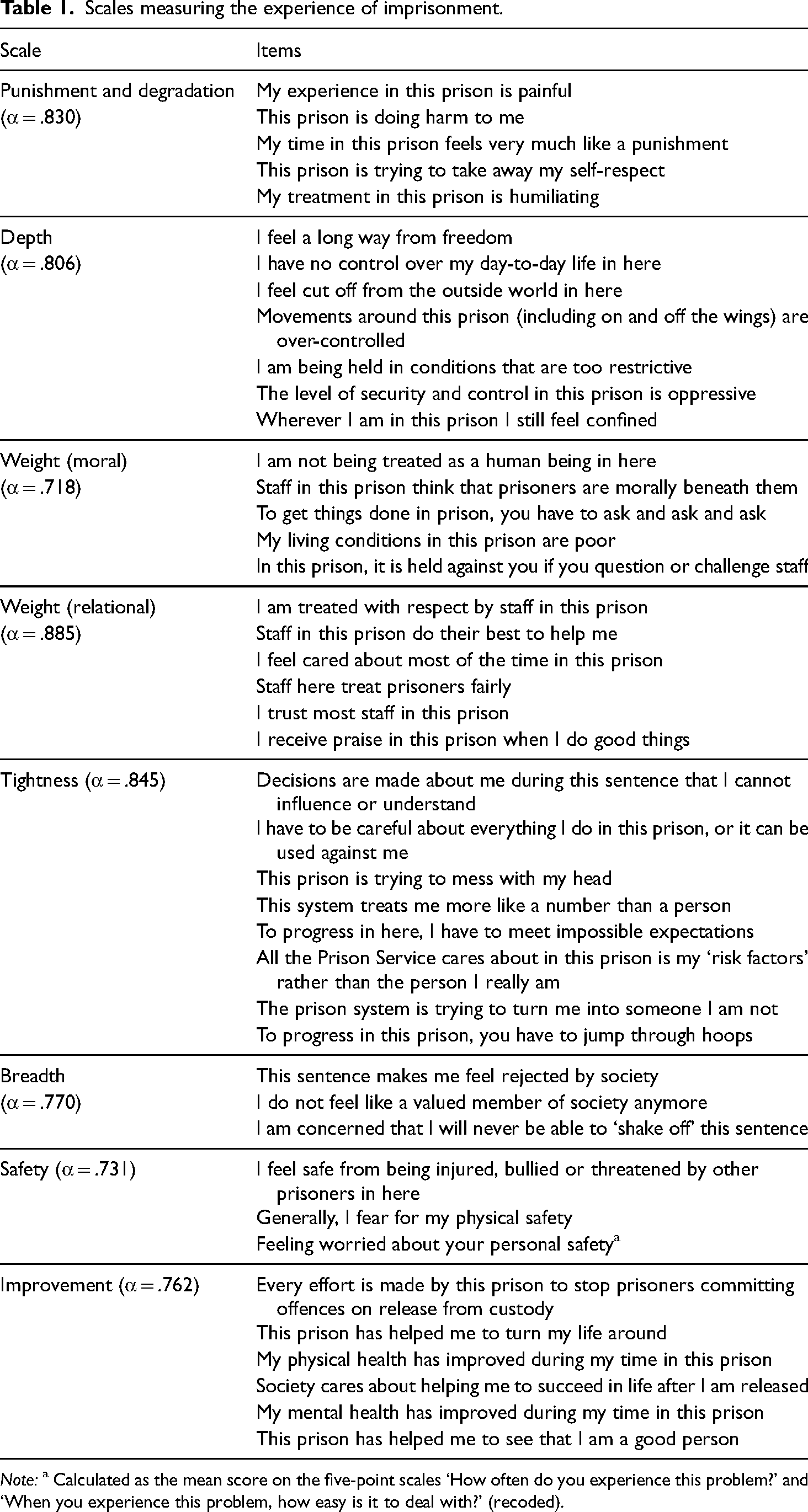
Note: a Calculated as the mean score on the five-point scales ‘How often do you experience this problem?’ and ‘When you experience this problem, how easy is it to deal with?’ (recoded).
The scale construction of ‘depth’, ‘weight’, ‘tightness’ and ‘breadth’ was based on a combination of theoretical ideas (which informed the initial item formulation, as discussed above) and empirical testing. An exploratory factor analysis revealed that items loaded on one factor, which indicates that the different concepts are closely related. Reliability analysis for each of the scales informed further refinement: in some cases, items were removed when they were weakly related to other items and theoretically less relevant. This resulted in scales that are theoretically and empirically coherent, with Cronbach's alphas above .7. The items that make up the final scales are presented in Table 1. We distinguish between a moral and relational component of ‘weight’: the former reflects the extent to which people feel treated as human beings; the latter refers to the quality of treatment by staff. All items and scales are coded in such a way that a higher score reflects a more negative perception (i.e., a higher score on tightness means that the respondent experiences more ‘soft’ power imposed by the system). Two other constructs were thought relevant in relation to experiences of punishment and degradation, namely ‘safety’ and ‘improvement’. These are related to anxiety about personal safety and the extent to which respondents attribute positive changes to imprisonment, respectively. Higher scores on these scales reflect more positive experiences.
Self-harm was chosen as a key indicator of potential outcomes of experienced punishment and degradation. The survey asked about self-harm since imprisonment (‘Have you self-harmed or attempted suicide since you came into prison on this sentence?’ [yes/no]), and self-harm prior to imprisonment (‘Have you self-harmed or attempted suicide before you came into prison on this sentence?’ [yes/no]).
Sample
The survey was filled out by 1101 individuals. We removed cases with missing information about the prison (N = 4) or wing (N = 18), and cases with highly inconsistent answers or no variation in answers when this would be expected (e.g., on items formulated in a different direction; N = 12). Given the multilevel nature of our analysis, we also removed wings with only one participant each (N = 9). The final number of included respondents is 1048, across 105 wings and 14 prisons; 771 were incarcerated in England & Wales (N prisons = 8; N wings = 73), and 277 in Norway (N prisons = 6; N wings = 32). The average age of respondents is 38 (SD = 12), 820 are men and 228 are women. Nearly half (N = 479, 46%) had been previously incarcerated.
Analysis
First, we examined to what extent individuals, prison wings, and prisons differed in terms of punishment and degradation experienced by incarcerated individuals – and whether there was variation between England & Wales and Norway. To this end, scores were plotted visually, and means and standard deviations were calculated (using SPSS version 25). Additionally, intraclass correlations (ICCs) were calculated for punishment and degradation (using the estat icc command in Stata 15.1), which reflect the extent to which variation is clustered at the wing and prison level as opposed to the individual level. Second, we examined to what extent different elements of the prison experience could explain variation in experienced punishment and degradation. A forward-stepwise linear regression analysis was carried out (using SPSS version 25) for individual scores on punishment and degradation. Forward-stepwise regression uses an automatic and iterative stepwise procedure to select the variables – one by one – that explain variation in the dependent variable and improve the model fit (variables are added in descending order in terms of explanatory value). Third, we examined whether wings that are perceived as more punitive and degrading have poorer outcomes, by regressing self-harming behaviour on wing scores of punishment and degradation (using a multilevel logistic regression analysis with xtmelogit in Stata 15.1). The analysis controlled for history of self-harm or suicidal attempts, individual characteristics (age, sex, prison history, time served, nationality, sex offender status, 3 shared cell, regime [open/closed], substance misuse, and country of incarceration). Clustering in wings and prisons was controlled for. There were no more than 5% missing values on any of the variables, so we used listwise deletion. 4
Findings
In answer to our first research question: we found important institutional differences in terms of punishment and degradation. Differences in punishment and degradation existed at the institutional (wing and prison) level between England & Wales and Norway, but also within each country. At all levels, mean scores of punishment and degradation were lower for Norway than England. Individual scores on punishment and degradation ranged from 1.00 to 5.00 (see Figure 1), with a mean of 2.87 (SD = 0.93) for Norway and 3.30 (SD = 0.84) for England. An inspection of item scores shows that prisoners in England were more likely to agree or strongly agree with all items that make up the scale punishment and degradation. For example, 24.09% of Norwegian respondents (strongly) agreed with the statement ‘My experience in this prison is painful’, compared to 39.02% of English respondents. Aggregate wing scores ranged from 1.70 to 4.20, with a mean of 2.90 (SD = 0.60) for Norway and 3.26 (SD = 0.39) for England (see Figure 2). Prison scores ranged from 2.56 to 3.60, with a mean of 2.80 (SD = 0.26) for Norway and 3.30 (SD = 0.24) for England (see Figure 3). Figures 1–3 demonstrate this substantial variation in individual, wing and institutional scores on punishment and degradation; what is more, the individual scores mirror a normal distribution spanning the spectrum of possible scores.
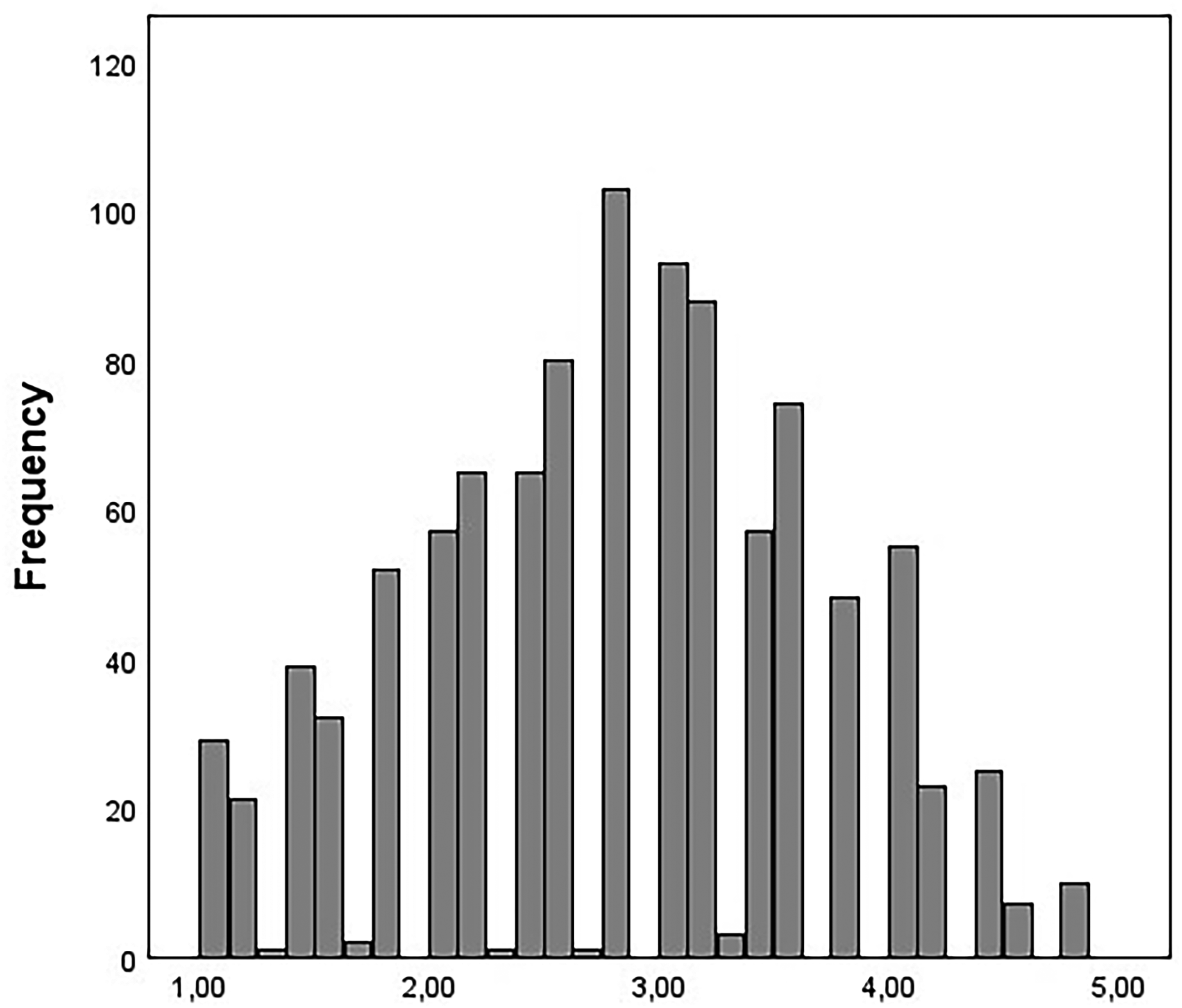
Distribution of individual experiences of punishment and degradation.
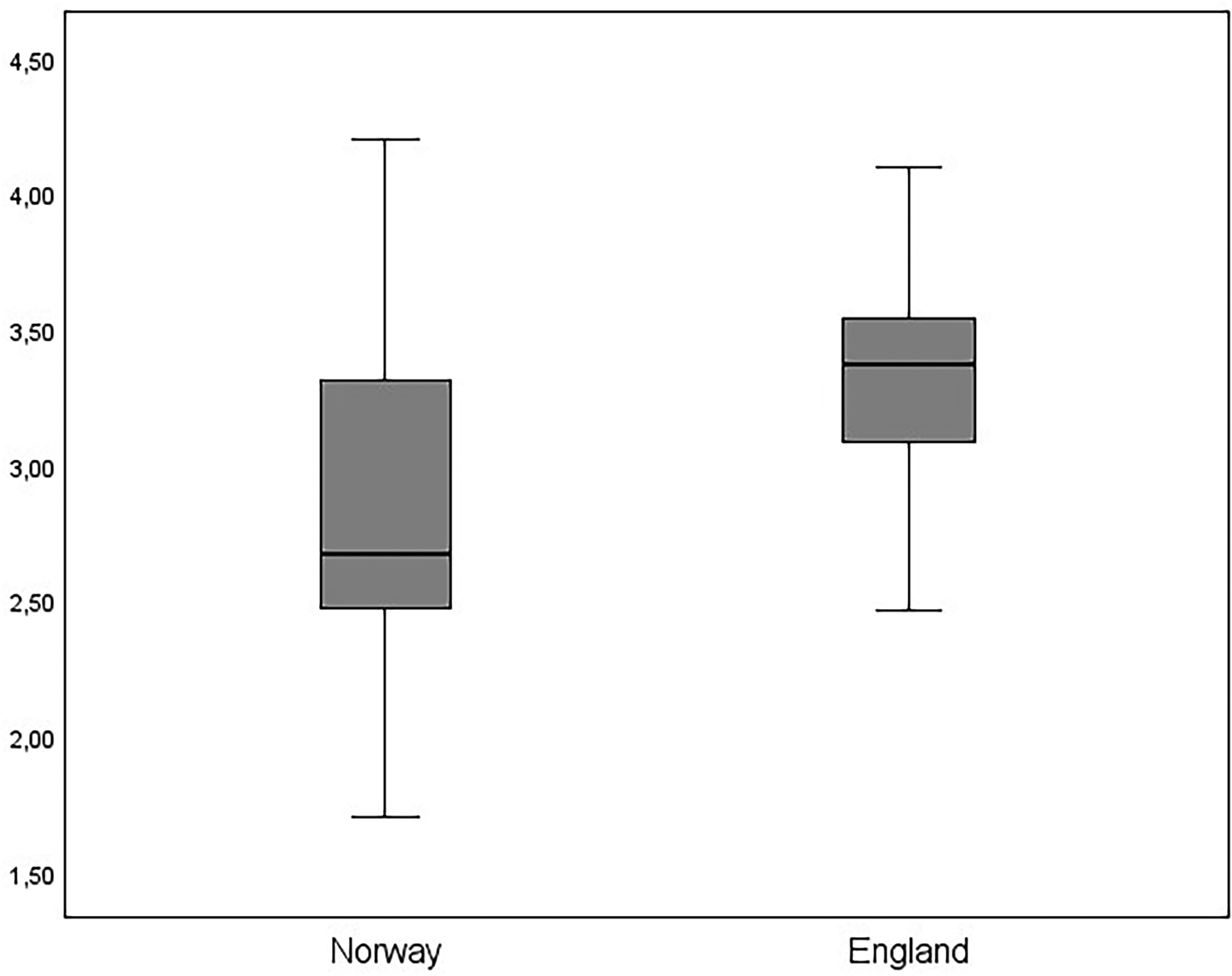
Distribution of wing means on punishment and degradation.
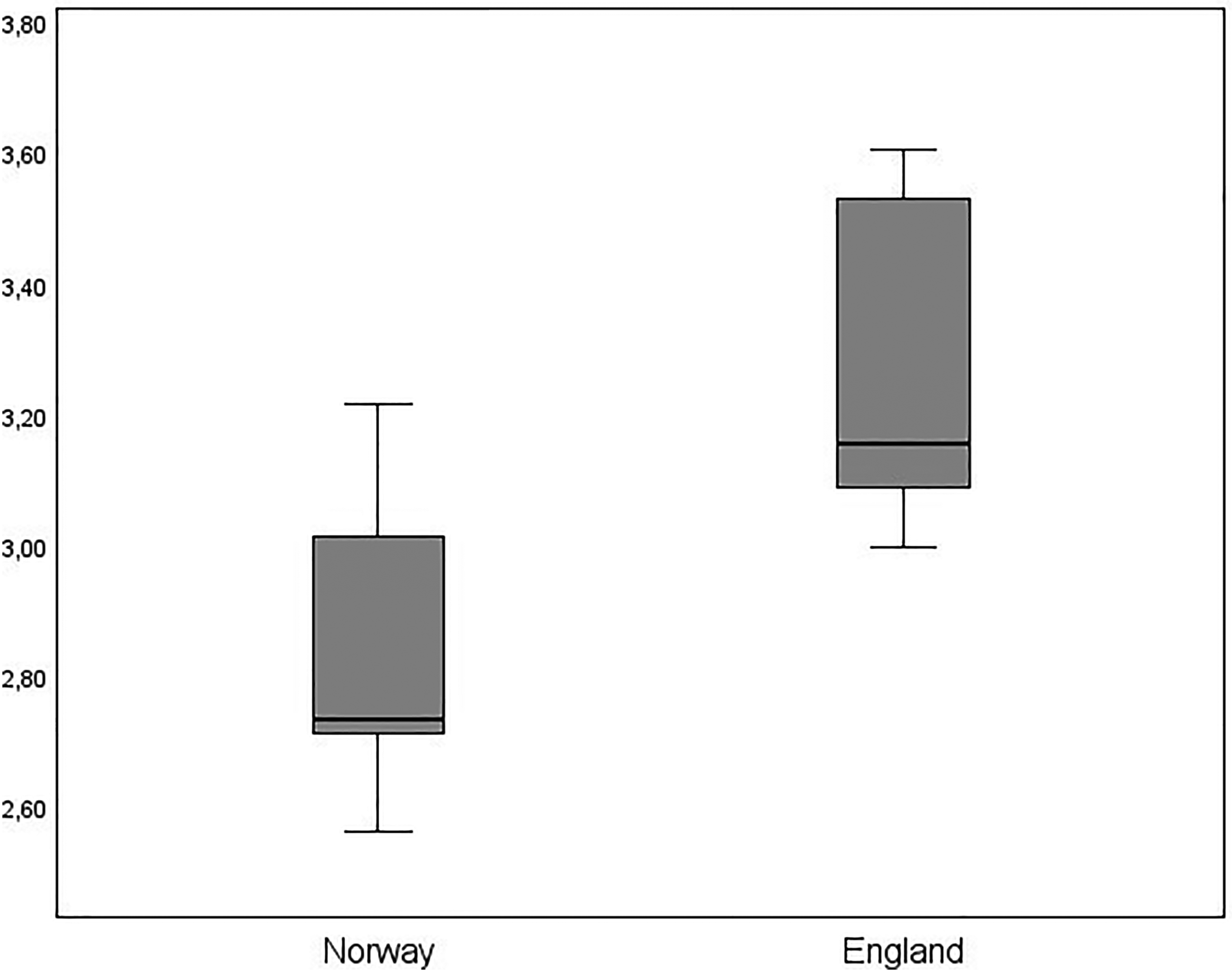
Distribution of prison means on punishment and degradation.
From the ICCs, it is clear that experienced punishment and degradation cannot be attributed to individual differences and experiences alone. Rather, as expected, experienced punishment and degradation also tells us something about the prisons and prison wings where individuals are incarcerated. The ICC of punishment and degradation at the wing level is .17, which indicates that 17% of variance in experienced punishment and degradation can be attributed to differences across prison wings. The ICC at the prison level is .08, indicating that there is more clustered variation in punishment and degradation at the wing level than the prison level, which makes sense considering that wings also capture prison variation (i.e., prisoners on the same wing are also incarcerated in the same prison, but they share a more similar environment with each other than with prisoners on other wings).
In answer to our second research question, we found a close connection between the textural aspects of imprisonment (depth, weight, tightness and breadth) and experienced punishment and degradation. Table 2 displays the descriptive statistics for these variables, as well as the control variables used in later analyses. A correlation matrix (Table 3) shows that experienced punishment and degradation is closely related to various aspects of the imprisonment experience, in the expected direction. The results from the linear regression (see Table 4) with individual experiences of punishment and degradation as dependent variable show that all seven aspects of the prison experience that were measured explain a significant portion of variation: individuals who reported higher scores on weight, depth, tightness and breadth also experienced more punishment and degradation. Individuals who reported higher scores on safety and improvement experienced less punishment and degradation. These are unique contributions, meaning that shared variation among these variables is partialled out. This means that the scale punishment and degradation, as a construct and the way that it was operationalised in this study, captures a multitude of aspects of the experience of imprisonment in a meaningful way. The adjusted R2 is .71; that is, 71% of variation in individual scores of punishment and degradation can be explained with the variables in the model.
Descriptive statistics for all variables.
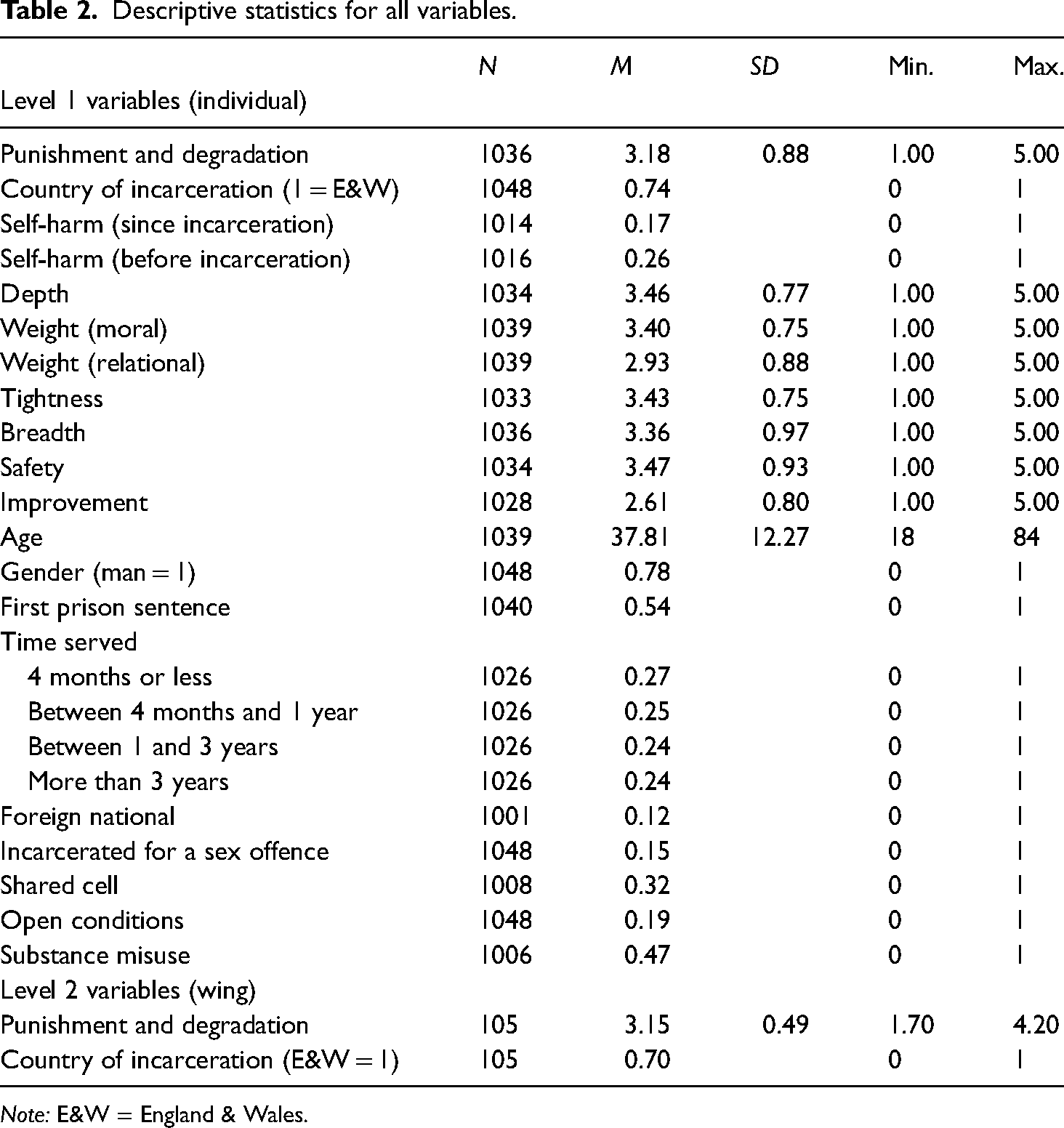
Note: E&W = England & Wales.
Correlations between scales measuring the experience of imprisonment a .
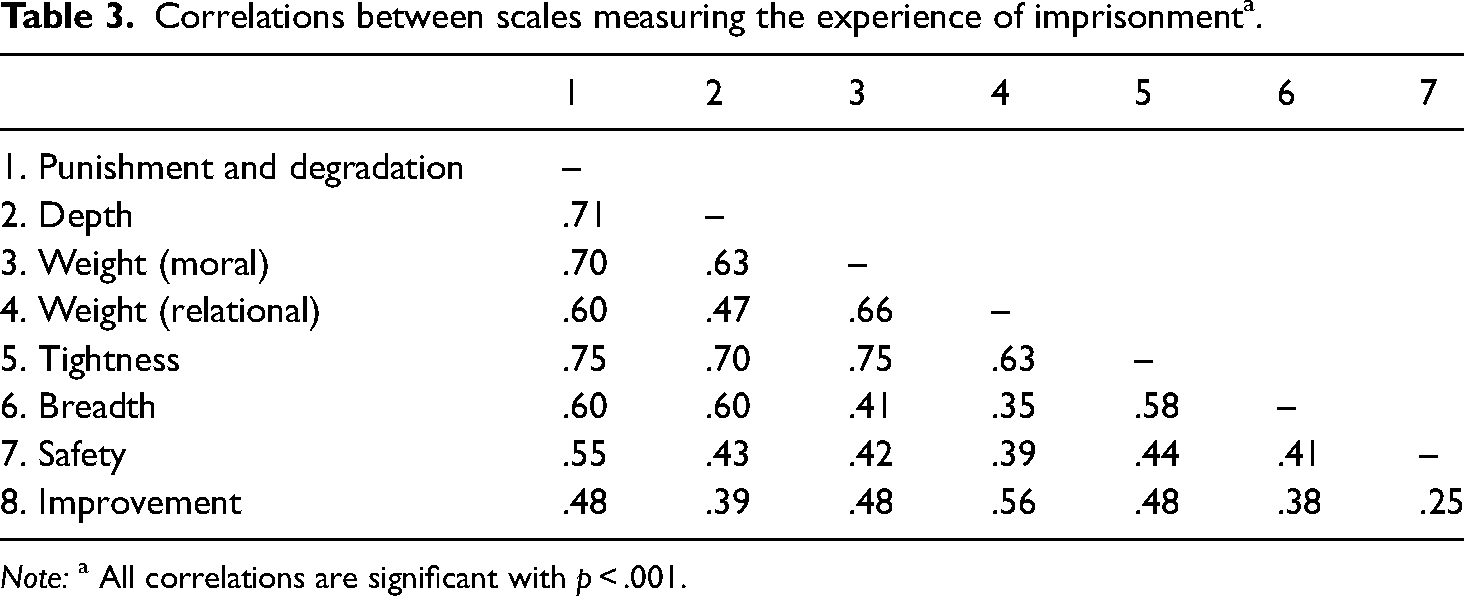
Note: a All correlations are significant with p < .001.
Linear regression results with punishment and degradation as dependent variable (N = 1019).
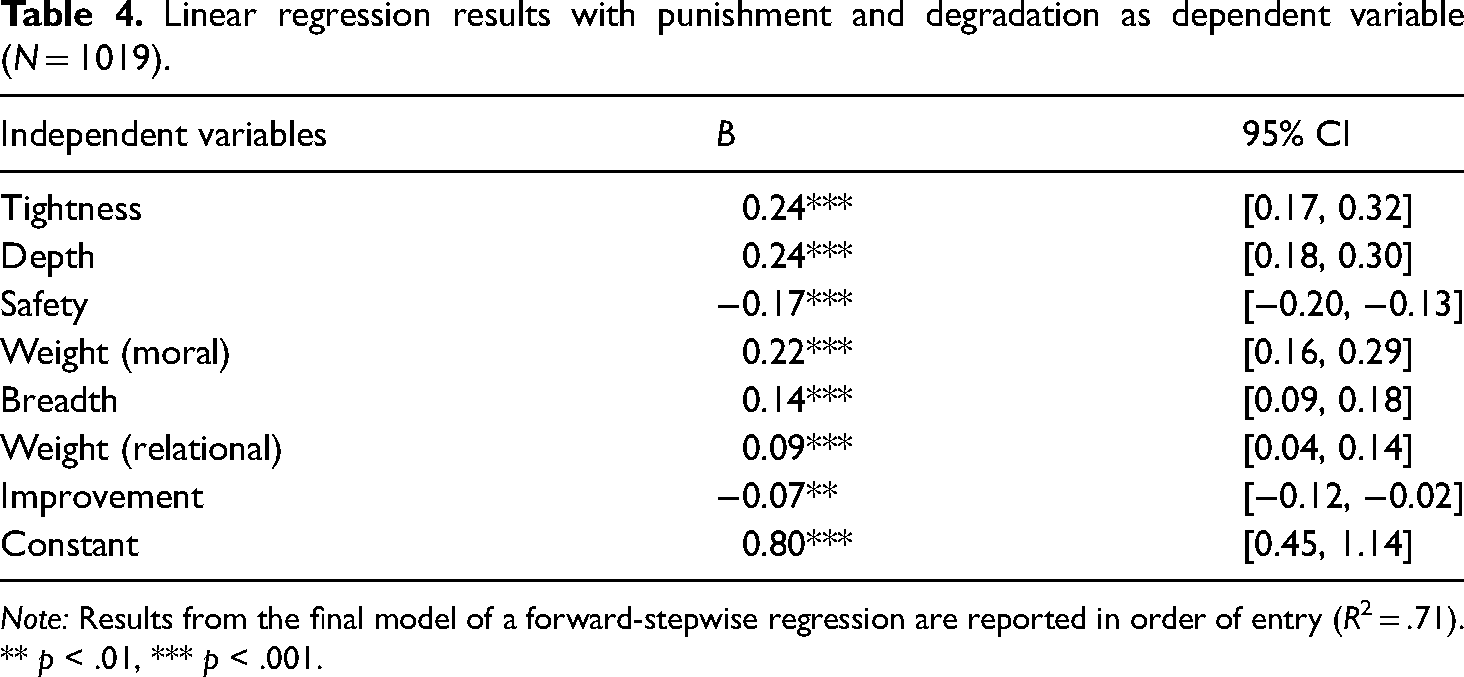
Note: Results from the final model of a forward-stepwise regression are reported in order of entry (R2 = .71). ** p < .01, *** p < .001.
For the final research question, wing averages for punishment and degradation scores were used as independent variables. We found that wing differences in punishment and degradation predict self-harming behaviour among incarcerated individuals. A multilevel logistic regression shows that people who are incarcerated on wings with higher average scores on punishment and degradation are more likely to report that they have self-harmed or attempted suicide during their current incarceration (see Table 5). This finding is irrespective of prior self-harming behaviour and suicide attempts, which is nevertheless highly predictive of self-harming behaviour and suicide attempts (OR = 9.92). In our sample, 176 people reported self-harming behaviour since coming into prison (16.83%); out of this group, a third (n = 59) reported that they had not self-harmed or attempted suicide prior to incarceration. Conversely, out of 266 people who reported self-harming behaviour prior to incarceration, 149 (56.02%) reported no self-harming in prison on the current sentence. Greater punishment and degradation wing scores are associated with an increase in odds of self-harming behaviour; lower scores with a decrease. The odds of self-harming or suicidal behaviour are not significantly different for people incarcerated in England and Norway, when controlling for all other variables. This may be partly explained by the shared correlation between country of incarceration and experienced punishment and degradation. As shown above, scores on punishment and degradation are higher on the English than the Norwegian prison wings.
Multilevel logistic regression results with self-harm or suicide attempts since coming to prison as dependent variable (N = 947).
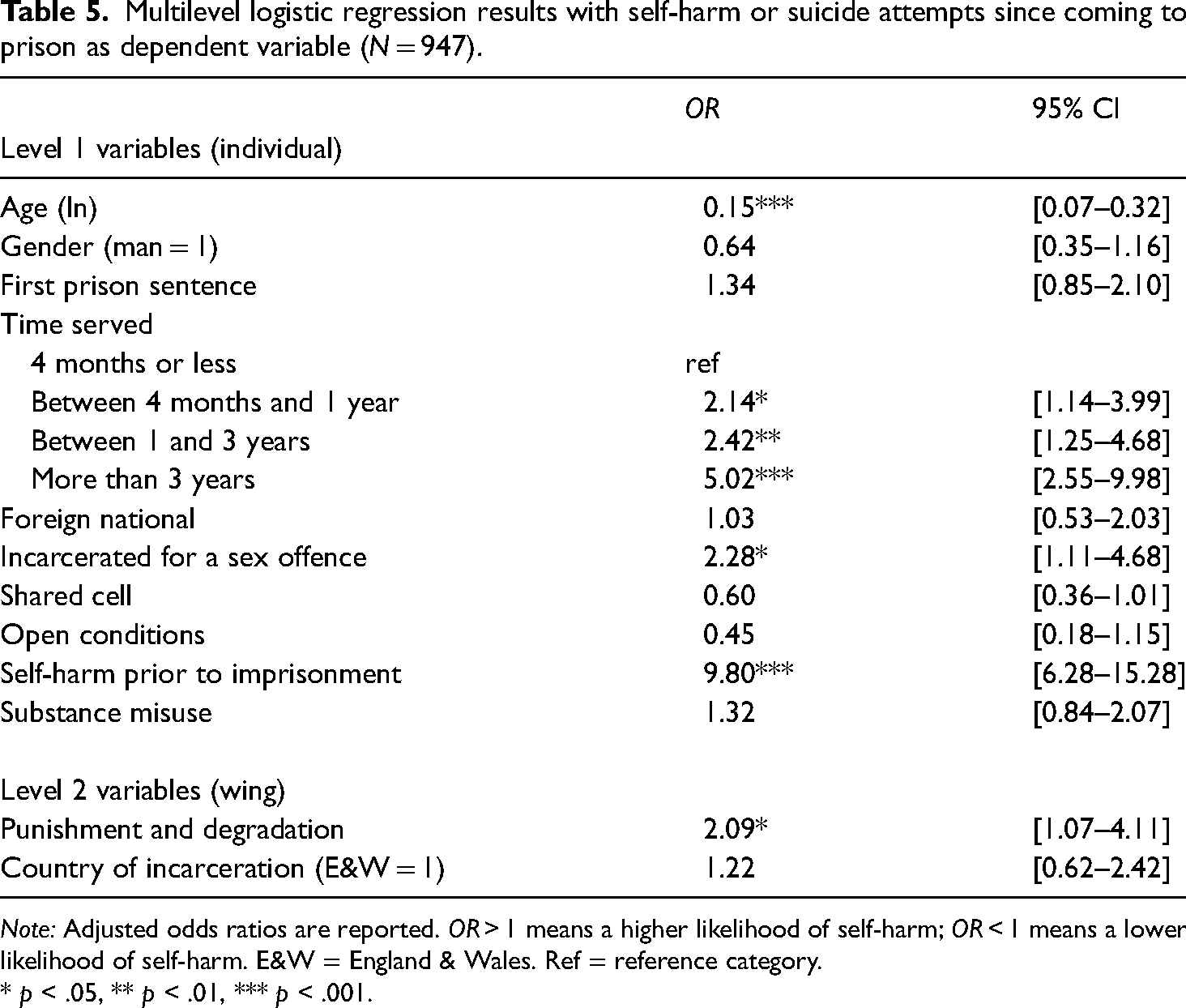
Note: Adjusted odds ratios are reported. OR > 1 means a higher likelihood of self-harm; OR < 1 means a lower likelihood of self-harm. E&W = England & Wales. Ref = reference category. * p < .05, ** p < .01, *** p < .001.
Discussion
Given the relevance of punishment and degradation to discussions about the aims of imprisonment, it is surprising that relatively little attention has been given to measuring and conceptualising this element of prison life. In this article, we have demonstrated that experiences of punishment and degradation can be operationalised, and therefore compared across and within jurisdictions and institutions, and that their severity varies accordingly. We have also provided some initial insight into the factors that determine this variation, illustrating that a conceptual framework that has mainly been used for descriptive purposes also has explanatory value in relation to important experiences and outcomes.
The analysis of the survey results demonstrates that the experience of punishment and degradation is multi-faceted. An important facet of punishment and degradation is dehumanising, disrespectful and unfair treatment by staff; which is captured by the textural element of weight (Crewe, 2011). Other elements are undue restriction, oppression and lack of autonomy (i.e., depth); perceived system unfairness, opacity and lack of control over progression (i.e., tightness); stigma and rejection by society (i.e., breadth); the lack of care for well-being and opportunities for personal development; and feeling threatened and anxious about one's safety (Crewe, 2011, 2021). The moderate to strong correlations between our variables representing these facets suggest that they often co-occur. This cannot be explained by individual vulnerabilities, characteristics and experiences alone, because there is substantial clustering of variance at the wing and prison level. An ICC of 0.17 is considered fairly high in this line of research, with typical values in organisational and prison climate between 0.05 and 0.20 (Bliese, 2020; James, 1982; Van Ginneken and Nieuwbeerta, 2020). This article therefore offers support for the assumption that a ‘culture of harm’ can exist in prisons other than those, like supermax prisons, that sit at the extreme end of the penal spectrum (Haney, 2008). An environment can be ‘toxic’ wherever social relations and interaction between staff and prisoners are negative (Haney, 2008: 967).
This study relies on self-reported survey data collected from prisoners, which presents inherent limitations. Individual perceptions may be variable over time and likely also reflect, to some extent, emotional states at the time of the survey. This is particularly relevant for emotionally laden topics such as punishment and degradation, where social desirability bias, recent events, or heightened emotional states may lead to underreporting or exaggeration of perceptions. Given that surveys were administered within a short period and in a group setting in each prison, it is possible that the atmosphere at the time of the survey administration might account for part of the shared variance in punishment and degradation on the wing level. The study's robust sample size helps to mitigate some of these concerns. Future research could address this limitation by, for example, combining survey data with inspectorate reports, staff perceptions, or using longitudinal designs to track (changes in) perceptions over time.
Another limitation pertains to the generalisability of the findings beyond the context where the data have been collected. Legislation, policies, resources, and prison conditions in England & Wales and Norway differ substantially from those in other jurisdictions. Future research could broaden the scope of the sample to include prisons in a wider range of countries with varying conditions. The survey instrument used in this study – and in particular, the scale measuring punishment and degradation – has shown to be a valuable tool for comparative research. By applying the same instrument in diverse contexts, future studies could facilitate meaningful cross-national comparisons, enhancing our understanding of how different prison systems and cultural factors shape prisoners’ experiences and perceptions.
The finding that people can experience more or less degrading treatment depending on where they are incarcerated, while hardly revelatory, has important implications. As discussed elsewhere (Hayes, 2016; Kolber, 2009a, 2009b), variance in experienced severity beyond what is intended means that the principle of proportionality is violated in two ways: first, people with the same sentence on paper may receive more or less punishment due to institutional differences. This means that comparable cases are effectively punished differently. Second, excessive punishment and degradation, as well as being ethically wrong in itself, means that there is no appropriate balance (and thus, proportionality) between the seriousness of the offence committed and the sentence imposed and served. Third, degrading and humiliating treatment have negative repercussions that, even in harsh prison systems, are considered undesirable. This is underscored by our finding that wing-based (i.e., institutional) variation in punishment and degradation is linked to the likelihood that a person will engage in self-harming behaviour. In other words, punishment and degradation is not only a matter of perception but also affects well-being and behaviour. While this is cross-sectional research, the findings point to a direct and possibly causal effect. We controlled for prior self-harming and suicidal behaviour. Additionally, the punishment and degradation scores reflect a wing aggregate rather than an individual score. This means that a reverse direction of the effect is less likely (a reverse effect would mean that an individual's self-harming behaviour affects the tendency of ratings of punishment and degradation of people on the same unit). Based on other research, we may also expect links with safety and violence in prison and perhaps even beyond prison (Auty and Liebling, 2020; Van Ginneken and Nieuwbeerta, 2020). This, then, means that the punishment not only fails to achieve what is intended in terms of proportionality but may also cause serious, unintended and long-term harm.
Footnotes
Acknowledgements
Many thanks to all members of the COMPEN project team – Alice Ievins, Julie Laursen, Kristian Mjåland and Anna Schliehe – as well as Simon Larmour, for their invaluable contribution to the project on which this manuscript draws.
Author contributions
Esther F. J. C. van Ginneken: conceptualisation, formal analysis and writing of the draft manuscript. Ben Crewe: conceptualisation, funding acquisition, study design, data collection and writing of the draft manuscript.
Consent to participate
All participants gave consent for participation in the study.
Data availability
The second author can be contacted for options to access the data for research purposes.
Declaration of conflicting interests
The author(s) declared no potential conflicts of interest with respect to the research, authorship, and/or publication of this article.
Ethical approval
Ethical approval for this study was obtained from the Institute of Criminology, University of Cambridge, ethics committee.
Funding
The author(s) disclosed receipt of the following financial support for the research, authorship, and/or publication of this article: This work was supported by the European Research Council (Grant No. 648691).
