



Abstract
Youth aggression is an international public health problem that has major consequences for victims and perpetrators. Given the social nature of aggression, understanding the situational role of peers is critical for informing effective prevention strategies. However, traditional research on situational peer influence has been limited by the neglect of the person–environment interaction and the failure to theorise the action decision making process. This article responds to these challenges by applying and developing situational action theory (SAT) to theorise the situational mechanisms and conditions of peer influence. The situational model of peer influence presented in this article moves beyond traditional rational choice approaches by integrating interdisciplinary research on situational peer effects with SAT's dual-process model. This model specifies how and why the presence of aggressive peers influences the action decision making process that leads to aggressive behaviour. This article also describes the Peer Relations and Social Behaviour (PEERS) space-time budget method which is a recent methodological innovation that can be used to test this theoretical model. It concludes by outlining the main practical implications for the prevention of youth aggression.
Keywords
Introduction
Youth aggression is an international public health problem that directly affects more than 246 million children and adolescents each year (UNESCO, 2017). Aggression and victimisation among youth are linked to adverse outcomes including depression (Farrington et al., 2012; Ttofi et al., 2011), suicidal ideation (Holt et al., 2015; van Geel et al., 2014) and criminal behaviour (Farrington et al., 2012). Despite extensive investment, the success of existing intervention programmes remains limited (see, e.g., Gaffney et al., 2019a, 2019b, 2021; Ttofi and Farrington, 2011; Yeager et al., 2015). Existing approaches are primarily risk-focused, which is problematic as interventions should target causally relevant factors and processes rather than risk factors that lack explanatory power (Wikström and Treiber, 2008, 2017). Consequently, there is a growing need for a theoretically informed approach that moves beyond risk factor models and targets the underlying causes and causal processes involved in aggressive behaviour.
Given the social nature of aggression, understanding the role of peers is critical for informing effective intervention programmes (Hymel et al., 2015; see also Swearer et al., 2010). A substantial body of research has shown that aggressive youth are significantly more likely to associate with aggressive peers (for a review, see Crick et al., 2009). 1 Studies have also found that peers are often present (and active) during incidents of aggression and bullying (Atlas and Pepler, 1998; Craig and Pepler, 1997; Hawkins et al., 2001). Moreover, adolescence is characterised by hypersensitivity to peer acceptance and rejection (Foulkes and Blakemore, 2016; Sebastian et al., 2010; Somerville, 2013), increased vulnerability to peer influence (Albert et al., 2013; Foulkes and Blakemore, 2016; Knoll et al., 2015) and a desire to avoid social risk (Andrews et al., 2020; Blakemore, 2018; Tomova et al., 2021). Consequently, socially rooted goals – such as the need for status, affection and belonging – are likely to be powerful motivators of adolescent behaviour in social contexts.
There are two major theoretical challenges for research on peer influence and aggression. First, there is currently a limited understanding of the action decision making process that explains how and why association with aggressive peers results in aggressive behaviour. Theorising (and testing) this action decision making process is essential as interventions need to target causally relevant factors and processes in order to be effective (Farrington, 2006; Wikström and Treiber, 2008, 2017). 2 Criminological researchers have recognised the need to integrate peer influence research with an evidence-based model of action decision making (McGloin and Thomas, 2019: 252). However, they typically assume that rational choice theory (Cornish and Clarke, 2008, 2014) is the optimum framework for this integration (see, e.g., Hoeben and Thomas, 2019; McGloin and Thomas, 2019). Yet rational choice perspectives are limited as they assume that people are fundamentally driven by self-interest and they overlook the role of automated processes of choice (Wikström and Treiber, 2016; for further criticisms, see Kroneberg, 2014; Wikström and Kroneberg, 2022). A large body of evidence suggests that humans are rule-guided creatures (Bunge and Souza, 2007; Bunge and Wallis, 2008; Bunge and Zelazo, 2006) and social behaviour is primarily driven by habitual processes (Wood and Quinn, 2005). Consequently, a dual-process model of action decision making that is consistent with the latest neuroscientific knowledge is required.
Second, there is a growing call for peer influence research to move beyond analyses of main effects and identify relevant person–environment interactions. Conditional models of peer influence suggest that criminogenic peer effects are not homogenous and some adolescents are particularly vulnerable to the influence of delinquent peers (Vitaro et al., 2018). It follows that the role of peers in the explanation of youth aggression cannot be fully understood without recognising their differential effects on adolescents (for this general argument, see Wikström, 2021). However, more work is required to improve our understanding of the factors that drive individual differences in susceptibility to peer influence during adolescence (Tomova et al., 2021).
The aim of this article is to address these challenges by applying and developing situational action theory (SAT; Wikström, 2006, 2010a, 2014, 2017, 2019b) to theorise the situational mechanisms and conditions of peer influence. This article presents a novel application of SAT's situational model to the study of peer influence in the explanation of aggressive behaviour. The situational model of peer influence presented in this article also extends existing knowledge by integrating interdisciplinary research on situational peer effects with SAT's situational model. This article describes the Peer Relations and Social Behaviour (PEERS) space-time budget (STB) method (Kennedy, 2022) that can be used to test this model and concludes by outlining the main practical implications for the prevention of youth aggression.
An analytical solution
This article proposes that SAT (Wikström, 2004, 2006, 2010a, 2014, 2017, 2019b) is a promising theoretical framework for explaining youth aggression and modelling situational peer influence. As a ‘general, dynamic, and mechanism-based’ theory of moral action (Wikström, 2017: 510), SAT prioritises the person–environment interaction and proposes plausible causal mechanisms. The SAT framework comprises a situational model which explains the rule-breaking behavioural event (Wikström, 2006, 2010a, 2011, 2014, 2017, 2019b) and a social model which theorises the broader social conditions and developmental factors which influence rule-breaking behaviour through background processes of selection and emergence (Wikström, 2005, 2011, 2014, 2017, 2019a). There is significant empirical support for the application of SAT's situational model to a range of rule-breaking behaviours (for a review, see Pauwels et al., 2018).
A central claim in this article is that aggression is best analysed as a subset of a broader category of moral action. Moral action can be defined as ‘actions (including intentional inactions) guided by value-based and emotionally grounded rules of conduct about what is the right or wrong thing to do in particular circumstances’ (Wikström, 2019b: 262). 3 Aggression is a multidimensional phenomenon that takes many forms (overt and relational) and serves various functions (proactive and reactive; see Little et al., 2003). 4 However, aggression can be broadly defined as a behaviour that breaks social rules about causing harm to others (Kennedy, 2022: 56–59). This definition accommodates all forms and functions of aggression that cause bodily injury, psychological distress, or damage to social relationships. While relational aggression – such as social exclusion (Killen et al., 2009) – can involve intentional inaction, this is not problematic as intentional inaction constituting a rule violation is explicable within the SAT framework (Wikström, 2006). Recognising that rule-breaking is an essential component of aggression facilitates a unified explanation that applies across forms and functions. Although the content of the personal and social rules guiding the behaviour may vary, the underlying factors and explanatory processes remain the same.
Applying SAT's situational model (Wikström, 2006, 2010a, 2011, 2014, 2017, 2019b; Wikström et al., 2012; Wikström and Treiber, 2016), the core hypothesis is that aggressive behaviour results from a perception–choice process that is initiated and guided by the spatio-temporal interaction (convergence) between aggression-relevant propensity and exposure to aggression-conducive settings (Figure 1). Aggression-relevant propensity is dependent on (i) personal aggression-relevant morality (moral rules and supporting moral emotions), and (ii) the ability to exercise self-control (i.e., ‘the capacity to act in accordance with one's own personal morality when externally pressured to act otherwise’; Wikström, 2019b: 268; see also Wikström and Treiber, 2007). This capability is supported by executive functions which undergo substantial development during adolescence (Treiber, 2014; see, e.g., Galvan et al., 2006; O’Hare et al., 2008; Sowell et al., 2003). The extent to which settings encourage aggression is dependent on their perceived moral context which consists of (i) aggression-relevant moral norms (perceived shared rules of conduct and their degree of homogeneity), and (ii) the perceived level and efficacy of their enforcement relevant to frictions and opportunities (Wikström, 2019b).
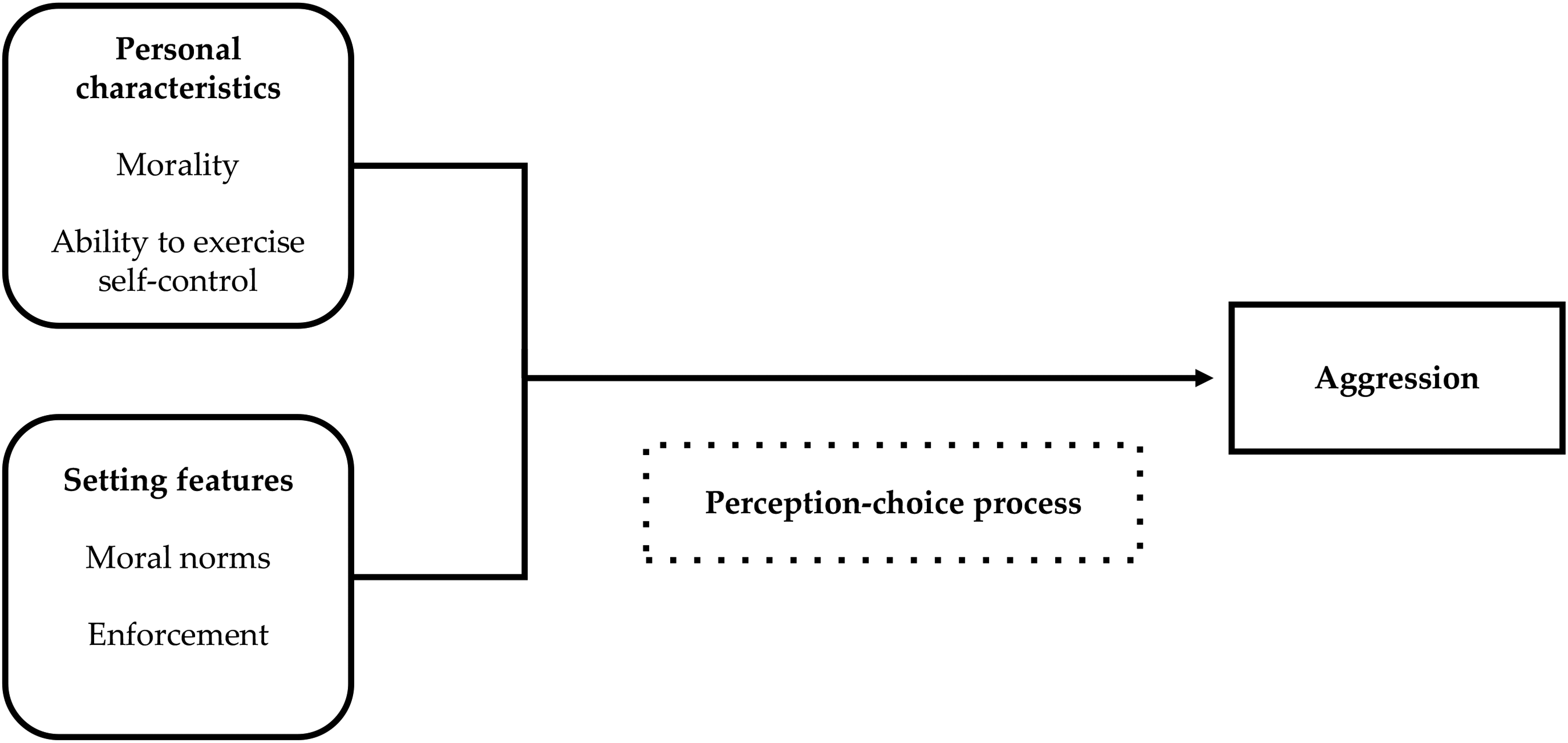
The input to the perception–choice process in the causation of aggression.
The perception–choice process is the situational mechanism that links individuals and their environments to their actions (Wikström, 2010a). This action decision making process is primarily automated or deliberate (Wikström, 2017) and consists of three main elements: (i) motivation, which initiates the action decision making process, (ii) the moral filter, which provides the range of action alternatives the individual must choose between, and (iii) external and internal controls, which manage conflicting rule-guidance during rational deliberation (Wikström, 2010a, 2011, 2014, 2019b; Wikström and Treiber, 2013, 2016). Applying SAT, the primary argument is that adolescents engage in aggressive behaviour because they see it as an acceptable action alternative in the circumstances (and they perceive no effective deterrent) or because they are unable to adhere to their personal morality (i.e., they fail to exercise self-control) when they are externally pressured to engage in aggressive behaviour.
A situational model of peer influence
This section applies SAT's model of action decision making to the explanation of youth aggression (Figure 2) and elaborates the situational model of peer influence. The SAT model outlines the driving forces (personal morality and moral norms), subprocesses (motivation, perception and choice) and major constraints (internal and external controls) in the action decision making process (Treiber, 2017a). Using this framework, this article theorises how and why the presence of aggressive peers influences the perception–choice process that results in aggressive behaviour. Although SAT recognises that peers play a central role in the explanation of moral action (see, e.g., Hirtenlehner, 2018; Hirtenlehner et al., 2021; Hirtenlehner and Schulz, 2020), this aspect of the situational model has yet to be fully developed and tested with appropriate data and analyses. Consequently, the development of the situational model of peer influence represents a major theoretical contribution to the SAT framework.
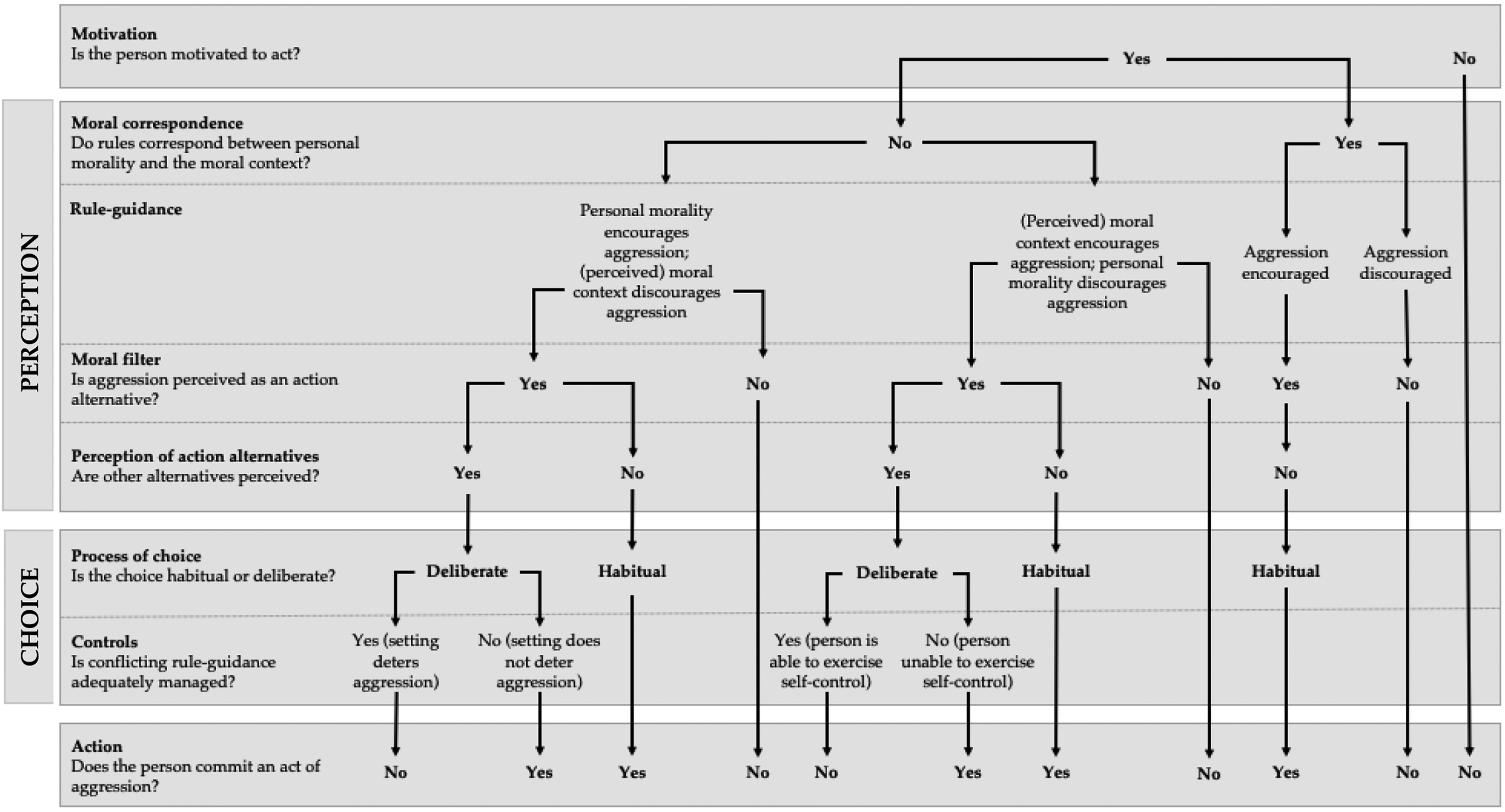
The situational action decision making process in SAT.
Within this model, aggressive peers are defined as friends who advocate, encourage, or demonstrate aggressive behaviour. The model focuses on aggressive friends as it assumes that influence processes are more powerful in close and intimate relationships (Brechwald and Prinstein, 2011; Crick et al., 2009). It also restricts its focus to aggressive peers and claims that it is the decision maker's subjective perceptions of peer characteristics that are primarily implicated in the explanation of aggressive behaviour. Whilst these perceptions may be vulnerable to false consensus effects, projection and pluralistic ignorance (Juvonen and Galvan, 2008; Katz and Allport, 1931; Prinstein and Wang, 2005), SAT asserts that behaviour is guided and constrained by the decision maker's subjective perceptions of the moral context rather than its objective state (Wikström, 2006; Wikström et al., 2012). 5 Finally, this model confines its focus to the effects of physical peer presence on aggression. Although the psychological presence of peers may influence salience cues and anticipated social rewards (Hirtenlehner and Schulz, 2020), the model presented in this article prioritises the direct physical influences at the point of action to avoid conflating developmental and situational processes. 6 Future theoretical and empirical work can expand on this model to include the impact of other types of peers and psychological peer presence on aggressive decision making.
Motivation
Motivation is defined as ‘goal-directed attention’ (Wikström, 2010a: 226) and this is the first step in SAT's action decision making process (Wikström, 2010a, 2010b, 2014, 2017, 2019b; Wikström and Treiber, 2016). As a situational concept, motivation results from the spatio-temporal interaction between relevant individual characteristics and perceived setting features (Treiber, 2011; Wikström, 2006, 2010a, 2014). There are two major classes of motivation in SAT: (i) provocations, which result from the interaction between perceived frictions and individual friction sensitivities, and (ii) temptations, which result from the interaction between perceived opportunities and personal desires or commitments. 7 This means that motivation is not a constant state and individual action goals must be activated by relevant frictions or opportunities that are perceived in the setting (Treiber, 2017a). In addition, SAT recognises that people have different types and levels of desires, commitments and friction sensitivities due to biological and experiential differences (Treiber, 2017a). It follows that different people will be differentially motivated when they are exposed to (and perceive) the same opportunities or frictions in the action context.
Motivation is necessary but not sufficient to initiate the action decision making process (Wikström, 2010a). Given that a particular motivation can be satisfied in multiple ways, motivational accounts alone are insufficient to explain why adolescents engage in aggressive behaviour. For example, status-based goals – which are particularly salient during adolescence – can be satisfied through a range of prosocial activities (e.g., joining a sports team or having a large social media following) as well as antisocial behaviour. Consequently, one of the main functions of motivation is to exert a ‘general directional influence’ (Wikström, 2010a: 226) on the content of the perception–choice process (i.e., the types of acts that an actor perceives to satisfy a motivation) (Wikström and Treiber, 2009a). This account of the nature and role of motivation is consistent with neuroscientific knowledge regarding the biomechanics of motivation (Treiber, 2017a).
The first category of motivator in SAT has long been recognised as a key instigator of aggressive behaviour (see, e.g., Anderson and Bushman, 2002; Berkowitz, 1990; Dollard et al., 1939). Driven by external factors, provocation refers to the experience of negative affect (upset or anger) which is typically directed towards the perceived source of the friction (Wikström and Treiber, 2009a: 80; see also Barton-Crosby and Hirtenlehner, 2020). Provocation is a situational concept that results from the interaction between frictions that are perceived in the environment and individual friction sensitivities (Wikström, 2006). Frictions are ‘unwanted external interferences’ (Wikström, 2006: 89) and friction sensitivity refers to the tendency to view frictions as ‘intentionally antagonistic’ and experience anger in response (Barton-Crosby and Hirtenlehner, 2020: 3). Individual friction sensitivities are ‘socially developed and biologically grounded’ (Wikström and Treiber, 2016: 431) and these determine the types of frictions that are relevant for generating provocations that are conducive to aggressive behaviour. Frictions that are particularly likely to motivate aggression include interpersonal conflict that generates feelings of anger (Barton-Crosby and Hirtenlehner, 2020; Geen, 2001; Winstok, 2008).
The second class of motivator in SAT has been overlooked by traditional motivational theories. Temptations are internally driven and associated with positive emotions such as excitement or righteousness (Wikström and Treiber, 2009a). Temptations result from the spatio-temporal interaction between individual desires or commitments and perceived opportunities to satisfy those desires or fulfil those commitments (Wikström, 2006). Desires are defined as wants or needs (Wikström, 2010b) and these can relate to social, material or intrapersonal goals (Kennedy, 2022). Social goals – such as the desire for status (Anderson et al., 2015) and the need to belong (Baumeister and Leary, 1995) – are particularly salient during adolescence and likely play a significant role in motivating aggressive behaviour. 8 Commitments refer to express or implied obligations to undertake a course of action and these include the duty to support or defend the peer group or significant others. Whilst commitments have received less attention than desires, they may be particularly relevant for understanding certain types of involvement in aggressive events (such as assistants; see Salmivalli et al., 1996) and gang violence (Hymel and Espelage, 2018).
Opportunities refer to the ability to satisfy desires or fulfil commitments, and settings vary in the types of aggression-conducive opportunities they provide. Aggression-conducive opportunities require a suitable victim and factors which indicate that harming the victim will satisfy desires or fulfil commitments (Wikström and Treiber, 2009a). However, there are individual differences in people's desires and commitments, and these influence the types of perceived opportunities which create aggression-relevant temptations (Wikström and Treiber, 2016).
The effect of aggressive peers on motivation
There are two major ways in which the presence of aggressive peers influences the subprocess of motivation (Figure 3). First, aggressive peers increase the likelihood of encountering aggression-conducive opportunities and frictions in the action context. Adolescents generally anticipate stronger social and intrapersonal rewards when they are with their peers (see Hoeben and Thomas, 2019; McGloin and Thomas, 2016; Steinberg, 2008). Studies have shown that peer presence sensitises the reward system and increases the subjective value of immediate rewards (Albert et al., 2013; Chein et al., 2011; O’Brien et al., 2011). Aggressive peers may also provide an ‘appreciative audience’ (Osgood et al., 1996: 639; see also Pepler et al., 2010) who are likely to reinforce aggressive behaviour by laughing or providing positive feedback (e.g., as reinforcers in Salmivalli et al.'s [1996] participant role approach). 9 In addition, aggressive peers increase the likelihood of frictions that are likely to provoke aggressive behaviour. The friendships of aggressive youth are often fragile (Sijtsma and Ojanen, 2018) and prone to conflict and coercive exchanges (Vitaro et al., 2018). Aggressive behaviour is generally targeted at friends (Faris et al., 2020) and aggressive peers are particularly likely to see and choose aggression as an action alternative in response to a motivation.
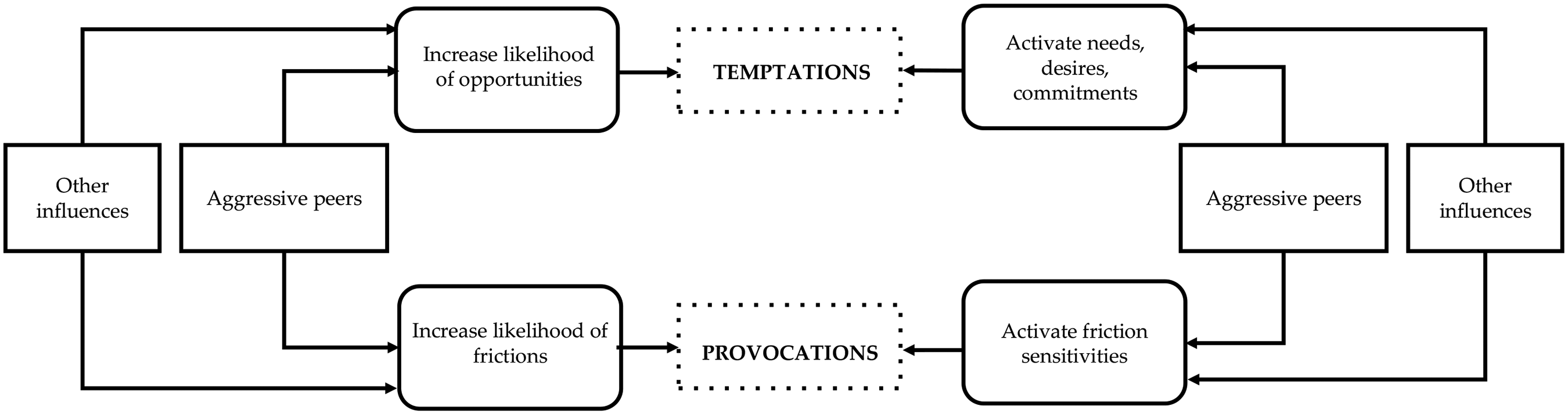
The situational role of aggressive peers in the subprocess of motivation.
Moreover, aggressive peers play an important role in the attentional processes supporting the subprocess of motivation. To activate the action decision making process that results in aggressive behaviour, an individual must perceive relevant opportunities and frictions that are present in the action context. Acting as ‘external instigators’ (Hoeben and Thomas, 2019; see also Warr, 1996, 2002), aggressive peers can direct attention towards aggression-conducive opportunities or frictions that may otherwise have been overlooked. Accordingly, aggressive peers play an important role in the subprocess of motivation by guiding attention to certain motivational cues (for a discussion of attentional strategies to regulate impulses, see Duckworth et al. [2019]).
Second, aggressive peers can activate individual characteristics that are implicated in motivational subprocesses. Their presence may increase the salience of pre-existing intrapersonal and socially rooted desires or heighten the relevance of commitments to defend the peer group. These peers may also strengthen the relevance of friction sensitivities by influencing individual emotions, moods and visceral states which guide and maintain goal-directed attention (Treiber, 2014). Crucially, the situational role of aggressive peers in the activation of individual characteristics implicated in the subprocess of motivation is distinct from the developmental role of aggressive peers in the acquisition of these preferences and sensitivities. The social model of SAT explains how and why aggressive events influence developmental processes of moral education and self-selection (Wikström, 2019a), and how the outcomes of prior aggressive events may influence individual preferences and sensitivities.
Perception
The subprocess of perception is the second step in the action decision making process (Treiber, 2017a; Wikström, 2010a, 2014, 2017). Perception determines which action alternatives are perceived in response to a motivation (Treiber, 2017a). This process has been neglected by traditional rational choice perspectives (e.g., Cornish and Clarke, 2008, 2014; Simon, 1997; Wittek et al., 2013) which focus predominantly on how people choose between different action alternatives. This is problematic as the subprocess of perception is arguably more fundamental for explaining aggression than the downstream processes of choice that have been the traditional focus of criminological attention (see, e.g., Van Gelder and Nagin, 2023). Individuals vary in the action alternatives they perceive to satisfy a particular motivation and the selective perception of action alternatives ‘sets the boundaries for the choice process’ (Wikström et al., 2012: 17). The main reason why most adolescents avoid aggression most of the time is arguably because they do not view it as an acceptable option, rather than because they actively choose to avoid it (see Treiber, 2017a; Wikström et al., 2012; Wilson, 1993).
The perception of action alternatives in SAT is guided by an intuitive/emotive moral filtering process (Treiber, 2014; see also Fontaine and Dodge, 2006; Kroneberg, 2006). The moral filter is defined as ‘the moral rule-induced selective perception of action alternatives in relation to a particular motivation’ (Wikström, 2014: 80). Moral filtering is a primarily automatic and unconscious process that is triggered by the situational interaction between personal morality (moral rules and supporting moral emotions) and the perceived moral norms of the setting (Wikström, 2010a; see also Brauer and Tittle, 2016; Kroneberg et al., 2010; Messner, 2012). This process is an adaptive cognitive shortcut that eliminates unacceptable action alternatives from consideration (Wikström, 2019b) and supports effective action decision making (Treiber, 2011, 2017a). This characterisation of the intuitive role of morality is supported by neuroscientific evidence on the biomechanics of rule-guidance (Bunge, 2003, 2004; Bunge and Souza, 2007; Bunge and Wallis, 2008; Bunge and Zelazo, 2006; Wallis, 2007; Wendelken et al., 2012) and the role of affect in action decision making (Greene et al., 2001; Svensson et al., 2017; Treiber, 2014; van Gelder et al., 2014).
A central principle in SAT is the principle of moral correspondence (Wikström, 2010a; see Table 1). This principle states that ‘if there is a correspondence between a person's moral rules and the (perceived) moral norms of a setting, the action alternatives a person perceives are likely to be in accordance with those rules’ (Wikström et al., 2012: 25). It follows that adolescents are unlikely to perceive aggression as an action alternative when both personal morality and the perceived moral norms of the setting discourage aggression. Conversely, aggression is likely to overcome the moral filter if both personal morality and the perceived moral norms of the setting encourage aggression. When there is conflicting rule-guidance, adolescents engage in rational deliberation (see section ‘Deliberate processes’) to choose between competing action alternatives. Accordingly, the moral filter plays a critical role in determining which processing system (habitual or deliberate) is activated during the process of choice (see section ‘Choice’).
Application of the principles of moral correspondence and the conditional relevance of controls.
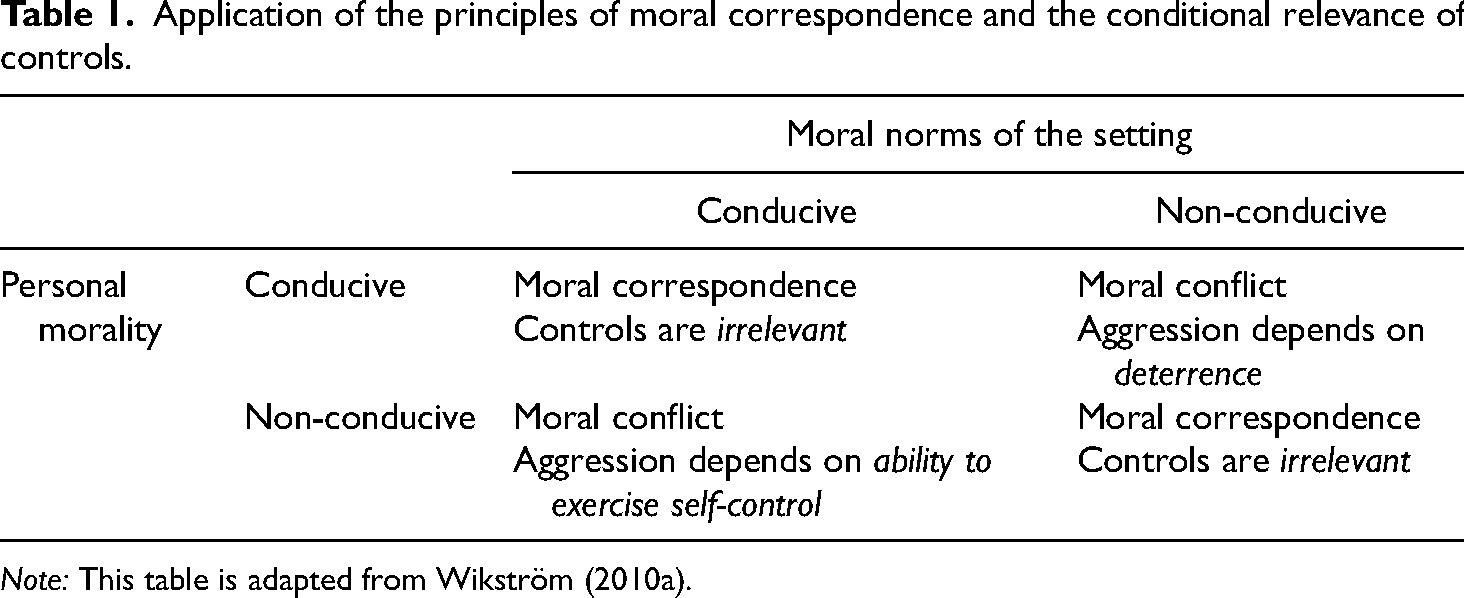
Note: This table is adapted from Wikström (2010a).
The effect of aggressive peers on perception
The SAT model proposes that one of the main ways in which aggressive peers influence aggression is by weakening the moral filter that determines the perception of action alternatives (Figure 4). First, aggressive peers can weaken the perceived aggression-relevant moral norms of the setting through what they say (advocate) and do (demonstrate) (Hirtenlehner and Hardie, 2016; Hirtenlehner, 2018; Wikström et al., 2012). Aggressive peers can act as ‘conversational partners’ (Hoeben and Thomas, 2019) who engage in ‘temptation talk’ (Bagwell and Coie, 2004) and actively influence perceived moral norms through these interpersonal interactions. Alternatively, the influence of aggressive peers on the perceived moral norms of the setting may be relatively passive and occur through their mere presence in the setting (e.g., Asch, 1955; Bandura, 1977; Chartrand and Bargh, 1999; see also Engel, 2023).

The situational role of aggressive peers in the subprocess of perception.
Second, aggressive peers may influence the situational application of personal morality (moral rules and supporting emotions). Personal moral rules are ‘value based’ (Wikström, 2014: 76; see also Barton-Crosby, 2020) and vary depending on the circumstances of the setting (see also Herman and Pogarsky, 2023). Moreover, the experience of shame (which is a key component of individual morality) varies depending on the types of actors who are present in the setting (Trivedi-Bateman, 2015). For example, adolescents typically report lower levels of anticipated shame in relation to their best friends than their teachers or parents (Kennedy, 2017; Trivedi-Bateman, 2015). These observations suggest that the presence of aggressive peers can temporarily weaken individual morality, which further increases the likelihood that aggression is perceived as an action alternative.
The influence of aggressive peers on moral rule-guidance may be one of the most fundamental ways in which they promote aggressive behaviour in the action context. However, this observation is overlooked by rational choice models of action decision making which focus predominantly on the effect of peers on the actor's perceptions of costs, risks and benefits (e.g., Clarke and Cornish, 1985; Hoeben and Thomas, 2019; Osgood et al., 1996).
Choice
The subprocess of choice is the final step in SAT's action decision making process (Treiber, 2017a; Wikström, 2011, 2014, 2017, 2019b). This describes the process of selecting an action alternative and forming an intention to act (Treiber, 2017a). Many criminological researchers who concentrate on action decision making and the role of controls in the explanation of rule-breaking behaviour have predominantly focused (either implicitly or explicitly) on processes of choice (e.g., Clarke and Cornish, 1985; Gottfredson and Hirschi, 1990; Hirschi, 1969; Nagin and Pogarsky, 2001; Van Gelder and Nagin, 2023). Yet a comprehensive account of the preliminary motivational and perceptual subprocesses is essential as (i) motivation determines the action goal that a choice aims to achieve, and (ii) perception determines the field of action alternatives from which an individual must choose (Treiber, 2017a).
The process of choice in SAT differs from traditional rational choice perspectives in two key ways. First, SAT adopts a dual-process model of action decision making that consists of a rational/deliberate process and a habitual/intuitive process (Treiber, 2017a; Wikström, 2006, 2010a, 2010b, 2014, 2017, 2019b). This is consistent with the large body of interdisciplinary evidence on the dualistic nature of action decision making (e.g., Evans and Frankish, 2009; Kahneman, 2003, 2012; Kroneberg, 2006; Treiber, 2011). Second, the content of the deliberation process in SAT is more complex than a utilitarian cost–benefit analysis guided by self-interest. Unlike rational choice approaches which claim that personal costs and benefits provide crucial information for deliberation, SAT emphasises the importance of personal and social moral rules for guiding action decision making (Wikström, 2010a; see also Fontaine and Dodge, 2006; Kroneberg, 2006). This is a critical distinction as the content of the deliberation process has significant implications for understanding the role of controls in the explanation of aggressive behaviour.
A central proposition in SAT is the principle of conditional relevance of controls (Wikström, 2010a; see Table 1). This principle claims that controls are relevant to the explanation of aggressive behaviour when an individual (i) perceives aggression as an action alternative, (ii) deliberates between multiple action alternatives, and (iii) manages competing rule-guidance between personal morality and the perceived moral norms of the setting. It follows that controls are irrelevant when aggression is not perceived as an action alternative in response to a motivation. Equally, controls are not required when aggression is the only action alternative that has been perceived and there is no conflicting rule-guidance (as there is nothing to ‘control’; see Mele, 2001).
Moreover, SAT asserts that the nature and direction of this moral conflict influences the type of control that is activated in the action decision making process (Treiber, 2017a; Wikström, 2010a, 2010b, 2014, 2017, 2019b). External controls (deterrence) are activated when personal morality encourages aggression, but the perceived moral norms of the setting do not. Internal controls (the ability to exercise self-control) are relevant when personal morality discourages aggression, but the perceived moral norms of the setting are supportive. In essence, different types of controls perform different functions: (i) the ability to exercise self-control supports adherence to personal moral rules, and (ii) deterrence compels conformity to the moral norms of the setting. The basic principle of the conditional relevance of controls has received substantial empirical support in the context of crime causation (e.g., Antonaccio and Tittle, 2008; Hirtenlehner, 2018; Hirtenlehner and Hardie, 2016; Hirtenlehner and Meško, 2019; Kroneberg et al., 2010; Svensson et al., 2010; Svensson, 2015; Wikström and Svensson, 2010; Wikström et al., 2011).
Let us apply this principle to physical aggression. Suppose Alice is waiting in the lunch queue with her friends when Ben pushes in the queue (a friction). Alice notices this and feels annoyed (provocation). She is motivated to respond and there are five possible scenarios:
Scenario 1. Alice believes that responding with physical aggression is unacceptable. She also thinks that her friends feel the same way. Hence the thought of physical aggression does not occur to Alice, and she only considers other responses, such as telling a teacher or asking Ben to go to the back of the queue.
10
Here Alice does not engage in physical aggression because she does not consider it as an option, not because she exercises self-control or is concerned about the consequences. Scenario 2. Alice is often physically aggressive at school and never gets into much trouble. The friends she is with often respond with physical aggression in similar situations. Because of this, physical aggression is the only option Alice considers and her aggressive behaviour is habitual. As Alice only considers one response, self-control and deterrence are not relevant for this decision (there is nothing to ‘control’). Scenario 3. Alice does not personally think that it is okay to respond with physical aggression. However, the friends she is with are often aggressive, and they tell her that she needs to teach Ben a lesson. As a result, Alice must deliberate between different options. The likelihood that she will respond with physical aggression depends on her ability to withstand external pressure and exercise self-control. Scenario 4. Alice thinks it okay to be physically aggressive in the circumstances. However, her friends discourage aggression by reminding her that she will get into trouble. Alice deliberates between different options and the likelihood that she responds with physical aggression depends on how much she fears the consequences (deterrence). Scenario 5. Alice generally believes that physical aggression is wrong, and she thinks that it is important to follow the school rules. However, Alice also thinks that it is wrong not to stand up for herself. Some of her friends tell her to ignore the incident but others encourage her to teach Ben a lesson. Alice is also aware that there are teachers present in the lunch hall who are monitoring student behaviour. Given the multiple sources of rule conflict, the likelihood that Alice responds with physical aggression depends on the relative strength of personal and setting rules and their differential enforcement (self-control and deterrence).
This thought experiment shows that controls are irrelevant to the explanation of aggression when personal morality and the perceived moral norms of the setting correspond (moral correspondence; Scenarios 1 and 2). In these situations, the sources of rule-guidance are homogenous and there is no moral conflict for controls to oppose. It is only when there is a conflict between personal morality and the perceived moral norms of the setting that controls are activated (Scenarios 3, 4 and 5). It follows that the role of controls in the explanation of aggression may be more limited than assumed by control theories (e.g., Gottfredson and Hirschi, 1990; Hirschi, 1969; Reiss, 1951) and rational choice perspectives (e.g., Cornish and Clarke, 2008, 2014; Simon, 1997; Wittek et al., 2013). This means that interventions which strengthen personal morality and promote anti-aggression norms may be more effective at reducing school-based aggression than interventions that increase levels of deterrence and informal social control.
Some recent studies may have misinterpreted the principle of the conditional relevance of controls (for a discussion, see Kennedy, 2022: 99–100). This framework represents the ‘ideal typical situation’ (Wikström, 2010b) which is rare in real-world contexts and challenging to test empirically. This is largely due to the need for situational data capturing sufficient variation which is likely to be rare in representative samples. Moreover, the challenge of determining thresholds between groups of situations which generate complementary or conflicting rule-guidance limits existing empirical tests of this principle. Accordingly, the main contribution of this idealised framework is to delineate the different types of internal and external controls and specify their respective functions in the explanation of moral action.
Nevertheless, SAT acknowledges that many real-world action decisions are complex and involve some degree of moral conflict (Scenario 5). It follows that the operation of deterrence and the ability to exercise self-control are not mutually exclusive and both types of control may be relevant simultaneously to a greater or lesser degree. Further complications arise as perceptions of deterrence and the ability to exercise self-control are underpinned by the same executive functions (Wikström, 2006; Wikström and Treiber, 2007). Recent research may have overlooked these nuances, and many seemingly contradictory findings could be re-interpreted as support for the basic principle (see, e.g., Hirtenlehner et al., 2021; Hirtenlehner and Leitgöb, 2021; Hirtenlehner and Schulz, 2020; Schepers and Reinecke, 2018).
Habitual processes
Habitual processes are activated when an individual perceives a single action alternative and automatically forms the intention to carry it out (Treiber, 2011; see also Wikström, 2014, 2017, 2019b). Habits are informed by prior experiences and habitual action is particularly likely when individuals operate in familiar circumstances with harmonious rule-guidance (Treiber, 2017a). Acting as cognitive shortcuts, habitual processes minimise the time and resources needed to support social behaviour (Treiber, 2011, 2017a; see also Carver and Sheier, 1998; Wood and Quinn, 2005). Evidence suggests that the vast majority of human action is habitual (Bargh, 1997; Verplanken and Wood, 2006; Wood and Quinn, 2005) and this is particularly the case when a behaviour is repeated over time (Treiber, 2011; Wikström and Treiber, 2009a, 2009b).
Aggression becomes habitual when an individual learns to associate certain actions with predictable and attractive outcomes in a particular setting following repeated exposure and responses (Treiber, 2011, 2017a, 2017b; Wikström and Treiber, 2009a). The acquisition of habits is supported by the somatic marker system (Damasio, 1996) and specific habits can become generalised as behaviours are spread to similar contexts (Wikström and Treiber, 2009a). Aggressive behaviour is likely to become habitual if an adolescent regularly spends time in settings which present aggression-conducive opportunities or frictions in the absence of effective deterrents (Wikström, 2006; Wikström and Treiber, 2009a).
Given that a large proportion of youth aggression is likely to be driven (at least partially) by habitual processes, interventions which address habitual action may be particularly valuable (see Wikström and Treiber, 2009a, 2009b; see also McClanahan et al., 2019). The termination of habits requires either a salient change in the action context or in personal morality (Wikström and Treiber, 2009a). By introducing (or increasing the strength of) deterrents (Wikström, 2006; Wikström and Treiber, 2009a) and suppressing affective responses (Treiber, 2014), interventions can terminate aggressive habits and initiate deliberate decision making. However, terminating established habits is notoriously challenging (Graybiel and Smith, 2014; Smith and Graybiel, 2013). This underscores the need for an approach that prevents the formation of aggressive habits in the first place.
The effect of aggressive peers on habitual processes
The presence of aggressive peers can activate habitual processes by increasing the likelihood of moral correspondence. This article has argued that aggressive peers can weaken the perceived moral norms of the setting and personal morality (albeit temporarily). This means that habitual aggression is likely unless (i) the decision maker's personal morality is sufficiently strong to present conflicting rule-guidance, or (ii) other social actors (e.g., teachers or prosocial peers) or environmental cues introduce moral conflict and trigger deliberate action decision making. Whilst real-world decisions typically involve elements of both habit and deliberation (Treiber, 2014), it is reasonable to assume that moral correspondence supporting aggression is particularly likely when adolescents with weak aggression-relevant morality associate with aggressive peers in certain types of settings (e.g., unsupervised in city centres). This assertion has important theoretical and practical implications for understanding the process of choice and designing appropriate intervention programmes.
Deliberate processes
Deliberation occurs when an individual perceives multiple action alternatives in response to a motivation (Treiber, 2017a; Wikström, 2014, 2017, 2019b). Deliberate choices require conscious evaluation of relevant information, and they are adaptive when acting in unfamiliar or uncertain circumstances (Treiber, 2011; Wikström and Treiber, 2007; Wikström, 2010a). Requiring significant cognitive effort, deliberate action decision making recruits the prefrontal cortex to organise action-relevant information into an internal representation of the action context (Treiber, 2017a). Yet rational deliberation remains limited by cognitive capacity and intuitive affective valences as well as the operation of rule-guidance and the involvement of habitual/intuitive processes (Treiber, 2017a). This means that deliberate choices are constrained by rules as well as expected outcomes and these processes are not necessarily fully rational.
The effect of aggressive peers on deliberate processes
There are four major ways in which aggressive peers can influence deliberate processes of choice. First, aggressive peers can activate deliberate processes of choice by introducing moral conflict (provided this conflict is perceived by the actor). This moral conflict is likely to occur when aggressive peers weaken the perceived moral norms of the setting (so that aggression is perceived as an action alternative) but fail to sufficiently weaken the adolescent's personal morality. For example, aggressive peers may encourage the adolescent to engage in aggressive behaviour even though this conflicts with their personal morality (see Scenario 3). This type of moral conflict is a classic example of peer pressure in the ‘ideal typical situation’ (Wikström, 2019b) and activates the need for internal controls (i.e., the ability to exercise self-control). Consequently, the ability to exercise self-control may constitute a final line of defence when adolescents are with aggressive peers.
Second, aggressive peers may weaken the ability to exercise self-control. This is because aggression-relevant action goals are likely to be more salient when aggressive peers are present and therefore a greater degree of control will be required. Dual systems models (e.g., Casey et al., 2008; Ernst, 2014; Somerville and Casey, 2010; Steinberg, 2008; for reviews, see Casey, 2015; Shulman et al., 2016) suggest that when the socioemotional system is activated (e.g., when peers are present), the ability of the cognitive control system to restrain impulses is reduced. 11 This is problematic as the ability to exercise self-control is likely to be critical for restraining aggressive behaviour in situations where adolescents are with aggressive peers (as adolescents are more likely to need to exercise self-control).
Third, aggressive peers may weaken deterrence perceptions (i.e., expectations of the likelihood of being caught or punished) and increase tolerance for risk (see also Hoeben and Thomas, 2019). Research has found that a greater number of co-offenders is likely to lead to lower sanction risk perceptions in the context of crime (e.g., Matthews and Agnew, 2008; McGloin and Thomas, 2016). People update their sanction risk perceptions following direct and indirect experiences with punishment or punishment avoidance (Stafford and Warr, 1993; see also Matsueda et al., 2006), and aggressive peers may provide information about anticipated social costs and formal sanctions (Barnum and Pogarsky, 2022). By acting as accomplices and providing practical assistance, aggressive peers may also reduce the perceived likelihood of being caught or overpowered (i.e., they act as ‘assistants’ in Salmivalli et al.'s [1996] participant role approach; see also Hoeben and Thomas, 2019; McGloin and Rowan, 2015; Osgood et al., 1996).
In addition, aggressive peers may reduce ‘self-imposed punishments’ such as shame and guilt (Grasmick and Bursik Jr, 1990; McGloin and Thomas, 2016; Nagin and Paternoster, 1993). Many people experience deindividuation and an increased sense of anonymity when acting in group contexts (Diener, 1976; Festinger et al., 1952; Postmes and Spears, 1998). This promotes the diffusion of responsibility (Warr, 2002; see also Rowan et al., 2022) and enables adolescents to transfer blame to their peers (McGloin and Thomas, 2016). These observations suggest that increasing levels of deterrence and effectively enforcing anti-aggression norms may be particularly important for the prevention of aggression when adolescents are with aggressive peers.
Finally, aggressive peers may promote aggression by enforcing pro-aggression norms. The SAT model acknowledges that effective enforcement of moral norms can be criminogenic when those moral norms encourage rule-breaking behaviour (Wikström et al., 2012; Wikström and Treiber, 2016). In social contexts that encourage aggression, the failure to conform to the dominant norms of the peer group may incur social costs such as ridicule (Anderson, 1999; Decker, 1996; Warr, 2002), peer exclusion or rejection (Hoeben and Thomas, 2019) and loss of status and respect (McGloin and Thomas, 2019; Thomas and Nguyen, 2022). Given that adolescents are hypersensitive to social risk (Blakemore, 2018; see also Andrews et al., 2020; Tomova et al., 2021), these informal social sanctions are likely to have a powerful influence on the action decision making process.
Testing the situational model
One of the major challenges for peer influence research is the need for improved methodologies and data capable of testing theoretical models in real-world contexts. Researchers have highlighted the need for methodological advancements to improve the study of both the micro-dynamics of aggression (e.g., Eisner and Malti, 2015; Murray et al., 2022) and situational models of peer influence (e.g., Beier, 2018; Cairns and Cairns, 1994; Warr, 2002). For instance, McGloin and Thomas (2019) have criticised the overreliance on longitudinal survey methods on the basis that empirical tests of situational peer influence require data at a more granular level. 12 Whilst longitudinal studies may preserve temporal ordering, situational processes unfold over minutes and seconds rather than months or years (Wikström et al., 2018). Researchers have also recognised the limitations of laboratory experiments that lack ecological validity (Muray et al., 2020) and experience sampling (or ecological momentary assessment) that is notoriously invasive and results in high rates of non-compliance (Shiffman et al., 2008).
Given these limitations, developing novel methods of data collection is a major priority for advancing the study of peer influence. Situational data are data that ‘captures the convergence of an individual (with particular traits and state) and an environment (with particular traits and state) at a specific time and location’ (Hardie and Wikström, 2021: 4). Real-world situational data are rarely collected in criminological research due to its cost and complexity (Hardie, 2020; Wikström and Kroneberg, 2022; for exceptions, see, e.g., Hardie, 2017, 2019; Kennedy, 2022, 2024; Wikström et al., 2010, 2012, 2018). However, situational data are essential for testing situational models and drawing conclusions at the appropriate level of analysis (Hardie, 2020). The major problem with using individual-level survey data to form conclusions about situational peer influence processes is that these analyses cannot ascertain whether certain adolescents were with aggressive peers when aggression occurred (i.e., they require ‘an assumption of co-occurrence of the exposure and action’; see Hardie, 2020: 54). Researchers are increasingly recognising the unique benefits of situational data for improving the study of peer influence and there is a clear need for an empirical shift to the situational level of analysis (Hirtenlehner and Schulz, 2020; Kaiser, 2021; see generally Hardie, 2020).
The PEERS STB method (Kennedy, 2022) was designed to address these challenges and test the situational model of peer influence presented in this article. This method is an innovative adaptation of the STB method that was developed by Wikström and colleagues in the Peterborough Youth Study (Wikström and Butterworth, 2006) and the Peterborough Adolescent and Young Adult Development Study (PADS+; Wikström et al., 2012). The PADS+ STB was designed to capture situational interaction and facilitate analysis of the spatio-temporal convergence between relevant aspects of people and their social environments (Hardie and Wikström, 2021). The PADS+ STB interview collects retrospective time diary data linked to a spatial unit of analysis and psychometric data on individual characteristics (Wikström et al., 2010, 2012; see also Hardie and Wikström, 2021). Whilst the PADS+ STB did not collect detailed situational data on the types of peers present in the setting, this was identified as a priority for the future development of the method (see, e.g., Hirtenlehner et al., 2021; Kleinewiese, 2022; Kroneberg and Schulz, 2018).
The major methodological contribution of the PEERS STB was the development of the PADS+ STB method to improve the study of peer influence. Using a peer nomination technique, the PEERS STB records the presence of individual friends at the situational level and links this to perceptual data on the aggression-relevant attitudes of each friend. 13 This allows the creation of complex constructions of the types of peers present in the setting when aggression did (or did not) occur and provides multiple analytical possibilities. This peer nomination technique resembles the micro-life-course approach to the study of peer influence proposed by Warr (2002). Preliminary findings from the PEERS study support the situational model of peer influence presented in this article (see, e.g., Kennedy, 2022, 2024). 14 Further details on the rationale, development and validation of the PEERS STB method can be found elsewhere (see Kennedy, 2022: 125–140).
Practical implications
The situational model of peer influence presented in this article underscores the need for a multisystemic approach to preventing youth aggression. This approach builds on and enhances the social-ecological approach which has informed school-based interventions that target multiple ecological systems to reduce aggression (Hong and Espelage, 2012; Swearer and Hymel, 2015; Swearer et al., 2012). Addressing aggression-relevant propensity and reducing exposure to aggression-conducive settings requires the implementation of complementary strategies that disrupt the development and expression of youth aggression. The three main practical implications of this situational model will be summarised below (see also Kennedy, 2022: 254–261).
Prioritise propensity
The first implication is that strengthening aggression-relevant propensity (morality and the ability to exercise self-control) is likely to be more effective for preventing youth aggression than reducing exposure to aggressive peers. The model suggests that whilst high-propensity adolescents are situationally vulnerable to the influence of aggressive peers, low-propensity adolescents are largely resistant to criminogenic peer effects. Avoiding association with aggressive peers is often unrealistic (Vitaro et al., 2018), and intervention strategies should bolster resistance to peer influence by strengthening individual morality and the ability to exercise self-control (for this general argument, see Hirtenlehner et al., 2021). In addition, strengthening aggression-relevant propensity would have an indirect effect on youth aggression by decreasing the number of aggressive peers available to befriend and interact with in the population (see also Hirtenlehner et al., 2021).
The most promising strategies for strengthening aggression-relevant propensity are moral education (e.g., Schlaefli et al., 1985) and cognitive nurturing (e.g., Friese et al., 2017). These are (typically) long-term psychosocial processes in which schools, families and peers play important roles (Wikström, 2019b; Wikström and Treiber, 2017, 2019). Moral education refers to ‘the learning and evaluation process by which people come to adopt and change value-based rules of conduct about what is the right or wrong thing to do in particular circumstances’ (Wikström and Treiber, 2019: 283). The primary mechanisms underpinning the delivery of moral education are instruction, observation, and trial and error. Cognitive nurturing refers to ‘the experiential processes that positively influence neurocognitive abilities’ (Wikström and Treiber, 2019: 284). These capacities support the ability to exercise self-control and they are dependent on baseline neurological constitution and the extent to which these abilities have been trained. Schools and families can influence the development of aggression-relevant propensity by (i) providing moral education and opportunities for cognitive nurturing for young people, particularly during critical developmental periods, and (ii) reducing exposure to aggression-conducive moral contexts which are likely to undermine these efforts (Wikström and Treiber, 2019). These strategies could also constitute an early form of crime prevention and provide additional societal and economic benefits beyond reducing youth aggression.
This recommendation may appear to challenge the new generation of peer-oriented interventions that focus predominantly or exclusively on strengthening the social context (e.g., Kärnä et al., 2011; Paluck et al., 2016; Polanin et al., 2012; Salmivalli et al., 2010). By shifting social norms, these peer-oriented interventions may also influence the development of aggression-relevant propensity, yet this is neither their primary objective nor assumed mechanism of change. A key premise of the model proposed in this article is that understanding the situational role of aggressive peers requires us to acknowledge their differential effects on adolescents with varying aggression-relevant propensities. This will be critical for designing and maximising the effectiveness of programmes designed to reduce youth aggression.
Limit exposure to aggressive peers
The second implication is that schools and families should aim to reduce association with aggressive peers, particularly for aggression-prone adolescents. It is well established that policies which result in the aggregation of aggressive youth facilitate deviant peer influence (Dishion and Tipsord, 2011) and limit opportunities for prosocial interactions with conventional youth (Dodge et al., 2006). The model suggests that reducing association with aggressive peers should directly reduce aggression by strengthening the moral context of the setting (but see Wikström et al. [2018] for the relative influence of individual and environmental factors). Given that aggression-prone adolescents are particularly vulnerable to negative peer effects, reducing exposure for this group is likely to result in significant reductions in aggressive behaviour. One caveat, however, is that extremely high-propensity adolescents are likely to be aggressive even in the absence of aggressive peers (i.e., they will often see and choose aggression as a response to a relevant motivation). Reducing exposure to aggressive peers for this group is unlikely to result in meaningful reductions in aggression and it is likely that they constitute the challenging cases that peer-oriented interventions are unable to address.
Moreover, reducing exposure to aggressive peers will have an indirect effect on aggression by influencing the development of aggression-relevant propensity. It is widely acknowledged that the peers play a major role in shaping adolescent development (Brechwald and Prinstein, 2011; Gifford-Smith et al., 2005; Hartup, 1993) and young people who affiliate with aggressive peers are likely to develop pro-aggression attitudes over time. By reducing exposure to developmental contexts that cultivate the propensity to engage in aggression, schools and families can buffer against negative peer effects and reduce the number of aggressive peers in the population.
There are two broad strategies for reducing exposure to aggressive peers during adolescence. First, educational institutions can implement peer-oriented interventions which aim to strengthen aggression-relevant social norms (e.g., Paluck et al., 2016) and promote bystander intervention (e.g., Kärnä et al., 2011). Second, schools and families can manipulate processes of social and self-selection to minimise the aggregation of aggressive youth. It is possible to redesign instructional and disciplinary policies in schools (e.g., ability setting and the use of isolation rooms; see Dodge et al., 2006) and provide opportunities for at-risk adolescents to associate with conventional peers. However, it is widely assumed that association with aggressive peers is harmful for conventional youth and this recommendation risks iatrogenic effects through contagion processes. Future research that applies, develops and tests the social model of SAT is needed to resolve this policy issue.
Increase supervision
The final practical implication is the need to increase the level and efficacy of supervision, particularly in situations where aggression-prone adolescents are with aggressive peers. This strategy would have a direct effect on the action context by (i) minimising the likelihood that adolescents experience aggression-relevant motivations, (ii) strengthening the perceived moral norms of the setting, and (iii) increasing the level and efficacy of perceived deterrence (see also Hardie, 2017, 2020). In addition, this recommendation would have an indirect effect on aggression by shaping the development of aggression-relevant propensity via processes of moral education and cognitive nurturing (Wikström, 2019a; Wikström and Treiber, 2019). Critically, the situational model of peer influence presented in this article does not imply a need for constant supervision which may be unrealistic, oppressive and result in iatrogenic effects; rather, it identifies the situational conditions when supervision is likely to be most important for reducing youth aggression (i.e., when aggression-prone adolescents are with aggressive peers).
However, there are some practical and ethical caveats to this recommendation. First, it is possible that subtle forms of indirect aggressive behaviour – such as social exclusion or giving someone the ‘silent treatment’ – will not be influenced by improved supervision (Vaillancourt et al., 2010). Second, it is important to remember that unsupervised time during adolescence serves an important function as it facilitates the development of autonomy. Consequently, Hardie (2017) has argued that increasing the psychological presence of guardians would constitute a more proportionate and practical approach than increasing physical supervision. This could be achieved by supporting families, schools and law enforcement officials to improve their knowledge about young people's unsupervised activities and increase young people's awareness of this knowledge. Given the heightened salience of peers during adolescence (Foulkes and Blakemore, 2016), it may also be preferable to encourage prosocial youth to act as informal guardians who intervene in aggressive incidents and ensure aggression is sanctioned rather than rewarded.
Conclusion
This article has theorised the situational role of aggressive peers in the explanation of youth aggression. It applied and developed SAT to identify the mechanisms and conditions of situational peer influence, and integrated interdisciplinary knowledge on peer effects with SAT's dual-process model. This situational model of peer influence presented here is an entirely novel elaboration of SAT that will fertilise future research on aggressive behaviour, peer influence and criminological theory. By explicating the situational mechanisms and conditions of peer influence, this article has also begun to address the major theoretical challenges for peer influence research and outline the key implications for prevention.
The situational model explains how the presence of aggressive peers influences the action decision making process that leads to aggression. To summarise, aggressive peers increase the criminogeneity of the setting and the likelihood of aggression by (i) increasing relevant motivators (opportunities and frictions) and activating relevant individual characteristics (desires, commitments and friction sensitivities); (ii) weakening the perceived moral norms of the setting and temporarily weakening personal morality; (iii) activating the need for, and weakening the efficacy of, internal and external controls; and (iv) enforcing pro-aggression norms. This situational model must now be tested, and findings replicated, with appropriate data and methodologies (see Hardie, 2020). The PEERS STB method is uniquely suited to this task and situational analyses of PEERS study data provide preliminary empirical support for this model (see Kennedy, 2022, 2024).
There are two important directions for future research to build on this situational model of peer influence. First, research should extend this model by theorising the role of non-aggressive peers and other types of peers who may influence the moral context. Combining this model with Hardie's (2017, 2020) application would further advance knowledge about the complementary and competing influences of peers and guardians on aggressive behaviour. Future research should also examine whether peer influence is greater when adolescents are strongly bonded to their peers (for a discussion, see Gifford-Smith et al., 2005). Second, applying and developing the social model of SAT (Treiber, 2017b; Wikström, 2017; Wikström et al., 2012) would provide a more comprehensive understanding of the mechanisms of selection and emergence that explain how and why peers influence aggressive behaviour. This work should address outstanding questions around how (and under what conditions) affiliation with aggressive peers influences the development of aggression-relevant propensity. It should also explore how (and in what circumstances) association with aggressive peers influences the processes of selection that lead to the convergence of types of people and settings. Developing and testing these mechanisms would facilitate a more comprehensive understanding of the causes of youth aggression and enable refinement of the practical implications outlined in this article.
Footnotes
Acknowledgements
I would like to thank the anonymous reviewers for their helpful comments during the review process. This article was adapted from my doctoral research and I am grateful to Kyle Treiber, Beth Hardie and Helmut Hirtenlehner for their feedback on this work.
Declaration of conflicting interests
The author(s) declared no potential conflicts of interest with respect to the research, authorship, and/or publication of this article.
Funding
The author(s) disclosed receipt of the following financial support for the research, authorship, and/or publication of this article: This work was supported by a UK Economic and Social Research Council (ESRC) Doctoral Training Partnership studentship (ESRC Award Reference: 1949514) and the ESRC, Centre for Society and Mental Health at King's College London [ES/S012567/1]. The views expressed are those of the author and not necessarily those of the ESRC or King's College London.
