




Abstract
Links between child sexual exploitation (CSE) and youth offending should be better recognised, according to these preliminary research findings from the UK. Data from a leading CSE service provider and Youth Offending Team were analysed for the period 2001–2010 inclusive. Of CSE victims, 40 percent had offending records and recidivism rates were high. Together they committed 1586 offences – 5 percent of all local youth crime. Male and female offending behaviour differed significantly. The types of offences identified were potentially symptomatic of CSE. Referral to CSE services typically post-dated arrest, indicating that children were recognised first as offenders. Challenges in researching the interactions between these two complex issues are discussed. This study has important implications for youth justice policy and practice, both nationally and internationally.
Introduction
This short paper examines the interaction between two serious social issues: child sexual exploitation (CSE) and youth offending. CSE is the exchange of the sexual services of a child for commodities, where in England and Wales a child is someone aged 17 years or under (DCSF, 2009). Commodities may be tangible, such as cigarettes or money, or intangible, such as affection, and are given either directly to the victim or to a third-party facilitator. CSE involves asymmetrical power relationships, whereby the victim’s emotional, mental or physical immaturity or socioeconomic disadvantage is exploited (Chase and Statham, 2005). Alongside the immediate trauma of abuse, CSE has been linked to mental, emotional and behavioural difficulties, including truancy, substance abuse, apathy, aggressive outbursts and self-harm (CEOP, 2011). In 2011, the issue of CSE received attention in the British press and began to feature on public and policy agendas in the guise of ‘on-street grooming’ or ‘localised grooming’. Internationally, there has been increased impetus to tackle CSE (Chase and Statham, 2005), including proposals for new European directives and joint initiatives aimed at improving knowledge and responses (Skidmore, 2004). 1 Despite anecdotal evidence linking CSE to youth offending, there has been little attempt at empirical research into the interaction between the two phenomena. The limited international body of literature into the overlap between CSE and youth offending has focused narrowly on links with juvenile sex offending alone (Glasgow et al., 1994; Leary, 2007; Ryan et al., 2010).
Youth offending is the commission of crimes by individuals between the legal age of criminal responsibility and the age of maturity: in England, this means 10–17 year olds. Although youth crime has attracted considerable interest, research efforts have been impeded by data-collection and recording issues (Halsey and White, 2008). The most recent annual statistics for England and Wales present a total of 198,449 offences committed by 109,969 young offenders (MoJ, 2011a). The annual costs of dealing with such youth crime have been estimated at £4 billion (YCC, 2010). To help combat youth offending, a ‘comprehensive review’ of associated risk factors was published in 2005 by the Youth Justice Board (YJB, 2005). Among a list of 20 broad-based risk factors, including local availability of drugs, school disorganisation and insufficient parental supervision, mentions of child abuse, CSE included, were notably absent. Nonetheless, increased recognition of the links between child abuse in general and youth offending has resulted in a series of studies that together demonstrate a ‘strong correlation’ between the two issues (Day et al., 2008: 6).
This Research Note presents findings from a preliminary empirical study, one of the first to explore the relationship between CSE and youth offending. CSE victims are, in research terms, a hard-to-reach group and this study capitalised on rare access to detailed data. From the outset, three limitations are acknowledged. First, recorded offences and CSE referrals were used as proxies for actual offending and exploitation respectively, because data on the true rates are not available. Both proxies will underestimate the true incidence and prevalence of the phenomena they represent. Second, the findings are based on data from one UK city only. Further replication is necessary to establish their external validity. We see little reason, however, why the relationship between the two variables of interest should be very different here than elsewhere in the UK. Finally, the data sets for the study do not align perfectly. Victimisation data span the eight-year period between the CSE service’s inception in 2003 up to and including 2010. In order to capture more of the offences committed by victims referred in the service’s early years, youth offending data were also collected for the preceding two-year period: in total the years 2001–10 inclusive were covered. The Youth Offending Service deals with children between the ages of 10 and 17 years of age; therefore their records typically cover a maximum period of eight years for any child. 2 The mean period covered for these subjects was high at 6.9 years (SD = 1.5). Nonetheless, for some subjects offences may be missing if committed before or after the study period or in a different area. The latter may be particularly likely for CSE victims, whose abuse can increase their transiency and who appear to be overrepresented in the care system (Barnardo’s, 2012).
Notwithstanding these concerns, our findings are valuable in stimulating research and debate in this little-explored area. A better understanding of how CSE and youth offending interact could have important implications for policy and practice at national and international levels.
Method
The study drew upon two major data sources from Derby, a city in the East Midlands region of England with a population of 246,900 (DCC, 2011). One data set came from Safe and Sound Derby, the UK’s largest specialist CSE service provider. This local service handles all CSE referrals in Derby. The other was provided by Derby City Youth Offending Team (YOT), the authority responsible for all offences committed by under-18 year olds resident in Derby.
The children referred to Safe and Sound Derby between its inception in 2003 until 2010 inclusive constituted the ‘exploited sample’, SE (N = 552). The Derby City YOT database contained details of all youth offenders active in the period 2001–10: the ‘offending sample’, SO (N = 7404). We cross-referenced these two databases to establish those children who had both exploitation and offending histories. They constituted the core study sample, SS (N = 211). Full offending histories were retrieved from Derby City YOT for all members of SS. A limited number of detailed case files for SS (N = 15) were made available by Safe and Sound Derby to provide qualitative depth. These will be mentioned in the discussion section but were not subject to empirical analysis owing to concerns around representativeness.
The data were analysed to establish offending rates among the exploited children, the gender of offenders, the extent and type of their recorded offending, their age at first recorded offence and their age at referral to Safe and Sound Derby. When relevant, this was done relative to the characteristics of SE or SO as a whole. A typology of offences was established by coding individual crimes and grouping them according to similar characteristics. When available, the closest comparable national data were used to aid the interpretation of the results.
Results
Offending rates
Only half of all crimes against property and the person are reported and only 3 percent result in a caution or conviction (Home Office, 1995). In light of these figures, the newest available, it is worrying that 38.2 percent of the CSE victim sample, SE, had offending records. Ideally this figure would be compared with the proportion of the Derby youth population who have offending records, to test our prediction that 38.2 percent is a far higher prevalence rate than would be found in the general population. Unfortunately, such baseline data are not available either for Derby or for the UK as a whole. Although not directly comparable, it is perhaps worth noting that only 25 percent of those between 10 and 25 years of age in England and Wales admitted to committing an offence(s) the previous year in a 2009 anonymous self-report survey (YJB, 2010).
Gender
SS consisted of 75 percent females (N = 158) and 25 percent males (N = 53). This gender imbalance is largely a function of the composition of SE, which was 82 percent (N = 455) female. In fact, male CSE victims were significantly more likely to offend than their female counterparts: 55 percent of male victims had offending histories, compared with 35 percent of females. A chi-square test showed males to be significantly overrepresented among the SS group relative to the gender composition of SE (χ 2(1) = 13.6, p < .001, phi = 0.2).
Over the 10-year period, 7404 unique individuals (SO) were recorded on Derby City YOT’s system. Of these, 71.5 percent were male (N = 5291) and 27.8 percent were female (N = 2060). 3 The 211 CSE victims in SS represent 2.8 percent of the overall Derby youth offending population in 2001–10. Almost 8 percent of all female youth offenders recorded in Derby belonged to SE, as did 1 percent of males.
Extent of offending
The 211 children in SS were recorded as having committed a total of 1586 offences. Despite constituting just 2.8 percent of youth offenders in Derby in 2001–10, they were responsible for 5.1 percent of all 31,349 youth offences recorded over this period. Figure 1 shows the distribution of offences among the group. The mean number of recorded offences per male was 12.8 (SD = 13.3), just over double the mean per female of 5.8 (SD = 7.6). High standard deviations belie the variation between the extent of individual offending records. An unpaired t-test found gender to have a highly significant effect on the number of offences recorded (t = 4.7, df = 209, p < .001).
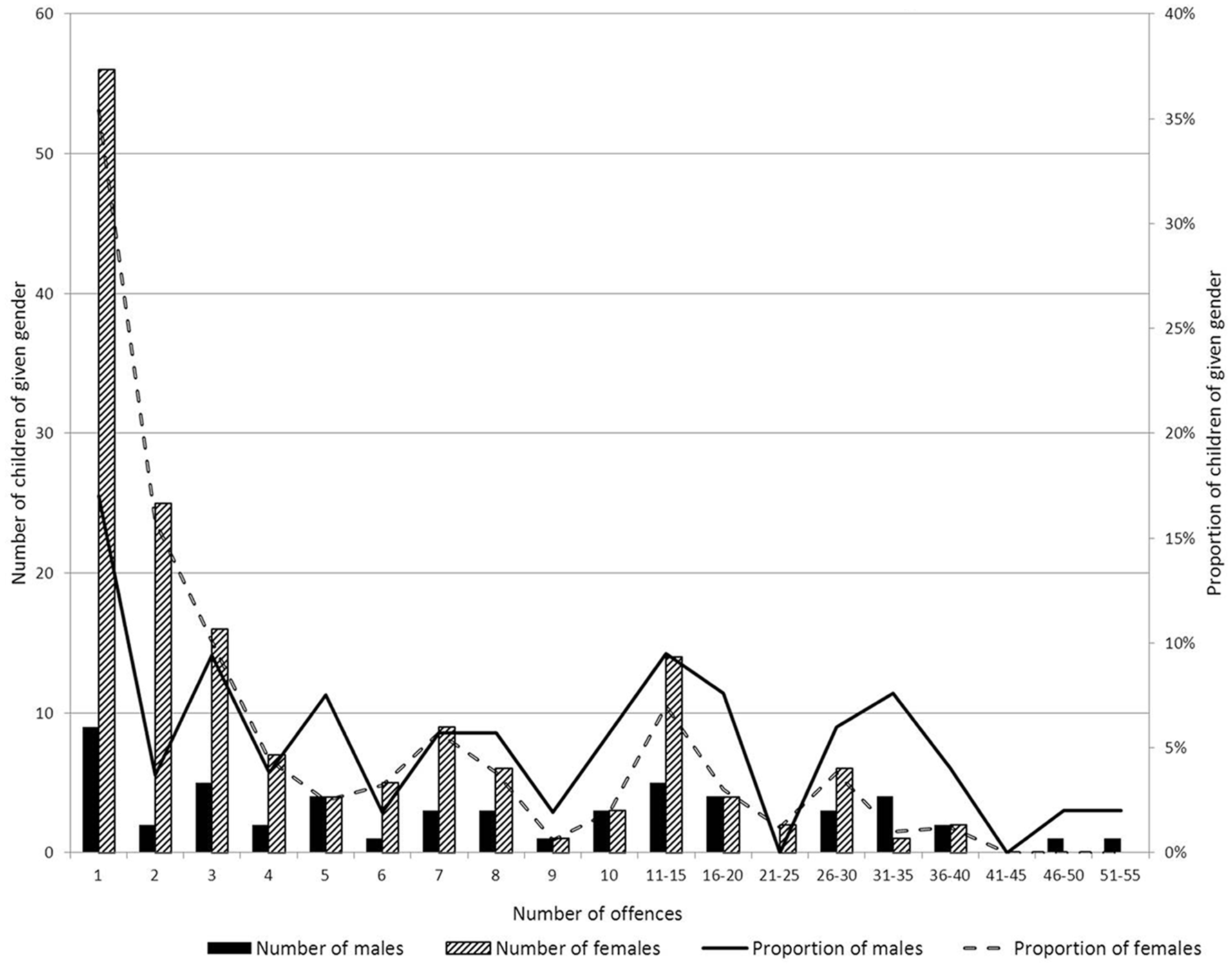
Distribution of number of recorded offences for SS.
Whereas the modal number of offences recorded for both males and females was one, over two-thirds (69.2 percent, N = 166) had two or more offences on record. Of these children, 21.1 percent (N = 35) were recorded as committing multiple offences on a single occasion but were not caught on any subsequent occasion. The government’s definition of a juvenile re-offence is the commission of a further crime within one year (MoJ, 2011b). According to this definition, 93 children, or 44.1 percent of the sample, had re-offending histories: this was a fifth higher than the average rates for England and Wales of 36.9 percent (MoJ, 2011b).
We split the study sample, SS, into three groups, based on their level of recorded offending activity. Table 1 shows the definition of each category and its size in absolute terms and relative to the whole sample. It also includes the gender composition of each group and the proportion of all recorded offences for which its members were responsible.
Occasional, frequent and prolific offending groups
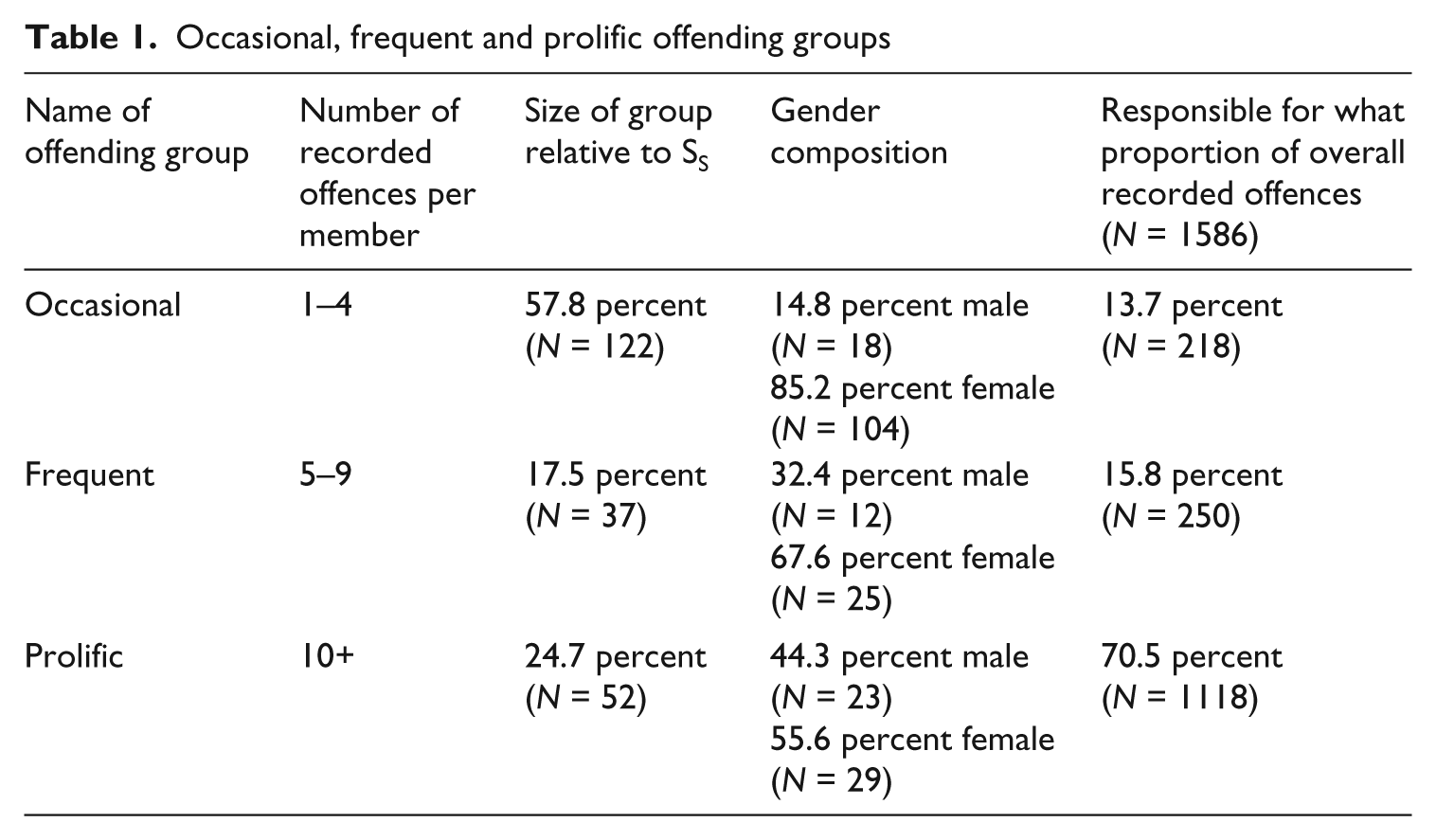
These results indicate that a quarter of the children, the ‘prolific offenders’, were responsible for almost three-quarters of the offences recorded. The most prolific male and female offenders of all had 53 and 37 offences on record, respectively. Boys were more likely to belong to the frequent and prolific offending groups than girls, and over half of the males in SS were prolific offenders. Although not statistically significant for frequent offending, this gender effect was highly significant for prolific offending (χ 2(1) = 15.3, p < .001, phi = 0.3).
Age at first offence
The age at first recorded offence ranged from 9 to 17; 4 the distribution is shown in Figure 2. The mean age for male offenders was over a year younger than for females: 12 years 8 months (SD = 20 months) compared with 13 years 9 months (SD = 20 months). Tests showed this gender effect to be highly significant (t = 4.2, df = 209, p < .001). Figure 2 demonstrates a clear peak in first recorded offences for males between 12 and 14 years of age and for females between 13 and 14 years of age. By their fourteenth birthday, almost half of SS (N = 104) had one or more offences on record. By their fifteenth birthday this figure stood at almost three-quarters (N = 167). When the variation in gender composition of the occasional, frequent and prolific offending groups was controlled for, group differences between mean age at first recorded offence disappeared.
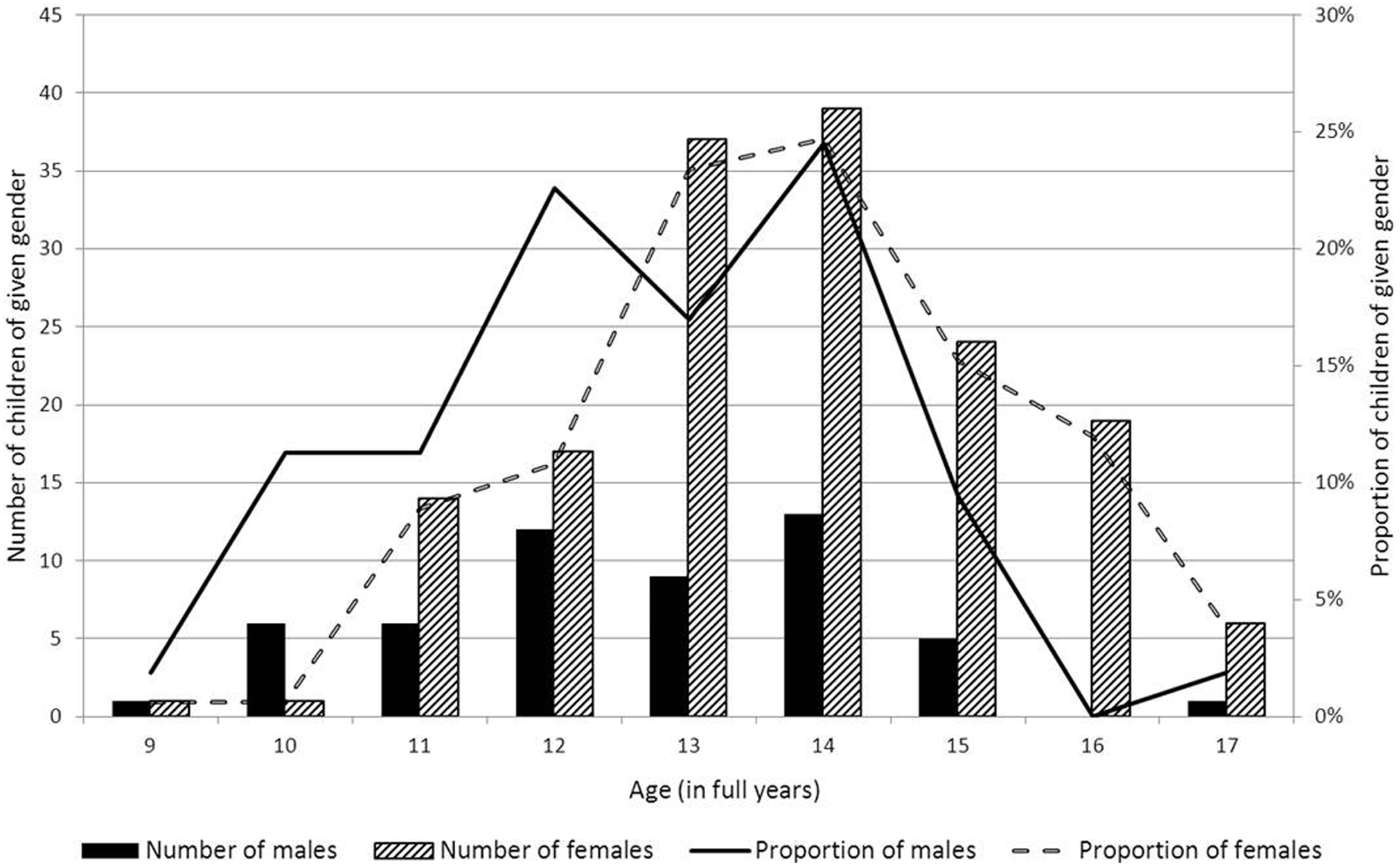
Distribution of age at first recorded offence for SS.
Self-report survey data indicate that English and Welsh children typically commit their first offence at 11 or 12 years of age (YJB, 2010). These figures relate, however, to actual offending rather than recorded offences, the proxy used here. Only a small proportion of offenders are caught and, for those who are, the time lag between real first offence and first recorded offence remains unknown. Consequently, it is impossible to establish how the age at first offence for SS compares with national figures for all young offenders.
Age at referral
The mean age at referral to Safe and Sound Derby was 14 years 9 months (SD = 18 months). 5 Figure 3 shows the distribution of referrals. When compared with the distribution of age at first recorded offence in Figure 2, a clear lag is evident between recorded offending and referral at group level.
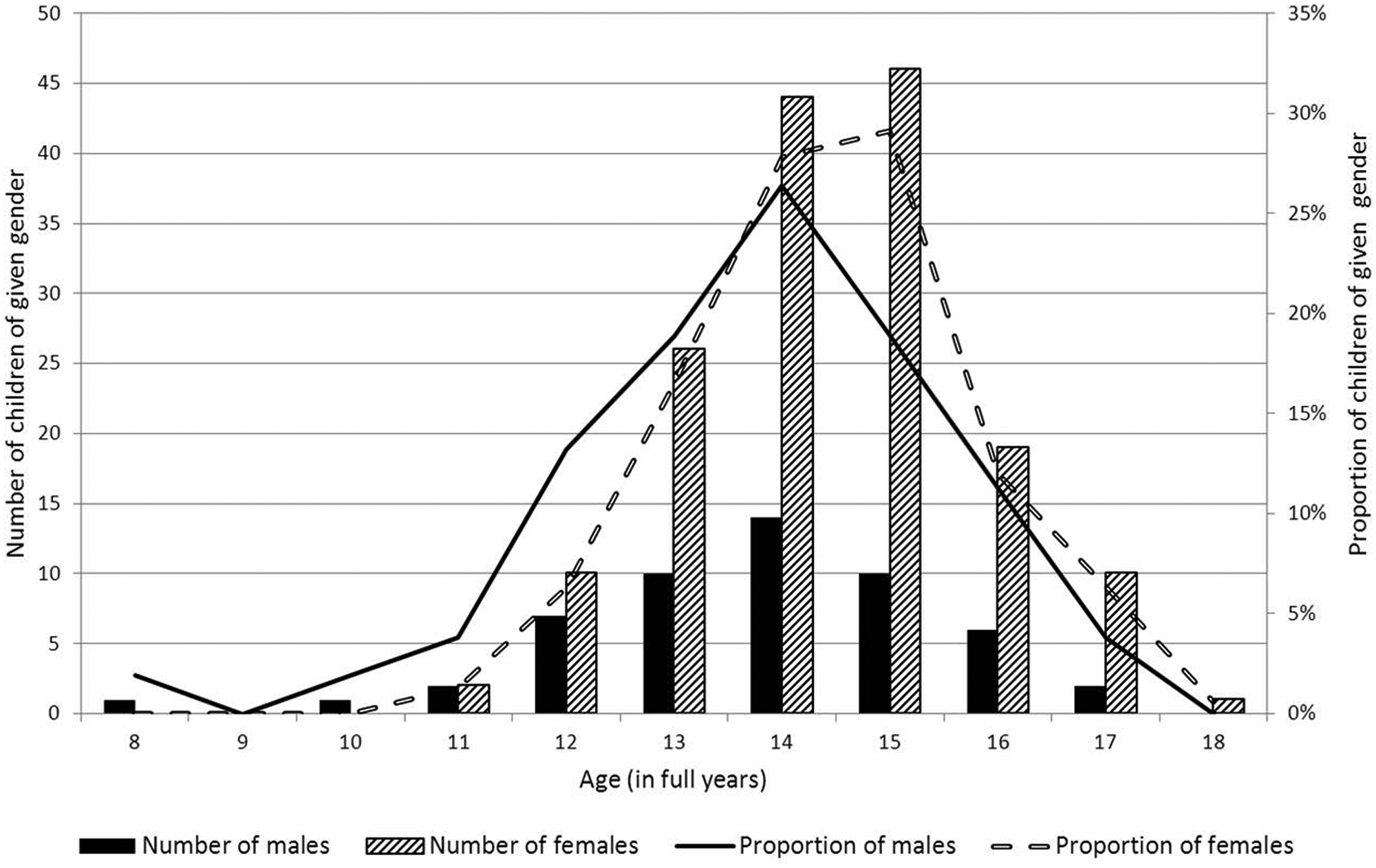
Distribution of age at referral for SE.
Only 27.5 percent of SS (N = 58) had already been referred to Safe and Sound Derby by the time of their first arrest. Referrals pre-dating arrest occurred an average of 4 months before the first arrest (SD = 11 months). In contrast, the time lag was greater for referrals post-dating arrest; these happened an average of 1 year and 5 months later (SD = 15 months). Proportionately, females were more likely to be referred prior to arrest than males, at 29.7 percent (N= 47) and 20.7 percent (N = 11), respectively. This may reflect the fact that disclosure and detection rates are believed to be particularly low for male victims of CSE (Lilywhite and Skidmore, 2006).
Typology of offences
Over 50 distinct criminal offences were recorded against members of SS, ranging from hoax 999 calls to arson to false imprisonment. An analysis based on individual crimes would have presented a fragmented, hard-to-interpret picture of the offending behaviour. Instead, offences were analysed and grouped by shared characteristics; this enabled a typology of five mutually exclusive categories to be developed. Categories were labelled according to their defining characteristic and presumed primary function: aggression; acquisition; non-compliance; escapism; and sexual deviance. Table 2 presents an overview of each category and its contribution to the overall crime picture.
Typology of offences
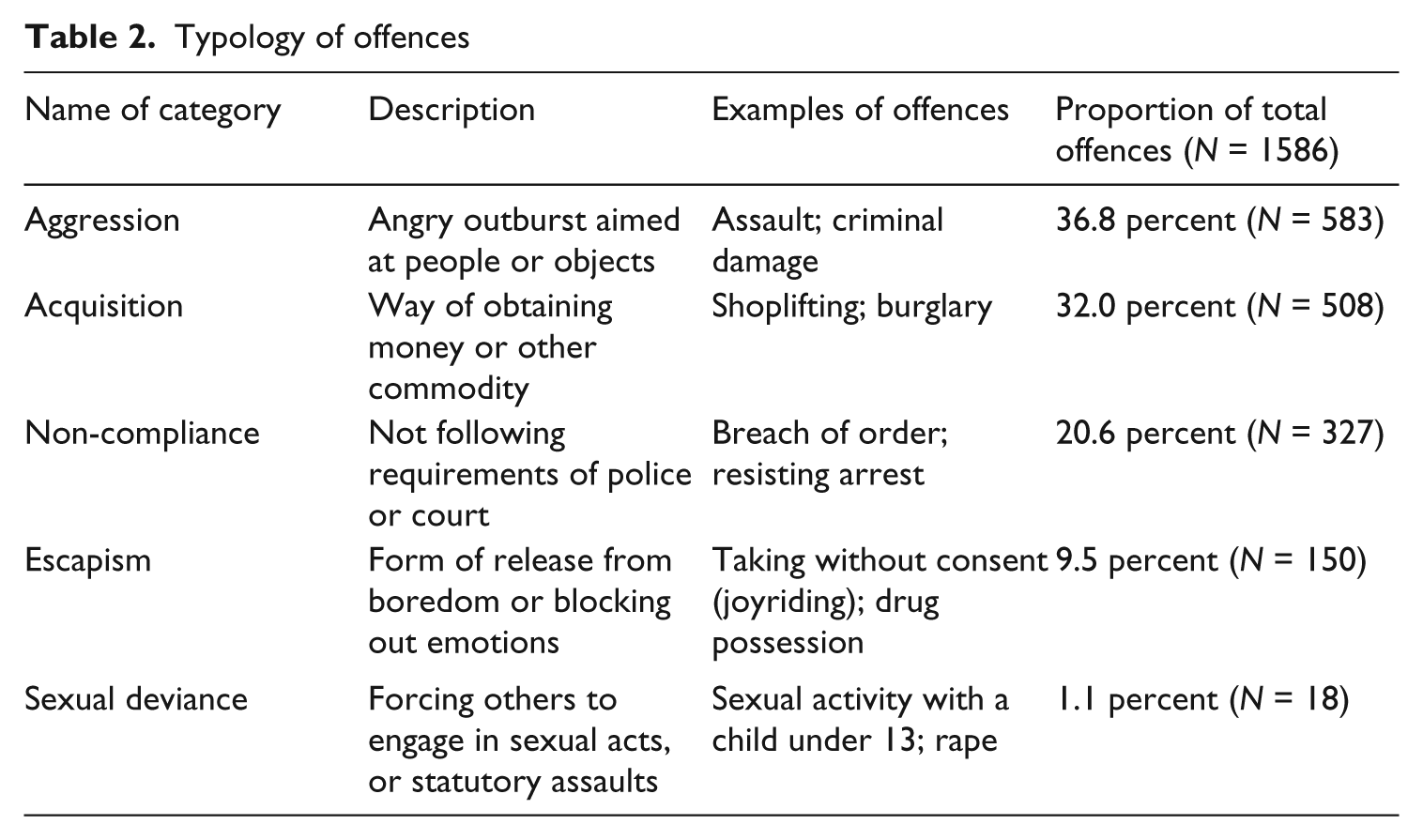
Aggression was the most common category, accounting for more than one-third of all recorded offences. Despite prior research’s focus on links between child sexual abuse and juvenile sex offending, sexual offences were the least common category. They contributed just 1 percent of all recorded crimes, in line with rates of sexual offences among recorded youth crime in England and Wales in general (MoJ, 2011a).
Discussion
These findings emphasise that greater attention should be paid to links between CSE and youth offending, although the exact nature of the relationship remains unclear. With 40 percent of identified CSE victims implicated in offending behaviour, an appreciation of the impact of youth offending on exploitation and vice versa should inform responses to both issues. Much CSE is believed to go unreported and undetected (Jago et al., 2011), so the relatively low identification rate of CSE among known offenders may under-represent the true scale of the issue. The early age of onset for recorded offending and the high recidivism rates among CSE victims were particularly concerning. Prior research has identified persistent offenders who begin offending from an early age to be an especially challenging and expensive group to address (YCC, 2010). Consequently, this study’s findings indicate that investment in prevention and early intervention may be not only more ethical but more cost-effective.
Gender proved an important determinant of offending: compared with their female counterparts, male CSE victims were more likely to be apprehended, were apprehended for more offences and were first apprehended at an earlier age. Yet CSE victims constituted a much lower proportion of Derby’s total male youth offending population than they did the female. Together, these results suggest that the relationship between CSE and youth offending should not be reduced to a single-gender issue, but that gender differences should be considered when planning research and interventions.
Crimes of aggression, escapism and acquisition may all be linked to common behavioural and psychosocial disturbances associated with CSE, such as angry outbursts, erratic behaviour and substance abuse (CEOP, 2011). Nonetheless, there may be other explanations for the offending patterns observed and at this stage care should be taken not to extrapolate far beyond the results. It can more reliably be asserted that the low sex offending rate and the diversity of the offending behaviour emphasise that the associations of CSE go far beyond a narrow focus on sex offences. Crimes of non-compliance such as breaches of order, although ostensibly mundane, may be an important indicator of poor relationships with the criminal justice system, which may in turn affect victims’ propensity to formally disclose CSE. A history of mistrust and antagonism towards the police may act as strong deterrents against reporting abuse, something upon which more calculating CSE perpetrators might be able to capitalise.
Replication is needed to understand consistency and variation between patterns in CSE and youth offending at the national level and the extent to which these findings are common to other European countries. When doing so, it is important to recognise how the quality of local CSE interventions can affect results. Early attempts to map CSE across the UK suggest that high local prevalence rates may simply reflect a better-established response to the issue (CEOP, 2011; Jago et al., 2011). Derby, although a small city, has been recognised as an example of best practice nationwide (CEOP, 2011). The study highlighted some further frustrations in investigating the overlap between two independently complex issues such as CSE and youth offending. The study was a localised one focusing on a limited area, and without clear and consistent baselines it was difficult to interpret results. Yet, even with a data set of hundreds of exploited offenders, rather than thousands, data deficiencies precluded attempts to establish chains of temporal precedence.
The results show that CSE victims are typically recognised as offenders before they are recognised as victims. Yet, without data on typical time lags both from first actual offence to first apprehension and from first instance of CSE to first referral, it is difficult to judge whether offending really pre-dates exploitation. CSE can go undetected for months or years; age at referral should not be conflated with the start of CSE (CEOP, 2011). In order to better understand the relationship between exploitation and offending and start to interrogate questions of causality, time-stamped data on abuse and offending instances per exploited offender are needed. This would allow chronologies of exploitation and offending behaviour to be mapped. Yet such data are not currently known to be routinely recorded by any agency.
On an individual level, some of these questions were explored through the in-depth analysis of full case files from Safe and Sound Derby for a small subset of SS (N = 15). Within the constraints of the current study it was not viable to extend this exercise to the whole of SS. This approach gave some clues as to the complexity of interactions between CSE and youth offending, however, and yielded considerable qualitative richness. Some children’s offending clearly began or peaked around periods of exploitation, suggesting CSE was a clear trigger. In some instances, offending was directly linked to abuse, such as one girl’s deliberate breach of a curfew order to meet her exploiter. The consequences of disobeying his demands would, she reasoned, be far graver than those a court would impose. For other children, offending and CSE appeared to be linked to shared environmental risk factors: both issues formed part of a generally chaotic lifestyle, which could include further forms of abuse and neglect.
These contradictory findings imply that the relationship between CSE and youth offending is unlikely to be a simple, universal and linear chain of cause and effect. Whatever the initial cause, for many children CSE and youth offending seem to coexist in a state of twisted symbiosis, whereby the one exacerbates the other and vice versa. Thus, although CSE may trigger or exacerbate offending, offending may simultaneously trigger or exacerbate exploitation. In 2011, a CSE victim had a previous conviction overturned after it was identified as directly related to her own exploitation (The Times, 2011). There is a clear need to explore ways in which prior offending records influence CSE disclosures and a child’s status as a CSE victim affects their treatment in the criminal justice system.
Conclusion
This preliminary study revealed a clear correlation between CSE and youth offending. It also highlighted some of the issues that can arise when attempting to study the intersection between two complex and hidden problems such as these. It identified data deficiencies, including the lack of baseline data, that complicate research efforts. It is hoped that this study will increase awareness of the overlap between CSE and youth offending. In doing so, it could stimulate research and debate and inform responses to both issues, in the youth justice system and beyond. As interest in tackling CSE continues to grow globally, there is an increasing need for a better understanding of its connections with other social issues.
Footnotes
Acknowledgements
Special thanks to Sheila Taylor and everyone at Safe and Sound Derby and to Brian Hunt at the Derby City Youth Offending Team for their kind support and data provision. We would also like to thank our anonymous reviewers for their insightful suggestions.
This research was funded by the Engineering and Physical Sciences Research Council of the UK (EPSRC) via the Security Science Doctoral Research Training Centre at UCL (UCL SECReT).