



Abstract
This article presents an equity-informed systematic review of research pertinent to the offering of virtual early childhood education programming to young children and their families. Findings are presented as guidelines which may shape the delivery of future programming within virtual contexts. These findings are organized within three major areas that were identified through the methodology: Building Connections and Fostering Online Relationships; Interactive Virtual Programming, Digital Tools, and Responsiveness; and Digital Technologies, Considerations for Access, Use, Professional Learning, and Safety. Findings highlight that developing inclusive, meaningful, and collaborative programs within virtual spaces is necessary for maximizing the learning opportunities and engagement of all children and families. Developing such services requires the careful negotiation and consideration of a range of worldviews, knowledges, priorities, and interests within unique families and contexts. Practice implications are drawn from the research, opportunities for pedagogical change are identified, and future research needs are provided.
Introduction
Educational research stemming from the COVID-19 pandemic is producing new knowledge vital for understanding virtual learning programs for young children and their families, including their provision and effects. Virtual learning refers to an environment in which the educator and child “are separated by time or space, or both” (Dung, 2020: 45). Within this environment, digital technology and “computer-based resources such as the Internet” (Dung: 45) are enlisted to facilitate educator-learner interactions and learning opportunities. Virtual learning may be asynchronous (where families access prerecorded and previously published materials as their schedules permit), synchronous (during which the educator and child interact simultaneously within the virtual environment), or blended (which may include a combination of asynchronous, synchronous, and face-to-face interaction) (Dung, 2020). The COVID-19 pandemic and required move to online learning has placed unprecedented demands on educators, children, and their families: pedagogies have been disrupted and socioeconomic and other inequities affecting educational engagement have been brought to the fore (Price-Dennis and Sealey-Ruiz, 2021). Extant literature concerning the effects of the pandemic on diverse households has found that while the pandemic has affected all, all have not been affected equally. How households experience virtual learning, for example, has been connected to myriad factors including their access to resources (e.g. linguistic, epitstemological, and technological) (Zhang et al., 2022). This study was commissioned by municipal service agencies in Ontario, Canada, which are responsible for providing early learning programs outside of the formal school setting to children aged 0–6 and their families. The purpose was to provide research-based recommendations for virtual learning programs that have at their core the values of equity, diversity, inclusion, and decolonization (EDID).
Orientation
The literature review protocol for the study was developed through an explicit EDID framework, which was vital given the demographics of the research context. Canada is a settler-colonial nation that has been called to act by such documents as Calls for Justice by the National Inquiry into Missing and Murdered Indigenous Women and Girls (National Inquiry into Missing and Murdered Indigenous Women and Girls [MMIWG], 2019), the Calls to Action of the Truth and Reconciliation Commission (Truth and Reconciliation Commission of Canada [TRC], 2015), and the United Nations Declaration on the Rights of Indigenous Peoples (United Nations [UN], 2007). Ontario, the location of the study, is a uniquely diverse context. It is home to the “largest population of Indigenous peoples” in Canada (Government of Canada, 2020: 9) and “six Indigenous language families. . .which include over 18 unique languages and dialects” (King’s Printer for Ontario, 2018: para. 9). Ontarians are also observing a transformation in immigration patterns and the ethnic, linguistic, and religious diversity of their province: In 2016, immigrants were nearly 29% of the total population, and international migration remains “the main driver of population growth in Ontario” (Statistics Canada, 2021: 9). Additionally, as noted by the Ontario Human Rights Commission (n.d.), there is growing diversity, or at least recognition of diversity, in family structures: “Almost one quarter of families with children are now lone-parent families” (para. 1) and blended as well as dual-custody families are becoming more prevalent. In addition, the 2016 Canadian census showed that Ontario had the largest number of same-sex couples provincially, and approximately one in eight couples had children living with them at this time (Statistics Canada, 2017).
In creating an orientation that would help the study live up to its responsibilities of EDID, we began by forming a research team composed of an Indigenous Knowledge Keeper who is an experienced cultural educator and education scholars with complementary EDID-related expertise (e.g. minoritized family engagement, decolonizing curricula, digital inclusion). Together, we looked to Pushor’s (2015) pedagogy of walking alongside families and children for its potential to foster the conditions for enduring partnerships among educators, children, and families where engagement is both “side-by-side and reciprocal” (p. 235). We also selected a flexible definition of family whereby what constitutes family is built from the culture of the specific family itself (e.g. Kelty and Wakabayashi, 2020).
We further embedded family engagement within our protocol, in part, by being oriented toward the funds of knowledge (González et al., 2005) and funds of identity (Esteban-Guitart and Moll, 2014) of children and families. Funds of knowledge refers to resources that are “essential for the well-being of an entire household” (González et al., 2005: 31) and may include worldviews, language(s), cultural practices, kinship ties, and the like. They are also intricately connected to how people see themselves in the world, that is, their “self-definition, self-expression, and self-understanding” (González et al., 2005: 31). We moved this EDID orientation into every aspect of our study methods.
Methods
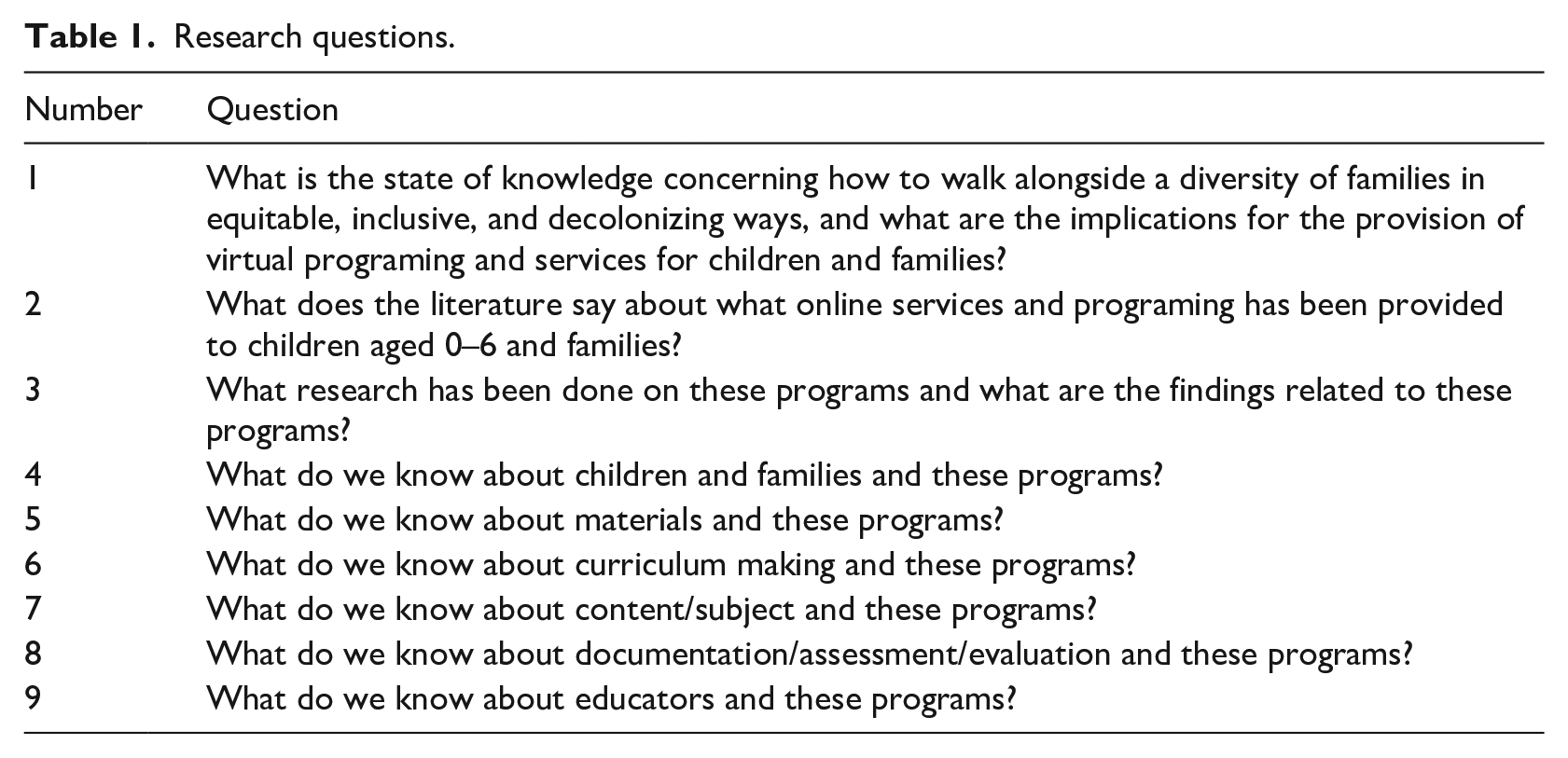
To operationalize the systematic review, our team developed EDID-focused questions (see Table 1) that comprehensively considered the entire educational context as per Schwab’s (1973) curricular commonplaces (i.e. educator, child, curriculum making, milieu, subject matter).
Research questions.
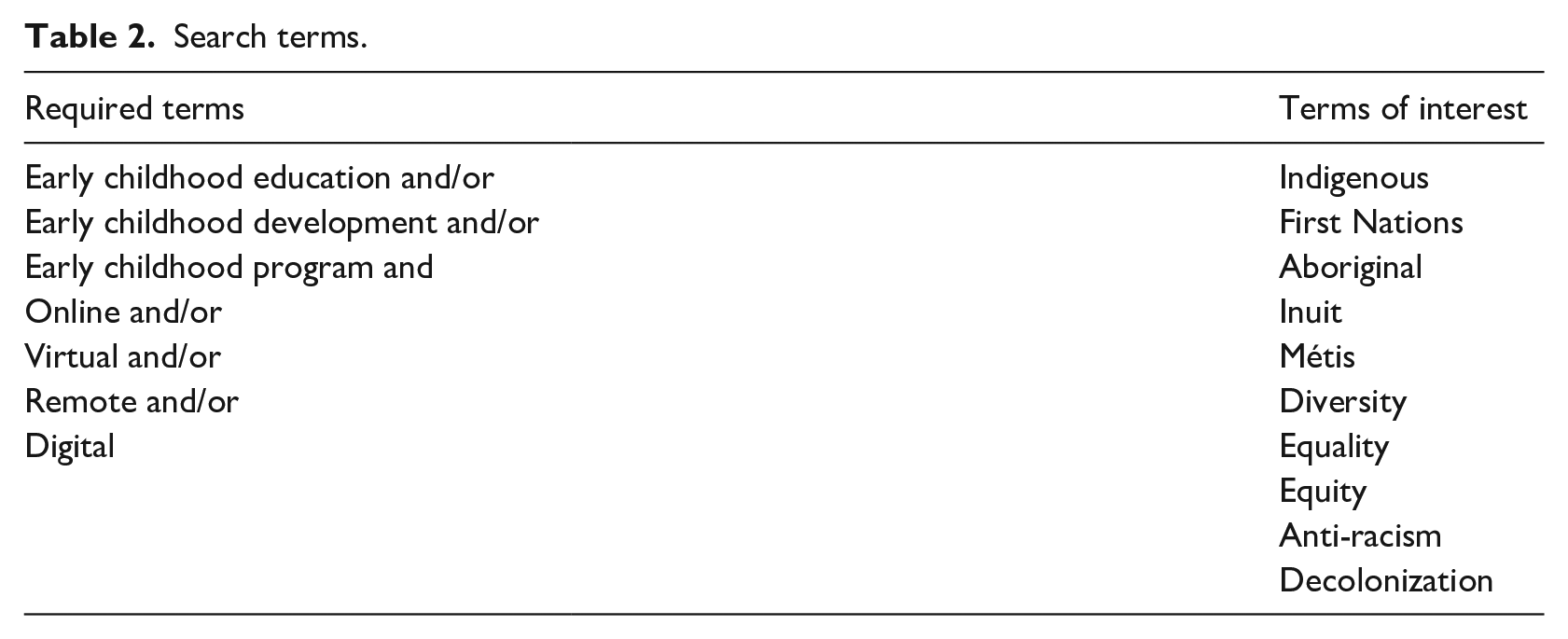
Guided by the research questions, we conducted a preliminary database search using apt search terms (see Table 2) to locate relevant studies. To develop these terms we considered keywords, index terms, and subject headings, and spelling variations. We also combined search terms using Boolean operators (e.g. University of Michigan Library, n.d.). We targeted the Education Resources Information Center database because it is the largest education database in the world (Institute of Education Sciences, 2021).
Search terms.
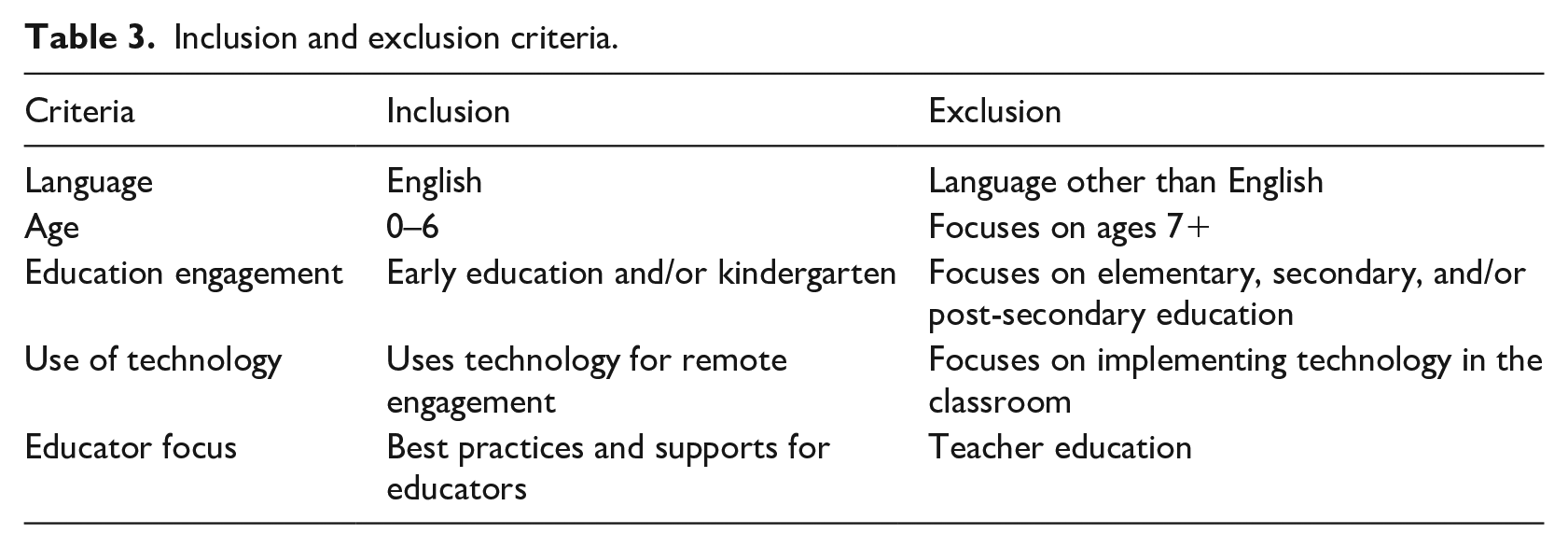
Next, we conducted a title and abstract review to determine which articles would be included in a full-text review. Our team determined inclusion and exclusion criteria (see Table 3) to identify relevant articles and support this process.
Inclusion and exclusion criteria.
We selected all articles from the full text review (n = 40) for data extraction. We developed a descriptive data extraction chart to organize this process. This chart included the article and resource citation, author, year, field, study design, and a description of the virtual learning program and/or approach, and/or recommendations. Information extraction involved capturing key terms and/or concepts, in the form of pull quotes or alternative descriptions, that were pertinent to each research question. We examined and responded to each question in turn during this phase.
Following data extraction, in keeping with Zhang et al., (2019), we conducted a thematic analysis to identify big ideas that occurred across the literature in response to the research questions. This method of analysis was used to aggregate and compare the information that we extracted across studies. A fifth column was added to the data extraction charts to enable clear categorization and representation of these themes. More specifically, we conducted deductive and inductive thematic analyses. We deductively derived categories to correspond to the EDID-focus of the study. We also attended to inductive themes that emerged from the reviewed studies. We employed multiple credibility checks within our team. The processes of analyzing the themes and subthemes required coordinated commitment of all team members, who went over the original data and developed themes based on their respective understanding of the data. Then, through regular team meetings, team members communicated their analyses and negotiated differences to reach consensus. Our revisions of themes and subthemes were recursive until we reached agreement.
Through ongoing analysis within our team, we also identified EDID-relevant gaps within the literature. To address these gaps, we followed up with targeted literature reviews to gain additional information about topics such as culturally relevant program planning and gender and sexual minoritized families. Wherever possible, we wove the results of these targeted reviews throughout the report; however, given the dearth of literature in these areas we have signaled to where future research is needed.
Results
The following explicates our findings and recommendations within three main themes from our analysis:
building connections and fostering online relationships
interactive virtual programing, digital tools, and responsiveness
digital technologies, considerations for access, use, professional learning, and safety
Building connections and fostering online relationships
The literature is clear that within virtual learning spaces, educators must work toward building trusting relationships with families (Currie-Rubin and Smith, 2014; Lavery et al., 2018; Steed and Leech, 2021; Washburn et al., 2021; Zhang et al., 2018). Relationships should exist between the educator and child, the educator and family, as well as families, and other families (DeHoff et al., 2016). These relationships should be built around a sense of belonging, with parties uniting through a shared goal of supporting children and growing individually and collectively (Currie-Rubin and Smith, 2014; Jones, 2020; Kozinski, 2021). A crucial component of this relationship-building process is teacher presence (Korkmaz and Toraman, 2020; Muskin, 2020), which can be built in ways such as through consistent and continual communication from educators (Currie-Rubin and Smith, 2014; Washburn et al., 2021). This communication can be synchronous or asynchronous via regular phone calls or through multimedia tools such as email, blogs, social media (e.g. WhatsApp, Facebook), and educational apps (e.g. Seesaw) (Soltero-González and Gillanders, 2021; Willis and Exley, 2018). Such communication may also involve finding ways to interact with families in their first or preferred language whenever possible. Multimedia tools offer a range of opportunities for connection, from posting pictures of children’s artifacts to sharing resources through instant messaging. Families can also connect via social media to express challenges, share successes, and offer at-home resources for their children (Zhang et al., 2018). This family-to-family online support “can buoy parents with coping skills and self-efficacy, as well as information, to allow them to better care for and be advocates for their children” (DeHoff et al., 2016: 8).
Walking alongside families and children is key for community-informed programming (Jones, 2020). Research suggests that walking alongside can include educators seeking to understand families’ needs as they balance different priorities at home (Mutch, 2021; Washburn et al., 2021). Considering families as co-collaborators allows educators to plan for more inclusive and responsive programming. This collaboration, where families act as contributors of knowledge and ideas, may foster community and belonging. Educators can also use information gathered throughout collaborations to inform more responsive programming (Wells, 2017). The importance of collaboration becomes apparent when serving, for example, 2SLGBTQ+ children, and families. Although our study identified a lack of literature concerned with virtual programming in this area, a more targeted search revealed efforts of community organizations. Drag Story Time, promoted by the Rainbow Optimist Club of Southwestern Ontario (2022) alongside associated libraries, has begun using Facebook, and YouTube to engage families and children in the art of drag while teaching about diversity through songs and literature. Additionally, The 519 (n.d.), in partnership with an EarlyON Center in Toronto, offers virtual learning sessions through a 2SLGBTQ+ affirming lens. Programming consists of workshops for families to explore inclusion, storytelling in different languages, queer family circles, land-based play, and much more (The 519, n.d.). Examples like these can be used by educators, not necessarily to copy but to illustrate what is possible in the quest to create inclusive programming in and through their own contexts.
Interactive virtual programing, digital tools, and responsiveness
Our review identified numerous findings concerning digital tools. The literature relates that a variety of multimedia tools are needed for educators to be responsive to the funds of knowledge of children and families (Goulding et al., 2018). Technology should be in place for educators to use for programing, interaction, and community building. Digital technologies (e.g. Chromebooks, Wi-Fi hotspots) should be accessible and distributed to families (Dore et al., 2021; Washburn et al., 2021), and options for offline learning and resources (e.g. learning packages that include art supplies and books) should be made available (Dore et al., 2021; Soltero-González and Gillanders, 2021). Educators must be conversant with a variety of digital technologies (e.g. Zoom, Microsoft Teams) and may benefit from professional learning opportunities (Lee, 2021) to understand how digital tools can be integrated and leveraged in educative ways. This need for technological knowledge is also true for families who may not be familiar with how to use digital tools (Willis and Exley, 2018). These families will benefit from the guidance and support of educators throughout the learning process.
Digital tools should be selected with purpose and intention by educators (Lock and Duggleby, 2018). They should be vetted for quality (Goulding et al., 2018), which involves considering a tool’s user friendliness, engagement, level of interactivity, and potential to be dialogic (Wells, 2017; Willis and Exley, 2018). It is also important to imagine digital tools as placed resources (e.g. Nichols and Snowden, 2018) where learning and interaction are enabled with and through digital tools and where the technologies are viewed as resources that fulfill the requirements of a particular context, not as the focus of the learning itself (Heydon et al., 2017). Digital tools might also be placed resources when they are engaged as part of a variety of learning tools including other, nondigital materials (Kozinski, 2021).
The literature in this area also finds that interaction during virtual sessions is key to engagement (Dore et al., 2021; Goulding et al., 2018; Hatch, 2021). Examples of interaction include active co-viewing, which refers to practices such as shared viewing and the making of multimodal texts (Kozinski, 2021). These multimodal texts can incorporate storytelling, question asking, creative gesturing to bring plots to life, the exchange of feedback, singing (Payne and Ralli, 2020), and the use of props to maximize engagement (Leung et al., 2021). The literature offers advice on the size of virtual groupings to improve levels of interaction. It cites the value of smaller groups of four to five, or fewer, children (Hatch, 2021; Kim et al., 2023; Szente, 2020). Jones suggested that educators “use screens and technology sparingly and wisely” with “brief opportunities to connect with their teacher and classmates that are engaging” (2020: 11). Jones added, “reading stories, sharing items from home, singing songs, watching a puppet show, and playing are good examples of how technology can bring young learners and their teachers together” (2020: 11). The City of London (2020), in their Qualitative Analysis of EarlyON Virtual Programming, also suggested there were benefits to recording live sessions for parents to use as resources for later viewing. In all recommendations, educators must consider personal and contextual factors including the form of programming, its content or focus, who is participating and why, its goals, and the like in order to determine what is optimum for a given situation. There is no singular set of best for all and for always practices; educator discernment is paramount (Hibbert and Iannacci, 2005). Interaction between families and children for offline learning opportunities is also emphasized. These forms of interaction can include unstructured play, nature walks, involvement in cultural practices, and participation in household tasks (Soltero-González and Gillanders, 2021).
Much like face-to-face programing, virtual programing must be purposefully designed (Goulding et al., 2018; Lock and Duggleby, 2018). Virtual spaces should not seek to replicate face-to-face interaction (Jones, 2020) but should reflect the at-home realities and lives of families and be inclusive of their funds of knowledge. Regarding the importance of building community, educators, and families can collaborate and co-create programing based on these funds of knowledge and shared goals (Jones, 2020). Educators might reach out to families to learn about and mitigate any barriers (e.g. language, technology) that are preventing when and how families participate (Oke et al., 2021). Educators can invite families, as curricular informants, to share their home lives, values, and cultural practices that bring purpose as well as structure to their daily lives. Educators can also work toward becoming more knowledgeable about cultural practices by learning from local community members. With their guidance and direction, and with the educator acting as a supportive ally and listener, cultural knowledge can be carefully woven into curricula. Such weaving must take place within a larger relationship and partnership-building process that is founded upon principles of trust, transparency, and accountability. For example, educators might engage with Indigenous Knowledge Keepers and/or cultural educators, establishing trustworthy relationships over time that can help to shape curricula. Native Child and Family Services of Toronto (2021) provided examples of culturally responsive programing that can stem from such engagements. Examples include Indigenous art making videos and art-making materials that can be sent into homes for use by children and families. Crucially, responsive curricula must be informed by and reflect the priorities of these partners, where the educator frequently reevaluates their own role(s), contributions, and positionality.
Relative to the content or knowledge being shared in virtual programs in the literature, much of the research has focused on remote learning pertaining to literacy, math (Muir et al., 2020), and socio-emotional learning (Dore et al., 2021). A cross-curricular approach to learning is recommended, which may span across literacy (singing songs, stories), numeracy (cooking, healthy eating, crafting), science (discovery learning, playing outside), and movement activities (dancing, playing outside) (Region of Peel Human Services, 2020).
Regarding assessment and evaluation, a walking alongside approach is suggested by Wilks et al. (2020), who considered the experiences of Indigenous students in remote communities in Australia. Though the researchers were not studying children, their findings are transferable to other contexts where a pedagogy of walking alongside is desired. They found that educators need to be aware of and build on students’ funds of knowledge in order to offer holistic evaluations, which may include evaluating student knowledge orally and not being limited to Western frameworks “where so much is based on written assessment” (2020: 33). As Inan (2021) noted, it can be challenging to observe children pedagogically in online contexts. Educators must often rely on families to provide and support pedagogical documentation. Some resources that are required for assessment purposes (e.g. photos, notes, video recordings) may not be submitted by families at requested intervals (Steed and Leech, 2021). Assessment should be flexible and adaptable. Additional research is needed on assessment and evaluation in virtual spaces, specifically in early childhood education, as evidenced by the paucity of literature in the area.
In addition to the above gap, further research is needed to examine virtual programing for children with disabilities, especially in early childhood education (Salvador et al., 2021). Within virtual spaces, “parents of [children] with disabilities often feel isolated from their child’s school, or uncertain about how to connect or how the school is working to support their child” (Currie-Rubin and Smith, 2014: 119). Synchronous connections, such as meetings via Zoom or a phone call, may offer opportunities for connection and support. These connections may also uncover needs that families have; for instance, assistive technologies (e.g. closed captioning, text-to-speech) may be required for families to participate virtually.
Digital Technologies, considerations for access, use, professional learning, and Safety
Our study found that equity and access issues influence how families, children, and educators interact with and learn from digital tools. The following findings consider the issue of accessibility, the importance of professional learning, and concerns regarding screen time.
Equity and access in the digital divide
In its original conception, the term digital divide was used to highlight the dichotomy between those with and without technology (Rowsell and Morrell, n.d.). The term now extends beyond a binary distinction and refers to three levels of divide: access, use and skills, and capacity (Gallagher et al., 2019; Rowsell et al., 2017; Sosa Díaz, 2021). Rural and remote communities within minority-world countries, such as Canada (Canadian Radiotelevision and Telecommunications Commission [CRTC], 2017), the United States, Japan, Australia, or the European Union, are not exempt from digital exclusion and its social, political, and economic consequences (Kosłabędowicz, 2017 Within Canada, the urban/rural divide (CRTC, 2017) is considered the most significant factor impeding access to digital opportunities that often results in the exclusion of “Indigenous communities, low-income communities, and Francophones” (Hadziristic, 2017: 44). Developing suitable infrastructure is required to reduce the exclusion of rural and remote communities from digital literacy and educational opportunities; however, this has been difficult because the infrastructure that is required, such as “roads and electricity” (Lane, 2017: 70), are nonexistent in some areas. A dearth of digital infrastructure, for instance, poses unique challenges for Inuit and First Nations communities in the North and South that “are some of the least connected communities” in Canada (Williams, 2018: para. 5). Within the United States, rural living is also associated with “lower levels of device use, Internet use. . .and participation in online activities” (Carlson and Goss, 2016: para. 6). Reducing costs and increasing literacy training opportunities is necessary for improving access and engagement: “some households may require subsidies to make the Internet more affordable, while others may need digital literacy training to make the Internet more useful to them” (Carlson and Goss, 2016: para. 7). Within the European Union member countries, the problem of the digital divide is “intensely experienced by residents of rural areas” and has the potential to “deepen marginalization and social exclusion” (Kos-łabędowicz, 2017: 201). Within majority-world countries, the digital divide is often compounded by complex social, political, geographic, and economic inequities (Ohemeng and Ofosu-Adarkwa, 2014). And while digital convergence is not a remedy for all issues within developing nations, it may reduce some circumstances of “inequality, poverty, and uneven distribution of social capital” (Ohemeng and Ofosu-Adarkwa, 2014: 304).
The digital divide is the effect of myriad factors. Within the context of early childhood, for instance, Lane (2017) identified a connection between socioeconomic status and reduced engagement in early childhood education classrooms. Lane found that children from low-income households who did not have access to technology at home were less engaged when first presented with technology in the classroom. In comparison, children from middle-income neighborhoods who did have access to this technology at home demonstrated a transferability of skills and greater digital literacy in the classroom, specifically when using iPads (Lane, 2017). This example highlights the relationship between socioeconomic status, digital opportunities, digital literacy, and information inequalities. When envisioning more inclusive early learning programing, the digital divide calls for an appreciation of factors that extend beyond access, including skills, capacity, and what knowledges and experiences children and families bring with them and apply to different technologies. It is important to consider how these differences can impact children’s overall opportunities and achievements, and what this means for the development of virtual programing (Lane, 2017). Technology must be examined across local contexts (familial, communal, classroom) (Rowsell et al., 2017) and in relation to the unique ways that particular situations promote digital literacy practices. Reich and Ito (2017: 4) have suggested that innovative action, when centered on the concept of equity, can “enhance our understanding of how new technology can truly democratize education.” These actions do not necessarily mean “free and open technologies” (2017: 3). Rather, solutions must consider “broader social and cultural forces” (2017: 3) that impact how children, their families, and communities understand, interact with, and learn best using technologies.
Screen time
There is attention in the literature to potential cautions related to screen time. We found that these cautions center on use and content; heavy media use in early childhood has been associated with obesity and sleep disturbances with, as well as cognitive, language, social, and emotional delays (Hill et al., 2016: 2). Excessive media use has also been identified with overall negative effects on well-being (Singh and Balhara, 2021). However, there are identified benefits in using technology if they are “well-designed” digital programs that “can improve preschoolers’ cognitive, social, and literacy outcomes (Hill et al., 2016). Blanket statements about the potential deleterious effects of digital media on children are rarely useful; context matters (Singh and Balhara, 2021).
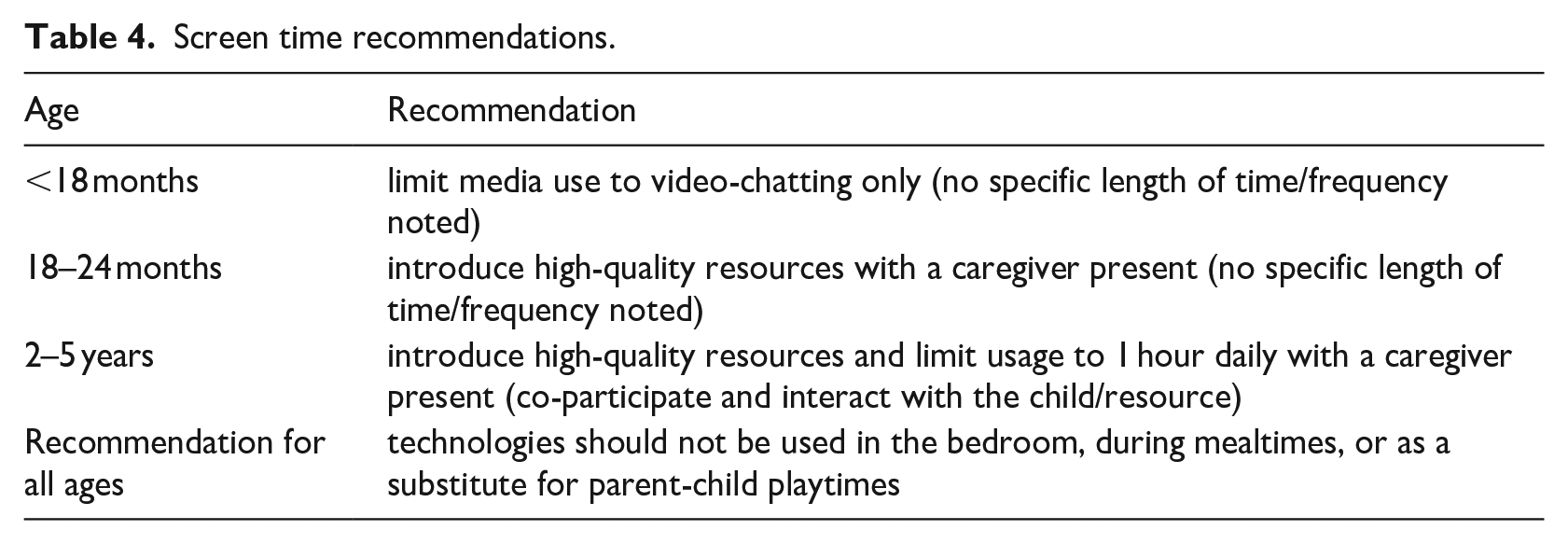
The American Academy of Pediatrics has made recommendations about screen time that are influential around the world (Hill et al., 2016; see Table 4). Note that not all screen time is created equal.
Screen time recommendations.
To address parent concerns regarding screen time and technology, educators might consider inviting a librarian to engage families in media mentoring (Goulding et al., 2018). This mentoring can be provided to identify quality digital tools and the possibilities for interactive experiences. Goulding et al. (2018), drawing on research in New Zealand and the USA, have suggested that the concept of mentoring “implies an on-going rather than one-off model of support that employs guidance, the modeling of practice, the answering of questions and signposting of appropriate resources to help bridge [a] knowledge gap” (p. 257). Media mentoring can be offered with an understanding that virtual learning and the use of digital technologies “is part of young children’s ‘multimodal lifeworld’.” It should therefore be contextualized and capitalized to support educators, parents, and children with using “digital and online technologies to develop agentic multimodal practices” (Dong et al., 2020: 1), that is, practices that emphasize children’s choices in their daily lives, including modes of expression and contributions to curricula within contexts that “render [them] capable” (Murris, 2019: 66).
Practices such as those just described, which promote agency and capability, have been found to be “critical in forming a child’s identity and refining a sense of who they are” (Kucirkova and Potter, 2020: 66) and who they can be. When considering the use of digital technologies and the agency of children, Søndergaard (2020: 226) has described children as a “curious investigator,” a “critical viewer,” a “creative participant,” and a “partner in communities.” Programing should support and build on these descriptions. In his discussion of the studies’ findings, Søndergaard commented on his observations of kindergarten children’s participation in virtual learning environments: “Many educators did not want children to be sent out into this dangerous space. Our only answer was that this is precisely why we have to teach the children to navigate there” (p. 228). The literature relates that educators and parents cannot/should not shield children from technology. Rather, we can help children be curious and critical digital citizens.
Professional learning
Our study indicates that educators must have strong technological skills (Casillas Martín et al., 2020) and professional learning opportunities in related areas, including the educative uses of digital technologies. These opportunities must extend to families who may not be familiar with how to navigate such technologies. In addition to technological knowledge, educators and families also need to have available support when/if needed from expert peers (Lock and Duggleby, 2018) and technicians (Alan, 2021).
Casillas Martín et al. (2020: 220) have recommended that technology learning be a “crucial requirement in the initial teacher education of early childhood teachers.” Educators should know how to integrate hands-on activities into synchronous instruction and provide a balance of online and offline activities. Digital technologies should be incorporated into face-to-face programing to facilitate intentional and interactive inclusion (Fleer, 2020; Lee, 2021). As Dong et al. (2020: 1) have stated, “online learning via digital technologies is part of young children’s ‘multimodal lifeworld’; thus should be contextualized and capitalized to support teachers, parents, and children with using digital and online technologies to develop agentic multimodal practices.”
We also found it is critical that educators’ professional well-being be supported. Educators felt overwhelmed and emotionally exhausted during the pandemic (Malta Campos and Vieira, 2021). According to a pan-Canadian survey, “97% of participants stated they experienced increased physical, mental, and emotional workload, and job demands during the 2020-2021 school year” (Canadian Teacher’s Federation (CTF/FCE), 2022: para. 6). Supports identified in the literature include coaching for professional learning (Lloyd et al., 2021) and virtual book clubs for connection with colleagues (BC Aboriginal Child Care Society, n.d.).
Conclusion
Virtual learning in early childhood programing has been a necessary move and, the literature suggests, one that has potential for negative and positive effects. Our study findings indicate that promoting EDID in virtual early learning programs requires a constellation of social and material considerations, notably: building connections and relationships, fostering interactivity and responsiveness, and growing access, use, professional learning, and safety. Indeed, walking alongside in virtual learning requires a comprehensive and holistic approach to planning of infrastructure, curriculum, resources, and pedagogy; it requires relationships between educators and families that are founded upon principles of trust, transparency, safety, belonging, and open communication. Virtual learning involves using flexible approaches, creative multimodal tools, and engaging materials that are accessible, safe, and of interest to children and families. Virtual learning also involves building a sustained support system for children, families, and educators that results in them feeling buoyed and appropriately guided at all points of the learning. Walking alongside thus means recognizing that there is no one best practice for all but rather many bests, and it is the professional educator who might discern (Hibbert and Iannacci, 2005) the path forward by crosschecking (Strickland, 1994) the literature against the context of their own practice. Toward this end, this study has highlighted the need for consideration and visibility of families’ experiences and knowledges in the development and provision of virtual learning programing. It has underscored that the realities, needs, and wants of children, families, and educators are context specific, and that virtual learning programs are most likely to flourish when they are co-created with the values and knowledge of those for whom they are intended.
Our research findings and ongoing collaboration within our team led to our recognition of certain gaps within the literature that are urgent for the promotion of EDID in particular. We continue to wonder, for example, what virtual early learning might look like to better engage under-served populations, including children, and families with disabilities, those living in remote and rural locales, and people whose first language or mother tongue has been minoritized. This is just one set of questions of a host of queries that this study raises and that we call to be addressed. We also hope to land on new research about the ways that service provision can expand gender and sexual identity options through its engagements with all families. How, for example, can educators foster trustworthy relationships across the full range of family structures? We acknowledge the opportunities that exist for further research on these topics that are of great importance, and we recognize that our findings only graze the surface.
Footnotes
Declaration of conflicting interests
The authors declared no potential conflicts of interest with respect to the research, authorship, and/or publication of this article.
Funding
The authors disclosed receipt of the following financial support for the research, authorship, and/or publication of this article: This work was supported by the City of London and the Child and Youth Network’s Family-Centred Service System in partnership with Merrymount Family Support and Crisis Centre.
