




Abstract
In 2020, the novel coronavirus SARS-CoV-2, and the resulting highly infectious disease COVID-19 led to restrictions based on the principal of social distancing to curb the spread of the virus among the population and to prevent an overload of health system capacities. These restrictions changed the daily lives of young children and parents dramatically. In a German questionnaire study, we aimed to investigate the impact of the COVID-19 pandemic on the magnitude of stress in parent-child systems and on social-emotional child development. Our sample consisted of 90 (39 male, 51 female) children (M = 17.2 months, SD = 9.7 months) aged 7–12 months (n = 38), 13–24 months (n = 31) and 25–38 months (n = 21). Parental stress was measured using the German version of the Parenting Stress Index, namely Eltern-Belastungs-Inventar. Additionally, social-emotional child development was measured using the Social-Emotional Questionnaire of the Bayley-III. Our findings show that parents experienced more stress during the COVID-19 pandemic in Germany compared to norms. Parental perceived stress was higher in parents of older children than younger ones. Interestingly, social-emotional child behavior scores significantly decreased with children’s increasing age. Moreover, higher parental stress was associated with lower values of social-emotional child behavior. Our findings provide important novel data on parental perceived stress and social-emotional child development during the COVID-19 pandemic. However, further research investigating the long-term consequences of the pandemic is needed.
Introduction
In 2020, the novel coronavirus SARS-CoV-2, and the resulting highly infectious disease COVID-19, led to thousands of deaths worldwide. Therefore, in most countries restrictions were and are in place to curb the spread of the virus among the population and to prevent a capacity overload of health system capacities. In March 2020, the German government decided to put in place a number of countermeasures based on the principal of social distancing such as keeping apart from others and wearing masks (Steinmetz et al., 2020). Moreover, quarantine and travel restrictions were implemented. The closure of non-essential shops, restaurants and especially of schools, daycare centers, parks, and playgrounds for several weeks acutely affected the daily life experiences of parents and children and dramatically changed the life of families in Germany. Families not only faced threats to their health and financial situation, but many were also confronted with combining work and family life. In summary, the COVID-19 pandemic brings a new quality of environmental stress in young family’s lives.
Among different countries such as China, Canada or Germany to name a few, people report higher values for stress and mental health burdens during the COVID-19 outbreak (Bäuerle et al., 2020; Huang and Zhao, 2020; Islam et al., 2020; Pierce et al., 2021; Taylor et al., 2020a). Particularly, stressors such as high anxiety and depressive symptoms that are related to COVID-19 are associated with higher parental perceived stress (Brown et al., 2020). In turn, parental mental health problems are linked to problems in child development (e.g. Beck, 1999) and to an increased likelihood for children to develop mental health problems themselves (e.g. Weissman et al., 2005).
Therefore, the aim of the present study was to investigate the impact of the current COVID-19 pandemic on the magnitude of stress in parent-child systems and on the social-emotional behavior of young children.
Stress during the COVID-19 pandemic
The global COVID-19 pandemic is a significant stressor for many people. People worry about their physical health, their financial situation and suffer from social distancing. Some studies have investigated the consequences of this crisis on adults’ mental health. There are indications that COVID-19 can lead to posttraumatic stress symptoms in patients with COVID-19 (Bo et al., 2021). However, even without being diagnosed with COVID-19, the general population experiences COVID-19 related psychological distress. In fact, studies identified specific facets of COVID-19 related distress such as fear of dangerousness and contamination, socioeconomic consequences, xenophobic fears, traumatic stress symptoms, and compulsive checking (Taylor et al., 2020a, 2020b). Hereby, anxiety being the dominant reaction to COVID-19 (Lima et al., 2020), probably specifically health anxiety (Asmundson and Taylor, 2020a, 2020b). For instance, Huang and Zhao (2020) identified a major mental health burden of the Chinese public due to the COVID-19 outbreak. This web-based survey collected data in February 2020 from more than 7000 Chinese people. Results show that particularly females, younger people and people spending a lot of time thinking about the crisis are at high risk of mental illness. Among different countries, people report most commonly symptoms of anxiety and depression as well as trouble sleeping and psychological distress (Pierce et al., 2021; Rajkumar, 2020; Taylor et al., 2020a, 2020b; Zandifar and Badrfam, 2020). These findings are in line with a broad online survey, in which more than 15,000 German people participated between March and May 2020, showing that the values for anxiety, depression, and stress were 2–7 times higher than in norm samples (Bäuerle et al., 2020). Hereby, females seem to be stronger affected by the consequences of the COVID-19 pandemic compared to the general public. Furthermore, another study based in Germany found increased levels of psychosocial stress, anxiety, depressive symptoms, irritability and a decrease in overall well-being and sleep quality (Jung et al., 2020). In this study, again females and younger people reported a higher mental health burden than the general public.
COVID-19 related parental stress
People living with young children reported higher mental distress compared to the general public and norms (Islam et al., 2020; Pierce et al., 2021). On top of worries about physical health and financial situation, parents faced several further strains related to combining family and work life due to missing daycare options and social distancing measures (Brakemeier et al., 2020; Prime et al., 2020). With increasing feelings of anxiety and depression due to the COVID-19 pandemic, parents reported higher values of perceived stress (Brown et al., 2020).
As parental well-being and child development are strongly connected to each other, COVID-19 may lead to negative consequences in parent-child relationships and child development. Especially females report higher mental health burdens compared to the general public during the pandemic (Bäuerle et al., 2020; Jung et al., 2020). In fact, mothers of children age 0–8 years show elevated maternal depression and anxiety compared to population norms (Cameron et al., 2020). Huebener et al. (2021) found that the satisfaction of life, especially family life (and childcare) decreased for families with children compared to families without children. Families with children under 11 years as well as women reported the greatest decrease in satisfaction. Möhring et al. (2021) reported similar findings showing a general decrease in family satisfaction. Especially mothers seem to be negatively affected by the COVID-19 pandemic and connected lockdowns. One reason for these findings might be that in many cases mothers are responsible for care work, before and also now during the COVID-19 pandemic (Huebener et al., 2020; Schober, 2014).
The COVID-19 pandemic can be described as a potentially traumatic crisis and especially, traumatic situations such as COVID-19 can have a negative impact on children’s development. However, parents can act as a protective shield for their children, if they have adequate coping strategies (Cobham and Newnham, 2019). The COVID-19 pandemic had a drastic impact on families’ everyday life as parents have to adapt their lives to the new situation. Hereby, the adaptation requires parents to be highly flexible (Brakemeier et al., 2020), because life during the pandemic constantly changes (e.g. fewer restrictions, partial school/kindergarten opening,. . .).
In one survey conducted in Germany, parents reported that their own satisfaction and the satisfaction of their 4–15-year-old children decreased compared to before the pandemic (Andresen et al., 2020). Especially, parents with children younger than 11 years showed higher levels of stress and less life satisfaction compared to pre-COVID-19 (Andresen et al., 2020; Huebener et al., 2021; Möhring et al., 2021).
In sum, parental perceived stress can negatively influence parenting behavior which in turn can negatively influence parent-child interactions and relationships as well as the child’s social-emotional development. These effects might be more pronounced during the COVID-19 pandemic.
Parental stress and child development
Stress in the family context does not only have negative effects on the well-being of parents and children, but also places strains on parent-child relationships. Thus, parental stress can have a major impact on child development, especially in the first years of life (Deater-Deckard and Panneton, 2017). Particularly, long-term stress can have damaging impacts on parents’, but also children’s mental health, and can lead to cognitive and emotional burdens (Cluver et al., 2020; Cohen, 2000; Thoits, 2010). External and internal stressors such as economic hardship or depression can increase psychological distress and can negatively influence parenting behavior (Nievar et al., 2014). For instance, parental stress is associated with insecure attachment (Jarvis and Creasey, 1991) and child behavior problems, particularly externalizing behavior (Anthony et al., 2005; Creasey and Jarvis, 1994). In fact, perceived parental stress at younger ages is a predictor for behavior problems at later ages and vice versa (Mäntymaa et al., 2012; Neece et al., 2012). In addition, stress can lessen the positivity in mother-child interactions and relationships (Crawford and Manassis, 2001; Crnic et al., 2005) and is known to increase the risk for child maltreatment (Brown et al., 2020; Rodriguez-JenKins and Marcenko, 2014). Hereby, parental stress and child development influence each other mutually, so that more parental stress can result in more child behavior problems, which in turn can lead to more parental stress (Elgar et al., 2004).
Parental mental health problems resulting from long-term stress can put further strains on parent-child-relationships. Whereas maternal depressive symptoms up to 2 months after birth have no impact on the mother-infant relationship, maternal depressive symptoms up to 4 months after birth are associated with lower quality mother-infant relationships (Campbell et al., 1995; Moehler et al., 2006). Mothers with depression might interact less or even negatively with their infants and disengage from them (Lovejoy et al., 2000). Thus, children growing up with mothers suffering from depression and experiencing inadequate parenting have a higher risk for the development of psychopathology and behavior problems (Beck, 1999; Weissman et al., 2005).
The current study
Although there is a strong tradition of research on the effects of environmental stress on child development, the COVID-19 pandemic brings a new quality of stress (e.g. social distancing, wearing masks, closed day care centers, schools) in family’s life. Many of the current studies focused on the development and well-being of children older than 3 years of age. However, the first years of life have a crucial impact on children’s social-emotional development. As described above, long-term parental stress without efficient coping strategies can influence children’s social development negatively and result in behavioral and emotional problems. Therefore, in the present study, we investigated the impact of the COVID-19 crisis on parental perceived stress and early social-emotional child development. Additionally, we investigated whether parents’ reports of their own stress and well-being during the coronavirus pandemic are related to the social-emotional behavior of their children.
Methods
Ethics statement
The present study was conducted in full accordance with the Research Ethics Guidelines of the German Research Foundation’s. The local ethic’s committee of the Justus-Liebig-University Giessen approved the experimental procedure and the informed consent protocol. Moreover, all parents provided written informed consent prior to filling in the questionnaires.
Participants
Families with children aged 7–38 months from a medium-sized city in Germany took part in the study. The families were recruited from the address lists of the Department of Developmental Psychology of the Justus-Liebig-University Giessen. We asked parents in a brief letter if they are interested in participating in the current study. If parents were interested, we sent out an envelope with the consent forms, questionnaires and a prepaid envelope. After we received the completed questionnaires from the parents, each child received a gift and a certificate of participation.
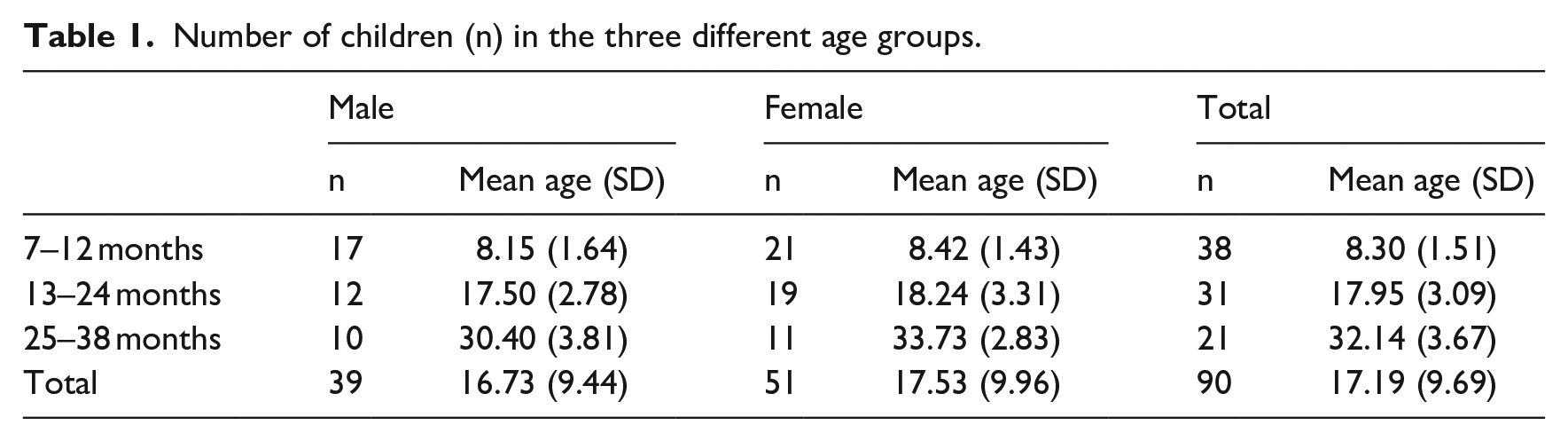
The parents filled in the questionnaires from the beginning of May 2020 to the beginning of July 2020, a period with distinct corona restrictions in Germany (e.g. contact ban, travel restrictions, closure of kindergartens, schools, playgrounds). We excluded all incomplete questionnaires and all questionnaires returned after the beginning of July from further analysis (n = 34). Other than that, we had no further exclusion criteria. Most questionnaires, about 87.8%, were filled out by the mothers (n = 79), 3.3% were filled out by the fathers (n = 3), 5.6% were filled out by both (n = 5) and on three questionnaires this information was missing. The final data consisted of 90 children aged from 7–38 months (M = 17.2, SD = 9.7). They were divided into three age groups (infants: 7–12 months, younger toddlers: 13–24 months and older toddlers: 24–38 months; see Table 1).
Number of children (n) in the three different age groups.
Measures
Socio-demographic variables
We designed a questionnaire assessing children’s and parents’ socio-demographic variables such as age, family status, birth circumstances, parental education and employment situation, relationship status, childcare and living circumstances. Table 2 gives an overview about some of the socio-demographic variables.
Sample characteristics.
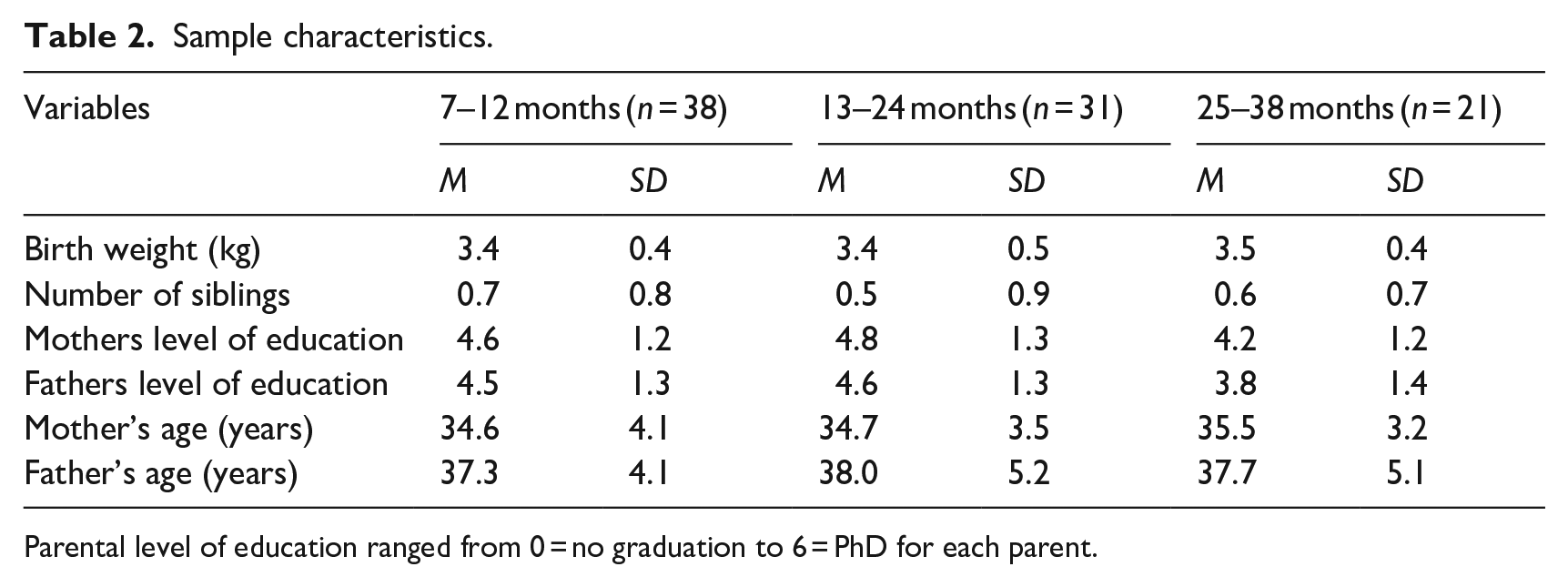
Parental level of education ranged from 0 = no graduation to 6 = PhD for each parent.
Parental stress
Parental stress was measured using the German version of the Parenting Stress Index (Abidin, 1995), namely the Eltern-Belastungs-Inventar (EBI) (Tröster, 2010), a commonly used tool to measure the magnitude of stress in the parent-child system. The EBI consists of 48 Items and assesses total stress as well as stress within the child and parent domain. The child domain focuses on traits and behavior patterns of the child that might induce stress in the parent, whereas the parent domain focuses on parental characteristics. The child domain comprises items measuring adaptability, demandingness, acceptability, mood, and hyperactivity. The parent domain contains items measuring partner relationship, role restriction, health, depression, parental competence, social isolation, and parental attachment. Items are scored in a 1–5 Likert scale, ranging from 1 (strongly disagree) to 5 (strongly agree). Stanine, Percentile scores, T-Scores are provided and higher scores resemble higher levels of stress. T-scores ⩾ 60 and Stanine ⩾ 7 indicate a high level of mental stress.
Social-emotional behavior of the children
The social-emotional behavior of the children was assessed using the Social-Emotional Questionnaire of the Bayley-III (Bayley, 2006), which is based on the Greenspan Social-Emotional Growth Chart (Greenspan, 2004). The Social-Emotional Questionnaire measures behaviors that are associated with milestones in social-emotional development such as reaching or pointing at things between 6 and 9 months, using consecutive actions to show what he or she wants between 10 and 14 months or pretend play with peers between 31 and 42 months. It is suitable for assessing the social-emotional behavior of 0- to 42-month-old children. The questionnaire comprises 35 items in total with specific stop points, based on the child’s age. Items are scored on a 0–5 Likert Scale, rating the frequency of a behavior from 1 (none of the time) to 5 (all of the time). Zero resembles that a child has not yet displayed that behavior (can’t tell). We derived scaled scores from the subtests’ total raw scores. The Bayley-III scaled scores represent a child’s performance relative to same-age peers and range from 1 to 19, with a mean (M) of 10 and a standard deviation (SD) of 3.
Data analysis
We conducted a MANOVA to analyze the EBI (Tröster, 2010) and an ANOVA to analyze the Social-Emotional Questionnaire of the Bayley-III (Bayley, 2006). Finally, we calculated Pearson correlations between the results of the EBI (Tröster, 2010) and the Social-Emotional Questionnaire of the Bayley-III (Bayley, 2006).
Results
Parental stress
A MANOVA with total EBI stress T-score, stress T-score within the child domain and within the parent domain as dependent variables and age (7–12 months, 13–24 months, 25–38 months) as independent variable revealed a significant main effect of the fixed factor age on the dependent variable total stress, F(2, 87) = 5.76, p = .004, ηp2 = .12. Moreover, our analysis revealed a significant effect of the fixed factor age on the dependent variable stress within the child domain, F(2, 87) = 5.43, p = .006, ηp2 = .11, as well as on the dependent variable stress within the parent domain, F(2, 87) = 4.02, p = .021, ηp2 = .09. As can be seen in Figure 1, Bonferroni-adjusted post-hoc analysis showed that the parents of children aged 13–24 or 25–38 months achieved significantly higher total stress scores than the parents of children aged 7–12 months. Additionally, stress within the child domain was significantly higher in the group of parents with children aged 25–38 months in comparison to parents with children aged 7–12 months. Finally, Figure 1 depicts that stress within the parent domain was significantly higher in the group of parents with children aged 13–24 months compared to parents of children aged 7–12 months.
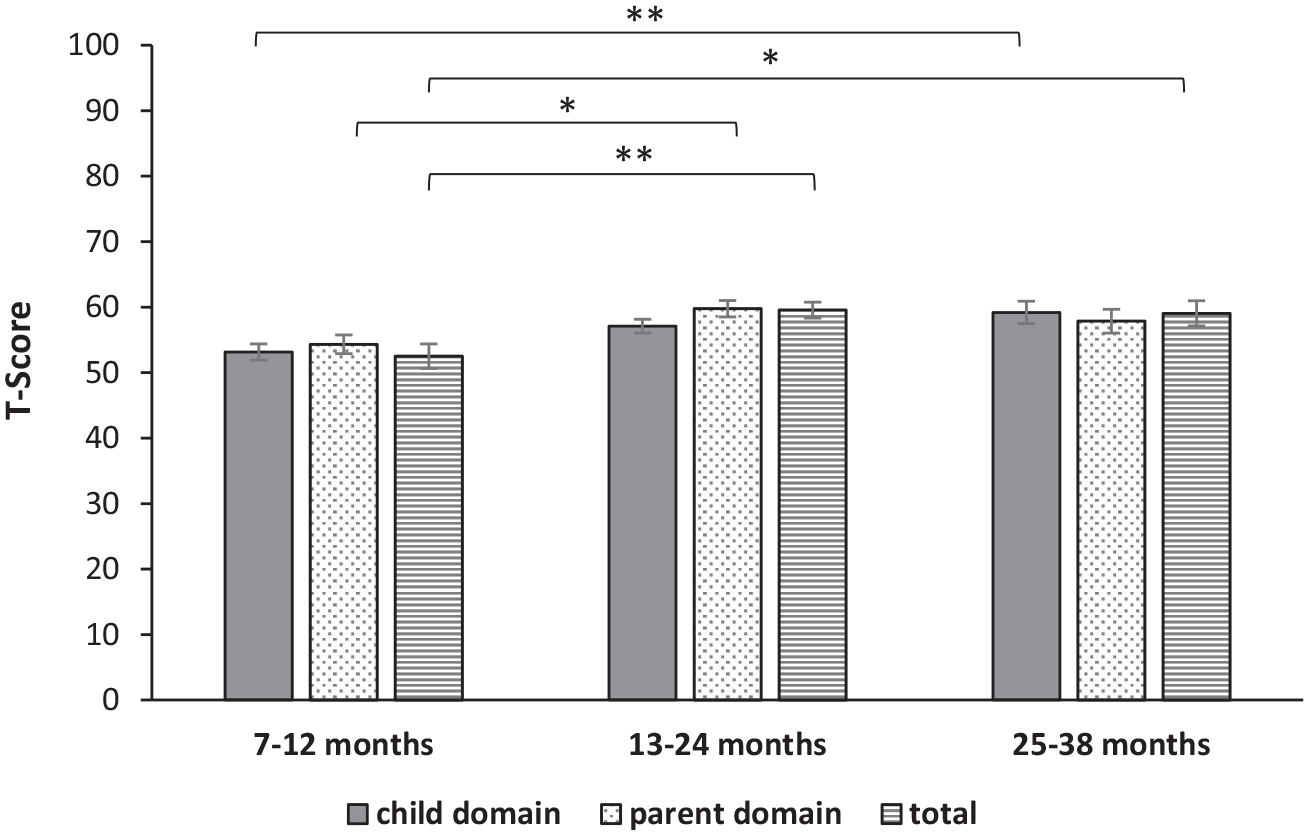
EBI T-Scores as a function of age within the child domain, parent domain and total stress score.
Additionally, we analyzed the subscales of parental stress in more detail. In the parent domain, as can be seen in Figure 2, the parents scored highest on items measuring Depression and Partner Relationship. In the child domain, they scored highest on items measuring Demandingness and Hyperactivity.
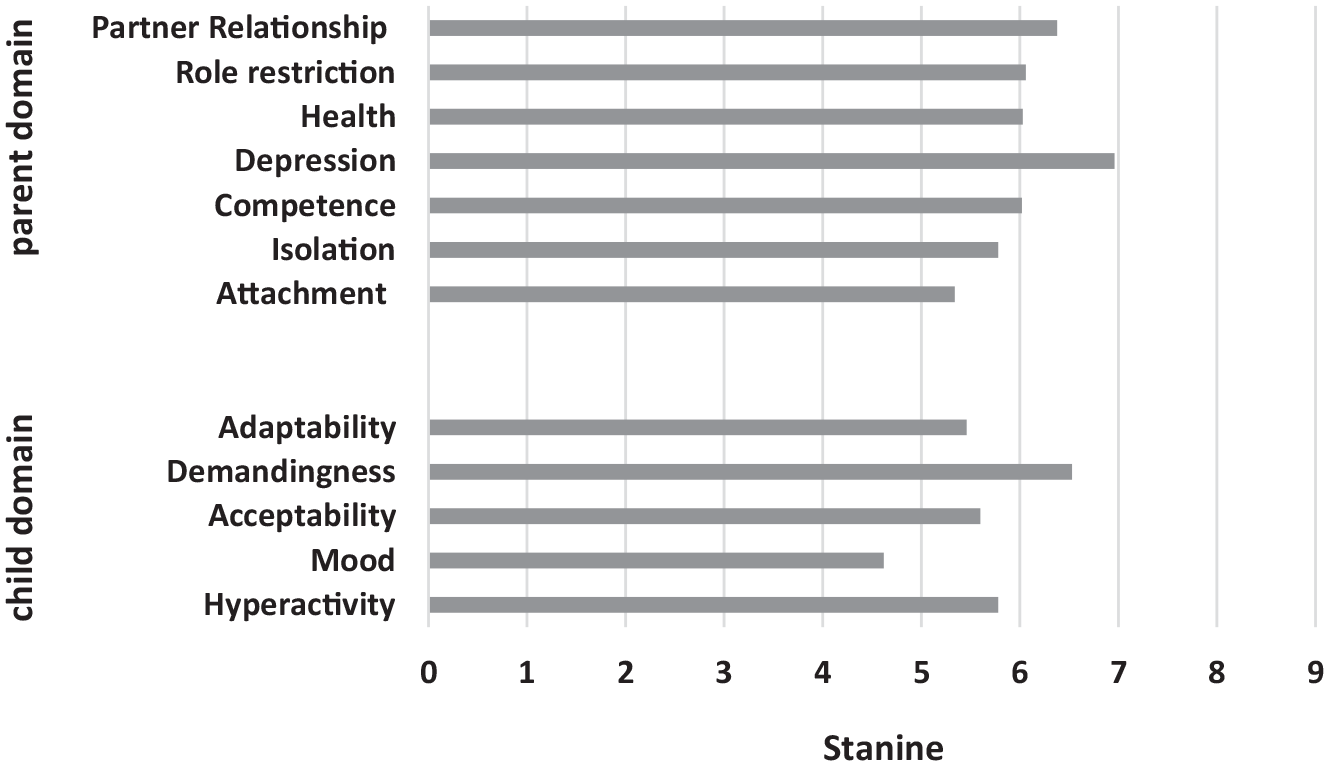
EBI Stanine of the different subscales including all age groups.
Table 3 shows the results of the EBI subscales separately for the three different age groups. As can be seen, Bonferroni-adjusted post-hoc analysis showed that the parents of children aged 12–24 months perceived significantly more stress in the subscales Mood (p = 0.008), Adaptability (p = 0.005), Competence (p = 0.042) and Health (p = 0.037) compared to parents of children aged 7–12 months. Moreover, the parents of children aged 25 to 38 months perceived significantly more stress in the subscales Mood (p = .006), Adaptability (p = .002) and Competence (p = 0.028) compared to parents of children aged 7–12 months.
Age related EBI subscales results.
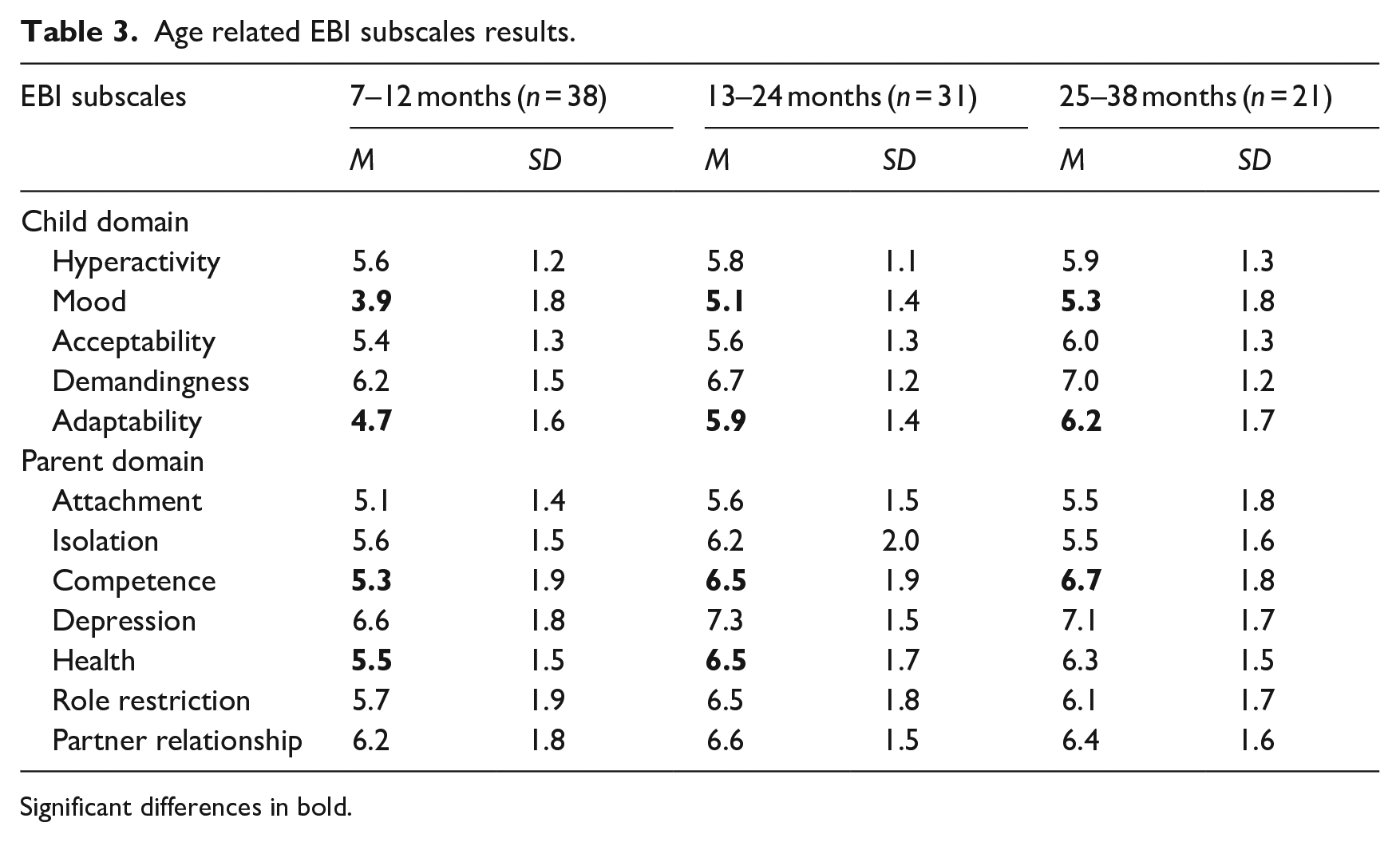
Significant differences in bold.
Thus, the results of the EBI (Tröster, 2010) suggested that parents of toddlers perceived significantly more stress during the Covid-19 pandemic compared to parents of infants.
Social-emotional behavior
An ANOVA with the Bayley-III social emotional scaled score as dependent variable and age (7–12 months, 13–24 months, 25–38 months) as independent variable revealed a significant main effect of the variable age, F(2, 87) = 4.25, p = .017, ηp2 = 0.09. As depicted in Figure 3, Bonferroni-adjusted post-hoc analysis showed that the 25 to 38 old children achieved lower scaled scores than the 13–24 months and the 7–12 months children.
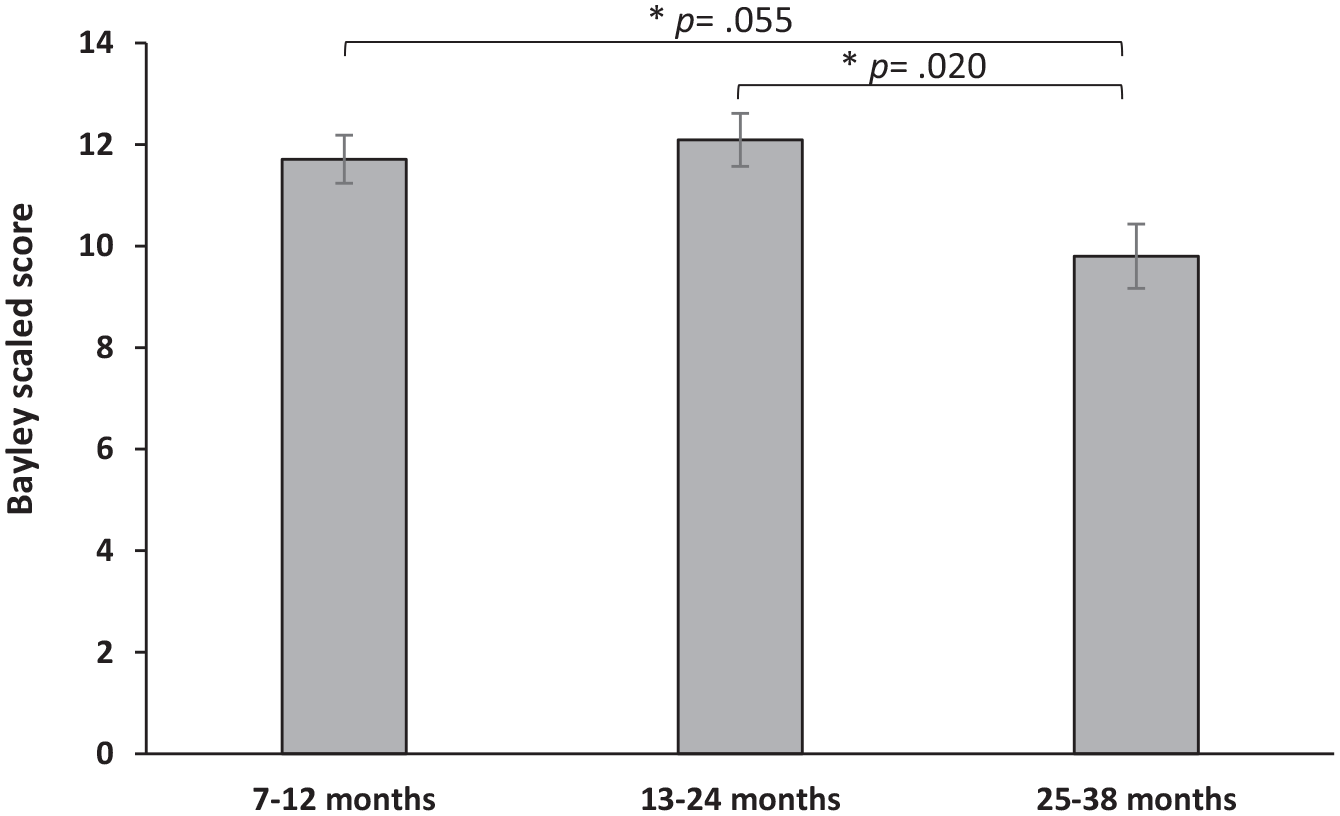
Social-emotional development in 0–3-years-old children measured using the Bayley Scales for social-emotional development.
Correlations
Finally, we calculated Pearson correlations between the results of the EBI (Tröster, 2010) and the Social-Emotional Questionnaire of the Bayley-III (Bayley, 2006). Overall, the correlation between the total EBI stress T-score and the Bayley-III social emotional scaled score was r = −0.14, p = 0.193, between the EBI stress T-score within the child domain and the Bayley-III social emotional scaled score r = −0.31, p = 0.003 and between the EBI stress T-score within the parent domain and the Bayley-III social emotional scaled score r = −0.20, p = 0.065. Thus, high parental stress, especially within the child domain, was associated with lower values of social-emotional development of the children. In the youngest age group, the correlation between the EBI stress T-score within the child domain and the Bayley-III social emotional scaled score was also high and significant, r = −0.36, p = 0.027. We did not find any significant correlations (all ps > .05) in the group of children aged 13–24 months. However, in the oldest age group the correlation between the total EBI stress T-score and the Bayley-III social emotional scaled score was very high and significant, (r = −0.62, p = 0.003), which was also reflected in the corresponding analyses with the EBI stress T-score within the child domain (r = −0.56, p = 0.008) and within the parent domain (r = −0.61, p = 0.003). An overview of the correlations can be found in Table 4. The correlation between the EBI Total T-Score and the Bayley Scaled scores was significantly higher in the group of older toddlers compared to the group of younger toddlers (Fishers z = 2.78, p = 0.003) and the group of infants (Fishers z = 2.37, p = 0.009). Moreover, the correlation between the EBI Stress Score within the child domain and the Bayley Scaled scores was significantly higher in the group of older toddlers compared to the group of younger toddlers (Fishers z = 2.33, p = 0.001). Finally, the correlation between the EBI Stress Score within the Parent domain and the Bayley Scaled scores was significantly higher in the group of older toddlers compared to the group of younger toddlers (Fishers z = 2.81, p = 0.002).
Bivariate correlations between the results of the EBI and the Social-Emotional Questionnaire of the Bayley-III.
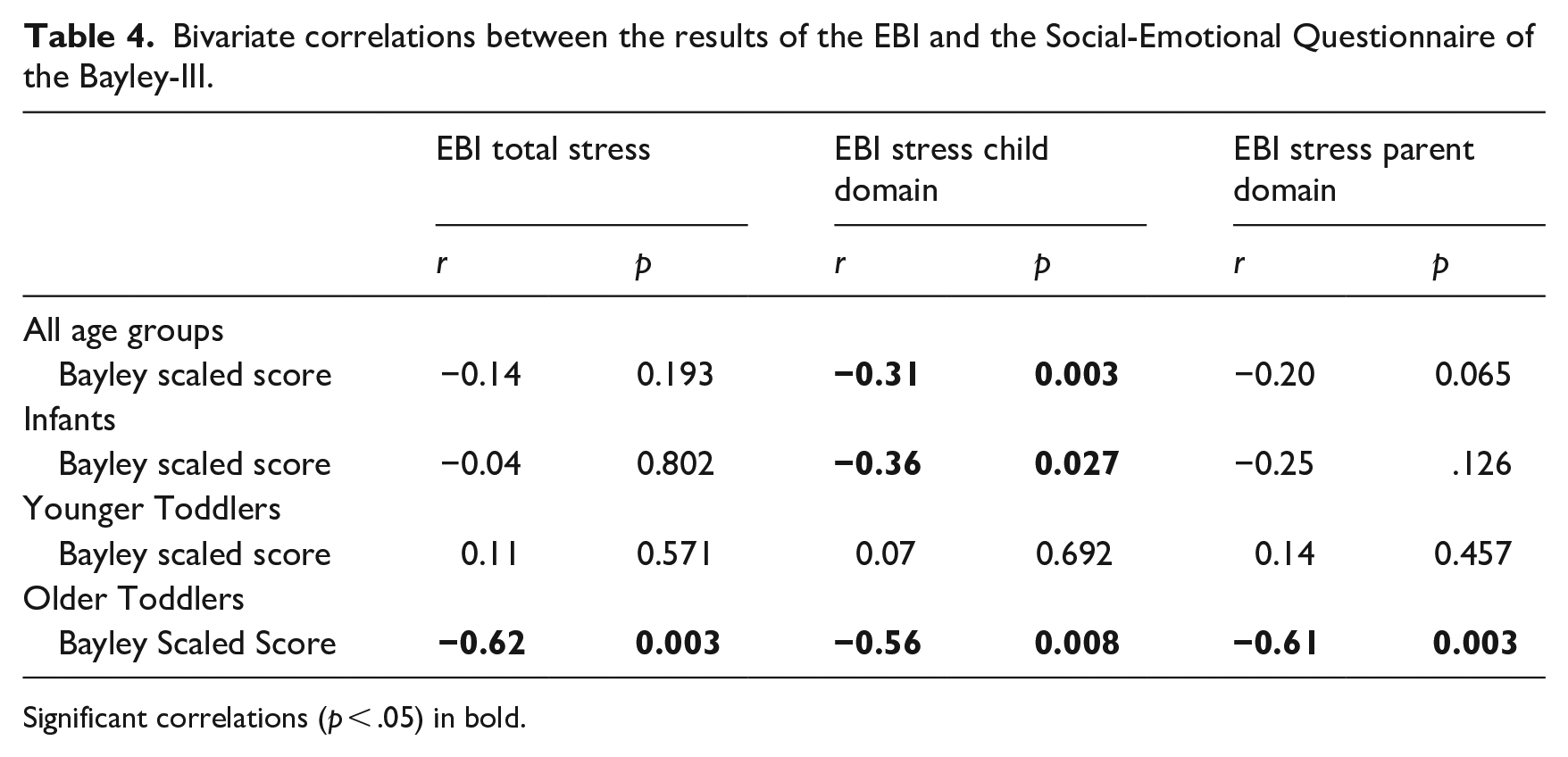
Significant correlations (p < .05) in bold.
Discussion
The current study investigated the impact of the COVID-19 crisis on parental perceived stress and social-emotional behavior of children aged 7–38 months. The survey yielded several important results: Overall, our results indicate that the COVID-19 pandemic left an impact on the behavior and well-being of young children and their parents. During the first lockdown of the COVID-19 pandemic in Germany, parents of toddlers reported higher stress levels compared to norm data as can be seen in the results of the EBI. Stress levels were the lowest for parents of infants (7–12 months), whereas stress levels for parents of younger (13–24 months) and older toddlers (25–38 months) were similar. Hereby, parents perceived stress was strongly related to the subscales depression, partner relationship and demandingness across all age groups. Regarding the social-emotional behavior of the children, the 25- to 38-month-olds showed lower scores in the Social-Emotional Questionnaire of the Bayley-III compared to both the 13- to 24-month-olds as well as the 7- to 12-month-olds. Lastly, the correlations between the EBI and the Social-Emotional Questionnaire of the Bayley-III revealed that higher parental stress in the child domain was associated with lower values of social emotional development across all age groups. However, these results seem to be driven by the youngest and oldest age group.
Parents, especially when they cared for a child between 13 and 38 months, reported higher stress levels compared to norms. This finding is in line with findings of a broad online survey showing that the values for anxiety, depression and stress in the general German population were 2–7 times higher than in norm samples during the COVID-19 pandemic (Bäuerle et al., 2020). Our questionnaires were mostly filled in by mothers, which might be one reason for increased perceived stress levels. Females and mothers show lower levels of life satisfaction and higher rates of depressive symptoms and anxiety during the COVID-19 pandemic. Thus, females and mothers seem to suffer more from the consequences of the pandemic compared to fathers or the general public (Cameron et al., 2020; Huebener et al., 2020, 2021; Möhring et al., 2021). This might be connected to the fact that mothers are usually responsible for care work (Schober, 2014). Similarly, during the COVID-19 pandemic, mothers are responsible for care work arrangements the same amount as before or even more than before the pandemic (Czymara et al., 2021; Huebener et al., 2020; Zoch et al., 2021).
Furthermore, parents’ perceived stress seems to be strongly related to the subscales depression, partner relationship and demandingness of the EBI. Due to the lockdown, the daily routines of many families were disturbed for several months and parents were faced with combining childcare and work. Moreover, parents could not rely on their social support system because of contact restrictions. Particularly the fact that day care facilities as well as schools were closed for an undefined time might have put more pressure on parents. These stressors might have led to feelings of depression, which are a commonly described effect of the COVID-19 pandemic (Islam et al., 2020; Rajkumar, 2020; Taylor et al., 2020a, 2020b). These might resemble a psychological reaction to the threat posed by COVID-19. Finding ways of organizing a new way of family life as well as having limited options for retreat and activities might put strains on parents’ relationship to each other as well as on the parent-child-relationship. Additionally, we found that parents’ perceived stress increased with the age of the children. In our study, parents of toddlers reported higher levels of stress compared to parents of infants. With newborns or infants, usually one parent is on parental leave and takes care of the child. Therefore, it might be that parents of younger children face less problems combining work and family life. However, older children usually go to daycare facilities while both of their parents are at work. Consequently, parents of older children need to come up with solutions to be able to work and care for their children at the same time. Shifting working times to the weekend or to early mornings and late nights might put further strains on parents and negatively influence their well-being and mental health as well as the relationship between parents. This in turn can have a negative influence on child behavior.
Regarding the social-emotional development of children, our results indicate that older toddlers show less social-emotional, age-appropriate behavior compared to younger toddlers and infants. One reason for this finding might be that with increasing age, interactions with peers such as pretend play become more and more important for the development of the social-emotional behavior. However, during the COVID-19-pandemic social distancing measures lead to closures of day care facilities, where children meet and play with other children, but also prohibited meeting other people privately. Given the fact that the majority of children in our sample had no siblings (or only one sibling), especially the older children might have suffered more from reduced interactions with peers.
Lastly, we also found a negative correlation between parental perceived stress and social-emotional behavior. Hereby, the correlations were the strongest for the older toddlers across all domains of the EBI, whereas across all age groups parental stress in the child domain was related to lower values of social emotional behavior. In general, parental mental health problems are associated with problems in child development, especially problem behavior of the child and a higher risk for the development of psychopathology in the long-term (e.g. Anthony et al., 2005; Beck, 1999; Crnic et al., 2005; Neece et al., 2012; Weissman et al., 2005). With our questionnaires, we assessed the short-term reaction of parents and children to the outbreak of the COVID-19 pandemic and related restrictions. Our results might reflect the struggle of parents to combine work and family life shortly after the onset of the pandemic, but do not allow assumptions about the long-term effects of high levels of parental stress on children’s social emotional behavior.
Our results are not entirely unexpected, given the grave threat posed by this pandemic, and the far-reaching nature of the lockdown measures. However, the long-term implications of our pilot findings are unclear. Will there be long-term consequences of this pandemic for child development, potentially resulting in mental health problems? Or, given the high degree of plasticity early in development, could all aspects of psychological functioning return to “baseline” or “normal” after some time? Perhaps they might reach a “new normal” that is yet unknown? What are the long-term consequences for the development of systems such as memory and emotion processing? Uncertainty about the potential long-term developmental implications of this pandemic could be a major source of concern and insecurity not only for parents and clinicians, but also for many educators and other professionals working with infants and young children.
Limitations and future directions
This study has several limitations. The major limitation is that we were, due to the sudden outbreak of the crisis, unable to assess parental stress and social-emotional development before the outbreak. However, we used well-established questionnaires and compared our data with norm data, which shows that reported stress levels are higher compared to norms. Moreover, our sample size was relatively small, especially in the group of parents with children aged 25–38 months. Moreover, our survey was mainly filled out by mothers, leaven it open, whether fathers also experienced higher levels of stress during the COVID-19-pandemic.
In addition, the majority of our sample consisted of families with a presumably high socio-economic status (SES) as most parents had an university degree and were employed. Therefore, our sample is not representative for the general public. Nonetheless, even families with high SES and potentially fewer financial struggles show high rates of perceived stress due to COVID-19. Possibly, families with lower SES and financial hardship might show even higher rates of perceived stress. The persistence of external and internal stressors related to COVID-19 might have long-term damaging impacts on parents’ mental health as well as on child development. We cannot make assumptions about the long-term consequences of experiencing the COVID-19 pandemic due to the cross-sectional design of our study. Also note that reported values for perceived stress were high, but in most cases still at the upper end of the normal range. Similarly, even though older toddlers’ scores for social-emotional behavior were lower compared to the other age groups, they were also still in the normal range.
Still, our results stress the notion of investigating the impact of COVID-19 on family life as well as parental mental health and child development. However, it should be kept in mind that results such as ours may irritate or even put more strains on parents as the pandemic situation as such can’t be changed by individuals. This could lead to feelings of helplessness and worries about their children’s development. Nonetheless, identifying potential stressors may provide insight into the impact of COVID-19 and lead to the development of adaptive coping strategies for parents for stressful situations. To mitigate the consequences of the COVID-19 pandemic and in this case, provide help for families struggling, it is important to share results with the general public and offer parents help to cope with stress. This can also lead to parents feeling less alone with their problems.
Our study as well as other studies illustrate that COVID-19 not only has a footprint on physical health, but also on mental health (Bäuerle et al., 2020; Brown et al., 2020; Islam et al., 2020). Parents persistently experiencing high rates of stress puts children on danger to develop psychopathology themselves. Our aim was to capture the short-term effects of parents’ and children to the COVID-19-pandemic shortly after the onset of the lockdown. Consequently, future research should investigate long-term pandemic consequences as well as protective factors, for example adaptive coping strategies, that may mitigate the impact of COVID-19 on parental stress and social-emotional child development.
Conclusion
Our findings provide important data on parental perceived stress and social-emotional child development during the COVID-19 pandemic. More precisely, this study shows that parents of toddlers were more stressed during the Covid-19-pandemic than parents of infants. Moreover, it seems that parental stress may be negatively related to social-emotional child development.
Footnotes
Acknowledgements
We wish to give special thanks to the parents and children who participated in this study. This work was supported by the Hessisches Ministerium für Wissenschaft und Kunst (HMWK; project “The Adaptive Mind”).
Availability of data and materials
The datasets used and analyzed during the study are available on reasonable request to the corresponding author.
Declaration of Conflicting Interests
The author(s) declared no potential conflicts of interest with respect to the research, authorship, and/or publication of this article.
Funding
The author(s) received no financial support for the research, authorship, and/or publication of this article.
