



Abstract
Previous research has widely recognized the importance of network diversity for entrepreneurial success. In this article, we look at the role of institutional intermediaries in this context, which provide another way to embed new ventures in their local environment. We propose two ways entrepreneurs engage with multiple entities in their localities—(a) by developing personal networks that connect with different actors and (b) by affiliating with institutional intermediaries—and examine how the two ways interplay to influence new venture performance. A longitudinal survey of 165 entrepreneurs in China found that the diversity of entrepreneurs’ personal networks is positively related to new venture performance among those affiliated with public incubators, but not among those affiliated with private incubators. While private incubators can substitute diverse networks, public incubators complement diverse personal networks to improve new venture performance. The study makes new theoretical contributions to the literature on entrepreneurial networks and institutional intermediaries and provides implications for navigating entrepreneurial ecosystems.
Keywords
Introduction
Social networks are a critical channel for entrepreneurs to access resources and knowledge from their local environment (Aldrich and Kim, 2007; Ostgaard and Birley, 1994; Stuart and Sorenson, 2003). All business and social activities are embedded in local institutions, networks, cultural traditions, as well as economic and political landscapes (Polanyi, 2001), which situate actors’ “attempts at purposive action [. . .] in concrete, ongoing systems of social relations” (Granovetter, 1985: 487). Through their social networks, entrepreneurs access financial investments (Shane and Cable, 2002; Sorenson and Stuart Toby, 2001), technological knowledge (Yli-Renko et al., 2001), and suppliers and customers (Greve and Salaff, 2003; Hoang and Antoncic, 2003; Spigel, 2017).
Previous research on entrepreneurial networks has widely established the importance of diverse networks in facilitating entrepreneurial success (Hoang and Yi, 2015). For instance, social network theory suggests that connecting with people who are disconnected from each other—bridging structural holes—enables actors to access non-redundant information and resources (Burt, 1992) and enhance new venture success (Burt, 2018). Furthermore, network diversity in terms of demographics and industry is positively associated with new venture performance (Baum et al., 2000; Rauch et al., 2016; Stam et al., 2014).
At the same time, the effective development of entrepreneurial networks requires consideration of the contingencies inherent in new venture contexts. For instance, previous research suggests that the effect of diverse networks varies with institutional environment, industry characteristics, and entrepreneur experience (Bastian and Zali, 2016; Batjargal et al., 2013; Hernández-Carrión et al., 2017; Kraft and Bausch, 2018; Vasudeva et al., 2013; Wang et al., 2019). Understanding how new ventures can smartly develop their social networks to benefit from the local environment is thus crucial to enhance new venture performance.
In this article, we examine how entrepreneurs’ personal networks interact with the institutional intermediaries with which their ventures are associated. Institutional intermediaries are agents that link two or more parties to bring about specific activities, offering novel means of accessing diverse resources within the environment, particularly in emerging economies characterized by institutional voids (Armanios et al., 2017; Dutt et al., 2016). Given their similar functions, we examine how institutional intermediaries moderate the impact of personal networks and whether these two mechanisms for embedding new ventures in their local environment substitute for or complement each other.
Empirically, our focus is on an important form of institutional intermediaries in the entrepreneurial setting: entrepreneurial support organizations (ESOs), that is, “organizations explicitly founded for the purposes of catalyzing entrepreneurial activity and providing entrepreneurs with support” (Bergman and McMullen, 2022: 689). The ESOs help new ventures access resources (Armanios et al., 2017) and expand networks (Busch and Barkema, 2022), particularly in emerging economies (Dutt et al., 2016). We thus conduct a longitudinal survey in an entrepreneurial ecosystem in China, which provides heterogeneity in ESO types, featuring not only private but also public ESOs (Armanios et al., 2017). We draw on this setting to study how the diversity of entrepreneurs’ social networks interacts with the type of ESO associated with their ventures to influence new venture performance.
In doing so, we make three theoretical contributions. First, by examining how institutional intermediaries moderate the impact of network diversity, we contribute to theorizing on entrepreneurial networks (Burt, 2018; Hoang and Antoncic, 2003; Kim and Aldrich, 2005) by establishing a new boundary condition for the widely accepted effect of network diversity. We suggest that institutional intermediaries provide an alternative way for entrepreneurs to engage in the local environment. This also holds implications for social network theory, which has mainly emphasized the importance of becoming the hub in social networks, through bridging structural holes (Burt, 1992), occupying central positions (Ibarra, 1993), and developing weak but diverse ties (Granovetter, 1973; Rauch et al., 2016). However, previous research has paid less attention to the role of affiliation with a hub (cf. Aarstad et al., 2010), especially with institutions that serve as hubs (Kwon et al., 2013), in moderating network effects (Hallen et al., 2020b). 1 This article explores institutional intermediaries that connect new ventures to their localities and how they may serve as substitutes for social networks.
Second, we contribute to the institutional intermediary literature by examining how different types of ESOs may play distinct roles in embedding new ventures within their environments. Previous research has focused on the main effects of ESOs by comparing the performance of incubated and non-incubated ventures (Assenova, 2020; Hallen et al., 2020a; Yu, 2020), treating ESOs as an umbrella concept and ignoring their distinctive types (Aernoudt, 2004; Barbero et al., 2012). In this article, we argue that due to the different focuses and expertise of different types of ESOs, their roles in connecting new ventures to the local environment may also differ. By exploring the moderating effects of institutional intermediaries in the relationship between networks and venture performance, we also expand their explanatory power beyond the main effects.
Finally, this article also has implications for entrepreneurial ecosystem literature (Stam, 2015) by theorizing and providing a measure of its micro-foundations. This literature has mainly focused on the macro level and investigated how ecosystem characteristics shape entrepreneurial outcomes at the regional level (Leendertse et al., 2022; Stam and van de Ven, 2021; Wurth et al., 2022). In contrast, it seldom investigates the micro-foundation of how entrepreneurs leverage entrepreneurial ecosystems to enhance new venture performance (Roundy and Lyons, 2023; Spigel, 2018). We integrate the structure of entrepreneurial ecosystems to propose a concept of ecosystem-based network diversity—defined as the number of different ecosystem elements represented in one’s personal networks—and further investigate how it interacts with other elements within the ecosystem to influence new venture performance, showing the ecosystem’s interactive nature at the micro level.
Theory and hypotheses
New ventures are situated within the local environment, with their surrounding ecosystems providing the primary information and resources needed to develop new businesses (Spigel and Harrison, 2018). Entrepreneurs cannot obtain resources from an entrepreneurial ecosystem simply by locating there (Boschma and ter Wal, 2007); instead, they need to actively seek entrepreneurial knowledge and engage with various actors in the entrepreneurial ecosystem to access diverse resources (Acs et al., 2017). Personal networks have played an essential role in achieving these objectives (Dubini and Aldrich, 1991). Social network theory emphasizes the importance of filling structural holes (connecting with people who are disconnected from one another), assuming that people who are connected share similar information and resources (Burt, 1992). However, later research emphasized considering the diversity of contacts independent of and in conjunction with their structural connections (Ter Wal et al., 2016). Hence, network diversity in terms of demographic backgrounds (Lin et al., 2001), alliance partner types (Baum et al., 2000), and industries (e.g. Batjargal, 2003) has been examined and shown to be more strongly associated with new venture performance than structural holes (Stam et al., 2014). In comparison, less attention has been paid to the local context to which the contact belongs.
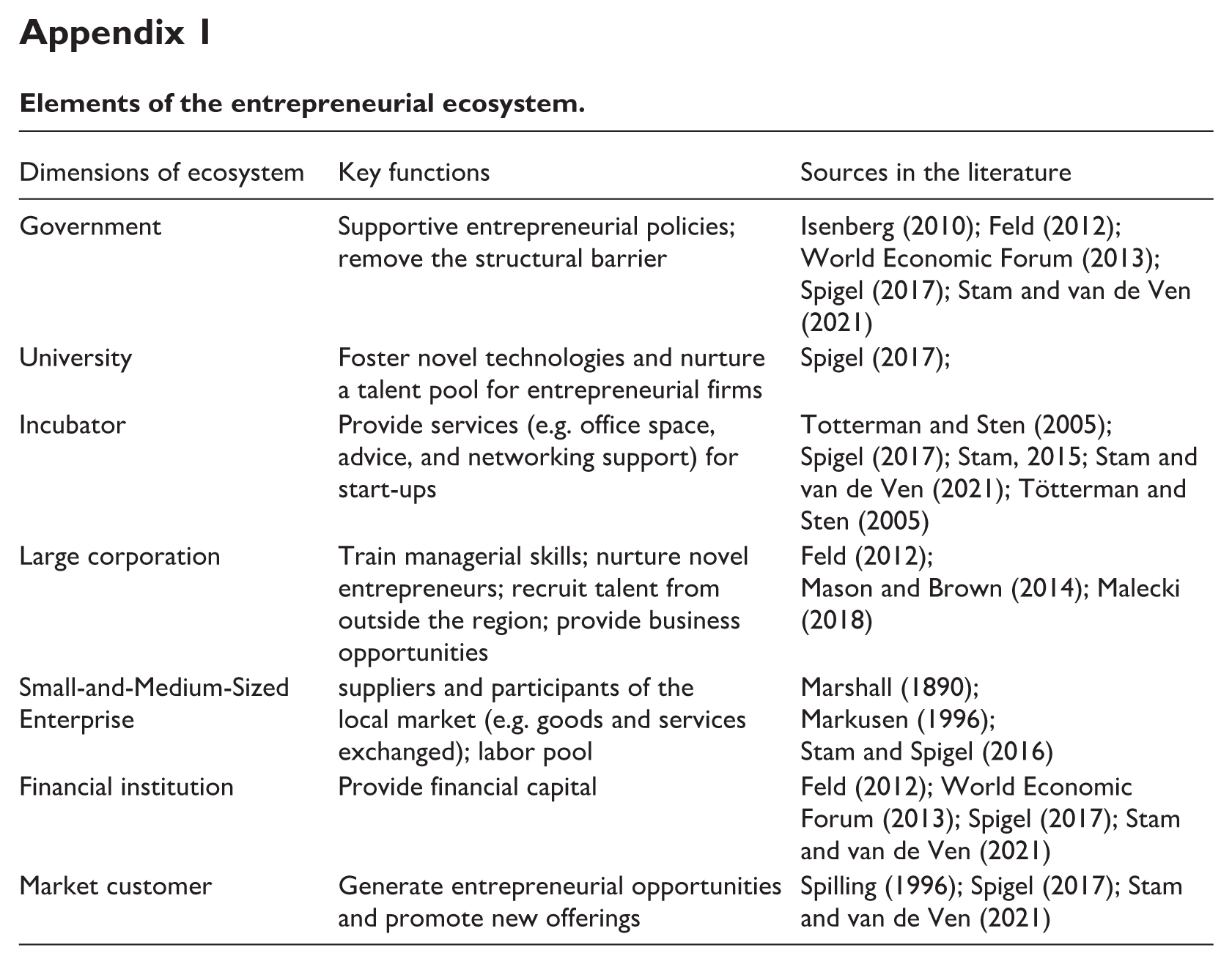
In this article, we build on entrepreneurial ecosystem literature to capture the local context in which one’s contacts are embedded. This work has identified various actors crucial for entrepreneurial success (Stam and van de Ven, 2021), as summarized in Appendix 1. The seven actors provide distinct resources and knowledge for new ventures (Feld, 2012), including government (providing policy resources) (Isenberg, 2010), universities (providing human resources) (Spigel, 2017), financial institutions (providing financial resources) (Stam and van de Ven, 2021), large corporations (the source of know-how and talent) (Brown and Mason, 2017; Malecki, 2018; Stam and van de Ven, 2021), small-and-medium-sized enterprises (SMEs) (as potential suppliers, cooperation partners, or competitors) (Markusen, 1996), customers (Stam, 2015), and incubators and support organizations (as intermediaries of services for new ventures) (Stam, 2015; Totterman and Sten, 2005). Accordingly, we define network diversity as the extent to which an actor’s personal network covers a variety of entrepreneurial ecosystem actors (see Figure 1). For instance, if an entrepreneur has five contacts belonging to five elements (e.g. government, university, incubator, large corporation, market customers), this entrepreneur has higher network diversity than those whose five contacts all come from one element (e.g. government).
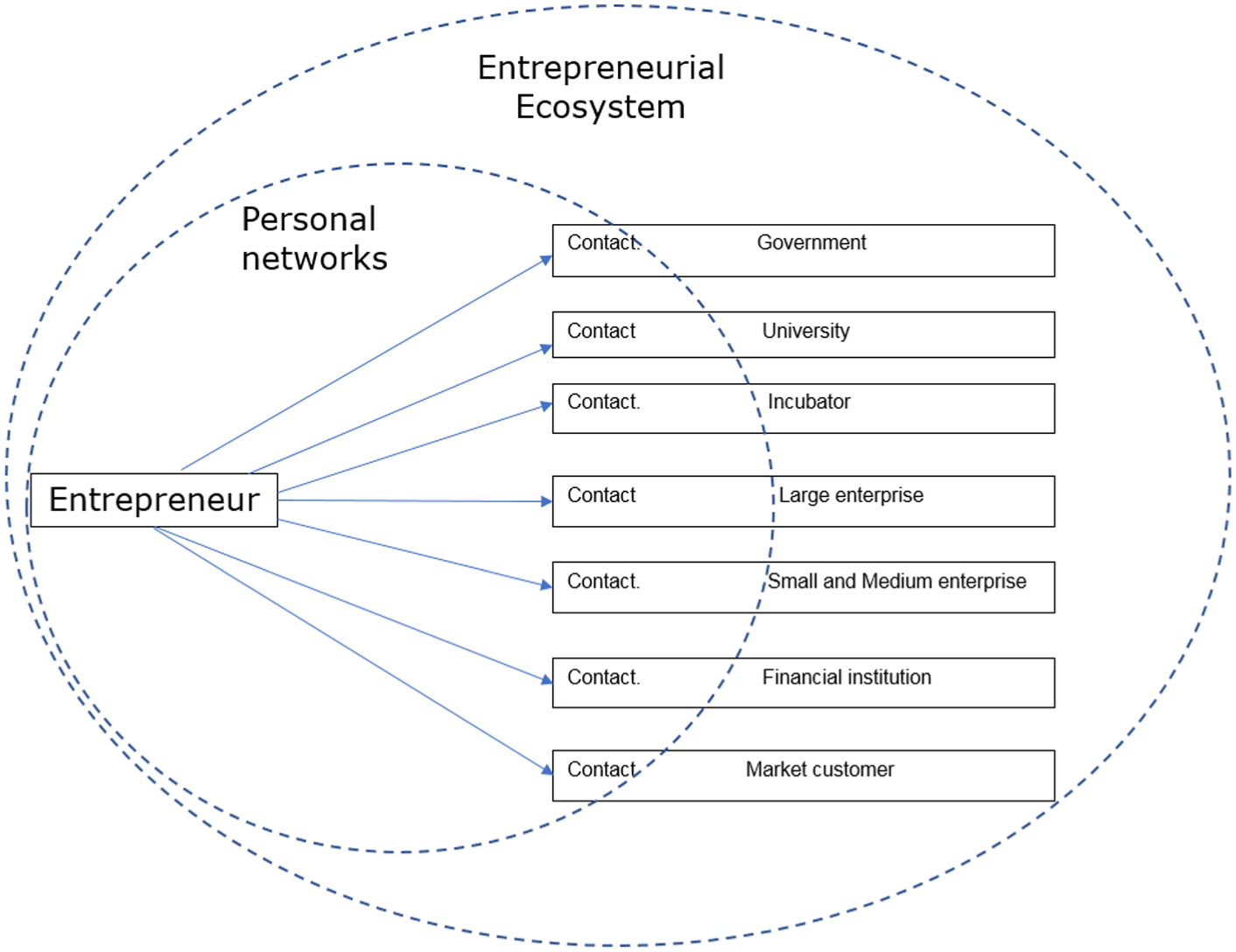
Network diversity.
Network diversity and new venture performance
This ecosystem-based network diversity enhances new venture performance by providing them with access to entrepreneurial knowledge and resources distributed across the local ecosystem.
First, diverse networks facilitate access to entrepreneurial knowledge and the development of business ideas. Since new ventures have not fully established a business model, entrepreneurs are primarily in an exploratory learning stage, which relies heavily on observation and trial-and-error (Ravasi and Turati, 2005). A unique knowledge essential to entrepreneurs is understanding the new venture creation process, including opportunity identification, business planning, and accessing investment (Spigel and Harrison, 2018). These firm-building capabilities and managerial skills have been found crucial for the takeoff of new economic clusters (Bresnahan et al., 2001). Such knowledge is not confined to a particular industry but is applicable to new ventures in different industries (Spigel, 2022). Entrepreneurial knowledge is difficult to codify and must be gleaned through deep immersion in the local business community and close interaction with various actors (Khurana and Dutta, 2021; Spigel and Harrison, 2018; Storper and Venables, 2004). Connections with different actors in the entrepreneurial ecosystem expose entrepreneurs to various aspects of venture creation and help them gain entrepreneurial knowledge.
In addition, diverse networks enable entrepreneurs to efficiently access information and resources within an entrepreneurial ecosystem. Having a contact in each element of the ecosystem can efficiently connect entrepreneurs with other resource holders in that sector (Aldrich and Kim, 2007; Baum et al., 2000), generating an efficiency advantage. Networking is an effortful behavior that consumes cognitive attention and time resources (Vissa, 2012). Since entrepreneurs are constrained by limited resources that must be allocated across multiple activities (Ravasi and Turati, 2005), networking efficiency becomes essential (Hallen and Eisenhardt, 2012). Compared to concentrating contacts within a few sectors, spreading the same number across a wide range of sectors provides more non-redundant information and diverse resources, which enhance the survival and development of new ventures (Burt, 2018). Therefore, ecosystem-based network diversity is expected to positively impact new venture performance.
The moderating role of institutional intermediaries
Beyond constructing diverse personal networks, we suggest another way to embed new ventures in the entrepreneurial ecosystem—through institutional intermediaries. Institutional intermediaries such as incubators and support organizations are critical elements of entrepreneurial ecosystems (Goswami et al., 2018; Mian, 1997; van Rijnsoever, 2020). Through training, mentorship, and networking activities, institutional intermediaries facilitate the exchange and sharing of entrepreneurial knowledge (Hallen et al., 2020a; Scillitoe and Chakrabarti, 2010). In addition, institutional intermediaries also serve as a hub in the entrepreneurial ecosystem, connecting new ventures to various resource holders in the ecosystem (Goswami et al., 2018; van Rijnsoever, 2020). Thus, the two functions of diverse networks can both be fulfilled by institutional intermediaries such as incubators. In this article, we explore how the two mechanisms underlying the effect of network diversity may be substituted or supplemented by different types of institutional intermediaries, which have different focuses and expertise (Aernoudt, 2004). An important determinant of the orientation and function of institutional intermediaries is their sponsorship or ownership type (Dutt et al., 2016; von Zedtwitz and Grimaldi, 2006), so this article will focus on the differences between public and private incubators.
The substitutive effect of private incubators
First, we argue that the role of personal networks in accessing entrepreneurial knowledge may vary across types of institutional intermediaries, given their differing focuses. Specifically, private incubators focus on nurturing and developing the business capability of their incubated ventures by providing professional training and consulting services (Grimaldi and Grandi, 2005; Hallen et al., 2020a; van Rijnsoever, 2020). Through various program designs, private accelerators also provide mentors to guide new ventures through the market validation process (Chen and Zhang, 2024; Cohen et al., 2018). In contrast, public support organizations, especially government incubators, focus more on the public agenda, such as regional development and community inclusion (Frenkel et al., 2008). This is especially the case in emerging economies, where government incubators play a central role in developing market infrastructure and providing public services to the community, thereby reducing the costs of business creation and fostering regional economic development (Armanios et al., 2017; Dutt et al., 2016). Due to their public agenda, government incubators focus less on providing business services, such as training and finance, to their associated ventures (Dutt et al., 2016).
Second, public incubators have less capability to provide entrepreneurial knowledge (Tang et al., 2014), so the role of diverse networks in providing such knowledge is particularly important for the affiliated new ventures. For instance, the managers of government incubators in China are usually former state officials appointed by the local government, trained and socialized in the Chinese party and government bureaucracies, and lacking the human capital, knowledge, or experience to successfully manage new commercial ventures (Chandra and Fealey, 2009; Hong et al., 2017). In contrast, private incubators are often managed by seasoned businesspeople and are better equipped to provide entrepreneurial knowledge through various mentoring and advising programs, substituting for the role of personal networks in accessing this knowledge.
Third, different types of incubators differ in the resources they provide and the incentives to develop each incubated venture. Private incubators play an important intermediary role in connecting new ventures to the business community, especially financial institutions (e.g. angel investors, crowdfunding, and venture capitalists) (van Rijnsoever, 2020; Yu, 2020). Furthermore, since private incubators are more likely to invest in incubated ventures, they also have stronger incentives to help them develop financially (Baum and Silverman, 2004; Dutt et al., 2016). Thus, we suggest that private incubators can substitute for diverse networks in accessing business resources, thereby attenuating the effect of diverse networks on new ventures within them. In contrast, public institutions are poorly connected to the business sector of the ecosystem, hindering the matching of new ventures with resource holders (Clarysse et al., 2014). Due to their focus on public welfare and market development, the managers of public incubators may lack a strong incentive to improve the financial performance of each associated venture (Ahmad and Thornberry, 2018). Therefore, it is especially important for new ventures in these incubators to rely on their diverse networks to access business resources, thereby strengthening the effect of network diversity in public incubators relative to private incubators.
The complementary effect of public incubators
Although public incubators often lack entrepreneurial knowledge and business resources to effectively incubate their affiliated ventures, they provide public resources and functions that can potentially complement and amplify the impact of diverse networks. State sponsorship of incubators provides three kinds of benefits to their associated ventures: legitimacy, access to policy information, and public resources (Armanios et al., 2017; Chandra and Fealey, 2009). However, to exploit and capitalize on these benefits, we argue that new ventures need to be widely connected to other factors. That is, diverse networks within the ecosystem complement the benefits of affiliation with government incubators, as explained in detail below.
First, due to the uncertainty in gauging the capability and business value of new ventures (Zott and Huy, 2007), legitimacy generated by state endorsement is a crucial cultural resource for new ventures. Association with actors with superior reputations is an important way to gain legitimacy and build trust with new stakeholders (Lechner et al., 2006; Martens et al., 2007). Given the high reputation and status enjoyed by state institutions in China (Shou, 2006), association with government incubators makes new ventures appear more legitimate—that is desirable, proper, and appropriate—in the eyes of new resource providers identified through diverse networks. For instance, new customers, potential suppliers, and other business partners may perceive these ventures to be more legitimate and reliable because they are affiliated with government incubators. In addition, potential employees and investors identified through contacts in relevant sectors may perceive the new venture as more dependable due to its endorsement by government incubators. Previous research shows that the legitimacy-enhancing effect of state incubators in China enables the associated new ventures to gain certification and access to public funding (Armanios et al., 2017). Due to this enhanced perception of legitimacy, various resource providers tend to trust the new ventures’ business value and are willing to provide resources, resulting in increased revenue growth for these new ventures.
Furthermore, new ventures that are well-connected in the ecosystem and operating in government incubators will generate additional revenue due to their privileged access to information—that is government policy and regulations, distribution and promotion channels, and other useful information (Chandra and Fealey, 2009). With such access, these entrepreneurs gain earlier insight into policy priorities, changes in product standards and quality requirements, and product/service safety rules and regulations. These informational advantages may result in increased revenues for new ventures operating in government incubators if they are well-connected to other actors, such as small-and-medium enterprises and customers.
Finally, new ventures in government incubators enjoy less-constrained access to government-controlled financial and material resources. The financial resources include government subsidies for sales, access to cheaper bank loans and overdraft facilities, government small-business grants, tax breaks, and introduction and referral to financial institutions such as large state-owned banks and equity firms (Batjargal and Liu, 2004; White et al., 2005). New ventures associated with government incubators are in an advantageous position to access public funding (Colombo and Delmastro, 2002). The Chinese government is also one of the largest customers for many products and services (Geng and Doberstein, 2008). Therefore, new firms operating within government incubators may have privileged access to government procurement. This will boost their revenues if they are well-connected with suppliers who can deliver the products. Overall, ventures that mobilize diverse networks will benefit more from the legitimacy, information, and resources provided by government incubators. This complementary role of public incubators and the substitutive role of private incubators lead to the same hypothesis:
Another type of public incubator—academic incubators (including science, research, or technology parks)—provides scientific knowledge and technological support (Colombo and Delmastro, 2002; Grimaldi and Grandi, 2005). As publicly funded institutions, academic incubators also address institutional failures, such as insufficient intellectual property protection (Narayanan and Shin, 2019). Research institutes (e.g. the Chinese Academies of Sciences and Engineering) and R&D centers dominate China’s new tech zones (Xie and White, 2006). By connecting new ventures with universities and research institutions for innovation collaborations and research infrastructures (e.g. laboratories and equipment) (Sullivan and Marvel, 2011), academic incubators transform R&D findings into novel technologies or new products (Barbero et al., 2012; Colombo and Delmastro, 2002; Mian, 1996). Academic incubators can even help new ventures transcend the local community and help firms access distant knowledge through international collaboration (Qiu et al., 2017). However, since the faculty of academic incubators are more familiar with academic research, they do not have the expertise to develop the financial or managerial skills of new ventures (Dutt et al., 2016; Grimaldi and Grandi, 2001, 2005).
In this article, we suggest that affiliation with academic incubators needs to be complemented by diverse networks to enhance new venture performance. To effectively leverage the knowledge, technology, and human capital provided by academic incubators, new ventures must possess complementary resources to transform this knowledge into competitive advantage (Rothaermel and Thursby, 2005b). For instance, to turn technology and commercial opportunities into revenue, entrepreneurs need to be well-connected to suppliers, customers, and financiers (Hayter, 2016). Therefore, for new ventures located in academic incubators, the diversity of entrepreneurs’ networks will be crucial for new venture performance. Taken together, because the diverse network may be substituted by the experience and services of private incubators and complemented by the benefits of academic incubators, its effect on new venture performance will be stronger in academic incubators:
Method
We conducted this study in China, which provides the variation in the incubator types to test our hypotheses. In particular, the government plays a central role in establishing market institutions in China, and sponsoring incubators and accelerators is an important means of achieving this (Xing et al., 2018). The majority of incubators in China are owned and controlled by the government (Cai et al., 2025). The prevalence of government incubators, along with the presence of academic and private incubators, provides a unique context for examining the effects of incubator type.
We focused on the entrepreneurial ecosystem of Ningbo, a new first-tier city. Ningbo is situated along the southeastern coast, in the center of the Yangtze River Delta, one of China’s most economically developed regions. The population is around six million, and the GDP of Ningbo reached 984.21 billion yuan (about USD$138 billion) in 2017 (ranked 13th in China), with a growth rate of 28.83% over the previous year (Statistics, 2018). Ningbo had 313,056 private enterprises by 2017, with 62,221 new ventures established during that year (Statistics, 2018). Furthermore, by 2017, there were 122 large and 7203 small-and medium-sized industrial enterprises. The manufacturing and service industries account for 52.01% and 44.88% of Ningbo’s total GDP, respectively. Entrepreneurial growth in Ningbo dates back to the Song Dynasty (960–1279). Leveraging its coastal position, Ningbo entrepreneurs established trade connections within China and internationally as early as the 12th century, widely recognized under the name “Ningbo Bang” (gang) (Liu et al., 2015).
Ningbo has about 14 higher education institutions and 27 incubators by 2022. In addition, there are more than 100 maker spaces, specializing in various industries, including IT, new materials, and cultural and creative industries. In addition, the city has 72 financial institutions, which offer approximately 18.88 billion yuan in medium- and long-term business loans. The Ningbo government has historically encouraged the development of local entrepreneurship and has initiated several new policies to nurture the entrepreneurial ecosystem, following the central government’s call for “mass entrepreneurship and innovation” in 2015. Therefore, Ningbo possesses key elements of an entrepreneurial ecosystem and is a suitable site for this study.
Sample and procedure
We sampled early-stage ventures because they are usually resource-strapped and particularly reliant on the resources provided by entrepreneurial ecosystems (Vedula and Fitza, 2019). These ventures are usually associated with ESOs to satisfy various needs. We contacted all ESOs listed on the Ningbo government website (including incubators, industry parks, science parks, and maker spaces) and visited 42 of them to systematically assess new ventures. After the purpose of the research was explained, entrepreneurs who agreed to participate completed the paper questionnaire in their offices. We promised that all collected information would be kept confidential and that only statistical analyses of the entire sample would be conducted and reported.
To qualify for the survey, respondents had to be the company’s owner or majority shareholder and the key decision-maker, such as the CEO. In the first wave, we approached 203 entrepreneurs; 38 did not complete the survey, yielding 165 valid responses for a response rate of 80%. The respondents had an average age of 33 years, and 73% were male. Their firms had an average of 17 employees. The new ventures operated in a variety of industries, including service, IT/software, and biotechnology. The new ventures were widely dispersed among three types of incubators: 51% in government incubators, 10% in academic incubators, and 39% in private incubators, with a distribution comparable to that in China and the Ningbo population (Statistics, 2018; Zhang and Sonobe, 2011). We conducted the survey in two waves, one year apart, to capture both the short-term and long-term effects through cross-sectional and two-wave data separately. Measuring network diversity and new venture performance in both waves also allows us to rule out reverse causality and better examine the causal relationship between predictor and outcome variables. Among the full sample, 101 usable responses were collected in the second wave, with a response rate of 61%. This was comparable to research that employs a similar network method (Vissa and Bhagavatula, 2012) and higher than the average response rate in business and management research (44.7%, median = 40%, mode = 50%) (Mellahi and Harris, 2016). The respondents who participated in Wave 2 did not differ significantly from those who did not on firm age (p = .88), firm size (p = .46), CEO age (p = .97), CEO gender (p = .50), or CEO entrepreneurial experience (p = .86). 2
The questionnaire was developed in English and then translated into Chinese by one author and back-translated to English by another author, following the procedure suggested by previous research (Tyupa, 2011).
Measures
Dependent variables
Following the example of previous research (Gilley and Rasheed, 2000; Lumpkin and Dess, 2001; Tocher et al., 2012), we used subjective evaluation of new venture performance in comparison to similar firms within the same industry to circumvent industry differences in objective performance (Dess et al., 1990; Garg et al., 2003). We asked respondents to compare their revenue growth, return on assets, and overall performance with those of other firms in the same industry (1 = in the lowest range 0%–20%; 2 = in the lower range 20%–40%; 3 = in the middle range 40%–60%; 4 = in the higher range 60%–80%; 5 = in the top range 80%–100%) (Dess and Robinson, 1984; Tocher et al., 2012). Since entrepreneurs are generally reluctant to provide objective performance information, which can lead to severe missing data, we used the revenue growth rate as a robustness check (Batjargal et al., 2013; Baum et al., 2001). Revenue growth rate was calculated based on the revenues reported in the two waves.
Independent variable
To measure network diversity, we used the widely used name-generator procedure (Burt, 1992; Marsden, 1990) to gather network data from entrepreneurs, as this method naturally elicits participants’ memories of business contacts. Specifically, they were asked to recall and provide up to five contacts who had offered them business advice and information over the past 6 months. We have chosen business advice networks because they are the most critical networks for entrepreneurs and overlap with other types of networks, such as business resources networks and social support networks (Aldrich et al., 1987; Batjargal et al., 2013; Birley, 1985; Burt and Burzynska, 2017). We decided to measure up to five contacts, which have been found to be the most efficient number for ego network data employing the same method (Merluzzi and Burt, 2013). Previous research showed that, on average, Chinese respondents generate 4.5 names in network surveys (Burt and Burzynska, 2017). To ensure anonymity, we adopted the method used by Xiao and Tsui (2007), asking respondents to list the family names or acronyms of their contacts. After that, we presented the seven elements of the ecosystem for them to categorize each contact (i.e. government, university, incubator or support organizations, big corporations, SMEs, financial institutions, or market customers).
We adopted Simpson’s Index of Diversity, also called Blau’s (1977) index, to calculate network diversity. The index has been used frequently to measure network diversity (Chen and Gable, 2015; Harrison and Klein, 2007). The formula is listed as follows

According to this index, the seven ecosystem elements were represented by seven categories labeled k (from 1 to 7). Pi represents the proportion of network contacts in the ith category out of the seven categories (i = 1,. . ., k). The minimum value could be zero (D = 0 when Pi = 1, when all network contacts were from one single category), representing the least diverse network. On the other hand, the maximum value could be D = 1−1/k = (k−1)/k when P1 = P2 = . . . Pk = 1/k.
Moderators
Institutional intermediaries were measured as two dummy variables—government incubators and academic incubators—with private incubators serving as the reference category.
Control variables
We controlled for several demographic variables that may be related to new venture performance. We included firm age measured in years, firm size (the total number of employees), the entrepreneur’s gender (0 for male, 1 for female), age (in years), education (1 for middle school or below; 2 for high school; 3 for college; 4 for master’s degrees or above), and entrepreneurial experience (whether they had started a new business before). We also controlled for the industry by including dummy variables for service, IT/software, and biotechnology, with trade as the reference industry.
Results
Table 1 shows the descriptive analyses and correlations of all the variables in the first wave. The mean of network diversity was 0.36, which indicates that the average network diversity in this sample was relatively low (given the range between zero and 0.80 for five elements in this study). Table 2 shows the descriptive analyses and correlations of all the variables in the two-wave data. Our results confirmed that providing five contacts could effectively differentiate entrepreneurs’ personal networks. Specifically, 47.4% of respondents reported five network contacts in the first round of the survey, and 12.7% and 19.7% of respondents reported four and three contacts, respectively, with an average network size of 3.79 (SD = 1.37). In the second round, 56% of respondents reported five network contacts, and 6.7%, and 37.3% of entrepreneurs reported four and three contacts, respectively, with an average network size of 4.19 (SD= .95). Furthermore, the respondents who participated in Wave 2 did not have significant differences from those who did not participate on network diversity, t(174) = 1.23, p = .22, subjective performance, t(182) = .29, p = .77, or revenue growth rate in the previous year, t(105) = −.46, p = .42, indicating that attrition of the sample should not bias the findings. The correlations between incubator type and new venture performance in either wave were non-significant, indicating that the selection of new ventures into different types of incubators was not based on their performance.
Means, standard deviations, and correlations of variables in Wave 1.
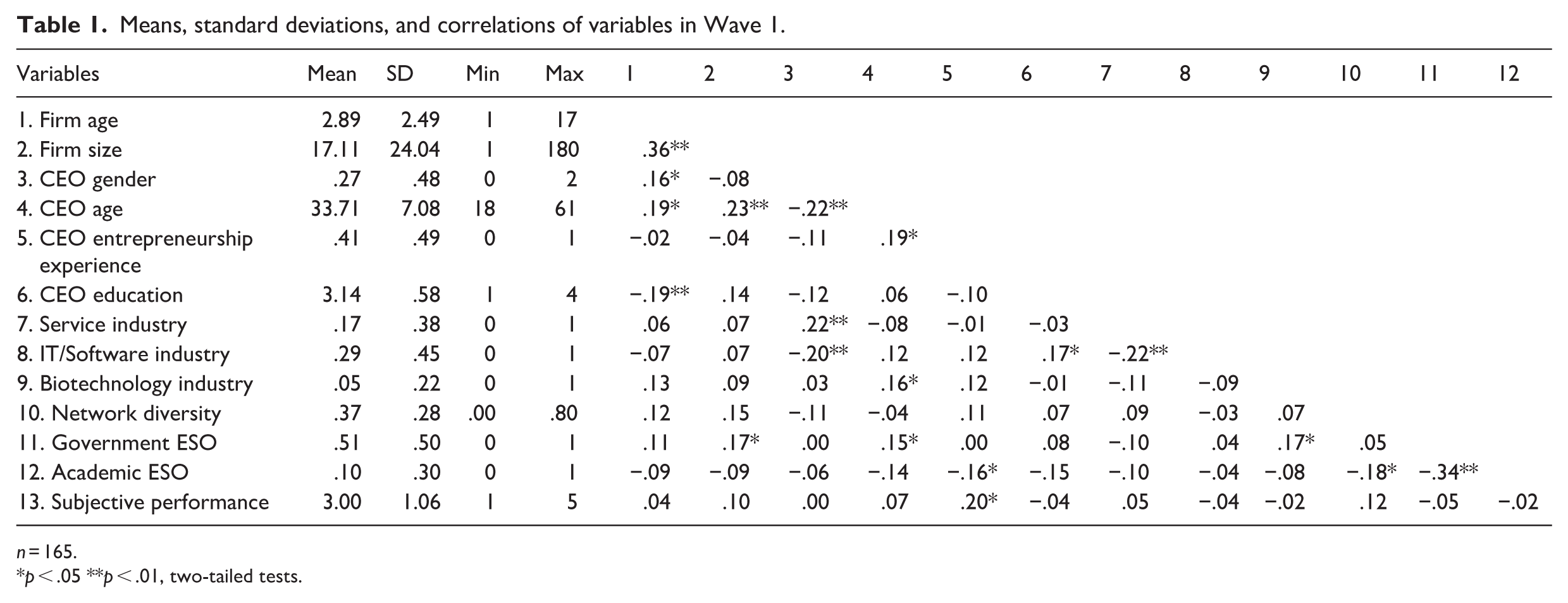
n = 165.
p < .05 **p < .01, two-tailed tests.
Means, standard deviations, and correlations of variables on two-wave data.
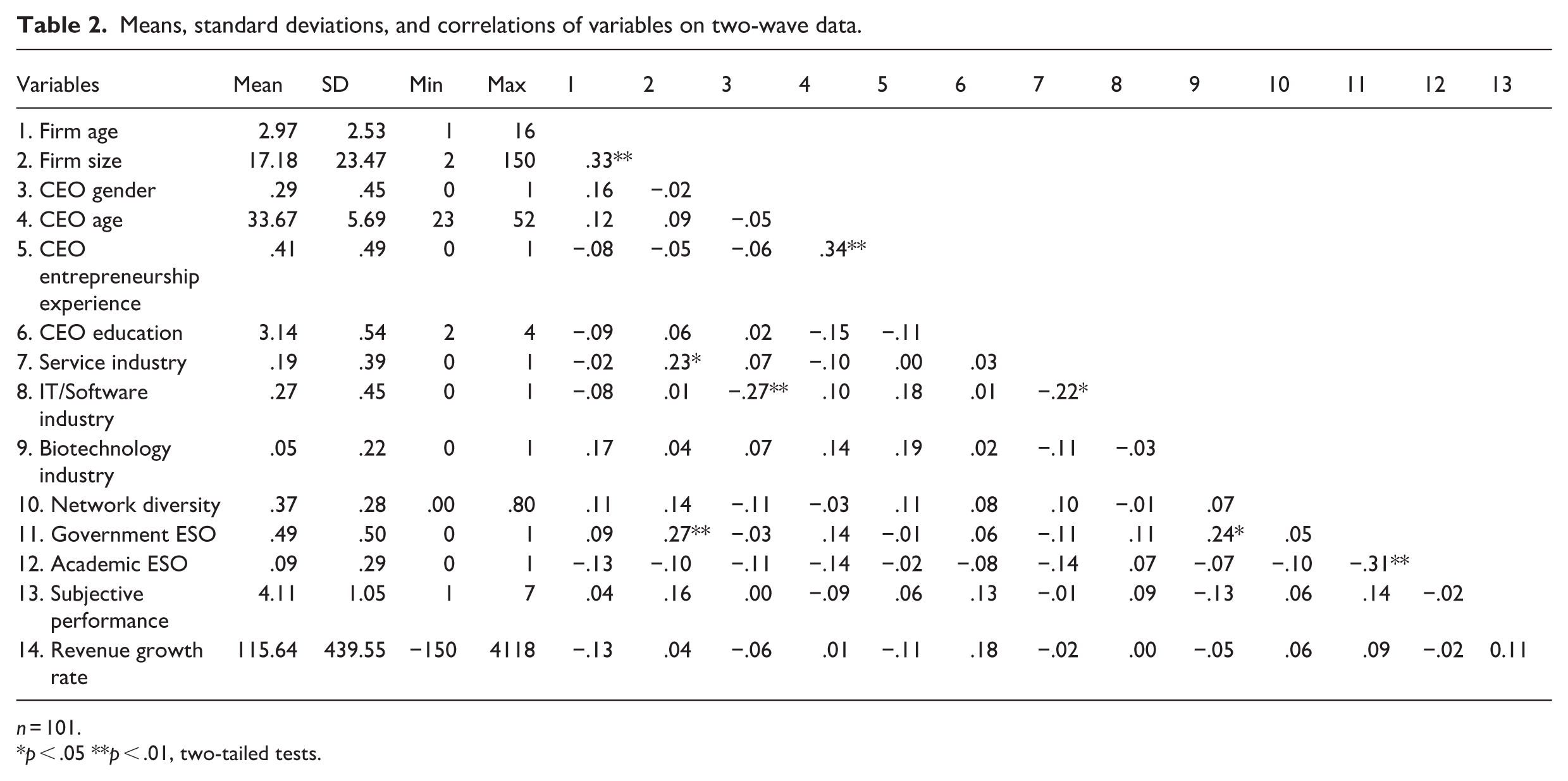
n = 101.
p < .05 **p < .01, two-tailed tests.
To understand how ESOs and new ventures select each other, we interviewed incubator managers from two private incubators, one academic incubator, and one government incubator. Based on the interviews, incubators primarily consider industry matches and the potential growth of the new venture when selecting ventures. Government and private incubators may also consider taxes and rent income. Academic incubators pay attention to the fit between their educational and scientific commercialization goals and the new ventures’ domain. Therefore, the interviews did not reveal systematic differences in venture quality between different types of incubators. We also asked what factors new ventures consider when choosing incubators. The main factors included investment, industry resources, and policy support. When asked whether different kinds of incubators vary in the resources they offer, the primary difference mentioned was that government incubators may provide more rent support, whereas rent may be an important revenue source for private incubators. Therefore, the matching between new ventures and incubators does not seem to create an endogeneity issue for the study, as none of the interviewees mentioned considering networks. This is consistent with previous research on how entrepreneurs select incubators, which was not based on personal networks (van Weele et al., 2020). Thus, the potential results should not be driven by endogeneity, if any, especially given that this article mainly focuses on the interaction effect between social networks and incubator types rather than their main effects.
First, we tested whether ESOs had any effect on the performance of new ventures. Analysis of variance (ANOVA) tests indicate that new ventures from different ESOs did not differ significantly in network diversity (p = .41) or performance in the first wave (p = .53). Nevertheless, we employed robust standard errors in generalized estimating equations to control for the nested nature of the data. Since the subjective performance items achieved high reliability (α = .92 in the first wave and α = .87 in the second wave), we took the average of Likert-type-scale items to produce interval data, allowing for analysis with linear models (Carifio and Perla, 2007). The results are shown in Table 3. The relationship between network diversity and subjective performance was non-significant (p = .18). The interaction effect of network diversity and government ESOs was marginally significant (p = .05). Simple slope analysis showed that network diversity had a significant and positive effect on subjective performance in government ESOs (b = 1.24, t = 2.34, p = .02), but the effect was non-significant in private ESOs (b = −.09, t = −.19, p = .85), supporting Hypothesis 1. 3 The pattern is shown in Figure 2. However, the interaction effect of network diversity and academic ESOs was non-significant (p = .70), so Hypothesis 2 was not supported.
Generalized estimating equations of subjective performance in Wave 1.
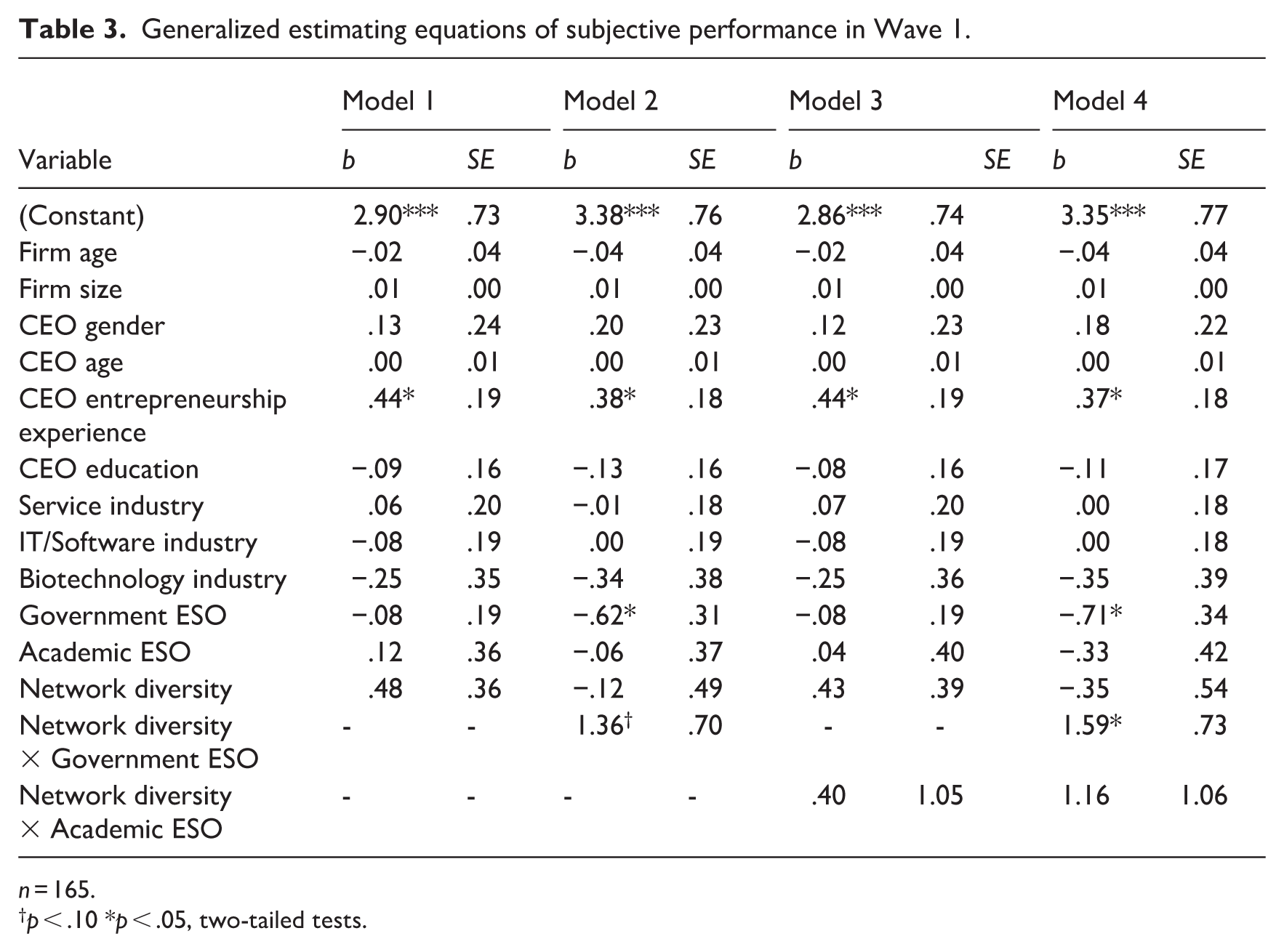
n = 165.
p < .10 *p < .05, two-tailed tests.
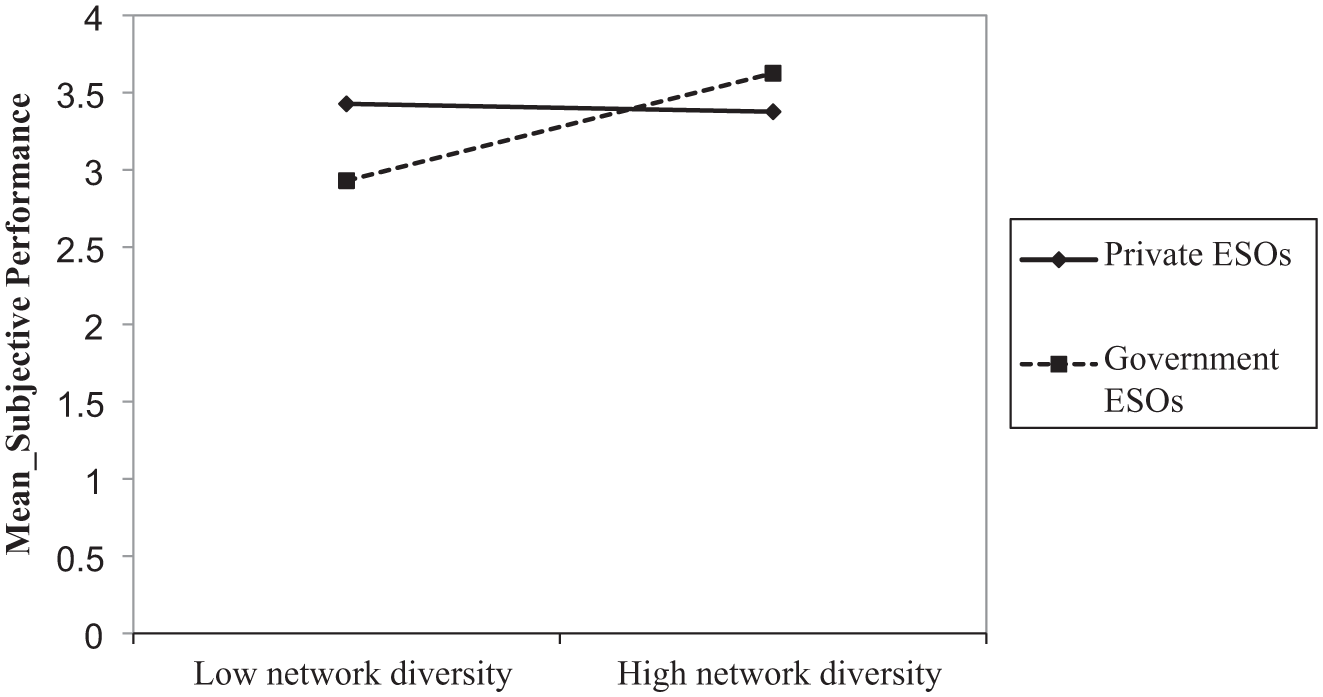
The interaction effect of network diversity and government ESO on subjective performance in Wave 1.
Furthermore, we tested the hypotheses on subjective performance in Wave 2 using predictors from Wave 1 and presented the results in Table 4. The relationship between network diversity and subjective performance was non-significant (p = .41). The interaction effect of network diversity and government ESOs was non-significant (p = .58), 4 so Hypothesis 1 was not supported. However, the interaction effect of network diversity and academic ESOs was significant (p = .001). Simple slope analysis revealed that network diversity had a positive effect on subjective performance for academic ESOs (b = 2.41, t = 3.34, p = .001), but this effect was non-significant for private ESOs (b = .10, t = .28, p = .78), supporting Hypothesis 2. 5 The pattern is shown in Figure 3.
Generalized estimating equations of subjective performance in Wave 2.
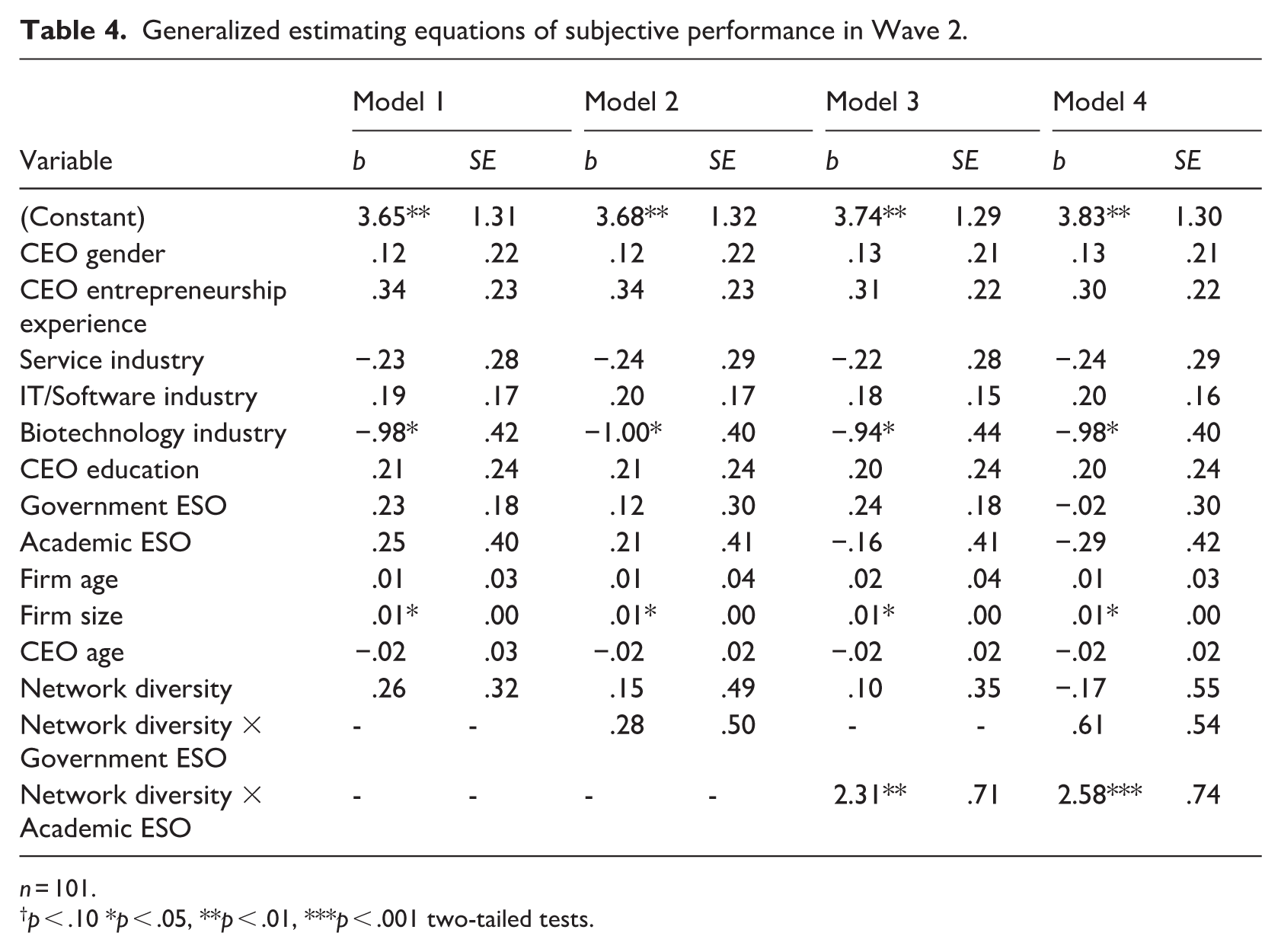
n = 101.
p < .10 *p < .05, **p < .01, ***p < .001 two-tailed tests.
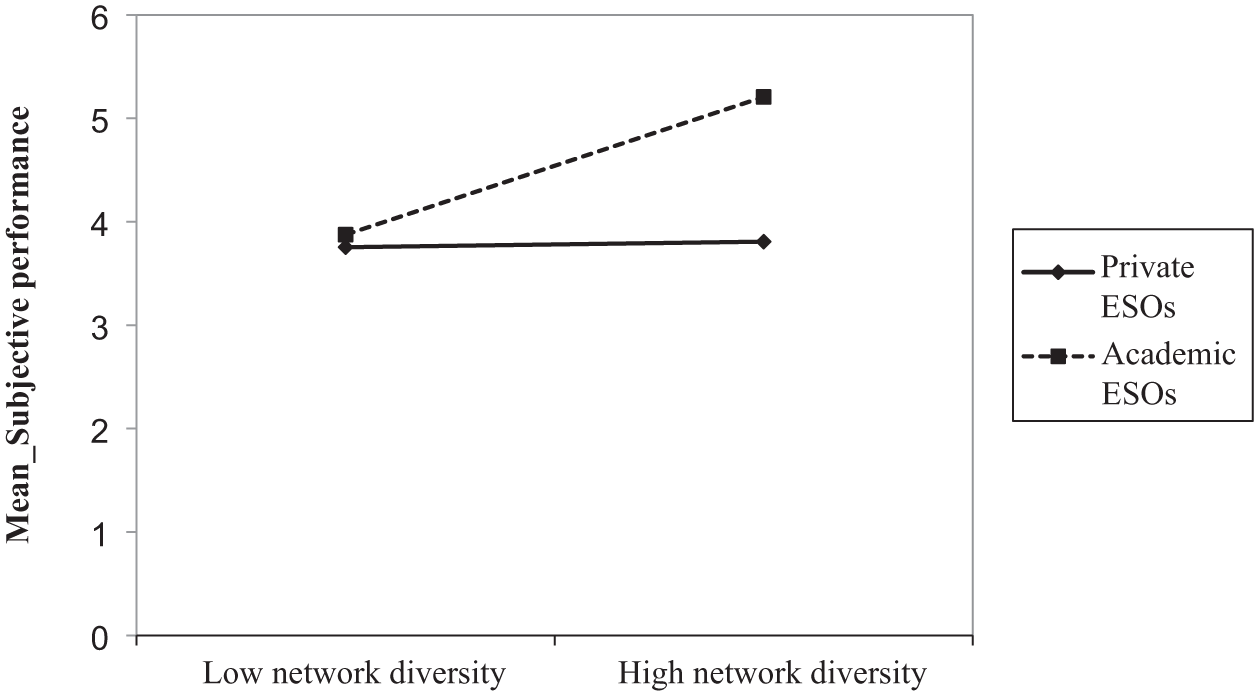
The interaction effect of network diversity and academic ESO on subjective performance in Wave 2.
Robustness check
We replicated the analysis with the revenue growth rate in Wave 2 and predictors in Wave 1 (see Table 5). Since some entrepreneurs did not provide revenue data in either wave, the analysis of the revenue growth rate was based on 49 complete responses. Among this restricted sample, network diversity did not have a significant relationship with revenue growth rate 1 year later (p = .20). We next tested the interaction effect of network diversity and ESO type on the revenue growth rate. As shown in Table 5, while the non-significant interaction effect of network diversity and government ESOs did not support Hypothesis 1 (p = .36), the interaction effect of network diversity and academic ESOs was significant (p < .001), supporting Hypothesis 2. Simple slope analysis showed that network diversity had a significant and positive effect on the revenue growth rate for academic ESOs (b = 522.10, t = 7.72, p < .001), but the effect was non-significant for private ESOs (b = 66.30, t = 1.08, p = .29). The pattern is shown in Figure 4.
Generalized estimating equations of revenue growth rate in Wave 2.
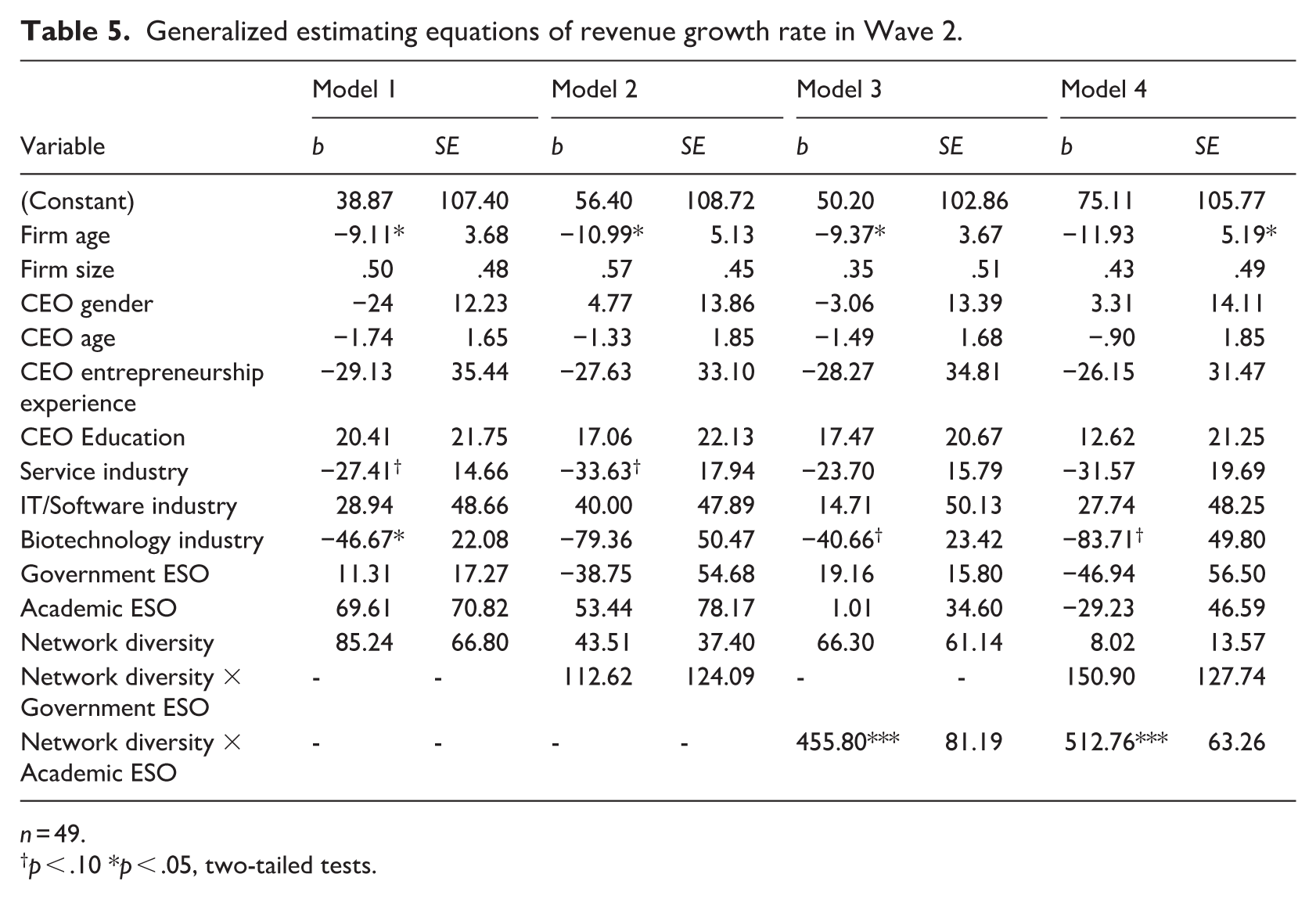
n = 49.
p < .10 *p < .05, two-tailed tests.
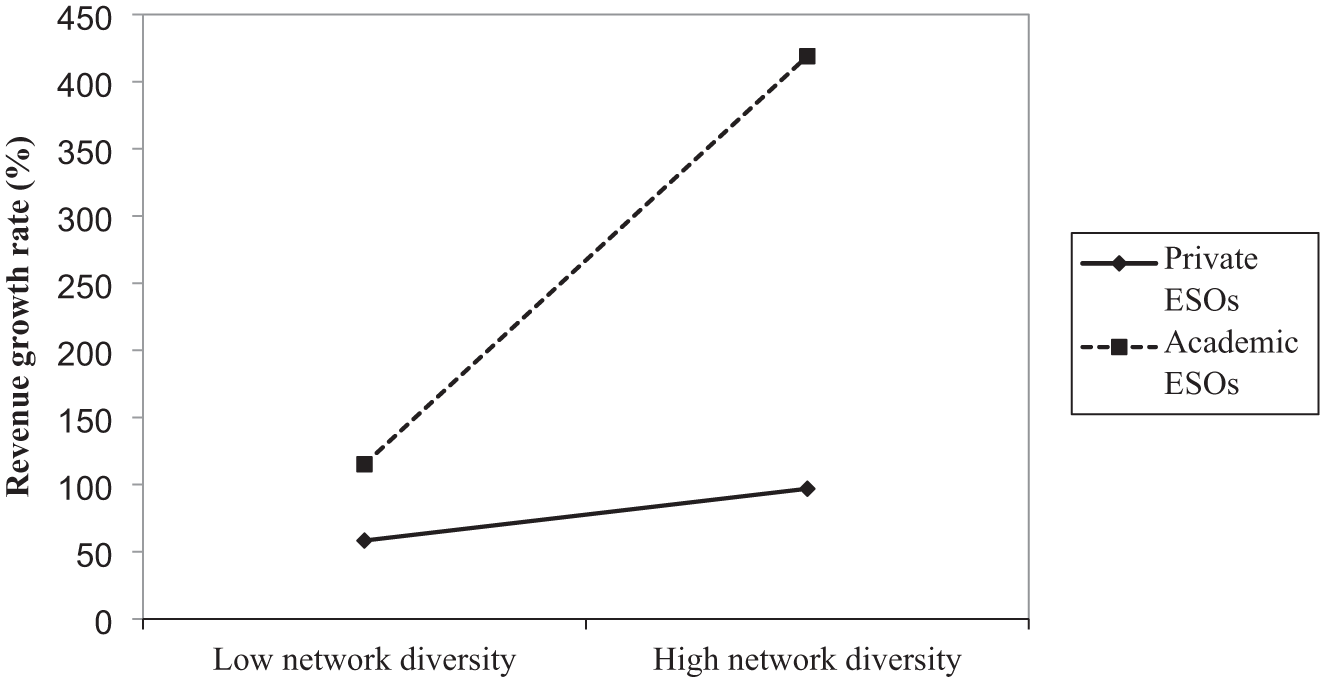
The interaction effect of network diversity and academic ESO on revenue growth rate in Wave 2.
We also controlled network size and density for all performance variables in both waves, and the results remained consistent. Moreover, for analyses with two-wave data, we controlled the respective performance measures in Wave 1, and the results remained consistent. To address potential endogeneity arising from different ventures’ self-selection into different ESO types, we used an instrumental variable approach to control for self-selection bias (Clougherty et al., 2016). We chose firm size and entrepreneur age (or biotechnology industry) as instrumental variables because these factors may identify self-selection into a particular type of ESOs, such as government ESOs, while not influencing new venture performance. As shown in Tables 1 and 2, these factors were correlated with the government incubator but not with new venture performance. Two-stage least square analysis shows that the interaction effect of government ESO and network diversity remained significant (p = .033 for firm size and entrepreneur age as instruments; p = .038 for firm size and biotechnology industry) on subjective performance in Wave 1. The interaction effect of academic ESO and network diversity remained consistent for subjective performance (p = .092 for both sets of instruments) and revenue growth rate in Wave 2 (p = .015 for firm size and entrepreneur age; p = .019 for firm size and biotechnology industry).
To account for the endogeneity between network diversity and new venture performance, which may be caused by omitted variables such as venture capability, we used the number of entrepreneurs’ ties with ESOs as an instrumental variable. Entrepreneurs’ ties with ESOs may help them expand personal networks, but these ties do not directly contribute to new venture performance. Correlational analysis revealed that this instrument was positively correlated with network diversity (r = .32, p < .001) but not with new venture performance. Two-stage least square analysis shows that the interaction effect of government ESO and network diversity remained consistent (p = .038) on subjective performance in Wave 1, and the interaction effect of academic ESO and network diversity remained consistent on subjective performance (p = .092) and revenue growth rate (p = .017) in Wave 2.
Supplementary analyses
In addition to our newly designed network diversity measure, we also employed a classical indicator of network diversity—structural holes—to replicate our analyses. We measured structural holes with the established name-generator method (Burt, 1992; Chen and Batjargal, 2025). For each contact, respondents answered: “How close do you feel to this person?” as “very close,” “close,” “neither close nor distant,” or “distant.” In addition, respondents reported the relationship between each pair of contacts as “close,” “neither close nor distant,” or “distant.” We used UCINET 6 software to calculate the network constraint

where pij is the proportion of time that i directly allocates to j (1/Ni, N is the number of contacts), pik is the proportion of time that i devotes to k, and pkj is the proportion of time that contact k devotes to contact j. Structural Holes are measured as one minus network constraint, with higher scores denoting more structural holes. After controlling for demographic variables, network size, and density, structural holes had a positive interaction with government ESOs on subjective performance in Wave 1 (b = 1.27, standard error (SE) = .82, χ2(1) = 4.18, p = .041), while the interaction with academic incubator was non-significant (p = .970). In Wave 2, structural holes had a positive interaction effect with academic ESOs on subjective performance (b = 3.90, SE = 1.06, χ2(1) = 13.59, p < .001) and revenue growth rate (b = 440.62, SE = 87.51, χ2(1) = 25.35, p < .001), whereas the interaction with government incubator was non-significant (p = .920 for subjective performance, p = .954 for revenue growth rate). We also tracked whether the firms were closed within 6 years after data collection using a secondary data set for business registration. Given the low closure rate in our sample (19%), we used real-events logistic regression to analyze the data, and the interaction effect of network diversity and academic ESO showed a consistent pattern (b = −3.78, SE = 3.03, χ2(1) = 1.94, p = .164), as illustrated in Figure 5. The moderation effect of government ESO was not significant (p = .632).
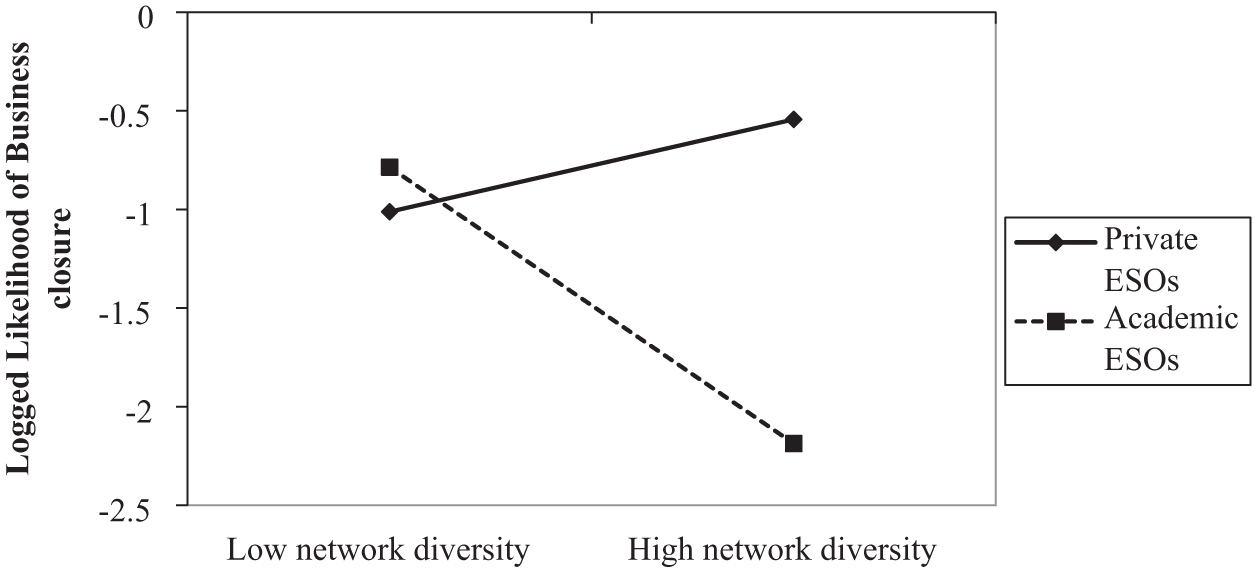
The interaction effect of network diversity and academic ESO on business closure.
Given that the same pattern has been replicated with different outcome variables (subjective performance, growth rate, and survival), as well as different network measures (diversity and structural holes), we reason that network diversity only has a short-term effect on the performance of ventures affiliated with government ESOs, but it has a long-term effect on ventures affiliated with academic ESOs. For those with diverse networks, affiliation with government ESOs can transform the endowed public resources into business transactions, enabling new ventures to improve performance in the short term. In contrast, the technological knowledge provided by academic ESOs takes longer to transform into new venture performance, consistent with previous research showing that new ventures affiliated with academic ESOs take longer to graduate from incubation (Rothaermel and Thursby, 2005a).
Discussion
In this article, we integrate the perspectives of entrepreneurial networks, institutional intermediaries, and entrepreneurial ecosystems to suggest that (1) a diverse network covering multiple elements in the ecosystem provides one way for entrepreneurs to navigate the local environment and (2) the diversity of entrepreneurs’ personal networks interacts with the type of institutional intermediary associated with their new ventures to influence new venture performance. We proposed a new dimension of network diversity based on seven key elements of entrepreneurial ecosystems and constructed an index of the extent to which these seven elements are represented in entrepreneurs’ personal networks. Through a two-wave survey of entrepreneurs in East China, we find that network diversity has a positive effect on short-term new venture performance in government ESOs, but this effect for new ventures in academic ESOs emerges in the long term.
Theoretical contribution
This study makes several theoretical contributions. First, we highlight how the effect of entrepreneurs’ network diversity on new venture performance depends on the type of institutional intermediary. The extant research has found that the effect of entrepreneurs’ social capital is dependent on their experience and the competitive intensity in the industry (Hernández-Carrión et al., 2017), entrepreneurial teams (Vissa and Chacar, 2009), as well as the formal and informal institutional environment (Bastian and Zali, 2016; Batjargal et al., 2013; Kraft and Bausch, 2018; Vasudeva et al., 2013; Wang et al., 2019). In this article, we reveal another factor that moderates the relationship between social networks and new venture performance: the institutional intermediary with which new ventures are associated. Our findings indicate that private institutional intermediaries can substitute for social networks in facilitating entrepreneurial activities, such that a diverse network has no effect on venture performance. The finding revealed a new boundary condition of the social network theory and suggests that social network research should incorporate the role of institutional intermediaries in characterizing entrepreneurs’ engagement with their environment.
Second, we contribute to the institutional intermediary literature by highlighting the different types of institutional intermediaries in connecting new ventures to their local environments. Previous literature has focused on the effect of institutional intermediaries, such as ESOs, in filling the institutional voids and enhancing new venture success (Armanios et al., 2017; Dutt et al., 2016; Goswami et al., 2018; Mair et al., 2012). In this article, we demonstrate ESOs’ relational function by showing how they moderate the effects of social networks and suggest that this function differs across ESO types. While private incubators substitute for personal networks in connecting new ventures with the ecosystem, public incubators complement diverse networks to enhance new venture performance. Thus, we emphasize the fit between entrepreneurs’ networks and the type of incubator. For instance, affiliation with government incubators can undermine new venture performance if entrepreneurs have low network diversity. This may be because the managers of government incubators lack business experience but may create administrative burdens for associated ventures (Tang et al., 2014), making them a liability for those loosely connected in the ecosystem. Instead, it may benefit new ventures that are widely connected through personal networks. By showing the moderation effects of incubator types, we expand the explanatory power of institutional intermediary beyond its main effects.
Finally, we extend our understanding of entrepreneurial ecosystems by identifying the micro-foundations of how entrepreneurs navigate the ecosystem to enhance new venture performance. We examine entrepreneurs’ engagement with entrepreneurial ecosystems at the micro level, complementing previous research that focuses on the ecosystem structure at the macro level (Stam and van de Ven, 2021). Most research on entrepreneurial ecosystems has treated various elements as additive (Hess et al., 2025; Leendertse et al., 2022), with only a few exploring how the elements complement each other to shape new venture creation of a region (Ghio et al., 2019). We highlight the interactive effect of two elements—entrepreneurial networks and institutional intermediaries—at the micro level, showing that one element of the ecosystem (incubators) may substitute for or complement another (networks), depending on their types. Thus, previous research that aggregates elements overlooks the nuanced differences among elements within entrepreneurial ecosystems, and further research is needed to probe their complex interplay at the micro level.
Practical implications
Our findings also have practical implications for entrepreneurs. We highlight the importance of synergizing social networks with the resources provided by various incubators and provide targeted advice for new ventures to match their personal networks with the type of institutional intermediaries most helpful for their venture growth. Specifically, well-connected entrepreneurs perform better when affiliated with government or academic incubators. In contrast, entrepreneurs who lack a diverse personal network may benefit more from affiliating with private incubators, which can provide valuable entrepreneurial knowledge and business connections. In addition, we emphasize the importance of developing diverse networks for entrepreneurs affiliated with public support organizations. Our new measure of network diversity provides entrepreneurs with a diagnostic tool to analyze their personal networks and identify strengths and weaknesses in their connections to the ecosystem, helping them connect with different actors to navigate the local environment.
Finally, our findings reveal the double-sided effect of government incubators and hold policy implications for public support of entrepreneurship. On the one hand, public incubators enable well-connected entrepreneurs to improve short-term performance, so they should provide targeted training to help entrepreneurs expand their business networks and acquire diverse resources. On the other hand, government incubators’ lack of entrepreneurial knowledge may undermine their ability to help under-connected entrepreneurs. For policymakers seeking to develop an entrepreneurial ecosystem, we highlight the limitations of relying on government incubators, especially in contexts that emphasize the state’s role in developing economies (Chen et al., 2019; Hong et al., 2017). We stress that the state’s intervention in business incubation may undermine the growth of under-connected new ventures, and its effect in helping well-connected ventures is only temporary. Therefore, government incubators should be supplemented with academic and private incubators to create a vibrant entrepreneurial ecosystem.
Limitations and future research
This study has some limitations that should be addressed in future research. First, although we conducted analyses to rule out reverse causality and address endogeneity between the predictors and new venture performance, we may not have ruled out the association between network diversity and incubator type. Previous research on how entrepreneurs select incubators does not show the consideration of personal networks (van Weele et al., 2020), nor did our results find a significant effect of incubator type on network diversity across waves. Therefore, the incubator types and entrepreneurial networks should be independent of each other, allowing for testing their interaction effect on new venture performance. Future research should ideally adopt a field experiment to examine the causal effect of network diversity and incubator type on new venture performance.
Second, since we focus on new ventures within an entrepreneurial ecosystem, the study design limits our sample size, particularly for the two-wave results. However, given that significant effects were found in such a restricted sample, and the sub-sample did not exhibit observable attrition bias, these effects should be replicable in a larger sample with greater statistical power. Future research can track a larger number of new ventures over multiple years to verify the sustainability of the strengthening effect of academic incubators.
Finally, the data for this research were collected in the Ningbo area of China, which may limit the generalizability of the findings. We chose China because it offers heterogeneity in incubator types, particularly public incubators, which allows us to test our hypotheses. Although government incubators may be unique in the Chinese context, the findings about academic incubators are likely to be generalizable. Nevertheless, future research should investigate whether the impact of network diversity is moderated by different types of institutional intermediaries in other regions and countries to test the generalizability of our findings.
Conclusion
Diverse networks have long been recognized as a crucial means for entrepreneurs to navigate their environment; however, their interplay with institutional intermediaries has not been thoroughly investigated. This article suggests that diverse networks help new ventures achieve higher growth, primarily for those located in public incubators. While private incubators can substitute for diverse networks, the resources of public incubators need to be complemented by diverse personal networks. Thus, the fit between personal networks and institutional intermediaries is key for entrepreneurs’ engagement with ecosystems.
Footnotes
Appendix
Elements of the entrepreneurial ecosystem.
| Dimensions of ecosystem | Key functions | Sources in the literature |
|---|---|---|
| Government | Supportive entrepreneurial policies; remove the structural barrier | Isenberg (2010); Feld (2012); World Economic Forum (2013); Spigel (2017); Stam and van de Ven (2021) |
| University | Foster novel technologies and nurture a talent pool for entrepreneurial firms | Spigel (2017); |
| Incubator | Provide services (e.g. office space, advice, and networking support) for start-ups | Totterman and Sten (2005); Spigel (2017); Stam, 2015; Stam and van de Ven (2021); Tötterman and Sten (2005) |
| Large corporation | Train managerial skills; nurture novel entrepreneurs; recruit talent from outside the region; provide business opportunities | Feld (2012); Mason and Brown (2014); Malecki (2018) |
| Small-and-Medium-Sized Enterprise | suppliers and participants of the local market (e.g. goods and services exchanged); labor pool | Marshall (1890); Markusen (1996); Stam and Spigel (2016) |
| Financial institution | Provide financial capital | Feld (2012); World Economic Forum (2013); Spigel (2017); Stam and van de Ven (2021) |
| Market customer | Generate entrepreneurial opportunities and promote new offerings | Spilling (1996); Spigel (2017); Stam and van de Ven (2021) |
Acknowledgements
We highly appreciate the extraordinary effort and editorial work of editor Oliver Alexy and the constructive comments of three annonymous reviewers in improving the paper.

Funding
The authors disclosed receipt of the following financial support for the research, authorship, and/or publication of this article: This work was supported by the soft science project of Ningbo Bureau of Science and Technology (project code 2017A10004).
Declaration of conflicting interests
The authors declared no potential conflicts of interest with respect to the research, authorship, and/or publication of this article.