




Abstract
In recent years, renewable assignments, or student creations that have value outside of a course, have received considerable attention. However, there is little theoretically grounded inquiry into students’ motivation for renewable assignments such as scientific memes. Moreover, it is unknown how public sharing of renewable assignments affects students’ perceived value and learning from coursework. In addition, public sharing could logically affect students’ pride and anxiety related to the renewable assignment, but this lacks empirical testing. The purpose of this study was to determine the effects of public sharing of renewable assignments on students’ perceived value, learning, pride, and anxiety relevant to the assignment. Across five courses, students (N = 102) were randomly assigned to have their scientific memes publicly shared or only shared within the course. Overall, scientific memes were generally considered as high in inherent interest and enjoyableness, moderate in usefulness, and low in levels of anxiety and emotional cost. Students whose scientific memes were publicly shared reported higher levels of perceived learning. There were no reliable differences in perceived value, pride, or anxiety due to public sharing. Overall, instructors may use these findings to inform the use of renewable assignments such as scientific memes in their courses.
Most student assignments in higher education settings are “disposable,” in that they are only shared with instructors for assessment purposes and then discarded (Jhangiani, 2017; Seraphin et al., 2019). By contrast, “renewable” (or “non-disposable”) assignments have meaning and purpose outside the classroom and are not disposed of when the course is over. Renewable assignments are further defined as “any activity that: (1) requires students to engage in the activity as part of the course; (2) promotes student learning through completion of the assignment; (3) assesses students’ learning of course objectives; and (4) provides impact or value outside of the traditional student-teacher dyad” (Seraphin et al., 2019, p. 85). To this end, renewable assignments are an aspect of open pedagogy (Seraphin et al., 2019). Open pedagogy is an approach to teaching and learning, which, broadly construed, involves students creating materials that have use beyond the classroom. In other words, the materials “add value to the world” (Seraphin et al., 2019, p. 85). In addition, open pedagogy includes attributes of effective teaching and learning, such as opportunities for creativity and peer feedback (Hegarty, 2015). Previous studies have typically embraced a broad, multi-component view of open pedagogy, making it difficult to examine students’ perceptions (Clinton-Lisell, 2021). Therefore, the current study focused on one aspect of the specific instantiation of open pedagogy: The impact of the public sharing of scientific memes.
Scientific memes are images or videos with minimal text to convey scientific findings or concepts (Riser et al., 2020). Memes, in general, are popular on social media and the internet in general; therefore, memes may be a means to engage students in psychology content as students are already familiar with the creative potential of memes for communication (Kath et al., 2022). Comparisons of scientific memes to traditional research writing assignments have indicated similar grades, but more completion of memes (Riser et al., 2020). The higher completion rate of memes over traditional writing assignments may indicate that memes are more motivating for students, thereby prompting this current study's inquiry into student motivation.
Students generally report positive experiences in prior research on renewable assignments. This research is valuable in informing our overall understanding of student experiences; however, these prior studies tend to lack grounding in established theoretical frameworks (Tietjen & Asino, 2021). Grounding inquiry through methodologies based on existing motivation frameworks fosters robust connections between the burgeoning field of renewable assignments and the existing literature. One notable exception is Werth and Williams (2021) inquiry grounded in self-determination theory, a framework in which competence, relatedness, and autonomy are key to motivation (Ryan & Deci, 2000). Based on interviews of students engaging in open pedagogy, autonomy was particularly noteworthy, as students valued the choices available to them in their coursework. The current study builds on these findings by examining student motivation for renewable assignments using different theoretical frameworks of motivation, which are discussed in the next section.
Expectancy-Value-Cost Framework
According to the expectancy-value-cost framework, motivation is comprised of the product of one's expectation of being able to complete a task and the perceived value of that task, subtracting the potential costs (Barron & Hulleman, 2015; Eccles & Wigfield, 2020). Perceived task value is categorized as intrinsic (i.e., the task is viewed as inherently interesting or enjoyable) or utility (i.e., the task is viewed as useful). For example, learning how to paint because a student finds it fun could be motivating because of its intrinsic value, whereas learning how to paint because of a career goal to be an artist could be motivating due to utility value. Costs include the time necessary to engage in the task, missed opportunities for other activities, financial expenses, and emotional costs (e.g., unpleasant emotions that may be involved). Going back to the example of learning to paint, one could perceive immense value in the activity, but if learning to paint is viewed as extremely stressful, anxiety-provoking, overly time-consuming, or expensive, then these costs could lead to low levels of motivation. Interventions have generally focused on enhancing utility value to improve motivation, as utility value is seen as the most malleable of the constructs in expectancy-value-cost theory. For example, utility value interventions have been effective in improving student motivation to learn mathematics (Hulleman et al., 2010), biology content (Harackiewicz et al., 2016), and engaging in online discussion boards (Clinton & Kelly, 2020; see Soicher & Becker-Blease, 2020, for a review). However, a recent intervention focused on reducing costs by encouraging students to reflect on how they would overcome the challenges of a physics course in terms of time, effort, and frustration costs (Rosenzweig et al., 2020).
If renewable assignments are publicly shared, it could potentially increase both the utility value (which would increase motivation) and costs (which would decrease motivation) associated with the assignment. Utility value interventions generally focus on connections to one's own life (Hulleman & Harackiewicz, 2021). However, some utility value interventions have included prompts for students to explain to others why course content would be useful for them, or to explain how course content was covered in popular media (Harackiewicz et al., 2009; Hulleman et al., 2010). This approach yielded increases in interest in the course content throughout the term (Harackiewicz et al., 2009). In addition, prompting students to consider how the course content could help others is suggested as a method of implementing utility value in instruction (Hulleman & Harackiewicz, 2021). With public sharing, students will not personally know the individuals being informed, nor will they be prompted to consider the personal usefulness of the content. However, it is possible that knowing the assignment will be publicly shared may increase students’ perceptions of utility value, as they are helping others, which, in turn, may make the content more meaningful (Harackiewicz et al., 2016; Priniski et al., 2017). Conversely, knowing others would see their work could potentially lead to stress and frustration over whether the assignment is of sufficient quality to be shared, thereby potentially leading to greater emotional costs.
When considering utility value, it is further important to consider student perceptions of learning. Logically, for students to perceive utility value for a renewable assignment, they also need to perceive what they learned from the assignment. In other words, students need to perceive they learned skills from the renewable assignment for those skills to be of any use to the students. Indeed, previous work found a utility value intervention that increased both motivation and students’ perceptions of learning (Moozeh et al., 2019). Moreover, students’ perceptions of learning predict their satisfaction with an assignment, as well as their willingness to do similar assignments in the future (Makransky & Lilleholt, 2018).
Achievement Emotions
Achievement emotions, which are emotions resulting from a learning activity or outcome, are an important affective component of education, including higher education (Jarrell et al., 2022; Oades-Sese et al., 2014). Positive (or pleasant) emotions, such as enjoyment and pride, may motivate students to engage and persist in learning tasks (Pekrun et al., 2011). Moreover, enjoyment and pride relate to promoting students’ perceptions of self-efficacy, or whether students perceive they have the specific skills necessary to succeed in a task (Villavicencio & Bernardo, 2016). The opportunity to be creative through making scientific memes could potentially yield high levels of pride and enjoyment. Conversely, negative (or unpleasant) emotions such as anxiety and shame may impede motivation and foster negative perceptions of one's own skills (Pekrun et al., 2011). According to the control-value theory of achievement motivation, perceived control and perceived value of learning activities and outcomes predict the achievement emotions students experience (Pekrun et al., 2007). Because scientific memes are a novel assignment for most students, it is possible that there would be high levels of anxiety associated with them.
Two achievement emotions that may be particularly relevant to the public sharing of assignments are pride and anxiety. Based on logical reasoning, it is possible that knowing others will see one's work could enhance pride. This is because knowing that the assignment will be used outside of class could increase its value, and subsequently, the feeling of pride, provided, one feels adequately skilled to produce a quality renewable assignment (Oades-Sese et al., 2014). Moreover, knowing the renewable assignment will be used by others could increase the effort put into the assignment, leading to better quality and enhanced pride (Pekrun et al., 2007). On the other hand, the knowledge that others will view one's work could be anxiety provoking if students perceive little control over the task and public sharing enhances the task value (Pekrun et al., 2007).
Prior research in open pedagogy provides further evidence for the potential effects of public sharing on motivation, pride, and anxiety. In a systematic review of open pedagogy studies, one area in which open pedagogy assignments varied was whether publicly sharing materials was optional or required. Generally, public sharing and open licensing were optional, but two studies made it explicitly required (i.e., Bonica et al., 2018; Zhang et al., 2020). In the Bonica et al. (2018) study, students had the option of using a pseudonym if there were concerns about privacy. However, all students opted to use their real names to showcase their work to potential employers in the future. Zhang et al. (2020) had students post on public social media platforms and found mixed reactions to public sharing. Some students reported feeling anxious that their work was not of sufficient quality for public viewing, while others found public sharing made their work more meaningful.
Bringing these areas together, the purpose of the current study is to examine the impact of the public sharing of renewable assignments on students’ motivation, emotions, and perceived learning. It is not yet clear whether students should be encouraged to publicly share their renewable assignments (Clinton-Lisell, 2021). On one hand, it is possible students would be more motivated to engage in assignments seen by others, as well as take more pride in their work (e.g., Bonica et al., 2018). Conversely, it is also possible that students would experience anxiety and have concerns about the quality of their work being adequate for public viewing (Zhang et al., 2020). Finally, the present study seeks to address whether publicly sharing assignments results in differences in students’ perceived learning.
The Current Study
Research on renewable assignments is nascent and more theoretically grounded inquiry is needed. Based on prior research on open pedagogy and theoretical frameworks of motivation, it is unclear how the public sharing of renewable assignments affects students’ perceptions of the value of the assignment, as well as the achievement emotions of pride and anxiety. Therefore, the current study examined scientific memes through two well-established theoretical frameworks. Altogether, five research questions guided this inquiry:
What were the overall student experiences in terms of motivation, pride, anxiety, and perceived learning for the renewable assignment? How does public sharing of coursework affect students’ perceptions of the intrinsic and utility value of the assignment? How does public sharing of coursework affect students’ perceived learning while working on the assignment? How does public sharing of coursework affect students’ perceptions of the costs or downsides of the assignment? How does public sharing of coursework affect students’ experiences of the academic emotions of pride and anxiety related to the assignment?
Method
Context and Procedure
The Scientific Meme Project served as the renewable assignment for the study and was a required assignment in five different courses taught by the authors of this study (see Riser et al., 2020, for a similar assignment). Students were randomly assigned through the institution's learning management system (Blackboard) to two different sets of instructions: One (closed, control) in which students only shared their project with the course, and a second (open, treatment) in which students were informed their instructor would share the memes on their public Twitter accounts (students only saw the instructions for their assigned condition). The assignments were deidentified and students could opt out of social media sharing; however, no students opted out. After the final drafts of the memes were submitted, students were asked to complete a questionnaire via Qualtrics about their experiences with the memes. Students were granted extra credit in the course to thank them for their participation in the study. Students provided their names at the beginning of the questionnaire so that their condition (open or closed) could be entered and to award extra credit. Each instructor did not see their students’ responses until after grades were submitted (the other instructor/author in this study provided a list of students who earned extra credit). Names were removed from the data files after data collection was complete. Research was approved by the university's institutional review board.
Participants
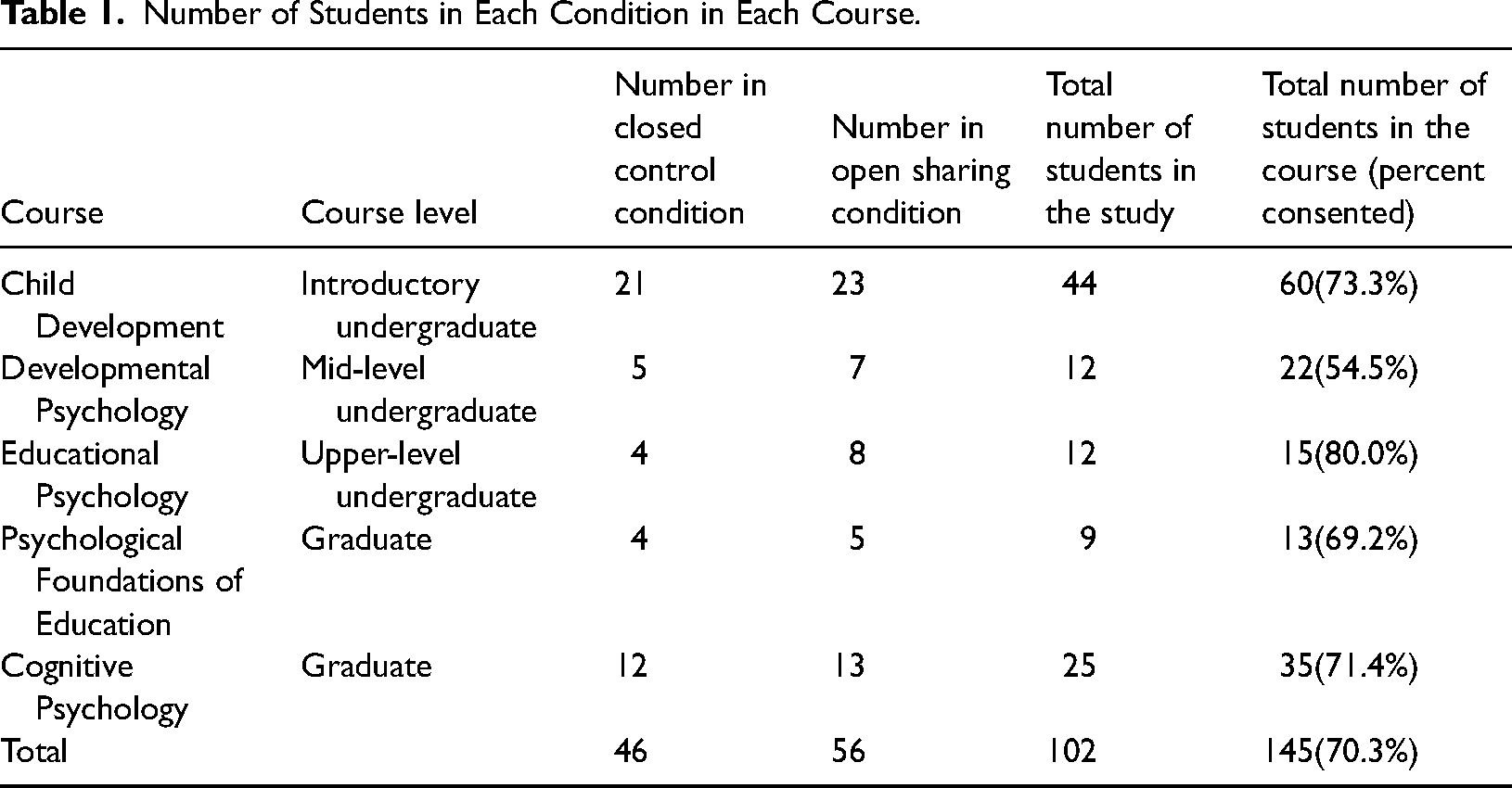
Across the five courses, 102 students completed the final drafts of their memes and the optional questionnaire (N = 48 in the closed control condition and N = 54 in the open sharing condition). See Table 1 for the number of students participating in each course, number of students per condition, and the number of enrolled students. Of the students who participated in the study, the majority (78) identified as women or female, with 21 identifying as men or male, 1 as gender neutral, and 2 not disclosing their gender identities. Approximately 24% identified as first-generation college students (first in their families to attend college), and 76% as continuing-generation students. In terms of race, 6 identified as Black or African American, 5 identified as Asian or Asian American, 84 identified as White or European American, 3 identified as Latino or Hispanic, 3 identified as Native American, and 2 did not provide their racial identities. The average age was 23.70 (SD = 8.21) years. Deidentified data and study materials are available on Open Science Framework (Kelly & Clinton-Lisell, 2023).
Number of Students in Each Condition in Each Course.
Materials
Scientific Meme Project
Questionnaire. The post-project questionnaire consisted of items intended to assess students’ background in meme making, perceived intrinsic value and utility value of the Scientific Meme Project, perceived emotional costs of the project, and academic emotions related to pride and anxiety. Intrinsic value and utility value scales were adapted from Hulleman and Harackiewicz (2009). Intrinsic value was measured through five Likert items on a five-point scale ranging from Strongly Disagree to Strongly Agree. Sample items included “The meme project was interesting for me” (Cronbach's α = 0.88), as well as the open-ended item “What was inherently interesting or enjoyable about the meme project?” Utility value was measured through seven Likert items on a five-point scale ranging from Strongly Disagree to Strongly Agree. Sample items included “The skills I learned through the meme project were relevant to my life” (Cronbach's α = 0.84), as well as the open-ended item “How was the meme project useful for you (now or in the future)?”
Emotional cost (other than anxiety) was assessed through three Likert items ranging from Strongly Disagree to Strongly Agree based on a measure of cost from Flake et al. (2015). Sample items included “The meme project was emotionally draining” (Cronbach's α = 0.89). The overall cost was assessed through the open-ended item “What were the downsides of the meme project?” Pride was assessed through four Likert items ranging from Strongly Disagree to Strongly Agree. Sample items included “I am proud of my meme project” (Cronbach's α = 0.71). Anxiety was assessed through three Likert items ranging from Strongly Disagree to Strongly Agree. Sample items included “Thinking about this meme project makes me uneasy” (Cronbach's α = 0.79).
The Scientific Meme Project was also designed to improve students’ communication skills and scientific knowledge, which were assessed with two Likert items ranging from Strongly Disagree to Strongly Agree. The novel items, developed by the authors, included “The meme project helped me develop my communication skills” and “The meme project helped me develop my scientific knowledge” (Cronbach's α = 0.63) and measured perceived learning. At the end of the questionnaire, students reported demographic information such as age, gender identity, and native language. Students were further informed they did not need to answer any demographic items they did not wish to answer.
Results
For quantitative measures, the Type I error level (i.e., identifying a difference when there is no difference between conditions) was set at p = .05 (i.e., all p values below .05 are considered to indicate statistically significant differences). To prepare the open-ended item responses for analysis, the authors reviewed the responses and identified themes using content analysis in an inductive manner. In this process, both the authors of this study read the responses. Then, they independently identified codes for themes emerging from the responses. Following this, they each reviewed the responses and indicated codes. The authors discussed what each had coded for the responses and decided together how each response should be coded. This process was repeated for each of the open-ended items (see Bardakcı et al., 2018; Karageorghis et al., 2022, for a similar approach).
Intrinsic and Utility Value
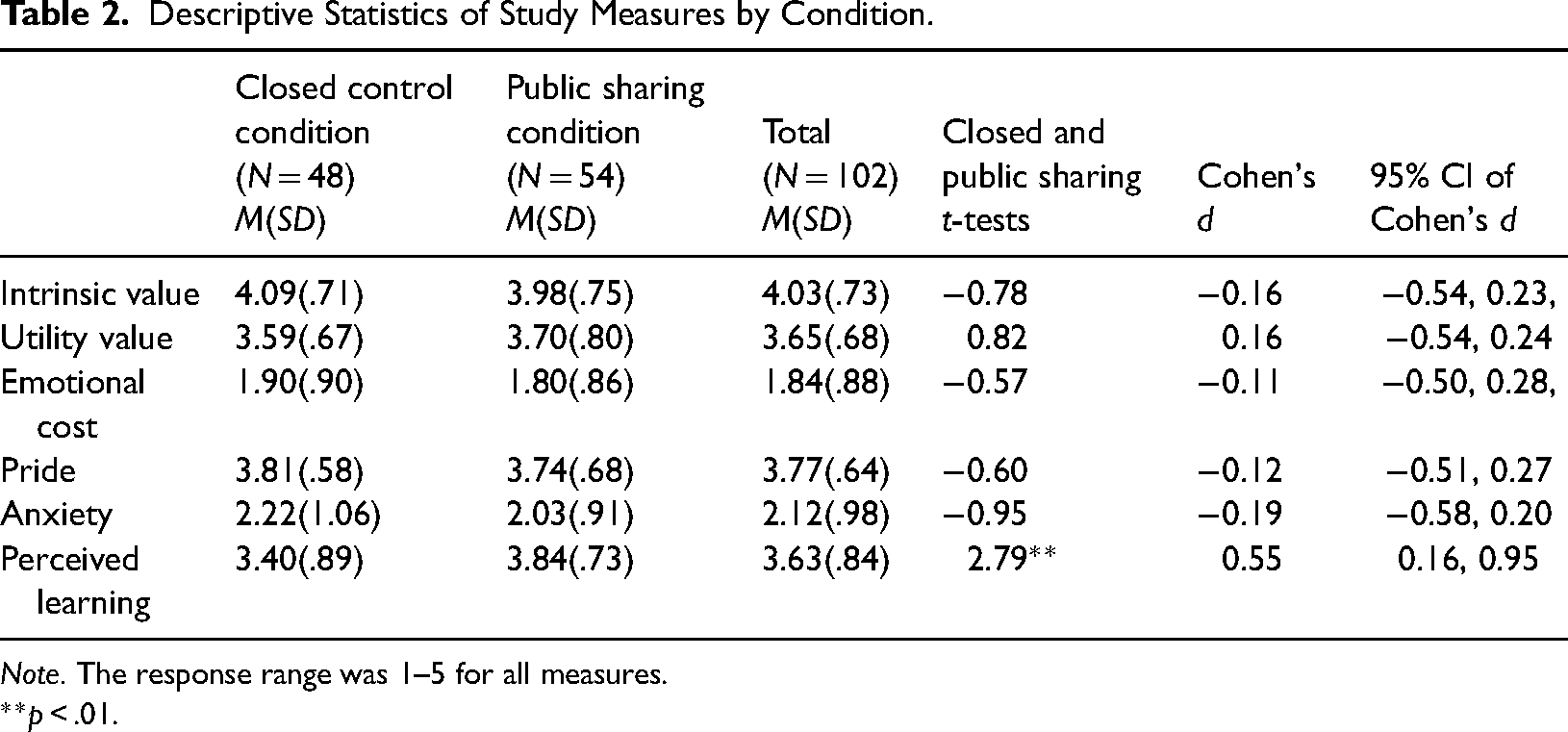
To answer the first research question, students’ self-reports on the quantitative measures of motivation, academic emotions, and perceived learning were examined. As can be seen in Table 2, based on the scale midpoint of 3, students had generally high levels of intrinsic value, indicating scientific memes were considered interesting and enjoyable. Utility value was moderately high, indicating that some usefulness for the scientific memes was perceived. Pride and perceived knowledge/skills developed were also moderately high. Emotional cost and anxiety were relatively low, indicating that the meme assignment was not upsetting for students.
Descriptive Statistics of Study Measures by Condition.
Note. The response range was 1–5 for all measures.
**p < .01.
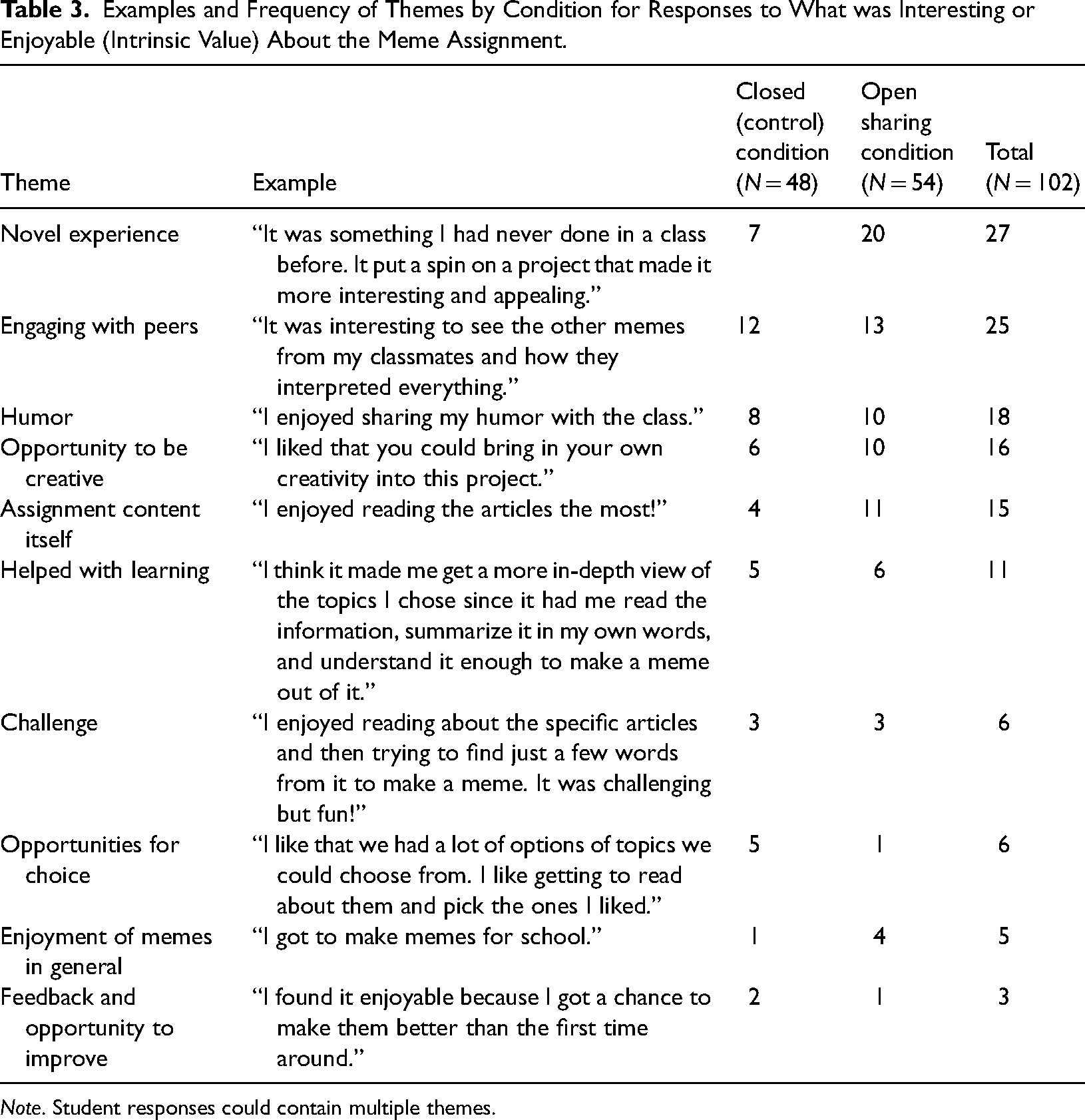
Table 3 contains examples and frequencies of themes for the open-ended intrinsic value (i.e., what was interesting or enjoyable about the meme project) question. The novelty of the assignment was the most common response, followed by the opportunity to interact with their peers. The content used to make the memes was also a common response, perhaps because students were able to choose topics for the memes (see Schneider et al., 2018, for findings on how choice enhances intrinsic value). Students also reported appreciating the opportunity to be creative, their general enjoyment of memes, and the humor of the memes as common responses. Less frequent themes were enjoying the challenge, help with learning (although this would arguably be more aligned with utility value), and the opportunity to improve through feedback.
Examples and Frequency of Themes by Condition for Responses to What was Interesting or Enjoyable (Intrinsic Value) About the Meme Assignment.
Note. Student responses could contain multiple themes.
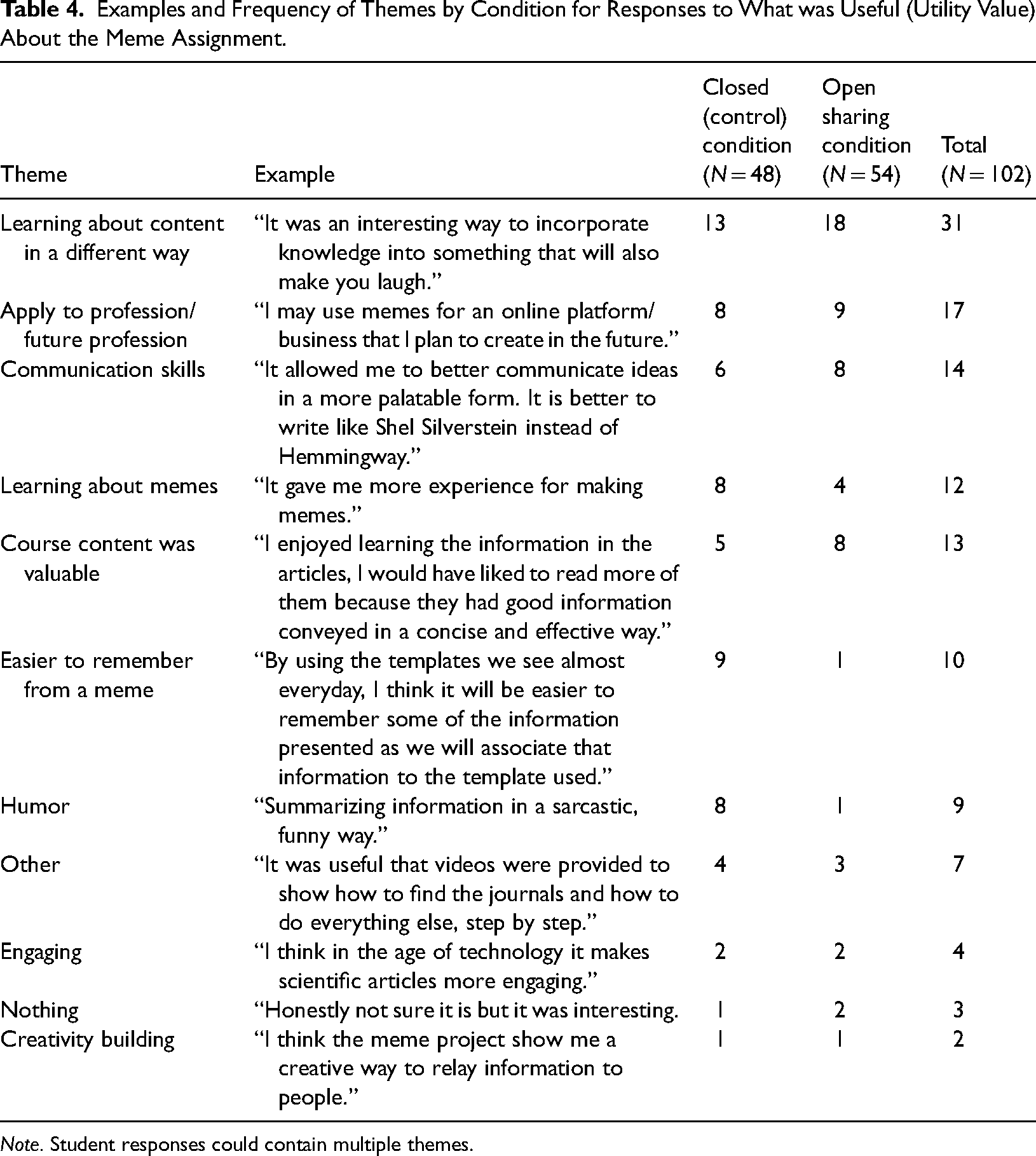
Table 4 displays the themes and examples of responses to the open-ended question on utility value (i.e., what was useful about the meme assignment). The opportunity to learn the content in a unique way was overwhelmingly the most common theme. Developing communication skills and applications to the profession were the next most common themes. These themes indicate that students perceived gaining knowledge and skills from the assignment. The facilitation of learning afforded by memes and, relatedly, the value of the course content were further common themes. Two less common themes, humor and engaging with peers, were more relevant to intrinsic value. Two students expressed appreciation for the assignment helping develop their creativity. Three students did not see any real usefulness of the assignment, which would indicate a very low perceived utility value. Seven students gave other, infrequent comments, often more relevant to the usefulness of the assignment directions and guidance than the assignment itself.
Examples and Frequency of Themes by Condition for Responses to What was Useful (Utility Value) About the Meme Assignment.
Note. Student responses could contain multiple themes.
In examining the open-ended responses about the downsides (or costs) of the meme assignments (see Table 5), the most common response was that there were no downsides, which speaks to student appreciation of the meme assignment. The most commonly identified downside was not understanding the assignment directions, which is useful feedback for improving assignment transparency. Not specific to the meme assignment itself, 9 students expressed frustration about the quantity or quality of peer feedback they received. The amount of time involved was another commonly identified complaint. The emotional costs of stress and anxiety were reported by 10 students, but more students reported this in the closed condition than in the open-sharing condition. Several students commented on logistical frustrations with the assignment, such as finding materials suitable for the assignment, formatting the meme, and having to write an explanation about the meme. Some students reported simply disliking creative assignments. Two students complained there were too many choices, whereas two other students complained there were too few choices.
Examples and Frequency of Themes by Condition for Responses to What Were the Downsides (Costs) of the Meme Assignment.
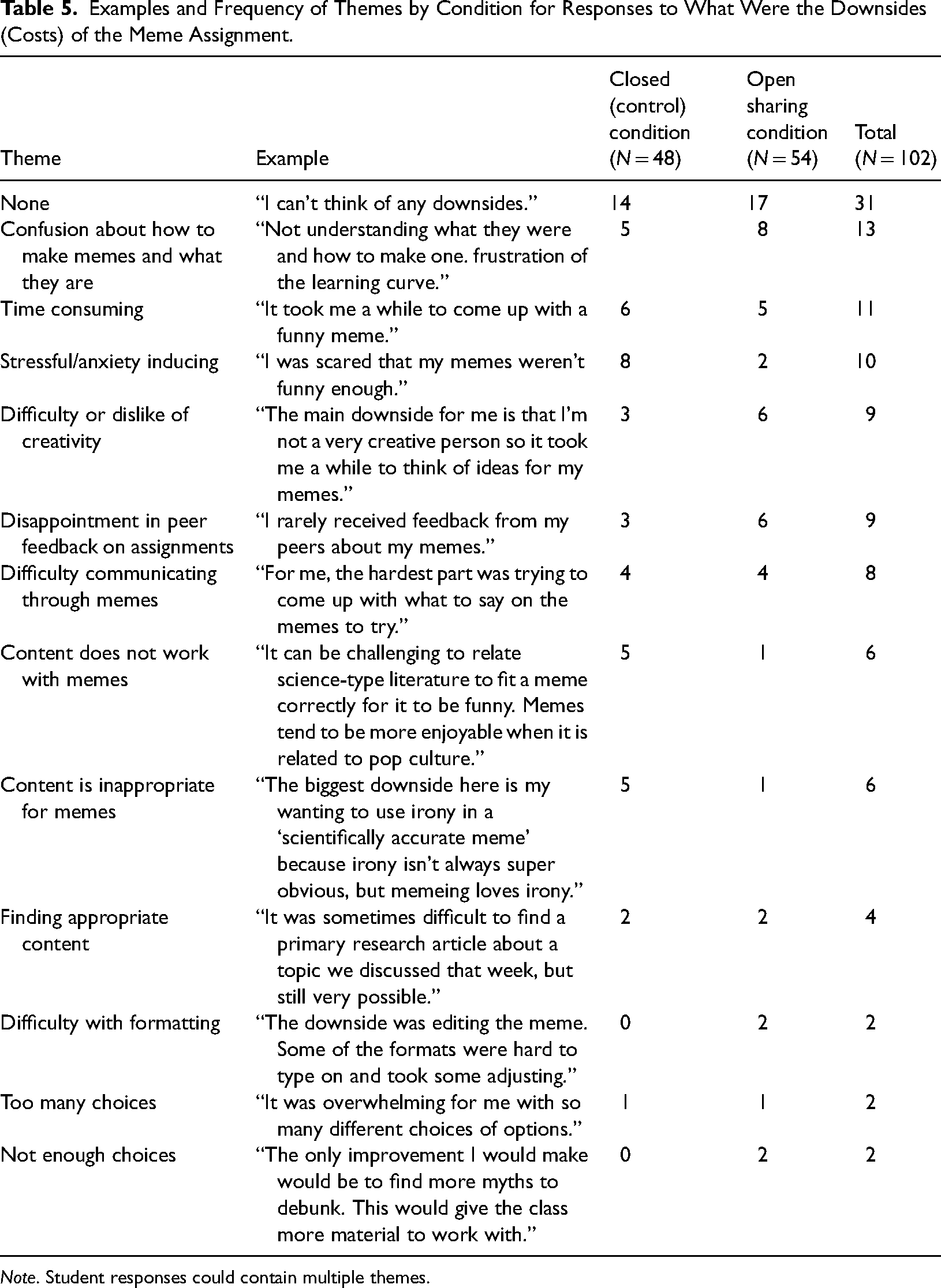
Note. Student responses could contain multiple themes.
Independent samples t-tests were conducted to address the questions on the influence of public sharing on intrinsic and utility value, perceived learning, emotional cost, pride, and anxiety (see Table 2). There were no significant differences by condition with one exception: students in the open condition reported higher levels of perceived learning. However, public sharing of the assignment did not appear to influence the value or emotions of the assignment.
Discussion
The purpose of this study was to examine student motivation for a particular form of renewable assignment: scientific memes. Overall, students reported fairly high intrinsic value, moderate utility value, perceived learning, and pride, and relatively low anxiety and costs for the renewable assignment. In addition, a secondary purpose of this study was to isolate the public sharing of renewable assignments to specifically examine its effects on motivation, perceived learning, and achievement emotions. Based on the findings of this study, having the instructor publicly share renewable assignments did not appear to influence the intrinsic (inherent enjoyment or interest) or utility (usefulness) value, nor the costs (downsides) of the assignment. Further, students’ self-reported pride and anxiety related to the renewable assignment did not reliably differ depending on whether the instructor publicly shared the assignment or if it was only shared in the class. However, students whose renewable assignment was publicly shared by the instructor reported greater perceived learning than students whose assignment was not shared outside of class.
Utility value and costs were examined to assess the possibility that public sharing would affect the perceived usefulness or costs of scientific memes. Although not specifically examined in previous literature, it was possible knowing others could use one's assignment would yield higher levels of perceived utility value. Conversely, there was the concern that knowing others would see one's assignment would be stressful and anxiety provoking. Based on the findings from this study, neither of these possibilities occurred. Indeed, more students in the closed condition reported anxiety over the renewable assignment than did students in the open condition with public sharing. However, based on the ratings for intrinsic and utility value, students perceived the assignment as more interesting and enjoyable than useful. Based on this, it may be important to communicate clearly to students how assignments are useful in terms of developing skills for their careers. Communicating the usefulness of assignments also aligns with the Transparency in Learning and Teaching framework, in which students receive clear assignment directions with the purpose of the assignment, the skills developed in the assignment, resources available to complete the assignment, and grading criteria (Winkelmes, 2019). Importantly, cost ratings were low, and many students responded they did not perceive any costs in the open-ended responses. Based on the expectancy-value-cost framework of motivation, it can be deduced that student motivation for this renewable assignment was relatively high. This is consistent with findings on scientific memes in which students reported a greater sense of purpose when creating memes than when writing summaries on research topics (Riser et al., 2020).
The achievement emotions of pride and anxiety (anxiety could also be considered a cost) were also examined in the present study. It was anticipated that knowing others would see one's assignment would enhance pride in one's work. But it was also possible that public sharing could lead to greater anxiety based on the control-value theory of motivation, wherein perceived control and perceived value of learning activities relate to achievement emotions such as pride and anxiety (Pekrun et al., 2007). Publicly sharing could cause greater value in the assignment (as it is seen by others), but it could also reduce perceived control. However, there were no discernable differences in pride and anxiety between students whose assignments were publicly shared and those only shared within the course. These findings differ from a previous open pedagogy study where students were required to share their assignments on social media (Zhang et al., 2020). Zhang and colleagues noted that some students expressed anxiety about publicly sharing while others reported enhanced pride. In the current study, one key difference is that the instructor shared the assignments without student information, whereas in Zhang et al.’ (2020) study, the students posted on their own social media accounts. It is possible that being anonymous and having work shared on someone else's social media account (and subsequently being viewed by someone else's followers) simply is not as impactful as sharing on one's own account. Sharing on one's own social media account with, presumably, identifying information about oneself and viewed by one's friends, classmates, and family members would likely involve more feelings of pride and anxiety than the instructor account used in the current study. Encouraging students to share on their own social media accounts would also provide opportunities for informal learning about course content outside of the formal classroom experience (Lai & Smith, 2018).
Perceived learning in terms of developing scientific knowledge and communication skills was reportedly higher in students whose assignments were publicly shared compared to their peers whose assignments were only viewed within the course. It is possible that knowing others would see the assignment prompted students to focus more on the learning opportunity. However, when considering the null findings for other measures in this study, the likelihood that this difference was spurious should be acknowledged. Theoretically, if students perceived their learning to be greater when assignments were publicly shared, they should have subsequently perceived greater utility value, as the assignments would have been seen as useful for learning (e.g., Moozeh et al., 2019).
Pedagogical implications can be suggested based on the findings of this study. Overall, students had positive experiences with the renewable assignment and there were no reliably negative consequences to their motivation, pride, anxiety, or perceived learning by the instructor publicly sharing their assignments. Given the range of psychology courses involved in this study, this is encouraging for instructors who wish to incorporate open pedagogy and public sharing of assignments. Based on perceived intrinsic value ratings and responses, students found the renewable assignment enjoyable and intriguing. However, the perceived learning and utility values were only moderately rated. Subsequently, it may be important for instructors to explicitly explain how renewable assignments assist students in meeting course learning objectives. Assignment transparency may be useful for reducing anxiety and other emotional costs as well as some students’ reported confusion in how to do the assignment (see Hull et al., 2018). Assignment transparency could also improve motivation by increasing the expectancy to perform well on the assignment (Bhavsar, 2020). In addition, based on student responses to costs, better direction on peer feedback would improve the assignment as well.
Limitations and Future Directions
There are limitations to this study that need to be noted. Namely, this sample was overwhelmingly white, as the courses were all at a predominantly white institution. In addition, student demographics in terms of functional diversity were not requested (e.g., learning disabilities), so we do not know how the assignment may have been differentially perceived by students with disabilities. Therefore, it is uncertain how this assignment would be perceived by more diverse student populations. Future studies should consider how renewable assignments are experienced by students who have been historically underserved in education, such as racially minoritized individuals and disabled individuals. Of particular need is to conduct research in the Global South due to a historical emphasis on the Global North (Behari-Leak, 2020). Doing so would establish whether this renewable assignment is equitable and accessible across students and geographical contexts.
The utility value measure used in this study was chosen because of its prior use in studies with similar research questions and samples (Canning et al., 2019; Clinton & Kelly, 2020; Hulleman et al., 2008, 2017; Hulleman & Harackiewicz, 2009). However, the focus of most of the items is on personal relevance and how the content relates to the individual student. In contrast, the assignment was framed as being helpful for others to communicate accurate scientific information. This may have been a reason why there was no difference in utility value between the closed and open conditions. Therefore, the items should have been framed with a more communal approach given the emphasis on others rather than being specifically useful to the individual (see Brown et al., 2015 for an example of a communal utility-value approach).
An additional limitation is that it is uncertain how aware students were that the renewable assignment was publicly shared. This was shared in the directions to students in the public sharing condition and in the feedback they received. However, because the students in both conditions were in the same courses, the public sharing aspect was not emphasized in the course so as not to confuse students in the closed control condition. Alternatively, students may have not cared that their assignments were on the instructor's social media account given the memes did not include identifying information and the massive amount of information on social media. It is entirely possible the lack of effect of public sharing in this study was due to students generally being unaware or not concerned that their assignments were publicly shared. A future study could build on this current study through a more meaningful form of public sharing. For example, students could be asked to have their assignments shared with future students. Previous work has indicated that student involvement in creating course materials for future courses is a positive and meaningful experience for students (Cho et al., 2020; Hilton et al., 2020). Students reported knowing that future students will use the materials they created made the assignment more valuable (Cho et al., 2020).
Conclusion
Open pedagogy creates the potential for student assignments to have a purpose outside of the course. The findings from this study with scientific memes align with previous research indicating students generally have positive attitudes toward open pedagogy (Clinton-Lisell, 2021). This study built on previous work by providing theoretically grounded inquiry into the public sharing aspect of open pedagogy. Importantly, students found the renewable assignment of scientific memes to be an inherently interesting and enjoyable learning activity. Overall, the findings support the use of renewable assignments for open pedagogy, although it is unclear whether public sharing by the instructor has any meaningful effect.
Footnotes
Declaration of Conflicting Interests
The authors declared no potential conflicts of interest with respect to the research, authorship, and/or publication of this article.
Funding
The authors received no financial support for the research, authorship, and/or publication of this article.
