




Abstract
This experimental field study (pre-post-follow-up design) with 184 student teachers examined the effectiveness of an intervention to reduce misconceptions about psychology within an introductory psychology course. For this purpose, over the course’s one-semester duration, all students attended six lectures and, in addition, worked individually on six assignments in between. In both, the intervention and control group, assignments covered the same learning content but assignments for the intervention group particularly addressed six topic-related misconceptions, and were designed to bring about conceptual change. These assignments included refutational texts and other tasks that triggered conceptual inconsistency and emphasized students’ use of scientific concepts. Students in the control group completed assignments designed for rehearsal of and elaboration on the topics at hand but were not exposed to the respective misconceptions. The findings demonstrate the efficacy of this slight modification of tasks in reducing students’ misconceptions around psychology. While the groups did not differ in exam performance, the positive associations found between exam performance and high-confidence rejection of psychological myths, and their correlation with evaluativist epistemic beliefs and critical thinking, underline the importance of early interventions in teacher education with the aim of dispelling misconceptions about psychology.
Introduction
Psychology makes a valuable contribution to evidence-based teacher education and teacher training (Anderson et al., 1995). Student teachers new to the subject, drawing on personal experience or “common-sense” assumptions endorsed by media or the general public, may hold misconceptions (that is, beliefs that are incongruent with core psychological concepts, theory and current empirical evidence) on various aspects of and issues in psychology (see, for example, Hughes et al., 2013). Several studies have addressed misconceptions about psychology held by laypeople and psychology undergraduates (e.g., Furnham & Hughes, 2014); the occurrence of such erroneous beliefs among preservice teachers, however, has received less attention (e.g., Ferrero et al., 2020; Menz et al., 2021b; Pieschl et al., 2021), despite the issue's importance to teachers’ later professional and instructional practices. Research on conceptual change (for an overview see Vosniadou, 2013) indicates that learners do not simply switch off their existing conceptions and exchange them for evidenced psychological theories. Conceptual change describes the gradual process of development from “common-sense” or non-scientific conceptions to scientific concepts underpinned with evidence, that are in line with the current findings of the discipline in question. Numerous studies on psychological misconceptions (for a review see Hughes et al., 2013) show that psychology courses that fail to explicitly address misconceptions on psychology appear to reduce their prevalence and persistence only slightly. Another consistent finding in the relevant literature is that levels of misconceptions prior to psychology education are relatively high (for an overview see Furnham & Hughes, 2014).
The present study adds to the currently small body of evidence on approaches that may prove effective in reducing misconceptions about psychology. Specifically, we studied an introductory psychology course embedded in a German teacher education program, examining student teachers’ confidence-weighted endorsement or rejection of 47 psychological misconceptions across various psychology subdisciplines prior to and after their completion of bi-weekly written assignments that alternated with conventional lectures. Assignments for the intervention group used various refutation formats and techniques to the end of supporting conceptual change around a selection of the psychology-related myths. Importantly, the intervention only covered a small selection of psychological misconceptions – nevertheless, already slight modifications in the design of the assignments yielded moderate effects.
Introductory Psychology Courses in Teacher Education Programs
Teacher education pursues the goal of providing student teachers with pedagogical and psychological knowledge that they can use appropriately for the planning, implementation and evaluation of their lessons and other central tasks in the school context, such as the identification of difficulties with learning, student support and counseling (for German teacher education see KMK, 2019). The science of psychology explores individual and social processes in their interrelationships with human experience and behavior, and therefore can support various aspects of the professionalization of teachers and their classroom practice (cf. Framework Curriculum of the German Psychological Society, 2008). Accordingly, psychology is an important element—already in introductory courses—within many teacher education programs (Bauer & Prenzel, 2012). The content of these courses may include, for example, theories of learning and instruction and findings from social psychology (such as the influence of psychological phenomena on group processes, or the role of bystander effect in the context of bullying), developmental psychology (such as insights into developmental changes in adolescence), and clinical psychology (such as learning difficulties and behavioral disorders, or intellectual giftedness). A diverse spectrum of psychological knowledge is of relevance to the endeavor of training student teachers in professional skills and mindsets and providing them with competencies in lesson planning and the assessment and diagnosis of issues with teaching, learning, and social interaction. In most countries, psychological knowledge applicable to educational contexts is therefore a mandatory component of teacher education (Lohse-Bossenz et al., 2013).
However, there are few sciences that have as many points of reference to everyday human experience as does psychology. This means that student teachers acquire conceptions about psychology from a wide range of sources beside teacher education, including a multitude of everyday observations, conversations, own experience in school, popular media, and nonscientific self-help books that offer (frequently misleading) information on psychological phenomena (see, for example, Standing & Huber, 2003; Wininger et al., 2019). Student teachers, then, do not come to an introductory psychology course as “blank slates”, but rather bring with them naïve assumptions, intuitive theories, and experience-based explanations of psychological facts and phenomena, among which are misconceptions (for an overview of psychological misconceptions or “myths” on educational topics, see De Bruyckere et al., 2015). Recent research indicates that erroneous knowledge or “questionable beliefs” (Asberger et al., 2020) about psychology, specifically educational psychology, are indeed widespread (Menz et al., 2021). For example, an average of 90% of teachers and trainee teachers from various European countries believe in the myth of learning styles (e.g., Dekker et al., 2012; for an overview on this subject beyond the EU, see Howard-Jones, 2014).
Research suggests that questionable beliefs which contradict the current state of scientific evidence are stable, resistant to change, and embedded in an evolved knowledge structure (Sinatra & Jacobson, 2019). This may be—in the case of student teachers in particular—due, at least in part, to the relatively limited training in psychology student teachers receive as compared to psychology majors. The proportion of teacher education programs in German-speaking regions (as in many other areas of Europe) taken up by psychology stands at 5–30% (Bauer et al., 2012). This means that student teachers receive significantly fewer opportunities to gain psychological knowledge and reflect on myths and misconceptions than do their fellow students in psychology degrees. This said, even a high proportion of psychology majors hold misconceptions about aspects of their discipline (e.g., Gaze, 2014; Hughes et al., 2015).
Another reason for the high levels of endorsement of psychological myths seen among student teachers may be a propensity among this group, observed by various researchers, to discount research findings (and their usefulness) in favor of their own beliefs and to prefer anecdotal to empirical evidence, which latter appears to struggle to dislodge questionable beliefs about teaching and learning (see, for example, Allen, 2009; Gitlin et al., 1999). Teachers who rely on psychological misconceptions may teach and act less effectively than they would if they were to draw on evidence-based knowledge (Bensley et al., 2014; Menz et al., 2021). They may also transmit such myths to the young people they teach; this constitutes a serious concern in our time of easy access to information—and misinformation—disseminated via social media.
All this means that teacher education needs to provide learning materials, tasks and pedagogy that support the clarification or correction of student teachers’ misconceptions. If it fails to do this, student teachers may leave their psychology courses with their original conceptions intact or retain them alongside the appropriate evidence-based psychological concepts, with both existing in parallel (Limón & Mason, 2002), and teach without applying evidence-based psychological knowledge in their everyday classroom routines. It appears that only approaches explicitly targeting conceptual change genuinely seem promising in terms of the process of superseding misconceptions and replacing them with evidence-based psychological knowledge (Hughes et al., 2013; Kowalski & Taylor, 2009). The importance of opportunities for conceptual change, as outlined above, underscores the importance of addressing misconceptions among student teachers as early as their introductory psychology course. In this context, the present article raises the question of how university instructors might design introductory psychology courses for student teachers in such a way as to enable them to overcome previously held misconceptions about psychology.
Addressing Student Teachers’ Misconceptions About Psychology in Introductory Courses
A look at the literature reveals that psychological myths and misconceptions held by students prior to their entering education in psychology have been of research interest for some decades now (for earlier research see, for example, Lamal, 1979; McKeachie, 1960; Vaughan, 1977). It appears from this research that psychology education using standard lectures frequently fails to refute students’ misconceptions about aspects of psychology (Furnham & Hughes, 2014; Gaze, 2014). Although an increasing number of psychology courses taken by a student appears to correlate with a slight decrease in misconception endorsement (e.g., Hughes et al., 2015), students may continue to adhere to myths (Im et al., 2018), or indeed revert to their endorsement at a later stage in their education (Lyddy & Hughes, 2012).
Psychology knowledge acquisition that proceeds via conceptual change represents a gradual, dynamic process constituting a reinterpretation or restructuring of existing everyday concepts, mental models and belief systems (cf. Chi, 1992, diSessa, 2017). Conceptual change is an effortful activity (Bensley & Lilienfeld, 2017; Chinn & Brewer, 1993), for both learners and those instructors who aim at systematically dismantling students’ misconceptions. If psychology education is to “shake the learners’ commitment to their intuitive theories”, it needs to explicitly identify questionable beliefs and concepts and commonplace myths as such (Pieschl et al., 2021, p. 3) before proceeding to address them. The next step would then entail the introduction of the corresponding scientific concept in a particular way.
According to these assumptions, research on the reduction of misconceptions and the promotion of critical thinking in introductory psychology courses (Blessing & Blessing, 2010; Kowalski & Taylor, 2009; LaCaille, 2015; LaCaille et al., 2019; McCarthy & Frantz, 2016) finds that refutational strategies appear most effective in terms of changing students’ misconceptions (for a meta-analysis see Schroeder & Kucera, 2022; Tippett, 2010). This is in line with numerous intervention studies outside introductory settings, which highlight the benefits of what is referred to as refutational text (e.g., Bensley & Lilienfeld, 2017). Refutational texts explicitly address misconceptions, “directly refute them, and then present scientific conceptions as viable alternatives” (Ariasi & Mason, 2011, p. 583). This method's effectiveness appears increased where (1) it triggers conceptual inconsistency by the simultaneous activation of the incorrect prior knowledge and the scientific concept (Ariasi & Mason, 2011), (2) it additionally emphasizes the practical benefits of using the scientific concept (Johnson & Sinatra, 2012; Soicher & Becker-Blease, 2020), and (3) students are explicitly made aware of their own misconceptions (Pieschl et al., 2021). Theoretically, this can be explained by the activation of existing concepts within the long-term memory and interaction between the existing schema and novel information in the working memory (see Knowledge Revision Components Framework, KReC, by Kendeou et al., 2019). According to this theoretical framework, knowledge revision does not (and cannot) involve the erasure of existing schema. Instead, the process of misconception change can be interpreted as the reduction of the reactivation of psychological myths and the creation of an integrated representation with the novel information while reading refutational texts. Drawing on the KReC framework as well as Bendixen and Rule's (2004) process model for personal epistemology development, evaluativist epistemic beliefs can be expected to increase with refutational pedagogies (i.e., teaching methods and assignments that trigger conceptual inconsistency and the incorporation of scientific concepts). Epistemic beliefs refer to beliefs about the nature of knowledge and knowing (Hofer & Pintrich, 1997); evaluativism refers to the integration of contradictory knowledge claims and the understanding of empirical evidence or support of persuasive argumentation. An evaluativist epistemic understanding of psychological concepts can be characterized by a more critical and thoroughly elaborated conceptualization of psychological knowledge and should reflect an effective examination of one's misconceptions. In line with this assumption, epistemic development have been found in students who work with formats that address controversies and facilitate conceptual change (e.g., Kienhues et al., 2016).
The provision of tasks that support the process by which evidence-based psychological knowledge receives its place in students’ existing belief structures appears crucial to student's incorporation of the scientific concept into their body of knowledge (Vosniadou, 2013). These may include discussing refutational texts via questions, making predictions, formulating scientifically correct explanations of concepts, or applying the correct conception in a range of different settings. Menz et al. (2021) investigated different forms of refutational texts about selected topics from educational psychology which appeared to have an effect even on misconceptions not addressed in lectures. However, their findings also pointed to a high prevalence of misconceptions about educational psychology among student teachers; after the intervention, only a minority of student teachers experienced a substantial shift in their inaccurate beliefs. This may suggest that reading refutational texts alone may be insufficient to change student teachers’ misconceptions (Ferrero et al., 2020). The impressive body of research on conceptual change within various contexts, and particularly that pertaining to science education (for an overview see Duit et al., 2013), indeed indicates that a sustained shift in students’ existing concepts and beliefs may require a combination of formats and teaching techniques (Smith et al., 1993). For example, LaCaille et al. (2019) compared a myth-debunking poster assignment with classes “as usual”. The results indicated that such assignments (similarly see Lassonde et al., 2017) promote critical thinking, improving students’ ability to reflect on and revise their knowledge and any misconceptions they may hold (Blessing & Blessing, 2010). Findings by Uzuntiryaki and Geban (2005) point to the value in this context of concept map activities which required students to construct interrelationships among concepts in a setting that explicitly addressed students’ misconceptions. LaCaille (2015) had higher semester psychology students develop “public-service announcement-style” campaigns and present them to students on introductory psychology courses. It also appears promising, in terms of triggering conceptual change, to set assignments in which students specifically adopt a scientific point of view in contrast to a naïve everyday perspective. For instance, students may take on the role of an expert or researcher, explaining a scientific concept and contrasting it with common misconceptions (Amsel et al., 2014, 2009; Miyake, 2013; Nussbaum & Sinatra, 2003). Students could act as a “psychology professor” in a mock “panel discussion”, conduct a fictitious evidence-based counseling interview with parents, or respond to a myth reproduced in a newspaper article by writing a letter to the editor from an expert's perspective. All these types of assignments ask students to formulate scientific arguments and counter-positions to misconceptions and lay beliefs (Miller et al., 2014; Nussbaum et al., 2008). In general, teaching for conceptual change will involve instructional design with a clear orientation toward constructivist approaches (Beeth et al., 2003), creating opportunities for students to explore, rethink and reconstruct their ideas and views. Additionally, and specifically in the context of teacher education, Berweger et al. (2021) recently presented findings indicating that the activation of epistemic emotions, such as curiosity or confusion (e.g., D'Mello et al., 2014; Muis et al., 2018) may enhance the exploration of knowledge, with the key being to encourage students to process information deeply by comparing and contrasting their prior conception with the scientific concept (Chi & Roscoe, 2002).
In the context of introductory psychology courses, then, there is a range of various techniques and strategies that have the capacity to initiate the fundamental mechanism of conceptual change, that is, (a) the addressing of students’ intuitive concepts, (b) their refutation via comparison and contrast with scientific concepts and research evidence, and (c) the integration of the scientific concept into students’ existing knowledge structures via its use in tasks covering various applications as described above. Following the literature, it thus would appear promising to combine various strategies and methods, particularly for the target group of student teachers. However, few studies have addressed the role of different methods of presenting information and different assignments in shifts in psychological misconceptions, and the lacuna is more apparent still in the context of teacher education. The present study aimed to fill this gap and to examine a slight but effective modification to assignments accompanying a standard introductory lecture.
Individual Differences in Myth Endorsement
The discussion up to this point has indicated that the capacity to reflect on one's misconceptions is associated with epistemic development and critical thinking skills. Critical thinking includes “the ability and willingness to assess claims and make objective judgements on the basis of well-supported reasons and evidence […]” (Wade et al., 2014, p. 6). Literature on myth debunking suggests the utility of assessing critical thinking not only as a mediator but an outcome of such pedagogical effects (Bensley et al., 2014). Some studies found a negative relationship between the number of misconceptions or myths students endorse and their course grades (Kuhle et al., 2009) which seem to be moderated by critical thinking skills (Taylor & Kowalski, 2004). Critical thinking promotes awareness of personal biases, erroneous assumptions, and values that may interfere with objective decision-making (Riggio & Halpern, 2006). Research emphasize a negative relationship between the endorsement of psychological misconceptions, critical thinking and information literacy (e.g., Bensley et al., 2014), but it has yet to ascertain whether pedagogy in introductory psychology courses (and even more so in teacher education) designed for the debunking of myths and the reduction of misconceptions may also promote critical thinking.
Domain-specific epistemological beliefs, that is (in the present case), individual conceptions about the nature of psychological knowledge and knowing (Hofer, 2000; Peter et al., 2016), may be affected by activities associated with the refutation of misconceptions. There is a frequent perception of psychological knowledge as less certain and more subjective than knowledge in, for example, the natural sciences (Barzilai & Weinstock, 2015), in which there are clear procedures for testing “right” or “wrong” and unambiguous evidence issuing therefrom. Prior to receiving any psychology education, student teachers in introductory courses may hold absolutist epistemic beliefs which conceptualize psychological knowledge in terms of true/false, and they may expect researchers to find “absolute truth” (Hofer & Pintrich, 1997). Students who hold absolutist epistemic beliefs may (erroneously) believe that psychological knowledge is certain and absolute. Instead, an accurate understanding of psychology goes hand in hand with evaluativist epistemic beliefs, which consider that empirical findings require critical reflection, weighing against one another, and evaluation or justification in line with the context and situation (Birke et al., 2016; Kuhn & Parks, 2005). As already noted, an evaluativist epistemological understanding of psychological concepts will thus be characterized by a more critical and thoroughly elaborated conceptualization of psychological knowledge and should reflect the outcome of conceptual change and of effective engagement with previously held misconceptions. After this process, students will understand that assumptions and claims, even psychological evidence, require comparison and evaluation.
Hughes et al. (2015) found that need for cognition (Cacioppo & Petty, 1982)—describing a person's desire to engage in cognitively challenging tasks and their tendency toward complex thinking, “effortful” cognitive activities, and consideration of a topic in detail (Bauer & Stiner, 2020)—can also help students detect misconceptions about psychology. A need for cognition is associated with increased critical thinking, and resistance to misconceptions about psychology (Hughes et al. 2015; Petty et al. 2009). Students who score highly on need for cognition measures are more likely to search for additional information before making a decision. Research suggests that this disposition toward engaging in and enjoying “effortful” thinking may be protective against the endorsement of misconceptions (Richmond et al., 2015). Accordingly, students’ scores on need for cognition scales were found to be positively correlated with the rejection of misconceptions (Hughes et al., 2015). A contrasting trait, that has again attracted recent research interest in the currently highly relevant context of people's tendency to endorse belief in conspiracy theories (van Prooijen & Jostmann, 2013), is need for cognitive closure (Webster & Kruglanski, 1994), which describes the desire to obtain a “straight answer” to any question, that leaves no space for confusion or ambiguity. We can assume that this trait correlates positively with absolutist epistemic beliefs and may interfere with epistemic change (Rosman et al., 2016).
Research has further shown that the endorsement of misconceptions is often accompanied by high confidence (see, for example, Bensley & Lilienfeld, 2015). It appears, perhaps counterintuitively, that such high-confidence misconceptions may be more amenable to correction, via feedback and refutational approaches, than those held with low confidence (the “hypercorrection effect”; see, for example, Butler et al., 2011; Butterfield & Metcalfe, 2001). However, research on psychological misconceptions often used a binary true–false format to assess misconceptions (see, for example, LaCaille, 2015; Taylor & Kowalski, 2012) which appears less sensitive to detecting “true” rates of endorsement or confidence (Hughes et al., 2013b).
Purpose of the Present Study
It appears, then, that student teachers show high levels of endorsement of psychological misconceptions, particularly of those relevant to their later profession, and that these beliefs may be somewhat resistant to change, depending upon the pedagogical strategies utilized to tackle them. Recent efforts using a variety of strategies, such as the reading of refutational texts, the creation of myth-debunking posters, and argumentative discussions, have supplied evidence for reductions in myth endorsement among students in general, and—notwithstanding the limited status of this finding in empirical studies—student teachers in particular. The literature in this area recommends the exploration of alternative strategies and a combination of strategies as suggested by Ferrero et al. (2020). The present study principally sought to ascertain whether only slight modifications of assignments accompanying lectures in an introductory psychology course had the capacity to help reduce first-year student teachers’ psychological misconceptions by realizing a range of strategies for conceptual change. We further hypothesized that the intervention would produce an increase in students’ critical thinking and evaluativist epistemic beliefs, and a decrease in absolutistic epistemic beliefs, after controlling for need for cognitive closure, need for cognition, course engagement, perceived value of psychology in general, and achievement level (i. e., final grade attained by the student on leaving school).
Given some limitations of previous studies and the unresolved matter of the long-term effects of apparently promising approaches such as using refutational texts (e.g., Ferrero et al., 2020), we designed an experimental field study (pre-post-follow-up) to examine the effectiveness of an intervention, delivered within an introductory psychology course and using the diverse conceptual change approaches described above, whose purpose was to reduce misconceptions about aspects of psychology among its students. Theoretically, three effects of such an intervention might be possible: First, conceptual change is only activated for the specifically targeted topics only (Taylor & Kowalski, 2019). Second—but with evidence to the contrary from the growing body of research (e.g., Ecker et al., 2020)—backfire effects have been discussed (e.g., Bensley & Lilienfeld, 2017; Cook et al., 2015; Trevors et al., 2016). That is, students may be even more likely to believe the misinformation, although it is stated as incorrect or as a myth and compared to statements that are in accordance with the current state of research. Third, other nontargeted psychological misconceptions might be reduced as well, without addressing them directly (Menz et al., 2021). One explanation for this type of spill-over effect is that students may become more suspicious and critical of their prior beliefs in general. Indeed—as previously stated—critical thinking has been shown to be associated with less endorsement of misconceptions. Another explanation would be that conceptual change tasks activate an overarching conceptual framework (see Taylor & Kowalski, 2019) and thus may help to reduce misconceptions in general. In line with the third assumption, we expected that the effect would not be limited to the six selected misconceptions addressed in the assignments. We further questioned whether knowledge gains would be maintained at the 5-month follow-up evaluation for the intervention group. We measured misconceptions using a confidence-weighted 6-point scale rather than a binary true-false format. This approach made it possible to determine whether students who continued to endorse misconceptions after the intervention had perhaps begun to lose confidence in that endorsement. Further, we were able to analyze high confidence ratings (for endorsement versus rejection) separately from the mid-scale ratings, which may represent something more akin to “guessing”.
We expected that students in the intervention group would experience a stronger reduction in myth endorsement and an increase (and within this greater confidence) in the correct rejection of misconceptions following completion of the course and relative to the control group at posttest measurement (Hypothesis 1a). Further, we sought to ascertain whether these potential effects would persist, which we analyzed with a follow-up study one semester later. Our assumption was that students in the intervention group should continue at this point to hold fewer, and less strong, misconceptions than students in the initial control group (Hypothesis 1b). We additionally anticipated changes in students’ domain-specific epistemological beliefs and critical thinking. Our hypothesis was that, in the intervention group, absolutist epistemic beliefs should decrease and evaluativist epistemic beliefs and critical thinking skills should increase (Hypothesis 2). Finally, we were interested in possible associations between students’ misconception endorsement and course performance. However, because the course exam did not explicitly target myths, we did not expect significant group differences. Instead, we expected a positive correlation between less myth endorsement (and more misconception rejection) on the one hand, and course performance, critical thinking and evaluativism on the other hand (Hypothesis 3). This would be consistent with previous study findings and would additionally provide some sort of validation of our measure.
Method
Participants and Procedure
The sample was drawn from a mandatory 13-week introductory psychology course that took place within a German teacher education program. In total, 342 students (78% female) in their first term of teacher training were enrolled on the course. In addition to regular lectures, the course entailed students’ participation in one of five empirical studies (with various foci and methodologies) conducted by the Department of Educational Psychology, for which the students received course credits. The present study was one of these five options; n = 184 student teachers (85% female, M = 20.24 years, SD = 2.4) participated, voluntarily and with informed consent. Beforehand, the participating students received information on the title of the study, “Psychology Learning,” and were told that they would have to fill out online questionnaires at the beginning of the semester and five months later. After the posttest, we debriefed participants and informed them about the actual background to the study, its research question and some overall findings.
Initially for organizational reasons and lack of room capacity (but useful as additional “cover story”), all students (including the study participants) enrolled on the course were randomly assigned to one of two groups, and alternately attended the same 90-min lecture sessions taught by the author—with six lectures in total for each group, alternating every two weeks—and worked individually on six text-based assignments in between. The scope and content of the assignments were identical in both groups, but the intervention group received task types scientifically found to be conducive to conceptual change (as described above). More specifically, all students (in both conditions) attended the same lectures by the same instructor, they worked on the same additional textbook readings for each section and they all provided written assignments on the same questions that refer to specific aspects of the additional texts. The two conditions were therefore equally structured in all respects (identical lectures, the number of regular assignments to be completed in between the lectures, submission deadlines, content, textbook readings), with the sole exception being the instruction of the written assignment and some additional information about the respective psychological myth/misconception. The assignments given to the intervention group (n = 89) explicitly addressed one or more particular misconception(s), and included a form of myth-debunking task (e.g., refutational text, creating a short myth-debunking campaign, writing an expert letter to the editor). An example for the topic “learning and knowledge acquisition” is shown in Figure 1. Compared to the intervention group, students in the control group (n = 95) worked on the same topic and the same content, but the assignments involved responding to questions designed to encourage more general reflection on the selected aspects of the text—in this case—motivation, learning strategies, and rehearsal. Assignments of the control group did not additionally address psychological misconceptions on these three aspects, for instance. Therefore, the assignments of the intervention group differed in instruction and the additional (but very brief, maximum half a page) information about the respective misconception.
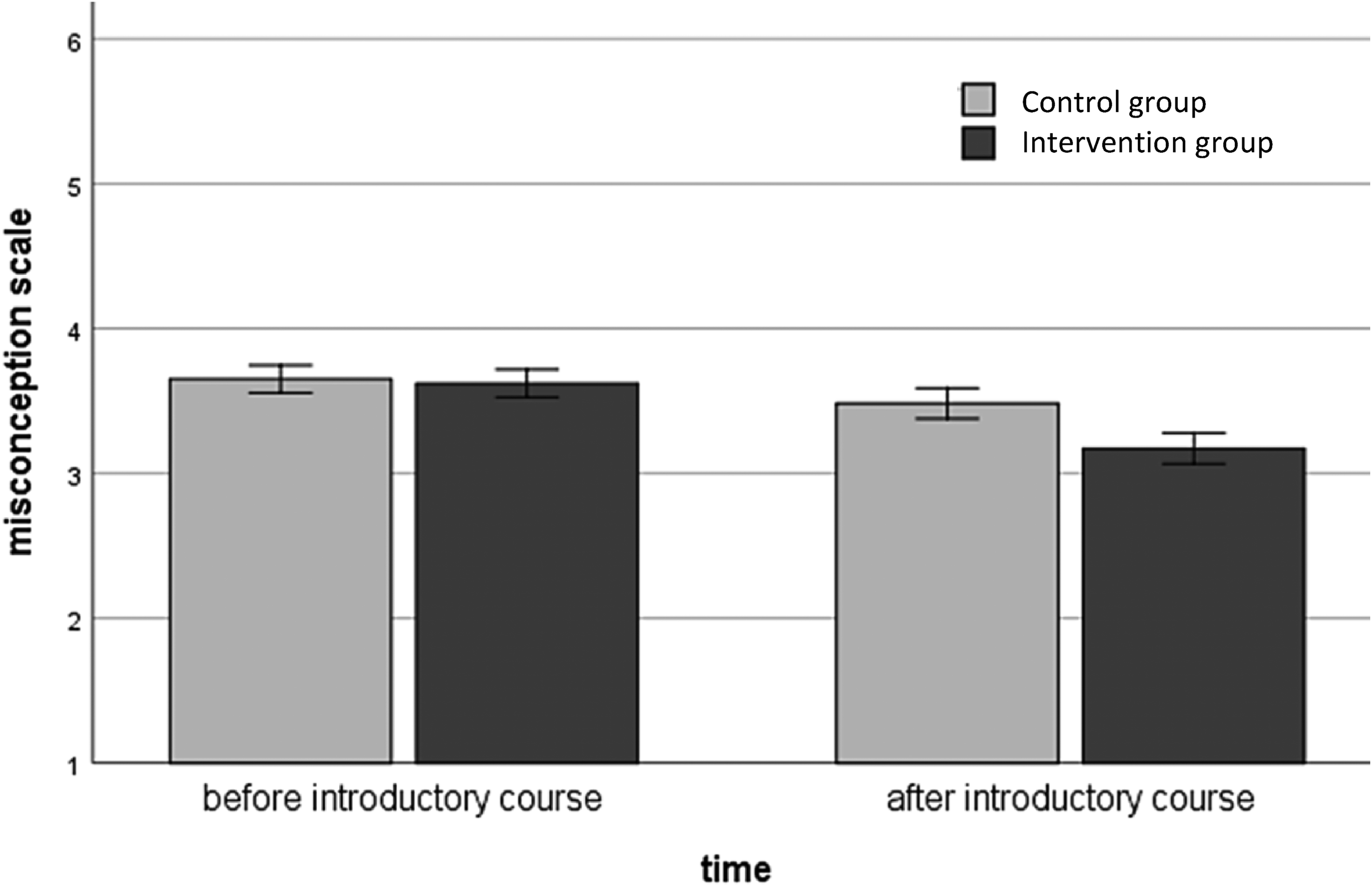
Mean misconception scores for the intervention group and the control group controlled for initial NFC and NCC. Standard errors are represented by error bars.
Overall, course content covered selected topics from the various subdisciplines in the field of psychology. We used a Moodle platform for introducing the readings and tasks between the lectures and for students’ individualized, independent submission of the written assignments due before the next lecture session took place. As already noted, assignments on both groups also included an introduction and a textbook chapter to read. Students had 10 days to complete each assignment, with brief overall feedback on the basis of a representative sample of submissions given at the start of the subsequent lecture.
Students that participated in the study completed online questionnaires at the beginning (T1) of the course and 5 months after its conclusion (T2). Additionally, 25% of the participants completed the misconception scale (see below) as a follow-up measure (T3) at the end of the following semester (that is, 5 months after T2). In addition, need for cognition, need for cognitive closure, critical thinking, and students’ achievement level (final grade attained in school-leaving qualification) were recorded at T1, and students’ domain-specific epistemic beliefs, course engagement, perceived value of the course content, critical thinking, and course exam performance were recorded at T2. Independent samples t-tests and chi-square tests were used for initial group comparisons of equivalency. Hypothesis-driven ANCOVAs with repeated measures, controlling for baseline scores in personal moderators, were performed on the post-course ratings of misconceptions, critical thinking, and epistemic beliefs.
Measures
Psychological Misconceptions
We developed a 60-item scale compiled fundamentally from existing instruments (Hughes et al., 2013, Lilienfeld et al., 2010; Taylor & Kowalski, 2012) and consisting of 47 incorrect and 13 correct statements (filler items) from various different areas of psychology (see Table 1). We adapted original items from earlier studies (Brown, 1984; Higbee & Clay, 1998) and added items in the same format on the basis of more recent research into psychological misconceptions (De Bruyckere et al., 2015; Dekker et al., 2012; Gardner & Brown, 2013; Lilienfeld et al., 2010; Lyddy & Hughes, 2012). Misconceptions covered a broad range of topics which were not restricted to teaching and learning, but we took care to include numerous misconceptions of potential relevance to the school context, the teaching profession, and to the work with young people. Agreement or disagreement was recorded using a 6-point, confidence-weighted response scale; participants could rate each statement from 1 (“certainly false”) to 6 (“certainly true”) to indicate the degree of their response's certainty (for another approach but with similar reasoning see Eitel et al., 2021). The two mid-scale options, coded as 3 (“possibly false”) and 4 (“possibly true”), thus corresponded to the greatest uncertainty in response behavior (or, in other words, the highest probability of “guessing”); a greater subjective certainty appeared at 2 (“rather false”) or 5 (“rather true”). The certainty of students’ responses had nothing to do with the statements’ correctness or otherwise; a student selecting “certainly (or rather) true” will often have been agreeing with a misconception. The 13 filler items that contained correct statements were not included in further analysis—examples include “Psychology as a science investigates human experience and behavior” and “We completely ignore more than 90% of the information that comes at us in the course of a day”. The internal consistency of the 47 misconceptions proved to be satisfactory (Cronbach's α = .80 at T1 and α = .82 at T2).
Misconception scores, frequencies of endorsement and rejection, means and standard deviations of moderators and outcomes by group
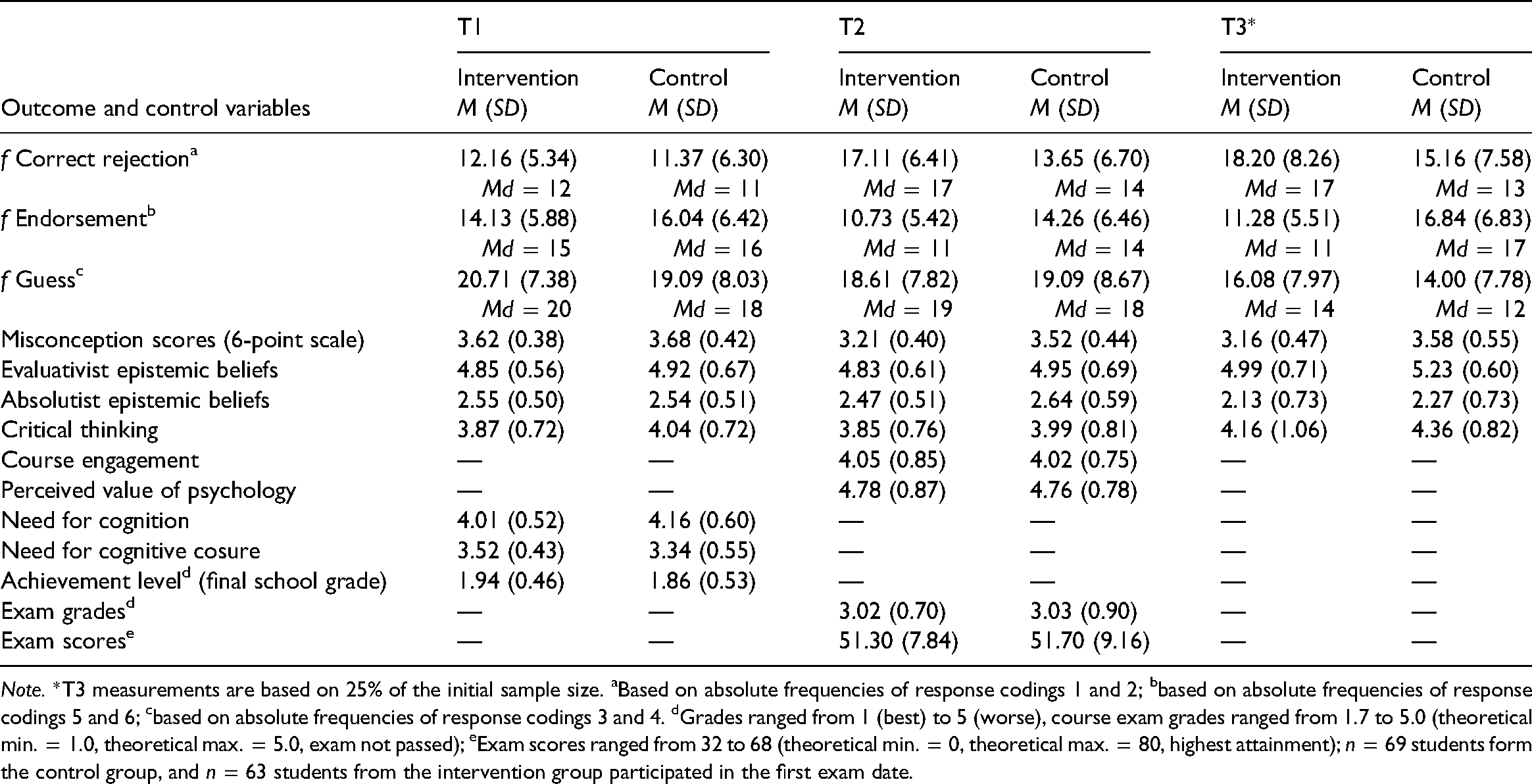
Note. *T3 measurements are based on 25% of the initial sample size. aBased on absolute frequencies of response codings 1 and 2; bbased on absolute frequencies of response codings 5 and 6; cbased on absolute frequencies of response codings 3 and 4. dGrades ranged from 1 (best) to 5 (worse), course exam grades ranged from 1.7 to 5.0 (theoretical min. = 1.0, theoretical max. = 5.0, exam not passed); eExam scores ranged from 32 to 68 (theoretical min. = 0, theoretical max. = 80, highest attainment); n = 69 students form the control group, and n = 63 students from the intervention group participated in the first exam date.
All items of the measurements described in the following were rated on a 6-point scale, ranging from 1 (“not at all true”) to 6 (“completely true”).
Epistemic Beliefs
Drawing on the work by Peter et al. (2016) and Mayer and Rosman (2016), six items (α = .79) were used to assess evaluativism and 12 items (α = .78) to assess absolutism in students’ domain-specific epistemological beliefs. Sample items are “To be able to trust knowledge claims in psychology, various knowledge sources have to be checked” (evaluativism), and “There is always exactly one right answer to questions in psychology” (absolutism).
Critical Thinking
We used a 5-item scale from the Motivated Strategies for Learning Questionnaire (MSQL, Pintrich et al., 1993) which was translated into German by Vogl et al., 2018). Sample items for critical thinking are “I often find myself questioning things I hear or read in this course to decide if I find them convincing” and “When a theory, interpretation, or conclusion is presented in class or in the readings, I try to decide if there is good supporting evidence”. Internal consistency was good (α = .82).
Need for Cognition
We used an 8-item version of the NFC scale by Cacioppo and Petty (1982) to assess individual differences in need for cognition (α = .71; some reversed items). A sample item reads “I would prefer complex to simple problems”.
Need for Cognitive Closure
A well-documented short-scale developed by Schlink and Walther (2007), based on the Need for cognitive closure scale by Pierro and Kruglanski (2007), served to assess students’ need for cognitive closure. The scale comprised 16 items (α = .73).
Course Engagement
We developed five items for students’ engagement throughout the course; they included items like “I attended the lectures as often and regularly as possible” and “I prepared for the lectures regularly”. Internal consistency was acceptable (α = .69). In addition, we recorded whether students submitted assignments on time and had completed them in accordance with the instructions issued.
Perceived Value
Six items (α = .90) addressed the utility value (e. g., “Psychology in my studies will benefit me a lot in my later career”), attainment value (e.g., “It's important to me to be good at psychology”), and intrinsic value (e.g., “I find psychology interesting”) ascribed by students to the course, with two items covering each type of value.
Achievement Level and Course Performance
Participants self-reported the final grades they had attained in their school-leaving qualification (ranging from 1 = best grade to 5 = lowest grade), which we used as a control variable for overall achievement level. Written exams took place after the course; we recorded the grades attained, from 1 (best performance) to 5 (exam not passed), and the corresponding scores (ranging from 0 to 80 points).
Results
The groups did not significantly differ on age, gender, or achievement level (ps > .05). All students were within their first year of study. We found no statistically significant differences in baseline measures of critical thinking skills (t(178) = 1.563, p = .12) and of need for cognition (NFC: t(178) = 1.727, p = .09). However, students in the intervention group scored slightly higher in need for cognitive closure (NCC: t(178) = -2.441, p = .02) than did those in the control group (Minter = 3.52, SD = 0.43, Mcontrol = 3.34, SD = 0.55). NFC (r = -.15, p = .04) and NCC (r = .16, p = .03) were associated with students misconceptions; NFC negatively correlated with absolutism (r = -.20, p = .01) and it positively correlated with evaluativism (r = .19, p = .01), whereas NCC did not. Groups did not significantly differ in their self-reported course engagement or in the value they placed on psychology (ps > .05). Table 1 provides an overview of all means and standard deviations.
There was no significant difference between the two groups in misconception scores (using the 6-point scale) at the beginning of the course (see Table 1). Table 2 presents a ranking of the 47 misconceptions, indicating that, prior to the introductory psychology course, the most inaccurate beliefs among student teachers appear with respect to topics relevant to teaching and learning. The most prominent myth with highest certainty of endorsement was that of learning styles (M = 5.14, SD = 0.87, theoretical max. = 6), followed by the belief that higher motivation always leads to better performance, and the notion that repetition is the best learning strategy for the retention of content to be learned. Results of repeated measures ANCOVAs, with misconception scores at T1 and T2 and controlling for baseline NFC and NCC, indicated a significant interaction effect by time and group (Wilks λ = .930, F(1,165) = 12.49, p = .002, ηp² = .07). Figure 2 illustrates the significantly greater decrease of misconceptions in the intervention group. Follow-up assessment of about 25% of the sample (n = 25 students from the intervention group, and n = 20 students from the initial control group) on the misconception scale showed persistent differences between the groups at T3, i.e. 5 months later, at the end of the subsequent semester (t(43) = 2.748, p = .009, Minter = 3.16, SD = 0.47, Mcontrol = 3.58, SD = 0.55); the effect size was moderate to large (η² = .15 or Cohen's d = 0.82).
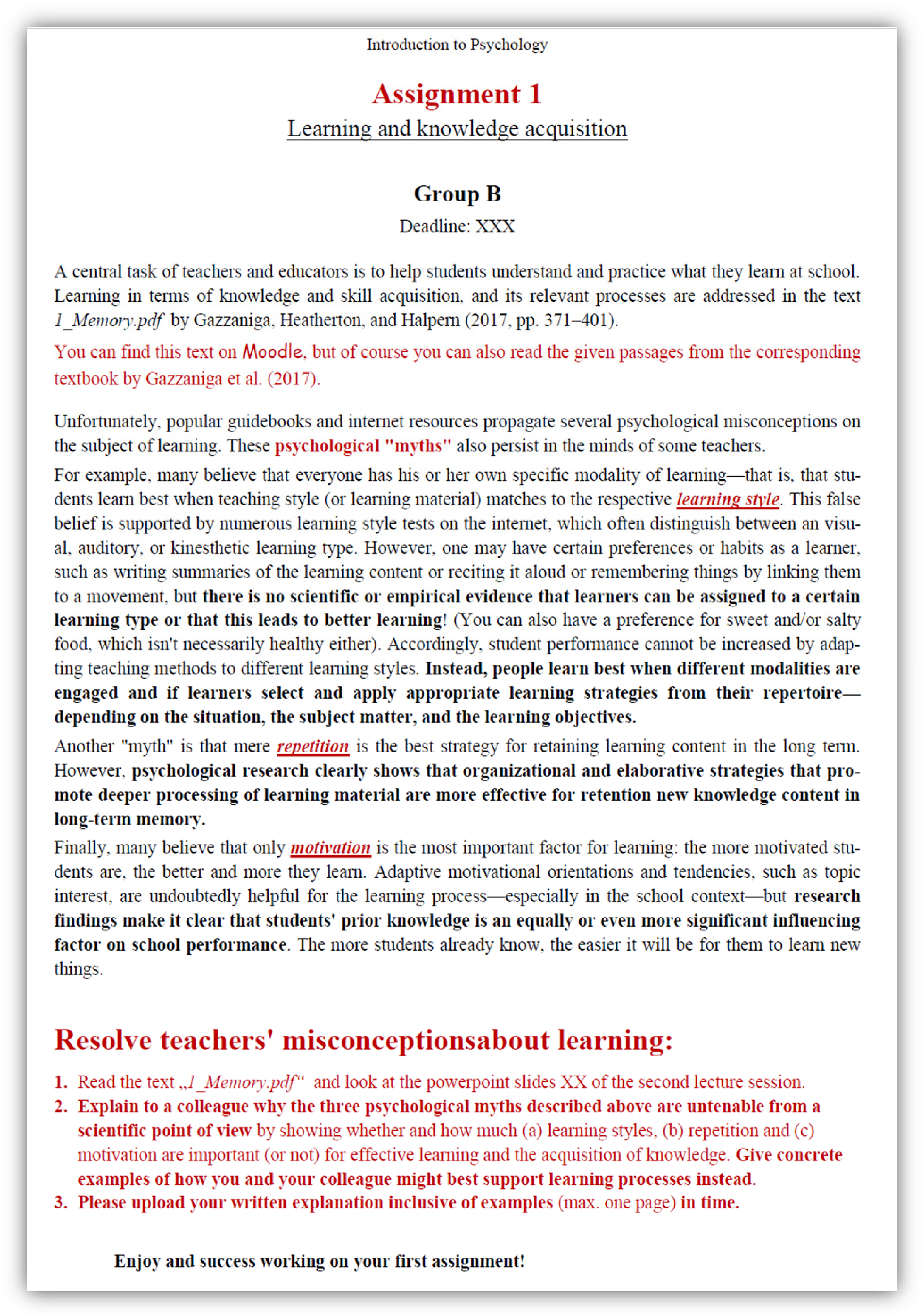
Sample assignment (translated from German into English language by the Author).
Deskriptive statistics of misconceptions, ranked by highest endorsement at T1
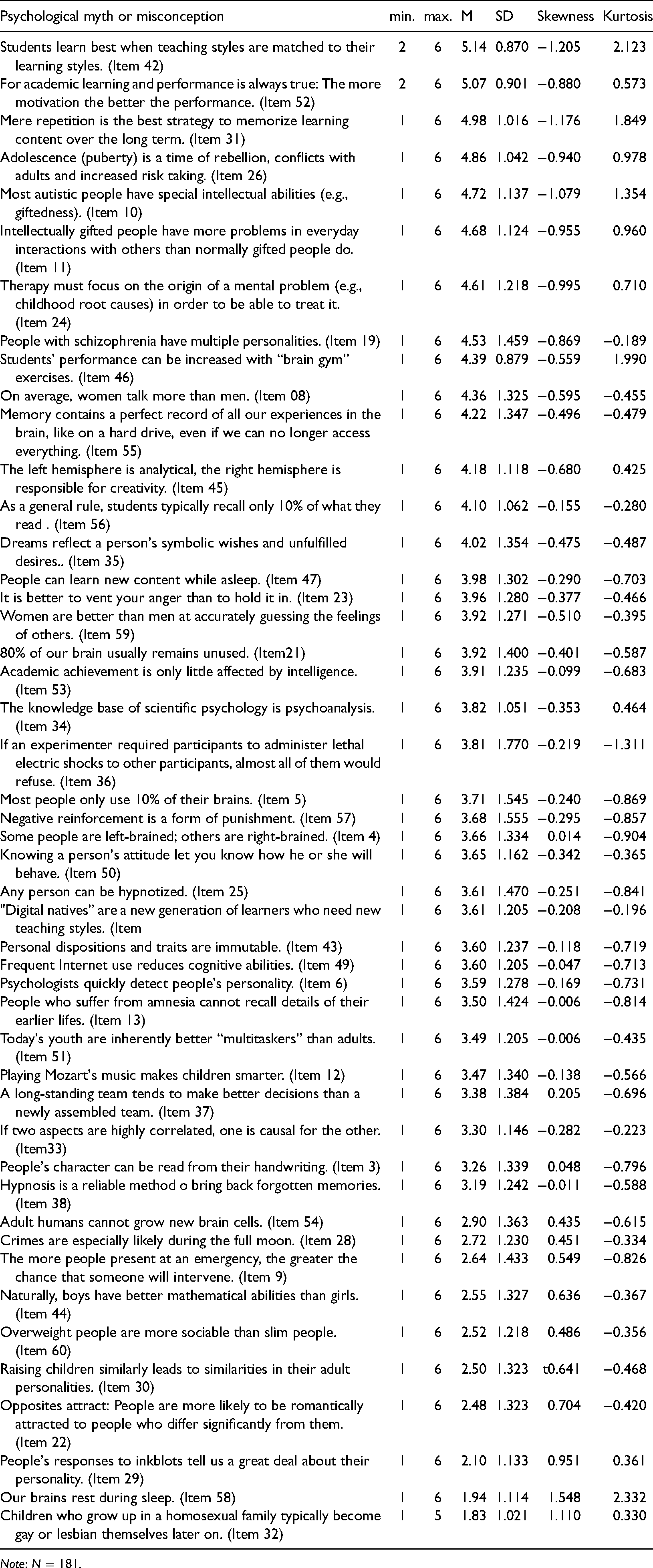
Note: N = 181.
The study by Hughes et al. (2015) overcame the binary true-false format, but considered misconception endorsement at any level of agreement (“certainly/rather/possibly true”) and misconception rejection at any level of disagreement (“certainly/rather/possibly false”) with each item. Our approach differed from this in that we categorized only response options 1 and 2 (“certainly/rather false”) as indicators of (correct) rejection, and response options 5 and 6 (“certainly/rather true”) as indicators of (myth) endorsement. At the beginning of the semester, students correctly rejected, on average, 25.5% of all 47 misconceptions, with no significant differences between the groups (see Table 1 for frequencies in each group), and both groups of students endorsed—with high or relatively high certainty—34% of the misconceptions. At T2, students from the intervention group rejected significantly larger numbers of misconceptions (t(182) = -3.457, p = .001, η² = .07), and endorsed significantly less misconceptions (t(182) = 3.893, p < .001, η² = .08).
With respect to domain-specific epistemic beliefs (see Table 1 for descriptive statistics by condition), we found a significant decrease in absolutist epistemic beliefs in the intervention group (controlled for absolutist epistemic beliefs at T1: F(1,169) = 58.605, p < .001, ηp² = .26, and controlled for need for cognition at T1: F(1,169) = 9.413, p = .003, ηp² = .05), represented in a significant interaction effect by time and group (Wilks λ = .975, F(1,165) = 4.168, p = .037, ηp² = .03). The corresponding ANCOVA with repeated measures for students’ evaluativist epistemic beliefs revealed no significant changes. Neither significant changes in critical thinking were found at any time point.
As expected, groups did not significantly differ in exam performance, but associations between exam performance (i. e., higher exam scores represent higher achievement) and high-confidence rejections of psychological misconceptions (r = .19, p = .033), as well as myth endorsement (r = -.26, p = .003), underpin the potential of the intervention. Important to note, the course exam did not explicitly address any misconceptions or knowledge transfer, nor was it tailored to the assignments. Critical thinking skills were positively associated with evaluativist epistemic beliefs (r = .27, p < .001), but only the latter correlated significantly with the rejection of misconceptions (r = .30, p < .001).
Discussion
The aim of this experimental field study was to examine a simple intervention to reduce student teachers psychological misconceptions embedded in an higher education introductory psychology course. Therefore, compared to conventional assignments in the control condition, assignments in the intervention condition were designed for conceptual change, including different refutation strategies. Although only a few and selected myths from different fields of psychology were addressed (e.g., bystander effect within social psychology, learning style myth within educational psychology, or the misconception that correlation equals causality), our findings indicate the intervention's effectiveness in reducing several of students’ misconceptions around psychology. There was no effect on the number of uncertain response options (labeled here as “guessed”). Furthermore, it yielded in a reduction of students’ absolutist epistemic beliefs—important to understand the nature of scientific psychological knowledge, and a buffer against unreflected myth endorsement. Furthermore, the present findings are supportive of various efforts (and variations of refutation strategies) to reduce students’ psychological misconceptions (e.g., LaCaille, 2015).
Regarding the prevalence of psychological misconceptions among student teachers, it became apparent that the student teachers of our convenience sample particularly hold misconceptions on topics related to teaching and learning. Besides other, we found the myth of learning styles to be highly prevalent—a misconception which, research suggests, continues to thrive within the pedagogical literature, despite its repeated refutation by empirical work (Newton, 2015). A look at our follow-up data also leaves little room for optimism: Successfully reduced at T2, endorsement of the learning style myth seems to increase again at T3—at least for 25% of students of the initial intervention group (T1: Minter (SD) = 5.08 (0.90), T2: Minter (SD) = 3.85 (1.80), T3: Minter (SD) = 4.08 (1.95)). However, we still found significant overall group differences in students’ endorsement of misconception almost one year later, and increased variance in students’ confidence of myth endorsement.
The triggering of conceptual change is challenging in general. In relation to the endeavor to change existing misconceptions and reject myths about psychology, the challenge may be particularly acute in the case of student teachers, who have relatively little exposure to psychological content, methodologies, and epistemology in the course of their studies. Indeed, some of the myths in our study were relatively persistent, among them the notion that higher motivation is always associated with better performance. This belief was still strongly endorsed after the intervention, although addressed in the assignment (see Table 3). This finding underlines the importance of early myth debunking pedagogies in teacher education, because particularly misconceptions with respect to educational psychology might to be more resistant to change than others in the case of student teachers.
In this light, the present study demonstrates the viability of slightly modified tasks as a route to reduction of psychological misconceptions—at least in the short term—as our results indicate significant changes in student teachers’ beliefs when we used different tasks despite common refutational readings. This suggests that a combination of pedagogies might be most efficacious at changing students’ misconceptions, and that such efforts in introductory courses should be continued in subsequent courses. In our study, we only slightly modified the assignments in the intervention condition and still found moderate effects on the reduction of misconceptions. Thus, such an intervention could easily be implemented in conventional lectures by addressing common misconceptions on the respective topic and the use of assignments that facilitate conceptual change. Therefore, the present study might stimulate psychology courses in teacher education but other (introductory) psychology courses targeting a large student population (APA, 2014; Gurung & Neufeld, 2021) with the aim of to dispelling psychological myths.
It is important to mention that we carefully debriefed all participants, especially students in the control group, after the study ended (immediately after the last questionnaire and at the beginning of the following semester in full detail). We informed them that all statements of the questionnaire (except the 13 filler items) cannot be confirmed from today's scientific point of view and can be identified as psychological myths, and we discussed the flaws in each statement based on current research and theory. Our data, and the associated conclusions on the lasting effect of the assignments set, are limited in that the follow-up sample was reduced from the original one. It is a challenging endeavor to collect data on pedagogical interventions beyond the conclusion of a semester and to assess the persistence or modification of misconceptions longitudinally. However, recent work in this area has suggested that students report fewer misconceptions 1–2 years subsequently to an introductory psychology course which had explicitly addressed misconceptions (Kowalski & Taylor, 2017; McCarthy & Frantz, 2016).
In addition, this study has another limitation specific to the natural course environment. Although we realized a randomized experimental design, there was potential for contamination between the intervention and the control group due to the naturalistic setting (in other words, students would have been able to discuss the assignments). As LaCaille et al. (2019) pointed out, it is possible that some students in our control group may have known of other students who were part of the intervention group. However, students were not aware at any time that the division of the lecture into two groups was intertwined with an experimental design, because all students enrolled in the lecture (not only study participants) were randomly assigned to one of the two groups and the bi-weekly holding of the lecture (alternating for the two groups) had become necessary for organizational reasons and lack of room capacity. Furthermore, comments from students did not provide any indication that they were discussing or sharing the assignments across lecture groups. Furthermore, students also had to individually upload their assignments to the learning platform, and each other's submissions were never visible.
Another point of concern might be that students in the intervention group might have spent more time on task. We could not control for students’ time on task (e.g., via log files), but designed the assignments in such a way that both groups had to process the tasks to a similar extent. The participants of the control group only had to read up to half a page more (information about the myth or refutation text or similar).
Despite these limitations, this study contributes to the literature on dispelling psychological misconceptions well as to research on student teacher's psychological misconceptions in particular. By including research on psychological misconceptions to the larger literature on science education and conceptual change, this study suggests a feasible approach to dispelling misconceptions in introductory psychology courses without additional trainings or individual tutoring. In comparison with a “real” control group in which students also worked on meaningful tasks to support their own learning, we found promising results by little modifications of conventional self-study assignments.
Top Ten of misconceptions in the intervention group before and after the course
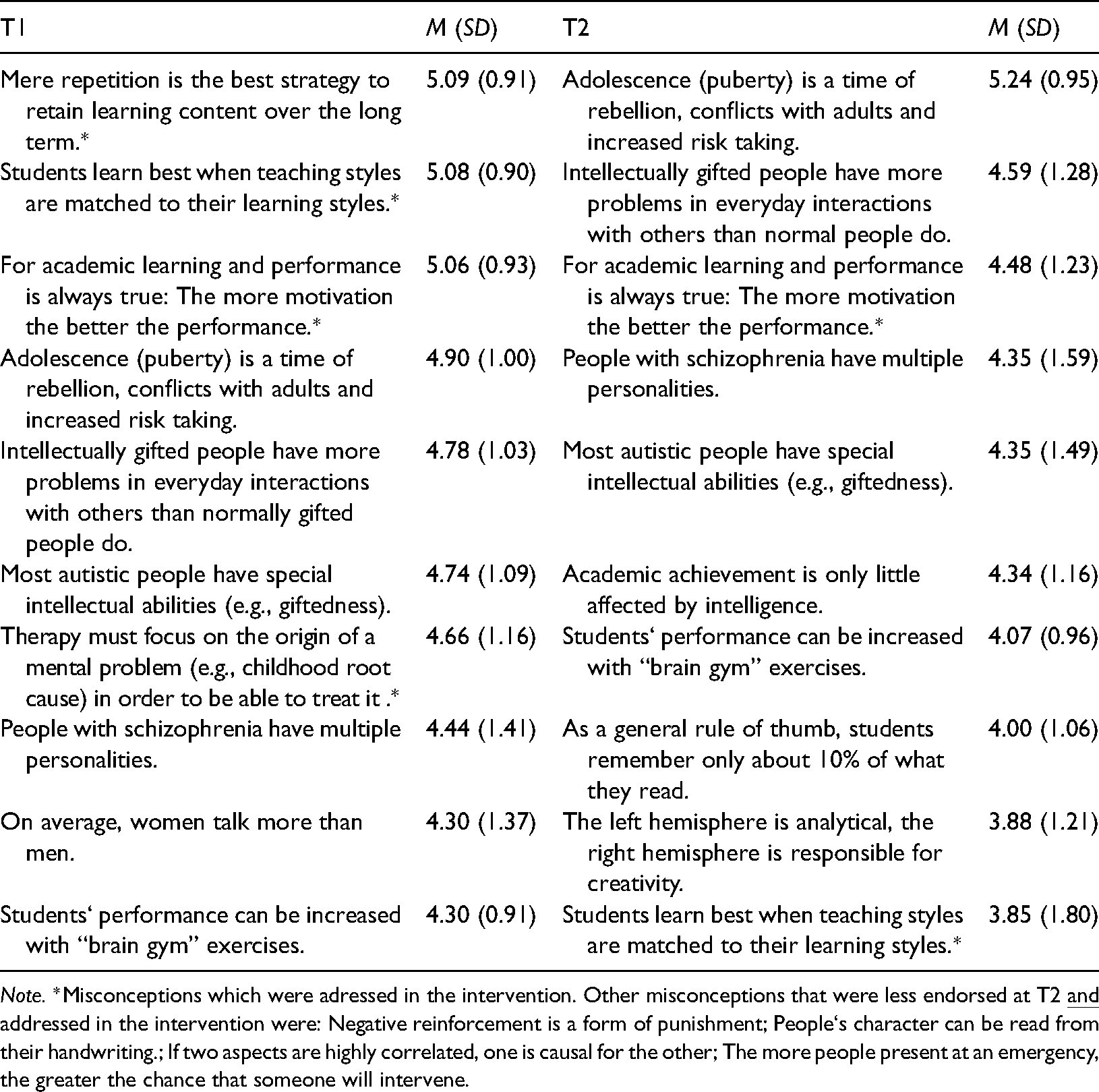
Note. *Misconceptions which were adressed in the intervention. Other misconceptions that were less endorsed at T2
Footnotes
Declaration of Conflicting Interests
The author(s) declared no potential conflicts of interest with respect to the research, authorship, and/or publication of this article.
Funding
The author(s) received no financial support for the research, authorship, and/or publication of this article.

Author Biography
On the one hand, her research focuses on the acquisition of psychological competences. In this respect, she is particularly interested in the use of everyday psychological (mis)conceptions as learning opportunities. On the other hand, her research addresses the individual and contextual conditions for adaptive dealing with errors and misconceptions in academic settings. More specifically, she explores the determinants for overcoming failure and effective learning from errors with a special focus on motivational and emotional self-regulation, and adaptive orientations and beliefs.