




Abstract
Globalisation has become increasingly important in education, and national systems are no longer defined only by the nation-state. The role of intergovernmental organisations such as the OECD has also become increasingly important, particularly through the development of the PISA tests and the publication of international comparison tables. With a growing recognition of educating for an international and globalised future, the OECD assessed global competence for the first time in 2018, with results released in October 2020. The power that the OECD exerts over its member states, and indeed further, in the field of education through the global competence assessment demonstrates social reproduction. This article examines the OECD’s 2018 Global Competence Framework from a Bourdieusian perspective. An analysis is undertaken of the framework using Bourdieu’s thinking tools of habitus, field and capital, and the mechanisms of pedagogic authority, pedagogic action and pedagogic work, demonstrating an unconsciously agreed power differential between social groups. The OECD, as well as policy-makers at a national level, must consider such implications in anticipating future policy developments in order to enable systemic injustices to be overcome and educational equality to be achieved.
Introduction
The force of globalisation has become increasingly important in education, with discourse positions in the field representing a full spectrum of opinion, from critical to appreciative (Grotlüschen, 2018). Whilst globalisation is not a new concept, the speed at which societal changes are taking place has increased (Wilson, 2003). Among many significant global changes, we have witnessed migration, climate change, resource depletion, digitalisation and demographic change (Salzer and Roczen, 2018), creating societies which have become more interconnected than ever before. Educators have responded to these changes in society and consequently the idea of ‘global education’ has emerged; what Reimers (2013) referred to as ‘the new civics of the 21st Century’ (p 1). This development of global education has ensured that national education systems are no longer wholly determined by the nation-state; they are developed alongside processes occurring in global networks (Rizvi and Lingard, 2010) and require new ways of understanding these connections and how they inform education policy (Stray and Wood, 2020).
Whilst international organisations have long contributed towards the development of a global view of education, they have recently become highly influential in shaping educational policy at the national level (Rizvi and Lingard, 2006; Meyer, 2014). Grotlüschen (2018) indicated that both the Organisation for Economic Cooperation and Development (OECD) and the United Nations Education, Scientific and Cultural Organization (UNESCO) provide an educational answer to globalisation, and it has been noted that the OECD is actively working to position itself as the major assessor of the UN’s Sustainable Development Goals (Engel et al, 2019). As a result, PISA (Programme for International Student Assessment) has become a successful enterprise for the OECD (Meyer, 2014).
The PISA assessments are administered every three years, with tests in three literacy domains (mathematics, reading and science) and one cross-curricular competence per cycle (Salzer and Roczen, 2018). The criterion for selection of the cross-curricular competence is that it should provide information on how prepared students are for full participation in their society and lifelong learning. In addition, the particular competence needs also to be ‘innovative’ (Salzer and Roczen, 2018). The PISA cross-curricular competence domains are also subject to a phase of development before they are ready to be piloted (Grotlüschen, 2018). In 2016 it was announced that global competence was selected for the 2018 cycle (Ledger et al, 2019) with Andreas Schleicher presenting a webinar entitled ‘A proposal for the PISA 2018 Assessment of Global Competence’ (Schleicher, 2016). The OECD categorises the concept of global competence as a core concern of education systems globally and elevates its own position as a leader in assessing such a core concern (Lawn, 2006; Meyer, 2014).
In the 2016 webinar, Schleicher outlined expectations of what the future of global educational systems might be. Based upon available data of ongoing digitalisation, growing inequalities and continued migration, and indeed the associated matters of developing communication technology, Schleicher deduced that this was a rationale for the inclusion of a global competence domain in the PISA framework (Grotlüschen, 2018; Salzer and Roczen, 2018). The Asia Society and the OECD (2018) summarised this development as ‘a remarkable moment of global consensus’ (p 4), which potentially referred to the OECD and UN agreeing on assessing the concept of global competence, as opposed to the content of the framework, but nonetheless suggested validity of the work. Notably, the expert group responsible for the development of the global competence domain comprised only seven individuals in the initial stage, progressing to just four individuals in the second stage. In addition, a project team from the multinational publishing and education company Pearson (headquartered in London) supported the whole process in face-to-face meetings where they developed a definition, framework and methodology for the assessment of this innovative domain (OECD, 2014). Pearson’s involvement in the process is likely political since their influence encompasses 70 countries (Pearson, 2020).
Conceptions of global competence remain ‘at best amorphous and at worst divisive’ (Engel et al, 2018: 117) with the creation of different definitions proposed by UNESCO (2015), Asia Society (Boix Mansilla and Jackson, 2011) and the OECD (2018), amongst others (Zhao, 2010; Reimers, 2013; Ledger et al, 2019). For the purposes of this paper, the OECD’s definition will be employed in order to provide a consistent basis for the discussion even if there is less than universal support for its formula:
‘the capacity to examine local, global and intercultural issues, to understand and appreciate the perspectives and world views of others, to engage in open, appropriate and effective interactions with people from different cultures, and to act for collective well-being and sustainable development’ (OECD, 2018: 4).
The purpose of assessing global competence was to ‘gather data on how well students are prepared to examine contemporary issues of local, global, and intercultural significance and live in multicultural societies’ (Asia Society/OECD, 2018: 5). Additionally, the assessment aimed to drive the pursuit of global competence more intentionally and systematically through the identification of what is working in education globally (Asia Society/OECD, 2018). The results of the assessment were released in October 2020 both in a live stream (OECD, 2020a) presented by Schleicher, which was followed by a Q&A session, and a report (OECD, 2020b).
While there is value to be found in the work that the OECD has undertaken by assessing global competence for the first time, there should be recognition of the view that the OECD is a driver of neoliberal (free market) education policy that can produce contradictory effects within national systems (Grek, 2009; Bieber and Martens, 2011; Meyer, 2014). Acknowledging this criticism, this article considers Bourdieu’s (1977) Theory of Practice as a theoretical framework for investigating the power relations at work in the OECD’s assessment of global competence. Bourdieu’s theoretical framework is considered appropriate as the basis for critiquing the Global Competence Framework since the OECD could be considered to be an example of an organisation legitimising power relations.
Bourdieu’s Theory of Practice
Pierre Bourdieu has come to be regarded as ‘one of the most influential figures of the twentieth century in the social science realm’ (Yang, 2014: 1522). His Outline of a Theory of Practice was first published in 1972 in French and was updated, translated and published in English in 1977 (Bourdieu, 1977). His work includes three main ‘thinking tools’ (Bourdieu in Wacquant 1989: 5) of habitus, field and capital which can contribute to understanding education policy in an age of globalisation (Rawolle and Lingard, 2008).
Habitus is ‘history turned into nature’ (Bourdieu, 1977: 78) in which Bourdieu aimed to surpass various existing dichotomies, including those between the past, present and future (Yang, 2014) and indicates the socially developed capacity for acting appropriately (Rawolle and Lingard, 2008). An example of habitus in the case of global competence might be how the OECD developed the concept of global competence. Bourdieu described field as a conceptual space or social structure which is relatively autonomous (Verter, 2003), which might represent how education is understood across the OECD’s territory. Bourdieu described capital as a force underlying the social world (Bourdieu, 1984) that can be viewed as relating to money or relationships which might contribute towards legitimising the OECD’s view of global competence. The Theory of Practice outlines how agents within a field engage in transactions of various forms of capital in order to maximise their position. It is an important theoretical perspective in considering the influence of the OECD’s assessment of global competence, as Bourdieu’s approach to the study of social and cultural reproduction brings coherence to the sociology of education (Nash, 1990).
Habitus
Bourdieu introduced habitus to ‘account for cultural disjuncture and social transformation’ (Wacquant, 2014: 5), although this was critiqued for its ambiguity (Crossley, 2013) and determinist position (Connell, 1983). Bourdieu and Wacquant (1992) suggested that habitus is a consequence of history that is subjected to and affected by ongoing experiences which results in it being a set of dispositions (Lingard et al, 2015). Bourdieu (1977) discussed the ‘unconscious’ (p 78) as the forgetting of history; long histories, which are the constructs informing social life, are forgotten and become the unconscious, causing social life to develop without learning from the lessons of the past (Bourdieu, 1977).
If ‘habitus is the analytic link that connects individual behavior and social structure’ (Vaughan, 2008), then there is an interesting duality when considering the OECD’s assessment of global competence. On the one hand, when global competence is broken down into its individual components – such as examining issues at different scales, considering the world views of others, engaging with people from different cultures – these are not recent phenomena. However, and on the other hand, globalisation, with time and space convergence, has been taking place at a faster rate than ever before in history. Moreover, global competence and its meaning had never before been defined, discussed and assessed on such a large scale, by an organisation with such gravitas and power. Therefore, the doxa (defined by Bourdieu as the experience by which ‘the natural and social world appears as self-evident’ (1977: 164)) within this more recent field are still developing, and it is possible that there will be an evolution of symbolic capital (the value attached to prestige) towards the newly developed innovative domain and its assessment. Consequently, and as the OECD’s Global Competence Framework is explored with Bourdieu’s model, it is possible that some of the outcomes will be contrary to the intent of the framework and contribute to the reproduction of inequality within society.
Field
Bourdieu defined field as ‘a network, or configuration, of objective relations between positions’ (Bourdieu and Wacquant, 1992: 97) and subsequently described it as a structured social space in which agents are articulated as such, and in which social struggles occur (Bourdieu, 1998). Fields are considered to be relatively autonomous (Verter, 2003; Hilgers and Mangez, 2015) although they do have a level of regulation which enables some forms of symbolic capital and habitus to develop (Stray and Wood, 2020). For the purposes of this article, the field is considered to be one of global education, aligned with PISA’s influence. Important to field theory is the understanding that the structure of a field is likely to be affected by two opposing forces; those that are internal and those that are external (Mangers and Hilgers, 2012). In the case of global competence, the OECD could be considered an external force. The power acting within the field is therefore an important conceptual construct for understanding the structure of a field. When thinking about field theory in relation to global education, the growth in the value of capital (that is often economic in our neoliberal society) can reduce the autonomy of the fields (Mangers and Hilgers, 2012). However, power balances within fields are constantly changing due to internal struggles, as Swartz (1997) stated: ‘as cultural fields grow in autonomy from political and economic power, they gain in symbolic power’ (p 127).
Capital
Capital is accumulated over time and is necessary in all of its forms to explain how the social world is structured and how it functions (Bourdieu, 1986). Bourdieu recognised four kinds of capital: economic, social, cultural and symbolic (Bourdieu, 1983). Economic capital is the primary form of capital, converting directly into money (Bonanno, 2018); social capital involves investment in the development of social relationships, in order to reap returns later on (Lin, 2001), that are distributed inequitably between various social groups (English and Bolton, 2015). Cultural capital appears in a muted form, under a pretence of institutionalisation (establishing something as a norm within an organisation), objectification (degrading someone to the status of an object) and embodied developments (those given visible form) (Lin, 2001). In its institutionalised form, cultural capital takes the form of an item of cultural competence, such as a certificate that distinguishes between holders and non-holders (Walther, 2015). The objective form of cultural capital exists in a physical state, such as books or artwork, whereas the embodied form encompasses an agent’s intellectual qualifications (Walther, 2015). Bourdieu (1984) identified a correlation between educational capital and the endeavour of appreciating a work outside of its context, so that cultural capital remains even if commercial capital is lost. His 1984 work also recognised the correlation between qualifications (educational capital) and social class.
Symbolic capital refers to a phenomenon that is not recognised as capital, but seen instead as genuine competence (Bourdieu, 1983). It refers to capital in any form as it is represented symbolically and assumes the ‘intervention of the habitus, as a socially constituted cognitive capacity’ (Bourdieu, 1983: 257). For the OECD, ‘economic success relies on human capital’ (Keeley, 2007: 3), which the OECD define as ‘the knowledge, skills, competencies and attributes embodied in individuals that facilitate the creation of personal, social and economic well-being’ (Keeley, 2007: 29). It is conceivable that the development of the global competence assessment was part of the OECD’s commitment to human capital theory (Engel et al, 2019) as well as their traditional emphasis on global knowledge workers (Auld and Morris, 2019) that will contribute to further developing their neoliberal agenda to improve ‘curricula, teaching, assessments and schools’ responses to cultural diversity in order to prepare young people to become global citizens’ (OECD, 2018: 6). However, in reality the framework could be contributing to further reproducing educational inequality through the development of new symbolic capital as a result of the framework being widely accepted, particularly by those disadvantaged by it.
Social Reproduction
Social reproduction is another of Bourdieu’s concepts which concerns the replication of the ideals of the dominant culture (Bourdieu and Passeron, 1977). It also involves a level of symbolic violence, an unconsciously agreed and therefore legitimised power differential between social groups. Bourdieu and Passeron (1977) noted that all pedagogy is considered symbolic violence as it is imposed by someone in a position of power. It was further argued by Bourdieu and Passeron (1977) that education perpetuates social reproduction through the development of symbolic capital producing a habitus, conforming to and legitimising the cultural arbitrary – the value given by power relations in the field rather than by an intrinsic quality (Moore, 2004).
The purpose of the OECD’s Global Competence Framework and assessment was to promote cultural awareness and respectful interactions in diverse societies (OECD, 2018). In considering global competence through Bourdieu’s Theory of Practice one is contemplating the mechanisms required to overcome existing power relations and the symbolic capital attached to the OECD’s view of global competence, and the implications for the habitus and developing doxa in the relevant fields. It has been suggested that approaches to confront social inequalities which involve privatisation and a neoliberal agenda only serve to perpetuate inequalities (English and Bolton, 2015).
Furthermore, the assessment of global competence through PISA tests further reproduces the habitus, since tests themselves are not neutral indicators as they can be more aligned with certain curricula than others (English, 2010; English and Bolton, 2015). Examinations have become a power mechanism for those who wish to have educational institutions under control (Zanten, 2005) which demonstrate legitimisation of symbolic violence by an arbitrary power. The addition of an assessment for school-aged children by which teachers and governments are judged is arguably not helpful in improving global competence, particularly when this may not be part of an education strategy that educators are working towards – a possible explanation of why so many countries did not participate in the assessment.
Policy and Practice
The concept of interculturality became something to research in the eighteenth century with the development of the Human and Social Sciences (Simpson and Dervin, 2019). The movement subsequently gained further traction with the growth of international schooling following World War Two (Savva and Stanfield, 2018). The trend to recognise the importance of being globally competitive (at both individual and national levels) has developed in response to the challenges of increasing globalisation (Parker, 2011; Savva and Stanfield, 2018). The rise of the PISA assessments and the development of UNESCO’s Global Citizenship Education in the 2010s have both contributed to the growing importance of this area of learning; in fact, prior to the OECD’s Global Competence Framework, the only global and open source guidance of any significance to support this interest was UNESCO’s Global Citizenship Education (Auld and Morris, 2019), although many private international schools subscribed to documents developed by the International Baccalaureate Organization.
Globalisation associated with capitalism has led to significant change for those with power globally, and it has been suggested that the transnational capitalist class is the ruling class in the global system (Sklair, 2016). Sklair had already discussed in 2002 the idea of major corporations using subtle methods to achieve political interests that would benefit economic aspirations, and it is possible that the OECD, as part of the transnational capitalist class, used their Global Competence Framework as one of these methods to reinforce their position as the major assessor of the Sustainable Development Goals. Engel et al (2019) suggested that critics view the OECD’s agenda as driving neoliberal policy which may well have contradictory effects within education systems, such as a trade-off between wanting to be viewed as a leader in assessment vs the desire to develop globally competent people. Bourdieu believed that education is a mechanism for regenerating the habitus (Bourdieu and Passeron, 1977) and thus, while it fits that the OECD were involved in developing the doxa and habitus to establish a new cultural arbitrary for global competence, the power structures facilitating the reproduction of bias should be considered. Figure 1 illustrates the OECD’s approach to assessing global competence.
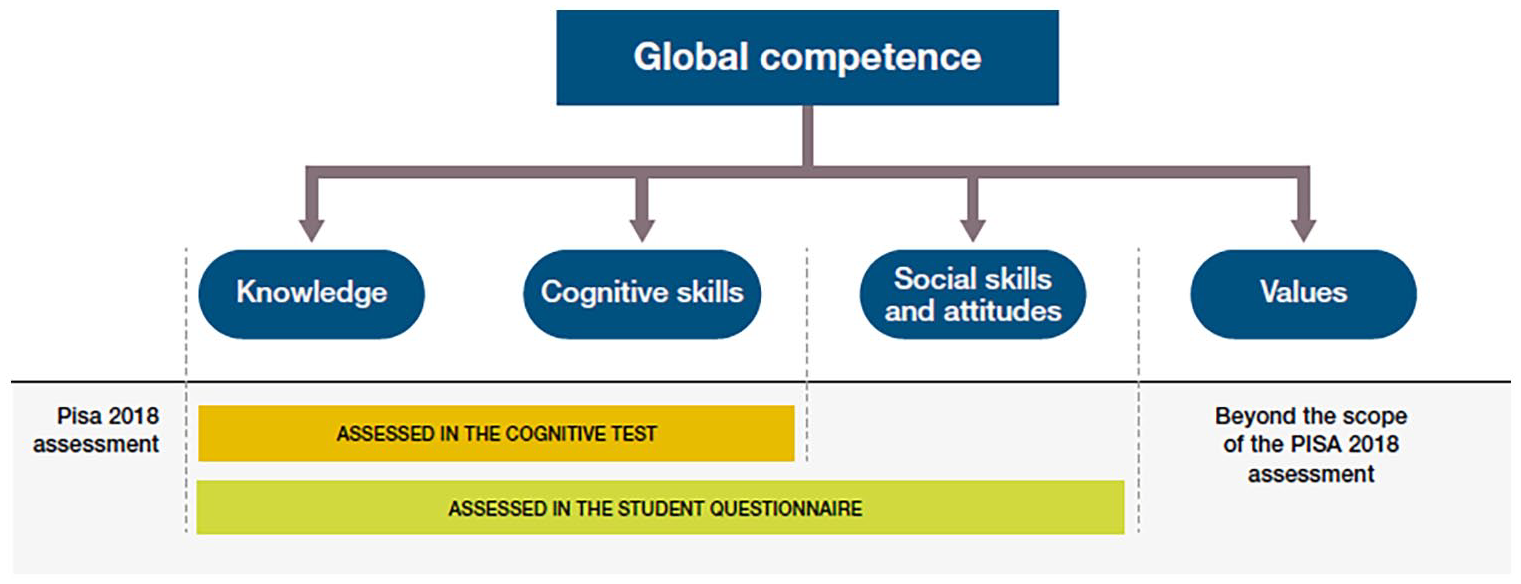
The OECD approach to assessing global competence (OECD, 2018).
While it is accepted that there were many challenges involved in the PISA assessment approaches, the approach indicated in Figure 1 makes clear that there were two parts to the assessment: a cognitive test and a questionnaire. It was stated that the questionnaire would not contribute to the international rankings but would ‘illustrate general patterns and differences within countries in the development of the skills and attitudes that contribute to global competence among 15-year-old students, as well as . . . analyse the relationship between those skills and attitudes and students’ results on the cognitive test’ (OECD, 2018: 22). The cognitive test is therefore what informed the international ranking for global competence, with the questionnaire contributing to the analysis of the results, although this was unclear prior to the release of the results in October 2020. Similarly, while it was acknowledged by the OECD that people from different cultural backgrounds may exaggerate their responses to questionnaire items on a Likert-type scale, there was no explanation of how this was overcome in the results. The release of the results did not address issues of data collection, although Schleicher did concede in the October 2020 live stream (OECD, 2020a) that the assessment should move beyond using a multiple-choice instrument if it were to be repeated. The report that accompanied the results (OECD, 2020b) acknowledged that the assessment of global competence only covered the cognitive element of the concept, which also includes ‘non-cognitive skills, attitudes and values’ (p 155). Likewise, it acknowledged that the assessment was administered digitally, and for countries that were not able to participate digitally, paper tests were provided for domains that had been assessed previously (reading, mathematics and science) (OECD, 2020b). Those countries that were unable to participate in the 2018 PISA tests digitally were unable to participate in the global competence assessment.
It has been noted (Grotlüschen, 2018; Salzer and Roczen, 2018; Simpson and Dervin, 2018; Auld and Morris, 2019; Engel et al, 2019) that the OECD’s framework lacked conceptual clarity, with countries viewing global competence in different ways. Grotlüschen (2018) questioned how global the framework is, suggesting that it focused on prejudices and xenophobia rather than on global issues, and that societal and political aspects are absent from the framework. Additionally, Engel et al (2019) suggested that the OECD’s narrow definition of global competence risks undermining the UN’s conception of global citizenship, as defined by UNESCO, in propagating global elites and global elitism. This is noticeable since only 11 of the 27 countries that participated in the global competence assessment were OECD countries (OECD, 2020b: 155), suggesting that the expert panel that compiled the framework and assessment, while representative of the OECD, might not have been representative of those who participated.
Engel et al (2019) also drew attention to the wide range of terminology linked to global competence and the overlap with other similar concepts, including global citizenship, cosmopolitanism, multiculturalism, intercultural competence and internationalism. The use of such comprehensive and often overlapping terminology has served to create confusion within the field with regard to the meaning of each concept, and has shown little regard for potential multilingual connotations such as tolerance, respect and democracy (Simpson and Dervin, 2019). Indeed, Salzer and Roczen (2018) suggested that theoretical work on the construct of global competence has been lacking. Consequently, it was impossible to refer to the sort of theoretical base which typically is available for established constructs such as reading, for example, for which a deep-rooted and sound research base has been developed.
Additionally, the reasons for the selection of global competence as the innovative domain to be assessed remain unclear; initially the rationale was based upon the OECD’s pursuit of the global knowledge worker, although the justification was subsequently adjusted to include assessment of the UN’s Sustainable Development Goals (SDGs) (Auld and Morris, 2019), suggesting that the development of the domain is connected to a desire of the OECD to be viewed as a leader in the assessment of the SDGs. Additionally, Auld and Morris (2019) challenge whether global competencies are enhanced by encouraging countries to compete with each other in pursuit of a higher position in the international rankings. It is also worth noting that there was no mention of whether global competence is a relative phenomenon – in which achieving competence relies on others not achieving it; indeed, if everyone was globally competent, would it be worth assessing?
To compound this complexity further, Engel (2014) and Auld and Morris (2019) argued that countries with high levels of nationalism (such as USA, Israel and China) frame education for global citizenship as a tool for maintaining their global status, whereas countries with high levels of immigration (Spain and Germany, for instance) frame it in more multicultural terms. This is evident when considering the countries that participated in the assessment; more than thirty countries opted out (Salzer and Roczen, 2018), including England, USA, France, the Netherlands, Finland, Germany, Denmark and Ireland, with some stating that they did not wish to place an additional burden on schools (Coughlan, 2018) and some countries suspecting a hidden agenda (Salzer and Roczen, 2018). While there is much research regarding over-assessment in schools, further consideration must be given to this issue, since the success of the assessment and indeed future policy development relies on participation and data collection from a wide range of countries. It was reported during the October 2020 livestream that fifty-six countries and economies participated in the assessment (OECD, 2020a), compared with the seventy-nine that participated in the reading, mathematics and science assessments (OECD, 2020b). However, the report indicates that only twenty-seven countries and economies participated in the cognitive test while sixty-four took the global competence student questionnaire (OECD, 2020b).
Along with gathering data on how globally competent students are, and driving a more intentional pursuit of global competence, there is also the drive by the OECD to meet their aim of creating better policies for better lives, which has the potential to equate to social reproduction in the interests of the dominant class. The OECD’s Global Competence Framework is an example of a policy framework aimed at contributing to the OECD’s mission, which will result in national education systems, as well as individual schools and teachers, developing ways of improving their students’ levels of global competence. Therefore, the framework will act as a supporting system for ‘pedagogic authority’ and ‘pedagogic work’; terms used by Bourdieu (1977) to describe the actions of education as symbolic violence, due to the imposition of a cultural arbitrary by an arbitrary power (see Figure 2).
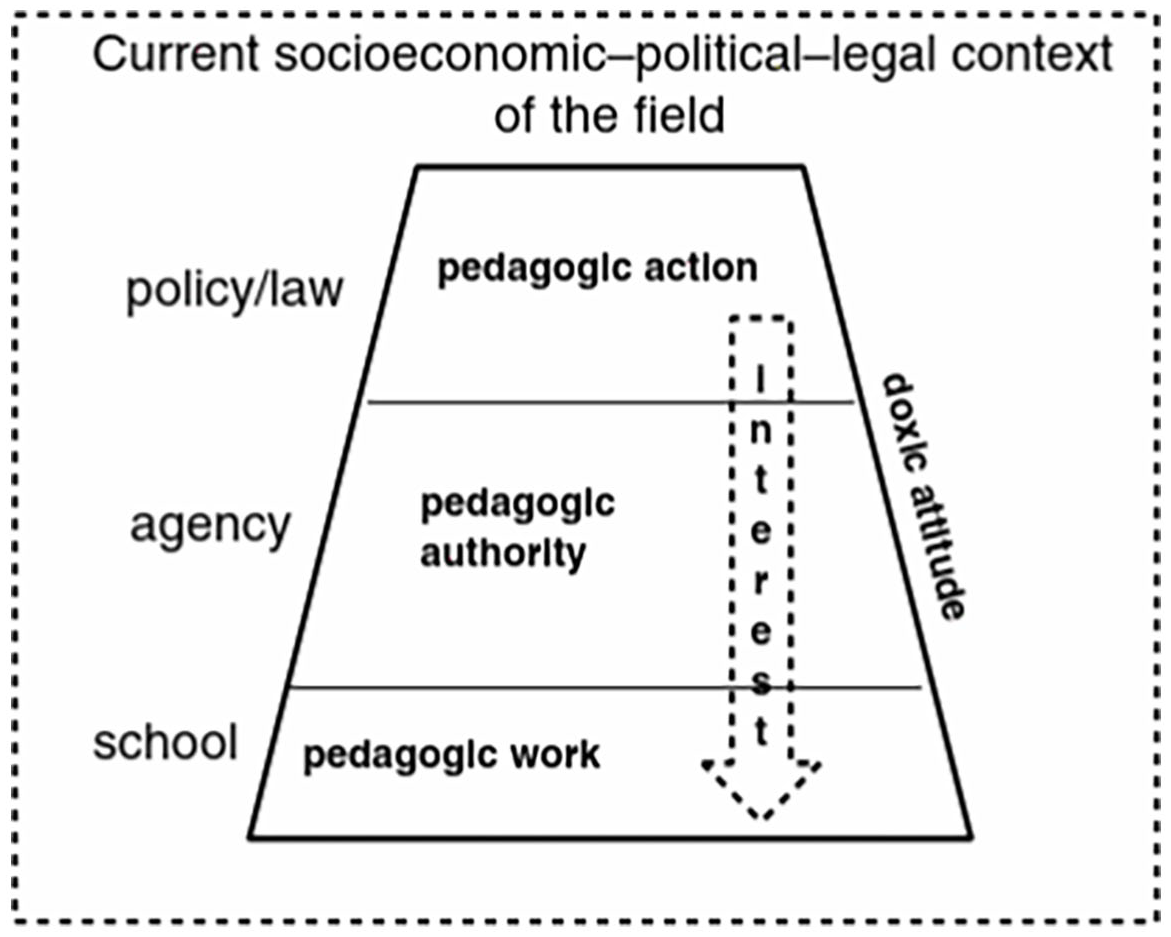
Bourdieu’s Relational Field of Educational Interests (English and Bolton, 2015), from Bourdieu and Passeron (2000).
Pedagogic Action
Pedagogic action is the ‘imposition of a cultural arbitrary by an arbitrary power’ (Bourdieu and Passeron, 1990: 5), and the social space where agents impose their version of how the world should work (English and Bolton, 2015). Therefore, all pedagogic actions display an element of symbolic violence since they attempt to impose meanings in the context of a power relation (Bourdieu and Passeron, 1990: 5). Through the innovative domain of global competence, the OECD has attempted to expand their dominance in the field of education reform and sought to promote the concept of global competence throughout the OECD region, and indeed globally, so that it becomes a pedagogic action, despite the fact that the economic focus of the organisation might potentially eclipse the integrity of public service (English and Bolton, 2015).
Rawolle and Lingard (2008) suggested that, for Bourdieu, the act of producing a practice is not completely rational, due to all of the actions that must be negotiated. For Bourdieu, practices are public, relational and subject to scrutiny by other agents (Rawolle and Lingard, 2008). It is therefore important to recognise that the expert group responsible for working with Pearson to develop the Global Competence Framework ‘never was very global’ (Grotlüschen, 2018: 195) and hailed mainly from the USA and UK (Auld and Morris, 2019). While there was representation from former Commonwealth and Asian countries, the group did not contain representation from other countries less familiar with the English language, with only one contributor from Latin America and Africa (Grotlüschen, 2018). This arrangement has had significant consequences for the ideology of the framework, with agents in the field unable to question or change the cultural arbitrary. These consequences include the development of the concept of global competence which is dominated by Western thinking and largely ignores the global South. Since this is the first time that there has been an OECD assessment of global competence, this is likely to have long lasting effects on the formation of the habitus.
Bourdieu described how societal groups exert influence by imposing their views on others, and also highlighted how forms of cultural capital are expressions of power that ultimately relate to economic capital (Bourdieu and Passeron, 1977). Auld and Morris (2019) have suggested that the OECD’s conception of global competence focused on a cognitive domain which is misaligned with the organisation’s aim to ‘appreciate cultural diversity’ (p 681). Further, Simpson and Dervin (2019) suggested that the definition of global competence used by the OECD contained a misalignment in the constructs ‘intercultural significance’ and ‘multicultural societies’, with the former illustrating a fluid notion of culture and the latter suggesting that cultures are distinct from one another. Auld and Morris (2019) further argued that the model of a ‘globally competent citizen’ sounds like an ‘OECD intern’ (p 681) and a member of the global middle class (Auld and Morris, 2019; Maxwell and Yemeni, 2018). Further, Grotlüschen (2018) discussed how the definition of global competence in the OECD framework was dominated by a western view of cognition, which she argued is influenced by religion, vulnerability and emotion, and misaligned with the southern concept of cognition, illustrating the imposition of the cultural arbitrary. Moreover, while the African philosophy that inspires citizenship education (Ubuntu) was present in the framework (in a separate box), it was not integrated into the definition of global competence (Grotlüschen, 2018; OECD, 2018). The educational policy field has multiple layers and ranges from the local to the global (Lingard et al, 2005), and theorisation of these fields must recognise the growing relations between national and international policy fields (Lingard et al, 2005). Therefore, to reflect the conditions where there are transnational actors influencing national systems in the field of education, Bourdieu’s field theory should be extended to include this global field (Buchholz, 2016) where there is diversity in the perspectives contributing to the arbitrary power.
Through the selection of global competence as the innovative domain for the PISA assessments in 2018, the OECD exerted significant social influence. It would appear that for national education systems, schools and teachers to embrace the construct of global competence into their pedagogic action, the influence of social capital is of importance. It is through social capital that the habitus can be reinforced and the doxa can become established. However, all forms of capital are required to influence students’ acquisition of the object and it is possible, being a new domain, that the symbolic capital attached to this pedagogic action may not yet be established enough within the habitus for it to be considered desirable.
Pedagogic Authority
To consider pedagogic action without pedagogic authority would be a ‘logical contradiction and sociological impossibility’ (Bourdieu and Passeron, 1977: 12) since pedagogic action is the main instrument that is ‘turning power relations into legitimate authority’ (Lakomski, 1984). Since the OECD and their PISA assessments act as an accountability measure for national education systems through the international rankings, national systems are exercising symbolic violence in the democracies in which they operate in response to the arbitrary power through participation in the PISA tests. Politicians often use the PISA results to advance their own agendas; for example, in England, the then Secretary of State for Education Michael Gove used the PISA data on school autonomy to support his pursuit of free schools (Adams, 2019).
The paradox of national governments either becoming powerful or powerless as a result of globalisation has been well documented (Auld and Morris, 2016; Ball, 2012; Grotlüschen, 2018). Lingard and Sellar (2013) noted that the role of the nation state has changed over time and in the current context of neoliberal globalisation, national governments are ‘seeking to strengthen the economic position of the nation globally’ (p 21). The neoliberal policy framework grants priority to agents seeking to pursue their own interests over the common good; what Bourdieu referred to as globalisation becoming a ‘performative’ concept (Bourdieu, 2003). Ball (2008) sees performativity as linked to state structures that set targets for those performing pedagogic work to achieve (Ball, 2003; Ball, 2008). The introduction of an assessment to measure global competence risked not only encouraging competition between nation states, which in turn could lead to the pursuit of individual interests that are misaligned with the original intention of assessing student preparedness for being globally competent, but also the possibility that global competence becomes another object for assessment by teachers, or a performative concept, that is required for government accountability purposes at a time when the concept was ill-defined.
The OECD’s ‘policy as numbers’ (Lingard, 2011: 356) work supports this culture of performativity on a global and national scale (Lingard and Sellar, 2013) where education is drawn into developing an audit culture in which institutions are held accountable for the quality of their provision (Strathern, 1997). National standardised testing is believed to have become necessary in order to improve standards and produce the quality human capital required by economic competition (Stobart, 2008). Bourdieu’s view was that this type of system contributes to social reproduction through the legitimacy needs of the elite (Zanten, 2005). The measurement processes used in education require that the results reflect what is being assessed which, in turn, assumes that the object being assessed can be measured numerically (Engel et al, 2019). Since the doxa for global competence is still developing, assigning a numerical value to its assessment violated important assumptions and could introduce error into the data (Engel et al, 2019). Engel et al (2019) further suggested that international assessment rankings based upon constructs that are not properly defined are especially problematic, since over time they will contribute to a normalised discourse and establishment of the doxa.
Pedagogic authority ensures the value of the pedagogic action (Bourdieu, 1977), although the absence of many countries in the PISA Global Competence assessment demonstrates a collective refusal to accept the legitimacy of the OECD in this particular field; indeed, it is often on the pedagogic authority that we rely to set policy promoting equality in education. Schleicher suggested that the countries who opted out were not ready for the assessment (Hazell, 2018). However, this rejection by countries with strong economic capital is also a rejection of the arbitrary power’s attempt to inculcate symbolic violence on the democracy. It ceases to perpetuate social reproduction which might have been created by the attempt to prevent national embarrassment as a result of a poor performance.
Pedagogic Work
Bourdieu (1977) suggested that pedagogic action involves pedagogic work, which is a process of inculcation (Lakomski, 1984). Agencies or institutions receive pedagogic authority to implement the pedagogic actions, resulting in practitioners participating in pedagogic work (English and Bolton, 2015). Considering the position of the OECD and national governments with regard to pedagogic action and authority for global competence, pedagogic work could refer to that undertaken by teachers in planning and delivering the curriculum, as well as developing attitudes and values in their students in accordance with relevant school policies.
Through the two components of the assessment, the OECD claimed to address issues of bias, privilege and neutrality, which can be called into question. The test questions required students to be able to read, interpret and evaluate graphs and subsequently explain their thinking in response to the prompt question. Many questions lacked visual clues and the increased emphasis on reading in the actual test items (OECD, 2020b) compared to example test items in the original framework (OECD, 2018) could have disadvantaged some students, thus – since the PISA tests are taken in the language of school instruction – impacting countries and economies where there are large numbers of immigrants who are not native speakers. The issue of language and presenting questions in text formats rather than a visual format leads to issues related to translation. Translation of the PISA assessments is an important consideration for the calculation of the international ranking; while the OECD acknowledges the importance of the translation work to avoid the creation of biases that could distort the international comparisons (cApStAn and Halleux, 2016), it is quite possible that there are not accurate translations for every word in all of the 90 languages and dialects that were offered in the 2018 PISA tests. The possession of linguistic capital is the acquisition of language in the home and its connection to acquisition of language at school (Bourdieu and Passeron, 2000); where the language used at home is aligned with the language used at school, then ‘it follows logically that the educational mortality rate can only increase as one moves towards the classes most distant from scholarly language’ (Bourdieu and Passeron, 2000: 73). All translations of the PISA assessments start with the original document in English (cApStAn and Halleux, 2016), potentially bringing decreased accuracy to all other languages and perpetuating symbolic violence and linguistic capital. These outcomes then contribute to the developing doxa and habitus and thereby legitimise the cultural arbitrary. Combined with the dominance of the expert group hailing from the UK, US and former Commonwealth countries, and the use of the Pearson project team, the Anglosphere develops as a field with its own capital for the domain of global competence, which the OECD is part of promoting.
Furthermore, the stories presented as text which were the test items shared in the report in October 2020 (OECD, 2020b) are much more open to interpretation than is data on a graph, which is what the global competence framework originally shared (OECD, 2018) and could also have disadvantaged non-native speakers or those with learning difficulties. Arguably the language used in the test questions is confusing and open to misinterpretation. Additionally, the multi-stage, adaptive nature of the test also potentially disadvantages those taking the test in a language that is not English, by the translation of the test items or lack of visual clues since an incorrect response results in an easier next question.
An analysis of pedagogic action, authority and work as defined by Bourdieu suggests a number of issues with the OECD’s Global Competence Framework and the subsequent results. The arbitrary framework was overlaid into existing national policy structures, demonstrating symbolic violence. Indeed, the strength of the developing habitus for global competence has been so far unable to overcome the predominantly economic interests of the OECD. However, there is potential for this domain to become further developed and embedded in policy, as acknowledged by Schleicher in the live stream of results (OECD, 2020a).
Results
The top performing countries in the assessment were Singapore, Canada, Hong Kong (China) and Scotland (UK) and, in contrast, the lowest performing countries included Thailand, Panama, Indonesia, Kazakhstan, Morocco and the Philippines (OECD, 2020b). Important to note is that the higher performing countries are all at least part Anglophone. Participation in the assessment by non-Anglophone and non-OECD countries demonstrates the naturalisation of power relations and the social order outlined by Bourdieu. A social relation has developed as a result of the OECD’s international ranking tables which attracts even those who are disadvantaged by it.
One admission of note by the OECD (2020b: 141) was that in all countries/economies that participated in the global competence assessment, advantaged students reported greater agency regarding global issues. Considering the criticisms of the framework, the connection between this outcome and the development of the framework is worth investigation to uncover whether more advantaged students are able to better articulate themselves in the cognitive test, or whether the questions were written in a way that disadvantaged those of lower socio-economic status.
The innovative domains for the next two PISA assessments have been identified as Creative Thinking and Learning in the Digital World. The OECD currently has no plans to assess global competence again.
Recommendations
Educational reform lies with those agents who have legitimised power in the habitus (Bourdieu, 1977), so it is possible for there to be misalignment between those undertaking the pedagogic action, pedagogic authority and pedagogic work. It was suggested during the October 2020 live stream of results that there would be improvements to the framework if the OECD were to assess global competence again, so the results would not be comparable (OECD, 2020a). The innovative domain for the PISA assessments in 2021 (postponed to 2022 due to the Coronavirus pandemic) is creative thinking, and the development of the framework for this is already underway. The recommendations that follow are therefore split into two sections; those directly related to global competence and those related to the development of an innovative domain.
Global Competence
In order to work towards more equitable educational assessments in the future, policy-makers should invite into their expert groups responsible for the development of the concepts a diverse range of participants who are trained in unconscious bias; indeed, the original framework for global competence was developed with ‘a very limited range of perspectives and backgrounds, a mistake that runs afoul of the very purpose of educating for global competency’ (Ledger et al, 2019: 24). As education and methods of assessment further develop, it is important that they do so in universal and equitable ways that avoid reproducing the habitus of a global elite (Ledger et al, 2019). Education has the potential to change the life trajectory of those currently excluded through systemic injustice, and policy-makers should consider the four types of capital outlined by Bourdieu (1983), before solutions that work to reduce inequality in education are developed, both conceptually and implicitly. Future work on global competency should therefore provide a call and encouragement to change the world rather than be seen as a reaction to a changing world (Ledger et al, 2019).
Innovative domain
By its very nature, the innovative domain is likely to lack both a robust research base and agreement in the field on how it should be assessed as well as an established habitus. Therefore, providing conceptual clarity on such a domain is imperative. Diversity in the development team should also be a priority for the policy-makers, to include those from the global South, those responsible for performing pedagogic work and indeed the students who might even be sitting the assessment.
Reproduction of education systems is alive through symbolic violence and the three mechanisms of pedagogic action, pedagogic authority and pedagogic work: all of which serve to limit the impact of the well-intentioned, progressive thinking of the innovative domain. If the OECD were to develop the assessment of innovative domains further after their introduction and initial usage, opportunities for breaking the cycle of social reproduction and systemic injustice could become available as agents would become familiar with updated ways of thinking, creating a more established doxa and durable habitus. Furthermore, the OECD should consider developing assessments in other languages, rather than translating them all from English, in an attempt to avoid errors. Finally, participation in the innovative domain should be inclusive and therefore should be developed on paper tests so as not to exclude those countries that lack the infrastructure to assess digitally.
Conclusion
Whilst Bourdieu’s theory challenges the dominant representations of the world, it has also been critiqued for its materialism, structuralism and determinism as well as its inability to anticipate change (Yang, 2014). Therefore, while it may seem impossible to remove inequality from society entirely, Bourdieu’s perspective is appropriate when considering an innovative domain such as global competence, which in name alone indicates a universal interest. Additionally, Bourdieu’s analysis of naturalisation fits well when considering the countries that participated in the assessment and that were disadvantaged by how the framework was developed. The OECD’s aim of creating better policies for better lives indicates that a goal of the organisation includes improving equality. Therefore, there is an irony attached to their Global Competence Framework that, through the production of international comparison tables for a domain that lacks conceptual clarity and was developed without diversity in the expert groups, the OECD are perpetuating and further reproducing societal inequalities under the guise of improving them. The identification in their own report (OECD, 2020b) that, in the majority of countries, more advantaged students were able to take more action (and therefore be considered more globally competent) further reinforces this notion. Through their status and power, the OECD have released and assessed a frame work that is in danger of becoming part of the established doxa and habitus for global competence, exerting symbolic violence by imposing a narrow view of a currently ill-defined concept.
There is value in the OECD’s work in developing innovative domains for assessment, although there is room for improvement in the development process. However, positives to come from the development of the Global Competence Framework include increased discussion of the concept of global competence, with nations looking beyond their traditional, nationalist ways of thinking (Grotlüschen, 2018), and the continued drive for policy improvement. To truly meet the OECD’s aim of better policies for better lives, the OECD should look beyond the cycle of developing a new framework, assessing it and moving on to the next innovation. As a society, we should move towards educational reform and subsequent policy development that enables those suffering the injustices of an education system perpetuating privilege, to contribute and see their perspectives included.
To achieve this, understanding is required of the current habitus being reproduced by those performing the pedagogic action, as well as an appreciation of the capital attached to the PISA rankings. Bourdieu’s notion of cultural capital should also be further explored to account for representations of the ‘other’ and what implications this might have for policy and the role of the OECD. Ultimately, any reform of inequality in education, particularly when involving powerful organisations such as the OECD, can only be achieved with consideration for the power structures that are facilitating this reproduction and by ensuring equitable representation when planning frameworks such as that of global competence.
Footnotes
Funding
The author received no financial support for the research, authorship, and/or publication of this article.