



Abstract
Competency in oral communication in English is a key factor in bridging the skills gap of graduates in the international job market, and higher education is attributed the role of accommodating this employability need. This sequential exploratory study aims to identify the speaking tasks and skills necessary for academic studies and professional life. Adopting a mixed-method design by utilizing interviews, observations, and a survey, this study was conducted in an EMI university in an EFL setting including participants from higher education and business sectors. Utilizing CEFR and the Cambridge Employability Skills Framework for ELT, the study adopted a novel approach to match the oral communication skills to the corresponding mode of communication and broader employability skills. Thematic content analysis and descriptive statistics revealed that students and employees perform tasks requiring information presentation and interaction skills. In survey results, tasks of small/social talk, meeting online, and discussion/meeting session, and skills of understanding field/topic-specific vocabulary, answering questions and expressing and supporting opinion are labeled prime ones. The study has valuable implications for stakeholders such as educators, curriculum designers, policy makers, and human resource specialists in prioritizing the tasks and skills for individuals to meet the demands of contemporary academic and professional landscapes.
Introduction
Higher education to work transition
In the 21st century, the role of higher education institutions in students’ development has been frequently highlighted as university students rely on their universities to be better trained for academic and professional life. Universities also contribute to the economic development of countries as a source of human capital development (Tan and French-Arnold, 2012). Acknowledging one of the goals of higher education as aligning the educational programs with the demands of the workforce (Kay and Greenhill, 2011), many reports (e.g. Allen and Van der Velden, 2009; IBM Institute for Business Value, 2023; World Economic Forum, 2023; World Government Summit 2023, 2023) which have significant implications for teaching and learning have been recently published. Considering individuals’ need for and investment in university education, Becker’s (1964) Human Capital Theory may help explain the long-term significance of education and training as factors influencing employability outcomes. That is, in order to ensure work transition, higher education institutions continue to play a crucial role in developing human capital, which is essential for employability. More specifically, as suggested by Natoli et al. (2013: 75), educational institutions are expected to guide graduates to gain the “technical and generic skills” required for career preparedness by matching their curriculum to the demands of the labor market. As a generic skill, the mastery of English language skills offers human capital privileges to university students and graduates; while universities tend to adopt an international research university ideal and promote boosting graduate skills, most university students and graduates benefit from social upward mobility and global competitiveness because of their command in English as an academic and professional language for communication. In other words, this enables the students the “agentic capital” and “employability agency” (Pham, 2021) to succeed in different contexts and modes of communication required in their career.
A supplementary perspective to the human capital theory is needed to depict an up-to-date and comprehensive graduate-attribute framework that conceptualizes communication as a social practice in today’s workplaces. The Constitutive/Transactional Models of Communication posits that communication is a process of creating and negotiating meaning, shaping social reality rather than merely conveying information (Craig, 1999). In modern workplaces, communication constitutes social reality. That is, the workplace community of peers, superiors and subordinates are communicatively constructed while the community engage in communication as a relational, context-sensitive practice that co-creates understanding and shared meaning; when they demonstrate reflexivity, empathy, and responsiveness to context, audience, and power dynamics; as they build and sustain relationships through dialog, negotiation, and active listening; and when they focus on meaning-making, collaboration, inclusion, and cultural awareness.
Employability skills and the labor market
Referred to as soft skills, 21st-century skills, and employability skills, interchangeably, as can be seen in the World Government Summit 2023 (2023: 15) report, these skills that may help people succeed in the job market are usually categorized as interpersonal skills, cognitive skills, digital skills, and leadership skills. As the gap between the graduates’ skills and those the job market requires leads to fewer employment opportunities, the OECD (2017) called for immediate attention to the existing mismatch. In a recent bibliometric analysis mapping employability, Sulistiawan (2025) found that in the last decade, human capital has emerged as a major issue in employability literature, as seen by the prevalence of terms like “skills,” “education,” and “labor market” in his study. Human capital, which includes formal education, occupational training, and the capacity to adjust to shifting job markets, is fundamental, as his studies highlight. He adds that future employability research should investigate how universities can better incorporate soft and technical skills into their curricula to satisfy the ever-changing demands of the labor market. Likewise, Monteiro et al. (2022) highlighted that although the graduates are equipped with technical or hard skills, their competency in soft/transferable skills is below the expectations of the job market. König and Ribarić (2019) discussed that although education and employability are closely related, as the former serves as a key to the latter, the relationship between higher education institutions and businesses is not as strong as expected. Thus, they remarked that university and business collaborations are needed to bridge the gap between graduates’ expected and acquired skills. Similarly, in their report, Tan and French-Arnold (2012) suggested that such collaborations involving projects and internships can better inform the curriculum of universities and enhance the students’ acquisition of necessary knowledge and skills for better employment. Chan (2011) stressed that this employability rhetoric as such undergraduate years is the best period to equip students with necessary graduate skills, that is, oral communication skills so that new science graduates communicate effectively in technical matters and in thinking critically and talking about science and their research. Likewise, Atilla-Bal and Okay-Somerville (2024) state that young people aged 15–24, especially in emerging economies, face a long transition from school to work due to challenges in finding jobs. A significant issue is their lack of soft skills, which affects their employability. Employers find it hard to assess these skills, while young people have trouble expressing them. Transferable skills, essential for most jobs, include communication and problem-solving abilities, which are important for productivity in uncertain labor markets.
The impact of English on skills attainment and employability
The impact of English on individuals’ academic success and professional careers has received crucial attention, and the use of “English as ‘the Academic Language’” is reported to be a pull factor for international students (Altbach, 2007). Recently, the importance of English as the medium of instruction and competency in oral communication in English have received significant attention due to globalization and digitalization which enable sudden exchange of information between parties from different countries. This global communication, which evolved during the pandemic highlights the importance of English as a lingua-franca in a “fast-changing information environment” (World Health Organization, as cited in Piller et al., 2020: 505), and this new face of communication challenges the traditional teaching model, calling for “a new model of learning for the twenty-first century” (Luna Scott, 2015: 1). This transformative new model aims to identify the competencies and skills for success in the 21st century. To better equip students with the necessary soft skills, some vital guidance and attempts have been made by English Language Teaching (ELT) researchers and book writers. For example, the Employability Skills Framework for ELT by Cambridge University Press (2022: 6) presents skills, subskills, and suggestions for classroom practice. In the framework, the eight key broader competencies are listed as follows: collaboration and teamwork, communication, innovation and problem-solving, critical thinking and decision-making, leadership and global citizenship, professional development and management, emotional intelligence, and digital literacy. As individuals’ communication skills are one of the critical factors in their employability, their competence in English is crucial for the international job market. Thus, university students usually prefer English-speaking countries for their higher education (Dias Lopes et al., 2024). Higher education institutions in non-English speaking countries with an internationalization agenda prioritize and promote their English instruction, some of which are referred to as English as the Medium of Instruction (EMI) universities that offer their courses entirely in English. EMI has been defined by scholars (e.g. Akıncıoğlu, 2024; Macaro et al., 2018) as the use of English by the students and academics to teach and learn the course content regardless of the first language of the setting. EMI-universities are likely to be ideal venues for fostering the oral communication skills in English and meeting the labor market demands; however, it is also worth mentioning that when the human capital delivering these communication and employability skills lack proficiency in English, as in the case of Malmström et al.’s (2025), then, EMI may lead to decreased levels of mastery in oral communication skills in English, less student-focused instruction, and less interactive practices. Additionally, improper EMI at universities in non-English speaking countries may also marginalize the ability of non-native English speakers of other languages to engage in professional discourse in their native language, and the likely medium of collegial communication in domestic workplaces.
Considering the language needs for improvement, Lehtonen and Karjalainen’s (2008: 417) study revealed that while employees prioritized the knowledge of “grammar, use of idioms, general vocabulary, subject-specific vocabulary, courage to use the language, and fast and fluent speech,” the employers highlighted the “the courage to use foreign languages and (inter) cultural skills” as the most important areas for improvement. As communication is considered one of the fundamental skills for success in academic and business tasks (Fareen, 2018), sometimes even more than the subject matter knowledge, investigating different aspects of oral communication in English has become a significant interest for researchers. A recent survey by Pearson (2024), conducted in five countries with 1000 participants in each country, showed the significance of proficiency in English for the empowerment of individuals as well as the existence of a skills gap, thus, calling for an emergent change in the curricula. In Ferris’s (1998) needs analysis study, for example, English as a Second Language (ESL) students were reported to need more skill sets in delivering presentations, participating in whole-class discussions, listening comprehension, note-taking, and lack of confidence to speak. Higher education professionals must engage in needs assessment of current labor market expectations and adopt an informed approach to developing English courses. In Pitura’s (2022) curricular study conducted in an English as a Foreign Language (EFL) and EMI setting, the importance of second language (L2) instruction for university students was highlighted as it caters to mastering oral production and oral interaction genres, offering quality L2 education in line with organizational standards and creating quality content for speaking. It is helpful to place this stage within a larger educational trajectory because the study focuses on the transition from higher education to employment. According to Wood and Breyer (2017), educational transitions can be viewed as a series of threshold experiences in which students must renegotiate their roles, practices, and skills across institutional borders. The skills needed in the final phase, that is, skills for communication in the workplace are built upon the ones acquired in the previous transitions. For example, EFL students’ agency and readiness to handle studying in English at the higher education level are fostered by pre-tertiary education (Warnby, 2024). Once in university, students need to build an academic identity and engage with the literacy practices of their disciplines—what Gourlay (2009) refers to as “threshold practices.” By shedding light on the demands made of graduates entering professional roles requiring context-sensitive oral communication skills in English, this study contributes to this trajectory. Mapping these phases makes it clearer how institutional systems—including those related to pre-higher education, higher education, and employment—are interrelated. It also implies that initiatives to improve graduate employability should take transitions into account holistically rather than in isolation. Moreover, identifying the necessary oral communication skills for employability is crucial as this knowledge may help the faculty members and curriculum designers create effective learning opportunities that address learner’s needs and foster important graduate attributes, as emphasized by Lian (2012).
Oral communication tasks and skills
Especially in an EMI setting, EFL learners’ proficiency in oral communication skills is crucial to thrive in their academic tasks and regarding their employability in the international job market (Arnó-Macià et al., 2020). When spoken communication skills in another language (L2) are considered, the ability of L2 speaking is referred to as an individual’s ability to apply topical (world) knowledge (Bachman and Palmer, 1996). Regarding the teaching and assessment of oral communication in language classes, the Common European Framework of Reference for Languages (CEFR; Council of Europe, 2020: 33) presents four modes of communication: reception, production, interaction, and mediation. In CEFR, learners’ verbal communication ability is demonstrated as a continuum of six primary levels from A1 to C2. For each level, the descriptors that consider range, accuracy, fluency, interaction, and coherence are provided, as well as linguistic, sociolinguistic, and pragmatic competencies. When good language skills in the academic and workplace are considered especially, B2, C1, and C2 levels are usually referred to in a project called Language Needs at the Workplace (Horppu and Niskanen, 2004, as cited in Mohammadi and Moghadam, 2015). In a study conducted by Lehtonen and Karjalainen (2008: 497), employers referred to good language skills as “good communication and presentation skills, confidence to use a foreign language, and the ability to interact and adapt to various linguistic and cultural conditions.”
Building on the need for interactivity, Clement and Murugavel’s (2015) mixed-method study among ESL university students revealed that many professors teaching engineering students needed more English for Specific Purposes (ESP) knowledge and also that a student-centered curriculum championing interaction was in high demand. In a systematic review by Seraj and Hadina (2021), it was found that significant factors that led to poor oral English communication skills were environmental, psychological, and linguistic; limited real-life tasks and scenarios; speaking anxiety, and poor command of language as well as fluency concerns were shared. In a survey study among 130 engineering students and practitioners, Wu et al. (2023) discussed that verbal and non-verbal communication skills were essential for employability in the digital age. They noted that in addition to students’ technical skills, employers sought effective communication skills in their assessment and suggested exposure to open-ended real-life situations, which will help students practice problem-solving skills in different situations. Moreover, Sulistiawan (2025: 3) stresses that the last decade “. . .marked rapid technological and economic changes that increased the demand for digital skills and adaptability, thereby influencing definitions of employability and the skills seen as essential for career success.” Developing digital communication skills has become essential for graduates in addition to hard skills and soft skills, as remote work and online meetings have become more common. To this end, Pažur Aničić et al. (2023) identified the in-demand generic and digital competences in today’s labor markets. Ability to work autonomously was a prime competency while basic digital skills such as browsing and evaluating digital content, and communication via digital tools were considered significant. Similarly, Brink and Costigan (2015) investigated the extent to which workplaces and business schools align with each other regarding oral communication skills. Their study concurred with the previous studies, which showed that listening was an important skill in the workplace, followed by conversation and presentation. However, the curriculum of the business schools they analyzed prioritized presentation goals as the most important one, followed by conversation and listening, which is reported as a misalignment between the goals and practices of two parties. They emphasized the complex and uncertain nature of communication in the workplace, which, for a successful career, requires “. . .quick, unrehearsed, reasoned, and persuasive arguments in favor of solutions to new problems. . . A highly rehearsed, organized, and planned persuasive presentation does little to mirror the cognitive complexity of the spontaneous, synchronous persuasion called for in the business environment” (Brink and Costigan, 2015: 216). The mismatch was also highlighted in another study by Çal et al. (2022). They discussed that while the engineering schools in Türkiye prioritize productive skills, their participants reported needing more receptive skills in the workplace. Thus, the researchers suggested that more importance should be given to enhancing engineering students’ receptive communication skills. Le and Chong (2024) add that verbal communication and interpersonal interactions are prime and should be part of engineering curricula, which eventually leads students to a better grasp of critical thinking skills.
In Broeckelman-Post et al.’s (2023) study, group and interaction skills, and presentation skills received the highest ratings from 232 academics. In contrast, the participants perceived online and mediated communication skills as the least important skills. However, the authors noted that the survey was conducted before the pandemic outbreak, and during the interviews which were conducted during the pandemic, these skills were reported to be emerging needs. Moreover, the study also revealed that although rated as highly important, argumentation skills were considered an area needing improvement. In a study by Lan et al. (2011), all four skills, that is, reading, listening, and speaking, are important to function effectively in workplace tasks. However, participants reported experiencing problems mainly in speaking and writing. Regarding the tasks, conducting interviews and holding press conferences were found to be the tasks that are done less frequently. These tasks can probably be categorized as “normally performed by higher-ranking organizational staff” (Lan et al., 2011: 97).
The purpose of this study is to depict the current landscape of speaking tasks and skills that university students need in their academic studies and later in their professional lives. With this aim, the following research questions guided the present study. Regarding the academic success and employability of the students,
(1) What tasks that involve spoken communication do students need to carry out in academic and professional contexts in EFL settings?
(2) What speaking skills do higher education institutions need to equip their students with?
(3) What is the nature of the speaking tasks and skills employed in EFL academic and professional settings?
To our knowledge, studies have yet to utilize the four modes of communication (Council of Europe, 2020) and the Employability Skills Framework (Cambridge University Press, 2022) as frameworks for analysis. This study is also important as it collected opinions from all major stakeholders, that is, higher education and business.
Methodology
A mixed-method design has been adopted in this needs assessment study. As Fraenkel et al. (2012) presented, this sequential exploratory design includes an initial qualitative phase and a follow-up quantitative phase. Thus, this study has utilized both qualitative and quantitative approaches to data collection and analysis, which serve as methodological triangulation (Cohen et al., 2018). In order to explore the perceptions and experiences of participants regarding the phenomenon in the query, interviews and observations were conducted to triangulate the data (Silverman, 2014), and generate a survey to be implemented with a broader audience. With this aim, prior to the initial phase, an ethics committee approval was received from the institutional ethics committee [protocol number disguised]. Throughout the study, ethical considerations such as anonymity, consent (in written and verbal), and confidentiality were ensured both in data collection and data analysis processes, and participants’ consent to publish (in written and verbal) was obtained. Figure 1 presents the procedural flow of the study.
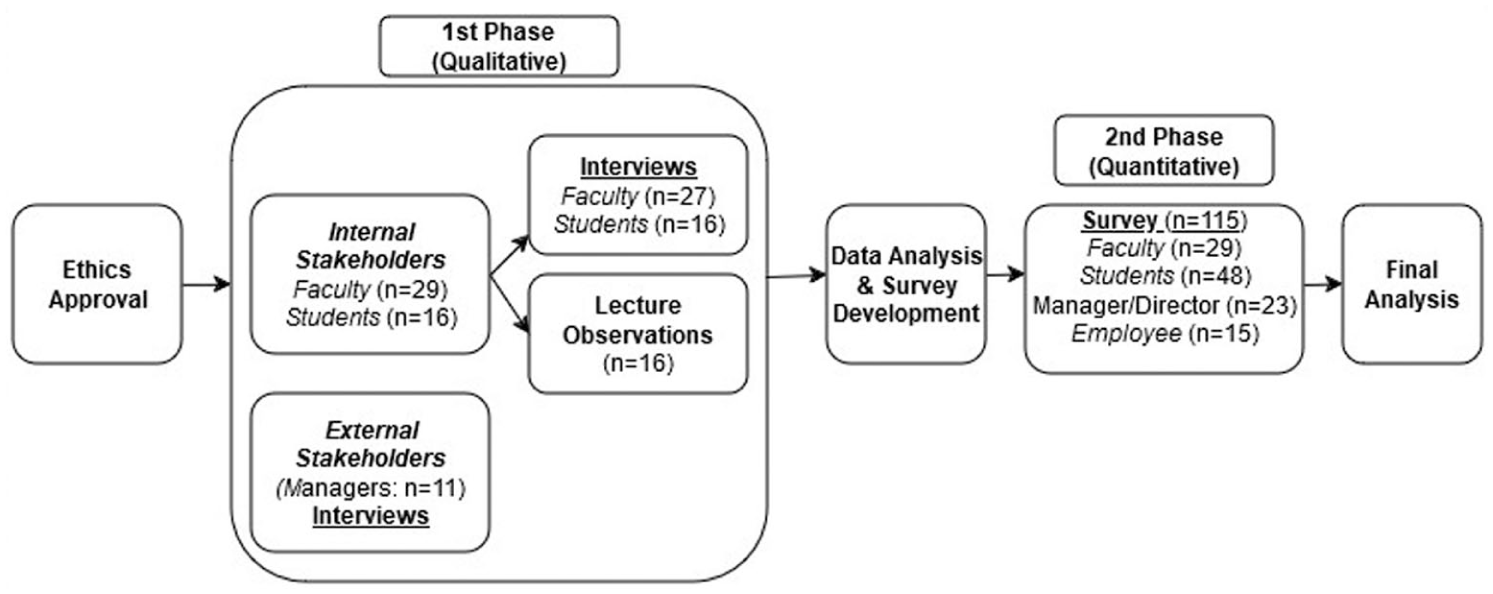
Sequential exploratory mixed-method design.
As the figure shows, a sequential exploratory design approach was adopted for data collection and analysis, including both qualitative and quantitative approaches. Due to the sequential nature of the design, data collection and analysis procedures follow a chronological order. However, for practical reasons, information about the context and the participants is provided prior to explaining these procedures.
Participants and context
To give voice to all stakeholders, this study comprised participants from internal (academics and students) and external stakeholders (managers and employees). For both phases of the study, purposeful convenience sampling (Creswell, 2005) was utilized. According to Fraenkel et al. (2012), when convenience sampling is the only viable choice, this limitation can be addressed by offering a comprehensive demographic profile of the sample, which is as follows: The context for the internal stakeholders, Middle East Technical University (METU), acknowledged as an international research university, is a large-scale EMI state university in Türkiye with five faculties (faculties of Architecture, Arts and Sciences, Economic and Administrative Sciences, Education, and Engineering) and 41 undergraduate programs.
Both academics and students were recruited to represent all five faculties of the university. (See Supplemental Appendix 5 for detailed demographic information about the first phase and the second phase internal stakeholders.) Participating Middle East Technical University academics have international educational and professional backgrounds, which enables them the language proficiency to offer courses in English as required by the EMI university in this research context. As the setting of the study is an EMI university, students were required to take and pass an English Proficiency Exam with a minimum exit level of B1+ to be able to proceed with their departmental studies. They additionally take three consecutive must EAP courses that serve as prerequisites for one another and are specifically focusing on academic writing and speaking skills. As it is an EMI context, students have continuous exposure to English in their departmental studies, and they are expected to have written and spoken production. The main criterion for internal stakeholders to be selected was academic category participants’ integrating skills and tasks for English oral communication in their courses, and student category participants’ having passed the three consecutive must EAP courses and being enrolled in their third or fourth year of academic studies.
The second category of participants are grouped as external stakeholders who have diverse educational and professional backgrounds within institutions in Türkiye and international settings. There were 11 participants from eight sectors in the first phase, and 38 participants from 17 sectors. These external stakeholders’ self-reported sectors were listed as a total of 18 sectors, after adjusting for the other option in the survey. (See Supplemental Appendix 6 for detailed sector information about external stakeholders in the first and the second phases). The main criterion for external stakeholders to be selected was their having working proficiency in English and using it for oral communication in their professional practices.
Data collection and analysis
Both qualitative and quantitative approaches have been adopted in data collection and analysis processes of the present study. Regarding the procedures for the initial phase, the researchers first developed a semi-structured interview protocol and an observation scheme (See Supplemental Appendix 1) to identify the speaking tasks and skills that are utilized in real classrooms and work settings, and for academic and professional assignments. Initially, the literature and the research questions guided the drafting phase of the interview instrument and the observation scheme which was followed by feedback from English for Academic Purposes (EAP) experts. Both qualitative tools were finalized after conducting pilot observations and interviews with each participant category. The observation scheme was designed based on teacher-student and student-student interactions focusing on speaking tasks and oral communication skills used in classrooms by the faculty and students, and follow-up meetings after class observations were conducted for peer check and adjustments of both qualitative tools. Then, participant invitations were sent to both internal and external stakeholders for the present study. For practical reasons, the researchers individually took part in the interviews (in-person or Zoom sessions) and observations (in physical classrooms); an average of 30-minute interviews were recorded, and notes were taken during the 50-minute observation sessions. While the researchers had a non-participatory observer role in the observations, they acted as a facilitator in the interviews. For some academics, both interview and observation sessions were held, whereas, for some, either session was conducted only. As the medium of instruction is English at the university where the study was conducted, class observations were done in English. The interviews with Turkish participants were conducted in Turkish, and then they were translated into English while those with international participants were held in English.
Table 1 presents the participants, data collection tools and the length of data collected in the first phase.
First Phase (qualitative): Participants, data collection tools, length of data.
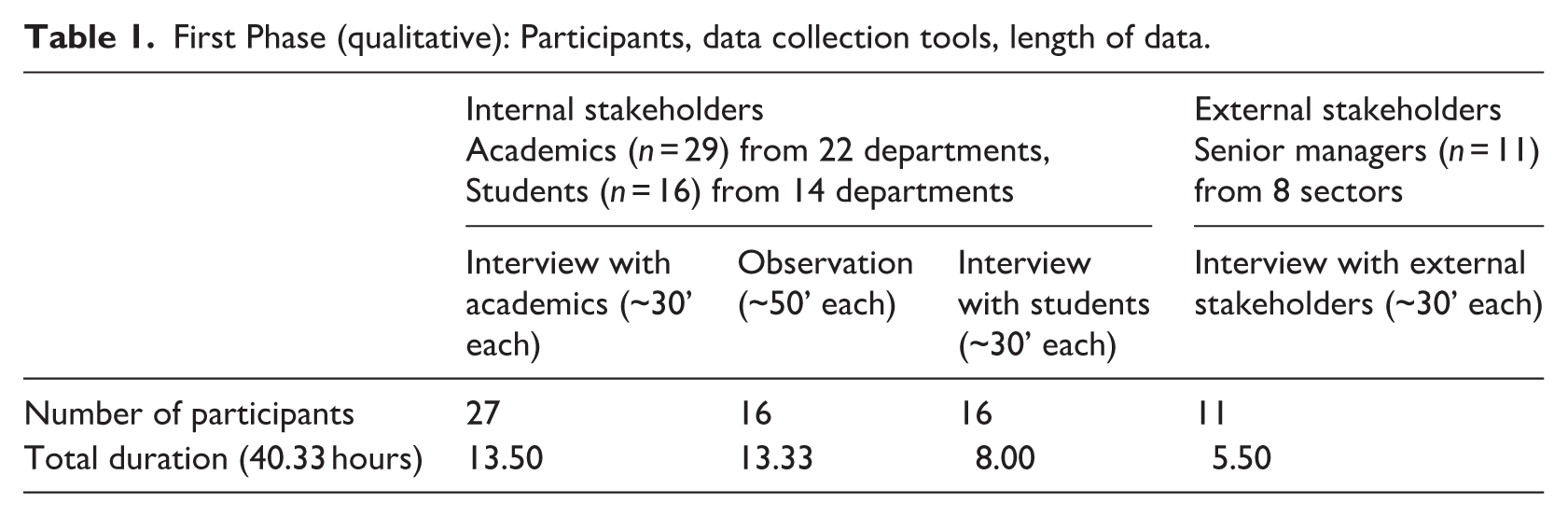
As seen in Table 1, 29 academic staff members who were included in the study came from 22 different departments (out of 41 undergraduate programs), and 16 students were from 14 departments. As shown in the table, around 40 and a half hours of qualitative data were collected in the first phase.
Regarding data analysis, the initial step was the verbatim transcription of the qualitative data collected in the first phase and prior to the data analysis, to identify the speaking tasks and skills, the researchers created a data analysis scheme (See Supplemental Appendix 2). (The coding scheme of participant IDs is as follow: for internal stakeholder academics, e.g. ISHA1; for internal stakeholder students, e.g. ISS1; for external stakeholder managers, e.g. ESH1) Then, after the researchers analyzed sample interview and observation data together based on the agreed scheme, they individually analyzed half of the data set adopting both inductive (emergent themes) and deductive (priori themes) thematic content analysis approaches (Cole, 2024; Merriam and Tisdell, 2016). Throughout this phase, there was continuous dialog between the researchers regarding the coding process. Following the individual analysis, to ensure interrater reliability, each researcher coded and compared 10% of the other researcher’s data set. As a final step, the researchers held a second follow-up data analysis session to create a final agreed list of speaking tasks and skills that emerged from the first phase data to be later used to design the second phase survey. The researchers are both speakers of EFL, and they both have a qualitative research background and more than two decades of teaching experience in English for communication purposes. Thus, they are proficient speakers of English for general, academic, and professional purposes.
Utilizing the list of identified speaking skills, a further analysis was conducted using two frameworks: (a) CEFR-Four Modes of Communication (Council of Europe, 2020: 33) to decide on the modes of communication that each skill corresponds to, and (b) the Cambridge Employability Skills Framework for ELT (2022) to determine the soft skills that each skill is aligned with. First, researchers marked each skill to the corresponding sub-category of each framework, and then, a final session was held to reach an absolute agreement on the skill-category match for both frameworks.
For the second phase, quantitative data collection and analysis approaches were adopted. First, the researchers designed five-point Likert-scale survey items using the tasks and skills emerged in the first phase data. The survey included four parts: (a) demographic information, (b) items regarding task frequency and competency, (c) skills importance and competency, and (d) open-ended questions for further elaboration. (It should be noted that academics and managers are requested to consider their students and employees while responding to the survey.) Two rounds of expert opinions (n = 12) were collected to finalize the items before piloting the survey. The survey items were piloted over Google Forms and finalized to disseminate to a larger audience among the internal and external stakeholders. The final survey was sent to both internal and external stakeholders that participated in the initial phase; furthermore, all METU junior and senior students and all METU academic staff were contacted via internal emails, and to recruit further participants as external stakeholders, METU career fairs were visited. Also, personal, professional, and social networks were used to reach more survey participants. Table 2 presents the demographic information of participants in the second phase.
Second Phase (quantitative) participants.
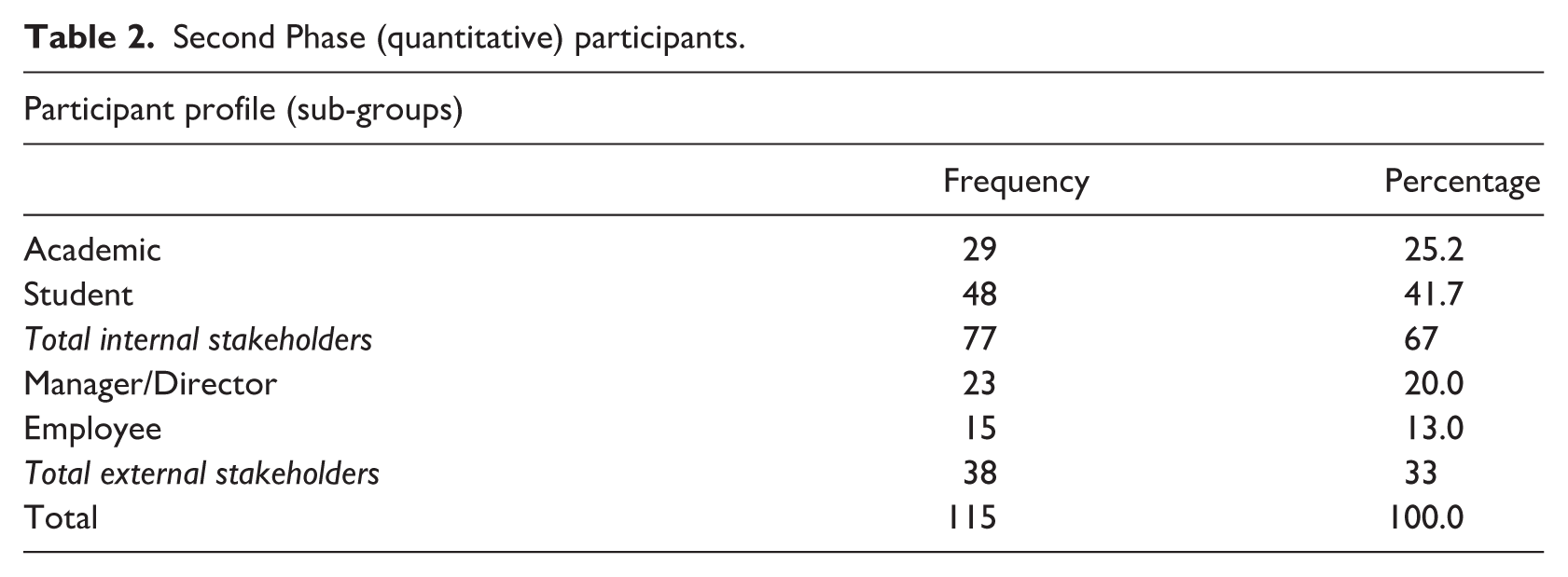
As Table 2 shows, a total of 115 participants responded to the survey; internal stakeholders comprised two-thirds of the respondents in the survey in the second phase, while external stakeholders corresponded to one-third. Quantitative data from the questionnaire were analyzed utilizing descriptive statistics in SPSS 29.
Results
First phase
The qualitative data from the internal and external stakeholder interviews and classroom observations yielded a wide range of tasks that require students and employees to engage in their academic and professional lives. As Table 3 shows, the tasks that participants experience in their academic studies or their work life converge on presentation sessions, discussion sessions, interview sessions, questions and answer sessions, feedback sessions, and small talk. The different tasks mentioned by the participants were merged under broader task categories, as presented in bold in the table.
Tasks.
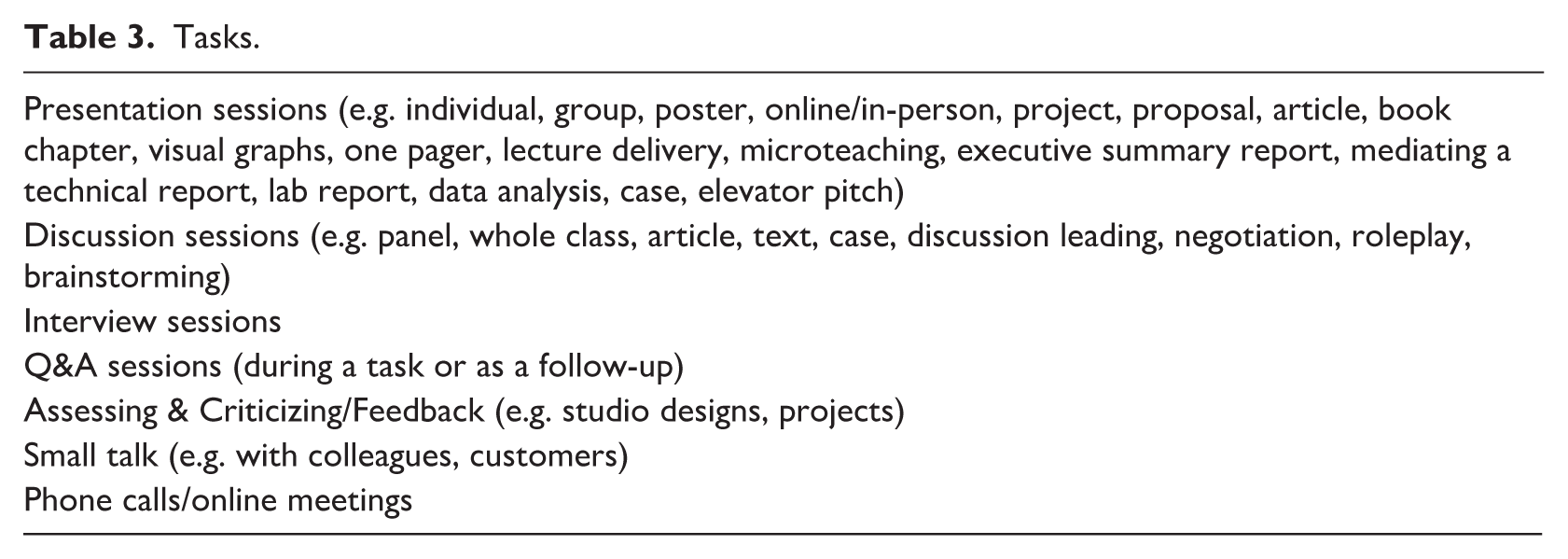
As the table shows, presentation and interaction tasks involved rehearsed and spontaneous tasks, presentation sessions and discussion sessions showing the most variety of tasks. An external stakeholder commented on the challenging aspect of spoken communication and the importance of presentation tasks as follows: “There is no problem in written communication. I did not forget the presentation I made in ENG211. They helped me a lot in my professional life”. (ESH6) As an emerging task type in academic and professional settings, one external stakeholder referred to the attainment of skills in delivering concise and precise information in shorter presentations, “We don’t have time: they should be quick, neat. They must learn one-pager presentation!” (ESH11) Another participant highlighted the importance of receiving and giving feedback during oral communication, “They don’t know how to give constructive criticism, hedging, they are a little bit aggressive, in conferences: first give the good points, then criticize.” (ISHA24) Another participant criticized the lack of interaction in the overall mode of communication of the lessons, and also pointed out the importance of question-and-answer sessions which create opportunities for interactive communication, “In departmental studies, students are usually silent in METU. Lack of encouragement to speak up; in other universities, there’s more Q & A. Here, it’s more like watching a video.” (ISS9)
Similarly, as presented in Table 4, in the initial phase, the participants reported that students and employees use a spectrum of 36 skills for success in the workplace and academic life.
Skills.
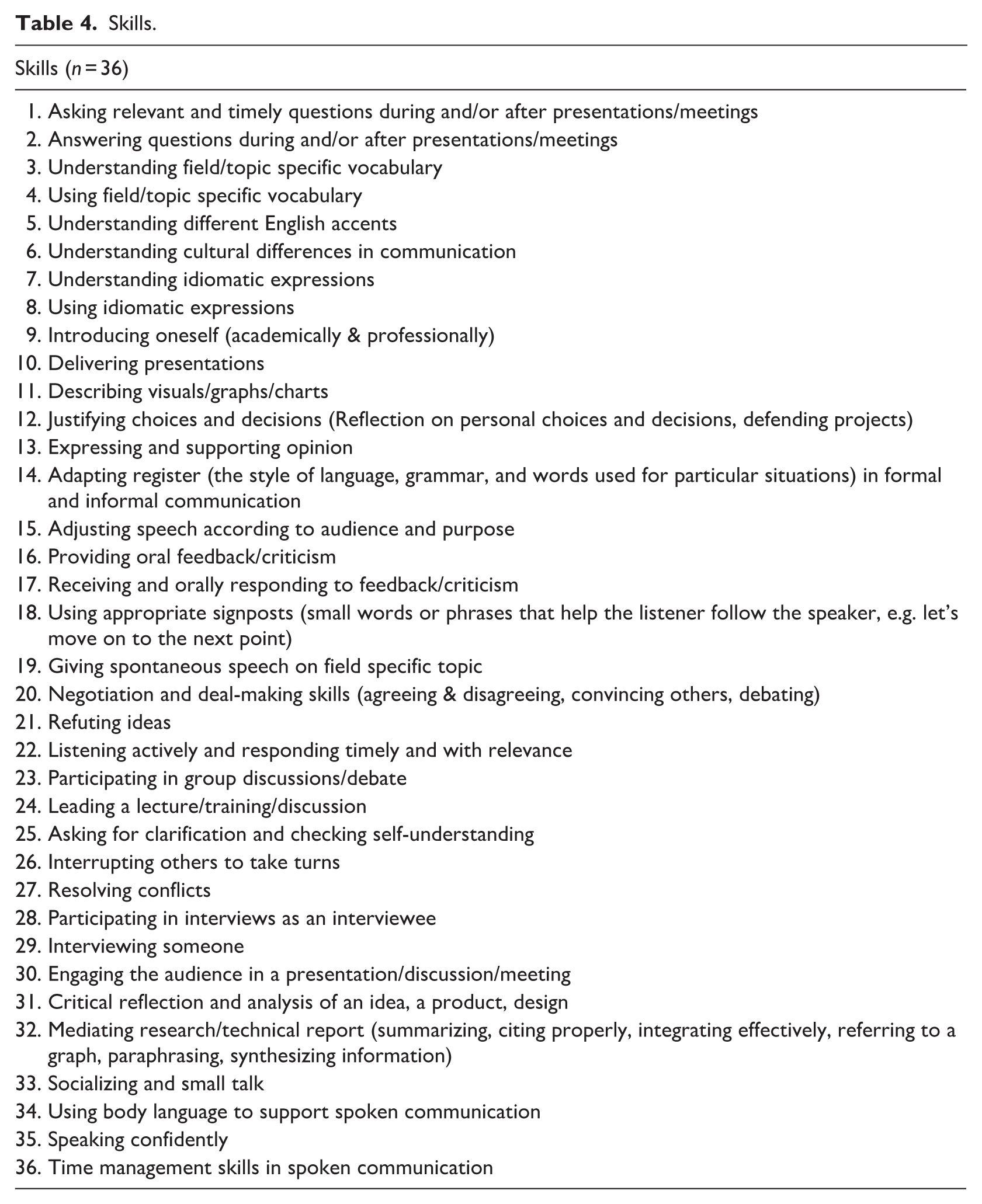
Further analysis of the skills list was conducted using the CEFR-four modes of communication as the framework (Council of Europe, 2020). (See Supplemental Appendix 7 for detailed information about these 36 and their corresponding mode of communication.) The importance of the skills that fall under the categories of production, interaction, and mediation in academic studies and work life is noteworthy. That is, the majority of the 36 skills listed corresponded to the interaction (n = 24) and mediation (n = 23) modes of communication.
Participants also highlighted the importance of interaction during the interviews. An academic commented on this point as a problem interfering with course content delivery: “If you try to get students to speak, it ends up with pausing the flow of giving content as they do not speak much. We try this for a few weeks, and then we also give up pushing students to speak in class” (ISHA23). Regardless of their majors, students and faculty reported that as interaction requires spontaneous speech, students sometimes codeswitch to L1 to ask a question, ask for elaboration and clarification, and engage in discussion. The data show that this is specifically valid for classroom discussions, question and answer sessions more than the lecture mode of classroom communication. Additionally, faculty members and students from social sciences utilize a more interactive mode of communication compared to some technical departments. A student also stated the need for continuous academic communication skills training support via English courses for academic purposes as many students state that the mode of communication in their departmental courses is usually non-interactive lecture mode, and they do not have opportunities to use English outside their classroom context: “When I do not take ENG courses, I believe my English deteriorates during departmental courses. ENG 211 taught me how to present”. (ISS5) Furthermore, the importance of the academic communication skills training support was also referred to by an academic as even if the courses are delivered interactively, the students lack proficiency and competency to be able to take part actively in spontaneous conversations and present their opinions effectively: “Can students defend their project? Can they justify their choices, and deal with and respond to the criticism effectively?” (ISHA4).
Another step taken in the analysis of the initial phase was to code the listed 36 skills using the Employability Skills framework by Cambridge University Press (2022). (See Supplemental Appendix 8 for detailed information about these 36 and their corresponding employability skills.) Eight broader categories for employability skills are reported to be crucial for success in professional settings. When all the listed 36 skills are put under relevant categories, communication, critical thinking, and decision-making skills are prime employability skills. It should be noted that if any of the skills are required to be used in online communication, they can be regarded as the use of digital literacy skills for professional communication. Similarly, although the skills that fall under the category of professional development and management skills are listed as relatively less frequent, individuals’ all attempts to improve each of their 36 skills can be considered within professional development practices.
The importance of all the 36 skills for professional development was also pointed out by an external participant: “Mastering a language needs to be finished before graduation as they wish to invest less in developing the English level of staff.” (ESH1) Another participant also referred to the challenging and spontaneous aspect of business communication by pointing out the international parties involved in the communication and the necessity of practice and opportunities before graduation: If they have a language barrier, they cannot do their job, they are usually nervous. Written communication is easy, we have Grammarly, other tools, we don’t have it while speaking. We speak to people from around 40 different countries. I wish they had speaking confidence and practice before work life/graduation. Programs like work and travel and Erasmus make a big difference; they boost confidence. (ESH4)
As the data from the interviews and observations present, all the 15 tasks and 36 skills that emerged are significant for academic and professional success. The degree of importance and competency and the frequency of these tasks and skills in academic and professional domains are inquired in the second phase of the study.
Second phase
Initial analysis of the second phase
The data obtained from the survey include descriptive results for both tasks and skills. (See Supplemental Appendix 9 for detailed information about the participants’ reported use of frequency and competency in these tasks) The small talk/social talk task was found to be the most frequently used one (M = 3.83; SD = 1.21) followed by meeting online (M = 3.59; SD = 1.14) and taking part in a discussion session/meeting (M = 3.57; SD = 1.20), whereas interviewing someone was the least frequently used task (M = 2.38; SD = 1.27) in academic and professional settings. Regarding task competency, the number of valid responses varied for each task as the survey included the “Not applicable/Don’t Know” option, and some participants chose this option as their response. The task the participants felt most competent in was receiving oral feedback (M = 3.78; SD = 1.11), while the task they reported feeling less competent in was interviewing someone (M = 3.17; SD = 1.16). (See Supplemental Appendix 3: Tasks mean breakdown for participant/domain-specific comparisons)
Concerning skills, 36 skills were listed in the order in which they were presented to the respondents in the survey. (See Supplemental Appendix 10 for detailed information about the participants’ reported importance, perception, and competency in these skills.) All 36 skills were reported to be important by all the participants. The top five skills that were found to have the highest mean scores regarding their importance are as follows: (1) Understanding field/topic-specific vocabulary (M = 4.57; SD = 0.68); (2) Answering questions during and/or after presentations/meetings (M = 4.43; SD = 0.78); (3) Expressing and supporting opinion (M = 4.43; SD = 0.80); (4) Listening actively and responding timely and with relevance (M = 4.4; SD = 0.85); (5) Delivering presentations (M = 4.37; SD = 0.87). Regarding skill competency, the number of valid responses varied for each task as the survey included the “Not applicable/Don’t Know” option, and some participants chose this option as their response. The skills that received higher ratings for competency were as follows: (1) Introducing oneself (academically & professionally) (M = 3.76; SD = 1.00); (2) Understanding field/topic specific vocabulary (M = 3.71; SD = 0.99); (3) Expressing and supporting opinion (M = 3.65; SD = 1.08); (4) Describing visuals/graphs/charts (M = 3.61; SD = 1.12); (5) Using field/topic specific vocabulary (M = 3.58; SD = 1.09). (See Supplemental Appendix 4: Skills mean breakdown for participant/domain-specific comparisons)
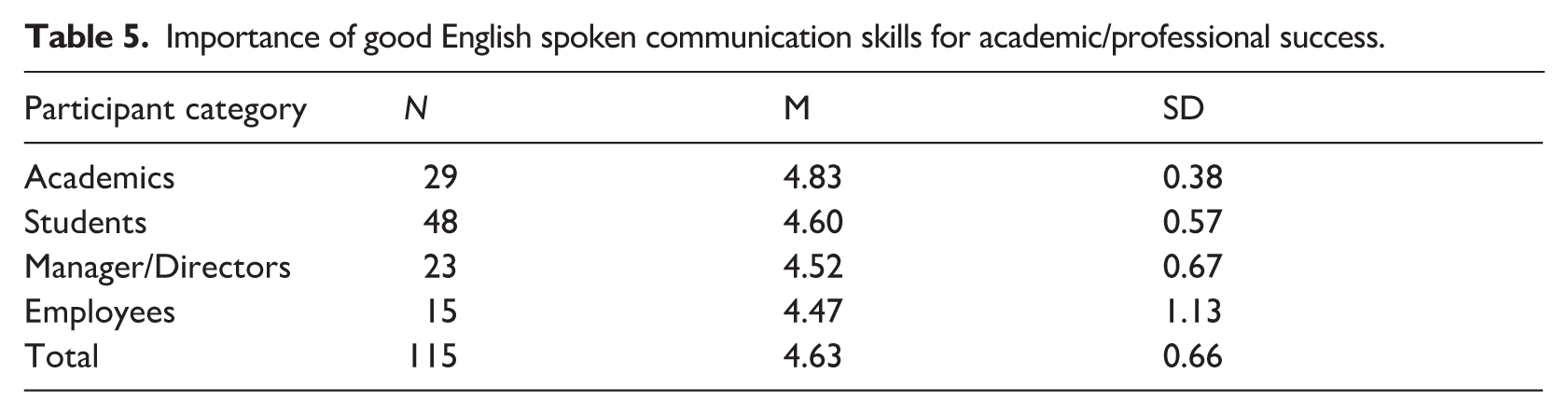
As Table 5 shows, survey respondents from all stakeholder groups marked that good English spoken communication skills are highly instrumental in academic and professional success, with academics giving the most importance to such skills (M = 4.83; SD = 0.38).
Importance of good English spoken communication skills for academic/professional success.
The second phase complementing the first phase
The initial list of tasks (n = 15) and skills (n = 36) were extracted from the first phase qualitative data. They were further validated in a follow-up survey with the dimensions of frequency, importance and competency in the second phase. That is, regarding the tasks and skills in their academic and workplace practices, the respondents rated the three dimensions of the survey, that is, frequency, importance, and competency. These three dimensions in the quantitative (second) phase data helped researchers better determine the actual needs of students and better guide the course development procedures, which is the intended outcome of this mixed-method needs assessment study. The relatively low return rate of the survey (n = 115) and the uneven distribution of the four stakeholder groups (See Table 2: only internal stakeholder student group, n > 30), however, hindered the use of any further inferential statistics such as T-test or ANOVA to precisely give any group differences regarding the three dimensions of frequency, importance, and competency in the second phase. The available descriptive statistics in the second phase still provide valuable tendencies and impressions about these three dimensions and help complement the first phase data. Overall, the descriptive statistics in the second phase show the tendency of stakeholders to place importance on nearly all tasks and skills and their frequent use in academic and professional settings. However, the mean scores of nearly all stakeholder groups’ competency in these tasks and skills are lower compared to the mean scores of stakeholder groups’ ratings in frequency and importance in these tasks and skills. This descriptive finding in the second phase not only validates the contemporary use of 15 tasks and 36 skills in academic and work environments but also fulfills the needs assessment nature of this research, as nearly all stakeholder groups report lower levels of competence in these tasks and skills compared to their frequent use and attributed importance in academic and work environments.
Discussion
This study aimed to identify the tasks and oral communication skills that are essential for university students’ success in their academic studies and later in their professional life. This needs assessment study explored the academic and professional contexts of internal stakeholders (academics and students) and external stakeholders (managers and employees) by collecting both qualitative data and quantitative data to determine a total of 15 tasks and 36 skills involving spoken communication that students need to carry out to operate successfully in their academic and professional settings. The tasks that involve spoken communication in ESL settings, such as in Ferris’ (1998) higher education-focused needs assessment study, included whole-class and small-group interaction activities, but there was a need for tasks such as collaborative projects, formal presentations, student-led discussions, debates, and interviews with native speakers. In an EFL setting, Pitura’s (2022) study in an EMI-university addressed course development principles and concluded that tasks in spoken production and spoken interaction genres such as presentations/talks, debates, discussions, interviews, conversations and chats were prime. Conducted in an EFL setting, the present needs assessment study highlighted a broader spectrum of tasks collected from higher education and business settings ranging from presentation sessions, discussion sessions, interview sessions, question and answer sessions to feedback sessions, small talk, and meeting sessions.
Regarding the speaking skills that EMI-higher education institutions need to equip the students within an EFL setting, this study compiled an extensive list of 36 skills from university and industry settings that include all aspects of receptive, productive, interactive, and mediation skills by the Council of Europe (2020) with interaction and mediation related skills being valued by the participants even slightly more than the production skills. In the literature, however, there exist somewhat limited skills groups that students or employees need: in Ferris (1998), delivering oral presentations, participating in whole-class discussions, and note-taking; in Lehtonen and Karjalainen (2008), using grammar, using idioms, using general and field-specific vocabulary, speaking fast and fluently, speaking confidently, understanding cultural differences; in Pitura (2022), delivering presentations/talks, participating in debates and discussions, participating in interviews, conversations and chats. The extensive list of 36 skills provided in this study also aligned with the soft skills, 21st-century skills, or employability skills that university students need to thrive professionally. Specifically, Employability Skills Framework for ELT by Cambridge University Press (2022) provides eight skills and 23 subskills categories with tips for classroom use, with the top four competencies in this study being communication, critical thinking and decision making, emotional intelligence, innovation and problem-solving respectively. This study not only presents an even broader depiction of key competencies than that of the World Government Summit 2023 (2023: 15) report, where the chance for students to increase their employability lies with mainly “interpersonal skills, cognitive skills, digital skills, and leadership skills”, but also it goes beyond O’Sullivan et al.’s (2002) study that is rather limited to speaking test-task validation of communicative functions (informational functions, interactional functions, and managing interaction functions) in various Cambridge examinations.
The findings in this study point to good English spoken communication skills being highly instrumental in academic and professional success, and thus, they can be considered as “agentic capital” and “employability agency” for students (Pham, 2021). Aligning with Becker’s (1964) Human Capital Theory, curricular adaptation for skills development will contribute to the students’ productivity and economic value. Moreover, these skills contribute both to the development of both technical and generic skills that the educational institutions are expected to nurture (Natoli et al., 2013). Similarly, Pearson’s (2024) report showed the significance of proficiency in English for the empowerment of individuals and the existence of a skills gap, thus calling for an emergent change in the curricula. Thus, higher education institutions must provide ongoing support for oral communication before graduation. As Lehtonen and Karjalainen (2008: 497) suggest, employers expect good language skills from new graduates that include “good communication and presentation skills, confidence to use a foreign language, and the ability to interact and adapt to various linguistic and cultural conditions.” These are crucial aspects of the Transactional and Constitutive models of communication, which view communication as an interactive process in which meaning is co-created. For this reason, new graduates must be able to operate across all eight key broader competencies within the Employability Skills Framework for ELT by Cambridge University Press (2022). Thus, higher education professionals must embed these competencies into curricular adjustments (Lian, 2012) so that oral communication courses prime spontaneous, interactive communication and mediation along with the contemporary 15 tasks and 36 skills outlined by this study. Similarly, in Broeckelman-Post et al.’s (2023) study, group, interaction, and presentation skills received the highest ratings. Curricular adaptations to boost oral communication performance must also offer more task-based language teaching (TBLT) and Content and Language Integrated Learning (CLIL) tasks that simulate real-life tasks and scenarios (e.g. Azzahra et al., 2018; Seraj and Hadina, 2021; Wu et al., 2023). Such adaptations contribute positively to a smooth transition to the subsequent stage, which in this study is the academic and professional domain. Gourlay (2009) notes that academic literacies are “threshold practices.” Accordingly, the present study emphasizes the development of the essential skills and excellence in relevant tasks for students’ gaining legitimacy in the academic and professional spheres.
Regarding the nature of the speaking tasks and skills employed in academic and professional settings, the findings in this study provide implications for teaching and assessment by highlighting integrated skills assessment and mediation skills. This study expands on Çal et al.’s (2022) receptive-productive dichotomy by introducing the growing need for interaction and mediation, while its findings converge on Clement and Murugavel’s (2015: 123) findings that “students must be continuously assessed on communication activities such as individual presentations and group discussions”. To survive in a more globalized and digitalized academia and workplace, timely, relevant, spontaneous interaction is prime, as presented by Brink and Costigan’s (2015: 216) prescription for the nature of communication in the workplace: “. . .quick, unrehearsed, reasoned, and persuasive arguments in favor of solutions to new problems. . .” In order for higher education professionals to help bridge the gap between higher education and the job market, university-industry collaborations involving projects and internships can better inform the curriculum of universities and enhance the students’ acquisition of necessary knowledge and skills for better employment (Tan and French-Arnold, 2012), especially in an English as the Medium of Instruction (EMI) setting, English as a Foreign Language (EFL) learners’ proficiency in oral communication skills is crucial to thrive in their academic tasks, and regarding their employability in international job market (e.g. Arnó-Macià et al., 2020; Chan, 2011). The value of instruction in English as an employability capital needs to be highlighted as it not only directly correlates with the empowerment of new graduates but also helps with social equity regarding access to quality education and promising jobs.
Conclusion
This needs assessment study highlights the importance of mastering oral communication in English along with its in-demand tasks and skills that profoundly impact academic success and employability of university students. This sequential exploratory mixed-method study uniquely contributes to theory, practice, and policymaking. Regarding theory, this study blends four modes of communication in CEFR and Cambridge’s employability skills for EFL researchers and professionals to help better understand phenomena regarding oral communication skills of university students in EMI settings in their academic studies and workplace practices. As for contributions to practice, researchers and professionals in EFL and EMI settings may benefit from the provided lists of contemporary tasks and skills in this study to guide their own needs assessment and speaking course design and development practices. Team teaching of content and language simultaneously in classrooms and inviting business professionals into classrooms for better collaboration between academia and the industry would be mutually beneficial for all stakeholders, that is, students, academics, universities, employees, and employers. Next, using field-specific vocabulary is found to be an indispensable part of mastering English for academic communication and vocational preparation, thus, a revival of English for Specific Purposes instruction may be considered by researchers and professionals in ELT. Moreover, it is advisable that practitioners integrate these skills and tasks to EAP/ESP courses and departmental courses; English proficiency exams may be revisited to include interactive mode of communication; also aligning teaching and curricula at B2+ or C1 levels according to CEFR to ensure students’ survival in departmental courses and at workplaces after graduation. In terms of policy, the findings of this study may guide higher education policymakers for curricular adjustments to better align their graduates with current global labor market demands. Also, an internationalized curriculum, including up-to-date speaking tasks and skills, will definitely attract more students who will pursue careers in the global labor market. Thus, this study may guide the curriculum experts in their practices of internationalization of their curricula. Likewise, industry or business policy makers may benefit from this study by improving the continuous professional development programs offered to their employees. Human resources professionals from business and experts from EMI-setting universities may join efforts to improve oral communication skills in English regarding in-house training of current employees. To conclude, this study has contributed to the existing literature by providing a dual framework analysis, that is, CEFR and the Cambridge Employability Skills Framework for ELT, and presenting perspectives from different stakeholders regarding the oral communication tasks and skills in English necessary for 21st century academic and professional communication. In addition, the present study has validated the significant role of transferable soft skills such as communication and critical thinking and decision-making skills to bridge the employability gap for university students and employees.
However, this study is not free from limitations. Firstly, the number of participants for the first phase and the sample size for the second phase could have been larger for better transferability of experiences and for better generalizability of findings. Moreover, potential biases in self-reported qualitative data could be a limitation regarding transparency. Secondly, a document analysis component could have been added to triangulate data sources and to complement data from interviews and class observations. Thirdly, sector-/disciplinary-based analysis could have added a thicker description to the study for generalizability of the tasks and skills across different sectors and domains which may provide implications for ESP. Future research may also include other stakeholders, such as Higher Education Council specialists and experts from labor-related governmental organizations. Future researchers may engage in conversational and multi-modal analysis by transcribing real-life language use data in academia and the workplace to better depict the nature of the language, tasks, and skills used in academic and professional domains.
Supplemental Material
sj-docx-1-eer-10.1177_14749041251408572 – Supplemental material for Identifying the skills and tasks for English oral communication essential for academic and professional success
Supplemental material, sj-docx-1-eer-10.1177_14749041251408572 for Identifying the skills and tasks for English oral communication essential for academic and professional success by Mehmet Ali Yilik and Fatma Tanriverdi-Koksal in European Educational Research Journal
Supplemental Material
sj-docx-10-eer-10.1177_14749041251408572 – Supplemental material for Identifying the skills and tasks for English oral communication essential for academic and professional success
Supplemental material, sj-docx-10-eer-10.1177_14749041251408572 for Identifying the skills and tasks for English oral communication essential for academic and professional success by Mehmet Ali Yilik and Fatma Tanriverdi-Koksal in European Educational Research Journal
Supplemental Material
sj-docx-2-eer-10.1177_14749041251408572 – Supplemental material for Identifying the skills and tasks for English oral communication essential for academic and professional success
Supplemental material, sj-docx-2-eer-10.1177_14749041251408572 for Identifying the skills and tasks for English oral communication essential for academic and professional success by Mehmet Ali Yilik and Fatma Tanriverdi-Koksal in European Educational Research Journal
Supplemental Material
sj-docx-3-eer-10.1177_14749041251408572 – Supplemental material for Identifying the skills and tasks for English oral communication essential for academic and professional success
Supplemental material, sj-docx-3-eer-10.1177_14749041251408572 for Identifying the skills and tasks for English oral communication essential for academic and professional success by Mehmet Ali Yilik and Fatma Tanriverdi-Koksal in European Educational Research Journal
Supplemental Material
sj-docx-4-eer-10.1177_14749041251408572 – Supplemental material for Identifying the skills and tasks for English oral communication essential for academic and professional success
Supplemental material, sj-docx-4-eer-10.1177_14749041251408572 for Identifying the skills and tasks for English oral communication essential for academic and professional success by Mehmet Ali Yilik and Fatma Tanriverdi-Koksal in European Educational Research Journal
Supplemental Material
sj-docx-5-eer-10.1177_14749041251408572 – Supplemental material for Identifying the skills and tasks for English oral communication essential for academic and professional success
Supplemental material, sj-docx-5-eer-10.1177_14749041251408572 for Identifying the skills and tasks for English oral communication essential for academic and professional success by Mehmet Ali Yilik and Fatma Tanriverdi-Koksal in European Educational Research Journal
Supplemental Material
sj-docx-6-eer-10.1177_14749041251408572 – Supplemental material for Identifying the skills and tasks for English oral communication essential for academic and professional success
Supplemental material, sj-docx-6-eer-10.1177_14749041251408572 for Identifying the skills and tasks for English oral communication essential for academic and professional success by Mehmet Ali Yilik and Fatma Tanriverdi-Koksal in European Educational Research Journal
Supplemental Material
sj-docx-7-eer-10.1177_14749041251408572 – Supplemental material for Identifying the skills and tasks for English oral communication essential for academic and professional success
Supplemental material, sj-docx-7-eer-10.1177_14749041251408572 for Identifying the skills and tasks for English oral communication essential for academic and professional success by Mehmet Ali Yilik and Fatma Tanriverdi-Koksal in European Educational Research Journal
Supplemental Material
sj-docx-8-eer-10.1177_14749041251408572 – Supplemental material for Identifying the skills and tasks for English oral communication essential for academic and professional success
Supplemental material, sj-docx-8-eer-10.1177_14749041251408572 for Identifying the skills and tasks for English oral communication essential for academic and professional success by Mehmet Ali Yilik and Fatma Tanriverdi-Koksal in European Educational Research Journal
Supplemental Material
sj-docx-9-eer-10.1177_14749041251408572 – Supplemental material for Identifying the skills and tasks for English oral communication essential for academic and professional success
Supplemental material, sj-docx-9-eer-10.1177_14749041251408572 for Identifying the skills and tasks for English oral communication essential for academic and professional success by Mehmet Ali Yilik and Fatma Tanriverdi-Koksal in European Educational Research Journal
Footnotes
Acknowledgements
The researchers conducted this study at Middle East Technical University, School of Foreign Languages, Modern Languages Division as part of their role as research and development experts in the 2023–2024 academic year.
Author contributions
Mehmet Ali Yilik and Fatma Tanriverdi-Koksal have equally contributed to the following stages of the research: conceptualization, data collection, formal analysis, investigation, methodology, administration, software, supervision, visualization, writing – original draft, and writing – review and editing.
Declaration of conflicting interests
The authors declared no potential conflicts of interest with respect to the research, authorship, and/or publication of this article.
Funding
The authors received no financial support for the research, authorship, and/or publication of this article.
Ethical considerations
The ethics committee approval for this study was received from Middle East Technical University (#0425-ODTUİAEK-2023) prior to conducting the research.
Consent to participate
Throughout the study, ethical considerations such as anonymity, consent (written and verbal), and confidentiality were ensured both in data collection and data analysis processes.
Consent for publication
Informed consent for publication was provided by the participants in written and verbally.

Data availability statement
The data generated to support this study’s findings are not available publicly due to the confidentiality of the participants.
Supplemental material
Supplemental material for this article is available online.
Author biographies
References
Supplementary Material
Please find the following supplemental material available below.
For Open Access articles published under a Creative Commons License, all supplemental material carries the same license as the article it is associated with.
For non-Open Access articles published, all supplemental material carries a non-exclusive license, and permission requests for re-use of supplemental material or any part of supplemental material shall be sent directly to the copyright owner as specified in the copyright notice associated with the article.
