




Abstract
This article presents a comparative curriculum analysis of three master’s programmes in Teaching Chinese to Speakers of Other Languages (TCSOL) based in Ireland (University College Cork and University College Dublin) and China (Shanghai University). Drawing on Richards’s framework for second language teacher education, the study investigates how teacher knowledge is structured across eight domains, including pedagogy, subject knowledge, teaching theory, communication, research, etc. Findings reveal nationally shaped curricular priorities: the Irish programmes emphasise research and practicum components in response to local accreditation and labour market demands, while the Chinese programme integrates a broader distribution of knowledge domains, particularly in cross-cultural communication competence. Despite ambitions for global applicability, the Irish curricula show limited integration of intercultural and context-sensitive components, raising questions about their capacity to prepare teachers for transnational contexts. This study contributes to international debates on curriculum design in language teacher education by foregrounding the influence of institutional and policy frameworks. It also reflects on the value and limitations of applying a content-based analytic model in cross-cultural research. The findings highlight the need for more context-responsive and critically integrated curricula in TCSOL education.
Keywords
Introduction
The Chinese language education in Ireland has witnessed a notable expansion in recent decades, particularly within third-level institutions, following the introduction of Chinese or Chinese-related degree programmes in Irish universities in 2007 (Osborne et al., 2019). At the post-primary level, Chinese was incorporated as a Junior Cycle Short Course in 2017 and formally added to the national Leaving Certificate Examination—the university entrance exam in Ireland—in 2022. Despite this progress, concerns persist regarding both the quality and availability of qualified Chinese language teachers (Zhang and Wang, 2018). A University College Dublin (UCD) report emphasised the urgency of investing in teacher education and institutional capacity to support the sustainable development of Chinese language programmes nationwide (Nowlan, 2009).
In response, Irish universities have developed specialised teacher education programmes in Teaching Chinese to Speakers of Other Languages (TCSOL). University College Cork (UCC) launched its Master of Teaching Chinese to Speakers of Other Languages in 2017, while UCD introduced its MA in Teaching Chinese Language and Culture in 2022. These initiatives mark a significant step towards localising Chinese teacher training in Ireland.
This study presents a comparative curriculum analysis of the two Irish programmes alongside a parallel TCSOL master’s programme at Shanghai University (SHU), a long-standing provider of Chinese language teacher education. Using Richards’s (1998) framework of second language teacher education, the study explores how teacher knowledge is structured across these programmes and how local policy and institutional contexts shape curricular priorities. It addresses the following research questions:
How is teacher knowledge structured in the three selected curricula according to Richards’s (1998) framework?
What similarities and differences exist in the content and structure of the selected programmes?
How do institutional and national contexts shape curricular priorities in Chinese language teacher education in Ireland and China?
The remainder of this paper is structured as follows. The next section reviews relevant literature on second language teacher education (SLTE) and on curriculum planning and evaluation, which together provide the theoretical framework for the analysis. It then contextualises the study by outlining the history of Chinese language education in Ireland and the challenges it faces. The methodology is then described before presenting the comparative analysis of the master’s programme in Ireland and China. The discussion situates the findings in relation to prior research and the wider European context, and the conclusion highlights implications for policy, curriculum design and future research.
Literature review
The development of Second Language Teacher Education (SLTE) as a field
Second Language Teacher Education (SLTE) has evolved substantially over the past few decades, both as a professional practice and as a research-informed academic field. Earlier models of SLTE were often grounded in behaviourist or cognitive paradigms, which view teaching as a set of skills that can be transmitted through formal instruction and practised in controlled environments (Burns and Richards, 2009). These models often overlook the complex sociocultural realities in which teaching takes place and the individual experiences that shape teacher learning.
Freeman and Johnson (1998) called for a fundamental reconceptualisation of the knowledge base of English Language teachers. They critique traditional approaches that focus narrowly on transmitting discrete knowledge and skills and instead advocate for a framework that centres on the teacher as a learner (prior experiences, beliefs and ongoing development), the social and institutional contexts (schools and schooling as shaping forces) and the pedagogical process (teaching as a situated, interpretive activity). They emphasise that teacher education must account for how teachers learn within sociocultural contexts rather than treating teaching as a decontextualised set of behaviours (Freeman and Johnson, 1998).
Borg’s (2003) synthesis of research on teacher cognition reinforced this sociocultural perspective by highlighting the centrality of what language teachers think, know and believe. His work showed how prior experiences, formal teacher education and contextual factors interact to shape classroom practice. He argued for a unified framework to study teacher cognition as a complex, context-dependent phenomenon. Similarly, Johnson (2006) further argued that SLTE must align with the broader sociocultural turn in education, which views learning as a socially situated and distributed process. From this perspective, second language teachers are not passive recipients of knowledge but active professionals who engage with theory, reflect critically on their practice and contribute to socially just and contextually appropriate language education. Burns and Richards (2009) summarised this paradigmatic shift as a movement away from behaviourist or ‘craft/apprenticeship’ models towards more nuanced conceptual informed by sociocultural theory, reflective practice and critical pedagogy. These conceptual shifts have prompted significant rethinking of how SLTE curricula are designed to reflect professional knowledge and practice.
This theoretical reorientation has also raised new questions about the design of SLTE curricula: what knowledge should be included, how it should be structured and how it should respond to the diverse contexts in which teachers operate.
SLTE curriculum planning and evaluation
SLTE curricula are increasingly expected to respond to the evolving understanding of what constitutes professional teacher knowledge and how this knowledge should be structured, delivered and assessed. Central to this discussion is the need to integrate theoretical, pedagogical and contextual insights to develop curricula that prepare teachers not only as practitioners but as reflective professionals embedded in specific educational, institutional and sociocultural environments.
A number of scholars have contributed foundational models for SLTE curriculum planning. For example, Johnston and Goettsch (2000) argue that curriculum design should attend not only to content, but also to delivery forms, organisational structures and the relationship between teacher education and actual classroom teaching. Similarly, Graves (2009) proposes four critical questions for curriculum development: who will be taught, what will be taught, how it will be taught, and how learning will be evaluated. This framework is grounded in a sociocultural perspective and reflects the view that curriculum planning must be sensitive to learners’ backgrounds, expectations and professional goals. Johnson (2006) further stresses that teacher education must align with the epistemological stance of the sociocultural turn by supporting praxis rather than technical rationality and enabling teachers to develop agency and professional identity in context.
Burns and Richards (2009) add a crucial dimension by highlighting the role of needs analysis in SLTE curriculum planning and evaluation. They argue that effective programme design requires articulating both learners’ entry and exit points and identifying gaps between current knowledge and target competencies. This perspective positions curriculum as a dynamic process that must remain responsive to institutional goals, policy frameworks and diverse learners’ profiles.
Those models build upon the reconceptualisation of the knowledge base of language teaching, which has undergone significant transformation. Historically, the knowledge base was divided into language and pedagogy, often neglecting the contextual and experiential aspects of teaching (Freeman, 1996). Freeman and Johnson (1998) advanced a sociocultural model comprising three interdependent dimensions: the teacher-learner, the teaching context, and the process of learning to teach. This framework has been instrumental in shifting attention towards teacher cognition (Borg, 2003), teacher identity (Miller, 2009), and situated learning processes. These dimensions are now seen as central to understanding how knowledge is constructed and enacted in SLTE programmes (Johnson and Freeman, 2001; Yates and Muchisky, 2003).
Despite these theoretical advances, the systematic evaluation of SLTE curricula remains under-researched, particularly in comparative and cross-country contexts. Traditional models such as Tyler’s (1949) objectives-based model, which views curriculum as a means to achieve pre-defined behavioural outcomes, have been critiqued for their limited adaptability in diverse educational settings, while Bloom’s taxonomy and its revised versions (Anderson and Krathwohl, 2001; Bloom et al., 1956) offer structured tools for addressing cognitive complexity and different types of knowledge (Noushad, 2024).
More recent models have introduced greater flexibility and contextual sensitivity. Scriven’s goal-free evaluation shifts the emphasis from pre-set objectives to uncovering actual effects, encouraging educators to attend to unintended outcomes and local needs (Scriven, 1991). Similarly, the CIPP model proposed by Stufflebeam (2000) focuses on evaluating curricula through four dimensions: context, input, process and product, highlighting both internal coherence and external relevance. Frameworks such as the SOLO taxonomy (Biggs and Collis, 1989) and Continuous and Comprehensive Evaluation (CCE) approaches further emphasise developmental assessment and learner-centred feedback (Noushad, 2024).
While these models inform broader approaches to curriculum evaluation, this study focuses specifically on the structure and content of SLTE curricula. For this purpose, Richards (1998: 1) framework is adopted due to its clear categorisation of core knowledge domains, including theories of teaching, teaching skills, communication skills, subject-matter knowledge, pedagogical reasoning skills and decision making, and contextual knowledge. This framework offers a clear and practical lens for analysing curriculum documents and comparing how different programmes allocate instructional emphasis across these domains. While Freeman and Johnson (1998) and Graves’s (2009) frameworks provide valuable conceptual orientations, Richards’ model is well-suited for document-based, structural curriculum analysis. Its categorical clarity enables a consistent coding of curriculum content and facilitates systematic cross-case comparisons. Moreover, Richards’ framework remains widely cited in SLTE research and has been used in previous studies to examine the alignment between programme objectives and teacher competencies.
Research on the curriculum of Chinese language teacher education in international contexts remains scarce. Ma et al. (2017) noted a general lack of empirical work on Chinese teacher education curricula outside native-language contexts. A comparative case study by Wang et al. (2013) analysing programmes in China and Australia identified gaps between curriculum aims and actual implementation, especially regarding pedagogical reasoning and context-specific adaptation. Those findings call for the need for further empirical inquiry into how SLTE curricula are designed and evaluated across national settings.
This study responds to this research gap by applying a structured SLTE curriculum framework to analyse master’s programmes in Chinese language teacher education in Ireland and China. Through comparative analysis, it seeks to identify how knowledge domains are distributed, how curricular priorities reflect local and institutional contexts, and how curriculum structures design align with broader conceptions of teacher education in the SLTE field.
Having reviewed theoretical frameworks for SLTE curriculum planning and evaluation, the following section contextualises the development of Chinese language education in Ireland, providing the national backdrop of the current study.
Chinese language teaching and learning in Ireland since 2007
Ireland’s language teaching and learning landscape has undergone significant changes in the past 30 years due to increased immigration, resulting in a more diverse multilingual environment (Batardière et al., 2023). Alongside these changes, the rapid rise of China’s global economic influence and expanding soft power have contributed to deepening Sino-Irish ties in trade, education and cultural exchange. China has remained one of Ireland’s key trading partners for over a decade (Irish Examiner, 2024). Since the UK’s exit from the European Union, Ireland has also become the EU’s only English-speaking member state, which has further increased its appeal to Chinese investors and students (The Pie News, 2025). These developments have contributed to the growing presence and visibility of the Chinese language and culture in Irish society.
Despite growing interest, formal Chinese language education in Ireland was initially limited. A 2009 report titled Demand for Mandarin Chinese Teaching in Irish Post-Primary Schools, surveyed 750 secondary schools and found that only 3% had ever offered formal Chinese language courses. However, nearly 80% expressed interest in doing so, with a lack of qualified teachers and teaching materials identified as primary barriers (Nowlan, 2009). In response to this demand, Confucius Institutes were established at University College Dublin in 2006 and University College Cork in 2007, playing a key role in promoting the Chinese language and culture. These institutes have contributed teaching staff to primary, secondary and tertiary institutions across Ireland (Osborne et al., 2019).
By 2007, eight higher education institutions had introduced credit-bearing Chinese courses, and nearly 200 secondary schools offered Chinese language and culture modules as part of the Transition Year programme (Osborne et al., 2019; Zhang and Wang, 2018). At the policy level, the National Council for Curriculum and Assessment (NCCA) officially released resource packs to support the teaching of Chinese in first-year secondary education in 2012, followed by the introduction of a Junior Cycle Short Course in 2014. However, uptake was limited due to concerns around staff workload and conflicts with other language courses.
A significant policy shift occurred with the launch of Languages Connect: Ireland’s Strategy for Foreign Languages in Education 2017-2026 (Department of Education and Skills, 2017), which proposed the formal integration of Chinese into the Senior Cycle curriculum by 2020. In 2022, Chinese was officially included in the Leaving Certificate examination for the first time, with approximately 300 students choosing it as one of their subjects, which marks a milestone in the formalisation of Chinese language education in Ireland (The Irish Independent, 2022).
More recently, the Post-Primary Languages Initiative (PPLI) under the Irish Department of Education has led efforts to promote Chinese language education, including direct recruitment of Chinese language teachers, regular professional development workshops, and coordinating Leaving Certificate curriculum implementation (Post-Primary Languages Ireland (PPLI), 2022). Meanwhile, Chinese studies in higher education have expanded since 2006, moving from elective and business-focused modules to credit-bearing undergraduate and postgraduate degree programmes (Osborne et al., 2019).
Despite these developments, several challenges persist. These include a misalignment between student proficiency levels from secondary to tertiary education, limited access to localised teaching materials and declining learner motivation at higher levels (Zhang and Wang, 2018). While positive factors such as increased immigration, government attention and public interest have supported growth, the teacher shortage remains a major concern across all educational levels.
Currently, Chinese language teachers in Ireland fall into three main categories: (1) non-native speakers with training in pedagogy but limited Chinese proficiency, (2) native Chinese speakers living in Ireland with varied qualifications and often lacking Teaching Council registration, and (3) temporary teachers from China affiliated with Confucius Institutes, who typically serve on short-term contracts. Issues concerning the recognition of Chinese teaching qualifications have been widely reported (McDaid and Nowlan, 2022).
In response, Irish universities have recently established local teacher education pathways. University College Cork launched the master’s programme of Teaching Chinese to Speakers of Other Languages (TCSOL) in 2017, followed by University College Dublin’s MA in Teaching Chinese Language and Culture in 2022. These initiatives represent a significant step towards establishing a sustainable, domestically trained workforce for Chinese language education in Ireland.
Methodology
Research design
This study employed a qualitative design, using document analysis as the primary method to examine curriculum structures and contextual influences in Chinese language teacher education programmes. The analysis focused on programme documents from three master’s programmes in Teaching Chinese to Speakers of Other Languages (TCSOL), such as institutional outlines, course syllabi, module handbooks, as well as relevant educational policy documents and institutional frameworks that inform their development.
This study was initially guided by Richards (1998) framework for Second Language Teacher Education (SLTE), which identifies six core domains of teacher knowledge: theories of teaching, teaching skills, communication skills, subject matter knowledge, pedagogical reasoning and decision-making and contextual knowledge. This model has been widely used in curriculum studies due to its conceptual clarity and practical utility (Faez, 2011). However, to better capture the structure of contemporary postgraduate curricula, especially in the context of applied teacher education, two domains were incorporated into the framework: teaching practice and research (Table 1). These categories reflect the increasing emphasis on practical training and academic inquiry in master’s-level teacher education and align with recent empirical work highlighting their centrality in language teacher preparation (Ma et al., 2017; Wang et al., 2013).
Expanded framework for curriculum coding based on Richards (1998).
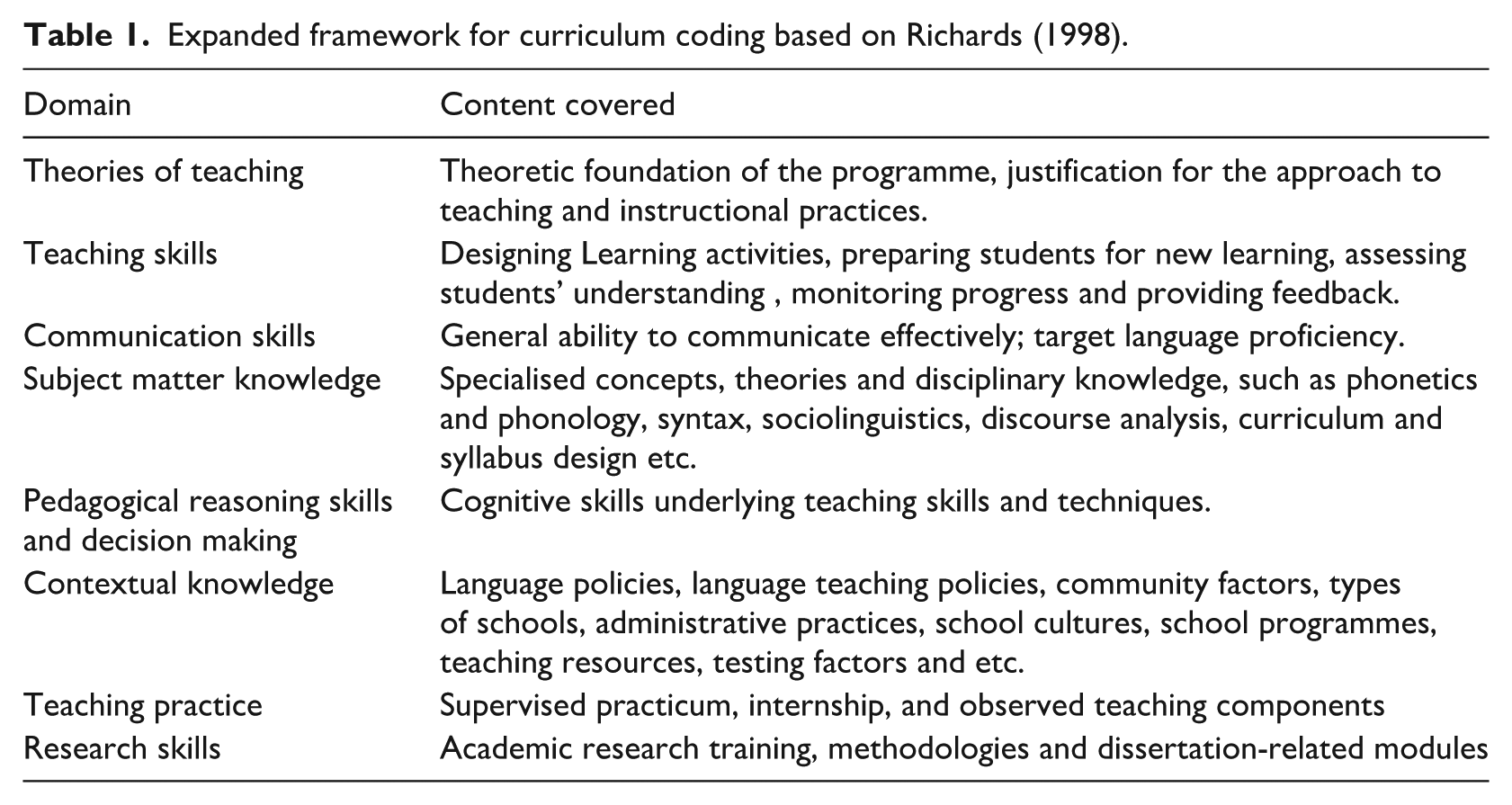
Richards’ (1998) framework, supplemented with two additional domains, enabled a structured and comprehensive coding of curriculum content. The extended model allowed for a nuanced cross-case comparison of credit distribution, revealing how different programmes balance conceptual, practical and contextual elements of pre-service teaching training.
Three universities were selected for analysis: University College Cork (UCC) and University College Dublin (UCD) in Ireland, and Shanghai University (SHU) in China. UCC and UCD were chosen due to their status as the first two Irish universities offering specialised master’s programmes in Chinese language teacher education. SHU was selected for its long-established programme in teaching Chinese as a foreign language and its active institutional partnership with UCC through the Confucius Institute. These programmes thus represent meaningful cases for examining how curricular content is prioritised and contextualised across two distinct national settings—China as the source country and Ireland as a receiving context within the globalisation of Chinese language education.
Methods of data collection and analysis
Data collection
Curriculum documents were collected from the official websites of the three universities and included course descriptors, module handbooks and programme specifications. These documents formed the primary data for analysing curricular structure and content. To supplement this analysis, national and institutional policy documents, such as NCCA curriculum frameworks, teacher accreditation guidelines and national strategies for foreign language education, were reviewed to identify the broader contextual factors influencing curriculum development.
Data analysis
Each curriculum was analysed using a coding scheme based on the extended version of Richards’ (1998) framework. Individual modules were coded into one or more of the eight domains on their stated learning outcomes, content emphasis and credit weighting. When modules integrated multiple knowledge domains, for example, a research course with theoretical foundations or a practicum with reflective journals, dual coding was applied. In such cases, credits were proportionally allocated to the relevant domains. For example, a 10-credit module titled Research in Language Teaching, which combined methodology training with a strong theoretical component, was coded as 5 credits under ‘Research’ and 5 credits under ‘Theories of Teaching’. Similarly, a teaching internship that includes classroom observation, practical experience, and reflective reporting might be divided between ‘Teaching Practice’ and ‘Pedagogical Reasoning’, based on how the modules’ components are weighted (as summarised in Appendix A).
In instances where elective modules were offered, equal weighting was assigned to all options to reflect the programme’s structural design rather than individual student choices. This allowed for a consistent and fair comparison across curricula without privileging a specific academic path.
The total number of credits allocated to each domain was then converted into percentages relative to the full programme, allowing for a visual and quantitative comparison across institutions. These data were interpreted alongside contextual factors to explore how curricular priorities are shaped by national policies, institutional missions and pedagogical traditions (see Appendix A).
This dual-layered approach, integrating both structural content analysis and contextual policy interpretation, provides a comprehensive understanding of how Chinese language teacher education curricula are constructed and differentiated across the three selected programmes.
Comparative analysis
Structural differences
The master’s programme in Teaching Chinese to Speakers of Other Languages (TCSOL) at Shanghai University (SHU) is a 2-year, full-time degree based in the School of International Education. Its structure is divided into two phases: the first year focuses primarily on the theoretical coursework, while the second is dedicated to internship-based teaching practice and dissertation research. The programme aims to cultivate professionals with a strong foundation in the Chinese language and culture, intercultural communication skills and proficiency in second language instruction (Shanghai University, 2024). The stated outcomes highlight the development of ethical professionalism, digital teaching literacy, cultural promotion ability and project management competence. Graduates are expected to pursue careers in education, public service or international cultural exchange.
In comparison, the equivalent programmes in Ireland, namely the MA in Teaching Chinese to Speakers of Other Languages at University College Cork (UCC) and the MA in Teaching Chinese Language and Culture (Native and Near-Native Speakers) at the University College Dublin (UCD), are both 1-year full-time degrees, and both offer a 2-year part-time option. The UCC programme is situated in the Department of Asian Studies, and the UCD programme is housed in the Irish Institute of Chinese Studies in collaboration with the Applied Language Centre.
The UCC programme aims to equip students with the theoretical and professional competencies needed to teach Chinese effectively in both Irish and International contexts (University College Cork, 2024). UCD’s programme places similar emphasis on professional training in Chinese language teaching but also emphasises the growing demand for Chinese language education in Ireland, citing the expansion of Leaving Certificate offerings and broader China-Ireland relations (University College Dublin, 2024). Additionally, UCD highlights research and academic development as explicit training goals, positioning the programme to support students’ scholarly engagement as well as practice teaching competence.
The admission processes reflect institutional and national differences. In China, entry into the SHU TCSOL programme requires applicants to submit academic records and pass a national entrance examination, followed by an interview. Domestic applicants must meet minimum standards in the English subject of the national entrance exam. The programme also allows for cross-disciplinary admissions; if students whose undergraduate major is not directly related to the Chinese language or TCSOL are permitted entry, the programme provides designated supplementary courses, such as Modern Chinese Language, Introduction to Teaching Chinese as a Foreign Language, etc.
International applicants to SHU are subject to a separate admission process based on application dossiers and are generally expected to demonstrate Chinese proficiency at HSK Level 5 or above. For those without a Chinese language background, bridging courses are mandated to equip them with adequate language proficiency to better adapt to the programme.
In contrast, UCC and UCD adopt an application-based admission system, with evaluation based on undergraduate qualifications, proficiency in Chinese and English languages, and prior learning or experience. UCC requires a LEVEL 8 (honours) degree in relevant fields such as Chinese, Asian Studies, Linguistics, Education or Languages. Applications outside these domains may be considered under Recognition of Prior Learning (RPL) with pending evaluation of relevant qualifications and a supplementary statement. Non-Native Chinese speakers must provide evidence of Chinese proficiency at HSK Level 5 or hold a relevant Chinese-related undergraduate degree (minimum 50% credit-weighted courses taken in Chinese). UCD specifies a Level 8 degree in Chinese Language, Literature or a related discipline, although its definition of ‘relevant subject areas’ is broad and somewhat more flexible. Both Irish programmes require proof of English proficiency (minimum IELTS 6.5 or equivalent) for non-native English applicants.
Like SHU, neither Irish programme imposes rigid disciplinary entry boundaries, thus promoting flexibility and interdisciplinary access to pre-service teacher education. However, unlike SHU, the Irish programmes do not offer structured language or academic support (e.g. bridging courses) for applicants who may lack sufficient Chinese language proficiency. The difference suggests that while Irish programmes maintain flexible entry policies, they place more responsibility on applicants to meet language thresholds independently, potentially limiting access for latecomers or career switchers without robust Chinese language training. SHU’s provision of preparatory support reflects a stronger institutional commitment to expanding access for diverse international learners, which may align with its broader strategic goals in promoting Chinese language education globally.
Curricular content and contextual factors shaping curriculum development
The curricular structures of the three programmes reflect significant variation in content focus, design rationale and contextual alignment. Shanghai University (SHU) offers a 2-year programme requiring a minimum of 56 credits, including general education, professional core and elective modules, innovation training and a teaching practicum. UCC and UCD each offer a 1-year, full-time master’s programme comprising 90 credits, including a dissertation (worth 30 credits at UCC and 25 at UCD). The following analysis also includes the dissertation components as they play this crucial role in shaping research competence and professional development in postgraduate education. It is important to note that the credit systems differ between the two countries. 1 Therefore, while credit values are presented for comparison, they are not directly equivalent across contexts.
The comparative chart in Figure 1 presents the percentage distribution of credits across eight curriculum domains, based on the expanded Richards’ (1998) framework.
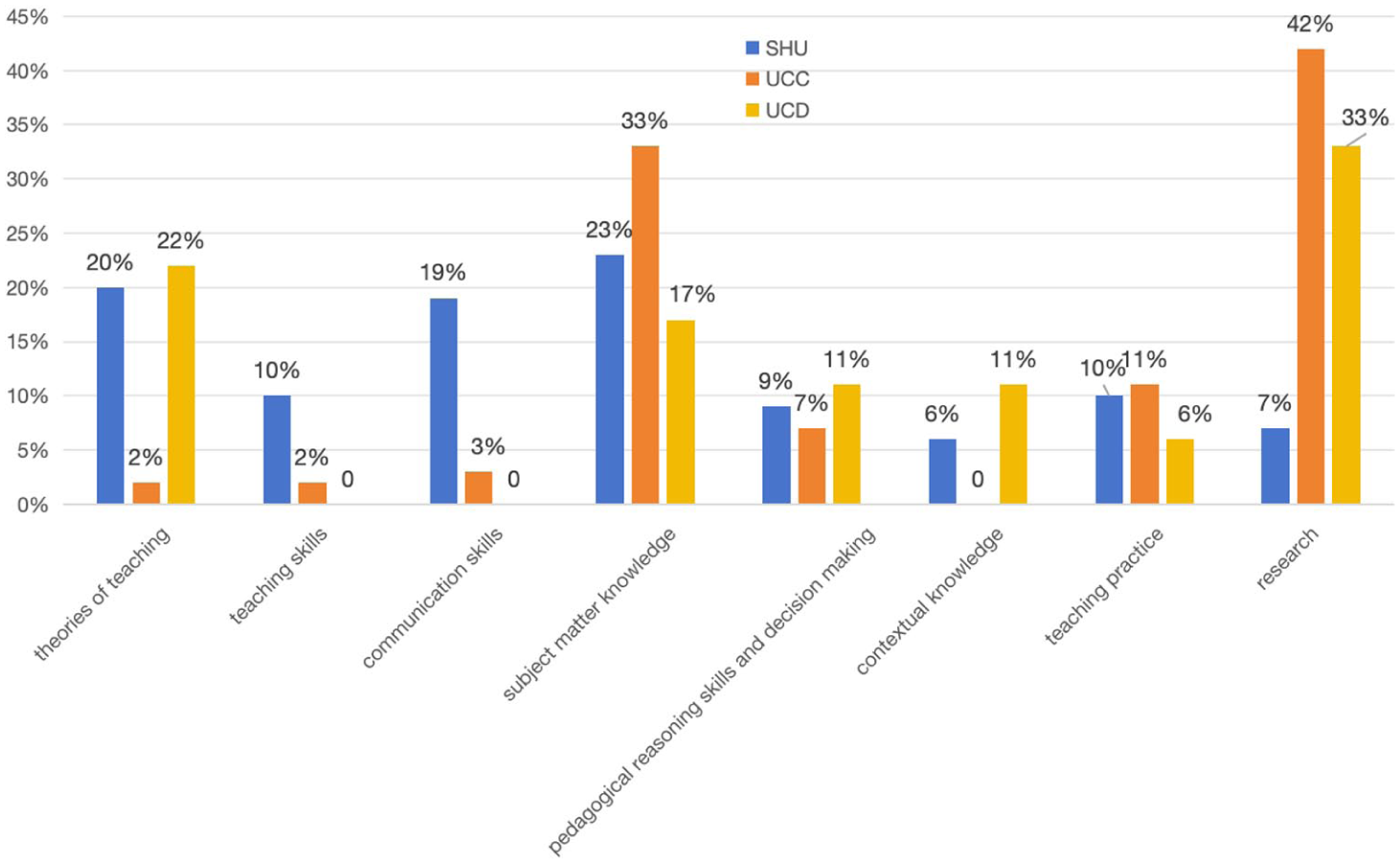
Comparison of three curricula in different domains.
The different foci across three curricula
The above comparative figure reveals several key patterns. First, SHU’s curriculum distributes credits more evenly across a broader range of knowledge domains. Notably, it includes dedicated modules in communication skills, which it is not explicitly represented in the UCC and UCD curricula. For example, courses such as Intercultural Communication, Chinese Culture Communication, Chinese and Foreign Cultural Exchange Activities, Public English, etc., are classified under communication skills, reflecting the programme’s explicit goal of fostering cross-cultural communicative competence and cultural ambassadorship. This emphasis is consistent with the positioning of TCSOL programmes in China as vehicles of cultural diplomacy (Yang et al., 2022).
Second, UCC places a particularly strong emphasis on academic research (42% of total credits), which is consistent with its 30-credit dissertation and a standalone research module. UCD also allocates a substantial portion (33%) to research activities. SHU, by contrast, dedicates only 7% to research-oriented modules. These differences reflect different assumptions about the role of research in teacher preparation: while Chinese programmes tend to prioritise applied pedagogical skills, Irish programmes appear to integrate academic research more centrally into the development of professional identity.
Third, SHU and UCC place notable emphasis on subject knowledge (SHU 23%, UCC 33%), compared to 17% at UCD. The SHU’s design aligns with the curriculum traditions of Chinese universities, where disciplinary expertise is often foregrounded in professional preparation. UCC’s programme overview highlights the goal of helping learners develop an understanding of key issues in teaching Chinese as a linguistic system, which also explains that the programme places a greater focus on subject knowledge, especially considering that not all learners are from a Chinese language-related background. UCD, however, devotes a greater share to theories of teaching and pedagogical reasoning, suggesting a more reflective and theory-informed orientation.
Finally, both Irish programmes emphasise teaching practice (11% at UCC, 6% at UCD) supported by institutional partnerships with local primary and post-primary schools. These school placements are a formal component of the programme design and assessment. In contrast, anecdotal insights from student and staff communication suggest that SHU students may face greater competition for overseas teaching opportunities, and the quality of domestic placements can vary depending on institutional partnerships and regional arrangements.
These patterns indicate how programme content is shaped by national teacher education frameworks, institutional priorities and the professional roles envisaged for graduates. As Richards (1998) and Graves (2009) argue, curriculum planning is always context-dependent, reflecting assumptions about what constitutes professional knowledge in a given educational setting.
Different foci within each curriculum
The following section analyses the variations among the different domains of knowledge within each curriculum by explaining the qualitative data and contextual factors that impact curriculum development.
Variation within the SHU curriculum (Table A1)
Figure 2 shows that the SHU curriculum distributes credits across a wide range of teacher knowledge domains, reflecting a broad and diversified training model. The largest proportion of credits is assigned to subject matter knowledge (23%), encompassing modules such as Error Analysis, Study on Chinese Textbook and Resource Development and Classic Readings on Chinese Culture. This emphasis aligns with the traditionally subject-focused orientation of Chinese higher education in language teacher training.
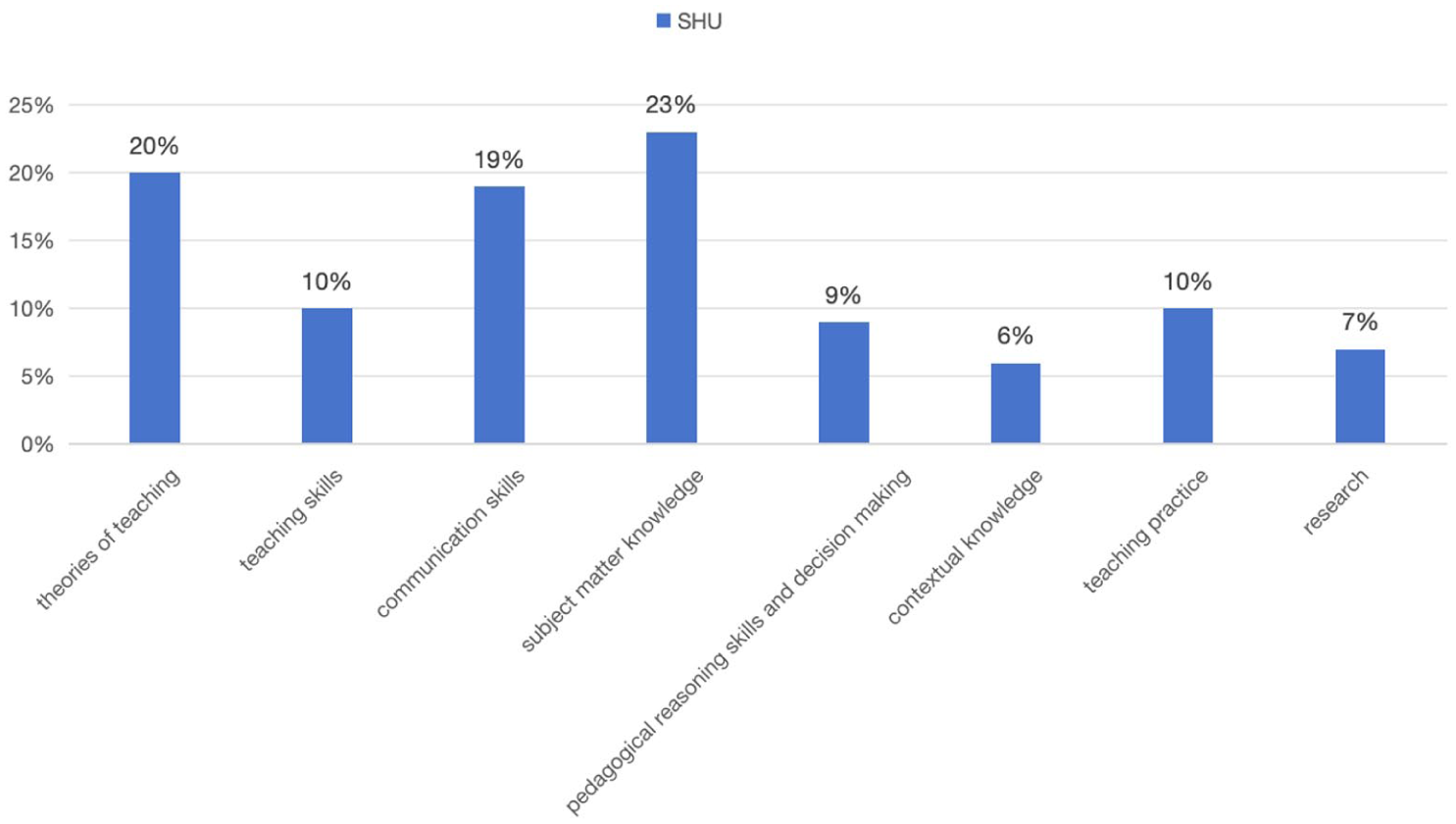
Allocation of credits within the SHU curriculum.
Theories of teaching account for 20% of the total credits, including foundational modules like Teaching Chinese as a Second Language Acquisition I & II and Second Language Acquisition. These modules provide a strong theoretical base for prospective teachers and reinforce the programme’s stated goals of developing informed and reflective educators.
The domain of communication skills comprises 19% of total credits. Modules such as Chinese Culture Communication, Intercultural Communication and Chinese and Foreign Cultural Exchange Activities reflect the programmes’ emphasis on cross-cultural competence and cultural dissemination, goals that are explicitly stated in SHU’s training objectives.
Pedagogical reasoning and decision-making accounts for 9% of the total credits and include modules on teaching psychology, instructional analysis and reflective observation practices. These courses support the development of teaching cognition and instructional judgement, which are increasingly recognised as a critical component in SLTE research (Borg, 2003; Johnson, 2006).
Teaching skills (10%) and teaching practice (10%) are present through structured courses such as Teaching Strategies and Curriculum Design, Modern Language Teaching Techniques and the compulsory Teaching Internship. These practical elements, though limited in percentage, are essential for transferring theoretical and subject knowledge into classroom contexts.
Research skills are represented by 7% of the curriculum and include modules such as Academic Writing, Professional Frontier Lectures and Academic English. These courses introduce students to academic inquiry but appear less central compared to the Irish programmes (UCC and UCD), where research receives considerably more curricular weight.
Contextual knowledge, which includes ideological and philosophical foundations such as Marxism and Social Science Methodology, makes up 6% of the curriculum. While these modules may not directly address institutional schooling systems or language policy, they reflect broader educational mandates in Chinese higher education and introduce macro-level context relevant to the national educational policy.
It is worth noting that several modules in the SHU programme are elective, particularly in areas like pedagogy, educational technology and materials development. In this study, electives were coded based on available curriculum documents, and credit values were included proportionally in the overall percentage calculations. This approach aligns with Richards’s (1998) recommendation to analyse both compulsory and optional curricular elements when mapping programme priorities.
In summary, SHU’s curriculum reflects a relatively balanced approach across theoretical, subject-specific, and communicative competencies with moderate attention to practice and research. The emphasis on cross-cultural communication and disciplinary depth is consistent with the programme’s institutional aims and export-oriented teacher training model.
Variation within the UCC curriculum (Table A2)
The curriculum at University College Cork (UCC) places significant emphasis on research skills and teaching practice, which together account for over half of the total credits (53%). The 30-credit dissertation, combined with research-focused modules like Postgraduate Research Skills and English for Academic Study, reflects the programme’s strong orientation towards inquiry-based learning and academic development. This is complemented by a 10-credit Teaching Practice Internship, which provides hands-on experience in Irish post-primary educational settings.
The UCC programme benefits from its close collaboration with Ireland’s Post-Primary Languages Initiative (PPLI). During the second semester, students participate in supervised internships in local secondary schools, supported by Garda Vetting certification—a mandatory clearance for working with minors in Ireland. These partnerships also increase graduates’ likelihood of meeting evolving teacher accreditation requirements with the Irish Teaching Council and gaining employment in the Irish education system.
From Figure 3, we also observe that subject matter knowledge (33%) receives significant attention. This includes foundational modules such as A Linguistic Introduction to Chinese, Pedagogical Grammar and Advanced Chinese for TCSOL Teachers. In contrast, theories of teaching and teaching skills are each given only 2% of the credit weighting. A further 7% is allocated to pedagogical reasoning and decision-making, derived from reflective components embedded in the Teaching Practice Internship and From Pedagogical Theory to Effective Classroom.
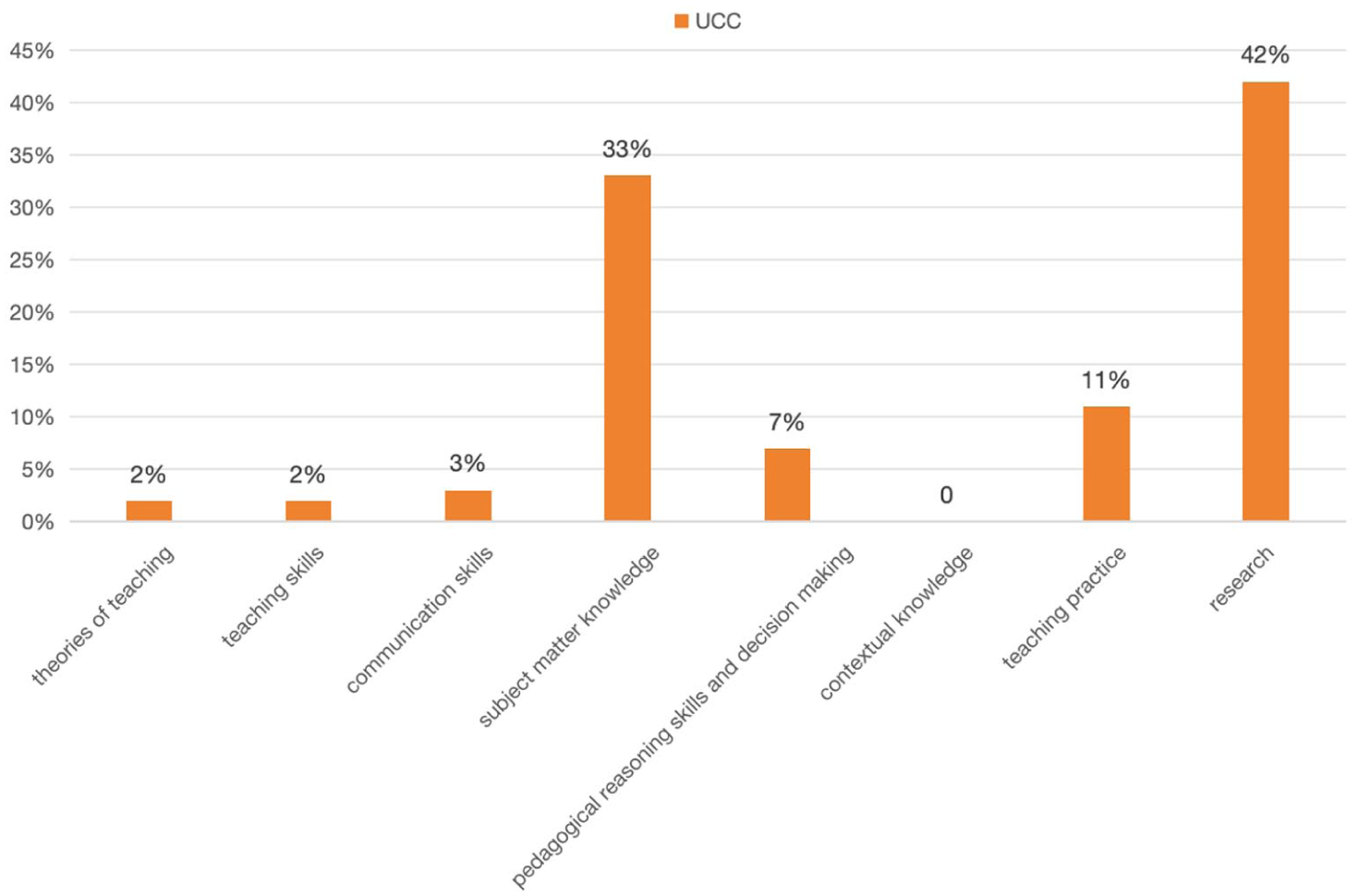
Allocation of credits within the UCC curriculum.
Notably, no modules are formally dedicated to communication skills and contextual knowledge as defined by Richards’s (1998) framework. This suggests a potential disconnect between the curriculum and the cultural communicative competencies expected of language teachers in Irish secondary schools. According to both the Irish Secondary School Chinese Teaching Survey Report (Nowlan, 2009) and the Leaving Certificate Specification for Mandarin Chinese (NCCA, 2021), fostering cross-cultural awareness and competence in cultural instruction are essential for engaging students and meeting assessment standards. This absence is particularly relevant considering Chinese has been included in the Leaving Cert exam, where culture is treated not merely as content but also as an integrated strand for communicative competence.
Given that many pre-service teachers at UCC come from diverse linguistic and academic backgrounds, further curriculum development could include explicit instruction on Irish education policy, school culture and learner profiles to prepare students more effectively for teaching practice placements. While some of this contextual knowledge is acquired through experience during supervised internships, introductory workshops or structured induction sessions, potentially delivered in collaboration with the Post-Primary Language Initiative (PPLI), could provide essential orientation to the Irish educational context. Incorporating modules on cross-cultural communication and curriculum design for cultural content may also better align the programme more closely with national standards and learner needs.
Variation within the UCD curriculum (Table A3)
Figure 4 shows that the UCD curriculum allocates the highest proportion of credits to research skills (33%) and theories of teaching (22%), indicating a strong orientation towards inquiry-based learning and theoretically informed pedagogy. Notably, the inclusion of two TESOL (Teaching English to Speakers of Other Languages)-focused electives: TESOL Pedagogy and TESOL: Principles and Practices, suggests an assumed transferability of pedagogical principles across language teaching domains. While this may reflect a broader belief in shared methodologies within foreign language teaching, the rationale for applying TESOL frameworks to Chinese language teaching is not explicitly articulated in the curriculum documents. This raises important questions regarding the contextual relevance of such content and points to the need for further consultation with programme designers and stakeholders to better understand how these modules align with the specific objectives of Chinese language teacher preparation.
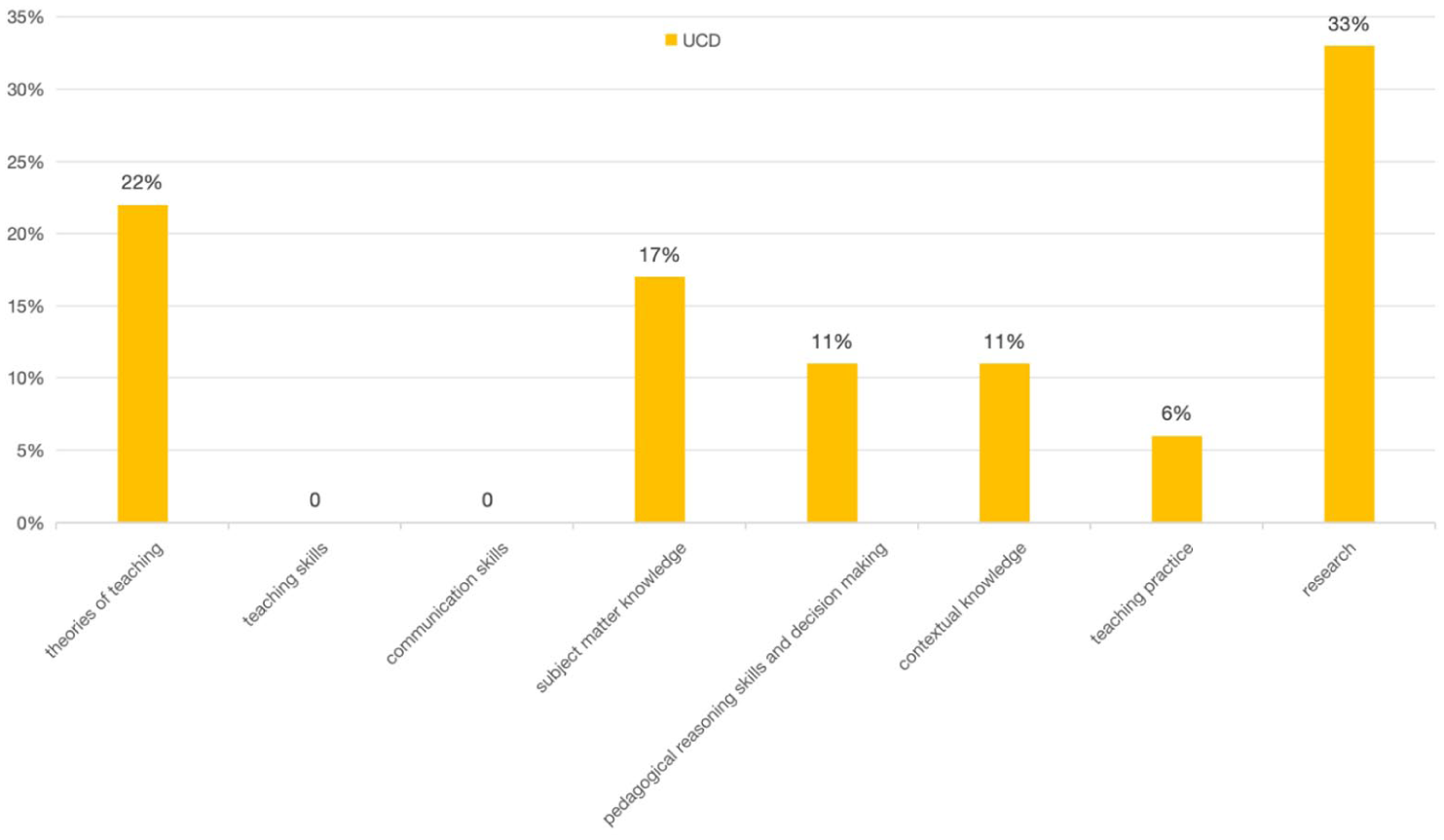
Allocation of credits within the UCD curriculum.
A distinct feature of the UCD programme is its emphasis on pedagogical reasoning and decision-making (11%), reflected through an extended practicum component (Teaching Practice), which includes observation, planning, delivery and reflection. This allocation suggests that the programme aims to cultivate not only procedural teaching skills, but also the cognitive and reflective capabilities necessary for adaptive classroom decision-making, an emphasis aligned with Freeman and Johnson’s (1998) reconceptualisation of teacher knowledge.
Subject matter knowledge comprises 17% of the total credit load and includes disciplinary modules such as the Study of Modern Chinese Language. This is slightly less than what is observed in UCC and SHU, and may reflect a stronger focus on pedagogical frameworks than on linguistic content.
The curriculum also includes 11% of credits assigned to contextual knowledge, with elective modules like Education for the 21st Century and Wellbeing of Children and Youth offering a broader socio-educational perspective. These modules demonstrate a responsiveness to emerging priorities in education policy, such as student well-being and global competencies, which are key themes in Irish educational discourse.
Communication skills and teaching skills are not directly addressed in dedicated modules. While communicative competence and classroom techniques may be embedded in broader pedagogy-focused courses, their absence as standalone components may represent a curricular gap, particularly given that the programme aspires to prepare teachers for diverse and multilingual classrooms. The UCD Confucius Institute, as the largest of its kind in Ireland, provides extensive access to teaching placements and partner schools, which helps to compensate for gaps in the formal curriculum through extracurricular engagement. The institute’s frequent cultural programming and outreach events also provide informal spaces for cross-cultural communication, which contributes considerably to teacher identity development, even though it is not credit-bearing.
Taken together, the UCD programme appears structurally aligned with a research-informed and policy-aware model of language teacher education. However, its relatively low weighting for subject-specific communication and procedural teaching skills suggests the need for further curriculum integration if it is to fully meet the practical demands of classroom language teaching, particularly in the Irish school context.
Discussion
This study examined the structure and content of three Chinese language teacher education master’s programmes, two in Ireland and one in China, through a comparative curriculum analysis. Employing Richards’s (1998) framework as a coding scheme, the analysis revealed how teacher knowledge is conceptualised and prioritised across different institutional and national contexts. The framework provided a practical and systematic tool for categorising curricular content into eight domains. Its clarity enabled consistent coding across diverse programmes, which allowed for meaningful cross-case comparison. However, its categorical nature posed limitations in capturing curricular hybridity, particularly in courses that integrate language, culture, pedagogy, and theory. For instance, modules on cultural dissemination or educational philosophy defied single-domain categorisation. This challenge echoes critiques by Freeman and Johnson (1998) and Graves (2009), who call for more integrated models that reflect the situated, interpretive nature of teacher learning.
Compared to previous studies that emphasised policy discourse or curricular aims (e.g. Wang et al., 2013), this study contributes empirical insight into how different domains of teacher knowledge are structurally represented and distributed. The domain-level analysis suggests several noteworthy trends. First, while all three curricula foreground teaching theories and subject-matter knowledge, the Irish programmes allocate a much larger proportion of credits to research and teaching practice. In contrast, the SHU curriculum is more balanced across a broader range of domains, including communication skills and contextual knowledge. This may reflect differing conceptions of what constitutes teacher readiness. At the same time, whereas Chinese programmes emphasise intercultural competence and professional literacy, Irish programmes appear more narrowly aligned with local accreditation needs and institutional pathways.
Situating these findings within the landscape of language teacher education in Europe highlights both parallels and divergences. The European Profile for Language Teacher Education (EPLTE) – A Frame of Reference (Kelly et al., 2004) outlines forty items across four domains, including structure, knowledge, strategies and values, which emphasises integration of academic and practicum experience, intercultural competence, Information and communication technology (ICT), content and language integrated learning (CLIL) and lifelong learning. Subsequent research shows that while many European programmes cover linguistic and pedagogical competences robustly, persistent gaps remain in areas such as mentor training, explicit intercultural education, mobility supports and the systematic adoption of European tools (Karatsiori, 2016; Kelly, 2011). From this perspective, the Irish programmes analysed here resonate strongly with European patterns: they foreground research and practicum, aligning with EPLTE’s structural recommendations, but they also reflect the same weaknesses that European scholars have identified, particularly the limited embedding of intercultural competence and contextual/policy literacy.
A closer look at programme-level details reinforces these broader patterns. The SHU curriculum stands out for its comprehensive scope, covering eight knowledge domains with notable emphasis on cross-cultural communication and Chinese cultural dissemination, which are the objectives aligned with China’s broader soft power and language policy agendas (Yang et al., 2022). However, the curriculum may be less tailored for international students or those who lack a background in Chinese language studies, echoing Ma et al.’s (2017) critique of many international TCSOL programmes. In Ireland, the UCC curriculum places strong emphasis on research (42%) and subject knowledge (33%), with the teaching practice component supported by partnerships such as PPLI. While this model supports rigorous teacher preparation on the theoretical front and practical experience in Irish schools, the absence of explicit coursework on communication skills and contextual knowledge raises questions about the programme’s readiness to meet global and local multilingual demands. Similarly, the UCD curriculum prioritises research (33%) and theories of teaching (22%), but underrepresents subject-matter knowledge and communication skills. Despite its stated ambition to develop culturally responsive educators, intercultural competence is not structurally embedded and links to Irish education policy remain indirect.
At the national level, these curricular emphases can be situated within Ireland’s language education policy. The launch of Languages Connect, Ireland’s Strategy for Foreign Languages in Education 2017-2026 (Department of Education and Skills, 2017), set ambitious goals for strengthening multilingual competencies, increasing foreign language uptake and aligning more closely with European benchmarks (Publications Office of the European Union, 2012). Yet critical analyses (Lanvers, 2024) point to limited success to date, particularly in reconciling the promotion of foreign language with the status of Irish and in translating policy aims into measurable growth uptake. The Irish programmes examined here reflect this tension: while they respond to demand for Chinese teachers and provide practicum-based pathways, they do not explicitly integrate intercultural training or policy literacy. This gap between curricular design and policy aspiration mirrors European challenges in achieving the plurilingual ideals articulated in EU-level frameworks (Publications Office of the European Union, 2012).
Furthermore, the structural and policy context in which each programme operates shapes curriculum design in significant ways. In Ireland, the availability of the Third-Level Graduate Scheme (Department of Justice, 2024) and the relatively high demand for qualified Chinese language teachers create a strong employment incentive for graduates. This helps explain the emphasis on practice-based learning and research, which aligns with professional pathways in Irish secondary education. In contrast, the Chinese programme is oriented towards a broader and more international labour market where intercultural communication and Chinese cultural knowledge are considered core professional assets. However, constraints in long-term domestic opportunities for TCSOL graduates, such as the lack of recognised teaching pathways or stable employment, may also influence programme design and career preparedness (Tang and Qi, 2021).
Overall, this comparative study highlights not only national priorities but also shared challenges across contexts. Viewed through the European lens, both Irish and Chinese programmes face similar challenges, including the integration of intercultural competence, the alignment between the curricula with evolving policy frameworks, and the preparedness of teachers for diverse and multilingual classrooms.
Conclusion
This study demonstrates how comparative curriculum analysis can reveal how national and institutional contexts influence global language teacher education pathways. Rather than proposing a unified model, the findings emphasise the need for context-sensitive and learner-centred approaches. In Teaching Chinese to Speakers of Other Languages (TCSOL), this is particularly important given the diversity of learners and teaching contexts across borders.
This study also encountered limitations in applying Richards’s (1998) framework. For example, certain interdisciplinary or culturally focused courses, such as Special Topics in Contemporary Chinese Culture and From Pedagogical Theory to Effective Classrooms, did not fit neatly within a single category. These were classified under more than one category, but such placement may not fully or accurately capture the integrative aims of these courses. This suggests the need for further refinement of both analytical frameworks and curriculum design principles to accommodate increasingly hybrid and context-driven goals.
Several limitations of this study should be acknowledged. First, the analysis relied primarily on document analysis, without incorporating interviews or stakeholder perspectives. Second, the study focused on credit distribution rather than on in-depth content analysis of course syllabi, which may obscure the nuances of what is taught. Lastly, the framework employed, while systematic, had limitations in dealing with courses that span multiple knowledge domains.
Therefore, further research should triangulate document analysis with empirical data from programme coordinators, instructors, and pre-service teachers to capture a comprehensive picture of language teacher preparation. For curriculum developers, three priorities emerge. First, embed elements such as cross-cultural communication and contextual knowledge more systematically when preparing teachers for local or global contexts. Second, create mechanisms for regular review that respond to changing labour-market and policy conditions. Third, align curricula not only with national priorities also with broader frameworks such as the European Profile for Language Teacher Education and the Languages Connect strategies in Ireland.
Footnotes
Appendix A. Coding scheme for curriculum content analysis
This appendix presents the detailed coding of curriculum components from the three programmes (Shanghai University, University College Cork, and University College Dublin) using the extended framework adapted from Richards (1998). Courses were classified into eight knowledge domains, and the proportion of credits in each domain was calculated relative to the total credit load of each programme. See section 3.2 for coding procedures.
Acknowledgements
I would like to thank Mr. Don Samec for his invaluable support and feedback throughout this research.
Declaration of conflicting interests
The author declared no potential conflicts of interest with respect to the research, authorship, and/or publication of this article.
Funding
The author received no financial support for the research, authorship, and/or publication of this article.
Ethical considerations
This study is a descriptive analysis based on publicly available data extracted from university websites. Ethical approval was not required as the data used in this research is publicly accessible.
Consent to participate
Not applicable.
Consent for Publication
Not applicable.

Data availability
All data analysed in this study are publicly available on university websites. Further details are available from the corresponding author upon request.