



Abstract
Previous research has identified positive impact of professional development (PD) on teachers’ self-efficacy. Yet, there is scant research into the potential relationships between second language (L2) teachers’ self-efficacy and PD. Furthermore, the participants of these studies were limited to English as a foreign language (EFL) teachers, and PD was studied only in the form of short-term programs. There is a strong need to investigate how ongoing PD may interact with the self-efficacy development of teachers of other foreign/second languages. To further the research endeavor, this study adopted an explanatory sequential mixed-methods design to examine self-efficacy in the application of professional standards and PD activities and needs of Chinese language teachers in North Carolina secondary schools. The study collected quantitative data from an online survey and qualitative data through interviews. The quantitative survey results informed the qualitative interview protocol design and the purposeful sampling of interviewees. The quantitative findings indicate that teachers’ self-efficacy was significantly predicted by their perceived PD benefits and self-reported PD support, but teachers’ PD needs were not found to be significant predictors of their self-efficacy. The qualitative findings identified regular critical reflections, active involvement in the professional community, and various sources of PD support as important contributors to teachers’ self-efficacy development. Implications of the study for teacher educators, stakeholders and researchers are also discussed through analysis of the integrated findings.
Keywords
I Introduction
A major source of motivation and commitment in different aspects of teaching, teacher efficacy has been abundantly researched. Teacher efficacy has been found to contribute positively to student motivation (Mojavezi & Tamiz, 2012) and student achievement (Bruce et al., 2010; Cantrell et al., 2013; Mojavezi & Tamiz, 2012), effective classroom management (Abu-Tineh et al., 2011), and openness to adoption of innovative methods to meet students’ needs (Tschannen-Moran & Hoy, 2007). Previous studies have also examined the relationship between teacher efficacy and job satisfaction and/or burnout (Aldridge & Fraser, 2016; Collie et al., 2012; Høigaard et al., 2012; Malinen & Savolainen, 2016; Ortan et al., 2021; Troesch & Bauer, 2017).
Given the importance of continued professional development (PD) in relation to teachers’ self-evaluation of their work, an increasing number of studies have examined the effects of PD on teacher efficacy (Andersson et al., 2022; Bruce et al., 2010; Choi & Kang, 2019; Karimi, 2011; Lakshmanan et al., 2011; Liu & Liao, 2019; Moradkhani & Haghi, 2022; Murphy, 2015; Ortaçtepe & Akyel, 2015; Wyatt, 2013; Yoo, 2016; Zonoubi et al., 2017). Yet, only a handful of these studies investigated second language (L2) teacher efficacy and PD. Results of these studies indicate the positive impact of PD on L2 teacher efficacy development in various areas, including instructional strategies and classroom management (Karimi, 2011; Moradkhani & Haghi, 2022; Ortaçtepe & Akyel, 2015; Wyatt, 2013; Zonoubi et al., 2017), student engagement (Karimi, 2011; Moradkhani & Haghi, 2022; Ortaçtepe & Akyel, 2015), and adapting materials based on learners’ needs (Wyatt, 2013), among others.
Despite the important findings of these studies, the participants were limited to English as a foreign language (EFL) teachers. As an under-researched line of inquiry, the self-efficacy and PD of teachers of other foreign/second languages deserve more attention from researchers in L2 teacher education. Furthermore, in all of the aforementioned studies exploring EFL teacher education, PD was studied in the form of short-term programs such as in-service education program (Ortaçtepe & Akyel, 2015; Wyatt, 2013), language institute (Moradkhani & Haghi, 2022), and professional learning community (Zonoubi et al., 2017). There is a strong need for future studies to examine how ongoing PD of L2 teachers may contribute to their teacher efficacy growth, as the process of learning to teach essentially continues throughout a teacher’s entire career (Haley, 2000; Richards, 2008).
II Literature review
1 Theoretical background
A key concept in the social cognitive theory (Bandura, 1986, 1997), self-efficacy is defined as ‘beliefs in one's capabilities to organize and execute the courses of action required to produce given attainments’ (Bandura, 1997, p. 3). Self-efficacy beliefs, which influence one’s thoughts, emotions, and behaviors through cognitive, motivational, affective, and selection processes, are key determinants of the individual’s choice of activities, investment of efforts, and persistence in these efforts when encountering obstacles (Bandura, 1977, 1997). Unlike other concepts of self such as self-worth and self-esteem, self-efficacy is specific to a particular task. This self-judgment about task capability, however, may not reflect actual level of competence since people regularly overestimate or underestimate their capabilities (Tschannen-Moran et al., 1998). Such perceived efficacy, in turn, may influence the courses of action chosen by individuals and efforts exerted. When people believe that certain intimidating situations exceed their coping skills, they tend to fear and avoid these situations. On the contrary, when people perceive themselves as capable of handling certain situations albeit challenging, they will participate in related activities with more confidence (Bandura, 1977).
Defined as ‘a teacher’s belief in his or her capability to organize and execute courses of action required to successfully accomplish a specific teaching task in a particular context’ (Tschannen-Moran et al., 1998, p. 233), teacher efficacy is a dynamic construct because of its cyclical nature. Greater efficacy induces more effort and persistence resulting in better performance, which in turn leads to increased efficacy. On the contrary, lower efficacy reduces effort and persistence, which leads to unsatisfactory teaching outcomes, and consequently decreased efficacy (Tschannen-Moran et al., 1998). Over time, this cyclical process stabilizes, and a relatively enduring set of efficacy beliefs resistant to change are established (Bandura, 1997).
Although teachers’ negative self-efficacy beliefs are considered detrimental to continuing teacher development by some (Kubanyiova, 2006; Tschannen-Moran et al., 1998), others have challenged this view by suggesting that teachers’ doubts in self-efficacy carry great potential for their PD (Hiver, 2013; Moè et al., 2010; Wheatley, 2002, 2005; Wyatt, 2013). According to these authors, when a teacher has a lack of confidence about positive influence on students’ learning outcomes, it is quite likely that the teacher will be motivated for innovation and improvement in his or her professional practices.
2 Teacher efficacy and professional development
In recent years, a number of studies have examined the effects of PD on teacher efficacy in various areas, the majority of which have found increased teacher efficacy as a result of PD. Lakshmanan et al. (2011) examined the effectiveness of a three-year PD program designed for elementary and middle school science teachers. Results indicated positive impact of the PD program on both teacher efficacy and implementation of reformed science teaching. Participants’ personal science teaching efficacy was significantly increased by the end of the program. In a random field trial study, Ross and Bruce (2007) compared the self-efficacy of Grade 6 math teachers in treatment and control groups. The treatment group that participated in the standards-based PD program outperformed the control group in three measures of teacher efficacy, including student engagement, instructional strategies, and classroom management. In addition, significant difference between the two groups was found in teachers’ self-efficacy in classroom management. Bruce et al. (2010) investigated the impact of classroom-embedded professional learning on the efficacy of math teachers and student achievement in two districts in Canada. The majority of the participants in District A were teachers experienced with reform-based math instruction, whereas many participants in District B had much less prior PD experience. Participants in District B rated themselves higher than those in District A on all pre-test measures. However, these ratings were reversed after the professional learning program. Bruce et al. (2010) attributed this change to different gains from the same PD experience by the two groups. District A teachers had deeper understanding of their instructional practice and student thinking by combining their prior experience with the PD sessions. In contrast, since District B teachers just started the learning process, they were only able to focus on more superficial aspects of math teaching through problem-solving.
A few studies explored how PD affected the self-efficacy of K-12 general education teachers and educators in the U.S. and elsewhere. Yoo (2016) examined the effect of a five-week online PD learning module on the self-efficacy of 148 K-12 teachers and school educators. Significant differences between pre- and post-scores were found in all three dimensions of teacher efficacy, namely instructional strategies, classroom management, and student engagement. Many teachers attributed their increased self-efficacy to the knowledge gain through the online PD module. Meanwhile, many participants acknowledged that the knowledge and experience gained through the PD program helped them make adjustments on their previous judgment or evaluation of their own work, which resulted in either self-efficacy increase or decrease. Furthermore, participants expressed frustration over the negative impact on their efficacy from external factors such as curriculum guidelines and student aptitudes. Murphy (2015) investigated the self-efficacy changes in literacy teaching for students with Attention Deficit Hyperactivity Disorder (ADHD) of five elementary general education teachers during a PD program and six months after the program. Findings of the study revealed a sustained increase in participants’ self-efficacy as literacy teachers and decrease in the levels of stress related to teaching students with ADHD.
Using the 2013 Teaching and Learning International Survey Data, Liu and Liao (2019) examined how the four aspects of PD, including format, content, duration, and quality, were related to the overall teacher efficacy and its three subscales in instruction, classroom management, and student engagement. Findings of the study identified positive correlations between the overall teacher efficacy and its subscales and PD programs in the formats promoting job-embedded, inquiry-based, and collaborative learning, or PD programs providing the content related to curriculum, instructional skills, management, and technology. The teacher-perceived quality of PD was also found to be positively correlated with the overall teacher efficacy and its three subscales. Choi and Kang (2019) examined the relationship between the cooperative PD type (CPD-type) and the efficacy of Korean middle school teachers. Based on their CPD-types, four groups were identified among the participants, namely the disengaged group, the collaborative group, the activity-focused group, and the coordinative group. Hierarchical regression analysis indicated that except for the disengaged group, all other CPD types were significant predictors of participants’ self-efficacy, among which the collaborative group had the strongest impact on teacher efficacy.
3 L2 teacher efficacy and professional development
Research into L2 teachers’ self-efficacy and PD has been limited. A handful of studies have examined the relationship between PD and self-efficacy of EFL teachers. Moradkhani and Haghi (2022) found that L2 teacher education programmes contributed positively to Iranian EFL teachers’ self-efficacy development through content and pedagogical knowledge enrichment, exposure to different teaching models, and provision of professional advice during informal classroom chats, which could be associated with various sources of self-efficacy such as cognitive mastery experience, vicarious experience, and social persuasion respectively (Bandura, 1997). Findings of the study also indicate that teachers with Bachelor of Arts (BA) and Master of Arts (MA) in L2 teacher education had significantly higher scores in overall self-efficacy as well as the self-efficacy subscales in student engagement and classroom management than uncertified teachers with no academic credentials in L2 teacher education. According to Moradkhani and Haghi (2022), the insignificant difference between the uncertified and BA/MA teachers’ self-efficacy in instructional strategies indicates a negligence of the enactive mastery experience (Bandura, 1997) in L2 teacher education programmes, which was reflected through the interviewees’ discontent with the overemphasis on research-driven courses. Lastly, the authors argued that BA/MA L2 teacher education programmes also paid insufficient attention to the physiological and affective state (Bandura, 1997) of the teachers and cited the example of lack of reflective practice in these programs.
Ortaçtepe and Akyel (2015) examined the effects of an in-service education program on Turkish EFL teachers’ PD with regards to changes in their teacher efficacy and classroom practice. Results of the study identified significant differences between the pre- and post-tests of the teachers’ overall efficacy as well as the efficacy subscales regarding instructional strategies, management, and student engagement. On the other hand, no significant relationship was found between teacher efficacy and their self-reported practice of communicative language teaching (CLT). Ortaçtepe and Akyel (2015) emphasized the importance of PD activities raising teachers’ awareness of the theoretical and practical aspects of L2 teaching and CLT.
In a quantitative study, Karimi (2011) compared the teacher efficacy of two groups of Iranian EFL teachers in a pre-test, post-test and delayed post-test design. After taking three 16-session courses integrating various PD models, the treatment group had significantly higher scores than the control group in overall efficacy as well as the efficacy subscales regarding instructional strategies, classroom management, and student engagement. Comparisons between the two groups with a three-month delay yielded very similar results, which indicates sustained positive effect of PD on teacher efficacy.
In a case study, Wyatt (2013) unfolded the growth process of a teacher overcoming low self-efficacy in teaching English to younger learners in the Middle East. After one-year participation in the in-service teacher education program, the teacher overcame her previously low self-efficacy beliefs in terms of instructional strategies and classroom management. The interview data also showed increased self-efficacy in adapting materials based on younger learners’ needs. Wyatt (2013) argued that several factors contributed to the development of this teacher’s self-efficacy beliefs. First of all, the initial self-doubt motivated her learning, reflection and collaboration during the teacher education program. Second, the growth in her practical knowledge was very beneficial in the development of more positive self-efficacy beliefs. Lastly, the reflective practices that she was engaged in during the program were crucial to her PD.
Zonoubi et al. (2017) explored the impact of two six-month professional learning community interventions on the self-efficacy of novice and experienced Iranian EFL teachers. Findings suggested improvement of self-efficacy reflected in experienced teachers’ innovative instructional strategy use and novice teachers’ classroom management and autonomy. Both novice and experienced teachers also indicated increased self-efficacy in perceived English language proficiency. According to Zonoubi et al. (2017), the growth in both novice and experienced teachers’ self-efficacy could be attributed to the reflection and collaboration promoted by the professional learning community.
The brief review above shows that among the scant research into L2 teacher efficacy and PD, the participants had been limited to EFL teachers. There is an urgent need to investigate the self-efficacy and PD of teachers of other foreign/second languages. Furthermore, existing literature on L2 teacher efficacy and PD all examined PD in the form of short-term programs such as in-service education programs (Ortaçtepe & Akyel, 2015; Wyatt, 2013), language institute (Moradkhani & Haghi, 2022), and professional learning community (Zonoubi et al., 2017). More empirical studies need to be conducted to understand the potential relationships between L2 teacher efficacy and ongoing PD. Lastly, the majority of the studies reviewed above employed a conventional quantitative method (Karimi, 2011; Ortaçtepe & Akyel, 2015) or qualitative method (Wyatt, 2013; Zonoubi et al., 2017). As indicated in the limitations of their studies (Ortaçtepe & Akyel, 2015; Zonoubi et al., 2017), collecting other types of data may enrich understanding of teacher efficacy and PD. Therefore, future studies may consider the mixed-methods design, in which two types of data are compared and contrasted, and the results are enriched by providing more contextual information and revealing the complexities of the interpretations and changes suggested for policies and practice (Creswell & Clark, 2018).
To further the research endeavor, this study used an explanatory sequential mixed-methods design (Creswell & Clark, 2018) to examine self-efficacy in the application of professional standards and PD activities and needs of Chinese as a second language (CSL) teachers from North Carolina (NC) secondary schools. To the best knowledge of this researcher, the current study is the first mixed-methods study to examine CSL teachers’ self-efficacy and PD. This study is guided by the following research questions:
Research question 1: Quantitative research questions: (a) What are the relationships between NC secondary school CSL teachers’ self-efficacy in the application of professional standards and their PD activities and needs? (b) Will the relationships change when socio-professional variables are introduced into the equation?
Research question 2: Qualitative research questions: (a) What are the teachers’ understandings of the professional standards related to their work? (b) What are the teachers’ perspectives on their PD activities and needs?
The following sections of the article will present the method, results, discussion, and limitations of the study and implications for future research. Section III discusses the research methodology, research site and participants, instrument design, data collection and analysis procedures. Section IV presents the quantitative and qualitative findings. Section V addresses the research questions, and presents the integrated findings with an emphasis on how the qualitative data explain and expand the quantitative findings. Section VI indicates three limitations of the study and proposes directions for future research.
III Method
1 Methodology
This study adopted the explanatory sequential mixed-methods design (Creswell & Clark, 2018). Figure 1 presents a diagram of the explanatory sequential design procedures. The researcher first collected and analysed the quantitative data, and then identified the results that called for further explanation, based on which the qualitative strand was developed. After the qualitative data were collected and analysed, the researcher interpreted how the qualitative results explained and added insights to the quantitative results, and drew conclusions addressing the research questions (Creswell & Clark, 2018).
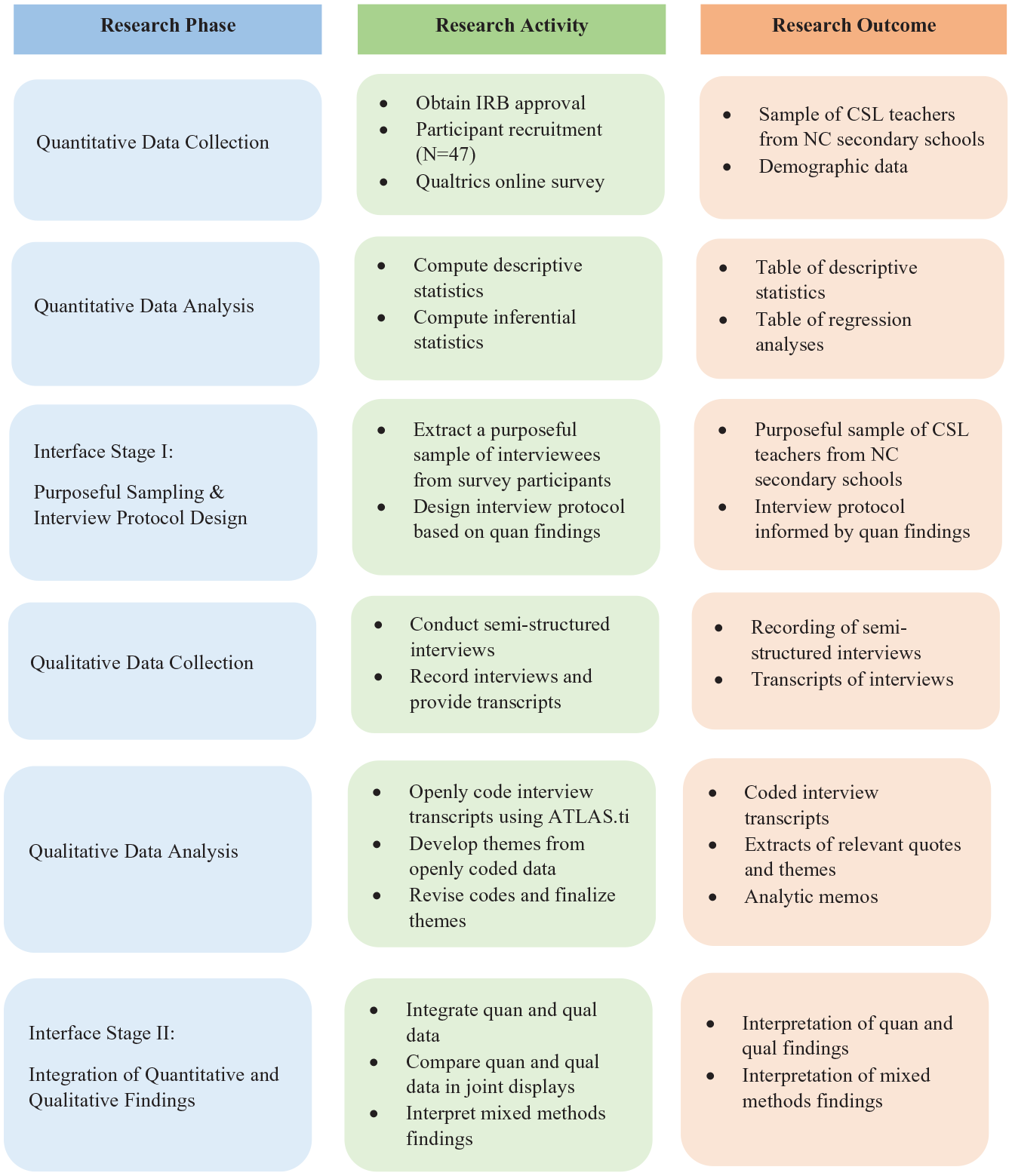
Diagram of the explanatory sequential mixed-methods design procedures.
2 Research site and participants
The State of North Carolina celebrates a diverse student population. Approximately 262,100 students, which account for 17% of the total student population, reported a primary language other than English spoken at home. Excluding English, the top five languages spoken at home are: Spanish (14%), Arabic (4.5%), Chinese (3.1%), Vietnamese (2.5%), and Hindi/Indian/Urdu (2.1%) (North Carolina Department of Public Instruction [NCDPI], 2020b). Among the 18 world languages taught in NC public schools, Chinese ranked the third in terms of student enrollment, which was 11,000 in the 2018–19 school year (NCDPI, 2020a). Forty-seven CSL teachers teaching at the secondary level in both public schools and private schools in NC participated in the study.
3 Instrument
The quantitative data of the study were collected through an online survey (see Appendix 1), which consisted of three sections. The first part investigated participants’ demographic information and teaching experience, the design of which was informed by Haley et al. (2013). The second part examined participants’ self-efficacy in the application of professional standards in their work. The self-efficacy scale referenced the scale used in Harper et al. (2018). The can-do statements were primarily based on the professional standards for K-12 Chinese language teachers (Lee et al., 2007) with minor revisions in wording for better clarity. Informed by Day and Shapson (1996), the questions in the third part explored the types of participants’ PD activities, their thoughts on the quality and benefits of these PD activities, and their reflections on their PD needs and the PD support received.
The survey was reviewed by two experts in the field of second language education and a survey specialist at the researcher’s home institution, pilot-tested by three colleagues with CSL teaching experience, and revised incorporating their suggestions. The Cronbach's alpha was computed to assess the reliability of all 42 items and the four sets of items respectively, including items related to participants’ self-efficacy, perceived PD benefits, PD needs, and PD support. The Cronbach’s alpha coefficient for all the items and each set of items respectively are: 0.88, 0.93, 0.79, 0.83, and 0.80.
4 Procedure
The participants recruitment information including the survey link was shared through the listserv of world language coordinators of all districts and charter schools in NC, who were requested to forward the information to CSL teachers in their districts and schools. The participants recruitment information was also shared through the listserv of the Chinese Language Teachers Association of North Carolina (CLTA-NC) and in a local online WeChat group with 158 members, which mostly consisted of K-12 CSL teachers in NC. The researcher also collected information regarding public and private schools offering Chinese language classes in NC from Chinese colleagues and through web search, and then identified CSL teachers teaching at the secondary level and invited them to participate in the study via email. Due to the lack of official number of CSL teachers in NC secondary schools, no estimate could be provided in terms of the total number of teachers receiving the survey via listservs and the WeChat group posting who met the eligibility criteria of the study. However, among the 25 teachers contacted via email, 16 completed the survey. The response rate was higher than 25% and therefore acceptable (Kalton, 1983).
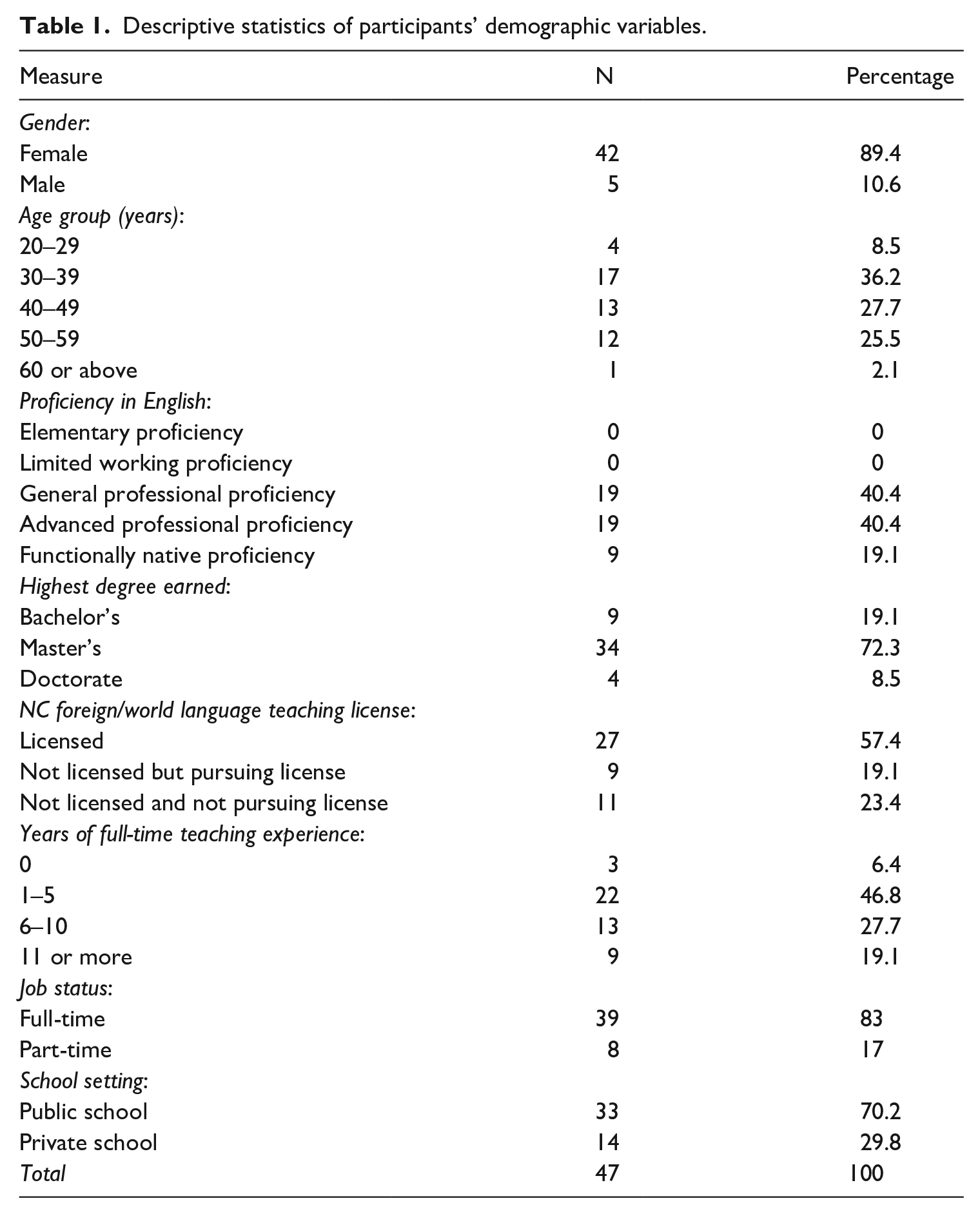
Fifty-one teachers from 15 counties in NC completed the Qualtrics survey online during the three-week period of quantitative data collection. Four invalid responses were removed from the dataset. Three of these responses were from teachers who did not meet the eligibility criteria of the study. The fourth teacher provided identical answers to all survey items, and the survey was completed within a very short time. Table 1 summarizes the descriptive statistics of participants’ demographic variables.
Descriptive statistics of participants’ demographic variables.
Creswell and Clark (2018) discussed several strategies to purposefully identify participants for the qualitative phase based on quantitative findings in an explanatory sequential mixed-methods design. These participants may be: (1) representative of various groups; (2) outliers; (3) from groups with different statistical results; or (4) with different scores on significant predictors. A combination of several of these strategies was adopted for the sampling of participants for follow-up interviews in this study. First, as the key variable related to all the research questions, teachers’ self-efficacy rating was an important criterion in the sampling process. Also, because teachers’ perceived PD benefits and their self-reported PD support were found to be significant predictors of their self-efficacy, and considering that discussions focused on teachers’ perceived PD benefits may provide more comprehensive and in-depth information to answer the qualitative research questions than their self-reported PD support, the researcher used teachers’ scores on perceived PD benefits as another criterion to select interview participants. In addition, because age, proficiency in English, and school setting were also found to be significant predictors of teachers’ self-efficacy, the researcher intentionally chose participants within various age groups and with different levels of self-reported English proficiency from both public schools and private schools. The maximal variation strategy (Creswell, 2005) was also used to select participants with various demographic characteristics and teaching experiences among the identified groups.
Based on these criteria, a total of eight teachers were selected, including:
two teachers whose scores on self-efficacy and perceived PD benefits were both above the 75th percentile;
two teachers with both scores close to the 50th percentile;
two teachers with both scores below the 25th percentile;
one teacher whose self-efficacy score was above the 75th percentile but the score on perceived PD benefits was below the 25th percentile; and
one teacher whose self-efficacy score was below the 25th percentile but the score on perceived PD benefits was above the 75th percentile.
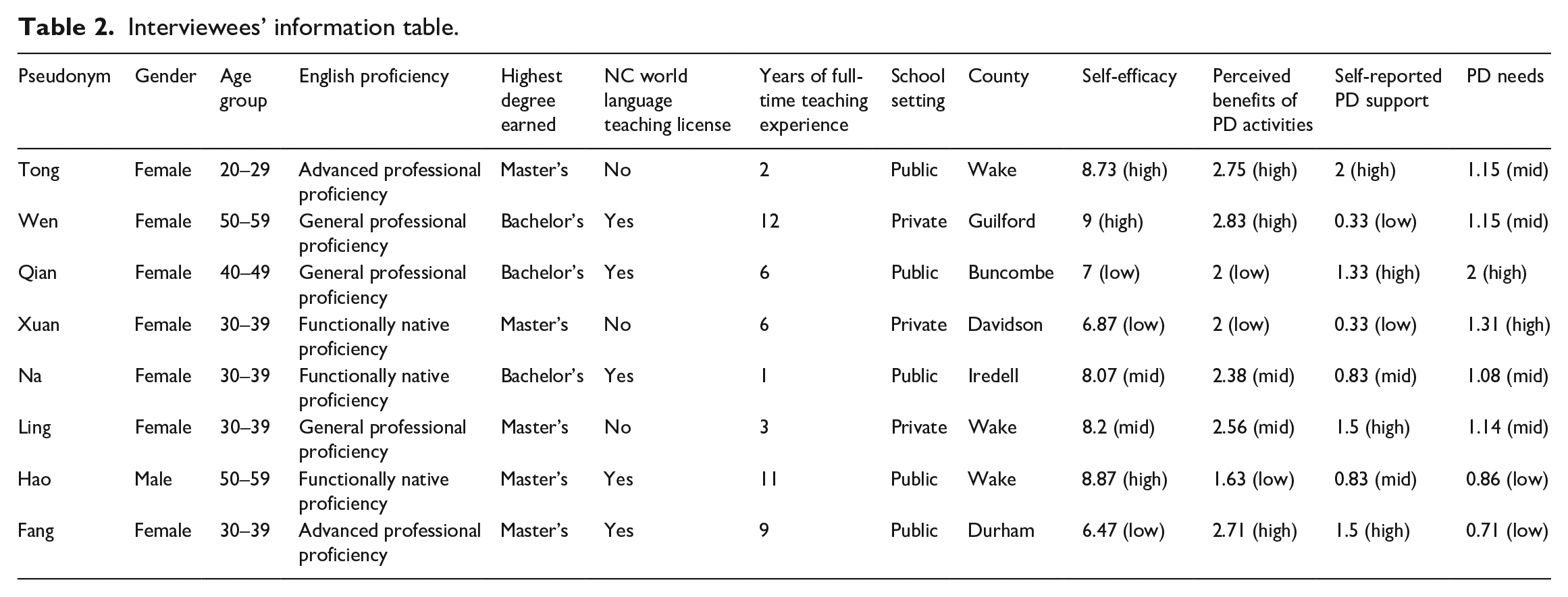
All eight teachers agreed to participate in the follow-up semi-structured interview conducted in English. Each participant was interviewed for approximately one hour during a Zoom meeting. Table 2 shows the eight participants’ socio-demographic information, and their scores on self-efficacy, perceived PD benefits, self-reported PD support, and PD needs. Figures 2 to 4 show the distribution of the eight teachers’ scores on self-efficacy, perceived PD benefits, self-reported PD support, and PD needs.
Interviewees’ information table.
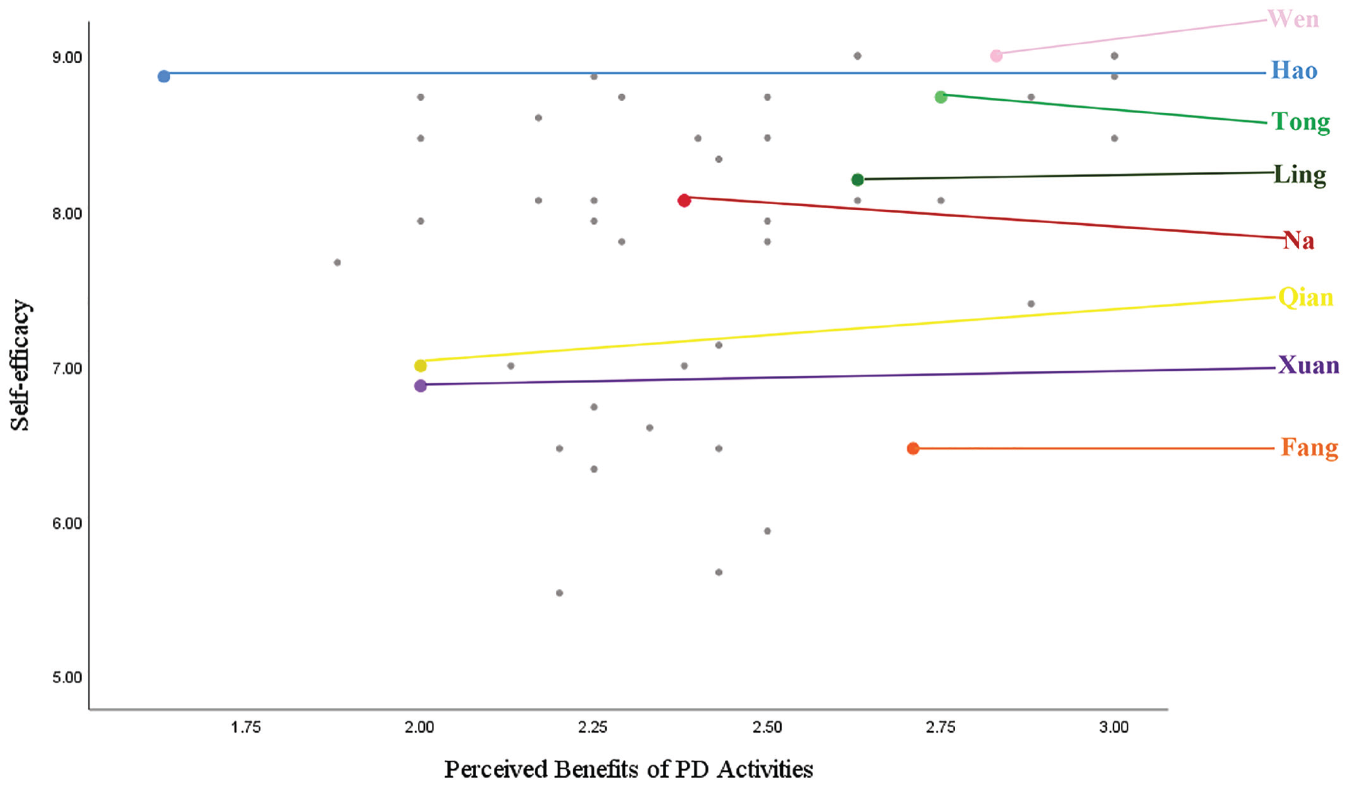
Distribution of interviewees’ self-efficacy and perceived benefits of PD activities.
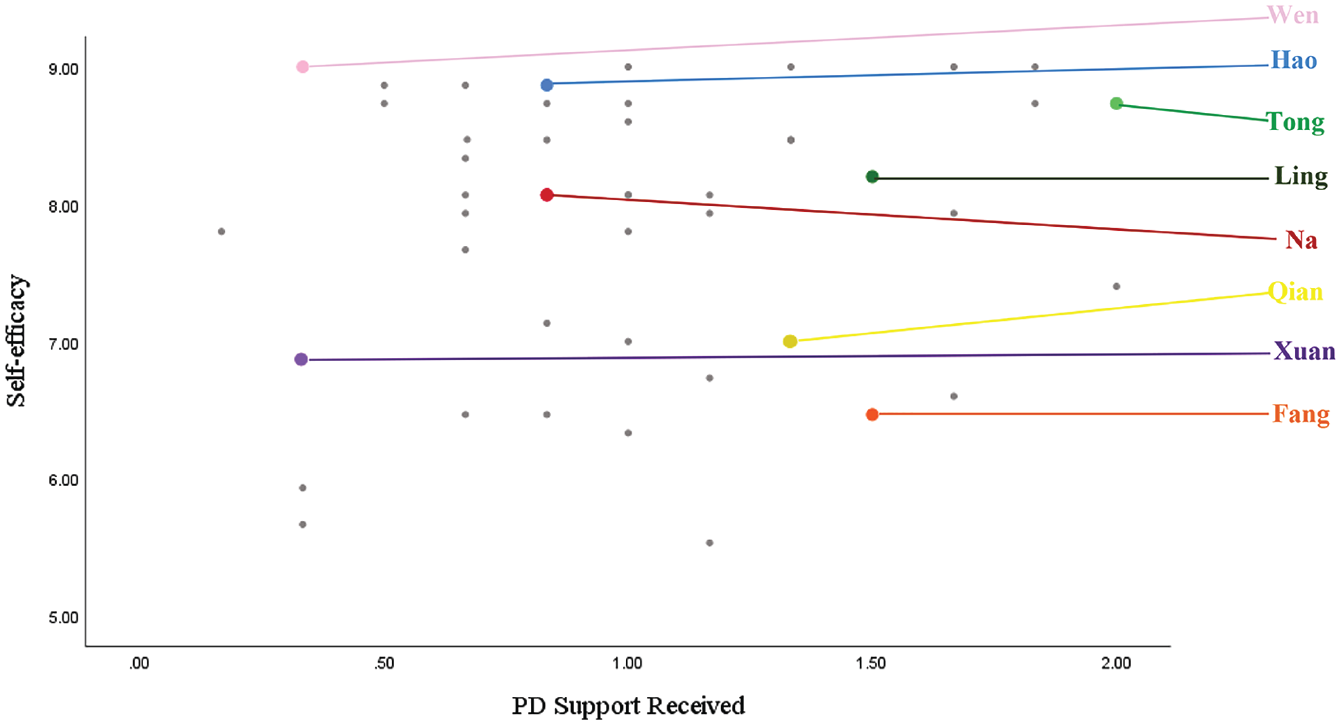
Distribution of interviewees’ self-efficacy and self-reported PD support.
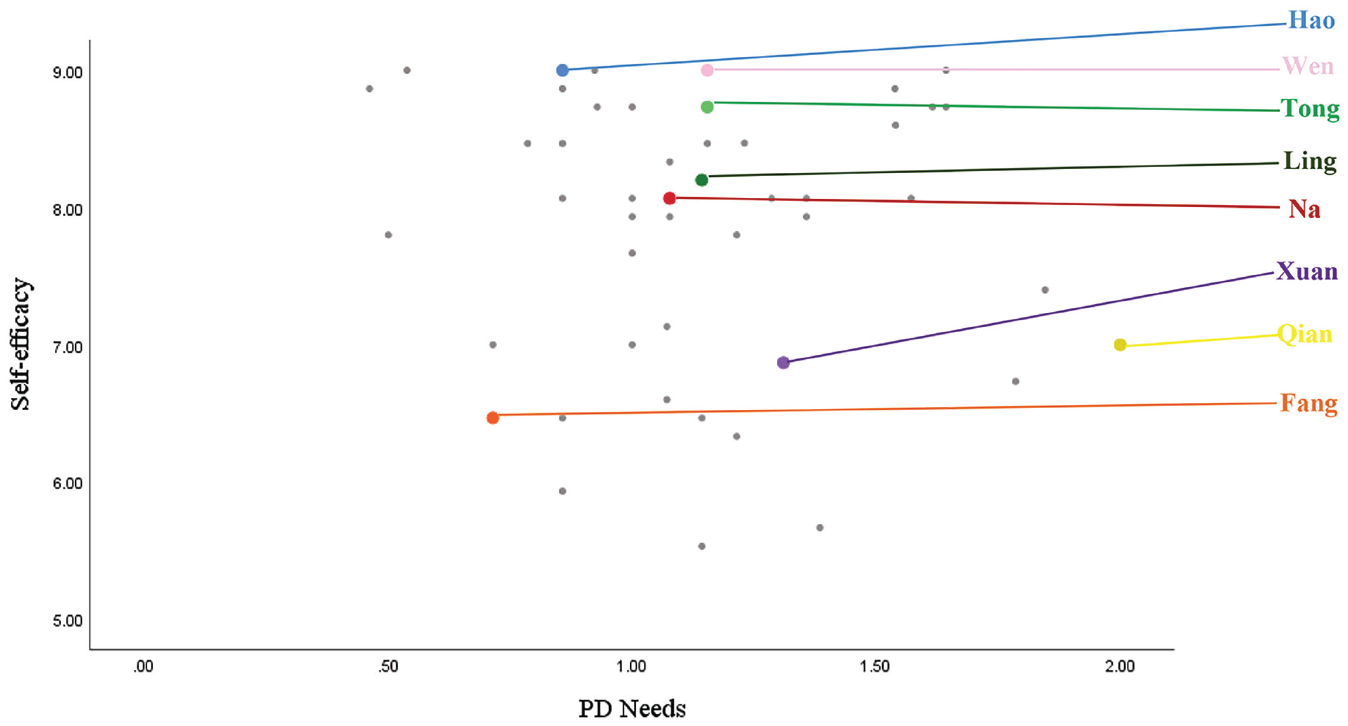
Distribution of interviewees’ self-efficacy and PD needs.
5 Data analysis
a Descriptive statistics
With the exception of a few open-ended questions in the survey, the descriptive statistics for responses to all other questions were analysed in SPSS 26. Numeric values had been assigned to these questions while the Qualtrics survey was set up. For example, for the question regarding English proficiency in the demographic information section, one point was assigned to ‘elementary proficiency’ and five points were assigned to ‘functionally native proficiency’. The items related to participants’ self-efficacy in the application of professional standards adopted the 9-point Likert scale commonly used in self-efficacy studies (Harper et al., 2018; Tschannen-Moran & Hoy, 2001), with anchors at 1 = none at all, 3 = very little, 5 = some degree, 7 = quite a bit, 9 = a great deal. For the questions regarding the perceived benefits of PD activities, zero point was assigned to ‘no participation’, one point was assigned to ‘not beneficial’, two points were assigned to ‘somewhat beneficial’, and three points were assigned to ‘very beneficial’. For the questions related to PD needs and support, zero point was assigned to ‘no need’ or ‘no support’, one point was assigned to ‘some need’ or ‘some support’, and two points were assigned to ‘great need’ or ‘great support’.
Univariate analysis was conducted in SPSS 26 to compute the mean, median, standard deviation, and range of participants’ responses to close-ended questions to observe the central tendency and the dispersion of the data (Muijs, 2011). In addition, univariate analysis was conducted for the composite scores of the four variables related to participants’ self-efficacy, perceived PD benefits, self-reported PD support, and PD needs.
b Inferential statistics
Multiple regressions were conducted to test whether there were significant (p < 0.05) relationships among the aforementioned four variables related to participants’ self-efficacy and PD. Using participants’ self-efficacy as the dependent variable, their PD-related variables as independent variables, and their socio-professional variables as control variables, these multiple regressions seek answers to the following questions: (1) whether participants’ perceived PD benefits can predict their self-efficacy; (2) whether participants’ self-reported PD support can predict their self-efficacy; and (3) whether participants’ PD needs can predict their self-efficacy.
c Qualitative analysis
Lichtman (2013) identified five popular approaches of qualitative research, namely ethnography, grounded theory, phenomenology, case study, and narrative. Grounded theory was selected as the theoretical underpinning of this study as it allows the researcher to focus more on exploring the emerging theory from the data. By adopting the grounded theory approach, the researcher was able to start the qualitative data analysis without preconceived concepts and analyse the data with creative thinking (Ahmed & Haag, 2016).
After collecting the qualitative data through semi-structured interviews, the researcher openly coded the interview transcripts (Glaser & Holton, 2016) using ATLAS.ti 8.0, a qualitative data analysis software, and then used axial coding to develop themes from the openly coded data (Lichtman, 2013). For example, while discussing their motivations for PD, several interviewees emphasized the need for learning new instructional technologies. Some discussed the adaptation to online instruction. A few teachers also mentioned the changes in their teaching environment and student population compared with the time when they first started their teaching career. Using ATLAS.ti 8.0, the researcher grouped eight quotations under the code ‘change’ and developed the theme ‘keep up with changes’ as one of the driving forces for teachers’ PD needs. After the first two rounds of coding process, the researcher referred to literature and the analytical memos written since the beginning of data analysis and revised the codes multiple times, and then finalized the themes.
IV Results
1 Quantitative data results
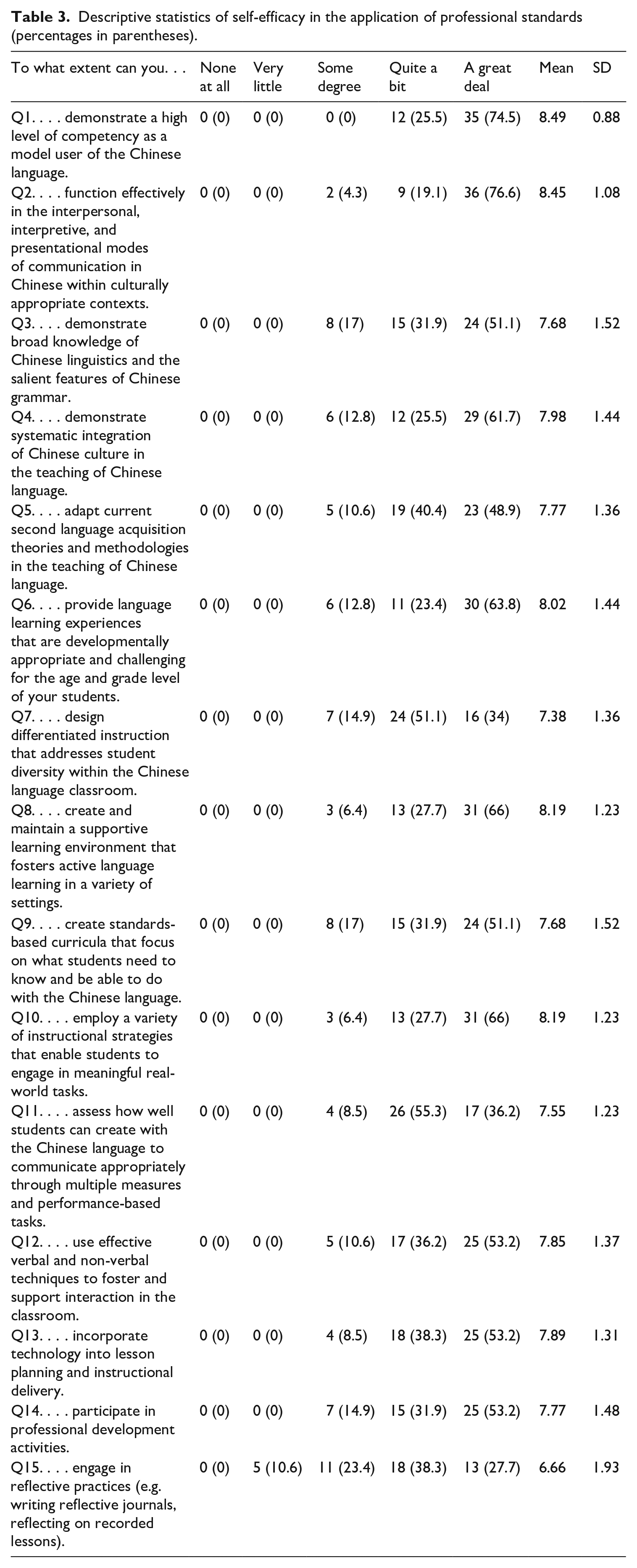
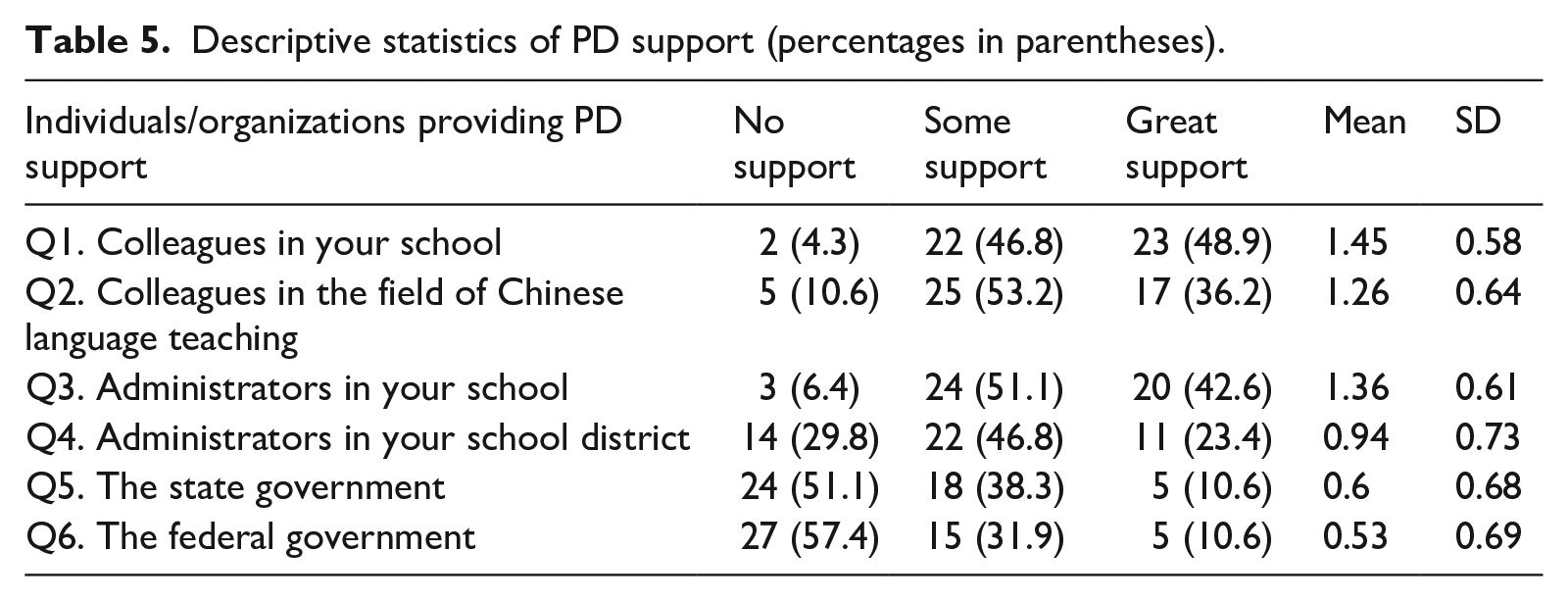
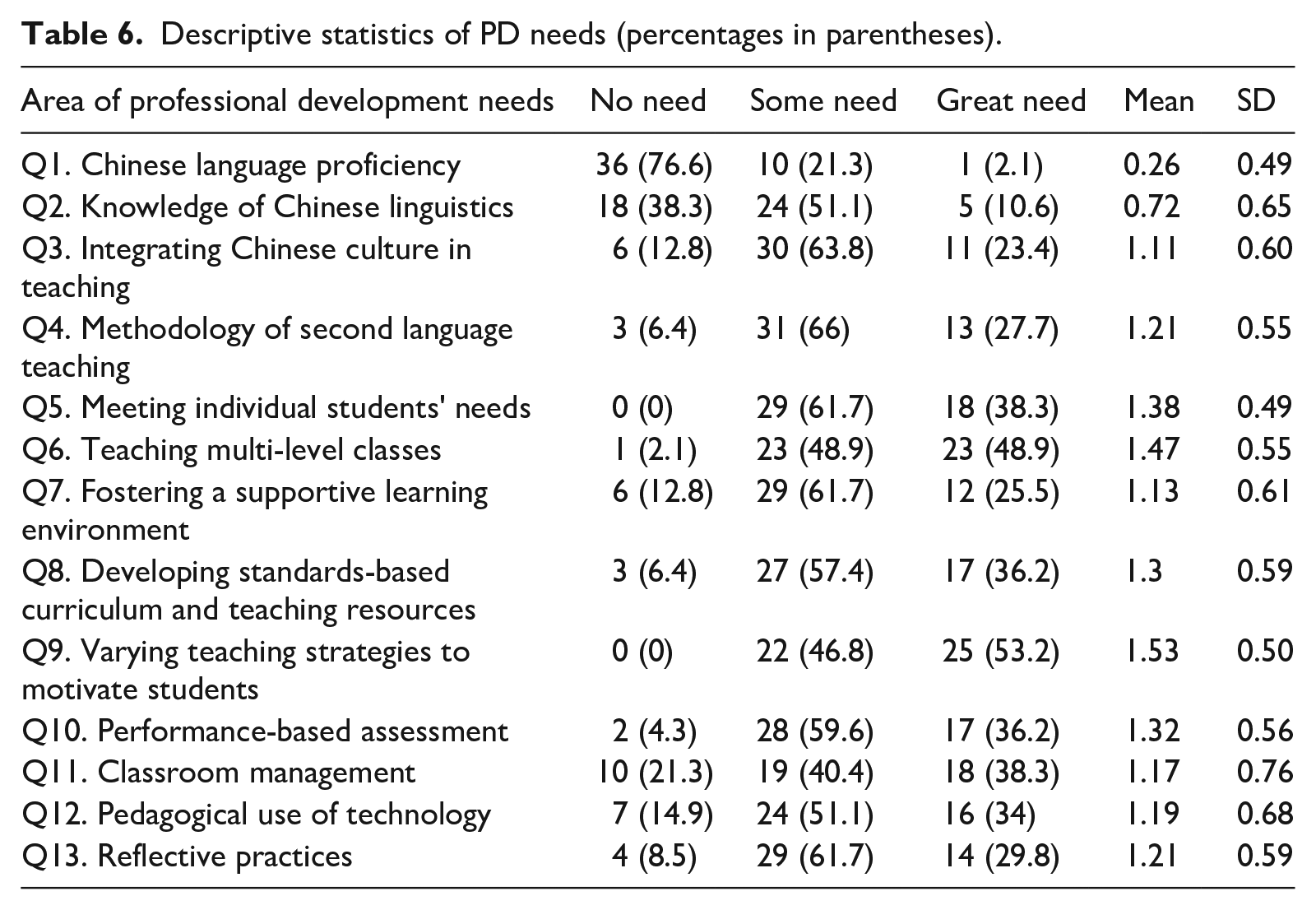
Tables 3 to 6 present descriptive statistics of participants’ ratings on self-efficacy, perceived PD benefits, self-reported PD support, and PD needs. Pearson’s correlation was conducted to answer quantitative research question 1a. As shown in Table 7, the correlation between participants’ perceived PD benefits and their self-efficacy was found to be statistically significant, r(46) = .27, p < .10. No statistical significance was found for the correlation between participants’ self-reported PD support and their self-efficacy (r = .12), or between their PD needs and self-efficacy (r = −.07).
Descriptive statistics of self-efficacy in the application of professional standards (percentages in parentheses).
Descriptive statistics of perceived benefits of PD activities (percentages in parentheses).
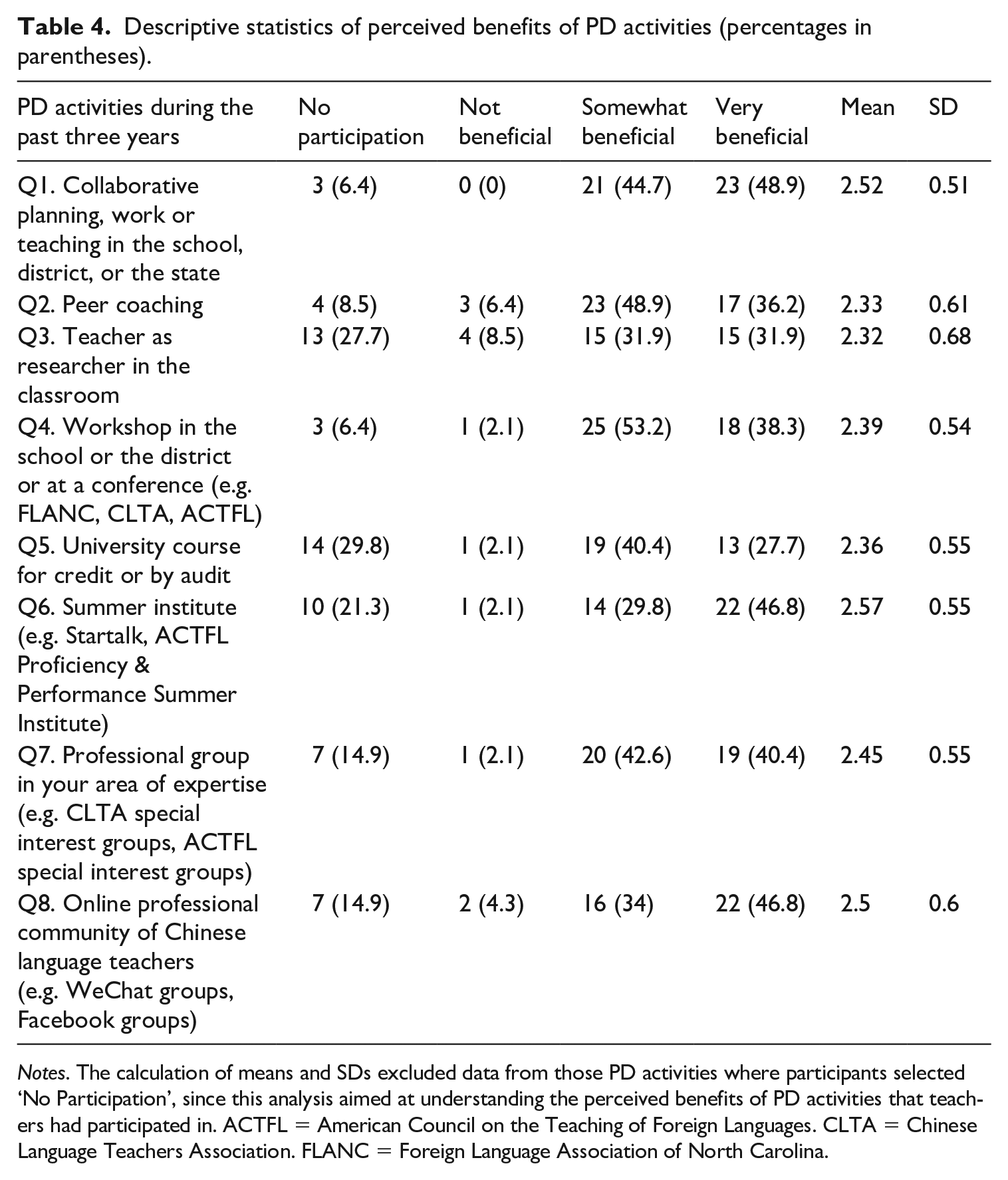
Notes. The calculation of means and SDs excluded data from those PD activities where participants selected ‘No Participation’, since this analysis aimed at understanding the perceived benefits of PD activities that teachers had participated in. ACTFL = American Council on the Teaching of Foreign Languages. CLTA = Chinese Language Teachers Association. FLANC = Foreign Language Association of North Carolina.
Descriptive statistics of PD support (percentages in parentheses).
Descriptive statistics of PD needs (percentages in parentheses).
Correlations of self-efficacy and PD activities and needs.
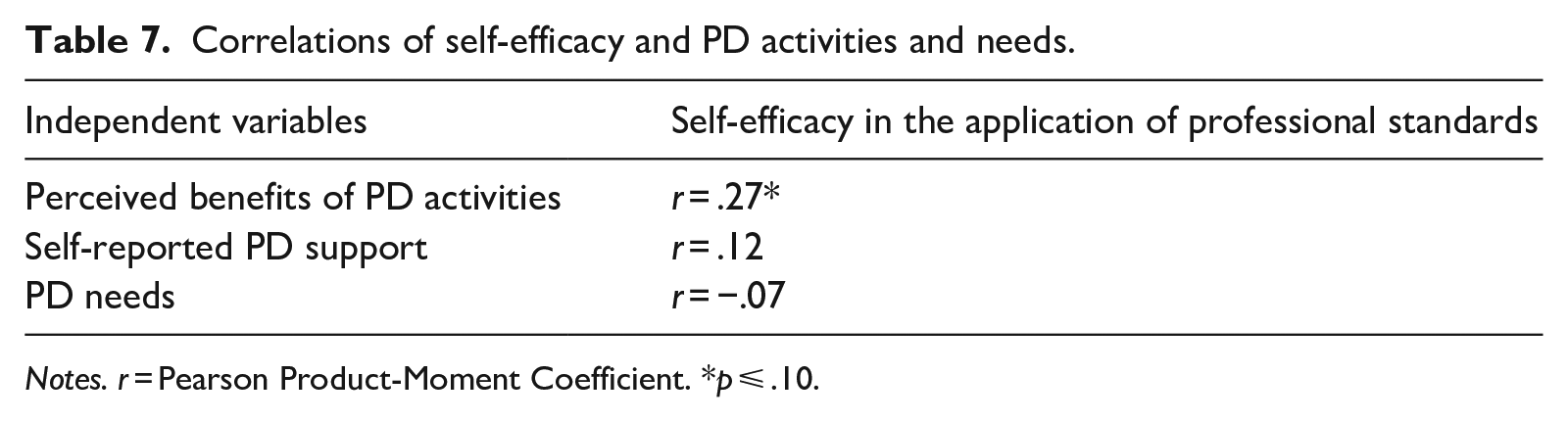
Notes. r = Pearson Product-Moment Coefficient. *p ⩽ .10.
To answer quantitative research question 1b, the researcher performed three multiple regressions with teachers’ self-efficacy as the dependent variable, the PD-related variables as independent variables, and teachers’ socio-professional variables as control variables. Tables 8 to 10 present results of these multiple regression analyses.
Regression of self-efficacy on perceived PD benefits and control variables.
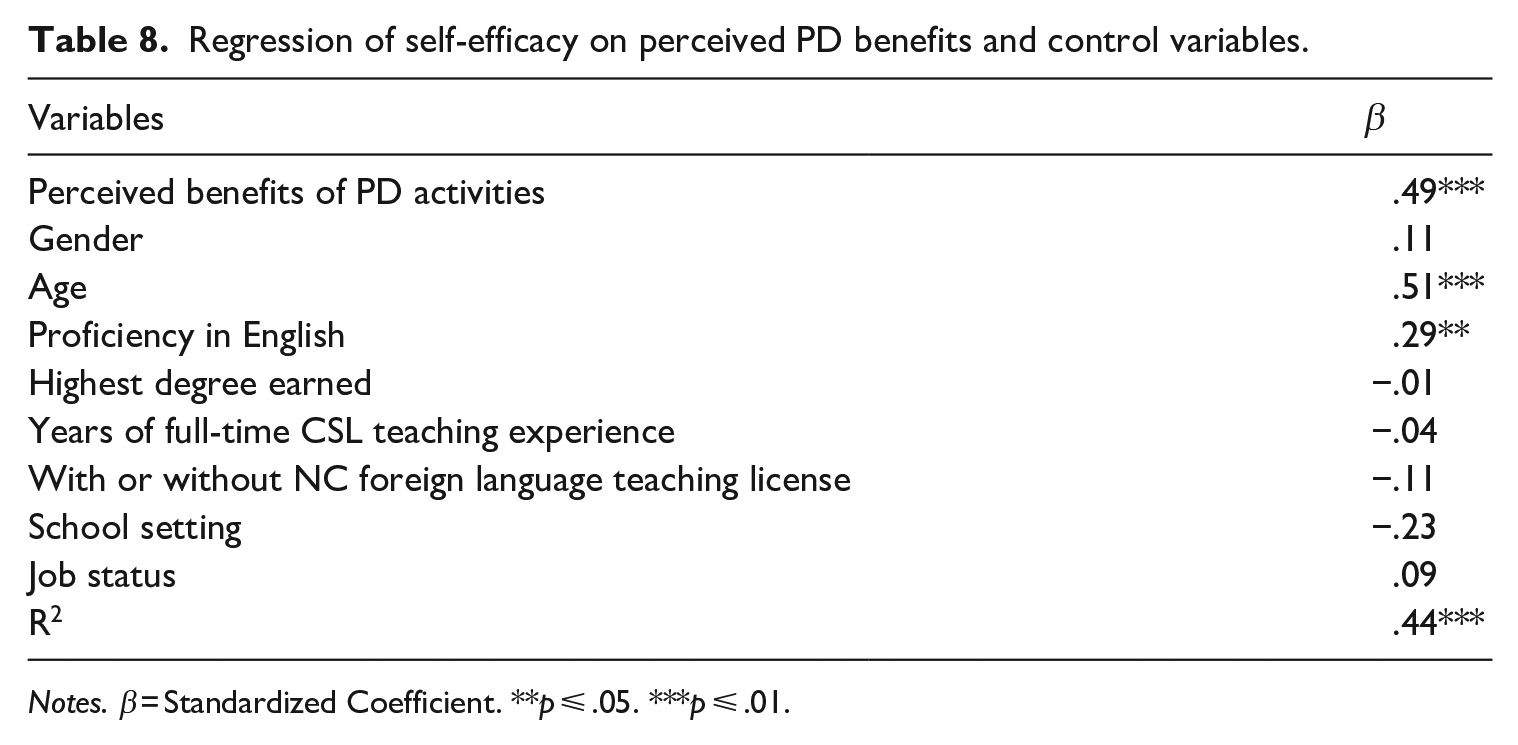
Notes. β = Standardized Coefficient. **p ⩽ .05. ***p ⩽ .01.
Regression of self-efficacy on self-reported PD support and control variables.
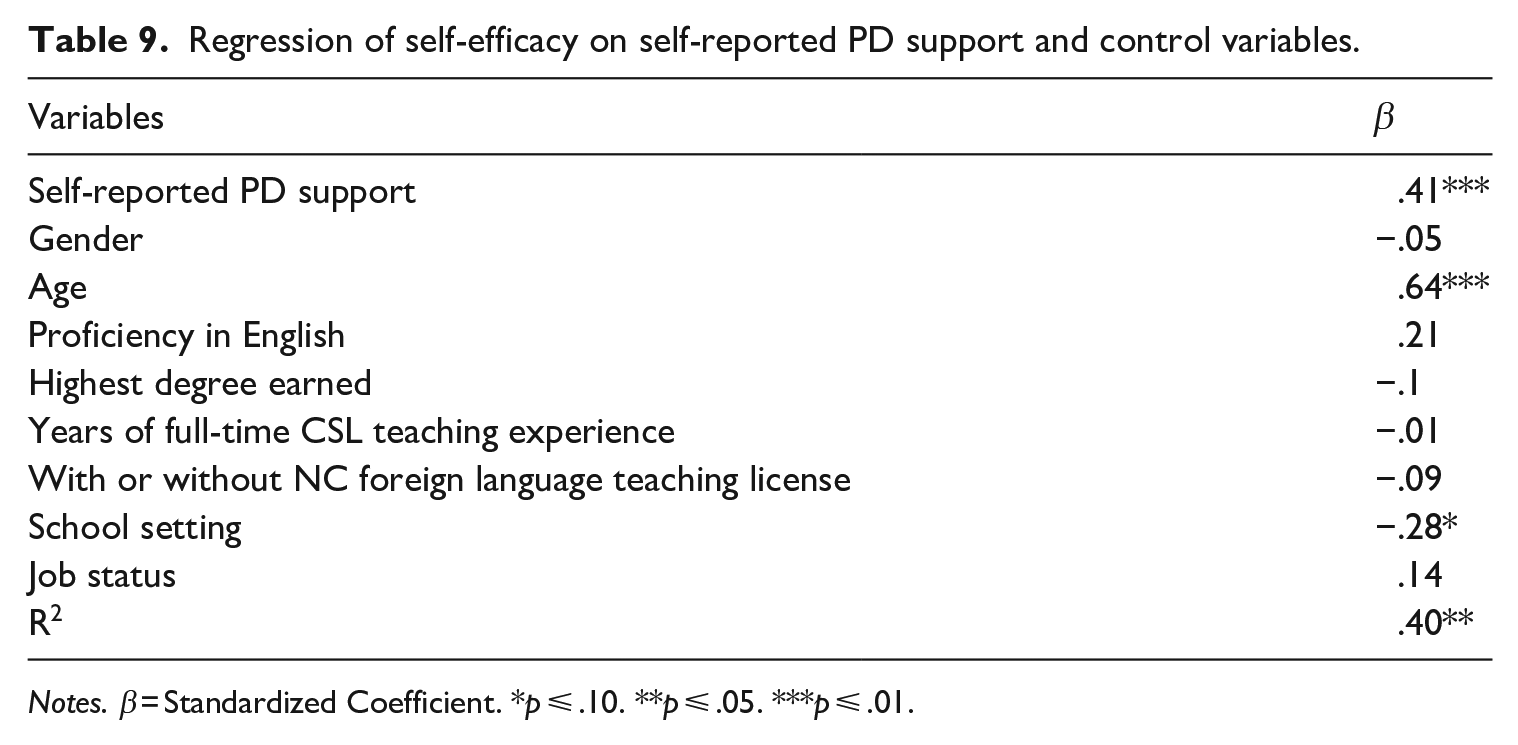
Notes. β = Standardized Coefficient. *p ⩽ .10. **p ⩽ .05. ***p ⩽ .01.
Regression of self-efficacy on perceived PD needs and control variables.
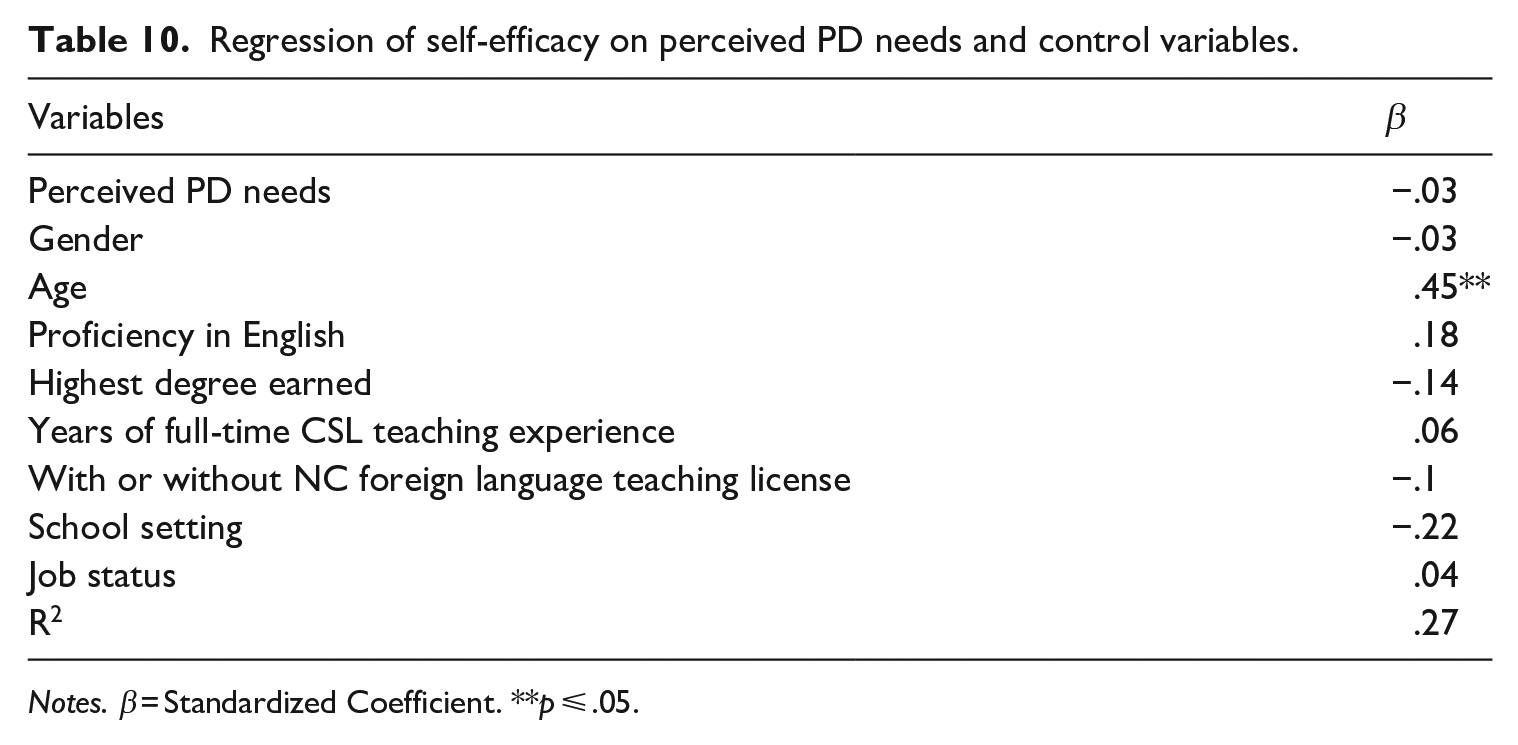
Notes. β = Standardized Coefficient. **p ⩽ .05.
As shown in Table 8, this model explains 44% of the variability in teachers’ self-efficacy scores (p ⩽ .01). The perceived PD benefits can significantly predict teachers’ self-efficacy in the application of professional standards while controlling their socio-professional variables (p ⩽ .01). This means that teachers who received greater PD benefits had higher self-efficacy compared to those benefiting less from PD activities.
The model shown in Table 9 indicates that 40% of the variability in teachers’ self-efficacy scores can be explained by the independent variable and control variables (p ⩽ .05). The PD support that teachers received can significantly predict their self-efficacy while controlling their socio-professional variables (p ⩽ .01). That is to say, teachers who received greater support for their PD activities had higher self-efficacy than those who felt less supported. As shown in Table 10, this model explains 27% of the variability in teachers’ self-efficacy scores. Teachers’ PD needs were not significant predictors of their self-efficacy.
The findings from these multiple regression analyses needed to be further explored through the qualitative data. In addition, descriptive statistics results indicate that although engagement in reflective practices received the lowest average self-efficacy scores (M = 6.66, SD = 1.93), the average scores on PD needs in reflective practices were not as high as expected (M = 1.21, SD = 0.59). This mismatch needed to be examined through qualitative interviews as well.
2 Qualitative data results
a Teachers’ understandings of professional standards
In their initial responses, four teachers acknowledged lack of knowledge of professional standards for K-12 CSL teachers. Their full-time teaching experiences vary greatly, from two years to 12 years. Other teachers seemed to have misinterpretation of the professional standards for CSL teachers. For example, according to Qian, CSL teachers in NC are expected to apply professional standards for world language teachers in their work. She said, ‘They just use the world language teachers’ requirements to put it on Chinese teachers for secondary schools. There are a lot on NCDPI’s website about the basic professional standards for world language teachers.’ In fact, the standards available on the website of the North Carolina Department of Public Instruction (NCDPI) that Qian mentioned are not professional standards for teachers. Rather, these are world language essential standards with general introduction on exit proficiency expectations at different grade levels and specific clarifying objectives regarding how students may use the target language and develop greater insight into language and culture, and make connections with other academic disciplines and other communities (NCDPI, 2012).
Some interviewees expressed concerns over the application of these standards in their work. Xuan named ‘consistency’ as her main concern, ‘So I would apply those, I think those like taken for granted that you have to do. But not necessarily the same thing, or the same standard by your coworker, work ethic and all of those, right?’ A few teachers were also concerned about fair evaluation of their work due to the lack of a statewide evaluation system for those who teach less commonly taught languages such as Chinese. Qian said: In my school district, they still use the standard to evaluate even including Chinese teachers, but they use the same system to evaluate the Spanish teachers and the French teachers. But you know this language is so different from other, we call it ‘the western system languages’. That’s my concern because I don't know how they are going to give us the chances to get more training or chances to show we are qualified.
b Teachers’ perspectives on PD benefits
Analysis of the qualitative data generated two themes regarding teachers’ perceived PD benefits, including gaining new perspectives and CSL colleagues’ sharing in the professional community. Several interviewees discussed how they gained new perspectives through attending PD activities. For example, when Fang was pursuing the American Council on the Teaching of Foreign Languages (ACTFL) Oral Proficiency Interview (OPI) tester certificate, she attended a four-day training workshop and found it quite informative. Fang mentioned a mock interview, during which she asked a volunteer student questions to assess the student’s oral proficiency in Chinese. She said, ‘From my educational background, we always learned how to answer questions. But OPI, I feel, focus more on how you ask questions . . . I kind of reflect on how I can ask better questions and to help students to express more.’ In addition to the discussions on how new perspectives contributed to their role as CSL teachers, some interviewees emphasized on the mentorship role that PD events may prepare them for. Ling said: So I would pay more attention to, ‘oh, do students learn how to lead in this task? Would they teach each other what they know?’ I would design my activities or tasks differently. I think that’s the most helpful part of what I learned from this particular PD. And that’s been helping me to go through a long, long way.
Several interviewees discussed how they benefited from the teaching resources and ideas shared among the professional community and how to contribute to this community themselves. For instance, Wen admitted that she took full advantage of the resources, technological tools, and pedagogical designs shared in various online CSL teacher groups. She said: I understand so much better now learning from our teacher community. What the challenges we are facing? What a support system we have there? What resource we have there? . . . So understand the need of the teachers, we not only need workshops, we need the resource, the community support, the teacher support.
During the discussion of PD activities that were not helpful, most interviewees shared their disappointment regarding the content or organization of workshops. Half of the interviewees referred to attendance at such workshops as a ‘waste of time’. For example, referencing some PD events at her school, Na said: Sometimes it’s a waste of time because we tend to chat . . . I think it's better that when you have specific tasks maybe for the teachers to do during that one hour, instead of just being very generous and say ‘talk about the curriculum’.
Despite the negative experiences at some PD events, all the interviewees had participated in PD activities that had met or exceeded their expectations. Yet, some teachers admitted lack of application of new knowledge or skills (Guskey, 2000) gained from those PD activities in their work. Wen mentioned that she attended so many workshops that the new information seemed overwhelming at times: ‘How am I going to take all that information and digest it? But I just really try to save all the links in one document, one long document. I don’t even know will I be able to even go back.’ Similar to Wen, Qian did not see sufficient PD benefits in her work despite writing short reflections included in daily lesson plans as required by her school. She explained, ‘I need to go back to what I got from conferences from time to time and to apply them in my class as a long-term thing, not only a short term.’
c Greatest PD needs
According to the quantitative analysis results, participants expressed the greatest PD needs in two areas, including ‘varying teaching strategies to motivate students’ (M = 1.53, SD = 0.5), and ‘teaching multi-level classes’ (M = 1.47, SD = 0.55). The qualitative findings identified two similar areas where teachers had the most pressing PD needs: (1) how to engage and motivate students; and (2) differentiated teaching.
Some interviewees said that they wished to learn various teaching strategies at PD events in an effort to provide a more engaging learning environment for their students. Na argued, ‘When you talk about teaching, it’s not just how well you know the content. It’s how well you can deliver your lesson and how engaged your students are.’
The majority of the interviewees also acknowledged that they would like to improve differentiated teaching through PD. Several teachers discussed the challenges in teaching classes with students from different grade levels or target language proficiency levels. As a new CSL teacher at the secondary level, Tong elaborated on her obstacles.
The 6th grade, they just came from the 5th grade from the elementary school. So it is easier to let them follow me. My 7th and 8th students, sometimes they will just focus on their own business . . . So I feel like having more mature or more high school or college-like teaching strategy will be more beneficial for 7th and 8th students.
One other area of differentiated teaching discussed by some interviewees was how to meet individual students’ needs, which had the third highest average rating of PD needs (M = 1.38, SD = 0.49) from all 47 participants. For instance, Hao said, ‘Sometimes I cannot meet all of their needs. Every year I do have a few students who are really struggling behind. I like to learn something to make sure all of them can learn from me, maybe differentiation.’
V Discussion
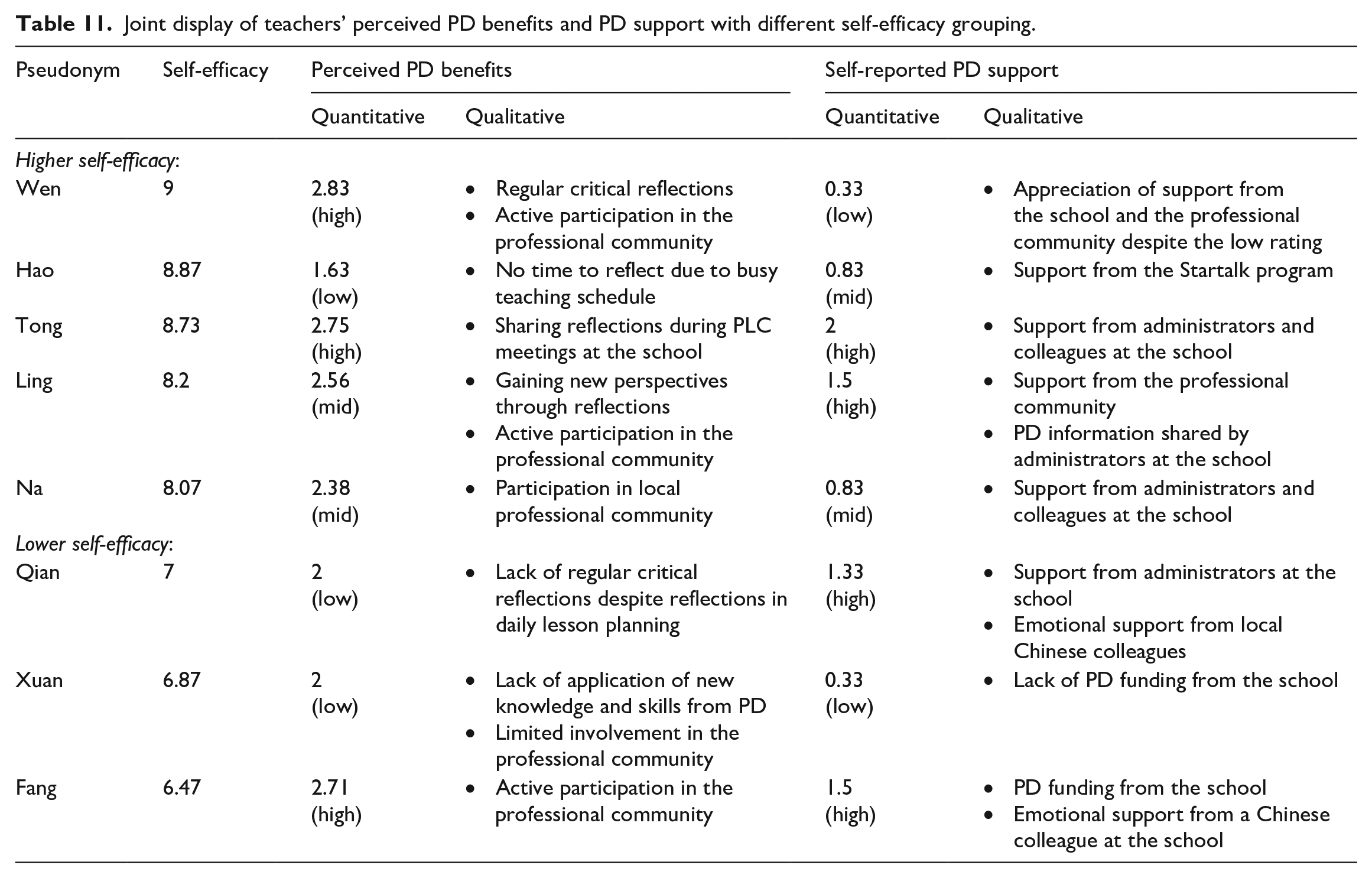
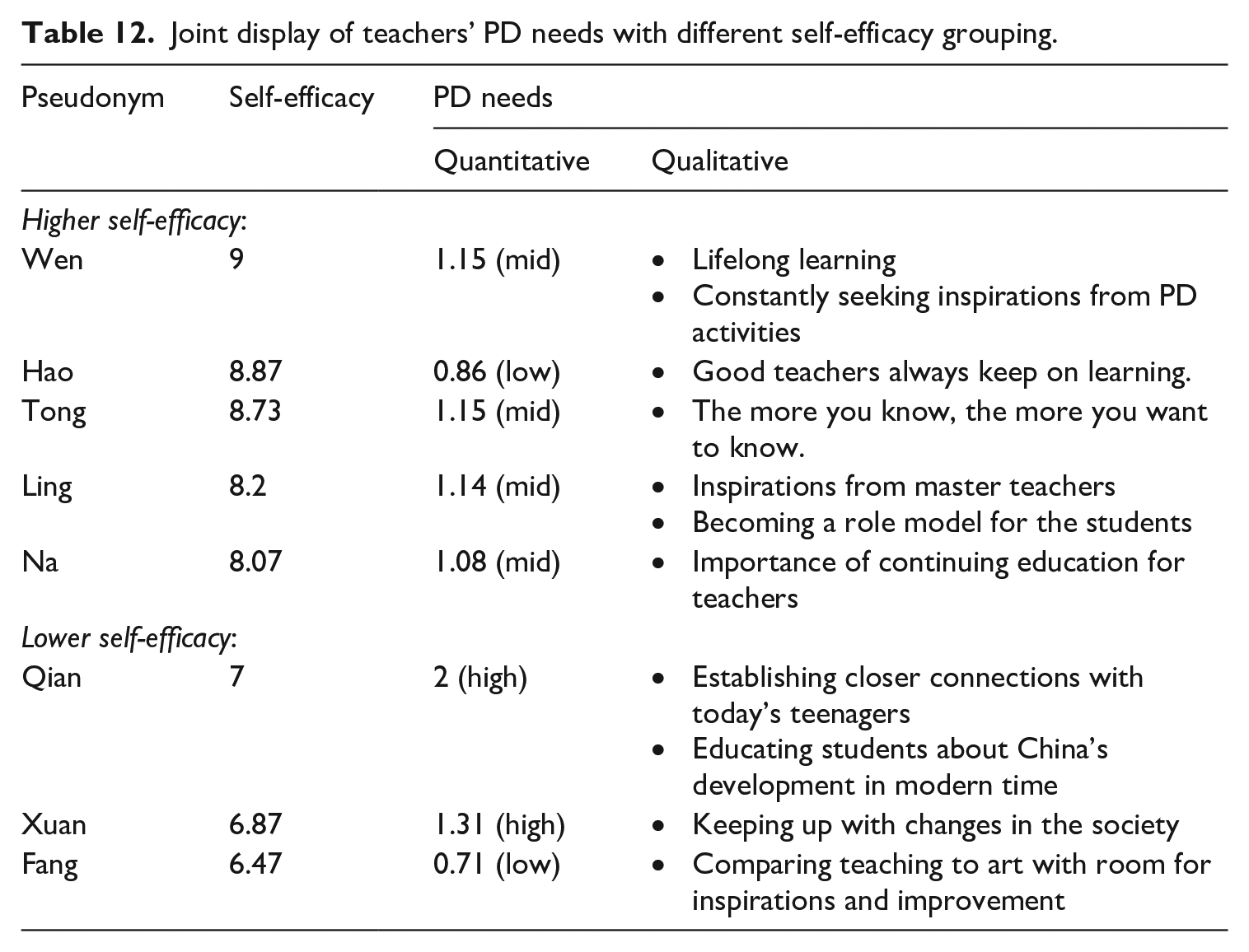
This section will first address the research questions based on quantitative and qualitative findings, and then discuss the integrated findings with an emphasis on how the qualitative data explain and expand the quantitative findings. Tables 11 to 12 provide joint display of these integrated findings.
For quantitative research question 1a, the correlation between participants’ perceived PD benefits and self-efficacy was found to be statistically significant. No statistical significance was found for the correlation between self-reported PD support and self-efficacy, or between PD needs and self-efficacy. For quantitative research question 1b, PD support was identified as a significant predictor of self-efficacy when teachers’ socio-professional variables were introduced into the equation in the multiple regression analysis, which added new perspective to the insignificant relationship between PD support and self-efficacy produced by Pearson’s correlation.
Joint display of teachers’ perceived PD benefits and PD support with different self-efficacy grouping.
Joint display of teachers’ PD needs with different self-efficacy grouping.
For qualitative research question 2a, the interview data show that most of the interviewees either lacked knowledge about professional standards for CSL teachers or misinterpreted them as proficiency standards for learners. For qualitative research question 2b, the interview data indicate that teachers received the greatest PD benefits by gaining new perspectives and inspirations and by CSL colleagues’ sharing among the professional community. The interviewees attributed the lack of or insufficient PD benefits to the content or organization of workshops that did not meet their expectations, or the lack of application of new knowledge or skills gained from PD activities. The interview data also identified areas with the greatest PD needs, namely motivating student learning and differentiated teaching.
1 Improving teacher efficacy through reflections and professional community involvement
In the first joint finding (see Table 11), integration of the quantitative and qualitative data further reveals two main factors contributing to teachers’ self-efficacy and perceived PD benefits, including regular critical reflections and active involvement in the professional community.
The majority of the teachers with relatively high ratings for self-efficacy and perceived PD benefits were regularly engaged in critical reflections. In contrast, the three teachers with the lowest ratings for perceived PD benefits and relatively low self-efficacy all related their ratings to the lack of regular critical reflections. The engagement in reflective practice during and after PD activities provides teachers with the opportunity to make sense of what they have learned and to explore and digest a wide variety of alternative viewpoints and practices of teaching. These critical reflections can help enhance teachers’ sense of professionalism and efficacy (Choi & Kang, 2019). Zonoubi et al. (2017) found that both novice and experienced teachers considered the reflective nature of the professional learning community a critical contributing factor for their self-efficacy development. Babaei and Abednia (2016) identified metacognitive reflection as a significant predictor of EFL teachers’ self-efficacy beliefs and suggested incorporating a focus on (metacognitive) reflection in L2 teacher education and PD. Critical reflection was also found to be one of the three crucial factors contributing to the success of the collaborative learning community, which resulted in a sustained increase in participants’ self-efficacy as literacy teachers (Murphy, 2015).
Resonating with literature, the two interviewees with the highest PD benefits ratings in this study who regularly engaged in reflective practice, including a veteran teacher and a novice teacher, also had two of the highest self-efficacy ratings. It is worth noting that the novice teacher showed little understanding of the professional standards for K-12 CSL teachers despite her high self-efficacy on the application of these professional standards. Research has found that some novice teachers tend to overestimate their self-confidence when completing surveys (Tschannen-Moran & Hoy, 2007). The interview data show that this novice teacher attributed her high level of self-confidence to student interest and positive feedback from the school and the parents without mentioning any growth in students’ learning (Settlage et al., 2009). Bruce et al. (2010) found that math teachers with less experience gave higher self-efficacy ratings than more experienced peers at the beginning of a professional learning program. According to Bruce et al. (2010), the less experienced teachers overestimated their performance in reform math education due to lack of sustained prior PD experience.
The interview data of this study also indicate that, although most interviewees acknowledged the benefits of critical reflections in relation to their continuing PD, some of them admitted that they did not engage in regular reflections after PD activities due to their busy teaching schedule. Such situational constraint has been found to prevent teachers from putting their beliefs into practice (Basturkmen, 2012). In addition, quantitative findings show that, although engagement in reflective practices received the lowest average self-efficacy scores, the average scores on participants’ PD needs in reflective practices were not as high as expected. This finding suggests that some teachers may not view reflective practice as a critical component of their PD and therefore may not take the initiatives to engage in critical reflections during and after PD activities. As reflective practice often taps into teachers’ thoughts and emotions, lack of or insufficient critical reflections may undermine the possibility of increasing teachers’ self-efficacy through recourse to their physiological/affective states (Moradkhani & Haghi, 2022). Findings of this study suggest dire needs to advocate the importance of critical reflections to teachers and to provide ample opportunities for reflective practice both during and after PD programs.
Integrated findings also indicate that participants with active involvement in the professional community of CSL teachers tend to have higher PD benefits and self-efficacy ratings than their peers who were less involved in the professional community. Identifying the strongest positive effect of collaboration on teachers’ efficacy, Choi and Kang (2019) reported that teachers in the collaborative group actively participated in joint activities to exchange knowledge, to observe others’ teaching and to provide feedback. Peer observation and feedback as well as collaborative reflection also created opportunities for gaining vicarious experience (i.e. observing success in peers’ practice) (Bruce et al., 2010; Ross & Bruce, 2007) conducive to the development of teachers’ collective efficacy (Zonoubi et al., 2017). In addition to gaining vicarious experience, teachers in the professional learning community also benefited from their colleagues’ sharing sessions by receiving affirmation about the instructional choices that they made (Bruce et al., 2010).
In this study, teachers received the greatest PD benefits through gaining new perspectives and inspirations and learning from their colleagues’ sharing (Abatayo, 2018) in the professional community. Integrated data show that teachers with the highest self-efficacy ratings all discussed positive feedback on their teaching from their students and colleagues. According to Bandura (1997), self-efficacy may be transformed through social persuasion in the form of evaluative feedback. The integrated findings from this study suggest, as supported in existing literature, that active involvement in the professional community affords teachers the opportunities to gain new knowledge (Yoo, 2016) and perspectives and vicarious experiences and to receive constructive feedback, all of which are shared by their fellow teachers. As teachers continue to engage in repeated critical reflections on their PD experiences and to refine teaching practice with inspirations and valuable feedback from their peers in the professional community (Murphy, 2015), it is very likely that they will receive more positive feedback on their teaching from students and colleagues and in turn exhibit increased self-efficacy.
2 Improving teacher efficacy through PD support
In the second joint finding (see Table 11), integration of the quantitative and qualitative data indicates that the majority of the interviewees who had higher self-efficacy ratings also provided higher ratings for PD support received. Several teachers mentioned that the information regarding PD opportunities shared by their administrators and funding from schools or professional organizations were critical for their PD. In contrast, some teachers with lower self-efficacy ratings discussed how lack of funding or other forms of support from schools hindered their PD. Bruce et al. (2010) found that support from coordinators and experts in the professional learning program contributed positively to the improvement of self-efficacy and teaching practice of experienced math teachers. Wyatt (2013) reported that repeated teaching of the same content to different classes everyday helped an EFL teacher gain efficacy-building experiences. Wyatt (2013) argued that teachers’ self-efficacy beliefs can be fragile and advocated that schools should provide pedagogical and psychological support when teachers are undertaking new tasks.
Integrated findings of this study also show that several teachers with low self-efficacy discussed how cultural barriers hindered their communication and relationships with students. Research has shown that cultural difference is often the cause of instructional and classroom management challenges in secondary CSL classrooms. Yue (2017) argued that for CSL teachers to fully embrace the core principles of foreign language education in the U.S., they have to understand the fundamental differences between the educational cultures in China and the U.S. Comparing Chinese and Western educational beliefs and practices – with the former guided by Confucianism emphasizing teacher authority and student docility, and the latter encouraging creativity and self-expression of the students – Sun (2012) argued that teachers’ cultural heritage had a strong influence on their personal practical knowledge and teaching practice. Chinese teachers’ high expectations for group conformity and their use of group pressure as a classroom management strategy also reflected the influence of Confucianism in their teaching practice (Zhou & Li, 2015). He (2014) acknowledged the challenges for CSL teachers in adapting to the American teaching and learning contexts due to differences in the social and educational systems between China and the U.S. and encouraged CSL teachers and teacher educators from diverse cultural backgrounds to view these challenges as unique opportunities and to engage in discussions and collaborations to seek alternative perspectives.
In this study, two teachers with low self-efficacy who reported the cultural barrier both expressed great gratitude to Chinese colleagues in the school and the professional community for their emotional support. This finding underscores the crucial role of emotional support from the professional community in teachers’ PD and self-efficacy growth (Malinen & Savolainen, 2016).
3 Keep up with changes and lifelong learning
In the third joint finding (see Table 12), quantitative data indicate that many participants expressed medium- to high-level of PD needs regardless of their self-efficacy ratings. The qualitative findings show that many teachers seek PD opportunities to keep their teaching practice in line with constant changes in the society that may have certain impact on their work. For example, several teachers expressed PD needs for pedagogical use of technology which is rapidly developing in today’s world. Lakshmanan et al. (2011) argued that participation in the professional learning community can enhance science teaching efficacy and lead to improved implementation of new instructional methods. Ross and Bruce (2007) claimed that implementation of math education reform threatens teachers’ efficacy beliefs because it requires teachers to adopt unfamiliar instructional strategies and to draw on disciplinary knowledge that they may be lacking. Participants in the current study may feel similar pressure to adapt their pedagogical practice to meet the evolving demands of L2 education reform through PD. Such teacher-initiated PD supports the most effective and sustainable form of growth (Hiver, 2013).
In addition to the motivation for PD from keeping abreast with current best practices, most interviewees of this study also agreed with the concept of lifelong learning and took initiatives in continuing education. One teacher cited the Chinese equivalent of ‘it is never too old to learn.’ A few teachers argued that there is always room for improvement in teaching. Two teachers shared their aspiration to be role models for the students by demonstrating their efforts in lifelong learning. Hiver (2013) identified enhancing oneself as one of the three major incentives for teachers to engage in continuing PD. Integrated findings of this study indicate similar incentives for participants’ PD activities and needs and further explain why, unlike their perceived PD benefits and self-reported PD support, participants’ PD needs were not found to be significant predictors of their self-efficacy.
VI Limitations and implications for future research
This study has several limitations, so caution should be exercised when the findings are interpreted. Similar to other studies that collect self-reported data with quantitative surveys, the quantitative data of this study involve self-perceptions. The ratings provided by the teachers may be subjected to personal bias. Furthermore, because the study was conducted within a certain geographic location, i.e. the State of North Carolina, some of the findings may not be generalized to other areas in the U.S. or other countries with very different educational contexts in general and L2 teaching and learning environment in specific. Lastly, given the small sample size, the findings are tentative, and replications with a larger sample are needed.
Nonetheless, findings of this study have some implications for future research. First, research has shown that teachers’ doubts in self-efficacy may carry great potential for their PD (Hiver, 2013; Moè et al., 2010; Wheatley, 2002, 2005; Wyatt, 2013). Wyatt (2013) documented how self-efficacy doubts were turned into motivation for change as evidenced by the novice teacher’s active engagement in reflective practice and collaboration with colleagues. The two teachers in this study with low self-efficacy both expressed great PD needs. Teachers like them will commit to continuing PD if they feel empowered to enact changes. Such teacher-initiated, bottom-up development (Hiver, 2013) will contribute to sustained development of teacher efficacy beliefs. Findings of this study add to existing literature and call for future research for richer understanding of how critical reflections and communities of practice may contribute to sustained PD of L2 teachers with low self-efficacy.
Second, this study identified teachers’ age as a significant predictor of their self-efficacy, which resonates findings of previous studies (Choi & Kang, 2019; Ghanizadeh & Moafian, 2011). Teachers’ self-reported proficiency in English and school setting were also found to be significant predictors of their self-efficacy. Furthermore, significant differences were found between public-school and private-school teachers regarding self-efficacy and perceived PD needs. These findings call for future research into the potential impact of these socio-professional variables on teachers’ self-efficacy.
Third, L2 teachers who are pursuing the foreign/world language teaching license may be different from their colleagues who are licensed in terms of self-efficacy and PD activities and needs. Due to the limited number of participants who were pursuing the license at the time of data collection, the current study did not compare the two groups of teachers. Future research may examine potential differences in self-efficacy and PD between these two groups of L2 teachers.
