




Abstract
In Austria, educational upward mobility remains particularly low compared to other European countries, partly due to the prevalence of early tracking. The COVID-19 pandemic caused a severe economic crisis, and numerous measures were applied on the national labour market and in the higher education sector to counteract the negative consequences. In this paper we analyse how existing inequalities in access to higher education for first-generation students (i.e. students with parents without a tertiary degree) have developed in course of the pandemic, drawing on the unique pool of longitudinal register data collected for all Austrian students. We find that in the first year of the pandemic (2020/21), there is a clear peak in the number of students entering higher education in Austria. However, as this increase is mainly due to students with a tertiary family background, the share of first-generation students continued to decrease during this period. It shows that despite the disruptive effects of the pandemic and new labour market and higher education policies, the enduring downward trend in both the total number and the proportion of first-generation students has not been reversed.
Introduction
A university education increases the potential for participation and integration in the social, economic and political spheres, and also offers best possible career opportunities (in terms of salary and status; BMWFW, 2017; OECD, 2023). Equal opportunities in access to and successful completion of higher education are therefore particularly important. However, there are inequalities of opportunity in the Austrian education system. Whether students’ parents have finished higher education remains an important determinant of access to and participation in higher education (BMWFW, 2017; Lessky et al., 2021; Unger et al., 2020; Zucha et al., 2024).
During the COVID-19 pandemic courses moved online, and students had to study at home as schools and universities were closed in 185 countries (Marinoni et al., 2020), leading to a change in academic and social life, with varying degrees of difficulty due to different personal circumstances (Aristovnik et al., 2020; Marczuk and Lörz, 2023; Resch et al., 2023). Students were affected not only by the changes at the university, but also by the impact of the COVID-19 pandemic on the economic system. On the one hand, tense economic situations can make studying more attractive than working. Previous research shows, that in times of economic downturn, such as the financial crisis of 2008, rising student numbers can be observed (Eichmann and Nowak, 2020). On the other hand, a large share of the students’ income comes from their family or partner in Austria (Zucha et al., 2024). With rising unemployment especially among people without a university degree during the pandemic (Ragacs and Reiss, 2021), this group has less money to financially support their children with starting higher education.
The question arises as to how existing inequalities in access to higher education for first-generation students (i.e. students with parents without a tertiary degree) have developed in course of the pandemic. A closer look needs to be taken at the specific changes in the labour market and in access to higher education during the pandemic and how existing inequalities have developed in this context. There are currently no studies available on how access to higher education for first-generation students has changed during these difficult times in Austria.
The first research question guiding our analysis is therefore the following:
→ How did the number of (a) first-time enrolments and (b) programmes started by first-generation students change over the pandemic period? (RQ1)
In addition, we are interested in differences to non-first-generation students.
→ Do these changes differ from non-first-generation students? (RQ2)
Furthermore, we examine the impact of parental education (first-generation vs non-first-generation students) on access to higher education across different gender, age groups, higher education sectors and fields of study. This provides a more nuanced understanding of how these factors interact in shaping access to higher education:
→ What are the differences in the changes over the pandemic period between first generation students and non-first-generation students in terms of (a) gender, (b) age groups, (c) higher education sectors and (d) fields of study? (RQ3)
To answer these questions, this article analyses longitudinal register data collected for all Austrian students and builds on Boudon’s (1974) theoretical approach and its further development for interpretation.
The paper is structured as follows: First, we give an overview of our theoretical framework. Consequently, the current discourse on (in)equality in access to higher education in general and in Austria in particular is presented, especially for first-generation students. We then take a closer look at the Austrian higher education environment and the labour market over the pandemic period. This is followed by a description of the research methodology and our findings on access to higher education for first-generation students in Austria. Finally, our findings are discussed in the pandemic context.
Theoretical framework
This paper primarily draws on the theory of Boudon (1974), which posits primary and secondary effects of social origin, and its further developments. These theoretical approaches can be classified as rational choice (RC) theories (Esser, 2001).
The theory of primary and secondary effects of social origin elucidates the mechanisms through which social inequalities emerge within the educational system. The primary effects of social origin are the influences of social origin on children’s school performance and skills development. Subsequently, these discrepancies in academic achievement influence engagement in the educational process. Secondary effects of social origin refer to different educational choices according to social origin. The expected costs and expected benefits of the desired educational path are rationally weighed (Boudon, 1974). Students and their parents from a lower social status tend to perceive the costs of an educational path with a higher social status as being higher, while the corresponding benefits are evaluated as being lower. This results in a reduction in the perceived utility of the educational path with a higher social status. Consequently, students with a lower social status are less likely to choose an educational path with a higher status than students with a higher social status, even when their achievements are similar. As evidenced by previous research, the secondary effects of social origin prevail over the primary effects in the transition to higher education (Bachsleitner et al., 2020; Neugebauer and Schindler, 2012; Schindler and Lorz, 2012).
Building on Boudon’s model, Breen and Goldthorpe (1997) view the desire for status maintenance as a core element of their theory, with the fear of social decline acting as a critical motivating factor included in expected costs and returns. They argue that parents from higher social classes are particularly focused on securing their children’s social status. For these families, educational choices are not based solely on the child’s performance but also reflect a strategic decision to preserve family status (Breen and Goldthorpe, 1997). In contrast, the prospect of upward mobility is a less significant factor in educational decision-making (Stocké, 2007). Becker’s (2003) theory of social maintenance also emphasises that educational decisions are shaped by a cost-benefit analysis in which academic performance and previous school experience play a central role, as they shape expectations of success in a given educational pathway (Becker, 2003). These dynamics are part of the broader reproductive mechanisms in education, through which social inequalities are perpetuated over generations (Bourdieu, 1973).
RC theories cite a number of factors that are thought to influence the anticipated costs and returns. These are also identified in empirical research (see Section ‘Social inequalities in higher education’), along with other factors. The various RC theories are characterised by the assumption of rational actors and the distinction between primary and secondary effects. These theories provide a valuable approach to explaining the differences in access to higher education between first-generation students and non-first-generation students, even though it is not possible to test these theories directly in this context. Individuals from academic background (non-first-generation students) typically pursue the strategy of maintaining status by viewing higher education as a means of securing the social status they have achieved. These individuals are willing to invest heavily in education as they clearly see the benefits of a university degree. Individuals from non-academic backgrounds (first-generation students) on the other side may be more affected by uncertainties and risks, such as those posed by the COVID-19 pandemic and a university degree is not a relevant factor in maintaining the status in these families.
Social inequalities in higher education
Higher education is often seen as a way of promoting equality and social justice. However, the reproductive mechanisms of social inequality come into play at educational and occupational transitions, which is why the transition to university is also seen as an important stage in the development of social inequalities (Bachsleitner et al., 2020; OECD, 2023). Social inequality in education is defined by notable discrepancies in educational opportunities and outcomes, which are closely associated with the socioeconomic and cultural background of students. Despite policies dedicated to increase equity in tertiary education, numerous studies show that social inequalities in higher education remain high (Bachsleitner et al., 2020; Blossfeld et al., 2019; Haas and Hadjar, 2024; Zucha et al., 2024).
The social dimension principle of the European Higher Education Area (EHEA) acknowledges the significant impact of socio-economic status on access, entry and completion of higher education. In many European countries, there is a notable underrepresentation of students from non-academic backgrounds in comparison to the general population (Hauschild et al., 2024). A positive correlation exists between the level of parental education and the likelihood of pursuing higher education. It is evident that social origin has an impact on access to higher education (Bachsleitner et al., 2020; Blossfeld et al., 2019; Neugebauer and Schindler, 2012; Neugebauer et al., 2013; Smyth and Hannan, 2007; Unger et al., 2020; Zucha et al., 2024).
Challenges for first-generation students in higher education
First-generation students are more likely to experience disadvantages in terms of financial resources, support systems, and knowledge about pursuing higher education (Dausien and Hackl, 2023; Kiebler and Stewart, 2021; Lessky and Unger, 2023; Oldfield, 2012; Pascarella et al., 2004). The lack of parental guidance can intensify the feelings of anxiety that first-generation students often experience. In addition, first-generation students may become alienated from their families as they gain experiences that their parents did not have (O’Shea, 2015; O’Shea et al., 2024).
The COVID-19 pandemic exacerbated these challenges for this group. First-generation students in the US reported fewer resources for academic success than non-first-generation students and experienced greater negative effects on academic outcomes as well as increased isolation and mental health issues (Aucejo et al., 2020; Black et al., 2020; Kiebler and Stewart, 2021; Raposa et al., 2024; Santa-Ramirez et al., 2022). Studies conducted in Germany have found a significant increase in the intention to leave the higher education system and delays in graduation among first-generation students (Koopmann et al., 2023; Lörz and Becker, 2023). EUROSTUDENT data show that first-generation students are more likely to perceive a negative impact of the COVID-19 pandemic on their employment as well as on their ability to finance their studies and living expenses (EUROSTUDENT 8, 2024).
The (financial) burdens and uncertain job prospects caused by the COVID-19 pandemic are likely to have exacerbated the perceived differences in the costs and benefits of higher education for first-generation students. This may have influenced the decisions of individuals from non-academic backgrounds to commence, continue or terminate their studies, thereby demonstrating how the pandemic served to exacerbate existing educational inequalities through a process of secondary effects that were linked to social class.
Inequalities in higher education in Austria
In Austria, these issues are compounded by a particularly low level of educational upward mobility. This is partly due to the fact that, in comparison to other European countries, educational pathways are set particularly early (at the age of 10) through the process of early tracking (Lee, 2014; Woessmann, 2009). An individual’s social background can exert a pivotal influence on their educational trajectory, extending beyond the early years of formal education to also shape decisions about pursuing higher education (Lee, 2014). In the winter semester of 2022/23, over half of all new students in Austria were first-generation students (Zucha et al., 2024). However, access to higher education is not socially balanced when compared with the overall population. Parents of students tend to have a higher level of education than comparable age groups in the population. Nevertheless, there are differences depending on the type of higher education institution. Children of parents with a lower level of education are more likely to be enrolled in universities of applied sciences, in particular (Zucha et al., 2024).
Despite the Austrian government’s commitment to fostering equal opportunities in education (BMWFW, 2017; Bruneforth et al., 2012), barriers to higher education persist, particularly for students from socio-economically disadvantaged backgrounds (Unger et al., 2020; Zucha et al., 2024). These inequalities in higher education become particularly evident when considering the impact of external crises on the educational landscape. The global impact of the COVID-19 pandemic has posed significant challenges to the education sector, which may have exacerbated existing inequalities or created new inequalities. In this context, an examination of first-generation students’ access to higher education is of particular relevance.
Impact of the COVID-19 pandemic in Austria
Austria was affected relatively early by the pandemic, with the first COVID-19 case registered in February 2020. After an initial rather cautious response to the virus, in March 2020 all restaurants and shops were closed, apart from pharmacies, supermarkets and grocery stores. Schools and daycare facilities for children were closed, and if not for (necessary) work, buying food, physical activities and assisting those in need, everyone had to stay at home (Pollak et al., 2020).
Higher education institutions were closed starting in March 2020, allowing only teaching methods without face-to-face contact. Interrupted by shorter periods with restricted possibilities for personal contact, remote learning continued to be the main education mode until winter term 2021/22. In Austria, most study programmes had not applied online teaching before the pandemic. Therefore, the transition to a fully remote mode was a new challenge in many study programmes. During this time of lockdowns, students had fewer opportunities to interact with their universities and work with their peers (Pollak et al., 2020; Resch et al., 2023). On the positive side, distance learning has facilitated the integration of academic pursuits with employment for students, as it reduced the time and expenses required for commuting (Thaler et al., 2021).
The Matura (A-levels), which is required for access to higher education, took place later than usual in 2020 and in a different mode. While the Matura normally consists of a written and an oral part, in 2020 the performance of the previous school year was included in the assessment and the oral part was not compulsory. In addition, the higher education information sessions that would otherwise have been offered were cancelled (BMBWF, 2020, 2021; Haag et al., 2020).
In addition to teaching modalities, the lockdowns also affected the admission procedures of Austrian universities. For this purpose, the Federal Ministry of Education, Science and Research has issued a regulation for aptitude, admission and selection procedures for the academic year 2020/21 for all higher education sectors (COVID-19-Hochschul-Aufnahmeverordnung – C-HAV). Most public university admission tests (for highly demanded degree programmes) scheduled for early to mid-July have been postponed to mid-August/early September. Furthermore, and aside to enhanced hygiene precautions, higher education institutions took various additional measures, such as changing examination modalities (Haag et al., 2020). Some universities of applied sciences cancelled in-person appointments for admission procedures (FH Wiener Neustadt, 2022; FHWien der WKW, 2023). The Academy of Fine Arts Vienna (2020), for example, conducted the personal admission interviews via Zoom. On the one hand, this put additional pressure on prospective students who had to deal with sometimes untested setups. On the other hand, some of the changes (like cancellation of entrance exams) may have made it easier to enter higher education.
Table 1 provides an overview of the changes in the admission procedures at public universities in the different fields of study in the 2020/21 academic year (Haag et al., 2020). As some study programmes are offered by different universities, there is a wide variety of adaptations within individual fields of study. Nevertheless, the majority of study programmes at public universities (approximately 87%) require no admission procedure (BMBWF, 2024).
Changes in admission procedures at public universities in different fields of study due to the COVID-19 pandemic in the 2020/21 academic year.
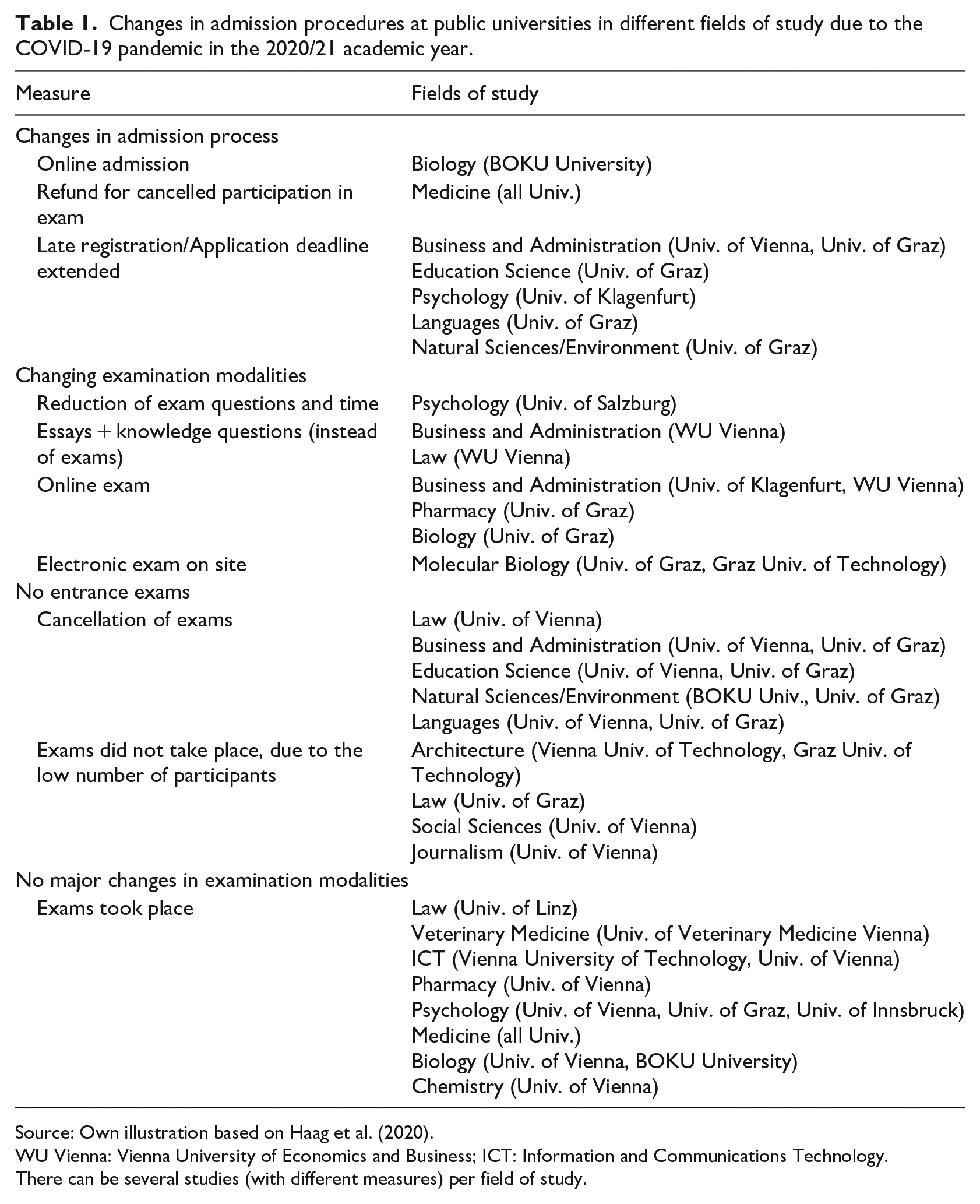
Source: Own illustration based on Haag et al. (2020).
WU Vienna: Vienna University of Economics and Business; ICT: Information and Communications Technology.
There can be several studies (with different measures) per field of study.
The COVID-19 pandemic not only affected study conditions in Austria, but also influenced the labour market. Austria experienced a particularly severe recession compared to other wealthy countries due to its reliance on tourism and the prolonged closure of non-essential businesses (Huber and Picek, 2021). Unemployment rose dramatically during the first lockdown (Ragacs and Reiss, 2021), especially among young people at the typical age for starting higher education. This is because they are disproportionately represented in sectors affected by the lockdowns (Eichmann and Nowak, 2020).
The impact of the economic downturn was not limited to young people already engaged in the labour market. Especially potential new entrants to the labour market encountered challenges in securing their first employment, as companies demonstrated a reluctance to hire during the crisis (Bock-Schappelwein et al., 2021; Tamesberger and Bacher, 2021). This was exacerbated by the fact that the specific financial support offered during this period (COVID-19 short-time work programme) was only available to people who had previously been employed (Tamesberger and Bacher, 2021).
After April 2020, loosening of measures took place followed by repeated closures and re-openings of varying degrees. From 2021, schools and higher education institutions gradually returned to their previous graduation and admissions procedures (BMBWF, 2021; Dittler and Kreidl, 2023; Pollak et al., 2021a, 2021b). However, it was not until October 2021 that unemployment in Austria was below the pre-crisis level of October 2019 (AMS Österreich, 2021). The last COVID-19 measures were lifted in the beginning of July 2023 in Austria.
To summarise, the COVID-19 pandemic has created an exceptional situation in Austria, both at universities and in the labour market (Ragacs and Reiss, 2021; Resch et al., 2023). This has led to new challenges in an already unequal higher education system, especially for first-generation students (Becker and Lörz, 2020; Rodríguez-Planas, 2022).
Methodology
Data and definitions
The analyses in this paper are based on administrative data from Statistics Austria’s UHSTAT1 form, which is a compulsory form filled in by all students when they apply for or start their studies in Austria. The scientific use of this data is covered by the Austrian data protection legislation (Bundesstatistikgesetz § 31) and complies with the General Data Protection Regulation (GDPR). Data access was granted through an agreement with Statistics Austria. The use of administrative data allows us to avoid sampling and thus the inherent selection bias. In addition to its robustness and completeness, this form has the unique advantage of collecting rare data on parental education.
The data have been specifically processed to answer the research questions and are available to us in aggregated form for the academic years 2017/18 to 2022/23 for bachelor’s and diploma programmes at public universities and universities of applied sciences. In order to limit the effects of other countries’ education systems on the results, only students who completed their secondary education in Austria are included in the analysis, and mobility students are excluded. In addition to the academic years, the data are aggregated in relation to the following categorical variables: higher education sector, field of study, gender, age and first-generation student status.
The term ‘first-generation student status’ is employed by Spiegler and Bednarek (2013) to categorise students according to whether they have parents without tertiary education (‘first-generation students’) or parents with tertiary education (‘non-first-generation students’). This definition places emphasis on social origin, defined by parental educational attainment. In our paper, ‘tertiary education’ of the parents refers specifically to all forms of post-secondary educational institutions. In the context of the students being a first-generation or non-first-generation student, the highest level of education attained by both the mother and father is considered collectively. If the educational level of one parent is unknown, the education of the known parent counts as the highest level of education. Information on both parents is missing in a small number of cases (between 2% and 10% each study year); either because the data for this student is not available at all (missing form) or because the student indicated not to know the education of both parents. These cases are included in the analysis where we do not differ between first-generation and non-first-generation students. We use the term ‘first-admission students’ (who can be either first-generation or non-first-generation students) to refer to students who are completely new to the higher education system (i.e. who have not previously been enrolled in another university or in another programme in Austria).
When looking at different fields of study in more detail, analysing the data only for first-admission students would distort the picture. Previous studies have shown that students are often already in another programme (with no or less stringent admission procedures) when they pass the entrance exam in a study programme, particularly in medicine (Haag et al., 2020). This is why focusing on first-admission students would only show data for the group of people who passed the entry tests at the first attempt. This would be particularly problematic for study programmes with highly selective admission tests. We therefore also draw on information of all regular study programmes started (in the first semester), regardless of whether it was the person’s first admission. An entry represents one study programme in which an individual is enrolled. In Austria it is possible to be enrolled in more than one programme at the same time. This means that when analysing ‘study programmes started’, (by non-/first-generation students) individuals with multiple enrolments are represented multiple times in the dataset. We categorise the study programmes started into fields of study based on the ISCED-F-2013 classification (UNESCO, 2014).
Methods
To assess whether the frequency between specific academic year pairs (e.g. 2019/20 to 2020/21 and 2020/21 to 2021/22) is equally distributed a one-sample Chi-square test is conducted. By testing the null hypothesis that the years have the same expected frequency, this non-parametric test identifies significant deviations from uniformity.
We further apply logistic regression (Wald-test) to examine whether the difference in the percentage changes in first-generation and non-first-generation students is significant. The statistical tests are conducted with significance levels set at *p < 0.05, **p < 0.01, and ***p < 0.001.
In this study, we apply significance tests to administrative data, carefully considering the findings of related literature (Behnke, 2005; Broscheid and Gschwend, 2005; Connelly et al., 2016; Posch et al., 2021). Although administrative data often encompass full populations and may not inherently require inferential techniques, we incorporate significance tests due to the presence of stochastic influences – such as measurement error and latent social processes – which Broscheid and Gschwend (2005) argue justify inferential methods even in full data contexts. This approach enables us to not only identify patterns within the dataset but also to support broader, generalizable insights where appropriate.
Limitations
While the findings of this study offer valuable insights, it is essential to acknowledge the limitations of the research design. As the Austrian population data are only available at an aggregated level, it is not possible to calculate multivariate regressions including mediating variables, which would have enhanced the interpretation. Furthermore, although the use of quantitative data allows for statistical analysis and a view of the big picture, it cannot capture the depth and complexity of first-generation students’ experiences and perspectives. Additionally, the present study is limited to examining public universities and universities of applied sciences. In Austria, there are two additional higher education sectors, namely private universities and universities of teacher education, which collectively represent approximately 9% of all students (Zucha et al., 2024). However, due to the unavailability of sufficient data for these two sectors, they are not included in the present analysis.
Results
Development of first admissions during the pandemic
Looking at first-admission students, we see
First-admission students in Austria from 2017/18 to 2022/23.
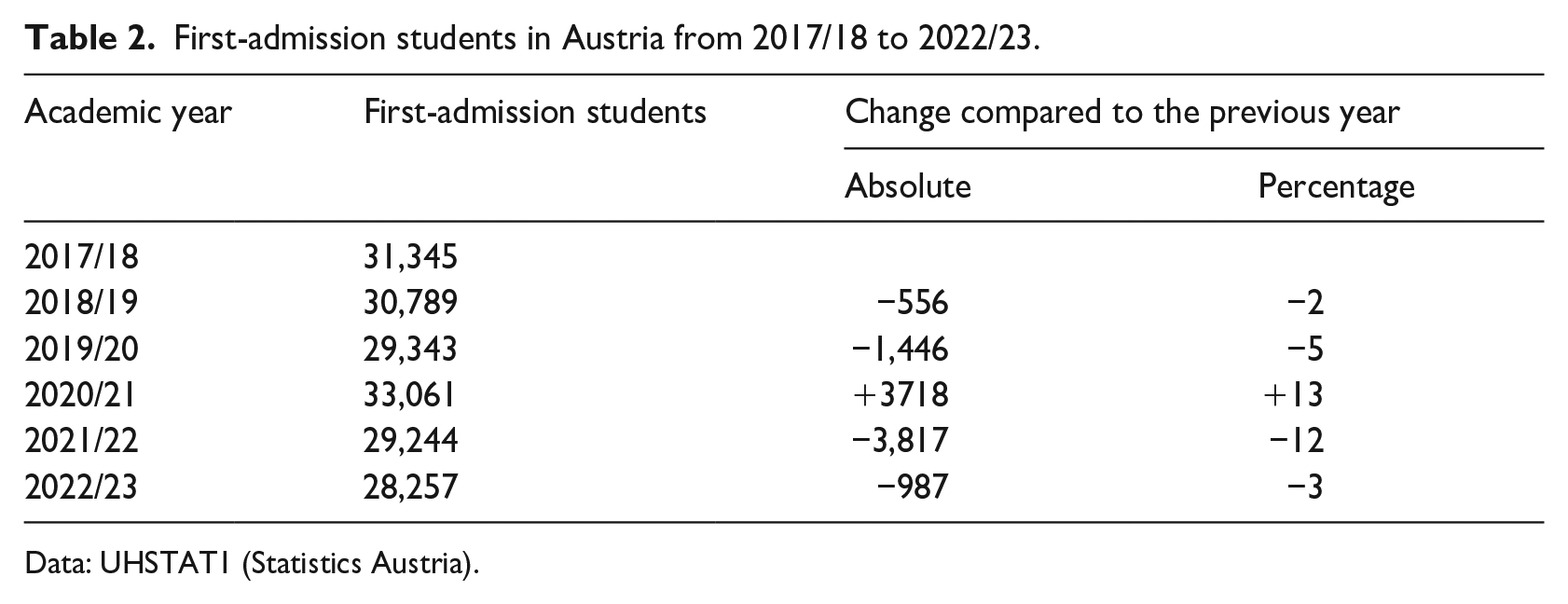
Data: UHSTAT1 (Statistics Austria).
The number of first-generation (FG) students decreased from 18,451 in the 2017/18 academic year to 16,056 in the 2019/20 academic year (see Figure 1). A closer examination of the period surrounding the outbreak of the coronavirus reveals that the number of FG students entering higher education increased in 2020/21 compared to the previous year, with 17,966 students enrolling. Further pairwise comparisons show that the increase in enrolment from 2019/20 to 2020/21 and the subsequent decrease in enrolment from 2020/21 to 2021/22 are statistically significant. However, the significant increase in the number of non-first-generation (NFG) students from 2019/20 to 2020/21 resulted in a corresponding decline in the proportion of FG students, from 59% to 57%. In other words,
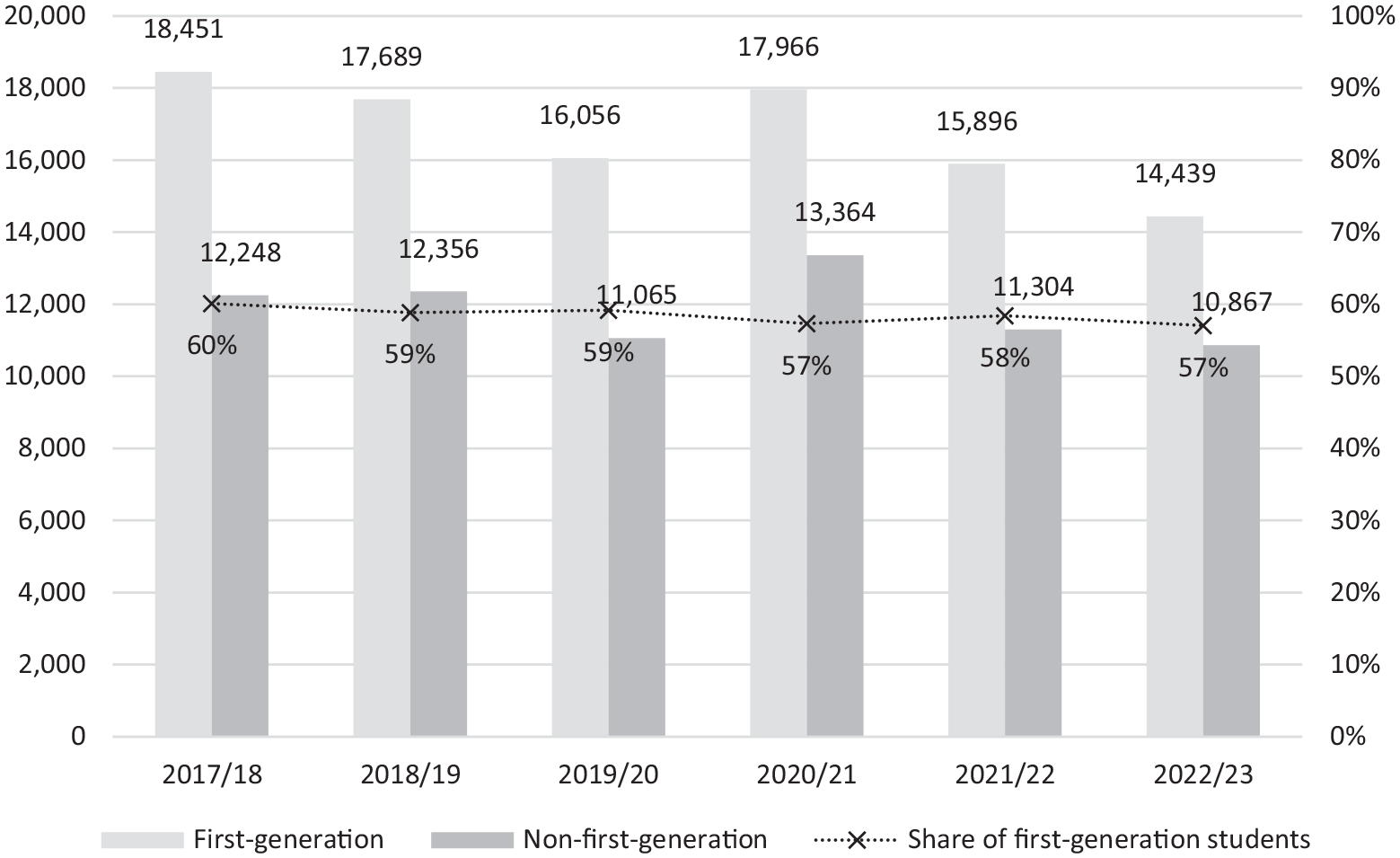
Absolute numbers and shares of (first-generation/non-first-generation) first-admission students.
The following year, as before the COVID-19 outbreak, the downward trajectory persisted. The number of first-time admissions of FG students in the 2021/22 academic year was lower than in the preceding years, with 15,896 students being admitted. Overall,
From 2019/20 to 2020/21, the number of FG male students increased significantly by 6%, while the number of FG female students increased significantly by 17%. However,
Looking at the change 1 year later (from 2020/21 to 2021/22), the number of FG students decreased significantly for both genders. The
First-admission students by gender and first-generation student status.
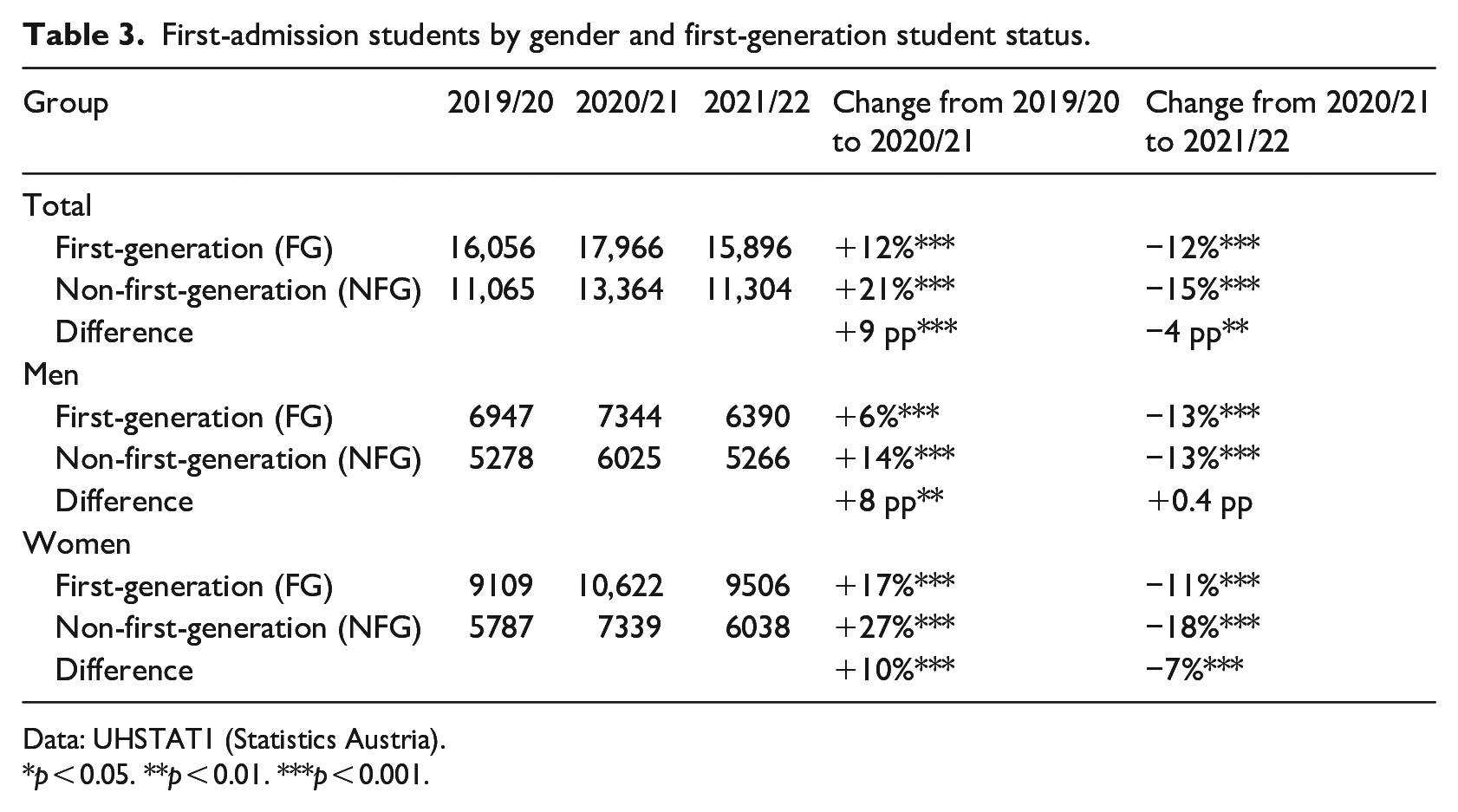
Data: UHSTAT1 (Statistics Austria).
p < 0.05. **p < 0.01. ***p < 0.001.
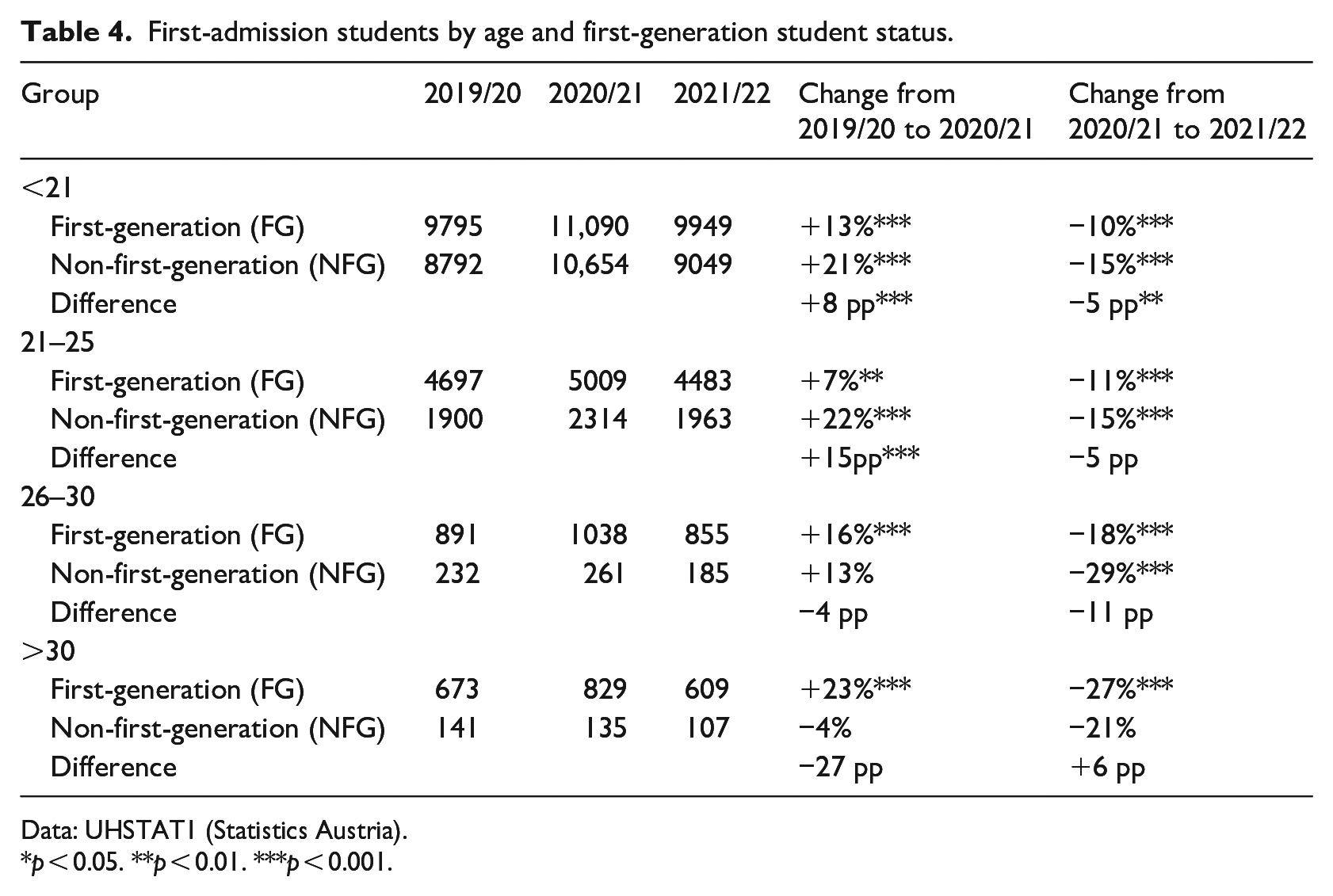
Changes in the number of (non-)first generation students across
First-admission students by age and first-generation student status.
Data: UHSTAT1 (Statistics Austria).
p < 0.05. **p < 0.01. ***p < 0.001.
Development of study programmes started during the pandemic
Looking at the total number of study programmes started in Figure 2, a COVID-19 peak is visible, but it was lower than for first-admission students. This shows that, in general, there was a greater tendency to start studying for the first time than to take up a new study programme (e.g. in a different field of study) in the first year of the pandemic in Austria. The peak in the number of study programmes started was slightly higher at public universities than at universities of applied sciences. In the subsequent academic year (2021/22), the number of new study programmes started at public universities even fell below the level before the COVID-19 outbreak.
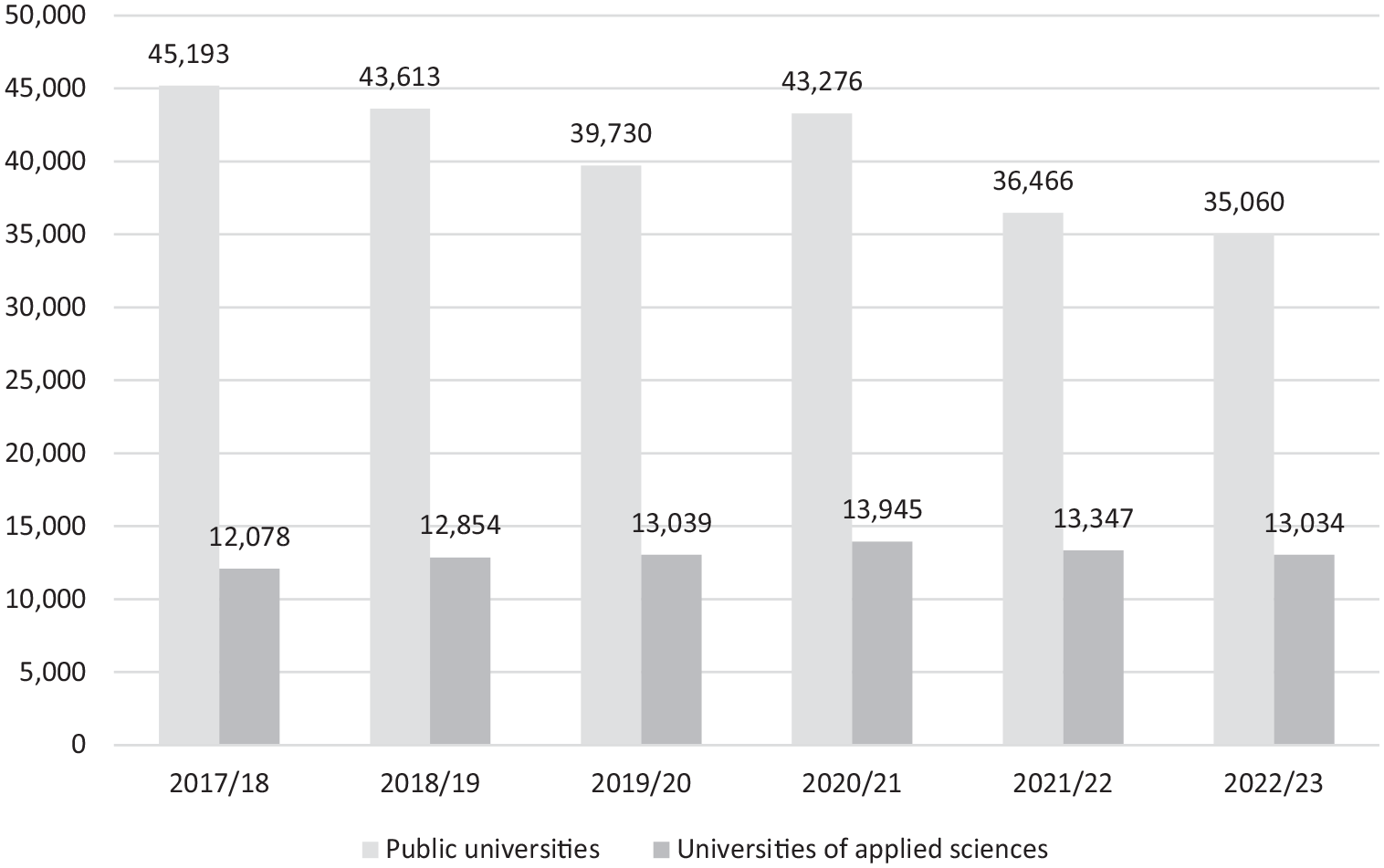
Absolute numbers of study programmes started by higher education sector.
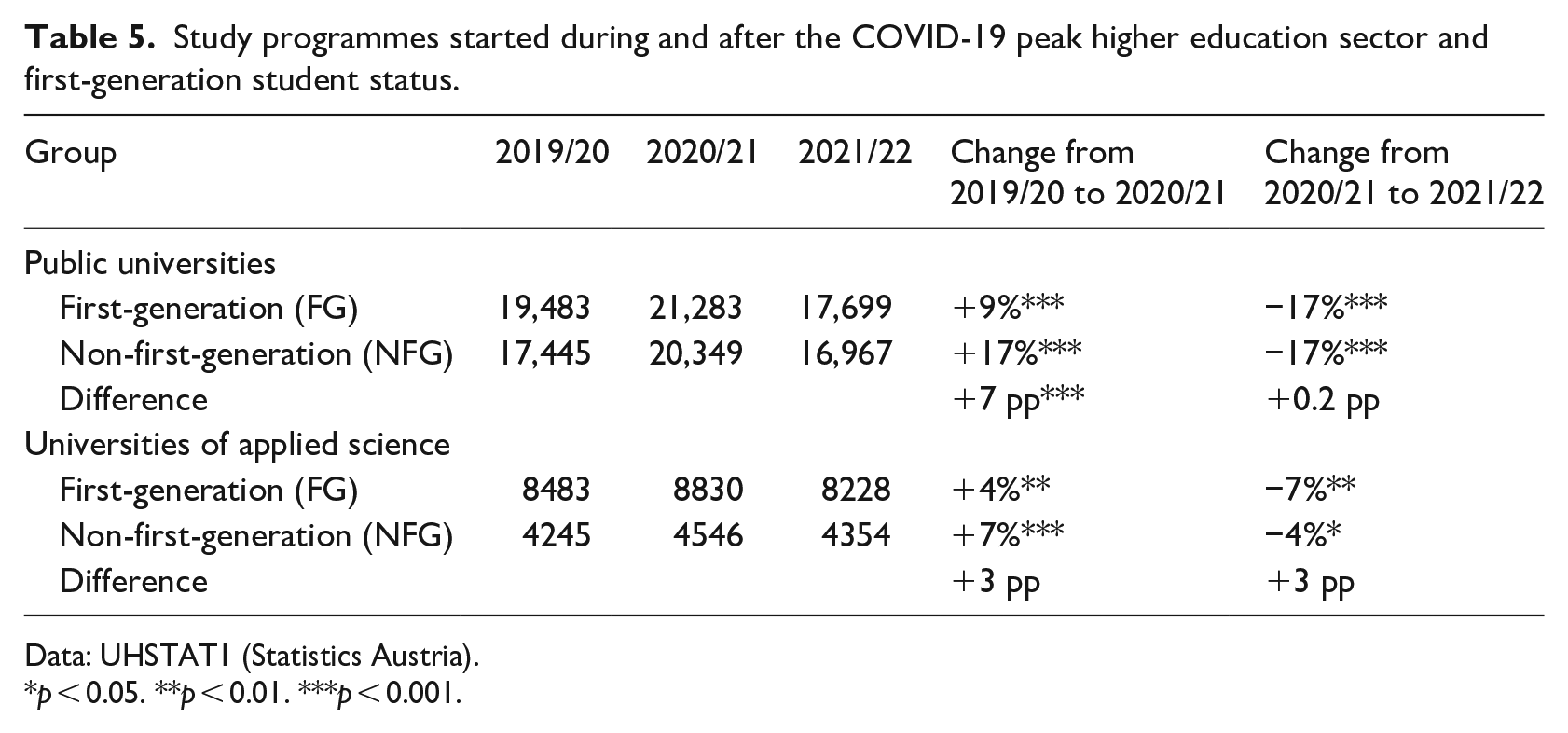
Study programmes started during and after the COVID-19 peak higher education sector and first-generation student status.
Data: UHSTAT1 (Statistics Austria).
p < 0.05. **p < 0.01. ***p < 0.001.
The relative difference between FG students and NFG students is significant for public universities from 2019/20 to 2020/21 (Wald(1) = 21.035, p < 0.001). During this period, FG students started study programmes in public universities more often than before, but not as often as NFG students.
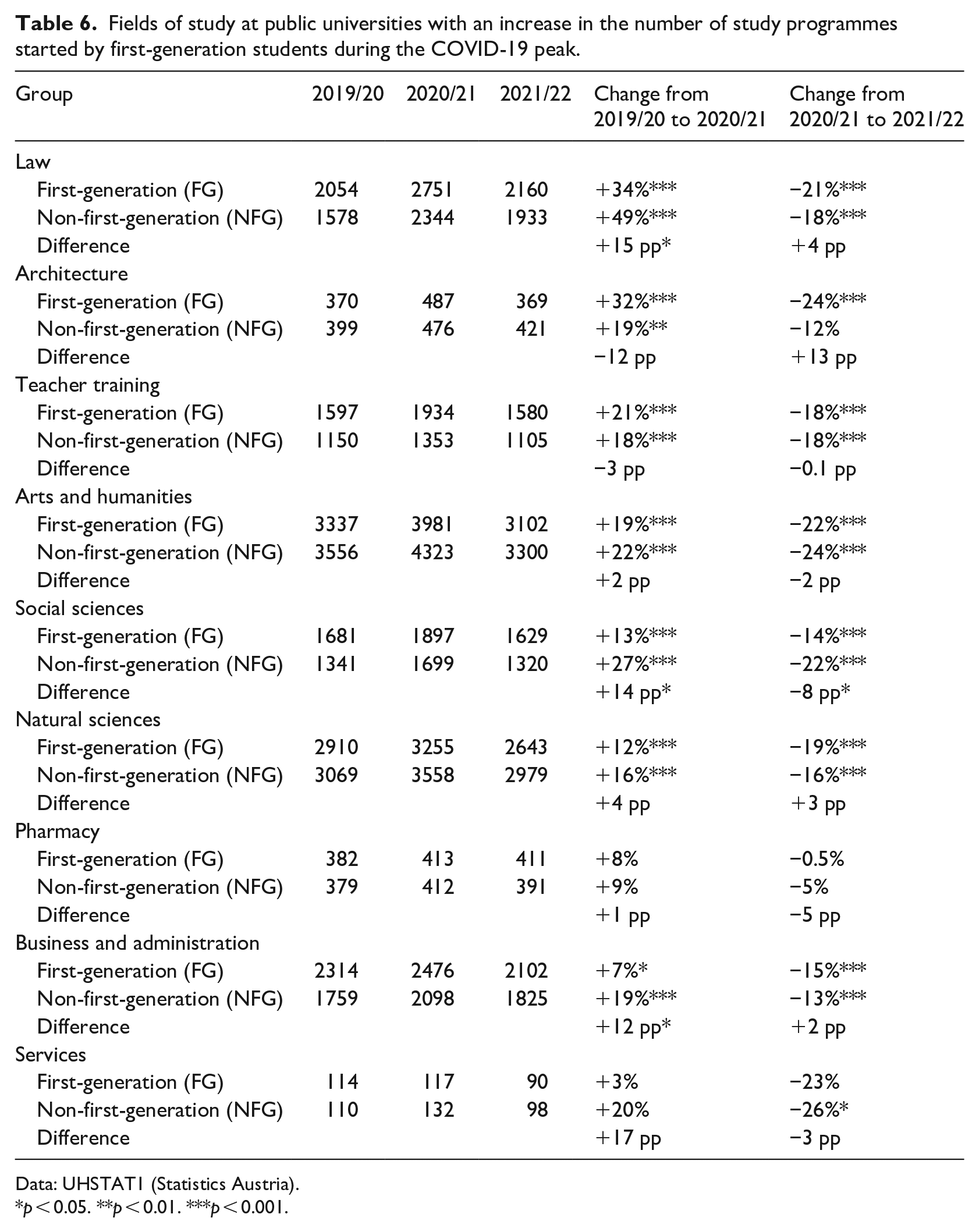
Table 6 summarises
Fields of study at public universities with an increase in the number of study programmes started by first-generation students during the COVID-19 peak.
Data: UHSTAT1 (Statistics Austria).
p < 0.05. **p < 0.01. ***p < 0.001.
The relative increase in the number of study programmes started was significantly higher among NFG students in law (Wald(1) = 5.609, p < 0.05), social sciences (Wald(1) = 5.454, p < 0.05) and business and administration (Wald(1) = 6.266, p < 0.05).
In the following year, there was a significant decline in the number of study programmes started by FG students in law, architecture, teacher training, arts and humanities, social sciences, natural sciences, and business and administration. In social sciences, the relative decrease was significantly higher for NFG students (Wald(1) = 4.029, p < 0.05).
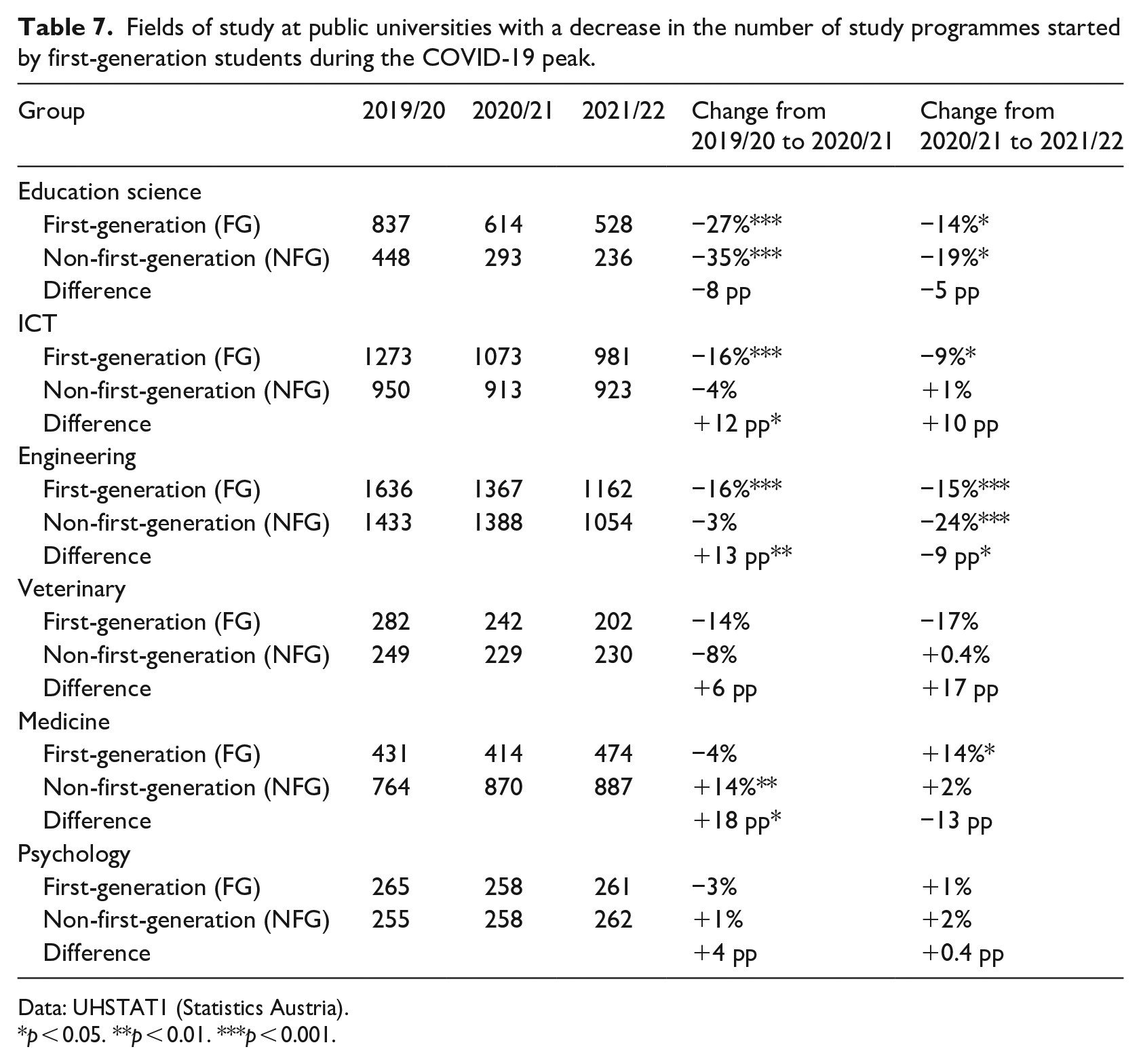
There were also decreases in the number of FG students starting degree programmes at public universities in the first year of the pandemic (see Table 7), with significant decreases in education science (−27%), ICT (−16%) and engineering (−16%). For NFG students, the decline was only significant in education science (−35%), and there was a significant increase in medicine (+14%).
Fields of study at public universities with a decrease in the number of study programmes started by first-generation students during the COVID-19 peak.
Data: UHSTAT1 (Statistics Austria).
p < 0.05. **p < 0.01. ***p < 0.001.
The relative decline in study programmes started was significantly higher among FG students compared to NFG students in ICT (Wald(1) = 4.453, p < 0.05), engineering (Wald(1) = 7.904, p < 0.01) and medicine (Wald(1) = 4.025, p < 0.05). In other words,
In engineering, the decline in the number of study programmes started by FG students continued in the following academic year (−15%), and the relative decline was significantly higher than for NFG students (Wald(1) = 3.901, p < 0.05).
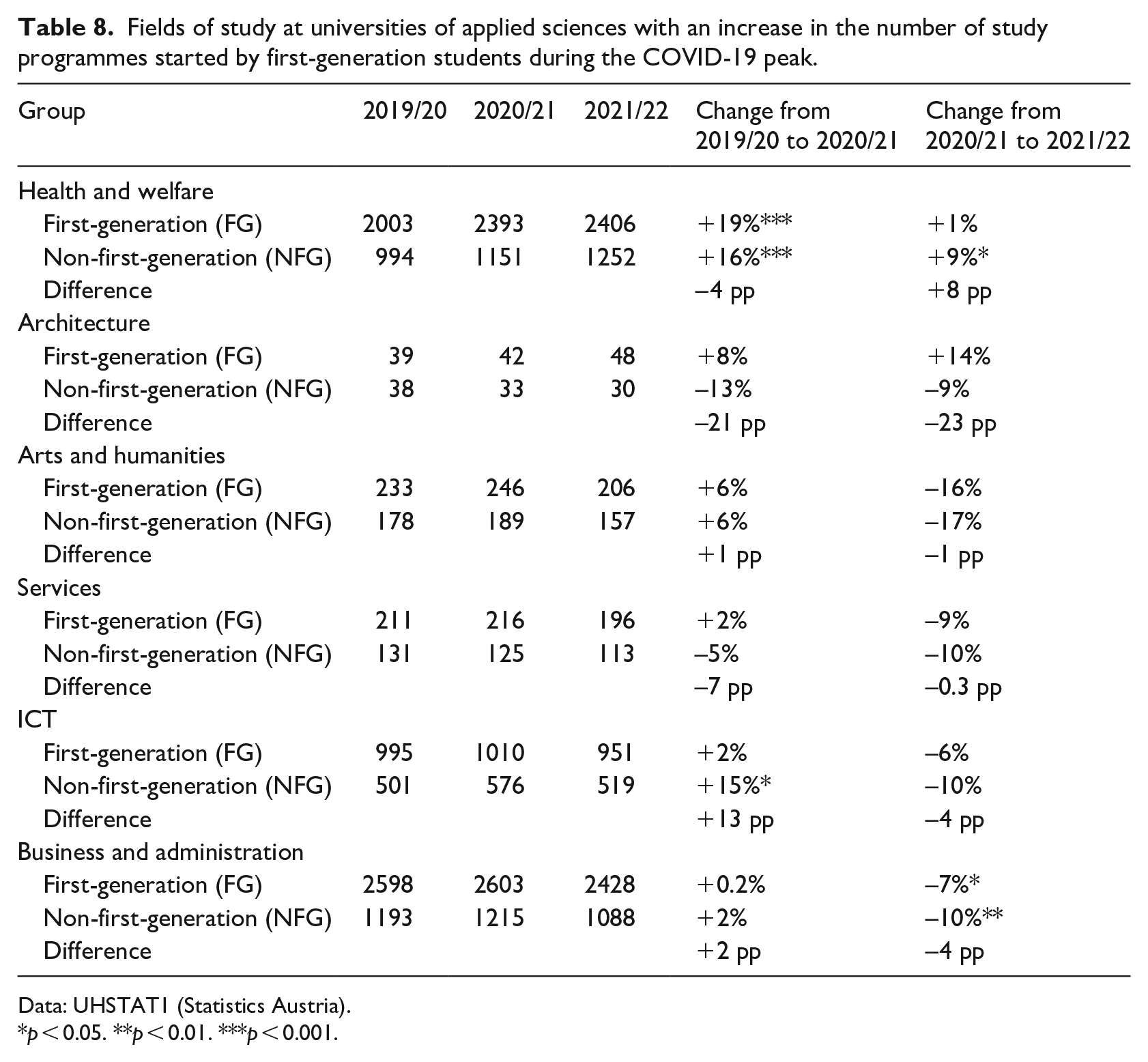
The following analyses show the change in the
Fields of study at universities of applied sciences with an increase in the number of study programmes started by first-generation students during the COVID-19 peak.
Data: UHSTAT1 (Statistics Austria).
p < 0.05. **p < 0.01. ***p < 0.001.
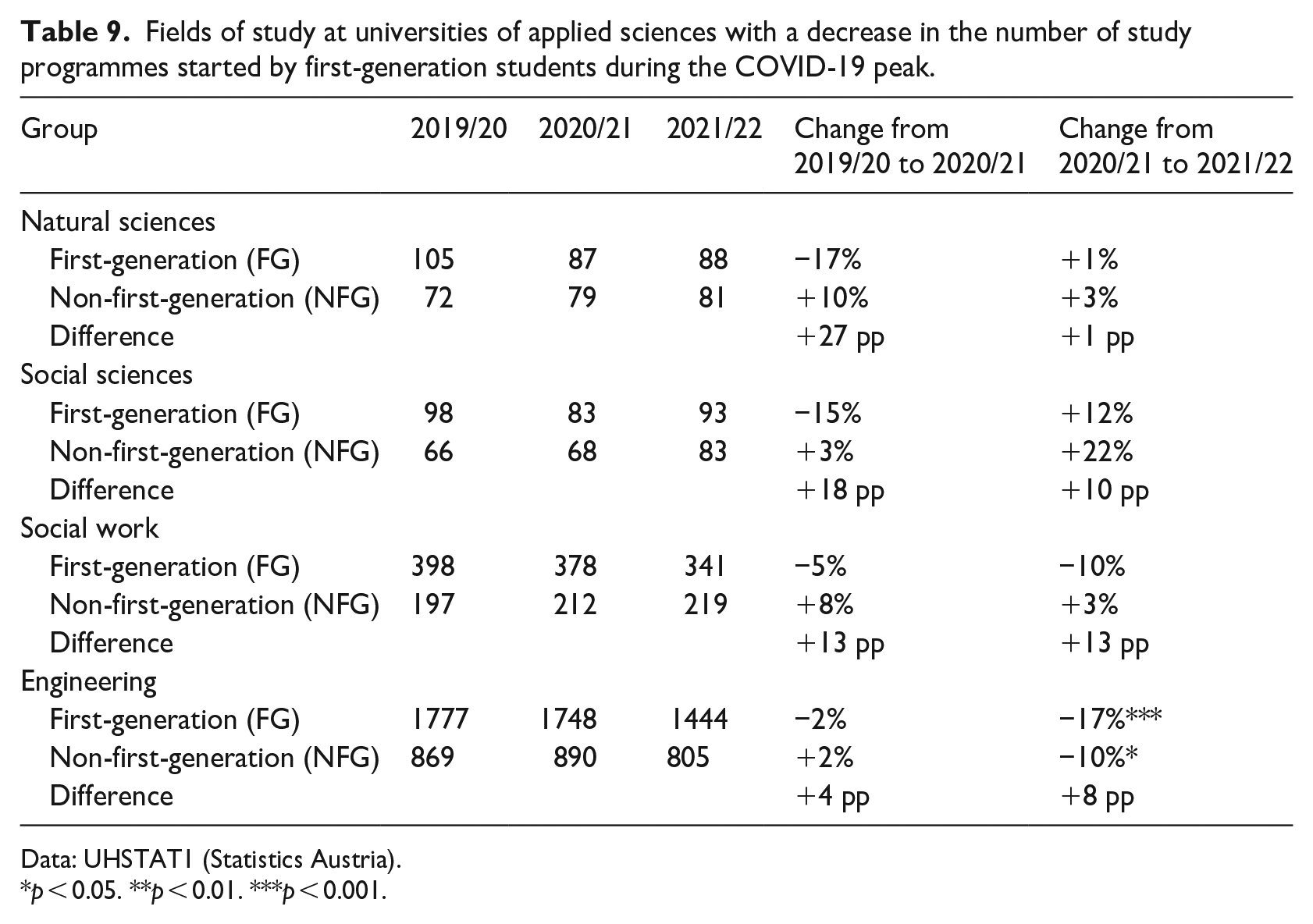
Fields of study at universities of applied sciences with a decrease in the number of study programmes started by first-generation students during the COVID-19 peak.
Data: UHSTAT1 (Statistics Austria).
p < 0.05. **p < 0.01. ***p < 0.001.
Discussion
In Austria, entering higher education can be difficult for disadvantaged groups, such as first-generation students. Despite the many benefits of a university degree, this group faces barriers that prevent them from participating and succeeding in higher education (Dausien and Hackl, 2023; Haag et al., 2020; Lessky et al., 2021; Zucha et al., 2024). In the course of the COVID-19 pandemic, significant changes have taken place in the Austrian labour market and higher education sector, with the implementation of new measures (Budgetdienst, 2020; Haag et al., 2020; Huber and Picek, 2021; Ragacs and Reiss, 2021). In this context, it is crucial to examine how existing inequalities for first-generation students have developed. Therefore, in this paper we have taken a closer look at how enrolment in higher education has changed for first-generation students during and after the COVID-19 pandemic in Austria.
The first year of the pandemic: The COVID-19 peak
In the first year of the COVID-19 pandemic (2020/21), there is a clear peak in the number of first-admission students and study programmes started in Austria. There was a tendency to enrol in higher education for the first time and to start a new programme (e.g. in a different field of study), although this was somewhat less common. In that year, the oral component of the Matura (A-levels) was not compulsory, several changes were made to university admission procedures, and long periods of lockdowns had led to high unemployment rates, particularly among younger age groups (AMS Österreich, 2020; BMBWF, 2021; Haag et al., 2020). The implementation of short-time work programmes has contributed to the stabilisation of the overall economy. However, this has also resulted in a decline in the attractiveness of young professionals to potential employers (Tamesberger and Bacher, 2021). It is therefore unsurprising that, during this pandemic, as in previous crises affecting the labour market, a greater proportion of young people have opted to pursue tertiary education rather than embarking on a (pure) career in the labour market.
The administrative data employed in this study permitted a more detailed examination of the enrolment numbers for first-admission students, classified according to whether they were (non-)first-generation students. This allowed us to see how the achievement of the goal of reducing the under-representation of students with less educated parents in Austria has developed over the course of the pandemic. It was disclosed that the overall number of first-generation students pursuing higher education increased during the 2020/21 academic year. However, the increase in the number of non-first-generation students has been even greater, leading to an even lower proportion of first-generation students than previously observed. With reference to the rational choice (RC) theories discussed above, we assume that the economic impact of the pandemic has disproportionately increased the cost of education for potential first-generation students, due to the higher incidence of unemployment among their parents (Ragacs and Reiss, 2021). Therefore, although individuals with parents who did not attain a tertiary education may also have been more inclined to pursue higher education during periods of reduced labour market attractiveness, it is not unexpected that their overall participation is less significant in comparison to those with parents who hold academic degrees. They were more likely to pursue higher education during the COVID-19 pandemic, still their level of engagement was lower than that of their counterparts.
The rise in first-admission students was significantly less pronounced for first-generation students than for non-first-generation students, for both men and women. Age-related differences in the influence of parental education on first-time enrolments could be identified. It was especially the younger age-groups among which first-generation students enrolled in higher education less often than non-first-generation students in that year. As younger students are often more dependent on financial support from their parents (Zucha et al., 2024), they may have been more affected than older students by the disproportionately high incidence of parental unemployment.
Our results also show that there is a significant difference in the enrolment behaviour of first-generation and non-first-generation students at public universities in the first year of the COVID-19 pandemic. In law, social sciences and business and administration, there was an increase in the number of study programmes started for both groups, although the increase was significantly smaller for first-generation students. In ICT and engineering there was a decrease for both groups, with first-generation students significantly less likely to enrol in these study fields. There is also a significant difference in medicine: the number of study programmes started by first-generation students has decreased, while the number of study programmes started by non-first-generation students has increased. This may be due to the partial abolition of entrance exams in other fields, which may have made them comparatively more attractive to them. In addition, ICT, engineering and medicine are often perceived to be more difficult. According to the above-mentioned RC theories, the risk of investing a lot of time (and sometimes fees) in applying for and then studying in these fields may have made them less attractive, particularly to first-generation students.
At universities of applied sciences, the number of study programmes started also increased in the first year of the pandemic. However, there were no significant differences between the enrolment behaviour of first-generation and non-first-generation students. This could be attributed to the different study cultures and target groups at the universities of applied sciences in comparison to public universities.
The years following the COVID-19 outbreak
In the second year of the pandemic, increased efforts to reopen businesses and political support led to a decline in unemployment figures. In addition, schools started to gradually return to their previous graduation mode and some of the temporary measures in higher education admission procedures have been withdrawn (AMS Österreich, 2021; BMBWF, 2021; Dittler and Kreidl, 2023; Pollak et al., 2021a, 2021b). In that year, the number of first-admission students and study programmes started were lower than before the COVID-19 outbreak in Austria. It becomes evident, that young people have once again been able to gain a better foothold in the labour market and that simplifications in graduation and admission procedures have been scaled back.
After the COVID-19 peak, the number of first-generation students who enrol in higher education and the number of study programmes started by them declines to a lower level than before the pandemic. Looking at the overall picture from 2017/18 to 2022/23, the pandemic did not break the long-term downward trend in both the total number and proportion of first-generation students and their study programmes started. Part of this development can be explained by the fact that the share of parents with tertiary education in the Austrian population is increasing (STATcube, 2024). Furthermore, according to RC theories, the main reason for not attending higher education is that their educational choices are influenced by their social background (Scharf et al., 2020; Watermann et al., 2014). For young people without tertiary background, attending higher education comes with more costs than benefits, including spending time on studying rather than earning money and potential social isolation from their social origin. As previously stated, during the pandemic it was especially people without higher education degrees who lost their jobs. This means that after 1 year of redundancy, the parents of (potential) first-generation students had fewer financial resources to support their decision to enter higher education. RC theories also draw attention to the importance of status reproduction processes, which allow people from underprivileged backgrounds to internalise social norms and expectations that prioritise short-term financial security over long-term investment in education. A university degree is not a relevant factor in maintaining the status in these families. Therefore, people from non-academic backgrounds, driven by these beliefs and social dynamics, may have chosen to enter the labour market directly when it recovered, rather than pursue higher education, in search of immediate financial independence and social validation.
Conclusion
This paper indicates that there was no positive long-term change in enrolments for higher education of first-generation students in Austria in course of the COVID-19 pandemic. In the first year of the crisis there was a temporary peak in overall first-time admissions and study programmes started, but the different measures and instrument used to cope with the new situation (e.g. different modes for Matura and admission to higher education, COVID-19 short-time work programme) did not go hand in hand with an increase in the proportion of first-generation students in particular.
As shown by Boudon, parental education affects children’s educational decisions in many ways, which explains why single interventions may not have brought about comprehensive change. More multifaceted strategies are therefore urgently needed to address these inequalities in access to higher education for first-generation students.
Footnotes
Acknowledgements
We would like to thank Johann Bacher, Bianca Thaler and Martin Unger for their comments and suggestions at various stages of the research process. We thank Statistics Austria for providing the data. We would also like to thank the anonymous reviewers for their helpful comments. Open Access Funding provided by Institute for Advanced Studies (IHS).
Data availability statement
The data used in this study were obtained from Statistics Austria through a special agreement. Interested researchers can obtain access by contacting Statistics Austria directly.
Declaration of conflicting interests
The author(s) declared no potential conflicts of interest with respect to the research, authorship, and/or publication of this article.
Funding
The author(s) disclosed receipt of the following financial support for the research, authorship, and/or publication of this article: This research received funding from the Institute for Advanced Studies (IHS), Vienna.
Ethical approval and informed consent statements
The scientific use of this data is covered by the Austrian data protection legislation (Bundesstatistikgesetz § 31) and complies with the General Data Protection Regulation (GDPR). Data access was granted through an agreement with Statistics Austria.
