




Abstract
This article discusses the notion of a ‘morally equipped’ childhood and adolescence, and how such a notion can help us get a fresh perspective on the relation between young people’s participation and empowerment, and the formation of personal and the collective moral repertoires of modern society. Utilising a mixed-methods approach inspired by the sociology of conventions (SC) and the sociology of regimes of engagement (SRE), we analyse letters to the editor of the Norwegian children’s newspaper Aftenposten Junior, to investigate the formats of children’s generalised moral arguments. We demonstrate that our informants exhibit a broad moral sensibility in the letters we have analysed, particularly showing keen engagement with issues related to civic rights. We discuss the young participants’ expressions in the light of convention theory. We make a case for how becoming ‘morally equipped’ could be understood as being able to engage, challenge, and articulate the tensions and negotiations between personal formats of daily experiences and interactions, and collective formats, such as public expressions, throughout childhood and adolescence.
Introduction
Throughout history there has been a significant shift in the way we perceive children’s moral sensibility. The narrative has transitioned from viewing children's morality as almost inherent and immutable, to recognising their moral development as a dynamic process. Yet, contemporary European educational policies still view children as ‘emerging citizens’ who need to acquire key competences necessary for societal participation. European countries are at the forefront of implementing progressive educational policies that emphasise the importance of civic education, critical thinking, and the development of a moral compass in children. These policies provide a formalised framework within which children’s moral and civic sensibilities supposedly should be nurtured; often heavily focused on school readiness, emphasising cognitive skills, literacy and numeracy. The emphasis on skills, particularly in discussions around 21st-century skills or life skills, 1 often gravitates towards those that are economically beneficial, such as digital literacy, problem-solving and adaptability. This focus can marginalise the importance of nurturing moral qualities like empathy, ethical understanding and civic engagement – already present from a young age. There is also a risk of diminishing the recognition of children as complete individuals, already intricately connected to a broader world.
European children today grow up amidst geopolitical and security challenges in their immediate geography, unlike the generation before them. Key issues in this context include how contemporary children participate in society and how these challenges impact their development of morality, sense of belonging, and community. In our analysis, we explore how Norwegian children respond to these challenges and engage with moral issues, as evidenced by their letters to the editor in Aftenposten Junior, a Norwegian weekly newspaper for young readers. Through these letters, we observe children skilfully blending personal experiences with collective cultural narratives to express their perspectives.
Our research questions are: How do children aged 7–13 articulate their engagement and personal and collective moral expressions through the opinion columns of the Norwegian newspaper Aftenposten Junior, and what does this reveal about the interplay between their modes of communication and the prevailing moral underpinnings of the broader society? And furthermore: How does their expressions contribute to our understanding of their development into morally equipped citizens within a broader cultural context?
We utilise two methodological strategies:
1) Quantitative analysis: We measure how many of the expressed meanings can be regarded as personal or formatted as interests or as referring to common moral interests (according to Thévenot 2014, 2015; Haugseth and Smeplass, 2022), and show an overview of observed representations in the data material.
2) Qualitative analysis: We further determine how qualifications are generalised, and how children qualify their cases as common. We also investigate in what way they qualify their cases regarding the war in Ukraine, nature/climate, family, gender roles and so on.
Our findings illuminate two key aspects: firstly, children's ability to construct common moral arguments that bridge their personal moral sensibility with the broader culture. And secondly, the distinctive nature and trajectory of our sample's moral reasoning. This approach provides a finely grained, empirically-based lens through which to explore moral development and orientation.
Moral development: From linearity to subjectification
Over the span of just over a century, the scientific viewpoint on moral development has shifted from linear models towards an emphasis on subjectification. In the 20th century, theorists like Piaget (1932, 1952), Erikson (1993) and Kohlberg (1958, 1984) developed staged models of development, suggesting children and adolescents progress through a series of predefined phases that delineate cognitive and moral growth. These models, still foundational in educational psychology and many teacher education programs across Europe, suggest a sequential understanding of development, emphasising a progression through distinct stages towards mature morality. According to Kohlberg, individuals progress through stages as they develop a more sophisticated sense of morality. Kohlberg propose that individuals move through six distinct stages of moral development: (1) Obedience and punishment, (2) self-interest, (3) interpersonal accord and conformity, (4) authority and maintaining social order, (5) social contract, and (6) understanding universal ethical principles. Nonetheless, the stages proposed by Kohlberg are influenced by significant cultural disparities and variations, which can alter the developmental trajectory.
The concept of subjectification (Biesta, 2010: 11–12, 2020) provide an alternative perspective on the development of responsibility and self-cultivation in young people. The concept offers a holistic and dynamic theoretical underpinning of how individuals grow and mature, recognising that the process does not simply occur through predefined stages or steps.
Biesta distinguishes between socialisation and subjectification as two different functions of education. Socialisation refers to the process by which individuals become integrated into specific social, cultural and political structures through education. This process may be intentional or unintentional, but it is always present to some degree in educational programmes and practices. The socialisation function of education involves the transmission of norms, values and traditions, both desirable and undesirable, and serves to maintain and perpetuate existing cultural orders. The term acknowledges the importance of the social and cultural context in shaping individuals’ development and emphasises the continuous and interactive nature of the process. Subjectification, on the other hand, refers to the process of becoming a subject, characterised by a sense of independence from existing social, cultural and political orders. It involves developing a sense of self that is not solely defined by external structures or expectations.
While not all education necessarily contributes to subjectification, education may always have an individuating effect on individuals. The quality of subjectification, or the type of subjectivity that is fostered, is an important consideration in discussions about the aims and purposes of education.
Recent scholarship within childhood studies has foregrounded the notion that children are far from passive entities in the fabric of society; rather, they are active moral agents with the capacity to engage with and influence their social worlds. Contributions from researchers such as Qvortrup (2005), Clark (2017), Wyness (2019) and Sundsdal and Øksnes (2021) have significantly advanced our understanding of children’s active participation in their moral and social development, particularly through emphasising agency, voice and play.
However, through the pragmatic theory outlined below, we aim to fill a gap in the literature by exploring how children and youth, when participating in public discourse and expressing criticism or appreciation, systematically reference existing conventions and common goods in their culture. This engagement with the common, evident in both local and international contexts, is crucial for understanding moral development, generational shifts and societal change.
Convention theory, engagement theory and morality
Imdorf and Leemann (2023) propose that the sociology of conventions (SC) is a useful framework for understanding the role of education in society. By examining the negotiation, reproduction and contestation of conventions among actors in the education system, researchers can gain insight into the complex processes of institutionalisation and governance that shape educational practices. Holmqvist (2022) argues that conventions are not predetermined or fixed by external forces; they are constantly constructed and reconstructed through the actions and interactions of actors within specific contexts.
Following the sociology of conventions, we argue that by analysing the specific conventions that guide educational practices, researchers can uncover the underlying norms, values and power relations that influence the experiences and outcomes of children and youth within the educational system.
One of the most widely applied SC models was devised by Boltanski and Thévenot (2006). Their concept of orders of worth focuses on the culturally established logic that actors use to criticise or justify the worth and qualities of persons, actions and objects. Today, their model typically identifies eight quality conventions. These are the domestic, market, industrial, inspired, opinion, civic, green and network conventions (see also Boltanski and Chiapello, 2005; Thévenot et al., 2000), each with their own evaluation criteria and cognitive format. One of the original premises of this theory is that actors are themselves endowed with a critical competence – the ability to generalise (reference), that is, to refer to public common goods in order to valuate or criticise actions, relations, subjects or objects. However, the theory does not explore the mechanisms through which this competence is acquired or learned. General conventions coexist in public social situations and are part of the implicit knowledge about culture that members of societies possess in the western world (Diaz-Bone and de Larquier, 2020).
The Sociology of Regimes of Engagement (SRE), developed by Laurent Thévenot, is a social theory that moves beyond conventional forms of coordination and focuses on engagement as a valuable correspondence between a person and the surroundings. In addition to engaging in the regime of public conventions, referred to as SC, the regimes encompass engaging with planned activities, familiar engagement and engaging in exploration. The latter regime was developed with Nicolas Auray (Auray and Vétel, 2013; Hansen, 2023; Thévenot, 2002, 2007, 2014, 2015).
SC and SRE complement each other by providing different perspectives on social phenomena. While SC focuses on conventions as shared cultural logics that help coordinate actions and justify worth, SRE shifts the focus to individual engagement with one’s environment and the quest for various goods. SC is concerned with how actors justify their actions in an environment based on established conventions, whereas SRE deals with the dynamic relationship between other forms of attachment between individuals and their environment. Through SRE, Thévenot reframed the model of orders of worth as a format for expressing concerns and building commonality in politics. The notion of the ‘grammars of commonality’ offers a nuanced approach to expressing concerns and critiques (Thévenot, 2014, 2015). This concept revisits the dynamics of public dispute, focusing not only on moral contestation but also on the mechanisms through which concerns are voiced, thus broadening the scope of engagement to include nuanced forms of public expression and critique.
In other words, SRE expanded the scope to include more personal formats, including both individual interests and personal experiences (Thévenot, 2014, 2015; see also Eranti, 2018). SRE facilitates understanding shifts and exchanges between personal and common forms, and thus may help capture reflexive shifts between what are regarded as micro- and macro-level phenomena in the traditional sociology of reflexivity (see Haugseth and Smeplass, 2022).
Overall, this framework provides a nuanced understanding of how individuals express their concerns and engage in public life. Thévenot (2014, 2015) uses the concept of grammars to distinguish between different forms of commonality, according to the regimes of engagement. These grammars of commonality elucidate public disputes, not just as moral or material contests, but as conflicts over the modes of voicing concerns. They enable the description of diverse ways people express concerns, moving beyond the public/private or individual/collective dichotomies. They provide a means for individuals to communicate and compose their concerns, helping to build commonality and navigate tensions within a community. We argue that these processes are observable in young populations and can be studied to understand both general cultural development and youth cultures specifically.
Thévenot has identified three main grammars of commonality:
The grammar of plural orders of worth: This grammar requires individuals to express their concerns in terms of common goods and to navigate the plurality of orders of worth to mitigate tensions and reach compromises.
The grammar of individual interests: This grammar emphasises personal preferences, choices and interests. Composing in this grammar involves bargaining or negotiation between participants or allowing for a plurality of transparent options from which to choose.
The grammar of personal affinities (to common places): This grammar is related to deep personal attachments between people, things and places. Communicating involves ‘infusing’ deep concerns, attachments and feelings to common places, making this a highly emotional process. Composing is less structured and procedural than in the other two grammars, but accommodates multiple attachments, such as cheerful and convivial moments, that bring people together despite their differences.
These grammars illustrate various formats for expressing personal and collective concerns, addressing the challenge of reconciling tensions arising from judgments made for the common good. Thévenot (2015, p. 85) identifies two key functions (he uses the term operations) for the grammars: communicating and composing. Communicating broadly refers to the process of connecting personal concerns with a common locus that enables relations with others, while composing involves arranging different voices to form commonality.
They offer a nuanced understanding of public engagement and critique by addressing how personal concerns can be voiced and transformed into shared experiences or common goals.
Analytical strategy
Our point of departure is that the development of both children’s artistic expressions and moral equipment is a continuous process deeply intertwined with both personal and broader cultural experiences. The sensitivity of young people to create artistic expressions – which cannot truly be captured by the term ‘skills’ – is honed through the active creation, expression and communication of ideas using various materials, symbols and language representing a dialogue between the individual and their cultural contexts. In this way, the cultivation of a moral framework is a dynamic process where young individuals negotiate and articulate their thoughts and actions within a moral domain, constantly interacting with local, national and global cultural narratives.
Though Thévenot provides empirical grounding for SRE, to our knowledge, the SC and SRE frameworks, along with the method we employ here, have never been used to elucidate if and how we can study children as morally equipped – in terms of engaging personally and reflexively with the surroundings, communicating appreciation or critiques. We consider this question essential for understanding the development of children’s morality, as it demonstrates through many cases examples of moral readiness in relation to the wider world, rather than a moral sensibility as a product of educational objectives, policy documents or academic disciplines. Furthermore, it reveals the moral capabilities of children.
We analyse our material through identifying the above-mentioned three distinct grammars of commonality: the plural orders of worth (the regime of justification), the grammar of liberal interests (the regime of a plan) and the grammar of personal affinities to common-places (the regime of familiarity). These concepts do not adhere to the traditional dichotomy of public versus personal. Rather, all possess both personal and collective validity, as they encompass both individual and collective levels of experience (Thévenot, 2007, 2014).
The (1) grammar of plural orders of worth represents common conventions, and entails arriving at compromises and alleviating tensions through a shared understanding of what is important. The (2) liberal grammar originates from the autonomous individual. Autonomy offers limited avenues for expressing concerns and fostering commonality beyond addressing functional issues in achieving goals. This transformation of personal to common concerns, differs significantly from, and frequently contradicts, the grammar of plural orders of worth, as it necessitates converting concerns into preferences, choices or interests. Rather than finding compromises among different orders of worth, the liberal grammar facilitates commonality through bargaining or negotiation among participators or by offering various transparent options. This approach constrains individuals from linking their concerns to common goods and general will, while also limiting the expression of deeply personal and intimate concerns associated with familiar engagement (Hansen, 2023; Thévenot, 2015). In this text, we term these ‘the grammar of personal interests’, in line with Eranti (2018).
The (3) grammar of personal affinities to common-places is linked to the regime of familiarity, as both rely on deep personal attachments between people, things and places. The grammar of personal affinities involves the infusion of personal concerns, attachments and emotions into shared spaces. This process can be greatly emotional, as shared in affectivity. Successful communication is evidenced by a mutual understanding and appreciation of the shared spaces, while failed communication may result in superficial and clichéd interactions. Composing in this grammar is less structured and procedural than in the grammar of plural orders of worth, allowing for the accommodation of multiple attachments in common-places during moments of conviviality and shared humanity, despite individual differences (Hansen, 2023; Thévenot, 2015: 105).
Our case study enables empirical examination of children’s moral sensibility, as manifested in the tension between emotions and thoughts, the personal and the common, as evidenced through their communication and composition of what is perceived as common in letters to the editor in Aftenposten Junior.
Our research questions are (1) how do children aged 7–13 communicate and compose their engagement in opinion columns of Aftenposten Junior? (2) What is the link between these forms of communication and composition, and the prevailing moral underpinnings of broader adult society? (3) How does this perspective enhance our understanding of how children become morally equipped individuals, within a broader cultural context?
Methods and selection
The empirical study takes place by means of a content analysis of children’s opinions published in the Norwegian newspaper Aftenposten Junior, which has a distinct section for children’s letter to the editor, published once a week. Aftenposten is an Oslo-based, though nationally distributed, newspaper, with 252,000 readers. The junior edition has 24,624 subscribers (Medienorge, 2023). This newspaper was selected for its portrayal of children's expressions in Norwegian media. We selected a set of 12 editions, the first week of each month. The content was downloaded in PDF format and analysed using a process of interpretation and coding. Two researchers jointly assessed the theme, the modes of communicating or composing, and any orders of worth inherent in each letter. A total of 41 contributions, of which eight were drawings, were analysed in multiple sessions with both researchers present. The researchers made notes in a joint document and systematised their assessments in a table, to get an overview of the various contributions, going back and forth between their notes and data material.
Following the analysis of the data, we contacted the newspaper and conducted an expert interview with the main editor of the opinion section. During the interview, we asked about the selection process for opinion pieces, the considerations made and the type of contributions usually received. The editor clarified that the newspaper endeavoured to ensure a broad spectrum of contributions and to engage in dialogue with children when revisions were necessary. The interviewed editor also stated that pieces containing incorrect information or negative descriptions of specific people were not published. The informant emphasised the intricate challenges involved in navigating the media industry, especially the dual focus on safeguarding and authorising children’s voices within both commercial and public domains, where children are seen as particularly vulnerable. The newspaper anonymises children’s contributions and correct improper language as needed. Despite these complexities, the editor expressed a commitment to maintaining the authenticity of children’s perspectives and issues. Overall, the editor expressed concerns that were in line with the formalised Code of Ethics of the Norwegian Press (The Norwegian Press Association, 2023), stating that it is ‘considered good press conduct to assess the implications that media focus could cause in each case’. This underscores the evolving paradigm in media studies, which recognises children and adolescents not merely as passive recipients, but as proactive contributors actively shaping their socio-digital landscapes. As posited by Riesmeyer (2020, p. 330), this transformation draws attention to the agency of young individuals in the complex milieu of digital media.
We categorised the content as grammars of communicating and composing (Thévenot, 2014, p. 18, Thévenot, 2015, pp. 85–86), 2015), referring to plural orders of worth, personal interests or personal affinities to common-places, see also Eranti (2018) (Table 1).
Analytical framework.
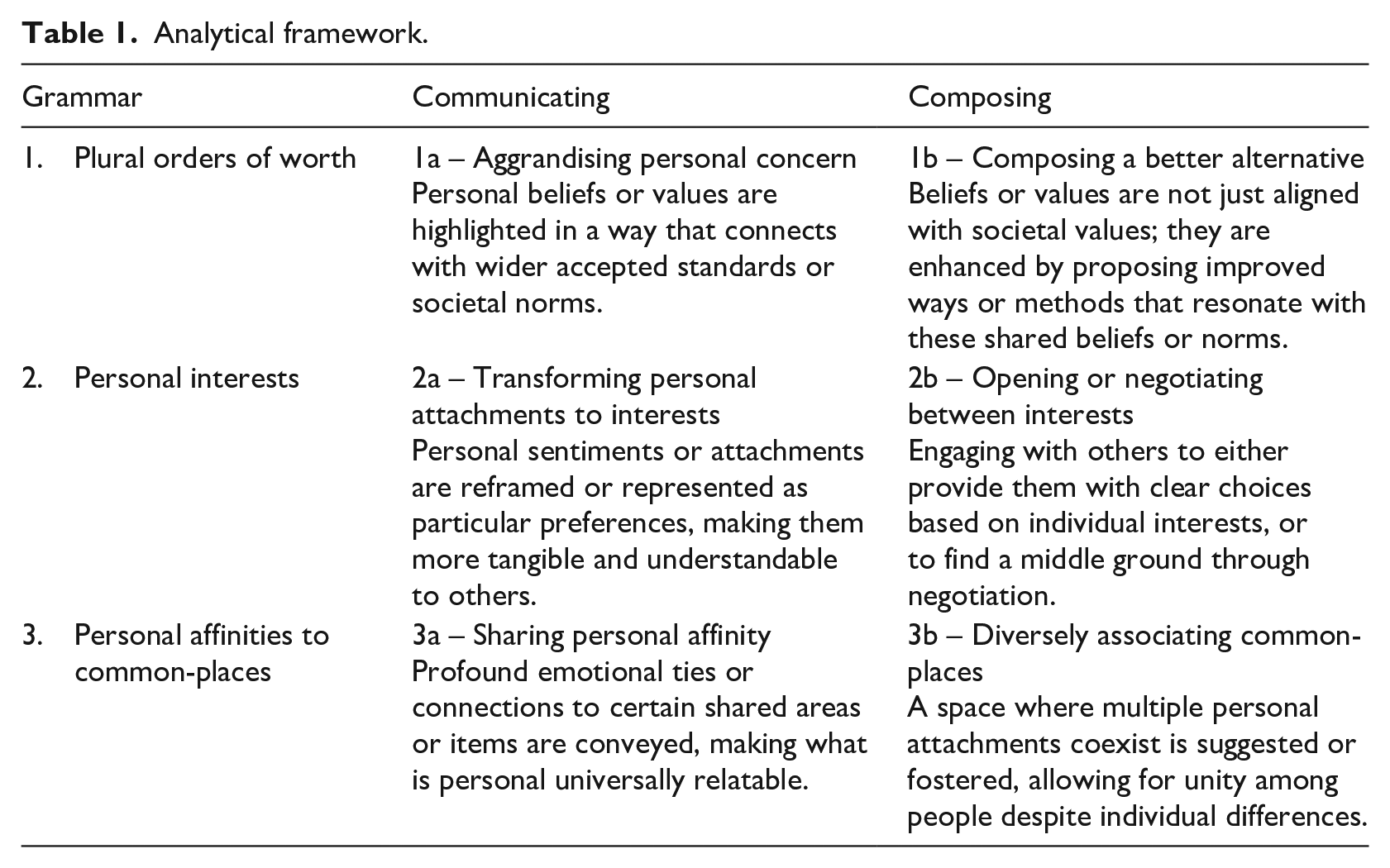
This analysis is based on the premise that we, as researchers, interpret one or more modes of communication and conventions, based on children's editor-selected contributions. We have interpreted 1a if the child communicates personal values, 2a if the child communicates preferences, and 3a if it pertains to descriptions of, for instance, bodily pain or other subjective experiences. Furthermore, we have categorised as 1b if the child communicates a better alternative with more or less explicit reference to common conventions, 2b if the child describe or give options or a kind of negotiation, and 3b if the child actualises a composition that enables people with different affiliations to meet across divides. To illustrate how we applied our categorisations, we shall use the example of the contribution ‘What it Feels Like to Have ADHD’.
Example: What It Feels Like to Have ADHD.
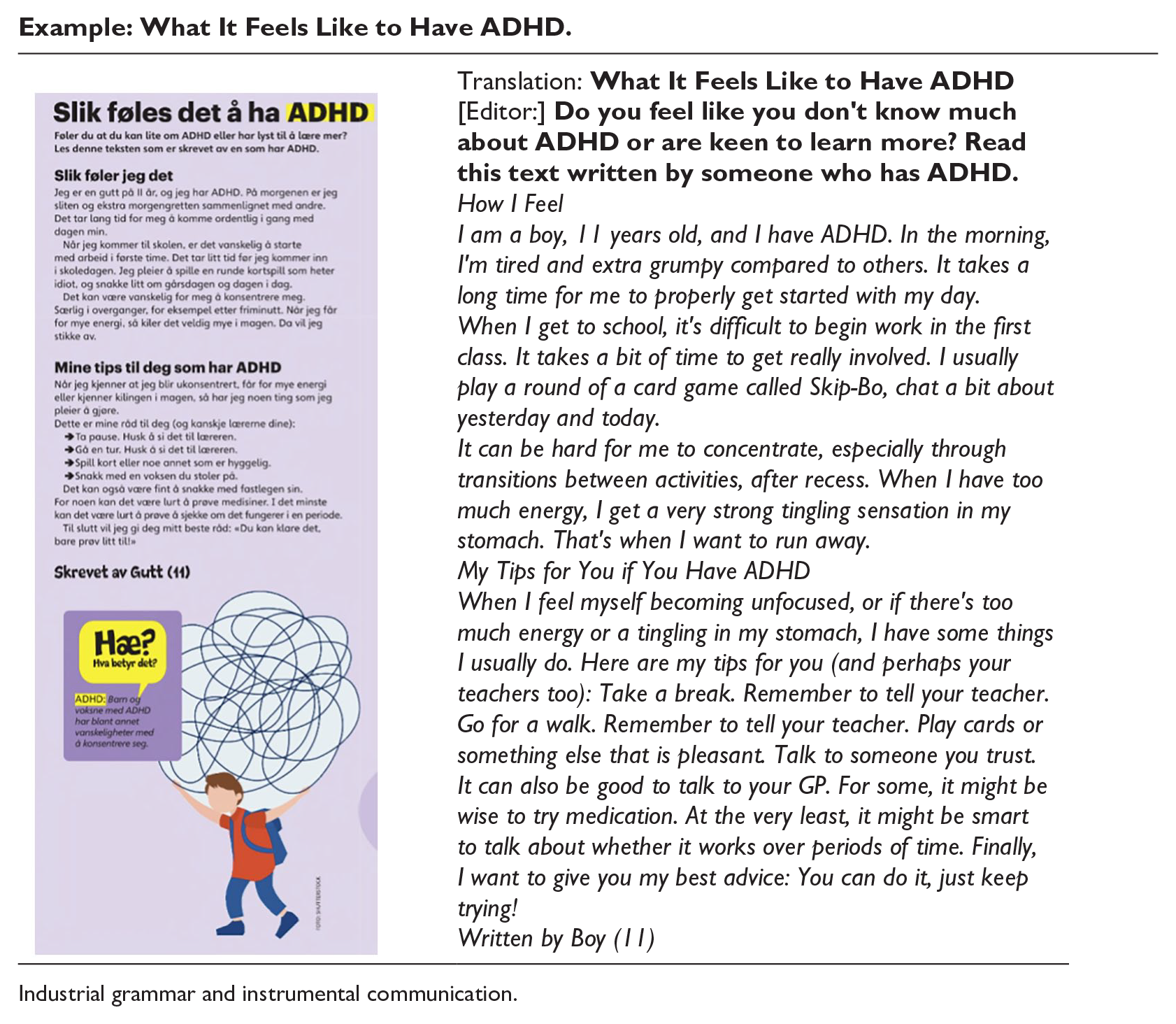
Industrial grammar and instrumental communication.
We coded the text about ADHD from Boy (11) as 2a, 3a,1b, and, 2b. Boy (11) articulately expresses his personal journey with ADHD. The contribution does as we interpret it not so much communicate regarding personal values (which would have been coded as 1a), but through the narrative, the boy (11) reframes his personal sentiments and challenges associated with ADHD, presenting them as experienced-based specific sentiments (2a). He also builds common ground by referring to his bodily sensations (3a). His approach helps demystify the abstract nature of ADHD, offering concrete examples of his daily struggles and coping mechanisms. Boy (11) then proposes improved ways or strategies of dealing with ADHD that resonate with common classroom practices and norms (1b). We interpreted these written strategies as embodying industrial worth; an approach that reflects work principles where strategies and processes are devised to enhance functionality. He also frame his advice as an option – to be readily engaged with by anyone (2b). He could have presented an argument where children with ADHD should be provided a commonplace or space – ‘to come as they are’, which probably could be categorised as 3b – but he don’t.
Considerations
Regarding the authorship of the analysed letters, while our analysis primarily focuses on the content as presented, we acknowledge the possibility of adult or editorial guidance or influence on the contributions. We discuss further limitations in the conclusion. However, our main interest lies in documenting children’s capacity to link personal experiences/preferences with a broader, collective level of understanding, and how they do this. Based on our analysis, we believe this capability is within reach for all children of this age group, though the manner in which it is executed can vary significantly, influenced by affordances, situational factors, and the way opportunities for such expressions are facilitated.
Secondly, concerning the representativeness of our sample and the generalisability of our findings, we recognise the limitations posed by drawing from readers of a specific newspaper, which may have its own socio-economic and political orientation. We believe this influences our data, especially in terms of which issues the children engage with, and how these are framed. However, we wish to point out that our data also demonstrates a rich variation. We believe this variability underscores the nuanced nature of moral development, rather than detracting from the validity of children’s abilities to engage morally when given the opportunity.
Lastly, regarding the distinction between expressing a moral viewpoint and possessing a moral commitment, our analysis does not conflate the expression of moral views with the existence of moral commitments per se. Instead, it aims to illustrate the potential for such expressions to reflect underlying moral reasoning and development.
In summary, while acknowledging the limitations and variations inherent in our study, our findings contribute to a deeper understanding of how children connect individual experiences with collective moral considerations, a fundamental aspect of their moral development and engagement in society.
Analysis
Quantitative overview
According to Thévenot (2015), ‘communicating’ broadly encompasses the process of connecting personal concerns to a common locus, facilitating relations with others. On the other hand, ‘composing’ involves the arrangement of diverse voices to foster commonality, navigating through complexities to find a middle ground.
The analysis suggests that children communicate and compose their public expressions by establishing common ground by personalising their narratives, integrating both written and visual elements in this process, and that they often resolve solutions with adherence to common conventions, worths or values.
Figure 1 shows the number of observations in each of the grammar categories. For the 41 individual contributions, 106 observations are counted. Multiple grammars were evident in several of the published pieces, with each count representing one observation. The table shows how the most frequent grammar of communicating was Aggrandising personal concern (observed 27 times). The most frequent grammar of composing were Composing a better alternative by denunciation or compromising (observed 32 times).
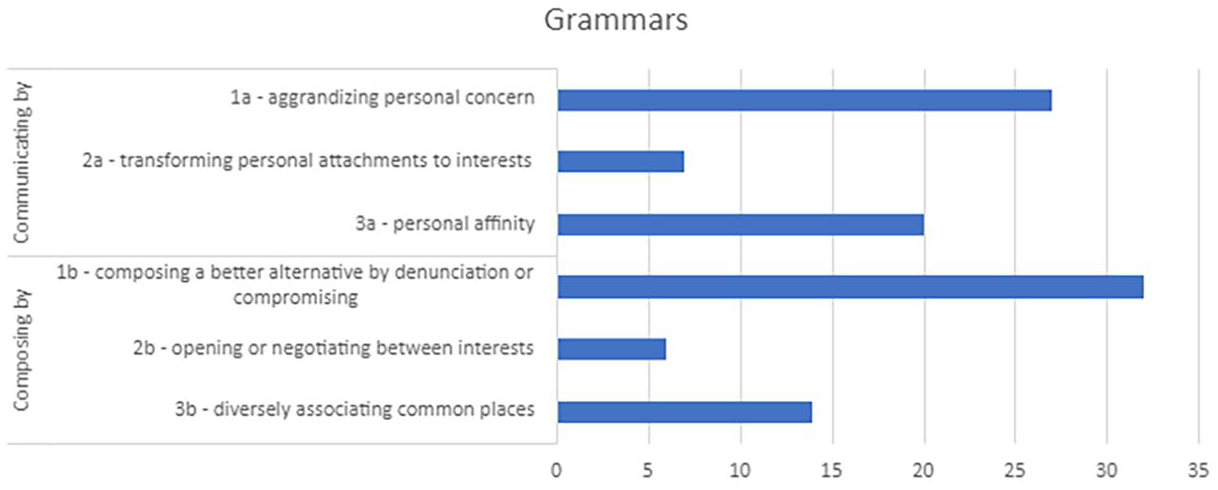
Frequency of representation (N = 106).
The data showcases a pronounced inclination among children towards aligning their expressions in letters to the editor with broader societal values. The frequent utilisation of grammars such as ‘aggrandising personal concern’ (1a) and ‘composing a better alternative by denunciation or compromising’ (1b) elucidates the contributors endeavour to meld personal reasoned arguments with moral sentiments, identifiable in the regime of plural orders of worth. This analytical and moral stance is manifest in contributions addressing salient issues like LGBTQ+ rights or ocean littering.
On the other hand, the prominence of ‘communicating by personal affinity’ and ‘diversely associating common-places’ underscores the importance children give to sharing personal stories and experiences, nurturing relatability and empathy, and/or arguing through personal experiences. The drawings chiefly express both personal affinities (3a) and common-places (3b), drawing on familiar and often universally recognised symbols. Contributors frequently incorporate imagery such as the sun, ice creams, or Ukrainian flags in an expression of solidarity.
However, we observed that the expressions don't always clearly adhere to one regime or another; instead, they cross between different regimes and categories of communicating and composing. This cross-linking reflects the complex, multi-dimensional nature of how children engage with societal issues and express their personal concerns and ideas in a public forum. For instance, a child might share a profound emotional tie toward the forest (3a) and then propose a better method for recycling (1b). Here, the emotional affinity for nature is reflected, followed by a legitimate valuation of environmental sustainability, leading to composing a better alternative.
The contributions less frequently establish commonality by discussing options, interests or choices, although there are also occasional examples of this – for instance, when contributors write about which professional soccer team they believe will win the seasonal league.
In Figure 2, the quantitative representation of orders of worth is displayed, along with their respective frequencies among the 41 contributions analysed. A total of 45 references to orders of worth were identified in the data material, while 7 contributions were labelled as non-referencing any identifiable order of worth. The data reveals that the Civic category has the highest representation, with a frequency of 18 – in around half of the written cases. The Inspired category has the second-highest frequency, amounting to 8. Conversely, Opinion, Network and Market worth exhibit the lowest representation, with a frequency of 3 in total. Notably, the frequencies of the remaining categories are as follows: Green (7), Industrial (6) and Domestic (5).
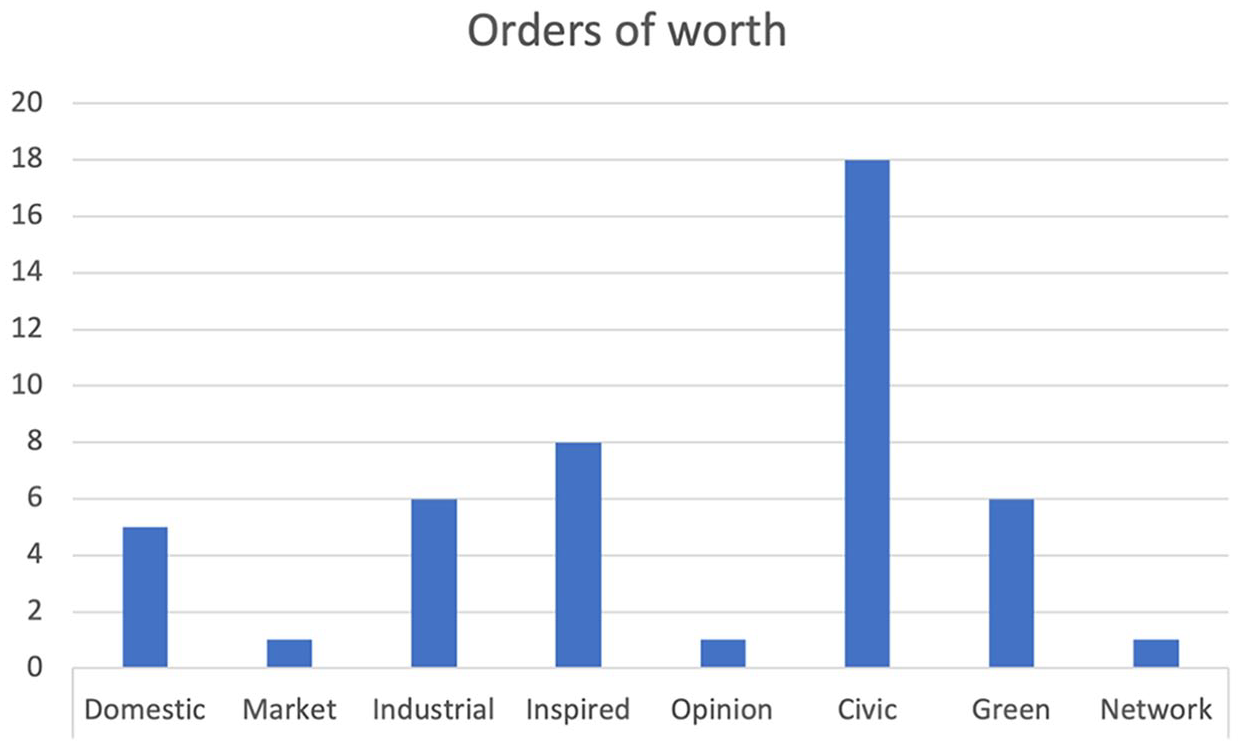
Frequency orders of worth.
From this quantitative overview, we can infer that every order of worth is represented, signifying that children too are drawing from the grammatical structures of worth found within history and adult discourse, also with specific references to current European matters. The predominance of the Civic category underscores the contributors’ inclination to connect with collective well-being and shared principles, suggesting an innate sense of community responsibility or social awareness – at least through how the young are portrayed in the public newspaper. On the other hand, the lower representation of Market, Opinion and Network might indicate that these arenas, (more often associated with citizenship or life-skills), are less influential or less relevant in the children’s current perspectives.
Qualitative assessments
The qualitative analysis enabled an interpretative in-depth understanding of the themes and patterns that emerged in the data. In particular, the researchers focused on identifying the concerns expressed by children in their letters, as they were presented through language or use of symbols. The Civic order of worth was expressed with reference to, for example, defending LGBTQ+ rights, and arguing for diversity or the civic rights of a specific group. One interesting case is a letter posted by an 11-year-old girl named Karen.
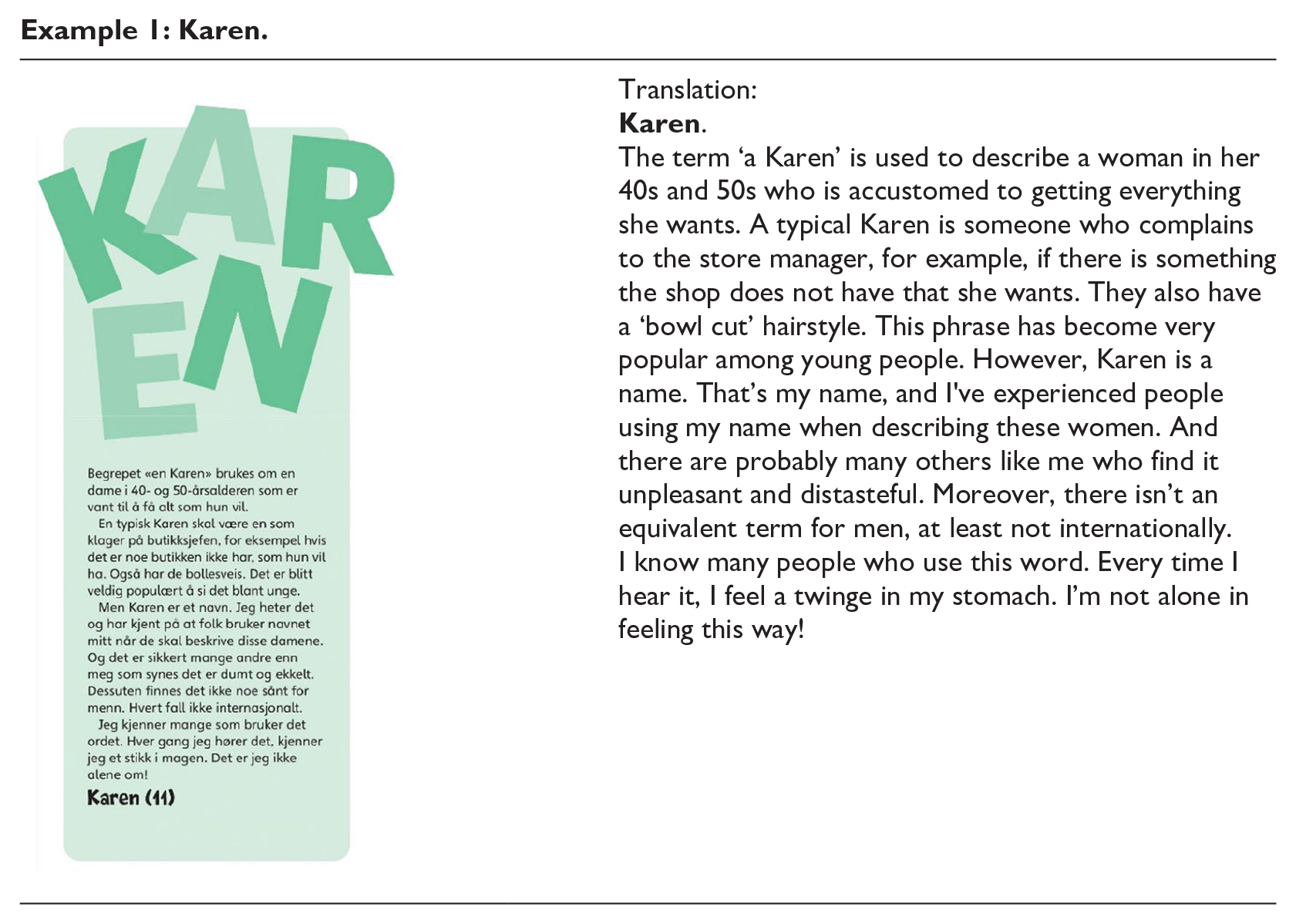
The example shows that the sender associates both physical dimensions (a twinge in the stomach) and the personal connection related to Karen as a given name. The sender also argues that this injustice has a gender dimension. We have coded the contribution as communication built on personal affiliation (3a) and qualification for the common good (1a), composed as a general ‘better alternative’ (1b) based on civic worth and solidarity with all the Karens out there: ‘stop using the name Karen to describe negative characteristics’. The example illustrates how a child can navigate the intersection of personal and common formats when crafting moral arguments, offering insights into their ability to engage with societal issues from multiple perspectives.
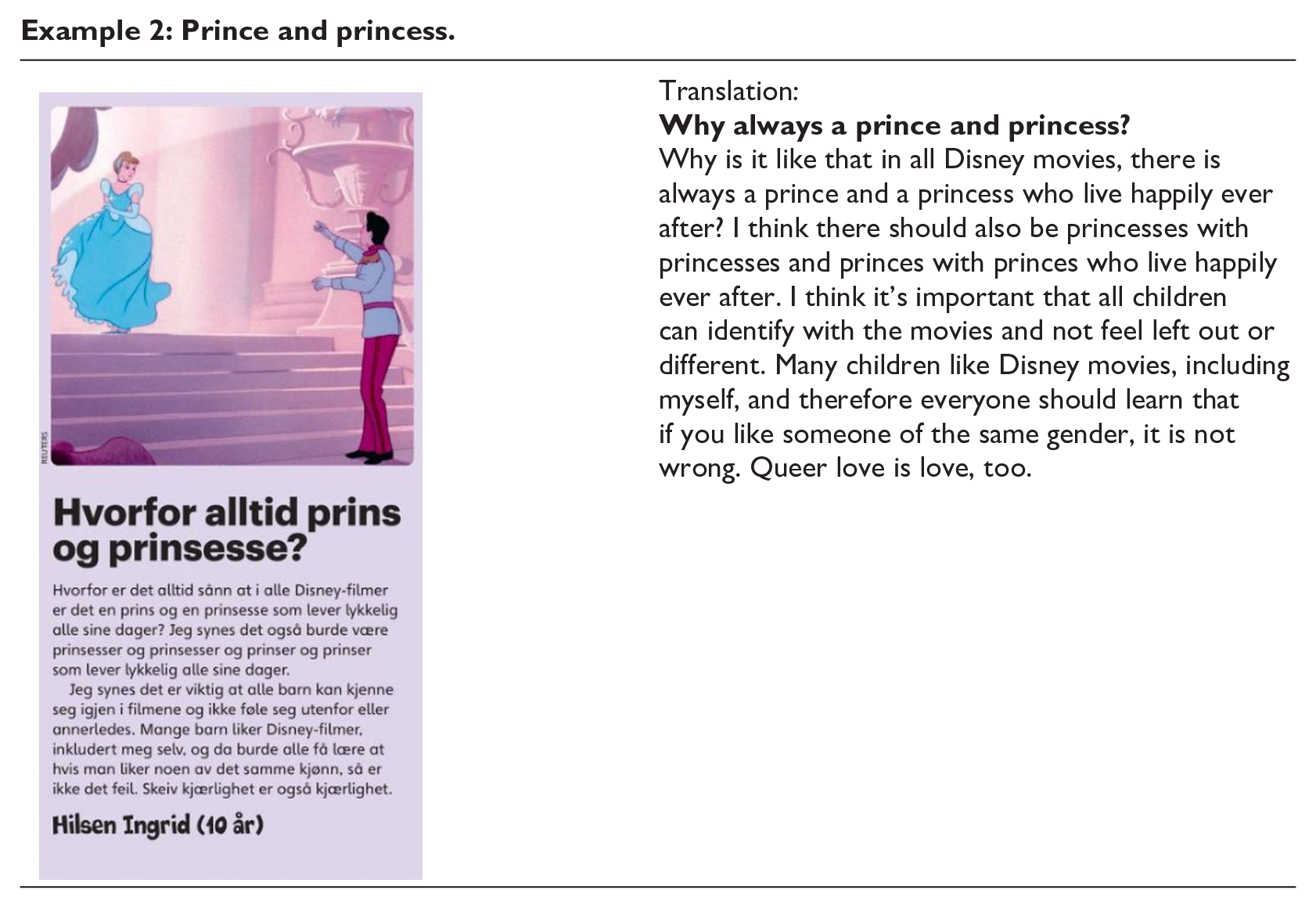
Several contributions argues against elite stereotypes or for more queer representation in movies, with reference to Civic worth. This topic is also discussed in the story Hvorfor alltid prins og prinsesse? The example from Ingrid (10) is a classic critique of conventions, as the author is aggrandising a personal concern for a caricature of gender stereotypes in Disney movies (1a, 1b).
Example 2: Prince and princess.
Furthermore, Inspired worth is communicated in stories in which children share their desires and refer to art (drawings with reference to the war in Ukraine) or popular culture (Minst like bra som Harry Potter), as well as a need for greater freedom for exploration in their free time (Mer fritid). Example 3 presents a drawing by a girl named Michelle, using symbols to illustrate her associations with summer vacation, and formulating a critique as a part of the drawing.
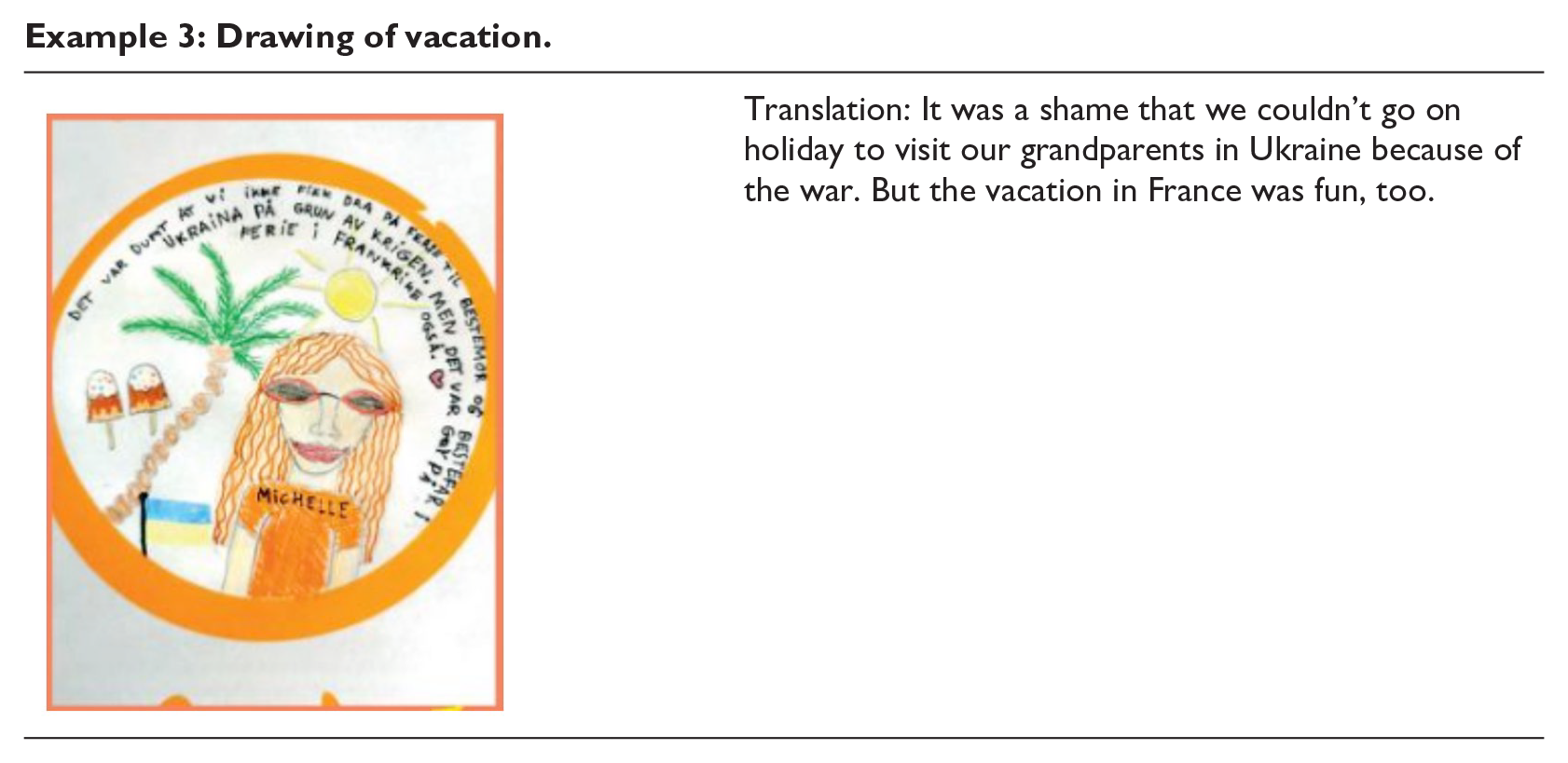
The form of ‘injustice’ framed is that Michelle would like to go and see her grandmother and grandfather, but that the war makes this impossible. This case refers to Civic, Inspired and Domestic worth, while presenting personal objects of interest such as visiting grandparents, eating ice cream and wearing summer attire 2 (Coded as 2a, 3a, 1b, and 3b).
Green worth is modestly represented in the data, however – in the expert interview the editor explained how contributions referring to nature were the most common contribution sent to the editor. In their moderation of the contributions submitted, the newspaper wanted to display a broader representation of children’s arguments, and therefore somewhat restricts expressions referring to nature and Green worth. In our analysis of the representation within the material, we uncover complex arguments that challenge the reduction of green values to merely electric cars and wind turbines (Elbiler og vindmøller), issues for animals when Norwegians celebrate with loud fireworks (Stopp fyrverkeri), ocean littering (Plast i havet), protection of polar bears (La isbjørnen leve) and an item focusing on various rocks and geological processes (Hva slags steiner er dette?).
Example 4: Fireworks.
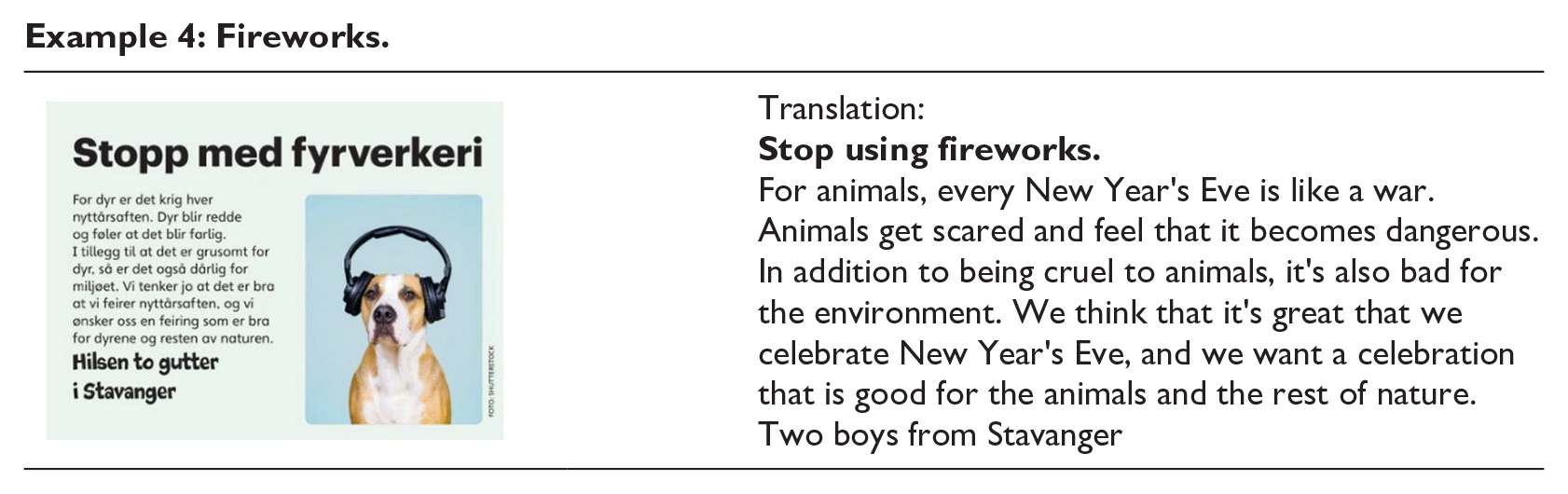
The contribution ‘Stop using fireworks’ argue with reference to common animal rights and the environment, a typical green valuation (1b). The boys are framing this issue as a part of their personal concerns (1a). Green valuation is expressed in various ways through arguments connected to justice, exploration and ecological knowledge – showing that children have a variation of repertoires and strategies to make green arguments and communicate their opinions.
Industrial worth is expressed in stories concerning the cost and value of school meals (Skolemåltid), with regard to the potential for learning something valuable through culture consumption of children’s movies (Minst like bra som Harry Potter/Skriv mer om verdensrommet!), defending the value of homework (Lekser er OK), or describing how other children with ADHD can develop useful strategies to cope with everyday school life (Slik føles det å ha ADHD (see above)). These expressions show how several children actually argue for being proactively productive or functional, aiming for proficiency and/or utility – referencing industrial conventions.
One intriguing finding in our material is that while most contributions refer to a single order of worth, some intricately weave arguments and logics from multiple orders. Examples of fascinating combinations include Industrial/Inspired (Minst like bra som Harry Potter), where utility is compromised with the inspiration nurtured by a good story, Green/Civic/Industrial (Elbiler og vindmøller), and Domestic/Civic/Inspired (Drawings about the war in Ukraine). Such complex value-driven argumentations often mirror the depth of adult pieces in newspapers.
The scarcity of observed instances in the conventions of Market, Network and Fame (Opinion) suggests that these are not considered legitimate among the contributors, or that such pieces are not published by the editors (which contradicts the impression given in our interview with the editor).
Nonetheless, an alternative explanation could be that Aftenposten Junior fails to offer an adequate platform for children to demonstrate these capabilities, although we do not find anything from our interview with the editorial staff member that points in this direction.
Discussion
What children can do
Prior to our analysis, we were uncertain whether our data would illustrate a consistent link between children’s personal moral sensibility and broader societal norms. However, our findings suggest that the authors, aged 7-13, demonstrate a profound capacity to navigate complex moral and civic issues in most cases, demonstrating a nuanced personal understanding and application of shared cultural references when arguing injustice or engaging in the letters.
Do this capacity extend to most or all children (in this age group)? Our response is informed by the theoretical underpinnings of the SC framework, which emphasises conventions as shared cultural goods facilitating the coordination of actions and the justification of worth, and the Sociology of Regimes of Engagement (SRE), which shifts focus to individual engagement with one’s immediate environment. SC and SRE explain actors as capable of actively participating in the cultivation and application of conventions, or shared cultural logics, illuminating the social as nurtured through a dynamic interaction between individual moral sensibility and broader societal norms. Previously, as far as we are aware, whether and how children become morally equipped as theorised here – has not been empirically examined.
Our findings suggest that children are not only capable of making these connections, but that they are able to do so in a manner that reflects a deep engagement with diverse issues in their broad socio-cultural environments, way beyond the immediate surroundings like the family or local school community. We believe that such engagement transcends simple cognitive or biological processes and is deeply influenced by the affordances of the children’s environments and the opportunities these environments present for moral and civic participation. While we posit that all children (7–13) may be inherently equipped for moral engagement, the normative expressions of their evaluations are expected to vary greatly across different regions and socio-cultural groups. Yet, our examples such as drawings featuring the war in Ukraina or cases defending LGBTQ+ rights, or arguing for diversity or the civic rights of a specific group, support the notion that Norwegian children, too, develop their moral understanding as affiliated with questions highly relevant to the European community. This illustrates how the children in our sample are growing up in a context where they are exposed to and relate to broader societal issues and conflicts and use these in their communications to their surrounding world.
The civic inclination of our sample’s moral arguments
The relatively high representation of the Civic order of worth in our sample, as shown in the quantitative overview, could be interpreted in several ways. One interpretation is that the Norwegian contexts in which these children likely grow up and participate—through school, leisure activities, family, and other social arenas—are deeply infused with civic values such as equality, participation, and trust. Many letters clearly reference civic values commonly accepted in Norwegian society. Norway and other Nordic nations are known for explicitly communicating these values through school curricula and general welfare (Braathe and Otterstad, 2014; Telhaug et al., 2006). For example, drawings of Ukrainian flags reflect issues highly relevant to the European civic society at the time.
Another explanation for the frequent representation of civic values could be that the civic world is quite accessible to children through their everyday experiences. Children often participate less in situations requiring them to critique or defend values associated with competition or the market world.
We cannot dismiss the possibility that the newspaper editors’ preference for some types of civic arguments, which they are unaware of, unable to or unwilling to share with us or it’s readers. We also acknowledge that the newspaper might favour certain types of arguments based on journalistic principles, or distinct socio-economic and political leanings, aligning with values endorsed by some segments of the Norwegian society.
The newspaper risks facing disapproval from its customers if it promotes values that are not accepted by parents or society in general. Civic values are considered both safe and child friendly. Hence, participating as a child in the comment section therefore signals ‘proper’ conventional democratic participation for children. All these explanations likely contribute to some extent to children’s observed civic inclination, and complement each other.
The logic and validity of children’s moral expressions
In the course of our research, we occasionally encountered contributions that sparked debate among us, regarding their validity. Some of these contributions, from our viewpoint, seemed to lack logical coherence or might not hold much weight if presented in an adult-centric setting.
A possible explanation could be that children's moral expressions might appear less convincing due to the constrained format of their contributions in Aftenposten Junior, which favours brevity and simplicity over the more elaborate argumentation typical in adult media. This brevity might inadvertently limit the perceived validity and coherence of their arguments in an adult-centric context.
Another factor could be that children’s expressions are often seemingly less valid because they do not conform to the conventional formats defined by the adult world. This can lead to their contributions being undervalued or overlooked in the public, and by us. As researchers, we have tried to truly appreciate the value of children’s perspectives by recognizing and adapting to their unique modes of expression. What might be perceived as a lack of validity in children’s expressions could also highlight the limitations of adult-centric frameworks. The dry language we employ to present our findings may not effectively convey their value in a manner that children themselves would find valid or interesting.
Becoming morally equipped
Our investigation into the moral expressions and engagements of children, particularly through their contributions to Aftenposten Junior, suggests profound capacities and nuanced understandings of moral and civic issues among the authors aged 7–13. This exploration, grounded in the sociology of conventions (SC) and the Sociology of Regimes of Engagement (SRE), proves that children’s ability to construct common moral arguments and engage with complex societal norms is not only present but vibrantly active within this age group. These findings challenge the conventional view of children’s moral development as a linear progression of cognitive skills, suggesting instead a dynamic interplay between individual sensibilities and broader societal narratives.
Unlike the staged progressions proposed by Piaget, Erikson, and Kohlberg, which delineate development as a series of sequential steps culminating in mature moral sensibility, our approach recognises the personal complexity and societal grounding of children’s growth. We argue that moral development is never about the mere internalisation of pre-existing cultural and moral norms, but an active, dynamic process influenced by context and surroundings. This perspective somewhat aligns with Biesta’s distinction between socialisation and subjectification, emphasising the importance of developing a sense of self that transcends predefined societal, cultural and political structures.
Our data showcases nuanced examples of both socialization and subjectification in practice, aligning well with recent advances in childhood studies that highlight the active participation of children in their moral and social development.
Furthermore, our analysis details how young individuals possess the capacity to construct moral arguments concerning both their personal identities and shared cultural references when given the opportunity.Our study demonstrates the applicability of SC and SRE frameworks in analyzing children’s moral reasoning and advocates for a nuanced appreciation of how children navigate and contribute to societal moral landscapes. This approach enriches the discourse on becoming morally equipped by bridging the micro and macro realms of moral engagement. We view this as a contribution to appreciating what young people can bring to both education and public discourse, expressing the diversity and richness in children’s perspectives and affording dignity to their actions.
Our data illuminate diverse ways in which children are able to interpret and engage with their moral environments, showcasing active engagement with broad national but also international contemporary issues. Whether addressing the Ukraine conflict, advocating for LGBTQ+ rights, or critiquing cultural consumption, children demonstrate a proactive moral judgment and a capacity to differentiate right from wrong in real-world contexts.
We conclude by suggesting that while all children probably possess the inherent capacity for moral engagement, the possibility to express this capacity is highly varied and influenced by local settings and regional and socio-cultural contexts. However, the consistent engagement with themes relevant to the European community indicates the existence of a certain shared framework of moral understanding: Children in socially democratic Northern European countries are clearly morally affected by political and social issues and challenges in other European regions.
In acknowledging the intricate interplay between personal and collective moral expressions, our research contributes a fresh perspective on the moral dimensions of citizenship in childhood, enriching the discourse on moral development and societal participation. The essence of becoming morally equipped lies not so much in the acquisition of skills but in engaging in the intricate interplay between individual experiences and the broader collective consciousness and nurturing the ability to effectively navigate and express concerns and ideas within diverse socio-cultural contexts. An integral part of our discussion highlights the significance of platforms such as Aftenposten Junior, where children have the opportunity to voice their perspectives. We posit that there is potential in developing such public spaces, not only within the public setting, but also in educational and broader contexts, where children can explore and express themselves. These settings act as essential and distinctive environments for the moral growth of young citizens, empowering them to interact with societal challenges and enrich the collective discourse with their unique insights and contributions.
Footnotes
Acknowledgements
We would like to extend our thanks to Kathryn Telling and Diana Holmqvist for their feedback on early drafts of this article. We also wish to express our gratitude to two anonymous reviewers for their thorough and constructive comments.
Declaration of conflicting interests
The author(s) declared no potential conflicts of interest with respect to the research, authorship, and/or publication of this article.
Funding
The author(s) received no financial support for the research, authorship, and/or publication of this article.
