




Abstract
How a society supports its most vulnerable individuals can serve as a barometer of social inclusion. By engaging in previous debates on how the influx and resettlement of refugees and asylum seekers challenge European educational spaces, this study investigates asylum seekers’ non-engagement and non-participation in one engaged learning project in Finland (the KOTO project – Kotoutuminen taidolla ja taiteella [Integration through Arts and Skills]). A mixed methods approach with convergent design was adopted for the study, which combines qualitative data on asylum seekers’ attributions of their participatory barriers with quantitative data on the relationship between asylum seekers’ demographics and the quantified data on their participatory barriers. The study illuminates how asylum seekers’ liminality, along with the project-based barriers, generates non-engagement and non-participation in the educative pre-integrational programmes in a reception centre context.
Introduction
De Haene et al. (2018: 213) wrote that the social dynamics across Europe raise questions about the polarised positions of solidarity versus exclusion towards refugees. They invite a shared reflection in education research to understand the role of research and practices concerning this view towards encountering refugees. By engaging in the previous debate on how the influx and resettlement of refugees and asylum seekers challenge European educational spaces, this study aims to describe how asylum seekers’ (n = 181) liminality (Turner, 1969) generates participatory barriers to their engagement and participation in ‘pre-integration education programmes’, in the reception centre context (Hartonen, 2018).
The term liminality (lat. limbus) means ‘border’ or ‘in between’ and refers to an uncertain situation or an intermediate condition that is beyond one’s control and in which there is no improvement in sight (Limbo, 2021). The term has been popularised by Van Gennep (1960) and used widely by contemporary scholars (e.g. Angulo-Pasel, 2019; Cayless et al., 2010; Lerum et al., 2015). Liminal personae slip through the network of classifications that normally locate states and propositions in cultural space, positing them betwixt and between positions assigned by law, custom, convention and ceremony (Turner, 1969). Based on Agamben (1998), these individuals are Homo Sacer; those excluded from society, existing outside the law, in a state of exception, and deprived of basic rights and functions.
Covering an extraordinarily heterogeneous population of individuals, there were approximately 4.1 million asylum seekers worldwide in 2020 (UNHCR, 2021). As generally understood, they do not belong to a nation (Tryggvadóttir and Skaptadóttir, 2018: 16), but they have a legal status that authorises them to reside in a foreign nation until their asylum application has been resolved (Council Directive, 2005/85/EC). They exist in a social reality that captures simultaneously existence within and outside a nation-state – legal liminality (Menjívar, 2006). As a mechanism of spatial mass management techniques (Malkki, 1995) asylum seekers are usually housed in highly restricted and monitored spaces in isolated, overcrowded and prison-like conditions. In isolation and exclusion from the society, asylum seekers describe being treated like ‘animals’, ‘criminals’, and as ‘not as human’ (Haas, 2017: 85; Kreichauf, 2018: 4).
Previous research suggests that the cumulative effects of pre-migratory traumatic events (Skogberg et al., 2019), as well as the uncertainty and uncontrollability of the application process, inflict high levels of post-migratory stress and psychopathology among asylum seekers (Kirmayer et al., 2011). It seems that both demographic factors and personal factors affect asylum seekers’ coping and well-being (e.g. Li et al., 2016). Skogberg et al. (2019: 4) reported that more than a third of adult asylum seekers estimated their health as average or poor. Further, 42% had a long-term illness, such as circulatory, musculoskeletal, or respiratory diseases. Somatic illnesses are also common. Hypertension, reduced appetite, undefined pains, increased cholesterol, sweating, sleeping problems and cognitive disruptions are repeatedly reported among both asylum seekers and refugees (e.g. Fazel et al., 2005; Laban et al., 2008; Saadi et al., 2021; Skogberg et al., 2019).
In addition to fear of deportation, atrocities, catastrophes and human rights violations experienced by asylum-seekers in their countries of origin are constantly present during the asylum process (e.g. Ingvarsson et al., 2016: 419). These factors produce ontological insecurity; the essential psychological need for security, integrity, and a sense of predictability (Erikson, 1968). Together with immobility as a spatial mass management technique, waiting in uncertainty leads to ‘hyper-realisation’ of the present (Haas, 2017: 82). Few studies exist focusing on this issue, but authors such as Sulaiman-Hill and Thompson (2012), as well as Alemi et al. (2016), have called this the thinking-too-much effect. In this, a traumatic past is usually reconnected and re-lived, with continual reference to the experiences of the present, producing extreme anxiety (Becker et al., 2000: 149–153).
However, asylum seekers consciously and unconsciously try to deal with their liminal situation. While some adopt avoidance tactics to ignore distressing present, others try to gain structure, security, and solace in their lives by staying active. Family can function as a protective factor in the reconstruction of a meaningful life during the application process, whereas separation from close relationships can bring about psychosocial and cognitive difficulties (Renner et al., 2012; Tay et al., 2015). Thus, asylum seekers perform daily activities in their homes, nurture their families and interact online with their distant relatives. If possible, they participate in voluntary programmes, and go to school, church, or temple (e.g. Askland, 2007: 235; Hartley et al., 2017: 1194). Also, long walks have served as an accessible way of temporarily escaping from the burden of everyday troubles (Rishbeth et al., 2019: 128).
In summary, much is known about the ‘campization of asylum seekers’ leading to the inescapable mixture of immobility, exclusion, and segregation and how these affects individual well-being. Then again, we have only limited insight into asylum seekers’ engagement in pre-integrational education, especially concerning participation obstacles and barriers. Those, such as language difficulties (e.g. Clark et al., 2014) and psychological issues (Hatoss et al., 2012: 24) have been previously linked with refugee populations. By recognising these barriers, it is possible to further develop mechanisms that support asylum seekers’ well-being, agency, and social integration.
This article is a part of a larger research effort aiming to describe how liminality affects asylum seekers’ subjective well-being (Hartonen et al., 2021), agency (Hartonen et al., 2022), and participation in pre-integrational education. After introducing one engaged learning project (KOTO project, see background), arranged educative workshops (KOTO sessions, see background) and their brief outcomes (see results), the article focuses more specifically on reporting findings of asylum seekers’ (n = 181) participatory barriers in this project. We approach this problem with the following research questions:
What do asylum seekers identify as reasons for not participating in KOTO sessions?
What do asylum seekers identify as ‘participatory barriers’ when taking part in KOTO sessions?
What is the relationship between asylum seekers’ background factors and reasons for non-participation concerning:
attending KOTO sessions? actively participating during KOTO sessions?
Background
The basis of this study originates from the 2015 refugee crisis when nearly 1.4 million asylum seekers arrived in Europe (European Asylum Support Office, 2016: 8). The increase in asylum applicants in Finland was an unprecedented 822%, more than any European country that year (Eurostat, 2016). The crisis provoked intense and polarised debates (e.g. Hellman and Lerkkanen, 2019) leading to one reception centre in Eastern Finland and the University of Eastern Finland’s School of Applied Educational Science and Teacher Education (SKOPE) establishing an engaged learning project aiming to enhance two-way integration by providing opportunities to establish contacts between asylum seekers and Finnish people. The project was called ‘KOTO’ [Integration through Arts and Skills – Research-based asylum seekers’ integration project through workshops and the development of voluntary work with the methods of arts and skills] (South Savo Regional Fund, 12162033). It lasted from January first 2016 to the end of June 2017, when a change in the strategic emphasis of the Finnish Immigration Service (Tiainen and Brewis, 2016: 42) resulted in the closure of the reception centre (Karlsson et al., 2018).
There has been a tradition of teaching the Finnish language using only Finnish (e.g. Nuutinen, 1992), for example in the pre-integrational education context. This method has been promoted as a low-threshold teaching method (YLE, 2016). Since there was no or only little mutual language between the teacher students and asylum seekers, or the possibility to use interpreters, the method was applied also in the KOTO sessions. Multiple pedagogical approaches emphasised arts and ‘skills’ (such as home economics, music, arts, process drama, sports, etc.), rather than solely traditional teacher-led methods, and participation in the KOTO project was voluntary for all asylum seekers, student teachers and university staff members.
During the cooperation, student teachers produced a total of 120 arts- and skills-based workshops – KOTO sessions. Student teachers planned organised, and implemented every KOTO session individually with their teachers and professors, aiming to consider, for example, constructivist approaches and if possible, asylum seekers’ needs (Hartonen, 2018; Newman, 2011). A storytelling method was also applied to hear stories told by asylum seeker children (Karlsson, 2018). Some of the recreational and self-expressive activities were planned together with asylum seekers, based on their wishes. But, since The Finnish Immigration Service directs, plans, and supervises the practical operations of all reception centres (Finnish Immigration Service, n.d.), sessions were planned in cooperation with reception staff members. For the same reason, the recruitment of participants was arranged by the reception centre in cooperation with the student teachers. In some cases, open invitations to the sessions were placed on reception centre bulletin boards and in some cases individuals were recruited directly, for example, based on belonging to certain ‘target groups’ (children, women, young men, elders, etc.). Safety and cultural measures were also considered in the recruitment processes. For example, home economic classes were limited to eight persons. If the session aimed to go shopping with asylum seekers, students could take only a limited number of participants with them. If the classes were at asylum seekers’ homes, only family members were present. In contrast, the drama classes at the reception centre’s sports hall could accommodate 80 persons and, for example, a winter sports day, including various workshops, was arranged for all reception centre asylum seekers.
Based on the Finnish Reception Act (2011/746), educative activities in reception centre should aim to promote asylum seekers’ self-reliance. Thus, the contents of the KOTO sessions aimed at learning the basics of the Finnish language, nature and how to function in Finnish society. The contents included information about sustainability, geographical understanding of the location, and understanding of the overall way of life in northern countries (e.g. law, finance, equality, etc.). Sessions were implemented in three branches of the reception centre (located 13, 22, and 35 km away from the city centre), in participants’ homes, municipal locations (such as supermarkets, libraries, etc.) and at the University of Eastern Finland facilities. Approximately 3–5 teacher students were simultaneously teaching sessions and the length of the sessions varied from 45 to 120 minutes, depending on the topic (See more in Hartonen, 2018; Figure 1).
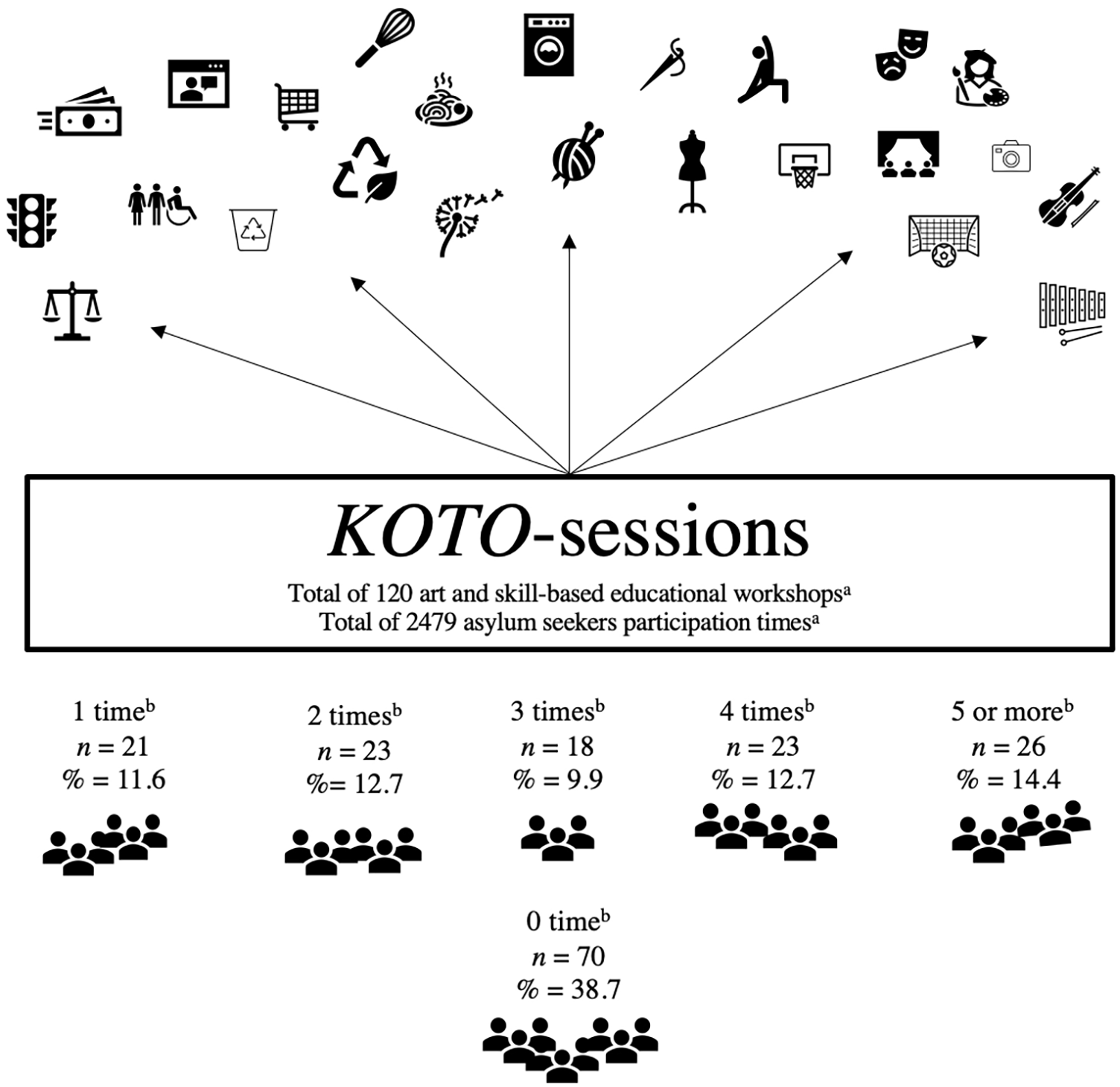
Participation in the KOTO sessions. aKOTO project lasted from January first 2016 till the end of June 2017. bParticipation times. Data is collected 6 months after the beginning of the project and is thus limited.
Methods
This study applies a mixed methods research approach with a convergent design (Creswell and Plano Clark, 2018). The first author conducted a series of structured interviews (Bryman, 2004: 109) between 25 April and 9 August 2016 for asylum seekers in one Finnish reception centre. The qualitative data included open-ended answers about asylum seekers’ non-participation in the KOTO sessions and the quantitative data closed-ended questions about participation times, asylum seekers’ demographics and quantified variables of non-participation in the KOTO sessions as derived from the qualitative analysis.
Participants
The Finnish Basic Education Act (1998) ensures the schooling of asylum seeker children and adolescents under the mandatory basic education age. The study population was thus selected from asylum seekers over 17 years old. This group of asylum seekers had variable previous access to educational services (Red Cross, n.d.). Participants were contacted personally at the reception centre by the first author and foreign language interpreters. Snowball sampling (e.g. Faugier and Sargeant, 1997) was also used to reach participants. The sample covered 75% of the 241 above-17-year-old asylum seekers from the reception centre in the summer of 2016. 1
Instrument
The instrument that was used as a basis of the structured interviews was constructed in cooperation with academic professionals and a cultural advisor,
2
with sensitivity issues taken into consideration. The demographics included gender, age, geographic background, mother tongue, education, years of schooling, language and literacy skills, and occupation and years of practising it. Each study participant (n = 181) was asked whether they participated in the KOTO sessions once, twice, three times, four times, five times or more or not once. This was followed by the open-ended question: ‘If you did not take part in the KOTO sessions, can you please explain why?’ If asylum seekers took part in the KOTO sessions one or more times (n = 111), their participation activity was inquired with the following five-point Likert scale (1. I strongly disagree, 2. I disagree, 3. No opinion, 4. I agree, 5. I strongly agree) and an open-ended question: Think about your participation in the workshops and rate the following statement according to the number that most closely matches your experience:
I participated actively in the KOTO sessions. I usually participated passively during the sessions. If you answered ‘yes’ to question two, can you please explain why?
Ethical issues, interview procedure and language considerations
For this research, it was not necessary to ask questions about sensitive issues such as sexuality, religion or, for example, reasons for migration or other issues that might cause the participants anxiety or be in any way detrimental to their daily life in the reception centre. It was seen as essential to ensure participants’ and their relatives’ anonymity and security. Thus, it was decided that no straight identifiers such as full names, signatures or foreign register numbers would be collected at any point of the research. For the same reason, participants’ informed consent was asked verbally, and no audio or video recordings were made during the interviews. For the participant under 18 years of age (n = 1), parental consent was acquired.
The legislation on the processing of personal data (GDPR) changed between the time the data were collected and analysed (European Commission, 2016; Tietosuojalaki [Data Protection Act], 1050/2018). Thus, the processing of personal data was subjected to a data protection impact assessment.
Before the interviews, the purpose and the goals of the study, research ethics and the interview situation were explained to the reception centre language-orientated staff member by the first author and the cultural advisor. Even though researchers explained the voluntary nature of participation and the aims and ethics of the study when contacting the participants, there might be a possibility that true voluntariness or, for example, unrealistic expectations it would improve their asylum status might have affected participation (e.g. van Den Muijsenbergh et al., 2016: 284). Interviews were carried out by the first author with assistance from a cultural advisor and the reception centre’s language-oriented staff member, at the reception centre in a separate room and in the participants’ homes. When interviews were conducted in participants’ homes, the children and spouses of the female participants were present. 3
Data analysis
This study uses data transformation integration procedures described by Creswell and Plano Clark (2018: 220, 224–227). Both qualitative and quantitative data were analysed separately and then merged. Data analysis followed the data analysis spiral as represented by Creswell (2007: 150–155).
In the first analysis cycle, the qualitative data (written down during the interviews) were organised into files and read several times. Quotes were slightly edited to improve grammar while maintaining their meaning. Secondly, pattern coding (Saldaña, 2015: 236–339) was adopted. From the already condensed answers or simplifying heuristics as addressed by Kahneman (1999: 21), a word, sentence or thematic entity was chosen as a meaning unit, and the data were then transferred to ATLAS.ti software version 9. The data were then coded inductively by the first author by identifying explanatory codes emerging from the data. Every meaning unit operated independently, without excluding others. This produced an initiative code list, which pulled the material together into more meaningful units of analysis (Saldaña, 2015: 236). This code list was then evaluated by the other authors.
Accounts that addressed participatory barriers to engaging in KOTO sessions, such as those describing either reception centre life or, for example, recruitment processes in KOTO sessions, were categorised as Institutional-structural reasons. Those accounts reflecting mental health issues such as depression, anxiety, constant thinking of one’s present situation, poor sleeping patterns, or boredom were categorised as psychological distress (Laban et al., 2008; Skogberg et al., 2019). ‘Justifiable causes’ such as asylum seekers’ overlapping tasks were categorised as personal reasons. Last, such responses that addressed familiar study contents, language difficulties or commotions in KOTO sessions were categorised as classroom-related issues. From accounts that addressed participatory barriers in KOTO sessions, those addressing difficulties in information processing such as language difficulties, difficulties to understand the study content or those interpreted as learning style issues were categorised as cognitive factors (Van Den Bossche et al., 2006: 492). Accounts that reflected emotional experiences that were related to the study environment such as nervousness, embarrassment or distraction due to commotion were categorised as affective factors (e.g. Jack et al., 2014: 1086–1087). Those responses that reflected an overall lack of motivation were categorised as motivational factors.
In the second analysis cycle, data transformation procedures were adopted to transform the qualitative data from the open-ended answers into quantitative variables. The most frequent and significant codes that emerged from pattern coding were first constructed as a table to count the frequencies of the meaning units of the codes within the sample by converting them to percentages. Second, the codes were transformed and defined as dichotomous variables that indicated whether the code was present (scored as 1) or not present (scored as 0) in SPSS software 27 (release 27.0.1.0, 64-bit edition) (Creswell and Plano Clark, 2018: 225).
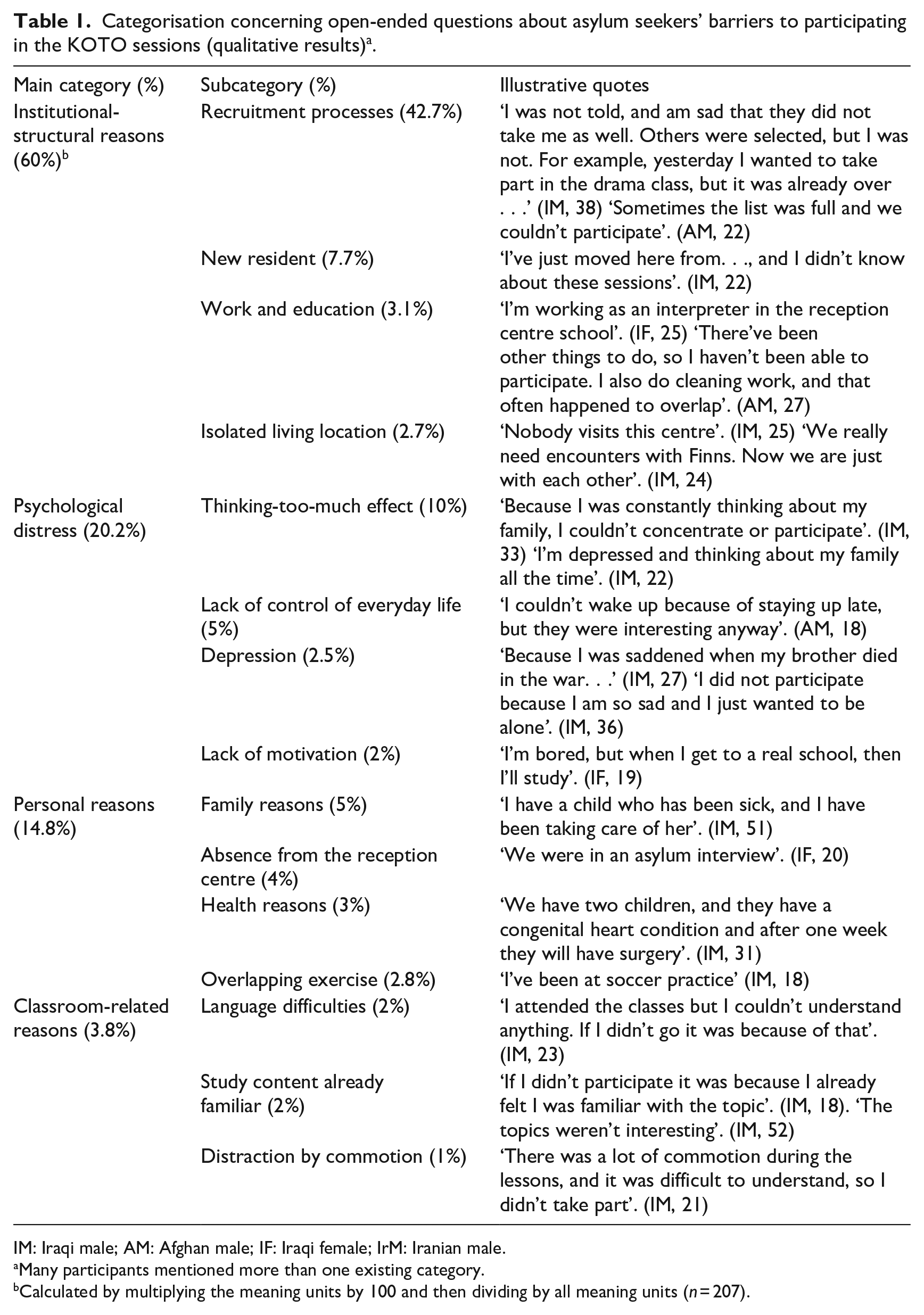
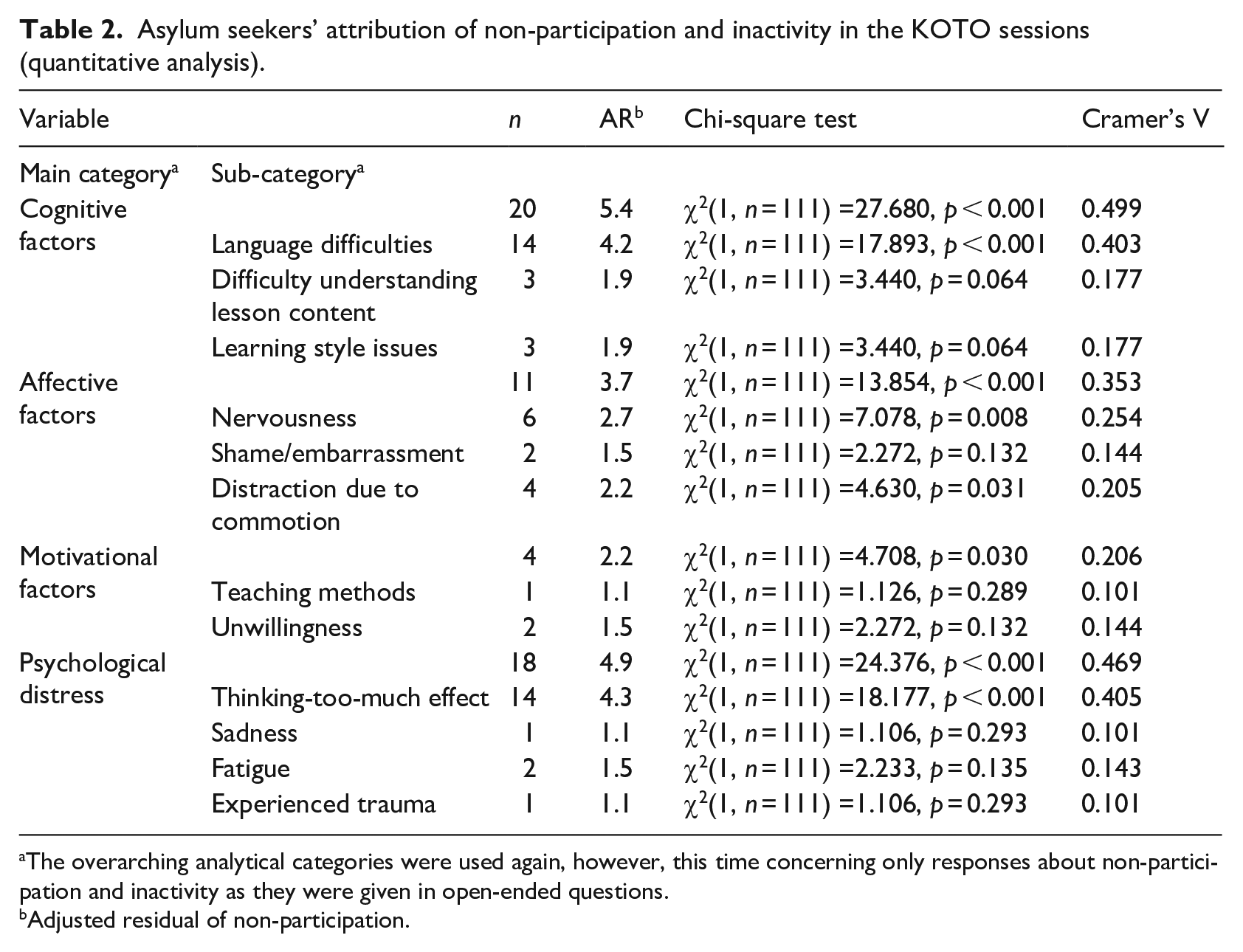
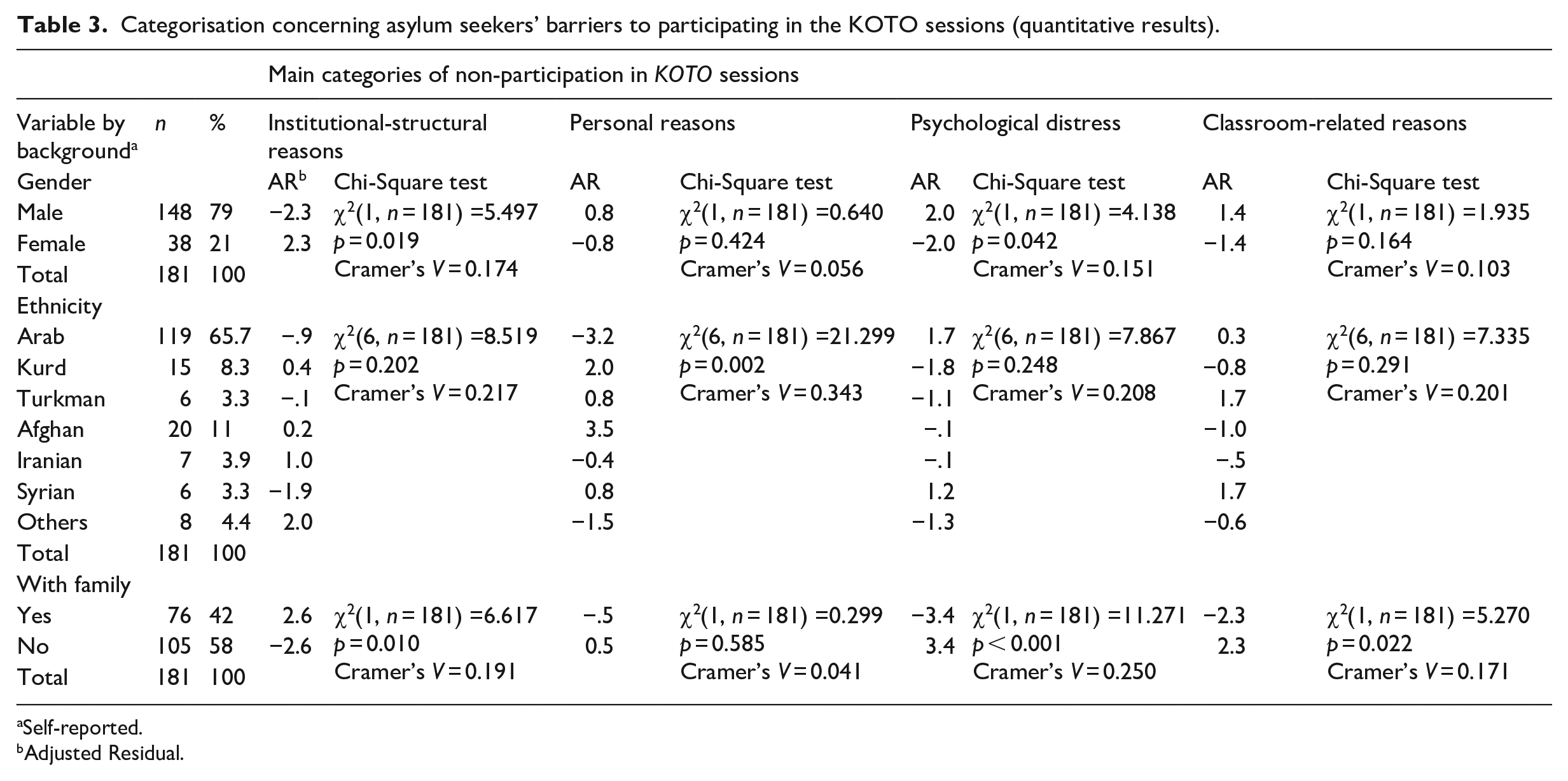
To better understand how socioeconomic, social, and interpersonal factors (Li et al., 2016) affected asylum seekers’ participation in the KOTO sessions, the third analysis cycle consisted of data analysis using statistical testing. A chi-square test of independence with Monte Carlo simulation was conducted to investigate the relationship between gender, age group, ethnicity, ‘with family’, and the main categories of the reasons for not participating in the KOTO sessions (Tables 1 and 3). Second, a chi-square test of independence with the Monte Carlo simulation was conducted to investigate the relationship between the main- and sub-categories classified through the analysis of open-ended questions and non-participation in the KOTO sessions (Table 2).
Categorisation concerning open-ended questions about asylum seekers’ barriers to participating in the KOTO sessions (qualitative results) a .
IM: Iraqi male; AM: Afghan male; IF: Iraqi female; IrM: Iranian male.
Many participants mentioned more than one existing category.
Calculated by multiplying the meaning units by 100 and then dividing by all meaning units (n = 207).
Asylum seekers’ attribution of non-participation and inactivity in the KOTO sessions (quantitative analysis).
The overarching analytical categories were used again, however, this time concerning only responses about non-participation and inactivity as they were given in open-ended questions.
Adjusted residual of non-participation.
Results
During the KOTO project, asylum seekers participated in the KOTO sessions approximately 2500 times 4 (Hartonen, 2018). The self-reported accounts revealed that over 60% (n = 111) of the interviewees (n = 181) had participated in KOTO sessions at least once and of those, 60% (n = 67) participated at least three times (Figure 1). Participants (97%, n = 87) described sessions as meaningful and wanted to participate in them more often. Interviewees addressed that the mutual encounters with student teachers were respectful and that a supportive learning environment prevailed in the sessions where everyone tried to support each other’s learning. Additionally, based on the interviews, the sessions helped asylum seekers navigate better in Finnish society, and that they were able to transfer learned content to their daily lives (Hartonen, 2018).
Barriers to participating in the KOTO sessions
Of all interviewed asylum seekers, 40% (n = 70) did not participate at all. Analysis of the open-ended questions explaining reasons for non-participation yielded a total of 217 meaning units, which were categorised into four main categories 5 : institutional-structural reasons (n = 129 meaning units, 60%), psychological distress (n = 46 meaning units, 21.2%), personal reasons (n = 34 meaning units, 15.6%), and classroom-related reasons (n = 8 meaning units, 3.6%) (Table 1). These categories were analysed both from qualitative and quantitative perspectives.
Qualitative perspectives explaining for reasons for not participating in KOTO sessions
We are so isolated from the outside world here at the camp. The bus goes so rarely from here to the city centre. If it went more often, I could, for example, go to the courses organised by the congregation or something. (Male, 43, Iraqi)
In Finland, reception centres must organise work and educative activities (Finnish Reception Act, 2011/746). This, contrarily, created participatory barriers for asylum seekers to attend sessions. Data showed that interviewees were recruited to assist in translation issues, whereas others were occupied with mandatory cleaning duties.
I had something else to do at the same time, and that’s why I couldn’t participate. For example, I had some cleaning work to do, which was scheduled at the same time. (Male, 27, Afghan)
The reality of in-betweenness was articulated especially in accounts such as ‘I was in the asylum interview’ (Male, 21, Iraqi), or ‘. . . at the appointment’ (Male, 20, Iraqi). The data also reflected the high turnover of asylum seekers in the reception centre. Many of the participants expressed things like ‘I have just moved here from the . . . city’ (Male, 28, Iraqi) or ‘We moved here only a month ago’ (Female, 36, No nationality). International agreements, such as the Dublin Regulation, also resonated from the accounts such as I did participate at first, but because I have to go to Sweden, I just quit going to the classes. (Male, 29, Iraqi)
Psychological distress
The thinking-too-much effect emerged strongly from the accounts. Data showed that asylum seekers’ minds were constantly occupied by the cumulative effects of traumatic past, present insecurity, and, for example, family concerns making it impossible to ‘calm their thoughts’.
Because I was constantly thinking about my family and my situation, that’s why I couldn’t participate in anything at all. (Male, 33, Iraqi)
Hearing bad news from their family, made many simply collapse: ‘Sometimes I just collapsed because of family or relatives having accidents back at home’. (Male, 49, Iraqi) Poor sleeping patterns, fatigue and otherwise lack of control in everyday life also resonated from the accounts. Many were interested in participating but expressed ‘I just wanted to sleep’ (Male, 26, Iraqi), or for example, ‘I wasn’t able to wake up because I stay up so late’. (Male, 18, Afghan) That also caused difficulties for others to wake up for morning classes: My room is full of boys who are awake all night and I can’t sleep. That’s why I didn’t get to the lessons that were in the morning. (Male, 21, Iraqi)
Personal reasons
To cope with their liminality, asylum seekers took long walks in the surroundings as well as went to the city centre to take care of family or personal issues. Participants explained that they were going: ‘. . . fishing every day and that’s why we weren’t in class’ (Male, 24, Iraqi) or that they ‘. . .went to practice at the gym every day’. (Male, 24, Iraqi) Also, health issues restricted asylum seekers participation in the sessions. ‘I have injuries and I’ve been feeling unwell, so I haven’t been able to participate’. (Male, 36, Afghan) On the other hand, responses such as: ‘My wife was pregnant, so I didn’t participate’ (Male, 30, Syrian) indicated possible problems in the balance between family responsibilities and participation, which occurred especially for parents with children under 3 years old.
I have two children who are under two years old and they were not taken in to kindergarten. I must be at home to look after them. (Female, 24, Iraqi)
Classroom-related reasons
Some asylum seekers took part in the KOTO sessions, but they explained that they struggled so much with the language that they did not want to take part again. Interviewees simply cited, for example, that ‘I did not want to take part, because I didn’t understand the language’. (Male, 25, Iraqi) Some were so disturbed by the commotion that they simply did not want to participate again. Sometimes familiar study content made asylum seekers not want to take part in the KOTO sessions (Table 1).
There is not enough time for classes because the organisation was not good and there was a lot of fuss. You had to be close to the teacher to understand. Then others just created distractions and the teachers had difficulty maintaining control. (Male, 23, Iraqi)
Quantitative perspectives on reasons for not participating in KOTO sessions
The analysis of the quantitative data reflected statistically significant gender, ethnicity, and family effects in asylum seekers’ non-participation in the KOTO sessions. A Chi-square test of independence with Monte Carlo simulation showed that male participants had more psychological distress compared to female participants (χ2(1, n = 181) =4.138, p = 0.042, Cramer’s V = 0.151) and female participants had more institutional-structural reasons compared to male participants (χ2(1, n = 181) =5.497, p = 0.019, Cramers’ V = 0.174). Those participants without family had the more psychological distress (χ2(1, n = 181) =11.271, p < 0.001, Cramer’s V = 0.250) and classroom-related reasons for not participating (χ2(1, n = 181) =5.270, p = 0.022, Cramer’s V = 0.171), whereas those with families had the most institutional-structural reasons for not participating (χ2(1, n = 181) =6.617, p = 0.010, Cramer’s V = 0.191). Afghan participants had the most personal reasons for not participating in the KOTO sessions (χ2(6, n = 181) =21.299, p = 0.002, Cramer’s V = 0.343) (Table 3).
Categorisation concerning asylum seekers’ barriers to participating in the KOTO sessions (quantitative results).
Self-reported.
Adjusted Residual.
Participatory barriers during the KOTO sessions
For self-reported answers to the statement ‘I participated actively in the KOTO sessions’, it was calculated that 78.3% (n = 87) agreed, whereas 21.6% (n = 24) disagreed with the claim. Surprisingly, for the second claim ‘I usually followed from the side what others did during the KOTO sessions’ it was calculated that 36% (n = 40) of participants agreed with the claim and 64% (63.9%, n = 71) disagreed with the claim. Moreover, when participants were allowed to answer an open-ended question about their reasons for not actively participating, almost half of the participants (46.8%) gave a reason for their non-participation. This inquiry yielded a total of 53 meaning units, which were categorised into four main categories: cognitive factors (n = 20 meaning units, 37%), psychological distress (n = 18 meaning units, 33.9%), affective factors (n = 12 meaning units, 23%), and motivational factors (n = 3 meaning units, 5.6%) (Table 2).
Qualitative results for non-participation during the KOTO sessions
Cognitive factors
Asylum seekers mainly articulated that the language difficulties strongly affected their participation in sessions. Interviewees explained that ‘It was impossible to understand when they only spoke Finnish’ (Male, 22, Iraqi). This also made some of the participants focus only on listening. Those participants with low or no education struggled with understanding the lesson content. They explained that it was difficult to concentrate because they ‘. . .didn’t understand what the teaching was about’ (Male, 20, Iraqi). A few participants stated that their learning style was dominantly auditory by stating ‘I have always learned by listening since I was a child’ (Female, 22, Iranian), or for example: I just wanted to focus on the teaching and what was being said and I thought that I’ll learn more that way. (Male, 33, Iraqi)
Psychological distress
The analysis revealed that even though there was nothing wrong with the sessions, many of the asylum seekers were struggling in the classes. Especially the thinking-too-much effect significantly reduced asylum seekers’ ability to concentrate. Participants addressed being constantly troubled by their present life situation, ambiguity about the future, and, for example, separation from relatives. They also expressed that they felt general sadness and fatigue. Also, traumatic events experienced in the past contributed to their concentration problems.
I try to study a lot, but all the time I just think about where I am, and if I am allowed to stay. Even though I attend the classes, study a lot, and write everything down, I don’t learn because my mind is occupied all the time. (Male, 25, Afghan)
Affective factors
Several participants addressed feeling embarrassment and shame due to their lack of education and were afraid of making mistakes. They, for example, revealed that: Because I’m shy and worry people will notice that I can’t read and write. I hope that in the future I will have the opportunity to go to school and learn to read and write. Now I didn’t understand anything. (Male, 28, Iraqi)
Teaching methods also contributed to passivity and concentration difficulties. While some felt drama classes were excellent, for others it caused nervousness: ‘At the drama classes I felt shy and wanted to watch from aside’. (Male, 45, Iranian) Data showed also that the in-home lessons caused nervousness among others: ‘They came as guests to my home, so I didn’t know how to behave and therefore couldn’t concentrate’. (Male, 26, Iraqi) Participants also explained that sometimes in the KOTO sessions When I participated, I felt confused, especially when those young boys came there just to have fun, not to learn. (Male, 49, Iraqi)
Motivational factors
The accounts also revealed that some asylum seekers were not generally interested in sessions. By accounts such as ‘Because in all the classes they just talk and talk’ (Male, 27, Iraqi), it was interpreted that the discursive teaching methods made some asylum-seekers passive (Table 4).
Asylum seekers’ attribution of non-participation and inactivity in the KOTO sessions (qualitative analysis).a
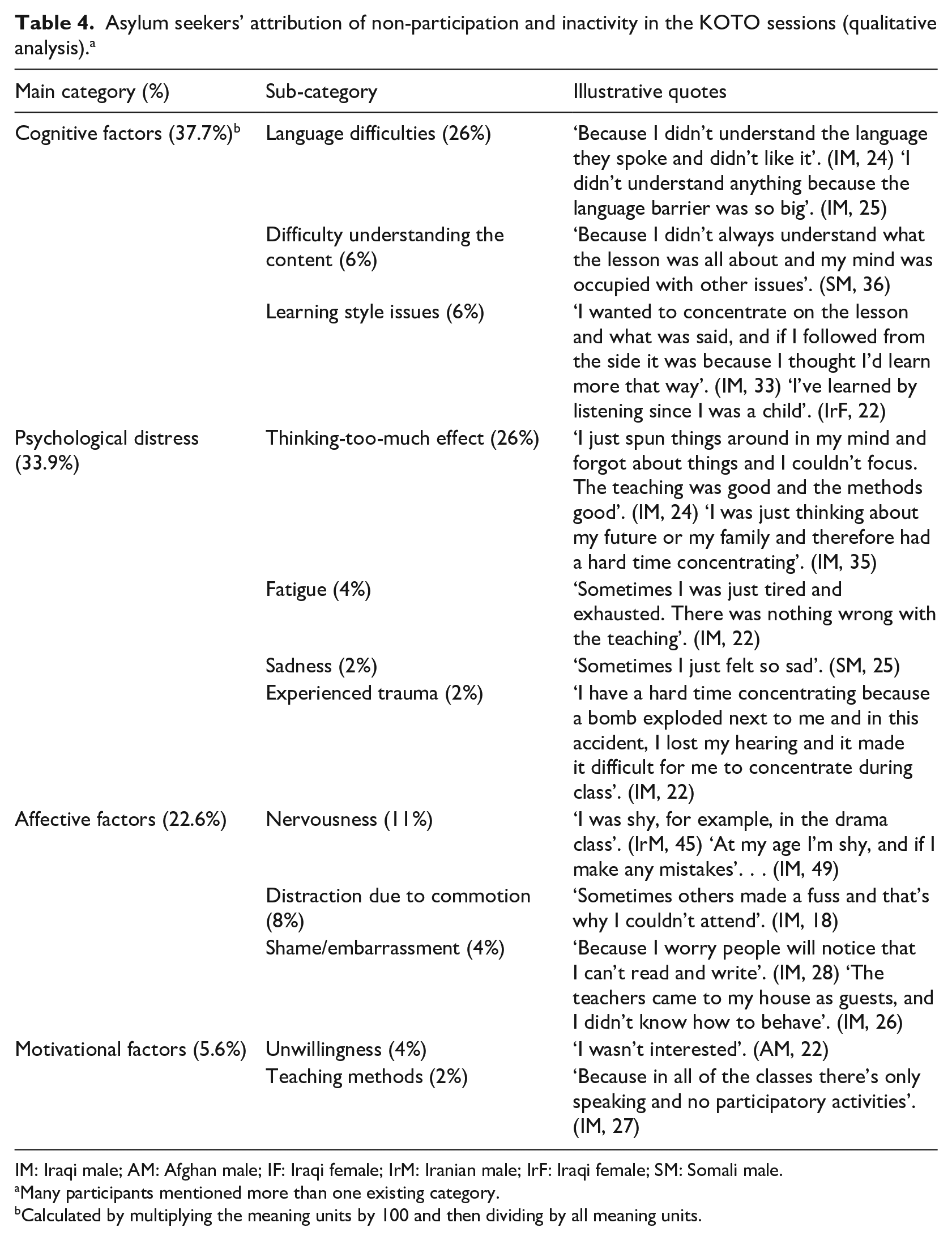
IM: Iraqi male; AM: Afghan male; IF: Iraqi female; IrM: Iranian male; IrF: Iraqi female; SM: Somali male.
Many participants mentioned more than one existing category.
Calculated by multiplying the meaning units by 100 and then dividing by all meaning units.
Quantitative results for non-participation during the KOTO sessions
Analysis did not reveal any statistical relationship between asylum seekers’ background factors and non-participation during the KOTO sessions. On the other hand, analysis of the quantified data of the participatory barriers during the KOTO sessions showed that if asylum seekers were passive during the sessions two most common contributing factors were language difficulties (χ2(1, n = 111) = 17.893, p < 0.001, Cramers’ V = 0.403) and the thinking-too-much effect (χ2(1, n = 111) = 18.177, p < 0.001, Cramers’ V = 0.405). Also, nervousness (χ2(1, n = 111) =7.078, p = 0.008, Cramers’ V = 0.254) and distraction due to commotion (χ2(1, n = 111) = 4.630, p = 0.031, Cramers’ V = 0.205) were contributing with small effect (Table 2).
Conclusions
This study focused on reporting findings of asylum seekers’ (n = 181) participatory barriers in one engaged learning project in Finland. Both qualitative and quantitative results have been represented separately (Creswell and Plano Clark, 2018: 251) to highlight how asylum seekers’ liminality among project-based factors generates difficulties in their engagement and participation in educative pre-integrational programmes in a reception context. Results further resonate with previous findings on both asylum seeker’ liminality and well-being issues (e.g. Fazel et al., 2005; Li et al., 2016; O’Reilly, 2018).
First, asylum laws function with spatial mass management practices (Biehl, 2015; Kreichauf, 2018). Understood as institutional-structural reasons, both project-based barriers and liminality emerged from the analysis. Unsurprisingly, the recruitment processes mainly affected asylum seekers’ non-participation in the KOTO sessions. These stemmed, for example, from safety reasons, usable resources, and, for example, certain target groups that were selected in the sessions. Those factors, on the other hand, indirectly increased asylum seekers’ sense of stagnation and immobility (e.g. Haas, 2017: 90–92) among others. The isolated locations of the reception centres’ provisions indirectly caused non-participation. Especially the most distant provision (30 km) was so far away that it was almost impossible for student teachers to travel there within their time and financial limits. The data also showed that following an array of spatial strategies to control migrants, such as detention, the Dublin Regulation, or other measures that create a high turnover of asylum seekers in the reception centre (European Commission, n.d.; Finnish Immigration Service, 2011; Tiainen and Brewis, 2016: 42) directly caused non-participation among asylum seekers.
The KOTO project aimed to support and encourage individuals in mutual encounters, using non-verbal forms of communication. On the other hand, the data showed that language difficulties inflicted concentration and memory problems, as well as passivity and non-participation in the sessions. Further, teaching the Finnish language through Finnish in the reception context can cause major difficulties in asylum seekers’ learning. This indicates a need to channel more dedicated resources to, not only emergency funding (Tiainen and Brewis, 2016: 42), but both language interpreter services in pre-educational programmes and educative services in asylum seekers’ native languages. Additionally, in general, some teaching methods seem to be more suitable than others (e.g. Munir et al., 2019). Dalziel and Piazzoli’s (2019: 22) data suggest process drama as an effective method for triggering learners’ agency. On the other hand, Al Masri and Abu-Ayyash (2020: 379) found that many of their participants were afraid of communicating with strangers, which is supported by our data. Also, lack of former education and literacy skills caused some participants to feel shame and made it difficult for them to understand general lessons.
Second, our results showed that psychopathology, especially the ‘thinking-too-much effect’, significantly reduced asylum seekers’ engagement and participation in the KOTO sessions. Results showed that asylum seekers’ liminality and separation from their families were profusely occupying their thoughts and attention making it impossible to concentrate and further inflicting cognitive disruption (Sabaggen et al., 2020; Skogberg et al., 2019). We argue that this is one of the most important issues to be further examined for supporting asylum seekers’ survival, learning and agency because even in neutral emotional contexts negative mood and ruminative thinking are both features of depression and can impair mood (Jahanitabesh et al., 2019: 365). In contrast, in the clinical context meaningful activities and, for example, arts integration can promote patients’ recovery and reduce stress, anxiety and depression (Chlan, 1998; Staricoff, 2006). Supporting those findings, our interviews with asylum seekers indicated that the KOTO sessions overall generated a safety zone where asylum seekers could ‘escape worry’ for a moment.
Results indicated statistically significant gender, ethnicity, and family effect on asylum seekers’ participation in the KOTO sessions. This supports and further explains, for example, Renner and Salem’s (2009) findings that female asylum seekers have more coping mechanisms compared to male asylum seekers. First, most of the interviewees were young men who arrived alone, whereas all the female interviewees had a family with them. Second, most of the Afghan female participants were stay-at-home mothers. This might implicate possible collectivist cultural factors (Sheikh et al., 2019: 349) such as parenting that affected female asylum seekers’ registering and participation in the sessions. The above-mentioned factors were also among the reasons for selecting certain target groups to participate in the KOTO sessions. Further, examination of the demographics revealed that those participants with higher educational attainment felt that the study contents were familiar, and those with lower educational attainment had more difficulties understanding the study contents. These findings, however, were only descriptive and not statistically significant.
Instead of using retrospective data/design (Talari and Goyal, 2020: 399), the research data was gathered 6 months after the beginning of the KOTO project. Direct identifiers or audio data was not gathered, due to general safety and anonymity reasons. The data may be also limited by the relatively small sample size (n = 181) and language issues during the interviews. In this study, active participation was assessed using two statements that participants could rate using a five-point Likert scale. Interestingly, responses to the first statement indicated that almost 80% of the interviewees reported actively taking part in the KOTO sessions, whereas responses to the second statement indicated that 36% of the participants followed the sessions ‘from the side’. Additionally, when participants were asked open-endedly about their reasons for following sessions from the side, almost half (46.8%) gave some reason for their non-participation. This may indicate acquiescence bias (Upton and Cook, 2008), but shows the importance of giving asylum seekers a voice to explain and describe their experiences, in contrast to pure positivist views (Coemans et al., 2015: 34).
Although there are positive examples of educative programmes as a part of asylum seekers’ reception services (Ekblad et al., 2012; Marek et al., 2019; Moksnes Barbala et al., 2018), implementing the KOTO project is difficult in a different context, because asylum seekers are not treated uniformly at national level or across the EU (Council of the European Union, 2022; Red Cross, n.d.). Thus, further studies are needed to generalise our study findings. However, by combining both qualitative data and quantitative data with the previous findings on asylum seekers’ liminality and well-being, the present study highlights important and timely concerns related to asylum seekers’ learning. Liminality usually makes asylum seekers extremely vulnerable and their life in limbo is often considered to be social suffering (Haas, 2017: 76). Based on the study findings, asylum seekers benefit from KOTO-like programmes that aim to support their self-reliance and empowerment (e.g. Boateng, 2010; Stone, 2018), but at the same time asylum seekers’ psychological distress and, for example, coping strategies may limit their cognitive capacities and overall engagement to these programmes. The knowledge of possible different participatory groups (e.g. male vs female, family vs non-family, ethnicities, age and cultural factors) and their specific needs can further help actors in the fields of education, social welfare, economics and healthcare to take them into account when planning future implementations of KOTO-like pre-integrational education programmes.
Footnotes
Acknowledgements
We wish to thank the editors of the European Educational Research Journal and the anonymous referees for their engaged, supportive and helpful comments and suggestions.
Declaration of conflicting interests
The author(s) declared no potential conflicts of interest with respect to the research, authorship, and/or publication of this article.
Funding
The author(s) disclosed receipt of the following financial support for the research, authorship, and/or publication of this article: This work has been funded by Finish Cultural Funding (South Savo Regional Fund, grant 12162033 and working grant 10.5.2022), University of Eastern Finland, School of Applied Educational Science and Teacher Education and Viittakivi Oy.
