




Abstract
The historically high inequities in the education systems of Central and East-European countries have been further exacerbated in the wake of the COVID-19 pandemic. Using critical frame analysis, we compared the education policy debates in Romania, Hungary, Bulgaria and Republic of Moldova during the first wave of the COVID-19 pandemic with a particular focus on inequities. We discuss the policy frames proposed and utilized by governmental and non-governmental actors to understand their roles played in articulating policy responses to the COVID-19 crisis, and highlight the specificities and commonalities of the political language within and across the national borders of the four countries. We conclude with our findings on the dynamics and structure of the policy debate between state and non-state actors in times of crisis with a particular focus on policy spaces and policy temporalities. Two ways of constructing spatio-temporalities co-exist: one is national, state and public health centric and focuses on governing ‘through’ the crisis; and the other is focused on long term planning while constructing the crisis as an opportunity for decisive intervention towards more equitable education.
Keywords
Introduction
Between March and May 2020, 132 countries including the four countries studied in this paper implemented country-wide school closure affecting hundreds of millions of students worldwide (United Nations Educational, Scientific and Cultural Organization, 2020). As part of the unprecedented societal and economic effects associated with the COVID-19 pandemic, national education systems faced short-term and long-term negative effects spanning from the detrimental social and health conditions of vulnerable children and families to exacerbating social and educational inequalities (Bonal and Gonzáles, 2020; Van Lancker and Parolin, 2020).
Central and East European (CEE) national education systems have been known for high social inequalities for decades (Field et al., 2007). The countries in this region share a semi-peripheral economic position within the European Economic Area (Gawlicz and Starnawski, 2018: 388) which has often been accompanied by governmental expenditure on education significantly below the Organization for Economic Co-operation and Development (OECD) average (Gawlicz and Starnawski, 2018: 399). In recent history, the 2009 economic recession led to a surge of unemployment and to significant reductions in welfare expenditure which further exacerbated the educational inequities in the countries in this region (Organization for Economic Co-operation and Development, 2012, 2019) prior to the COVID-19 pandemic. As educational activities shifted away from face-to-face onto various forms of ‘emergency remote teaching’ (Hodges et al., 2020), schools and policy-makers faced the challenge of developing adequate educational technology infrastructures, digital pedagogic contents and teaching methods. Being deprived of face-to-face education reduced learning opportunities for all, but especially for students from low-income backgrounds and those with a less skilled or migrant background (Bonal and Gonzáles, 2020), that is those categories who benefit the most from prolonged exposure to curriculum and increase in learning time (Gromada and Shewbridge, 2016; Huebener et al., 2017). Each school day cancelation significantly decreased the achievement of students who attended less-resourced schools in particular (Goodman, 2014; Kuhfeld et al., 2020).
Social crises, such as the COVID-19 pandemic, present ‘moments of decisive intervention’ (Hay, 1999), when typical operating procedures are disrupted and a window of opportunity opens for new policies (Jessop, 2010). Temporality is indeed a central force in the political processes prompted by crises. The usual order of business is suspended as unexpected needs redefine the geometry and chronology of political and collective actions (Calvente and Smicker, 2017; Cazdyn, 2012; Scott, 2014; Sharma, 2014). As Hay argues, the temporality of the crisis is dense and condensed, presenting ‘a strategic moment in the transformation of the state’ (Hay, 1999: 320). The ways in which crises are managed and resolved are highly dependent on meaning-making processes and the ways in which certain actors become able to impose their narrative of the crisis and promote their suggested solutions (Jessop and Oosterlynck, 2008). By looking at the first responses to the crisis, our analysis explores the first meaning-making attempts related to educational inequities and the struggles over proposed short-term and longer-term solutions. According to the literature, following this first phase, governments and the global elite (international organizations, private foundations, and policy entrepreneurs) tend to make use of crises by putting forward radical, controversial economic and social reforms (Jessop, 2010), often characterized by ‘disaster capitalism’ (Klein, 2007) and free-market solutions which exacerbate existing inequalities. Following a similar model, studies found that natural disasters and armed conflicts often enable the privatization of education (Fontdevilla et al., 2017).
At the same time, crises are also known to bring about an ‘explosion of solidarity’ (Bauman, 2013) in forms of grassroots action, organized civil society and corporate philanthropy. Grassroots solidarity and non-governmental action, being more flexible and sensitive to local needs typically provide emergency relief quicker than organized state responses (Solnit, 2009) and in the longer run fill in the gaps unrecognized or inadequately addressed by government interventions (Firmin et al., 2020; Youngs, 2020). During the present crisis, depending on particular national policy contexts and the type of actors and their relations to respective governments, responding to the school closures civic activism in some cases partnered up with governments in providing access to education, while in other cases compensated for government failures or acted as a watchdog over state authorities, monitored government responses and placed critical pressure on governments (Youngs, 2020). It seems that in the first wave of the COVID-19 pandemic, civil actors had mobilized for radical social change and major reforms of social and economic models in much fewer cases (Youngs, 2020).
The likely long-term impact of crisis related policy decisions taken at the onset of the COVID-19 pandemic in Central and Eastern Europe pushed us to investigate the ways in which equity issues were addressed in the unfolding policy debates. In order to scope contending crisis narratives (Hay, 1999), we took into account the narratives proposed by non-state actors including civil society, experts and researchers, and transnational actors taking part in the national education policy debates. We were particularly interested in the ways in which educational equity issues were articulated cross-nationally, in the roles played by different categories of political actors in articulating policy responses to the COVID-19 crisis, and in the specificities and commonalities of the political language within and across the national borders of the four countries. As part of this endeavour, we also sought to uncover the circulation of data and policy discourses in a transnational, regional and European perspective. The presence of crisis as a political framing device pushed us to look carefully at the ways in which temporalities were constructed as part of the policy debate.
Methodology
The extraordinary circumstances of the COVID-19 pandemic and the ways in which they have been addressed by governments and non-state actors in the region are likely to have a severe impact on existing and new forms of inequity. Therefore, our research posed the following research question: How did state and non-state actors articulate visions of inequity in the debates addressing the first education policy responses to the COVID-19 crisis in four Central and East-European countries?
Our research is broadly situated within the tradition of the post-argumentative turn of policy analysis (Fischer, 2003; Fischer and Forester, 1993; Fischer and Gottweis, 2012) and interpretive policy studies (Yanow, 2007) with its primary focus on how policy issues are constructed, as well as how they are taken up by different social actors. This tradition is strongly committed to analysing the meanings of policy documents and policy related statements of social actors and has strong roots in educational policy research and policy sociology (Bacchi, 2000; Ball, 1993; Gale, 2001).
The approach that we take to constructing our research object is tributary to this research tradition (especially to Howarth and Griggs, 2012, 325f), since it seeks to tease out the various conceptualizations of inequity in the field of education in CEE countries by looking at how various forms of inequities were addressed and problematized in education policy texts and policy related statements issued during the first phase of the COVID-19 pandemic.
With the aim of conducting a systematic cross-national comparison, we adapted the methodology of critical frame analysis (CFA; see Dombos et al., 2012). CFA concentrates on identifying policy frames which function as an organizing principle that transform fragmentary or incidental information into a structured and meaningful problem, in which a solution is implicitly or explicitly included (Verloo, 2005). Conducting CFA thus involves identifying and problematizing these frames as they appear in policies (and in our case policy related statements) with a focus on their explicit or implicit normative aspects. Diverging from the original design of CFA we have included non-governmental organizations (NGOs) and other non-state actors in our sample. and explored the complex dynamics between non-state and state actors in times of crisis in a cross-national and transnational perspective. In contrast to critical discourse analysis (Fairclough, 1995, 2013), CFA is mainly focused on document analysis, exposing policy issues that cut across multiple documents issued by different actors.
The goal of this comparative approach is to understand the convergences and divergences in the policy debates and responses of the four countries with special attention to how they have addressed inequities in compulsory education in the period of school closure and the shift to remote teaching. In this we problematize the potential negative impact of neglecting equity in education as a priority in formulating policies related to organizing educational activities. We start from the assumption that the different and fragmented articulations of inequity in education can best be comprehended in a framework that allows for comparisons between countries, as well as between state and non-state actors contributing to national and transnational policy debates.
Data sampling and collection
Our sample consists of educational policy documents and policy related statements by non-governmental actors issued in the period between mid-March 2020 and May/June 2020 in the four countries. This period corresponded to the first wave of the COVID-19 pandemic in Europe, when shortly after the lockdown, schools were closed down in all the studied countries and the initial education policy responses were formulated. The general lockdown started between the 12 March 2020 (Hungary) and the 17 March (Republic of Moldova) and the state of emergency was terminated by mid-May 2020 in three countries, while it finished on the 18 June 2020 in Hungary.
Documents issued by the following categories of actors were sampled: international organizations/supranational bodies; governmental bodies; NGOs; and experts. Examples of non-state actors include: international organizations (e.g., United Nations Children’s Fund (UNICEF), World Vision or Save the Children); local members of the academic or non-academic community; NGOs either specialized in education or having re-scoped their activity to focus on issues of educational (in)equity); and stakeholders (professional bodies, trade unions, etc.).
Our data selection followed three steps: (a) identifying relevant policy documents and statements with a specific focus on explicitly or implicitly addressing inequity issues; (b) narrowing our selection to the texts which made it to the flow of open data resources, and therefore could be considered potentially referential to other voices engaging in the policy discourse at the time of the COVID-19 pandemic; and (c) applying the principle of saturation to our database. Concretely, saturation only led to the exclusion of documents if a similar framing of inequity issues in education was already sufficiently documented in the database and the document did not become visibly relevant in the policy debates. No government policy documents were excluded from the sample on grounds of saturation – this principle was only applied to non-state actors.
We constructed issue-histories (Dombos et al., 2012) in each country, and we created detailed chronological listings of policy developments in the proposed time frame in each country, as well as texts that structured the policy debate in education from before the beginning of the COVID-19 pandemic. Our final sample includes 68 policy documents: 21 for Romania; 21 for Hungary; 15 for Bulgaria; and 11 for the Republic of Moldova. There were significant variations in terms of the occurrence and structure across categories of actors and relationships between the countries which we have taken into account when comparing and interpreting our data.
Coding and analysis
In the absence of a single, unitary definition of the concept of inequity overarching the four national educational policy contexts, we chose to apply an inductive approach and based our analysis on the definitions of inequity emerging from the data. Therefore, we first identified issues which emerged as relevant topics of debate in the early reading of data in the Romanian context and compared the ways in which these issues were conceptualized across the four countries. In an intermediary step that will not be dealt with at length in this paper, these syntactic relations were structured as story-grammars. We identified six story-grammars: provision; access; educational technology; curriculum; digital competence; and teachers’ learning and professional development.
Following coding and code standardization the next step was to construct issue frames. The frame construction started from identifying marker fields – fields that marked the difference between the frames (Dombos et al., 2012). The marker fields which were especially helpful in identifying issue frames were actor categories, document genre and modality (i.e., agenda-setting, contesting, regulative, delegating, and proposing alternatives), key points, related issues, and descriptive/normative features (i.e., creating authority, practical, problem/solution oriented, and targeted). This step was particularly relevant to capturing the dynamics between non-state and state-actors in the national policy debates and revealed the temporal horizons of proposed changes. Further, issue frames identified in the coding of story-grammars at the national level were discussed and a common core of six issue frames were found relevant for cross-national comparison. We discuss these issue frames in detail, below.
Possibly the most relevant limitations of our study derive from the openness of our data sampling, due to the exceptional circumstances and to the types and extent of accessible data in the studied period. We found it challenging to reach a common coding methodology and to ensure that the meanings of the codes in the different countries correspond. These challenges raised questions of validity of our inferences and conclusions. To tackle such limitations, we have conducted recurrent cycles of analysis, co-constructing our codes through repeated meaning negotiations between researchers speaking the national languages in the four countries.
The dominant policy frames of inequity in education at the onset of the COVID-19 pandemic
We found that policy debates on equity in the period before the COVID-19 pandemic were very much country specific. When addressed, transnational standards in the field of education (such as those promoted by the OECD and the European Union (EU)) were reframed within national education policy debates. This was visible at the onset of the COVID-19 pandemic and continued throughout the period of first responses.
From December 2019 to January 2020 policy discourses in Romania and Moldova were animated by the Programme for International Student Assessment (PISA) 2018 report (Organization for Economic Co-operation and Development, 2019). The report sparked public debate on the relationship between socio-economic differences, educational performance and resource allocation as well as on policies aiming at reducing educational inequities. While in 2018, Romania marked its lowest position on the PISA ranking in the past decade (MEC, 2019), Moldova was celebrated as one of the four countries that have managed to reduce, by over 10%, the ratio of functionally illiterate students (Moldovan Ministry of Education, Culture and Research, 2019). Although the PISA 2018 results might have invited a different perspective related to educational achievement in the two countries, their ranking within the OECD countries was comparably close to one another. Results indicating significant levels of illiteracy in reading, mathematics and science in Moldova and Romania brought inequities in education to the forefront of the political agenda. The conceptual premises of the notion of inequity can be traced back to official state policy documents and fundamental laws in the two countries, specifically addressing socio-economic and residential ‘disadvantage’ in Romania (MEC, 2015, 2019), whereas in Moldova, the debate centred on notions of ‘non-discrimination and social inclusion’ (Education Code of the Republic of Moldova, 2014).
In the section on national definitions and strategies, the Eurydice Report on equity in school education in Europe (Eurydice, 2020: 52) notes that Bulgaria is among the handful of European countries lacking any engagement with equity related concepts in top-level official education documents. Although it observes that ‘this does not preclude the existence of definitions or references to these concepts at lower levels of government’ (Eurydice, 2020: 52), the report contends that Bulgaria has not reported any top-level policy initiatives to promote equity in education (Eurydice, 2020: 53).
In Hungary, the PISA 2018 report was not a major catalyst of policy discussion in the months before the COVID-19 pandemic. The country has been known for having one of the most socially selective public education systems within OECD countries for decades. It has been thoroughly documented by sociologists that social segregation has first and foremost concerned the Roma minority. While in the 2000s, significant education policy initiatives were launched to desegregate the education system and enhance the inclusion of special educational needs (SEND), Roma and socially disadvantaged students, the government in power since 2010 cut back the programmes aiming at school desegregation and implemented various policies that exacerbated the social segregation of the education system. Furthermore, with decreasing the age of compulsory schooling from 18 to 16, early school leaving indicators have considerably deteriorated. The education policy debates are highly politicized and polarized with a government which gives little consideration to equity issues and non-state actors ringing the alarm bell for exacerbating inequalities in the school system.
The relationship between state and non-state actors during the first educational policy responses at the onset of the COVID-19 pandemic
This section explores the participation and interactions of non-state and state actors in the policy debate by looking at the dominant rhetorical features in the sampled documents (see Table 1) and how they reveal the ways in which different actors positioned themselves in national policy debates. In short, while state actors typically set the policy agenda and focused on the short-term containment of the negative effects of COVID-19 on compulsory education, non-state actors took the stage to react to governmental responses highlighting where these responses fell short in addressing equity issues as well as proposed resourceful ways to move forward and urged medium-term and long-term educational reform.
Table 1 illustrates the dominant rhetorical features of sampled policy documents.
The dominant rhetorical features of sampled policy documents.
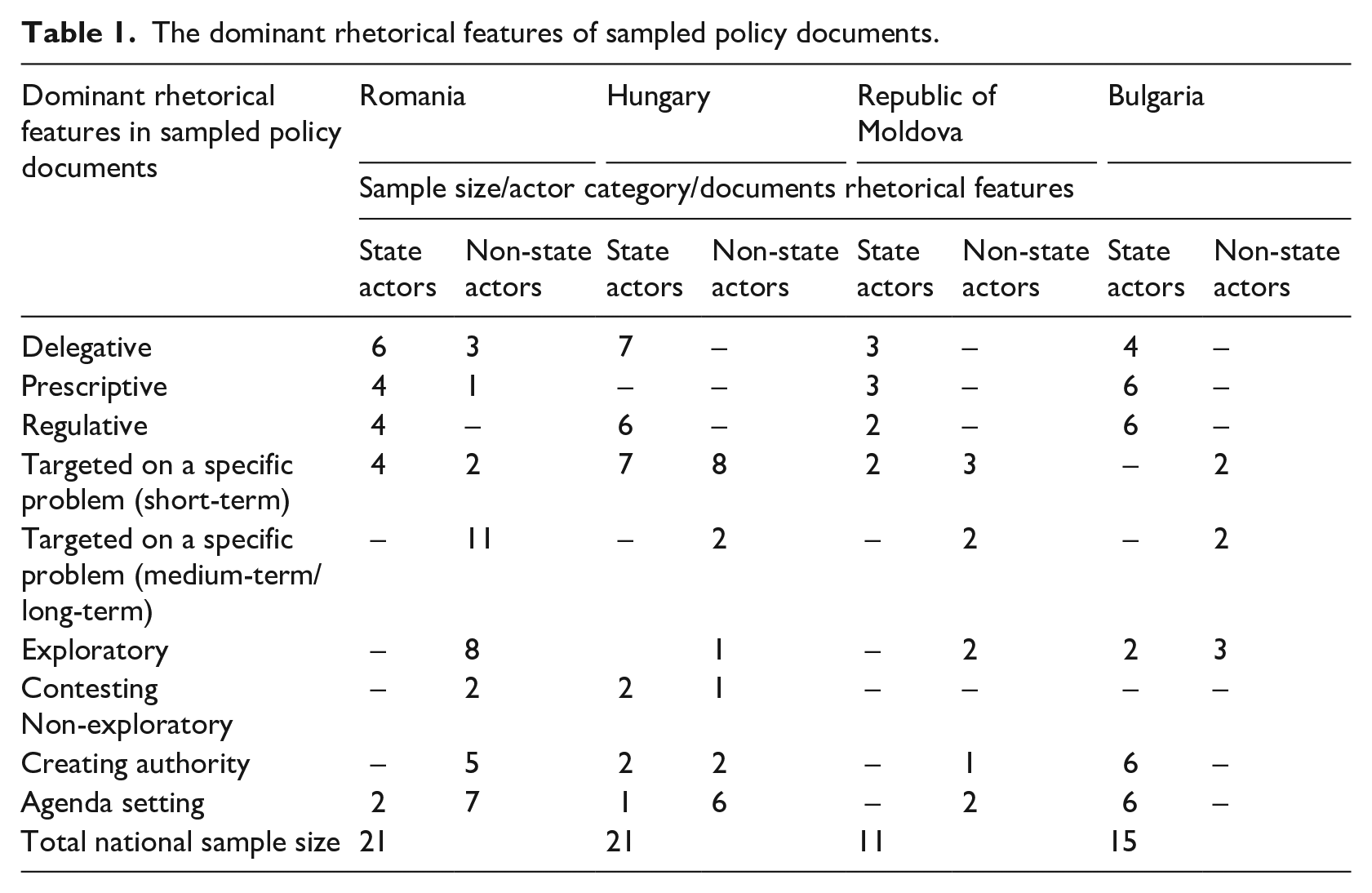
The register of state communication was dominated by prescriptive, regulative and delegative rhetorical features in all four countries. State actors generally proposed short-term measures directed at either containing the effects of the COVID-19 pandemic (i.e., countrywide school closures, shifting to remote education or adapting the regulations of the upcoming national examinations) or implementing temporary preventive measures, such as putting in place strict cautionary/prophylactic regulations and procedures to contain the spread of severe acute respiratory syndrome coronavirus 2 (SARS-CoV-2) in schools and education facilities with the aim of preparing schools to reopen before the summer vacations.
A special category of short-term preventive measures articulated in state communications concerned state mandated remedial educational activities via the national television networks, aimed at ensuring teaching continuity on curricula assessed on national examinations, addressing specifically the students without means or access to the infrastructure for online learning activities. In Hungary, state communication took a defensive tone in response to criticism from non-state actors on account of moving forward with the introduction of the revised national curriculum from 1 September 2020 and not postponing the planned restructuring of the vocational education sector. In defending its decisions, the Hungarian government argued that schools and students are well equipped for digital education, and schools are provided with adequate flexibility to cater for different needs.
Non-state actors mainly positioned themselves in the policy debates as either a watchdog over state policies or partnered with local and national authorities in identifying resourceful routes for action. The documents issued by non-state actors share characteristic rhetorical features across countries (i.e., various modes of contestation): monitoring government actions; alerting to imminent shortfalls of proposed measures; and throwing light on various categories of vulnerability and inequity consequential to the proposed governmental responses. In all four countries, this contestation mode is typically exploratory and argumentative in nature, with the majority of non-state actors articulating visions of inequity on the basis of empirical evidence either produced at the transnational level (i.e., data from OECD, UNICEF, Eurostat, other transnational NGOs such as World Vision, Save the Children, etc.) or based on national expert reports.
In Hungary, NGOs typically heavily criticized the educational administration for not addressing digital inequalities at all, yet in the area of SEND education, national authorities and non-state actors cooperated with each other. Non-state actors set the agenda of policy debate by having spotted vulnerabilities, such as the inadequacy of digital infrastructure to cater for socio-economically vulnerable students and teachers, and in some cases created authority by leading various campaigns, programmes and research projects trying to cater for the needs of those whom they found to have been overseen by governmental measures. Similar examples can be found in Bulgaria, where NGOs focused on the needs of minority groups completely excluded from online education, and in Romania and Moldova, where non-state actors supported teachers lacking digital competences or sufficient knowledge about online pedagogy to address the curriculum requirements of the specific age group they were teaching. State actors and NGOs have typically curated repositories of online learning resources for students, parents and teachers which were visible on the various national arenas from the very beginning of the lockdown period.
In summary, in the four countries, non-state actors engaged with state policies in three ways by:
(a) exploring inequity issues comprehensively and urging short-term interventions and long-term strategies to mitigate the unequal effects of online education and thus exposing the blind spots and limitations of the measures proposed by state actors;
(b) acting and trying to cater for the needs of those whom they identified as falling out of the reach of the proposed policy measures and thus being exposed to (more) vulnerability; and
(c) articulating issues surrounding inequity in education during the COVID-19 crisis in relation to broader projects for long-term reforms in education and governance.
We have discussed the first two ways of participating in the policy debates so far. Now we will turn to discuss the third at length and explore the issue frames concerning inequity in education during the COVID-19 pandemic.
Cross-national policy frames of inequity in education
In this section, we address the ways in which different issues surrounding inequity in education were articulated by non-state and state actors in the tableau of the main policy events of the first wave of the COVID-19 pandemic (detailed in the Appendix). As Table 2 shows, six issues were particularly salient in relation to how inequity was addressed or failed to be addressed by educational policies during this time. These issues were present in all or close to all national contexts. Nevertheless, there were differences in the types of actors who articulated each issue. Most notably, the issues regarding health hazards, digital poverty and flexible solutions for access to education were addressed extensively by both non-state and state actors in most countries. However, only non-state actors pointed to the emergence of new categories of vulnerability in education in the wake of the COVID-19 pandemic measures. Endemic inequities related to the provision of education were addressed by state-actors through policy-making in Hungary and Bulgaria, whereas in the other countries it was only put on the agenda by non-state actors. A minor issue addressed by state and non-state actors in Romania and Hungary was that of inequity in assessment practices during this period – the issue was absent in the debates in the other countries.
Cross-national policy frames of inequity in education per actor category and source of data (where relevant).
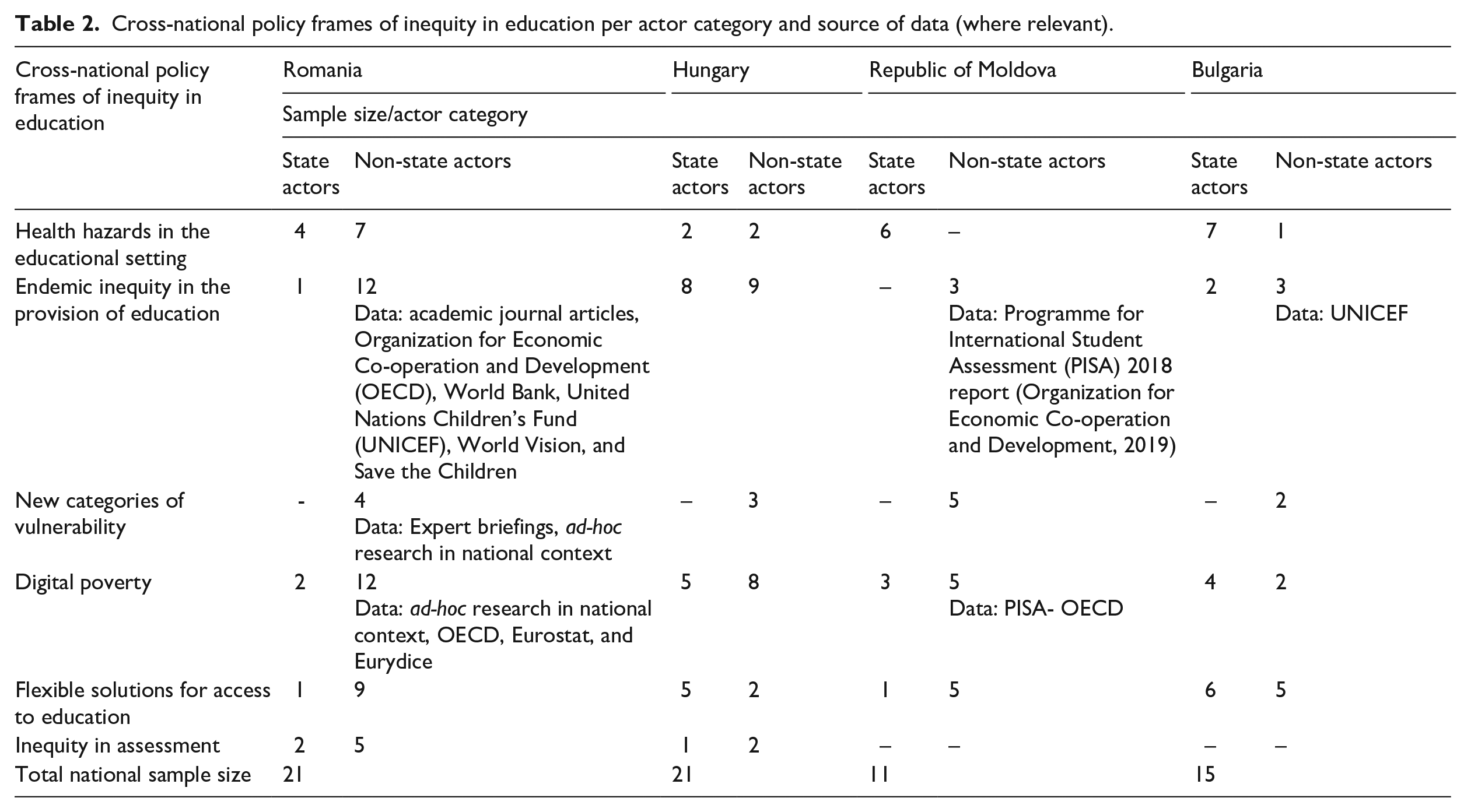
Non-state actors played an important role in introducing the issues of endemic inequities, new vulnerabilities and digital poverty to the policy debate. Their arguments were substantiated in data produced by transnational actors (e.g., OECD, World Bank, UNICEF, etc.) in the case of endemic inequities, as well as by the production of new national research and data (in the case of new forms of vulnerability). Issues of digital poverty were brought to the fore by building on both national and transnational data. State actors did not produce data on the impact of COVID-19 pandemic mitigation measures on equity issues in education, or if they did, data were not made public.
In the following, we will scrutinize each of the six issues shared cross-nationally, highlighting the ways in which these issues were brought forth by state and non-state actors.
Health hazards in the educational setting
The prevention of health hazards was at the core of policy-making at the onset of the COVID-19 pandemic, leading to school closure and the transfer of educational activities to online platforms in all studied countries. Most notably, in Moldova and Bulgaria this issue was only addressed in government policies and did not attract responses from non-state actors. In Romania and Hungary, non-state actors pointed to medium-term and long-term measures related to health hazards associated with the present context, not only related directly to the spread of COVID-19, but also to mental health issues.
Non-state actors in Romania pointed to the necessity of considering organizational and processual aspects in education (especially when deciding about a potential return to face-to-face education) in order to address both endemic and new health hazards. Poor sanitation in rural schools posed both old and new challenges to the health of students and teachers. New forms of health hazards were revealed or acquired particular relevance in the context of the COVID-19 pandemic (i.e., over-crowdedness of certain urban schools, over-burdening staff in education, psychological effects of isolation, etc.). These points were connected specifically to the great disparities between the national average and the standard of living for children in rural areas, children from the Roma minority, and children with disabilities. They also argued that the infrastructure in the educational system poses challenges to ensuring public health, and that ensuring personal space and access to educational technologies for individual use for educational purposes is complicated for many families. This points to the entanglement of issues related to health hazards, digital poverty and new forms of vulnerability. These reports build on existing international sources of data from the World Bank, OECD, and Eurostat: The most recent diagnosis at systemic level, concerning among other things, the sanitary facilities in the schools in Romania indicates that: In total, 2220 schools in Romania do not have indoor toilet facilities, and the difference between rural and urban areas are obvious: 38% in the rural areas and 7% in the urban areas. (data from a national report by the World Bank and the Ministry of Education in Romania; [. . .]) Another relevant indicator [in the context of the COVID-19 pandemic] is over-crowdedness – 46% of the population living in over-crowded residential facilities, with children being the most affected of the demographic, representing two thirds of the population younger than 18 years of age [. . .]. All the data indicates that it is complicated for many families to provide learning facilities, personal study spaces [. . .] to their children. (RO-06, non-state actor)
In Hungary, both state and non-state actors mention this issue and are generally concerned with the mental health of teachers and SEND students in particular. This reflects how the SEND area is a highly institutionalized policy domain with considerable capacities to represent interests, which – contrary to the socio-economic status area – is recognized and addressed by the government. The closure of higher and public education was decided early on and this decision was not debated later. However, the ways in which and whether secondary school baccalaureates should be held in early May 2020 triggered considerable debates, and these debates primarily centred on health hazards. Trade unions and advocacy NGOs advocated for postponing or substituting the examinations with end of year marks and if not, providing all the necessary health and safety equipment and follow-up health checks for participants.
Endemic inequity in the provision of education
Structural and systemic inequities already documented before the COVID-19 pandemic have resurfaced, highlighted particularly in the texts of non-state actors contesting governmental measures directed at providing compulsory education remotely. Mostly, debates on the endemic forms of inequity centred on socio-economic disparities, ethnic minorities and SEND students’ needs. Arguments related to these issues were put forward by non-state actors and were built on transnationally collected data (e.g., OECD, World Bank, etc.) or voiced by transnational NGOs (UNICEF, World Vision, Save the Children, etc.).
In Hungary, while state documents primarily targeted SEND needs and conceptualize SEND as a disadvantage that requires special attention, advocacy NGOs and experts primarily called for support for disadvantaged and Roma communities (lacking proper digital access) and argued that the state has not provided equal access to education because they cannot access online teaching. In Romania, this issue was mostly articulated by non-governmental actors (experts, advocacy NGOs, and stakeholders) addressing provision and access to education in relation to the risk of structural and institutionalized inequities becoming exacerbated during social distancing measures. Inequities in education are noted particularly focusing on socio-economic and residential vulnerabilities, and in some cases ethnicity (specifically Roma), but did not reference ability related disparities/vulnerability (i.e., SEND). The one document referring to SEND students is critical of the complete disregard of this category of vulnerability in the governmental texts regarding remote education.
Moldova seems to be similar in this regard: despite top-level policies recognizing and addressing various categories of vulnerability (namely, SEND and Roma minority students) prior to the COVID-19 pandemic, in the studied period, state documents exclusively addressed socio-economic vulnerabilities, whereas other categories were mostly evoked by non-governmental actors: Access to education during the state of emergency is constrained by lack of technology and/or Internet, particularly for young people from socially - vulnerable categories [. . .] insuring access to education, adapted to the learning needs of children and young people with mental, visual or hearing disabilities [. . .], and development of online modules for linguistic minorities (Russian, etc.). (MD-07, non-state actor)
In Bulgaria, the State Agency for Refugees issued a specific document stating refugees, migrant and asylum seekers children’s right to fair opportunities and access to education while generally addressing all students from this category of vulnerability with specific recommendations for remote teaching and learning. Non-governmental actors cast light on other categories of vulnerability (i.e., Roma minority) explicitly addressing the possibility of exacerbating existing inequities.
New categories of vulnerability
New categories of vulnerability remained mostly unaddressed by state actors in the studied countries. Non-state actors voicing concerns about the emergence of new forms of vulnerability with regards to equity in education substantiated their arguments on data collected through ad-hoc research in national contexts conducted during the time of the COVID-19 pandemic (in Romania and Hungary) or expert briefs (Romania). New forms of vulnerability were identified in relation to the shortfalls of the governments’ educational crisis responses and not to the health hazards posed by the COVID-19 pandemic. It should be noted that although this issue frame was present in all countries, it emerged with reference to data collected ad-hoc in each national context.
New categories of vulnerability received the most attention in Romania and Hungary with reference to the following categories: lower primary age children, particularly pre-schoolers; students in first and second grade (on the grounds of not benefiting from online education); students in the final year of education who are taking their end-of-study examinations; families with several school aged children; and, young children’s exposure to cyberbullying and personal data theft in the context of online education.
Digital poverty
This issue frame is closely connected to that of endemic forms of inequity in the provision of education, but mainly concerns how these forms of inequity might affect the possibilities of participating in online education, both regarding technological infrastructure and digital competences. Particularly, non-state actors have perceived remote education as an opportunity for promoting medium-term and long-term reforms towards the digitalization of education and the mainstreaming of blended learning.
The issue of digital poverty was mainly articulated by non-governmental actors arguing that disadvantaged communities were excluded from online teaching (due to the lack of stable Internet connection, digital proficiency, etc.) and that their educational disadvantage will likely be exacerbated as a result of the COVID-19 crisis. This issue is only marginally recognized and addressed by state actors.
For example, in Hungary, state documents exclusively expressed that schools could lend equipment to families (within a contractual format), or students could use school facilities, but did not go into details about the challenges of those who do not have access to online learning from home and how this could be mitigated by state measures. In Romania, state documents advanced an intervention plan for ceasing all face-to-face educational activities and shifting to online platforms. In the medium term, this involved schools’ lending technological equipment to vulnerable students and allowing teachers to use school infrastructures to conduct online educational activities. Yet, non-state actors highlighted the shortcomings of the government’s measures: the adequacy of proposed educational technologies for the diversity in age and ability, or the lack of access of certain households to basic infrastructure, such as electricity. These concerns were mainly voiced by non-state actors. A similar situation could be documented in Moldova and Bulgaria.
State actors in all countries addressed digital poverty in relation to newly arising support needs. The shift to online education was perceived by non-state actors as an opportunity to promote the medium-term and long-term digitalization of education and mainstreaming of blended learning, closely connected with the need to improve digitalization and digital competences, as well as to adapt the curriculum for online teaching and learning. Interestingly, the issue of recognizing the potential of the present situation as an opportunity for long-term improvements was generally not recognized by state actors or was presented completely independently from the issue of digital poverty (in Hungary).
Flexible solutions for ensuring access to education
Generally, governments assigned responsibilities emerging from the introduction of remote education in a top-down manner. While in Romania and Moldova the responsibility to ensure education was typically assigned to parents and teachers (avoiding state responsibility for providing equal access to education for all), in Hungary, the responsibility to organize the provision was assigned to school leaderships and they were given the autonomy to decide on the best fitting solutions. Placing all responsibilities on local actors, the central administration used the narrative of flexible solutions as an excuse for not giving exceptional financial aid and support in addressing digital poverty as well as any flexibility in teaching expectations for the schools.
Mainly articulated by non-governmental actors, budget allocation and the distribution of funds was a prominent topic in Romanian and Moldovan documents, underscoring the need to supplement and rethink budget allocation in order to adequately respond to the risks of further deepening inequities.
In Hungary and Bulgaria, the cooperation between state and non-state actors was more prominent than in the other two countries, especially in articulating specific and mainly short-term solutions to provide access to education to socio-economically vulnerable groups and SEND students. In Bulgaria, the state reported that 89% of all students were effectively included in the e-learning process, while for the remaining 11%, as well as for students with learning difficulties, several support measures were undertaken, such as setting up a hotline for questions and recommendations related to e-learning, creating a national e-library where teachers could share educational resources, personal experience and innovative practices. An agreement between the state and private mobile operators providing Internet services to students at preferential rates, as well as changing budgetary regulations to allow schools to cover Internet expenses for students in socio-economically vulnerable circumstances were announced by the Ministry of Education. Private donations (i.e., digital devices) for children from vulnerable groups to ensure their inclusion in the e-learning were encouraged by the state.
State actors in Romania also proposed a series of measures to address socio-economically disadvantaged students such as providing digital equipment and Internet services, but this sparked intense criticism from non-state actors when these measures were found to disregard blatant structural disparities such as the lack of infrastructure or electricity, particularly when it became apparent that these disparities were documented prior to the COVID-19 pandemic in government reports developed in conjunction with the World Bank.
Inequity in assessment
Inequity in assessment was discussed in Romania and Hungary, mainly by non-state actors and was completely absent from debates in Moldova and Bulgaria. In Moldova, this was due to the fact that state actors decided to cancel examinations for public health reasons and this was not further debated. In the countries where equity in assessment was debated, the discussion revolved around the potential inequities in assessment (i.e., grading) arising due to adapting to digital education. In Romania, the debate mainly focused on the fact that parents and pupils needed to give their consent to validate online assessment as regular assessment, which introduced potentially inequitable outcomes depending on whether or not consent was given. In Hungary, experts and advocacy NGOs argued that end-of-year marking should be less strict and be mindful of the situation of disadvantaged pupils who typically received teaching materials on paper and missed out on teachers’ guidance and attention.
Another important point concerned the organization of national examinations. Despite several months of remote education, the organization of national examinations was not discussed in relation to equity by either state or non-state actors in Bulgaria and Moldova. In Hungary, the national assessment of competencies was cancelled but the written baccalaureate examinations were held, and only the face-to-face part of the examinations was cancelled in most subjects. Government regulations focused on the exceptional conditions in which face-to-face examinations could be held (e.g., in the case of a dyslexia or dysgraphia diagnosis). Otherwise, the baccalaureate examinations were not discussed in terms of equity but rather as a health and safety issue. In Romania, potential inequities in the likely outcomes of national examinations, due to lagging behind resulting from an inability to take part in online education sparked debates by non-state actors that drew on previous debates surrounding socio-economic and regional inequities in national evaluation examinations and proposing the implementation of an alternative more equitable national evaluation system in the medium-term and long-term. National examinations were organized nevertheless.
Concluding discussion: Policy spaces and temporalities
This paper concentrated on how state and non-state actors addressed inequity in education in the policy debates concerning the first wave of COVID-19 in four Central and East-European countries. We have found that public debates largely conceptualized policy responses within the boundaries of the nation state. And that, albeit partially and selectively, national policy debates were embedded in transnationally shared notions of educational equity. Our findings confirmed the literature on transnational educational governance – pointing to attempts especially by non-state actors to engage in ‘governing by numbers’ building on metrics and data collected transnationally (Grek, 2020), but we could also clearly remark the resurgence of the nation state as a main policy actor during the crisis (Radil et al., 2021). This coexistence of different transnational and national orders is connected to the different spatio-temporalities (Lingard, 2021) in which state and non-state actors operated during the first wave of the COVID-19 pandemic. The concluding discussion focuses on policy spaces and policy temporalities as framing devices and structuring forces in the analysed policy debates. We argue that policy debates over the importance and meaning of sustaining and realizing the right to education for marginalized and vulnerable groups were simultaneously debates surrounding the construction of the spatio-temporal horizons of these policies.
Policy spaces within and across national debates
It has been widely argued that the COVID-19 pandemic has brought the comeback of the nation state and gave rise to nationalist politics and political rhetoric. Likewise, we noted a striking absence of references to EU policy-making and the European Education Area in the governments’ discourse of the three EU member states.
Although the policy debates remained largely national, we found notable convergences in the political rhetoric and the argumentation strategies across the four states. Non-state actors typically supported their argument by comparative international data on equity or conducted their own research on the social, geographical, and economic inequities in educational provision generated or exacerbated by the COVID-19 pandemic. State actors in all four countries implemented what they perceived to be stringent crisis measures directed at protecting the health of the population. That included suspending regular face-to-face education in all the countries under study. Governments acted within a similar timeframe, enacting similar measures, yet without referencing one another or policies in any other countries. Apparently, state actors in Central and Eastern Europe shared a repertoire of short-term crisis measures and justification rhetoric without explicit reference to each other’s decisions.
The state discursive repertoire mainly referred to data on the overall performance of the national education systems and not regarding inequities, and especially when they aimed to defer criticism or shift the policy debate towards short-term crisis control measures. For example, when the Hungarian Secretary of State for Education was called to mitigate digital inequities in an open letter issued by many NGOs, in his response letter, he cited the Teachers and School Leaders as Lifelong Learners 2018 survey to prove that most Hungarian students are equipped with computers at home and most teachers reported to be well-prepared for using information and communications technology tools in education.
Moreover, we found a remarkable convergence in the ways in which non-state actors approached the issues of inequities across the four countries which seem to have stemmed predominantly from their embeddedness in transnational networks and knowledge flows. NGOs and experts produced new analyses on various aspects of inequity and educational vulnerabilities in the national contexts and they had a similar strategy of using such evidence in the national policy debates. They advocated that state actors should recognize and address new categories of educational vulnerabilities or to advance future narratives for increased educational participation and equitable action. At the same time, there was a striking lack of knowledge production on the quality and the access to educational provision on behalf of state actors, or more precisely, a reluctance to make newly produced data public and making it part of the policy debate. In summary, we found that while states did not see beyond their borders when they were making education policies, NGOs were actively engaging with transnational flows of ideas and shared spaces of policy action (Lawn and Grek, 2012). However, we cannot argue that the presence of transnational data was distributed in similar ways across policy debates in the four countries. For example, non-state actors in Hungary did not explicitly reference internationally produced data. Nonetheless, non-state actors’ positionalities in the national education debates were articulated in a language imbued with conceptual and methodological approaches to inequity comparable to those we saw, for instance, in Romania where reference to OECD and other internationally produced data was explicit in non-state actors’ language.
Time as a framing device
In the wake of the COVID-19 pandemic, critical education policy scholarship has emphasized the significance of exploring the temporalities of policy-making and expanding our understanding of the role of crises in the ways different architectures of temporality impact the meaning-making and policy-making processes (Lingard, 2021). Our research findings highlighted the striking disparity between the policy temporalities by which states and non-state actors approached the crisis.
We argue that the four governments in our study predominantly engaged in short-term policy-making. Governments were first and foremost concerned with bridging the time until schools return to the ‘normal’ mode of operation and with ensuring that in the meantime, education provision continues in some form of remote education. At the same time, newly emerging social and economic vulnerabilities and learning needs were completely unrecognized by state actors in the four countries. State actors were preoccupied with the short-term management of the crisis with a special emphasis on the health sector, showing much less concern about education. They have generally avoided addressing educational inequity issues specifically, and applied one-size-fits all approaches to emergency remote teaching. But even when they did engage in a debate about the unequal access to remote education, they mostly denied or attenuated the problem, by proclaiming that students’ right to education has not been substantially curtailed beyond the confines awarded by the state of emergency legislation (Romania, Moldova, and Hungary), and in the few cases when they observed inequities, this was not followed up with adequate policy measures. In summary, in the first months of the COVID-19 pandemic, we did not see evidence for states using the crisis as windows of opportunity to push through transformative policies on educational inequity. Educational measures were largely implemented in order to uphold the right to health and complement other public health measures. The temporal work (Lingard, 2021) of state actors in proposing and implementing these policies created a specific spatio-temporality that was shared across all CEE countries. This spatio-temporality constructed by governments foregrounded time by presenting it as limited (stressing a short-term horizon) and essential (to tackling the public health crisis). The temporality of health measures surpassed all temporalities in governing which had a suppressing effect on the physical space of education by suspending face-to-face activities in schools, and a reshaping effect on educational spatiality by shifting it into a digital space. These spaces were conceptualized in national terms.
The spatio-temporalities of state responses were comparable across the countries, and so were those promoted by non-state actors. The disruptions brought about by the health crisis opened new possibilities for contestation, as well as for solidarity. Contestation of state policies involved promoting alternative spatio-temporalities that focused on different forms of vulnerability. Non-state actors entered the policy debate at a very early stage, already before the school closures by highlighting government failures or acting as a watchdog over state authorities, thus placing pressure on governments to address equity issues. Non-state actors pointed to the unequal impacts of governments failing to provide the necessary technological infrastructures and argued for developing the digital competences of teachers and students in the long-run. In Romania, some actors perceived the COVID-19 pandemic as an opportunity for promoting blended learning and the medium-term and long-term digitalization of education. Non-state actors also engaged in solidarity actions with vulnerable groups, pointing to the timeliness of constructing neglected spaces for intervention in the spatio-temporality of the public health crisis promoted by governments across the region.
We argue that non-state actors constructed a characteristically different temporality: they used the crisis as an opportunity to reiterate earlier demands for structural transformation and they also proposed long-term solutions to emerging new needs and inequities (most notably in the area of digital poverty). This was especially the case in Romania and Hungary. Furthermore, while state actors dominantly framed education interventions within the management of the healthcare crisis, non-state actors focused on the education system and proposed education policy solutions.
Focusing on policy temporalities might help us to explain why state actors had not engaged with more strategic and comprehensive policy responses at the beginning of the COVID-19 pandemic. Liveley and Wardrop argued that anticipations made by policy-makers about future policies ‘are compromised [. . .] by temporal notions implicated in a mode of chronocentrism - a forecasting of the future as a minimal departure from the present’ (Liveley and Wardrop, 2020: 683). It is in a sort of perpetual presentism (Bode, 2013: 101) understood as an expression of one’s failure to recognize that future selves will not see the world in the same way as one currently sees it, that we understand state actors having fixed their notion of time at the beginning of the COVID-19 crisis: constantly engaged in a rhetoric of immediate action against an imminent danger (the spread of the SARS-CoV-2 virus), simultaneously threatening the lives of every single one of us and the continuation of the world as we know it. Non-state actors and their proposed time frames played an important role in altering the dynamic of state actors’ space-times of action, by contesting the spin wheel of this sort of chronocentrism and by prompting wider and further horizons of possible actions.
Certain issues were salient in our analysis of the ways in which non-state actors articulated different aspects of inequity in national educational policy debates. Although we could argue that each policy issue had a corresponding spatio-temporality, they share certain features such as: (a) situating the present crisis time in a medium-term and long-term perspective; and associated with this (b) understanding the crisis as a moment in time that requires decisive action. Corresponding to these temporalities, spatiality was constructed based on: (c) the need to situate decisive action within the governance space of education, meaning refocusing policy priorities on educational equity as opposed to (exclusively on) public health; and on (d) constructing this space of education with an equity informed reading of transnational data and newly produced data in national contexts – building not just on a national but a shared transnational language and policy space. This is not to say that non-state actors in all countries shared these features of the construction of spatio-temporalities to the same degree. For example, non-state actors in Bulgaria did not primarily focus on situating their actions in an educational policy space by promoting educational equity (point c), a finding that is consistent with the already documented lack of equity as a dominant policy frame in national policy-making (Eurydice, 2020). Similarly, Hungary appears as an outlier in terms of the way in which non-state actors were embedded in transnational policy spaces and knowledge circulation processes (point d), with a more pronounced national-centric debate surrounding issues of equity in education.
These findings point us in the direction of the existence of two ways of constructing spatio-temporalities that co-exist in the policy debates discussed here: one is national, state and public health-centric and focuses on governing in a short-term perspective. It is generally constructed by state actors. The other is focused on medium-term and long-term planning based on constructing the crisis as an opportunity for decisive intervention. It is partly and selectively embedded in transnational spaces that focus on different forms of educational equity. It is constructed by non-state actors as an alternative to short-term government crisis management in view of helping to mitigate the unequal impacts on vulnerable groups in education, while also promoting more equitable long-term educational policies.
It has been well documented how crises had led to the curtailment of social and economic rights of vulnerable populations, and how governments used them as opportunities to impose other unpopular and controversial policy measures. We have not seen governments do so in the CEE countries under analysis, it was instead their reluctance for policy-making in the field of education that increased inequities and left learning needs unaddressed. Politically and conceptually, this points to the conclusion that inequities have been exacerbated not through the strategic deployment of a crisis discourse associated with the curtailment of rights, but through the governments’ lack of recognition of the need to address inequity more explicitly in their first policy interventions. Yet, the COVID-19 crisis has also opened opportunities for solidarity and change. At the time of the crisis, non-state actors vocalized the need for solidarity and collective responsibility for change in education and governance in the national policy debates and stepped in with concrete actions where they felt that governments were failing the most vulnerable.
Footnotes
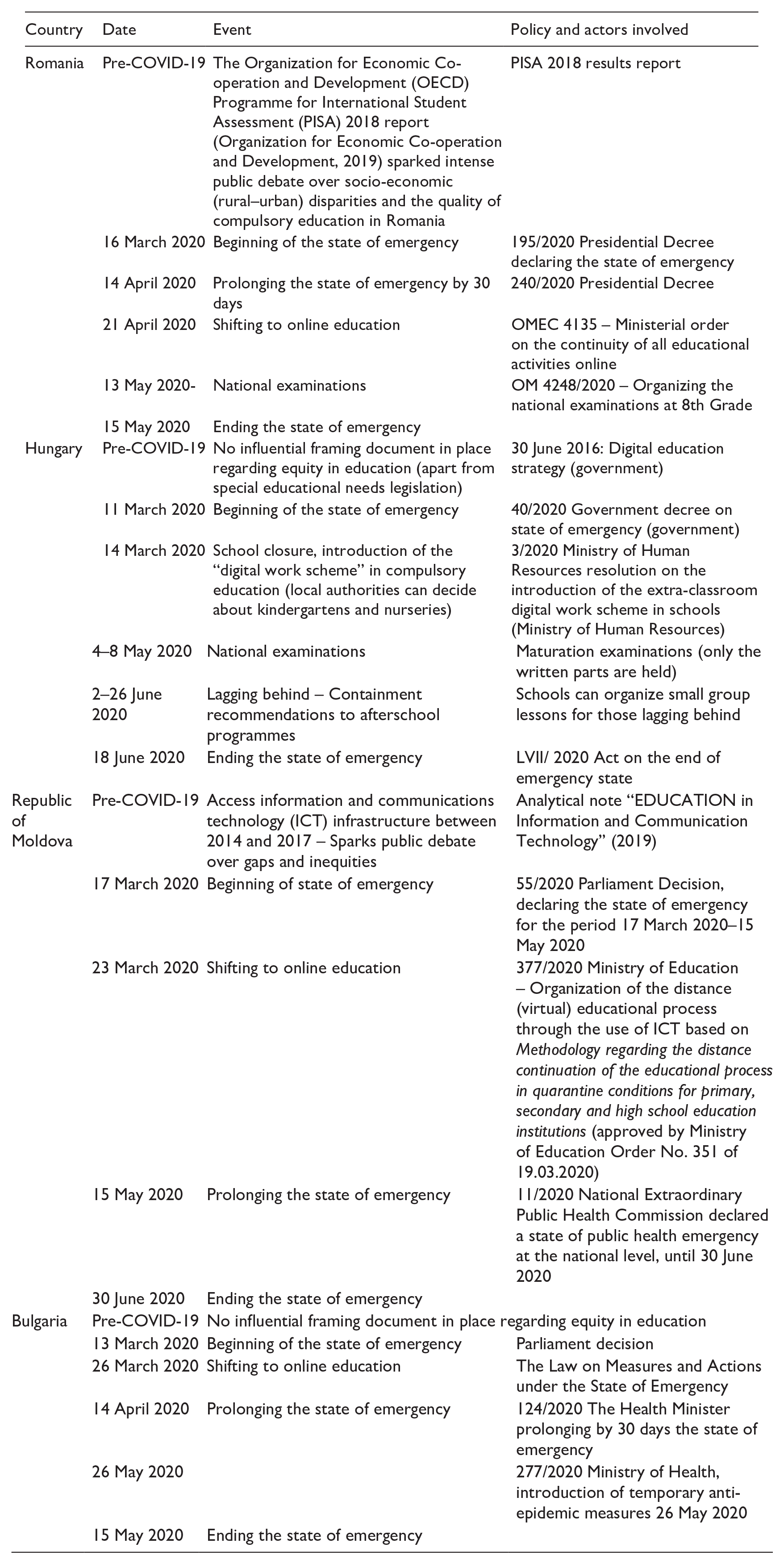
Appendix. Chronology of policy documents
| Country | Date | Event | Policy and actors involved |
|---|---|---|---|
| Romania | Pre-COVID-19 | The Organization for Economic Co-operation and Development (OECD) Programme for International Student Assessment (PISA) 2018 report (Organization for Economic Co-operation and Development, 2019) sparked intense public debate over socio-economic (rural–urban) disparities and the quality of compulsory education in Romania | PISA 2018 results report |
| 16 March 2020 | Beginning of the state of emergency | 195/2020 Presidential Decree declaring the state of emergency | |
| 14 April 2020 | Prolonging the state of emergency by 30 days | 240/2020 Presidential Decree | |
| 21 April 2020 | Shifting to online education | OMEC 4135 – Ministerial order on the continuity of all educational activities online | |
| 13 May 2020- | National examinations | OM 4248/2020 – Organizing the national examinations at 8th Grade | |
| 15 May 2020 | Ending the state of emergency | ||
| Hungary | Pre-COVID-19 | No influential framing document in place regarding equity in education (apart from special educational needs legislation) | 30 June 2016: Digital education strategy (government) |
| 11 March 2020 | Beginning of the state of emergency | 40/2020 Government decree on state of emergency (government) | |
| 14 March 2020 | School closure, introduction of the “digital work scheme” in compulsory education (local authorities can decide about kindergartens and nurseries) | 3/2020 Ministry of Human Resources resolution on the introduction of the extra-classroom digital work scheme in schools (Ministry of Human Resources) | |
| 4–8 May 2020 | National examinations | Maturation examinations (only the written parts are held) | |
| 2–26 June 2020 | Lagging behind – Containment recommendations to afterschool programmes | Schools can organize small group lessons for those lagging behind | |
| 18 June 2020 | Ending the state of emergency | LVII/ 2020 Act on the end of emergency state | |
| Republic of Moldova | Pre-COVID-19 | Access information and communications technology (ICT) infrastructure between 2014 and 2017 – Sparks public debate over gaps and inequities | Analytical note “EDUCATION in Information and Communication Technology” (2019) |
| 17 March 2020 | Beginning of state of emergency | 55/2020 Parliament Decision, declaring the state of emergency for the period 17 March 2020–15 May 2020 | |
| 23 March 2020 | Shifting to online education | 377/2020 Ministry of Education – Organization of the distance (virtual) educational process through the use of ICT based on Methodology regarding the distance continuation of the educational process in quarantine conditions for primary, secondary and high school education institutions (approved by Ministry of Education Order No. 351 of 19.03.2020) | |
| 15 May 2020 | Prolonging the state of emergency | 11/2020 National Extraordinary Public Health Commission declared a state of public health emergency at the national level, until 30 June 2020 | |
| 30 June 2020 | Ending the state of emergency | ||
| Bulgaria | Pre-COVID-19 | No influential framing document in place regarding equity in education | |
| 13 March 2020 | Beginning of the state of emergency | Parliament decision | |
| 26 March 2020 | Shifting to online education | The Law on Measures and Actions under the State of Emergency | |
| 14 April 2020 | Prolonging the state of emergency | 124/2020 The Health Minister prolonging by 30 days the state of emergency | |
| 26 May 2020 | 277/2020 Ministry of Health, introduction of temporary anti-epidemic measures 26 May 2020 | ||
| 15 May 2020 | Ending the state of emergency | ||
Acknowledgements
We express our gratitude to Professor Simona Sava (West University of Timișoara) and Professor Violetta Zentai (Central European University) for their support in setting up the international research team of this study. Our gratitude extends to Professor John Clarke (Open University, UK) for his insightful comments and for the valuable contribution his suggestions had to improving our concluding discussions. We would also like to extend our thanks to our anonymous reviewers at the European Educational Research Journal. Their comments and suggestions have greatly improved the quality of our paper.
Declaration of conflicting interests
The authors declared no potential conflicts of interest with respect to the research, authorship, and/or publication of this article.
Funding
The authors received no financial support for the research, authorship, and/or publication of this article.
