



Abstract
As the COVID-19 crisis disrupted schooling, recovery efforts in California included the adoption of Senate Bill (SB) 98, which mandated local educational agencies to complete Learning Continuity and Attendance Plans (LCPs). These plans act as critical snapshots of sensemaking and local policy implementation during crisis; however, their details have yet to be explored statewide. Through a multiphase, mixed methods approach, this study examines the legislative requirements of a state-level policy that orchestrated large-scale local planning. Results reveal that SB-98 recombined prior educational routines to fit the pandemic context. Moreover, district plans generally adhered to policy guidance and described a range of resources to support students. However, the limited details contained in most plans—particularly about the actions and services for students that may need additional supports—proffer suggestive evidence of local capacity and will during the global pandemic and the implications for those seeking to implement similar policy measures.
Keywords
The onset of the COVID-19 pandemic in March 2020 introduced major disruptions to schooling across the United States. In California, K-12 school districts rapidly adapted operations, suspending in-class instruction and shifting to online learning with limited time, structure, or guidance. This resulted in a concentration of efforts to support students’ basic needs, such as food security and internet connectivity, while less is known about how instruction was modified or academic progress was measured that spring (Hurtt et al., 2021). Aiming to address these unknowns across the state, Senate Bill 98 (SB-98), in part, mandated that local educational agencies (LEAs) outline their strategies to support students in Learning Continuity and Attendance Plans (LCPs) as pandemic disruptions continued into the 2020–21 academic year. Concurrently, these documents serve as locally determined strategic plans; mechanisms of public accountability; and evidence of the intensive preparation that occurred, capturing how local leaders made sense of the pandemic within the context of education. Although other research draws on LCPs, noting best practices in a single county (Romero, 2021) or identifying treatment of special populations (Gao et al., 2021; Williams & Buenrostro, 2021), the specialized nature of these studies drew on a limited number of LCPs during analysis. Therefore, the details of these plans have yet to be explored statewide, concealing the potential trends that arise in the planned actions and services to support students when traditional schooling is disrupted by crisis.
This work thus proffers the first comprehensive review of local educational plans developed in response to policy mandates made during the pandemic, highlighting the guidance policy presented to districts; the extent districts drew on this guidance in their planning (i.e., the actions and services described); and what these planned services suggest about the capacity and will of districts to support students at this time. Analysis is framed by the following questions: (1) What were the intended goals of the state’s crisis recovery legislation as it relates to student learning and progress?; (2) In response to these goals, what actions and services did district LCPs describe to support student outcomes?; and (3) Of these planned actions and services, were there differences across key district-level characteristics, including urbanicity and the proportion of English learners (ELs) and students eligible for free or reduced-price meals (FRPM)?
Drawing on a multiphase, mixed methods approach, this study examines the local enactment of state-level reform that orchestrated large-scale planning efforts in the midst of an unprecedented focusing event. Results reveal that SB-98 recombined prior educational routines to fit the pandemic context and, while varied, district plans indicated broad adherence to policy guidance and planned to leverage a range of resources to support students. However, the limited details contained in most plans—particularly about the actions and services for students that may need additional supports—proffer doubts about whether viable plans were in fact developed in some areas prior to the start of the academic year. This analysis thus highlights the intended actions and services of school districts and, more broadly, what they suggest about local capacity and will during the COVID-19 pandemic. As such, this work represents an important effort to extend the literature on how states and districts respond in an environment altered by crisis, particularly as research within this field is limited (DeMatthews et al., 2021; Grissom & Condon, 2021). Moreover, by analyzing the content of districts’ plans statewide, we argue this study offers critical insights into how local-level interpretations steer decision-making, contributing to our understanding of how district leaders make sense of policy mandates and the potential implications for those seeking to implement similar reforms.
This article is organized as follows: First, we situate this analysis within a framework that considers the impact of crisis on the policy process, including the principal features that may emerge during policy development and prior literature on schooling interruptions. We then review scholarship on policy implementation to understand how districts may respond to state-level mandates, highlighting the role of sensemaking throughout this process and the ways in which it guides decision-making. We then outline our data sources and the methodological approach of this work, followed by our findings. Finally, we discuss the implications of these results within the context of local capacity and will and consider avenues for future research.
Crisis and the Policy Process
Critical to this work is consideration of how the policy process occurs during a crisis. Broadly, policymaking is the result of a complex interplay of processes undertaken by multiple actors through distinct activities (Theodoulou, 2013), which typically include agenda setting as well as policy formulation and implementation (Kingdon, 2003). For this work, we consider policymaking through the lens of the multiple streams framework first proposed by Kingdon (1984), which situates policymaking under conditions of ambiguity and applies significance to time (Sabatier, 1999; Zahariadis, 2007). Under this framework, the policy process is composed of three streams: (1) the problem stream, or the conditions to be addressed, which can become known through focusing events (e.g., a disaster or crisis) (Kingdon, 2003; Rochefort & Cobb, 1994; Zahariadis, 1999; (2) the policy stream, which hosts potential solutions and alternatives later selected based on feasibility (Béland & Howlett, 2016; Kingdon, 2003; Zahariadis, 2007); and (3) the politics stream, which includes the factors that influence the political environment, such as national mood and advocacy campaigns (Zahariadis, 1999, 2007). Key to the multiple streams framework is the transient emergence of policy windows, which occur when streams converge at critical moments in time (DeLeo et al., 2021; Kingdon, 2003; Zahariadis, 2007).
In the case of the COVID-19 crisis, early unknowns about the transmission of the virus and an urgency to act despite these unknowns pervaded global consciousness, opening policy windows across a multitude of sectors, including education (DeLeo et al., 2021). In this case, an emergent problem in California was educational continuity: how would schools—closed for health and safety reasons during the pandemic—continue to operate and support students? Concurrently, national mood and frequent messaging from state-based advocacy and interest groups (Cano & Wiener, 2020; Education Trust-West, 2021) composed a politics stream that underscored the importance of educational continuity—particularly for students that may need additional supports, such as lower income students, students with disabilities, and ELs (Huck & Zhang, 2021; M. F. Rice & Pazey, 2022). At the same time, the state budget was in refinement, illuminating potentialities within the policy stream. As a major piece of the state’s school funding legislation mandates LEAs to annually report on their planned actions, services, and associated expenditures, prior policy proffered a solution, later selected by policymakers, to provide additional funding to LEAs during the pandemic as well as gain insight into their services and strategies to support school operations. These streams thus coupled in a timely manner, opening a policy window for officials to react to these conditions.
However, a distinct aspect of focusing events, including crises, is that they require critical decisions to be made within a narrow band of time with limited—and possibly conflicting—information (Darling, 1994; Grissom & Condon, 2021). It is this very ambiguity that may impact policy development, which could become less about solving problems and instead an exercise in making sense of them (Weick, 1979). Ultimately these limitations affect how policy is crafted, as leaders must make sense of situations as they occur (Spillane et al., 2002; Weick, 1995), which offers little time to employ post-event learning and innovate existing policy (Birkland, 2004; May, 1992). Moreover, scholars note policy is often a practice of recombination, as it is more likely for proposed policies to recombine familiar elements than present new ones (Kingdon, 2003). As solutions are developed to answer specific problems (Zahariadis, 2007), educational policy selection in California during the pandemic likely relied on feasibility (Kingdon, 2003), recombining elements from prior legislation to address the current problems facing the state.
Defining the Problem: Educational Continuity
One way crises affect education is through the disruption of schooling, which can impact students’ trajectories (Balfanz & Byrnes, 2012; Yeşil Dağlı, 2019). Therefore, maintaining educational continuity is critical, emerging as a primary policy concern nationwide (Darling-Hammond, 2020; Education Week, 2020). As educational continuity includes ensuring access to instruction as well as supports for students’ well-being (Burde et al., 2015), here we broadly discuss these factors and their potential challenges in a pandemic context.
Access to Education
Distance learning—where students and teachers are geographically separate and learning occurs through an artificial medium (Schlosser & Simonson, 2009), such as the internet (Barbour, 2021; Clark, 2013)—is one instructional method potentially employed during a crisis to ensure educational continuity. With distance learning, instruction can be delivered synchronously (class occurs in real time), asynchronously (classes are prerecorded or work is completed offline), or in combination. Scholars have argued that in an emergency, distance education is demonstrably different, as it is not a purposefully deployed pedagogical concept, but instead a short-term shift in instructional delivery (Hodges et al., 2020; Peterson et al., 2020). For example, in the period following school closures, LEAs were dually tasked with rapidly curating course content and navigating technological infrastructure options for an unanticipated shift to online learning (Willse, 2023). In this case, the term emergency remote education is ascribed (Hodges et al., 2020), as it is compulsory, unplanned, and suggests a temporality not often associated with distance education.
The literature on distance education has thus largely centered on programs that have purposely been administered and focus on its effectiveness in relation to in-person instruction (Cavanaugh et al., 2004; Means et al., 2013; K. L. Rice, 2006). Although it spans many mediums (e.g., correspondence, radio, television), scholarship on distance education—specifically online learning—is growing (Gemin et al., 2015; Martin et al., 2020). However, research examining K-12 online learning remains limited, as studies typically center postsecondary contexts (Barbour, 2019; Martin et al., 2020). Nevertheless, research has identified several factors as key to its implementation, including: course development and pedagogical strategies (Pulham & Graham, 2018; Zhu et al., 2020); the availability of and access to technological infrastructure as well as guidance on its use (Clark, 2003; M. F. Rice & Pazey, 2022; M. Rice & Zancanella, 2021); and the quality of instructors and course material (Martin et al., 2023; M. F. Rice & Ortiz, 2021), among others. During emergency remote education, these challenges may be compounded; for example, while technology may be the most efficient method to ensure educational continuity during a crisis, this has little meaning if students—particularly lower income students, ELs, and students with disabilities—do not have adequate access to devices, the internet, or supports to mediate these modalities (Haderlein et al., 2021; Huck & Zhang, 2021; M. F. Rice & Pazey, 2022).
Student Well-Being
Beyond access, a student’s well-being is also paramount to success (S. Suldo et al., 2011). This includes mental and social-emotional health, both of which are associated with academic performance (Davis et al., 2014; Kiuru et al., 2020) and supported by students’ relationships with school staff as well as peers (Graham et al., 2016; Littlecott et al., 2018; S. M. Suldo et al., 2009). In fact, these relationships are critical to school connectedness (Rowe et al., 2007), which longitudinal evidence indicates is a strong predictor of well-being in adulthood (Olsson et al., 2013). As a student’s well-being is important to their overall trajectory, this can be negatively influenced by disruptions to schooling, particularly in a crisis (Campbell, 2020). Teachers and schools are therefore critical, as they can help to mitigate the influence crisis can have on students’ well-being by cultivating routines and reestablishing social relationships that may have been disrupted (Kataoka et al., 2012). Moreover, social-emotional learning programs—which enable students to develop the emotional and relational skills intrinsic to later success (Allensworth et al., 2018; Denham & Brown, 2010)—can also support students’ well-being (Durlak et al., 2011). However, these may be more challenging to provide during online learning; for example, when instruction is mediated through a screen, fostering relationships with students may be difficult for teachers with limited knowledge on technology-mediated caring practices (Borup et al., 2020; K. E. Miller et al., 2021) or for whom remote teaching is new (Rehn et al., 2018).
Policy Solution: California Senate Bill 98
In response to the pandemic-induced disruption to schooling, California lawmakers sought to ensure educational continuity through Senate Bill 98 (SB-98), which required LEAs, including school districts, to outline their instructional plans and associated expenditures for 2020–21 in Learning Continuity and Attendance Plans (LCPs). In this case, LCPs closely mirror Local Control and Accountability Plans (LCAPs)—the document districts in California are typically required to submit as evidence of strategic planning to meet educational goals. In fact, LCPs echo LCAPs in several ways, evidence of the recombination that tends to emerge in policy development. For example, school districts have access to templates 1 for both documents, which are similar in design and were developed by the Superintendent in consultation with the State Board of Education (SBE). Additionally, plan development was supported by multiple webinars for LCAPs and LCPs, which also progress through nearly identical review processes. 2 In terms of content, both LCAPs and LCPs also need to include short- and long-term goals for students across several state priorities and describe the actions and associated costs to achieve these goals, specifically addressing ELs, lower income students, and foster youth. Moreover, important stakeholders in the community, such as parents, students, teachers, principals, and other school personnel, were to be included in the development of both plans through public meetings (though virtual in the case of LCPs) held by the local school board.
Despite these similarities, LCPs required districts to consider when and how to implement additional and altogether different actions and services due to the ongoing COVID-19 crisis, including the potential transition between in-person and remote learning as the local impact of the virus shifted. In this case, districts were prompted to describe their strategies to ensure learning continuity and provide support in both remote and traditional classrooms.
District Responses to State Policy
Education is a nested, interdependent system in which state policy informs districts—largely responsible for organizing instruction and quality learning opportunities—which in turn guide the schools that deliver instruction and directly support students (Spillane et al., 2019). Therefore, how educational policy is implemented relies heavily on the interpretation of local actors (Strach & Sullivan, 2011). This sensemaking, which considers how one makes meaning and relies on this meaning to inform action, is the continuous interaction of three factors: knowledge and prior experience; organizational and social context; and events, such as policy reform (Spillane et al., 2002). As district leaders are often the first set of actors to shape local implementation efforts (Firestone, 1989), how policy is enacted will vary depending on how each district 3 adapts it to their own context (Coburn, 2005; Spillane, 1999). For example, LCPs may differ because district leaders will: (1) likely bring diverse prior beliefs and understandings about how to complete LCAPs, the document they typically submit, to their development; and (2) seek to address nuanced schooling issues evident prior to or as a result of the pandemic.
Moreover, any variation in districts’ plans is also a reflection of capacity and will, which guide how local actors enact and interpret policy (Coburn, 2003; Cohen & Moffitt, 2009). Capacity refers to inputs, including resources, knowledge, and networks, as well as outputs, such as the interpretation, adaptation, and implementation of policy (Coburn, 2003; Jennings & Spillane, 1996; Spillane & Thompson, 1997). In terms of LCPs, plans could therefore differ from district to district due to the systems and resources already in place and the ability of local leaders to create, expand, or reduce these as needed. This ability is, in part, steered by the convictions of district leaders as well as the learning opportunities and access to expert knowledge available to them (Jennings & Spillane, 1996). For example, prior qualitative work in South Carolina found that the convictions held by local officials about the students who may need additional or alternative supports shaped the actions and services that were planned—which did not always align with pedagogy or scholarship (Jennings & Spillane, 1996). In fact, those involved in the planning process did not always seek to change these convictions or seek out new knowledge about pedagogical approaches or systems (Jennings & Spillane, 1996). The capacity of a district to respond to policy is therefore driven by a combination of interconnected factors that influence how a policy is understood and undertaken (Cohen & Moffitt, 2009).
While capacity refers to a district’s ability to implement a policy, will refers to a district’s interest and commitment to its implementation (Firestone, 1989; McLaughlin & Talbert, 1993), which includes a propensity to act and the perceived utility of a policy. How a district responds to state policy, then, can be examined across the interaction of these dimensions (see Table 1; Firestone, 1989). Active use occurs when a district with a high propensity to act views a policy to be in alignment with its own interests; here, a district is likely to thoroughly implement the policy and go beyond its minimum requirements in innovative ways. In contrast, districts may also actively oppose policy that appears to disrupt the local agenda, potentially seeking a policy change or reversal. Similarly, a passive district might resist implementing a policy it perceives to be misaligned with its interests, but will not try to change the policy in the way a more active district might. Alternatively, passive districts that recognize the utility of a policy will comply with its minimum requirements, but are unlikely to do so quickly or extensively. Within the context of LCPs, given that the completion of these plans is mandated by the state and tied to local funding, it is likely district responses will fall within active use or passive compliance; therefore, district LCPs may either proffer detailed and innovative plans to support students, represent compliance documents, or exist as something wholly in between.
Ideal Typical Responses to State Reforms.
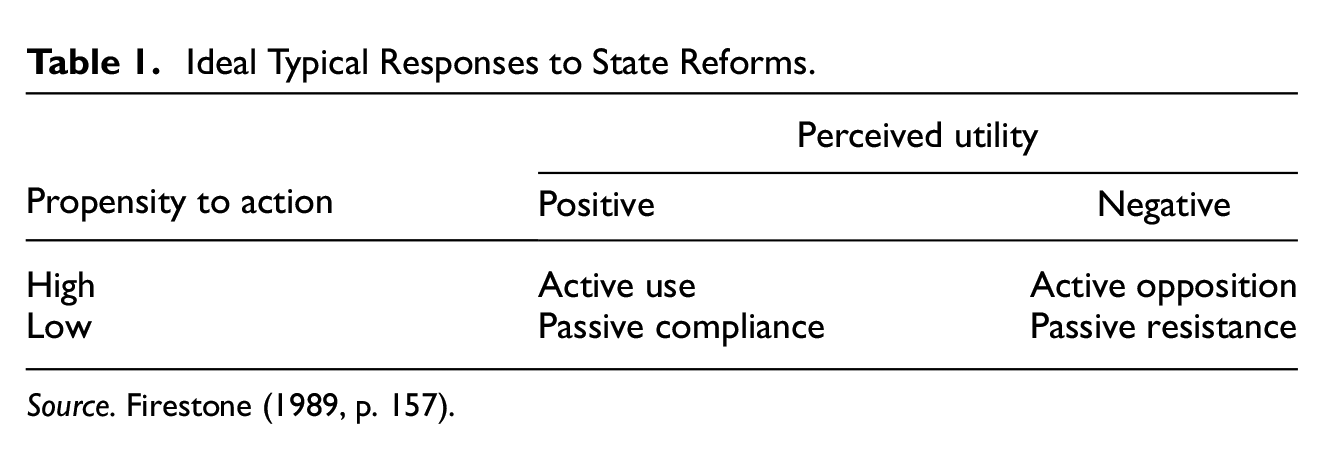
Source. Firestone (1989, p. 157).
Given their similarities, prior research on LCAPs offers insight into how districts might engage with LCP requirements. Evidence indicates district approaches to the LCAP tend to reflect compliance rather than innovation, providing limited details in the descriptions of programs and services (Alejandre & Massaro, 2016; López, 2019), particularly those for ELs and students with disabilities (Doutre et al., 2021; Humphrey et al., 2017; Olsen et al., 2016). While LCPs may produce similar descriptions of planned actions and services, they offer a unique record of districts’ operational plans to support student learning as well as the sensemaking undertaken by local leaders within the ever-evolving context of the COVID-19 pandemic. LCPs thus serve as critical snapshots of local policy implementation during crisis, highlighting the intended actions and services across districts and what these suggest in terms of capacity and will when an umbrella of uncertainty overhangs decision-making.
Methodology
The aim of this study is twofold: (1) to investigate state educational policy objectives and planning requirements in a time of crisis, and (2) to interrogate the details that arise during local adherence to educational planning mandates. To examine how legislation supported learning and progress during the pandemic, we begin with a close examination of SB-98, guided by document analysis, to establish the primary goals outlined within state policy. We rely on document analysis given its phenomenological approach to reviewing and evaluating documents (Bowen, 2009), enabling analysis to consider the text and context within which the policy was drafted.
As a core requirement of SB-98 was the completion of LCPs, this analysis leverages data from these documents to determine the extent to which local plans aligned with policy goals and the services districts described to support students. Given that all LEAs in California (public school districts, county offices of education, and charter schools) were required to submit 4 and upload LCPs to district or county websites prior to the start of the school year, LCPs were readily available to download in October 2020. 5 Of the 969 public K-12 school districts operating in California in 2020–21—including elementary, high school, and unified school districts—LCPs from 958 districts were located during data collection, 889 of which were computer-readable.
This study leveraged a multiphase, mixed methods design. Guided by the tenets of content analysis, which assumes objective meaning (Lacity & Janson, 1994) and allows factual evidence to be directly collected from LCPs, initial coding was conducted to identify the information and level of detail in LCPs. Preliminary analysis shaped codes into seven categories: assessment, attendance, instruction, meals, professional development, special populations, and technology. As nearly six million students attend California schools, it was critical to capture the scope and range of detail in districts’ plans; therefore, we conducted analysis in three phases to extend understanding through data triangulation (O’Cathain et al., 2010).
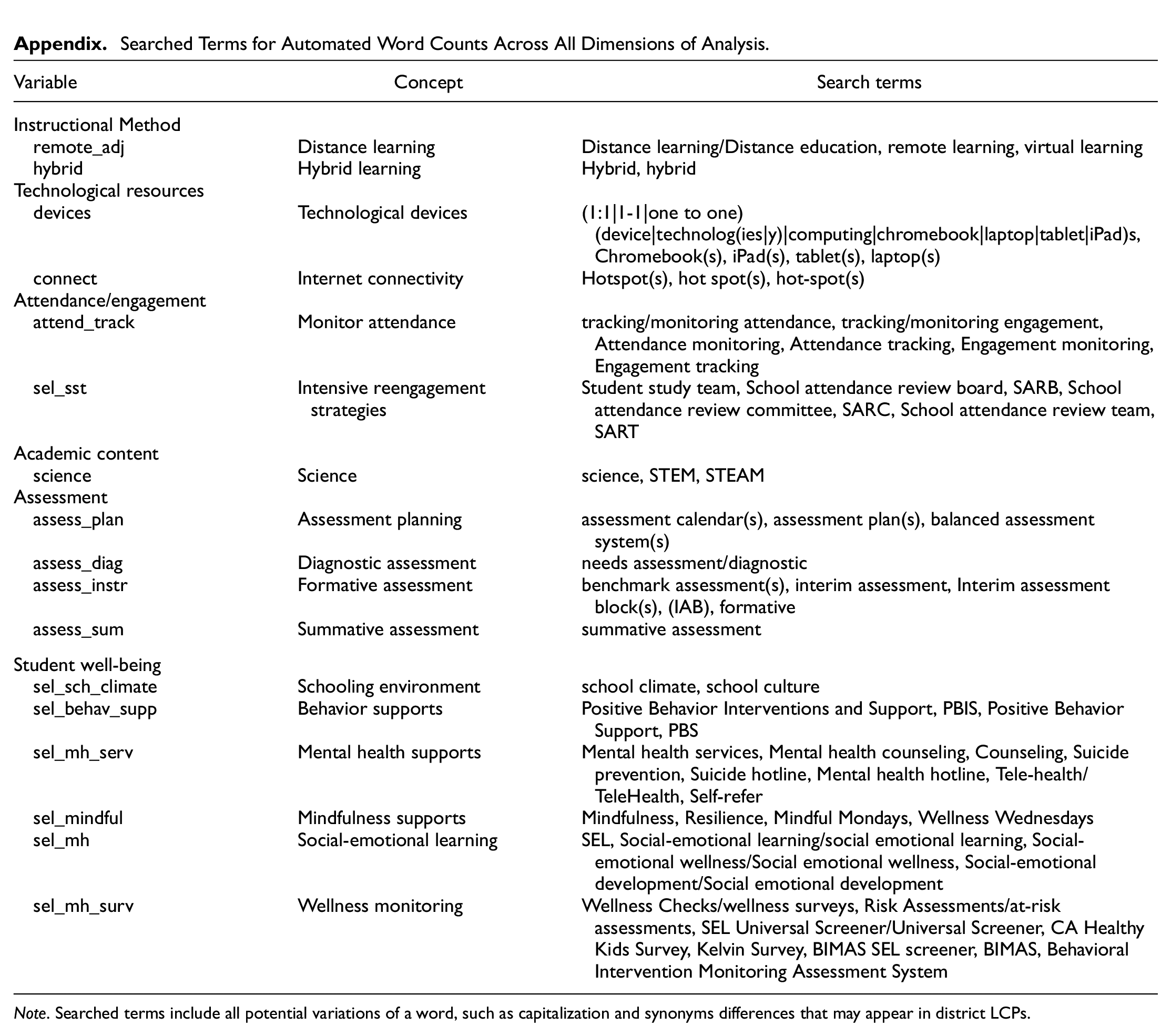
The first phase of analysis captured the breadth of districts’ plans through automated word counts on key words and phrases (e.g., “distance learning”; “hotspot”) for all computer-readable LCPs. 6 We used these counts to ascertain the frequency of strategies in plans, including the number of occurrences of specific words and synonyms to avoid potentially underestimating a concept or its importance (Stemler, 2001). We then compared word frequencies to determine the extent to which strategies noted by one district appeared in others across the state. Table 2 presents summary statistics for the multiple populations reflected across all phases of analysis. In Phase 1, LCPs from 889 districts capture the plans intended to affect nearly 95% of all students in California, mirroring statewide student and district characteristics.
Demographic and District Characteristics Across Phases of Analysis.
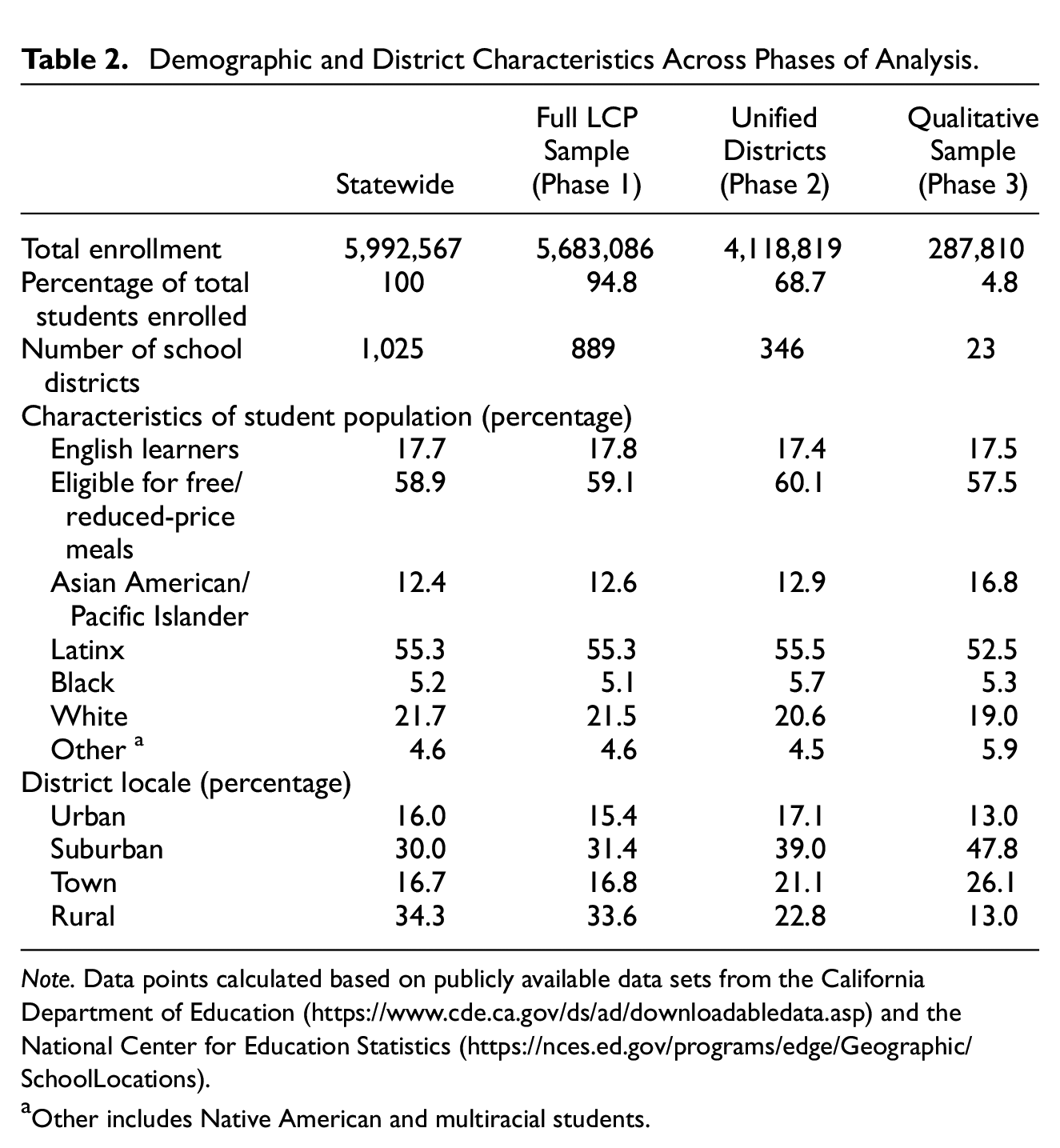
Note. Data points calculated based on publicly available data sets from the California Department of Education (https://www.cde.ca.gov/ds/ad/downloadabledata.asp) and the National Center for Education Statistics (https://nces.ed.gov/programs/edge/Geographic/SchoolLocations).
Other includes Native American and multiracial students.
The second phase of analysis investigated the depth of local plans through a deductive qualitative approach. Following initial coding, we organized questions that targeted district planning into domains of inquiry (Namey et al., 2008) to develop data collection tools used by teams of undergraduate research assistants to collaboratively code LCPs from all unified school districts (N = 346). 7 As unified districts in California operate both elementary and secondary schools, serving nearly 70% of K-12 students, this phase of analysis centered on the plans from these districts given their potential to affect a large proportion of students across the state.
Finally, to extract contextual detail and enrich understanding of the strategies outlined in district plans, the third phase of analysis involved an in-depth reading of LCPs identified through purposive sampling in Phase 2. These plans were strategically selected to pinpoint unique or diverse features included in local plans. Additionally, in selecting these districts, we aimed to identify a sample that was representative both demographically and geographically. Analysis drew on LCPs from 23 unified districts, implementing an inductive coding approach to unearth additional themes that may have been masked in prior phases of analysis. Results therefore include a layered examination of LCPs, drawing on automated word counts from a majority of public school districts in California, deductive coding from all unified districts, and a close qualitative analysis of selected plans to triangulate and further explicate findings.
This study also attends to emergent differences across key district-level demographics, including locale, 8 the percentage of students eligible for FRPMs under the National School Lunch Program (NSLP), 9 and the proportion of students in a district identified as ELs. 10 We focus on these characteristics given historic concerns around equitable access to resources for students in rural (Showalter et al., 2019) and less affluent areas (Reardon et al., 2018). Moreover, we examine district differences across the proportion of FRPM and EL students as districts serving greater populations of these students receive additional funding from the state (Bruno, 2018). To identify these differences, we conducted two-tailed t-tests that allowed for unequal variances to test whether observed differences were statistically significant.
Findings
In the following findings we discuss the results of this analysis in two parts. First, we present the goals outlined in SB-98 to determine the foci of state educational policy during a crisis. We then turn to analysis of LCPs across the state to examine the actions and services described in local plans and the potential variation across key district-level characteristics.
California’s Crisis Recovery Legislation
SB-98 was a K-12 education finance trailer bill that encompassed a variety of actions and supports related to school funding for the 2020–21 academic year. Here, we focus on the eight sections that specifically addressed learning, characterized by references to either instructional or assessment policy changes for public school districts. Analysis identified four primary policy goals: (a) expand the definition of instruction; (b) ensure continuity of learning; (c) evaluate and support student progress; and (d) address the tensions placed on student learning.
Goal 1: Expand the Definition of Instruction
While a fundamental characteristic of education during the pandemic included distance learning, prior to the addition of Education Code (EDC) Part 24.5 in SB-98, no formal description or guidance for distance learning had been offered by the state. Given the ways in which education changed with the closure of schools, policy changes in SB-98 suggest that one of the primary goals related to student learning was an expansion of what instruction meant in 2020–21 for the purposes of both standardization and apportionment. In terms of standardization, this included: (a) defining distance learning [EDC 43500(a)], 11 acknowledging that instruction and learning may occur outside a physical classroom; (b) specifying the circumstances and requirements for districts to offer distance learning programs [EDC 43503], setting minimum standards for its use during instruction; and (c) supporting future instruction by allocating funds to develop distance learning curricula and instructional guidance 12 for mathematics, English language arts (ELA), and English language development (ELD) [SB-98 § 121]. 13 The definition of instruction was also expanded for apportionment purposes; in California, as schools must comply with instructional day requirements, EDC 43502(c) extended this to include in-person instruction, distance learning, or a combination of the two.
Goal 2: Ensure Continuity of Learning
Given the uncertainties related to student learning and progress during the early period of school closures, a clear goal of SB-98 centered on ensuring “continuity of learning” [EDC 43509(e)] by directing school districts to outline their instructional plans in LCPs, highlighting access to learning opportunities, the quality of these opportunities, and the frequency of access. For example, access to learning opportunities included both “in-person instructional offerings” and distance learning [EDC 43509(f)(1)], which districts were required to jointly prepare for and outline how they intended to support students from special populations. Moreover, with distance learning contingent on the availability of technological resources, districts needed to describe how “adequate” device and connectivity access [EDC 43503(b)(1)] would be provided [EDC 43509(f)(1)(B)(ii)] and guarantee distance learning content would be “at a level of quality and intellectual challenge substantially equivalent to in-person instruction” [EDC 43503(b)(2)]. Both instruction and curricula should therefore be of a similar standard regardless of instructional delivery, potentially easing moves between in-person instruction and distance learning.
While access to and the quality of learning opportunities are paramount, the frequency with which students are able to (or choosing to) access these opportunities is central to continuity of learning and gauging student progress. In this case, a lower rate of accessing learning opportunities (frequent absences) might suggest a greater gap in students’ standards-level progress, often denoted as “learning loss” in the text of SB-98 [EDC 43509(f)(1)(A)]. Therefore, in the case of student absences, particularly in terms of distance learning, EDC 43509(f)(1)(F) required districts to develop tiered reengagement strategies, including how districts would connect with students and families. This could include the verification of contact information, daily notification of absence to parents, or outreach to determine additional student needs, such as connecting with health and social services [EDC 43504(f)(2)].
Goal 3: Evaluate and Support Student Progress
Missed instructional time (whether in person or remote) may have also negatively affected student’s academic progress during spring 2020. Characterized as “learning loss” [EDC 43509(f)(1)(A)], this was a particular policy concern, as districts were directed to: (a) assess potential gaps in student learning as a result of COVID-19, specifically in ELA, ELD, and mathematics [EDC 43509(f)(1)(C)(i)]; (b) address these gaps by describing strategies to enact that “accelerate learning progress” [EDC 43509(f)(1)(C)(ii)]; and (c) gauge the effectiveness of these strategies [EDC 43509(f)(1)(C)(iii)]. Additionally, to ensure that resources were available, funds were also specifically provided to districts for activities that “directly support pupil academic achievement and mitigate learning loss related to COVID-19 school closures” [SB-98 § 110(d)]. “Activities” in this case included expanding or enhancing learning supports, extending the instructional school year, or offering supplementary support services, reflecting a policy focus on the development of plans that address potential learning loss.
Goal 4: Address the Tensions Placed on Student Learning
SB-98 also attended to the tensions placed on student learning during this period. Given the health and economic concerns ushered in by the pandemic and the potential trauma experienced by students, learning may have taken a backseat to more pressurizing events. The text of the policy accounted for this, directing districts to support the mental health and social and emotional well-being of students and staff [EDC 43509(f)(1)(D)] and describe the resources districts would offer “to address trauma and other impacts of COVID-19 on the school community” [EDC 43509(f)(1)(E)] in their LCPs. Moreover, as distance learning primarily takes place “through… a computer or communications technology” [EDC 43500(a)(1)], altering social engagement—including how relationships are built between students and staff—SB-98 indicated distance learning should include live interaction to, in part, “maintain school connectedness” [EDC 43503(b)(6)], ensuring a sense of belonging is crafted even if the classroom setting looks radically different than it would during in-person instruction.
The goals of SB-98 thus reflect a holistic view of student learning, including how it should be measured and supported, and note the challenges presented to both by COVID-19. Moreover, SB-98 recombined prior educational routines for a pandemic context, mandating districts to complete plans similar to those they have before, albeit with revised content guidance.
Learning Continuity and Attendance Plans (LCPs)
Although a key mandate of SB-98 was the completion of LCPs, similar state-directed local planning requirements—in the form of LCAPs—have been in place since the Local Control Funding Formula (LCFF) 14 was enacted in 2013. However, as health guidelines shifted during the pandemic, so did legislative requirements; while traditionally districts are mandated to annually update LCAPs by July 1, amid health and safety concerns and uncertainties about districts’ ability to engage with stakeholders, 15 Executive Order (EO) N-56-20 eased the normal deadline for LCAP updates to December 15 and directed districts to simply report adaptations made because of the pandemic. Despite this extension, the adoption of SB-98 in June 2020 superseded EO N-56-20 and suspended the LCAP update in its entirety; instead, districts were required to complete LCPs by September 30. LCPs, then, formalized the written report mandated by the EO and mirror LCAPs in several ways. As noted, one was the use of a template, which SB-98 required the State Board of Education (SBE) to develop for LEAs to record their plans. Although its use was not required—districts only needed to include “all of the information [it] specified” [EDC 43509(e)]—out of 958 public school districts, only six did not formally use the provided template. Therefore, plans directly aligned with the goals outlined in SB-98; however, wide variation was evident across LCPs in length (7–363 pages, Median = 21) and level of detail.
In effort to capture the fullest picture of these plans and the unique features presented within them, the following leverages an integrative approach, situating results within the goals identified in SB-98 that steered LCP development: (a) ensure continuity of learning, (b) evaluate and support student progress, and (c) address the tensions placed on student learning. First, we note results from statewide automated counts to report the frequency of concepts across LCPs. We then discuss results from unified districts, summarizing strategies that would affect a majority of students in California. Additionally, when relevant, we highlight specific actions and services described in LCPs to contextualize analysis and supplement quantitative results.
Ensure Continuity of Learning
One of the primary areas of focus within LCPs was instructional access. Districts outlined flexible and strategic instructional plans; prioritized technological resources; and intended to monitor student engagement—underscoring that access to instruction in 2020–21 encompassed a spectrum of resources and logistical considerations beyond those in a traditional school year.
Method of Instruction
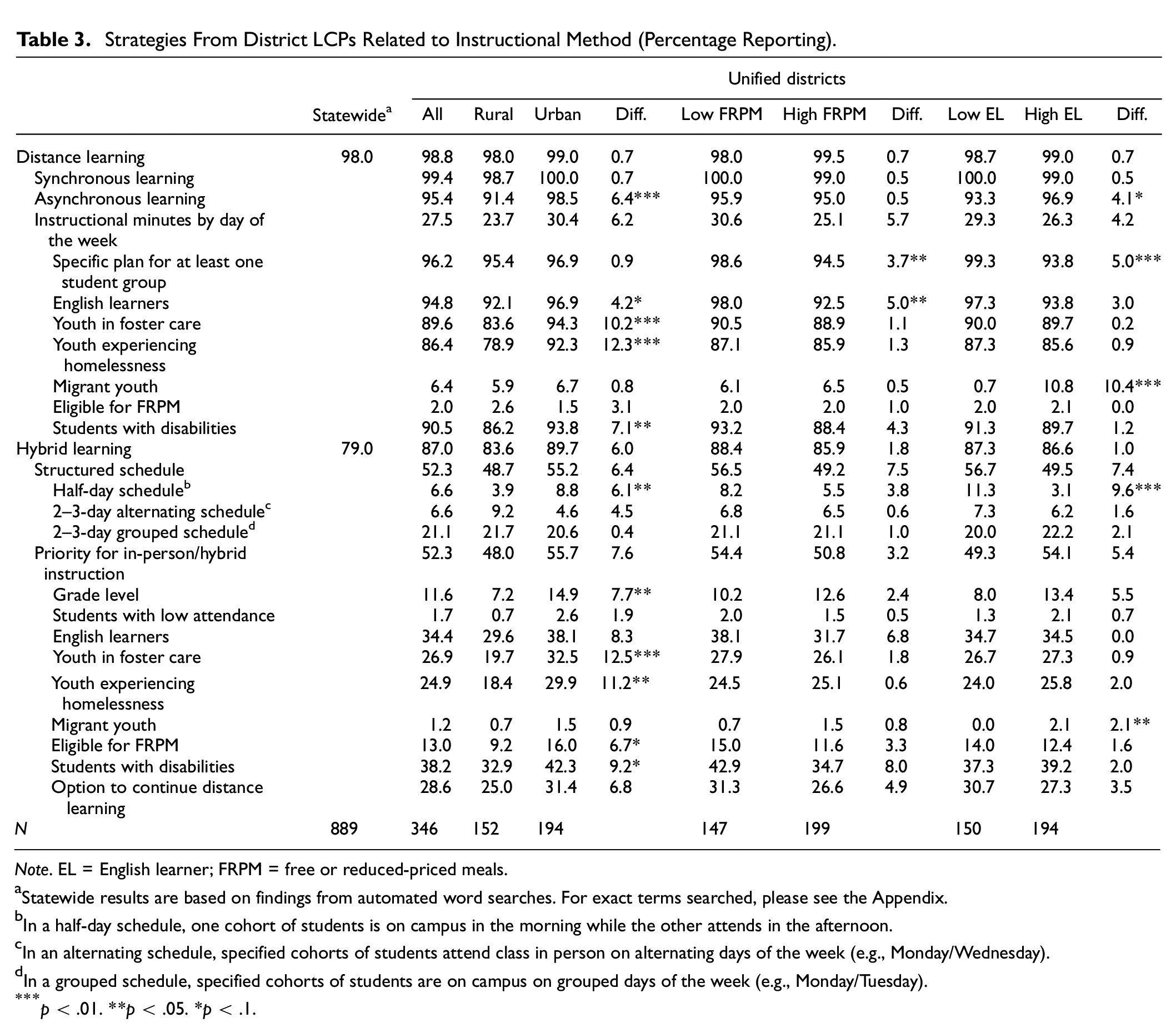
At the center of access to instruction is how it will occur. In this case, LCPs described flexible and strategic instructional plans to support students’ learning. Table 3 presents results from the automated word counts of public school districts and coding of unified districts in terms of instructional method. Findings reveal that distance learning plans were a key feature of LCPs. Moreover, negligible differences across district characteristics indicate that all districts, to varying degrees, noted distance education in their plans.
Strategies From District LCPs Related to Instructional Method (Percentage Reporting).
Note. EL = English learner; FRPM = free or reduced-priced meals.
Statewide results are based on findings from automated word searches. For exact terms searched, please see the Appendix.
In a half-day schedule, one cohort of students is on campus in the morning while the other attends in the afternoon.
In an alternating schedule, specified cohorts of students attend class in person on alternating days of the week (e.g., Monday/Wednesday).
In a grouped schedule, specified cohorts of students are on campus on grouped days of the week (e.g., Monday/Tuesday).
p < .01. **p < .05. *p < .1.
In this case, distance education in LCPs included both synchronous and asynchronous online learning. Results from unified districts reveal that synchronous instruction was cited slightly more often; however, for districts in urban areas with higher proportions of EL students, asynchronous instruction was more likely to be noted. A possible explanation for this could lie in differentiation strategies, particularly for ELs, who may have received additional instructional support in periods where other students were working independently. Nearly all unified districts also described distance learning plans for specific student populations, with ELs at the forefront (95%) and more likely to be noted in the plans from urban, higher income districts.
In addition to online learning, most districts planned to implement hybrid learning models (where in-person instruction is typically alternated between cohorts of students), with unified districts (87%) noting these models more often than results statewide (79%). Fifty-two percent of unified districts also described structured cohort schedules in their plans. In this case, qualitative analysis revealed deep variation in design, including schedules that group days for in-person learning, 16 half days, 17 and alternating schedules. 18 Twenty-one percent of unified districts noted grouped schedules in their plans compared to half-days (7%) and alternating schedules (7%), a potential reflection of the realities of maintaining student and staff safety during the pandemic due to the frequent cleaning in-person instruction would require.
District plans also prioritized student groups in returns to campus for in-person instruction. Fifty-two percent of unified districts proffered priority for at least one student group, including students with disabilities (38%), youth in foster care (27%), youth experiencing homelessness (25%), as well as FRPM students (13%). Grade level was also considered in determining priority for in-person instruction, with closer analysis suggesting that districts often targeted students in elementary grades, likely because the routines of schooling are still new and online learning can require parental support (Martin et al., 2023).
Technological Resources
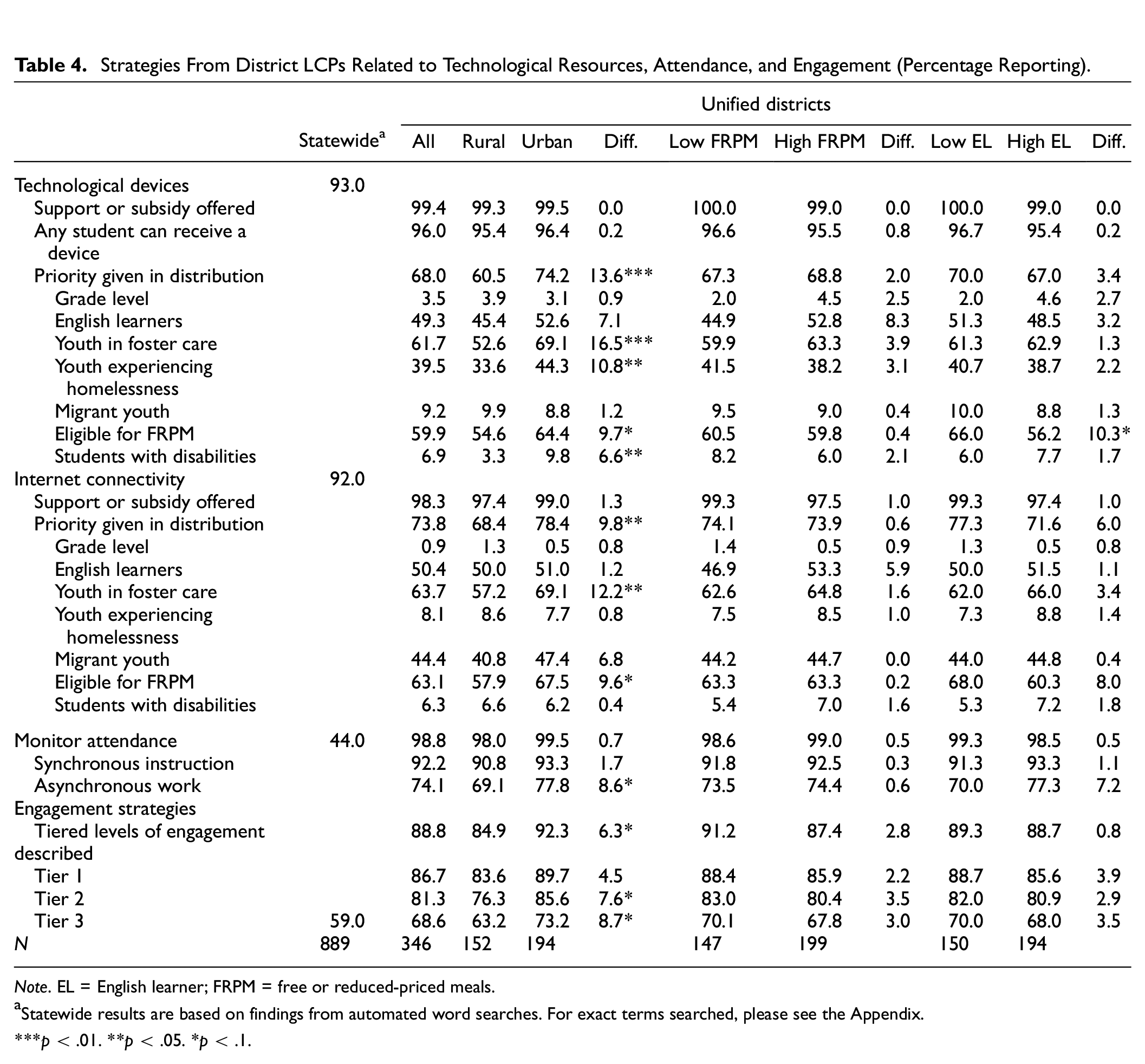
Most districts also prioritized technological resources to support engagement with instruction and ensure equitable access to distance education. Findings indicate a majority of districts across California noted technological devices in their plans (see Table 4). Similarly, in nearly every unified district, devices or subsidies were offered—often in conjunction with one-to-one initiatives that would provide devices (such as Chromebooks or iPads) to all students. In fact, for districts that had previously implemented such programs, these programs likely eased the initial transition to distance education; for example, the techEQUITY program in Santa Barbara previously assigned iPads to students in grades 3 to 12, enabling the district to expand this program to its earlier grades during the pandemic. Relatedly, as the rapid shift to online learning saw an increase in device orders (Rauf, 2020), LCPs described the backorders that affected one-to-one initiatives and prompted device prioritization. In this case, in many urban unified school districts, certain student groups were prioritized 19 to receive devices.
Strategies From District LCPs Related to Technological Resources, Attendance, and Engagement (Percentage Reporting).
Note. EL = English learner; FRPM = free or reduced-priced meals.
Statewide results are based on findings from automated word searches. For exact terms searched, please see the Appendix.
p < .01. **p < .05. *p < .1.
Results also reveal the investment districts made to increase connectivity for students, as 98% of unified districts intended to offer supports for internet services—slightly higher than plans statewide (92%). This included a range of options to improve access, such as hotspots (e.g., Verizon Mi-Fi) and Wi-Fi extenders. For Gateway, a multipronged approach was outlined, including the purchase of iPhones (to use as hotspots), a partnership with internet provider Spectrum, and the deployment of Wi-Fi-equipped buses. Connectivity supports were also prioritized for student groups, notably FRPM students and youth in foster care.
Attendance and Engagement
Beyond the resources needed to access instruction, the frequency of this access was also noted in LCPs, which described diverse attendance monitoring plans that incorporated students’ presence and participation as evidence. Table 4 presents results in terms of attendance and engagement. Across all school districts, 44% specifically noted attendance monitoring in their plans. Moreover, while nearly all unified districts intended to track attendance during synchronous instruction, a majority (74%) also noted asynchronous work would be used, underscoring the prevalence of both methods.
In addition to monitoring attendance, SB-98 mandated districts to develop tiered strategies for reengagement if a student’s absence extended beyond three school days. Although 59% of LCPs statewide described more intensive reengagement strategies, which include referrals to attendance review boards, these strategies were typically relegated to Tier 3—the highest tier—to support students with chronic absenteeism. Results from unified districts indicate Tier 1 (87%) and Tier 2 (81%) strategies were described at marginally higher rates than Tier 3 (69%), 20 suggesting districts prioritized early intervention strategies and may have intended to understand the potential barriers to instruction prior to implementing Tier 3.
Evaluate and Support Student Progress
LCPs also noted the use of data from multiple assessments to evaluate students’ progress. While plans outlined clear roles for data—identifying students’ strengths, adjusting instruction, informing stakeholders—at the forefront of these was gauging academic development.
Academic Progress
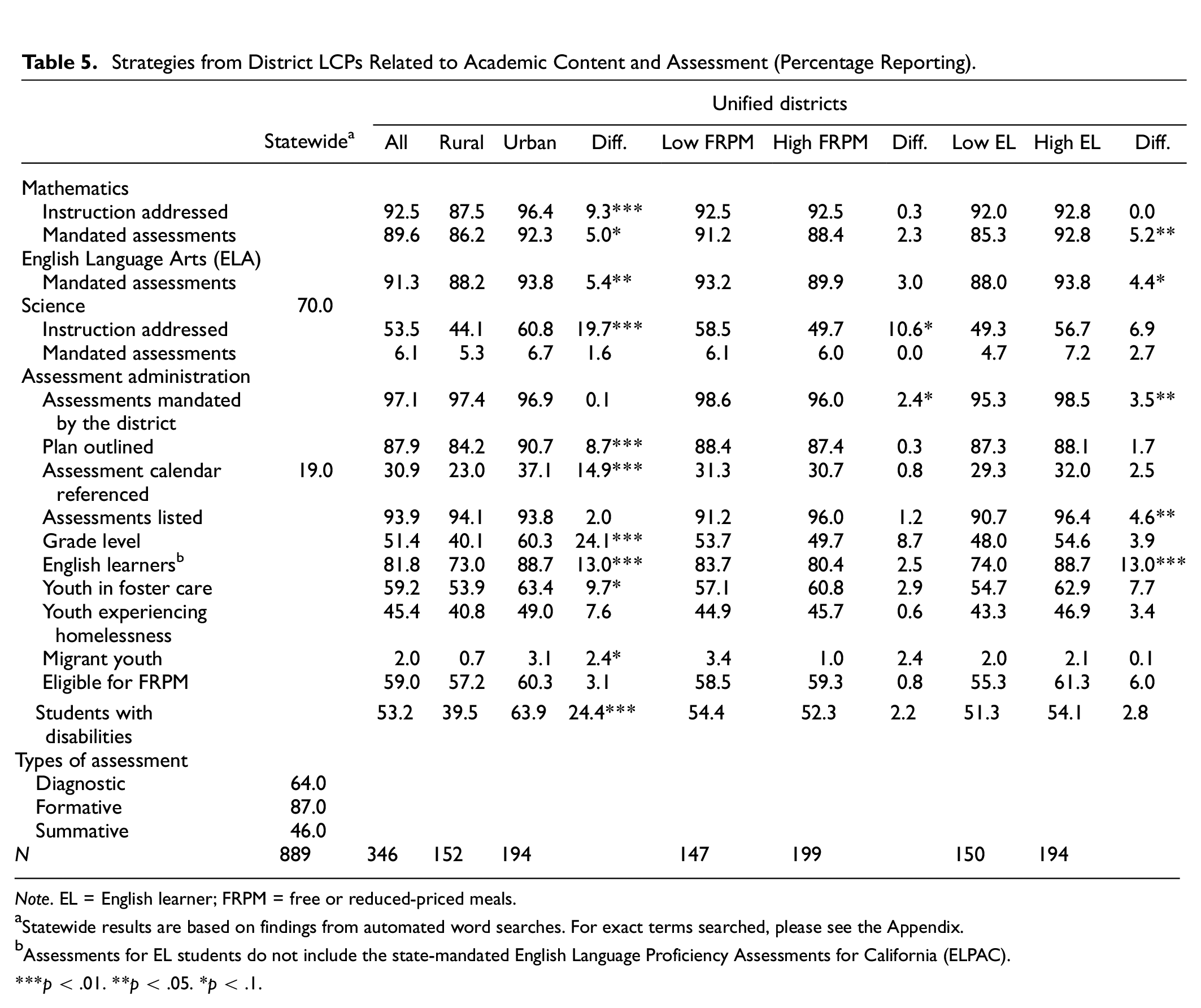
Districts indicated a narrowed academic focus in their plans, prioritizing essential learning standards and subjects to capture the “most important subject matter during distance learning” (McFarland Unified School District, 2020, p. 9). This focus centered on mathematics and English—mirroring the core subjects highlighted in SB-98. Table 5 presents statewide and unified district results in terms of academic content. Findings from unified districts reveal that math instruction and assessments were cited at similar rates, while English assessments were also widely mandated (91%). Further, math and ELA assessments were more likely to be noted in districts with higher proportions of EL students, suggesting these districts may have placed additional attention on testing to determine EL students’ progress given assessment disruptions the prior spring (Gewertz, 2020).
Strategies from District LCPs Related to Academic Content and Assessment (Percentage Reporting).
Note. EL = English learner; FRPM = free or reduced-priced meals.
Statewide results are based on findings from automated word searches. For exact terms searched, please see the Appendix.
Assessments for EL students do not include the state-mandated English Language Proficiency Assessments for California (ELPAC).
p < .01. **p < .05. *p < .1.
Although not identified in SB-98, science was also emphasized in LCPs. Statewide, 70% of districts noted science in their plans, while over half of all unified districts included science instruction. The science curricula described by districts also varied; for example, as Mystery Science (a K-5 curriculum) and Amplify Science (a K-8 curriculum) were frequently highlighted, districts also planned to offer virtual labs and other local programs, such as Ukiah’s Redwood Valley Outdoor Education Project (RVOEP). 21 However, science assessments were cited less frequently and only noted tangentially with math and ELA.
Assessment Administration
LCPs also described assessment plans composed of multiple measures to assess academic progress, including: (a) diagnostic (to determine prior knowledge and skills), (b) formative (to monitor learning as it occurs), and (c) summative assessments (to evaluate what has been learned). Statewide evidence indicates most school districts highlighted formative (87%) and diagnostic (64%) assessments in their plans (see Table 5). Moreover, these assessments received more detail in LCPs, perhaps in response to grading changes at the end of the prior academic year that potentially concealed students’ academic growth; in this case, knowledge of student progress was of even greater importance for 2020–21, cementing the use of assessments to diagnose and understand students’ standards-level development. As 46% of districts referenced summative assessments, this suggests a shift away from comprehensive exams due to the uncertainties introduced by COVID-19.
Assessment plans were also differentiated across student groups, particularly ELs. Eighty-two percent of unified districts highlighted how ELs’ academic progress would be determined, with urban districts and, unsurprisingly, those with higher proportions of EL students, about 13% points more likely to explicitly list the assessments to be administered. In fact, beyond the assessments normally mandated by the state, 22 districts planned to draw on a range of strategies to evaluate EL students, including embedded assessments from the curricula of major publishers, such as Wonders (McGraw-Hill); student writing samples; and tools to assess oral language skills (e.g., the Student Oral Language Observation Matrix).
Address the Tensions Placed on Student Learning
LCPs also considered how COVID-19 affected students beyond academics, noting the challenges that may have strained learning, such as feelings of social isolation and concerns about contracting the virus. This includes its impact on students’ well-being, as district plans outlined intentions to establish supportive schooling environments and offer holistic supports.
Establish Supportive Schooling Environments
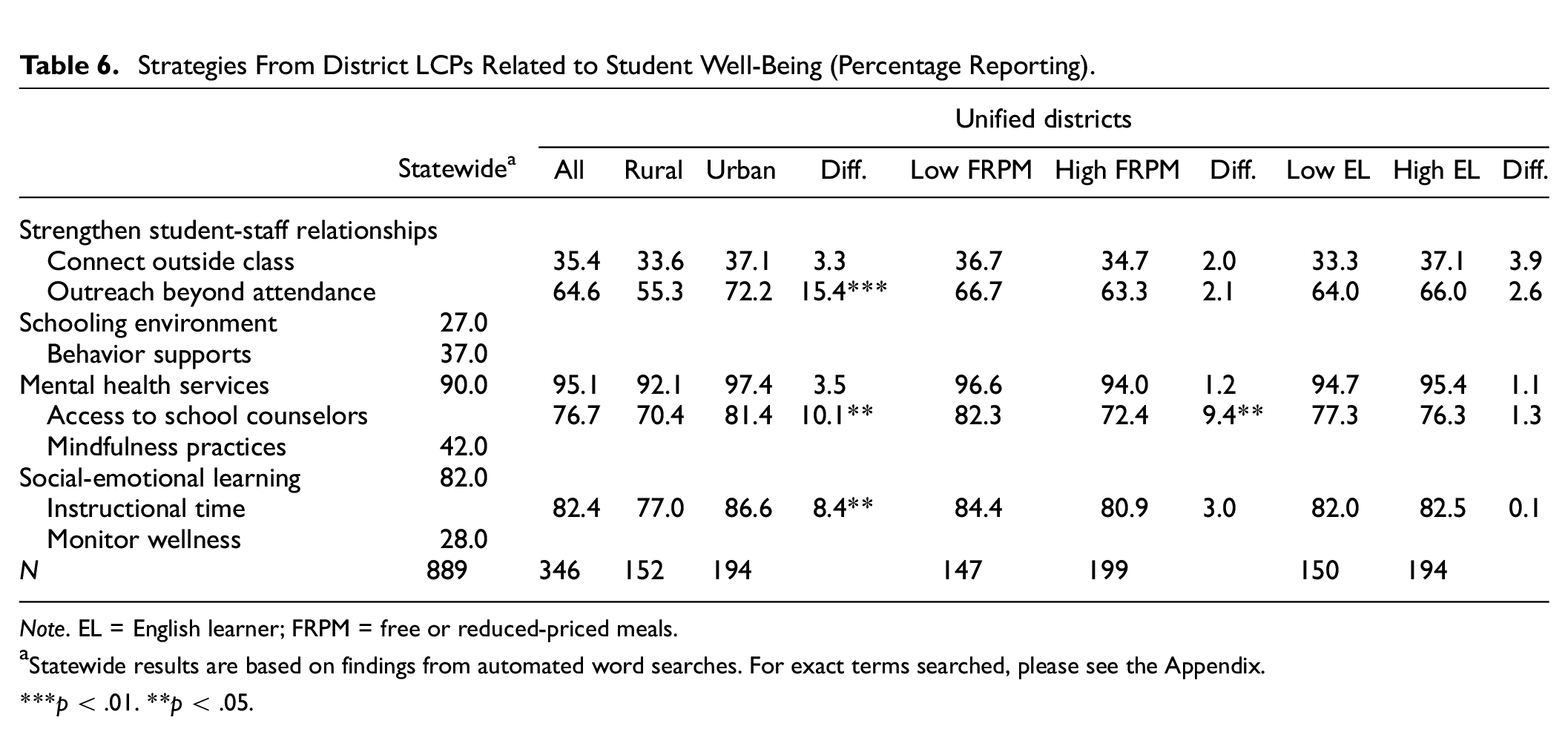
One of the primary ways districts attended to the challenges and stressors of online learning during the pandemic was with an explicit intent to establish supportive schooling environments despite the distance. Statewide findings indicate 27% of districts specifically referenced school climate or school culture in their plans (see Table 6), suggesting that, for some districts, focalized attention was given to the quality and character of schools in general and not just procedurally. This included the application of positive behavior interventions and supports (PBIS), 23 cited at slightly higher rates statewide (37%). Thirty-five percent of districts also intended to offer ways for students to connect with staff through office hours or communication apps (such as Remind or ClassDojo). Notably, 65% of unified districts planned to reach out to families beyond attendance, indicating communication outside of traditional outreach was anticipated by many districts.
Strategies From District LCPs Related to Student Well-Being (Percentage Reporting).
Note. EL = English learner; FRPM = free or reduced-priced meals.
Statewide results are based on findings from automated word searches. For exact terms searched, please see the Appendix.
p < .01. **p < .05.
Mental Health Supports
LCPs also described resources and programs to support students’ well-being. Evidence indicates that, across California, districts overwhelmingly cited mental health services in LCPs (see Table 6). These services included mindfulness practices as well as days dedicated to student wellness—noted by 42% of districts statewide. Moreover, while 77% of unified districts indicated students would have individual access to school counselors, this was more likely to appear in the plans from urban, higher income districts. Supports for students were also described beyond mental health, including check-ins around academic, technological, social-emotional, and physical needs that may be mediated through new programs, such as the Virtual Tutoring and Wellness Center outlined by Natomas.
Social-Emotional Learning
Enfolded within districts’ plans to support well-being was a focus on social-emotional learning (SEL). Statewide, 82% of districts noted SEL in their LCPs; however, less than one-third (28%) cited plans to monitor wellness through surveys or universal SEL screeners, such as CoVitality (see Table 6). Districts also planned to determine social-emotional support needs in other ways, including online referral systems as well as device and social media monitoring tools (e.g., GoGuardian, NewDawn) that alert staff if students are exploring content related to mental health or suicide ideation. Supports for SEL were also often blended with instruction, with 82% of unified districts outlining distance learning schedules that devoted instructional time to SEL, usually organized around a specific curriculum (e.g., CharacterStrong or Healthy Living Lessons) that could differ by grade level.
Across district plans, findings indicate broad adherence to the guidance outlined in SB-98. While varied, districts generally planned to leverage a range of resources to provide educational continuity and support students’ instructional access, including the tools to mediate that access; evaluate academic progress; and provide supports for students’ overall well-being. However, the limited details contained in most plans—particularly about the actions and services for students that may need additional supports (e.g., ELs and students with disabilities)—proffer doubts about whether viable plans were in fact developed in some areas prior to the start of the academic year. Despite this, equity was a clear throughline in LCPs, as, even if limited in detail, districts addressed the differing needs of students from special populations.
Discussion and Conclusion
As policy proffers guidelines for practice, it is important to examine policy documents that directly induce action (Cardno, 2019), particularly in a crisis, which do not affect students or communities equally (Chen & Krieger, 2021). This work thus proffers the first comprehensive review of local educational plans developed in response to policy mandates passed during the pandemic, highlighting the guidance state policy presented to districts and the extent districts drew on this guidance in their described actions and services. As a whole, SB-98 emerged as the policy solution for the educational continuity problem borne from pandemic-induced school closures statewide. Although it addressed this problem across several domains with a new lens, it also leveraged the framework of prior policy—mandating districts to complete plans, but revising the content those plans normally include. This echoes previous scholarship, which finds that legislation enacted after a focusing event often reinforces programs and practices already in place (Birkland, 2004; DeLeo et al., 2021) likely due to feasibility (Kingdon, 2003); in fact, policy innovation is unlikely to develop in the aftermath of focusing events given the need for a rapid response from policymakers, particularly as policy windows are only open for a finite length of time (Birkland, 2004). There is thus little opportunity for post-event learning, constraining innovation efforts and potentially limiting the substantive impact of the policy itself. Further, in its guidance to districts, SB-98 outlined the student needs districts should address, but not the strategies they should select, reflecting the findings from Willse (2023). As such, in their plans, districts adhered to policy requirements in variable ways, demonstrating the sensemaking demanded at this time as well as potential differences in capacity and will.
Although the completion of plans is “business as usual” for school districts in California, SB-98 revised the guidance for these plans in ways that may have impacted how districts responded to this similar, but altogether different, mandate. LCPs are therefore a unique tool through which to gauge the capacity and will of districts in a pandemic context. Results reveal distinct variations in the perceived capacity and will of unified school districts. For example, prior programs districts may have had in place at the onset of the pandemic, such as one-to-one device initiatives, suggest a high capacity to adapt to changing contexts—particularly those that rely on the resources, knowledge, and networks acquired through their past use (i.e., online learning). On the other hand, reliance on former strategies might also be an instance of a low capacity in cases where a district, either knowingly or unknowingly, misaligns prior resources with new conditions. Capacity conceptualizations are thus context-dependent and inherently tied to the willingness of a district to engage with policy measures.
As aforementioned, a district’s will in response to policy changes can fall along two dimensions, where districts that actively embrace new policy possess both a high propensity to act and a positive perception of its utility, while districts that only view the policy positively (possessing a lower propensity to act), subsequently undertake a more passive approach in their response. In their completion, LCPs reflected both active use and passive compliance by districts, evidenced by the actions and services outlined as well as the degree to which they were described. In this case, active use districts were those that included rich detail throughout their plans in addition to outlining distinct actions and services above and beyond those mandated by the state. Conversely, many districts were more passive in their approach, developing LCPs with fidelity but offering limited information about what a student would learn or how a service would be actualized. This mirrors prior research on LCAPs, the plan districts typically submit, in which district approaches tend to reflect compliance rather than innovation (Alejandre & Massaro, 2016; López, 2019). Moreover, in several districts, LCPs only offered additional detail in select sections; given that preexisting programs or services could already be described in LCAPs, it is possible districts borrowed from these earlier plans due to the rapid sensemaking necessitated in a pandemic context, limited time to develop plans, and/or leaders’ prior convictions about what may be needed to support students despite the content differences between LCAPs and LCPs. Without including specific information about the strategies a district plans to implement, it is difficult to isolate the later actions and investments that may have helped (or hindered) student progress. To this end, establishing a recordkeeping process that supports the curation of detailed district intentions is essential so that education leaders can make informed decisions about resources and the potential need for additional supports.
Capacity might also explain the contrasts we note between urban and rural districts in several areas of analysis, with districts in urban areas often describing services in their plans (such as science instruction or access to counselors) at significantly higher rates. This variation may be the result of capacity differences prior to the pandemic. For example, rural districts often face staffing challenges (Goldhaber et al., 2020; McVey & Trinidad, 2019; Nguyen, 2020) due to licensure requirements, lower relative pay, and location itself. Nevertheless, while LCPs from urban districts outline some services more often than rural districts, a large majority of rural districts still planned to offer these services to students. Moreover, as this analysis intentionally centers the instructional actions and services described in plans, it does not consider districts’ nonstudent expenditures; as rural districts spend substantially more on capital, facilities, and debt service than may be expected when unrestricted revenue is available (Dhaliwal & Bruno, 2021), it is possible districts may have continued to set aside unearmarked funds for this purpose.
Given the variation we observe in districts’ plans, it is evident that capacity and will play a role in the actions and services districts described; however, no mechanism currently exists within the state to examine capacity and will nor the implementation of the activities outlined in LCPs (or the standard planning document, the LCAP). Instead, community stakeholders are expected to hold districts accountable, drawing on the idea of reciprocal accountability (Darling-Hammond & Plank, 2015). While the primary audience for LCPs is the community, which can hold the district accountable in varying ways—advocacy for programmatic changes and student needs, elections of local school board members, and student enrollment, among others—ultimately, consequences for district action (or inaction) are not clearly defined. As districts are responsible for district-wide educational outcomes within localized systems that prioritize continuous improvement, such enclosed systems proffer state policymakers with scarce opportunities to understand the full extent of policy in its application on the ground (i.e., in the actions and services actualized by districts to support students). For example, while policymakers involved in the design of the LCFF intended to move away from a compliance model (Mills, 2017), evidence from LCAPs (Alejandre & Massaro, 2016; López, 2019) and the present work suggest many districts still employ a compliance approach. Moreover, without a structure for state-level oversight of LCP or LCAP implementation, policymakers can only gauge a district’s effort and effectiveness through the limited outcome measures that comprise the state and federal accountability systems—information that does not often point to specific areas for support and intervention. This, in part, reflects the siloed nature of government in general, in which coordination and coherence are persistent challenges to reform (Moffitt et al., 2018).
While this analysis thus proffers a layered examination of local planning during crisis, research limitations likely affect the interpretation of results. First, quantitative analysis may conceal the complexities that underpinned districts’ strategies and considerations given that, at this time, communities were affected in close succession by the pandemic and its disparate economic impact, as well as the racial injustice brought to national attention in the wake of police violence. Additionally, these plans are but one snapshot of the continual sensemaking that undergirds the planning process more generally, masking the important conversations happening in their development that such a document cannot capture (Blum & Knudson, 2016). District differences based on locale may also be a reflection of overrepresentation of suburban districts in the unified school district sample; regardless, these results suggest greater attention must be placed on rural districts in future examinations of pandemic operations, particularly given that they traditionally operate under unique circumstances (i.e., geographic isolation, low economic diversity) that may have been exacerbated by COVID-19. Further, to understand the full learning context of students in 2020–21, district plans (i.e., LCPs) must be considered in concert with later actions and investments. While not a limitation in design, this analysis strictly relies on these plans, probing local capacity and will in response to policy mandates enacted in crisis.
This work has broad implications for policy and practice, providing an additional layer of insight into post-event legislation and the differences that manifest in local responses to state-level policy. In terms of legislation, it is unsurprising SB-98 relied on feasibility given the need for a rapid response from the state. However, persistent challenges have been associated with the LCAP framework, including districts’ tendency toward compliance rather than innovation; limited details about the services to be offered; and the absence of a structure to oversee implementation at the state level. This work reveals these same challenges were present across LCPs, indicating a policy solution that was more representative than innovative, repackaging prior policy challenges for a different context. In fact, although crises can position problems at the forefront of the policy agenda, their very nature constrains the curation and development of innovative policy solutions. Despite this, one aspect of SB-98 that may prove more durable is the guidance for distance learning it commissioned. Finalized in May 2021, the California Digital Learning Integration and Standards Guidance offers support, in part, on implementing instruction in online, blended, or in-person learning environments for math, ELA, and ELD. As unplanned school closures continue to be a potentiality (Jimenez, 2023; Li & Jimenez, 2022), firm guidance on how to navigate online learning may be a valuable resource for LEAs in the future.
By examining local plans in a pandemic context, we also gain a richer understanding of what districts, which have intrinsic knowledge of their own constraints, planned to provide to ensure educational continuity. Regardless of their implementation, knowledge of the unique actions and services districts described may extend the capacity of other districts. While individual context may prove replication is unfeasible, awareness of these resources, programs, and activities could strengthen the educational system. Similarly, it is presently unclear who is involved in the local planning process and to what extent; for example, a paucity of literature examines how community stakeholders—who districts are mandated to include—are engaged in planning (R. M. Miller, 2020), and additional research is needed to extend our understanding of how other external groups (such as curriculum or educational technology partners) may influence this process. Additionally, as emergency federal funding was distributed nationwide during the pandemic, 24 districts across the country were mandated to submit plans outlining how funds would be invested to support instruction and academic progress—documents similar in purpose to LCPs. This analysis is therefore particularly poignant, offering insight into the varying actions and services districts nationwide potentially included (or excluded). Moreover, these results emphasize the importance of local capacity and what policy reform at any level may demand; as capacity is dependent upon the tasks one is expected to complete, this work offers additional evidence that future research should more thoroughly interrogate potential misalignments between the capacity an actor (e.g., a district) has and what it may need—what Moffitt et al. (2021) describe as the “capacity gap”—which, in this case, is ultimately relative to the goals of the state. As the nation continues to grapple with the effects of the pandemic on education, capacity considerations remain paramount to equitable education practices.
Despite the challenges the pandemic presented, its emergence heightened exposure of the long-term inequities housed within K-12 education, such as access to technological resources, and demanded their solution (Myung et al., 2021). Crisis thus bears both undesirable and desirable outcomes (Charland et al., 2021), as it introduces opportunities for reform in the policy windows it opens. As it is unclear whether the changes made to combat these issues will prove to be sustainable or simply symbolic, researchers and policymakers must remain attentive to the potential impact of the resources and routines implemented at the local level and continue to pursue scholarship and policy that aims to rebuild a more equitable system.
Footnotes
Appendix
Searched Terms for Automated Word Counts Across All Dimensions of Analysis.
| Variable | Concept | Search terms |
|---|---|---|
| Instructional Method | ||
| remote_adj | Distance learning | Distance learning/Distance education, remote learning, virtual learning |
| hybrid | Hybrid learning | Hybrid, hybrid |
| Technological resources | ||
| devices | Technological devices | (1:1|1-1|one to one) (device|technolog(ies|y)|computing|chromebook|laptop|tablet|iPad)s, Chromebook(s), iPad(s), tablet(s), laptop(s) |
| connect | Internet connectivity | Hotspot(s), hot spot(s), hot-spot(s) |
| Attendance/engagement | ||
| attend_track | Monitor attendance | tracking/monitoring attendance, tracking/monitoring engagement, Attendance monitoring, Attendance tracking, Engagement monitoring, Engagement tracking |
| sel_sst | Intensive reengagement strategies | Student study team, School attendance review board, SARB, School attendance review committee, SARC, School attendance review team, SART |
| Academic content | ||
| science | Science | science, STEM, STEAM |
| Assessment | ||
| assess_plan | Assessment planning | assessment calendar(s), assessment plan(s), balanced assessment system(s) |
| assess_diag | Diagnostic assessment | needs assessment/diagnostic |
| assess_instr | Formative assessment | benchmark assessment(s), interim assessment, Interim assessment block(s), (IAB), formative |
| assess_sum | Summative assessment | summative assessment |
| Student well-being | ||
| sel_sch_climate | Schooling environment | school climate, school culture |
| sel_behav_supp | Behavior supports | Positive Behavior Interventions and Support, PBIS, Positive Behavior Support, PBS |
| sel_mh_serv | Mental health supports | Mental health services, Mental health counseling, Counseling, Suicide prevention, Suicide hotline, Mental health hotline, Tele-health/TeleHealth, Self-refer |
| sel_mindful | Mindfulness supports | Mindfulness, Resilience, Mindful Mondays, Wellness Wednesdays |
| sel_mh | Social-emotional learning | SEL, Social-emotional learning/social emotional learning, Social-emotional wellness/Social emotional wellness, Social-emotional development/Social emotional development |
| sel_mh_surv | Wellness monitoring | Wellness Checks/wellness surveys, Risk Assessments/at-risk assessments, SEL Universal Screener/Universal Screener, CA Healthy Kids Survey, Kelvin Survey, BIMAS SEL screener, BIMAS, Behavioral Intervention Monitoring Assessment System |
Note. Searched terms include all potential variations of a word, such as capitalization and synonyms differences that may appear in district LCPs.
Acknowledgements
The opinions expressed are those of the authors alone and do not represent the views of the public agencies or foundations providing funding to the California Education Lab. The California Education Lab at the University of California, Davis, where the authors are employed, is thankful for the ongoing support of the College Futures Foundation. The authors are also grateful to Jill Hyunh, Francesca Sapien, and the undergraduate research assistants who coded copious amounts of data from public school districts’ plans and made this project possible: Okuny Awow, Jamaih Belk, Lorena Diaz, Nayeli Figueroa, Madison Ganas, David Garrett, Maggie Garzon, Anna Verdiguel Gillett, Keely Johnson, William Jung, Natalie Ken, Diyana Khurana, Nicole Lei, Erick Lopez, Erin Olafsson-Goldberg, Jennie Read, Carlos Rendon, Sarika Robinson, Jose Samano Catalan, and Zeke Spooner. The authors also wish to thank the anonymous reviewers, WestEd and Policy Analysis for California Education, as well as Professors Michal Kurlaender, Scott Carrell, Paco Martorell, and Kevin Gee for their guidance and support of this work.
Declaration of Conflicting Interests
The author(s) declared no potential conflicts of interest with respect to the research, authorship, and/or publication of this article.
Funding
The author(s) disclosed receipt of the following financial support for the research, authorship, and/or publication of this article: The research presented here was supported by the S.D. Bechtel, Jr. Foundation, the Sobrato Family Foundation, and the Stuart Foundation.
