




Abstract
Recently, the Education, Audiovisual and Culture Executive Agency (2012) have funded programmes designed to advance European citizenship and citizen competences through education. This paper reports on the findings from one project, Creative Connections, designed to encourage the “voices” of young people in exploring European identities.
Children (aged 9–16) in 25 schools in six European Union (EU) countries (UK, Finland, Spain, Czech Republic, Portugal and Ireland) developed artworks that explored perceptions of European citizenship. Their art was posted on a secure website and they discussed images with peers using automatic online translated blogs. The project facilitated representations of identity/belonging using a range of media. However, some artworks suggested that children were alienated from “Europe”, particularly EU responses to global austerity. This paper uses the theory of precarity to examine the ways in which the children expressed their concerns.
Some artworks suggest that recent economic and political decisions have had the effect of challenging a sense of shared European citizenship; they resist a positive sense of identification with Europe and demonstrate fear for their future based on their current lives. This indicates that the EU’s educational goals to promote citizenship competences may require revision to account for the challenges of contemporary societies.
Keywords
Introduction
The current political tensions within the European Union (EU) and across Europe are portrayed in the mass media as a state in crisis and a union that is coming apart at the seams. One way that such concerns might be challenged is through programmes of education. In recent decades, the European Community’s (EC’s) Education, Audio-visual and Culture Executive Agency (2012) has funded a range of programmes designed to advance European citizenship and develop citizen competences through education. This paper reports on the findings from one project, Creative Connections, designed to promote the “voices” of young people as citizens exploring European identity and European belonging.
These explorations of identity uncovered deep-seated concerns in some young people and revealed fear for their collective futures. Drawing on the literature of precarity (see, for example, Bourdieu, 1997; Ettlinger, 2007; Gallie and Paugam, 2002; Nässtrom and Kalm, 2014; Standing, 2011, 2014) and the increasing vulnerability of some sectors of society, this paper examines the ways in which the children expressed their concerns as citizens and what this could mean for educators and policy makers. It is notable that the literature of precarity rarely discusses or seeks the opinions of the children who are actually living the life precarious. The subject of some artworks in Creative Connections suggests that recent economic and political issues have had the effect of challenging the idea of shared European citizenship; they resist a positive sense of belonging to or identification with Europe; rather, they portray lives that are marred by fear, concern and uncertainty. It should be of great concern that young people are feeling like this about what they perceive as a particularly uncertain future. Given that school-based education is promoted as a means to prepare for life, then the results reported here suggest that what young people imagine their futures to be is very different to the ideal portrayed as they are prepared for “real life” beyond the school gates.
Using art and technology lessons, approximately 700 young people (aged 9–16) in 25 schools in six EU countries (UK, Finland, Spain, Czech Republic, Portugal and Ireland) developed artworks that explored perceptions of European citizenship. They posted these artworks on a secure website and then discussed them with their peers in all six countries using automatic machine translated blogs linked to each image. The project was successful in facilitating a range of representations of identity/belonging using different media and the results, as expected, varied between countries and between children of different ages. The purpose of the project was to invoke interest in using art in a range of ways to explore and represent ideas and perceptions; the research design allowed scope for exploration of a participatory process (the actual construction of the artwork) together with critical reflection on the results (a completed work), which again was discussed in a broader context within the Creative Connections online community.
Some of the artworks suggested that rather than developing a European citizen identity, some children were hostile towards “Europe” and felt that their voices were unheard. Some artworks depicted dissatisfaction and also great concern about the effects of economic austerity measures (exemplified as cuts in education or healthcare), scepticism of a unified Europe and fear for their futures.
Using art to explore complex issues in citizenship is still unusual in many schools because curricula for citizenship are more commonly aligned, and thus taught with/through subjects such as history or religious education (Burton and May, 2015). Many of the young people who participated in Creative Connections used the project as a means to challenge ideas about citizenship and to stretch their perceptions of European belonging and life in contemporary Europe. These images and the discussions that accompanied them indicate that the EU’s educational goals to promote citizenship competences (European Commission, 2015) may require revision to account for the many challenges facing young people in contemporary Europe.
Social precarity in Europe
Social precarity is a term that is firmly situated in the vocabulary of community and our social structures and it has now made public the precarious lives of those living on the “edge”. Precarity has been explored and debated in European research for some years now and evidence of its existence is collated and discussed. Bourdieu (1997) first used the term precariousness as a way of presenting what he viewed as a further means of social control of the populous “…based on the establishment of a permanent and generalised state of insecurity to force workers into submission, acceptance of exploitation.” He cited low wages and high unemployment as key factors in driving a way of being that is constantly uncertain. Thus, within such a framework, day-to-day life is difficult and such difficulties are not simply related to employment: they have far reaching consequences. In the context of this paper, precarity is defined as the factors associated with higher risks of social exclusion: namely, living conditions, work and education (Gallie and Paugam, 2002). It is the status defined by Banki (2013: 5) as “not quite, not yet” and leaves individuals feeling perpetually uncertain, a situation that can be both physically and psychologically damaging. The life precarious is a global phenomenon and, Standing (2011, 2014) argues, to ignore it is dangerous; he considers those who constitute the precariat as angry, frustrated and adrift and, as such, they are a threat to the stability of the societies within which they exist.
Precarity and those who live within its framework are most clearly defined by Standing (2011) as having the following.
LABOUR INSECURITY – their employment is insecure and unstable; workers often rely on zero hours contracts and have few employment rights.
LIVING INSECURITY – has distinctive relations of distribution; it relies almost entirely on money wages, usually experiencing fluctuations and lacking income security.
RIGHTS INSECURITY – this is the first time in history when the state is systematically taking away rights from its own citizens. More and more people are being converted into denizens, with a more limited range and depth of civil, cultural, social, political and economic rights.
Across Europe precarity and austerity have been openly challenged through demonstrations and, in recent months, through mass opposition to so-called anti-austerity measures. These anti-precarity movements (see Casa-Cortés, 2014) have developed in response to the concern of citizens regarding their status as workers existing in EU member states that appear to be most hard hit by the global recession. 1 Neilson and Rossiter’s (2008) exploration of this issue provides us with a suggestion that “…in the poorer zones of the world (wage) labour has ceased to be the key that allows access to full citizenship” (p.59) and they argue that within such situations, there is a need to reconsider and even reframe the subjective positions of both citizens and workers. We can no longer assume that national labour markets rest on strong foundations; indeed, the mass migration of people to seek work provides strong evidence for this. The use of measures for social precarity (see, for example, the Eurobarometer) have now defined trends in member states of the EU and, consequently, the research that has been generated from these data points to a need to understand the factors that put people at risk of the sense of alienation that can lead to social exclusion. Central to current concerns is the perception of issues such as “life satisfaction” (see Eurobarometer Survey, 2013: 20) and it is notable that in Portugal 61% of the respondents were totally unsatisfied with their lives and, across member states, there is a sense of despondency reflected in a pessimistic view of employment, economic recovery and healthcare as we progress through the second decade of the 21st century. However, a substantial proportion of the precariat’s population appear to be invisible and rarely discussed – their opinions and perceptions are rarely sought – they are children.
Explaining a life precarious
The status of children within the life precarious is one that is complex and in need of some discussion. Central to this debate seems to be our understanding of the child as a citizen. Cohen (2009) argues that our attitude to children as citizens is fraught with inconsistency: they are simultaneously legal citizens (e.g. holders of passports/nationality) yet judged incapable of making rational decisions thought to be central to self-governance. It is a sensible proposition that we ensure children should be afforded legal protection that is contingent with their age/ability to make decisions and, thus, a threshold for autonomous citizenship is levied (somewhat arbitrarily), usually at the age of 18. In liberal democracies – such as the countries included in this research – it is posited that as home life and personal space are protected then the personal is also political. As such, Cohen (2009) argues that the power of guardians to manage or control the personal space of children means they are unable to benefit from the potential opportunities to be a citizen and lack an individual (or even collective) voice. Therefore, whilst education claims to afford ways to allow children to explore and develop a sense of the personal/political, a tense relationship exists between what happens in school and what happens in the other parts of their lives.
Attempting to place the precarity of children as citizens within a theoretical framework found Bronfenbrenner’s (1979) ecological model, a particularly helpful way of exploring the many influences on a young person’s life that in turn affect how they situate themselves as an individual citizen and within broader contexts that may, or may not, include a family, a school, a community and so on. As Mutch (2008) argues, it is through exploring these inter-connected facets of one’s life (a discrete ecology) that young people can begin to develop their sense of citizenship. Each facet signifies a level of environmental influence from the micro (the personal sense of self) to the macro (the wider cultural influences that may affect the individual). In this research, we were expecting the young people to explore their individual self and their locale and then relate this to developing an artwork to express the key focus, a European self. The lesson plans and teacher training made it clear that such explorations required adaptions of their teaching practices in order to help their pupils to develop ideas, to challenge stereotypes and to voice those ideas with their peers.
Using art and image making to give voice to complex ideas has notable benefits in positioning young people as social agents (Mavers, 2011). Thus, it is the particular discourses within educational contexts that have implications beyond the classroom for personal literacy and, most relevant to this work, for an individual’s sense of citizenship and their place in society. It is notable that citizenship has appeared frequently within the discourse of art practice (Bishop, 2006, 2014; Kester, 2005) in recent decades and it is acknowledged that community arts, participatory practice and socially engaged arts are a much-discussed feature of art practice. When we represent art as a form of social dialogue and a platform for sharing practice then it is possible to argue that citizenship can be reinterpreted in ways that are person-centred rather than system-led. However, balancing artwork creation with reflection/analysis of the process to meet the requirements of a research project is genuinely problematic as it can taint the creative process and may limit the scope of the project. Bishop’s (2012) work is helpful in explaining how we might view and review the work created during Creative Connections. Her book, Artificial Hells, argues for a proper consideration of the aesthetic contexts of socially guided artistic projects, such as the one described here. Bishop is not critical of the social nature of many art projects per se; rather, she challenges us to be cognisant of how we perceive the artworks/artefacts/images in the own rights as opposed to the social construct they might be exploring. This is indeed a challenge and is vitally important to the participants and viewers of the artworks derived from Creative Connections; we hoped to challenge ideas, to change perceptions and to develop creativity, which may provide tangible food for thought, what Bishop calls experiences we “take home” from viewing an artwork.
This concept of the individual as citizen does not always resonate with the complex relationship one has within and to a nation state, but it is a powerful position from which to consider one’s understanding of learners within civil society.
What kind of citizen am I?
Citizenship education is a part of the national curricula of nearly every EU member state and policies to embed citizenship within state education systems have been well documented for the past 20 years. However, the laudable aim of educating for “better” citizenship is not a simple task. There is, as Lister et al. (2003) argue, a continual conflation of citizenship with national identity (this is particularly evident in the UK) and children may view it as irrelevant to them. This issue is not new; much of the research conducted into the “meaning” of citizenship in recent years has demonstrated that adults have problems deciding what citizenship means to them, so expecting children to be any different is unrealistic. Indeed, as the constant media debates about belonging, citizenship and national identities exemplify, we are in a continual state of flux with regards to who we really are. This tension is further exacerbated when we move beyond our national boundaries – what we may consider our safe place; such notions are omnipresent now due to the mass movement of people not seen since the end of the Second World War.
It was the aim of Creative Connections to challenge young people to think about what being European in the 21st century means to them. We wanted to explore ways of encouraging children in schools to challenge their ideas about citizenship identities and, in doing so, facilitate a collective learning experience that attempted to transform preconceived ideas and stereotypes. Transformation through collective learning is, Delanty (2007) claims, a core task of citizenship; therefore, Creative Connections experimented with online blogs linking different schools across the partner countries – through online interactions it was hoped that children would “talk” and share ideas. As Aldrich (2006) explains, most state educational systems, whether organised at the national or local level, seek to promote social cohesion and a means of so doing is to celebrate the achievements of the nation. Whilst we might hope that programmes of citizenship education in our schools are helping young people to develop into citizens in waiting, the reality is different. Youth is a time when the relationship to citizenship is in a state of flux (Lister et al., 2003: 237). This makes it a useful time in which to attempt to document and explore understandings of citizenship and any changes in the self-perception of young people as citizens.
With self-perception in mind, the collaborative research bringing six European partners together in Creative Connections sought to explore ways to promote citizenship understanding through art and digital media. Central to the research was the goal of a fresh exploration of European citizen identities seen through a range of educational and cultural lenses; the partners worked towards the exploration of citizen identities that are complementary rather than competing.
A European self?
European identity is widely acknowledged as a contentious notion (Olausson, 2010). The opening (and closing) of borders across Europe in recent months is reconstructing the meaning of state membership; as such, the role of citizenship education becomes acutely important as we view media reports that provide a largely unedited view of a fast-changing world. The migration crisis that has gripped Europe since 2014 challenges our views of cross-national, co-operative models of citizenship identity and is at risk of invoking fear and the support of nationalistic political attachments. 2
The European Framework for Key Competences describes a shared European identity as a key feature in assuring a unified EU (European Parliament, 2006). However, we face a problem in the lack of a shared definition or accepted conditions that are required to denote citizenship (as a legal definition) for all member states across Europe. Part of the attempt to address the Framework for Key Competences means that most member states include a citizenship curriculum within their wider state education. However, as Kerr et al. (2010) note, lack of common understanding about European citizen identity and a lack of enthusiasm for defining a “European dimension” is notable within education systems across member states.
Some citizenship education research (see, for example, Richardson, 2010) suggests that educators are reluctant to explore citizenship identity in any meaningful way and often avoid such discussions for fear of promoting stereotypes or being accused of indoctrination. However, as Antonsich (2014) argues, feelings of belonging to a community (in its many forms) are essential for citizenship and, consequently, a broad sense of belonging and its exploration are integral to contemporary systems of education. Osler and Starkey (2003) propose that citizenship education has the capacity to engender a common sense of belonging and that a primary task of education per se is to enable learners to develop new identities and broader connections; this might include a European citizen identity.
There are only a small number of studies that explore children’s constructions of a European identity (see, for example, Agirdag et al., 2012; Jamieson, 2005) and the results are unclear. Fligstein (2009) noted that young people are more likely to feel European and this refuted Green’s (2007) study that suggested that younger cohorts were less likely to feel European (as compared to older people). Barratt’s study in 1996 found that, on average, a sense of European identity will emerge and does so between the ages of six and 10. More recently, a study by Agirdag et al. (2012) suggests that non-European immigrant children have lower levels of European identification and they suggest that these children feel unwelcome, particularly when “European identity” is formulated in racial or ethnic terms. There are only a small number of academic studies that consider the promotion of European belonging and citizenship with young children through the creative arts. Creative Connections is unique in the respect that it has attempted to find ways to explore explicit and implicit connections. In a European context, this is of particular interest because it is common to see educational resources that explore differences framed in national contexts, traditions and cultural backgrounds and, without meaning to do so, such approaches may complicate shared notions of identity.
Children have been encouraged to talk, to listen and to consider the lives and ideas of others. Such skills are the foundation to strong citizenship understanding – the evolution of a collective learning capacity within society. This cultural focus on citizenship capabilities could be a key to the promotion of shared citizen identities within Europe.
Research design
There were many new dimensions to the design of this research study, for example the use of machine translation in quad blogs and image sharing via secure linked school groups; they are not the focus of this paper and it is the context of growing public concern across Europe about young people’s relationship to citizenship juxtaposed with political apathy and a state of what is termed disconnect (European Commission/EACEA/Eurydice, 2012) that presented unexpected artworks from the children. Rather than just doing research in schools, the ethos of the project was to ensure that our research was conducted with schools; the work was necessarily collaborative and participatory. The research was designed to accommodate different working practices in art lessons in schools in the six countries and was framed by a model of Action Research (Mason, 2007) within which art teachers and their pupils are integral to the research process. Researchers in each partner country sought four participating schools (two urban and two rural) with which they had some working relationship – each partner recruited two primary and two secondary schools. The purpose of using schools with some connection to the researchers was to ensure commitment to the project – the schools had to sign a contract for two years and agree to participate to the end of 2014.
In total, 25 3 secondary and primary schools in six European countries – England, Ireland, Spain, Portugal, Finland and the Czech Republic – participated in Creative Connections. All partners ran teacher training days in November 2012 and most schools began their research work in January 2013. Ethical guidelines were formulated for the project: consent forms were translated into Catalan, Spanish, Portuguese, Finnish, Sámi 4 and Czech and completed by participant teachers, parents and the children – the consent included permission to publish findings and images both online and in print.
Central to the work in these schools was the question: How does it feel to be a European citizen? Teachers and children were asked to review the artists’ database on the Creative Connections website and choose a theme that would underpin the work of their children: A. mapping identity – getting to know each other, part 1; B. mapping nation / community – getting to know each other, part 2; C. visual reporters; D. cultural guides; E. action (!).
After selecting a theme to explore, the teachers were asked to document the following.
What feelings and issues did children express through their artwork?
Did the process of creating artworks facilitate an improved understanding of a sense of European citizenship?
Each school ran the project for three months and during this time the teachers used lesson plans, 5 materials and the online gallery of images to develop their chosen theme(s). Researchers visited the schools regularly and interviewed teachers and children to explore their ideas, perceptions and reflections as the project progressed. These data were captured as visual diaries, interviews, classroom observations and surveys. As their work developed, children then posted their artworks and writing on to the Creative Connections website via the secure school-to-school quad blogs: grouping the schools in fours (and one five) provided a private space in which to share ideas – children were able to communicate in their own language as automatic online translation software allowed them to post messages and “talk” in real time. Children posted responses to each other and discussed the content of their work over the three months (see Figure 1).
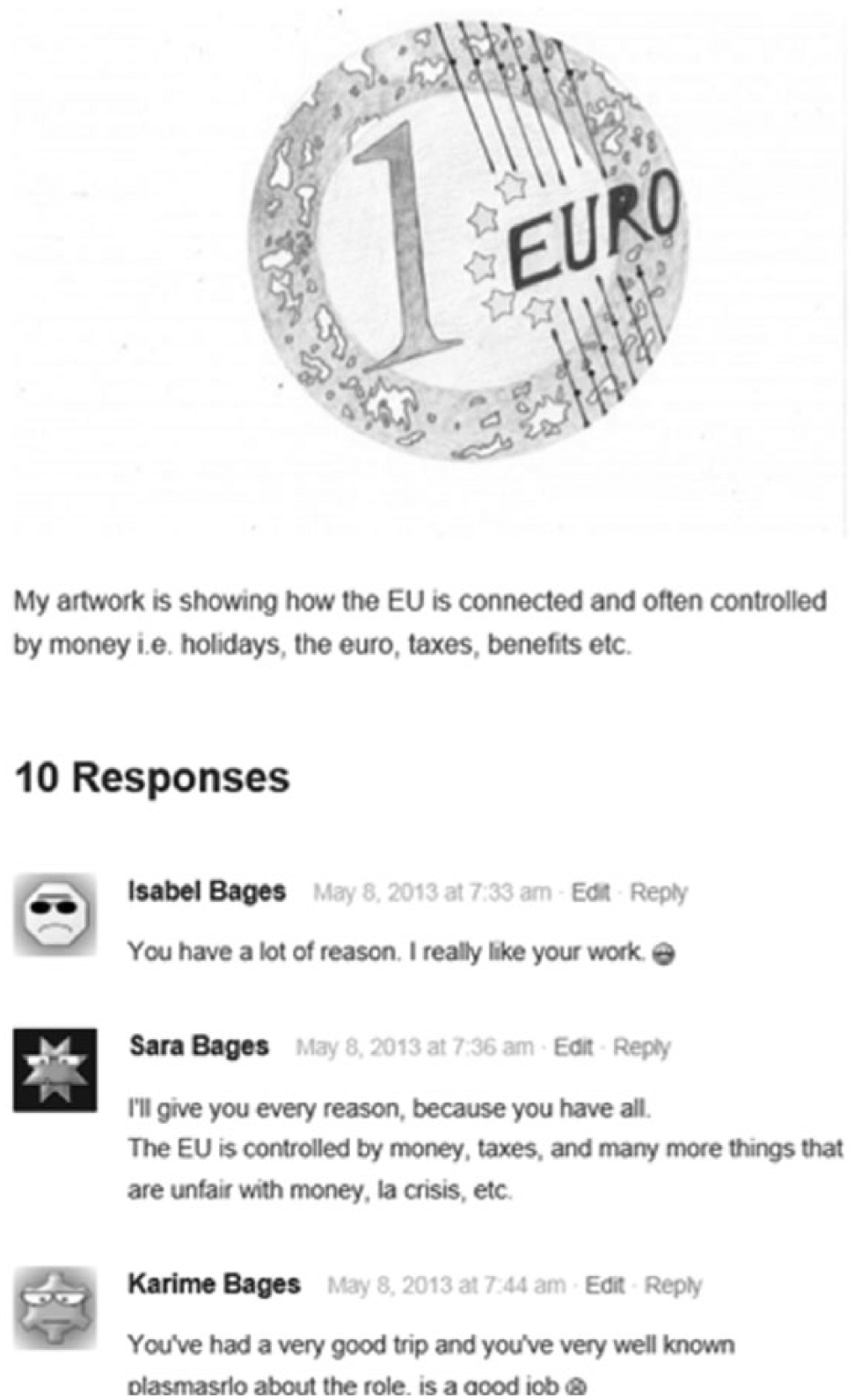
Example of a blog posting – UK/secondary Freya’s “Europe is Money”.
The Creative Connections artwork database contains over 1000 images, including from professional artists as well as those created by the children in the 25 schools. Images in the artwork database are tagged 6 in such a way that it is possible to search for images according to country, school, age group and/or theme. The study searched by theme and was looking specifically for images that portrayed aspects that might align to the theme of precarity (Standing, 2014) – these arose most commonly in the section under the theme of “Action!”
Using an adapted version of Pink’s (2009) method of visual thematic analysis that is grounded in a visual ethnography, the images generated by our participants are categorised not simply by their content but also by how “content is given meaning relevant to the project” (2009: 133) – in this case the aims of Creative Connections. The thematic analysis approach was further enhanced using Penn’s (2000) idea of semiotic anchors that create key iconic themes and references. Images were categorised based on their content and the commentary that accompanied them. As images were reviewed, multiple themes were identified (stereotyping, belonging, holidays, symbols, politics, precarity) and this paper specifically focuses on the themes of precarity they were an unexpected feature of the project aims.
Final designs were scanned and uploaded to the school’s quad blog. A critical aspect of the research were presentations by children: (a) initially to the rest of the class as part of the development phase; (b) their virtual “presentation” online to their peers in three other schools via the quad blogs – this included an explanation and discussion of each image and the finished artwork; and finally (c) engaging in dialogue with their peers in response to comments and questions about their images.
The selected images are presented here country by country to provide examples of the ways in which the children expressed their feelings about precarity and their relationships with Europe. The adapted thematic analysis approach (Penn, 2000; Pink, 2009) enabled the construction of key iconic themes and references. Table 1 summarises the themes linked to precarity that are present in the artworks.
Summary of imagery relating to precarity.
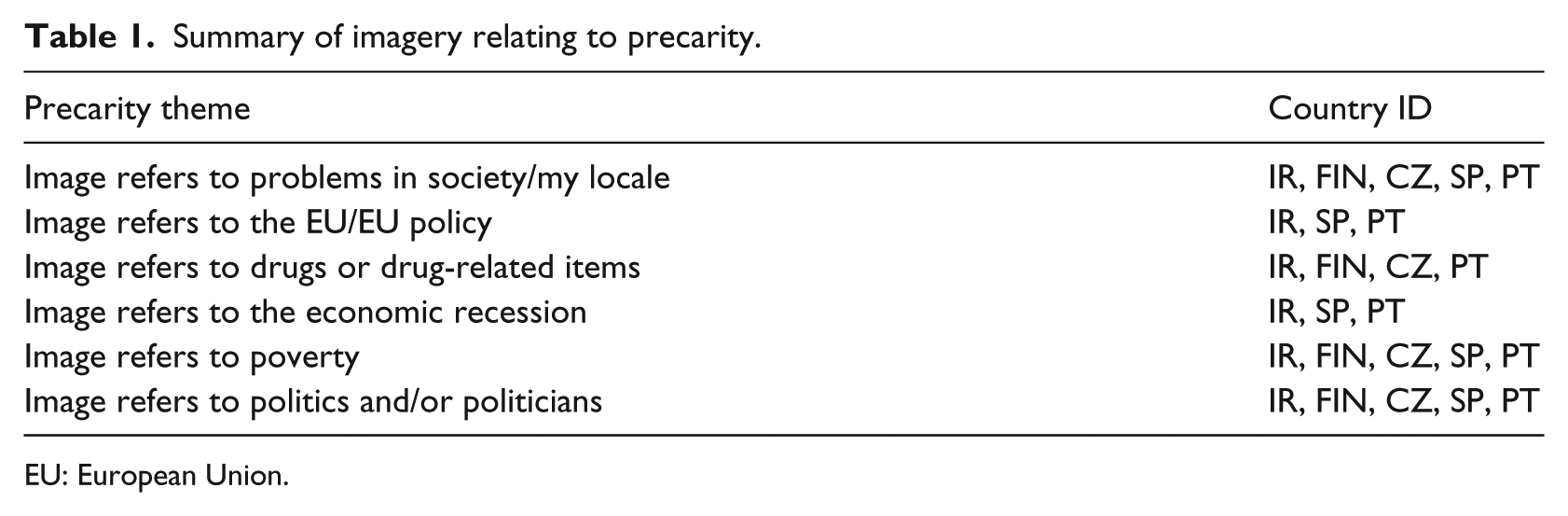
EU: European Union.
Table 1 reveals an important finding relating to imagery created by the children in the six partner countries across Europe – there were no images from any school in England that included imagery portraying an aspect of precarity. In fact, children from the schools in England tended to focus on very different themes: merchandising, logos/brands and landmarks recalled from travel. This does not mean that no schools in England discussed issues relating to politics, to the economic climate and/or contentious issues relating to being a part of Europe, both as individuals and within the context of the EU, rather they did not continue to “voice” these ideas into their artwork. Once they had moved from talk to paper, the children’s critical discussions seemed to evaporate and they generated images that remained close to the personal self – their “immediate” citizen identity rather than anything beyond that state.
Findings: Images and themes
Artwork from Marta in Spain (age 13) first brought the young people’s sense of disconnect to the fore – she presented angry red figures floating, unconnected on a black background and this was subtitled with her written explanation: There is no work at all. The cuts, they trimmed the people. There is, Marta explained, is fear and concern when the children think about their lives – they are facing an uncertain future when around them society seems to be crumbling. In relation to the future, they experience what Ettlinger (2007: 325) describes as “impossibility of prediction”, an inability to be and feel optimistic. This section presents a selection of the images that reflected key themes of precarity, which are presented country by country.
There was a river flowing out and things like poverty and that written in the river; like stuff I wanted to float out of my life. I drew Europe on one side and Ireland and then a bridge connecting them together and then the Europe flag going around all of it. Stuart, Eire
Stuart’s artwork (see Figure 2) is unusual in that he notes a positive description of Ireland’s relationship with the rest of Europe and he includes the EU flag as a means of connecting the two countries across the bridge and river. However, he also describes the things he wishes would “float out” from his life, namely the recession, alcohol, drugs and poverty. These images were common in the schools in Ireland and pupils complained of stereotyping of their national identity that was linked to alcohol and a drinking culture.
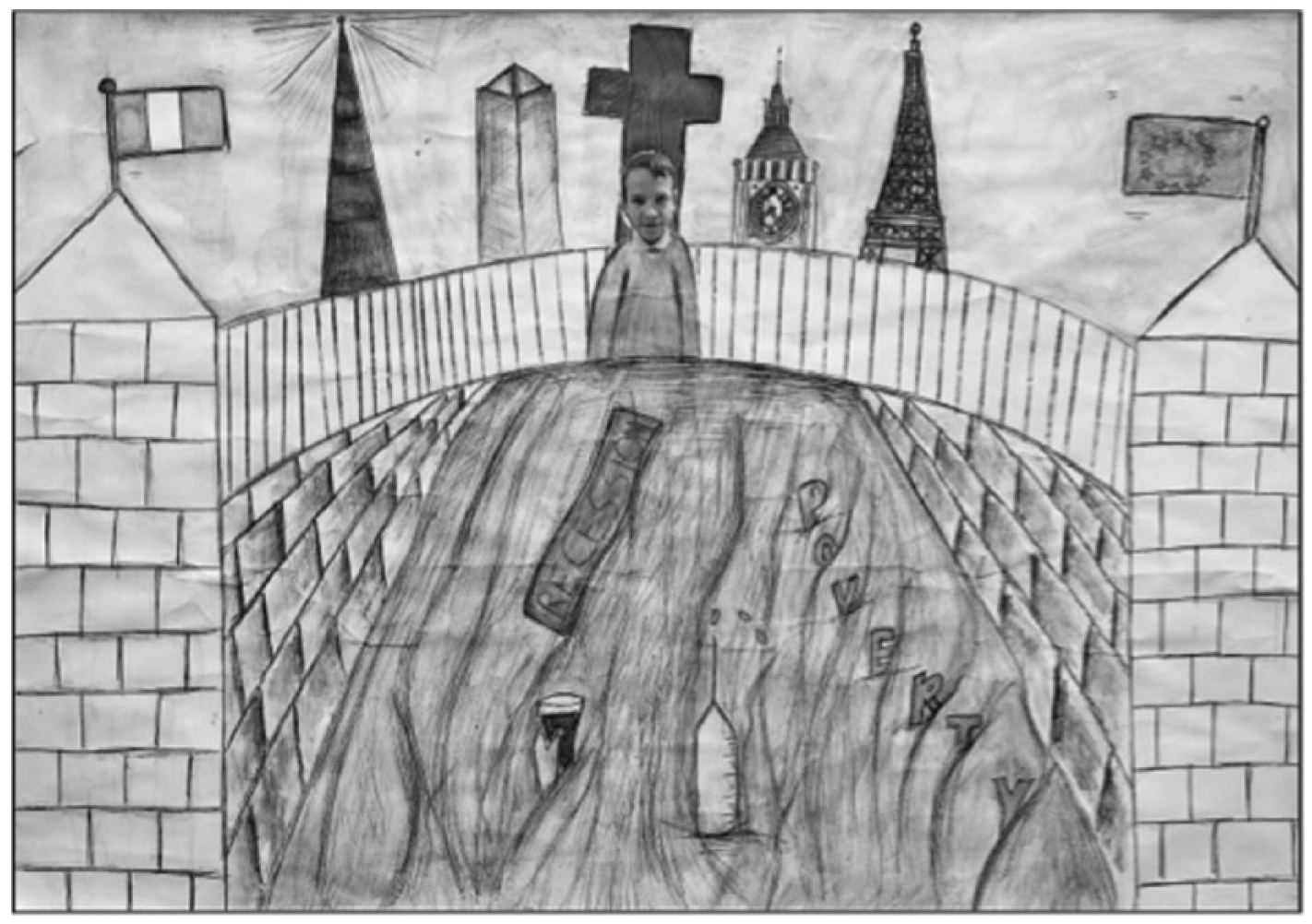
Stuart, Ireland.
CZECH REPUBLIC: Elementary (middle) school, Prague
The children in this school were 12 years old; their work emanated from a project that focused on marginalised people in general and specifically about the Roma, 7 because they comprise a substantial proportion of the population in Ústí. The majority of them live in the poorest parts of the city – designated as “ghettos” – and live a precarious existence. The teacher described how discussions with the children revealed great empathy with people who they described as “almost invisible”; they were concerned about how these people existed and how they were perceived by society.
Fuzzy Man (Figure 3) is one of their creations.
This picture is fuzzy because the man is drunk and trembling. Strange people live in every city across Europe. We talked about those from our town; some of them are mentally ill and some are just crazy. They wanted to be different? Jana, Czech Republic
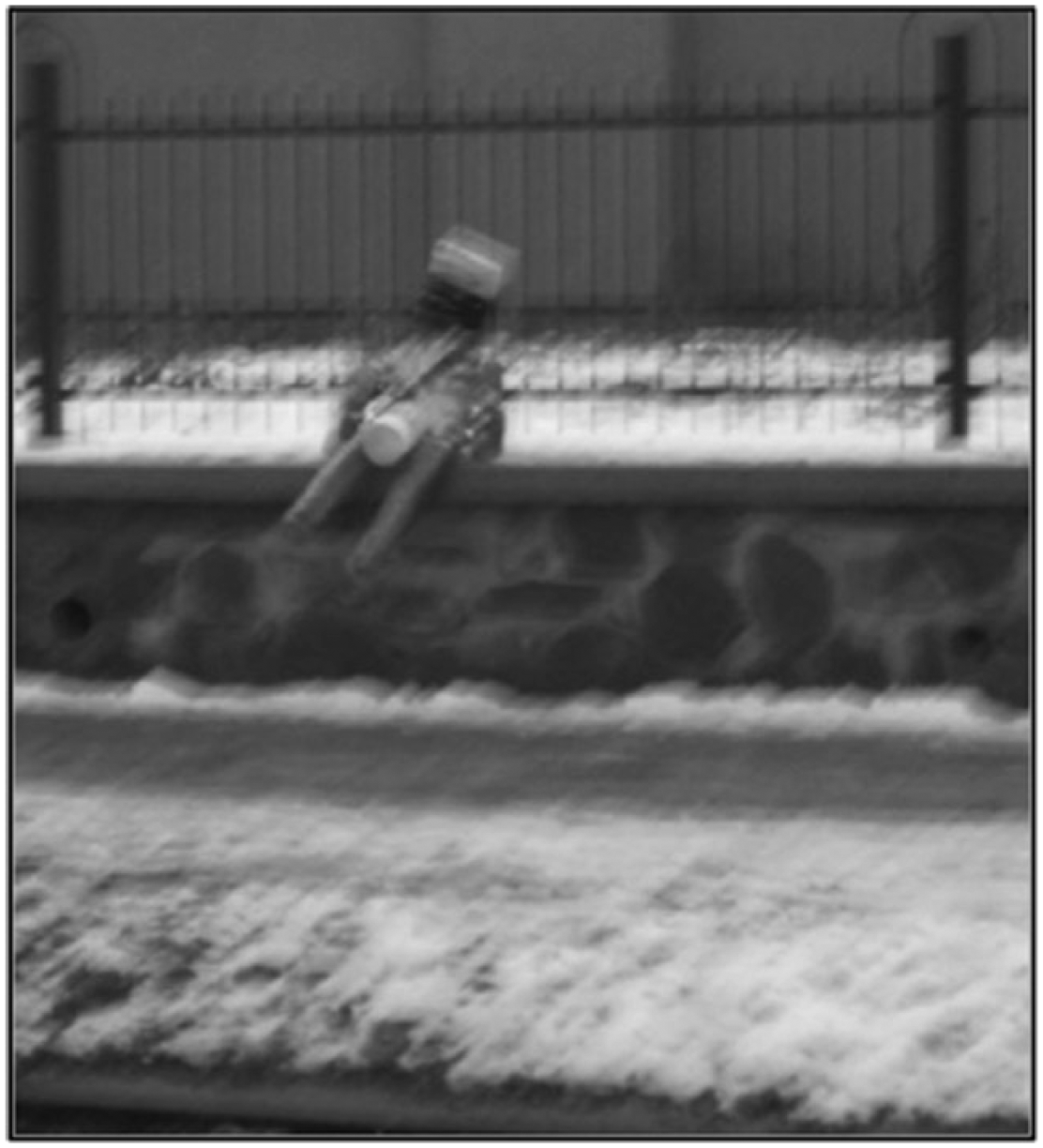
Fuzzy Man.
When the project began and the pupils chose to explore these issues in their locale, teachers 8 admitted that they were afraid and concerned about how the children would discuss and portray people who they see as very different to them. However, rather than displaying any hostile behaviour, the children were eager to make the invisible, visible (see Figures 4 and 5).
Some of them are very poor and doing sad things (prostitution, drinking alcohol, taking drugs). But they belong to our society too. We created the figures from different materials and placed them on their special places in the street. Finally we made photos. Aleny, Czech Republic
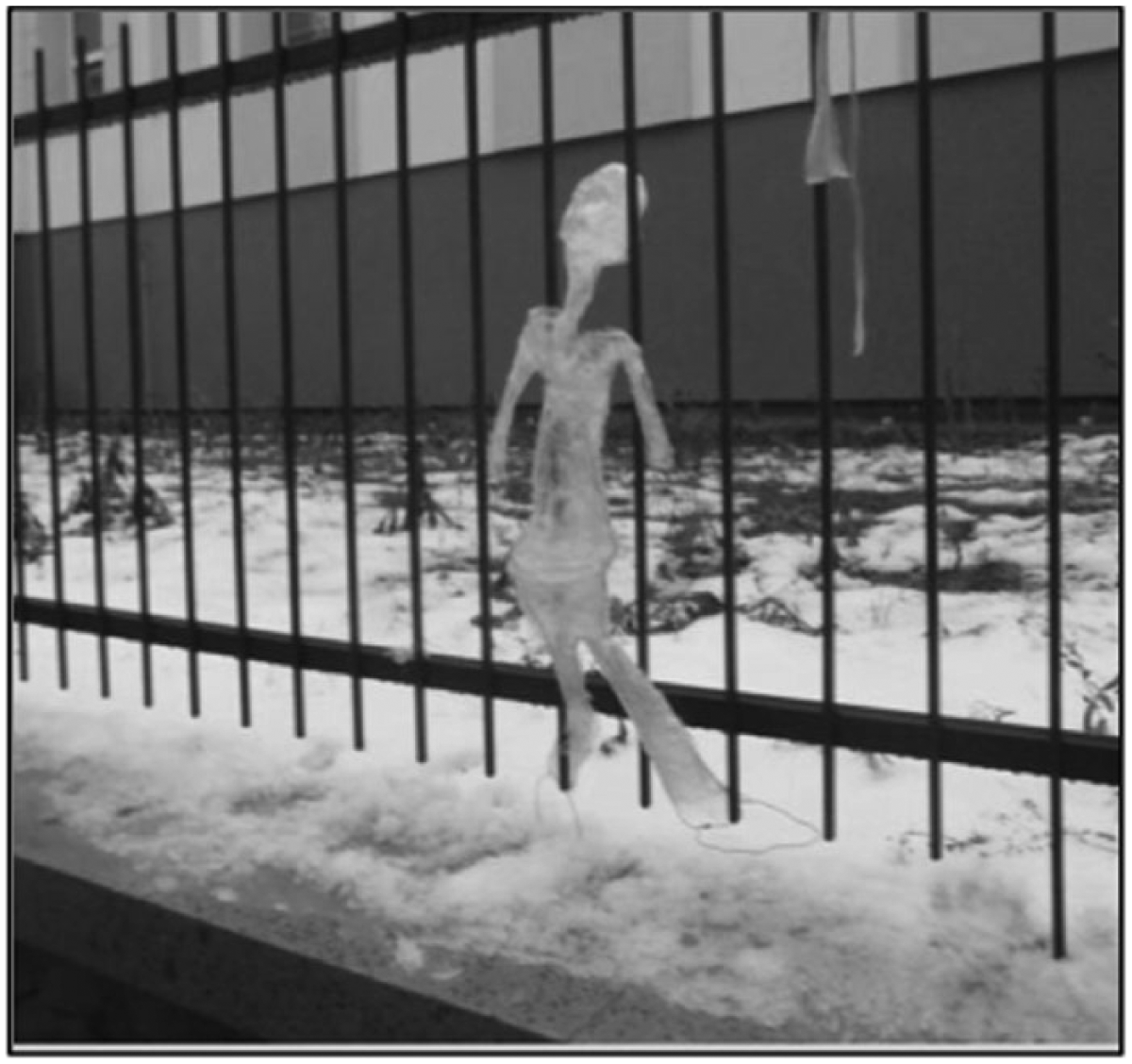
Invisible Figure.
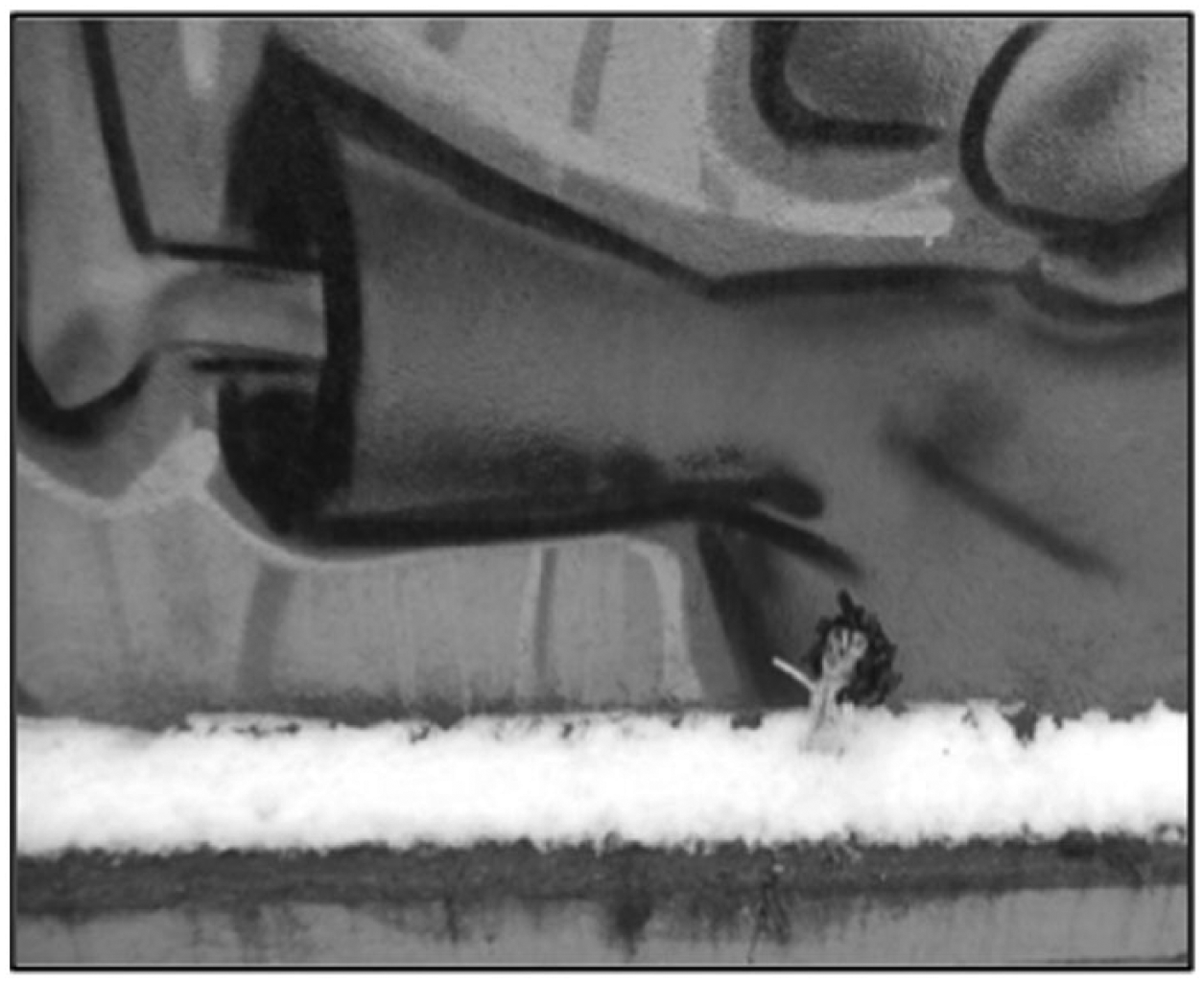
Little man.
FINLAND: Secondary school
“The idea behind the work was to describe my thoughts about Europe: children and young people are the future of the world. I think the children describe the job ahead and equality” (Ida, Finland).
Ida’s image (see Figure 6) portrays children within a “safe space” whilst they are surrounded by chaos depicted by fighting, poverty and alcohol abuse. Her work is based on classroom discussions where children talked about the world around them and their relationship with this; during the lifetime of the project, the Russian army had occupied the Ukraine and Finnish colleagues explained that there was widespread concern within Finland regarding further actions from the Soviet Union. During interviews, teachers revealed that children in Finnish schools were concerned about the changes in their society and the poverty that was becoming evident in their country, but they wanted to think about ways they could change this and ways that they could be agents for such changes. One of the quad blog respondents from Portugal, Syuzanna, summed this up in her comment “Very good idea because you've drawn your thinking and an alternative to many of us. We are children we are aware of what is going on in other countries, but… we [are not heard]”.
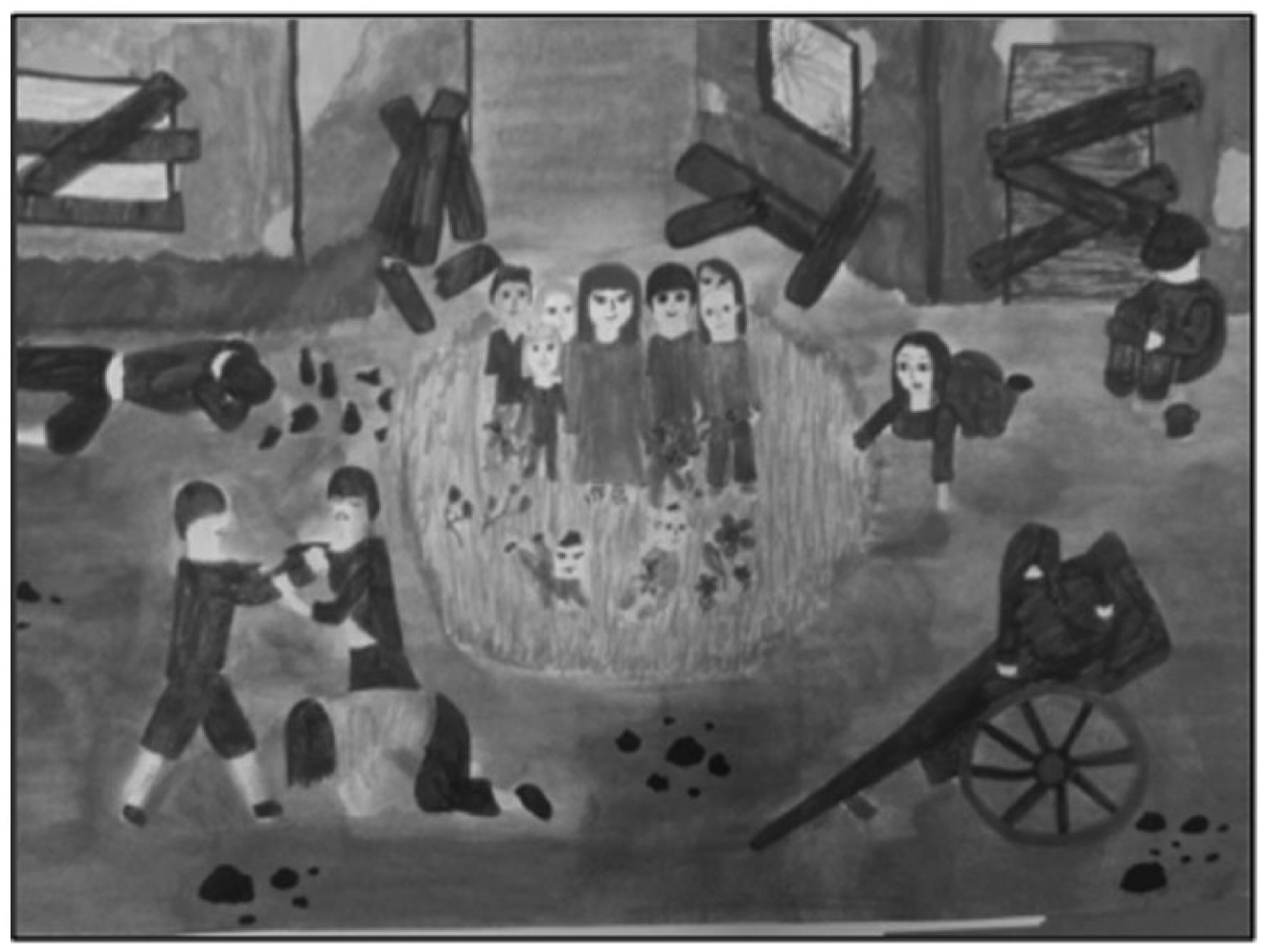
Ida’s world.
SPAIN: Elementary school, Catalunya
In Spain, the children demonstrated their capacity to be agents of change through the work conducted in all schools, but the work of the 9–10 year olds in one Catalan school was selected to show how their creativity and determination to “act” created a thought-provoking installation. Interviews with the teachers revealed that the children were angry and concerned about a range of issues.
As Figure 7 shows, the children focused their attention on the unfinished school; work stopped in 2013 when funding ran out and this provides a daily reminder of the impact of the economic crisis. This was at the heart of the issues the children wanted and needed to work with. Their topics of interest were many: economic conflict cuts to health, a perceived attack on the Catalan language, animal abuse and pollution of the planet. They created a large mural along the unfinished building with a series of metaphors that rejected current policies implemented to fight the economic criwsis and collectively created an installation of a cemetery criticising everything lost with the crisis (see Figures 8 and 9).
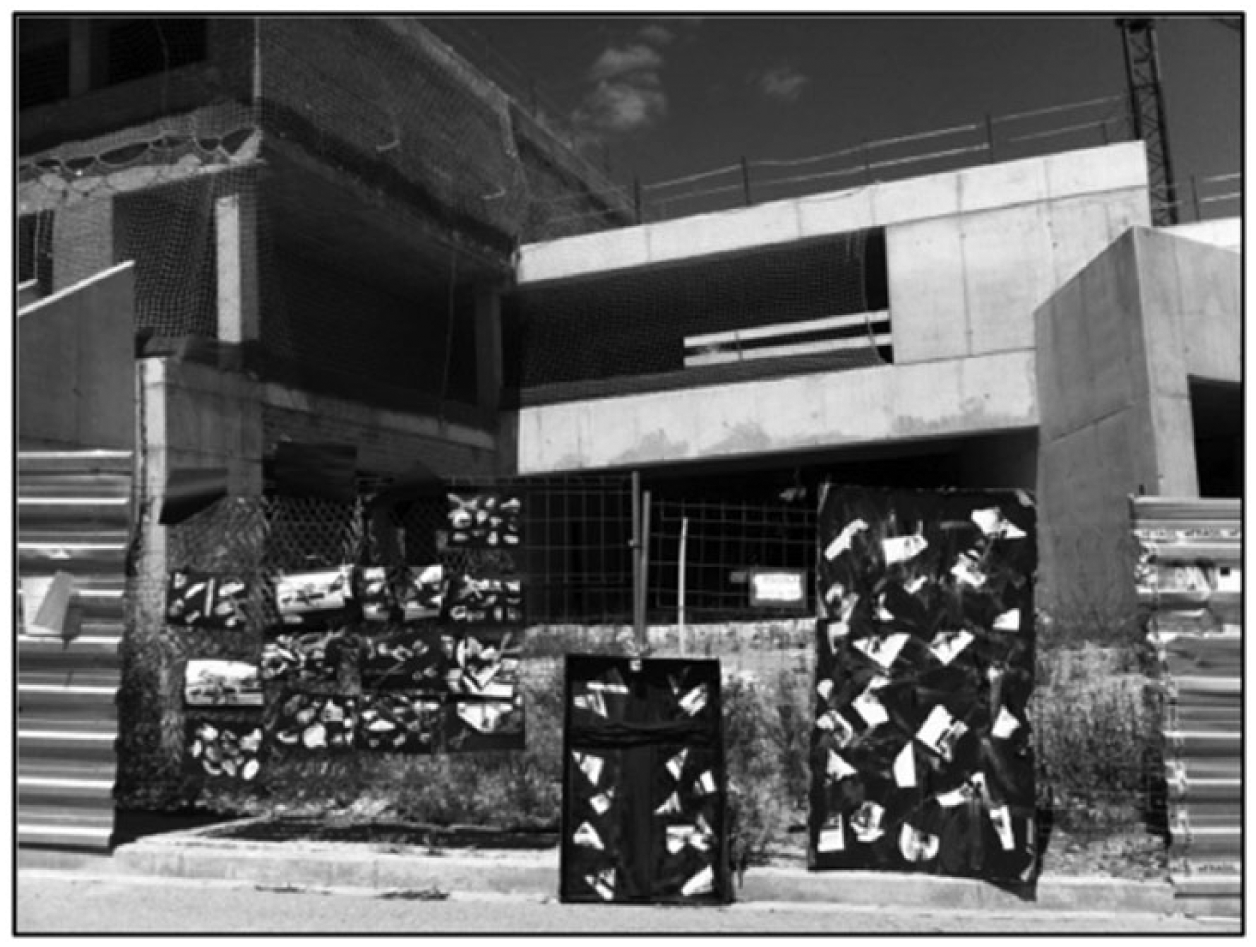
Our school.
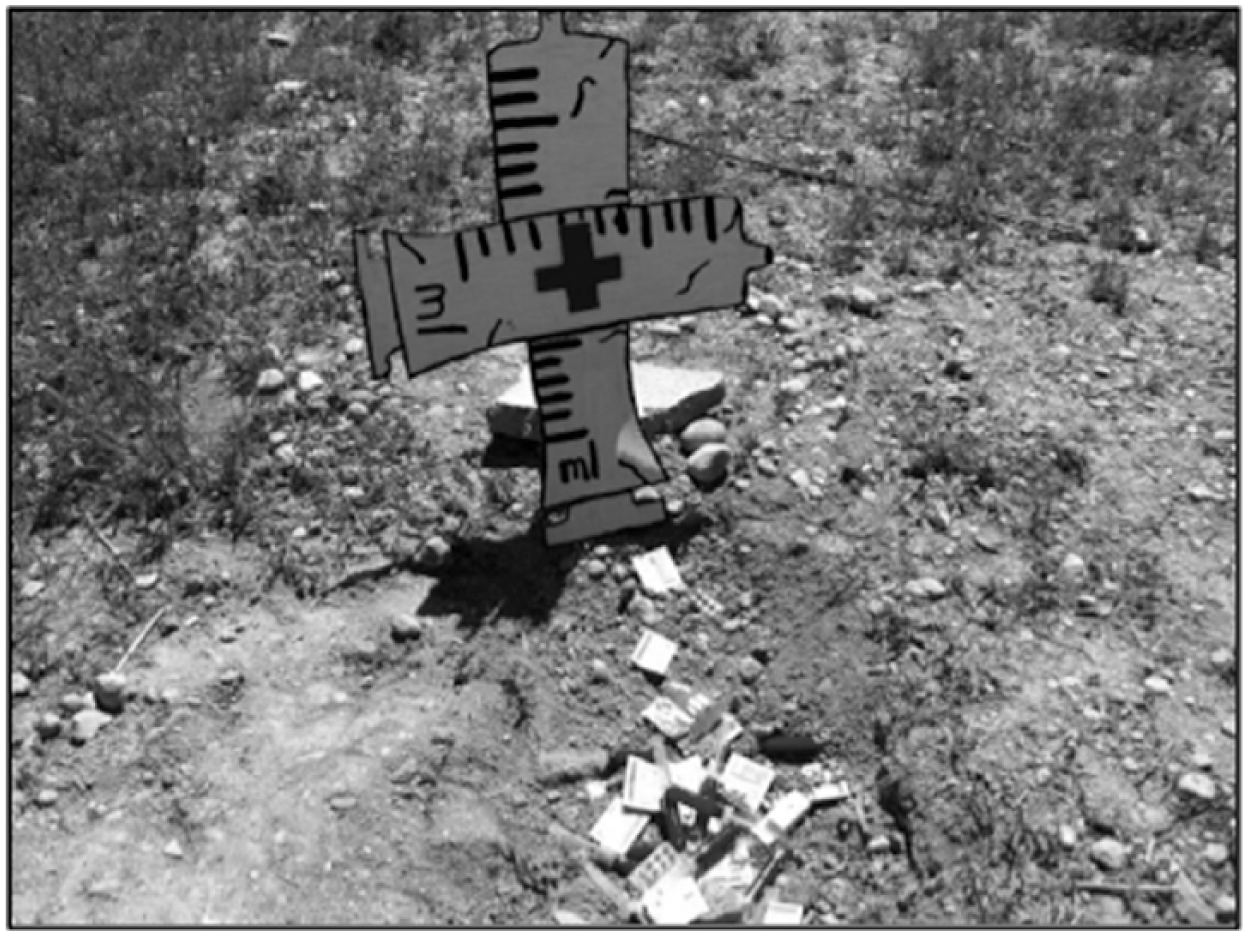
The tomb of healthcare.
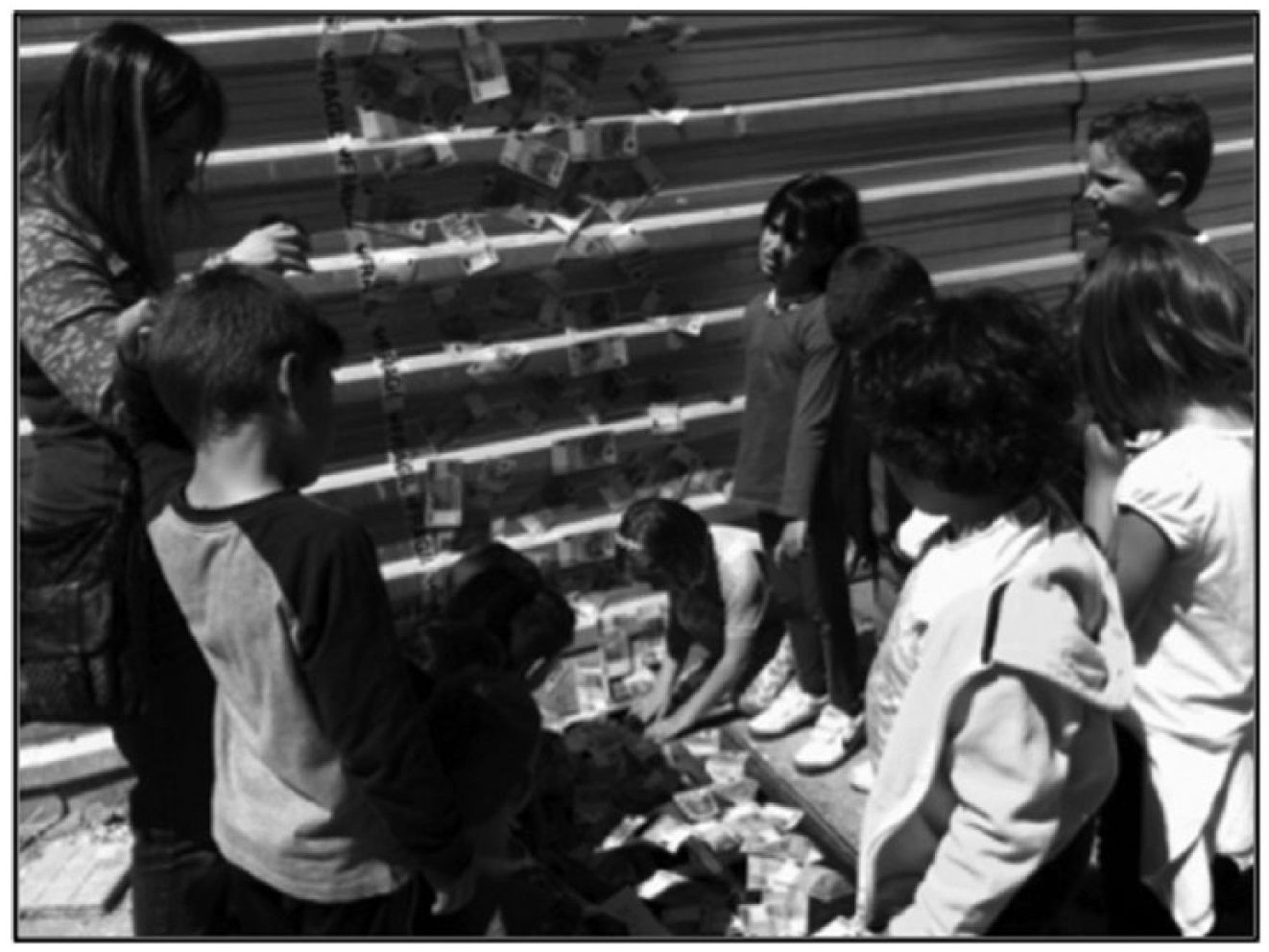
Money down the drain.
The unique element to the work at this school was its public nature – the installations were street-facing and so the local community were aware of the projects and people visited the school to look at the artworks and to read the comments written and posted daily by the pupils.
I’m Agna. This is the My name is Lucia. This artwork done with classmates is called
The reflections from staff and children on concluding the project reveal a change in their feelings about their own ability to contribute; Carmela (teacher) noted that they were able to “create a localised dialogue and bring their ideas out of the classroom into the street.”
PORTUGAL: Elementary school, Viana de Castelo
The class teacher explained that the “crisis” theme was very popular amongst children and they were eager to verbalise ideas and then translate those discussions into images. In the village where the school is situated there are fishermen, farmers and others whose livelihoods are fast disappearing; there is tension with economic migrants and the “competition” for work.
The Portuguese example is unique in that the whole class worked together to create a single, collective artwork; their goal was to describe, analyse and critically explore visual images from different sources, such as the internet, newspapers, magazines and written words. What emerged was a synthesis of the debates about the history of the country and its present difficulties due to the economic crisis.
The large collaborative work provides the analysis of the evolution of a nameless city. Entitled Money Rules in Europe (Figures 10 and 11), the children in this class created a montage (3 metres high and approximately 1.5 metres wide) including perceptions of Portugal’s past political landscape – the 25 April Revolution, the present and future – the euro crisis and social instability – as a teacher explained, “pupils were [expressing] anger, lack of values established by democracy, the dominant political power and money”. Essentially, they wanted to show what they knew, the depth of their understanding and the fact that they could “feel” the recession.
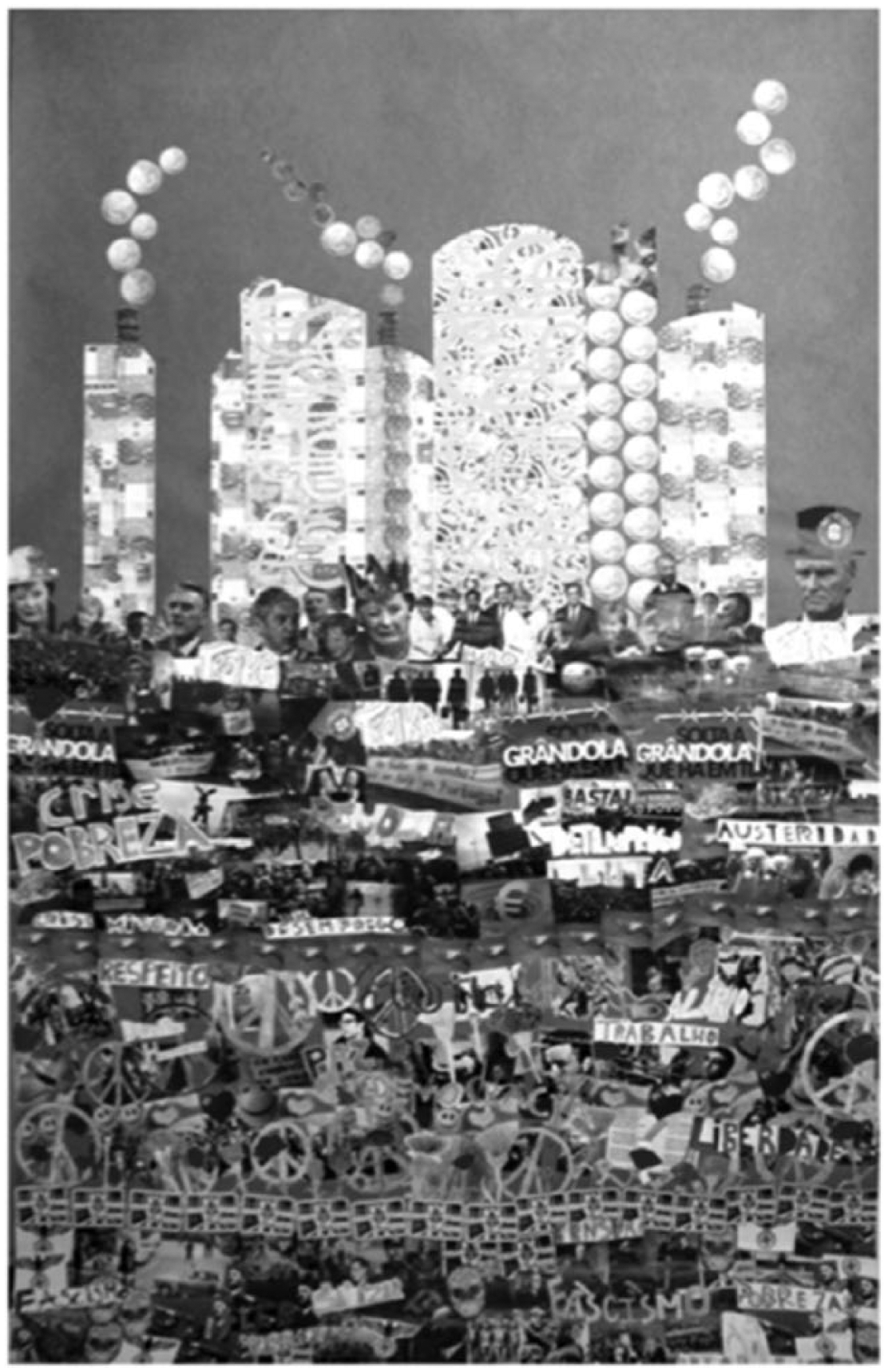
Money Rules in Europe (class montage – mixed media).
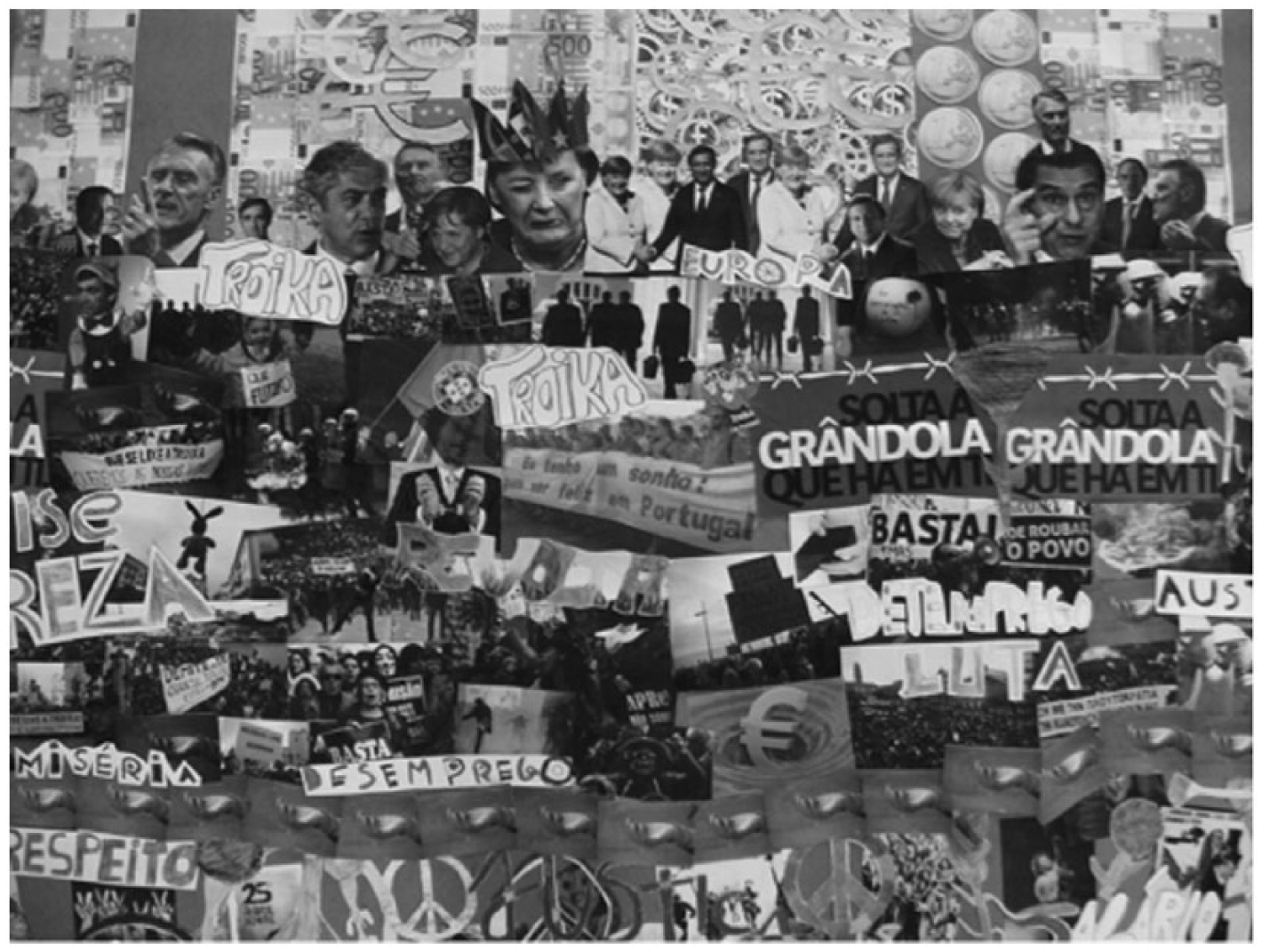
Money Rules in Europe - close up section.
The montage includes a range of historical artefacts and is topped by current political leaders who, it is suggested, are allowing money to flow out of Europe (through the buildings at the top of the artwork).
Figure 11 shows detail from the montage detailing the concerns of the children: Respeito (respect) is overthrown by Miseria (misery) and so the layers of hope/freedom are replaced by images of protest and mockery of leaders of EU member states.
This bold piece of work is similar in its genesis to that of the work in Spain and it is the pupils from these two countries who generated more work of a collaborative nature and work that included overtly political commentaries.
Discussion
When viewed in light of the original goals of Creative Connections, these data (images and text) reveal that, in many instances, rather than feeling a close affinity to a European identity, the children who participated in the project were feeling increasingly alienated and fearful for their future in what appears to be a precarious Europe. The way that the children demonstrated aspects of their European selves evoked deeply personal concerns – those elements of what Osler and Starkey (1999: 202) describe as “local experience”, which is critical to one’s evolving citizen identity. So, this suggests that their perceptions are halted at the personal and the local because it is hard to see how there is a wider collective sense of identity when it appears that society is unequal, as a Finnish child commented:
When I visit a country like Austria, with all its natural and artistic heritage, I even forget that Europe is going through a severe economic crisis. Countries like Portugal, Greece, Spain and many others, despite their natural beauty and architecture, are struggling to maintain their standard of living to which they were accustomed. Whose fault is it? Nobody seems to know. One thing is certain: the word “crisis” is come to stay.
It is within the confines of the research phase of Creative Connections that evidence of children’s perceptions of precarity arose. In creating artworks that explored their perceptions of European identity, children in five of the six countries included symbols, imagery and text that made particular reference to their concerns about the economic and political systems within which they exist. Case studies summarising each school’s work demonstrate that the focus of the lessons was not to explore precarity, so their expressions of this concept were unexpected. This new “domain” provided examples of an unexplored ecological aspect of the lives of the pupil participants – whilst the pupils may not always be aware of their actuality within a state of precarity, its existence, based on Standing’s (2014) model, is evident.
Creative Connections enabled the “broadcasting” of the voice of the pupils in the 25 schools, but it was not simply a space to talk; the project also provided opportunities to talk (facilitated by the online environment) beyond linguistic boundaries with some control over the management of this dialogue. Whilst the majority of the children did not fully engage in the written aspects of the blogging process, nearly all posted images and most looked at the blogs from other schools. Such behaviour signals the problems in getting children to engage with what are perceived as their domains, for example, social media, blogs, etc., in a school setting. However, as Davies and Merchant (2009: 31) argue, we see the potential of blogs to support and evolve communities of practice, but it is vital that educators remember, “Blogs in and of themselves, do not necessarily promote social participation”. There is more work to do in order to use these kinds of technology to promote good communication that explores complex themes such as citizenship or belonging.
In terms of choosing topics and then developing the artworks, the results suggest that the children’s attention was well focused during the project and this gave them the opportunity to represent aspects of their daily lives. Creative Connections used art education as a transformative tool (Delanty, 2007; Mason and Buschkühle, 2013) and to some extent transformations were evident in the ways in which children (a) took their work outside of the classroom, either literally as in the case of Spain or online to share with others, and (b) through some of the comments that were posted in response to each others’ artworks. Those images that evoked a sense of precarity suggest that the young people are “fighting” for their own future and some were sufficiently confident of their capacity (at the micro and meso levels) to challenge the overall context (macro level) in which their precarity is situated. It is notable that in seeking answers to broader questions, some of work – see, for example, that pupils from the Czech school in Prague demonstrated stronger levels of empathy than the teachers were expecting, as Aleny (Usti School) stated when discussing the “invisible people” – it was how they presented these aliens in their midst that mattered: “We can observe them, listen to them, help them or just let them be”. Such commentary suggests that, for some children, their understanding of society was impacted and afforded them with deeper empathy with those who live in precarious situations.
The children in schools in England were unique in these analyses in that none of their posted images and blog text correspondence addressed issues of precarity. The only image that alludes (vaguely) to the economic crisis in Europe is that of Freya (see Figure 1 above) who mentioned the power of money in Europe. However, there were no other images that addressed any issues similar to those examples shown here from the other five partner states. Prevailing themes from secondary pupils in England were situated in consumerism and products: clothing, chocolate and cars featured in many of the artworks and pupils stated that they aligned these particular products to their thoughts about what Europe means to them. There is not space here to discuss this anomaly in detail; however, the lack of representation of precarity could be an effect of (a) how the national curriculum outcomes influenced the way that teachers applied Creative Connections in their classrooms and/or (b) perhaps a reflection of way in which the children in English schools were affected by the economic crisis – that is, only in a limited way. Further analyses of the data are required and, in particular, a case study approach to explore interview data, field diaries and observations to explore these phenomena.
The precarious imagery raised the further issue of where children are situated in the life precarious. They are clearly affected by precarity when they are part of a family or social group that exists in this environment; however, their own perceptions of precarity have no outlet. They would seem to be an invisible part of this so-called “group” and perhaps this is why the expressions of the children in Creative Connections were so surprising. It could be argued that these citizens are largely ignored and believed to be incapable of understanding a complex socio-economic situation, but this forms a patronising perception of children and one that negates the ability of young people to think, debate and argue their points of view. However, this lack of voice reflects the dubious claims that children are “citizens in waiting” (Maitles, 2005), suggesting they have a lesser contribution to make to society. If key goals of the EU, accepted by its member states, include a better understanding of one’s citizenship, then it seems that young people deserve to have their voices heard. The themes of precarity are important to recognise and, in an educational context, they raise other questions relating to how we might best teach complex issues relating to citizenship and also demand a revaluation of aiming for educational goals suggested by the EU.
Conclusion
The depictions of fear and precarity were an unexpected outcome of the project. It was hoped that through participation in Creative Connections, young people would present artwork that reflected their sense of European identity and their perceptions of being a citizen in contemporary Europe, and their work did indeed meet these aims. The way in which some children, particularly those in Spain and Portugal, represented the current political and economic crises suggests that they need some kind of outlet to discuss these concerns. However, what may be identified as “obvious” places to do this, for example citizenship lessons, may not be enough. It is perhaps questionable for policy makers to expect children to cultivate a European identity when they are concerned about their future within their own country. It further remains to be seen how strategies of community and societal cohesion are impacted with the recent mass movement of migrants from the Middle East into central Europe.
The images used to exemplify the children’s concerns in this paper include specific portraits of the leaders of EU nation states and/or symbols portraying the EU as a suspicious edifice. This is, as Foster (2015), argues a significant boundary to encouraging engagement with Europe and any sense of European common identity; those figureheads and symbols that are meant to convey the political (European) union are not viewed as such by its citizens. The artworks created by the children seem to suggest that a feature of living a precarious life means that they struggle to identify with identities that exist beyond their locale. The images that portray features of precarity include events, lived experience and concerns about everyday life. When the young people attempted to engage with the broader context of Europe, their anger about the life precarious was directed at those that they feel are responsible (i.e. member state leaders, such as Angela Merkel).
Creative Connections was intended to explore ways to build virtual connections between schools and young people and to explore those links using art. However, the stumbling block would appear to be an attempt to invoke shared senses of what it means to be European, or to be a European citizen in the 21st century. There are still limitations to such aims and, within the context of school-based education, curricula and education policy may militate against attempts to achieve an education for citizenship. If this is couched in a European context then, it is wise to consider Vink’s (2005: 32) words cautioning against the marketing of “…European citizenship through the use of heavy' symbols and false sentiments”. His argument is a persuasive one; perhaps we should be wary of imagining an inevitable goal of European citizenship. A more valuable goal would be to develop programmes for education that aim to improve empathy, consideration and solidarity and, in doing so, mitigate some of the challenges of a life precarious.
Footnotes
Declaration of conflicting interest
The author(s) declared no potential conflicts of interest with respect to the research, authorship, and/or publication of this article.
Funding
The author(s) disclosed receipt of the following financial support for the research, authorship, and/or publication of this article: The project was funded by an EU Comenius Grant for three years (European Union Comenius Fund: EACEA-517844 2011-2014).