




Abstract
Collaboration between teachers constitutes an important predictor for the successful implementation of digital media in schools and teaching. The present contribution examines the supporting conditions of ICT (information and communications technology)-related teacher collaboration as a feature of school quality in six selected European educational systems on the basis of the instruments and data administered by the International Association for the Evaluation of Educational Achievement’s study of ICILS 2013 (International Computer and Information Literacy Study 2013). Along the ICILS 2013 theoretical framework, predictors on the level of the school and classroom, antecedents regarding teachers’ attitudes and competencies, variables concerning processes at school and in class, as well as teachers’ background variables, are analysed. The regression analysis shows no consistent differences regarding the coefficients of different predictors with respect to ICT-related collaboration in the countries where teachers have expressed a high, medium or low rate of agreement with ICT-related collaboration.
Keywords
Introduction: The role of information and communication technology-based teacher collaboration in the context of teaching and learning
In recent years, international studies have shown that in-school collaboration between teachers constitutes an important predictor for the successful implementation of digital media, both in schools and teaching (Eickelmann, 2010). Teacher collaboration proves to be of particular significance when it comes to the use of new technologies in class (see Drossel et al., 2016; Eickelmann, 2010; European Commission, 2013; Kozma, 2003; Mumtaz, 2000; Pedretti et al., 1999). This evidence is attributed to the fact that added value is predominantly generated when didactical concepts and knowledge concerning the use of new technologies for teaching are jointly developed by the teaching staff, as this co-development of didactical knowledge and the continuous development of technologies require the adaptation to ever new technological and pedagogical challenges that are better met in a collaborative environment (Carlson and Gadio, 2002; Jung, 2005; Schulz-Zander and Eickelmann, 2010). In this regard, Schulz-Zander (2001) classifies the development of teacher collaboration in the context of using digital media as a dimension of school development alongside organizational development, staff development, quality of teaching and technological development. It can be further considered a key element of school quality, as studies have shown schools with elaborate collaborative practices to be effective when it comes to student achievement as the ultimate point of reference.
The present contribution builds on this assumption, as it examines the conditions of successful ICT (information and communications technology)-related teacher collaboration as a feature of school quality in six selected European educational systems on the basis of the instruments and data administered by the IEA’s (International Association for the Evaluation of Educational Achievement’s) study of ICILS 2013 (International Computer and Information Literacy Study 2013). The principal objective of this study was to assess students’ computer and information literacy (CIL) and its conditional and contextual factors, among which is the teachers’ use of ICT. ICT-related teacher collaboration therefore is “about aspects of their [teachers’] school’s approach to using ICT” (Fraillon et al., 2014: 180). The selection of the countries has been made according to the extent of teachers’ self-reported ICT-related collaborative behaviour (see also Fraillon et al., 2014). While the Slovak Republic and Lithuania are portrayed with particularly marked ICT-related teacher collaboration, the Czech Republic and Poland show a medium level of ICT-related teacher collaboration. The Netherlands and Germany, in contrast, are among the countries with the lowest frequencies of ICT-related collaboration between teachers. This contribution expands on the perspective of ICT-related teacher collaboration that has already been addressed on a descriptive level by the first international report of the study (see also Fraillon et al., 2014).
For the purpose of a theoretical and empirical positioning, this contribution initially focuses on the significance of teacher collaboration as a feature of school quality, with particular emphasis given to ICT-related teacher collaboration in accordance with the primary research focus of this paper. Relevant research findings regarding the type and frequency of ICT-related collaboration will subsequently be presented (compare the Frequency of ICT-related teacher collaboration section) in addition to the current state of research on antecedents of successful ICT-related teacher collaboration, extracted from previous studies (compare the Supporting conditions of ICT-related teacher collaboration section). In a further step, the research on supporting conditions with regards to ICT-related teacher collaboration that has been conducted for this contribution based on data from ICILS 2013 will be delineated (compare the Study of information and communications technology-related teacher collaboration in the International Computer and Information Literacy Study 2013 section). After presenting the authors’ own analyses, the paper concludes by summarizing and discussing their results, as well as potential prospects for further development (compare the Conclusion section).
Information and communications technology-related teacher collaboration as a feature of school quality: Theoretical assumptions and review of related literature
Teacher collaboration, in general, is internationally considered to be one of the most important features of school quality and has been embedded on the process level in models of school quality and effectiveness (Creemers and Kyriakides, 2010; Scheerens and Bosker, 1997; Ten Brummelhuis, 2011). Numerous studies point out the positive impacts of collaboration on different levels: while the majority of studies have taken a closer look at the effects of teacher collaboration on students (Egodawatte et al., 2011; Goddard et al., 2007; Lomos et al., 2011; Love, 2009; Miller et al., 2010; Stevens and Slavin, 1995; Vescio et al., 2008; Wimberley, 2012), others have adopted a more reflective focus on the effects of teacher collaboration on teachers themselves (Egodawatte et al., 2011; Graham, 2007; Johnson, 2003; Main and Bryer, 2005; Slavit et al., 2011; Williams, 2010; Yisrael, 2008). A third group of research, however, has focused on the effects of teacher collaboration on schools, including school climate and culture operationalized through teacher data (Euwema and Van der Waals, 2007; Moolenaar, 2010), as well as school quality and effectiveness (Goddard et al., 2015; Griffith, 2003; Sebring and Bryk, 2000). The latter is often examined with effective student learning in mind, featuring teacher collaboration as one factor in the equation of student achievement (e.g. Goddard et al., 2015). Even if the teacher variables are not explicitly mentioned in the ICILS 2013 model (Fraillon et al., 2013), teacher collaboration can be localized on the process level in analogy to Schulz-Zander and Eickelmann’s (2010) conceptual approach to the analysis of the relationship between school development and school effectiveness with regard to digital media. In accordance with the theoretical assumptions, teacher collaboration therefore shows a reciprocal relationship with the output level, that is, the CIL of Grade 8 students.
The particular significance of ICT-related teacher collaboration for school and teaching quality can be considered from a variety of perspectives. The ICT-related collaboration of teaching staff enhances a successful and sustainable implementation of new technologies in school-related teaching and learning processes on the level of the respective school (Dexter et al., 2002; Hunneshagen, 2005; Law and Chow, 2008; Lindau-Bank and Magenheim, 1998; Schulz-Zander, 2001; Strudler and Hearrington, 2008). Studies further indicate that the use of technologies itself does not necessarily incur an improvement of teaching but that the ICT-related collaboration between teachers can make a significant contribution to the increase of teaching quality by means of using digital media (Cheung and Slavin, 2012). The integration of technologies into relevant teaching scenarios, which could be achieved by means of collaborative practices, needs to precede the introduction of technology (Kennisnet, 2011). Moreover, it is through the mutual exchange and collaboration towards the development of computer-based lessons that teachers seem to feel more motivated to support processes of innovation with new technologies and to overcome failure and the associated developmental processes (Eickelmann, 2010). Various studies further show that ICT-related collaboration can lead to a change in the quality and quantity of teacher collaboration (e.g. Schulz-Zander and Eickelmann, 2010). Simple forms of electronic exchange or communication are increasingly being used. Furthermore, teachers reported that already existing collaboration with regard to digital media has been intensified and that the exchange of material, for instance, has become easier (Schulz-Zander and Eickelmann, 2010).
Taking a more detailed look at the effectiveness of teacher collaboration and its correlation with student achievement, the ICT-related collaboration has been found to indicate connections with students’ reading performance (Goddard et al., 2007; Miller et al., 2010). Moreover, high-performance educational systems have shown that ICT-related teacher collaboration is part of the equation resulting in students’ academic success (see also Vangrieken et al., 2015). The latter being the ultimate point of reference for any school development processes, teacher collaboration has become the focus of current research. The following sub-sections will therefore take a closer look both at the overall frequency of ICT-related teacher collaboration and its supporting conditions in current research.
Frequency of ICT-related teacher collaboration
On the whole, there is only a little evidence concerning the frequency of teachers’ ICT-related collaboration. With the German follow-up study (2006–2007) to the IEA-Study of Second Information Technology in Education Study, Module 2 (SITES-M2), ICT-based teacher collaboration was for the first time measured with a valid instrument for standardized questionnaires (Schulz-Zander and Eickelmann, 2010). The instrument includes five aspects regarding school-based teacher collaboration with digital media. The responding teaching staff of the German SITES-M2 schools stated that ICT-related collaboration was only happening once a year on average. Most commonly, the teaching staff indicated that they discussed the use of ICT in class as well as the ICT infrastructure in the respective school. These types of ICT-related collaboration were approximately practised annually up to several times per term. The collective development of teaching and learning material for the use of ICT in class as well, as providing information and materials via the school intranet, were found less frequently. The SITES 2006 study was further able to establish that the existence of Communities of Practice (COP) contributed to the teachers’ use of ICT in class, using the COP as a means of support (see Law et al., 2008: 203–211).
Substantial descriptive evidence regarding the frequency and occasions of ICT-related teacher collaboration at lower secondary schools is accessible from the study of ICILS 2013 (see Fraillon et al., 2014). The results show that for the five different statements regarding teacher collaboration and ICT in class, the teachers’ agreement rates vary across countries and between the statements. The lowest agreement in the ICILS 2013 average (53%) – and more prominently so in Germany (12%), Norway (21%) and the Netherlands (26%) – was detectable with the teachers’ systematic collaboration with colleagues to develop ICT-based lessons on the basis of the curriculum. The highest rate of agreement was connected to the statement that teachers collaborate with other teachers to improve the use of ICT for classroom teaching (ICILS 2013 average: 71%, with Germany showing a mere 30%). Fraillon et al. (2014) also construct an index from the five statements about the ICT-related teacher collaboration. On the whole, the results show that Germany and the Netherlands are the countries with the lowest overall agreement concerning ICT-related teacher collaboration, while Lithuania (62%) and the Slovak Republic (60%), as well as the Russian Federation (74%), have the highest agreement rates. Therefore, it can be concluded that the extent to which teachers collaborate when it comes to ICT-related teaching varies significantly across countries (see Fraillon et al., 2014).
Supporting conditions of ICT-related teacher collaboration
In order to generate basic knowledge and approaches to promote ICT-related teacher collaboration, studies on hindering and supporting conditions regarding ICT-related teacher collaboration have been conducted in the past. Localizing the already existing findings within the theoretical framework of ICILS 2013, the identified supporting conditions can be classified as antecedents and process factors in the underlying school effectiveness model (see Fraillon et al., 2013). Due to the fact that the ICILS 2013 framework model does not explicitly mention teacher characteristics such as collaboration or other characteristics such as attitudes, these will be localized as supporting conditions according to Schulz-Zander and Eickelmann (2010), who developed a conceptual approach to the analysis of the relationship between school development and school effectiveness with regard to digital media; hence, the characteristics can be theoretically connected to the ICILS 2013 framework model.
Supporting conditions on the school and classroom level are specific educational support programmes such as the promotion of 1:1 equipment concepts that may equally have an impact on teacher collaboration (see Schaumburg et al., 2007). Schulz-Zander and Eickelmann (2010) have used substantial qualitative school surveys that have taken on a pioneering role in terms of their focus on digital media in Germany to show that a lack of or insufficient sponsoring of educational development projects, as well as their discontinuation, have a hindering effect on ICT-related teacher collaboration. Further obstacles to collaboration revealed in this research context include a lack of time resources, high workloads and a lack of available material resources (such as technological equipment or facilities; Cameron, 2005; Darling-Hammond, 2009; Friend and Cook, 2009). In addition, a lack of personal resources that plays an important role in the maintenance of collaborative practices could be identified as a significant hindering factor. Factors that proved to be supporting included the organizational support by school authorities (see also Datnow, 2011), such as personnel measures contributing to the improvement of the staff ratio or the creation of expert positions for system support (Schulz-Zander and Eickelmann, 2010).
Adding the attitudes and competencies of the teaching staff to the individual antecedents, the acceptance of new technologies as a medium of teaching, as well as the willingness to master or develop the use of digital media and the acquisition of media didactics, prove to be potential supporting factors for collaboration (Schulz-Zander and Eickelmann, 2010; Stephenson et al., 2008). On the contrary, a lack of IT competences and pedagogical competences to use ICT on the part of the teaching staff constitutes hindering factors for the development of collaboration (Schulz-Zander and Eickelmann, 2010).
In terms of school-related process factors, Tenberg and Eder’s (2007) study on vocational schools comes to the conclusion that the reachability of the participating agents represents a pivotal condition of success for ICT-related collaboration. Other studies further show that the isolation of active teachers and a focus on one person’s computer skills are not helpful for the development of collaboration (Goddard et al., 2007; Hunneshagen, 2005; Scholl and Prasse, 2001). Schulz-Zander and Eickelmann (2010) show that a suitable training programme outside school motivates media-related collaboration within the school as a supporting determinant. The authors simultaneously point out the benefits of regular training programmes within school. The latter will increase the teachers’ motivation to discuss digital media in collaboration with their colleagues. An atmosphere of collaboration among the teaching staff constitutes a further supporting condition when it comes to ICT-related collaboration, as it contributes to the willingness to participate in advanced training activities (see Schulz-Zander and Eickelmann, 2010) and reflects a milieu of communication and trust (Berry et al., 2009; Stephenson et al., 2008). In addition, a certain culture of feedback, as well as the openness to a de-privatization of lessons as an element of school culture, can equally be supporting in the development of collaboration using digital media (Stephenson et al., 2008). Ultimately, according to the results presented by Schulz-Zander and Eickelmann (2010), even collaborative activities with external partners initiated at school, such as with schools in different countries or the collaboration of schools in networks, can contribute to ICT-related collaboration among their teaching staff. A further essential condition is the support given by the school administration by means of a school management policy that will initiate and support training programmes, collaborative activities and networking, thereby having a predominantly motivational impact (Berry et al., 2009; Datnow, 2011). Moreover, Fraillon et al. (2014) state that teachers who are frequent users of ICT also collaborate more often when it comes to the use of ICT for teaching and learning than infrequent users of ICT.
Teachers’ background characteristics further indicate that a teacher’s age correlates with their self-reported ICT-related collaborative behaviour. The qualitative follow-up study of SITES-M2 was able to show that ICT-related self-reported collaborative behaviour decreases with age (Schulz-Zander and Eickelmann, 2010). Fraillon et al. (2014), on the other hand, bring in an international comparison of means on the basis of ICILS 2013 and conclude that younger teachers collaborate less frequently than their older colleagues when it comes to ICT.
In summary, the findings of previous research suggest that various conditions for successful ICT-related teacher collaboration have already been identified. The findings, however, are taken primarily from studies using smaller-scale samples and mostly examine a limited selection of determinants, with some of the studies using mostly qualitative methods (e.g. Schulz-Zander and Eickelmann, 2010). A comprehensive picture of hindering and supporting conditions of ICT-related teacher collaboration in an international comparison, also regarding the relevance of previously identified factors, has therefore not yet been provided. This constitutes the basis for the following research drawing on ICILS 2013 data. In order to follow up on this research project, selected significant factors of ICT-related collaboration will be examined using the representative teacher samples from ICILS 2013.
Study of information and communications technology-related teacher collaboration in International Computer and Information Literacy Study 2013
Research Question
The following research question can be derived from the established research desiderata and will subsequently be addressed based on ICILS 2013 data:
Which supporting conditions (school and classroom level factors, attitudes and competencies of the teaching staff, process factors and teachers’ background characteristics) can be identified with respect to ICT-related teacher collaboration in selected European countries?
Data base and analysis procedures
The research question will be answered by using the data from the representative teacher sample of the IEA study ICILS 2013 (see Fraillon et al., 2015). ICILS 2013 is the first international comparative assessment focusing on students’ CIL, as well as on the ICT learning environment in schools – the latter constituting the focus of this research (Fraillon et al., 2014). Twenty-one educational systems participated in ICILS 2013 1 . To answer the research question, the selection of the European countries has been made according to the extent of ICT-related self-reported collaborative behaviour. The Slovak Republic and Lithuania represent countries with particularly marked ICT-related teacher collaboration, the Czech Republic and Poland show a medium level of ICT-related teacher collaboration, while the Netherlands and Germany are among the countries with the lowest frequencies of ICT-related teacher collaboration (see also Fraillon et al., 2014). The sample sizes range from at least 1083 teachers (the Netherlands) to 2228 teachers (Poland) (Czech Republic: 2126; Germany: 1386; Lithuania: 2171; Slovak Republic: 2145; Fraillon et al., 2015). The analyses required are conducted using the IDB Analyzer (Rutkowski et al., 2010), calculating a multiple linear regression for each individual country. The teacher weight (TOTWGTT, see also Jung and Carstens, 2015) will be considered in the analyses to draw inferences on population properties. Missing values are treated through list-wise deletion (see Jung and Carstens, 2015). The standard errors are calculated using the Jackknife Repeated Replication Technique (Johnson and Rust, 1992; Quenouille, 1956; Tukey, 1958) as implemented in the IDB Analyzer (see also Rutkowski et al., 2010). Since cross-sectional data are being dealt with, it is necessary to keep in mind that coefficients describe the relationship between independent variables and ICT-related collaboration if all other variables included in the models are kept constant. Consequently, a causal interpretation on these grounds has to be considered invalid.
Assessment Instruments
Index for the assessment of ICT-related teacher collaboration
For the purpose of generating an internationally established index (see also Fraillon et al., 2014: 180), the following occasions for collaboration were included:
I work together with other teachers on improving the use of ICT in classroom teaching;
there is a common set of rules in the school about how ICT should be used in the classroom;
I systematically collaborate with colleagues to develop ICT based lessons based on the curriculum;
I observe how other teachers use ICT for teaching;
there is a common set of expectations in the school about what students will learn about ICT.
In a four-level response format, ranging from strongly agree and agree to disagree and strongly disagree, teachers were asked to what extent they agree with these methods and principles relating to the use of ICT for teaching and learning at their school.
This index was generated by using the Rasch partial credit model (Masters, 1982) and transformed into a mean of 50 points and to a standard deviation of 10 points. Internationally, the index shows satisfactory reliability with a Cronbach’s α = .80 (the Netherlands: .75; Slovak Republic: .79; Czech Republic: .75; Poland: .82; Netherlands: .75; Germany: .66; see Fraillon et al., 2014).
Assessment of conditions for successful ICT-related collaboration
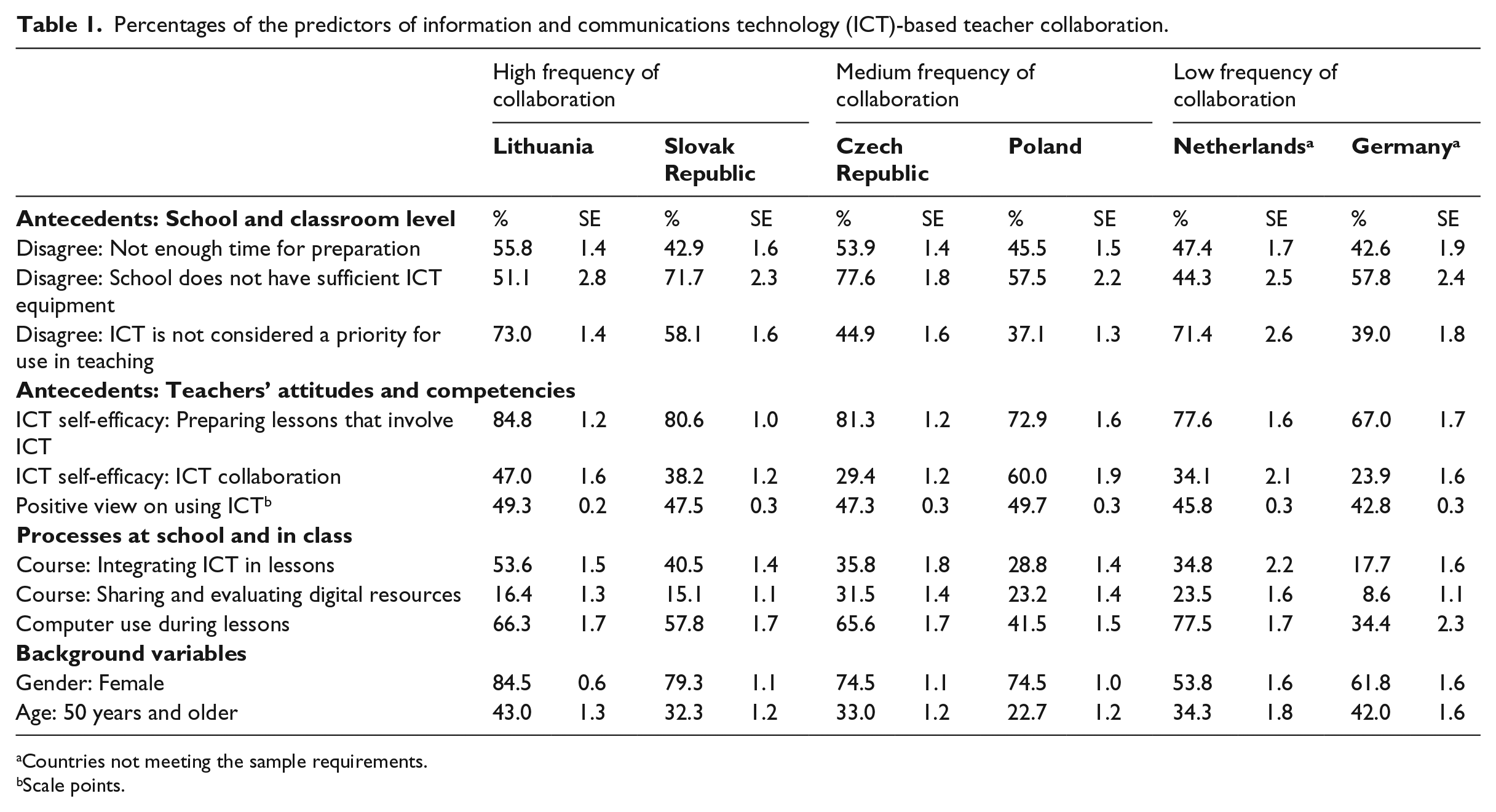
The conditions for successful ICT-related collaboration that are to be examined by means of regression analyses represent selected aspects that can be localized within the ICILS 2013 framework model and relate to Schulz-Zander and Eickelmann’s (2010) conceptual approach. The applied instruments and response formats will subsequently be explained. In this context, the percentages of teachers in the selected six educational systems for the individual indicators will be addressed (compare Table 1). The percentages of the respective categories of reference will be further analysed, as they are included as predictors. The regression analyses therefore include independent variables specific to the antecedents on the school and classroom level, the antecedents concerning teachers’ attitudes and competencies that focus on the ICT self-efficacy of teachers, as well as factors regarding processes at school and in class and the teachers’ background characteristics.
Percentages of the predictors of information and communications technology (ICT)-based teacher collaboration.
Countries not meeting the sample requirements.
Scale points.
With regard to the examined supporting conditions that can be allocated to the antecedents on the school and classroom level, the first step is to have a closer look at the extent to which teachers agree with the respective statements. At that, the four-level response format from strongly agree to strongly disagree is dichotomized to agreement and disagreement.
Descriptive statistics of the predictors
The descriptive statistics of the predictors constitute preliminary findings that are of relevance for the regression analyses conducted for this paper (compare Table 1). The descriptive statistics about the antecedents concerning the school and classroom level are already reported in the international ICILS 2013 report (Fraillon et al., 2013) and will be described shortly. All three statements represent negative items in the questionnaire, so that disagreement with the statement expresses a positive evaluation of the time resources. The perceptions vary both across the countries and within the respective educational system; for example, the disagreement that ICT is not considered a priority for the use in teaching ranges from 37.7% in Poland to 73.0% in Lithuania.
With regard to the antecedents that relate to teachers’ attitudes and competencies, two indicators are included that focus on the ICT self-efficacy of teachers. The teachers were asked the questions of How well can you perform these tasks/Preparing lessons that involve the use of ICT by students and How well can you perform these tasks/Collaborating with others using shared resources such as [Google Docs®]. The teachers could choose from three answer categories (I know how to do this, I could work out how to do this, I do not think I could do this), the last two of which were conflated as a category of reference. The results are also already described in the international report (Fraillon et al., 2014). The rates of agreement show that teachers’ self-efficacy regarding the preparation of lessons that involve ICT is consistently highest in comparison to the ICT collaboration. In addition, the following analyses also include the teachers’ perceptions of the use of ICT in class that are equally classified as antecedents relating to teachers’ attitudes. For the purpose of operationalizing the so-called positive views on the use of ICT, an international index (see Fraillon et al., 2014) was computed like the index on ICT-related collaboration – using eight items (Cronbach’s α =.83). Teachers indicated, for instance, to what extent they agree with the statement that the use of ICT for teaching and learning purposes at their respective schools enables students to access better sources of information or helps students to consolidate and process information more effectively. The descriptive results of the index suggest that the most positive views on using ICT in the selected countries are held by teachers in Lithuania (49.3 scale points, SE: 0.2) and in Poland (49.7 scale points, SE: 0.3), whereas teachers in Germany perceive the use of ICT in a more negative way (42.8 scale points, SE: 0.3) (compare Table 1).
Three indicators are further chosen to operationalize processes in class and at school as potential conditions for successful ICT-related collaboration and are included in the regression model (see Fraillon et al., 2014). Two items refer to the teachers’ advanced professional training (participation in professional development). To begin with, teachers were asked whether they have participated in a course on integrating ICT into teaching and learning during the past two years (compare Table 1). The teachers further indicated whether they had participated in a course on sharing and evaluating digital resources in the same period of time. As seen at the antecedents on the school and classroom level, the results are equally heterogeneous across and within the educational systems; for example, the results show that 31.5% of teachers in the Czech Republic have taken part in a course on sharing and evaluating digital resources, compared to teachers in Germany with a participation rate of 8.6% (compare Table 1).
The applied background variables of teachers (gender and age) show a varied distribution across the selected countries, with more than eight out of 10 teachers in Lithuania being female (84.5%), in contrast to the Netherlands, where 53.8% of the teachers in Grade 8 are female (compare Table 1). With regard to the teachers’ age, Poland can be considered a country with a tendency towards younger teachers (only 22.7% are 50 years or older), while the teaching staff in Germany and Lithuania are to a large proportion older than 50 years of age (42.0% and 43.0%, respectively; see Fraillon et al., 2014).
On the whole, the descriptive statistics of the chosen countries indicate that the different predictors vary between the six countries selected for the purpose of the analyses carried out in this contribution.
Results from the regression analyses: The conditions for successful ICT-related teacher collaboration in six selected European countries
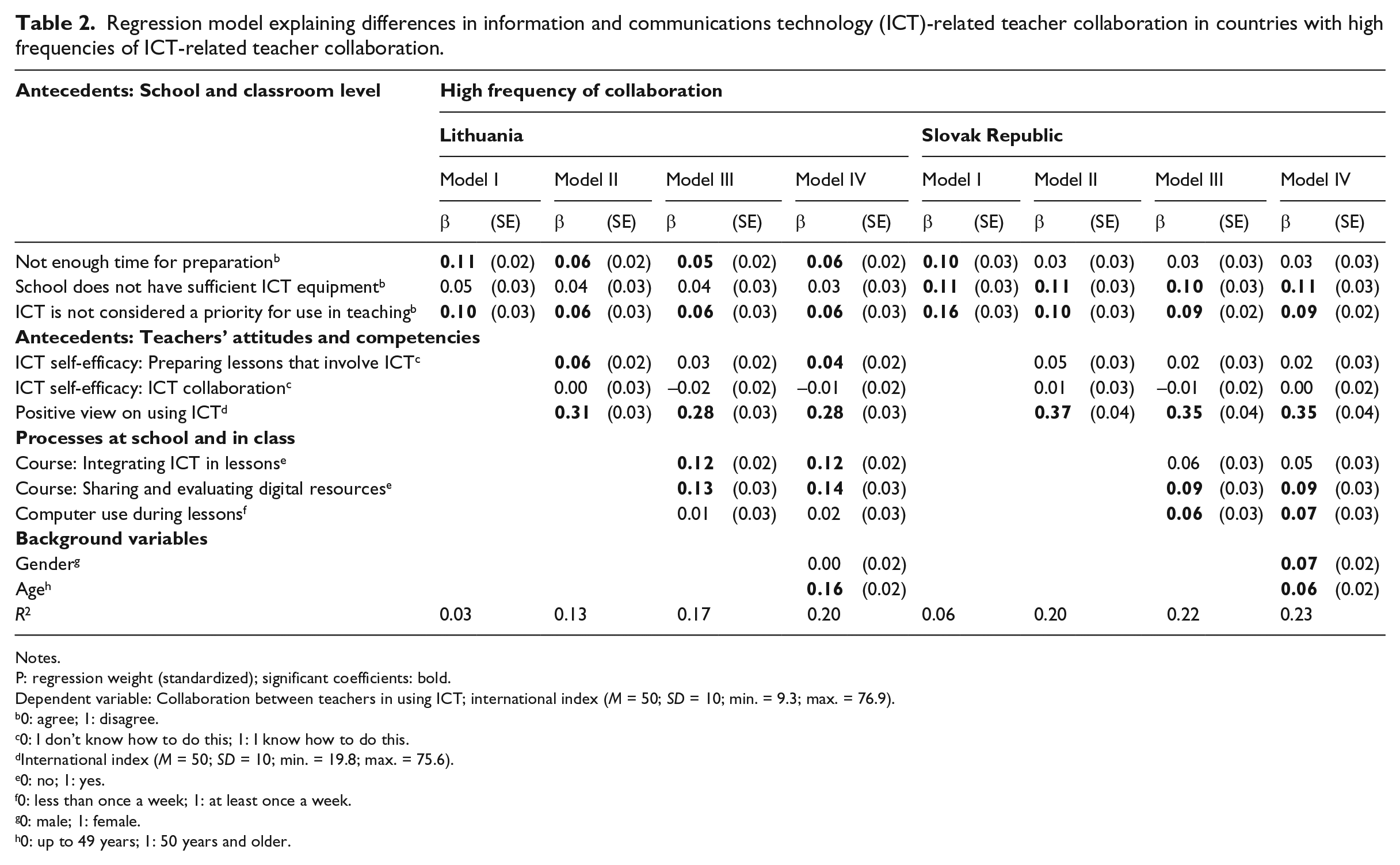
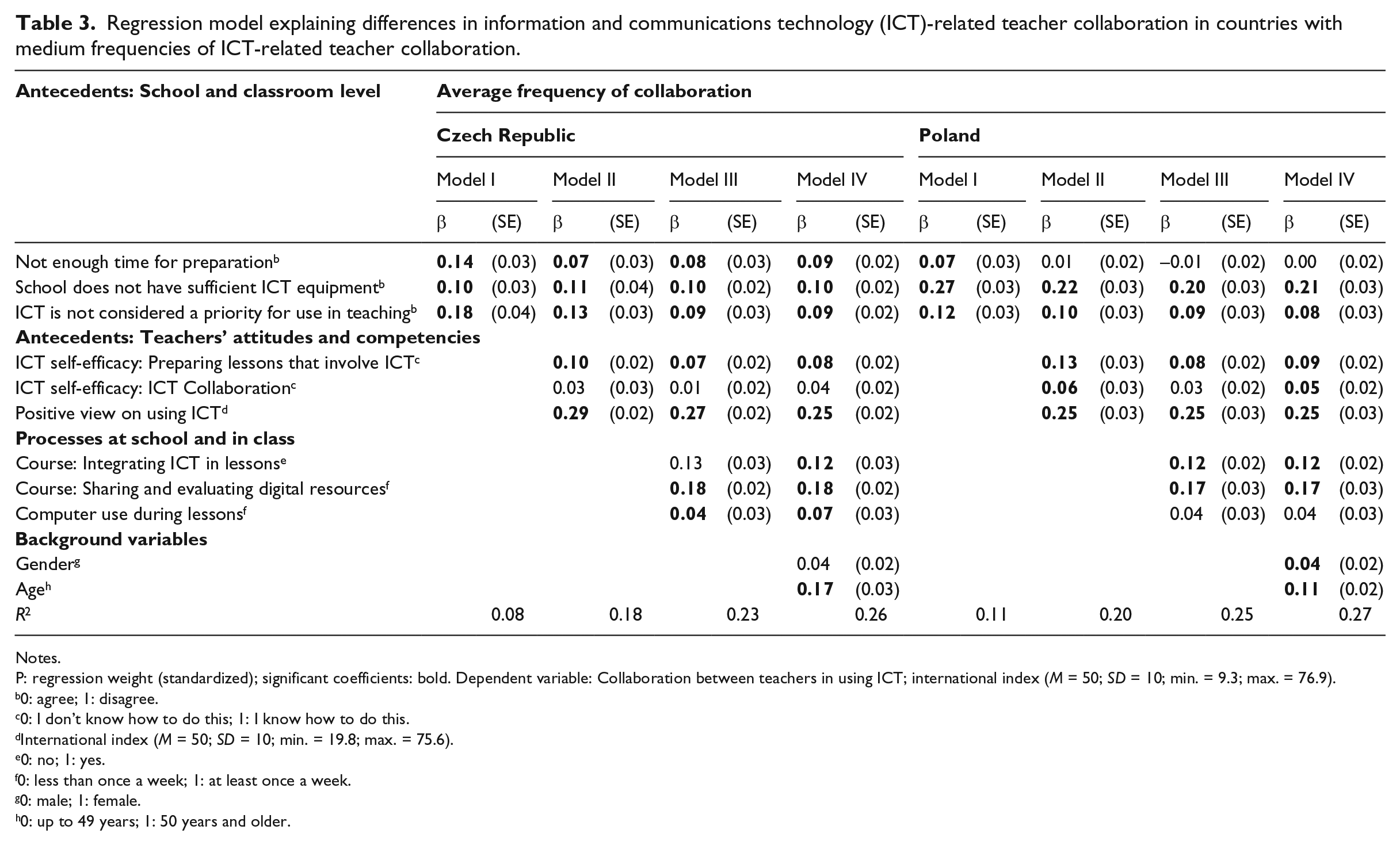
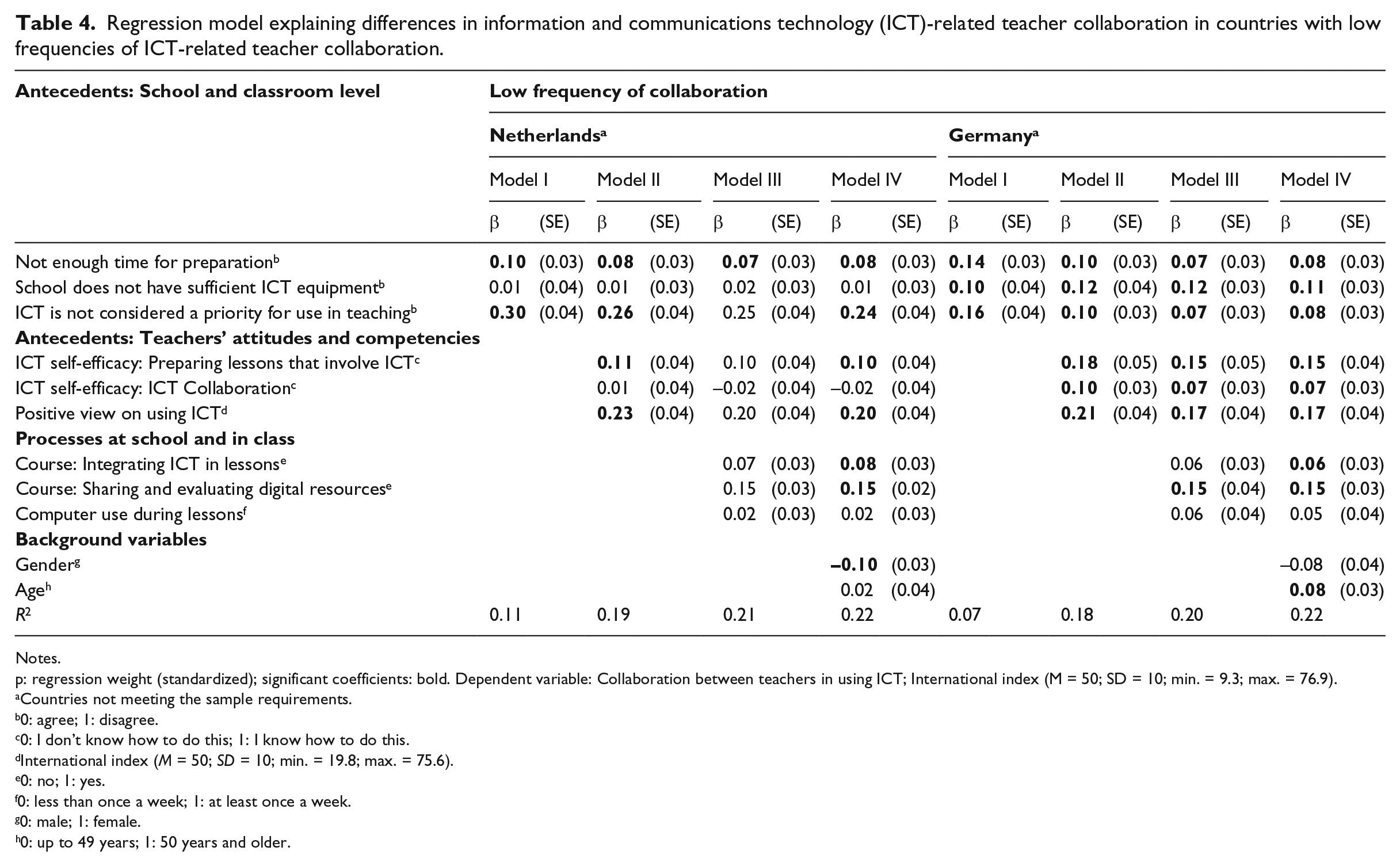
Assessing the evidence of the examined conditions for success, the results of the stepwise regression regarding the six selected educational systems will subsequently be reported. The index of ICT-related self-reported collaborative behaviour is included as a dependent variable in the regression models. According to the theoretical basis (Fraillon et al., 2013; Schulz-Zander and Eickelmann, 2010), the previously mentioned predictors will be included as independent variables. In the first step, these antecedents on the level of the school and classroom will be included in the regression analysis as predictors for ICT-based teacher collaboration (Model I); in the second step, the three presented indicators will be included as part of the supporting conditions regarding teachers’ attitudes (Model II) before they are, in the third step, integrated as processes at school and in class into the regression (Model III). In a fourth step, the teachers’ gender and age are included as background characteristics (Model IV) (compare Tables 2–4).
Regression model explaining differences in information and communications technology (ICT)-related teacher collaboration in countries with high frequencies of ICT-related teacher collaboration.
Notes.
P: regression weight (standardized); significant coefficients: bold.
Dependent variable: Collaboration between teachers in using ICT; international index (M = 50; SD = 10; min. = 9.3; max. = 76.9).
0: agree; 1: disagree.
0: I don’t know how to do this; 1: I know how to do this.
International index (M = 50; SD = 10; min. = 19.8; max. = 75.6).
0: no; 1: yes.
0: less than once a week; 1: at least once a week.
0: male; 1: female.
0: up to 49 years; 1: 50 years and older.
Regression model explaining differences in information and communications technology (ICT)-related teacher collaboration in countries with medium frequencies of ICT-related teacher collaboration.
Notes.
P: regression weight (standardized); significant coefficients: bold. Dependent variable: Collaboration between teachers in using ICT; international index (M = 50; SD = 10; min. = 9.3; max. = 76.9).
0: agree; 1: disagree.
0: I don’t know how to do this; 1: I know how to do this.
International index (M = 50; SD = 10; min. = 19.8; max. = 75.6).
0: no; 1: yes.
0: less than once a week; 1: at least once a week.
0: male; 1: female.
0: up to 49 years; 1: 50 years and older.
Regression model explaining differences in information and communications technology (ICT)-related teacher collaboration in countries with low frequencies of ICT-related teacher collaboration.
Notes.
p: regression weight (standardized); significant coefficients: bold. Dependent variable: Collaboration between teachers in using ICT; International index (M = 50; SD = 10; min. = 9.3; max. = 76.9).
Countries not meeting the sample requirements.
0: agree; 1: disagree.
0: I don’t know how to do this; 1: I know how to do this.
International index (M = 50; SD = 10; min. = 19.8; max. = 75.6).
0: no; 1: yes.
0: less than once a week; 1: at least once a week.
0: male; 1: female.
0: up to 49 years; 1: 50 years and older.
Irrespective of the individual educational systems, regression Model I, explaining ICT-related teacher collaboration, demonstrates that indicators regarding school and classroom-related antecedents explain between 3% (Lithuania) and 11% (Poland and Netherlands) of variance (compare Tables 2–4; Model I). In the model that focuses exclusively on supporting conditions on the school and classroom level, the time for preparation and the priority of ICT for the use in teaching at school constitute determinants of ICT-related collaboration in all six countries. Sufficient ICT equipment at school is a further significant predictor in the Slovak Republic and the Czech Republic, as well as in Poland and Germany.
Adding the antecedents regarding teachers’ attitudes and competencies (Model II), only minor changes occur with respect to the significance of the school and classroom antecedents. In the Slovak Republic, for instance, only the time for preparation no longer represents a significant predictor of ICT-related collaboration. The regression models explain between 13% (Lithuania) and 20% (Slovak Republic and Poland) of variance in ICT-related collaboration. The second regression model further points to the fact that a Positive view on using ICT constitutes a significant predictor in all selected educational systems. With the exception of the Slovak Republic, ICT self-efficacy concerning the preparation of lessons that involve ICT equally show a significant correlation with ICT-related collaboration in all selected countries. ICT self-efficacy about ICT collaboration is also significant in Poland and in Germany.
Including the potential conditions for success on the process level (Model III), some supporting conditions concerning the teachers’ attitudes no longer show a significant correlation with ICT-related collaboration in Lithuania, Poland and, predominantly, in the Netherlands. On the other hand, no changes could be detected with regard to the significance of antecedents on the school and classroom level (except for the Netherlands, where the priority of ICT use in the context of teaching loses its significance when it comes to ICT-related collaboration). The models that include the processes at school and in class explain between 17% (Lithuania) and 25% (Poland) of variance. A course on integrating ICT in lessons is a significant predictor in Lithuania and Poland only, whereas a course regarding sharing and evaluating digital resources is significant for ICT-related collaboration in all selected educational systems, except for the Netherlands. Computer use during lessons is a significant factor in two out of the six selected educational systems: the Slovak Republic and the Czech Republic.
When finally the background variables are taken into consideration (Model IV), it becomes apparent that the factors that have lost their significance after the inclusion of the school-level process items now regain their significance for ICT-related teacher collaboration. Predictors on the process level equally prove to be significant again for the inclusion of the background variables. A course regarding the integration of ICT in lessons now constitutes a significant factor of ICT-related collaboration in the Czech Republic, the Netherlands and Germany, with the addition of a course about sharing and evaluating digital resources in the Netherlands. The explained variance of the models is between 20% in Lithuania and 27% in Poland. The teachers’ gender further displays a significant correlation with ICT-related collaboration in the Slovak Republic, Poland and the Netherlands. It is worth noting that it is women who collaborate more when it comes to ICT in the Slovak Republic and in Poland, whereas in the Netherlands, men tend to collaborate more on ICT. With regard to the teachers’ age, the findings suggest that in five out of six educational systems (excluding the Netherlands), older teachers collaborate more in matters concerning the use of ICT.
Conclusion
Various studies produce the result that ICT-related teacher collaboration constitutes a crucial feature of school quality on the process level and has been identified as a condition for the successful implementation of digital media in schools and classrooms (see also Dexter et al., 2002; Eickelmann, 2010). In the context of an international comparison, however, the findings suggest that the teachers’ ICT-related self-reported collaborative behaviour varies significantly between different educational systems (Fraillon et al., 2014). Yet, the framework conditions for ICT-related teacher collaboration that constitute the basis for school development processes and work on school quality have thus far not been identified in an international comparison based on representative data.
Against this background, the focal research question of this contribution aims to identify supporting conditions of ICT-related collaboration of teachers in selected European countries in order to gain further insights into how collaboration can be promoted and supported. The countries were selected according to their degree of ICT-related self-reported collaborative behaviour by the teachers from high frequencies (Lithuania, Slovak Republic), medium frequencies (Poland, Czech Republic) and low frequencies (Netherlands, Germany) of ICT-related teacher collaboration. The selection of the examined conditions for success was theory-driven, according to the theoretical contextual framework of ICILS 2013 and the conceptual model by Schulz-Zander and Eickelmann (2010) regarding the relation of school development and school effectiveness with respect to digital media. For the six educational systems these were then further examined by means of regression analyses in order to extract their relation with teachers’ ICT-related self-reported collaborative behaviour. The subject of the investigations included determinants relating to antecedents on the school and classroom level, antecedents regarding teachers’ attitudes and competencies and processes at school and in class, as well as teachers’ background variables.
On the level of antecedents regarding school and classroom, the priority of ICT at school represents a significant predictor for ICT-related collaboration in all six selected educational systems. On the level of the antecedents regarding teachers’ attitudes and competencies it becomes apparent that a positive view on using ICT is an equally important predictor in all six countries. In addition, ICT self-efficacy concerning the preparation of lessons that involve ICT constitutes a significant factor in all countries, except for the Slovak Republic. Addressing the processes at school and in class, a course about sharing and evaluating digital resources plays an important role for ICT-related collaboration in all countries, as does a course about integrating ICT in lessons, with the exception of the Slovak Republic. The background variables indicate that proportionally older teachers agree with the statements on collaboration in five out of six countries (excluding the Netherlands, where age does not show any significant correlation with ICT-related collaboration).
On the whole, no consistent differences regarding the significance of the predictors with respect to ICT-related collaboration could be detected in the countries where teachers have expressed a high, medium or low rate of agreement with ICT-related collaboration. Rather, a contextual factor can be found in the four considered levels that proved to be significant for ICT-related collaboration in all the selected educational systems. In view of school practice, these findings suggest that ICT-related teacher collaboration can be promoted on different levels of the respective educational system. Considering the antecedents on the school and classroom level, the prioritization of ICT at school plays an important role. This insight provides the foundation of school administration activities, which equally emphasizes the role of the school administration as a driving force of school development (Goddard et al., 2015; Hallinger and Heck, 1996) and digital media implementation. The results concerning the teachers’ attitudes revealed that teachers need to be familiarized with the positive aspects of embedding new technologies into teaching and learning processes. The analyses in this contribution further emphasize that the teachers’ self-esteem when it comes to ICT self-efficacy needs to be reinforced. This could be achieved by focusing on the factors that have been identified as relevant in the six selected educational systems in terms of processes at school and in class and by promoting professional competencies relating to the use of new technologies. The latter could be further supported by the provision of targeted training offers, most notably in a school, as these – if attended regularly – have been identified to have significant influence on the teachers’ motivation to engage with the use of new technologies in collaboration with their colleagues (Schulz-Zander and Eickelmann, 2010). The findings of this contribution regarding ICT-related teacher collaboration on the basis of ICILS 2013 demonstrate that relevant supporting conditions could be identified in all selected educational systems and on different levels of school. ICT-related teacher collaboration can therefore also be supported on different levels. The teachers’ individual attitude as well as contextual conditions and processes at school play an important role in this, irrespective of the educational system.
A limitation of the present research project is the cross-sectional design of the study. Therefore, the interpretation of the results also needs to take into account that the latter do not reveal causality between the respective factors. In this matter, a future longitudinal investigation would be expedient.
A further limitation is the use of teacher questionnaire data. Essentially, this procedure bases the research on individual perceptions of the teaching staff. However, as teachers are considered key figures in the process of integrating new technologies into relevant learning scenarios (see also Lai, 2008; Law et al., 2008) and, as such, have a strong, direct impact on students’ learning processes, it can be deemed acceptable to rely on teachers’ individual perceptions, assuming that these perceptions are at the beginning of a chain of influences on their behaviour relating to and revolving around ICT.
Moreover, the data presented in this paper do not provide direct information on the frequency of ICT-based teacher collaboration. Rather, the data consists of teacher estimates regarding their ICT-based collaboration. As it is debatable that only teacher data were used for describing school characteristics, it would be constructive for further research to integrate other sources, such as the assessments of principals or IT coordinators as well as school questionnaires. This would allow for a more comprehensive analysis of, for example, pedagogical support. A further step in future research could be to analyse the relationship of the ICT-based teacher collaboration and the students’ CIL.
Overall, further research may therefore want to take a closer look at each of the selected countries under analysis here, as this could yield important insights for policymakers and provide knowledge of educational systems.
Footnotes
Declaration of conflicting interest
The authors declare that there is no conflict of interest.
Funding
This research received no specific grant from any funding agency in the public, commercial or not-for-profit sectors.