




Abstract
The underrepresentation of women in academe has been the focus of both academic literature and European policy-makers. However, albeit the number of female scientists has increased, true gender equality has yet to be achieved. When examining the reasons for this, we have to consider the interconnection between the expectations surrounding gender and what it means to work in the scientific profession, operating at individual, interactional, and institutional levels. This paper presents the results (and methods) of a survey exploring work–life interfaces from a gender-sensitive perspective.
Our survey focused on the researchers and professors working in the medicine and engineering departments of the University of Pisa, where the gradient of female exclusion is most pronounced. The results allow for an interpretation of the ‘leaky pipeline’ (macro level), through a gender-sensitive analysis of gender-based social obligations and those associated with the scientific profession (micro perspective), by integrating said reading through a description of the dynamics of continuous negotiation in private and public life (university) (meso level). Essentially, science is a greedy institution, as is family life, which is a problem for a woman’s career, unless she is willing to make considerable concessions at home.
Keywords
Introduction
Part of the European Union’s scientific policy is to promote innovation, which is inextricably linked to awareness and social responsibility. Within this framework, the EU’s institutions have developed actions aimed at capitalising on and nurturing talent, particularly female talent, with a view to increasing female presence in key roles in research institutions. Said policies and actions have enjoyed a decade-long tradition 1 and said phenomenon has long interested international literature; 2 however, the data on scientific careers reveal the underrepresentation of women in research, which is proportional to the responsibility and prestige associated with the role held (EC, 2013), and which is affected by the differing social reputation of a discipline, as is evident in the scientific/technological field, but even more so in engineering (August and Waltman, 2004).
To illustrate the dynamics of the exclusion process, which allows for a progressive loss of female talent, international literature offers a number of interpretations for the phenomenon, starting with different perspectives, which, in our view, are not necessarily mutually exclusive.
Some adopt a macro perspective and use the leaky pipeline metaphor (Berryman, 1983) to underline the distorted effects of selection processes and career access in the world of science that are anything but gender-neutral, and which systematically penalise women. Others, in observing the dynamics and processes at a meso level, have emphasised the dynamics of exclusion and discrimination resulting from the way in which work is organised in science and academe (Rosser, 1999, 2004; Rosser and Lane, 2002). 3 These contributions postulate the existence of organisational mechanisms, which, at both the formal and informal level, would offer women scientists fewer opportunities, thereby creating a barrier to the advancement of their careers, reducing their level of job satisfaction, and as a result, their interest in pursuing an academic career (Settles et al., 2006).
Lastly, at a micro level, significant national and international literature has proposed an interpretation based instead on the effects of the interaction between childcare and the responsibilities linked to research (work–life interface). Research has in fact highlighted how, in crucial moments of their scientific careers, women tend to choose to abandon academia (‘fight or flight response’) for reasons outside of the professional realm, citing instead reasons of a private nature (Joecks et al., 2014; Xie and Shauman, 2003). Not surprisingly, the dynamics of a couple and the demands of reconciling work and private life have been identified by women scientists as the primary obstacles to the advancement of their careers (Aisenberg and Harrington, 1988; Barnes et al., 1998; Biancheri, 2013; Riger et al., 1997; Rosser, 2004).
From our point of view, based on the approach advanced by Amy Wharton (2005), the three perspectives cited above offer interpretations that are considerably more productive if used in an integrated manner. Only by contextualising the dynamics and processes of each level can the numerous mechanisms reproducing gender equality be understood. These mechanisms act and retroact on three different levels (macro, meso, and micro).
This paper presents the results of a survey conducted in the framework of the TRIGGER 4 project, in the departments of medicine and engineering of the University of Pisa (see sub-section ‘Building an empirical base’ for the reasons behind our choice). The purpose of the survey was to identify and reveal the role and scope of the dynamics of work–life interface through a gender-sensitive survey focusing on time management. Our aim was to provide an interpretation for the leaky pipeline (macro level), by means of a gender-sensitive analysis of the friction between gender-based social obligations and those typically associated with the scientific profession (micro level), by integrating our interpretation via a description of the ever-changing dynamics present in the family and in academia, i.e. the meso level.
Methodology
Building an empirical base
The empirical base was determined according to the cognitive objective and the adopted perspective. In order to show the degree of ‘compatibility’ between gender-based social obligations and those inherent to the scientific profession, it was necessary to observe the behaviour and experiences of men and women scientists so as to compare lifestyle choices and strategies adopted in everyday life. Moreover, to gather information on the processes determining the leaky pipeline via micro and meso levels, we felt it worthwhile to focus on those disciplines where gender-based asymmetries are especially evident. It is for this reason that we decided to limit our study to those fields with the worst performance in terms of female participation and academic career levels. We also decided to concentrate on the practices and choices of those subjects who succeeded in securing a stable academic position (men and women researchers with open-ended contracts, male and female associate professors, and lastly, male and female full professors).
The number of women in academic positions at the University of Pisa is within the national average (Biancheri and Tomio, 2015; Frattini and Rossi, 2012); however, a closer examination of the women occupying top academic positions in the medicine and engineering departments revealed both university departments to be ‘women-unfriendly’. When comparing the performances between the two departments, the medicine department recorded the highest leakage rate (equal to 50%), whereas the engineering department had the lowest female presence, which, despite being relatively stable on all levels in the hierarchy, was almost negligible (approximately 10%; see Figure 1).
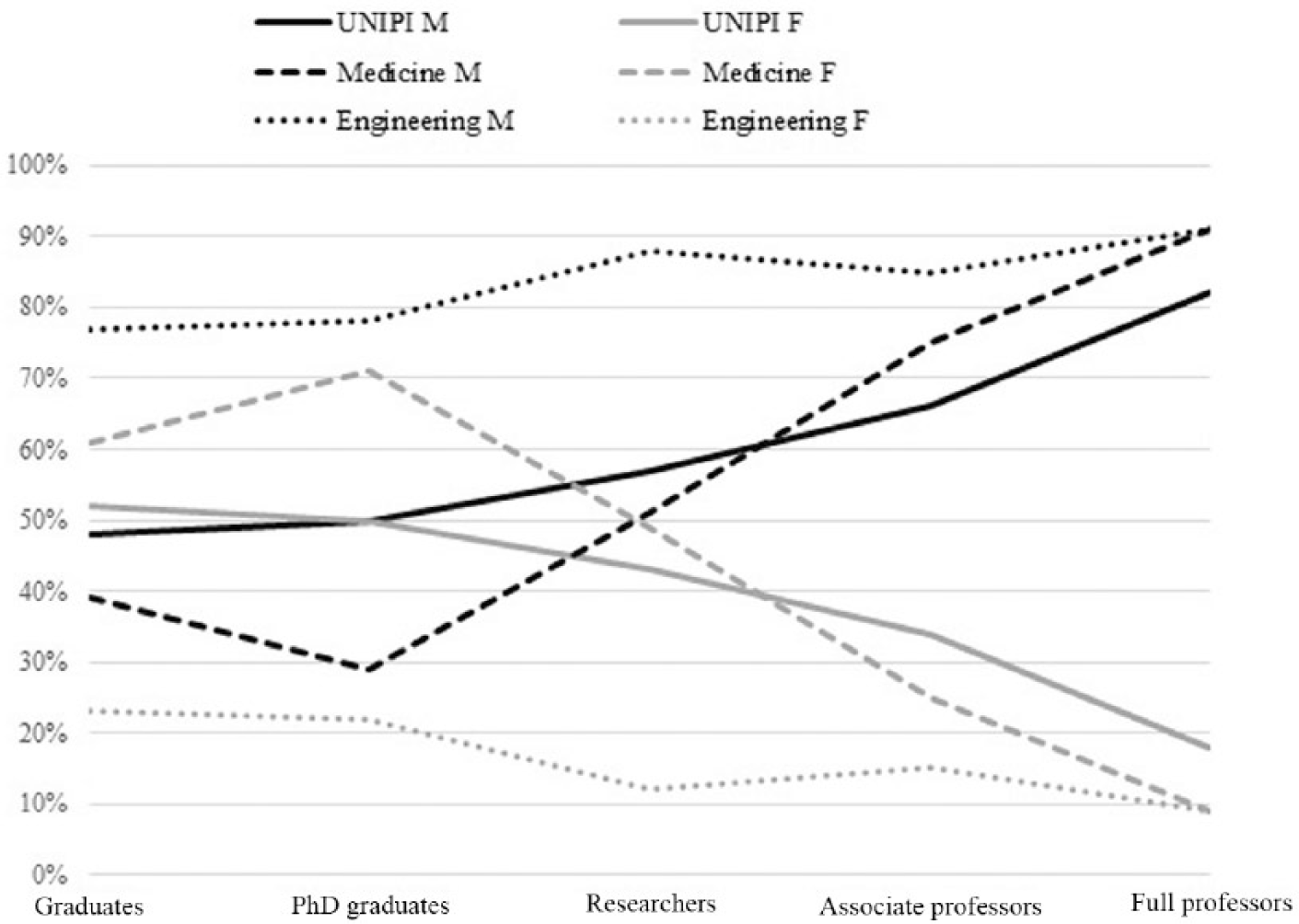
Comparison between career advancement of male and female professors in the departments of medicine and engineering and the averages for the University of Pisa.
Following these initial assessments, our universe of reference comprised 557 subjects (M=407 and F=150). In view of the limited number of subjects, we decided not to do any ex ante sampling; instead, we would conduct the survey on the entire universe of reference. To reduce the rate of loss to the absolute minimum – given the type of questionnaire and characteristics of the universe of reference, the rate could have been very high – we opted for a written questionnaire, to be filled out in person.
The questionnaire was distributed during the departmental meetings of the university, thanks to the collaboration of the Heads of Department. This meant that, in a way, our questionnaire was endorsed by the department heads, which secured higher participation and minimised the distortion rate of the questionnaire, as department meetings are compulsory. Our research group was able to participate in more than one meeting per department (in the period of reference, between October 2014 and March 2015). To guarantee absolute anonymity, checklists were used to monitor the representativeness of the respondents in terms of the universe of reference and the two main variables, i.e. gender and academic position, and also to ensure that the same professor did not fill in the questionnaire twice. With regard to the former variable, we expected an upward distortion rate, given that professors high up in the hierarchy tend to attend departmental meetings more than others, but we felt that said distortion would be in line with our cognitive objectives.
The strategy we adopted for the distribution of the questionnaire guaranteed a high response rate, equal to 44% (a total number of 245 questionnaires were completed in full). The gender composition of the sample corresponds to that of the population (the universe of reference stood at 27% female, which was respected in our sample, with 29% of respondents being women). The incidence of respondents with advanced academic positions was high (see Figure 2).
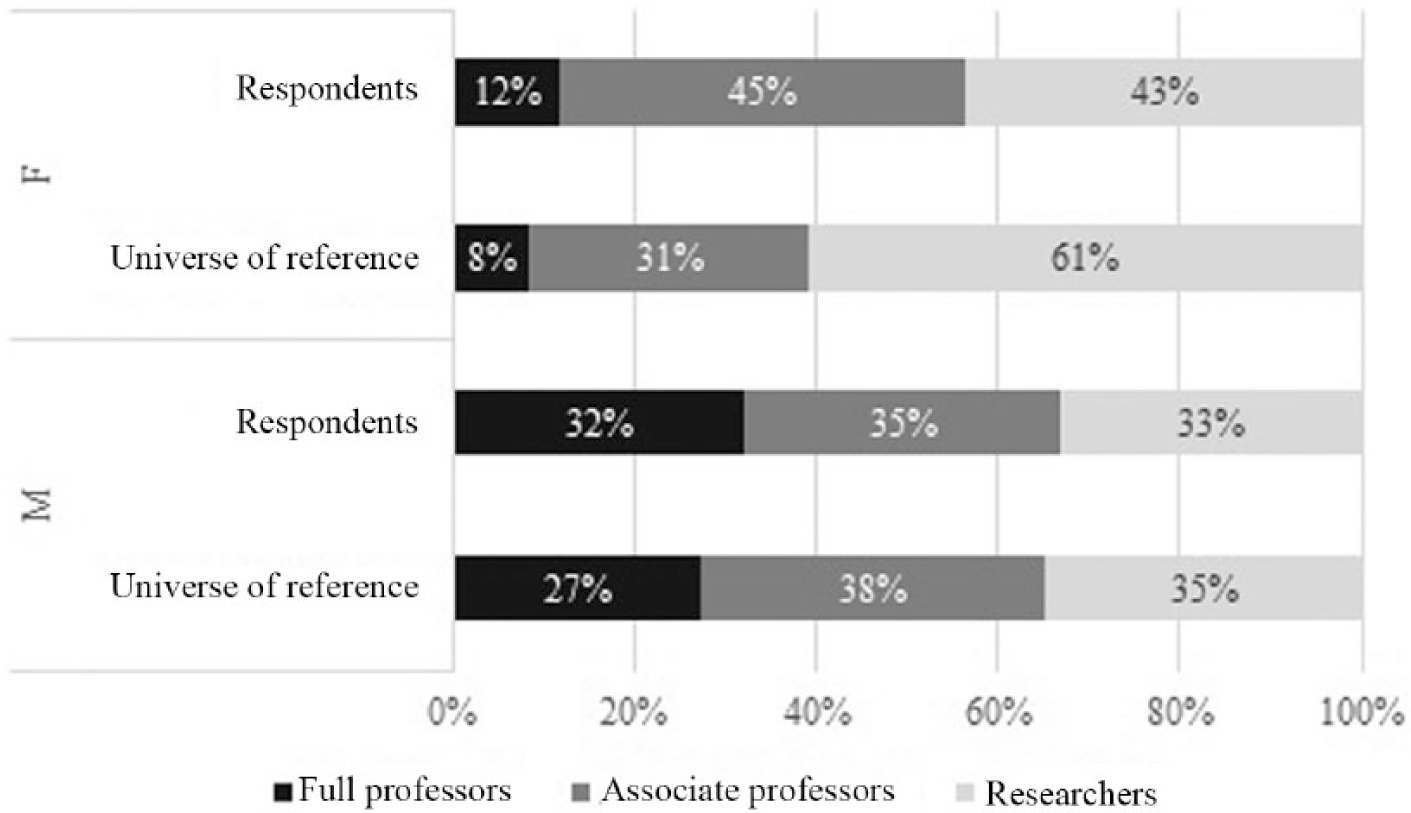
Comparison based on gender and role between universe of reference and sample.
Figure 2 highlights the differences between two variables: gender and academic position. The sample of male professors reveals a slight over-representation of professors in the first category (+5%) to the detriment of the other two (−3% associate professors and −2% researchers). In the female respondents, there is an over-representation in the first (+4%), but above all, in the second category (+14%), to the detriment of the third, which is highly under-represented (−18%).
Structure of the questionnaire
The questionnaire was structured based on the evidence found in international literature, and was organised according to the aforementioned analytical perspectives.
Specifically, in order to use the results of the research carried on a micro and meso level to better understand the leaky pipeline phenomenon from a macro 5 level, the questionnaire is based on:
(a) the micro perspective, to reveal any friction or tension between gender-based self-perception and behaviour (Ruspini, 2003) and the socially constructed implications surrounding the ‘scientific profession’, revealing any choices made in one role but based on another;
(b) the meso perspective, to show the outcome of negotiating/reconciling family and work obligations and the effect (explicit and intentional) of the decisions made in one area on the other.
Our questionnaire was divided into three sections (with 31 closed-ended questions 6 ) dedicated to gathering: firstly, personal information, family formation, and academic position; secondly, how domestic chores and childcare activities are shared; and lastly, information on the work management strategies adopted (by the respondent and his/her partner).
The questions and multiple choice answers of each section were created based on the criticality and potential areas of friction highlighted in the reference literature we analysed.
The first section, used to gather personal data and information on family formation and academic position, aimed to expose the constraints and opportunities specifically related to household characteristics and variables that are important in time management. The objective was to reveal any ‘choices’ that may be typed according to the sex of the scientist and which can be attributed to the desire to find a synthesis in potentially conflicting roles.
Analysed dimensions, academic position, marital status, and family choices were identified and elaborated thanks to national and international research results. Indeed, said research highlights the major importance of marital status, which is occasionally identified as a predictive factor of career prospects. Indeed, there is a positive correlation for women between being single and having a stable position as a researcher (Ginther and Kahn, 2006); vice versa, when investigating the link between marriage and career advancement, there is, frequently, a negative correlation (Fox, 2005; Hunter and Leahey, 2010; Martinez et al., 2007). This penalisation increases exponentially where children are present. Indeed, being a parent is the most significant factor associated with poor productivity and reduced career opportunities (Fox, 2005; Stack, 2004). 7
Male scientists are not faced with the same trade-off: in most cases, those male scientists who want children can turn to their wives/partners for assistance (Joecks et al., 2014). The importance of this ‘alliance’ is confirmed by the statistics on the prevalence of the traditional family model (where the man of the house is also the breadwinner) amongst scientists with a brilliant career, especially if they have also made difficult decisions in their private lives (two or more children). In this regard, it is interesting to read what one professor had to say about his experience vis-à-vis work–life interface: The third disadvantage involves my wife who gave up her career as a physician and stopped transplanting bone marrow to become a housewife. Although we had to give up the comfort of two salaries, this step was essential for me to continue my research career (Gregan, 2006: 3).
In dealing with these perverse dynamics, women scientists, more often than their male colleagues, choose to have fewer children than they may have originally wanted (Mason and Goulden, 2004). Other studies highlight the different strategies adopted, from postponing maternity until a stable job in research has been secured, to knowingly forsaking children to dedicate themselves fully to science (Dean and Bandows-Koster, 2014). Furthermore, women often decide to stop working when their first child is born, as they find the two roles to be incompatible and are unwilling to forego the experience of maternity (Joecks et al., 2014).
The second and third sections of the questionnaire were aimed at revealing the work–family interface by studying how the management and sharing of either household or professional obligations can potentially influence participation in the other (Voydanoff, 2005; Williams, 2001), leading to a dynamic of friction or consolidation. To understand this, we decided to gather information on the strategies adopted in each area separately, i.e. the second section of the questionnaire would deal with the respondents’ private life, the third with work responsibilities.
The second section, which deals specifically with how household and childcare responsibilities are shared, was structured according to the main responsibilities associated with the roles of mother and wife, which, as stated above, have a negative correlation with female career prospects. The aim of the questions was to reveal the practices adopted by the families of men and women scientists, and understand the decisions they make on an everyday basis to fulfil the obligations related to the main activities that need to be performed. 8
The third and last section of the questionnaire aimed to reveal the strategies adopted to manage professional obligations (of the respondent and his/her partner), by identifying the consequences of the choices respondents made in their private lives in reference to the average work commitments of the family members, and by asking that respondents provide their own feedback on their work–life interface. This section also hoped to determine to what extent the rules governing academia favour the active participation of all staff members (Fitzgerald, 1988; Husu, 2001). The aim was not to analyse the organisational practices of the single departments, but instead to identify what Gherardi (1998) referred to as the ‘symbolic order of gender’, by establishing those practices or perceptions related to ‘social beliefs as to what is appropriate and what is inappropriate for the two sexes and for their social relationships’ (Gherardi and Poggio, 2003: 6) and the repercussions of these beliefs on the concrete opportunities for workplace involvement and on career prospects, together with the satisfaction levels of men and women (Settles et al., 2006).
Data analysis
In keeping with the structure of the questionnaire, this paragraph shall provide the main results that emerged from our study in a logical sequence. We shall proceed to illustrate the most significant results, section by section, providing a gender-sensitive interpretation, which, where possible, means combining gender and academic position. Considerations of a transversal nature will be discussed in the conclusions section.
With regard to the first section, linked to family formation and marital status, the questionnaire allowed us to identify various ideal or pure types of family structures, whose frequency is inextricably linked to the gender of the respondent.
Starting with marital status, we observed a distinct preference for the traditional family model amongst male respondents, including marriage. Indeed, 77.1% of men are married; the percentage of married women is 66.2%, more than 10 points lower. This gap is bridged almost entirely by the discrepancy observed in couples living together, where 11.3% of women and a mere 3.5% of men choose to live with, not marry, their partners. In the scientific world, and the rest of the population for that matter, women prefer this family setup as they feel that living conditions will be easier and gender-based roles will not be as rigid as is the case in marriage (Saraceno and Naldini, 2011). Conversely, men tend to pursue a more traditional family model, including marriage, not because they are bigger traditionalists, but because this choice is in line with their career goals: as already stated above, the traditional family model constitutes a powerful ally for a man’s career goals (Xie and Shauman, 2003). It is therefore not surprising to see a significant presence of families founded on the model of the male breadwinner (see Figure 3).
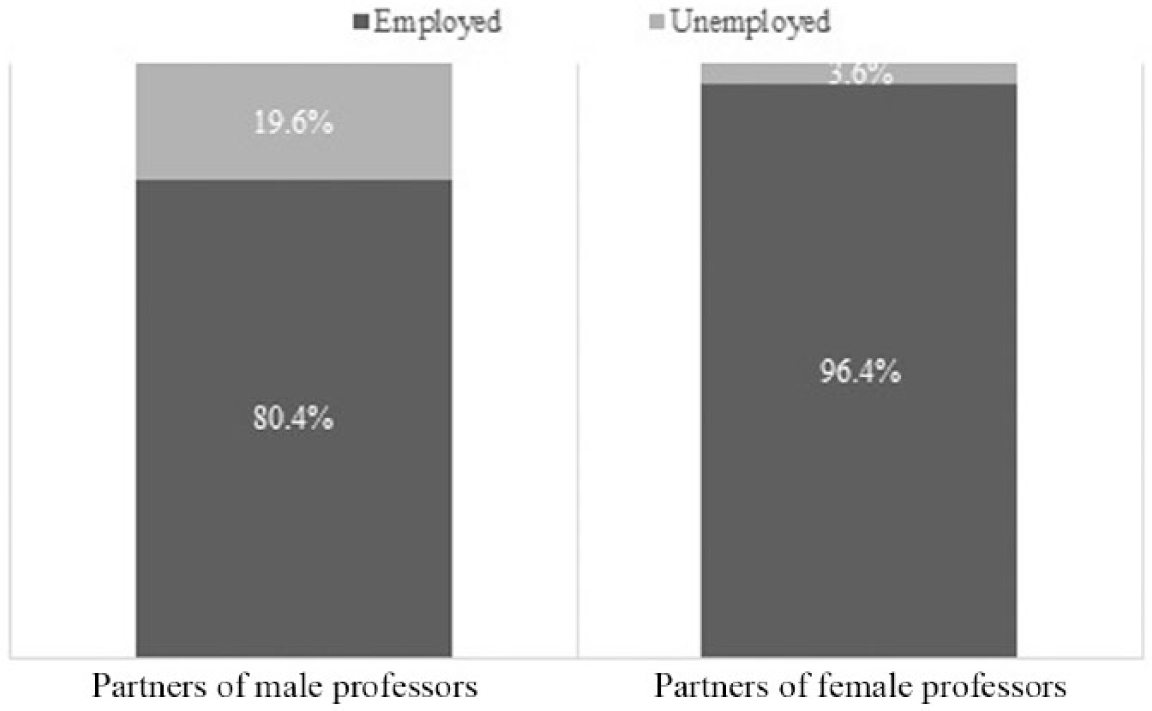
Employment status of male and female professors’ partners.
Contrary to what we would expect, starting with the evidence cited in international literature, the condition of being single is not one of the strategies adopted by women wishing to make a career for themselves in the world of science. The frequency of this condition is quite similar for both sexes (11.2% for men and 12.7% for women). Despite the fact that this choice is more common among women in high academic positions, there is no distinct correlation. 9
We have already stated how the correlation between marital status and career prospects does not always and unequivocally single out marriage as an obstacle to women’s careers. This is not the case when it comes to having a family. Indeed, in this case, all the research carried out shows similar results, i.e. that maternity is the biggest obstacle to female careers. Our study revealed the same results, with one in three women having no children, compared to one in five men. When women do decide to have a family, they try to limit the burden of childcare by limiting the number of children (in our sample, only 8.9% of women scientists have three children, compared to 16.3% of men; no women has four or more children, whereas 2.4% of men do). What is also interesting is the average number of children per professor. For women, that number is 1 (regardless of field of study), whilst for men the average is higher (1.3), with a non-negligible variation in field of study (1.2 for the professors of engineering vs. an average of 1.6 for the professors of medicine).
In brief, the ideal family type for a woman in academia is less rigid: there is a tendency to move towards a negotiation-based management of family obligations, which is nonetheless conditioned by public life, in that family formation tends to be influenced by the impact of managing childcare. Therefore, it seems that the attempt made to strike a balance between childcare and professional obligations is not wholly effective; indeed, it features the same asymmetries identified in female participation in the workplace and participation in home life.
In keeping with the emerging profile, our findings based on the data gathered in the second section of the questionnaire – regarding the sharing of household chores and childcare within the family – show the persistence of highly discordant cultural models, not just in terms of childcare management, but also in terms of sharing household responsibilities (which explains the negative correlation between marriage and academic career).
Based on what we have learnt about the Italian population from the surveys carried out by ISTAT in 2007, even families with at least one member in academia are privy to the persistence of an asymmetrical sharing of household duties, as a result of socially constructed gender-based roles. The sharing of household duties is influenced by the conviction that certain duties are ‘better suited’ to women and others to men. The more time-consuming domestic chores are done by women: cooking, cleaning, tidying, washing, ironing, daily and weekly grocery shopping. Indeed, 64% of women perform these duties themselves; only 1 in 4 women ask their partners for assistance. The situation for men is very different: only 36% are in charge of the aforementioned chores; more than 1 in 2 men prefer to entrust their wives or partners with such activities. Men are responsible for chores that are sporadic or linked to the use of tools, for example maintenance work around the house or paying the bills, or responsibilities related to the public interests of the family, such as attending meetings for tenants and homeowners. These are duties they perform in 3 out of 4 cases; they only assign them to their partners in 17% of all cases. Only 36% of the women respondents do these chores themselves – they prefer to have them done by their partners (47% of cases) or by paid staff (13%).
What is extremely interesting is the cross-reading of the sharing of domestic chores when considering the couple as a whole. When one partner is responsible for the main daily activities that are extremely time-consuming, the other partner is free to dedicate his time to other tasks, including his work. As a result, the woman partner of a male professor, who undertakes the most demanding domestic chores, is the primary ally of her partner’s/husband’s work commitments. In those couples where the woman is pursuing an academic career, she continues to perform the domestic chores traditionally associated with women, which are also more time-consuming, meaning she is still the main support system for her husband’s/partner’s career.
As for childcare in couples with children of pre-school or school-going age, 1 in 3 women professors take care of their children in the afternoon, with only 4.8% asking their partners to do so (the rest rely equally on staff and informal networks); male professors rely on their partners (50%), with only 14% performing the activity themselves. Our study showed similar results for female professors during school holidays. Conversely, male professors are more involved in childcare during this period, becoming the primary caregivers (34%). More than half of women professors look after their child/children when they fall ill (51.2%), with only 34.4% of men caring for their sick child/children. Clearly, there is an unequal distribution of duties within the couple: one in two men professors have their partners/wives perform this duty, whereas only 11% of women professors ask their partners/husbands to do it. In three out of four cases, professors who are also mothers take their children to the doctor and attend parent–teacher meetings; only two in five male professors do such duties – they prefer to have their wives accompany the child/children.
With regard to the questions on the presence of family members with special needs – including members with disabilities or older members requiring assistance – the data showed that fewer than 3 in 10 respondents have such a situation at home (28% of male professors, 25% of female professors). Although the percentages are low, meaning we should be cautious in our analysis, we must underline how, yet again, women are more directly involved in the daily management of caregiving: in almost four out of five cases, they help every day or more than once a week (this kind of commitment is shared by one in two men). If not the woman of the house, the primary caregiver differs between the two sexes: with men professors, it is paid staff, whilst women tend to resort to informal networks, which affects not only the continuity of the service provided but also the extent of ‘coverage’ provided.
Faced with such asymmetries, it is not surprising that women professors tend to live near their workplace, more often than their male colleagues (95.4% of women live within a 50 km radius of their workplace). In this way, they reduce their travel time to and from work, meaning they have more time to manage their so-called double presence, both their professional responsibilities and domestic chores (Balbo, 1978). This same strategy is used by men too (although the frequency drops by 10%), who use the extra time they have to reinforce their presence in the workplace.
In light of how household duties are shared, it is not surprising to see the results of the third section of the questionnaire, dedicated to the management of professional obligations (of both the respondent and his/her partner).
We have already underlined the inextricable link between male professors and their career prospects and how one in five of their wives/partners dedicate themselves wholly to domestic life (see Figure 3). It is not surprising that the asymmetry in sharing domestic chores and childcare activities translates into significant inequalities in participation in professional life, and into perverse effects on the career prospects of men and women. It is also not surprising that women have less time for work-related activities, even when they are women of science (see Figure 4). If 45% of the women interviewed claim to work more than 40 hours a week, it is easy to understand why, in most cases, these women have no children or only one. Conversely, three quarters of male professors are able to take on a heavier workload, thanks to the alliance they have forged at home with their wives, who, if they work, work fewer hours (2 out of 5 work less than 35 hours a week). 10
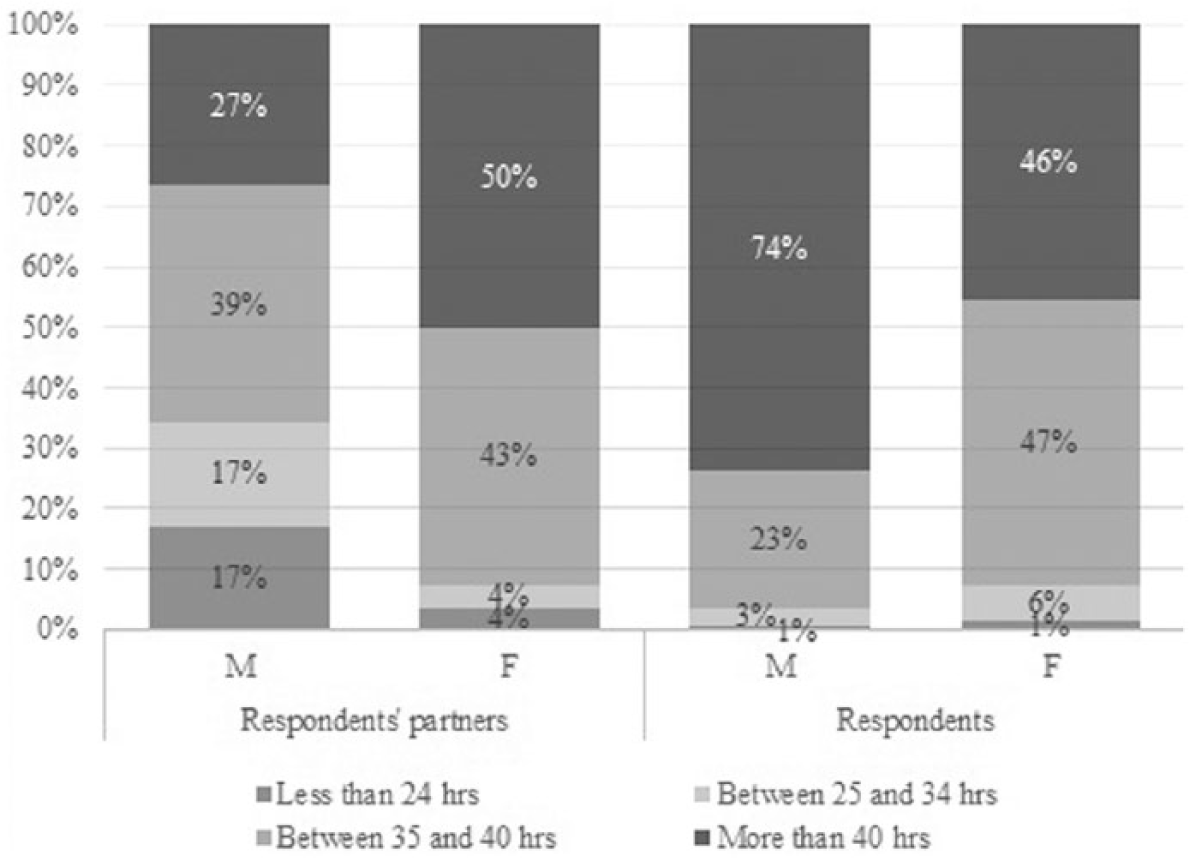
Answers to the question on ‘average working hours in a typical week’, aggregated per gender.
When analysing the degree of satisfaction with the organisation of work and domestic and childcare responsibilities, we did not identify any significant differences between the two sexes, which is in line with other studies carried out in Italy (Palermo et al., 2008). Is it because of a lack of awareness of the dynamics at play, or because of the absence of any other organisational models, or because of a cultural construct that clearly divides professional and private life and that is unable to represent either sphere? The debate is still open.
We are aware of the fact that our proposed reading of the results is one-directional, that we have not considered whether or not work can play a role when performing household duties, not just in light of the results stemming from our macro analysis, or the high presence of leaking. The answers given about reduced working hours, leave of absence or time off work, registered, once again, significant asymmetries, both in terms of the use of such practices and the reasons for requesting them.
Men resort less to leave and time off from work (4.9% vs. 22.1%) than they do to reduced working hours (1.2% vs. 2.9%) and when they do it, it is not for reasons linked to caregiving (see Figure 5). It is therefore difficult to imagine that the workplace is in fact women-friendly when caregiving is the only reason women work part-time, and the reason they request a leave of absence or time off from work in 70% of cases.
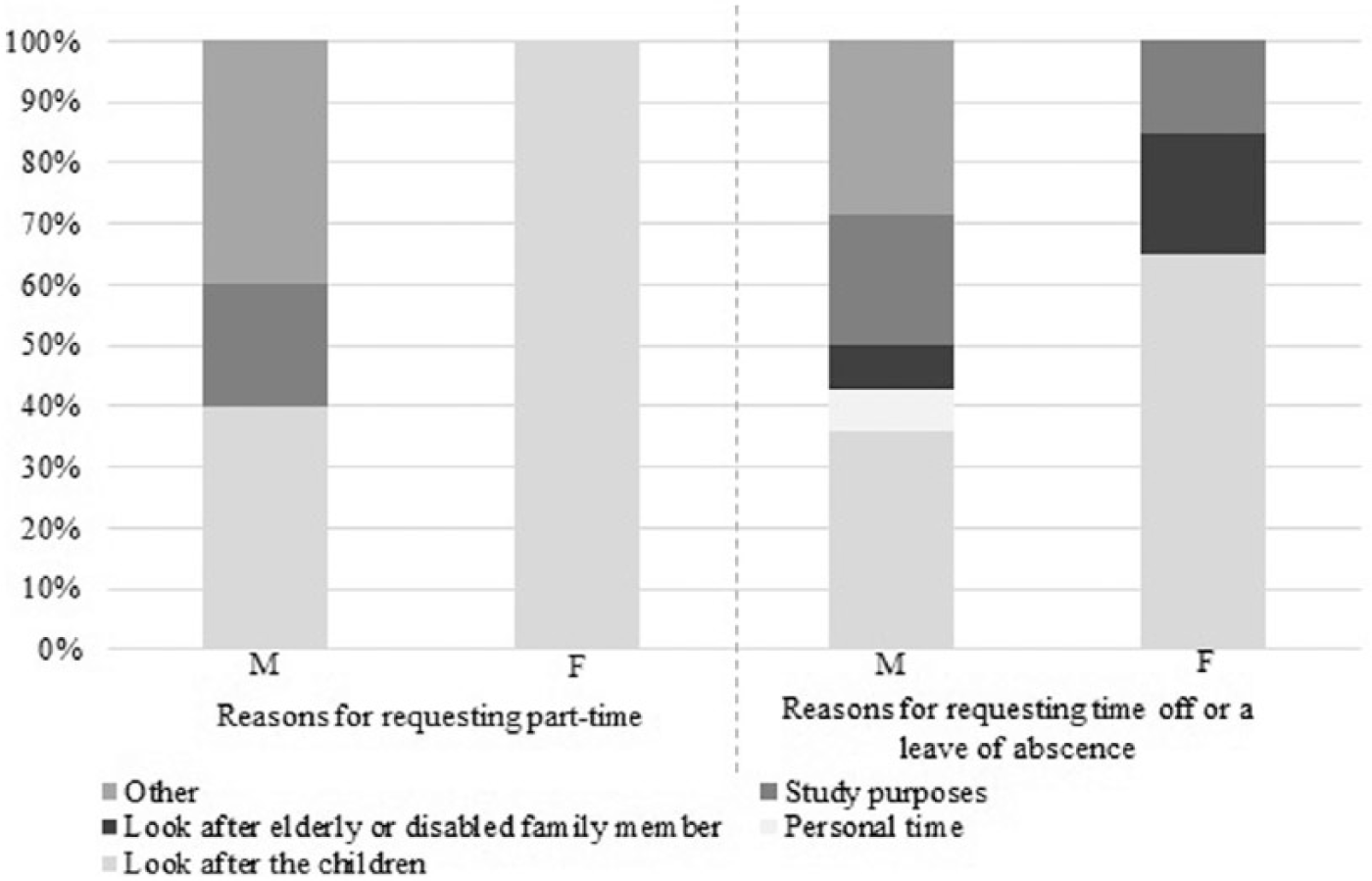
Answers to the questions listed on the x-axis and aggregated according to the gender of the respondents.
This becomes even more evident when examining the answers to the questions on the impact of parenthood on a professor’s career. Of the men, 84% refuse to admit that there is a link and that the link can be negative. Of those who claim to have observed a negative link, half of them are unable to identify specific discriminatory behaviour; they limit their claims to a general feeling or sensation. Those who have felt tension between the two roles are able to identify specific problem areas, and tend to attribute the dynamic to a deterioration in interpersonal relations, resulting from less freedom in managing their work schedule and participating in additional work-related activities. Women perceive the situation quite differently. In this case, the minority (38%) believes that maternity does not hamper careers, whereas seven in 10 women feel that there have been distinct examples of discrimination due to maternity. The prime suspects are the sharing of responsibilities (46.8%), followed by and tied with the organisation of their work schedule and interpersonal relations (17.4%).
Conclusions
The aforementioned reveals a dangerously persistent situation. The effects of socially constructed gender-based roles and the gender-based system utilised in social institutions seem to indicate the presence of one-directional processes that mutually support each other, thereby reinforcing the perception of mutual exclusivity between the role of mother and wife/partner and the role of academic.
If it is generally true that work and family are ‘greedy’ for time and energy, and that they require loyalty and dedication (Coser, 1974), then trying to remain committed to both your professional and personal life is very risky, especially if the subject’s professional life happens to be in academia, a highly competitive environment that requires extreme flexibility and absolute dedication (Caprile et al., 2012).
The traditional, gender-based separation of duties allowed for the fulfilment of high standards, by clearly distinguishing the assignment of duties according to the field of study. With the arrival of women on the work scene, said sharing of duties was brought into question, without, however, altering it significantly. It is no coincidence that the penalisation resulting from family life and professional duties affects men and women very differently (Simard et al., 2008). Moreover, only women seem to be the ones penalised, overwhelmed by the burden of childcare. Men, on the other hand, seem to receive a sort of ‘family bonus’. We can easily see the effects of the virtuous alliance between work and family life forged for men (Friedman and Greenhaus, 2000). An alliance forged to the detriment of women.
Our analysis has highlighted the subordinate status of the wife/partner of a male university professor. Thanks to her role, because she looks after the children, because she performs the most time-consuming duties, the male professor can dedicate himself fully to his profession, as would be expected of a scientist, without having to make significant sacrifices in his personal life. The woman takes on the role of housemaid, of supporter, and even women scientists are unable to free themselves of this role. We have seen how they take on the more time-consuming duties, both in terms of domestic chores and childcare. As a result, and given the rigidity of home life, family commitments begin to compete with work. Female academics do not have an ally at home that can help them so that they are free to dedicate more time to their work; that is why they frequently pay people to assist them, although this does not mean that they are not the main caregivers and homemakers (Ledin et al., 2007).
The dynamics that lead to a continuous loss of female talent in science (leaky pipeline) have a powerful ally in the socially constructed roles and gender-based expectations of our society and on the common understanding of ‘doing science’. 11 The experience resulting from this mutual exclusivity determines women’s choices in both their public and private lives: sometimes they forsake one for the other, other times they consciously modify their participation in one in favour of the other, and other times still, they sabotage their participation in one because of the other.
Evidently, when faced with such persistent models of reference, the model proposed by Etzkowitz et al. (1994) risks becoming the norm. This model divided women scientists into two macro categories: those who adopt a male-like behaviour and dedicate themselves fully to science (‘instrumentals’ – they take on all the risks associated with a highly competitive and unpredictable profession) and those who succeed in managing both their professional and private lives, without intentionally forsaking either (‘balancers’). In light of the dynamics observed, we cannot refrain from making a rather painful observation. The interpretation proposed by Etzkowitz et al. (1994) is frequently cited in reference literature (Satow, 2001; Sesay, 2015; Trauth, 2006) and on the one hand risks identifying negotiation processes as individualistic strategies, processes with powerful cultural and organisational characteristics, and on the other risks convincing us that ‘balancers’ can actually find a happy balance with their ‘double presence’. Not only does such a strategy conceal the reasons why so many women abandon the scientific careers they had once undertaken, 12 but it also tends to hide the processes that cement the inequalities leading to unfair competition between men and women in science. Faced with such asymmetries, it is hard to imagine that women are allowed to compete on the same playing field, when the time they have for research and for producing results – one of the predictive success factors in academia – is constantly reduced by their private lives. Therefore, it is safe to conclude that women in scientific careers belong to one category alone: that of ‘jugglers’. But they are juggling fire, and risk, in primis, being burnt, being scarred for life, being inflicted with permanent damage.
Footnotes
Declaration of Conflicting Interest
The author(s) declared no potential conflicts of interest with respect to the research, authorship, and/or publication of this article.
Funding
The author(s) received no financial support for the research, authorship, and/or publication of this article.