




Abstract
Background:
Physical activity can improve exercise capacity, quality of life and reduce mortality and hospitalization in patients with heart failure (HF). Adherence to exercise recommendations in patients with HF is low. The use of exercise games (exergames) might be a way to encourage patients with HF to exercise especially those who may be reluctant to more traditional forms of exercise. No studies have been conducted on patients with HF and exergames.
Aim:
This scoping review focuses on the feasibility and influence of exergames on physical activity in older adults, aiming to target certain characteristics that are important for patients with HF to become more physically active.
Methods:
A literature search was undertaken in August 2012 in the databases PsychInfo, PUBMED, Scopus, Web of Science and CINAHL. Included studies evaluated the influence of exergaming on physical activity in older adults. Articles were excluded if they focused on rehabilitation of specific limbs, improving specific tasks or describing no intervention. Fifty articles were found, 11 were included in the analysis.
Results:
Exergaming was described as safe and feasible, and resulted in more energy expenditure compared to rest. Participants experienced improved balance and reported improved cognitive function after exergaming. Participants enjoyed playing the exergames, their depressive symptoms decreased, and they reported improved quality of life and empowerment. Exergames made them feel more connected with their family members, especially their grandchildren.
Conclusion:
Although this research field is small and under development, exergaming might be promising in order to enhance physical activity in patients with HF. However, further testing is needed.
Introduction
Regular daily exercise is recognized as important from both the perspective of primary and secondary prevention in cardiac disease. 1 Since heart failure (HF) is a frequent discharge diagnosis it is important to look for any opportunity to improve outcomes. In a recent position paper by the Heart Failure Association of the European Society of Cardiology, the importance of increased activity and exercise in cardiac patients’ cardiovascular conditions was advocated. 2 More specifically, guidelines on the treatment of HF also recommend regular physical activity and structured exercise training, since they improve exercise capacity, quality of life, do not adversely affect left ventricular remodelling and may reduce mortality and hospitalization in patients with mild to moderate chronic HF. 2
Physical impairment is described as a significant problem in older adults with HF and exercise capacity in patients with HF is approximately 50–75% of normal age and gender predicted values. 3 Several studies have shown that both home-based exercise (often distance walking)4,5 and hospital based6–8 is safe and beneficial for patients with HF. The findings from a meta-analysis (ExTraMatch collaborative) suggested that patients randomized to physical fitness were less likely to be admitted to hospital and had a better prognosis. 9 Although the HF-ACTION (Heart Failure: A Controlled Trial Investigating Outcomes of Exercise Training) trial did not find significant reductions in the primary end point of all-cause mortality or hospitalization, this study showed a modest improvement in exercise capacity and mental health in patients who exercised. The main limitation in this study was the poor adherence to the prescribed training regimen (only 30% after 3 years). 10 Adherence to exercise recommendations in patients with HF is low and low adherence has a negative effect on the clinical outcomes, such as HF readmission and mortality. 11 There are many factors that influence adherence in general, and more specifically adherence to exercise. Therefore, it is important to search for alternative approaches to motivate patients with HF to exercise.2,12,13
A scoping review of health game research showed a constant growth over recent years and positive progress towards adapting new technology in specialized health contexts. Most health game studies included physical activity (28%) using so-called exergames (games to improve physical exercise). 14 A meta-analysis of energy expenditure (EE) in exergaming showed that playing exergames significantly increased heart rate, oxygen uptake and EE compared to resting, and may facilitate light- to moderate-intensity physical activity promotion. 15 The use of these exergames might also be an opportunity for patients with HF to increase their physical activity at home and encourage them to exercise more regularly, especially those who may be reluctant to engage in more traditional forms of exercise, such as going to the gym or taking a walk outside.
A recent review of exergaming for adults with systematic disabling conditions showed that most participants in research with exergames are male and stroke survivors. 16
There are no studies on exergaming in patients with HF, and therefore this scoping review was conducted. The purpose of a scoping review is to identify gaps in the existing literature, thereby highlighting where more research may be needed. In contrast to a systematic review, it is less likely to seek to address very specific research questions nor, consequently, to assess the quality of the included studies. 17 This scoping review focuses on the feasibility and influence of exergames on physical activity in older adults, aiming to target certain characteristics that are important for patients with HF in order to become more physically active. These characteristics were safety, balance, cognition and experiences.
The research questions to be answered were:
Is exergaming feasible and safe for older adults?
Do exergames influence physical activity in older adults?
Do exergames influence balance in older adults?
Do exergames influence cognition in older adults?
What are the experiences of older adults playing exergames?
Methods
A literature search was undertaken in August 2012 in the international online bibliographic databases PsychINFO, PubMed, Scopus, Web of Science and CINAHL. The keywords used were: exergame OR active video game AND elderly OR older adults (Figure 1). In addition to searching the databases, the references of relevant publications were checked. Articles that met the following criteria were included in the review: focusing on the influence of exergames or active video games on older adults’ physical activity (mean age research population ≥ 50 years old) and written in English. Articles were excluded if they were focused on specific limbs or at improving specific tasks or if they did not describe any intervention (e.g. articles on the development of an exergame, descriptive studies). The title and/or abstracts of the studies were scanned for the study objective, study population, exergame platform, training procedure, measurements and main conclusions (Tables 1 and 2).
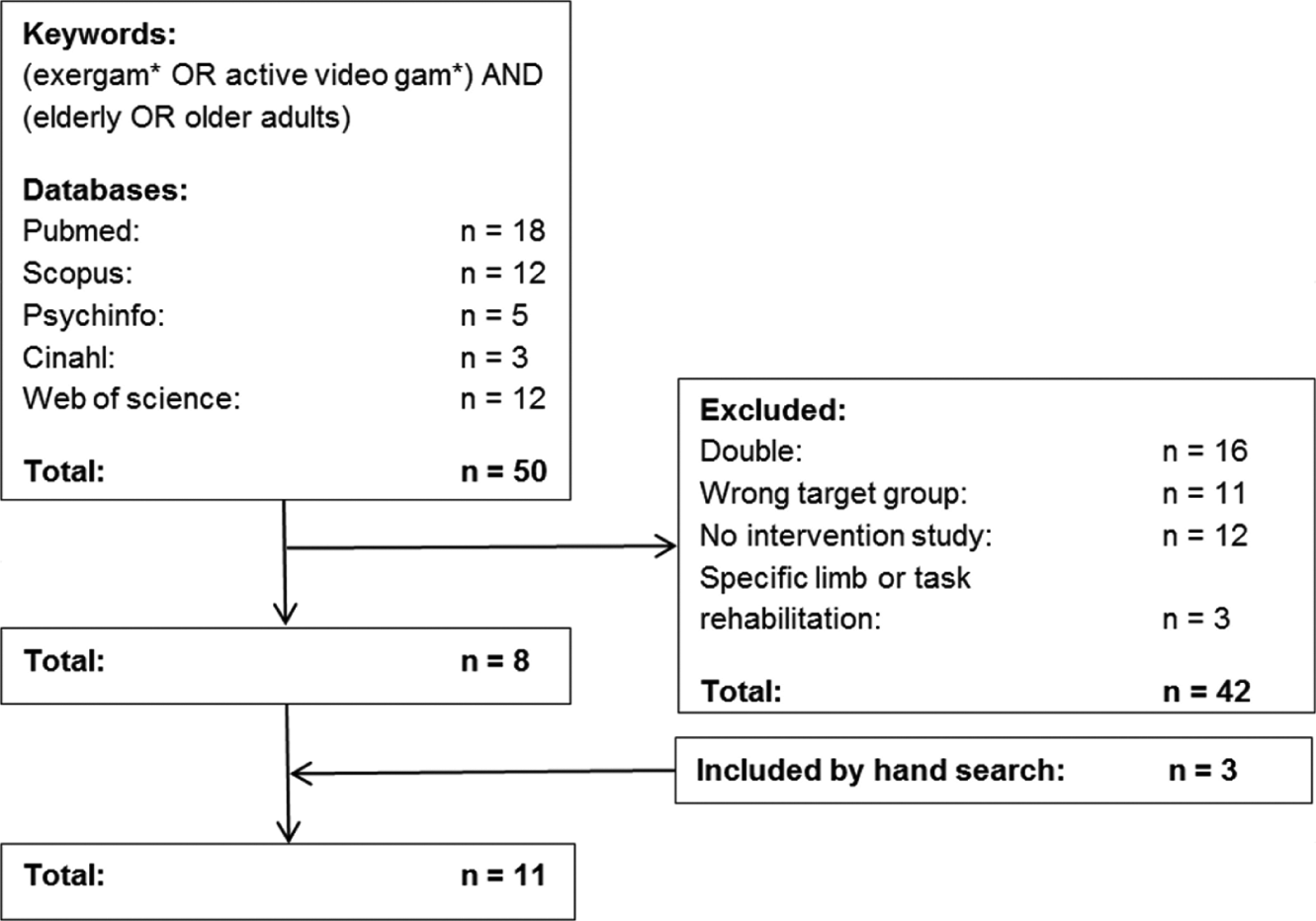
Inclusion of studies in the review.
Characteristics of the studies.
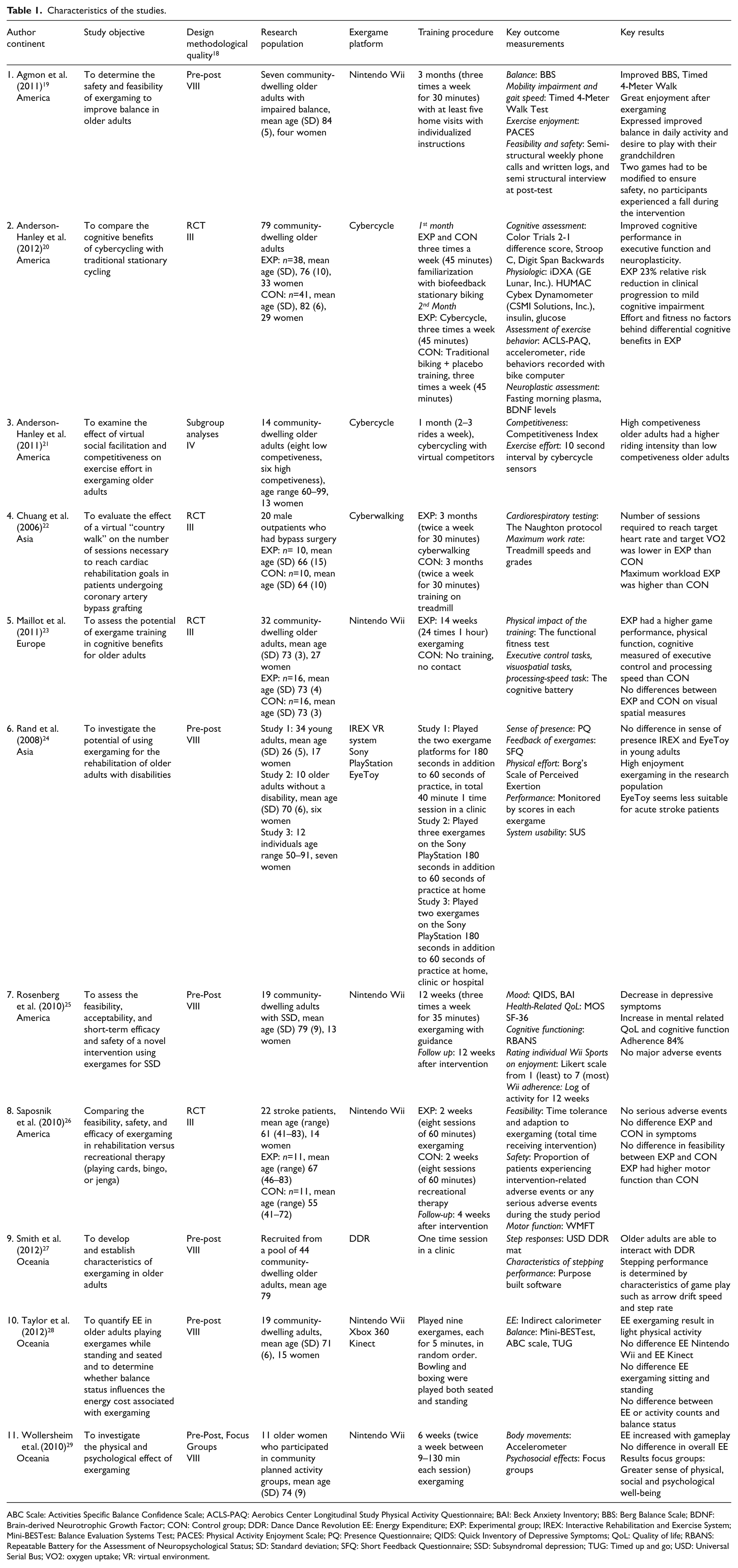
ABC Scale: Activities Specific Balance Confidence Scale; ACLS-PAQ: Aerobics Center Longitudinal Study Physical Activity Questionnaire; BAI: Beck Anxiety Inventory; BBS: Berg Balance Scale; BDNF: Brain-derived Neurotrophic Growth Factor; CON: Control group; DDR: Dance Dance Revolution EE: Energy Expenditure; EXP: Experimental group; IREX: Interactive Rehabilitation and Exercise System; Mini-BESTest: Balance Evaluation Systems Test; PACES: Physical Activity Enjoyment Scale; PQ: Presence Questionnaire; QIDS: Quick Inventory of Depressive Symptoms; QoL: Quality of life; RBANS: Repeatable Battery for the Assessment of Neuropsychological Status; SD: Standard deviation; SFQ: Short Feedback Questionnaire; SSD: Subsyndromal depression; TUG: Timed up and go; USD: Universal Serial Bus; VO2: oxygen uptake; VR: virtual environment.
Articles’ main conclusion.
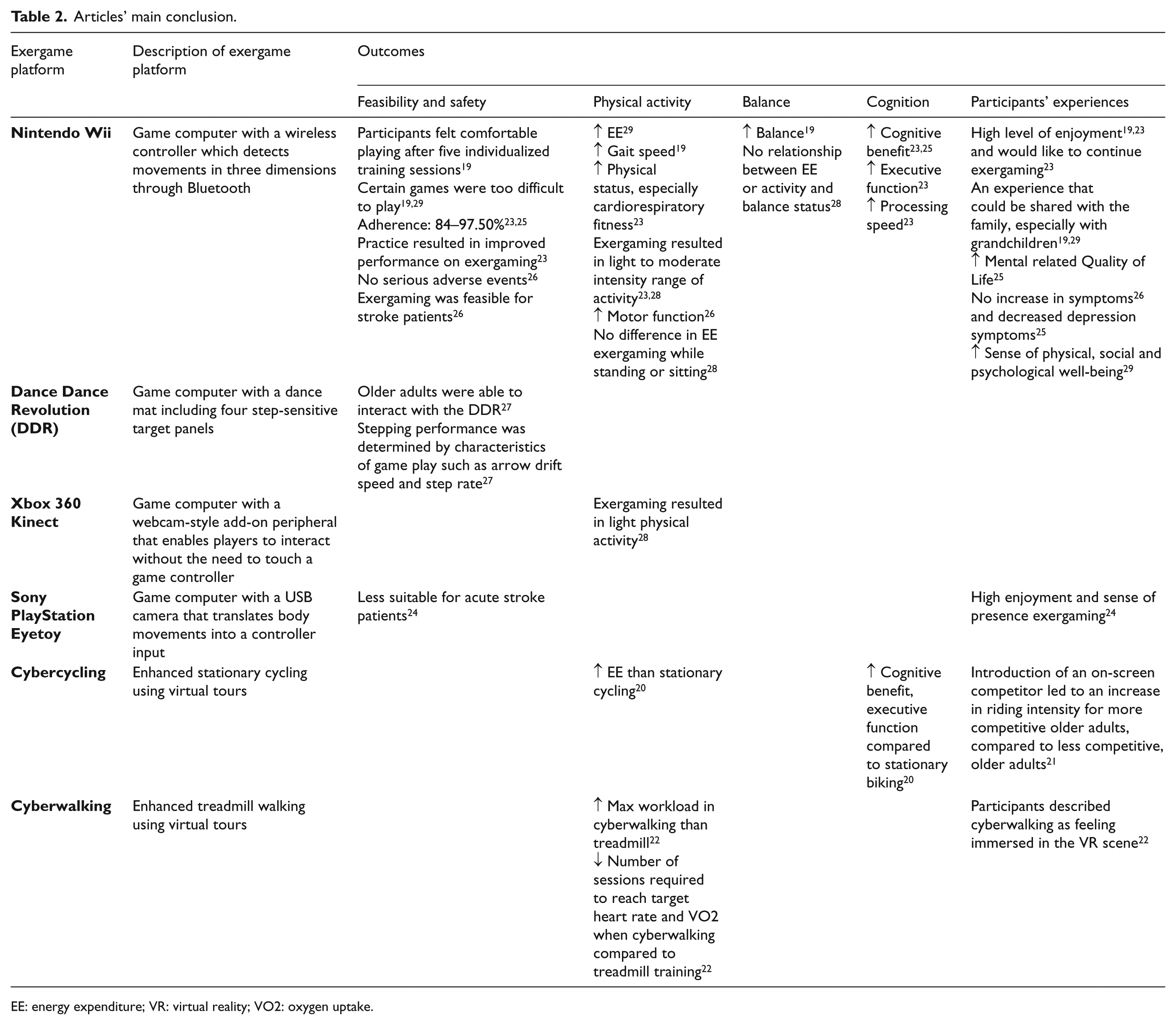
EE: energy expenditure; VR: virtual reality; VO2: oxygen uptake.
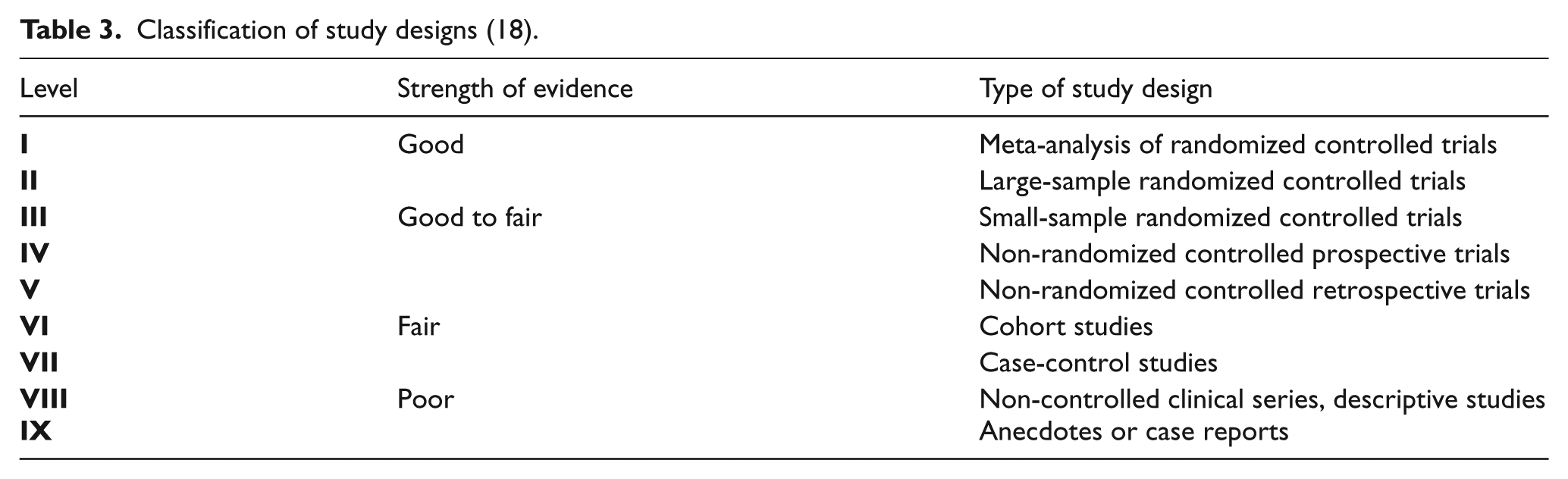
The methodological quality was evaluated by a classification system, which has previously been used in reviews on new health technology and medical procedures in health care (Table 3). 18 In this scoping review the methodological quality of the studies did not determine inclusion or exclusion.
Classification of study designs (18).
Results
A total of 50 articles were found in the databases. Sixteen articles were duplicated in the databases and 26 articles were excluded because they did not meet the inclusion criteria. Three additional articles were found through a manual search. Finally, a total of 11 articles were included (Figure 1).
Methodological aspects of the studies
One study was published in 2006, 22 one in 2008, 24 three in 2010,25,26,29, three in 2011,19,21,23, and three studies were published in 2012.20,27,30 Four studies used a randomized design.20,22,23,26 Because of the low number of participants in each randomized study (20–63 participants), the evidence of these studies is good to fair (Table 3). Seven studies used a pre-posttest design without a control group.19,21,24,25,27–29 One study reported a subgroup analysis of a randomized control trial 21 and one pre-posttest study reported results from focus group interviews. 29 Only two studies used a longer follow-up period; 4 weeks 26 and 12 weeks. 25
Research populations
The largest study in this review included 63 older adults, 20 and the smallest study included seven older adults. 19 The majority examined community-dwelling older adults.19,25,28,29 Three studies included patient populations. One study included 32 patients with cardiac disease, 22 two studies included stroke patients, one included 12 stroke patients and 10 older adults without a disability 24 and one study included 22 stroke patients. 26 Nine studies included both men and women. In these studies the majority of the participants were female (between 57 and 93%).19–21,23–27,30 One study included only men (n=20) 22 and one only women (n=11). 29 The age range in the studies was 50–99 years old.
Safety and feasibility of exergaming
The exergame platforms in the studies seem to be safe and feasible with none of the studies reporting adverse events. After having received instructions and familiarized themselves with the exergames, stroke patients had no problems playing them. 26 In a study where a balance board was used (on which the player stands during training), two games had to be modified due to muscle pain or balance problems in order to be safe and feasible. In this study patients had no problems playing the games after five individualized training sessions. 19 In one study including older women, there were difficulties playing some of the exergames on the Nintendo Wii, and this study reported that mastery of the exergame seemed to be an important factor when choosing a favorite game to play. 29 The Sony PlayStation EyeToy was feasible for older adults and stroke patients. It was less suitable for acute stroke patients due to weak upper extremity, which made it difficult to interact with the exergame platform. 24 Older adults were able to interact with the Dance Dance Revolution. A significant relationship was found between stepping performance and stimuli characteristics, but the stepping performance decreased as stimulus speed and step rate were increased. 27 The adherence in exergaming was between 84 and 98%.23,25,26
Physical activity in exergaming
Eight studies using different instruments measured outcomes in physical activity (Table 1). Playing the exergames resulted in more EE compared to rest and to sedentary computer gaming. 28 No significant difference in EE was found in playing bowling and boxing on the Nintendo Wii while standing up compared to playing these games while seated. 28 In addition, no difference in EE was found between the exergame platforms Nintendo Wii and Xbox Kinect. 28 Playing the exergames resulted in an EE of light intensity exercise to moderate intensity activity.23,28 No significant correlation was found between EE or activity counts and balance status while bowling or boxing on the Nintendo Wii. 23
Adding a virtual competitor in cybercycling increased the exercise effort among the more competitive exercisers. 21 Cardiac patients who rehabilitated with cyberwalking had an increased workload and needed fewer sessions to reach their maximum heart rate and oxygen uptake, compared to a control group who had rehabilitation with only a treadmill. 22
Balance in exergaming
Three studies included balance as an outcome, using different instruments to measure this concept (Table 1). Participants experienced improved balance in daily activities after exergaming with the Wii Balance Board. 19 One study showed that balance was not related to the amount of physical activity. 28
Cognition and exergaming
Cognitive change has been examined in three studies, measured by different instruments (Table 1). Participants had improved cognitive function in all of the three studies after exergaming,20,23,25 especially in executive function and processing speed. 23 Cybercycling achieved better cognitive function than traditional exercises, using the same effort. 20
Experience in exergaming
Five studies included the experiences of participants who had used the exergame platform. The participants enjoyed playing the exergames19,23,24 and liked to continue using them. 23 The studies do not report on preference based on age and gender. Participants who played exergames decreased in depressive symptoms (sustained at 12 week follow-up), and increased in Mental related Quality of Life 25 and empowerment, 29 measured with validated questionnaires (Table 1). They perceived health benefits in terms of greater ease of movements and psychosocial well-being. 29 Within their family, the exergames allowed them to share experiences, which made them feel more connected with their family members, especially their grandchildren.19,29
Discussion
Although this research field is still small and developing, we found that using exergame platforms might be a potentially effective alternative to facilitate rehabilitation therapy after illness and are suitable for use in older adults.
The studies showed that exergaming was safe and feasible, and could increase physical activity in elderly patients suffering from stroke and cardiac disease. The physical activity level increased while playing exergames, from light intensity exercise to moderate intensity activity. In four studies, exergaming resulted in positive outcomes in relation to balance and cognitive performance.20,23,25,30 In four studies, participants reported enjoyment in being active and one study resulted in a decrease of depressive symptoms.19,23,24,29 An important aspect of introducing exergaming to older adults is that a proper familiarization period is included and guidance is provided.
It will still be a challenge to find the most suitable exergame for a certain patient group. Although all games were found to be effective, some games were more strenuous than others and this might be important to consider when implementing or testing a certain exergame in a specific population. The commercial exergame platforms have the advantages that they are relatively cheap and health care providers have reported that the use of a commercial exergame platform (Nintendo Wii) provided purposeful and meaningful opportunities to promote well-being for older and disabled clients within a care and disability service for the elderly. 31
This review is a first step to investigate the possibility of using an exergame platform to help patients with HF to adopt a more physically active lifestyle. The results of this review suggest that exergames increase physical activity in elderly individuals, stroke patients and cardiac patients, and could therefore be feasible and safe for patients with HF. However, further testing is needed. This review has some limitations, mainly the small sample sizes in the studies included in the review and the fact that most studies did not include a control group.
The findings of this review may have implications for both the current policy on delivery intervention programs that aim to increase physical activity, as well as the direction of future research. Further research, with a higher level of methodological quality and that examines the relative efficacy and costs of intervention programs aimed to enhance daily activity in non-health care settings, such as home settings, is needed. Also, a longer follow up period is needed to examine the long-term effects of these promising exergame platforms. Therefore, a RCT-study is planned to assess the influence of exergaming on exercise capacity in patients with heart failure (clinicaltrial.gov identifier: NCT01785121).
Footnotes
Conflict of interest
None declared.
Funding
This research received no specific grant from any funding agency in the public, commercial, or not-for-profit sectors.
Exergames increases physical activity in elderly, stroke patients and cardiac patients Exergames could be feasible and safe for patients with heart failure Further research is needed to assess the influence of exergaming in patients with heart failure