




Abstract
Te Wāhi Whangai (the nurturing space) is an innovative methodological approach informed by concepts rooted in a Māori worldview. Co-developed by a doctoral student, a kaiako raranga (weaving teacher), and a doctoral supervisory team, it integrates storytelling and healing into research within a therapeutic environment, addressing the necessity for culturally sustaining methodologies that invite wāhine (women) to openly share their stories. Developed for inquiry into wāhine’s experiences with substance use and their experiences during 6 months of a residential programme integrating parenting education with alcohol and drug treatment, Te Wāhi Whangai created a distinctive research environment within the treatment setting. The authors present concepts informing the development of Te Wāhi Whangai, including Kaupapa Māori, Mana Wāhine, Indigenous Storywork and Wānanga methodologies alongside design and conditions for application. Embracing a slower paced research environment, the methodology encourages participants to exercise agency in guiding conversations and envisioning the future to open possibilities for a different life. Its emphasis on cultural connection, doing while researching, and prioritising participant voices holds broader implications for Indigenous, Mana Wāhine (often referred to as Māori feminist discourses) and arts-based research methodologies, as well as other sensitive research settings.
Introduction
Internationally, wāhine (women) with substance use disorders (SUD) feel their stories are told for them in a manner that lacks context, which can be stigmatising, judgmental and shaming (Ettorre, 2015; Stone, 2015; Wolfson et al., 2021). Within Aotearoa (New Zealand), research has overlooked the voices of pregnant wāhine or mothers with a SUD. A recent scoping review on wāhine’s experiences with substance use and alcohol and other drug (AOD) services in Aotearoa (Jackson et al., 2023) identified numerous obstacles to accessing healthcare and maternity services. The findings revealed that wāhine’s mistrust of these services stemmed from communication difficulties, unclear information, and experiences of stigma and discrimination. Institutional racism emerged as a significant barrier for wāhine Māori (and their whānau [family/families]) seeking health and wellbeing services, with some reporting a sense of being “looked-down upon” and actively avoiding engagement with healthcare providers and community support groups (Malatest International, 2022: 106). Results from the scoping review supported the need for, and value of, an integrated residential-addiction-treatment and parenting programme that was purpose-built to serve the needs of these wāhine in Tāmaki Makaurau (Auckland), Aotearoa, in 2022. The first author, at the time a doctoral student and employee of the service, was granted permission to explore wāhine’s experiences of the service.
Our inquiry centred on change, aiming to explore the potential for mothers to heal within the treatment centre and generate insights relevant to the service, its future residents, and other AOD providers and parenting services. To enable participants to feel comfortable enough to engage deeply with personal narratives and experiences, we needed to create a space that would be experienced as accepting, nurturing, and safe to counter the stigmatisation and discrimination often faced by wāhine using substances while pregnant or parenting. While their male counterparts encounter far less judgment (Gunn and Miranda Samuels, 2020; Van Steenberghe et al., 2021), these wāhine are often perceived as “doubly deviant”—not only as wāhine using substances but also as mothers or expectant mothers using substances (Malloch, 2000: 55). This discrimination underscores the urgent need to amplify their voices and address systemic barriers to support and agency.
Given the programme’s referrals from Oranga Tamariki (Aotearoa’s government department responsible for child welfare, including the protection and care of children at risk) and the significant overrepresentation of wāhine Māori referred to its services for substance use, the researchers anticipated that the participants would primarily be Māori. This expectation necessitated the integration of concepts foundational to Māori culture in developing a methodology that actively encouraged wāhine to share their experiences before and during recovery. Since this approach provided scope for authentically reflecting on their journey through the service, it was considered that wāhine of other backgrounds would benefit too.
Drawing from the literature on conducting research in residential therapeutic communities (Harvey, 2023; Shaver et al., 2023), a multimodal approach including an informal dialogic space prompted by an arts-based Māori method emerged as fitting to encourage dialogue between participants.
In this article, we first present the concepts and perspectives that contributed to the methodology. We then lay out emergent learning from trialling the methodology. This includes how wāhine were invited into the research, a brief description of methods that encouraged storytelling, and conditions that cultivated the space for the methodology. Excerpts from conversations with participants during the application of the methodology are woven into descriptions of conditions to illustrate their importance. We discuss the therapeutic nature of the space and its transferability to other research contexts and reflect on how a space of trust and connection was built with an underlying commitment to surfacing stories. We hope this will be helpful for researchers interested in using or reimagining our methodology for other research projects.
Methodological genesis: Contributing concepts from the literature
The transformative paradigm, rooted in social justice and human rights principles, is the metaphysical foundation that guided the research team behind Te Wāhi Whangai’s methodological approach (Mertens, 2010). Denzin and Lincoln (2011) acknowledged four fundamental guiding principles of qualitative research: beliefs about ethics (axiology), the nature of reality (ontology), the nature of knowledge (epistemology), and the approach to systematic inquiry (methodology). These beliefs shape the transformative paradigm and influence methodological decisions in distinctive ways.
Foundational paradigmatic beliefs
Actualising axiology for this research required us to consider advancing social justice, upholding human rights, and respecting cultural practice (Mertens, 2010). Applying this principle meant assembling a research team experienced in working with marginalised communities where Māori members helped lead the development of our methodological approach. Ontologically, we acknowledge that social reality is linked to historical contexts, continuously evolving, and shaped by various social, political, cultural, and power dynamics (Neuman, 2011). Historically, the differences of wāhine Māori were defined by others, often in negative terms. The assumption that Māori were/are inherently “lacking” because they were/are “not white” (Simmonds, 2011: 11) has been central to colonial ideologies as defined by early Pākehā ethnographers and anthropologists (see e.g.: Best, 1924; Heuer, 1972; Mikaere, 2017; Murphy, 2011; Yates-Smith, 1998)). The imposition of colonial social and legal systems redefined the traditional roles of wāhine Māori, stripping them of their mana and reshaping their ontological realities through a Western lens of superiority. This colonial restructuring disempowered wāhine Māori and laid the foundation for systemic racism, which persists in institutions like healthcare and social services today (Cleaver, 2023; Cunningham et al., 2023; Jackson et al., 2023). Worldwide Indigenous women who use substances are often portrayed as morally lacking, reinforcing racial stereotypes that cast them as unsuitable caregivers (Shahram et al., 2017). These ideas stem from colonisation, where Indigenous peoples were depicted as inferior to justify control and assimilation. Linking substance use to racial and cultural inferiority reinforces harmful stereotypes, which perpetuate stigma and systemic discrimination through healthcare and social structures that continue to treat Māori as inferior (Harris et al., 2013). These intersecting forms of marginalisation are not just ontological but also epistemological, as the knowledge systems and power structures that underpin research and institutions often privilege Western perspectives over Māori ways of knowing (Ormond, 2023).
Epistemology occurs within the context of power and privilege. Our awareness of the power and privilege held by the research team influenced how best to build trusting relationships between the lead researcher, kaiako and participants (Kivunja and Kuyini, 2017). Additionally, we considered the amount of personal information to be shared by the kaiako and lead researcher facilitating the collection of stories. The aim was to authentically connect and establish trust with participants in the addiction community under study, reduce wariness or bias, and accurately reflect their experiences and worldviews.
Mertens and Wilson (2018) highlighted that no single methodology flows from the transformative paradigm. Instead, they challenged researchers to make bold methodological choices aligned with achieving some measure of social justice. In response to this, our exploration focused on existing Indigenous methodological approaches rooted in social justice principles. We developed Te Wāhi Whangai as a specific methodology that borrows and builds upon conceptual ideas from four methodologies: Kaupapa Māori, Mana Wāhine, Indigenous Storywork, and Wānanga. While this overview cannot fully capture the depth and evolution of these methodologies or the many contributions from Māori academics, community leaders and theorists, the doctoral thesis, on which this article is based, engages more deeply with these methodologies.
The place of Kaupapa Māori methodologies
Kaupapa Māori methodology is a dynamic, evolving framework (Hoskins, 2001; Pihama, 2001). Our approach emphasises individual, whānau, and collective agency; we focused on adopting methods for collecting, analysing, and presenting participant accounts that highlight their strengths, while ensuring that we neither gloss over nor omit challenging or deficit-focused stories, such as substance use during pregnancy. To do so, Kaupapa Māori methodology provides a framework that inherently acknowledges the validity and significance of Māori identity and beliefs, with Māori language and cultural customs forming its foundation (Smith, 1997a; Smith, 1997b).
Graham Smith and Linda Smith were integral to the development of Kaupapa Māori theory, praxis, and reserch methodology, each contributing to its foundations and advancement. G. Smith outlined six principles that are fundamental to Kaupapa Māori and form the basis for its application in practice and research. These principles include Tino Rangatiratanga (self-determination), taonga tuku iho (cultural values and knowledge passed down from ancestors), ako Māori (Māori teaching and learning methods), kia piki ake i ngā raruraru o te kāinga (the capacity to overcome socio-economic challenges), whānau (the extended family structure), and Kaupapa (working collectively with a shared purpose) (Eketone, 2020).
Kaupapa Māori, with its six core principles, is centred on Māori well-being and self-determination, rooted in Māori philosophies and community aspirations. While it challenges the dominance of Western knowledge in academic institutions, its principles prioritise Māori-led approaches grounded within Māori communities (Smith, 1997a; Eketone, 2008; Pihama et al., 2002). It creates a platform for whānau, hapū, and iwi to develop tools and knowledge grounded in their experiences and sense of identity (Smith, 2012).
Grounded in the principles of tino rangatiratanga (self-determination) and Te Tiriti o Waitangi (The Treaty of Waitangi), signed in 1840 to safeguard the sovereign rights of Māori, Kaupapa Māori prioritises Māori autonomy and aspirations for the future (Jenkins and Ka’ai, 1994). Māori researchers have explored and developed various theoretical and cultural concepts such as Āta, (a cultural tool that shapes respectful relationships for well-being) (Pohatu, 2013), and Pūrākau (pedagogical value of pūrākau (Māori storytelling) as a research methodology) (Lee-Morgan, 2019) to better engage with the complex lived experiences of Māori and diverse communities.
Te Wahi Whangai was guided by these methodological principles, and as the project progressed, the research team gained valuable insights and deepened their understanding, even as they navigated challenges along the way.
Mana Wāhine methodology
Colonisation and patriarchal influences have resulted in a significant power imbalance that commonly relegates wāhine Māori to marginalised and disempowered roles and represents them accordingly (Mikaere, 2017). Consequently, there is a pressing need for wāhine Māori to reclaim their voices and tell their own stories (Pihama, 2001; Simmonds, 2011; Te Awe Awe-Bevan, 2009; Wilson et al., 2022). Mana Wāhine methodology is often regarded as a Māori feminist discourse seeking to uplift the diverse experiences of wāhine Māori and challenge colonial patriarchal structures (Campbell, 2019; Smith, 2012). However, Mana Wāhine goes beyond Western feminism by addressing the intersecting oppressions that wāhine Māori face, such as colonialism, racism, and sexism.
The Māori concept of mana, which encompasses authority and power, refers to the divine permission granted by the gods to humans, along with spiritual empowerment to demonstrate mana according to the gods’ revealed will (Marsden, 2003). Mana also represents relational and communal responsibilities embedded within whānau, hapū, and iwi. The term wahine/wāhine, carried cultural significance beyond its simple English translation of woman/women, reflecting the interconnectedness of the roles wāhine Māori hold in both spiritual and societal contexts (Marsden, 2003; Pihama, 2020). Together Mana Wāhine embodies the inherent power, authority, and responsibilities of wāhine Māori as recognised in tikanga.
Researchers engaging in this methodology recognise the intersectionality of Māori and female identities, asserting the mana of wāhine Māori within society (Simmonds, 2011). These researchers resist homogenous understandings of wāhine Māori experiences, recognising that these are shaped by many factors, including tribal affiliation, social class, and political beliefs (Irwin, 1992); and cautioning against oversimplifying and generalising complex issues (Campbell, 2019). Te Wāhi Whangai aligns with the goal of reclaiming narratives and supporting wāhine within their communities and society, which is central to the Mana Wāhine methodology.
Indigenous storywork methodology
The reclamation of Indigenous stories was harnessed by Archibald (2008), who introduced the concept of “Indigenous Storywork” as a globally applicable methodology, including among Māori in Aotearoa. Indigenous Storywork underscores the crucial roles of storytellers, story listeners/learners, researchers, and educators in engaging with Indigenous narratives for educational and research purposes. Archibald (2008) adapted Kirkness and Barnhardt’s (1991) principles of respect, reciprocity, and responsibility for Indigenous Storywork, and added reverence, emphasising the importance of respectful engagement, responsible relationship building, reverent treatment of knowledge, and reciprocal knowledge exchange.
The strength of Indigenous Storywork lies in its adaptability across diverse communities and cultures. Within Māori culture, storytelling plays a pivotal role in connecting, nurturing, sustaining, and enriching people. Lee-Morgan (2019) recognition of the cultural significance of pūrākau, an Indigenous Māori form of Storywork, reflects this. Our research methodology, tailored for Māori and non-Māori participants, focused on capturing and narrating individual and collective experiences. The approach acknowledges shared and personal struggles, strengths, and determination to safeguard well-being while striving for a stable, sustainable quality of life for themselves and their children.
Wānanga as research methodology
The concept of wānanga has no equivalent in English. Traditionally “whare wānanga” or houses of learning, provided space for practising tikanga (ethical principles guiding conduct and defining right and wrong behaviour) and transmitting tribal knowledge (Wilson et al., 2022). Māori researchers have extended and broadened the meaning of wānanga to foster data collection discussions grounded in Māori cultural practices (Mahuika and Mahuika, 2020). Such wānanga provide a culturally determined space for knowledge transmission, challenging and decolonising traditional Western methods by positioning collective knowledge creation at the forefront. Mahuika and Mahuika (2020) examined the conceptual, geographical, and methodological dimensions of wānanga, which vary according to local customs, language, geography, community members, and tikanga. In conceptualising Te Wāhi Whangai, we critically evaluated and adapted these insights. Our wānanga were consciously grounded in principles honouring and aligning with participants’ cultural context and preferences.
Methodological conception
Drawing on traditional cultural knowledge and decolonisation theories, we aimed to create a safe, nurturing research environment where participants would feel comfortable sharing their stories. Each Te Wāhi Whangai wānanga was led by the lead researcher and a kaiako from Te Wānanga o Waikato (an Indigenous tertiary education provider); their collaboration, based on shared life experiences and interests in amplifying the stories of wāhine, allowed for a unique methodological design that transcends typical academic boundaries. The first author, a wahine Māori Pākehā (white) researcher, worked as a counsellor in the adult residential treatment service. Management of the adult programme oversaw the development of the māmā and pēpi (mothers and babies) programme designed to support pregnant and parenting wāhine with SUDs. The position of embedded researcher granted proximity to wāhine in the service, facilitating unhindered access to collect stories aimed at driving positive changes within the treatment centre. The second author, a doctoral supervisor for the research, specialises in creative approaches for dialoguing and research design innovations related to multimodal methods (Chubb, 2023; Chubb et al., 2021, 2022), has worked with marginalised communities in Aotearoa, East and West Africa. The third author, our kaiako, co-facilitated the wānanga, taught weaving, and contributed to the development of conditions for Te Wāhi Whangai. The fourth author, also a doctoral supervisor for the research, has a practice background in community-based social service provision and a research background in support of women raising children.
Coombes et al. (2017) spoke of activity-based research that involved learning by doing. He surmised the nature of the “activity seems less important than the theme in common to these otherwise diverse practises: examining the lifeworld while ‘doing’ together” (p. 45). When planning her doctoral study, the first author wanted to recreate her experiences of doing raranga (weaving) while conversing with other wāhine residents of a residential drug rehabilitation service she attended in 2011. The raranga group space provided an oasis from the rigidity of the therapeutic community. It helped her and other wāhine to feel safe discussing topics considered taboo in other treatment spaces. Researching while doing appears to be prevalent cross culturally and therefore accessible to all participants regardless of ethnicity. The memories of that nurturing sacred space remained for the first author and reflected ideas of learning by doing (Coombes, 2017), moving through the treatment journey and learning about self through weaving. She drew on these ideas while co-designing Te Wāhi Whangai methodology.
Once the kaupapa (shared set of values and principles that guide actions) of the methodology and resulting data collection methods were established, the kaiako gifted the name Te Wāhi Whangai, intertwining the principles of raranga and the research project’s goals. Meaning “the nurturing space,” it draws inspiration from the wairua (spirit) of the kaiako’s teaching philosophy, reflecting the nurturing space she creates for her students. As a kaiako, she prioritises creating a safe space that welcomes the diversity of her tauira (students) and supports their varied goals—whether in education, connection to culture or personal growth. Acknowledging individual aims while nurturing a collective spirit within the classroom increases engagement and goal attainment. This teaching philosophy aligns with the practices the kaiako and researchers aimed to create within Te Wāhi Whangai and the resulting research space.
Facilitating the methodology
To facilitate Te Wāhi Whangai, we gave consideration to inviting participation, authentically acknowledging the wāhine’s research role, and respecting treatment provider boundaries.
Engagement with participants
The treatment programme operated in a pilot phase, limiting the number of wāhine and pēpi accessing the service to a maximum of eight wāhine, either pregnant or with one pēpi under the age of 3. Throughout Te Wāhi Whangai, the programme housed three to five wāhine at any given time, resulting in seven wāhine participating in the doctoral research project—a smaller sample than initially planned. Among them were five wāhine Māori and two Pākehā.
Six 1-day Te Wāhi Whangai wānanga occurred over 4 months, during their 6-month treatment programme. This data collection timeframe provided insights from the beginning to near the end of participants’ treatment journeys. The wānanga schedule consisted of three sessions over 3 weeks, followed by a 6-week hiatus for the Christmas period, with the remaining three sessions taking place during late January and early February.
The ability to conduct Te Wāhi Whangai face-to-face was paramount for fostering whakawhanaungatanga (relationships), manaakitanga (respect), and creating whakaaro pai (goodwill) among the participants, researchers, and kaiako. This in-person connection was initiated at the research project’s outset, where the lead researcher organised face-to-face conversations with interested wāhine. The initial meeting facilitated introductions, shared background information, and outlined the study’s purpose, data collection methods, and timeline. Confidentiality boundaries were clarified, and participants were informed of their right to withdraw without compromising their quality of care. Participants were given space to contemplate the project, have questions addressed, and, upon agreement, sign consent forms. The potential benefits of participation were also emphasised, including the opportunity to share experiences and critique the treatment service, potentially aiding others; and therapeutic healing through narrative sharing (Mertens, 2010).
During the first Te Wāhi Whangai wānanga, the space was opened with karakia (prayer), mihi (speeches), waiata (singing), and whakawhanaungatanga. Kai (food) was provided at designated breaks by the treatment facility. All subsequent wānanga followed a similar process of opening and closing the space. At the start of each wānanga, the kaiako introduced new mātauranga Māori (or knowledge rooted in Māori worldviews) linked to the day’s toi Māori (i.e., traditional Māori art) data collection method. After the six 1-day wānanga, a poroporoaki (closing ritual) was held. Several months later, a final recorded session gathered participants’ perspectives on Te Wāhi Whangai as a research methodology. Initial feedback highlighted the therapeutic nature of Te Wāhi Whangai, the cultural connection and learning that occurred, and the value of sharing stories about the treatment process in a non-judgmental and supportive environment.
A multimodal approach to research
Te Wāhi Whangai is a methodological approach to storytelling research. It lends itself to multiple methods and modalities of capturing data while inviting participants to create. As such, the methodology provides opportunities for scaffolding creative ways of facilitating data collection. In the case of the first author’s doctoral research, the chosen data collection methods were toi Māori in the form of raranga, painting and stencilling, as shown in Figure 1. Toi Māori data collection methods during Te Wāhi Whangai. The images depict a set of tools and materials provided for each wāhine (top left); the harvesting of harakeke (flax) (top middle); māmā with pēpi engaged in learning and research (top right); painted artwork featuring a stencil of a tūī, a bird native to Aotearoa (bottom left); and a participant using stencils to create artwork embodying values significant to her (bottom right).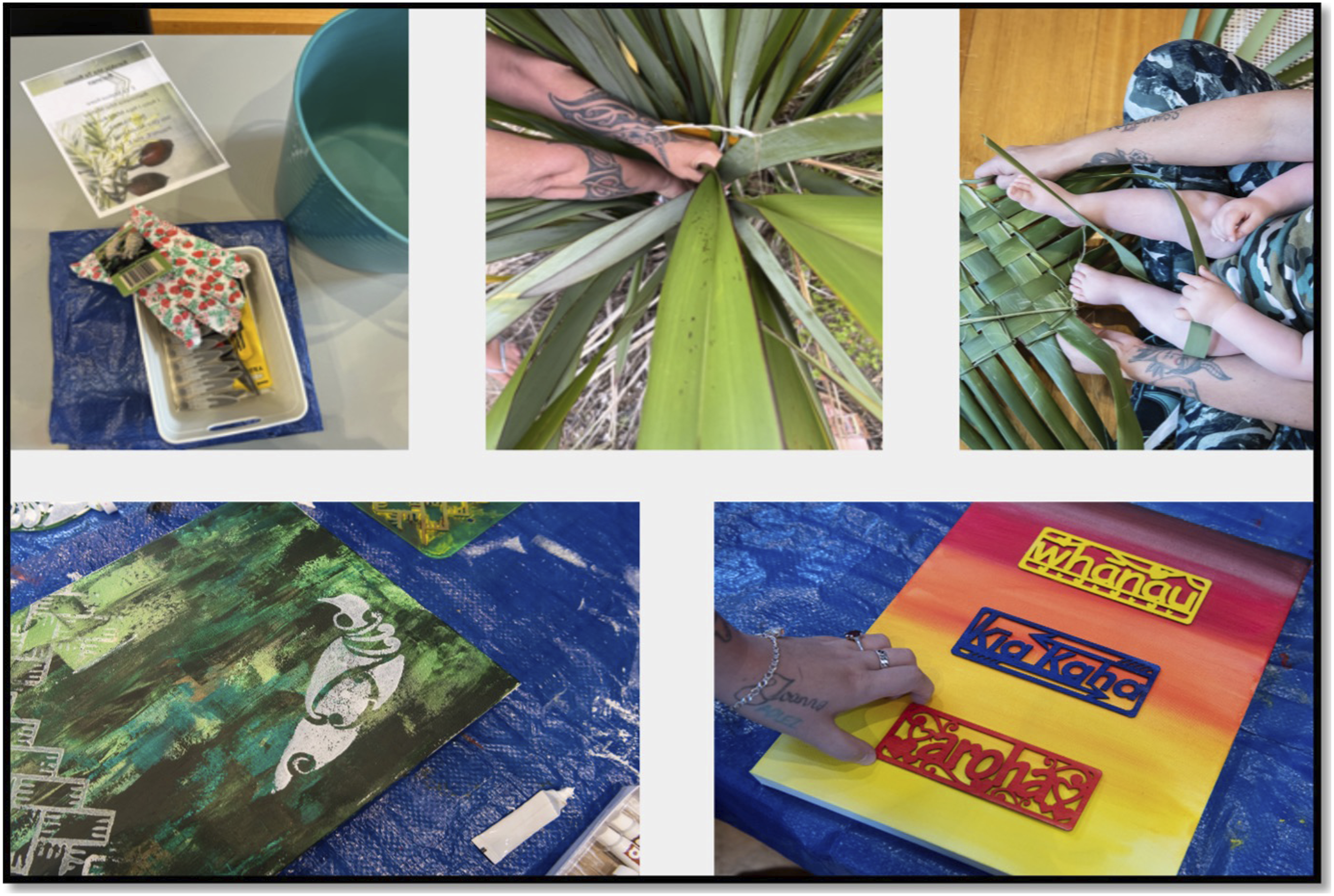
Toi Māori, arts-based practices passed down by ancestors, served as a therapeutic method for participants to process social harms, such as addiction, trauma, stigma and marginalisation, while connecting with kaupapa Māori principles. Creating art provided a platform for expressing emotions and exploring deeper aspects of self that are often concealed. Wāhine Māori highlighted the deepening connection to childhood and culture through art, underlining Te Wāhi Whangai’s role in filling a cultural gap in adulthood. One of the participants spoke of how toi Māori connected them to childhood and emotional expression. It just takes you back to when you were a child. Childhood. So beautiful. A lot of people can express how they’re feeling through their art . . . But you can still see how they hide things in the colours they use and the things they put on their art. (Māmā Krystal)
While the arts occupy significant space within Māori culture, communication, and politics (Hindle et al., 2015), we acknowledged the possibility that some research participants may not feel an affinity for the arts and this creative process. Therefore, while committed to teaching raranga, the facilitator adapted to participants’ needs and introduced other materials and modalities (e.g., painting, stencilling, informal dialogues) to accommodate different strengths and desires. The kaiako noted that transitioning from raranga to contemporary painting demonstrates the versatility of Te Wāhi Whangai as a methodological approach applicable to the use of diverse creative modalities, whether Indigenous or Western.
During two Te Wāhi Whangai wānanga, photos were taken that illustrated the data collection processes, providing a depth of meaning that is hard to convey through words alone. These photos visually represent the wāhine’s research journey and breathe life into disseminating findings. The images we include captured artwork produced, anonymised images of the participants in action and the environment where Te Wāhi Whangai was held (see Figure 1).
Conditions for successful cultivation of Te Wāhi Whangai
Te Wāhi Whangai is anchored by six conditions (see Figure 2), or necessary ways of being and interacting, that must be present for the methodology to be effective. Wāhine are prioritised from the beginning of the project, and the research is shaped by their needs. The conditions are: (1) power sharing, (2) experience of achievement, (3) edgewalking, 4), adaptability (5) culturally sustaining, and (6) participant needs over research goals. Conditions for successful cultivation of Te Wāhi Whangai.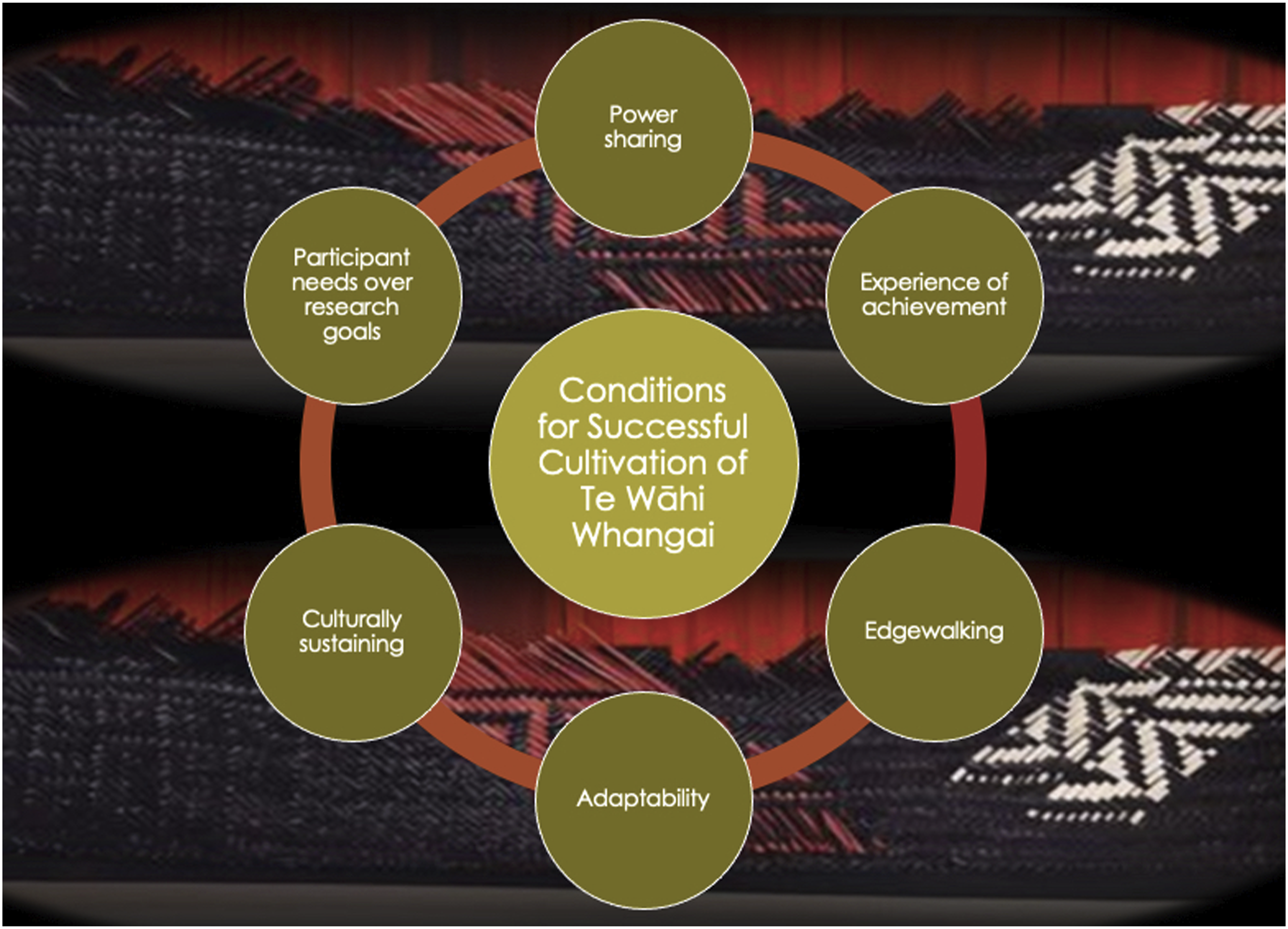
Power sharing
Power sharing, a concept originating from political theory, refers to the distribution of political power among various groups or actors to prevent or resolve conflicts and promote stability (Horowitz, 1985). This concept aligns with the Kaupapa Māori research principle of tino rangatiratanga, which emphasises Māori rights to self-determination and community decision making, essential aspects of power sharing within Māori society (Smith, 1997a; Smith, 1999). In the context of Indigenous research, power sharing embodies Indigenous perspectives and expertise, cultivating collaboration with Indigenous communities whereby their knowledge and traditions are valued and preserved (Smith, 2012). This collaborative approach encourages mutual respect, understanding, and the co-creation of knowledge.
Research is frequently linked with the power and control to determine which ideas and findings and which viewpoint hold significance (Snow et al., 2016). The ability to relinquish control became a core condition of Te Wāhi Whangai. The research team did away with preconceived notions of which stories were important. A robust reflective approach was necessary to question assumptions to ensure that the meaning of stories was authentically translated into research findings. Continued reflection during design, implementation, analysis and writing meant questioning who determined which stories had merit and how these stories would be represented in research findings.
Since “research is probably one of the dirtiest words in the Indigenous world’s vocabulary” (Smith, 1999: 1), researchers must commit to authenticity, transparency, handing over control to participants, and centring participants’ voices. To meet this need, the researcher sat with the wāhine to share parts of her own treatment story while explaining how their stories and opinions would be shared, demystifying and making the research process accessible to participants (Snow et al., 2016). The genuine relationship that formed made wāhine eager to contribute—likely because they had seldom, or never, been asked for their views on substance use and health services. The value of the wāhine’s knowledge was explicitly recognised, and they played an active role in determining what was meaningful within their stories.
In the Māori worldview, reciprocity in power sharing emphasises the significance of mutual respect and exchange, acknowledging power dynamics can shift among individuals and the collective. In this case, power sharing involved mutual support and cooperation with the rehabilitation service. It included sharing photos and excerpts from the findings during the māmā and pēpi programme’s opening and incorporating them into the organisation’s funding proposal. Additionally, the researcher helped one of the wāhine craft her story of addiction and experiences of the rehabilitation service into a speech presented during the opening. This meant that participant stories and imagery not often seen or acknowledged were shared with a powerful and influential audience, including the deputy prime minister, other MPs, senior Oranga Tamariki management, and kaimahi (staff) from other AOD services.
In addition to the relationships established with participants, power sharing was developed through extensive conversation and trust building between the kaiako and the researcher, cementing an enduring relationship grounded in shared values and beliefs. The researcher spent time fostering a connection with the kaiako, including visiting her ancestral land and spending quality time together. As the relationship built, so did alignment on the objectives and design of Te Wāhi Whangai, which supports the importance of such researcher-team relationships in fostering successful research outcomes for all involved (Chubb et al., 2021).
Experience of achievement
Wānanga were designed so participants could complete an art piece by day’s end, a strategy to bolster participants’ confidence. This approach, rooted in the Māori concept of ihi, which recognises the inherent capacity of all living beings to develop and excel, fostered excitement among the wāhine about cultural arts-based learning and its transformative potential beyond the research space. For example, some wāhine expressed interest in continuing to learn toi Māori at Te Wananga o Aotearoa, where the kaiako worked. Each wānanga’s structured yet customisable design contributed to an atmosphere of anticipation and enthusiasm for learning, sharing stories and having space outside the restrictions of the therapeutic community. Indigenous crafting promotes intergenerational cohesion, cultural connectedness, and well-being, fostering pride in Indigenous identity and aiding in healing from historical trauma (Sydora et al., 2023). Te Wāhi Whangai gave participants the space and opportunity to delve into their traumas while participating in strengths-based toi Māori learning, ultimately fostering personal growth. The kaiako noted the vulnerability participants showed when displaying their artwork: I could see a sense of achievement and accomplishment with the māmā because they finished whatever they were working on. Watching them walk through [the treatment centre] and showing everybody. It’s really hard to show off sometimes because you can always get knocked back . . ., but I don’t think the ladies cared. Because it was an accomplishment and they were good, they were great. (Kaiako)
Pride in their work extended beyond the research walls as the participants took their artworks back to their treatment house, either gifting them to whānau, children, and friends or displaying them in their rooms. Indigenous crafting methods are important and are gaining more recognition due to their positive impacts on community ties, health, cultural identity, and individual well-being (Tabor et al., 2023). For example, support workers observed one of the wāhine being overcome with tears of joy after completing a piece of art to send to her son.
The research design linked achievement, self-belief, and cultural revitalisation. According to Tabor et al. (2023), art and Indigenous culture are symbiotic, and creative arts have historically been essential to Indigenous ways of understanding and healing despite efforts at cultural suppression. One participant, who had never addressed the residential treatment programme cultural advisor as “whaea” (i.e., a term for aunty/mother but used as a sign of respect), began doing so after completing a painting. The cultural advisor noticed this small but important gesture and stated that it symbolised the participant’s growing self-respect, connection with tikanga, and respect for Māori cultural practices. This highlighted that the sense of achievement and pride wāhine experienced within the research setting continued into other spaces within the treatment community.
Edgewalking
The dichotomy between “insider” and “outsider” researchers has been widely discussed in academia. Braun and Clarke (2013) defined an insider researcher as one who shares specific characteristics with study participants, while an outsider researcher is someone who does not belong to the same group. However, Beals et al. (2020) critiqued this binary framework as overly simplistic and lacking nuance. The limitations of this dichotomy became evident during the development of Te Wāhi Whangai, where the lead researcher and kaiako rejected these labels and instead identified themselves as “edgewalkers,” a concept introduced by Krebs (1999) and expanded in the co-researching context by Chubb et al. (2021). Edgewalkers navigate between different worlds without strictly adhering to a single cultural, religious, or professional context (Krebs, 1999), instead embracing their unique identity while participating skilfully in multiple societal or community identities, effectively inhabiting a “third space” that allows for flexibility and adaptability in various environments (Chubb et al., 2021: 162). By adopting the edgewalker identity, the lead researcher and kaiako could authentically engage with diverse cultural contexts, challenging the rigid insider–outsider distinction (Chubb et al., 2021; Tupuola, 2004). This approach facilitated their navigation of complex cultural and identity dynamics, transcending binary categorisations and promoting a deeper understanding of participants’ experiences.
The lead researcher, with her personal history of addiction and motherhood, navigated complex intersections of identity while engaging with participants. This required reflexivity, particularly in building relationships with the participants and the treatment centre.
Incorporating personal narratives into the research process facilitated deeper connections between the kaiako, researcher, and participants. This practice fostered reciprocal exchanges, enhancing trust and transparency, which aligns with Indigenous paradigms emphasising the reclamation of dignity, power, language, customs, and knowledge (Smith, 2012). The kaiako and researcher’s approach to story sharing was influenced by their roles as educators and counsellors, enabling them to navigate the dynamic comfortably. Reflexivity in Indigenous research requires researchers to actively include themselves in the research process by switching roles, sharing personal reflections, and honestly addressing research motivations and biases (Lavallée, 2009). This approach contributed to a deeper understanding of participants’ experiences and perspectives, ultimately enhancing the quality and authenticity of the research outcomes.
Adaptability
Adaptability in teaching and learning, and working collectitvely are key principles within kaupapa Māori, and reflects the ability to respond fluidly to the changing needs of the community. In implementing Te Wāhi Whangai, the researcher and kaiako embraced this concept by stepping beyond their defined roles, adapting to the evolving needs of participants. They moved seamlessly between roles such as teacher, researcher, learner, and caregiver, creating a whānau-centered environment conducive to storytelling and the natural flow of narratives. Guided by tikanga and a commitment to manaakitanga, they prioritised the well-being and autonomy of participants. The relaxed wānanga allowed participants to exercise their tino rangatiratanga (self-determination) by choosing when to engage or take time away for personal needs. This adaptability fostered a space where participants could process their experiences in a way that honoured their unique journeys and upheld the collective values of kaupapa Māori.
Throughout the research process, the researcher and kaiako maintained a continuous state of reflexivity, akin to practitioners of action research (Chubb et al., 2021). Reflective practices were pivotal during data collection, with recorded reflections after each session. They keenly observed the varied behavioural and emotional dynamics, adjusting the group’s kaupapa (purpose or principles) accordingly. For example, during one session, a wāhine challenged another regarding her views on a family-group process involving her sister. The researcher experienced inner conflict during this exchange, as she was not a counsellor within the space and was uncertain whether to intervene. After the wānanga, the kaiako reflected on how she intervened in tense classroom discussions, engaging actively and facilitating a respectful conclusion to prevent anyone from leaving hurt. They agreed that the group’s kaupapa needed adaptation to allow participants ownership of their truth without risk of being challenged. Given their shared facilitation role, it was also agreed that either of them could intervene to uphold the kaupapa within the wānanga space. This reflexive practice was crucial as it enabled researchers to adjust data collection methods in real time, leading to a deeper understanding and prompt response to participant needs.
Initially, the research team used a set of themes and a semistructured topic guide for the wānanga sessions. However, the guide was rarely used after the first session, as conversations became participant driven by personal, societal, and programme-related experiences important to them. The researcher and kaiako assumed supportive roles, prioritising participant agency in determining conversation topics and the significance within their stories, thus alerting the research team to the most important topics for analysis. In response to the prominence of housing as a theme across wāhine narratives, the team let housing stories unfold, which became a significant focal point in the study’s findings. Failure to adapt or release preconceived notions might have led to pertinent stories emphasising critical social issues in Aotearoa, such as the current housing crisis, being overlooked.
Culturally sustaining
Within Indigenous research practices, culturally sustaining pedagogy takes on a particularly crucial role. It involves acknowledging and honouring Indigenous communities’ unique cultural identities, histories, languages, and ways of knowing. Here, our practices aligned with Wānanga methodology as we created a space for practising tikanga and facilitating data collection discussions grounded in Māori cultural practices (Mahuika and Mahuika, 2020; Wilson et al., 2022). This meant incorporating Indigenous practices and traditional ceremonies into Te Wāhi Whangai. For instance, in the first wānanga, the space was opened with mihi and karakia. Whakawhānaungatanga was prioritised for example through waiata led by the adult programme’s cultural advisor. Knowledge and use of Māori language is one indicator of cultural resources, alongside Māori values, knowledge, arts, and customs. Active engagement in the Māori world correlates closely with a secure cultural identity (Durie, 2006).
According to Paris (2012), culturally sustaining pedagogy emphasises the preservation and support of diverse cultural backgrounds within educational settings. This approach recognises the importance of cultural heritage and aims to integrate culturally relevant content, practices, and perspectives into teaching and learning. The Kaupapa Māori principle of ako Māori (Māori teaching and learning methods) aligns with this, as it emphasises a reciprocal relationship between teaching and learning, where in this case, kaiako, researchers, and participants actively contributed to knowledge creation (Smith, 1997a; Smith, 1999). In the context of Te Wāhi Whangai, culturally sustaining practices involved valuing the diverse cultural backgrounds and substance-use and recovery experiences of wāhine. It required data collection methods resonating with and prioritising participants’ lived realities and treating them as active partners in the research process. We respected their knowledge, wisdom, and agency when communicating how best the treatment provider could support their needs.
Despite the challenges of participants leaving the treatment programme prematurely, Te Wāhi Whangai remained open to their return, fostering a sense of continuity and community. Allowing participants to return to the research wānanga provided them with ongoing support and a space to process grievances or frustrations.
Participant needs over research goals
Te Wāhi Whangai was created as a nurturing space for storytelling, achievement and research, in contrast to methodologies focussed on extracting information. Acknowledging the vital link between nurturing a pregnant body or a pēpi and māmā’s self-care, we ensured they remained together during wānanga sessions. The researcher provided childcare assistance when needed, prioritising māmā’s full participation. Flexibility was crucial, and no strict research schedules were enforced. Instead, participants experienced a supportive environment, fostering engagement in learning and sharing. For instance, māmā received support for appointments, rest, or emotional well-being, ensuring their holistic needs were met.
Placing wāhine at the forefront is paramount for researchers applying this condition. When seeking wāhine’s participation in focus groups or interviews, consideration must extend to their life circumstances and associated factors. Prioritising wāhine’s needs and ensuring comprehensive support are indispensable to fostering active research engagement.
To nurture a supportive atmosphere, we selected a culturally meaningful area in the treatment centre adorned with organisational taonga (socially or culturally significant treasures ranging from objects to ideas). Within the wānanga space, five significant taonga were displayed, one of which was gifted by esteemed cultural elders with a longstanding connection to the organisation. This taonga, Aio, derives from an old Māori term signifying peace. Aio consists of three pounamu stones encased in wood, symbolising love, joy, and forgiveness—essential components for inner peace. Floor-to-ceiling windows offer views of native trees, allowing the wairua (spirit) of the environment to flow seamlessly between indoor and outdoor spaces. The room offered an expansive layout that provided sleeping and feeding spaces for pēpi. Although māmā were restricted from consuming food or drink in this space, they could use it to feed pēpi. Older pēpi were looked after by support workers in a separate whānau room near the māmā, allowing mothers to attend to the needs of their infants when required. It is paramount to provide adequate resources for participant care if applying this condition in other research projects. This may involve providing childcare or utilising support workers within the organisation if on-site research occurs.
Reciprocity, central to our methodology, extends beyond traditional practices, aligning with Restoule’s (2008) framework of the five Rs of research with Canadian Aboriginal communities: respect, reciprocity, relevance, responsibility, and relationship. Reciprocity, for Restoule, ensures mutual benefit by prioritising participant voices and addressing their needs. We implemented reciprocity by providing meaningful taonga, such as learning toi Māori practices and sharing cultural knowledge. The reciprocal practice of offering gifts (Kuokkanen, 2005) is learned from Indigenous traditions. Building relationships and shared decision making were other reciprocal processes where sharing power during research enabled deeper, more trusting relationships. An example of this was when a discharged participant named the lead researcher the person she would contact if she were to relapse—her trust in the researcher to provide empathetic and supportive guidance was notable.
Ultimately, prioritising participants necessitates a holistic approach that upholds autonomy and fosters well-being while cultivating an environment conducive to exploration and learning. In facilitating such an environment, we amplified the voices of a marginalised community, ensuring their narratives are not obscured, trivialised, or silenced. By providing a space where their stories were accepted and valued, we upheld the dignity and agency of this community, promoting inclusivity and social justice. This approach reflects a commitment to ethical research practices that prioritise the voices and experiences of participants, fostering genuine engagement and meaningful collaboration in the research process.
Therapeutic nature and transferability
Throughout the design and implementation of Te Wāhi Whangai methodology, we encountered invaluable lessons, particularly in recognising the therapeutic nature of the wānanga sessions and the potential transferability of this approach to other research contexts, especially those within therapeutic environments. As participants engaged in individual and collective interviews, it became evident that the storytelling aspect of these sessions served as a cathartic and empowering experience. Participants expressed the significance of the wānanga and its therapeutic benefits during the sessions and in a subsequent debrief a month after the final session.
Māma Skye, a Pākehā participant, reflected on her experience, stating, “It was good. Something different, something I never expected to do in my life . . . It was probably one of the best things during the treatment, like it was something to look forward to.” This testimony underscores the profound impact of the wānanga sessions on participants’ well-being and highlights the potential for similar therapeutic interventions in research settings.
Moreover, the silent spaces within the wānanga proved as invaluable as the spoken ones. Much like in counselling sessions, these moments of silence allowed participants to process their thoughts and emotions, fostering introspection and personal growth. Ultimately, the therapeutic nature of Te Wāhi Whangai extends beyond its immediate context, offering valuable insights and strategies that can be applied to other research projects, particularly those aimed at promoting holistic well-being for wāhine, Indigenous people and marginalised communities.
Conclusion
The stereotype that wāhine who use substances are inherently neglectful or unsafe mothers overlooks the complex challenges they navigate, including family violence and trauma. Despite these obstacles, wāhine demonstrate resilience and maintain safe parenting practices despite being underresourced and unsupported. However, the lack of tailored addiction and parenting services exacerbates their marginalisation. The fear of child removal further compounds their struggles, leading some to remain hidden and voiceless. Recognising the unique storytelling and conversational styles of wāhine was essential in incorporating their perspectives and voices in the design of Te Wāhi Whangai. By grounding the research in a space that encourages wāhine to share difficult truths, services can better understand the realities of mothers using substances while pregnant or parenting, leading to more effective supports.
The spirit of Te Wāhi Whangai takes shape in the fusion of knowing and doing. This intrinsic knowing encompasses participants’ stories of their experiences, beliefs, and values. While there is no universally applicable inherent knowing in research, given the individualised and context-specific nature of various forms of knowledge, participant accounts represent their knowledge and understanding in the present moment.
These guiding principles for Indigenous research practices, in parallel with existing transformative research methodologies, call researchers to: • value and foster an Indigenous identity within communities and themselves, • support research paradigms that are congruent with Indigenous values and research goals, • embrace vulnerability while relinquishing power in research design decisions, • gain awareness of self and others through active participation and critical immersion, and, • convey a message of research accountability to build respect for the process (Snow et al., 2016).
Collaboration is a cornerstone of engaging with Indigenous and marginalised communities, especially when the goal is transformation (Snow et al., 2016). The transformative potential of Te Wāhi Whangai lies in its ability to bridge the gap between research and practice, enabling marginalised communities to express their stories and inherent knowledge, thereby advocating for change. Researchers and practitioners utilising Te Wāhi Whangai methodology in their research should embrace its six conditions, thereby contributing to creating a research landscape that is inclusive, educational, nurturing, and responsive to diversity.
Footnotes
Declaration of conflicting interests
The author(s) declared no potential conflicts of interest with respect to the research, authorship, and/or publication of this article.
Funding
The author(s) received no financial support for the research, authorship, and/or publication of this article.
