




Abstract
The concept of hate crime has been subject to ongoing debate among academics, practitioners and policy-makers. Yet for many disabled people, this concept remains to be ambiguous and conceptually ‘fuzzy.’ In this article, I reflect upon the use of arts-based methods in order to explore disabled people’s understandings and experiences of hate crime. Specifically, I offer methodological reflections on how the process of making mood-boards can invite participants to revisit personal experiences, prompt sensitive and supportive discussions, and present knowledge in more creative ways. I also consider some of the difficulties involved with arts-based methods, particularly where such activities can evoke discomfort. Despite these methods creating some challenges, this article supports the use of arts-based methods as enabling a more collaborative and participatory research process. In particular, I argue that these alternative methods provide an opportunity to sensitively explore potentially upsetting topics such as hate crime.
Introduction
Arts-based methods, also captured under the broader paradigm of creative methods (Kara, 2015), can be understood as ‘research that uses the arts, in the broadest sense, to explore, understand, [and] represent’ human experience (Savin-Baden and Wimpenny, 2014: 1). Exploring, understanding, and representing human experience is a complex and multifaceted task that does not produce simplistic, dualistic, or definitive results. Within this research, arts-based methods have been used as a tool to support exploratory research inquiry (Wang et al., 2017). Such methods, as a form of qualitative inquiry, have sought to explore the meanings that people give to their reality (Schutt, 2012) in order to better understand the complexities of hate experiences. Aligned to a qualitative research paradigm, I have engaged with arts-based methods not to provide solutions or facts, but to draw attention to nuanced complexities by unearthing additional uncertainties and perspectives (Wang et al., 2017). Indeed, arts-based activities can prompt participants to process their own understandings and meanings in diverse ways, and then present these in formats that go beyond the written word (Tarr et al., 2018). In this way, arts-based methods can unlock the potential of research to unearth and represent fluid ways of knowing and being in the world (Bartlett, 2015; Wang et al., 2017).
To represent the multiple ways of knowing and being in the world is to attend to the everyday, lived experiences of social actors. For this project, arts-based methods have offered a unique means of understanding hate within the context of everyday life and in particular, the different ways that people come to make sense of, negotiate, and resist such experiences. In this article, I reflect upon the use of arts-based methods to open up these conversations and explore the sensitivities of hate crime in participatory and collaborative ways. To do so, I draw upon a recently conducted research project funded by the Economic and Social Research Council (ESRC) (ES/J500215/1) and position this research within wider literary and methodological discussions. Specifically, I consider the use of arts-based methods for a research project that has emerged within the field of disability studies. I reflect upon the ethical principles underpinning disability research, and outline how these have shaped my own methodological approach, and turn to arts-based methods. Finally, I present some preliminary reflections on using arts-based methods, suggesting that they can be used as a tool for working towards participatory, collaborative, and sensitive research spaces.
Disability, hate, and the ‘everyday’
Disability hate crime has gained increasing interest among academics, practitioners, and policy-makers, who have sought to understand the discrimination, oppression, and exclusion that many disabled people experience on a regular basis. For example, a series of reports commissioned by the Equality and Human Rights Commission (EHRC, 2011, 2012, 2017) suggest that many disabled people experience a ‘drip, drip, nag, nag of low-level harassment.’ According to Mencap (2011), these incidents can become an anticipated feature of everyday life for many disabled people, particularly when occupying social spaces. These incidents are wide-ranging, including verbal and physical attacks, threats, theft, and accusations of paedophilia. Earlier research conducted by Mencap’s Living in Fear, report that a significant number of people labelled with learning disabilities are bullied on a daily or weekly basis (2000 cited in Quarmby, 2008). Similarly, Mind (2007) suggest that people with mental health difficulties are regularly subjected to verbal abuse, with terms such as ‘schizo’ and ‘freak’ the most commonly articulated. More recently, work by (Hall and Bates, 2019) and Wilkin (2020) have examined experiences of harassment and exclusionary spaces for disabled people in order to craft a relational geography of disability hate crime. In this research, they report that while many of these experiences could not be categorized as a crime, they remain to evoke feelings of vulnerability and marginalization.
The above findings suggest that many disabled people experience a range of hateful incidents on a routine basis, which become a ‘normal’ part of everyday life (Aiden and McCarthy, 2014; Beadle-brown et al., 2014; Quarmby, 2011). However, comparative figures indicate that only a small proportion of disability hate crimes are reported to, and recorded by police (Home Office, 2018). According to Sherry (2012), while there is an awareness that many disabled people might experience abuse, the concept of hate is often considered too visceral and too serious to be applied. This notion is echoed by Chakraborti (2016, 2018) who perceives the concept of hate to be a slippery and elusive term that complicates the way in which we define hate crime.
Conceptual debates surrounding the definition of ‘disability hate crime’ within the criminal justice system are further complicated by the everyday context of hate for many disabled people. While it would be reductive to draw any definitive distinctions between the protected characteristics, particularly in relation to the intersections between and within such categories, the everyday nature of disability hate does call for conceptual reflection. Indeed, research suggests that the everyday nature of hate incidents for many disabled people can make it difficult to understand the boundaries of hate crime (Burch, 2020). According to Smith (2015: 39), this can produce a blurring effect, whereby: ‘So many things happen to disabled people on an often-daily basis and so there is a blurring between indirect discrimination, direct discrimination, offensive or anti-social behaviour, hate incidents and hate crime.’
In order to challenge disability hate crime, then, we need to generate mutual understandings between all parties involved. However, I am cautious of the ongoing theorisation of hate crime within the confines of academic discussion. Like Chakraborti (2016: 580), I believe that these discussions, while fruitful to the development of a growing academic agenda against hate crime, have created a concept that is ‘too ethereal, and too detached’ from everyday reality. Accordingly, in order to consider how hate is experienced, felt, and managed in the everyday, I argue that conversations about hate crime must include those traditionally excluded. Fundamentally, these conversations should not simply involve disabled people, but emerge within the context of their everyday experiences. In the following section, I outline the participatory approach that underpinned this research in order to centre such discussions within the everyday lives of disabled people. Moreover, I suggest that arts-based methods helped to create an open and flexible research environment that is particularly aligned to disability research.
Methodological considerations
Doing disability research
Ethical and methodological considerations underpinned the design of this research project in accordance with guidelines held by the University of Leeds and ESRC. Accordingly, ethical issues such as informed consent, confidentiality, and the protection against harm have been upheld alongside the rights of disabled people to be included in the research process (Carey and Griffiths, 2017). Like many other marginalised groups, disabled people have traditionally been excluded from the research process due to their categorization as a potentially ‘vulnerable population’ (Carey and Griffiths, 2017; Fisher, 2012; Lange et al., 2013). Moves towards an inclusive research paradigm therefore demand that disabled people are not only included in research, but actively involved in the lifespan of the project (Nind, 2017).
The role of non-disabled researchers within disability research has raised a number of concerns and questions within the field of disability studies (Barnes and Mercer, 1997; Walmsley, 2001). The emergence of an emancipatory disability research paradigm has transformed the way in which disability research is conducted, and by whom. In contrast to traditional means of researching ‘on’ disabled people, an emancipatory paradigm upholds the importance of research that works with disabled people on issues relevant to their lives (Barton, 2005; Oliver, 1992). Captured within the mantra ‘nothing about us without us’ (Charlton, 2000), such an approach is concerned with the role that research can play in challenging disabling barriers. To do so, research should be designed to present personal experience as a political tool while, at the same time, collectivising the commonality of these experiences to drive up a sense of collective resistance (Stone and Priestley, 1996). This approach to disability research locates the problem of hate crime firmly in the remit of the ‘social’ and moves away from individualised notions of tragedy. Moreover, it asks important questions about the design and role of research.
My personal appreciation for the values of emancipatory research has pushed me to reflect upon my own positionality throughout the research project. As a non-disabled, female, working-class, early career researcher, I have continually reflected upon my ability (and place) to manage a project that centres the experiences and understandings of disabled people. At times, this reflective work was unsettling and left me grappling with ontological and methodological tensions as I sought to justify my position as a researcher, and accountability to participants. At the same time, this reflective practice has helped me to think about how I occupy shared research spaces, and subsequently enabled me to work towards the development of inclusive, accessible, and relevant methods. Underpinned by the value of collaborative research practices, I incorporated participatory methods that worked with participants, providing a space where disabled people were able to challenge hate crime as a collective. While conventional methods can exclude disabled people from the research process (Aldridge, 2007), I maintained a commitment to experimenting with alternative methods that offered more inclusive and flexible means of participation.
Alternative research methods have therefore generated increasing interest within the field of disability studies as a means of inviting different means of participation and knowledge generation. For example, Castrodale (2018) conducted ‘go-along’ interviews to move with participants through socio-spatial environments, and Gibson et al. (2013) integrated the use of audio diaries, photographs, and interviews to consider intersectionality for disabled young men throughout their transition to adulthood. More recently, colleagues at the University of Sheffield engaged with a range of virtual communication tools and arts-based methods as a means of harnessing the possibility of a ‘Co-Researcher Collective’ (Liddiard et al., 2019) . Beyond this, this co-researcher collective used arts-based methods to share their research with the general public, holding a ‘Living Full Lives Exhibition’ in Sheffield in 2020. Crucially, then, alternative research methods can also help to diversify the means of research dissemination. This is fundamental for those working in the field of disability studies, as Garbutt (2009: 363; See also Aldridge, 2007; Baarts, 2009) argues: ‘ultimately, if the participants of research are denied access to the final product of the research then, ethically, this brings up questions around power and exploitation by the researcher of the researched, which goes against the emancipatory model of working’
Arts-based methods
Arts-based methods invite participants to explore the ways in which they construct and make sense of knowledge. This exploratory approach welcomes an ongoing process of meaning-making and reflection as participants engage with the different activities. By attending to this ongoing process, arts-based methods offer diverse means of constructing and presenting our subjective understandings. In doing so, such methods may encourage deeper engagement with how we come to think about our experiences. This possibility is particularly relevant when reflecting upon experiences of hate crime, which are likely to be sensitive and emotional charged. While these self-reflective methods can offer therapeutic value, their sensitivities also carry the risk of harm (Philaretou and Allen, 2006). Importantly, these affective responses are not something that can be extensively anticipated through systematic planning, but instead nurtured through the use of flexible research methods and safe research spaces. Moreover, the potential sensitivities of arts-based methods highlight the importance of moving with, and responding to, ‘ethics in practice’ (Guillemin and Gillam, 2004).
Arts-based methods are suggested to be a particularly useful tool to open up difficult conversations in sensitive ways (Rice and Mündel, 2018; Vaart et al., 2018). The crafting and sharing of personal stories through such methods makes us aware of our own vulnerabilities as we ‘go to uncharted places, and rethink ourselves in relation to others and the world’ (Rice and Mündel, 2018: 224). This vulnerability can create a research process where we affect, and are affected by, the stories that we share (Shaw et al., 2019). In doing so, engagement with our emotions ‘provide a catalyst for learning beyond traditional, cognitive ways of knowing’ (Vaart et al., 2018: 14). Indeed, when we engage with our emotions, we reflect upon how particular situations, our relationships with others, and our surroundings make us feel, behave, and therefore, be. Reflecting upon our experiences prompts engagement with these emotions, as we revisit, piece together, and story these particular events. By producing this story, we are able to share what we already know and make new discoveries about our place in the world (Rice and Mündel, 2018). These alternative methods of research are valuable not simply as a means of therapeutic benefit, but in providing a space where disabled people author their own stories and thus trouble normative misconceptions about their lives (Richards et al., 2019). The vulnerabilities associated with exposing our emotional work can provoke moments of resistance that are fundamental to reclaiming experience and challenging hate crime.
Research design
Throughout the project I worked with six organizations based in the Midlands and North-West of England. Organizations were selected due to their interest in disability and/or hate crime and included disabled people’s organisations (DPOs), disability charities, and peer-support groups. While all organizations were connected by the above criteria, they similarly centred around different interests and identity groups. As such, the sample universe across these organizations was broad, and included members who identified as having a learning disability and/or a physical impairment. Most participants identified as White British, yet some identified as British Asian, Mixed-Race, White Irish, Pakistani and Mixed-White. Over half of participants identified as male (37), 30 as female and two participants identified as trans-masculine and one non-binary. While some participants chose not to disclose their sexual orientation, the majority of participants identified as heterosexual with a small number identifying as heterosexual or asexual. In total, 71 disabled people took part in this research across the three stages.
Having made initial contact with organizations via telephone and email, I met with members during their usual meeting time and place. During this first meeting, I met with participants informally, introduced the research project, and answered any questions. I shared a research information sheet which provided an opportunity to discuss the research aims, design, and process in an open and conversational way. Following this initial meeting, I arranged to return to each organization for the first stage of the research. Prior to beginning the research activities, I discussed the process of informed consent with participants and, with support, all participants completed their form. As part of this process, participants were required to choose their own pseudonyms, or ‘fake names’ and these are used throughout this article.
Stage 1 involved arts-based and reflective workshops that sought to explore participant’s understandings of disability hate crime and gain a sense of any personal experiences. The number of participants taking part in these workshops varied according to each organization, but was between 7-12.
During the first workshop, participants were provided with a range of resources which they could use to create their mood-boards. This included newspapers, real-life magazines, TV guides, hate crime related posters, pens, pencils, and a word pack comprising of a range of terms relating to hate crime. I purchased the resources, such as magazines and newspapers, in advance of workshops from my local supermarkets. The magazines selected were about ‘real-life’ issues, as these offered a variety of stories and images that participants could engage with. Participants were asked to use these materials to make a mood-board that represented their own understandings and experiences of hate crime and were assured that there was no ‘right way’ of completing this. Indeed, while many participants did use the resources available, some chose to draw or write. The broadness of this activity, and lack of any rigid workshop structure allowed the process of making mood-boards and the accompanying dialogue to direct the conversations (Clark-Ibanez, 2007). In this way, it was hoped that participants could use the activity as an opportunity to generate knowledge together as experts of their own experiences (Wang et al., 2017).
Once workshops had been audio-recorded and transcribed, I produced an accessible workshop summary for organisations, which shared the mood-boards created by participants, and my own preliminary reflections. During this time, I also conducted semi-structured interviews with a small number of participants in order to explore their experiences on a deeper level and to think more specifically about these experiences in the context of their everyday lives. In the final stage of the research, I met with participants to collaboratively reflect upon key research findings and ask further questions about moving forward as a collective.
In this article, I reflect upon the use of arts-based methods as tools that supported participants to engage and make sense of their experiences in accessible, open, and creative ways.
Preliminary methodological reflections
In this section I reflect upon the use of arts-based methods as a means of opening up sensitive conversations and encouraging participants to reflect upon their own experiences. I share some of the observations made by participants whilst making their mood-boards, as well as my own reflections. Specifically, I reflect upon how arts-based methods enabled participants to process their own understanding and share these within the safety of the group. In addition, I discuss the opportunity for disseminating research findings, and thus ensuring the relevance of research for all those involved.
Meaning-making
The use of mood-boards enabled participants to think creatively, work collaboratively, and reflect upon their understandings and experiences of hate within a safe and open space. The workshops did not seek to address big questions but provided the opportunity for participants to make sense of the concept of hate crime in relation to their own everyday realities. The exploratory nature of arts-based methods was particularly useful here as it allowed participants to build upon their understandings as they began to construct their mood-boards. Indeed, many participants identified connections between their own experiences and understandings of hate crime to the stories, images and keywords presented within the magazines. For example, the headline ‘strangers abused me in the street’ prompted Sabrina to reflect upon her experiences of being approached in the street for money. Delboy referred to a picture of someone wearing glasses to share his experiences of being called ‘speccy’ during school, and Elvis drew a picture of Judy Finnigan, who was featured within a magazine talking about her own mental health issues. He explained that reading about her story had enabled him to reflect upon his own mental health issues as they related to his own experiences of bullying. In this way, these resources offered participants the opportunity to make sense of their own understandings and experiences as a group. In addition, by using the magazine content as representational devices, participants were also able to visually present these understanding upon their mood-board.
Many participants used the resources available to them as a means of visual presentation. In some cases, participants used these visual representations and made sense of them by presenting them on their mood-boards. Demonstrated in Figure 1, this approach to creating the mood-board was particularly powerful as it was aesthetically engaging for the viewer. In this example, the crafting together of resources with his own writing helped to story Mr Positive’s experiences and emotions.
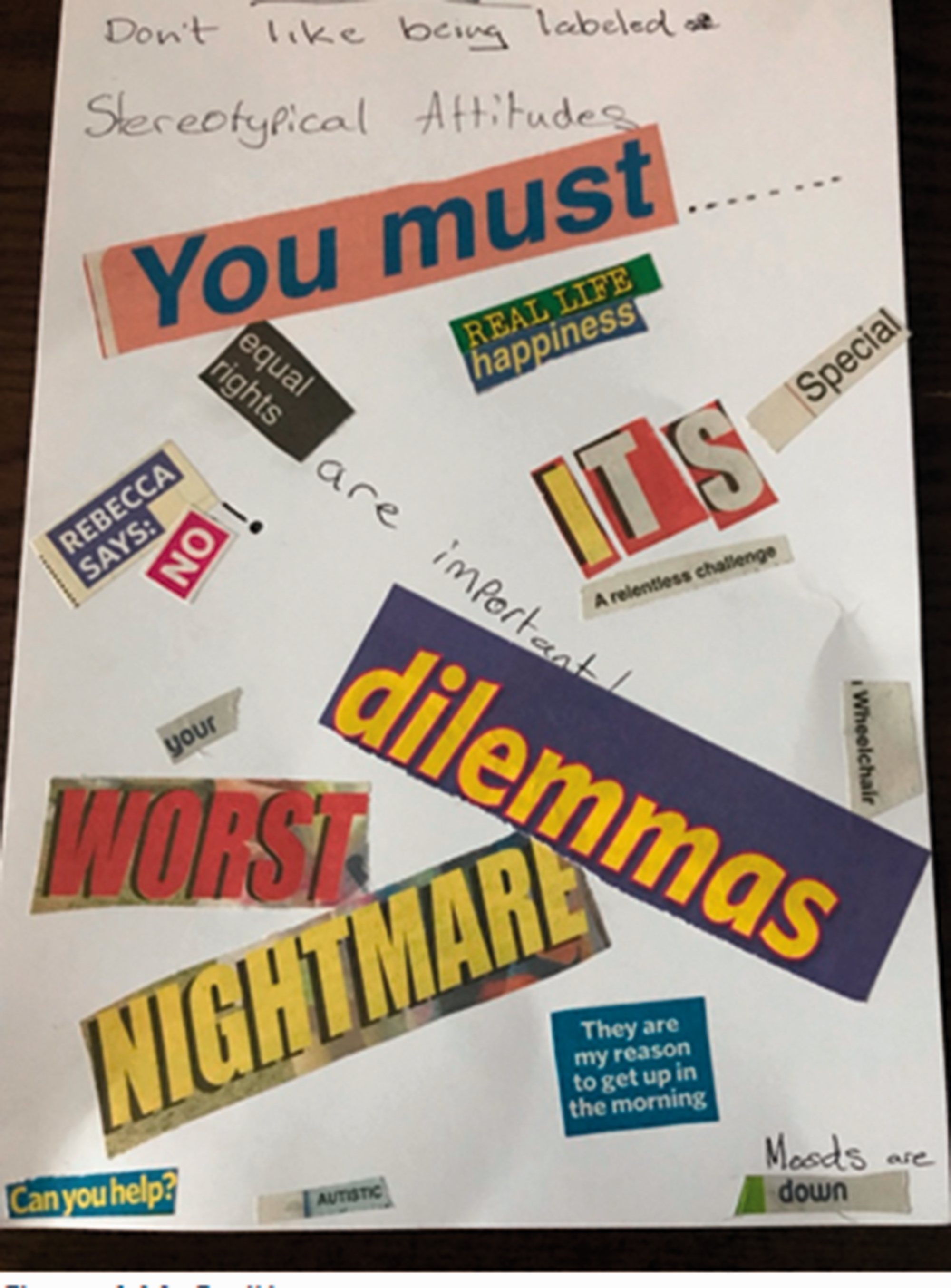
Mr Positive.
This technique was also adopted by Michael in order to present the connection that he had made between his own personal experience and a TV storyline. As shown in Figure 2, Michael’s mood-board told a story about the relationship between abuse and alcohol consumption. While creating this, Michael shared his experiences of physical abuse within alcohol-centred spaces, such as clubs and pubs. In doing so, Michael was able to elicit a group conversation about the risks involved with occupying spaces associated with the consumption of alcohol, a finding explored in more detail elsewhere (Burch, in press).
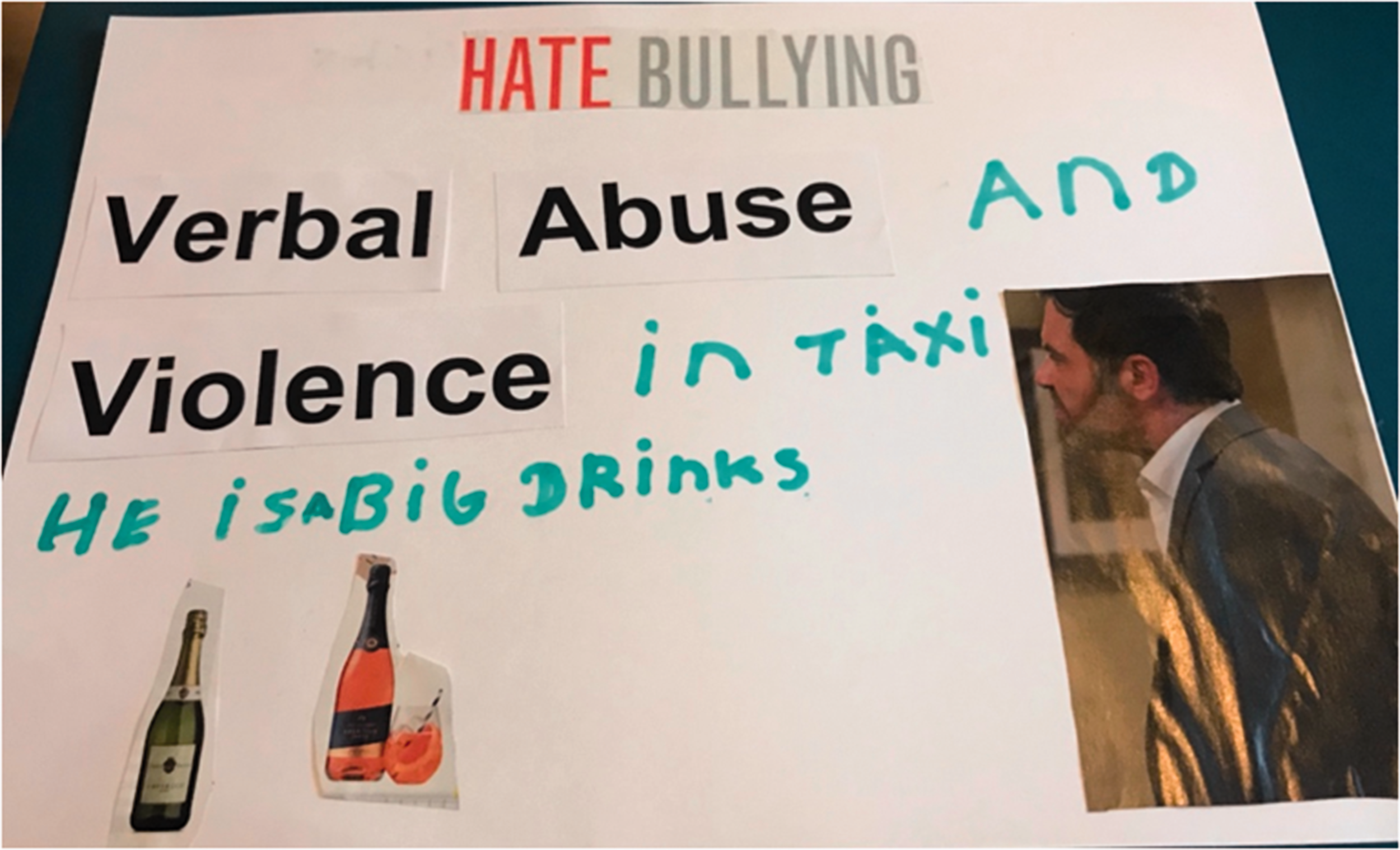
Michael.
For others, the repetitive presence of the word ‘nightmare’ within a number of magazines prompted them to reflect upon the ongoing emotional labour relating to their personal experiences. For example, both Rose and Aaron Presley described having recurring nightmares about their past experiences of bullying and sexual abuse.
As shown in Figure 3, Rose sketched the words ‘bad dreams’ along the side of her mood-board, accompanied with drawings of eyes to present how these continued nightmares keep her awake at night. She described these nightmares as making her ‘ill’ and that she was ‘always in tears,’ which resonated with many participants.
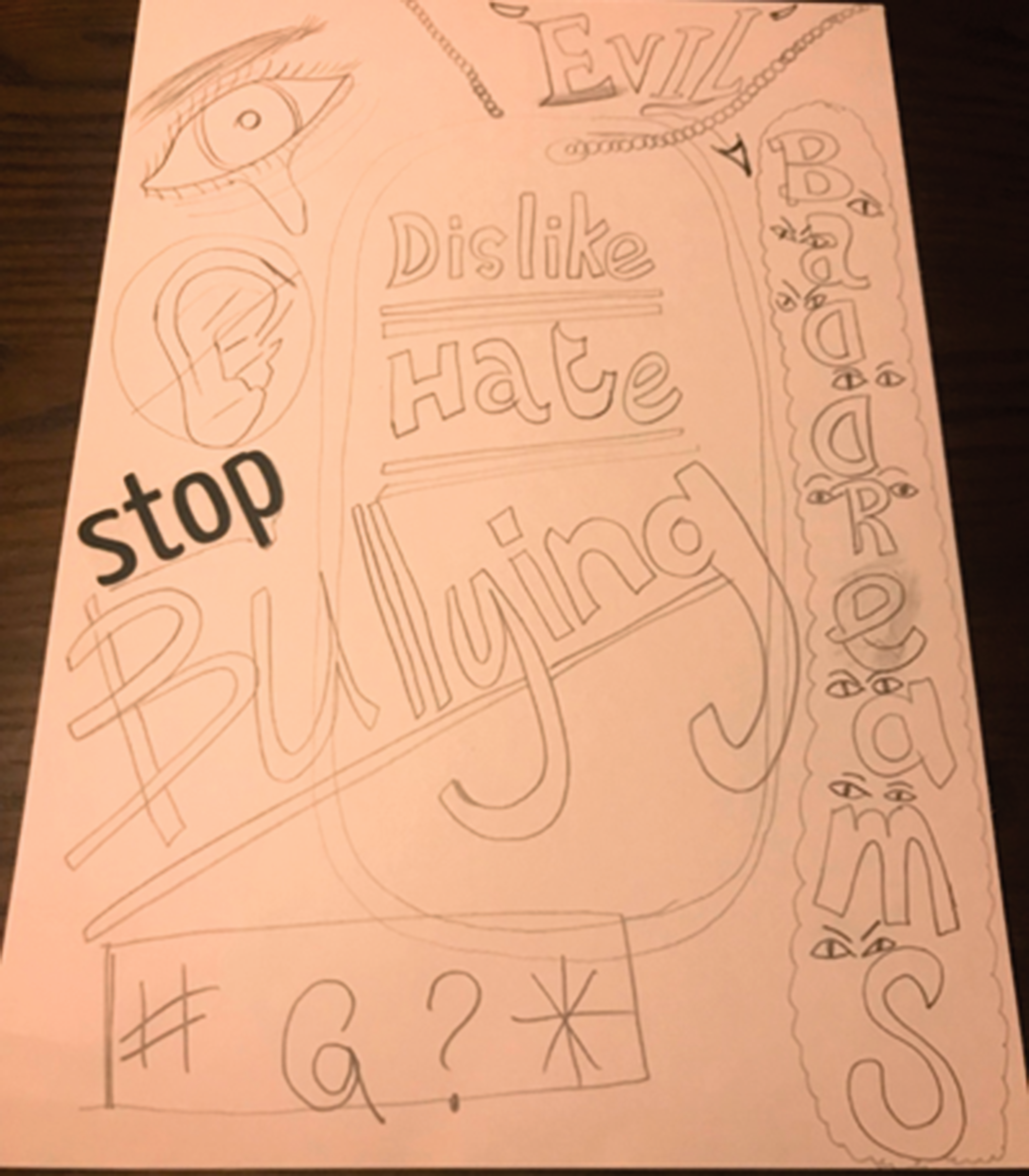
Rose.
During these moments, the process of making mood-boards prompted group reflections upon personal experiences and understandings. Like others, Francis Emerson used the magazines as a starting point by collecting a number of relevant images and then using these to create his mood-board. Whether the image was a starting point for thinking about personal experience, or a visual means of representation, many participants made sense of their own understanding of hate crime through this visual medium. Demonstrated in Figure 4, the visual representation of an angry-looking polar bear and a boy appearing to be upset and running away, helped Francis to process and disclose his experiences of disablism and racism with the rest of the group.
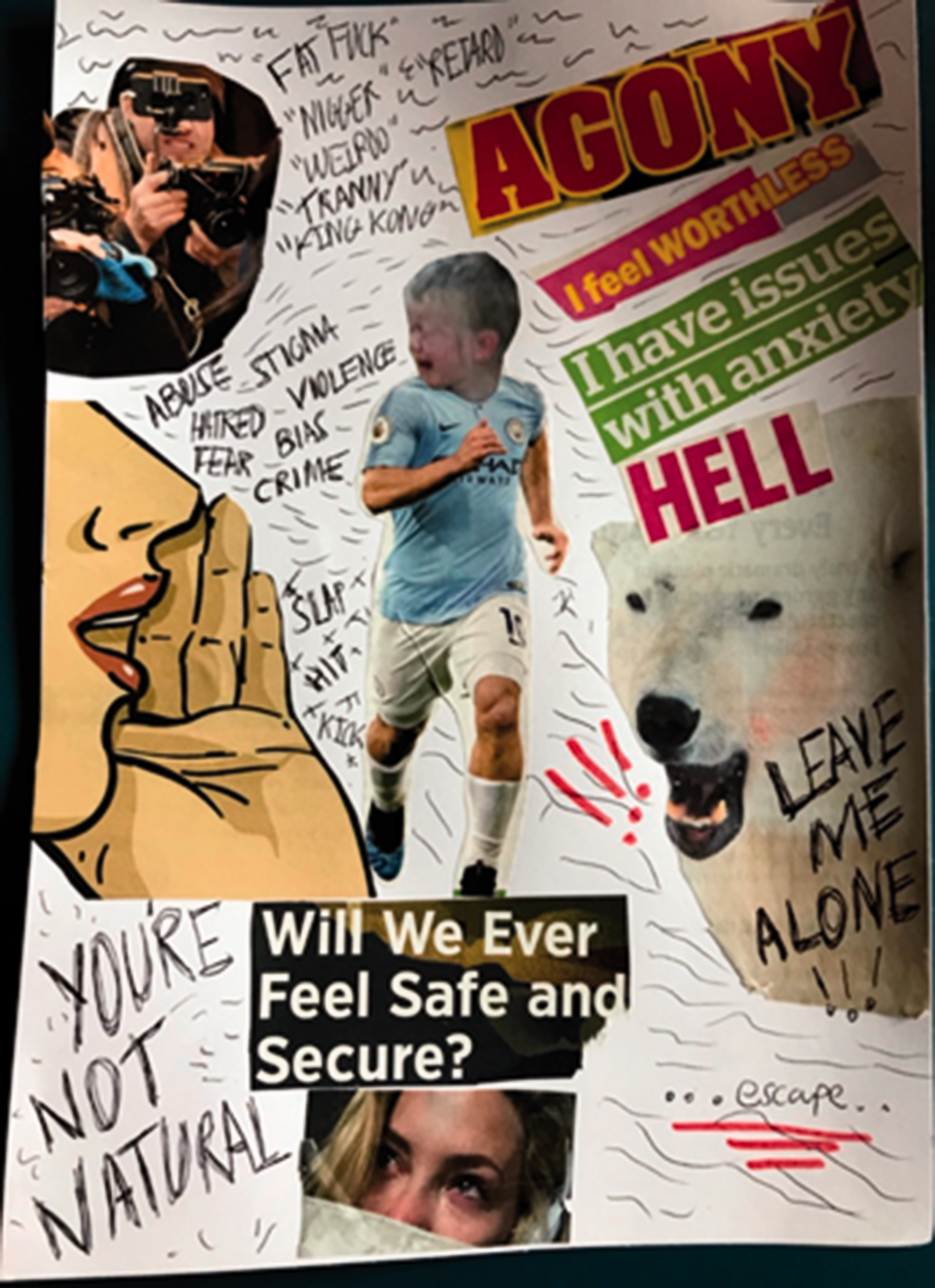
Francis Emerson.
Moreover, engagement with these images opened up a conversation between myself and Francis Emerson about his own meaning-making process:
Leah – so what does this image say to you?
Francis Emerson – it’s more to do with the paranoia of it, of like feeling unsafe, feeling like people are saying things. And I remember walking through somewhere with a friend of mine and we were both, she was really on edge because she thought that people were looking and talking and were going to say something, or going to do something because she wasn’t white, and where we were there was a lot of white people. Very white area. And I remember she felt really unsafe, and yeah, that’s what I think.
The use of arts-based methods can support ‘people to tell their own stories … [which] has allowed renewed and varied engagements with systematic issues of racism, sexism, ableism and colonialism’ (Rice and Mündel, 2018: 215). Importantly, such engagement was not a risk-free activity. Some of the magazine stories were emotionally charged and, at times, caused participants to become uncomfortable or upset, particularly if they resonated with personal experience. Stories about sexual abuse, for example, prompted Caitlin, Sabrina, and Aaron Presley to recall their own experiences of sexual abuse. Similarly, Taylor drew upon a story about physical violence to reflect upon, and subsequently represent her own experiences of physical abuse within her previous care setting. While these moments of reflection were emotive, they allowed participants to listen to and support one another. Beyond this, they encouraged participants to take ownership of oppressive experiences, to which many had previously been silenced. For Sabrina, Sinead, and John Dovet, for example, being able to present their experiences on a mood-board helped them to identify as a ‘survivor’ and a ‘champion.’
In some cases, the direct connection between magazine content and personal experiences of hate crime were more implicit, or even absent. Rather than self-identification, these instances encouraged participants to consider the experiences of their peers. For example, in his mood-board, Dr Who presented photos of women described as ‘overweight’ to discuss examples of what bullying might be, and who it could target. Although he did not disclose any personal experiences of this himself, his focus on the topic invited Taylor to share some of her weight-related hate incidents. Similarly, Tone and Bob used their mood-boards to explore affective responses to violence, bullying, and hate crime. Tone who included a photo of a young girl experiencing an eating disorder on his mood-board, explained that ‘this person has been bullied and so she started going skinny and I think that’s really bad’. In addition, Bob focused upon a photo of a young girl lay in a hospital bed, accompanied by the title ‘Tormented girl, 10, in suicide bid.’ (Figure 5). When explaining this image, he spoke about the emotional torment of bullying, and the need to ‘just shut the world out.’
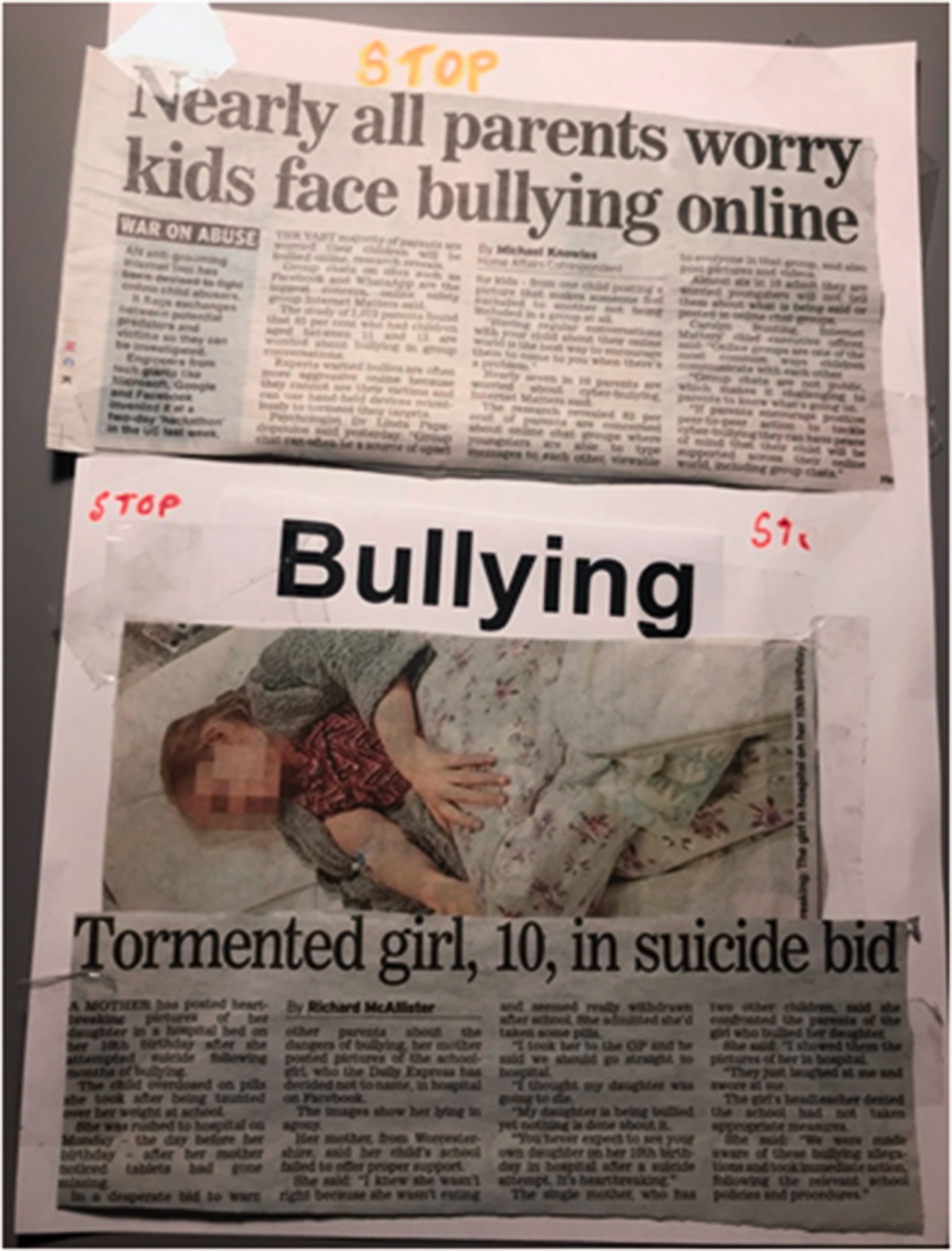
Bob.
In these creative moments, the images and stories included in the magazines provided an opportunity to imagine the experiences of others as a collective. Thus, while some participants did not explicitly disclose personal experiences of hate crime, they were able to articulate an understanding of this through their engagement with the stories shared within the magazines or by other members. In this way, creating mood-boards about the stories of others provided an opportunity to generate greater understanding, which might not have been achievable without this activity. Such work helped to widen the conceptual boundaries of hate crime and engaged participants with thinking about the diverse forms that this can take. As such, the process of making mood-boards helped participants to develop their own understanding, which was particularly important given the difficulty that many participants originally experienced when asked about their understanding of hate crime. Thus, it is suggested that creative engagement with visual representation such as everyday media can provide valuable opportunities for gaining greater meaning and understanding of hate crime. In addition to this, it requires us to think about the different ways that knowledge can be constructed and disseminated.
Sharing and disseminating knowledge
The ability to use mood-boards as a means of communication offered a platform for participants to use their own stories and understandings to challenge assumptions, ask questions, and communicate their voice. Rooted in the history of the disabled people’s movement in the pursuit to challenge oppression within society, this type of platform was highly valued by a number of participants. Alongside the community projects that many of the organizations were already involved within, participants recognised the mood-boards as an opportunity to have their voices heard and to make a change in their local community. Indeed, Alex passionately argued, ‘we shouldn’t be told to shut up, we should be told we can speak out!’ to which he believed the mood-boards were vital.
Using the mood-boards as a communication tool was particularly valuable for Violet. Violet, who uses a speech communication book, focused upon the diverse forms of micro-aggression that entered her everyday life, such as staring and verbal abuse (see Figure 6).
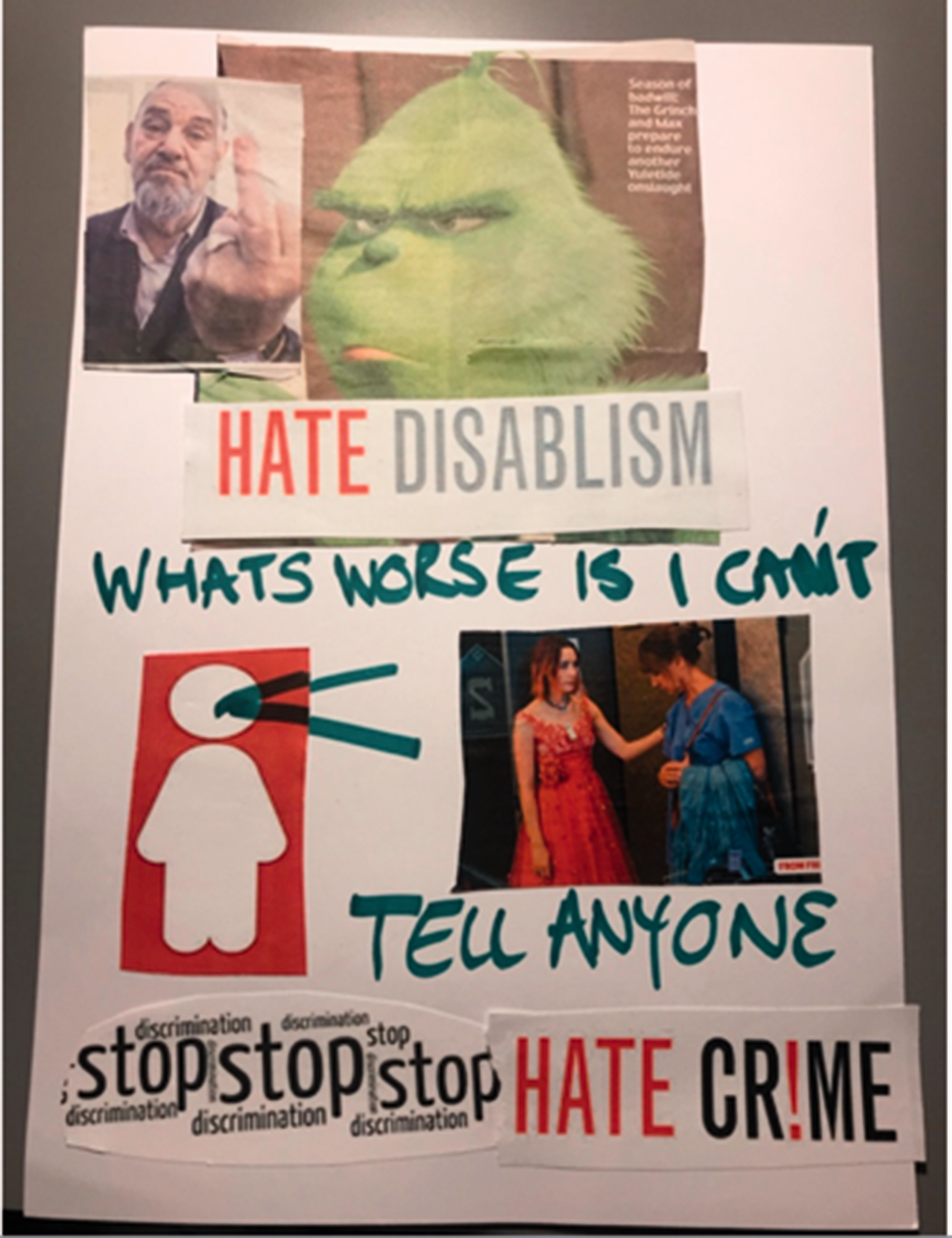
Violet.
As explained by one of her support workers, arts-based activities, such as mood-boards are ‘really powerful, because the biggest thing she said is that she can’t tell anybody and then she has to hold that in and it makes her feel really sad.’ Producing mood-boards, then, supported Violet and others to share their experiences in ways that do not rely on normative modes of communication. In this way, arts-based activities helped to create a space that welcomed subjective knowledge and experience, in a variety of forms, as vital to developing and disseminating our understanding of hate crime. Diversifying the way in which knowledge is shared was similarly noted by Sabrina, who commented upon the use of drama as a tool to engage children with disability-related issues.
Arts-based methods offered the opportunity for participants to produce artefacts that could be shared and distributed in more accessible ways. Many participants recognised this potential, and in particular, the opportunity to use their mood-boards as a tool to educate others. For example, Alex wanted his mood-board to ‘make a statement’ that could inform local politicians about the issues faced by disabled people. Alex suggested that the mood-boards should be made into a booklet, and available online for others who may be experiencing hate crime. He expressed frustration at the lack of awareness of disabled people’s experiences, and suggested that the mood-boards could capture the attention of others. Similarly, Sabrina wanted to compile her mood-boards to create a book, ‘so other people can pick it up and read what it says.’ And finally, Robbie explained that the mood-boards could be useful in order to raise people’s confidence to report hate crime or share their experiences with friends and family. Driven by this desire to educate and support others, Angelica, Mr Twilight, and Jenny chose to provide information about reporting hate crime on their mood-boards. Given the many barriers that participants shared throughout the project relating to the reporting of their experiences, the potential for mood-boards to raise awareness and increase confidence is particularly important.
Engagement with arts-based methods can be argued to offer an opportunity to share knowledge in different ways, and present these stories to wider audiences. In addition, the representational possibilities that such methods offer called into question my responsibility as a researcher to ensure that the mood-boards were shared beyond the realm of the research project. Many participants also noted this accountability, and asked questions about the dissemination of their work. For example, Alex was keen to ensure that mood-boards were shared with politicians and wider members of their community, suggesting ‘we should launch this on and make a page on our website… this should go nationwide.’ For Alex, talking about hate crime within the confines of organizations was no longer enough, as it was important to educate those within the community. Similarly, Delboy recommended sharing the mood-boards with my boss, and Joe wanted me to invite my friends to their organizations to see their mood-boards.
Throughout the project, I reflected upon the ways that I could disseminate and showcase these mood-boards as educational resources. I have drawn upon the mood-boards within my teaching, and shared them at conferences. In addition, I have created an accessible toolkit which is available online (https://everydayhatephd.home.blog/). The purpose of this toolkit is to disseminate knowledge in accessible and meaningful ways. I have sought to create a platform that provides an overview of key questions relating to hate crime that can be used within organizations, workplaces, and schools. Moreover, I hope that the toolkit can be used as an opportunity for greater communication about hate crime between disabled people, organizations, and research in the future.
Further reflections and concluding thoughts
In this article, I have reflected upon the methodological decisions underpinning this research. Based upon the assertion that terminological debates about hate crime have excluded the everyday experiences of those targeted (Chakraborti, 2016), this article has considered the potential for arts-based methods to prompt more accessible and open conversations with disabled people. Indeed, throughout the research, I have sought to reconsider some of the important conceptual debates within hate crime research through the understandings, experiences, and reflections of disabled people. In doing so, the aim has been to provide the opportunity for participants to author their own stories, experiences, and reflections (Fisher, 2012), and provide counter-narratives to dominant discourses of hate (Maynes et al., 2008). As I have suggested in this article, the use of arts-based methods have provided an open, flexible, and exploratory means of doing so. Indeed, the exploratory nature of the project, and particularly the opportunity to express their understandings and feelings in their own language was highly valued by many participants. In this way, engaging with the arts was an opportunity for new stories to be shared and alternative perspectives to be debated, which participants considered to be crucial in raising awareness of disability hate crime.
With exception of the broad outline to produce mood-boards, I attended each workshop with little structure and a lack of control over the number of participants taking part. Importantly, then, these methods created research spaces whereby I relinquished researcher control (Vaart et al., 2018; Walters, 2019). Often, this meant that workshops included more participants than anticipated, and in some cases, took place within noisy, and potentially disruptive spaces. This lack of preparation and structure was unnerving, whilst similarly liberating. As Rice and Mündel (2018: 218) suggest: ‘Approaching method as open-ended and malleable means that we need to anticipate, prepare for (to the extent possible), and welcome the disruption and transformation that occurs within the unfolding of each inquiry’ ‘Socially engaged and collaborative art and critical disability studies find shared ground in the practice of artists with learning disabilities. People with learning disabilities disrupt the privileging of independence and autonomy and instead utilise interdependence, dispersed competencies, and relational contingency’
The collection of personal stories that were shared on mood-boards created a visual assemblage of experiences, which tell a much larger story of oppression and marginalization. This diversity of perspectives, values, and experiences can evoke uncomfortable conversations as they expose a bleak reality. Many of these stories can become lost within mainstream culture, as they are easier to exclude from our consciousness than respond to them. To continue this avoidance, however, is to confine these stories of hate crime within the personal, and to deny any level of social responsibility. To this point, arts-based methods provide an opportunity to engage more people in these sensitive and difficult topics of conversations. These methods supported participants’ own affective capacity to reflect upon their own experiences, and brought the concept of hate crime to the context of everyday life. Moreover, as a form of knowledge presentation, arts-based methods enabled the creation of artefacts that have the potential to be used as educational resources.
The use of mood-boards has created a collection of stories that tell us so much about hate crime: what it is, how it feels, what it does. These diverse perspectives present the textures of hate crime. They reflect the multiplicity of meanings and experiences that are not neatly categorised within any singular definition of hate crime. The subjective and exploratory nature of the project, coupled with the flexible and open potential of arts-based methods, have welcomed this plurality of meanings. Arts-based workshops enabled a process of co-creating knowledge that is “accessible, evocative, embodied, empathetic, and provocative” (Knowles and Cole, 2008: 33 cited in Rice and Mündel, 2018: 215). By using these methods, then, I have not sought to fit people’s experiences within or outside of any particular definition of hate crime, but to instead consider the diversity of experiences that any such definition should work to include.
Footnotes
Acknowledgements
I would like to thank the six organizations who support this research and made me feel so welcome. I would also like to send a huge thank you to all of the wonderful participants who shared their stories with me. Finally, thank you to the anonymous reviewer who provided such thoughtful and constructive feedback.
Declaration of conflicting interests
The author(s) declared no potential conflicts of interest with respect to the research, authorship, and/or publication of this article.
Funding
The author(s) disclosed receipt of the following financial support for the research, authorship, and/or publication of this article: This article was funded by the Economic and Social Research Council (ES/J500215/1).
