



Abstract
Qualitative research in social work employs various scientific approaches to explore the diversity and depth of human life, with interviews and observations being commonly used. Situated within an arts-based research (ABR) framework, this study explores participants’ experiences of collage-making, and how collage can be used as a methodological approach for collecting empirical data. Four themes emerged from the analysis: (1) Collage: a dynamic visual language in art and communication; (2) Collage: a method for reflecting, sharing, and bonding; (3) Collage: the ethics of associative creation; (4) Collage: the prerequisites of time, space, and place. Working with collage can be highly participatory and exploratory, developing meaningfulness, imagination, and new insights for both researcher and participant. It promotes an egalitarian and holistic approach to listening to people, enabling them to convey their experiences using visual, verbal, and metaphorical language. Nevertheless, the process is time-consuming given that collage-making lacks a distinct endpoint or limitation. Using this method requires time, participant commitment, researcher involvement, and a trustworthy workgroup. Moreover, the free and associative nature of creating collage, alongside the act of cutting pieces from one’s life and assembling them into a new whole, raises ethical questions. In conclusion, collage as a method of inquiry for collecting empirical data creates promising conditions for capturing stories of people’s lives, aspirations, struggles, and experiences of social processes and political concepts. With appropriate conditions in place, the process can be a meaningful experience for all involved.
Keywords
Introduction
Social work, as both a practice and an academic discipline, is rooted in a strong focus on social change and justice (The International Federation of Social Workers, 2024). As researchers, we are often encouraged to work with disadvantaged communities and to reveal their needs, struggles, aspirations, and ways of knowing. Simultaneously, there is a call for greater methodological diversity that extends beyond conventional methods to include the voices, perspectives, and knowledge of “those concerned” (Leavy, 2020). While every scientific method has strengths, weaknesses, and potential, it appears that many researchers frequently employ interviews and observations in which people’s stories are taken, reduced, encapsulated, and presented as a collection of quotes. This embedded dilemma of doing research poses a risk of exclusion, and the alienation of being a research subject, as well as dehumanizing people: a theme that is poetically articulated in Yousif M. Qasmiyeh’s poem Anthropologist: “After spending hours with us, in the same room, she left with a jar of homemade pickles and three full cassettes with our voices” (Qasmiyeh, 2021: 17).
To approach things, not uniquely, but differently, in this article I present an unconventional approach: using collage as a methodological tool for collecting empirical data. Collage as inquiry falls under the umbrella term arts-based research (ABR) (Barone and Eisner, 2012). This article is based on empirical work conducted as part of an ongoing PhD project which, in brief, aims to explore belonging, diversity, and differences among individuals with a migration background in Sweden. The empirical data was collected through a series of workshops in which participants worked, both collaboratively and individually, to create collages around various topics, including personal experiences, social phenomena, and political concepts. I chose this particular approach because it has been argued that, through the creation of collage, people can arrange, modify, and change fragments of their contemporary reality (Butler-Kisber, 2007, 2019; De Rijke, 2023). Moreover, the assemblage nature of working with collage enables people to create new connections between multifaceted social and political concepts and personal experiences, allowing them to shape their own subjectivity and identities beyond fixed representations (Butler-Kisber, 2019).
In this article, I aim to explore the methodological aspects of using collages as a mode of inquiry and their potential for generating empirical data. I draw insights from my own observations and notes, but mainly from examining participants’ descriptions of their involvement in working with collage as a medium. Rather than focusing on analyzing the visual medium of collages, my analysis centers on participants’ personal experiences. Hence, the article presents some valuable methodological insights and broader inspiration for various ways of conducting qualitative research within the field of social work and beyond.
The article is organized as follows. Firstly, I introduce some key concepts of ABR and inquiries through collages. Secondly, the methodological and analytical sections are presented, followed by the findings section. I conclude my analysis with reflections upon some of the methodological findings and their implications for social work. Finally, to avoid being confined by a “conclusion template,” I present concluding reflections through a Found Poem (Butler-Kisber, 2002). Found poems are a methodological approach that involves creating poems representing participants’ experiences of various phenomena, and are crafted using the participants’ own words and phrases from transcribed conversations (Butler-Kisber, 2002). The poem presented as a conclusion (Figure 8) to this study mirrors the emotional dimensions of our work and the nonlinear nature of working with collage as a method of inquiry.
Arts-based research
Arts-based research (ABR) is a broad methodological paradigm that systematically employs artistic expression to explore, understand, and represent human experiences (McNiff, 2007). It is rooted in the philosophical assumption that art and creativity communicate and generate meaning, togetherness, engagement, and empathy, and are vital for research (McNiff, 2019). Despite the growing attention it is receiving in the field of social work (Desyllas, 2014; Foster, 2012; Mayor, 2020; Segal-Engelchin et al., 2020; Thrana et al., 2023), its application remains limited, as the field predominantly relies on conventional qualitative methods (Leavy, 2020; Wang et al., 2017). In contrast to these conventional methods, such as interviews and observations, ABR offers diverse possibilities for creatively collecting, interpreting, and analyzing empirical data, as well as presenting research outcomes to a broader audience (Barone and Eisner, 2012; Chilton et al., 2015; Wang et al., 2017). ABR not only aims to answer research questions but also introduces gaps, uncertainties, and surprises into our understanding of human experiences and social phenomena. By doing so, it challenges our assumptions, broadens our perspectives, and encourages us to observe the complexity, contradictions, and messiness of social and cultural phenomena (Barone and Eisner, 2012; Wang et al., 2017). Hence, ABR makes an important contribution to the methodological landscape of social work and its practice, whose core is the principle of empowering marginalized voices, connecting personal narratives to broader socio-political discussions, and advocating for a more socially just world (Huss and Bos, 2022; Sinding et al., 2014; The International Federation of Social Workers, 2024).
Inquiry through collage
Collage, as a methodological inquiry, is based on a postmodernist tradition and constructionist epistemology, which assumes that reality is subjective, multiple, and socially constructed, and can be interpreted in different ways (Butler-Kisber, 2019; Butler-Kisber and Poldma, 2010). As a research method, it can serve as a memoing/reflexivity tool for the researcher; as a conceptualization method, whereby participants can conceptualize personal experiences or social and cultural phenomena; or as an elicitation method, where the creation of collage can facilitate conversation and dialogue, alongside in-depth interviews or conversation (Butler-Kisber, 2007, 2019). Collage as a mode of inquiry has been used to explore colonialist power structures among indigenous populations (Dutton et al., 2019), examine experiences among families living with rare diseases (Gorman et al., 2023), and deconstruct conventional media images of eating disorders and identity (Davis, 2008). Promislow (2005) and Vaselenak (2006) used collage in their dissertations to examine how immigrant children in Canada maintain their mother tongue and to explore academic women’s experiences of creativity, respectively.
As a methodological approach, the act of assembling collage can offer unique opportunities for exploring and questioning complex and multifaceted social phenomena and their links to personal experiences. It gives people the opportunity to convey their subjectivity and lived experiences in a nonlinear and imaginative way, without requiring pedagogical or artistic skills. This is done in a creative, visual, and metaphorical way that would otherwise be difficult to capture solely through verbal expression (Butler-Kisber, 2007, 2010, 2019; Culshaw, 2019; De Rijke, 2023). Thus, working with collages can be a valuable method in social work, enabling individuals to express complex social and personal phenomena in an innovative and creative manner, something that the current article sheds light on through its methodological expension and exploration.
Methodology
Nine participants, two men and seven women with a migration background, were recruited. Information sheets were shared via social media platforms such as Facebook, as well as through my personal contacts, to inform potential participants about the study in their local context. While some of the nine participated in all eight workshop sessions, the others attended at least two. One participant had prior experience of working with creative methods, being an established artist in her country of origin. However, for the majority, working with creative methods—particularly collage—was uncharted territory. Participants were primarily engaged in study or work in their everyday lives. Their residency periods in Sweden ranged from four to 36 years, with ages spanning 24 to 41.
Data was collected through workshops aiming to explore participants’ experiences of belonging, diversity, and differences. The workshops took place in a studio, every other Saturday between September and December 2023, in a Swedish city. I brought various materials for collage creation, including vintage magazines from 1920 and Swedish books on topics such as the country’s nature, landscape, and cities, without any specific motive in mind. Daily newspapers were also included, as I believed they might offer a snapshot of contemporary themes and topics relevant to our time. We established ground rules, about which I regularly reminded the participants. These rules included maintaining confidentiality outside the group, respecting each other’s opinions, acknowledging the subjective nature of our conversations, and recognizing that there is no definitive “right or wrong.”
Although I had overarching themes as a point of departure for each workshop, the content of the sessions remained flexible and exploratory. Since each session lasted approximately 5 hours, many themes were intertwined, and new topics of conversation emerged from our ongoing discussion, sparked by both me and the participants. Collage creation served as a way to conceptualize different topics related to the project’s aim and to facilitate dialogue among us. We sometimes worked individually and sometimes collectively, and discussed various topics back and forth. At the end of each session, participants voluntarily shared their reflections on their collages and the motives behind them. Occasionally, I used Dixit cards and sticky notes to sum up and conclude the session. With the participants’ permission, all workshops were recorded in both audio and video. (Figure 1). Process images from workshops assembled into a collage by the author.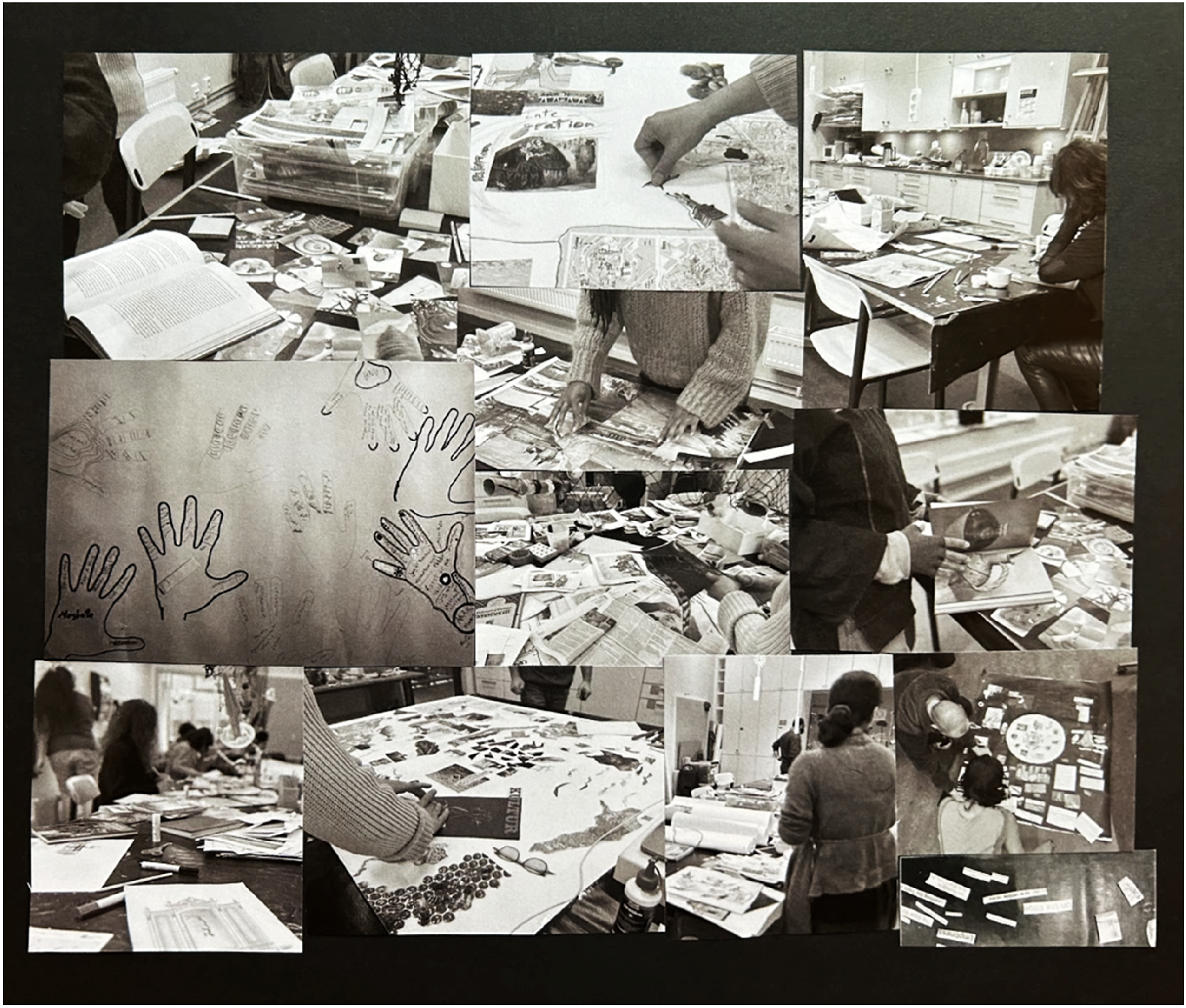
The empirical material for this article was primarily generated from the 6th workshop session. The sessions aimed to capture the participants’ experiences related to working with collages as both a method and a form of creative expression. This was achieved by posing broad discussion questions about the experience of working with collages, exploring their advantages and disadvantages. Although, initially, I had a few overarching evaluation questions, new ones emerged during our ongoing dialogues during the sessions. Additionally, I used my descriptive observation notes, primarily in the form of brief memos, which I handwrote during workshops, about aspects that piqued my curiosity. These memos are mostly related to individuals’ interactions, my own reactions and impressions, and group dynamics.
In this article, my analytical focus centered upon on how participants described their experiences of working with collage, rather than analyzing the collages as a visual medium. In terms of data analysis (see Braun and Clarke, 2022), I repeatedly reviewed the video recording from the 6th workshop to become familiar with the data and transcribed the conversations verbatim. Initially, I made notes on potential themes and color-coded interesting quotes. From there, I revisited the recording and my notes to refine my primary themes. The aim of this article was to guide the inclusion of themes in the final result. Consequently, some themes were refined, others were discarded, and new ones were added. Ultimately, I identified four overarching themes, including subthemes, that captured the different aspects of the participants’ experiences of working with collage. While not all nine participants are directly quoted in the current article, I have tried my best to capture a range of perspectives in my empirical material, while prioritizing the most relevant quotes aligned with the article’s primary aim and research question.
Participants received both oral and written information about the ethical implications of their participation. In addition to formal consent, participants were also informed that their collages would be analyzed by me and then published, accompanied by images from the workshops that safeguarded their anonymity. I made it clear that handing over their collages was voluntary. All participants submitted their work without hesitation. To maintain confidentiality, I have substituted pseudonyms for the participants’ names. Formally, ethical approval was obtained from the Regional Ethical Review Board at the University of Gothenburg, Sweden (Dnr 2022-06975-01).
Findings
In this section, I describe and reflect upon the methodological findings of my analysis, with a specific focus on participants’ experiences of collage-making and how collage can be used to collect empirical data. I have divided my findings into four main themes: (1) Collage: a dynamic visual language in art and communication; (2) Collage: a method for reflecting, sharing, and bonding; (3) Collage: the ethics of associative creation; (4) Collage: the prerequisites of time, space, and place. The findings are also illustrated with photographs and fragments of collages, visually emphasizing the themes. These visual elements provide a snapshot of the parallel and non-verbal processes of our work, providing visual and emotional insights that extend beyond academic writing and stimulate curiosity and interest (see Weber, 2008). However, the quotes and visual representations below are only a glimpse of our process and participants’ stories, not a comprehensive representation of their narratives or our working practices (Figure 2). Collage created by Fariba.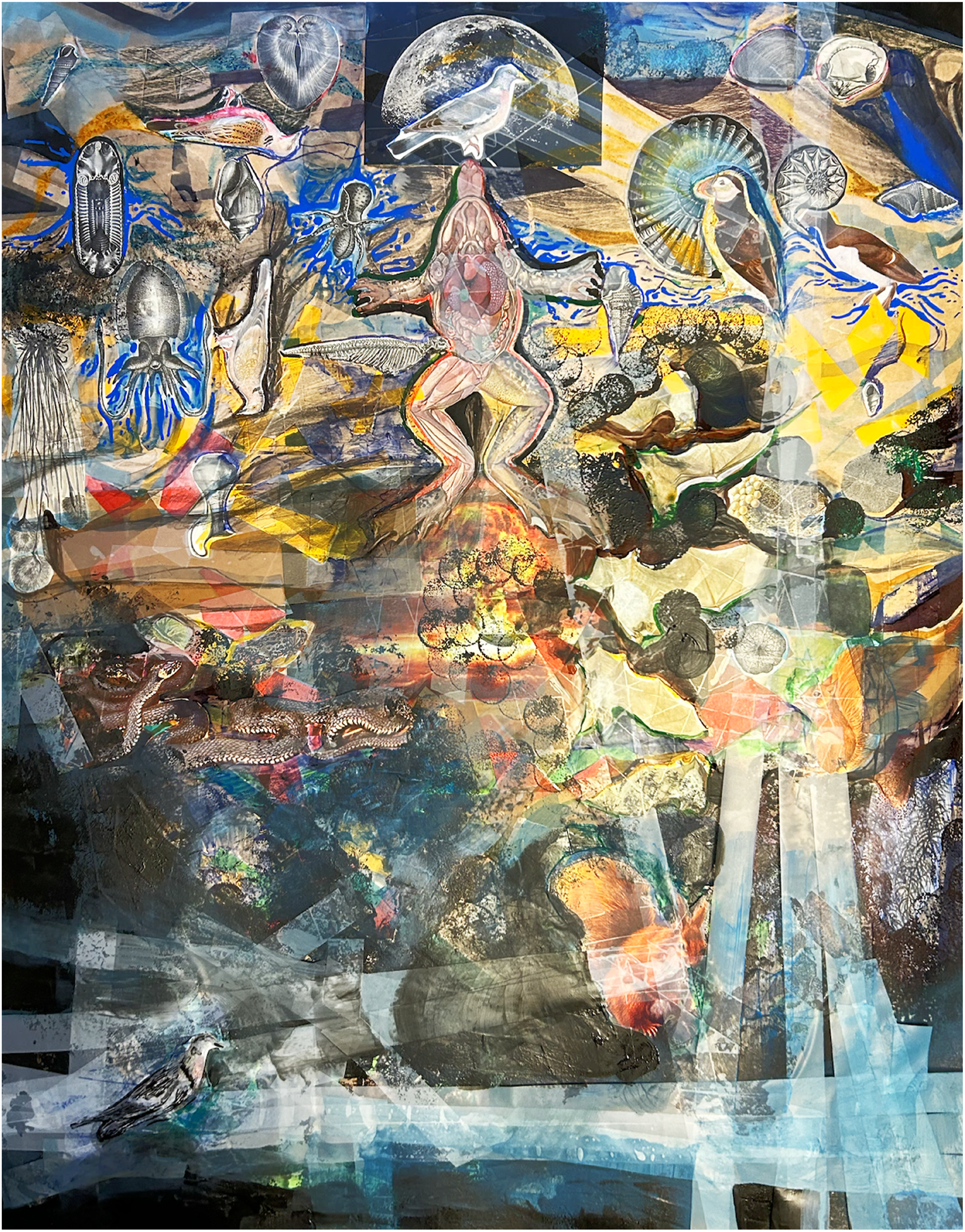
Collage: A dynamic visual language in art and communication
In this section, I describe how the participants perceived working with collage as a multifaceted and dynamic medium that enables various means of communication. According to many participants, collage, as a method, was particularly well-suited to exploring and conveying complex and personal experiences. Its dynamic nature—marked by freedom and flexibility—enables the depiction of lived experiences from multiple perspectives through a non-linear creative process. Collage excels in visual storytelling, evoking varied associations and providing endless expressive possibilities, especially for abstract concepts such as identity and belonging, which could be challenging to convey solely through words.
For Fariba, a 38-year-old Syrian woman, her collage (Figure 2) serves as a visual representation, capturing how various life experiences have shaped her worldview and understanding of life at a deeper philosophical level. She began her collage by pasting a picture at the center, symbolizing the moment when the Hiroshima atomic bomb exploded. She then incorporated various living beings, animals, and birds, around the explosion, as well as what she said symbolized oceans in the lower part of the image. When Fariba described her collage, she connected it to her experiences of war in Syria and how life must go on after the war and all the terrible things she saw, just as the ocean continues to flow and the birds keep flying. At another level, she also linked this collage to her partner, who also participated in the workshops. She reflected upon the eight years they were apart after she fled to Sweden due to the war in Syria, while her partner was stuck there. Using her collage as a metaphor, she illustrated this separation and their reunion and how her life was turned upside down before and after her partner arrived in Sweden. She explained this transformation verbally and illustrated it through her collage: Fariba: Before my partner and my love came to Sweden, my life was like this [rotates her collage, Figure 2, 180 degrees, flipping it upside down]. She continued: Fariba: But when he finally came to me here in Sweden, my life became like this [rotates her collage back 180 degrees to its original position].
In many ways, the illustration above shows how collage as a medium allowed Fariba to employ different modes of communication—visual, verbal, and metaphorical—to portray various aspects of her lived experiences. By placing an atomic bomb explosion at the center of her collage, surrounded by living creatures and the sea, she employed various visual elements to metaphorically convey both annihilation and life, death and existence, but also stillness and flow. Fariba’s use of visual metaphors can be seen as a way in which collage, with its visual element, enabled her to express her emotions related to the experience of difficulty. This aligns with Culshaw (2019), who argues that collages, through their visual and metaphorical imagery, enable people to express their experiences and emotions in novel ways that verbal language may not fully capture.
Next, Fariba used verbal communication to offer deeper insights into the visual elements and metaphors and her personal connection to them. Finally, she used her entire collage as a metaphorical but very concerted means of communication to depict how her life “turned upside down,” illustrating the transformations in a concrete and poignant way. In summary, Fariba can be seen to demonstrate the potential of collage to encapsulate and communicate the various aspects of lived experience in different language and in a non-linear and sometimes surprising manner (see Culshaw, 2019). Each mode of communication—visual, verbal, and metaphorical—not only stands on its own, awakening different senses in the viewer, but also complements the others, resulting in a complex and multidimensional portrayal of life and beyond, and of abstract phenomena.
Collage as a means of mocking and challenging power structures
I did not pay much attention to the diversity or representativeness of my materials when I selected them. I had a general idea that bringing daily newspapers to the workshops might provide a glimpse into contemporary themes relevant to our time. However, some participants pointed out that the material was too homogeneous, with most of the faces being white. I was initially puzzled, but then we engaged in a wider conversation about how, in some sense, my material mirrors our society. According to the participants, people of color and minorities are underrepresented and invisible in public, the media, and political spaces. This then led to a discussion in which participants described how collage as a medium enabled them to create a new imaginative reality—as an act of resistance. They did so by cutting, changing the position of pictures, using color, and pasting fragments of their reality into something else. The following dialogue between me and Edythe illustrates how she engaged with, critiqued, challenged, and mocked the diverse content of the material, linking it to broader social implications: Edythe: I thought it was sometimes a bit difficult with the material because almost everyone in the pictures are white people, but then you can do “like this” [she takes a colored pen, paints and strokes over the face in the picture while laughing and saying “YOU’RE NOT WHITE, YOU’RE NOT WHITE.”] Researcher: Has it been like that a lot in the pictures, do you think? Edythe: Yes, it was one of the first things I reacted to when I started working on my collage. Researcher: Ok, then it seems that I’ve fallen into the trap. Edythe: Yes, we all do. I fall into all types of traps. I mean, in the end, your material reflects our society. Researcher: I haven’t thought about this theme at all. Edythe: I think a lot about such things, everything from advertising to Swedish public service television (SVT). It’s white, white, and white [she continues to laugh and stroke the face in her picture].
Edythe’s response to the abundance of “white faces” exemplifies how the assemblage work with collage, through its process of compiling, manipulating, and recontextualizing the original images, can fundamentally transform their meanings, contexts, and emotional tone and message. What the case above illustrates is that collage creation, via its process of cutting, pasting, and altering their positions and characteristics, allows people to creatively deconstruct social norms and question social phenomena (see De Rijke, 2023; see also Sinding et al., 2014). In many ways, Edythe’s act of painting over the faces with a twinkle in her eye, while saying: “YOU’RE NOT WHITE,” serves as both a direct critique and an act of resistance against what she considers wrong in her experience of society, something that at its core can be interpreted as an act opposing social inequalities and injustices (Figure 3). Edythe, who had previously reacted to the many “white faces,” cuts them out of newspapers to collect for her collage.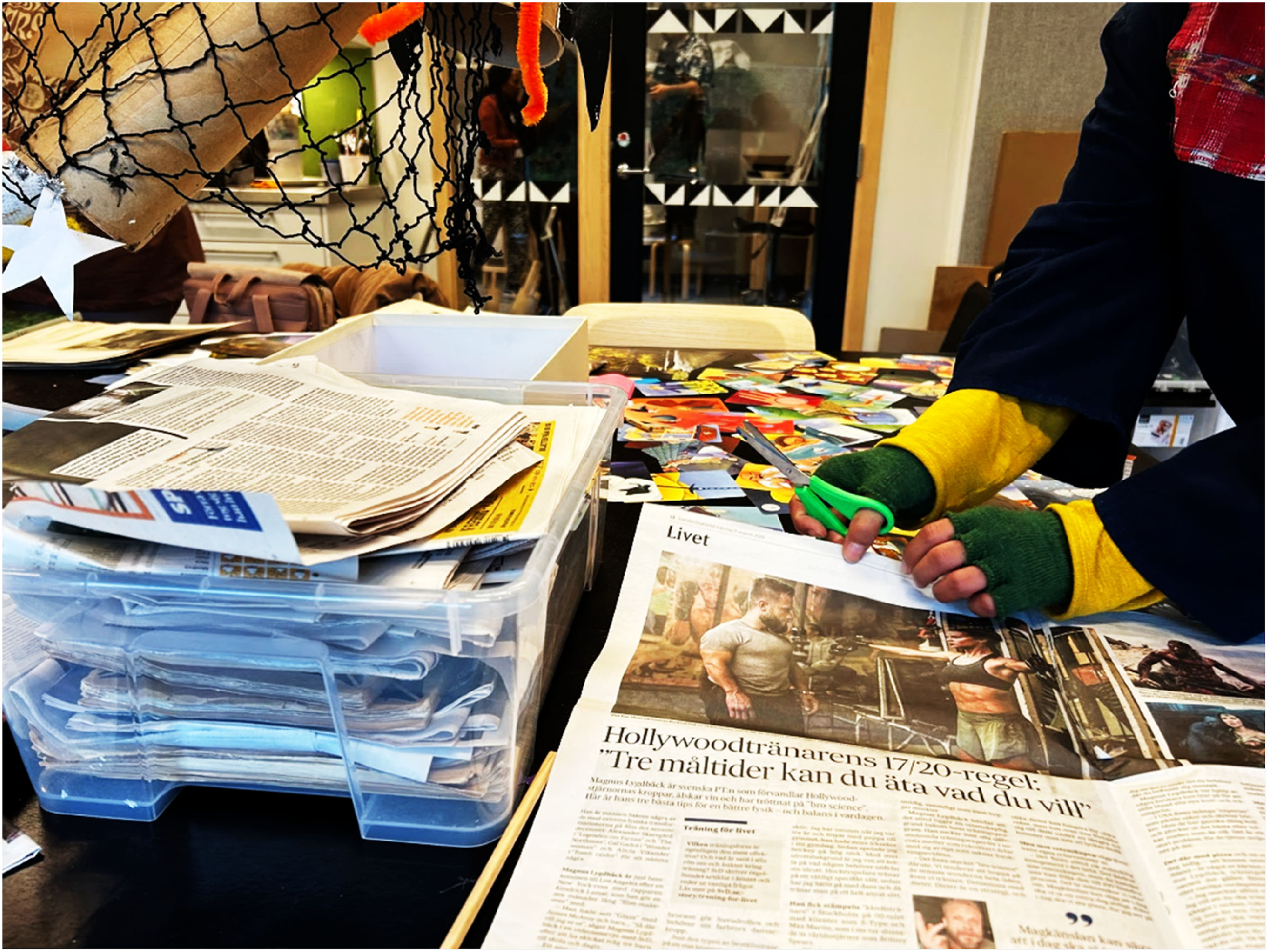
The power and challenge of images
The benefits of working with pictures were discussed, particularly how pictures stimulate associations. Each picture triggered a chain reaction of ideas, which could be developed further in collages. This associative nature meant that the participants did not need a finished idea before starting their collages; instead, it was clarified over time, depending on the pictures that inspired various connections. Other benefits, related to the viewer’s interpretation space, were mentioned. Some argued that images can convey several layers of messages, create recognition and surprise, and challenge or confirm the viewer’s expectations or prejudices. Furthermore, they described how creating collages using images offers a low-risk creative process, because there is always an opportunity to change the content and motive of a collage by combining images in different ways, such as cropping and rotating pictures, combining images with different themes, and adding text to express a different story or emotion. Working with pictures was further described by one participant as a “primitive form”
1
of expression. The majority of participants mentioned a wide range of interpretations of images compared to words, and said that it was easier to convey a message through images without being precise, in contrast to using only words. Shiwan and Edythe illustrate this theme in the following dialogue: Shiwan: It’s easier to express yourself with pictures because it’s a “primitive form” of expression. But when you want to express something in words /…/ it can sometimes be difficult to find the precise word, but with pictures there is no right or wrong and you can leave the interpretation to the viewer. Edythe: Yes, a picture can say many different things, whereas a word might be more specific.
Participants also described disadvantages of using images. Searching for “the perfect image” was time-consuming. This could lead to collage creation either not being started or never quite completed, or it was difficult to find images suited to their theme or purpose. Methodologically, employing collages containing images offers substantial flexibility and encourages exploration (see Culshaw, 2019). However, the frameless nature of working with collage and pictures may also make it difficult to find a focus regarding the specific research area or subject. In the dialogue conversation, Edythe and Tamra are discussing their experiences of working with images: Edythe: I like working with collage because it’s a different language, using images. I have an easier time expressing myself in images and I often see things easier in images. Tamra: I’d never tried working with collage and I like it, but it’s also been difficult when you have a very specific image in your mind that you want. It becomes easy to search and search for the specific image in mind. Edythe: I really have to agree with what Tamra said. I think that’s been a big difficulty with my collage. I’ve usually had a very clear idea of how I want my collage to look but it’s been hard to find the images that I’ve thought of.
In summary, working with images appeared to be a liberating process, which encouraged playfulness and imagination but also posed a challenge when it came to finding the “perfect image”. Working with images also required less precise language, with the visual language being described as more fluid, non-linear, and multidimensional. This visual language offered multiple opportunities to express emotions, create themes and concepts, and establish different layers of meaning and context (see De Rijke, see also 2023; Culshaw, 2019). Such visual language was particularly advantageous when exploring highly complex and non-linear themes, such as belonging.
Collage: A method for reflecting, sharing, and bonding
Participants described working with collage as a way to reflect and share fragments of their experiences. Creating a collage involved choosing images and other materials that reflected fragments of their lived experience. Reflecting upon these materials, which were closely linked to personal lives and experiences, and engaging in conversations around them with each other, fostered a sense of togetherness and sharing among the group. Sharing thoughts about their collages and their motives contributed to this community feeling and sense of connectedness. As a result of this sense of intimacy, participants occasionally discussed other topics, exchanging experiences, and offering advice to one another on various topics. In the following conversation, Fariba talks about feeling validated in her parenting after sharing and hearing the struggles of other mothers in the group: Fariba: Before I heard other people’s stories, I didn’t know if the feelings I was feeling and the thoughts that I had were normal. It’s good to know that I’m not alone. Researcher: Was there any particular topic you thought of? Fariba: Yes, when those who had children in our group talked about their children’s situation and the worry they felt about their future. It was very good for me to hear because I’m also a mother. It’s good to hear from others how they think and what they worry about.
In many ways, Fariba’s experience shows how working with collages and their associative process can lead to increased self-reflection and recognition at both the individual and group levels. The associativity of different images can lead participants to communicate more with each other, enabling them to share personal experiences and build social bonds. This is in line with Sinding et al. (2014) and Dutton et al. (2019), who argue that working with art and creativity can strengthen social bonds between individuals and groups.
In Fariba’s case, a newspaper article about the well-being of children and young people sparked a discussion among some participants about parenting, revealing their human concerns about their children’s futures. Of course, unexpected conversational topics like this can arise in other settings where empirical material is being collected, but in this case, it emerged specifically as a consequence of the associative process around the pictures. In a way, the case above highlights how collage, as a working method with its associative process, prompts new questions from participants, about what they consider meaningful in their lives. This quality may make collage a more “democratic method” (see Butler-Kisber, 2019), in which participants have considerable influence over the topics they want to discuss with researchers and with each other, thereby shaping the content of the empirical material.
A parallel process to dialogue
Many found collage-making an effective means of initiating and entering into a conversation, while also providing a break from the pressure of constant dialogue. It served as a parallel process to dialogue, allowing participants to choose whether to talk or work on their collage. The creative nature of assemblage generated a calm and relaxing atmosphere, serving as both a starting point for dialogue and an escape when participants did not want to talk. Some also described how the creative and relaxed activity of cutting and pasting images made them “feel like a child.” This parallel process facilitated conversations about “serious topics.” In the following conversation, Selda describes how working with collage relaxes her and facilitates conversation: Researcher: Selda, how has it been for you to work with collage? Selda: I think it’s been absolutely fantastic. I believe that, when we discuss such serious topics as we’ve done, I feel that the brain relaxes in a way when we work with our collage at the same time. You can think clearly, and it feels a bit like walking and talking simultaneously.
Reflecting upon how our discussions would have looked if the group had consisted of a regular focus-group discussion, without the inclusion of the creative element, participants said that the experience might not have been as fulfilling. A discussion relying solely on verbal communication could make participants feel stressed and require constant answers. This is demonstrated in the dialogue between me, Edythe, and Tamra, where they shared their thoughts on what it would be like to have meetings without a creative component: Researcher: Do you think it would have been different if this were a group where we just sat and talked without doing anything creative at the same time? Like a regular group discussion. Tamra: Then there would be a little more pressure to talk all the time, but if you have an activity then you can choose to take a break from the conversation and work with what you’re doing and then choose to join the conversation when you want. If this had been just a discussion group, then I would probably not have participated, I think, or I’m unsure if I would have done it. Edythe: And this creativity attracts, at least me.
In summary, the above participants’ stories demonstrate the various functions of collage as a working method alongside verbal conversations. Collages can serve as a natural icebreaker for discussing different topics, especially those that are “serious,” as Edythe mentioned. This aligns with Dutton et al. (2019), who argue that working with collages as a medium can help overcome communication barriers, especially when dealing with emotionally charged topics. Additionally, the creative component can act as a distraction from sensitive topics and reduce the pressure to constantly engage in conversation. This allows participants to choose whether to speak and share their experiences or remain silent while focusing on their collages. In other words, working with collage serves as both an entry point for starting dialogues and an escape from ongoing conversations, all on the participants’ own terms and under their control.
Silence as a communicative and reflective process
During certain sessions, I observed that participants worked in periods of silence. Initially, this made me uncomfortable because I thought they were not engaged, or might be bored. Later, we discussed this silence, and participants mentioned that it helped them concentrate on their collage work. The process of assembling disparate items into a complete collage requires inner reflection, thus necessitating moments of silence. Furthermore, they shared that these silent periods allowed them to reflect upon and process the themes we discussed. Silence also provided a signal that it was okay not to engage when one did not feel like talking. In the following conversation, we talked about the value of silence: Researcher: This is interesting because I watched videos from the workshop at home this week, and it made me realize that we were silent during parts of our gatherings, sometimes up to 15 minutes. I remember that I was nervous at first when it was quiet, but I realized that it was also quite nice. Have you thought about this? Edythe: Yes, I thought it was quite nice that we could be quiet together. If our meetings had only been about “blah blah blah,” then I probably wouldn’t have felt that I could reflect.
The theme above highlights how collage as a working method provided opportunities for shared and individual moments of silence. This allowed participants to reflect upon their emotions and thoughts individually and in silence, but the reflection could also emerge collectively when participants chose to engage in dialogue with each other, and thus it reduced the communication barrier (see Dutton et al., 2019). In other words, silence is not merely an absence of words but an active state of mind that participants can enter in order to reflect upon their collage creation or the topics being discussed. Finally, working with collage, and the creative components it offers, can be seen as a method that creates an inclusive environment, both for those who feel comfortable taking space in social conversations and for those who may not be so comfortable in social interactions for various reasons. (Figure 4). During parts of a session, Fariba wants to be “alone” and work in silence.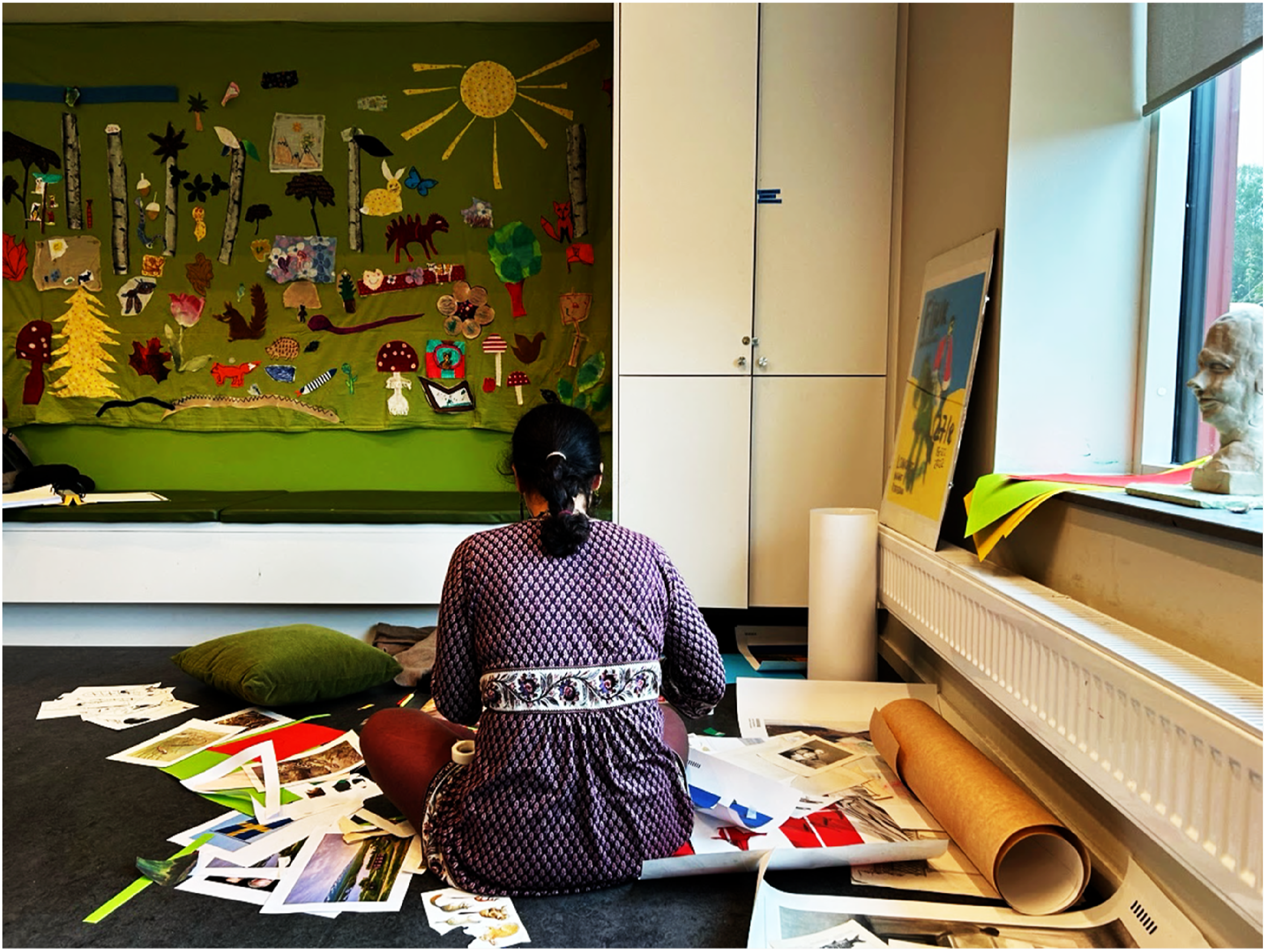
Collage: the ethics of associative creation
(Figure 5) In this section, I explore one of the ethical issues related to working with collages, specifically focusing on their associative nature. As previously described, many participants found the process of collage-making to be associative, with different images evoking various associations, leading to distinct choices and motives. However, the associative, free, and limitless nature of collage creation lacks distinct beginnings and endings and there were not always obvious boundaries regarding what they could omit. Consequently, some participants allowed their collages to progress into highly personal experiences. Even though many described the process of working with collage as “soft,” emphasizing their control over the content, it was challenging for me to determine whether a person had revealed too much of themselves and what consequences that might entail (Figure 6). A fragment from Edythe’s larger collage, depicting themes of adaptation, loss, and separation. Edythe reflects upon the pieces she has chosen for her collage.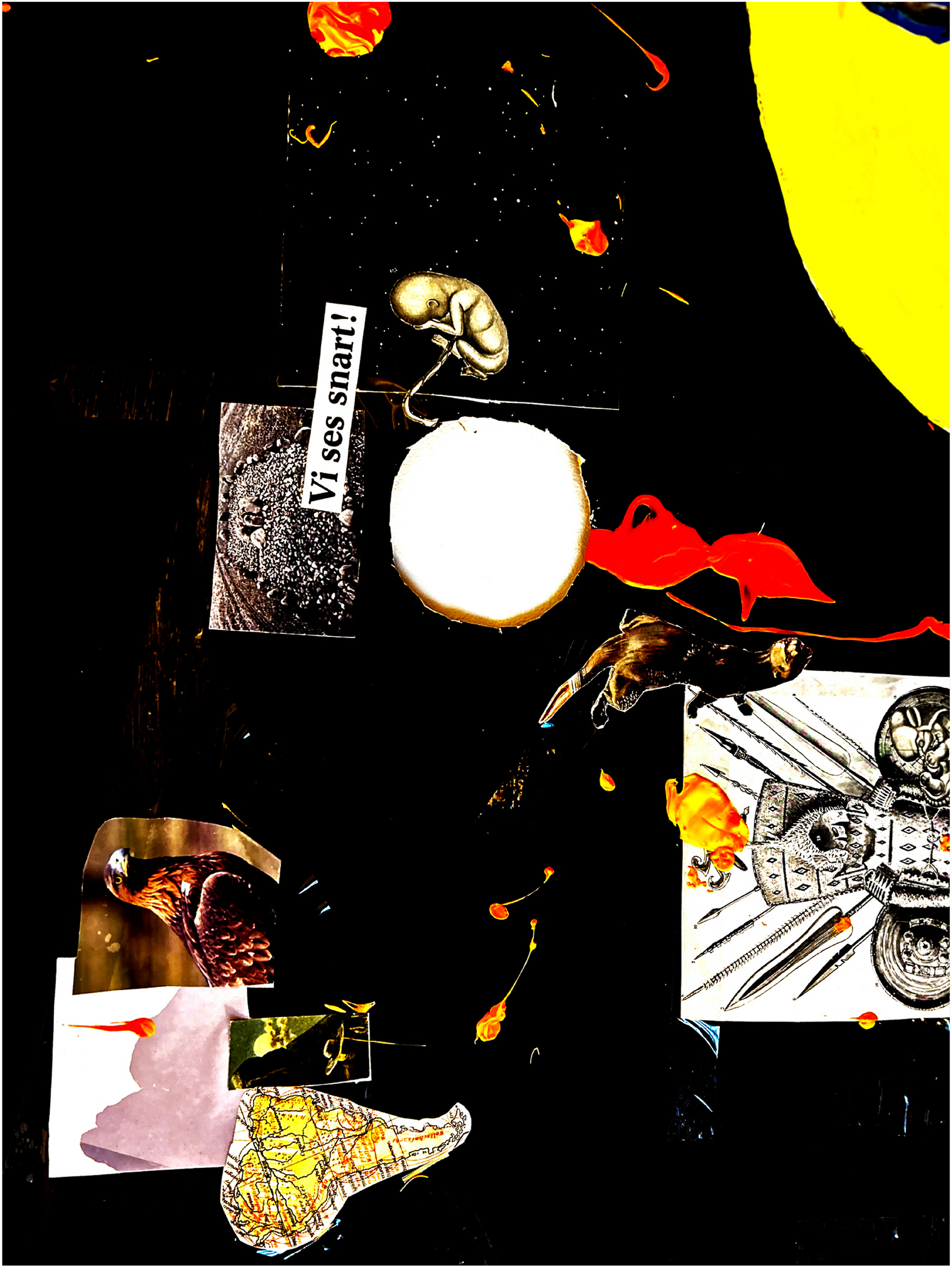
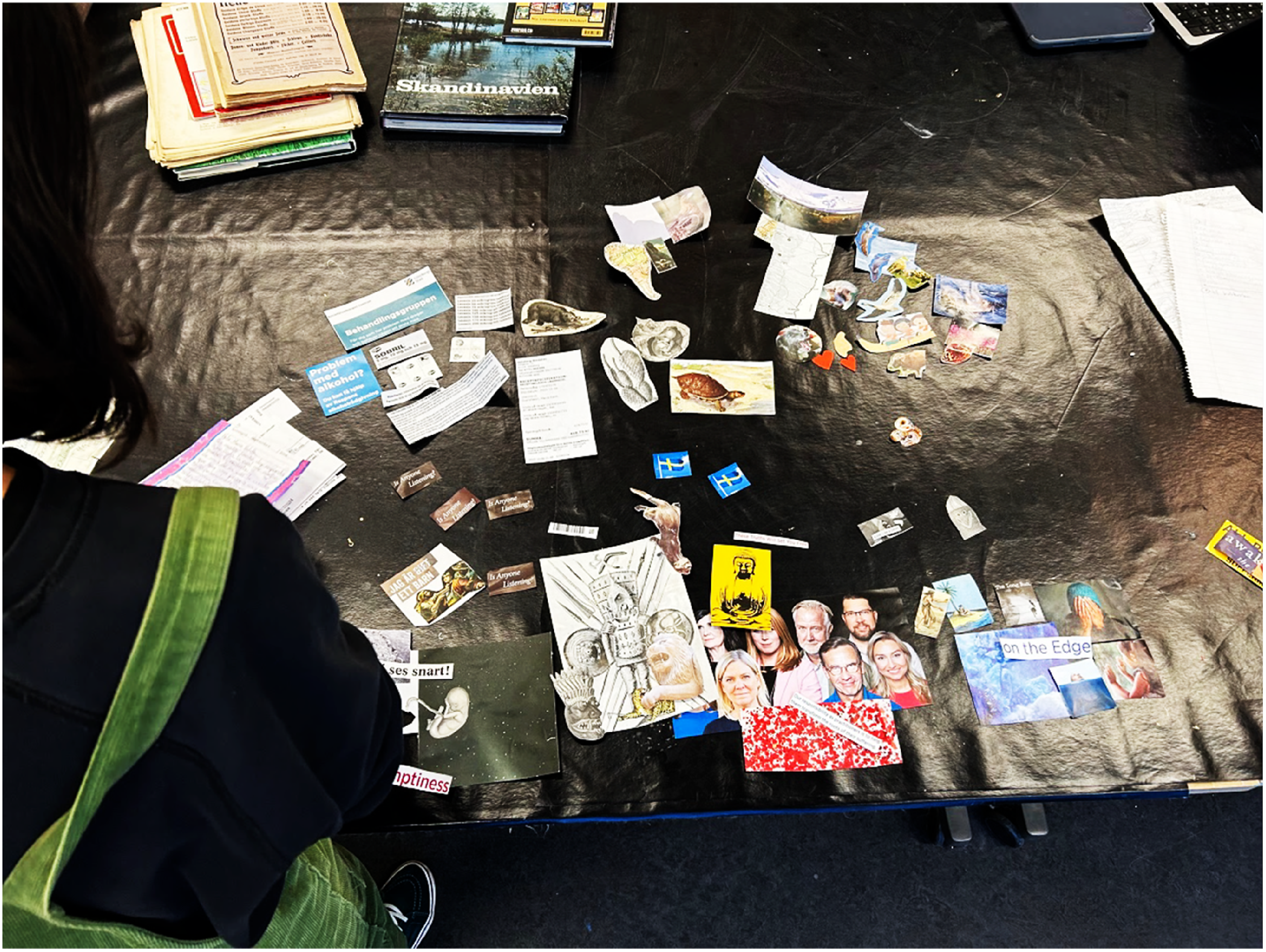
For example, Edythe’s collage (Figure 5) grew piece by piece into an intimate history connected to existential questions about loss, loneliness, separation, and grief related to her history of adaptation and its impact on her psychological well-being. She also incorporated pieces of her medical journals and medicine packaging. Furthermore, the associative nature of working with collage contributed to her not being able to finish her work during our sessions, as she constantly sought to improve it to reflect her life story. Edythe and I had an ongoing conversation about the voluntary selection and themes that she wanted or did not want to express. Simultaneously, completing her collage—and not leaving her in “pieces of memories”—held symbolic value for both of us, related to her early experiences of closure and separation. Therefore, I arranged several one-on-one sessions with her in the studio, allowing her to work without time pressure. These extra sessions also provided us with time, space, and a place to discuss endings and closure, something that she had previously motioned as challenging for her due to her history of adaptation. The following quote is a dialogue between us about closure and how Edythe reflects upon this issue: Researcher: I’ve thought a lot about closure, specifically in relation to you. I mean, closure may evoke different feelings among different people, and I wonder how you feel about it in relation to our work? Edythe: Well, I usually have separation anxiety and I know it’s hard for me to cope with /…/ At the same time, that’s part of the process and work for me, to realize how life is: things come to an end and end in different ways, even though it’s hard for me to cope with it. So, I try mostly to accept and not try to make too big a deal out of it. Researcher: I think it’s a beautiful thing to realize that things in life end, for better or worse. Edythe: Yes, and they change.
In many ways, Edythe’s collage creation and engagement demonstrate the ethics of associative creation, which enables participants to express their lived experiences deeply and honestly, on their own terms (see Culshaw, 2019; see also Dutton et al., 2019), through a free and associative process. On the other hand, the same associative process can also make it difficult for the researcher to determine when the process might become too overwhelming or to separate the person as they are today from what is portrayed in the collage. Therefore, in certain cases, determining whether the collage creation process represents suffering or healing for an individual who portrays highly personal subjects can be a complex task, in which the interplay between the work and the person becomes challenging.
Although it is possible to question why I arranged several one-on-one sessions with Edythe and consider it from different ethical angles, this case demonstrates many aspects of the impact that the free and associative process of collage-making can have for some people, something that can be difficult to anticipate before starting the process. However, this case also highlights the ethical responsibility of researchers to honor and safeguard the stories and lives that participants bring with them and portray in their collages. This can be done by providing sufficient time and support beyond the “data collection timelines” and to ensure that, if they wish, participants have the opportunity to complete their work and not leave behind pieces of memories that they brought with them in a process that has already been started. If approached with care and sensitivity, and respecting the participants’ autonomy, the process of creating free and associative collages, at its best, serves as a healing force for those who share intimate emotions and experiences. (Figure 7). During one session, when participants were asked about their experience with collage, Edythe wrote: “Healing; Community and belonging; Nakedness, openness, and acceptance.”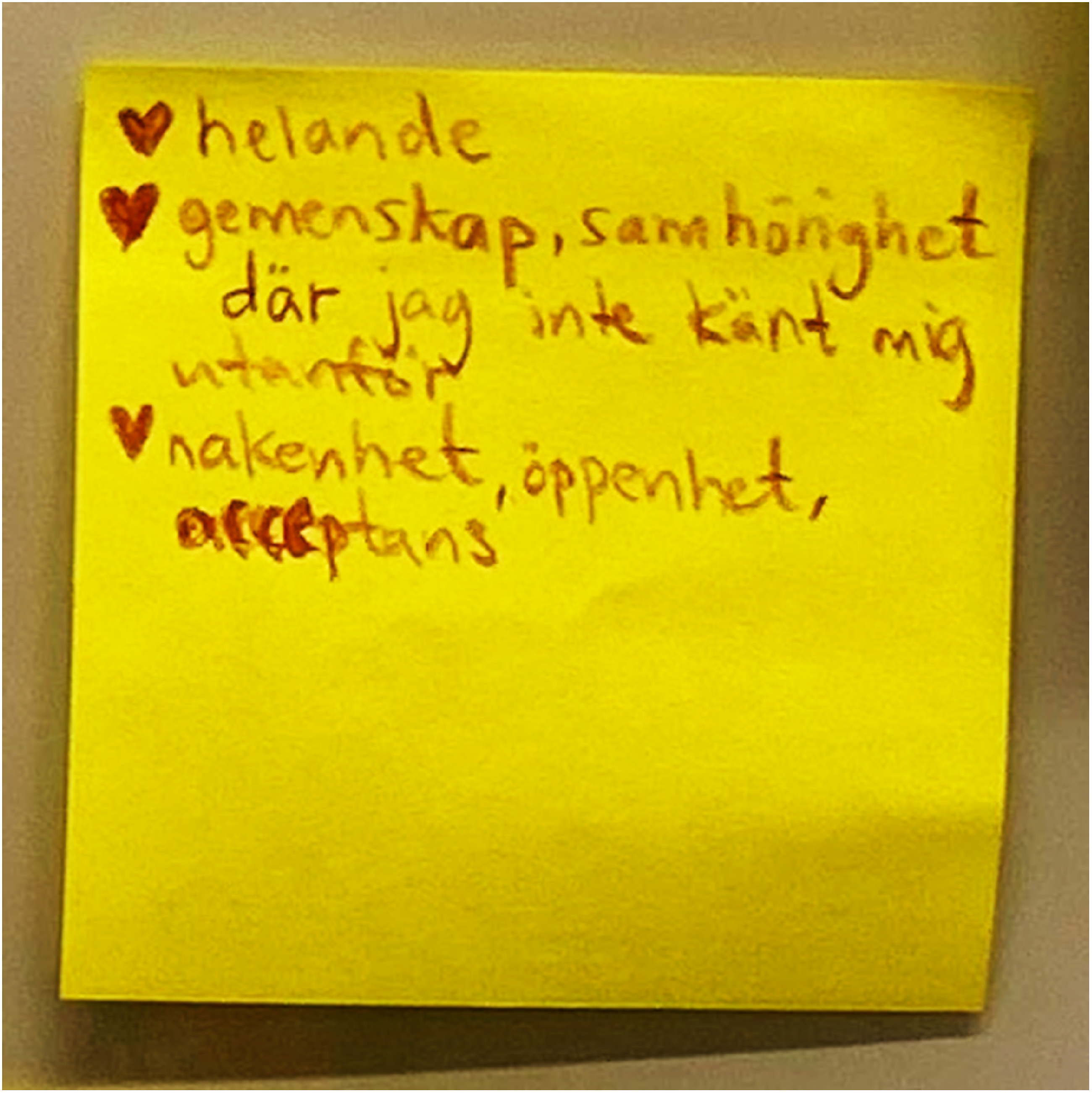
Collage: the prerequisites of time, space, and place
In this section, I describe some of the conditions that were important for our work with collage workshops. Although some discouraging subthemes may not directly align with the article’s main aim, they were prerequisites for conducting our collage workshops.
An activity that requires time and space
Collaborative collage workshops necessitate an environment that encourages imagination and playfulness, such as a studio. Additionally, since collage creation involves a high level of reflective and associative processes, the method demands considerable time from both participants and the researcher. Our sessions lasted approximately 5 hours each and many participants mentioned that the long duration of the sessions created a sense of calm, allowing for less stress and more time to discuss themes or return to them later. Enough time is also needed for participants to get to know each other by talking about aspects of everyday life not directly related to the researcher’s purpose. During our sessions, participants sometimes discussed topics beyond the project’s aim, and I usually refrained from interjecting because I believed that it was important for the group to develop familiarity with one another. Below, Edythe, Ziba, and I talk about the workshop duration and how it would have been if our sessions had consisted of fewer hours: Ziba: I liked the workshop times because we had sufficient time for each session. It was okay not to say everything at once because there was still time left, and we could share our thoughts later. We didn’t have to rush or compete for time. Researcher: Right, because I initially thought that two hours per meeting would be great. I expected that people wouldn’t have the time to stay longer, but this was never the case. Many of you decided to be here every other Saturday from 11 to 16. Edythe: Well, for me, it would have been too fragmented if we’d met for only one or two hours each time.
The conversation above emphasizes the importance of allocating adequate time for working with collages (see De Rijke, 2023), and how the sense of having enough time engenders calm within the group, ensuring that everyone has an opportunity to tell their stories. Furthermore, adequate time is needed due to the associative nature of working with collages and the significant time it takes for some individuals to actually create one collage. Notably, certain participants in this study did not always complete a collage during one single session. Instead, they spent their time reviewing materials, discussing themes, cutting and collecting images, and formulating ideas for an upcoming collage they had in mind. Adequate time was crucial for these participants to complete their final collages and make the workshops meaningful for them. Additionally, I placed no restrictions on size; some participants created collages as small as an A4 sheet, while others crafted larger and very detailed ones, approximately 1.5 × 1.5 m, something that also took time. This also means that creating collages as a working method may exclude people who do not have the time to spend, something that neither researchers nor participants always know beforehand.
The search for community and belonging
Over time, the studio where we met became a space for sharing experiences, and for racialized individuals to talk about their experiences of (un)belonging, although those experiences were very different from each other. Reflecting back, the need for a community where the participants could openly explore themes tied to personal experiences played an important role in engaging them in this time-consuming activity. Of course, this does not mean that creative collage workshops cannot be conducted with other people. However, in hindsight, it may be “easier” if participants share some common ground, linked to their own life experiences, that they find important and meaningful to discuss and share with others who may have similar but diverse experiences. Such shared experiences may facilitate discussions, connections, and the willingness to engage.
The researcher’s personal experience and its impact
Another aspect that may have influenced participants’ willingness to engage in the collage workshops is my personal background. I have never aspired to be “objective” in my work in a positivist sense. However, it is important to recognize that collage is not an objective method; it relies on the subjective relationship between researcher and participants. Therefore, transparency regarding the researcher’s position is crucial (see Butler-Kisber, 2010). Hence, I have been open with my own history of migration and have used my personal experiences during the gathering as a way to introduce a topic. I also shared my experiences at the request of the participants. During our work, I have tried to be a “participant,” rather than an “observing researcher.” Like the participants, I created collages based on my experiences and openly shared my thoughts and emotions. In the following dialogue between me, Edythe, and Tamra, we discuss the potential impact of my background and openness on the workshop’s nature: Researcher: During our gathering, I’ve been quite open about my background. How has that been for you? Because sometimes there’s an idea in research that, as a researcher, one shouldn’t be personal and that research should be objective. Edythe: Contrarily, I think it’s been important that you’ve been exactly the opposite of objective. For me, it has at least created a feeling of trust. Because if you’d been a researcher who had zero experience of similar experiences, then I think it would be for me or us the same experiences that we often struggle with. That it’s this white observer who’s supposed to study us. Now it’s like you’re on the same team as us and then it becomes easier for me at least to open up. Tamra: I agree. It’s so much easier to connect when both have similar experiences. Researcher: So, let’s say I was a “white Swede” who did this with you. Would it have been different, do you think? Edythe: Yes, for me it would have been very different because then you would have represented something else.
Of course, the above dialogue does not mean that a researcher without commonly shared experiences cannot carry out this type of work, something that the participants were clear to point out, but they said it would take longer and require more time. At the same time, there can be both pros and cons to the researcher’s shared experiences. My personal background and “distance familiarity” with the participants may have enabled recognition and openness, but it also embodied inherent biases that may have influenced the themes and narratives that the participants chose to share with me, a researcher who shares some common experiences with them. Alternatively, a researcher lacking shared experiences might have elicited distinct information and narratives from the participants.
Concluding thoughts and reflections
In this article, I have demonstrated, both in writing and visually, how collage as inquiry serves as a rigorous and multidimensional methodological approach to collecting empirical data, in agreement with other scholars (Butler-Kisber, 2007, 2010, 2019; Culshaw, 2019; De Rijke, 2023). Moreover, I have demonstrated how collage’s methodological tools enable individuals to use various forms of language—visual, verbal, and metaphorical—to narrate their stories and express the intricate connections between personal, social, and political concepts and phenomena. Some of the participants in this study created new “imaginative realities” by arranging, modifying, and changing fragments of their reality in their working process and collages. These critical and reflexive processes can be seen as an act of resistance against dominant narratives and power structures, as well as a way to challenge social injustices and envision a better world. In summary, many of the methodological findings described above align with the core definition of social work, which, in its essence, aims to promote social change and justice by amplifying the voices of marginalized groups and shedding light on how people’s lives and struggles are influenced by broader social and political contexts (The International Federation of Social Workers, 2024).
As a methodological tool for collecting empirical data, collage empowers participants to express themselves through diverse forms of communication. This approach yields rich and multidimensional data, providing a non-linear perspective that allows participants to articulate their experiences holistically (see De Rijke, 2023; see also Butler-Kisber, 2010). The visual and metaphorical aspects of collage add an emotional dimension to the empirical material, providing researchers with multiple angles and potential analytical approaches. The associative nature of collage encourages high levels of reflexivity and allows participants to meaningfully shape the content of the empirical data. However, this associative nature, while providing a source of rich, multidimensional, and nonlinear empirical data, can also be challenging because it becomes difficult for the researcher to predict the direction of the process beforehand. Although researchers may initially guide participants to focus on a specific theme, collage’s associative nature can lead to unexpected and exciting results. While this approach enriches the empirical material, it also carries the risk of accumulating excessive data extending beyond the project’s primary aims, something that raises ethical questions. Additionally, using collage as a method encourages relationship and social bonds (see Dutton et al., 2019). In some cases, this blurs the boundary between researcher and participant, especially when the researcher shares similar experiences and background with the participants and also collaboratively engages in creating and discussing her/his collages with the group. Given the complexity of collage’s associative capacity and its relation-building dimension, further research is warranted, with a specific focus on the ethical considerations of using collage as a research process.
Finally, for the aim of this article, I stayed close to the participants’ own narratives of working on the collages included in this article. Although one of the strengths of visual communication lies in its ability to stimulate senses other than words (Barone and Eisner, 2012), I recognize the methodological challenges when transitioning from the collages’ visual language to written language. For future research, it would be interesting to explore how to transfer, methodologically and fairly, the deep richness and multilayered visual language of collage into written words. Simultaneously, we should consider whether our goal is in fact to translate the visual into words, or recognize it as an alternative form of knowledge transcending writing and spoken language. Would we rather read about a work of art or experience it with our senses and imaginations? Do we prefer to read about a piece of music or allow it to communicate with us in its own unique language? (Figure 8) Following Butler-Kisber, 2019 method, I crafted my found poem using participants’ words combined with a Dixit card selected by one of them.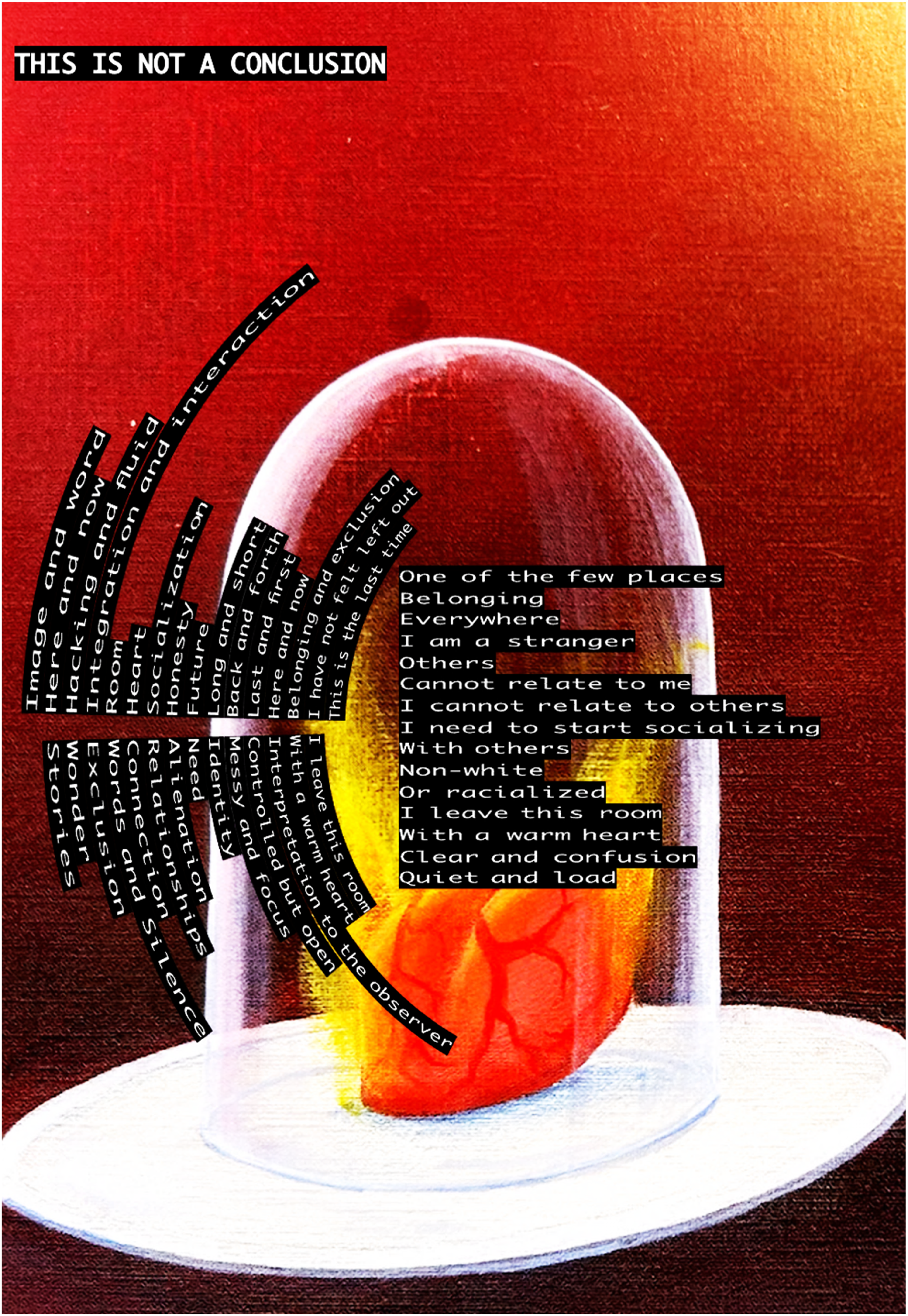
Footnotes
Acknowledgements
I would like to express my gratitude to the people who have generously shared their time and stories with me, and to Lena Sawyer for her helpful comments on earlier drafts of this article.
Declaration of conflicting interests
The author(s) declared no potential conflicts of interest with respect to the research, authorship, and/or publication of this article.
Funding
The author(s) received no financial support for the research, authorship, and/or publication of this article.
