



Abstract
Conducting research with children raises significant ethical and practical difficulties; when the context is rural China, where there has been no tradition of qualitative research with children, these become especially heightened. This article, written by a student and her supervisor, introduces a pilot study conducted in 2018 as part of a Master’s degree programme at a Scottish university. The study was designed to trial two child participatory methods with the aim of scaling these up in a full PhD project; the research focused on the experiences and needs of ‘left-behind children’ in a town of South-West China. The study threw up a number of challenges for the student which are explored in the article. Whilst not wishing to over-claim on the basis of a student project, we suggest that these highlight the reality that methodologies and ‘good practice’ guidelines developed in a ‘Western’/’minority world’ context may not always be wholly compatible with a very different research environment such as this one. This conclusion presents a significant challenge for all those who are conducting research with children in the ‘Global South’/’majority world’, as well as for those who are supporting research students who may experience similar dilemmas in the ‘real world’ of research.
Keywords
Introduction
This article introduces a pilot study on left-behind children in China that was carried out in 2018 by Shuang Wu (the first author) as part of a Master of Science by Research (MScR) in Social Work degree programme undertaken at a Scottish university. The term ‘left-behind children’ has been used in different ways, but usually refers to children under the age of 16 years who have been left in their home-town and are cared for by their grandparents or relatives for a period of at least 12 months, while their parent or parents go to work in a city some distance away (Fan et al., 2010). Although the phenomenon is found internationally and exists in other parts in the world including Eastern Europe, Latin America, Africa and South-East Asia (Yang and Zhu, 2013), the number of left-behind children in China is acknowledged to be extremely high (All-China Women’s Federation, 2013; Hong and Fuller, 2019).
The pilot study began with the assumption, in line with children’s rights principles (e.g. Alderson and Morrow, 2004, 2020; Christensen and James, 2008; Fraser et al., 2004; Punch, 2002), that children are competent social actors whose views deserve both attention and respect, in spite of the fact that their marginalized position vis-à-vis adults means that their opinions may not always be heard. Thereafter, the objective of the study was to test the efficacy of using child participatory methods to explore the experiences and needs of left-behind children living in a town in South-West China. It was hoped that by carrying out the pilot study, Shuang would learn lessons that she could take forward into the development of a full-scale doctoral research project on left-behind children in rural China.
Operationalizing the study raised significant challenges and it is these that are the main focus of this article, which shares insights from reflexive conversations (Archer, 2010) held between Shuang and her MSc(R) supervisor, Viv (the second author), as Shuang planned and executed her study and then reflected on it afterwards. Although Shuang was new to social science and to qualitative research, having previously gained a degree in management in China, Viv, had extensive experience of doing qualitative research with children in the UK and had contributed to research training on this topic for a number of years.
We begin by briefly outlining the current state of research on left-behind children and go on to present the rationale for the methodology and methods used in the pilot study. Shuang then reflects on the process of planning and executing the pilot study. In the Discussion and Conclusion sections, both authors jointly tease out the implications for carrying out research with children in majority world contexts such as this one, as well as for conducting research with children wherever the context.
The terms ‘minority and majority worlds’ are used in the article in preference to the more commonly-used terms, ‘Global North and South’, ‘third and first worlds’, and ‘developing and developed worlds’, in acknowledgement of the fact that ‘the ‘majority’ of population, poverty, land mass and lifestyles is located in […] Africa, Asia and Latin America’ (Punch and Tisdall, 2012: 241), and in recognition of the need to confront the unspoken assumptions that accompany such terminology.
Existing research on left-behind children in China
There has been a substantial amount of research on left-behind children in China, and to date, most has adopted a quantitative approach, leading as it does from a positivist paradigm. This research has focused primarily on the perceived emotional problems, educational difficulties and nutritional problems experienced by left-behind children. It is, furthermore, claimed that these children act out their unhappiness through delinquent behaviour (Ban et al., 2017; Fan et al., 2010; Gao et al., 2010; Hu, 2012; Hu et al., 2014; Ling et al., 2016, 2017; Mu and Hu, 2016; Qi and Jia, 2010; Tan et al., 2010; Tao et al., 2016; Wang et al., 2017; Wu and Wu, 2015; Yang et al., 2016; Ye and Pan, 2011; Zhang et al., 2015; Zhou et al., 2005).
As someone who had grown up in China and had previously worked in a non-governmental agency (NGO) that supported left-behind children, Shuang felt that this negative portrayal of left-behind children did not tell the whole story about the experiences of left-behind children. From her research training in Scotland, she understood that a qualitative approach, which allows the researcher to get closer to the phenomenon being studied, might elicit a different, less accusatory, set of findings. As Denzin and Lincoln (2005: 2) state, ‘… qualitative researchers study things in their natural settings, attempting to make sense of, or interpret, phenomena in terms of the meanings people bring to them’. The notion that it was important to get closer to the meanings of research participants also chimed with Shuang’s social work values and her respect for person-centred approaches to practice (e.g. Banks, 2012). She realized that this principle applied equally to research conducted with children; that it was important to listen to children, as she explains now.
Child participation and participatory methods
Listening to Children was one of the six research methods courses that I undertook as part of the MSc(R) in Social Work degree programme at the University of X, alongside other courses on research design, skills and analysis. In the Listening to Children course, I learned that research on and with children and young people has been influenced greatly by both the United Nations Convention on the Rights of the Child (UNCRC), which was drafted in 1989, and the new sociology of childhood, which came to prominence in the 1990’s and 2000’s.
The UNCRC is ‘the most complete statement of children’s rights ever produced and is the most widely-ratified international human rights treaty in history’ (www.unicef.org.uk/). The convention includes a set of rights that are often referred to as ‘participatory' rights (Tisdall, 2015). Article 12 (1989) is key to this. It states: 1. States Parties shall assure to the child who is capable of forming his or her views the right to express those views freely in all matters affecting the child, the views of the child being given due weight in accordance with the age and maturity of the child. 2. For this purpose, the child shall in particular be provided the opportunity to be heard in any judicial and administrative proceedings affecting the child, either directly, or through a representative or an appropriate body, in a manner consistent with the procedural rules of national law.
The child shall have the right to freedom of expression; this right shall include freedom to seek, receive and impart information and ideas of all kinds, regardless of frontiers, either orally, in writing or in print, in the form of art, or through any other media of the child's choice.
It was this that inspired me to conduct a pilot study as part of my MSc(R) dissertation course. I felt that it would not be enough for me to carry out a desk-based literature review (which would have met the requirements of the dissertation course). Instead, I wanted to try out child participative methods in practice in a pilot study. I therefore opted to use the Easter vacation to do this, but before then, I needed to work out exactly which method or methods I would use, given the constraints on time and my own lack of experience as a qualitative researcher. An initial literature search demonstrated that there were many different participatory methods to choose from, including the mosaic approach (e.g. Clark and Moss, 2001), photovoice (e.g. Darbyshire, MacDougall and Schiller, 2005), free drawing techniques (e.g. Sapkota and Sharma, 1996), drama (e.g. Greene and Hogan, 2011), sand play (Bingley and Milligan, 2007), GPS and mobile phone technique (e.g. Christensen et al., 2011), mapping (e.g. Darbyshire et al., 2005), as well as action research, PAR (participatory action research), PRA (participatory rural appraisal), CBPR (community-based participatory research), and empowerment evaluation (Dahl, 2014; O’Kane, 2008; Shamrova and Cummings, 2017).
Planning the pilot study
My research questions and the methods I ultimately chose reflected the limitations of the research. Not only was the timescale short (just four weeks), but my relative inexperience as a children’s researcher also meant that the approach taken needed to be one that I felt comfortable enough to carry out. In consultation with my supervisor, I decided to start with two questions: firstly, what left-behind children felt about the support services they attended, and secondly, what ideas they had about additional services that might be provided for them. A third, broader question, would come as a follow-up, that is, how they felt about being left-behind children. Two child participatory methods were then chosen: free drawing elicitation and the happy/sad face. I also decided at this point to tape-record the children’s responses, so that I could give the children my full attention when they spoke.
Research method 1: Free drawing elicitation
Free drawing elicitation is an art-based technique that has proven to be highly successful in participatory research techniques with children. Sapkota and Sharma (1996: 61) argue that drawing methods allow children to freely express ideas, imagine and interpret the world around them in their own right and, by giving children complete control, the power imbalance between adults and children may be relatively reduced and children become more confident. This seemed to be a good ‘fit’ for the pilot study, because it would allow the children to lead and me to follow and it would not be difficult for the children or for me to do. Additionally, by focusing on visual representations of ideas, free drawing elicitation has been found to be compatible with children of different ages and children with varying abilities of literacy.
Research method 2: The happy/sad face
The happy/sad face technique invites children to discuss what the happy girl/boy and the sad girl/boy might be thinking (Woodhead, 1999). This participatory method has become increasingly well-established in recent years and applied to research related to children in different parts of the world (including majority world settings); it is said to enable children to construct interpretations of their social worlds (Barna, 1994; Johnson et al., 1995; Woodhead, 1999). From my point of view, I hoped that this technique would allow the children in the pilot study to express their feelings about being left behind more freely.
Location of the pilot study
The other decision that had to be taken prior to conducting the pilot study was where it would be based. Again, with research restraints in mind, I opted to locate the study at ‘Er Tong You Hao Jia Yua’ (Child-Friendly Space, CFS for short) in my home town; this was the NGO where I had previously worked as a volunteer. It was located in a part of China that had not been researched until then, making it an interesting case study in itself (e.g. Yin, 2009). CFS had worked with left-behind children since 2009, providing support services for children and their families. The NGO, sponsored by the United Nations Children’s Fund (UNICEF) and the All-China Women’s Federation (ACWF), was founded after the Wenchuan Earthquake in Sichuan province in 2008; its focus was mainly on education for disaster prevention and mitigation.
Permission, ethics and consent
At the time of the pilot study, CFS had two staff members, Tao and Pin (both pseudonyms), who provided welfare activities for the children living in the area, most of whom were left-behind children. I emailed Tao and Pin to ask for their permission to locate the pilot study at CFS. Agreement in place, I then sought and gained ethical permission from my host university, before travelling to China. There I visited CFS to meet the staff, grandparents and guardians to tell them about the study. I also shared consent forms (in child-friendly language) and carefully-crafted information sheets with them.
Carrying out the pilot study
I will now present what happened in the pilot study, before going on to explore jointly with my supervisor the broader implications of some of the issues that emerged.
The pilot study: Participants, context and timing
Seventeen of the children who attended the CFS to take part in different activities agreed to take part in the study. It was conducted over four weekends in the Spring of 2018, at a time when the children were accessing CFS for various after-school courses and activities. The children were all aged between 7 and 14 years, in line with the ages of all children attending the project at this time.
Access and informed consent
As already stated, all the participants attended the CFS, and were invited to take part by the two CFS workers, Tao and Pin, who, in effect, acted as both sponsors and gatekeepers for the research. As a result, the children who took part in the study were, inevitably, a select group; they were children whom the workers encouraged to take part, and it is at least possible that their views did not reflect those of the other children who were not involved in the pilot study. Given that the aim of the pilot study was to trial two methods rather than elicit new research findings, this did not seem to be a problem, but it did have an impact on the pilot study, as did the issue of consent, as I will now describe.
Information and consent forms were shared with children and their grandparents by Tao and Pin in advance of the pilot study. However, I quickly realized that this did not mean that the children knew what they were agreeing to take part in; any idea of ‘research’ or ‘a study’ was quite beyond their experience. While the children seemed happy enough to meet and talk to me, it emerged that some guardians had instructed their grandchildren to participate without asking for more information, thinking that this would be a great opportunity for their child to learn things; they believed that participating might enrich the child’s life experience and be a benefit to them. It seemed, moreover, that many guardians had little interest in the topic itself; participating in the study was viewed as an ‘honor’. For their part, children tended to obey their guardians in agreeing to take part in the study. All of this raised real questions for me about the principle of gaining anything that resembled ‘informed consent’.
The two methods in action
I began with free drawing, in which children were invited to draw their ‘ideal CFS’, using coloured pens and drawing papers prepared by me in advance. I advised them that they could bring “everything you think is necessary for the child-friendly space” and then asked them to explain what was in their drawing; our conversation was tape-recorded.
In practice, children responded to this invitation in different ways, according to their age. Many of the younger children took the invitation quite literally, drawing fantasy elements rather than real aspirations, so that butterflies, birds, Barbie dolls, trees, houses and even a swimming pool made an appearance. Their drawings and the interviews that followed revealed that ‘everything' was either misunderstood, or perhaps not fully understood, demonstrating the differences between children's and adults' cultures, as well, of course, as their inability to grasp the nature of the question they were being asked (Aldred and Burman, 2005). Figure 1 is a composite of pictures drawn by some of the younger children.
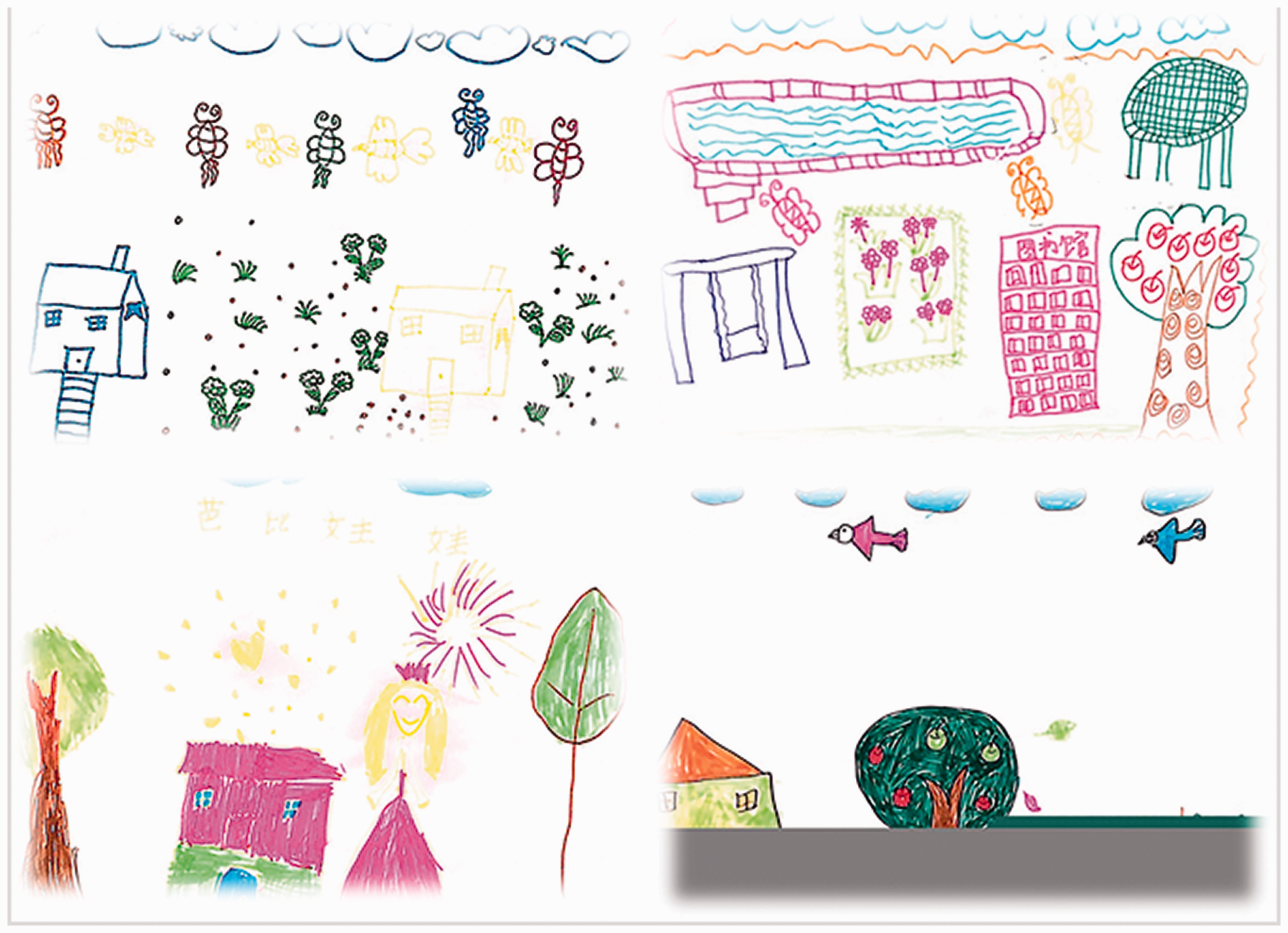
Children’s ‘ideal CFS’.
The older children were much more able to grasp what was being asked of them, but, interestingly, some also drew butterflies; I wondered if they had had a recent art class on this topic, because the drawings looked very similar, and I remembered being taught to draw in this way when I was a child. When I asked one boy (aged 14 years) why he had drawn a butterfly, he said that butterflies were “free to fly and could pursue a better life”. In saying so, he was calling to mind an old Chinese idiom; the idea of the cocoon represents the process of a caterpillar evolving into a butterfly through painful struggle and unremitting efforts. Today, it is often used to refer to people who, through perseverance and hard work, regain their life and emerge from a difficult situation. This message here was therefore that we should always struggle and have a strong will. But the boy’s answer may have demonstrated something else. It seems likely that he may have been trying to figure out what answer was expected of him. In China, students are expected to answer questions with a positive value, and so he may have used this imagery to ‘grace' his response, which he believed would be graded as ‘good' or ‘poor' (Einarsdottir, 2009).
Another 14 year-old boy drew a particularly interesting picture. He said that he would like to have a “house of many rooms”, with space for thinking, physical education, a “psychological consultation room” and a “room for self-adjustment”. Finally, in the “career planning room”, he hoped to gain background information about different jobs, and so “have excellent preparation for the future” (see Figure 2). It was clear that he was telling me about his future aspirations, not necessarily just about what he hoped of the CFS in itself.
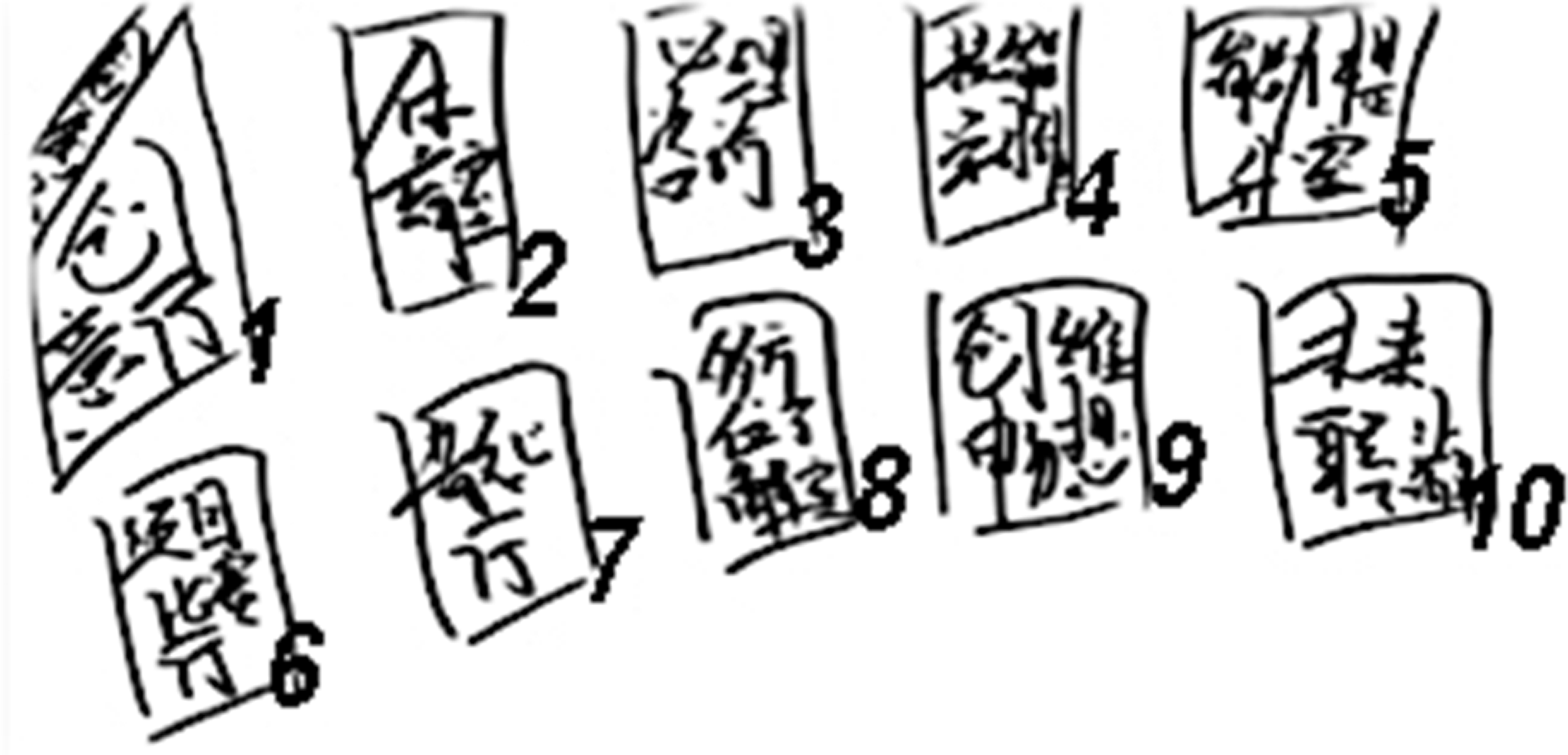
A “house of many rooms”.
After the free drawing and conversation, I shared with the children images that I had painted of a happy and sad boy (see Figure 3). I invited the children to identify with one and tell me a bit about both. Again, this conversation was tape-recorded.
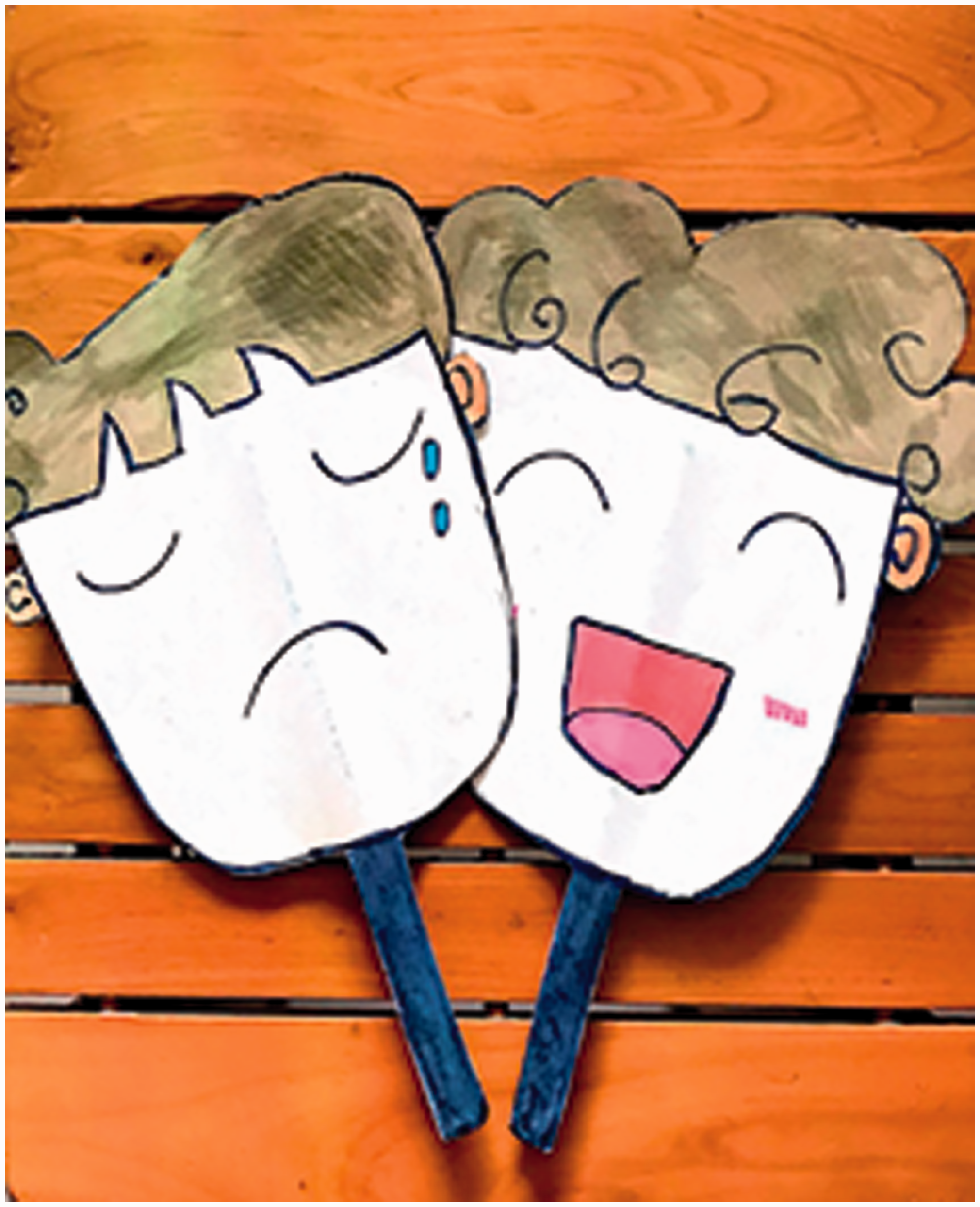
The happy/sad boy.
The happy-sad boy technique was successful in encouraging the children to open up about their feelings. Most of the children immediately spoke about their parents. One girl (aged 14 years) said that the boy was crying because his parents had left, and she herself then cried and said that she missed her parents very much; they had left the previous year. A boy (aged 12 years) agreed that the boy was crying because his parents were leaving, but said that he was not upset himself because his parents had left when he was very young, and he was now used to this.
The children presented a range of other reasons for the boy to be happy or sad. Many mentioned support from their friends. Others said that they appreciated that their parents working away from home meant that they had access to toys and books they might not otherwise have had; they also treasured these gifts as memories of their parents. Apart from this, some children also placed importance on having enough freedom to do what they wanted. A small number of children mentioned academic performance. Middle-school students in China spend longer at school and experience greater pressure to study than is the case in many other countries (Chen et al., 2014; Guo, 2012; Hu, 2001), and so I was not surprized when one girl (aged 14 years old) said that the sad boy had possibly received poor grades and the happy boy, good grades, and his teacher and parents praised him for his excellent performance.
While the happy/sad boy technique allowed the children to open up and share their feelings, I had concerns about this. I knew that if I wanted to use this approach again, I should have more faces to share with the children, including the faces of girls. I also needed to make sure that there was sufficient back-up and emotional support for the children, should they need it.
Discussion
Reflecting on the pilot study overall, it should be remembered that the main aim was to enable Shuang to try out participatory methods in practice, not inform social work practice or lead to recommended changes in policy or practice. It was, moreover, hoped that the children would find it interesting and enjoyable to take part in the study. Thus stated, the pilot study met its objectives: Shuang learned valuable lessons about herself as a researcher and about the use of her two chosen methods, and the children seemed, on the whole, to enjoy taking part. But the pilot study also highlighted fundamental questions about access, consent and power, questions that had been rehearsed in a study conducted almost 20 years ago by Viv in a very different country (Scotland), and on a very different topic (children affected by parental HIV) (Cree et al., 2002). Hearing about this earlier study proved to be a ‘light-bulb’ moment for Shuang, who understood for the first time that some of the difficulties she had experienced in conducting the pilot study were not related only to her inexperience as a researcher, but were part of something bigger and more fundamental, as we will now explain. The pilot study also brought to the fore questions that had not been addressed in the Scottish study, questions about cultural appropriateness and the validity or otherwise of transporting minority world research ideas into a very different research environment. The work of Smith (1999) on decolonizing methodologies proved to be especially informative here, as we will now explain.
Access in practice
It is fair to say that Shuang would not have had a pilot study without the support of the staff at an agency in which she had previously worked as a volunteer. This was not simply a case of ‘insider research’, with all the pros and cons that go along with that (e.g. Brannick and Coghlan, 2007). It was more than that, because control of the pilot study was, in effect, in the hands of the agency, and beyond this, Shuang could only meet children whose grandparents or guardians gave permission for her to do so. This resonates with the early research on children affected by parental HIV in which the research team had to rely on the goodwill and support of social workers in a childcare agency to get access to the parents of the children affected by parental HIV whom they went on to interview. The researchers argued that those who do research with children can only ever get access to children with the co-operation of a number of gatekeepers, and that this inevitably impacts on the resultant findings (Cree et al., 2002).
There is, however, another way of conceptualizing this issue. Shuang’s pilot study was, in reality, an example of a partnership project, something that was ‘co-produced’ with the NGO staff, if not with the grandparents, guardians and children themselves. From this perspective, the agency staff were not ‘gatekeepers’ in the pilot study (with all the pejorative connotations that go along with this), as much as ‘co-contributors’ of the study. It was their knowledge of the children and their carers that enabled the study to happen, and their experience that contributed to the management and delivery of the research in practice. Moreover, the subsequent value of the research (to the children, their carers and the community) was greatly enhanced, because it was the agency staff who were best placed to take forward findings from the research. This is a way different model for conducting research as compared with conventional methodologies (see Durose et al., 2019).
Consent in practice
As Shuang has said, the idea of ‘research' or a ‘study’ was outside the experience of the rural Chinese children who took part in the pilot study. Although Shuang had acted ethically (sharing information sheets in advance and explaining the principle of informed consent), neither the guardians nor the children had any experience with which to understand what they were being asked to take part in, and the short timescale of the project made it difficult for Shuang to build the relationships and trust that might have ameliorated this problem. But this is a familiar dilemma to those conducting research with children, especially younger children (Flewitt, 2005), and does not only affect children’s research. In reflecting on wider evidence from research, Cree et al. (2002) assert that ‘informed consent’ is rarely absolute, because ‘people who consent to be research participants rarely know exactly what they are letting themselves in for’ (page 51). Smith (1999) takes this even further, arguing that the term ‘research’ is ‘inextricably linked to European imperialism and colonisation’ (page 1).
We will return to this shortly. For now, it is important to stress that in future research, Shuang would like to have more time to get to know the children better before engaging them in research; she would also wish to be able to spend time with their caregivers. Only then will she be able to begin to counterbalance these challenges.
Power in practice
The issue of power is one that has been explored widely in research papers on research with children. Some argue that it is possible for researchers to minimize power differentials between themselves and children while others are more circumspect (Alderson and Morrow, 2004, 2020; Christensen and James, 2008; Fraser et al., 2004). As already stated, Shuang was aware that the limited timescale made it almost impossible for her to build meaningful relationships with the children, either before, during or after their time together. Moreover, as she acknowledged in her field-notes, the children were busy with their own activities and did not have time for ‘rapport building'. Significantly, the issue of power was demonstrated in practice in the children’s use of language. Although Shuang spoke to the children in Sichuanese (the local dialect in Sichuan province) with the intention of reducing any feelings of awkwardness that they might have felt in talking to her, some of the children replied in standard Mandarin. In Chinese culture, people tend to default to speaking Mandarin only on formal occasions (e.g. Liu and Tao, 2012). Thus, their use of Mandarin may have been an indication that they felt ill-at-ease; that they saw Shuang as a person with authority, like a teacher or policeman. Power was also demonstrated in the use of body language by some of the children, who sat upright and stared at Shuang during their whole communication.
While a more experienced child researcher might have been able to mitigate the power imbalance to a degree, this issue can never be removed completely. As Mayall (2000) asserts wryly, ‘according to my information from children..a central characteristic of adults is that they have power over children’ (page 121). More recently, Gallacher and Gallagher (2008: 501) have argued that while ‘participation’ has become ‘both an aim and a tool in an ethical quest towards ‘empowering’ children’, so-called participatory methods may not actually empower children at all. This takes us to our final realization.
Context and culture in practice
The pilot study highlighted the importance of thinking carefully about context and culture. Shuang found that real participation and meaningful consent was difficult to achieve in the pilot study, not least because, reflecting prevailing cultural norms and expectations, children gave the answers they thought she wanted to hear. Concepts such as children's participation, children's agency, child-centred methods and methodology, ethical practice in research with children, child participation rights and the new sociology of childhood all originate from the Global North and so reflect a particular ‘Western’ ideology and cultural background. This is not, however, an issue that relates only to China. As Okoli and Cree (2012) and Okoli (2015) has argued in her study of street children in Nigeria: … doing ethical research with children in the developing world is fraught with issues and dilemmas that can best be resolved not by adopting textbook, ‘Western’, ethical research frameworks and constructions that do not reflect the lived reality of non-Western children, but by constantly negotiating and renegotiating boundaries of inequalities, moral values, cultural beliefs and practices and specific contexts within which majority world children live and grow (2015, page 538).
Conclusion
We began by suggesting that the pilot study drew attention to a number of ethical and practical dilemmas which were confronted, if not fully resolved. Our conclusion, whilst acknowledging that this was, after all, a student project, is that new ways of thinking about, and enacting, child participation need to be explored and developed if meaningful research is to be carried out with children within a Chinese cultural context in the future. This is not simply a case of developing new research tools or participation models (such as that developed by Shier, 2001). Instead, we believe that there needs to be an honest discussion about child participation as concept and practice, especially in the majority world context. This work has already begun (Faedi Duramy and Gal, 2020; Percy-Smith, 2006; Spyrous, 2019; Wells, 2009; Wickenden and Kembhavi-Tam, 2014; Wyness, 2012). For example, Faedi Duramy and Gal (2020) assert that: […] the concept of child participation has had limited success in reflecting the realities of the Global South, where albeit children’s substantial social and economic obligations, their ability to express their views, partake in decision-making processing affecting their lives, and making autonomous choices is often restricted by cultural norms and family customs (page 2).
Footnotes
Acknowledgement
We wish to thank the two reviewers for their supportive and insightful feedback during the process of revising this article.
Declaration of conflicting interests
The author(s) declared no potential conflicts of interest with respect to the research, authorship, and/or publication of this article.
Funding
The author(s) received no financial support for the research, authorship, and/or publication of this article.
