




Abstract
This article considers how the four tenets of child first youth justice are relevant to work with young adults on probation by defining and applying the concept of ‘young adult first’ probation practice. Interviews were carried out with practitioners working in a specialist young adult probation hub (n = 60) and young adults on probation (n = 35) across three phases of data collection. We use the child first ABCD framework as a lens to consider how the Hub reflects child first approaches. We conclude that the Hub provides a useful example of what ‘young adult first’ practice might look like and that such practice needs to be adapted to reflect the unique life stage of young adulthood.
Introduction
Young adults aged 18–25 are over-represented in the criminal justice system (HMI Probation, 2021, 2024) and, as such, have long received attention from academics, policymakers and practitioners as they transition from childhood to adulthood (Hogan and Astone, 1986; Justice Committee, 2016). Despite the fact that 18-year-olds are considered adults in most countries (United Nations, n.d.), young adults occupy a distinct life stage due to developmental, structural and identity-related needs. However, young adults are generally not treated as a distinct group in policy and practice despite evidence suggesting policies which impact vulnerable young adults need to do more to support them with the move through emerging adulthood (ages 18–25) into adulthood (Bonnie et al., 2015). The unique position and experiences of young adults has given rise to calls for them to be recognised as a distinct group, separate from other adults (Justice Committee, 2016; T2A, 2012). In this article, we argue that the adult probation system could work with young adults more effectively by learning from the concept of ‘child first’ practice which has been developed in the context of youth justice (Case and Haines, 2015a, 2021; HMI Probation, 2023).
There have been calls for specific young adult sentencing principles which reflect what we know about young adults’ needs (Howard League for Penal Reform, 2019). As a result, the Sentencing Council in England and Wales is currently consulting on the ways in which sentencing for young adults should be differentiated and His Majesty’s Prison and Probation Service (HMPPS) has introduced a specific policy for the management of young adults on probation (Ministry of Justice, 2022; Sentencing Council, 2025). Moreover, while the ‘ambitious’ Young Adults Policy Framework (Ministry of Justice 2022) recognises the uniqueness of young adults in the criminal justice system and encourages a ‘more tailored, bespoke response’ HMI Probation (2024: 4) has found that putting it into practice has proven ‘challenging’. Thus, it remains the case that – in England and Wales – young adults are sentenced and supervised as adults. As such, there is a need for services such as prisons and probation that work with young adults to respond in ways which meet their specific needs and ongoing cognitive development. The aim of this article is to illustrate the distinct needs and position of young adults in the criminal justice system and develop the concept of young adult first probation practice, building on child first youth justice (Case and Browning, 2021). The article analyses the findings from an evaluation of a specialist ‘youth to adulthood’ transitions probation Hub using the ABCD framework from the child first literature as a lens to consider what young adult first practice might look like. In doing so, we define young adult first practice and consider how the Hub represents a good example of young adult first probation practice.
Young Adults in the Criminal Justice System: A Distinct Group
Research evidence supports arguments for treating 18- to 24-year olds as a distinct group (HMI Probation, 2021). From the literature, we can see that young adults are both similar and dissimilar from children and older adults and that young adults in the criminal justice system differ from those who are not in the criminal justice system. Turning 18 and reaching the legal age of majority does not mean that the inherent vulnerabilities that children experience are left behind overnight. Neurological research has shown that young adults’ brains are more akin to adolescents’ brains than adults’ brains. This can increase the risk of children and young adults being criminalised because the particular stage of brain development among young adults impacts upon self-control, consequential thinking and appraisal of risk (HMI Probation, 2021; T2A, 2013). This ‘neuroscientific turn’ has permeated youth justice policy and practice in recent years, resulting in an emphasis on responding to peoples’ developmental needs rather than age.
Young adults are also distinct because of the social, economic and structural factors that specifically impact on them (AYJ, 2013; Hughes and Strong, 2016; Sawyer et al., 2018; T2A, 2011). In terms of social identity formation, research suggests that emerging adulthood has a set of key characteristics which differentiate it from older adulthood. Young adulthood is the age of identity exploration in terms of work, love and worldviews. This period of one’s life involves experimentation with work roles, educational possibilities and personal relationships. Emerging adulthood is also the stage in adulthood that is most associated with risk-taking behaviours which may partly explain why this group is over-represented in the criminal justice system. Importantly, Arnett (2000: 474) makes the case that these experimentations can be understood as ‘explorations for their own sake, part of obtaining a broad range of life experiences before taking on enduring – and limiting – adult responsibilities’: that such risk taking can be understood as playing an important function in the emerging adulthood phase poses challenges to justice practice which is squarely focused on reducing those risks.
Emerging adults are less likely than adults to have pro-social identities which give them a purpose in life, and a reason to not offend. Recent years have seen changes to the socioeconomic and structural constraints that limit young adults’ transitions into adulthood (such as limited housing options and an employment sector which increasingly relies on precarious contracts) (Bone, 2019). Add to this, cultural changes such as delayed partnering and parenting means that young adults are experiencing a prolonged adolescence (Sawyer et al., 2018). Thus, people are spending longer in a life stage characterised by instability and self-focus which occurs because of lower levels of obligations to others. On the other hand, emerging adulthood is associated with possibilities and optimism, when hopes flourish and people have unparalleled opportunity to transform their lives (Arnett, 2014). Moreover, ‘the experiential complexity of this transitional period of ‘mistakes’ and ‘false starts’, during which identities fluctuate and consolidate’ is considered critical to our understanding of both why young adults are engaged in criminal activity, and – crucially – how they may move on from it (Coyle, 2019).
When we look to differences between young adults in the criminal justice system and their counterparts who are not in the criminal justice system we find further evidence of why this cohort should be treated as a distinct group. Young adults in the criminal justice system are more likely to have had negative, potentially traumatic experiences than those who do not end up in the criminal justice system (Malvaso et al., 2022a, 2022b). This group is more likely to come from low socioeconomic and ethnically minoritised backgrounds, and they are – in turn – more likely to have had negative experiences of criminal justice (AYJ, 2013; Spark Inside, 2023). All of this serves to further exacerbate existing trauma, a low social status and difficulties around developing pro-social identities so much so that criminalised young adults find themselves in an invidious position when it comes to moving on from harmful behaviours.
An undeveloped and precarious social status combines – especially among those who end up in the criminal justice system – with personal experiences of racism, trauma and social exclusion, neurocognitive immaturity and ongoing identity formation to increase the risks of criminalisation. What sets them apart, however, is that emerging adults are in an important transitional life stage. While adulthood has – traditionally – been associated with key life events such as getting married, embarking on a career and having children, Arnett (2015) identifies a further set of criteria which are important markers of what it means to be an adult:
Accept responsibility for yourself;
Make independent decisions;
Become financially independent.
Young adults who end up in the criminal justice system are likely to find it more difficult to move into adulthood because of a lack of ‘traditional’ support systems such as a stable family or because of experiences of victimisation and trauma (Harris and Edwards, 2023) and criminal justice services designed for adults are less likely to meet their needs effectively when compared to children or older adults (HMI Probation, 2024). As such, practitioners working with young adults need to be mindful of both what young people are emerging out of but also what they are emerging into. This opens up the possibility for the development of a new way of working with young adults that builds on the concept of child first, but which takes into account the unique challenges that young adults face. In this article, we suggest that the ‘child first’ approach developed in the context of youth justice represents a useful framework for developing what we call ‘young adult first probation practice’.
Developing Young Adult First Approaches in Criminal Justice
Proponents of a youth justice system underpinned by the concepts of ‘children first, offenders second’ argue for a form of criminal justice practice that is attuned to the needs of children rather than ‘offenders’ (Case and Haines, 2015a, 2015b; Haines and Drakeford, 1998). Such arguments are made on the basis that children are more vulnerable than adults, differ intellectually, emotionally and socially and that engagement with the criminal justice system is criminogenic (Case and Browning, 2021; McAra and McVie, 2010).
‘Children first, offenders second’ (CFOS) was first developed as a way of challenging the ‘anti-child elements’ within the youth justice system with Haines and Drakeford (1998: xiv) recommending a way forward that was ‘proactive on behalf of children’. While initially a theoretical approach, Haines and Case (2015) subsequently developed an evidence-based model which was adopted by the Youth Justice Board to demonstrate its commitment to treat ‘children as children’ (Youth Justice Board, 2021: 10). Although now shortened to just ‘child first’ (Case and Haines, 2021; Case and Hazel, 2023), the approach underpins much of what happens in the field of youth justice. Child first approaches comprise four key tenets – the ABCD formulation – which inform the YJBs operation, its oversight of local youth justice services and strategy at a local level:
Treat children
Focus on
Be
Work to minimise systemic harms by
Adult probation services differ significantly from youth justice services in terms of organisation arrangement, working cultures and attitudes towards processes of criminalisation. Despite this, in England and Wales, no distinction is made between young adults and older adults when it comes to sentencing (Howard League for Penal Reform, 2019; Ward and Spence, 2023), although, as noted, the Sentencing Council (2025) is currently consulting on specific young adult sentencing guidelines. As such the responsibility for working with young adults in age-responsive ways falls to those institutions which deliver punishments on behalf of the courts, namely prisons and probation. In practice, this has taken the form of pilots designed to respond to the specific needs of young adults, emphasising multi-agency work and bridging the gap between youth offending services (YOSs) and adult probation (Sturrock, 2012). Although models of practice such as this are not embedded within the criminal justice system, research has consistently pointed to the potential for the provision of effective support for young adults via practice that is relational and underpinned by the concept of maturity (Judd and Lewis, 2015; Sturrock, 2012). While maturity has proven a useful concept for shaping practice by legitimating age-specific criminal justice responses, such narratives can perpetuate the deficit-based model which ‘children first, offender second’ seeks to challenge. In other words, while maturity is an important consideration in terms of criminogenic risks and criminal justice research and policy (Coyle, 2019; Hughes and Strong, 2016; T2A, 2013) the ‘increasing complexity of young people within the Youth Justice system’ have become coupled with neuroscientific-informed explanations which emphasise and isolate developmental ‘risks’ and ‘needs’ (Brewster, 2020: 225).
Elsewhere, young adults are often treated as a distinct group, with almost all European countries having ‘accepted that young adulthood should be reflected in criminal justice laws or practice’ (Pruin and Dünkel, 2015: 5). For example, in Germany, young adults receive ‘milder sentences’ because they can be sentenced by the juvenile courts and sentences are to be exclusively orientated towards this ‘educational aim’ (Dünkel, 2016). Similarly, in Finland, young adults (defined as those aged 18–20) are treated differently from older adults in terms of sentencing and mitigating factors as well as through the provision of specialist young adult services (Lappi-Seppälä, n.d.). It is not possible to provide a comprehensive overview of how other countries respond to young adults but even just these examples show that a more specialised approach can be taken to young adults than in countries – such as England and Wales – where youth courts only deal with minors.
The Probation Service in England and Wales seeks to work with young adults in a way which focuses on engagement, setting boundaries and working to ‘develop maturity’ through tools such as ‘choices and changes’ (Ministry of Justice, 2022). Much of this mirrors agreed good practice in relation to young adults which should focus on relational working and pro-social modelling with the additions of reducing formality, not setting young adults up to fail, and building rapport through sharing common interests (Livingstone et al., 2015). All probation delivery units (PDU) in England and Wales have specialist ‘concentrator teams’ that provide a more tailored approach to the services delivered to young adults although these are not fully operational (HMI Probation, 2024). Young adult teams have dedicated teams and staff but probation is delivered in the same way as with older adults. Despite these good intentions, the criminal justice system has been found wanting in relation to providing the ‘tailored support, structure and consistency’ that young adults need (HMI Prisons, 2021), and although a recent HMI Probation (2024) thematic inspection found pockets of good practice, this was not widespread.
As a result, there is a need to rethink the way probation with young adults is delivered. In this article, we suggest that ‘young adult first probation practice’, which draws explicitly on child first youth justice, represents one way of doing so. The remainder of this article seeks to show that a way of working that is not dissimilar to ‘child first’ was evident in the Y2A Hub’s operational practice and that this ‘young adult first’ practice could be implemented more broadly in probation when working the 18- to 25-year-old age group.
The Y2A Hub: Study Context
In response to some of these challenges, the youth2adulthood transitions Hub (hereafter, ‘Y2A Hub’ and ‘the Hub’) was set up by the Mayor’s Office for Policing and Crime (MOPAC) and the Ministry of Justice in Newham, a deprived and ethnically diverse borough in east London, in 2021. The Hub was initially funded by £3.19 m from the Shared Outcomes Fund for a 3-year pilot to meet the needs of young adults aged 18–25 who are on probation in London, and 17-year-olds who are due to transition from YOSs into adult probation. This upper age limit aligns with neurological evidence that age 25 is – for most – when the brain becomes fully developed, while the lower limit reflects the fact that youth justice services cannot work with people over the age of 18. The Y2A Hub has its own separate entrance and distinct space within the Newham probation office, meaning young adults are seen separately from the wider adult probation population. Each young adult is allocated a probation worker, who has undertaken specialist training in trauma-informed practices, issues of neurodiversity and developing maturity. The probation worker has overall management of the case, makes referrals to partnership agencies in the hub (as appropriate) and continues to monitor the risks, needs and well-being of the young adult. If necessary, the young adult can be breached for failing to comply with their community order, or licence conditions.
As well as probation workers, the Hub commissioned a dedicated, multidisciplinary expert team of professionals all of whom are located in the Hub. The specially commissioned services working in the Hub include a mentoring and coaching project, psychological support, a substance misuse service, speech and language therapists, restorative justice practitioners, community mental health and well-being, art therapists and more. Department for Work and Pensions (DWP); housing and education, training and employment support (ETE) are also present. All young women under probation in Newham are supervised by Hub practitioners and can access the Hub via the local women’s centre or by attending the Hub itself. The Hub encourages compliance, promotes desistance and reduces reoffending among young adults by providing wraparound services to meet young adults’ distinct needs through partnerships between services.
Methods
The data presented in the remainder of this article were generated via a process evaluation, funded by the Ministry of Justice. The aims of the evaluation were to assess how the young adult probation Hub was implemented and whether its main aims and objectives were achieved. The process evaluation used qualitative data collection methods over three phases to document implementation of the Y2A Hub. Phase 1 ran from June to July 2022; Phase 2 from February to March 2023 and Phase 3 between November and December 2023. At all three phases, semi-structured qualitative interviews were conducted with staff in the Hub and young adults on the caseload. The study received ethical approval from Sheffield Hallam University’s Research Ethics Committee and adhered to relevant codes of research ethics throughout. We were particularly conscious of the ethical sensitivities around undertaking research with vulnerable young adults in the criminal justice system and ensured that they took part voluntarily and complied with relevant safeguarding policies. We were keen to ensure that young adults themselves could participate on their own terms and in ways that were responsive to their age-related needs (Hampson et al., 2024) by inviting them to partake in lyric writing workshops that we thought may provide opportunities to express themselves in different ways. In the end, low take-up meant these activities did not go ahead – we expect this may have been down to a lack of time required to build up the necessary foundations to enable this type of participatory research to take place (Smithson et al., 2022).
Sampling and recruitment
A purposive and convenience sampling technique was used to recruit participants. This means that participants are likely to be those who have more to say about the Hub. The young adults in the sample are more likely to have been those who were engaged and compliant with their sentence and so may be more positive than non-compliant young adults who might be more negative or neutral. Thus, the findings presented below need to be understood in this context. That said, the sample sizes (reported below) are relatively large for research of this kind and we were able to generate deep and insightful findings around the implementation and experiences of the Hub. For practitioners, all probation and commissioned services staff working in the Hub were invited to take part via email. This yielded a high response rate, and we were able to interview a high proportion of staff working in the Hub. Young adults were either approached directly as they spent time in the Hub or were identified by staff as potential participants. One researcher led on interviewing young adults: they spent whole days in the Hub at each data collection point to build a presence and familiarity to aid recruitment.
Sample
Interviews were conducted with 60 different members of staff (see Table 1) spanning management, front-line staff and administrators as well as organisations the Hub worked closely with, such as prisons, sentencers and the YOS. Six Hub staff were interviewed three times, 17 at two time points, and 37 on one occasion yielding a total of 95 staff interviews. Six young adults were involved at two phases and one at all three giving a total of 43 young adult interviews.
Number of interviews conducted across three phases of data collection.
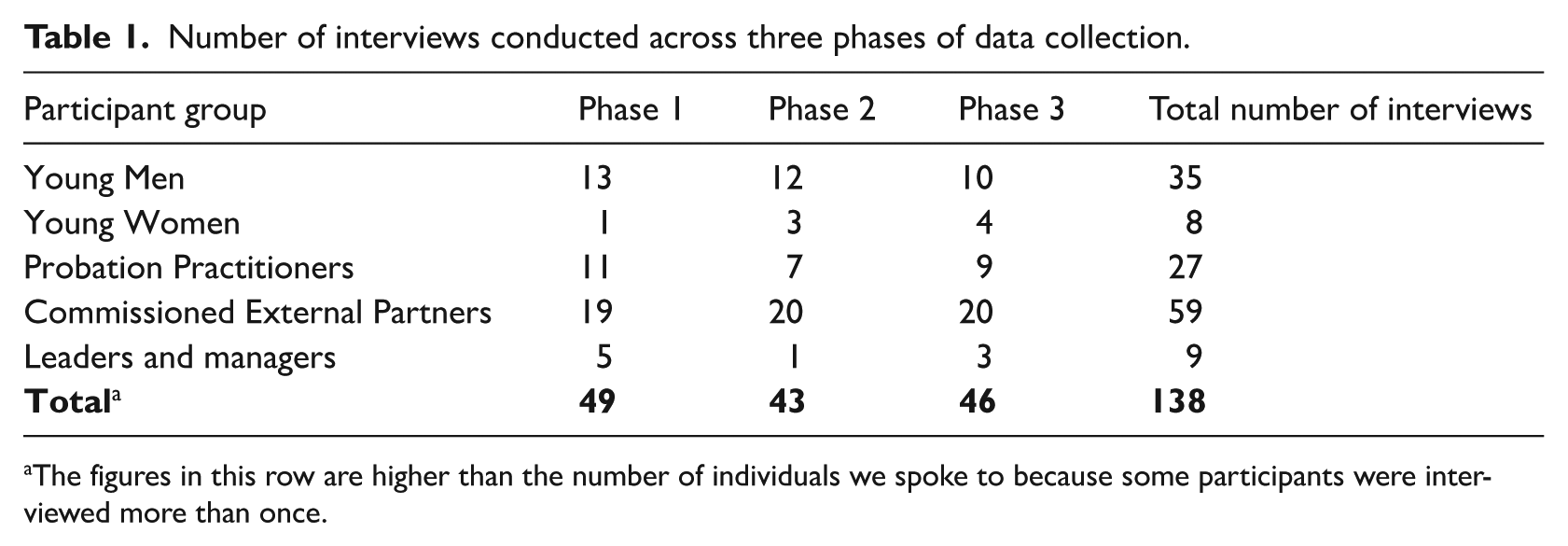
The figures in this row are higher than the number of individuals we spoke to because some participants were interviewed more than once.
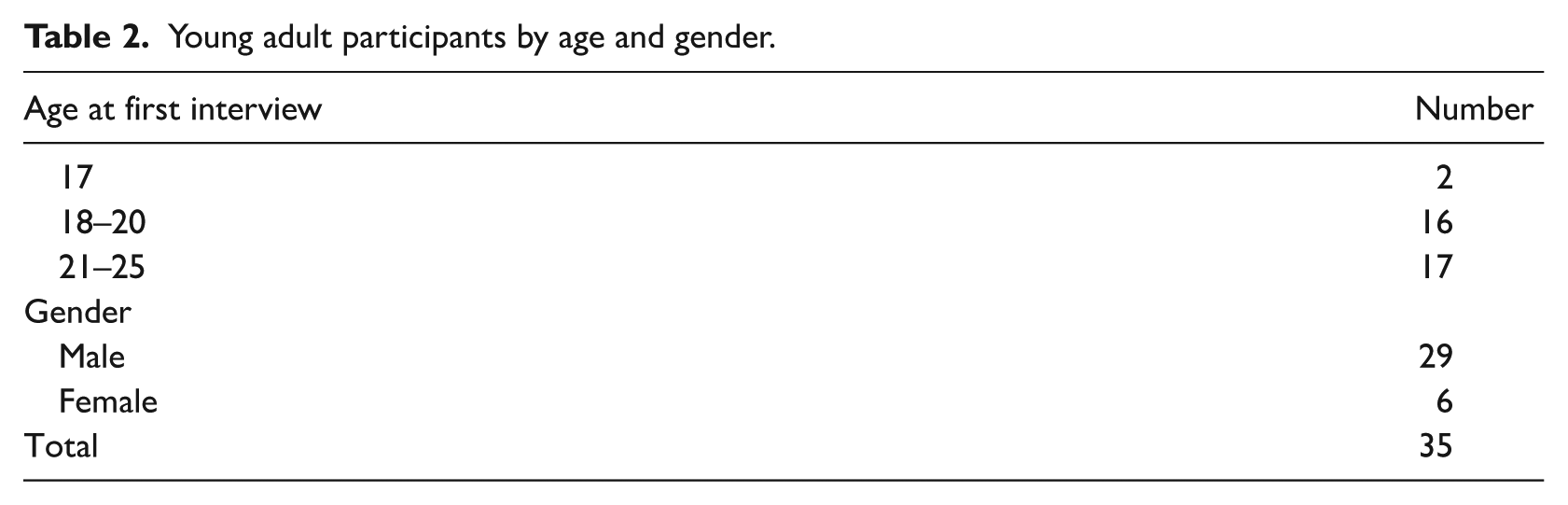
The young adult sample was split by age category with 16 of the 35 young adults aged 18 to 20 years and 17 aged 21 to 25. Two were 17 years old and were under the auspices of the Hub as they transitioned from YOSs into adult probation. Most young adults (n = 28) were Asian or Black ethnicity, reflecting the ethnic makeup of the probation caseload.
Young adult participants by age and gender.
Interviews with staff were conducted in-person and online, using MS Teams, while the young adult interviews were carried out in-person at the Hub or women’s centre. All were recorded (aside from a few young adults who did not consent to this) and transcribed.
Analysis
For this article, we took a deductive approach to analysis (Gale et al., 2013) by seeking to understand practice in the Hub in terms that are used to describe child first practice. We thus used the ABCD formulation from child first as our a priori framework for analysing the data. In essence, we sought to understand what elements of child first practice translate to the young adult context and whether the principles of child first can be adapted to better meet the needs of the cohort. We thus carried out the analysis by initially coding examples of how the Hub sought to respond to the needs of young adults, worked to build young adult’s social capital, were collaborative and diverted young adults from stigma. We used these codes to understand and identify the relevance of the four tenets of child first practice and consider how the Hub’s approach had adapted child first principles to meet the needs of young adults.
Findings
The overall findings from the evaluation were positive in that both staff and young adults found that the Hub was perceived to be a more appropriate way of delivering probation with young adults, especially when compared to ‘normal’ probation delivery models which do not differentiate between younger and older adults (Phillips et al., 2024). In this article, our findings develop learning from the evaluation by focusing on the way in which staff and young adults in the Hub conceptualise and understand young adult first practice. In line with our deductive analytic approach we consider whether a similar approach may hold potential for working with young adults by presenting examples of the ways in which the Hub sought to respond to young adults ‘as young adults’, sought to build social capital, was collaborative and diverted young adults from further stigma and criminalisation.
Defining young adult first probation practice
The concept of young adult first practice initially emerged in our first round of interviews when we were talking about the aims of the Hub, how it sought to achieve those aims and why participants chose to work with young adults. Our data contributes to understanding the unique needs of young adults on probation, much of which reflects the research mentioned above: I guess it’s like everything that comes with being a young adult and going through the sort of transition into greater independence, maybe leaving home for the first time, navigating their first serious relationships and obviously the young adults that we’re working with are likely to have quite, you know, complex backgrounds, and also have needs around kind of emotional wellbeing or speech and language therapy. (Manager 1, T1)
1
We also heard about the uniqueness of this life stage in the context of both changes to the world of work that are associated with developments in late-modern societies and socioeconomic shifts: Years gone by so to speak a seventeen year old would be expected to have certain things in place according to society, they would be expected to be in full time education or an apprenticeship or in a steady job or both, whether it be a part time job and education whereas today seventeen year old he has no clue of how to acquire the skills to do any of those things. (Probation 1, T1) . . . obviously from 18-25 your whole life is changing, . . . from a young teenager, you are basically growing into a young adult, so that transition in itself could possibly be quite difficult for people who may not have support . . . with this project and with the people here, they can . . . help you with a range of things. . . . for instance, if you don’t have your family around to tell you, the probation people can help you as well. (Young Adult 35 T3, female aged 24)
The Hub was set up to support young adults with the unique stage of life they found themselves in. Specifically, the Hub was designed to support people through the stage of young adulthood and into adulthood proper. Here the importance of independence, self-sufficiency and responsibility stood out as key themes in terms of what the Hub was trying to achieve: it supports them to you know gain independence, being self-sufficient. (External Partner 9, T1) . . . in terms of like psychosocial development [young adults] are pretty similar to under eighteens but obviously we need to respect the fact that they’re in a different stage of their life, and it’s more about kind of preparing them for adulthood, for proper adulthood, and preparing them for full independence. (Manager 1, T1)
The Hub sought to focus on supporting young adults with the challenges of emerging into a life stage that asks them to be more independent. In the remainder of this article, we seek to understand the workings of the Hub through the lens of the ABCD formulation that has been developed in youth justice to consider how the Hub might be characterised as providing a young adult first approach.
Treating people on probation as young adults
In youth justice, treating children as children means prioritising their ‘best interests and recognising their particular needs, capacities, rights and potential. All work is child-focused, developmentally informed, acknowledges structural barriers and meets responsibilities towards children’ (Youth Justice Board, 2022: 3). Applying this to the Hub we can see how the Hub was explicitly aimed at supporting people on the caseload as young adults. For the Hub this meant having dedicated staff with knowledge and expertise in young adults. This was facilitated by bespoke and specialist training on maturity and trauma and was key to enabling Hub staff to respond to the people on caseload appropriately. In order to ensure that the Hub was able to respond to peoples’ needs and vulnerabilities, levels of maturity were assessed. Maturity here, then, is seen as objectively measurable although it can also be understood as both highly subjective and importantly, a deficit-based approach to assessment. One could argue that this stands in tension with a would-be strengths-based young adult first approach (Coyle, 2019) although there are similar arguments that a deeper understanding of brain development can ‘illuminate the unique strengths and potentialities of the adolescent brain . . . that . . . reinforce and perpetuate opportunities for adolescents to thrive in this stage of development, not just survive’ (Johnson et al., 2009: 220). In order to ensure young adults on the caseload were provided with appropriate services, they were assessed upon induction into the hub, and were shown, following analysis of OASys assessment data to have – on average – five needs each (see Figure 1 for data on the proportion of young adults presenting with specific needs).
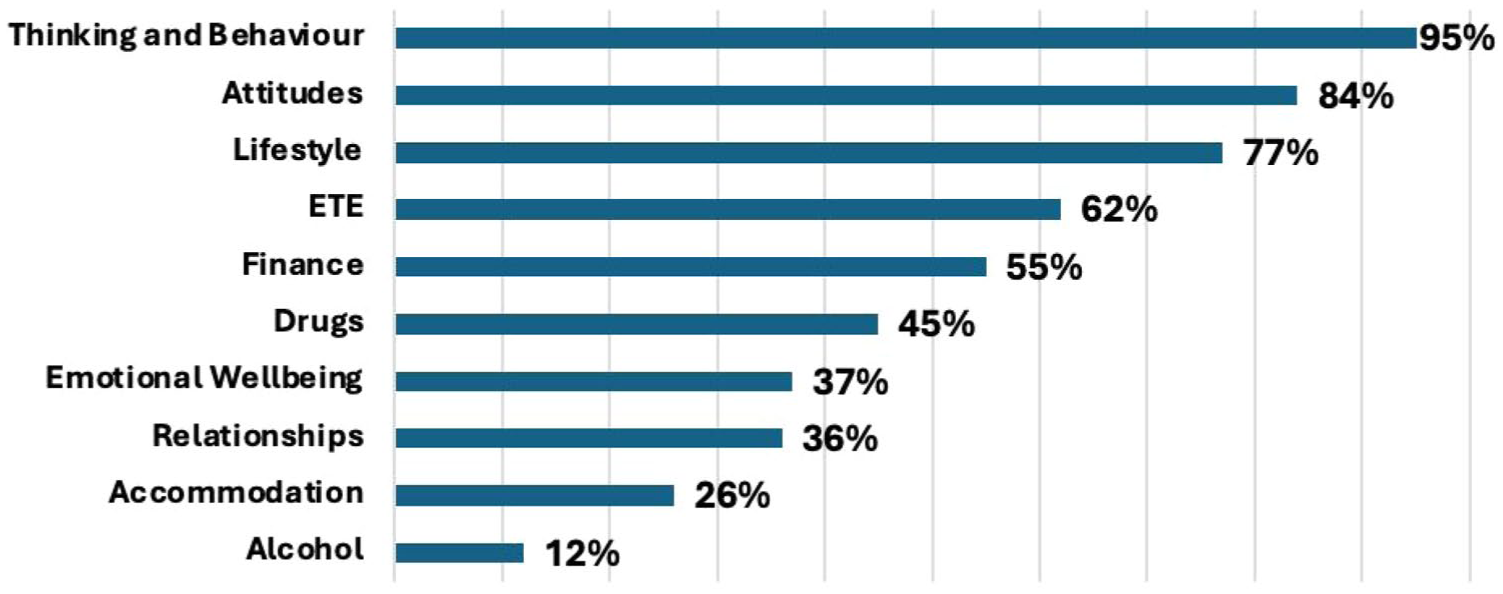
Percentage of young adults across the Hub with needs in specific areas: September 2023. Source: MOPAC performance data
Across the first 18 months of the Hub’s operation (March 2022–September 2023) 569 referrals were made to providers working in the Hub, meaning that young adults’ needs could be responded to. One significant advantage of the commissioned services, co-located model was that young adults could access support quickly. Waiting times from referral to accessing a service ranged from 8 days (for mentoring) to 35 days for mental health support, a significantly shorter time than if a referral was made via a GP, for example.
We also observed a commitment to working with people as young adults in the Hub’s recruitment strategy and employment of people with similar experiences to young adults themselves. As such, young adults we spoke to made connections between the strengths-based practices of the Hub and the goals they were achieving as young adults: Everything, my past, my future, how to work through it. How to grow, expand, everything. It’s because he [mentor] also came from a similar background to me, . . . he grew up East London same as I did, came from a poor background but he’s doing good for himself. Yes he kept his head high and I’m trying to do the same. (Young Adult 8 T2, male age 21)
In a separate example of responding to young adults’ needs, we saw a strong emphasis on the importance of speech and language and well-being services with the recognition that many young adults had undiagnosed speech and language difficulties (again, reflecting wider research). The Hub also sought to respond to the material need of this group which is more likely to be living in poverty and struggling with day-to-day living costs because of restrictions on access to benefits (e.g. the universal credit payment for under 25s is less than for over 25s) and pay (e.g. the minimum wage for people under 21 is £8.50/hour compared to £11.44 for people over 21). As a result, the hub developed – during the course of the evaluation – a food bank area and made sure that young adults could use the hub for essential tasks such as phone charging to alleviate the financial pressures that this specific age group faces which differs from both children – who are entitled to greater levels of state support – and older adults, to whom different financial and welfare rules apply.
Working to build pro-social identities
In youth justice, building pro-social identities means doing work which is: constructive and future-focused, built on supportive relationships that empower children to fulfil their potential and make positive contributions to society. (Youth Justice Board, 2022)
The Hub emphasised the importance of building pro-social identities and social capital. This was evident in its focus on employment which was seen as a central strategy for encouraging positive behaviour and constructive futures. In this respect, employing people from the local area and with similar experiences was highly valued by young adults. Such an approach was considered aspirational to the young adults on the caseload and is an example of how policy and practice can respond to evidence that young adults are in a life stage characterised by the malleability of youth while needing to think about the future in terms of the additional responsibilities that come with emerging adulthood.
Alongside this aspiration-building approach the Hub emphasised employment-related support and this was highly valued by both staff and young adults we interviewed. A common theme in the interviews with young adults was the help they were receiving to secure employment, undertake courses and foster hope for future aspirations. They expressed wanting to work, and were frustrated if they were not. Being in work and meaningfully occupied was recognised as genuinely helpful for keeping them on track: Participant: . . . they’ve helped me out to be honest with you. They’ve put me in a better position. If it wasn’t for them, I think I would be in jail right now. Interviewer: So when you say you would be in jail otherwise, what are they doing exactly? Participant: Helping me get a job, paying for my courses, paying for things like that. (Young Adult 34 T3, aged 17)
Young adult participants were conscious of the negative impacts a criminal conviction can have on future opportunities and spoke positively about the ETE service’s connection to companies that take on people with justice system experience. These options and the exploration of routes into self-employment played a critical role in building hope and seeing a future for themselves: Probation also got me a job with a referral team called Maximus they’ve got me working for . . . [railway track repair] which is good I’ve got part-time work. (Young Adult 8 T2, male aged 21)
Building pro-social identities centres being ‘future-focused to help move lives forward rather than underlining an offender identity’ (Youth Justice Board, 2022) and the mentoring provided in the Hub was central to this. That this was focused on employment reflects both the stage of life that young adults find themselves in and that employment is a key mechanism in preventing reoffending and that for young adults, especially vulnerable ones, finding a job is challenging (Thouin et al., 2023). Importantly, the Hub recognised the fact that finding employment needs to be more than just a job and needs to be meaningful from a young adult’s perspective. It did this by being led by young adults in terms of what they wanted to do in work, but also by offering a range of opportunities within the Hub for young adults to explore interests. For example, the Hub carried out lyric writing sessions with some young adults who were interested in pursuing careers in the creative industries. Finally, the emphasis on employment as a way of building social capital reflects the evidence that employment plays an important role in identity formation (Arnett, 2015; Gini, 1998), particularly the notion that pro-social identities interplay with increased human and social capital to support processes of desistance.
Having said that, social capital building activities were not just focused on employment. In recognition of the argument that social capital operates on a relational, community and societal level, engagement at the Hub allowed young adults to develop different forms of social capital such as bonding, bridging and structural capital (Albertson and Albertson, 2023). For example, young adults were able to engage in strengths-based activities such as music-writing which can allow pro-social friendships to develop. Bridging capital was facilitated by encouraging young adults to inform service delivery, or by asking young adults to talk to external providers about the Hub.
Collaboration with young adults and other organisations
The Hub can also be understood to adhere to the collaborative principles of child first: The youth justice process shouldn’t simply ‘happen’ to [children] – they should have a voice, feel invested in it, be part of the solution and believe that justice has taken place. The evidence tells us children are more likely to stay with the process if they are both genuinely part of it and feel as though they are part of it. (Youth Justice Board, 2022)
Involving children in the delivery and evaluation of youth justice practice has proven challenging (Hampson et al., 2024). Much probation work is enforceable in that people on probation must attend or face breach or recall (although for more on this see the next section) and are told – through supervision sessions, accredited programmes and other interventions – what they need to do to reduce the risk of reoffending. In order to enable greater engagement among young adults on the caseload, the Hub made efforts to do more around educating young adults about how the Hub worked, and informing young adults about why things were done via information and posters on walls and induction booklets for young adults when they arrived at the Hub: something we’ve introduced is a kind of digital pamphlet that is sent out to all young adults on probation. Also includes the order requirements, but it but it gives a kind of summary of all of the services that they can offer through the hub that they can access through the hub. (Manager 1, T3)
More substantively in a vein of collaboration, the Hub sought to engage young adults on an ongoing basis via User Voice, a charity which was commissioned to work with young adults on the caseload and identify improvements to how the Hub worked and what it provided. This proved to be a successful endeavour with the Hub manager reporting towards the latter stages of the pilot that young adults were requesting which were either already in place (suggesting scope for better communication about what was on offer, which was acknowledged by managers in the Hub) or which were acted on and introduced: we have a user engagement service as part of the hub so User Voice, they lead on engaging with young adults, and we’ve had our first report back from them now so we’re going to be making some suggestions and changes based on the young adults’ feedback. (Manager 1, T1)
Even more substantive forms of co-production were built into the Hub from the outset with leaders in the Hub undertaking an in-depth consultation with young adults in order to ascertain what services might be needed by young adults on probation in Newham: . . . when we were in the pilot design phase, we did do quite extensive engagement with young adults on probation, and young adults with lived experience of the justice system, and we partnered with a couple of organisations that specialise in engagement to do that, so we partnered with Revolving Doors Agency and then Leaders Unlocked who are actually in a network of young adults with experience of the justice system, so that was really great. (Manager 1, T1)
Taken together, the ways in which the Hub sought to collaborate with young adults on the caseload spanned a range of forms co-production from consultation to co-design and co-production through meaningful ongoing engagement and joint working around commissioning services. This was all received positively by young adults, organisations who focus on improving service user engagement (such as User Voice) and staff in the Hub.
While YOSs in England and Wales are structured in a way that enables multi-agency work, this is much less well embedded in adult probation. Multi-agency work, however, is built into the Hub’s model. Moreover, participants identified a number of benefits to this way of working and we would suggest that this should be a key tenet of young adult first practice. A number of benefits were rooted in the co-location of services and good multi-agency partnership working that ensued. Having all services under one roof was a significant strength of the Hub. Staff talked about how being in the same building as other services meant they could easily link young adults into the help and support they required. Plus, referrals could be made much more quickly than was possible when working in adult probation. The immediacy of referrals in the Hub was seen as particularly important for this age group as moments of readiness can be fleeting. Fast referrals were also viewed as a good way for probation to show timely support: . . . somebody who can talk to them and help them right then and there when they have a problem. That makes such a difference. It adds a degree of responsivity . . . you can build up a little sincerity over time because there’s an immediate result. They feel like they’re being listened to. (Probation 14, T3)
There was also a recognition that young adults may struggle to access community-based services without the support or encouragement of a professional (such as a probation practitioner). Having services physically situated in the Hub helped overcome these barriers. The co-located model enabled strong and collaborative working relationships and a productive team dynamic.
Another benefit of the collaborative practice in the Hub was how some partners could act as an advocate for young adults when certain situations called for it: . . . I was in the middle. He had a good rapport with me, but a broken rapport with the probation officer and . . . I spoke to him in terms of reiterating what she wants from him in a way that he understood. And then doing the same for her. He actually called her up and apologised . . . which was amazing. (External partner 5, T3)
In this way, Hub staff were able to play to their strengths and professional statuses to both incentivise and encourage the engagement of young adults through collaborative and multi-agency approaches. Together, all of this collaborative work (be that between Hub and young adult, probation and other services) facilitated engagement and enabled young adults to have a voice in the Hub’s delivery. Collaboration in young adult first practice needs to encompass collaboration between young adults and probation as well as collaboration between probation and other agencies.
Diverting young adults from stigma and further criminalisation
The primary focus of ‘divert from stigma’ in the context of child first approaches is preventing children from entering the criminal justice in the first place through processes such as ‘pre-emptive prevention, diversion and minimal intervention’ (Youth Justice Board, 2022). Due to the Hub’s remit to work with young adults who have already been convicted, opportunities to prevent them from accessing the criminal justice system is limited. Indeed, despite the generally positive experiences of the Hub from both staff and young adults it must be remembered that the Hub is ‘still probation’. We heard from young adults about the ways in which probation supervision is hard work and was experienced by young adults who had spent time in prison as a process which was needlessly extending their punishment.
Moreover, many of the positive elements of the Hub need to be understood as positive only in relation to the alternative. For example, the environment was described in positive terms but this perhaps says more about the standard of ‘traditional’ probation offices which are sites of surveillance and punishment (Phillips, 2014). We also heard that young adults found the threat of breach and especially prison recall highly anxiety-inducing and counterproductive to making progress outside of the immediate demands of their Order or licence. Therefore, in a young adult first context, work which minimises the iatrogenic harms of the system needs to occur within the confines of a court order or period of licence.
In order to achieve this the Hub adopted a more flexible approach to enforcement than in mainstream adult provision. The intention here was to reduce unnecessary breaches and recalls to prison, recognising the fact that young adults are more likely to find engagement and compliance difficult, not because they want to be non-compliant but because of their life stage. This is not to say that enforcement was not used when appropriate, but that the Hub used the pre-breach interview to engage young adults before breach was proceeded with, giving extra opportunities to demonstrate compliance and to avoid enforcement action. Pre-breach interviews were highly valued by staff in the Hub and were felt to make a significant, positive difference to the way sentences were set: so the pre-breach, yeah, that [#name] and I talked about and discussed when we were working with these young men, because that has enlightened me to enable me to explain the conditions, the licence and other audit of these young people on probation in a way that they could be able to understand. And also engage them when they’re trying to fall off, to bring them back. (Probation 3, T3)
Alongside a more flexible approach to enforcement, the Hub sought to minimise intervention as much as possible, while ensuring that young adults received the services they needed. This was necessary because of the risk of ‘overshooting the therapeutic window’ whereby providing too many interventions can set young adults up to fail (Wright et al., 2016) but also serves to provide an example how to divert from stigma.
Finally, the Hub sought to minimise stigma and the potential for criminal justice institutions to project ‘offender identities’ onto people in the system. This was achieved via the building and environment which – as noted above – was less formal than mainstream adult provision. The welcoming and open environment reflected a genuinely young adult first and trauma-informed approach with some young adults describing it as therapeutic. They reported positive relationships with their probation practitioner and valued the individualised support they received that focused on their personal needs, came from a strengths-based approach and saw them foremost as people rather than offenders: I feel like if I actually wanted to, I could come into probation and just sit down, . . . on a day I don’t have probation. They’re very friendly. I’ve got a lot of big brother type people here, or big older sister type people here. (Young Adult 25 T3, male aged 22)
Conclusion
Research on young adults points to the need for a young adult first approach to sentence management in probation. Analysis of data collected in this study of the Y2A Hub in Newham points to three main conclusions: (1) that specialist services are required in this area of criminal justice; (2) that a young adult first approach based on the principles of child first youth justice is a promising area of practice and policy development; and (3) that the Hub represents one way of doing ‘young adult first’ probation work. Ultimately, these findings underscore the importance of taking a young adult first approach in probation. We would also suggest that the findings lend support to the idea that models adopted elsewhere – which we discussed above – are worth considering in an English and Welsh context, and vice versa.
The main recommendation from this analysis is the need for the ABCD formulation to be adapted so that the specific needs of young adults are responded to. This means responding to young adults and the fact that they are moving into a life stage which demands more of them in terms of independence; recognising the fact that young adults are subject to different socioeconomic rules and forces when compared to children and adults; and that pro-social capital for young adults is very much linked to employment and the networks that employment brings. Moreover, young adults need to be involved in commissioning and service design, perhaps to a greater extent than children and that – at least while young adults are sentenced as adults – diversion for this group needs to focus on preventing further criminalisation than stopping processes of criminalisation in the first place.
There appears to be real potential for mapping the ABCD principles of child first to working with young adults in probation. We would suggest that young adult first practice adopts and adapts elements of the ABCD child first formulation to reflect the evidence that young adults are in a different but still transitional stage of life, face myriad structural barriers and need aspirational role models who understand them and their needs. Ultimately, young adult first practice needs to be alert to what young adults are emerging into as well as where they are at. The Y2A Hub in Newham provides numerous examples of how young adult first probation practice can work with young adults, build social capital, collaborate and be less stigmatising.
Footnotes
Acknowledgements
The authors thank the participants who took part in the research as well as Dr Steve Case and Dr Sarah Goodwin for their comments on early drafts.
ORCID iDs

Author contributions
All authors approved the final version of the article for publication and agree to be accountable for all aspects of the work.
Author Note
Jake Phillips is currently affiliated with the Institute of Criminology, University of Cambridge.
Funding
The authors disclosed receipt of the following financial support for the research, authorship, and/or publication of this article: This work was supported by the Ministry of Justice, England and Wales.
Declaration of conflicting interests
The authors declared no potential conflicts of interest with respect to the research, authorship, and/or publication of this article.
Data availability statement
The data is not available publicly due to conditions in the contract between the funder and the research team.
Ethical approval
This research was approved by Sheffield Hallam University’s research ethics committee (ER41607470).
Informed consent statement
All participants provided written, informed consent to participate in the research and provided consent for the research to be published.