




Abstract
In the reality of planning practice, where there is usually no a priori ‘right’ substantive conception of justice to guide and evaluate decision making, conceptions are negotiated between stakeholders. Moreover, these conceptions vary in space and time. The existing academic discussion on justice in planning provides limited insight in and guidance for how to navigate the plurality of conceivable and valid substantive conceptions of justice that may be articulated and applied. To address this gap, we introduce a dynamic justice framework, which looks at how the different elements of justice (‘materials of justice’) are being articulated, connected, and changed in discourses and institutions. We believe this dynamic justice framework helps to make explicit the conceptions of justice in planning practice and the processes that shape them.
Introduction: Substantive conceptions of justice in planning practice
The activity of planning minimally requires justification of how decisions should be made and of what decisions should be taken (Lennon, 2020). These justifications and the resulting plans and planning solutions are perceived as legitimate when the logic of justification employed is deemed suited for the particular decision situation, and the justification is open to and can withstand scrutiny (Boltanski and Thévenot, 1999). Since it is widely accepted by scholars that justice is one of the main, if not the primary, goals of planning (e.g. Dadashpoor and Alvandipour, 2020; Fainstein, 2010; Moroni, 2020), we argue that justice should be conceived as a logic of justification that should always be a central and transparent, and thus explicit, element in the justifications of planning decisions. 1
What the exact content and shape of the logic of justice in planning practice is or should be is contentious. Scholars of collaborative or communicative planning emphasize the procedural terms of justice. Communicative planning theory tends to be sensitive to existing power imbalances and seeks to formulate ways to promote equitable involvement of different stakeholders in democratic, yet rational communicative decision-making processes (e.g. Forrester, 1999; Healey, 2006; Innes, 2004; Sager, 2006). Communicative planning scholarship usually does not provide evaluative criteria for substantive justice, or just outcomes, but instead assumes that the more just the planning procedure is, the more just the planning outcomes will be (Fainstein, 2014; Uitermark and Nicholls, 2017). Opposite to these communicative scholars, we find universalists, with Fainstein (2000, 2001, 2005, 2010) as its best-known representative. Though not devoid of procedural conceptions of justice, universalist planners explicitly seek to formulate more or less universal substantive conceptions of justice to evaluate planning outcomes (Fainstein, 2010; Uitermark and Nicholls, 2017). Different scholars in this strand defend and/or operationalize different substantive conceptions of justice, such as the capability approach (e.g. Basta, 2016; Kimhur, 2020), a Rawlsian conception of justice (e.g. Alfasi and Fenster, 2014; Moroni, 2004; Stein and Harper, 2005), or a Fainsteinian conception of justice (e.g. Fainstein, 2010, 2014; Medved, 2018).
Since any plan or planning solution applies some conception of justice (Davy, 1997), and the justice criterion, as we have argued, requires that these conceptions of justice are made explicit, it is vital to understand how and which conceptions of justice actually are and can be articulated and institutionalized in current planning practice. While both communicative and universalist planners generate important insights in the different ways in which planners could pursue justice, they provide limited insight in and guidance for how to navigate the plurality of conceivable and valid substantive conceptions of justice that may be applied in practice (Moroni, 2020; Sen, 2009). Communicative planners because they refrain from formulating any substantive conceptions of justice, or even any minimal requirements for them. Universalist planners because they limit themselves to particular prescriptions of substantive conceptions of justice. The various other contributions to the justice discussion, such as those in which substantive and procedural elements are interpreted and balanced differently (e.g. Soja, 2010), those of a more reflective nature (e.g. Moroni, 2020; Uitermark and Nicholls, 2017), and those of a more descriptive nature (e.g. Nylund, 2014; Jonkman and Janssen-jansen, 2018), do not offer a concrete and comprehensive way to deal with the inevitable plurality of substantive conceptions of justice either.
The goal we pursue in this paper, therefore, is to develop a framework for justice that helps analyze and navigate the plural and dynamic substantive conceptions of justice that are actually applied in planning practice and the processes that shape them. We call this framework the ‘Dynamic Justice Framework’ (DJF). The DJF is empirically relevant because it enables a better understanding of what is considered just in practice and how this is determined. The DJF is normatively relevant because making the substantive conceptions of justice in practice explicit facilitates academics and practitioners giving better substantiated, practice-embedded, and practice-relevant critique on and suggestions for the foundations of planning decisions from a justice perspective. Additionally, it paves the way for a new, practical view on how stakeholders in the planning process may justify and criticize planning decisions.
We developed the DJF with three specifications in mind. The first regards the field of application. Different levels of decision making may have different argumentative requirements, including different expectations of how and which aspects of justice should be specified (Boltanski and Thévenot, 1999; Moroni, 2023). To manage the scope and complexity of the framework we choose to focus specifically on decision making that takes place within ‘urban development projects’ (UDPs), as this operational level is where the ‘rubber hits the road’. Other, more strategic forms of planning, and planning by other government tiers than the local level, are thereby excluded. We define UDPs as spatial planning processes and their built outcomes, characterized by: (a) a complex arrangement of functions, within the same large object (e.g. shopping mall, airport) or demarcated area (e.g. mixed-use neighborhood, business district); (b) a change in land-use destination; (c) various streams of funding, usually both public and private; and (d) the involvement of a broad range of stakeholders (e.g. urban governments, developers, consultants, citizens) (adapted from Guironnet and Halbert, 2014). In UDPs, the complexity of urban planning interventions comes to the fore most prominently in a context with conflicting positions, needs, and interests, where interventions have long-lasting, tangible, and often irreversible effects.
The second specification regards ‘substantive conceptions of justice’. We focus on substantive conceptions of justice that are reflected in the justification for planning decisions in UDPs. UDP-level planning decisions are in essence about allocating particular goods among particular individuals with special and specific preferences. The substantive conceptions of justice that apply here can thus more specifically be called ‘allocative conceptions of justice’ (Moroni, 2023). 2 We recognize that these allocative conceptions of justice are inevitably interlinked with and dependent on procedural and recognitional dimensions of justice, which influence whose preferences are taken into account in what way and to what extent (e.g. Innes and Booher, 2015; Schlosberg, 2007). But, again, to manage the scope and complexity of the framework and keep the focus sharply on understanding the dynamics of substantive conceptions of justice in practice, we will not explicitly look at these other dimensions of justice.
The third specification regards the concept of ‘taking shape’. Like any idea in policymaking, conceptions of justice take shape, often implicitly, through stages of articulation, adoption, adaptation, and institutionalization (e.g. Schmidt, 2008). Stakeholders in the UDP planning process articulate their ideas about what justice should be about; the exchange of ideas results in the adoption of a specific conception of justice and/or the adaptation of previously dominant conceptions of justice; and this adopted and/or adapted conception may then be institutionalized in the form of plans, agreements, documents, rules, and so on, and eventually in the shape of the urban fabric.
These three specifications lead to the now further specified goal of the paper to develop a framework to analyze and understand how and when stakeholders in urban development projects can and do articulate, adopt, adapt, and institutionalize substantive conceptions of justice. To be precise, our framework is intended to stimulate critical examination of the explicit and implicit conceptions of justice in the justifications brought forth in the dynamic local urban practices, not to lay bare the type of fundamental and systemic injustices such as for instance pointed out by Harvey (1973) and other Marxian theorists.
To that end, this paper is structured as follows. First, we explicate the two main analytical steps of the DJF – content analysis based on materials of justice (Dawkins, 2021) and process analysis based on discursive institutionalism (Den Besten et al., 2014; Hajer, 1995; Pestman, 1999, 2000; Schmidt, 2008). Second, we illustrate the DJF by applying it to the case of the UDP Merwede in Utrecht, the Netherlands. Finally, we draw conclusions and identify limitations and possibilities for applying the DJF in future academic and practical work.
Conceptualizing the dynamic justice framework
In this section we put forth two steps to analyze the content of conceptions of justice and the processes that shape them, which combined form the DJF.
First step: Analyze allocative conceptions of justice with a materials of justice lens
The purpose of the first analytical step of the DJF is to analyze the content of articulated allocative conceptions of justice in UDPs and possible shifts therein during the planning process. Conceptions of justice are specific interpretations of the general concept of justice. According to the concept of justice, a city or plan would be just if it takes shape within a fair, impartial framework of social cooperation. A just city or plan then ‘would be justifiable to anyone on ignoring individual positions’ (Moroni, 2020). Conceptions of justice ‘are different ways in which the general concept can be specified’ (Moroni, 2020); more specifically they ‘suggest which differences and similarities between individuals are crucial in defining basic duties and rights and which balance of competing claims is legitimate and desirable’ (Moroni, 2020).
Based on our general observations of UDPs, we assume the allocative conceptions of justice in UDPs can be informed, but are not confined to theoretical conceptions of justice. Instead, they may consist of a combination of different elements of different theoretical conceptions of justice and practical and context-dependent conceptions and reasoning, and are thus assembled conceptions of justice. It is in the nature of such assemblages that they move and transform as relations and terms change (Anderson et al., 2012; Deleuze and Parnet, 1977).
Materials of justice
To be able to study moving and transforming assembled conceptions of justice in UDPs, we propose a view on justice that breaks down conceptions of justice into their constituent parts, which can be articulated and studied separately. The basis for this view is formed by Dawkins’s categorization of justice into five constituent parts, which he refers to as the materials of justice (Dawkins, 2021). Dawkins distinguishes five materials of justice: scope, values, principles, grounds, and bases.
For our application of Dawkins’s categorization to allocative conceptions of justice in UDPs, we will exclude the materials grounds and bases. Grounds describe the reasons why the population of interest (scope) is deserving of justice.
3
Bases describe the ultimate moral focal point of a conception of justice.
4
Grounds and bases thereby provide background reasoning in support of the other materials of justice. While we recognize their importance for conceptions of justice generally, and the effect they have on planning, we have two reasons for excluding them from the DJF for UDPs. First, at UDP level, grounds and bases are usually not subject to discussion and change. This is because they are part of background conceptions of justice – conceptions that apply to the framework institutions that control and direct citizen interactions over time (Moroni, 2023) – and not of the allocative conceptions of justice that guide UDP level decision making and which are more sensitive to the special and specific needs of particular individuals at particular times. Second, we believe that making grounds and bases explicit is not a necessary requirement for a legitimate justification of planning decisions at UDP level, because at this level these two materials of justice do not directly impact what decisions should be taken. The requirement of making them explicit would add unnecessary complexity to the justifications of planning decisions in UDPs and would be overdemanding. To the thus three remaining materials (scope, values, and principles) we add a fourth material: units (Figure 1). An allocative conception of justice consists of a particular interpretation of the four materials of justice scope, values, units, and principles.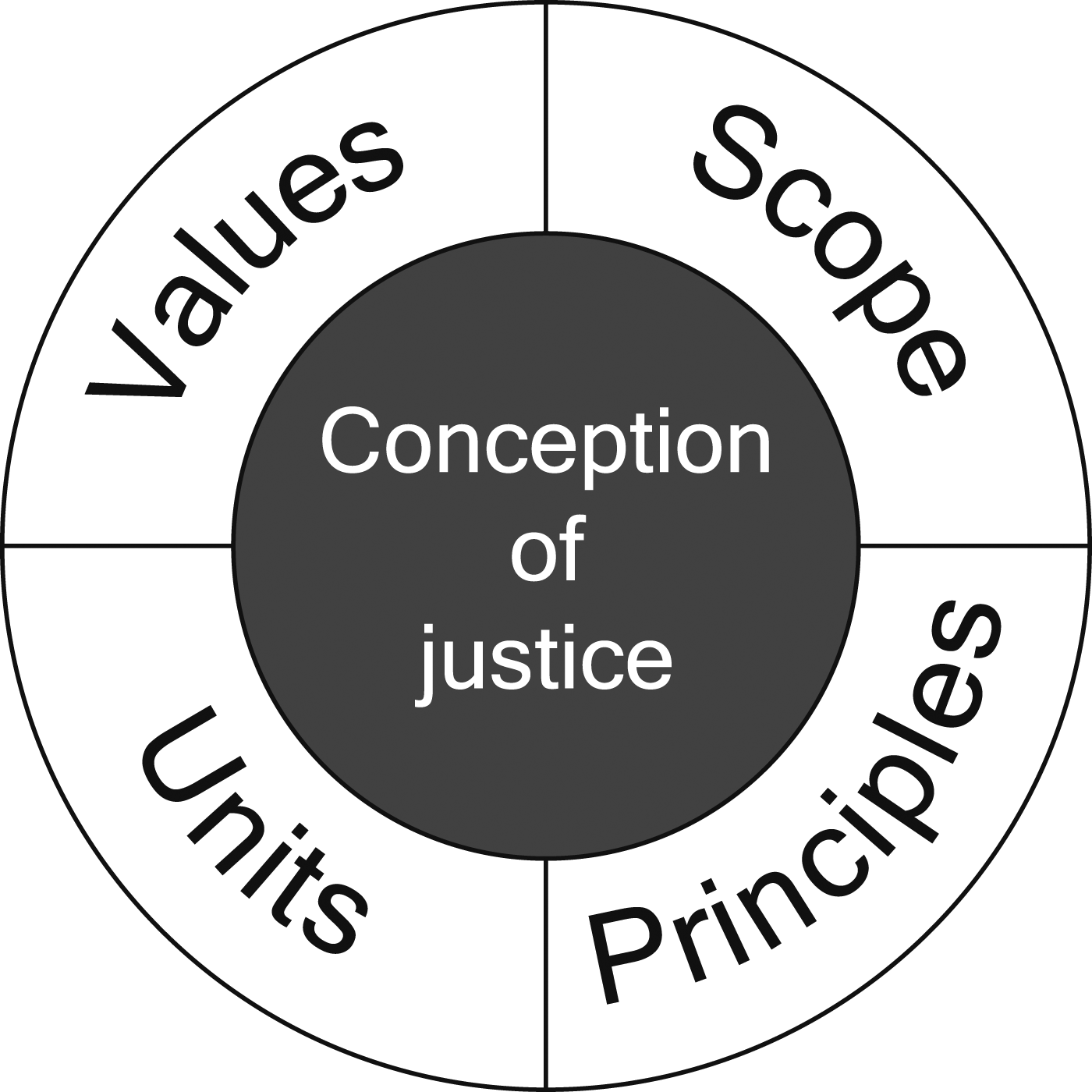
The scope in allocative conceptions of justice refers to the population and territory that are taken into account in determining a fair allocation of goods. Scope is described by three dimensions: time (current or future users of the space), geographical scale (household, building, street, neighborhood, surrounding neighborhoods, city, country, continent, or world), and group characteristics (e.g. humans, nonhumans, high income, low income or special features like migration background, disabled people, students, families, singles, couples).
Value refers to what a good means to someone and what makes it something that obligates others in response, in some way or other. In allocative conceptions of justice, values describe what types of worth are crucial in determining a fair allocation of goods. The list of possible values is open-ended. Think in terms of accessibility, safety, and healthiness, but also ownership, belonging, and authenticity.
Multiple goods can facilitate or impede a value. Units describe the goods that are supposed to be allocated because they are thought to be important to the crucial values for the population of interest. In allocative conceptions of justice, units thus describe what goods for realizing crucial values are taken into account in determining a fair allocation of goods. The term ‘goods’ does not only refer to ‘distributable goods’ – ‘scarce resources or goods which are (a) assignable, (b) privative and (c) transferable’ (Moroni, 2020), such as houses – but also to non-distributable goods, such as ‘the right not to be adversely affected by the negative externalities of certain urban activities’ (Moroni, 2020). We believe adding units as a material is important because making them explicit makes it possible to be critical about which units (goods) are put central in the spatial arrangement and whether they indeed contribute effectively to the crucial values. 5 The explication of units thereby strengthens the legitimization of why a specific spatial arrangement is chosen and regarded as fair.
Seven principles of justice.
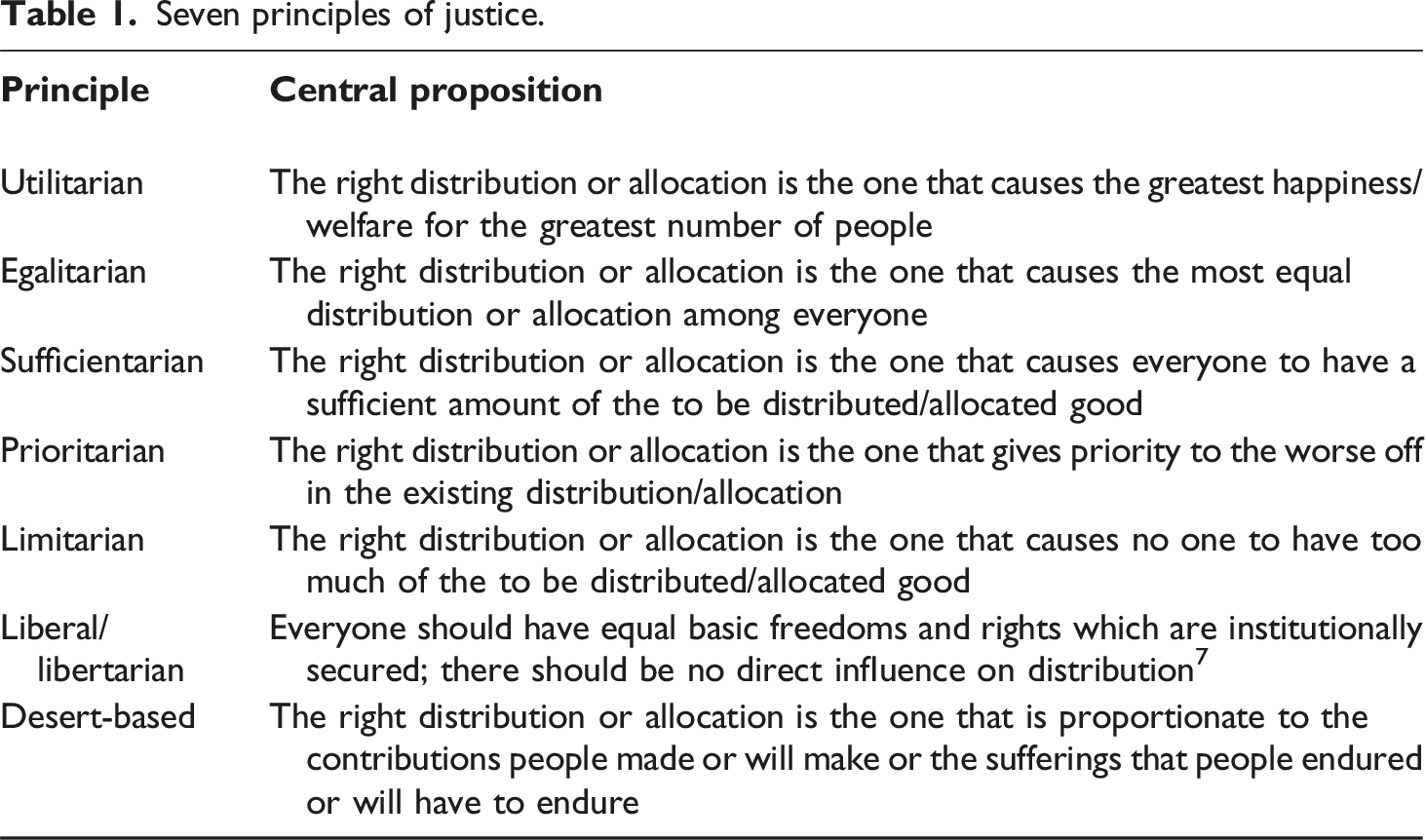
Together, these four materials of justice describe what goods (values and units) should be allocated to whom (scope) in what way (principles).
Second step: Explaining change and stability in conceptions of justice with a discursive institutional lens
The purpose of the second part of the DJF is to understand the who, when, and how in relation to the articulation, adaptation, adoption, and institutionalization of allocative conceptions of justice. For this, we build on discursive institutionalism (DI) as it seeks to analyze how ideas, in this case conceptions of justice, become hegemonic (Hajer, 1995) and are institutionalized in plans, regulations, and guidelines through discourse (Den Besten et al., 2014; Schmidt, 2008). DI is particularly useful for the dynamic justice framework as it connects the content of ideas with the interactive processes by which these ideas are shaped. According to DI, existing institutions (norms, laws, conventions, procedures) enable and constrain ideas and discourses, but do not dictate them (Schmidt, 2008). This is supported by the idea that institutions have to be constantly reproduced and reconfirmed in discourse to have meaning (Hajer, 1995, 2009), which implies that through their discursive practices actors may maintain but also change the institutions of which they are a part (Den Besten et al., 2014). The basic idea of a DI analysis, then, is that change and stability of institutions can be explained by retracing which discursive actions (in the given institutional and meaning context) of stakeholders contributed in what way to a particular articulation, adaptation, adoption, and institutionalization of certain ideas – in our case more specifically, of certain conceptions of justice (Figure 2).
8
The articulation, adoption, adaptation, and institutionalization of allocative conceptions of justice. Actors in the UDP planning process articulate combinations of materials of justice; the exchange of ideas about materials of justice results in the adoption of a specific conception of justice and/or the adaptation of previously dominant conceptions of justice; and this adopted and/or adapted conception may then be institutionalized in the form of plans, agreements, documents, rules, and so on, and eventually in the shape of the urban fabric.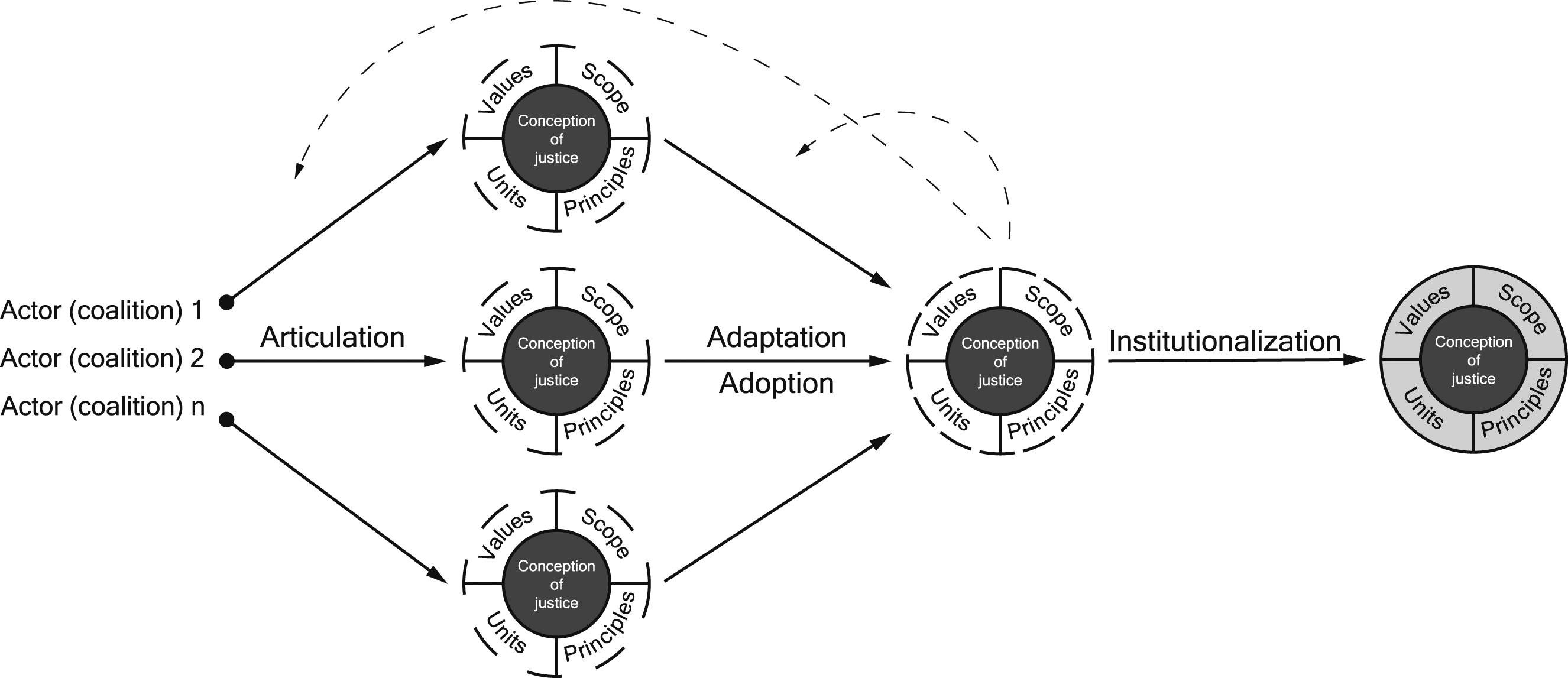
Decisions in the UDP planning process range from very abstract (e.g. a strategic decision to let sustainability be the dominant criterion for the entire plan) to very concrete (e.g. an operational decision to place solar panels on particular buildings). For clarity, consistency, and effectiveness, ideally concrete, operational decisions and their underlying conceptions of justice are in line with the abstract, strategic decisions made within the same project. This implies a form of decision path-dependency; decisions that are made at more abstract decision-making stages of a project narrow down the options at more concrete decision-making stages (Haasnoot et al., 2020). Importantly, this decision path-dependency does not require that conceptions of justice are the same for different decision-making stages, but it requires that they are not in conflict with each other.
Since conceptions of justice are not necessarily the same in different decision-making stages and regarding different subjects, we assume stakeholders may try to challenge or reconfirm the hegemonic conception of justice in every stage and regarding every subject. In accordance with that, the cycle of articulation, adoption, adaptation, and institutionalization repeats throughout the planning process (see Figure 3). The DI lens helps identify by which discursive actions stakeholders influence conceptions of justice in these cycles. Based on the work of Pestman (1999, 2000), we distinguish two types of discursive actions. We call actions that challenge the hegemonic conception of justice performative mobilizing actions. They lead to the emergence of conceptualizations, categorizations, and problem definitions, which either replace or redirect the dominant conceptualizations, categorizations, and problem definitions. We call actions that reinforce the hegemonic conception of justice constative mobilizing actions. Both types of actions can take diverse forms. Think of protesting in public; spreading a particular position through media outlets; mobilizing expert knowledge in order to redefine the existing problem; (re)formulation of research questions, methods, and measurement units; (re)interpretation of results; signaling trends that support the actors’ position; or ignoring trends that undermine the actors’ position. The recurring cycle of articulation, adoption, adaptation, and institutionalization of conceptions of justice through consecutive decision making stages in a UDP project.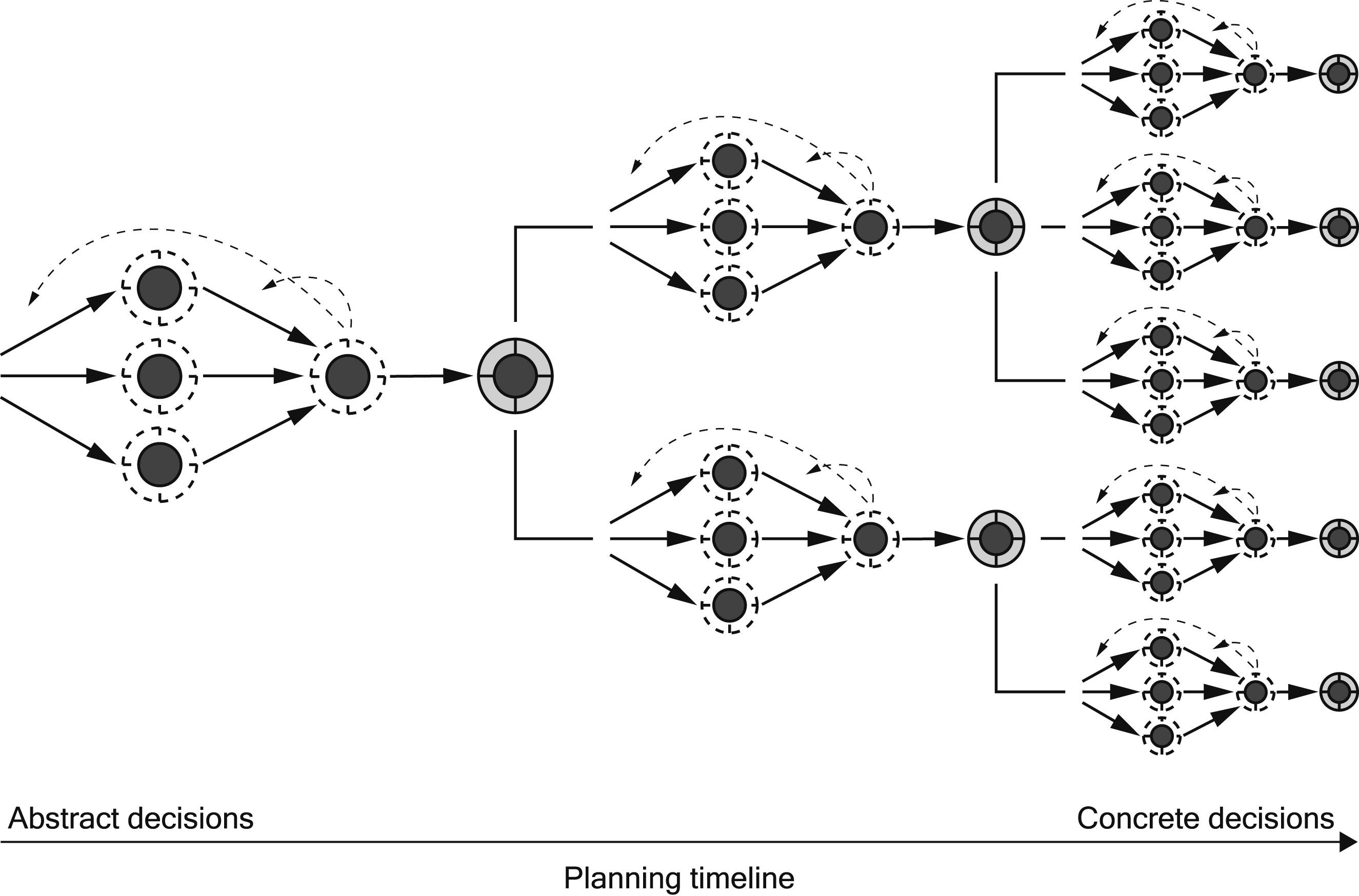
Synthesis: Dynamic justice framework
To summarize, the two analytical steps of the DJF help to study the dynamics of allocative conceptions of justice in UDPs. The materials of justice lens enables a detailed look at which conceptions of justice are articulated, adopted, adapted, and institutionalized by stakeholders in UDPs by studying the different constituent parts of conceptions of justice (scope, values, units, principles) separately. The DI part of the framework helps to clarify which discursive actions – performative mobilizing actions and constative mobilizing actions – by which stakeholders and at which moments, contributed to these particular articulations, adoptions, adaptations, and institutionalizations of conceptions of justice. As part of the DI analysis, the materials of justice lens can help identify through which specific materials of justice influence and changes happen. DJF assumes that the cycle of conceptions of justice taking shape through articulation, adaptation/adoption, and institutionalization repeats throughout the planning process; in every planning stage and every planning question a different conception of justice may become hegemonic. Ideally but not necessarily conceptions of justice underlying later, concrete decisions of the project are in line with early, abstract decisions made in the same project.
The dynamic justice framework in practice
To illustrate and refine the DJF, we discuss an empirical example, namely the redevelopment of the site Merwede in Utrecht, the Netherlands. As the intent here is not to carry out a comprehensive empirical analysis ourselves, but rather to use the empirical example illustratively, we make use of publicly available policy and project documentation, local media coverage, and secondary sources. In the first step of our analysis, we identified the allocative conceptions of justice in this documentation using the materials of justice lens. Naturally, this step requires the interpretation of the researcher because the conceptions of justice and their materials are partly left implicit. In the second step, we retraced how these conceptions took shape using the DI lens. The goal here was not to give a complete picture of the discursive dynamics, but to identify clear examples of the type of dynamics the DI lens can uncover. In the presentation of our analysis that follows in this section, the two steps are integrated. First we introduce the case, then we show the application of the DJF, and finally we discuss the main insights gleaned from the case and the added value of the DJF.
Introduction of the case: Urban development project Merwede
Merwede is part of the district Merwedekanaalzone, a former industrial site in Utrecht that will be transformed into a mixed-use residential area in the coming years. Merwede is part of this large-scale inner-city redevelopment. The plans for Merwede are to develop 6000 dwellings and all basic amenities for its future inhabitants in an area of approximately 25 hectares enclosed by existing residential areas. There are three main reasons why this is an interesting case to illustrate the DJF. The first is that the case offers an interesting view on the conceptions of justice that are reflected in trade-offs between competing city-wide ambitions and their underlying central values. Utrecht is the fastest-growing city in the Netherlands. By 2040, 60,000 new dwellings would have to be built to accommodate the expected population growth of 100,000 inhabitants. In addition, the city has high ambitions regarding healthy and sustainable living. Inevitably, these ambitions come into conflict in planning Merwede, and difficult trade-offs between central values will have to be made within the project area. The second concerns the characteristics of the redevelopment itself. The large scale and high ambitions regarding inner-city density, affordable housing, health, sustainability, and mobility ensure great diversity in stakeholders and planning themes and challenges, which ensures great diversity in interests and justice claims which will have to be balanced. The third concerns the planning stage the project is currently in. The planning process is in a relatively late stage, in which the zoning plan is confirmed. This allows us to illustrate the DJF on the entire timeline of a UDP. Only the final phase, the actual building of the neighborhood, is not part of our timeline.
One particular challenge for the development of Merwede has been the mobility arrangement for the neighborhood. If a conventional car-parking norm (number of parking spots per dwelling) of between 0.7 and 1 would be in place, the new inhabitants of Merwede would dramatically increase traffic in the area and cause problems with road capacity, potentially leading to congestion and noise pollution. These practical constraints required ‘an innovative mobility arrangement that would significantly limit traffic generation’ (Van den Hurk et al., 2021). We use this example to focus on conceptions of justice reflected in different decision-making stages, from the strategic choices for the mobility concept to the more operational planning decisions regarding the integration of pedestrian and cycling bridges that are part of the translation of the strategic concept into a concrete planning outcome. This allows us to illustrate the dynamic nature of allocative conceptions of justice through different decision-making stages with different levels of abstraction.
Talking strategy: Materials of justice in Merwede’s mobility strategy
Materials of justice in the strategic mobility concept for Merwede.
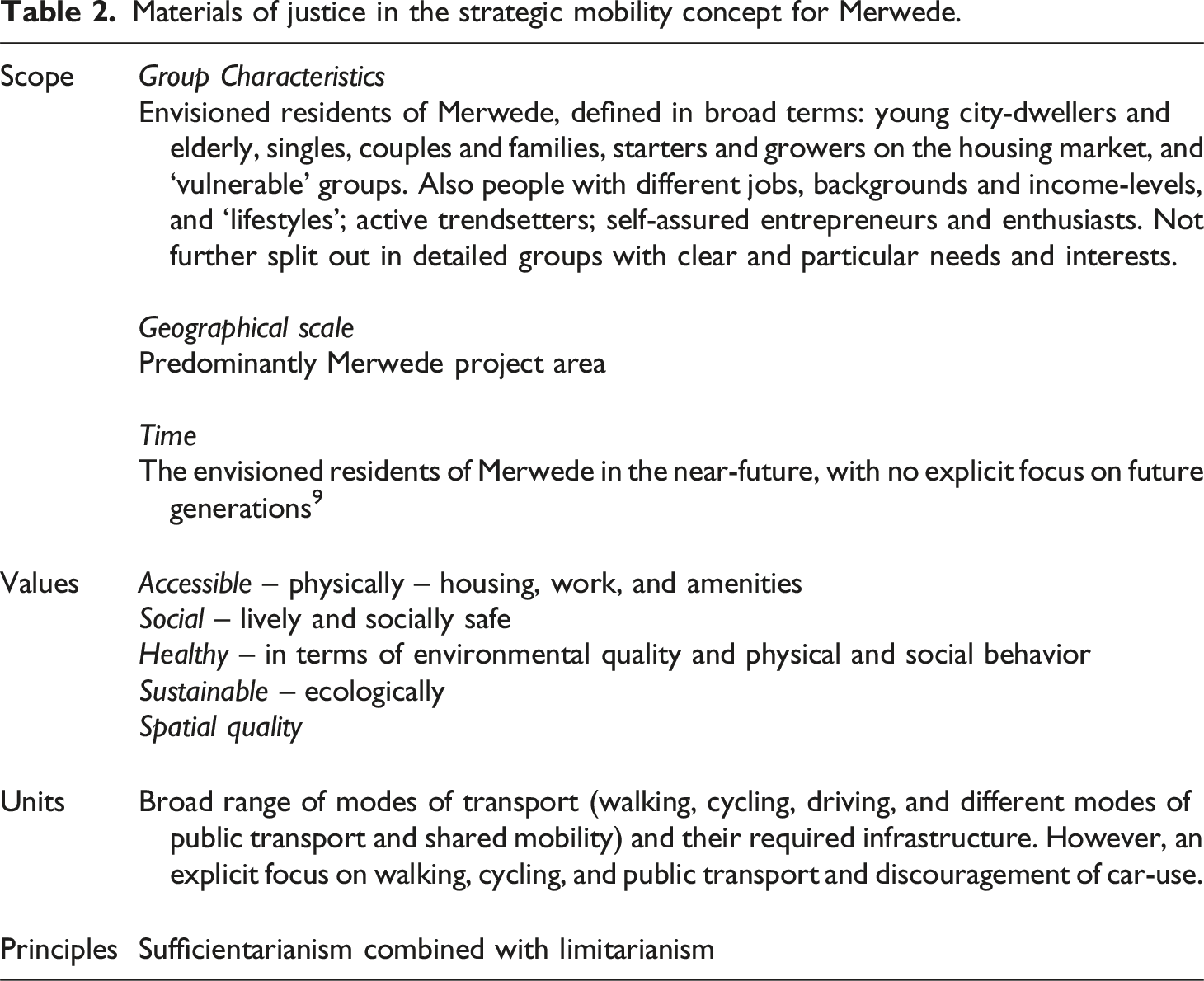
The materials in this conception of justice show logical coherence. Because it concerns the mobility theme, the value of accessibility naturally takes center stage. The additional focus on the values of sociality, health, sustainability, and spatial quality is clearly reasoned through in the choice of units, where modes of transport that contribute to these values (walking, cycling, public transport) are to be facilitated and modes of transport that impair these values (car) are discouraged. The principles of justice also support the central values, as future residents of Merwede should have enough 10 accessibility (sufficientarianism), but not at the cost of other values (limitarianism – minimalize ownership and use of cars in Merwede; for the residents of Merwede as a group it is made difficult to use too much of the ‘good’ car).
Building bridges: From mobility strategy to planning outcome
Within the strategic framework for the mobility arrangement, at a lower level of abstraction, a range of planning decisions have to be made to translate the mobility strategy into a concrete planning outcome. We will focus on one of the most controversial decisions of the plan: the placement of pedestrian and cycling bridges over the Merwedekanaal in and around Merwede to connect Merwede to surrounding neighborhoods.
Initial plans
The initial plans for the bridges were formed by the collective of owners. Together, and isolated from other stakeholders, they determined the outlines of the urban plan (Eigenarencollectief Merwede, 2017), which included five, potentially six, pedestrian and cycling bridges. They considered this number of bridges necessary for ensuring good accessibility of Merwede, while at the same time not exceeding the road capacity of existing cycling routes. 11 The initial conception of justice that is reflected in this justification is very much in line with the conception of justice at the strategic level (see table 2): sufficientarian reasoning with a focus on the value of accessibility, predominantly focused on (scope) near-future residents of Merwede and in this case regarding the specific unit pedestrian and cycling bridges. By making and presenting the initial plans, the collective of owners performs a form of a constative mobilizing action: the hegemonic conception of justice of the strategic planning phase is reconfirmed (articulated) in the concrete plans for the bridges.
Change in scope, values and units
However, because the placement of bridges directly affects the residents of surrounding neighborhoods and other current users of the area and its direct surroundings, the scope changes: it becomes both more extensive and more specific. There are the yet unknown future residents of Merwede and the known ‘current users’ – residents of surrounding neighborhoods, residents of houseboats on the canal, and users of the canal (which includes rowers and boaters) – who will experience the effects of the new bridges. With this change of scope, other values and units come more to the fore.
In official public participation events and written reactions that followed in the years after the presentation of the initial plans, the current users articulated their concerns about the negative impact of the bridges on values and units that are important to them. Residents worry about degradation of public play, meeting and green spaces, about the parking of cars in their neighborhood by future residents of Merwede, and about the busyness and infringement on safety that the cyclists will bring (City of Utrecht, 2021). This shines a spotlight on the values of sociability, traffic safety, and spatial quality (with a specific focus on tranquility) and the accompanying units of road and environmental lay-out, traffic, and public play, meeting and green spaces. In addition, houseboat owners are at risk of losing their place of residence with its associated values (City of Utrecht, 2021). And lastly, users of the canal, especially rowers, worry about an infringement on safety and the ‘rowability’ of the canal due to reduced vision and reduced width and height of passage that the bridges cause (City of Utrecht, 2021). The official public participation process we see here is a regulated opportunity for residents and other users of the space to try to adapt the hegemonic conception of justice: in other words, a regulated opportunity for performative mobilizing actions.
In an effort to further strengthen their position, current users formed action groups with the goal to push their interests more to the fore, climaxing in a public protest on and around the canal in which these stakeholders united with the goal of blocking the proposed bridges (DUIC, 2021a; Nieuws030, 2021). The public protest and smaller actions such as organizing discussions with aldermen and protest posters placed behind the windows of residents (DUIC, 2020) are less formalized forms of performative mobilizing actions that attempt to adapt the hegemonic conception of justice. Although it cannot be said with certainty that these actions influenced the adaptation of the conceptions of justice, they did push the municipality to really think through their justification of building the bridges. The actions also seem to have led to the provisional elimination of three out of five bridges (DUIC, 2021b) in the plans and, thus, a different trade-off of values.
The focus of the communication of the current users, both in the official public participation and the less formalized actions to influence the outcome, was clearly on values and units (i.e. their interests), not on the scope and principles of justice.
Change in principles
As the concrete effects of the bridges on concrete values of stakeholders come to the fore in this planning decision, sufficientarian reasoning no longer seems adequate to justify the trade-off between conflicting values and alternatives. The articulated argument of the collective of owners (including the municipality) does not change explicitly – the reasoning is still that the bridges are absolutely necessary to have an acceptable level of accessibility and prevent overcrowded roads (Eigenarencollectief Merwede, 2021; DUIC, 2021c). However, because the value of accessibility is no longer kept in isolation from other relevant values, we would argue that the implicit reasoning actually adopts a utilitarian principle: if no new bridges are built, Merwede would not function as intended and the 10,000 new residents of Merwede would not have an acceptable level of accessibility. Additionally, the overcrowded roads in other places that would be the result of not building the new bridges would negatively affect many other residents of Utrecht. The cumulative positive impact of the bridges is judged to be greater than the negative impact for the relatively small number of residents of the surrounding neighborhoods and houseboats and users of the canal. Therefore the residents of surrounding neighborhoods and houseboats and users of the canal will have to carry the burdens – the negative impact on the values that are important to them – for the greater good. The bridges will be built.
Additional planning questions, different principles
Follow-up planning questions regarding the bridges include how many bridges are to be built, how they are to be fitted into the existing environment, and how the unavoidable negative effects of the bridges on important values of some of the stakeholders are to be dealt with. The scope, units, and values remain roughly the same, but the principles change at this point to a combination of sufficientarian and desert-based principles. A solution was sought in which values are balanced in such a way that every value (accessibility, sociability, traffic safety, spatial quality, water safety, and rowability) is at least accommodated at a minimally acceptable level – sufficientarian principle. Concretely this means that 1) only two out of five bridges are planned, as this is considered the absolutely minimum necessary to ensure accessibility and prevent structurally exceeding traffic capacity on other routes (Eigenarencollectief Merwede, 2021; DUIC, 2021b), 2) the design and dimensions of the bridges correspond with the demands of the users of the canal (Eigenarencollectief Merwede, 2021), and 3) traffic safety and spatial quality will be key issues in the design of the bridges and accompanying cycling routes and are a reason to consider a form of paid parking in the area (Eigenarencollectief Merwede, 2021; City of Utrecht, 2020). In addition, residents of surrounding neighborhoods are compensated for the negative impact of the bridges – desert-based principle. Concretely the municipality will invest in updating the cycling network and public green areas in the neighborhoods (City of Utrecht, 2021).
Added value of the dynamic justice framework
Above, we have illustrated how the DJF could be applied to a UDP case. In this section we discuss the added value of the DJF. Most importantly, the example showed how the DJF makes the combinations of materials of justice explicit. This use of the DJF enables a focused evaluation and critique of choices that are made regarding both individual and combinations of materials. In the Merwede example, one might question whether there should not be more explicit attention to future generations (scope) or whether the limitarian principle reflected in the mobility strategy should not apply to the individual instead of the group level. Also, the lack of specificity regarding certain materials may be an important point of critique. For example, in Merwede the scope of justice was only defined in broad terms, with little attention to actual and particular needs of potential future residents. This lack of specificity makes it difficult to judge whether the chosen values and units are relevant and effective for the future residents of Merwede. Exposure to and confrontation with criticisms like these is a key requirement of legitimate agreement (Boltanski and Thévenot, 1999). By making focused evaluation and critique of the applied conceptions of justice in UDPs more accessible both to academics and practitioners, the DJF can make an important contribution to the legitimacy of planning decisions.
To illustrate more specifically the type of insights into justice dynamics the DJF can bring, we reflect on six concrete justice dynamics that appeared in the case; three focus on the content of conceptions of justice, three on the discursive dynamics that shaped them.
Content dynamics in Merwede
Firstly, the example showed flexibility in conceptions of justice through consecutive decision-making stages. One specific dynamic we saw in Merwede is that a shift from the more abstract decisions surrounding the mobility strategy to the more concrete decisions surrounding the implementation of bridges was accompanied by a change in values, which in turn changed the relevant units. Subsequently, a way of reasoning with a particular, implicit principle of justice seems to have been sought that fits best with the particular combination of the type of question, scope, values, and units. A different principle of justice might be more suitable when looking at one value (like accessibility) in isolation than when having to make trade-offs between different values. Another dynamic we saw in the shift towards follow-up planning questions regarding the integration of the bridges and their effects into the plans is that the principles of justice change as a reaction to a change in the type of planning question, while scope, values, and units of justice remain the same. We believe these dynamics may point to a necessity of flexible conceptions of justice throughout the UDP planning process in order to remain internally coherent and practically useful. The flexibility makes it possible to adjust conceptions of justice to fit the multitude of different subjects and planning questions in UDPs in which different stakeholders and/or different interests are involved. In the examples we pointed out, principles of justice were following rather than guiding a particular constellation of the other materials of justice and were responsive to the particular type of planning question. It is likely that many other interaction patterns between materials of justice occur in practice. The DJF offers a way to uncover these.
Secondly, the example illustrated how the value(s) of certain units (goods) in Merwede often remain(s) implicit. For example, it is assumed that it is valuable that houseboat-owners retain their current location of residence. What is left implicit are both the basic values of housing – such as safety, privacy, and comfort or the fact that housing enables occupants to raise a family or build a social network (Dawkins, 2021) – as well as the specific value that seems to lie in being able to stay in the same spot, in the same house, which may come down to ‘connection to place’. This brings some practical difficulties for researchers when trying to distill the exact conception of justice that is reflected in the justification. More importantly, however, talking directly about units without taking into account the value they need to facilitate risks planning solutions that do not connect to the values stakeholders actually wish to accomplish. It may thereby hamper the legitimacy and effectiveness of these solutions.
Thirdly, in Merwede two different principles of justice, sufficientarianism and limitarianism in the mobility strategy, are used alongside each other (co-occurrence) within one decision-making stage and regarding one policy theme. These principles do not prescribe conflicting planning decisions but rather the case shows that the limitarian principle complements the sufficientarian principle, thereby accommodating all the values that are considered crucial for the mobility system. This shows the possibility and even likeliness of multi-principle conceptions of justice in UDPs. Although this may not be surprising (even Rawls’s theory of justice prescribes two main principles), we think it is important to stress that the choice for principles of justice in practice is not an either or choice. Some principles do however prescribe conflicting planning decisions, so it remains necessary for a consistent justification of decisions to think through whether or not the preferred principles are compatible.
The three examples above give an indication of the ways in which the DJF can help understand and evaluate what aspects of conceptions of justice stakeholders discuss and in what terms, what conceptions are formed in different planning stages, and how the content of these conceptions changes throughout the planning process.
Discursive dynamics in Merwede
We would also like to point out three discursive dynamics that appeared in Merwede. 12 They show how the DJF helps to understand and evaluate how, when, and by whom conceptions of justice take shape in UDPs. The first dynamic is the municipality’s dominance in determining the scope and principles of justice. Other stakeholders may articulate their interests (values and units), but in the end the municipality formally determines whose interest are taken into account and how these interests are balanced. The demand of making the conception of justice an explicit part of the justification of planning decisions is therefore particularly applicable to the municipality.
The second dynamic is closely related to the first: the influence of other stakeholders (the residents and other users of the space) ran through values and units (interests). By articulating and advancing their values and units they raise the awareness about their interests and may cause more weight to be given to their values and units in comparison to others. That said, they tend to have no direct influence on the scope and principles of justice. By focusing on values and units, in relative isolation from scope and principles, users of the space tend to focus on their own special and specific interests, not on the ‘common good’ or ‘public interest’ which should, in the end, be the focus of public decision making.
The third dynamic is that the more concrete plans become, the more influence possibilities residents and other users of the space have. Formal public participation processes started only after the first plans for Merwede were already drawn up (City of Utrecht, 2020) and the broad lines of the plans were already put on paper (Eigenarencollectief Merwede, 2017). Because, as a consequence, the values and units that the users of the space articulate are formed as a reaction to the initial plans, and not as ex ante input for the basic assumptions, strategic choices and justification for these plans, their articulation of, and influence on, central values and units of the plans are considerably steered and limited.
The above three dynamics are examples of what can be uncovered with the DJF from an outsider’s perspective. More in-depth and extensive empirical work using the DJF should be able to uncover more detailed and ‘hidden’ discursive dynamics, such as the dynamics of the internal negotiations that take place between the municipality and the other members of the collective of owners.
Discussion: Caveats when applying the dynamic justice framework
When applying the DJF in future academic work and in the practice of UDPs there are some caveats to take into account.
First, the DJF and the conclusions drawn from its application run the risk of being power blind when applied solely from an outsider’s perspective. For example, we used the case of Merwede to illustrate the framework and not as an in-depth case study. Therefore, it went too far to analyze the micro-interactions that took place between the municipality and the developers and investors. Thereby we were, in this case, partly ‘blind’ regarding the power that developers and investors have over the applied conceptions of justice. To reach its full potential, the DJF requires in-depth, comprehensive case studies.
Second, while the DJF helps pin down which allocative conceptions of justice are applied in practice, it cannot always provide definitive answers in this regard. For example, in the Merwede case we argued that there was a shift from the sufficientarian/limitarian principle to the utilitarian principle when the concrete effects of the bridges on concrete values of stakeholders came more to the fore. One could also argue, however, that the applied principle was utilitarian all along (at least from the municipality’s perspective), and reducing the number of bridges in response to the objections put forth by certain stakeholders did not change this. Researchers must be aware of these interpretive challenges.
Third, the DJF is explicitly designed to understand allocative conceptions of justice in practice. We did not pursue the question of how the allocative dimension of justice interacts with procedural and recognition justice in UDPs. Therefore, the DJF as presented is not yet fully developed to function as a justice action frame for evaluating and reflecting on the justifications of planning decisions and how these decisions are made.
Fourth, for reasons of scope and complexity we chose to design the DJF specifically for decision making at UDP level. The DJF has the potential to be more broadly applicable but is likely to need some adjustments in other contexts. When, for example, applied to decision making at the constitutional level (Moroni, 2023), the materials ‘grounds’ and ‘bases’ of justice can presumably no longer be excluded, because more fundamental arguments are required to justify decisions at this level compared to the UDP level.
Conclusion
In this paper we have introduced the DJF to help analyze and understand how, what, and when allocative conceptions of justice take shape in UDPs. In the framework, the materials of justice lens provides the means to analyze the content of conceptions, and the DI lens provides the means to gain a basic understanding of who influenced these conceptions, as well as when and how they did so. The DJF contributes to the existing work on justice by shedding a light on the plural and dynamic nature of allocative conceptions of justice in UDP planning practice.
Specifically, the framework complements communicative approaches to justice by providing a way to make explicit which allocative conceptions of justice result from decision making processes. Although substantive conceptions of justice generally are only secondarily, if at all, important in the eyes of communicative planners, it cannot be denied that there is, in the end, always some substantive conception of justice applied in planning decisions. Even if one is not convinced that it matters exactly which substantive conception that is, it is still valuable for the purpose of transparency of the justification of decisions and their performance to make clear which substantive conception of justice is in fact behind those decisions.
Additionally, the DJF complements universalist approaches to justice by providing a way to gain insight in when and how allocative conceptions of justice are likely to change during a UDP planning process. Sometimes only one material of justice may change, sometimes multiple or all materials of justice may change. From the perspective of the DJF, then, the purpose of universalist conceptions of justice should not be to form comprehensive, ex ante evaluative frameworks of justice in practice. Instead, these conceptions form an important source of inspiration to turn to when formulating and re-formulating the constellation of materials of justice that make up the conceptions of justice applied in particular decision making situations.
Finally, we believe the materials of justice lens can be of particular value for practical application in UDPs. This lens has the potential to form the basis for a shared, comprehensive, and accessible language of justice for practitioners that helps justify and criticize planning decisions. Such a shared language of justice can help with making conceptions of justice explicit, and discussing and confronting them explicitly. This could strengthen the legitimacy of decision making, as it makes the requirement of using the logic of justice for justifying planning decisions more practicable. Bringing this requirement fully into practice would, however, additionally need a strong institutional capacity in support of this (Healey, 1998). Fostering this type of capacity is challenging within the context of modern liberal democracies, and likely even more so in the many cities of the Global South with more informal modes of spatial development (Uitermark and Nicholls, 2017). But that does not mean it is not worth attempting it, since doing so might contribute to a more just planning practice.
Footnotes
Acknowledgements
We would like to thank Charlotte Stijnen, Claudia Rot, Edward Jacobson, Marthe Singelenberg, Martijn van den Hurk, Petra van der Kooij, Simon Franke, Stefano Moroni and the four anonymous reviewers and editor for their comments on earlier drafts of this paper.
Declaration of conflicting interests
The author(s) declared no potential conflicts of interest with respect to the research, authorship, and/or publication of this article.
Funding
The author(s) disclosed receipt of the following financial support for the research, authorship, and/or publication of this article: This work was supported by the Planbureau voor de Leefomgeving and Utrecht University strategic theme ‘Pathways to Sustainability'.
