




Abstract
Emphasising implicit assumptions behind our ways of seeing ‘slums’, this essay calls for a radical understanding of ‘ordinary neighbourhoods’. Borrowing from Robinson’s ‘ordinary cities’ concept, it conceptualises ‘ordinariness’ as a way of rejecting the ‘absolute otherness’ of slums, stressing heterogeneity within and between neighbourhoods as well as the significance of comparative empirical research. Beyond the need for alternative, less stigmatised terms, the article urges for a new territorial ethics, a radical deconstruction and de-mystification of the ‘slum’. Such conceptualisation should make aware of the term ‘slum’ as a non-physical, spatially detached social construct that discredits marginalised people and diverts attention away from precarious living conditions and possible ways of improving them.
Keywords
Introduction
One day, me and my friend Sawssane were taking a different way back home after another long but pleasant day of conversations with inhabitants of Er-Rhamna, Casablanca’s largest so-called slum. Usually, we came the other way walking from the tramway station and would go back the same way. This day, we turned the opposite direction walking towards the middle-class district of Ain Sebaa. When we were crossing the motorway bridge, Sawssane with surprise noticed the well-known place of a friend just located on the other side of the motorway: ‘She always told me I should never cross the bridge. The other side would be dangerous’. An instant later, she added, ‘I never realised we were actually all the time on the other side!’ 1
In symbolic terms, such motorways exist in every city. They may divide in physical terms but even more in our heads, through our habits of seeing, judging, and categorising the city we live or work in, study, and research. They were constructed – some say invented (Valladares, 2019) – over time and through all forms of social exchange (e.g. conversations, gossiping, media, schoolbooks, planning and research), constituting immaterial, either visible or invisible, but always known boundaries. They construct divisions between dangerous and safe, normal and abnormal, or rural migrants and urban citizens. To overcome them, it is insufficient to simply cross the bridge. You would cross the bridge from one side, while being conscious about the very act (and potential consequences) of you going towards the other side – naturally accepting and reconstituting the motorway as well as the otherness of the other side. The question is rather how to reach the other side without making yourself immediately aware of it. In other words, to realise the motorway’s power to divide, it needs more than a bridge. In fact, the objective must be to make the bridge redundant and, hence, to (socially) deconstruct the motorway.
Such motorways do not only divide cities on the ground. In urban studies – in applied research and in theory – such motorways exist as well. One of these motorways is the notion of the ‘slum’. The term slum has the power to divide into ‘developed’ and ‘underdeveloped’, into ‘North’ and ‘South’, into global cities and megacities, into periphery and centre (cf. Roy, 2011; Cavalcanti, 2014). It creates dichotomous classifications marked by what Mbembe (2001) has named ‘absolute otherness’ – a characterising element of colonial oppression seeking to emphasise and overdo difference between cultures and people of different colour. Eurocentric planning cultures, worldviews and city visions have made slums the absolutely other side of the ‘good’ city – putatively not observable, analysable or improvable with the same urban policies applied to improve neighbourhoods elsewhere. While there has been work exposing the dividing, ‘motorway’-like character of the term ‘slum’ in urban studies (cf. Gilbert, 2007; Huchzermeyer, 2011a; Valladares, 2019), it has yet to be found a way to make the bridge redundant. Seminal work about auto-constructed peripheries (Caldeira, 2017; Holston and Caldeira, 2008), precarious neighbourhoods (Deboulet, 2016) and grey spaces (Yiftachel, 2009) just mark fertile beginnings. Replacing the term ‘slum’ with other, less pejorative terms and concepts (auto-constructed housing, precarious neighbourhoods, informal settlement, etc.) remains insufficient as long as they are predominantly associated with the same category of neighbourhoods – without questioning the very act of categorising.
Starting from here, I argue, it needs a new territorial ethics, a radical deconstruction and de-mystification of the ‘slum’ – not only in terms of theory, but also in terms of teaching, research practice and design. Thus, this essay, borrowing from the groundbreaking work of Jennifer Robinson (2006, 2016), argues for a conceptualisation of ordinary neighbourhoods as a way to counter the power of labels, categories, implicit assumptions and images, through which Eurocentric norms and values have continued to influence our perceptions of urban neighbourhoods. It is not the objective of this essay to replace the term ‘slum’ with ‘ordinary neighbourhood’ or to find another, less stigmatising term. Instead, I understand ordinariness as a practice of deconstructing the colonial longue durée that, far beyond direct physical impacts, has constructed discursive and theoretical divides. Ordinariness here should make us feel uncomfortable with established urban hierarchies and orders within urban areas and – following earlier claims of Jazeel and McFarlane (2010), Lawhon et al. (2016), and Porter (2010) – should initiate a process of unlearning our ways of seeing, teaching, studying, planning, analysing and understanding urban neighbourhoods. Therefore, the essay suggests novel pathways towards a more neutral, empirically grounded and comparative research agenda.
Although the essay’s objective is more conceptual, it refers in an exemplary way to the case of Er-Rhamna, Morocco’s largest bidonville (shantytown, lit.: tin city), 2 located in Casablanca’s probably most stigmatised district, Sidi Moumen. 3 The essay starts by analysing the construction of ‘absolute otherness’, looking briefly at the international revival of the term ‘slum’, its long-term stigmatisation, and the various forms of daily discrimination resulting from it. Then, I try to draw a brief, less biased, empirical picture of Er-Rhamna aiming to understand the neighbourhood through the various rationalities and subjectivities of its inhabitants. This part builds on a larger study (Beier, 2019) with a mixed methods approach, including 400 household surveys, about 50 qualitative interviews, informal conversations, and observation. Finally, the essay advocates for decolonised, empirical and critically-comparative perspectives suggesting three main ways forward that may help to understand and analyse ‘slums’ and other stigmatised neighbourhoods as ordinary neighbourhoods in a world of neighbourhoods.
The ‘slum’ as a social construct
The motorway I write about is the invented slum, a non-physical dystopia constructed at both the local and the global level. To underline what I mean exactly by invention, I may share few accounts from Brazil. On the one hand, Valladares (2019: 151) notes in her inspiring book about the invention of the favela that some residents tend to invest last in the outside appearance of their houses to keep the externally expected, precarious-looking character of the favela. This serves to enhance the legitimacy of residents’ associations lobbying for aid as well as the favela’s ‘attractiveness’ to tourists looking for the ‘exoticism’ of the Southern metropolis. On the other hand, Kolling (2019) shows how resettled former residents of favelas invest in the external appearance of their new homes to mark a visible difference to their previous place of residence. However, for their new neighbours they remain stigmatised favelados that do not belong to where they live today. 4 These examples show exemplarily that the ‘slum’ and similar local terms such as favela, gecekondu and bidonvilles mark social constructions linked to external aesthetics rather than describing particular physical neighbourhoods. Where Cavalcanti (2014: 210) puzzles an enhancing discursive divide between favelas and the rest of city, despite considerable investment and improved construction, Perlman (2005: 10) goes as far as arguing, ‘the only remaining distinction between favelas [. . .] and the rest of the city [. . .] is the deeply-rooted stigma’. Thus, slums may continue to exist because of stigmatisation, despite residents’ incremental investment and upgrading, and even after resettlement.
On the international level, various initiatives, policies and publications have contributed to the social construction of the slum as a stigmatised dystopia. Most significantly, Cities Alliance’s slogan Cities Without Slums and its connection to the Millennium Development Goals (MDGs) coined a simple normative message: Developed cities should not have slums! Notwithstanding UN-Habitat’s actual preference for in-situ upgrading, several states such as South Africa and Morocco interpreted the slogan as a way to justify new eviction and displacement campaigns in the name of ‘development’ and the MDGs (Huchzermeyer, 2011a; MHUPV, 2012: 14). Through such developmentalist agendas, as well as alarmist books and reports 5 , international cinema and mega-events in ‘Southern’ metropoles, slums became an urban antithesis symbolising everything the ‘ordered’, ‘modern’ and ‘developed’ city should not have – a threat to national development and progress. The strong focus on ‘slums’ as a particular ‘development’ concern has created a notion of ‘otherness’, marking the (mega)cities of the so-called South in an iconic way (Roy, 2011: 225). Similar to ‘absolute otherness’ as the racist foundation of Western dominance (Mbembe, 2001), the otherness of the slum implies a derogatory denial of commonness to (Western) urbanity. The slum is not one urban neighbourhood among others, but an embodiment of pre-modern, non-urban life. Here, absolute otherness does not only call for special treatment (if not eviction) by planners and politicians, but may further provoke a certain exotic fascination fuelling the growth of the slum tourism industry (cf. Valladares, 2019).
The international revival of the term ‘slum’ and its notion of absolute otherness have reinforced existing patterns of stigmatisation and discrimination. In many cities, various kinds of neighbourhoods and their dwellers have been suffering from being labelled as ‘slum’ (cf. Bayat and Denis, 2000; Cavalcanti, 2014; Erman, 2019; Fattah and Walters, 2020; Geiselhart, 2017; Ghertner, 2012; Gilbert, 2007; Perlman, 2016; Salcedo, 2010; Yardımcı, 2020). In Morocco, these are most prominently the bidonvilles, informal settlements that were initially constructed out of makeshift and recuperation materials, but have consolidated significantly over time – similar to many other owner-occupied and incrementally improved neighbourhoods in Latin America. Still, they look visually different from politically desired, ‘orderly’ planned neighbourhoods, which makes them prone to eviction and displacement (Beier, 2021; Dovey and King, 2011). Moreover, international campaigns against ‘slums’ strengthened a historical political desire to get rid of these socio-politically undesired neighbourhoods in Morocco. 6 In 2004, the country launched the nationwide Villes Sans Bidonvilles (VSB) programme as a direct, even literal reference to Cities Without Slums and the MDGs (MHUPV, 2012: 14; World Bank, 2006: 3). The objective is to eradicate all bidonvilles in Morocco by mostly resettling its residents to more peripheral neighbourhoods. Although there are other neighbourhoods that might fit the UN definition of a ‘slum’ (Navez-Bouchanine, 2003; UN-Habitat, 2003: 12), single focus is on the most stigmatised and visually most different bidonvilles.
Bidonville residents have suffered for long from discrimination and stigmatisation. Based on Zaki (2005) and Arrif (1999), one may distinguish five different, interrelated dimensions of bidonville stigma in Morocco. First, there is aesthetic stigmatisation based on the ‘extraordinary’ outside impression of the neighbourhood, which conflicts with urban norms and desired images (cf. Dovey and King, 2011). All other stigma dimensions relate back to this fundamental aesthetic vilification. Thus, second, residents are considered not to be full or real urban citizens but unwanted migrants – international immigrants or rural migrants who keep rural livelihoods struggling to integrate into the urban society. These two dimensions lead to the third one, namely poverty and a related lack of agency. Because of poor-looking houses and their status as (rural) migrants, inhabitants are expected to be all-poor and, therefore, to be dependent on (state) assistance. This image, for example, clashes with some bidonville dwellers purposefully not moving out even if they could afford, and with others studying at expensive private universities. Such encounters fuel the fourth dimension of stigmatisation, namely the ‘wrong’ poor, who want to obtain state benefits (e.g. a new house) in a rent-seeking manner. Finally, bidonville dwellers are often described as drug dealers, criminals or extremists representing a potential threat to legitimate urban citizens. This stigma has strongly intensified following the 2003 suicide bombings in Casablanca, which were conducted by bidonville residents and which were a major trigger of the VSB programme (Bogaert, 2011). Such dimensions of stigmatisation based on visual otherness are not unique to Morocco’s bidonvilles. With local variations one may observe similar forms of neighbourhood vilification in other countries as well (cf. Fattah and Walters, 2020; Ghertner, 2012; Kolling, 2019; Koster and Nuijten, 2012; Meth, 2020; Yardımcı, 2020).
Between social constructs and empirical realities
What all these stigmas – whether global or local – have in common is that they are based on judgements from outside (cf. Perlman, 2016; Wacquant, 2007). As I will show further below, such external perspectives may have little in common with the heterogeneous realities on the ground (cf. Bayat and Denis, 2000; Cavalcanti, 2014; Perlman, 2005; Salcedo, 2010). However, they affect residents on an everyday basis. For example, one resident of Casablanca’s bidonville Er-Rhamna preferred to have the address of his aunt in another, ‘formal’ neighbourhood on his ID to have better chances on the job market. Other inhabitants feel ashamed to invite friends to their homes, to openly say where they live, or prefer walking some hundred metres instead of telling the taxi driver to drop them at a ‘slum’ (Beier, 2019, 2020). 7 Such daily experiences of stigmatisation and discrimination fuel residents’ willingness to move out and, hence, increase residents’ ‘displaceability’ (Yiftachel, 2020), while facilitating the governments’ plans to clear bidonvilles. Another young resident of Er-Rhamna stated, ‘Some people would even accept to be resettled to the moon. A big problem is discrimination. Since school, they are told to be second-class humans’. Thus, it does not surprise that the state and its planning institutions are a major driver behind the stigmatisation of bidonvilles (cf. Zaki, 2005). For example, King Mohammed VI (quoted in MHUPV, 2013: 75) declared that the proliferation of ‘anarchic constructions’ would ‘transform [Morocco’s] cities into homes of exclusion, ostracism, [and] hate’.
Such strong and distorted judgements from outside are the main drivers of the stigmatisation of bidonvilles and other auto-constructed neighbourhoods. They homogenise, generalise and discriminate but, as Arrif (1999: 299) argues, they probably say more about the observer than the observed. However, more heterogeneous inside perspectives are often lacking because many stigmatised auto-constructed neighbourhoods remain hidden to external eyes. This is because stigmas of crime and poverty and related feelings of shame prevent externals from entering, because they are physically hidden behind walls or at remote locations, because it needs more engagement beyond (touristic) visits, and because public authorities restrict access to journalists and academics. 8 What remains visible to the outside perspective is a one-sided impression of difference, which often itself is a main result of political neglect and policies restricting incremental neighbourhood development. It is this visible ‘non-ordinariness’ and its medial distribution that ‘disturb’ outside observers (cf. Dovey and King, 2011; Figure 1), leading them to fast judgements like ‘sub-standard’, ‘poor’, ‘informal’, ‘dangerous’ or ‘exotic’. As they do not look like the imagined ‘formal’, ‘planned’ or ‘developed’ city – following mainly Western ideals of city planning (Robinson, 2006; Watson, 2009) – they are wished to disappear (cf. Beier, 2021; Erman, 2019; Meth, 2020). Destructive housing programmes, slum-centric international development campaigns, but also slum tourism are only some of its consequences.
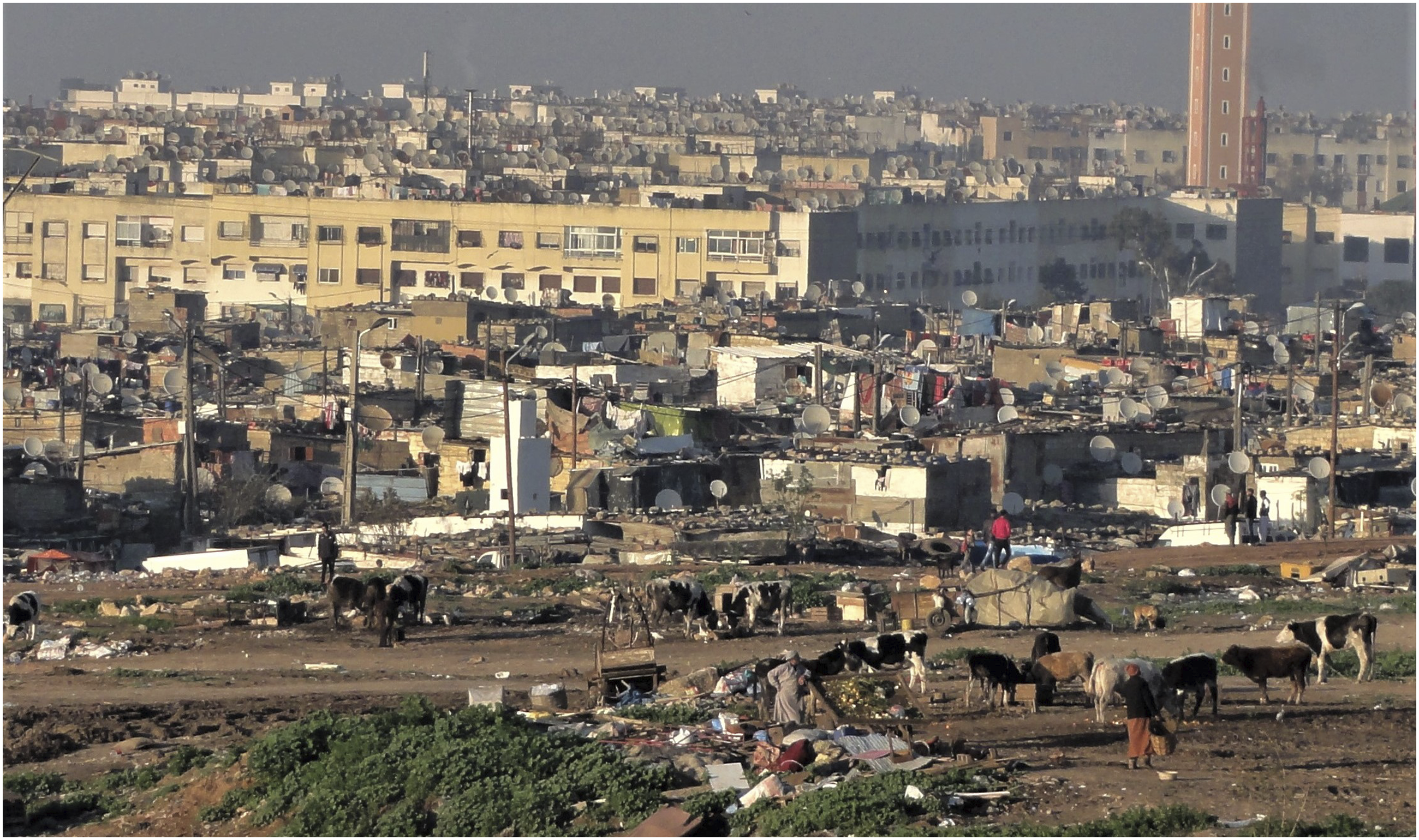
An outside perspective of Casablanca’s Er-Rhamna shantytown. Author’s picture, Feb 2017.
Whereas such ‘slum-centric’ external perspectives enhance the notion of absolute otherness, they ignore precarious conditions in other neighbourhoods that do not look ‘abnormal’ 9 as well as heterogeneity in and between so-called slums. They are blind to people’s invisible logics behind residential choices and neighbourhood complexities. Thus, it is significant to disclose the ‘hidden’ realities of such neighbourhoods, to put them into contrast to their outside perspectives, and, hence, to deconstruct the invention. Most prominently, Perlman (2005, 2016) showed through long-term ethnographic research that favelas develop over time and that they are not structurally different from other neighbourhoods if understood from the inside. Navez-Bouchanine and Dansereau (2002) used a different approach to show that many urban poor might not perceive the most stigmatised neighbourhoods as the most precarious places to live. Focussing on the analysis of residential trajectories they argued that living in a bidonville might be a rational choice despite accessible alternatives. However, such significant fieldwork-intensive research has remained scarce – even more when it comes to representative quantitative data. In my own study of Casablanca’s Er-Rhamna neighbourhood, mixed-methods data lays open the significant gap between external, homogenising perspectives and heterogeneous neighbourhood realities (Beier, 2019, 2020). It highlights the distorted picture of bidonvilles in official policy documents that paved the way for displacement and resettlement.
First, the empirical data shows that bidonville houses are not as precarious as implied by the official definition behind the VSB programme, defining bidonvilles as a ‘set of shacks serving as shelters built with an assortment of light reclaimed materials [. . .] on land that is devoid of basic infrastructures’ (MHUPV, 2012: 12). In contrast, 99% of the houses in Er-Rhamna are built out of bricks and cement. Some have two to three storeys and few have elegant interior decorations (Figures 2 and 3). Moreover, they are not deprived of infrastructure, as according to the definition, but have own indoor toilets, and are formally connected to power and water grids (cf. Navez-Bouchanine, 2012; Zaki, 2010). This is not to romanticise bidonvilles. Most houses have leaking tin roofs, bad insulation, and are exposed to fires. Nonetheless, the VSB definition of bidonvilles ignores important heterogeneity and improvements, reproducing a stigma of housing distress rather than depicting current conditions. It further ignores that much precariousness is produced by the state itself by complicating and hindering people-led incremental development (Beier, 2019: 176-178). Second, there is no evidence supporting the image of the bidonville being the home of rural migrants (cf. Navez-Bouchanine and Dansereau, 2002; Rachik, 2012). In fact, most interviewed persons were either born in Er-Rhamna or moved there from rental accommodation in Casablanca. Only 15% moved from the countryside directly to Er-Rhamna.
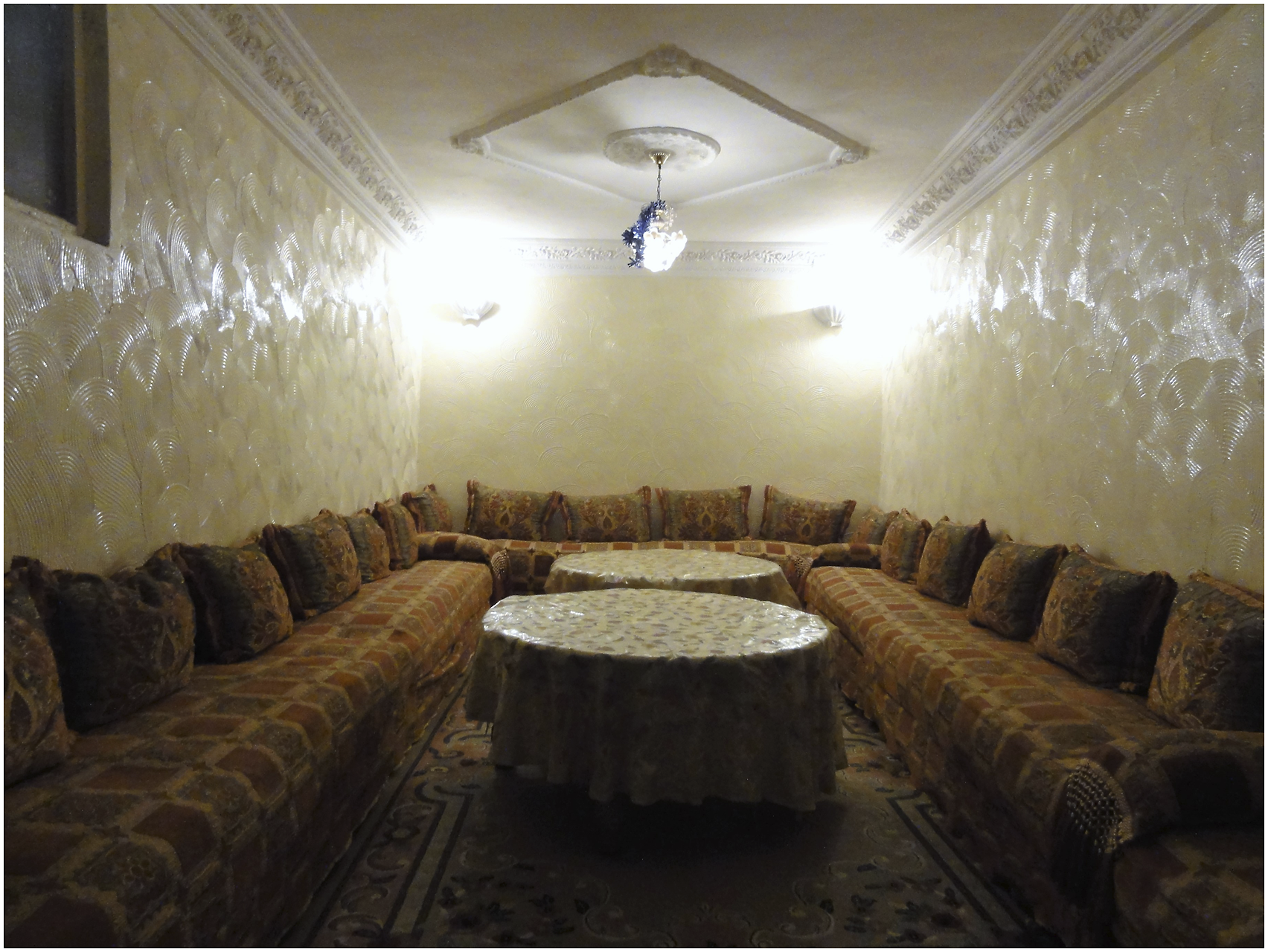
Inside one of the high-end houses of Casablanca’s Er-Rhamna shantytown. Author’s picture, Mar 2017.
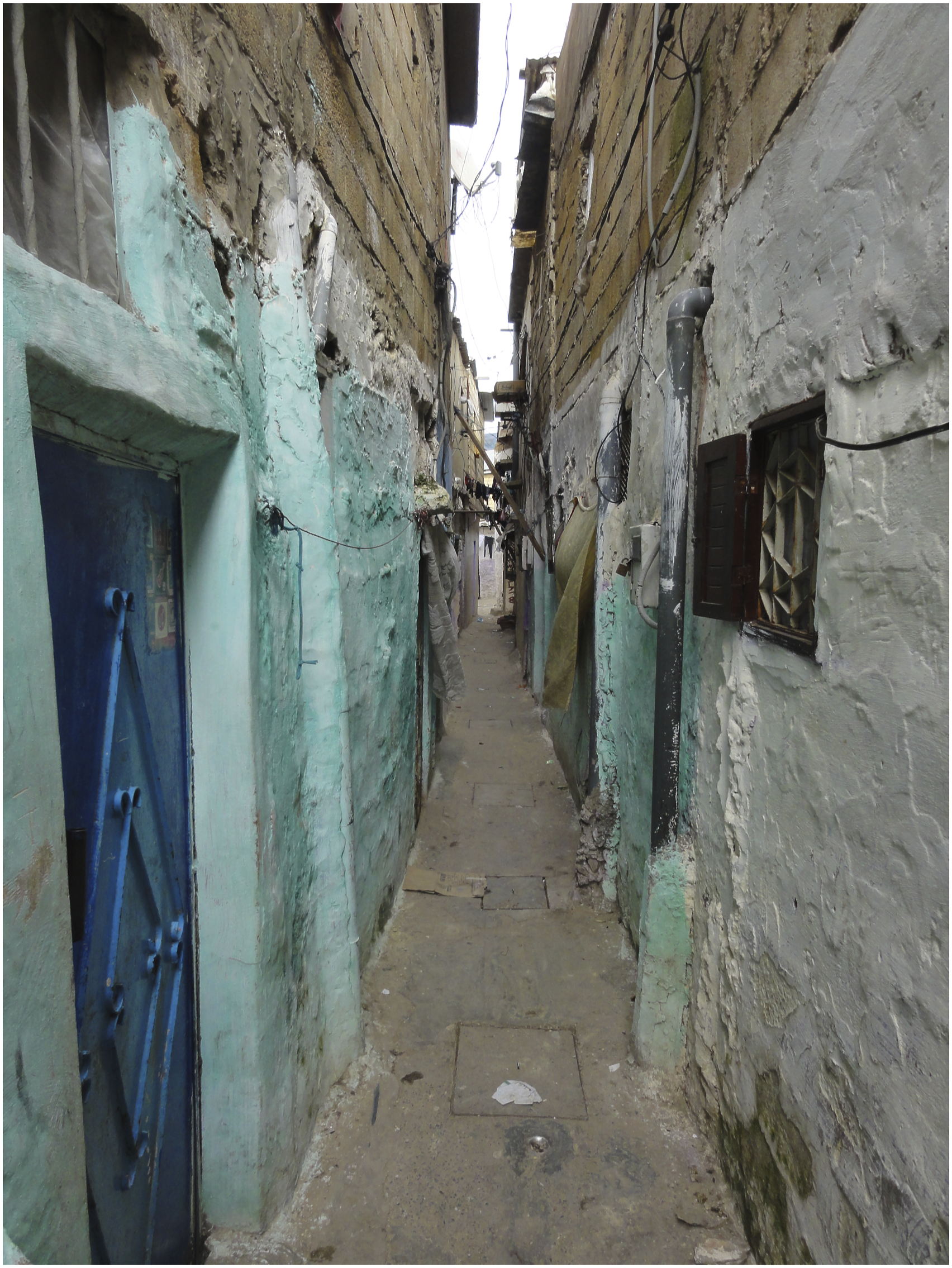
Double-storey houses in Er-Rhamna, with power metre and sewage system. Author’s picture, Mar 2017.
Third, with regards to poverty, official documents note that the bidonville ‘is a locus of poverty and social exclusion, par excellence, within the urban fabric’ (MHUPV, 2012: 33). The empirical data shows a more nuanced picture (cf. Bartoli, 2011). Certainly, there is a significant concentration of poverty, but the majority of households are neither ‘monetary poor’ (15% of all interviewed households) nor ‘vulnerable to poverty’ (additional 28%). Moreover, bidonville residents seem to be more resilient against poverty as they do not have to pay rent 10 and because solidarity networks among neighbours are strong. Instead of being places of exclusion, data suggests that bidonvilles facilitate urban integration in various ways. Many households can save expenses (e.g. for rent) and invest in the education of their children. 11 Er-Rhamna is also located close to workplaces and schools, which helps to save transport costs and fosters integration into job markets. Residents work all over the city in all kind of jobs – from employed professionals and teachers, to industrial labourers, artisans, taxi drivers and informal reclaimers just to mention a few (Beier, 2019: 168). If exclusion exists, this is because of structural discrimination on the job market following stigmatisation. Finally, concerning safety, there is little evidence that bidonvilles are crime hotspots. Two thirds of interviewed persons reported to perceive good safety and many do not even lock their doors. Perceptions of safety are significantly higher than in resettlement towns (Beier, 2019: 236). However, reports from residents and own observations also testify drug trading, zero police presence and occasional thefts.
Whereas almost two thirds of Er-Rhamna’s residents have a positive general opinion of their neighbourhood, still the majority appreciate government’s resettlement plans. While they look forward to home ownership and the amenities of the new house, much relates to stigma. The dream of living in a ‘maison en dur’ (lit., solid houses) is at least equally related to social status than to material quality. Physically, except for the roof, there is little difference between the structure of new, cheaply constructed apartment buildings and many houses in Er-Rhamna. Several houses in resettlement towns even have collapsed due to botched-up construction. Moreover, security of tenure has hardly changed through resettlement, while future maintenance is likely to become a problem (Beier, 2021). However, what people dream of is to have recognised urban citizenship, to be treated equally, and not to be ashamed to host guests at home. Through resettlement, they hope to escape the socially constructed ‘slum’ – not merely a physical neighbourhood.
Neighbourhoods in a world of neighbourhoods
However, as shown above, there remain severe doubts to which extent resettlement and other physical housing interventions allow people to escape stigmatisation (cf. Erman, 2019; Kolling, 2019; Salcedo, 2010; Zaki, 2007). If the ‘slum’ is more a socially constructed label rather than a physical neighbourhood, how can shelter-centric, standardised housing programmes be a solution (cf. Buckley et al., 2016; Croese et al., 2016)? With each year of incremental construction and consolidation and with each year of fuelling territorial stigmatisation and discrimination, physical solutions become less likely to solve increasingly non-physical problems. The case of Er-Rhamna stands exemplarily. As the briefly presented data shows, Er-Rhamna and its inhabitants do not naturally differ from other neighbourhoods but are constructed to be and to look different. Thus, VSB resettlement to apartment houses outside the city limits tends to target ‘invented’ problems based on external assumptions. They are not backed by empirical evidence. In many cases, they are more destructive than presenting an effective pro-poor strategy fostering personal advancement and people’s urban integration.
Thus, before thinking about programmes to achieve access to adequate housing for all, it is essential to deconstruct the invented slum and to engage in an unbiased and informed analysis of living and housing conditions. In order to avoid that our own research, teaching, and policy advice may contribute to ‘slum-centrism’ and related stigmatisation (cf. Valladares, 2019), it needs an intensive, self-reflective process of unlearning our ways of seeing and understanding (all) urban neighbourhoods. Research, planning, and policy must return to the general null hypothesis that slums are not uniform, not absolutely different from other neighbourhoods, and not homogenous inside. For that purpose, I call for a radical analysis of neighbourhoods in a world of neighbourhoods, which allows abandoning categorisations, norms, and hierarchies with colonial origins. Borrowing from Jennifer Robinson’s (2006) most influential work on ordinary cities, I argue for an empirical, decolonised, and critically comparative understanding of ordinary neighbourhoods. The more neutral connotation ‘neighbourhood’ (Kornienko, 2016: 152) should not merely replace the term ‘slum’ but rather help to initiate a wider process of deconstructing implicit, Eurocentric assumptions behind neighbourhood labels and theoretical boundaries. In addition, ordinariness should help to question ‘absolute otherness’ by guiding a comparative, empirically grounded analytical perspective that sees difference less as a problem but as a common feature of all neighbourhoods. Similar to the notion of ordinary cities, such comparative perspectives are essential to overcome colonial hierarchies and knowledge asymmetries (cf. McFarlane and Robinson, 2012; Robinson, 2016). Building on that, the concept of ordinary neighbourhoods calls for (1) less global homogenisation, (2) an improved understanding of intra-urban contexts and (3) more emphasis of heterogeneity within neighbourhoods.
Fighting global homogenisation
To begin, it is important to acknowledge that ‘slums’ are not globally uniform but diverse. Similar to the imbalances of urban theory production, there is at least an implicit tendency to conceptualise the slum from few prominent international case studies clustered in cities such as Rio de Janeiro, Mumbai, Nairobi and Lima. They do not only serve to construct ‘slum’ pictures and narratives (cf. Roy, 2011; Valladares, 2019) but also to develop theories about incremental auto-construction (Caldeira, 2017; Turner, 1977) and tenure insecurity (Soto, 2000). While these theories have much to offer, they have also led to invalid generalisations (some against the authors’ claims) that influenced international policymaking without an appropriate consideration of context. For example, it is less the question of tenure insecurity or access to credit, but repeated rumours about an imminent resettlement and authorities’ resurrected control that have recently impeded residents’ readiness to invest in their houses in Er-Rhamna. Likewise, in Harry Gwala informal settlement close to Johannesburg, despite most dwellers being owner-occupants, incremental consolidation represents an exception due to people preferring to wait for government intervention (Kornienko, 2017).
Simplistic conceptual generalisations but also attempts to find one ‘slum’ definition with claimed universal validity have done little more than homogenising varied neighbourhoods with diverse living conditions and different policy demands. In other words, we should be less surprised with perceived tenure security in Er-Rhamna and the absence of incremental construction in Harry Gwala. In contrast, it must be asked what Er-Rhamna has in common with other so-called slums like Mathare in Nairobi, where most inhabitants are renters (Mwau and Sverdlik, 2020), with Manshiet Nasser in Cairo, where most people depend on garbage recycling (Fahmi, 2005), or with Makoko in Lagos, where many houses are built on stilts over water (Adelekan, 2010). Why should these different neighbourhoods be targeted with the same policies and with the same theoretical concepts? Why should slums always have more in common with each other than with other neighbourhoods? Instead of assuming questionable commonalities of ‘slums’, critical postcolonial research must emphasise the specificities of diverse ordinary neighbourhoods in order to develop contextualised concepts and policies. Thus, researching a world of neighbourhoods requires looking beyond the ‘usual’ neighbourhoods and comparing neighbourhoods across national and regional borders. At the same time, this call for comparative research also warns of simplistic comparisons that assume comparability based on labels.
Understanding intra-urban contexts
Stressing a conceptual notion of ordinary neighbourhoods further requires an unbiased perspective towards diverse neighbourhoods within a city. When conceptualising our research we must start assuming that a ‘slum’ is as different from other neighbourhoods as any other neighbourhoods are different from each other. Instead of implicitly accepting colonially induced ‘absolute otherness’, the aim should be to understand relations between diverse ordinary neighbourhoods within a city. One way of doing so would be to uncover urban dwellers’ perspectives, strategic rationalities and agencies when moving between different neighbourhoods – as Navez-Bouchanine and Dansereau (2002) have done for the case of Casablanca. Comparing diverse neighbourhoods, further speaks to Valladares’ (2019: 158) critique of an unfounded concentration of research on a limited number of prominent favelas in Rio de Janeiro. Whereas many researchers who want to study urban poverty or inadequate housing seem to be attracted by favelas, bidonvilles or similar informal settlements, there is much less research and policy attention on low-income rental housing (cf. Huchzermeyer, 2011b; Mayson and Charlton, 2015; Scheba and Turok, 2020). Little is also known about lived experiences of poor people living at work (e.g. domestic workers) or in state housing at the emerging urban margins (cf. Gastrow, 2020; Meth, 2020). In other, drastic words, one could claim that less ‘exotic’ neighbourhoods attract less attention.
This slum-centrism of policy and research is dangerous because it enhances stereotyped perspectives on Southern cities contributing themselves to the invention of the ‘slum’. It tends to assume that worst living conditions must be found in slums and that ‘slums’ are absolutely different, requiring special treatment. Looking at Er-Rhamna, residents as well as scholars such as Arrif (1999) have stressed similarities between Morocco’s medinas (old towns) before the latter were upgraded and gentrified for touristic reasons. Many residents of Er-Rhamna also weighted up their housing conditions against those in tenement housing, with the latter having less tenure security, less privacy and weaker solidarity networks. Such intra-urban, people-centred comparisons normalise auto-constructed neighbourhoods by offering the chance to better understand them ‘through elsewhere’ in the city (cf. Robinson, 2016). They also urge students, researchers and policy makers to question implicit assumptions before designing research and policy. Comparable to the question about the specificities of Southern cities (cf. Lawhon and Truelove, 2020; Schindler, 2017), one needs to question whether slums are always different (and worse). Linked to calls for research in a world of cities (cf. Robinson, 2016), critical postcolonial research must address a less classified world of neighbourhoods and engage in people-centred comparisons between neighbourhoods in one city. These are significant to demystify so-called slums, to overcome colonial planning domination and to draft neighbourhood-specific (not slum-specific!) policies.
Acknowledging heterogeneity within neighbourhoods
Finally, it is necessary to stress heterogeneity within neighbourhoods. Critical postcolonial research must oppose the homogenising power of ‘slum’ labels by acknowledging ‘natural’ diversity within all ordinary neighbourhoods. In fact, this is not only relevant to poorer neighbourhoods but also to more affluent parts of the city, where walls may hide the living conditions of domestic workers in the backyards. Thus, it needs research that acknowledges different coexisting realities in the very same neighbourhood (cf. Owusu et al., 2008). The case of Er-Rhamna shows that its residents have various socio-economic backgrounds, origins, workplaces and housing conditions – like other ordinary neighbourhoods. Hence, there should be nothing surprising about residents of Er-Rhamna purposefully deciding to stay in the neighbourhood or to send their children to private schools and universities. Such surprise reveals homogenisation and stigmatisation. Often, this gets obvious only after housing interventions, when responsible authorities and non-governmental organisations share their frustration with so-called beneficiaries selling their new and supposedly better housing after resettlement (cf. Anand and Rademacher, 2011; Charlton, 2018). Rather than blaming such practices, they should be seen as the structural outcome of a simplistic homogenisation of ordinary neighbourhoods. Like for Er-Rhamna, heterogeneous perspectives and expectations towards a particular housing project are rather the norm than the exception (cf. Doshi, 2013). Taking intra-neighbourhood heterogeneity seriously does not only require rejecting supply-driven one-size-fits-all housing programmes, but also calls for ethical self-reflection and sampling during field research. The latter may result in critical comparisons within neighbourhoods aiming to analyse internal social structures and potential differences between certain groups of residents.
Concluding thoughts: Ordinariness as a self-provocative practice of unlearning
Summarising the three conceptual claims above, this essay is arguing for a radically different perspective towards so-called slums and other stigmatised territories, seeing them as ordinary neighbourhoods in a world of neighbourhoods. Such perspective takes seriously that ‘slums’ are neither globally uniform, nor naturally different, nor homogenous. It aims at questioning the ‘absolute otherness’ that we have learned to accept with regards to ‘slums’ as symbols of the so-called megacity of the global South. Instead of discussing slum-specific effects or policies on a global level, it calls for a rigorous deconstruction of Eurocentric narratives and stigmas connected to the term ‘slum’. Such deconstruction must go beyond searching for different, less problematic terms that merely replace the term ‘slum’ by keeping pre-established categorisations. Moreover, it should not be misinterpreted as a call to divert policy attention away from precarious living conditions in some so-called slums. In contrast, it actually calls for action, where political interventions is required the most to improve precarious living conditions – whether it is in a ‘slum’, in shared apartments, hostel-like tenements, public housing or in backyard dwellings. Thus, conceptualising ‘ordinary neighbourhoods’ aims at questioning an ‘implicit call for action’ (Yelling, 1986: 1) that mainly emerges from the label ‘slum’ – without taking a closer look at residents’ perspectives towards their own living conditions and housing demands.
This requires, first, that ordinary neighbourhoods are seen as places with contextual characteristics, problems and demands that can only be understood through people-centred empirical analyses and comparisons across global, urban and local scales. Through this, critical scholarly work must stress similarities and differences between neighbourhoods in an unbiased way questioning the colonial notion of absolute otherness. This is even more important against the background of globally circulating urban images and blueprints as well as a revival of large-scale, standardised and supply-driven housing programmes. Second, the deconstruction and decolonisation of dominant narratives requires constant self-provocation (cf. Lawhon et al., 2016). Everyone involved in planning, policymaking, researching (incl. funding) and teaching must engage in a very practical deconstruction of one’s own worldview. How and where have I learned what I expect to see and know? For example, if architecture students at a European university are asked to ‘improve’ an informal settlement in an African city (where they have never been) – what kind of message do I implicitly transmit? Doing research and teaching in a world of neighbourhoods requires questioning and reflecting on one’s own knowledge (incl. its global hierarchies), positioning, choices and assumptions. Why do I do field research in a so-called slum and why not in another neighbourhood? Why do I expect to find a certain group of people or phenomenon (e.g. poverty) in this particular neighbourhood and not in another? Such questions are the first steps of a self-provocation necessary to ensure unbiased and decolonised perspectives in all phases of research and policymaking. It needs more than we have done so far! Only holistic changes in thinking and practicing – in development practice, urban research, planning, teaching and politics – may enable us to deconstruct the invented ‘slum’ and provide a basis for developing contextual, creative and progressive policies to achieve access for all to adequate and affordable housing.
Footnotes
Acknowledgements
This essay was initially presented as part of the virtual workshop series “Dislocating Urban Studies: Rethinking Theory, Shifting Practice”, jointly orginised by Malmö University and University of Helsinki. The author would like to thank all workshop participants and especially the discussant Anja Nygren for their enriching feedback. He feels further indebted to Kristen Kornienko and three anonymous reviewers for their constructive comments on earlier versions of this essay.
Declaration of conflicting interests
The author(s) declared no potential conflicts of interest with respect to the research, authorship, and/or publication of this article.
Funding
The author(s) received no financial support for the research, authorship, and/or publication of this article.