




Abstract
Background
Across countries, most dementia carers report a lack of adequate information about dementia and local services. To address this issue, the World Health Organization developed the iSupport programme to provide information and support to dementia carers. The iSupport online programme was found to be feasible and acceptable by dementia carers. However, the potential of using the iSupport manual (iSupport) specifically for Chinese dementia carers in New Zealand remains unknown.
Objective
This study aimed to (1) identify refinements to adapt iSupport by eliciting the perspectives of Chinese dementia carers; and (2) explore the educational needs of Chinese dementia carers, which can inform the development of support programmes tailored to their specific requirements.
Design
This was a qualitative descriptive study using semistructured interviews. The data were analysed using thematic analysis.
Results
Twelve Chinese dementia carers were interviewed (mean age 58.0 years, 100% female, and mean caring experience of 2.2 years). Emerging themes were identified within three domains: (1) usefulness, (2) complexities of using iSupport, and (3) suggestions for improvement.
Conclusions
The findings suggest that Chinese dementia carers generally found iSupport to be valuable, providing valuable insights into how to tailor and enhance support for this population. However, further research is required to empirically validate the effectiveness of the adapted iSupport for Chinese dementia carers in New Zealand. These findings have implications for the development of future interventions that can more effectively address the specific needs of Chinese dementia carers.
Introduction
Dementia has emerged as a significant societal concern in New Zealand. The number of people with dementia is growing fast and is expected to reach approximately 170,000 by 2050, particularly within the Māori, Pacific, and Asian populations (Ma’u et al., 2020). As the Chinese population represents the largest ethnic group within the Asian demographics, the number of Chinese people with dementia is expected to rise. However, New Zealand has no specific ethnic and culturally tailored services to support Chinese dementia carers. The ethnic and cultural differences present unique challenges for service providers currently focused on Chinese families who care for people with dementia.
Although care for people with dementia requires specialised knowledge and skills, family carers generally lack knowledge about dementia and caring skills. A mixed-methods systematic review explored the needs of family carers of people with dementia and emphasised the importance of timely, tailored, and specific information, knowledge, specialised support, and services throughout the disease trajectory (Bressan et al., 2020). As a result, family carers learned about dementia and sought support along the way, which reduced their burden. Furthermore, a cross-sectional study investigating the correlation between perceived knowledge of dementia and carer burden revealed that having adequate knowledge about dementia was linked to lower levels of burden (Schindler et al., 2012). These findings highlight the critical role of knowledge and support in alleviating the challenges faced by dementia carers. By acquiring the necessary knowledge and skills, carers can feel more confident in their ability to face challenges, solve problems effectively and access support resources. This increased understanding and competence can reduce carer burden and improve the quality of care for people living with dementia, enabling carers to better manage their responsibilities and respond to unforeseen circumstances.
Chinese families face many barriers to obtaining sufficient information about dementia. First, limited English proficiency prevents Chinese immigrants from accessing health services (Jang & Kim, 2019). There is also a mismatch in communication and expectations between minority service users and health professionals, as health professionals may not be familiar with the language of the ethnic group (Sun et al., 2014). Cultural factors can significantly impact the carers’ ability to access necessary resources and support networks. Influenced by Confucian culture, Chinese individuals often take on the role of caring for older or disabled family members, and they believe that being a carer is their responsibility or duty (Qiu et al., 2018). As a result, Chinese family carers are more reluctant to seek help outside of their family. In addition, immigrant families are unfamiliar with the health and welfare system, which limits their knowledge and use of formal services (Hong et al., 2023). Although there is an enormous amount of dementia information freely available through various non-profit government agencies, these barriers pose challenges for Chinese dementia carers to access such information.
Over the past two decades, a number of psychoeducational programmes and services have been developed for dementia carers. One such programme is the generic version of iSupport, developed by the World Health Organization (WHO) in 2019, which includes an online programme and manual. It is based on Kitwood’s person-centred care (Kitwood, 1997), problem-solving, and cognitive behavioural therapy techniques. It provides comprehensive, evidence-based information on dementia, offering knowledge, skills training, and support for dementia carers (Pot et al., 2019). iSupport aims to empower carers with a deeper understanding of dementia, enabling them to provide better care and support for individuals with dementia. Notably, it has been translated into over 11 languages (Hindi, Chinese, Portuguese, Maori, Japanese, Brazilian, Bahasa, Vietnamese, Swedish, Greek, and Dutch) (Baruah et al., 2020; Efthymiou et al., 2022; Messina et al., 2022; Monteiro et al., 2023; Nguyen et al., 2021; Oliveira et al., 2020; Pot et al., 2019; Teles et al., 2020; Turana et al., 2023; Xiao, Wang, et al., 2022), making it accessible to a wide range of carers around the world.
The Chinese version of iSupport was translated into Cantonese and Mandarin and culturally adapted for Chinese dementia carers living in Australia and great China (Xiao, Wang, et al., 2022). The content of the adapted version of the iSupport online programme has been appraised as appropriate by Chinese dementia carers in Australia (Xiao, Ye, et al., 2022). The iSupport online programme has been applied to two reported studies (Baruah et al., 2020; Teles et al., 2022) and several ongoing trials (Nguyen et al., 2021; Pinto-Bruno et al., 2019; Windle et al., 2022; Xiao, Wang, et al., 2022). The two previously reported studies primarily focused on examining the feasibility and acceptability of the iSupport online programme for dementia carers, whereas the ongoing trials were designed to evaluate its effectiveness. However, limited attention has been given to how the iSupport manual (iSupport) specifically meets the needs of Chinese dementia carers. Therefore, the current study was aimed to gain insight into the perceptions of Chinese dementia carers regarding how iSupport supports them in caring for themselves and people with dementia, and to explore the additional needs of Chinese dementia carers. The findings from this study hold significant potential for informing the development of novel interventions and enhancing their acceptance among Chinese dementia carers.
Methods
A qualitative descriptive approach using semi-structured interviews and thematic analysis was selected to explore dementia carers’ actual perspectives on the Chinese versions of iSupport. This study was part of a project guiding the development of a psychoeducational intervention to improve Chinese dementia carers’ well-being.
The Chinese version of iSupport
The Chinese version of iSupport contains two versions, a Cantonese version and a Mandarin version. Other than the language translation, the major difference between the generic WHO English version and the two Chinese versions is that additional local dementia information and support services in Australia were added to the 23 lessons. The Australian information was removed from the Chinese versions before they were sent to our participants in New Zealand. iSupport consists of five modules containing 23 lessons. This is consistent with the e-programme shown in Figure 1. Overview of the structure and contents of iSupport.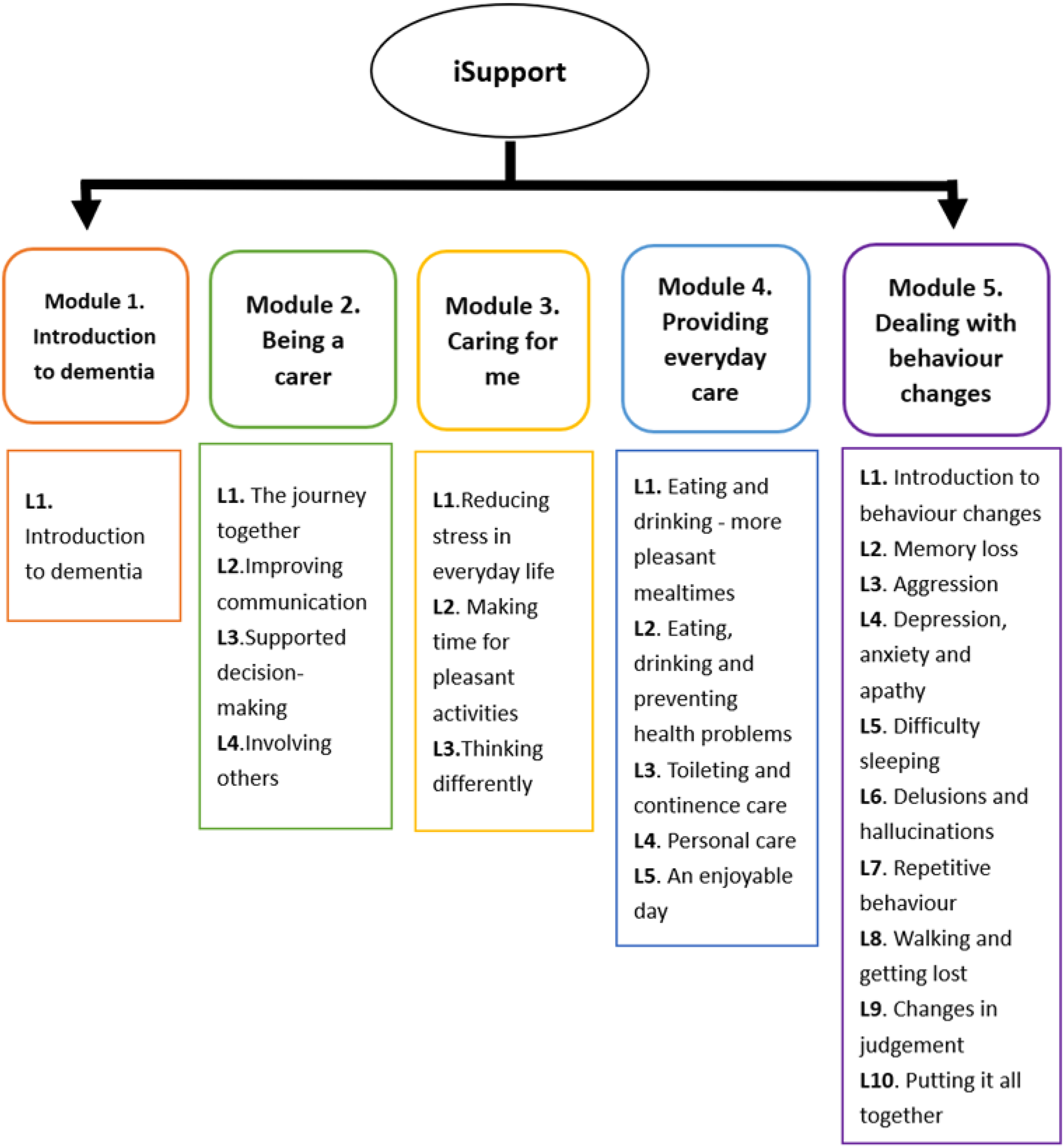
Participants and settings
Two methods were used to recruit Chinese dementia carers. Firstly, we involved four community non-profit organisations (Dementia Auckland, Age Concern Auckland, Dementia Canterbury, and Dementia Wellington) that provide support services to dementia carers. A poster providing details of the study, the participant information sheet, and the informed consent form were shared with the four organisations. The managers of these organisaitons shared these information with their members who could contact the first author via email or telephone if they were interested in the study. Secondly, the first author contacted participants from a previous qualitative study that explored the support needs of Chinese dementia carers during the COVID-19 pandemic, and invited them to take part in the current study.
The first author contacted potential participants by phone to determine their eligibility, address any questions, and arrange interviews.Chinese dementia carers were included in the study if they were: (1) 18 years of age or above, (2) a carer for a person living with dementia, (3) able to communicate and read in Mandarin or Cantonese, and (4) able to provide informed consent.
Data collection
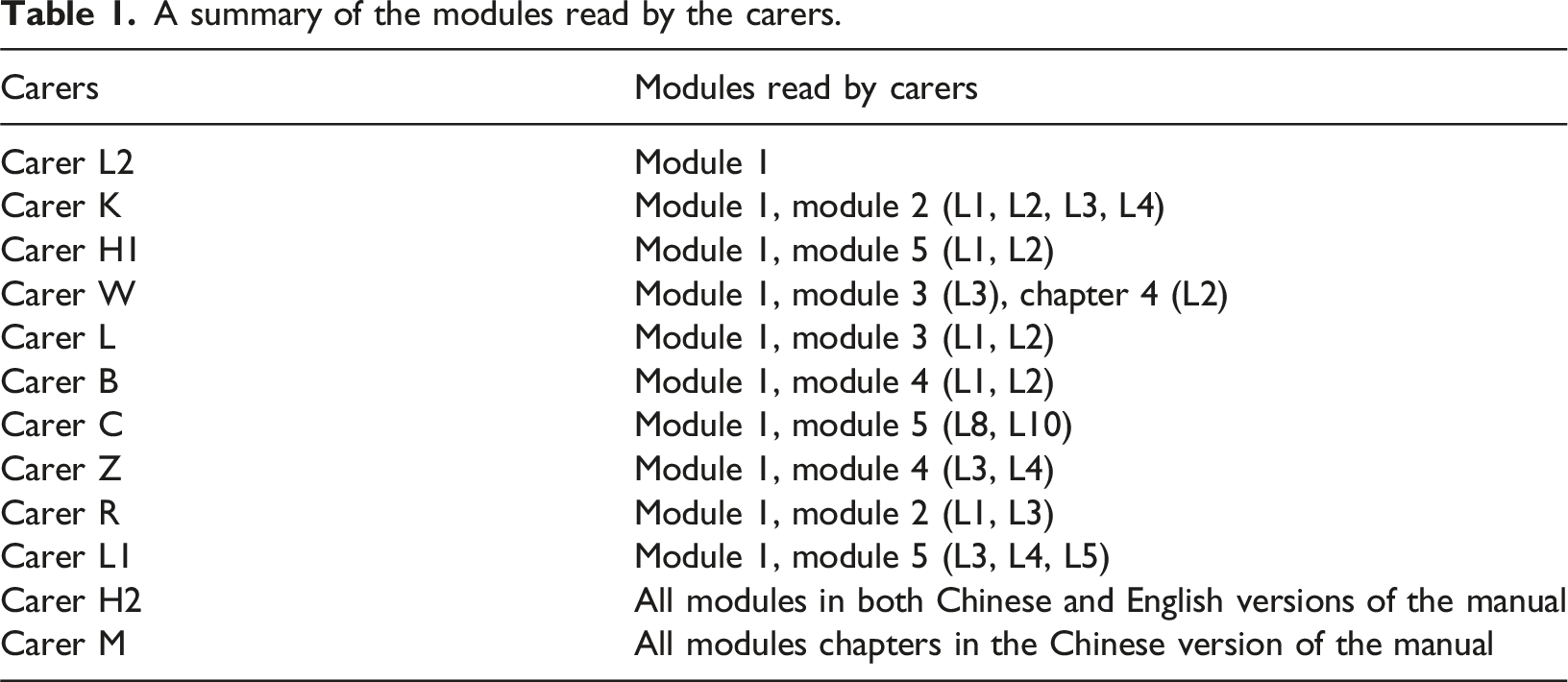
A summary of the modules read by the carers.
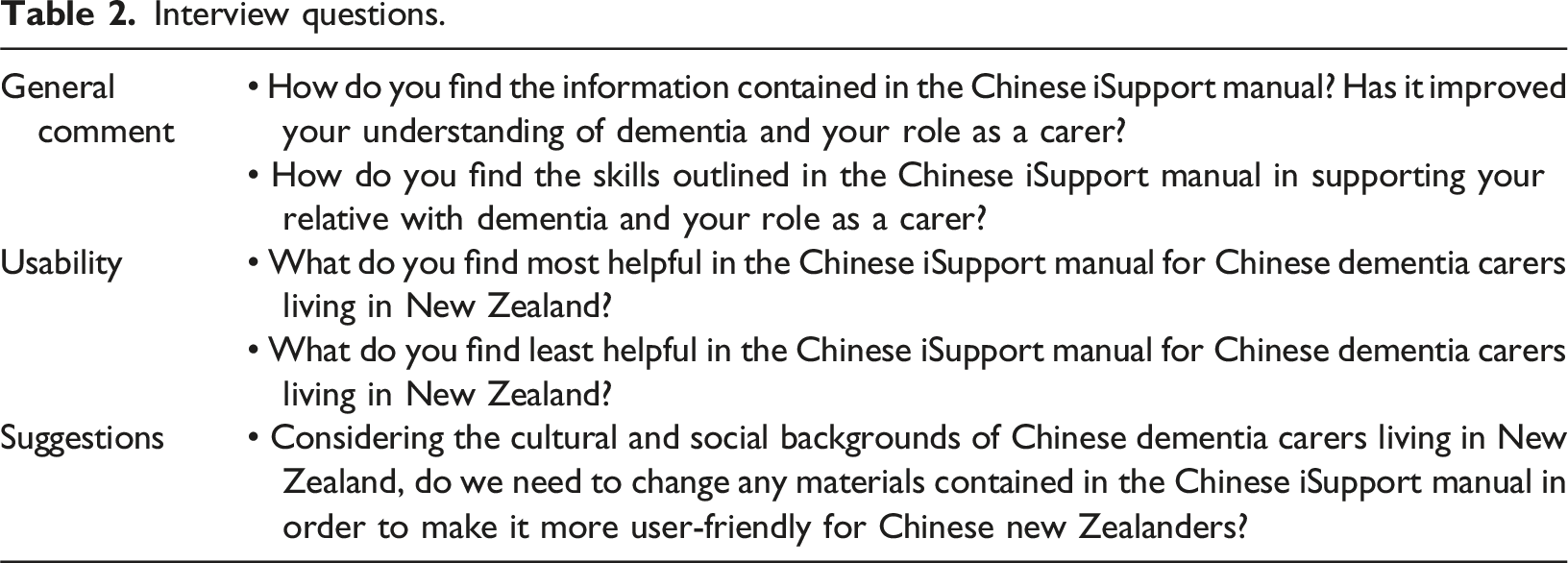
Interview questions.
Data analysis
The interview transcripts were coded in Chinese by the first author using Microsoft Excel and Word. Following this, the derived codes were translated into English by the same author. To ensure the accuracy of the translation, the last author randomly selected one case and cross-verified these codes with the transcription. A six-step inductive thematic analysis was employed (Braun & Clarke, 2006). Negative case analysis was also utilised to ensure a comprehensive understanding and to challenge initial interpretations of the data. The first phase of the analysis involved becoming familiarised with the data. The first author accomplished this by reading and re-reading the transcripts. In the second phase, the first author identified words and phrases that captured the perspectives of dementia carers regarding iSupport. These words or phrases were identified and highlighted in the data to generate the initial codes. In the third phase, the first and second authors discussed these initial codes and data to refine the coding process and develop initial themes. In the fourth phase, the research team collectively reviewed and refined the themes to ensure that they aligned with the research objectives. The fifth phase involved ongoing discussions among the team members until a consensus was reached on the overarching themes and the specific content of each theme. In the final phase, a comprehensive report was produced.
Ethical considerations
This study received ethics approval from the Auckland Health Research Ethics Committee of the University of Auckland (Reference Number AH23674). Written informed consent was obtained before the interview.
Results
Participants
A total of 12 Chinese dementia carers participated in the study, with a mean age of 58.0 years old (range 31–75 years) and a mean caring experience of 2.2 years (range 1–5 years). All participants were women. Half of the participants (n = 6) were from a Cantonese-speaking background, five were from a Mandarin-speaking background, and one was from an English and Mandarin-speaking background. Eight participants were spouses (66.7%), three were adult child carers (25.0%), and one was a friend (8.3%). In terms of the level of education, two carers (16.7%) had primary education, two (16.7%) had middle school education, three (25.0%) had high school or secondary vocational education, four (33.3%) had a diploma or bachelor’s degree, and one (8.3%) had a master’s degree. The duration of interviews ranged from 15 to 93 minutes. We also received one written feedback on three chapters of iSupport. This written feedback was analysed together with the interview transcripts.
Results of qualitative analysis
We identified three themes from the qualitative analysis. The following section describes three main themes: (1) usefulness, (2) complexities of using iSupport, and (3) suggestions for improvement.
Theme one: Usefulness
Sub-theme 1: Positive impressions of iSupport
Eleven participants rated iSupport as a valuable resource. Most of them described it as a readable and valuable tool for dementia carers. In addition, most carers expressed that the information provided within iSupport proved beneficial to them in various ways. This manual has been incredibly helpful to me while my husband is still in the early stages. It has provided me with a better understanding that individuals living with dementia can progressively deteriorate and experience a variety of challenges…I have found that some of the stress-relief techniques recommended in the manual are techniques that I am currently implementing for my stress reduction, such as making friends and making phone calls. (Carer Z, wife)
One child carer (Carer L1) mentioned that it covered all aspects of dementia diagnosis and care. It (iSupport) all relates to the carer of someone who suffers from dementia and the care of themselves. It captures lots of ground and a lot of things. And I just feel that there’s nothing there that you could not leave out. It is all relevant...In some way, you pick and choose what you want to read. But you know it is all important and related. (Carer L1, daughter)
Another spouse carer (Carer B) expressed appreciation for the valuable tips provided in two lessons from Module 4 (Lesson 1: Eating and drinking - More pleasant mealtimes and Lesson 2: Eating, drinking and preventing health problems). She found these tips so useful that she marked them in iSupport, noting that they could have greatly benefited her in caring for her husband over the past five years. Additionally, she shared that mindfulness training had been effective in alleviating her stress, further highlighting its positive impact on her well-being.
Sub-theme 2: The caring journey
Several carers emphasised iSupport’s usefulness in the early stages of caring, particularly for those carers who have limited knowledge about dementia. A wife carer (Carer H1) highlighted how iSuppport proved beneficial for carers who were just starting their caring journey, especially for their family members. The manual can be given to carers who are just starting to care for people living with dementia. For example, when I initially began caring for my husband, it was very easy for him to forget things. We did not know why? If there was a manual for guidance and inspiration, all family members could benefit. (Carer H1, wife)
Theme two: Complexities of using iSupport
Sub-theme 1: Complexities of contents
iSupport was perceived as challenging to follow by some carers. Two carers expressed a need for an English version to aid their comprehension of the content. A wife carer (Carer L2) highlighted that certain portions of iSupport were difficult to understand, citing confusion around the repeated mention of mindfulness training. Another carer (Carer R, daughter), remarked that the skills and examples presented in iSupport were too abstract for her to understand effectively. There are lots of examples in the manual. If I had not come across these problems yet, I could have easily identified an ideal solution. If I were to encounter such a situation, I would not be able to follow the instructions provided in the manual. For example, there is a case where asking a family member living with dementia to assist with cleaning up the dining table and putting the dishes in the sink, right? But guess what? A 90-year-old man is in poor health. You only see him playing with his plate. So the advice provided in the manual sounds wonderful, but when you try it, it is impossible to implement. (Carer B, wife)
Additionally, a friend carer (Carer M) found it challenging to navigate through lengthy sentences, which hindered their understanding. Sometimes, a single sentence can be so long that it takes some time to clearly understand its meaning. When I read these sentences, I also think that if they were written differently, it would take some effort to determine the most effective way to convey the information. (Carer M, friend)
Sub-theme 2: Complexities of the layout
Three carers expressed difficulties in understanding certain sections of iSupport due to its complex layout. A friend carer (Carer M) mentioned her confusion regarding the inclusion of numerous pictures in iSupport, questioning their purpose and how they related to the content. These concerns highlighted the need for a clearer and more intuitive presentation of information within iSupport. The manual contains a large number of examples, which need to be viewed through multiple images. As a result, this section is a bit confusing. It is unclear what the primary message intended for the reader is. If you claim that these images are included because they may be needed, then it would be beneficial to add more images to the manual. (Carer M, friend)
Sub-theme 3: A vast amount of information
Three carers mentioned that they found it overwhelming to read all the lessons. One child carer (Carer R, daughter) openly admitted that both she and her friends disliked spending their time reading iSupport. She stated that: “People would be too lazy to read iSupport, and it would take too long to read iSupport”. I do not like to read the manual because I'm lazy and I find it very troublesome. It would be easier if you simply told me what to do. (Carer R, daughter)
Sub-theme 4: No practical application
Various concerns were raised regarding the practical applications of using iSupport. Some carers expressed that it was not practical for their specific caring situations, finding it too abstract and overly general. For instance, a wife carer (Carer C) commented that iSupport did not offer the specific information she required in her caring role. Similarly, another wife carer (Carer L2) shared her reflection that the tips provided in iSupport did not effectively assist her in caring for her husband. It is so abstract that if you ask me which part of it is useful, I would tell you that none of it is. That is all. (Carer R, daughter)
Another carer mentioned that iSupport was too general and only provided examples. I think the manual is too general and only provides examples, such as repetitive behaviour… These are all examples, but there is no more information for further reading… (Carer H2, wife)
Theme three: Suggestions for improvement
Sub-theme 1: Practical advice needed
This theme highlights the need for practical advice or support. A daughter carer (Carer R, daughter) sought the assistance of a social worker to enhance her mother’s understanding of dementia. In addition, she also expressed a preference for health professionals who could offer immediate feedback or advice rather than relying on reading iSupport. A spouse carer (Carer H1) said that: “As a carer, we need practical support and understanding”. My mother is not someone who prefers to read the manual. Instead of sending her a bunch of brochures and expecting her to read them on her own, it would be better to spend an entire morning teaching her about how to care for people living with dementia if she faces any difficulties…This is because people are alive and dynamic, while books are static and fixed (书是死的,人是活的). (Carer R, daughter)
Another carer emphasised the need for culturally competent staff to provide support services. I’m Kiwi Chinese. I also know how immigrant Chinese feel. Coming to a new country with a new culture is very difficult for them. It is going to be harder today than it was with my parents. You need to put yourself in their shoes and understand that they are in a completely different environment...However, they can relate to somebody who understands their own culture and understands the European or Kiwi culture. It can be a help to them. (Carer L1, daughter)
Sub-theme 2: Additional information about dementia needed
Most carers expressed a strong need for additional dementia information. Specifically, four carers required additional information regarding the cause of dementia, disease progression, dementia stages, the caring journey, and practical tips for daily care such as eating, exercise, and daily routines. A friend carer (Carer M) expressed a desire for extra resources or information for further reading, such as brain games or a recommended website. As a carer, I think it is important to learn about the progression of the disease and its symptoms. If you can understand it, it would help to prepare yourself mentally. You can take good care of him, pay attention to him, and make him feel better. All of these will help slow down the progression of the disease. I think it would be better to add some content to the manual. (Carer W, wife)
Another carer required specific information on communication between people with dementia and their carers within the context of Asian culture. Maybe, it (the manual) needs to have an extra little section on dementia. Even though it is like a mental health thing. It is nothing to be ashamed of. It just happens. There are a lot of things you can do or not do, but just understanding dementia itself. (Carer L1, daughter)
Sub-theme 3: Additional information about social support services needed
iSupport lacks information on local dementia social and support services in New Zealand. This was recognised as a crucial area that needs to be addressed by adding relevant information to iSupport. One child carer (Carer K, daughter-in-law) emphasised the need for details on the different types of support services available to dementia carers, as well as information on dementia referral services. Another carer expressed the necessity for culturally appropriate services catering to the specific needs of the Chinese community. There is a cultural thing, and I can feel that. The reason why we do not see or hear about Asian dementia carers, I mean, they are out there, but you do not hear a lot about them. They tend to keep it all in the house. Just take care of their older people, but they are probably not looking for help…Culture is quite difficult…some people may ask because they are seeking help from others, but Asian wives may not… they're just not and would rather keep quiet about it. (Carer L1, daughter)
Discussion
This qualitative study aimed to explore the perceptions of New Zealand Chinese dementia carers regarding the Australian Chinese version of iSupport. Three main themes emerged from the analysis: usefulness, complexities of using iSupport, and suggestions for improvement. The study highlighted the perceived value of iSupport among Chinese dementia carers, as well as the challenges they faced in accessing suitable support services and resources.
Value of iSupport
Our study participants valued the Chinese version of iSupport. They described that the information provided in iSupport could increase carers’ knowledge about dementia and strengthened their caring skills. This aligns with the findings of previous quantitative research (Baruah et al., 2021; Teles et al., 2022) indicating that family carers benefitted from the iSupport programme in different ways, supporting the potential benefits of iSupport. These findings recommended that iSupport could be utilised as an important educational resource for future dementia education.
Participants provided suggestions related to how to care for carers in a socio-cultural context which will be invaluable by participants. Our findings Our findings is consistent with a previous systematic on self-management of dementia by family carers that highlights the importance of carers prioritising self-care through the use of self-management strategies (Shehadeh et al., 2021). In addition, an earlier qualitative study exploring the insights of self-management strategies for family carers of people with dementia revealed that these strategies have the potential to alleviate stress among carers and empower them to sustain their caring responsibilities (Huis In Het Veld et al., 2016). In light of these findings, health professionals and service providers can utilise the self-care strategies outlined in iSupport to support carers.
Our family carers suggested that iSupport would benefit carers in the initial phases of their caring journey, which is consistent with the findings from a previous study (Teles et al., 2022). Family carers people with dementia in the early stages of caring often experience a growing uneasy feeling that something is not right (Van Wijngaarden et al., 2018). In addition, carers who have limited knowledge about dementia may encounter various challenges as they navigate through significant changes in their relationships and interactions, make substantial adjustments in their lives, and anticipate the future (Quinn et al., 2008). iSupport can address this by offering a thorough overview of different types of dementia, changes in role, and caring tips. This knowledge empowers carers to develop a better understanding of the condition and anticipate the changes that may occur over time. A previous study demonstrated that early support for carers of people with dementia could be effective in reducing strain (Kjallman Alm et al., 2014). As a result, an important implication of our findings is that iSupport can serve as an essential guide for family carers in the early stages of caring to enhance their knowledge and attitudes towards people with dementia.
Complexities of using this manual
Our study participants described burden could be resulted from reading the overwhelming amount of written information in iSupport, particularly those already struggling with the emotional demands of caring. These findings contribute to a further understanding of the perception of using iSupport, specifically the negative perceptions of using iSupport to empower themselves. One limitation of iSupport is its reliance on self-learning, which may pose challenges for carers who may prefer traditional teaching methods. However, it is important to note that individual carers may have varying learning preferences. A recent study found that dementia carers expressed a need for printed information on dementia, treatment, and available services (Khanassov et al., 2021). In our study, some Chinese carers preferred to have practical advice from health professionals. To address the diverse learning needs of carers, it is crucial to consider personal preferences and environmental factors that may affect their ability to engage with and benefit from iSupport. Considering the limited availability of support services tailored for Chinese dementia caregivers in New Zealand, the adaptation of the Chinese version of iSupport plays a crucial role in filling this gap.
Addressed the unmet needs
Some carers mentioned that iSupport did not address their specific educational needs. It is important to acknowledge that a single education manual may not fully address individualised learning needs. This is supported by a systematic review that highlights the insufficiency of providing carers with information about dementia alone in enabling them to cope adaptively with the demands of caring (Etxeberria et al., 2021). Findings in a qualitative study about carers’ support needs indicate that multiple dimensions of the caring situation influence carers’ support needs including carers’ own beliefs and experiences of caring and different expectations of the caring role (Clemmensen et al., 2021). It is therefore important to consider the diverse backgrounds and experiences of carers when providing education and support. In addition, dementia affects each person differently (Ashley et al., 2023), and what works for one individual may not necessarily work for another. While iSupport provides comprehensive information, it may not fully address the unique needs of each dementia carer (Teles et al., 2022). This can lead to frustration or a sense of inadequacy when the advice and recommendations in iSupport do not align with their specific caring situation. Caring for people with dementia is a dynamic process that requires continuous adjustments due to the emergence of new needs that are interrelated with each other (Bressan et al., 2020). Understanding the potential unknown and unmet needs of Chinese dementia carers can inform future research to effectively support them and provide practical guidance tailored to their specific circumstances.
Chinese dementia carers have emphasised the importance of local dementia services and the ability to access support and services. These findings are consistent with an Australian study about the adaptation of the iSupport online programme, which highlighted the importance of connecting existing care services and improving communication with service providers (Xiao et al., 2021). In addition, providing dementia carers with access to a professional navigator of the care system can greatly enhance the sustainability of their caring situation (Queluz et al., 2020). In addition to effectively utilising social services, it is crucial to facilitate access to support and resources and offer culture-friendly guidance in navigating the healthcare system.
Refinements of iSupport
To address the issues raised by the participants, the following refinements need to be considered in developing the New Zealand Chinese version of iSupport.
Firstly, it is crucial to add information about dementia to iSupport and present it in a user-friendly format. This can be achieved by breaking down complex concepts into smaller, manageable sections to enhance comprehension. In addition, providing further reading resources can further support carers in gaining comprehensive knowledge about dementia.
Secondly, the layout of the manual should be revised to enhance usability. Additionally, the manual can be provided in various formats, such as speech cards, virtual assistants (Nguyen et al., 2021), online resources, or videos. This allows carers to choose the format that works best for them and increases accessibility.
Thirdly, it is essential to include local dementia social support services, such as day programmes, home care, and respite, to ensure that carers can continue providing care in the community. It is also important to actively update this information as certain resources and community services were closed due to the impact of the COVID-19 pandemic, and some have not yet recovered.
Finally, active support for carers should be consistently available and tailored to their individual needs. To facilitate carers’ access to support and resources, facilitators may need to provide practical advice during disease progression (Yu et al., 2023). This support can be provided in a variety of formats, including virtual, face-to-face or hybrid solutions, and may include participation in support groups of various formats.
Strengths and limitations of this study
The main strength of this study is that it focused on the perspectives of Chinese dementia carers about iSupport. This led to findings that were insightful for future research on the use of iSupport for Chinese dementia carers. Although this was a small qualitative study, data saturation was reached within this sample size. Furthermore, our results may be less generalisable to other minority groups. Future research with a more diverse sample or a larger sample size of Chinese dementia carers in New Zealand could provide a more comprehensive understanding of the potential impact of using iSupport. It should be noted that some participants in this study had a preexisting interest in support needs conversations from a prior qualitative study, which could introduce bias in their perspectives. In addition, the refined manual was not presented to the carers again for feedback. This may have missed an opportunity to gather additional insights and suggestions from the carers to further improve the intervention. However, conducting additional feedback sessions may have posed challenges in terms of feasibility and resources. Finally, the findings were limited by the inclusion of only female carers. Compared to female carers, male carers may have different experiences related to help-seeking behaviour, carer burden, roles, etc (Xiong et al., 2020). These differences may indeed influence their perspectives on the manual.Therefore, future research should consider including male carers to provide a more comprehensive understanding of the diverse needs and perspectives among carers.
Conclusion
Overall, this study advances the understanding of using iSupport to support Chinese dementia carers in New Zealand. Specifically, it provides valuable insights for developing culturally appropriate interventions and services, as well as refining the user-friendly manual. The findings offer guidance on potential improvements to this manual based on the specific needs and preferences of dementia carers. Although the implementation of iSupport in practice has yet to be established in the literature, valuable insights from this study can inform future intervention development. iSupport has the potential to serve as a guide for creating tailored interventions that effectively address the unique needs and challenges faced by dementia carers.
Footnotes
Author’s note
The authors would like to express our sincere thanks to all the participants, Theresa Cheung, and staff from Dementia Auckland, Dementia Wellington, Dementia Canterbury, and Age Concern Auckland who kindly gave their time to contribute to this study.
Author contributions
FL, JP, LDX, and GC were involved in the conception and design of the study. FL conducted the data collection, analysis, interpretation, and manuscript writing. JP and GC supervised the data collection and analysis, and revised the manuscript. LDX provided valuable input in revising the manuscript. All authors reviewed and approved the final version of the manuscript.
Declaration of conflicting interests
The author(s) declared no potential conflicts of interest with respect to the research, authorship, and/or publication of this article.
Funding
The author(s) received no financial support for the research, authorship, and/or publication of this article.
