



Abstract
This article examines the partnership between researchers and health consumers, with a focus on those experiencing vulnerability. It aims to understand how consumers perceive their involvement in research, explore their lived and living experiences as co-researchers, and develop a practical tool to strengthen these partnerships. A qualitative, arts-based method - LEGO® SERIOUS PLAY® - was used to facilitate creative dialogue and expression. Psychological empowerment theory informed the analysis, providing a lens to understand what supports or hinders meaningful involvement. The study identifies barriers to participation, including power imbalances, unclear roles, and organisational constraints, alongside enablers such as emotional safety, shared purpose, and respect for lived experience. Drawing on these insights, the article introduces a strength-based, humanistic Transformative Service Initiative (TSI) empowerment checklist to guide inclusive and respectful research partnerships. The study contributes to Transformative Service Research (TSR) by presenting a conceptual model called the Pathway from Consumer Co-Researchers to Societal Well-being Outcomes. This illustrates how supporting consumer involvement in research partnerships can generate broader social impact. The findings highlight how co-creating with consumers can provide valuable insight, bring about more equitable research and generate well-being.
Introduction
To enhance equity and access to services, it is essential to involve consumers, especially those with lived experience who help design and improve services and research, including people in vulnerable situations (Carlini et al., 2024; Islam et al., 2022). In this context, consumer involvement as co-researchers refers to the active, meaningful participation of consumers in the planning, conduct, and dissemination of research (Greenhalgh et al., 2019). The term vulnerability incorporates both intrinsic factors, such as physical or cognitive impairments, gender, and an individual’s capacity to engage in social and community life, and extrinsic factors, such as limited income, geographic isolation, and inadequate access to healthcare (Baker et al., 2005; Wardrop et al., 2021). Vulnerability is not a fixed trait but rather a dynamic and situational state, influenced by individual susceptibility and external risks at any given time (Baker et al., 2005). While vulnerability is often framed as a deficit (Riedel et al., 2022), it is not inherently negative. Instead, it can offer opportunities for personal growth as individuals develop coping strategies and resilience in response to challenges (Briscoe et al., 2016; Carlini, 2025). In this way, vulnerability can be reframed as a constructive and transformative experience that fosters learning and adaptation.
Transformative service research (TSR) seeks to improve individual and community well-being by driving changes in how services are designed and delivered (Anderson et al., 2013; Dodds et al., 2022). Emerging from the broader field of service research, TSR focuses on alleviating social problems by foregrounding the experiences of people facing vulnerability. Achieving outcomes that are both personally uplifting and systemically informed requires researchers to reconsider how research is conducted, ensuring its relevance and appropriateness (Kriszan & Nienaber, 2024). TSR highlights the need to manage vulnerability not only among consumers but also among service providers, and researchers themselves (Azzari & Baker, 2020; Carlini, 2025).
While services have the potential to create positive change, they can also reinforce existing inequalities. Traditional researcher-led approaches often perpetuate power imbalances, limiting the ability of research to transform service systems (Weaver et al., 2023). In contrast, user-led research particularly in health and social care can help to shift power to service users and prioritises collaboration throughout the research process to support more meaningful and equitable research and service outcomes (Greenhalgh et al., 2019). For example, hospitals applying user-led design have improved inclusivity by offering culturally appropriate meal options, multilingual support, and better complaint-handling processes for minority groups (Islam et al., 2022).
One stream of TSR focuses on service inclusion, and the importance of ensuring equitable access (Anderson et al., 2013; Fisk et al., 2023; Ostrom et al., 2014). This is particularly important for those experiencing vulnerability, as they can often face significant physical, economic, social or psychological barriers in accessing services such as healthcare (Gopaldas et al., 2022). By focusing on these groups, TSR aims to reduce disparities, promote inclusiveness, and ensure that all individuals, regardless of their background or circumstances, can access the services and resources they need to thrive. Including the lived experience of vulnerable consumers is fundamental to achieving fairness and improving outcomes for those who are most at risk of being excluded or disadvantaged in service systems (Anderson et al., 2013; Ostrom et al., 2014).
A core tenant of TSR is the collaborative process and inclusion of consumer perspectives, ensuring their insights are not merely tokenistic but genuinely valued and integrated throughout the process (Anderson & Ostrom, 2015; Dodds et al., 2022; Anderson et al., 2013). Despite growing recognition of consumer involvement in participatory research methods, attempts often remain tokenistic, with limited understanding of why this persists (Carlini et al., 2023; Ryan et al., 2024). In fact, Weaver and colleagues’ (2023) review of 111 TSR articles found that few studies incorporate meaningful user involvement in the research process. This highlights a substantial gap in the methodology of TSR, and suggests that existing frameworks aimed at guiding researchers (such as the SAIV process (Raciti et al., 2022), 5R guidelines (Russell-Bennett et al., 2023), EMPOWER framework (Figueiredo et al., 2023) and consumer partnership checklist (Carlini & Robertson, 2023)) have not been effective. Therefore, a gap remains for a transformative service initiative (TSI) that enables researchers and consumers to collaborate in meaningful research partnerships.
Transformative service initiatives aim to improve access and well-being for people facing vulnerabilities. However, consumers participating as co-researchers may encounter additional actual and perceived risks that hinder meaningful engagement. To address these challenges, empowerment strategies can enhance consumer autonomy and involvement (Llorente-Alonso et al., 2024). Spreitzer’s (1996) empowerment framework emphasises fostering psychological empowerment by building on individuals’ strengths and resilience. In this context, we draw on Spreitzer’s framework to develop a TSI that supports consumers to become actively involved in research as co-researchers.
This research aims to advance understanding of how to support inclusive consumer involvement in research, with a particular focus on consumers who may be experiencing vulnerability. This research is framed with four objectives (ROs):
In achieving the aim and objectives, this article advances TSR and consumer empowerment theory by clarifying how meaningful participation can be structurally enabled for consumers experiencing vulnerability. Drawing on Kanter’s foundational view of empowerment as organizational power-sharing (Kanter, 1977) and the evolution of empowerment into a multi-level, community-embedded process (Rappaport, 1987; Zimmerman, 2000), this study operationalizes empowerment as both a process and an outcome in service research. It directly answers recent calls in TSR to move from researcher-led agendas to genuine collaboration, co-creation, and the redistribution of decision-making power among consumers, practitioners, and researchers (Anderson et al., 2013; Ostrom et al., 2014; Weaver et al., 2023). As part of this study, a checklist has been developed to support consumer involvement. Practically, the checklist can be used by researchers, project managers, and consumer representatives to guide and structure meaningful consumer involvement at each stage of research. Typically, it is employed during planning, project meetings, and evaluation phases to clarify roles, address barriers, set expectations, and ensure feedback. For instance, during project planning meetings, the checklist can be completed collaboratively by researchers and consumers to identify support needs and outline communication preferences.
Background
Transformative Service Research
Transformative Service Research (TSR) focuses on integrating consumer and service research to create positive changes in the well-being of individuals, communities, and ecosystems (Anderson et al., 2013; Ostrom et al., 2014). It emerged from the Transformative Consumer Research movement, which seeks to address real-world challenges and opportunities through consumption behaviours. TSR has grown significantly engaging scholars across various disciplines with the aim of enhancing well-being by leveraging services to solve complex problems such as poverty, environmental degradation, and health issues, while also promoting opportunities like healthy lifestyles and cultural enrichment (Finsterwalder et al., 2024). It emphasizes equity in access to services by inclusive design for all consumers (Fisk et al., 2023).
TSR often involves operating within sensitive contexts, such as with vulnerable populations such as terminally ill patients or survivors of disasters. Researchers face the critical task of designing methodologies that prioritize the well-being of both participants and researchers alike (Azzari & Baker, 2020). This includes navigating various physical and emotional challenges, such as engaging with participants who may be in distressing or unstable conditions. Methodological decisions play an important role in fostering strong relationships and ensuring the safety of all involved (Hill et al., 2016). Inclusive approaches that empower participants are important (Hutton & Heath, 2020), especially in community-based projects aimed at populations who may experience vulnerability, such as people who identify as LGBTQIA + or cancer survivors (Carlini & Robertson, 2023).
Engaging populations experiencing vulnerability in service research is vital to enhance the relevance and impact of research outcomes. However, this engagement must be underpinned by inclusive and considered approaches. While research demonstrates that involving such populations contributes to policies and interventions that more effectively align with their needs and priorities (Greenhalgh et al., 2019), significant barriers persist. For example, a recent study found that researcher biases negatively influenced decisions to offer cancer trials to minority groups (Niranjan et al., 2020). Additionally, precision medicine, is beginning to transform healthcare, by tailoring healthcare treatment to individuals based on genetic, environmental and lifestyle factors. It brings together ‘big data', data analytics and artificial intelligence (AI) to identify relevant health patterns and potential treatments, and could further marginalize certain populations and exacerbate existing health disparities if the technology is trained on biased data that lacks representation from diverse groups (Cirillo et al., 2020).
Members of diverse populations frequently encounter additional barriers that hinder meaningful involvement, including cultural, structural, and communication-related challenges (Scholz et al., 2018). Therefore, research practices must move beyond tokenistic forms of inclusion and instead focus on actively addressing these obstacles by fostering trust, respect, and accessibility. Integrating culturally responsive strategies and investing in capacity-building initiatives can support more equitable and sustained engagement. This may enable individuals experiencing vulnerability to contribute meaningfully to research, ensuring that services and policies are more reflective of diverse lived experiences (Ryan et al., 2024 ). Failing to address these complexities risks reinforcing the very inequities that research engagement seeks to overcome.
LEGO® SERIOUS PLAY®
LEGO® SERIOUS PLAY® (LSP) was developed within the LEGO Group as a creative method to actively engage business and corporate executives to develop strategy and solve complex problems through collaborative communication and creativity (Warburton et al., 2022). LSP has proven to be a highly participatory, creative method that facilitates active and equitable involvement from all participants, including those experiencing vulnerability (Kriszan & Nienaber, 2024). Through hands-on model building and metaphorical storytelling, LSP enables individuals to externalize complex experiences and perspectives, helping to overcome communication, cognitive, or confidence-based barriers that may limit traditional discussion formats. Studies have found that compared to interviews or focus groups, LSP fosters psychological safety, encourages equal contribution, and gives participants greater agency in meaning-making and knowledge production which aligns closely with empowerment theory and the principles of participatory parity (Kriszan & Nienaber, 2024; Warburton et al., 2022).
LSP’s adaptability has been demonstrated in diverse health contexts from empowering youth with mental health challenges (Vusio et al., 2022) to facilitating engagement with groups otherwise underrepresented in research, such as those living with dementia or migrants in vulnerable situations (Volkmer, 2023). As such, the method is recognized as an innovative tool to build inclusive research environments where participant knowledge is valued and co-created, directly addressing some of the most persistent barriers to meaningful engagement in health research.
Health Research Involvement With Individuals Experiencing Vulnerability
Understanding the ongoing interactions between individuals experiencing vulnerability and their environments is critical, as these relationships shape how people encounter discrimination and exclusion within their communities (Crosby et al., 2023). Such interactions can perpetuate systemic inequalities, limit opportunities, and undermine well-being (Phillips et al., 2024). Addressing these challenges requires a focused examination of individual lived experiences and a concerted effort to dismantle societal and environmental barriers, including those embedded within academic research practices. Without tackling these underlying structural issues, the goal of achieving equity in service access remains unattainable (Schilling & Gerhardus, 2024).
Health consumers (for example, service users, families, and carers) frequently encounter additional barriers that hinder meaningful involvement in research, including cultural, structural, and communication-related challenges (Scholz et al., 2018). Therefore, research practices must move beyond tokenistic forms of inclusion and instead focus on actively addressing these obstacles by fostering trust, respect, and accessibility. Integrating culturally responsive strategies and investing in capacity-building initiatives can support more equitable and sustained engagement. This enables individuals to contribute meaningfully to research, ensuring that health services and policies are more reflective of diverse lived experiences (Ryan, Hattingh et al., 2024).
Empowerment Theory
The concept of “empowerment” in organizational contexts was developed by Kanter (1977), who identified it as the foundation for improving quality and service in organizations by giving workers greater control. Early empowerment theories extended beyond organizations, with researchers such as Rappaport (1987) and Zimmerman (2000) progressing empowerment as a key concept in community psychology, stressing it as a process through which individuals, organizations, and communities increase control over their own lives.
Empowerment is a strength-based approach that is a dynamic, context-specific process that enables individuals, organizations, and communities to gain control over their circumstances and take active roles in decision-making (Rupp et al., 2020). Empowerment focuses on role relationships, participation and access to resources. Importantly, Zimmerman (2000) argued that the mechanisms that deliver empowerment are not fully understood and, an important aspect of the process is the interaction with the environment, and the extent to which individuals can exert control.
Empowerment can create social change by focusing on well-being, competence, and natural support systems. It addresses social problems by recognizing and addressing unequal access to resources and promotes mutual help and advocacy rather than relying solely on professional aid (Rigaud, 2020). Empowerment approaches can enhance well-being by identifying strengths and positive aspects, rather than just fixing problems or blaming individuals. Empowerment also provides a unique way of understanding and interacting with people experiencing vulnerability, as it points out that traditional professional language, can create dependency and views people as passive. Instead, it promotes active collaborators to foster a shared, supportive role where professionals work with, rather than for, individuals (Aliakbari et al., 2020). This approach reinforces the importance of learning from and working alongside individuals to address their needs. The theory of empowerment is focused on both processes and outcomes, as the theory suggests that actions, activities or structures can be empowering and that the result is a level of being empowered (Rigaud, 2020). For example, as individuals experiencing vulnerability navigate complex healthcare needs, their access to personal resources (such as self-efficacy and health literacy) and social-contextual resources (such as community support networks) may be restricted. Our understanding of service access for populations experiencing vulnerability that promotes well-being, remains limited. Furthermore, there is a notable lack of intervention studies that focus specifically on promoting well-being and empowerment in these communities (Nehls, 2023).
Spreitzer’s (1996) empowerment framework focuses on the psychological aspects of empowerment, identifying four key dimensions: meaning, competence, self-determination, and impact. Within this framework, meaning refers to the alignment of an individual’s values, competence reflects the individual’s sense of capability and mastery, self-determination emphasizes autonomy in decision-making, and impact highlights their ability to influence outcomes (Travers et al., 2020). This framework tacitly highlights the importance of identifying and harnessing individual strengths, thereby fostering a sense of empowerment, focusing on resilience rather than focusing on deficits (Raciti et al., 2022). One key criticism of the concept of empowerment is that it can be overly individualized, focusing on personal responsibility rather than addressing broader structural inequalities, systemic barriers and political factors (Agner & Braun, 2018) that contribute to powerlessness, vulnerability and marginalisation. Others argue that, despite the apparent benefits of empowerment, it's radical roots have been lost, and that some contemporary efforts to empower may, in fact, serve to disempower those already experiencing vulnerability and marginalization (Mclaughlin, 2016). Such attempts to empower may also unintentionally reinforce power imbalances, particularly when the empowerment process is defined and controlled by those in positions of authority (Mclaughlin, 2016).
Applying Empowerment Theory for Transformative Service Initiatives
Transformative service initiatives at the individual level have been applied across various fields, such as health, education, social work, and business, to promote service inclusion and well-being (Anderson et al., 2013; Boenigk et al., 2021). It is not a one-size-fits-all approach, as both the processes and outcomes vary depending on the context, population, and specific goals (Skene, 2021). Empowerment theory can be used to develop initiatives that enable individuals and communities to develop agency in their lives, make decisions, and improve their circumstances (Rupp et al., 2020). This involves building personal agency, increasing access to resources, and creating opportunities for participation in decision-making. Common strategies include skills development, resource accessibility, and facilitating supportive networks. A clear understanding of the specific context is needed to effectively apply empowerment theory, as strategies must be tailored to the needs and strengths of the individuals and groups involved.
A key aspect of integrating empowerment into service initiatives is that they must be disentangled from vulnerability, risk and protective factors (Felner et al., 2000). For example, environmental factors can either trigger or prevent problems, depending on how they interact with individual vulnerabilities and strengths. Negative environmental conditions can activate existing vulnerabilities and lead to dysfunction. On the other hand, protective factors in the environment, like support and coping resources, can reduce the chance that these vulnerabilities will be triggered (Felner et al., 2000). Resilience can be a positive well-being outcome resulting from effectively managing stressful situations. For example, an individual who is a trauma survivor may experience service anxiety in social situations. An empowerment intervention might focus on mindfulness-based coping strategies to help navigate these situations without dysfunction, thereby enhacing overall well-being, despite existing vulnerabilities.
Research Approach
Arts-Based Method - LEGO® SERIOUS PLAY®
Arts-based methods are participatory research approaches that use creative forms such as visual art, poetry, theatre, and dance to explore and express complex, experiential knowledge that often cannot be conveyed through words alone (Phillips et al., 2024). These methods foster deeper engagement by eliciting emotion, facilitating dialogue, and uncovering diverse perspectives. One such method, LEGO® Serious Play® (LSP), introduced over 20 years ago, has evolved into a widely used method among scholars and practitioners (Roos & Victor, 2018). Through facilitated sessions, LEGO bricks are transformed into a shared language that fosters creativity and encourages open discussions. Rooted in systems thinking, LSP helps participants explore mental models, develop a holistic view of problems, and connect ideas. Drawing on theories of play and constructionism, LSP emphasises creativity and innovation, providing guiding principles for addressing complex and ambiguous challenges (Wengel, 2020). LSP promotes collaboration and autonomy by using LEGO® bricks to facilitate group discussions and problem-solving (Warburton et al., 2022). Participants build models to represent different aspects of a problem or idea, which drives exploration and generates new insights. Unlike traditional workshops, LSP encourages participants to “think through their fingers,” unlocking imagination within a non-judgmental environment (Martin-Cruz et al., 2022).
Recruitment and Sample
Health consumers who participated in the research were recruited from a variety of community organizations, including cancer and neurological support groups, the local Health Services’ Consumer Advisory Group, and networks facilitated by the project’s consumer co-researcher. We conceptualized vulnerability as experiencing circumstances that may create barriers to meaningful participation in research, such as living with chronic illness or disability, belonging to marginalized groups, or facing socioeconomic disadvantages. To ensure a multiplicity of voices was heard, we prioritized the inclusion of individuals from diverse backgrounds. Acknowledging the obstacles that consumers often encounter in research participation, including lack of access to transportation and inability to pay for childcare, we provided remuneration in accordance with local standards for consumer involvement in health research.
The consumer group consisted of 10 health consumers, self-identified as health service users, family or carers, with varying levels of prior experience in consumer involvement in research. Experience in research was defined as having previously worked as a co-researcher (not participant) in research projects, as self-reported by participants. Five consumers had no prior experience, two had less than one year of experience, two had between one and three years, one had three to five years, and none had more than five years of experience. Self-evaluated skill levels in consumer involvement ranged from 0 (low) to 10 (high), with one person rating themselves at 0, two at 3, one at 4, and one at 7. No participants rated themselves at the higher end of the scale (8–10). One participant identified as LGBTQI+, seven as living with a disability, one as belonging to an ethnic or religious minority, one as an immigrant or refugee, and four as economically disadvantaged. Participants were allowed to select multiple categories to identify their diversity status.
Consumer Involvement in the Project
In addition to the 10 health consumers in the consumer group, the study included a consumer co-researcher, a recent migrant with a neurological disability, who actively participated in every stage of the research. She contributed valuable lived experience and unique insights into the needs of consumers experiencing vulnerability. She also played a key role in recruitment, and engaging local health consumer groups and disability networks to increase participant diversity. Throughout the project, the team prioritized her well-being with regular check-ins and task adjustments to support her autonomy and comfort (Carlini & Robertson, 2023). She contributed to multiple aspects of the study, including leading and facilitating the consumer workshop, data analysis, shaping dissemination strategies, and co-authoring reports and academic articles.
Research Design
In this study, the arts-based LEGO Serious Play (LSP) method was applied within the Bird et al. (2021) three-stage co-design framework to ensure a comprehensive and collaborative approach.
The
Next, the
Finally, the
Data Analysis
Initial content analysis was conducted using an inductive approach, adhering to the guidelines of Naeem et al. (2023). This process began with familiarizing ourselves with the data by reading and rereading the session transcript, during which memos were created to gain a comprehensive understanding of the content. Following this, initial coding was performed in NVivo12, using verbatim statements from participants. The researchers then identified and reviewed these preliminary codes through iterative rounds, which were eventually organized into themes. The research team held meetings to validate these themes for RO1 and R02. For R03, the themes for each dataset (from R02) were then deductively grouped using empowerment theory lens (meaning, competence, self-determination, and impact), and actionable strategies were developed to form the TSI.
Results
This section draws together the findings from the LSP workshop. Each of the research objectives (RO) are presented: RO1: To define how consumers perceive their involvement as co-researchers in research processes. RO2: To explore consumers’ experiences of involvement in research, including the factors that enable or constrain meaningful participation, RO3: To develop a strength-based, humanistic Transformative Service Initiative (TSI) checklist to support the personal empowerment and inclusion of consumer co-researchers, and RO4: Conceptualize the pathway from consumer co-researchers to societal well-being outcomes.
R01: Define How Consumers Perceive Their Involvement in Research
The three emergent themes included, 1) collaboration and mutual growth, 2) barriers to effective collaboration, 3) creating inclusive and empowering environments. These themes are shown in Figure 1 with sample models from the co-designers. Perceptions of Consumer Involvement Experiences - Three Themes and Illustrative Example LEGO Models (Source: Authors Own)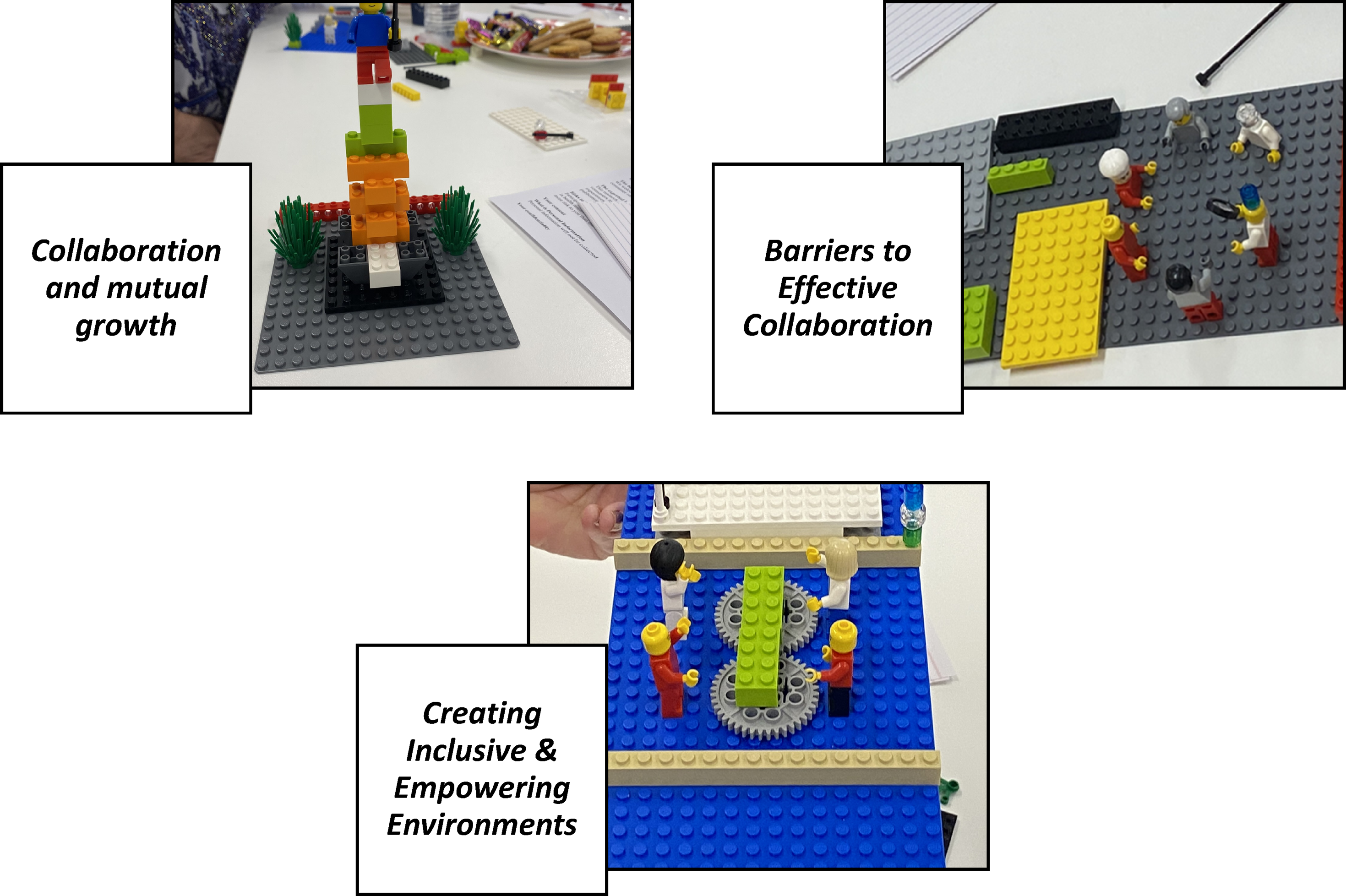
Collaboration and Mutual Growth
Collaboration and mutual growth are based on the symbolic and practical benefits of collaboration between consumers and researchers. One consumer reflected on the intent behind their work (model shown in Figure 1): “I just made this to symbolize growth. That was my aim. It’s a space where everyone can grow.” To represent this metaphorically, a person is placed on the top of a stack of LEGO block holding a long stick, to portray the idea that the collaborative space is designed to foster mutual development. Additionally, another consumer expressed aspiration for wider impact, as illustrated by the statement: “The hope that there would be positive outcomes, that the knowledge would be carried internationally.” This is illustrated with a bridge demonstrating the building of knowledge and a belief in the potential for international dissemination of knowledge resulting from such collaborative efforts.
Barriers to Effective Collaboration
Barriers to effective collaboration accentuated the challenges and disconnects between consumer needs and researcher objectives. The frustration with existing barriers is articulated in the observation, “Everybody’s different. All the people are different. Everybody’s needs are different. Removing barriers between what consumers need versus’ what researchers have in their mind.” This comment points to the difficulties in aligning diverse consumer needs with research goals. Further exacerbating these challenges is the perception of a divide in research efforts (model shown in Figure 1), “There are so many people getting funding for the same research, and it’s not collaborated. There’s a divide in research efforts.” Additionally, the feeling of a physical and metaphorical separation is captured by, “The doctors are doing the test, but the patients have their backs turned. It feels like a divide.” These quotes demonstrate the significant barriers that impede effective collaboration.
Creating Inclusive and Empowering Environments
Creating inclusive and empowering environments revolves around fostering a supportive and equitable space for consumer involvement. The importance of creating a comfortable and welcoming environment is reinforced in, “The most important thing is to listen... in a place that’s comfortable, not in a sterile environment.” This highlights the need for settings where consumers feel valued and heard. This is further illustrated by descriptions of collaborative settings that promote equality and inclusivity, such as (model shown in Figure 1), “We’re sitting around a round table… everyone’s on the same level. No intimidation, just brainstorming and support.” Despite these efforts, there is also recognition of ongoing challenges, as expressed in, “Consumers get to have a voice... but it does feel segregated.” This indicates that even in inclusive settings, there may still be perceptions of segregation, affecting the overall empowerment of consumers.
Defining Consumer Involvement in Research
Using the preceding thematic analysis from consumers experiencing vulnerability own perspectives of their involvement in research, the following definition is posed:
R02: To Examine Consumers’ Research Involvement Experiences and Participation Barriers/Enablers
In presenting R02, three themes emerged: 1) power imbalances and tokenism, 2) systemic barriers and transparency, 3) inclusive and accessible environments. These themes are shown in Figure 2 with sample models from the co-designers. Perceptions of Consumer Experiences in Research - Three Themes and Illustrative Example LEGO Models (Source: Authors Own)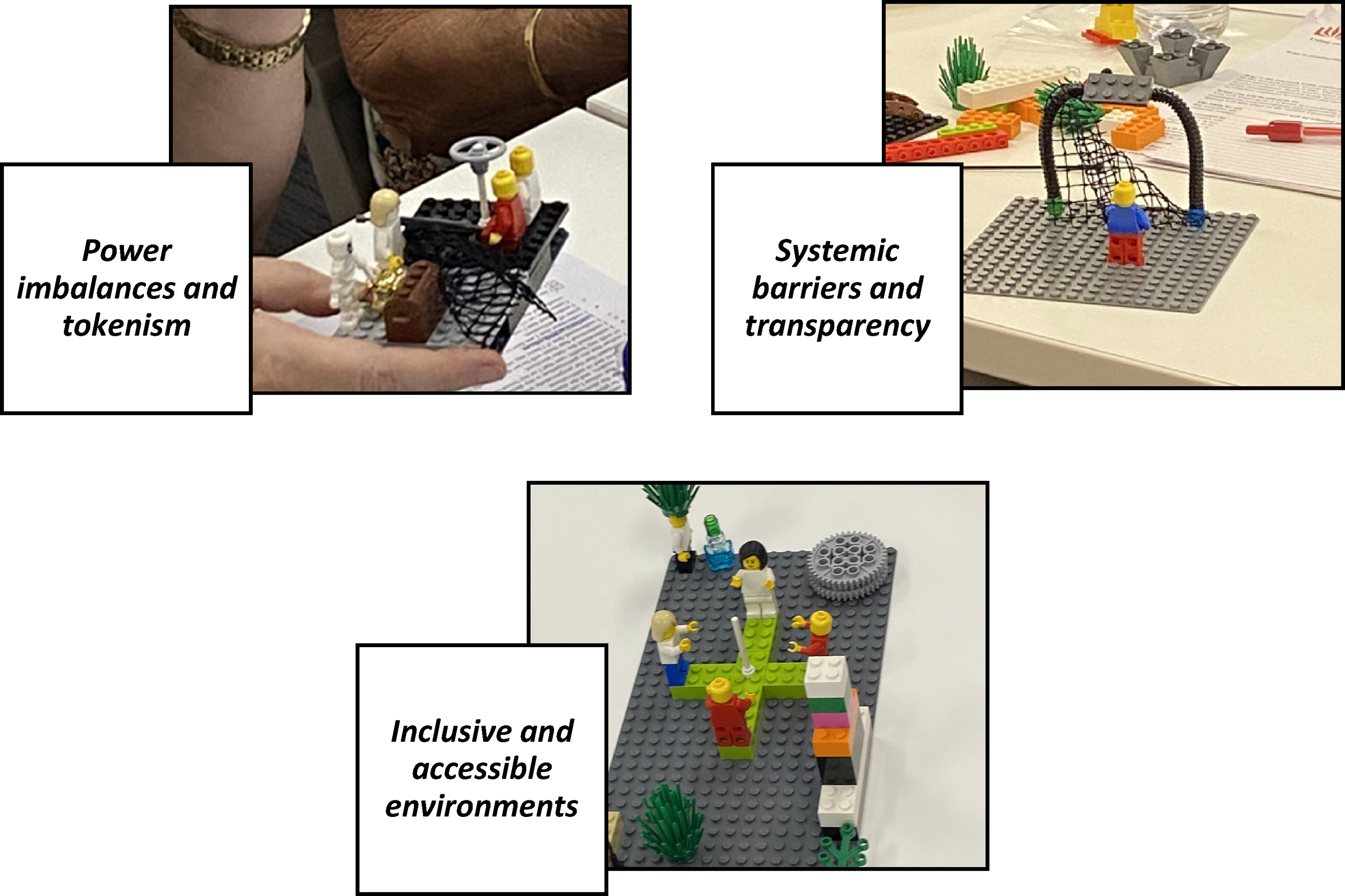
Power Imbalances and Tokenism
Power imbalances and tokenism were identified as challenges faced by consumers who experience vulnerability in research contexts. A recurring sentiment was the need for consumers to feel genuinely heard and respected to avoid disengagement. One participant expressed, “I would need to be able to think that I was being heard otherwise I just assumed stay home.” This highlights a fundamental requirement for effective participation. Similarly, concerns about the respect for participants’ contributions are voiced in, “If the researchers are looking for information, please respect our time as well and be open to our suggestions”, demonstrating the importance of acknowledging and valuing consumer input. The experience of being unheard is further articulated in: “I have to say I haven’t felt heard, or what I’ve had to say hasn’t been respected.” Such statements reflect perceived power imbalances and tokenism, where consumers’ contributions are not adequately recognised or valued.
Systemic Barriers and Transparency
Systemic barriers and transparency reflect the structural challenges and demands for openness within the research process. Participants expressed a desire for transparency about research funding and publication. One consumer noted, “I want to know that the research project is properly funded... Will there be things like medical journals or any anything that's published?” This statement indicates a need for clarity on the allocation of resources and the dissemination of research outcomes. Additionally, there is a call for genuine engagement and commitment from researchers, as articulated in: “I want to know that my researchers are absolutely passionate about what they're doing.” This highlights the importance of authentic involvement and dedication from researchers. Additionally, concerns about the lack of ongoing communication are evident in, “I feel that a lot of times, we contribute voices, but then after that, it just gets cut off… we need to be able to actually partake in bringing all those barriers down.” This reflects a broader issue of systemic barriers where ongoing feedback and engagement are insufficiently maintained.
Inclusive and Accessible Environments
Inclusive and accessible environments focus on creating research settings that are welcoming, equitable, and supportive of all participants. Key aspects include ensuring that consumers feel valued and heard and fostering an environment where diverse perspectives are genuinely integrated. One consumer highlighted the necessity of a comfortable and respectful setting for effective engagement: “The most important thing is to listen… in a place that’s comfortable, not in a sterile environment.” Another consumer commented on the importance of the environment and taking time away from her everyday responsibilities: [What’s important to me] is based on taking time away from your everyday responsibilities. I'm a carer as well as have my own disability. But I look at that [attending research meetings] as taking time away from everyday responsibilities. And they've made it accessible. So that's my ramp from my wheelchair and my walkers and everything else that's needed. Hopefully, being outdoors would be a personal environment that I'd like to be in.
The following quote further accentuates the importance of creating an equal and supportive atmosphere: “We’re sitting around a round table… everyone’s on the same level.” This reflects the value placed on informal settings that promote equality and reduce barriers between researchers and consumers.
Despite these efforts, there were ongoing challenges related to perceptions of segregation even when opportunities for participation are provided. A consumer noted, “It’s about just peeling back everything and getting back to basics. Through my work, you always get the best out of a person and the best information by just being informal and in a relaxed environment.” This comment highlights that while mechanisms for involvement may exist, there can still be feelings of separation, or vulnerability that affect the overall inclusivity of the environment. Creating inclusive and accessible environments involves both the physical and relational aspects of participation.
R03: Develop a Personal Empowerment Checklist for Consumer Co-Researcher
Theoretical Analysis
Contextual - Meaning, Competence, Self-Determination, and Impact for Actionable Empowerment Strategies (Source: Authors Own)
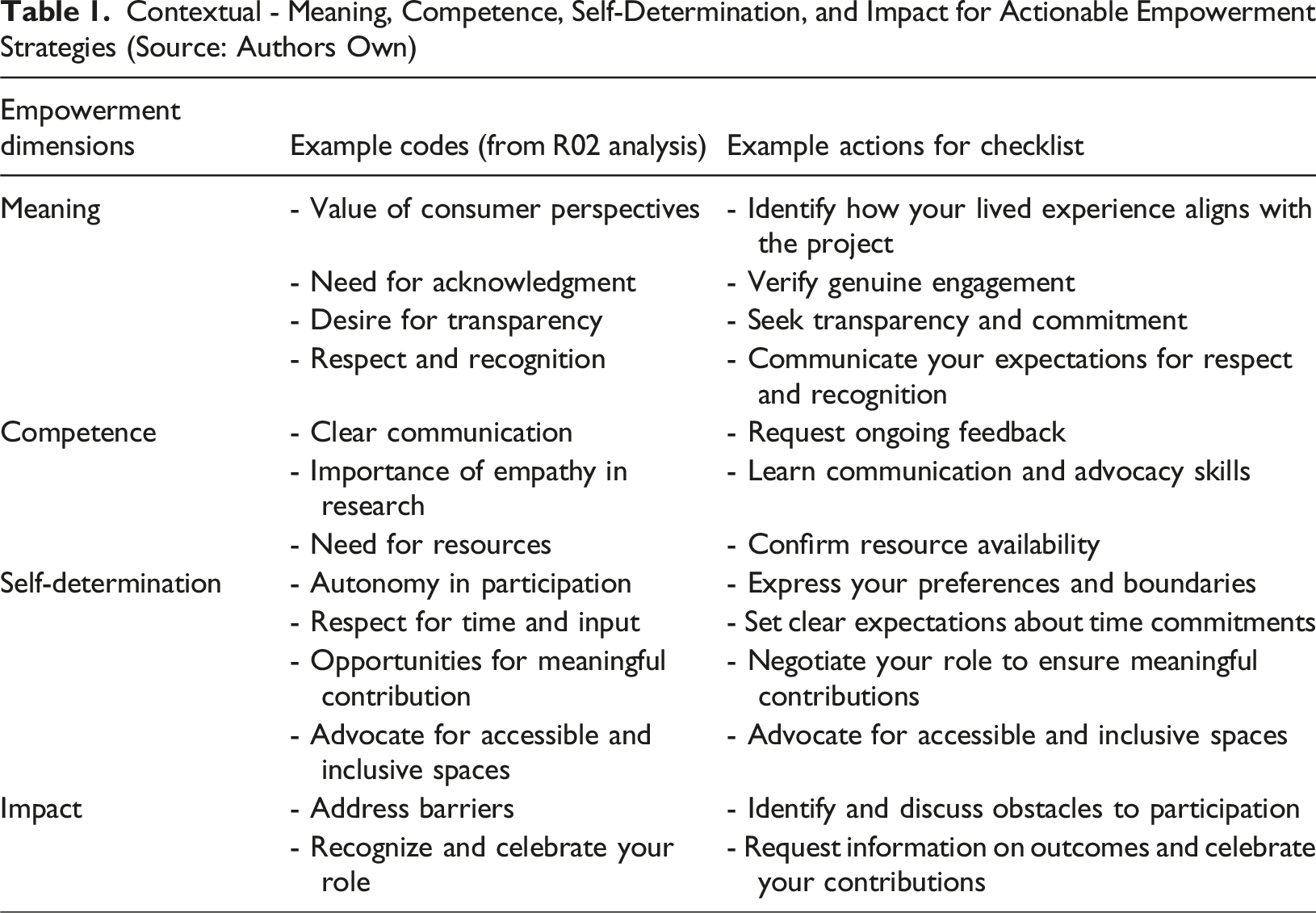
Next, actionable steps were developed for each construct. In the dimension of Meaning, this involved encouraging consumers to reflect on how their lived experiences align with the project’s objectives. For Competence, strategies include requesting information tailored to consumer preferences, such as offering the option to provide asynchronous feedback. To enhance Self-Determination, actions might focus on allowing consumers to choose their level of participation and providing the option to opt out if needed. Finally, for Impact, consumers could request information about the outcomes of their involvement. The finalized checklist is presented in Figure 3. Checklist for Meaningful Consumer Involvement as Co-Researchers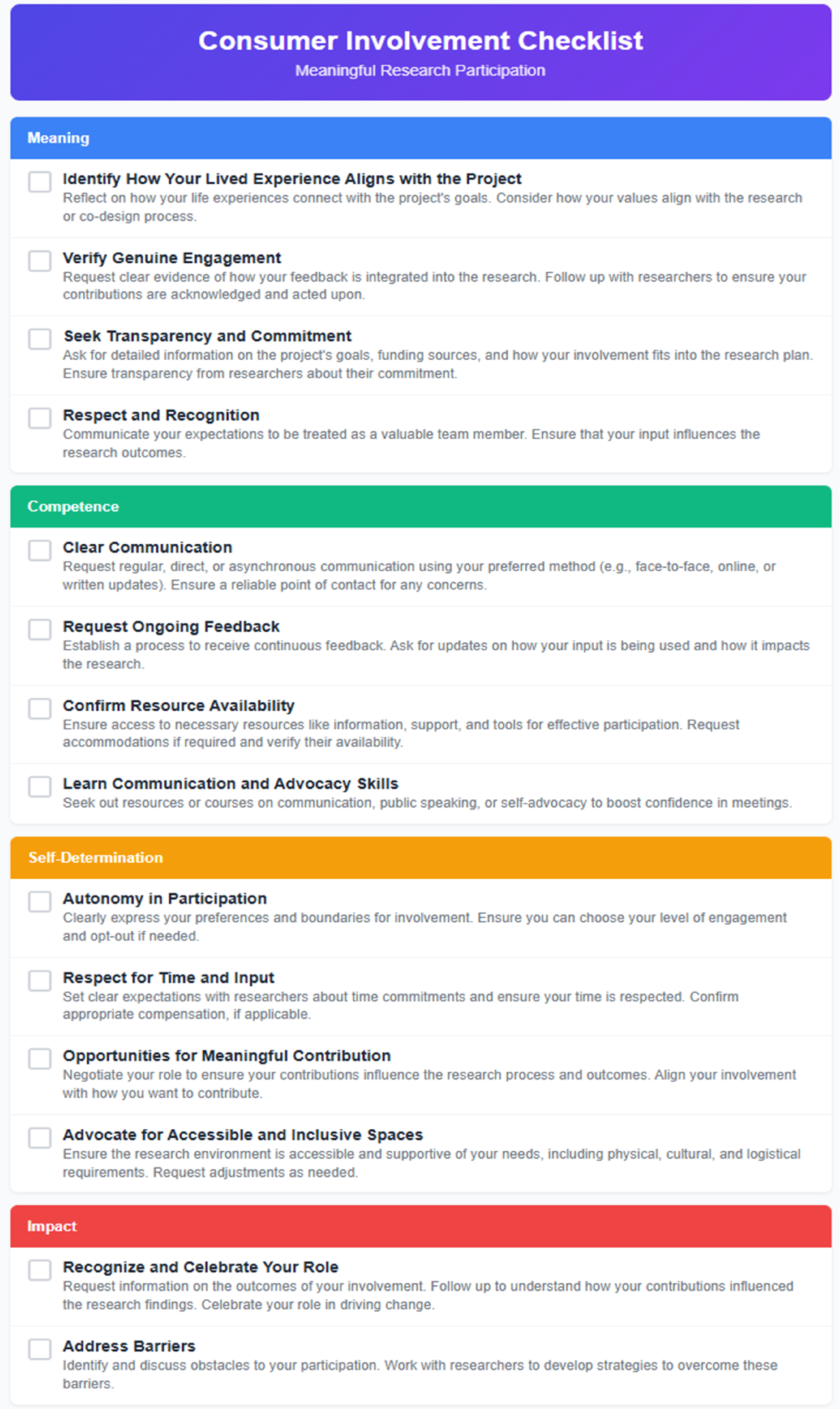
RO4: Conceptualizie the Pathway From Consumer Co-Researchers to Societal Well-Being Outcomes
Conceptual models play a pivotal role in clarifying and structuring complex social phenomena, offering a coherent foundation for observation, explanation, and interdisciplinary research (Jabareen, 2009). In the marketing discipline, Macinnis (2011) highlights the value of conceptual work in generating new insights, connecting previously unlinked ideas, and explicating emerging domains. This study draws from TSR, empowerment theory, and a service system approach to advance a conceptual model of consumer involvement in research that fosters well-being outcomes for individuals and populations experiencing health vulnerability (see Figure 4). Pathway From Consumer Co-Researchers to Societal Well-Being Outcomes (Source: Authors Own)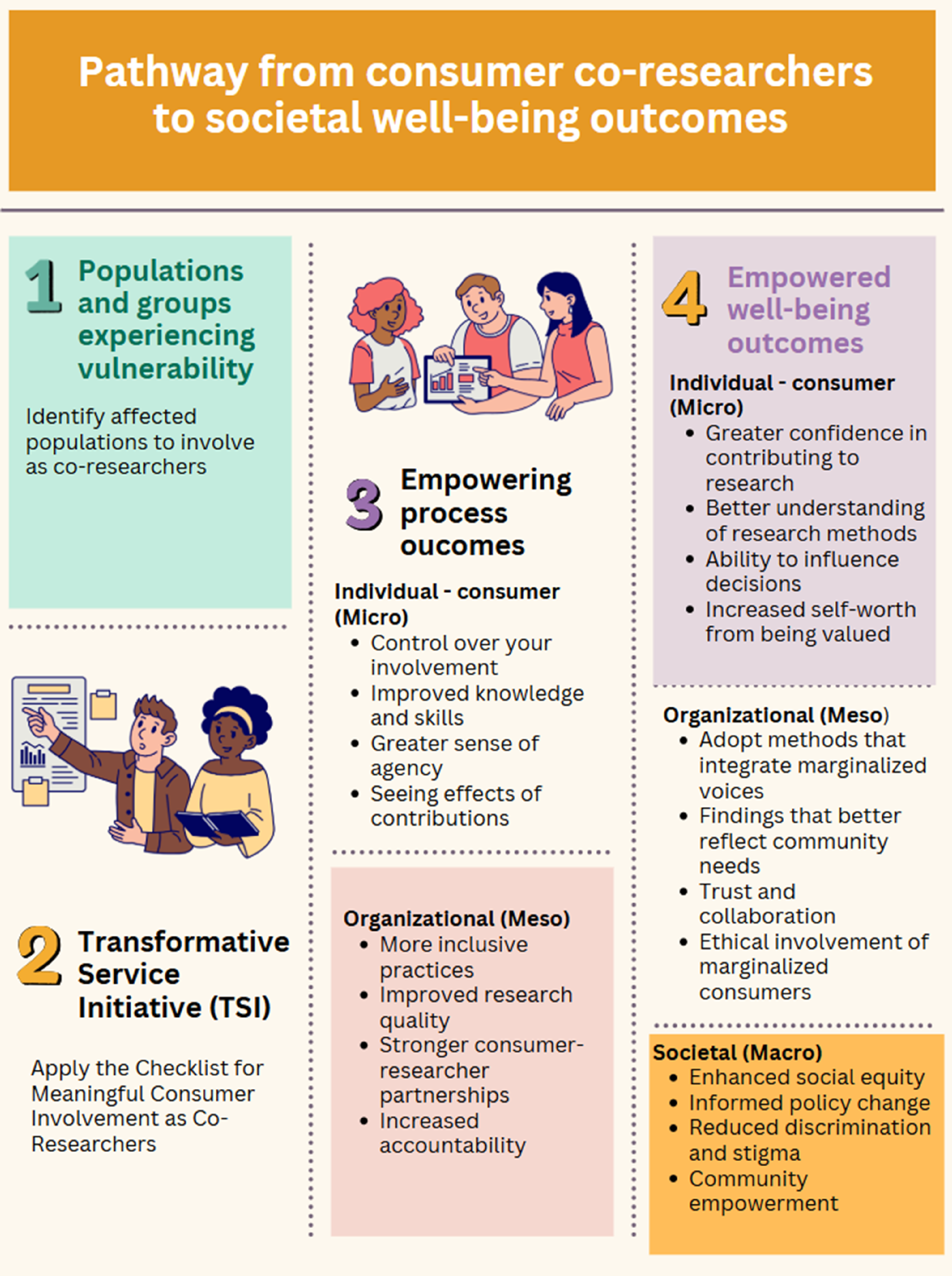
Identifying Affected Populations Experiencing Vulnerability
The starting point of the model is the identification of populations and groups experiencing vulnerability who have historically been excluded from the research process. For an example of how to identify harder to reach populations and outreach activities, see Carlini and Robertson (2023). These groups often face structural disadvantages that hinder their ability to engage with, or benefit from, research (Baker et al., 2005; Raciti et al., 2022). Including these populations as co-researchers is both an ethical imperative and a strategy for enhancing research impact and social relevance (Carlini et al., 2025).
The Transformative Service Initiative (TSI)
The model operationalizes inclusion through a TSI, specifically the Checklist for Meaningful Consumer Involvement as Co-Researchers (Figure 3). This evidence-based tool provides a structured, practical guide for engaging consumers throughout the research lifecycle in ways that build capacity, foster agency, and elevate their roles as knowledge producers (Boenigk et al., 2021; Finsterwalder et al., 2024).
Empowering Process Outcomes
Individual – Consumer (Micro-level)
At the individual level, the model conceptualizes consumer agency as a strength-based, dynamic process. In line with empowerment theory (Rappaport, 1987; Zimmerman, 2000), individuals experiencing vulnerability increase their control over involvement, enhance their knowledge and skills, and cultivate a greater sense of agency or have researchers provide enabling supports (for example, online meeting, provide transcripts, provide additional explanations or time to make decisions). These empowering processes allow individuals to see the tangible impact of their contributions, reinforcing their belief in the value and legitimacy of their participation (Rupp et al., 2020; Spreitzer, 1996). The process supports individual transformation through increased confidence and competence in engaging with research, contributing to more democratic and inclusive knowledge systems (Aliakbari et al., 2020; Rigaud, 2020).
Organisational (Meso-Level)
At the meso level, the model identifies organizational change as essential to sustaining consumer empowerment. Here, empowering outcomes involve embedding inclusive practices into institutional structures, policies, and cultures. This includes leadership commitment, capacity-building for researchers, and systems that support sustained consumer-researcher partnerships (Rupp et al., 2020; Skene, 2021). When organizations systematically integrate marginalised voices, they improve research quality and enhance accountability and responsiveness to community needs (Agner & Braun, 2018; Boenigk et al., 2021). This fosters an environment of mutual respect, ethical engagement, and trust.
Empowered Well-Being Outcomes
Individual (Micro-Level)
As a result of the empowerment processes described above, individuals may experience a range of well-being outcomes. These include greater confidence in contributing to research, improved understanding of research methodologies, enhanced capacity to influence research decisions, and an increased sense of self-worth derived from being recognised and valued (Rigaud, 2020; Spreitzer, 1996; Zimmerman, 2000). These outcomes support ongoing engagement and self-efficacy, forming a foundation for long-term participation and development.
Organisational (Meso-Level)
Organizationally, well-being outcomes are reflected in improved research practices and outputs. Organizations that adopt methods to systematically include marginalised voices produce findings that more accurately reflect community priorities and lived experiences (Agner & Braun, 2018; Boenigk et al., 2021). This leads to enhanced trust between researchers and communities and promotes ethical, accountable approaches to consumer involvement (Skene, 2021).
Societal (Macro-Level)
At the macro level, the model identifies the potential for transformative social impact. When inclusive research practices are embedded across systems, communities gain the ability to influence policy, dismantle structural inequalities, and reduce stigma and discrimination (Mclaughlin, 2016; Raciti et al., 2022). The redistribution of power through inclusive knowledge production fosters community empowerment, autonomy, and collective agency, contributing to long-term societal well-being and social equity (Felner et al., 2000; Rappaport, 1987).
In summary, the model presented in Figure 4 illustrates how empowerment, as both a process and an outcome, can foster positive change across individual, organizational, and societal domains. By operationalizing empowerment through evidence-based, inclusive research practices, the TSI can serve as catalysts for transformative outcomes that promote epistemic justice, participation, and well-being across levels.
Discussion
Theoretical Implications
This research advances understanding in TSR and consumer empowerment by exploring strategies for enabling meaningful participation of consumers experiencing vulnerability within research and service contexts. Drawing on Kanter’s conceptualization of empowerment as organizational power-sharing (Kanter, 1977) and Rappaport and Zimmerman’s work where empowerment is a multilevel construct (Rappaport, 1987; Zimmerman, 2000), this study applies empowerment both as a process and an outcome. In doing so, it responds to recent calls in TSR for genuine collaboration, active co-creation, and the redistribution of power among consumers, practitioners, and researchers (Anderson et al., 2013; Ostrom et al., 2014; Weaver et al., 2023).
A key theoretical contribution lies in bridging the gap between abstract conceptualizations of consumer empowerment and their operationalization in real-world research and service design. Previous scholarship in TSR stresses the need for research that seeks positive well-being outcomes, and actively addresses systemic barriers, promotes agency, and builds capability among those traditionally marginalized (Anderson et al., 2013; Fisk et al., 2018). This research extends such work by demonstrating the value and practicality of co-developing participatory tools (for example, the Checklist for Meaningful Consumer Involvement as Co-Researchers) that can help to enable equitable involvement, foster shared decision-making, and support the dynamic negotiation of power and boundaries throughout research partnerships (Rupp et al., 2020; Schilling & Gerhardus, 2024). By integrating empowerment theory with participatory, ecosystem-oriented approaches, the study delivers both conceptual clarity and practical guidance for overcoming barriers to engagement.
First, consumer involvement in research must be redefined from the consumer perspective, grounded in the lived experiences of those facing vulnerability. Moving beyond traditional unidirectional consultation models, genuine consumer involvement represents a partnership characterized by active participation, co-determination, and respect for diverse forms of knowledge. This shift toward person-centred and inclusive research paradigms is essential for achieving transformative outcomes across health and social services (Anderson et al., 2013; SMHS, 2025). By centering consumer voices, research and service systems can move beyond tokenism to address real-world barriers that limit engagement and empower consumers to co-shape priorities and solutions.
Building on this partnership framework, this study defines consumer involvement in research as the active participation of individuals from underserved groups in addressing barriers to meaningful engagement. This approach fosters mutual growth between researchers and consumers, creates inclusive research environments, and ensures diverse perspectives are valued throughout the research process. By promoting equitable power-sharing, consumer involvement bridges the gap between consumer needs and research priorities, enabling research that is both relevant and transformative.
Second, this research addresses how consumer involvement unfolds within and across complex service systems. By exploring both micro-level (individual) and meso-level (organizational and policy) dynamics, the research illuminates the ecosystemic factors that shape involvement, including power imbalances, tokenism, and systemic barriers to access (Finsterwalder et al., 2024). Inclusive and participatory environments are supported by creative and interdisciplinary methods like LEGO Serious Play, and can foster higher quality engagement, surface hidden barriers, and produce outcomes that are more attuned to real-world complexities.
Third, in conceptualizing the pathway from consumer co-researchers to societal well-being outcomes (Figure 4), consumer involvement in research was illustrated as both a process and an outcome, which can foster positive change across individual, organisational, and societal domains and act as catalysts for transformative outcomes that promote epistemic justice, participation, and well-being across micro-meso and macro-levels.
Practical Implications
Building on empowerment theory, this study introduces an evidence-based Personal Empowerment Checklist (Figure 3) to operationalize consumer involvement in research. The checklist offers practical guidance for consumers, researchers, and practitioners, supporting role clarification, skill development, and the creation of a psychologically safe research environment. It functions as both a planning tool and a living document, fostering shared decision-making and setting clear expectations and boundaries.
Although developed for the health research, the checklist’s structure and principles are widely applicable. It can be adapted for commercial and social research, particularly with hard-to-reach or vulnerable populations. For example, market researchers might apply it in projects addressing financial vulnerability, stigma, or cultural exclusion, tailoring language and facilitation methods to community needs. By guiding recruitment, informed consent, engagement, and reporting, the checklist helps ensure robust, ethical, and context-sensitive research (Rupp et al., 2020; Schilling & Gerhardus, 2024).
For consumers, the checklist offers a structured way to move beyond tokenism, shaping research priorities and outcomes in ways that reflect their lived experience. It encourages skill development while reinforcing that setting boundaries or limiting involvement is acceptable.
For researchers, it serves as a roadmap for meaningful engagement, supporting the intentional integration of diverse perspectives. By enabling a co-production model of power-sharing and decision-making, it strengthens the rigour and relevance of research while fostering empathy and understanding.
For service providers, the checklist embeds consumer involvement as a core value in research processes. It guides the creation of supportive environments through appropriate resources and training, ensuring consumer voices are empowered. This alignment with societal needs enhances the overall impact of research outcomes.
Limitations and Future Research
While this study provides valuable insights into involving consumers experiencing vulnerability in research, its limitations must be acknowledged. The sample was small, but appropriate for an exploratory qualitative study using the LSP method which emphasizes depth of insight and meaningful engagement over breadth. While the findings offer useful perspectives on health research, their transferability to other consumer contexts, such as marketing or complex service design, should be viewed as indicative rather than definitive.
This study contributes to a small but growing evidence base on participatory methods with vulnerable populations, and future research should expand to larger and more diverse samples to test these insights across varied settings. Expanding the range of consumer groups, including neurodivergent individuals, people experiencing infertility, older adults, LGBTQIA+, and refugees could uncover nuanced differences in how vulnerability is experienced and addressed in research engagement (Crosby et al., 2023). Furthermore, exploring the application of the checklist in various research environments will help understand its potential to support consumer empowerment and influence institutional policies. This will provide a clearer picture of how to effectively foster inclusive and meaningful consumer involvement across research settings (Greenhalgh et al., 2019).
Conclusion
This research employed psychological empowerment (Spreitzer, 1996; Zimmerman, 2000) to develop a tool that strengthens the active participation of consumers within the research process as co-researchers. Through a strength-based TSI (Boenigk et al., 2021), it introduced a practical checklist for meaningful consumer co-researchers to support inclusive engagement. Key contributions include conceptualizing consumer involvement, particularly among populations experiencing vulnerability as active, equitable participation that reshapes power dynamics and aligns research goals with consumer priorities (Agner & Braun, 2018; Aliakbari et al., 2020). The checklist may enhance consumers’ confidence, agency, and decision-making capacity, positioning them as valued co-researchers (Rigaud, 2020; Rupp et al., 2020). The study also identifies critical micro- and meso-level dynamics, highlighting how systemic barriers and power imbalances limit service access and shape consumer experiences (Raciti et al., 2022; Skene, 2021). Using a creative arts-based approach, LEGO® SERIOUS PLAY® this research reimagines how vulnerability can be studied and addressed (Phillips et al., 2024), contributing to efforts to reduce persistent access disparities.
Footnotes

Ethical Considerations
Ethics reference GU ref no: 2023/509.
Author Contributions
Funding
The authors disclosed receipt of the following financial support for the research, authorship, and/or publication of this article: This grant was supported by a Griffith Business School grant.
Declaration of Conflicting Interests
RM is a LEGO® SERIOUS PLAY® facilitator. Insights gained from facilitator training informed the design of the LSP sessions within this study.