




Abstract
As research adapts to complex societal and interdisciplinary challenges, qualitative approaches, particularly creative and participatory methods, have gained prominence for fostering inclusive, collaborative inquiry. Grounded in constructivist and constructionist theories, Lego® Serious Play® employs tactile, metaphorical model-building to prompt reflection, meaning-making, and dialogue. Comparing Lego® Serious Play® with narrative inquiry, arts-based research, visual elicitation, and design thinking highlights its potential to enhance interdisciplinary thinking, engagement, and co-created knowledge. Whether applied independently or within hybrid designs, Lego® Serious Play® can enrich participatory research by broadening accessibility, deepening insight, and integrating multiple perspectives, making it a valuable tool for contemporary, inclusive methodologies.
Introduction
Research methods are currently undergoing significant evolution to address the complexities of contemporary societal challenges and interdisciplinary inquiries (Kilag et al., 2024). The traditional divide between quantitative and qualitative methods is increasingly bridged by mixed-methods approaches, reflecting a growing recognition of the need for methodological pluralism (Creswell & Plano Clark, 2023). While quantitative methods remain essential for testing hypotheses and uncovering statistical patterns, qualitative approaches have gained prominence for their ability to provide in-depth insights into lived experiences, contextual dynamics, and the meanings individuals or groups attribute to phenomena (Denzin et al., 2023). These movements highlight the importance of selecting research methods that align with the complexity and diversity of research questions, as well as the epistemological and ethical considerations of the study (Flick, 2022).
Qualitative research continues to thrive in disciplines seeking to explore nuanced human experiences, address societal inequities, and generate context-specific knowledge (Jones & Caudwell, 2024). Approaches such as ethnography, narrative inquiry, and grounded theory have been revitalized by their application in interdisciplinary fields like digital humanities, sustainability studies, and health research (Charmaz & Thornberg, 2021; Strudwick & Strudwick, 2021). The growing use of big data in qualitative research presents opportunities for uncovering broader social patterns while also raising concerns about data saturation and the potential marginalization of participant voices (Mills, 2017). Moreover, the integration of creative and participatory methodologies, such as Lego® Serious Play® (LSP), arts-based research, and visual elicitation methods, reflects a movement toward more inclusive and engaging approaches that value participant voices and co-creation (Cornish et al., 2023; Hall et al., 2021; Henderson & Shipway, 2023). These methods address growing calls for research that not only generates knowledge but also empowers communities and enable collaborative solutions. This can also empower communities and facilitate collaborative solutions, aligning closely with the principles of Participatory Action Research (PAR), which has a long-standing tradition of enabling co-created, transformative outcomes in diverse research contexts (Bradbury, 2015).
Among these research methods, LSP has gained recognition as a creative and engaging tool for facilitating group discussions, problem-solving, and meaning-making. Developed from constructivist and constructionist theories, LSP enables participants to use Lego® bricks to build metaphorical models that represent their thoughts, ideas, and experiences (Kristiansen & Rasmussen, 2014; Roos & Victor, 2018; Zenk et al., 2021). This hands-on and visual approach not only encourages creativity but also supports deeper reflection and dialogue among participants (Kriszan & Nienaber, 2024).
The aim of this article is to explore the methodological characteristics of LSP and how it is situated within the broader landscape of participatory and creative research methods, using comparative analysis. By positioning LSP among other methods such as narrative inquiry (Clandinin & Caine, 2013), arts-based research (Leavy, 2020), visual elicitation (Glaw et al., 2017), and design thinking (Dorst, 2011), this study aims to highlight the unique contributions and potential limitations of LSP. The discussion also considers the implications of using LSP and similar approaches for researchers seeking innovative tools to engage participants and generate meaningful insights. In doing so, this article contributes to the growing discourse on using creative methodologies and their role in advancing participatory research practices.
Review of Literature
Evolution of Research Methods
The evolution of research methods reflects a dynamic interplay between epistemological debates, practical necessities, and technological advancements. Historically, the dichotomy between quantitative and qualitative research represented a clear methodological division. Quantitative methods, rooted in positivist traditions, emphasized measurement, objectivity, and generalizability, employing statistical tools to uncover patterns and relationships (Mohajan, 2018). Qualitative methods, in contrast, arose from interpretivist traditions, focusing on meaning, context, and the subjective experiences of individuals (Park et al., 2020; Rose & Johnson, 2020). While these paradigms initially served distinct purposes, their limitations became evident as research questions grew more complex and multidimensional. As a result, contemporary research methods are increasingly embracing methodological integration and recognizing the value of combining diverse approaches to capture the complexity of real-world phenomena.
The resurgence of qualitative methods highlights the importance of context, meaning, and lived experiences, particularly in fields such as education, sociology, and anthropology (Mohajan, 2018). Ethnographic studies, for instance, provide nuanced insights into cultural practices that quantitative surveys might overlook (Hammersley & Atkinson, 2019). Yet qualitative research faces scrutiny for its perceived lack of generalizability and susceptibility to researcher bias (Lim, 2024). Quantitative methods, while lauded for their replicability and statistical power, have also been critiqued for their reductionism (Swargiary, 2024). By prioritizing numerical data, these methods may overlook the social and cultural nuances that influence observed patterns (Olteanu et al., 2019). Ethical concerns regarding the decontextualization of participants’ experiences further highlight the limitations of quantitative dominance (Hesse et al., 2019). Reflecting such broader epistemological and ethical shifts in academia, these challenges may be navigated by enabling methodological innovation while maintaining ethical accountability. Cross-disciplinary collaborations, participatory research designs, and the integration of indigenous methodologies are promising directions for addressing such epistemological and societal demands of contemporary research (Smith, 2021).
The recognition of these limitations has also catalyzed the rise of mixed-methods research, which integrates quantitative and qualitative elements to address multifaceted research questions (Creswell & Plano Clark, 2017). This methodological innovation exemplifies a movement toward inclusivity, acknowledging that no single approach can comprehensively capture the complexity of phenomena. For example, mixed methods are particularly effective in public health studies, where statistical trends, such as prevalence rates, are complemented by qualitative insights into patient experiences and cultural barriers to care (Plano Clark, 2017). However, the integration of methods remains contested, as critics argue that combining approaches underpinned by fundamentally different ontologies, such as positivism and interpretivism, can become a risk of epistemological incoherence (Guba & Lincoln, 1994). Despite this tension, pragmatism offers a practical resolution by prioritizing the utility of methods in addressing research objectives. In doing so, this advocates methodological choices that best capture the complexity of real-world issues when addressing research objectives rather than adherence to rigid paradigms (Omodan, 2024).
Beyond mixed methods, methodological pluralism underscores the importance of tailoring research designs to the nature of the inquiry. The complexity of modern societal issues, such as climate change and digital transformation, necessitates diverse methodological approaches (Flick, 2022; Weber, 2017). For example, in sustainability studies, quantitative models predicting environmental trends can be enriched by qualitative analyses of community perceptions and policy impacts. This pluralistic perspective not only enhances the depth of understanding but also addresses ethical considerations by incorporating multiple stakeholder voices (Bazeley, 2020). Critics argue that an overemphasis on flexibility can risk diluting methodological rigor, as the blending of divergent paradigms may lead to inconsistent or fragmented interpretations of data (Ahmed, 2024). This tension is particularly pronounced in mixed-methods research, where combining quantitative and qualitative approaches can blur epistemological boundaries, which can raise questions about validity and coherence (Creswell & Plano Clark, 2017). Without a clear theoretical framework to guide the integration process, researchers risk engaging in methodological eclecticism, an approach that draws indiscriminately from multiple methods without sufficient justification and which can undermine the credibility of findings (Mutch, 2009). To counteract this, scholars have advocated for more explicit integration frameworks, such as Greene’s (2007) five purposes of mixed methods or Bazeley’s (2017/2018) integrative analysis models, which promote coherence between paradigms while also maintaining methodological rigor. Thus, the challenge lies not only in embracing methodological diversity but also in ensuring that the integration process is systematically underpinned by coherent epistemological and theoretical foundations.
Creative and Participatory Methodologies
The evolution of creative and participatory research methodologies marks a significant movement in the epistemological and ethical underpinnings of research (Chevalier, 2019; Leavy, 2022). These methodologies prioritize co-creation, participant engagement, and empowerment, distinguishing themselves from traditional approaches by enabling inclusivity and contextual sensitivity (Lee et al., 2018). Rooted in principles of collaboration and innovation, these approaches are increasingly recognized for their ability to generate meaningful insights into complex phenomena and societal challenges (Kara, 2020). They reflect a broader movement toward democratizing knowledge production (Janes, 2016). Historically, research was often characterized by hierarchical relationships, with participants serving as passive sources of data (May & Perry, 2022). The rise of participatory paradigms, influenced by Freire’s (1970) critical pedagogy, challenges these dynamics by positioning participants as active contributors in the research process (Aliakbari & Faraji, 2011). Approaches such as PAR exemplify this trend by emphasizing collaboration, reflexivity, and a shared commitment to social change (Kemmis & McTaggart, 2007; Kirby et al., 2006). Creative methodologies, such as sand play therapy (Turner, 2023), narrative inquiry (Clandinin & Caine, 2013), arts-based (Leavy, 2020), visual elicitation (Glaw et al., 2017), and design thinking (Dorst, 2011), extend these principles by integrating innovative techniques. These methods enable environments where participants can express complex ideas through alternative mediums and processes, enabling deeper exploration of psychological, social, and systemic dimensions (Frost, 2021).
Creative and participatory methods offer several strengths. First, they empower participants by enabling them to shape the research process actively, which can foster a sense of agency and ownership. For example, design thinking prioritizes both meeting the needs of participants and identifying relevant solutions (Aflatoony et al., 2024) and encourages participant-led problem-solving through iterative prototyping (Brown, 2009). These aspects are valuable in domains such as health, where it has been used to uncover previously unknown issues and, subsequently, novel solutions (Roberts et al., 2016). LSP facilitates collaboration and shared understanding through tangible and visual narratives (Gauntlett, 2007; Kristiansen & Rasmussen, 2014). These approaches enhance the contextual relevance and authenticity of research findings. Second, participatory methods capture diverse perspectives, particularly those of marginalized or underrepresented groups, and help ensure research outcomes more accurately reflect lived experiences (Pettinger et al., 2018). Reflexivity plays a crucial role in this process, requiring researchers to critically examine their positionality and its influence on research dynamics (Berger, 2015). Third, the integration of creative tools can expand the methodological repertoire and enhance interdisciplinary innovation. For example, systems mapping is used in sustainability studies to explore the interconnectedness of environmental, social, and economic factors (Canty-Waldron, 2014; Meadows, 2008), while digital tools such as virtual reality can enhance engagement through immersive and interactive experiences (Baxter & Hainey, 2024).
Despite their strengths, creative and participatory methodologies also present challenges. These methodologies aim to reduce hierarchies, but imbalances can persist, particularly in the design and facilitation of creative processes (Long, 2014). Researchers must ensure that their methods do not privilege certain voices or perspectives over others (Mannay, 2015). Another challenge lies in informed consent and the potential co-optation of participant voices. The emergent and iterative nature of these methodologies can make it difficult for participants to fully understand how their contributions will be interpreted or used, raising ethical concerns about transparency and representation (Tracy, 2024). In addition, critics question the methodological rigor of creative approaches, particularly regarding reproducibility and generalizability (Hays & McKibben, 2021). Researchers must carefully document and justify their methodological choices to demonstrate the credibility of their findings.
Emerging trends in creative and participatory research signal promising developments. The integration of digital tools, such as virtual reality and online collaborative platforms, expands opportunities for co-creation, enabling researchers to engage diverse populations and overcome geographical barriers. The incorporation of indigenous and decolonial methodologies also align with participatory principles by prioritizing local knowledge systems, cultural sensitivity, and community ownership (Omodan & Dastile, 2023). These innovations not only further democratize research but also enhance its inclusivity and relevance. The evolution of creative and participatory research methodologies reflects a transformative shift in how knowledge is produced, shared, and applied. By enabling collaboration, inclusivity, and empowerment, these approaches offer valuable tools for addressing complex societal challenges (May & Perry, 2022). However, their successful implementation requires careful attention to ethical considerations, methodological rigor, and the dynamics of power and representation (Mannay, 2015). As these methodologies continue to evolve, they hold the potential to reshape research practices, contributing to more equitable, context-sensitive, and impactful scholarship.
LSP as a Research Tool
LSP has emerged as an innovative qualitative research method, focusing on capturing participants’ perceptions, perspectives, and shared meanings through a participatory and tactile process (Henderson & Shipway, 2023). The method’s emphasis on collaboration and creativity makes it particularly effective in contexts such as co-design, action research, and community-based projects (Shipway & Henderson, 2024). The LSP method enables participants to use Lego® bricks as mediating artifacts to construct symbolic or metaphorical representations of abstract concepts (McCusker, 2020). The use of metaphors in research, particularly in PAR, offers a valuable way to capture complex experiences and facilitate collaborative meaning-making. This approach enables participants to express implicit or hard-to-articulate ideas; however, its potential remains underexplored across many research contexts (Leander et al., 2010; McClintock et al., 2003). Moreover, concerns have been raised about both the misuse of metaphors and the use of poor metaphors (Kampourakis, 2016). In practice, individuals build metaphorical structures with Lego® bricks in response to prompts, challenges, or questions posed by a facilitator and develop metaphoric storytelling narratives to explain these creations (James, 2013). This process transforms personal thoughts and ideas into physical representations; LSP allows participants to articulate abstract or intangible concepts, offering a nuanced and detailed approach to data collection and analysis. Furthermore, the process allows participants to unlock tacit knowledge, convert it into explicit concepts (Figure 1), and explore solutions for personal or collective challenges (Henderson & Shipway, 2023).
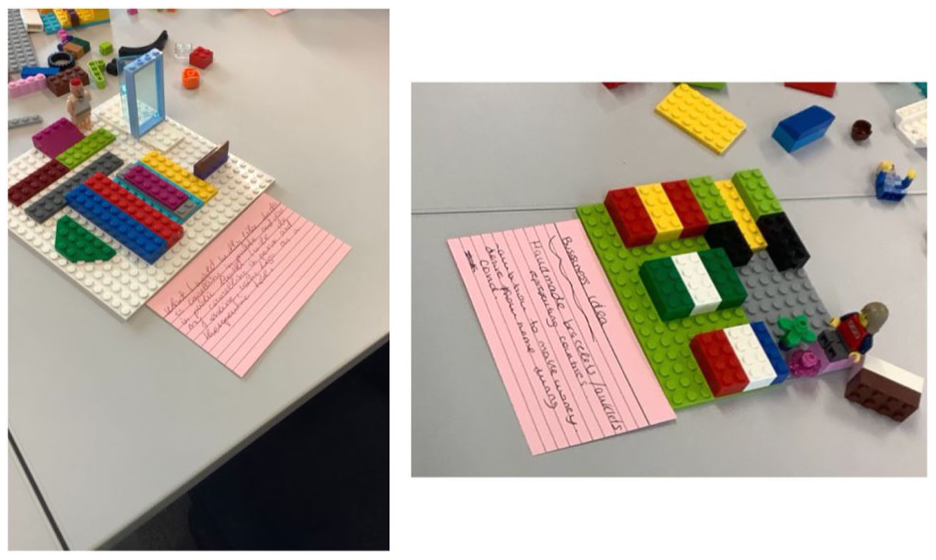
Examples of Lego® Builds for Graduate Skills Business Ideas.
The LSP methodology is built on four foundational pillars: the use of metaphors, the concept of play, the theory of flow, and constructivism (Shipway & Henderson, 2023). These principles work together to facilitate learning through exploration and the metaphorical representation of abstract ideas. Central to the success of LSP workshops is Csikszentmihalyi’s (1990) theory of flow, which describes a state of effortless engagement achieved through a balance of skill and challenge. McCusker and Swan (2018) emphasize that the interplay of challenge, fantasy, and creativity within LSP workshops creates immersive and playful environments, creating this state of flow. Flow experiences are important for obtaining high-quality data because they foster both engagement and focus, allowing participants to provide authentic, rich responses. When participants enter a state of flow, they are more likely to share meaningful insights, leading to deeper and more reflective data (Csikszentmihalyi, 1990; Jackson, 2016). In addition, flow experiences can enhance the researcher’s ability to actively listen and respond, which can help facilitate more effective data collection (Kvale & Brinkmann, 2009; Roberts, 2020).
The theoretical underpinnings of LSP are firmly rooted in constructivist and constructionist traditions. Constructivism focuses on the construction of knowledge through individual experiences, while constructionism extends this by emphasizing the creation of physical objects as representations of thoughts or systems (Piaget, 1964). Papert and Harel’s (1991) work on constructionism highlights the value of learning through a concept that is central to the LSP approach. This was originally outlined by Roos and Victor (1999), whereby it was designed to externalize tacit organizational knowledge, enable safe challenge to hierarchy, and build shared commitment to a collective strategic direction. These foundational theories are further enriched by its participatory and reflective dimensions, which align closely with the goals of qualitative research. By constructing physical models with Lego® bricks, participants externalize and communicate ideas that might otherwise be challenging to express verbally. This approach is especially valuable in multidisciplinary or diverse groups, as it bridges communication gaps and enables inclusive dialogue (Kriszan & Nienaber, 2024). This integration of theoretical principles ensures that LSP not only supports individual knowledge construction but also enhances the richness and depth of qualitative data through its emphasis on interaction, reflection, and shared understanding.
LSP also enables a participatory framework, which emphasizes collaboration and co-creation within the process (Al-Jayyousi & Durugbo, 2020), which is evidenced in the sharing and reflection phases (Henderson & Shipway, 2024). Participants are not merely subjects of the study but active contributors (Dann, 2018). Such engagement is particularly critical in research aimed at addressing complex, community-driven problems, as it ensures that diverse perspectives are integrated into the process. This collaborative approach, central to PAR, can empower participants by valuing their lived experiences and perspectives and ensuring the research is relevant and grounded in real-world contexts (Bradbury, 2015; Denzin & Lincoln, 2011). This challenges traditional research hierarchies and promotes a more democratic, inclusive process.
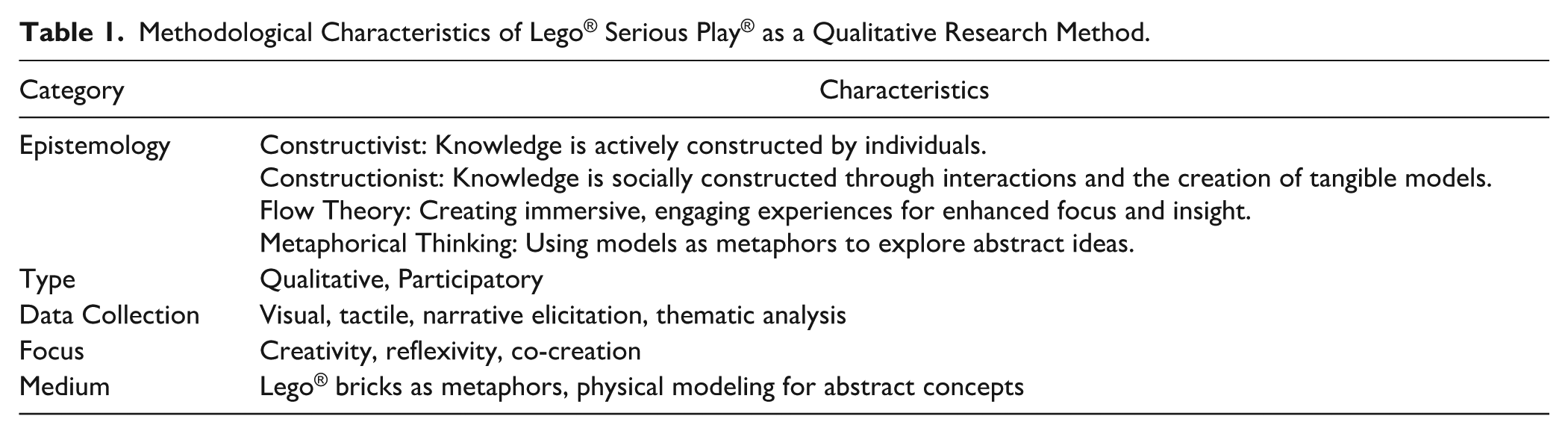
Creativity and reflexivity are core components of the LSP process (Hayes & Graham, 2020). The act of building models allows participants to reflect on their internal thoughts and externalize them in a non-threatening and engaging way (Figure 2). This creative process often leads to deeper insights and understanding. By visualizing relationships, dependencies, and dynamics, participants gain a holistic understanding of the issues, facilitating innovative solutions (Jensen, 2017). Table 1 highlights the epistemological foundations and methodological characteristics of LSP, emphasizing its constructivist and constructionist roots, participatory approach, and the use of Lego® bricks as a medium for exploration and expression.
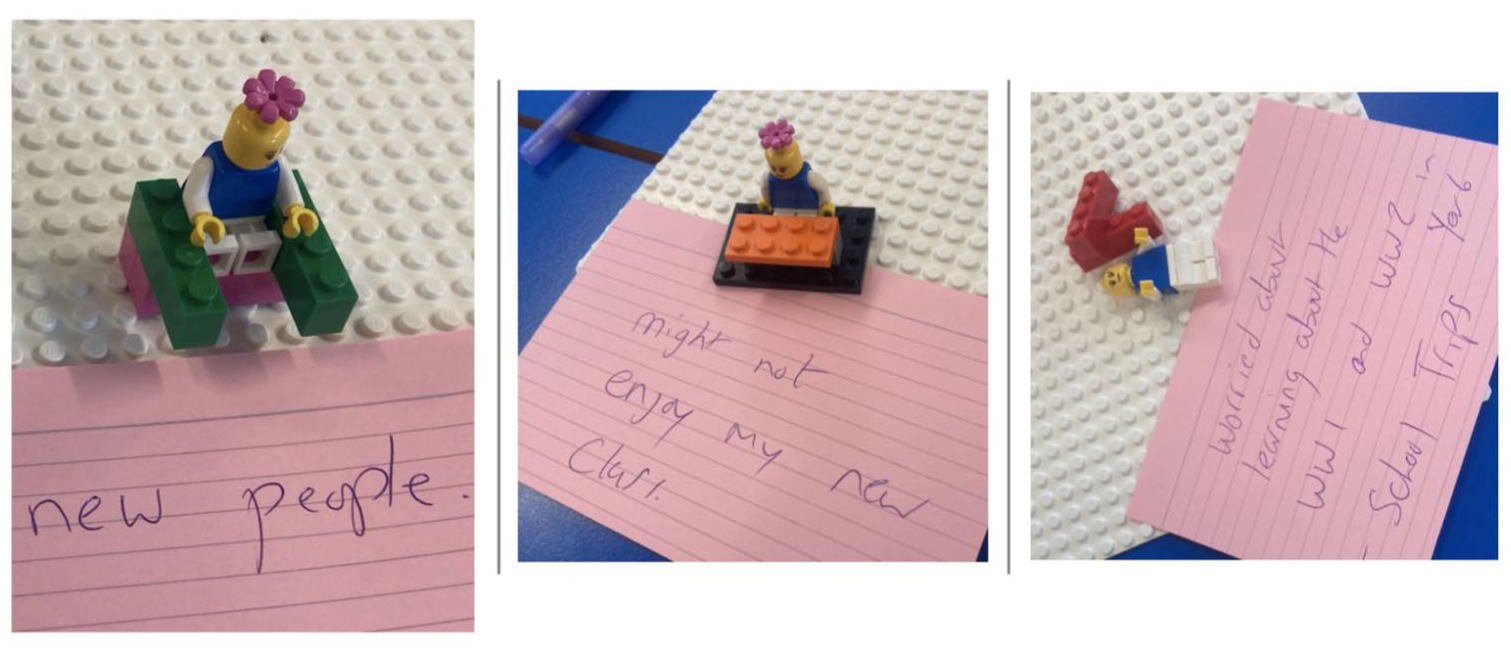
Examples of Lego® Builds Considering Transition Anxiety in Young People.
Methodological Characteristics of Lego® Serious Play® as a Qualitative Research Method.
The versatility of LSP makes it suitable for various qualitative research contexts such as participatory research and reflective practices, but its use should be thoughtfully tailored to the specific context (Kriszan & Nienaber, 2024). This method has been effectively integrated into multi-method approaches, combining techniques like interviews, observations, and workshops (Wengel, 2020). Compared to traditional methods, LSP facilitation supports the articulation of personal narratives (Hayes & Graham, 2020). It facilitates deeper critical introspection by enabling participants to externalize abstract ideas into tangible models, engage in reflective dialogue, and challenge their assumptions, which can enhance critical thinking and problem-solving (Hayes & Graham, 2020; Peabody & Noyes, 2017).
It has also demonstrated potential in examining professional identities and fostering metacognitive development, particularly in educational contexts (McCusker, 2020). Researchers often pair LSP with thematic or narrative analysis to derive meaning from the models and accompanying narratives, further enriching the interpretative process (Henderson & Shipway, 2023; Warburton et al., 2022). Nonetheless, researchers must consider its limitations, including the necessity for contextual adaptation and the risk of sampling biases (Hayes & Graham, 2020; Kriszan & Nienaber, 2024). While outlining how LSP may enrich creative and participatory research methodologies, it is also important to briefly acknowledge the challenging technical and organizational aspects of the approach. These include, for example, the need to balance the dual roles of facilitator and participant (Wengel, 2020) and the increased time (Rose & Furness, 2024; Zenk, et al., 2018) and cost (McCusker, 2020). Similarly, organizational issues, for example, the need to consider the availability of appropriate room size and table composition (Kriszan & Nienaber, 2024), and even the need to consider the time of day, which may impact upon its effectiveness (Martin-Cruz et al., 2021). Skilled facilitation is essential to maintain focus and productivity, as the playful nature of the process can sometimes lead to distractions (Kristiansen & Rasmussen, 2014). LSP offers qualitative researchers a unique blend of creativity, collaboration, and reflexivity, making it a valuable method for engaging participants in innovative ways. While challenges such as the need for skilled facilitation and context-appropriate applications exist, its benefits in fostering deep insights and inclusive dialogue outweigh these limitations.
Methodology: Using a Comparative Analysis Approach to Explore the Positioning of LSP
This study uses a comparative analysis approach to explore the positioning of LSP and how it is situated within the broader landscape of participatory and creative research methods. Comparative analysis was chosen as the methodological approach because it has been successfully used to examine and evaluate the similarities and differences between two or more entities, such as texts, theories, cases, or phenomena, to gain deeper insights and understanding (Esser & Vliegenthart, 2017). This method is widely employed across disciplines, including social sciences, humanities, and natural sciences, to identify patterns, test hypotheses, and generate new theoretical frameworks (Mohajan, 2018; Weber, 2017). It involves systematic criteria for selection, ensuring that the items being compared share a common basis yet exhibit distinctive features relevant to the research question (Rihoux & Ragin, 2009). The use of this methodology was designed to provide an in-depth understanding of the contributions of LSP while situating it within a broader methodological framework that considers the strengths and limitations of similar approaches.
By comparing LSP within the broader landscape of other creative and participatory research methods, this study aims to better understand potential shared principles and applications in collaborative problem-solving. The research objective was to define how LSP and methods such as narrative inquiry and visual elicitation enable creativity, participant engagement, and collective problem-solving. This comparison sought to uncover patterns in how these methods were implemented, their impact on reflective processes, and their theoretical contributions to participatory research (Leavy, 2022). The analysis focused on identifying key similarities and differences between LSP and the selected methods, highlighting how their goals, techniques, and outcomes aligned or diverged in creativity and collaborative reflection (Kara, 2020). The research also explored the theoretical development of participatory methodologies and their potential to enhance creativity in research settings (Barrett et al., 2021).
A comparison matrix was developed to systematically compare identified fields across LSP and selected creative and participatory methods and to organize key characteristics such as participant engagement, creativity, and collaborative problem-solving, facilitating a clear and direct comparison of these methods. Data collection involved secondary sources, identified through a systematic search of titles on Google Scholar using the custom range(s) of “all time,” “since 2021,” and “since 2024,” “review articles,” and “include citations.” Specific search terms related to LSP, such as use search terms like: “Lego Serious Play methodology,” “Lego Serious Play research,” “Lego Serious Play applications,” or “Lego Serious Play studies,” were used to identify initial sources for consideration. These results were narrowed down by selecting peer-reviewed articles and focusing on recent studies or foundational works related to LSP. It should be noted that the foundational work by Roos and Victor (1999), with 203 citations, was not included due to their positioning of the methodology as “Serious Play” rather than LSP. In the context of LSP, early original and innovative foundational studies remain widely cited, which indicates an enduring relevance over time (e.g., James, 2013; Kristiansen & Rasmussen, 2014). The search for comparable methods included “participatory research methods,” “creative research methods,” “narrative inquiry,” “participatory research,” and “participatory action research.” Once relevant sources were located, citation tracking and reference indexing were used to expand the search and identify additional important works that cited or were cited by foundational texts. Descriptive statistics such as counts and rates were used to present findings.
The selection and exploration of comparable methods were based on a purposive sampling strategy to ensure sufficient variation in their approaches while remaining relevant to the research question. The data from this previous step were uploaded into Research Rabbit (see example in Figure 1), where key data points were extracted from each source, including core principles, implementation strategies, and outcomes of each method. These data points were then categorized according to the fields outlined in the comparison matrix, such as tactile engagement, participant interaction, and collaborative problem-solving. The extracted data were organized into the comparison matrix for side-by-side evaluation of LSP and other methods. This involved categorizing each method by focal points (e.g., creativity, engagement), key tools (e.g., metaphoric modeling in LSP, narrative techniques in narrative inquiry), and shared principles (e.g., participatory ethos). The data were then analyzed thematically to identify recurring patterns, common themes, and significant differences across the methods (Jones, 2022).
Key themes, such as the role of tactile engagement in enabling creativity or the emphasis on group reflection in participatory research, were coded and analyzed to highlight how these methods aligned or diverged in their approach to creativity (Leavy, 2022). This thematic analysis also identified underlying theoretical foundations and principles across methods, aiding in understanding how they contributed to participatory and creative research. The analysis focused on determining how each method achieved its goals and the extent to which they overlapped or complemented each other in their research applications (Kara, 2020). The matrix and thematic process provided a clear, comparative view of each method’s strengths and contributions to participatory, creative research and offered insights into their applicability in various research contexts (Figure 3).
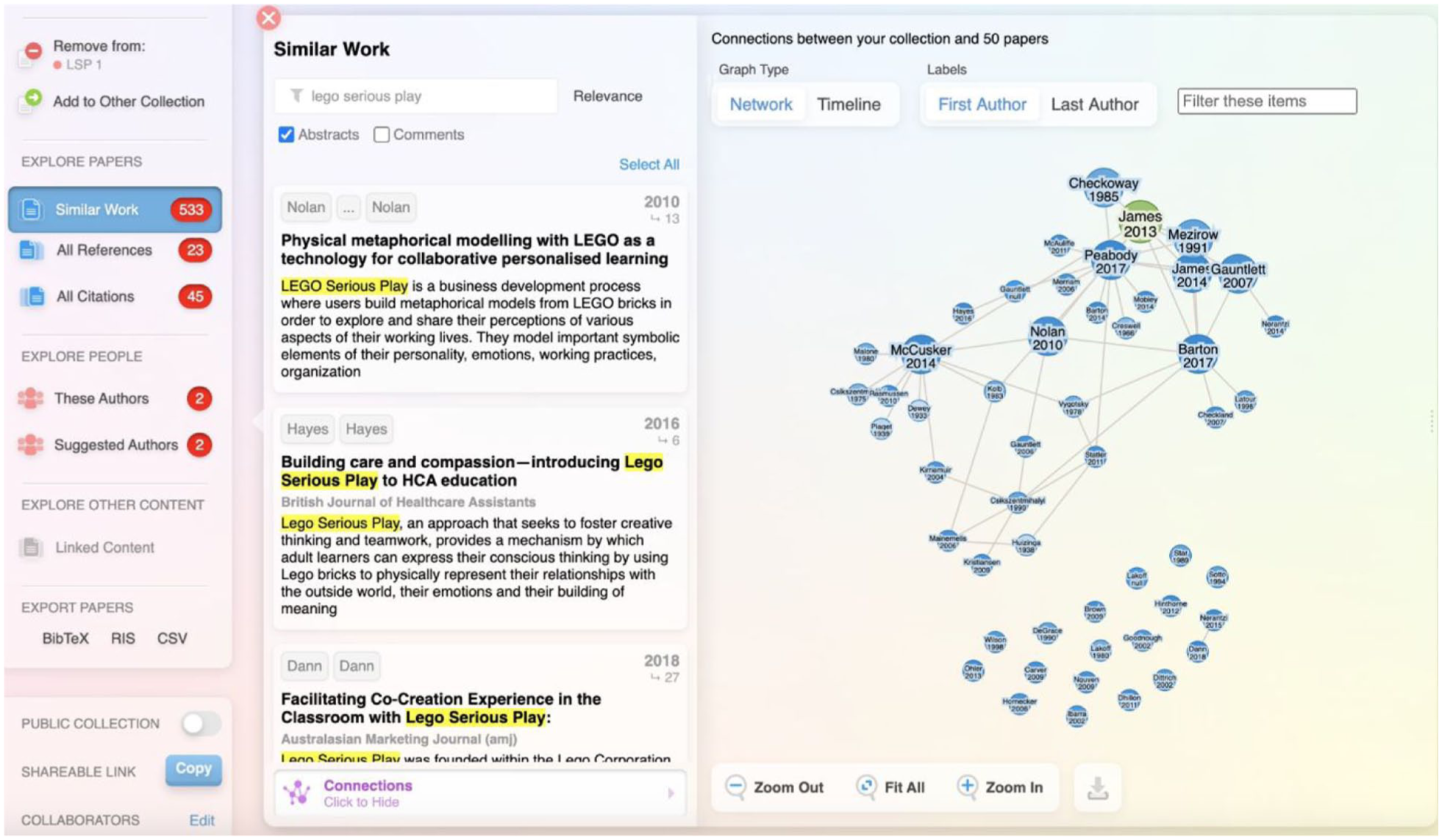
Example of Research Rabbit Mapping and Theme Development.
Results and Discussion
The results and discussion section of this study presents a summary of trends and growth rates to set the scene, followed by a comparative analysis of LSP and other creative and participatory research methods. The discussion probes into how each method enables reflective processes and collective creativity while also highlighting their shared principles and application. Key themes that emerged during the analysis are examined, with a focus on how these methods contribute to the theoretical development of participatory research and their practical implications in various research settings.
Table 2 shows the trends reported from the Google Scholar searches indicate that LSP has experienced significant growth, with a 55.6% (n = 163) increase in publications since 2021. This surge reflects rising interest in LSP as a method (Henderson & Shipway, 2024). However, growth slows to 27.6% (n = 45) for 2024 onwards, suggesting that while interest remains strong, the field may be nearing a plateau. Subcategories like LSP Methodology (n = 7), Applications (n = 2), Research (n = 1), and Qualitative (n = 1) show modest growth, highlighting opportunities for further exploration, particularly in applied, theoretical, and research contexts. In contrast, creative research methods have shown steady and robust growth. Since 2021, publications in this field have increased by 41.3% (n = 699) across creative methods, reflecting the growth of embracing innovative research practices across disciplines. The growth in creative research (n = 374) accelerates further in the 2024+ period, rising by 44.4%, which indicates sustained momentum and expanding influence.
Summary of Google Scholar Publication Count and Top Citations.
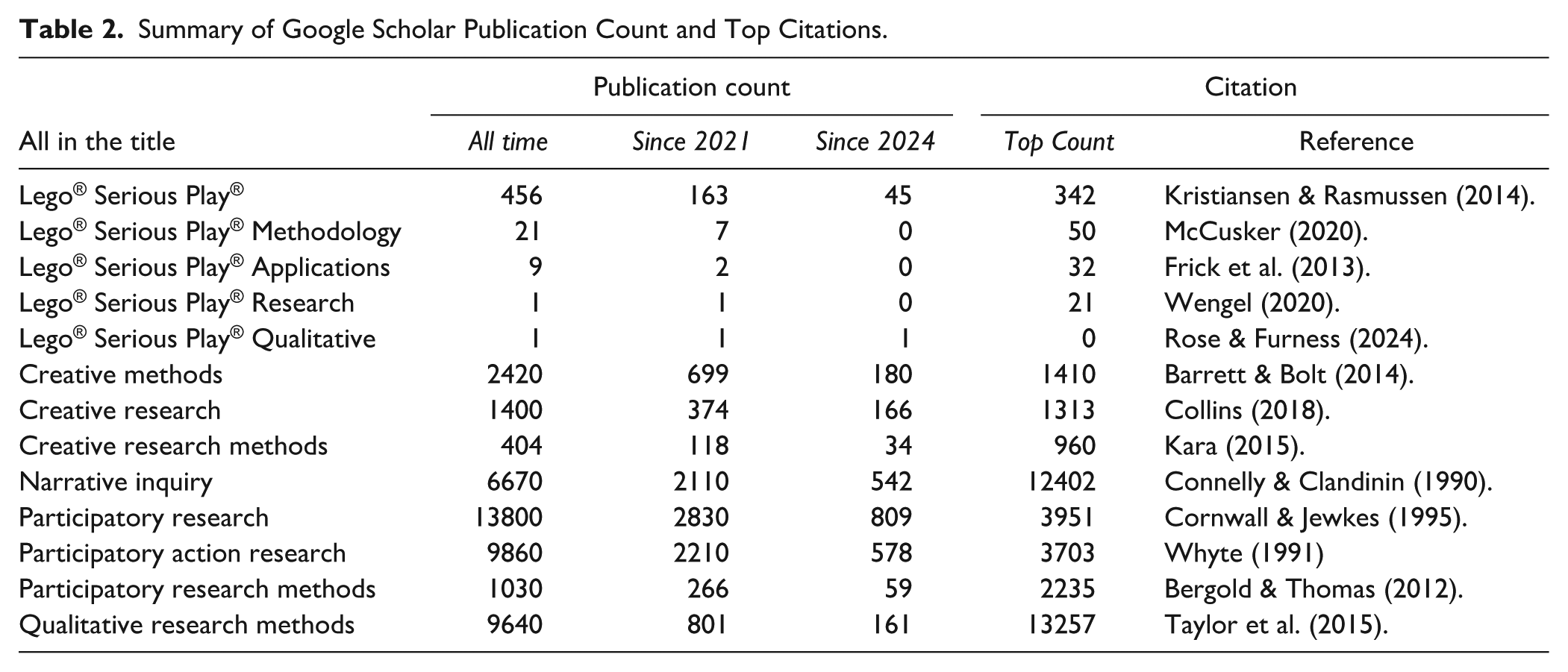
Similarly, participatory research continues to demonstrate relevance, with a consistent growth rate of approximately 26%–28% (n = 2,830), which underscores its foundational role in collaborative and community-based research. Narrative inquiry (n = 2,110) and qualitative research methods (n = 801) maintain their status as high-impact fields. Although qualitative methods experienced modest growth of 9.1% from 2021, this trend strengthens to 20.1% in 2024+, signaling renewed interest in foundational research approaches. Meanwhile, narrative inquiry achieved an impressive growth rate of 46.3%, reflecting its critical role in exploring lived experiences across diverse contexts. The data highlights growth in both LSP (n = 163) and broader fields like creative (n = 699) and participatory research methods (n = 2,830), with opportunities for expanding LSP applications and methodologies.
The leading citations across these topics reflect a mix of foundational sources and more recent contributions. While older outputs have had time to accumulate citations and establish their influence, newer ones have grown in significance over time, as trends and academic conversations evolve. Older publications like Connelly and Clandinin (1990) and Cornwall and Jewkes (1995) tend to have higher citation counts, but their relevance should be evaluated regarding the advances in the field. Recent publications in LSP (e.g., McCusker, 2020; Rose and Furness, 2024; Wengel, 2020) are still in the early stages of being cited. They are likely to grow in impact, but it is perhaps too early to assess their long-term influence. It is worth noting the citation count itself is not always indicative of a paper’s intrinsic value or quality. The context, focus area, and the development of the field all play critical roles in determining how impactful these outputs might be (Aksnes et al., 2019).
By comparing LSP to other methods, it can be established how these approaches align with the distinct attributes of LSP and consider the contexts in which they might serve as complementary or alternative strategies. Eight methods were included in the comparison based on findings from the secondary sources (Table 3 and Figure 2). Design Thinking was identified in the search process as creative problem-solving through iterative prototyping and sketching (Micheli et al., 2019). Like LSP, it promotes collaboration and iterative exploration, making it well-suited for innovation-driven contexts.
Comparative Features of Lego® Serious Play® and Other Methods.
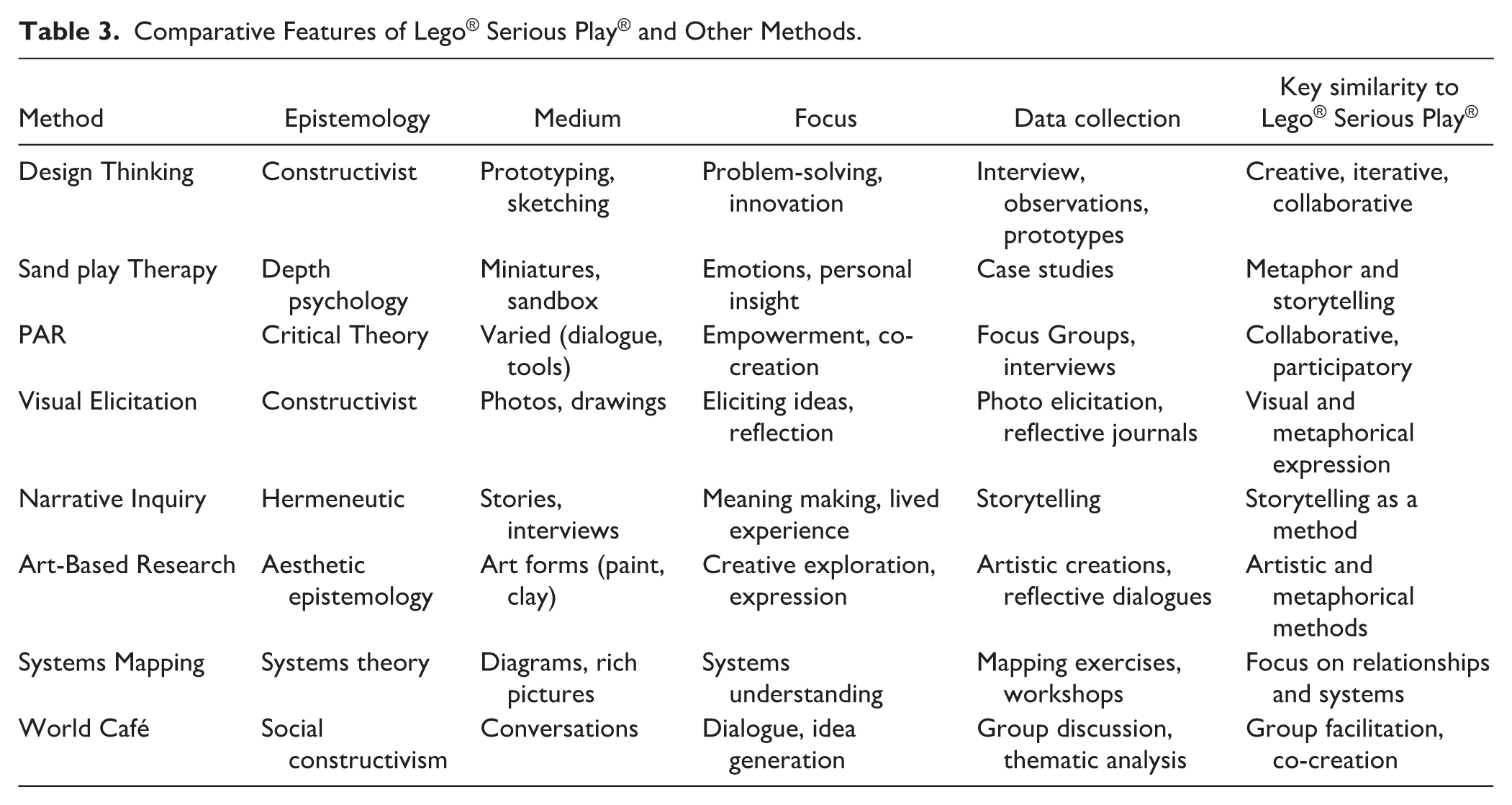
However, while LSP engages participants through tactile and metaphoric means, Design Thinking relies on cognitive and visual tools, which may limit the depth of personal insights. Despite this distinction, Design Thinking’s adaptability across disciplines makes it a valuable complement to LSP for addressing complex, open-ended research problems. The findings also included Sand play Therapy, rooted in Jungian psychology, which employs miniatures and a sandbox to explore emotions and personal insights (Ryce-Menuhin, 2014). The metaphorical and storytelling elements mirror LSP and its use of Lego® models to externalize thoughts. However, Sand play Therapy is primarily therapeutic, targeting individual introspection. Although it shares metaphorical strengths with LSP, its narrower focus on emotional healing makes it less applicable for organizational or systems-level research (Figure 4).
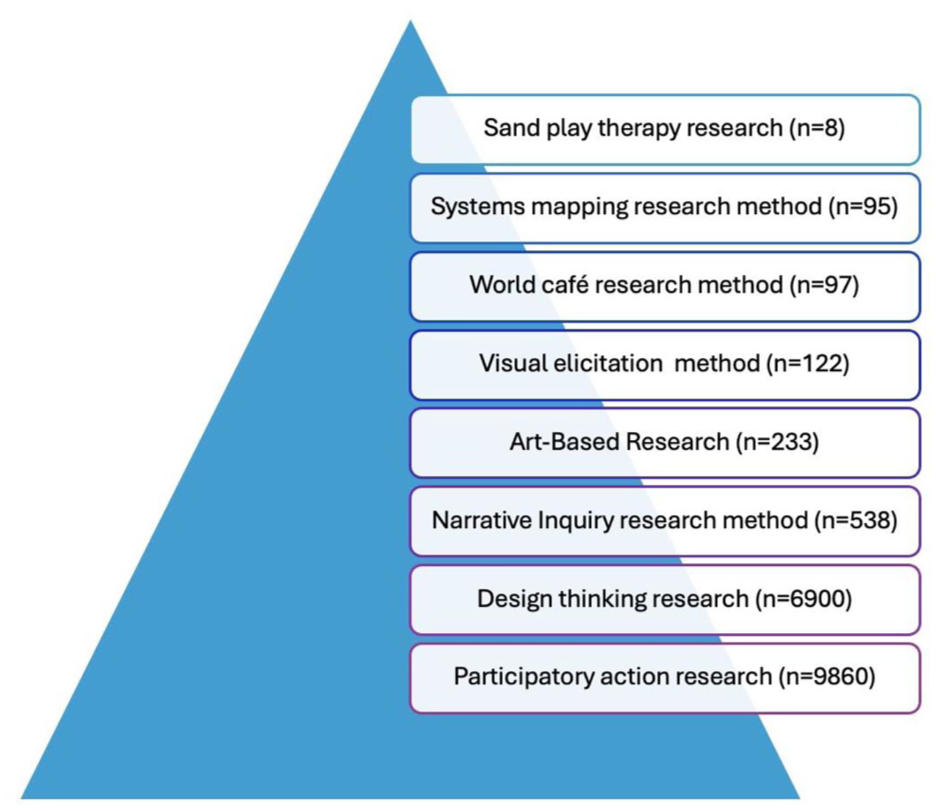
Summary of Selected Creative Methods by Publication “All Time.”
Another method included was PAR, which emphasizes empowering participants and co-creating solutions through a variety of tools (Chevalier, 2019). Its participatory ethos aligns with LSP and its collaborative approach, prioritizing shared ownership of outcomes. However, LSP introduces a layer of tactile and creative engagement absent in traditional PAR, which often relies on dialogue and textual methods. This additional dimension suggests that LSP is an enhancement to PAR’s participatory framework by incorporating metaphors into the process on a case-by-case basis. This approach also paid attention to the specific aims of the research and the dynamics of the participants involved. The visual depth is consistently incorporated, as Lego® can add depth by transforming abstract concepts into tangible, interactive models. This can allow participants to physically manipulate and visualize their ideas, which can enhance creativity, engagement, and communication. This is particularly important for participants who might struggle with abstract or verbal expression.
Visual Elicitation uses photos and drawings to prompt ideas and reflections (Haultain, 2013). This reliance on visual and metaphorical expression is like the approach in LSP. However, hands-on manipulation of Lego® bricks in LSP offers a more interactive and multisensory experience which encourages deeper engagement and co-creation (Barton & James, 2017). Visual Elicitation may serve as a supplementary method, particularly in situations where participants struggle with abstract or verbal communication. This could be due to a variety of factors such as cognitive overload, lack of familiarity with terminology, cultural or language barriers, emotional or psychological factors, or differences in learning preference, which can make it difficult for participants to process or to verbally express complex ideas (Bishop, 2014).
Narrative Inquiry was selected as it centers on meaning-making through stories and interviews (Byrne, 2017). Its storytelling component closely aligns with metaphorical modeling in LSP, which encourages participants to share their perspectives. However, use of tangible models adds a unique dimension, enabling participants to externalize and collaboratively explore complex ideas. While Narrative Inquiry effectively captures lived experiences, it lacks the dynamic, tactile engagement that is central to LSP. This may limit participants’ creative involvement and the depth of understanding that comes from hands-on, interactive exploration. Hands-on methods such as LSP provide an alternative approach that may complement or enhance more traditional, verbal, or reflective research methods. In addition to this, Art-Based Research was included as it explores creativity through artistic mediums like painting and clay (Leavy, 2017). Like LSP, it uses artistic and metaphorical methods to convey abstract ideas. However, LSP has a structured framework and focuses on shared meaning-making which distinguishes it from the often-unstructured nature of Art-Based Research. While both methods enable creativity, LSP provides a more pragmatic approach to tackling specific research challenges, due to the iterative process of framing, designing, and the delivery of build activities and reflective questions. LSP provides outcomes that are based on a series of objective-driven “build” activities.
Also included in the comparative analysis was Systems Mapping which involves creating diagrams and rich pictures to analyze relationships and systems (Dennis et al., 2015). Its emphasis on understanding complex systems aligns with Lego® Serious Play and its capacity to model such scenarios. However, Systems Mapping is primarily analytical and lacks the tactile and emotional engagement of LSP. Integrating LSP into Systems Mapping practices could enhance the participatory and reflective aspects of systems analysis. The last method included in the comparative analysis was World Café, which facilitates dialogue and idea generation through structured conversations (Jorgenson & Steier, 2013). Its focus on group facilitation and co-creation parallels LSP and its collaborative dynamics. However, World Café relies on verbal interactions, while LSP incorporates hands-on, metaphorical exploration to facilitate deep engagement. Although World Café is effective for generating diverse perspectives, it does not offer the creative and reflective richness that LSP provides due to the more structured and defined five-stage process of LSP (Frame, Challenge, Build, Share, and Reflect) (Henderson & Shipway, 2024).
Numerous methods share the LSP emphasis on creativity, collaboration, and iteration. For example, Design Thinking, PAR, and World Café prioritize group engagement and co-creation, aligning with the collaborative approach of LSP. Methods including Sandplay Therapy, Art-Based Research, and Visual Elicitation share the use of metaphor and visual representation to explore emotions, insights, and ideas. However, these approaches tend to be more introspective or individual-focused, whereas LSP typically results in both individual and group-oriented building of Lego® models, depending on the approach adopted by the facilitator. Each method uses different mediums to achieve its goals. While LSP utilizes Lego® models for building metaphors and exploring solutions, other methods use various creative tools, such as photos, miniatures, paintings, and diagrams. These tools influence how participants engage with the process and consequently how insights are generated.
Some methods, such as Systems Mapping, use diagrams to depict complex systems, whereas methods like Narrative Inquiry and Art-Based Research focus on individual expression and meaning-making. Despite these differences, the core theme across all methods is the creative and participatory nature that promotes deeper exploration and understanding. LSP shares similarities with these other methods, particularly with its focus on iteration and collaboration. However, differences in context and application remain significant. Ultimately, the choice of method will depend upon the specific goals, context, alignment or desired outcomes, and whether it is researching personal insights or exploring complex systems. Future research should delve further and deepen the comparative analysis to include Multi-Criteria Decision Analysis (MCDA). This could further highlight the strengths and limitations of various participatory and creative research methods, including LSP, while also highlighting the added value of integrating research approaches.
Conclusion
This analysis highlights LSP as a distinctive and versatile research method, which is uniquely positioned within the landscape of participatory and creative methodologies. By integrating tactile engagement, metaphorical modeling, and collaborative reflection, LSP is inclusive and bridges gaps between creativity and structured problem-solving and can address key dimensions of participant engagement and reflective learning. The findings indicate that the key strengths of LSP lie in its ability to facilitate deep meaning-making, encourage interdisciplinary thinking, and co-create actionable insights. This makes it an invaluable tool for research. The implications for future research methods are significant. First, the integration of LSP with other complementary research methods, such as Design Thinking, Systems Mapping, or Visual Elicitation, offers potential for hybrid research approaches that combine the best features of multiple methodologies. For example, pairing LSP and its tactile and creative strengths with the analytical rigor of Systems Mapping could lead to enhanced frameworks for addressing complex, systems-level challenges in diverse fields. Similarly, combining LSP with methods like Art-Based Research or Visual Elicitation could deepen participant engagement through multimodal expression, and thus making creative and participatory-based research approaches more inclusive and accessible.
By positioning LSP as both a standalone and integrative creative research tool, this analysis provides a foundation for further exploration into how participatory and creative methods can help inform and add richness to research and education. As a standalone creative method, it provides a unique, interactive way for participants to engage with complex concepts through hands-on, visual models. In doing so, this can lead to new insights and solutions, particularly in group settings that emphasize collaboration. The LSP approach is inclusive, as it accommodates different learning styles and allows participants to express themselves through multiple sensory channels, such as tactile and visual engagement. When integrated with other more traditional and mainstream qualitative research methods, such as interviews or focus groups, LSP can enrich the data collection process by combining verbal narratives with tangible, visual representations. This integration allows for a more comprehensive understanding of participants’ perspectives and helps to bridge the gap between abstract ideas and practical applications. LSP faces critiques of facilitator dependency, superficiality, and rigor. Skilled facilitation is crucial to ensure psychological safety, manage power dynamics, and translate metaphorical dialogue into authentic, actionable outcome. Likewise, the hands-on and applied nature of LSP has led to frequent critiques that authors in the field may adopt an overly accepting view of the methodology. This study of creative and participatory approaches consciously addresses such concerns, aiming to avoid any perception of uncritical endorsement.
Using LSP alongside more traditional research methods offers the potential for a more dynamic, multisensory approach to data collection and analysis, which can enhance creativity, interaction, and shared meaning-making. This inclusive approach can help engage a broader range of participants and ensure that diverse voices are heard, and that the research process is accessible to all. LSP is adaptable and places the emphasis on collaboration and creativity, which make it a compelling avenue for advancing innovation across disciplines and contexts. Finally, the successful implementation of LSP requires careful attention to method selection criteria including research objectives, resources, participant characteristics, time constraints, and desired outcomes. Successful outcomes are also dependent upon additional factors including adequate preparation, proper documentation, and using suitably experienced or trained LSP facilitators.
Footnotes
Declaration of Conflicting Interests
The authors declared no potential conflicts of interest with respect to the research, authorship, and/or publication of this article.
Funding
The authors received no financial support for the research, authorship, and/or publication of this article.
