




Abstract
This study aims to address gaps in consumer-centred research on traditional small grain foods in Africa by developing an integrated model for explaining consumer purchase intentions towards traditional small grain foods in Zimbabwe. A survey of 386 Zimbabwean adults between the ages of 18 and 65 years was administered in Zimbabwe’s 10 provinces. Sequential quantitative triangulation using Covariance-Based SEM (CB-SEM) and Partial Least Squares SEM (PLS-SEM) was used for data analysis. The study empirically validated an eleven-factor traditional small grain food preference model, which exhibited acceptable fit, moderate explanatory power and significant predictive power. Implications for academia, policy and practice are discussed.
Keywords
Introduction
Understanding consumers and their choices, and placing them at the forefront of academic research is crucial for addressing human health and other challenges (Chen & Antonelli, 2020). Consistent with this view, Moyo et al. (2021) advocated for more consumer-centred research on traditional small grain foods to stimulate demand for, and consumption of the same. The uptake of traditional small grain foods is known to have several beneficial outcomes, including the improvement of food and nutritional security for consumers (Banerjee & Maitra, 2020; McCartan et al., 2020), sustenance of livelihoods and incomes for farmers (Phiri et al., 2019), environmentally sustainable agriculture (Akinola et al., 2020), and promotion of sustainable food systems (Akinola et al., 2020). Traditional small grain foods are of particular importance for regions prone to drought, such as Africa, which faces high levels of food and nutritional insecurity and experiences the highest rates of undernourishment globally (Rampa et al., 2020). Through consumer-centred research, there is potential to obtain insights that could inform product marketing strategies and policy interventions aimed at attaining the benefits of traditional small grain food consumption.
While the foregoing discussion accentuates the importance of consumer-centred research in driving consumer demand for traditional food products, literature also identifies significant deficiencies in existing research on consumer-centred research on traditional foods, particularly in Africa, despite the abundance of diverse traditional foods. Firstly, while food-related consumer-centred research is well-established in many regions of the world, there is a notable scarcity of such studies focusing on traditional food products in the African context. For example, a systematic literature review by García-Barrón et al. (2021) found that consumer-centred research on traditional foods was scarce in Africa. Most of these studies were conducted in European countries like Italy, Spain, and France. This scarcity of African studies is well illustrated by Moyo et al. (2021) who established that from the year 2000–2021, only 33 empirical studies were published on consumer behaviour relating to African traditional foods. In addition, these 33 empirical studies were conducted in only 14 of the 54 African countries, which demonstrates the absence of such research in most African countries. The limited consumer behaviour research on traditional foods in Africa hinders the development of effective strategies to promote the consumption of traditional foods. As a result, the potential benefits associated with traditional food consumption become more difficult to realise.
Secondly, existing consumer behaviour research on traditional foods in Africa has tended to explore a limited range of factors. For instance, Moyo et al. (2023) found that 59% of the research topics on traditional foods in Africa focused on sensory food attributes, much to the neglect of the wide spectrum of possible factors affecting consumer behaviour. The multiple conscious and unconscious factors influencing consumer behaviour are complex (Shen & Chen, 2020) and necessitate a more comprehensive examination of factors.
Finally, existing consumer-centred studies on traditional food consumption in Africa have often lacked a strong theoretical foundation. Moyo et al. (2023) found that 85% of consumer-centred African studies did not refer to any theory. The limited use of consumer behaviour theories to guide research in this field may be explained by the facts that several of those studies were conducted in areas outside of consumer behaviour or business, such as biological sciences (Afolabi et al., 2020), crop science (Bechoff et al., 2018), nutrition and paediatrics (Coley et al., 2020), and agriculture and food science (de Beer et al., 2016). For the few studies that did reference consumer behaviour theories, none comprehensively applied a selected theory or model. This means that most consumer-centred research on African traditional foods has not fully benefitted from established consumer behaviour theory. But more importantly, consumer behaviour theory has in turn not benefitted from existing African research as there has been no significant efforts to apply complete theories, integrate multiple theories and consolidate existing fragmented knowledge into a holistic model for explaining and possibly predicting the purchase and consumption of traditional foods by in an African context (Moyo et al., 2023).
The identified deficiencies constrain the development of marketing theory in Africa. Consequently, marketing practitioners are deprived of insights and tools essential for the achievement of a demand-led growth and sustainability of the traditional food market in Africa. The point of departure for resolving this constraint is the development of marketing theory. To this end, this research aims to enhance marketing theory by creating a comprehensive model that considers various factors and how they interact to predict consumer intent to purchase traditional small grain foods in Zimbabwe. Accordingly, the objective of the study is to propose an integrated model to guide marketing practitioners and retailers on how to design marketing interventions that stimulate consumer purchase intentions towards traditional small grain foods.
Literature review
Traditional small grain foods in Zimbabwe
Traditional foods include a variety of fruits, grains, pulses and tubers (Akinola et al., 2020). Among these, ‘small grains’, which are part of the grass family, feature prominently, with sorghum, millet and rapoko being the most widely cultivated in Zimbabwe (Phiri et al., 2019). The most cultivated type of millet in Zimbabwe is pearl millet, hence the term ‘millet’ is generally understood to mean pearl millet. Rapoko is a type of ‘minor millets’ and is sometimes called ‘finger millet’ (Hassan et al., 2021). However, the term ‘Rapoko’ is the more commonly used name in Zimbabwe. Sorghum and millet are rich in compounds that provide a variety of health benefits, including antimicrobial, antilipidemic, anticancer, anti-inflammatory, antiproliferative and certain antidiabetic effects (Senevirathne et al., 2021).
The cultivation of sorghum, millet and rapoko serves multiple purposes, including human consumption, animal feed (Gupta et al., 2023) and recreational uses, such as brewing traditional opaque beers at both household and industrial levels (Jane et al., 2015). A significant portion of these grains is cultivated by smallholder farmers primarily for subsistence (Kudita et al., 2023). The grains are typically harvested and stored for family use, with households incorporating them into various traditional dishes, including porridge and fermented drinks like “Mahewu” (Sheethal et al., 2022). In addition to home production, traditional small grains can also be found in local shops and food markets, providing consumers with options to purchase them in different forms, such as flour or whole grains (Saleh et al., 2013).
For centuries, traditional crops have served as the primary staples in Africa, prior to the rise of maize as a cash crop (Muthamilarasan & Prasad, 2021). In the early to mid-20th century, traditional grains were staple foods for many Zimbabwean households, especially smallholder farmers who depended on these drought-resistant crops for food security (Ndlovu et al., 2020; Nyasha et al., 2023). However, following Zimbabwe’s independence in 1980, the agricultural focus shifted towards commercial maize production, which was seen as a more dependable and financially rewarding staple (Chopera et al., 2022; Tanyanyiwa, 2021).
By the late 20th century, there was a significant decline in the consumption of traditional grains, which coincided with a nutritional transition that favoured processed foods like wheat and rice products (Chopera et al., 2022). This change was intensified by socio-economic developments, urbanisation and the promotion of maize as the main staple, which led to reduced cultivation and consumption of sorghum, millet and rapoko (Chopera et al., 2022; Kauma & Swart, 2022). Government policies further reinforced maize production, often to the neglect of traditional grains (Kauma & Swart, 2022; Tanyanyiwa, 2021).
Recently, there has been a renewed interest in traditional grains, driven by a growing awareness of their nutritional advantages and resilience to climate change. This renewed interest has been bolstered by initiatives aimed at promoting food diversity and improving food security amid climate variability (Mushore et al., 2021). There is rising interest in Sub-Saharan Africa for substituting maize with climate-smart crops like sorghum and millets in local food processing. This study, through its comprehensive consumer-focused approach, contributes to the aforementioned endeavour by developing an understanding of the factors affecting consumer purchase intentions toward traditional small grain foods.
Theoretical background
In exploring factors influencing consumer purchase intentions towards traditional small grain foods, this study draws upon three seminal models - the Food Preference Model (Randall & Sanjur, 1981), the Consumer Behaviour Model with respect to food (Steenkamp, 1997), and the Theory of Planned Behaviour (Ajzen, 1991). Each model offers valuable perspectives for a comprehensive understanding of factors influencing consumer purchase intentions toward traditional small grain foods.
The Food Preference Model introduced by Randall and Sanjur (1981) is one of the earliest frameworks that considers various attributes affecting food choice. It proposes that food consumption is influenced by food preference, which in turn is shaped by characteristics of the individual (e.g. demographics, attitudes), the food itself (e.g. sensory appeal, cost) and the environment (e.g. household size, culture). While comprehensive, this model is primarily descriptive and lacks the mechanisms to quantify and predict the relative impact of different factors (Gorton & Barjolle, 2013).
Building on Randall and Sanjur (1981) model, Steenkamp’s (1997) developed the Consumer Behaviour Model with respect to food, which introduces a four-step decision-making process to explain food preferences and choices. This model retains the individual, food and environmental factor categories from Randall and Sanjur (1981), but emphasises the underlying decision process. However, like its predecessor, the Consumer Behaviour Model with respect to food stops short of identifying causal relationships, thereby limiting its explanatory and predictive power (Gorton & Barjolle, 2013).
The Theory of Planned Behaviour (Ajzen, 1991) addresses this lack of explanatory and predictive power by asserting that behaviour is directly influenced by intentions and perceived behavioural control. The theory further asserts that intentions are shaped by attitudes, subjective norms and perceived control. While the TPB enables the quantitative assessments of relationships, it does not encompass as many factors as the food preference models and tends to focus on rational decision-making, often overlooking product-specific variables (Armitage et al., 1999; Chen, 2012). Ajzen (2020) acknowledges the benefit of extending his model by incorporating additional predictors.
The reviewed models confirm that no single model fully captures the range of food-specific factors and their interactions in a measurable way, which would enable the prediction of consumer purchase intentions towards traditional small grain foods in Zimbabwe. This study aims to fill that gap. While the Food Preference Model (Randall & Sanjur, 1981) and the Consumer Behaviour Model with respect to food (Steenkamp, 1997) identify various factors that influence consumer food choices, they lack predictive and explanatory power as they cannot measure those identified factors (operability). Similarly, although the TPB offers strong explanatory and predictive power, it does not address as many factors as the Food Preference Model with respect to food and the Consumer Behaviour Model, particularly regarding product attributes.
By integrating these models, we seek to develop a comprehensive model that encompasses a wider range of factors while remaining measurable and operable. By integrating core tenets from the Food Preference Model, Consumer Behaviour Model and Theory of Planned Behaviour, a more holistic framework emerges.
Conceptual framework
In developing a comprehensive model to identify factors influencing traditional small grain food purchase intentions, this study integrated the Theory of Planned Behaviour (Ajzen, 1991), Consumer Behaviour Model with respect to food (Steenkamp, 1997), and Food Preference Model (Randall & Sanjur, 1981). Following guidelines by Ajzen (2010), only directly causal factors from the above reference models were included in the conceptual framework. Descriptive processes like the decision-making steps and background factors like demographics were excluded from the conceptual framework.
The resulting conceptual framework (Figure 1) identifies ten independent factors categorised into three categories: external factors, food properties and personal factors. This integrative conceptual framework combines the TPB’s robust predictive mechanisms with the expansive pool of potential influencing factors proposed in the Consumer Behaviour Model with respect to food (Steenkamp, 1997) and Food Preference Model (Randall & Sanjur, 1981). Conceptual framework. Source: Adapted from Steenkamp (1997), Ajzen (1991) and Randall and Sanjur (1981).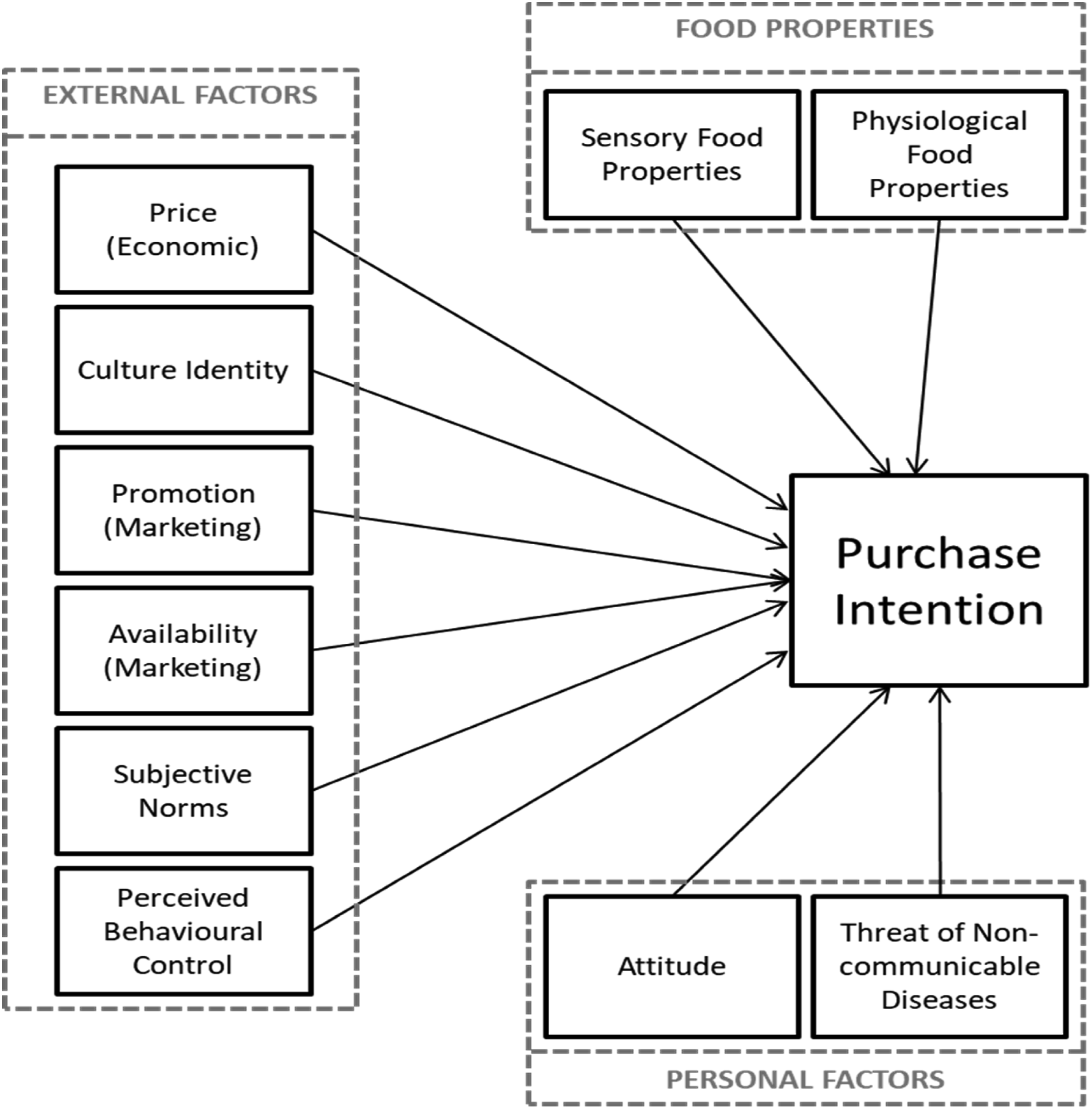
Factors influencing food purchase intentions
Numerous factors influence consumer purchase intentions towards traditional small grain foods as shown in Figure 1 above. Physiological needs based on the body’s metabolism and nutritional requirements play a fundamental role (Steenkamp, 1997; Williams, 2021). The satiating nature of whole grains makes them desirable from a physiological perspective (Penhill, 2020). Similarly, research indicates that sensory food properties like appearance, flavour, aroma and texture significantly impact willingness to purchase foods like nuts (Hong et al., 2020).
Price, as an indication of affordability, is another driver of purchase decisions for organic foods (Chauke, 2018). High prices have been found to deter consumption if perceived benefits do not outweigh costs (Doan, 2021; Hong et al., 2020). Cultural identity and traditional foods’ role in establishing local heritage are influential factors, with foods bearing symbolic cultural meanings (Frez-Muñoz et al., 2021; Hansena et al., 2018). Prior research suggests identity, in the broadest sense, can impact behaviour intentions and actual behaviour (Conner & Armitage, 2002).
Promotion through advertising, personal selling, and other marketing communications, for instance, is influential in raising awareness, altering attitudes and promoting purchases (Chauke, 2018; Kung et al., 2021). Inadequate promotion of foods products by manufacturers or retailers has previously been identified as a barrier for local food purchases (Garbacz, 2017). Availability, or perceived convenience of accessing preferred foods near home impacts choices. Empirical evidence suggests that low availability diminishes purchase intentions even for desired products (Chauke, 2018; Doan, 2021; Loh & Hassan, 2022).
Subjective norms, reflecting perceived social pressure from important referent groups like family, friends and society, also influences purchase intentions (Ajzen, 1991; Shen et al., 2022). The family is considered the most vital reference group influencing consumer values, attitudes and decisions (Blythe, 2013; Hawkins & Mothersbaugh, 2013).
Perceived behavioural control, based on perceptions of resources, opportunities and obstacles to performing a behaviour, impacts intentions - greater perceived control enhances intentions (Ajzen, 1991; Albarracín et al., 2016; Joshi et al., 2021). Prior research confirms perceived control positively influences consumer beliefs about ability to undertake behaviours.
Attitude towards a behaviour stemming from beliefs about associated outcomes is predictive of intentions (Ajzen, 1991; Chen & Deng, 2016; Hsu, 2014). Empirical studies confirm that attitudes explained substantial variance in organic food purchase intentions (Ercis et al., 2020; Zayed et al., 2022).
Another factor is the risk of non-communicable diseases, which is an aspect of health consciousness motivating healthier food choices like organic purchases (Choi et al., 2021; Jeong & Kim, 2020; Verbeke, 2005). On a broader level, previous research identified health consciousness as an important psychological factor influencing food choice.
Purchase intention, the sole dependent factor of the conceptual framework, is the willingness of consumers to buy products or services (Ahmad et al., 2019), reflecting motivation to shop and the likelihood of making a purchase (Fang, 2022). It serves as a precursor to actual purchase behaviour (Ajzen, 2020), providing insights into consumer preferences (Thilina & Gunawardane, 2019). Empirical research shows that purchase intentions strongly predict purchasing decisions across different contexts, such as environmental purchasing behaviour (Sinha & Annamdevula, 2022), halal food products (Novitasari et al., 2021) and organic food (Ferreira & Pereira, 2023). Understanding purchase intentions is therefore crucial for informing marketing strategies, including product development, pricing, promotion, and distribution decisions, to align with consumer expectations and drive desired behaviours.
Methodology
Research strategy and sampling
This study adopted a survey research strategy to empirically investigate factors influencing purchase intentions for traditional small grain foods among Zimbabwean consumers. Data were collected using a structured face-to-face researcher-administered questionnaire. The target population comprised 7,814,779 (Review World Population, 2022) adult consumers and non-consumers of traditional small grain foods, who are Zimbabwean residents between the ages of 18 and 65 years. Individuals under the age of 18 are minors and were therefore excluded from the study, as parental consent would be required for their participation. Additionally, individuals over the age of 65 were considered vulnerable and excluded from the study, in compliance with guidelines from the board responsible for granting ethical clearance. The designation of research subjects older than 65 years as a vulnerable group is consistent with earlier conclusions by López-Parra et al. (2022).
While the study used a non-probability sample, a probability sample size calculator was used to approximate the minimum sample size of 385 (N = 7 814 779, confidence level = 95% and margin of error = 5%). Not only was this sample size approximation consistent with Saunders et al. (2019)’s assertion that quota sampling requires similar sample sizes to probability samples; but it produced a higher minimum sample size compared to that recommended by alternative nonprobability sample size calculators such as G-Power® software and the a-priori sample size (calculator) for structural equation models (Soper, 2020). This likely reduced the magnitude of sampling error.
While the minimum approximated sample size was 385, a total of 386 usable questionnaires were obtained and included in the data analysis. With no comprehensive sampling frame, non-probability quota sampling was utilised. Quotas were set for each of Zimbabwe’s 10 provinces based on percentage contribution to the national population to enhance representativeness. Within each province, shoppers exiting three leading supermarkets and a traditional food market were conveniently selected. These supermarkets have not been names for ethical reasons.
The supermarket chains were chosen due to their status as the leading formal distribution entities within Zimbabwe’s concentrated oligopolistic food retail industry (Maumbe & Chikoko, 2020). The decision to include food markets was based on the recognition that they play a vital role in the food supply chain and particularly cater to the under-resourced segments of the community (Muvhuringi et al., 2021).
Data collection instrument
The questionnaire began with a cover letter explaining that the purpose of the research was to identify and assess context-specific factors affecting consumer purchase intentions towards traditional small grain foods (e.g. Sorghum, millet and rapoko) in Zimbabwe. It also explained that participation in the study was voluntary; responses would be kept confidential; and participants could withdraw from the study at any time without being penalised.
The second section gathered the respondents’ demographic information such as province or residence, gender, age range, education, whether they eat traditional small grain foods or not, and monthly income. The last section elicited responses to measurement items for factors on the conceptual framework. A 5-point Likert scales ranging from “strongly disagree” to “strongly agree” was used. Questionnaire items were either adopted or adapted from previously validated scales. A list of assigned codes for the measurement items, the full measurement statement for each item, the source from which the item was either adopted or adapted, and the context in which the measurement items were first utilised in the identified source, are provided in the supplementary material.
Data analysis
Ethical considerations in this study included privacy of participants, voluntary participation and the right to withdraw from the study at any stage, informed consent, confidentiality of data and anonymity of participants (Saunders et al., 2019). The study was granted ethical approval by the ethics board of the associated institution.
Data analysis
This study utilised both covariance-based structural equation modelling (CB-SEM) and partial least squares structural equation modelling (PLS-SEM) as complementary methods, an approach that provides quantitative complementary triangulation. SPSS v26 software was used for CB-SEM. Once the structural model was validated using SPSS, the explanatory and predictive quality of the model was assessed using SmartPLS4, which is a PLS-SEM based analysis software.
Results
Province of respondents.
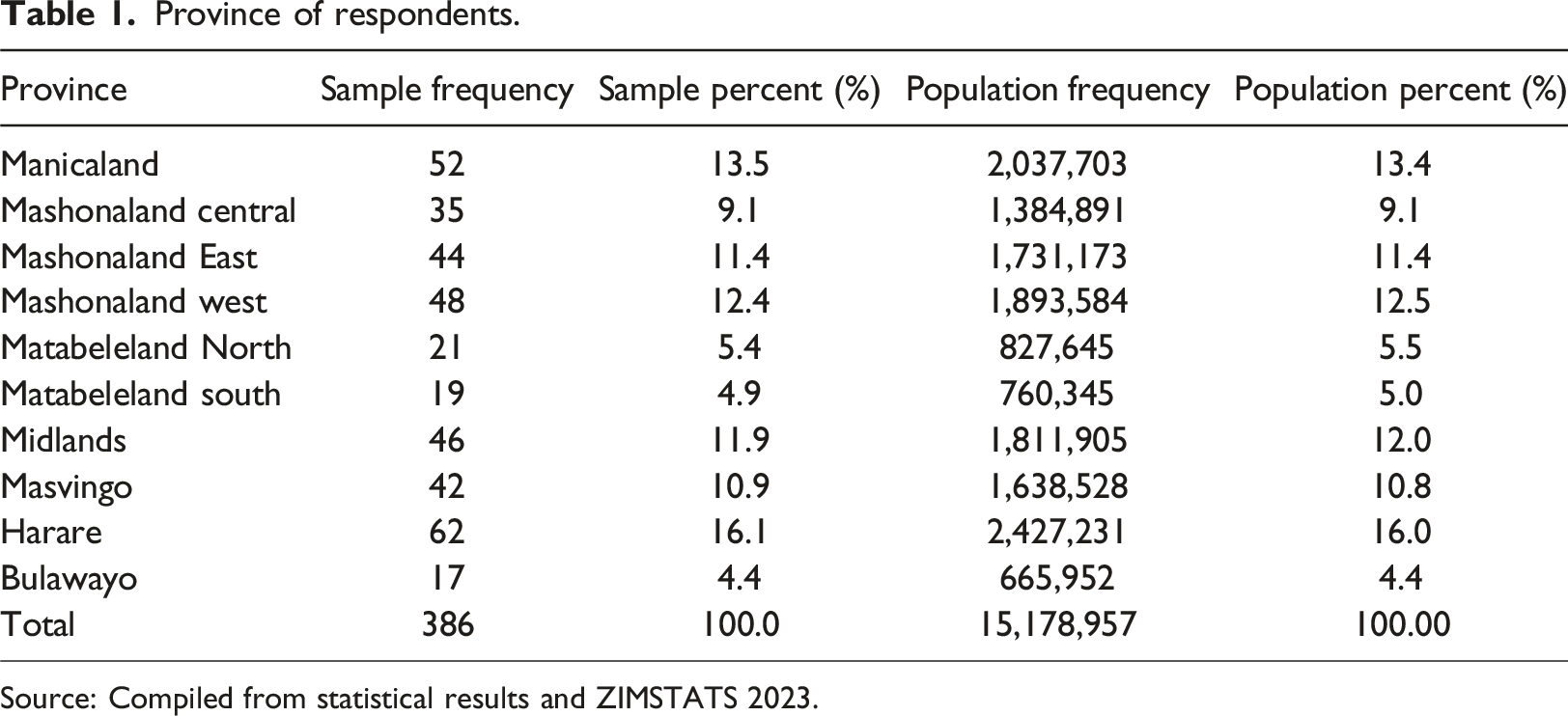
Source: Compiled from statistical results and ZIMSTATS 2023.
Validity assessment
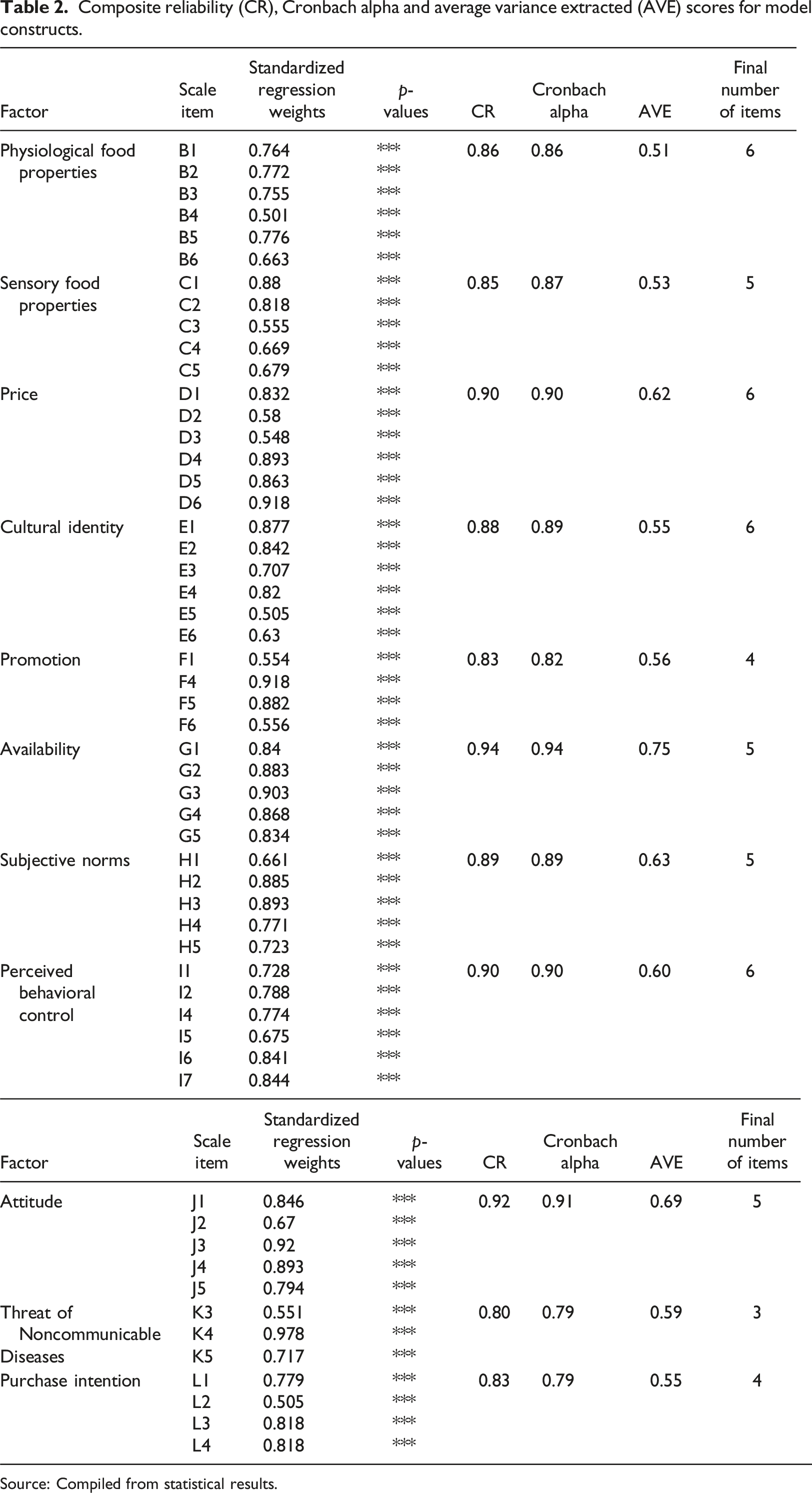
The convergent validity of the measurement instrument was assessed through confirmatory factor analysis (CFA). This involved evaluating the standardised factor loadings and average variance extracted (AVE) statistics (Hair et al., 2014). The criteria for validity is that the standardised factor loading of each measurement item must be at least 0.5, and the AVE scores for each factor must be at least 0.5 (Hair et al., 2014).
In the CFA, six out of the 60 measurement items (F2, F3, F7, K1, I3, and K2) exhibited standardised regression weights below the 0.5 threshold. Consequently, these items were excluded from the final factor structure, in line with the decision rule. The remaining 54 items all demonstrated standardised factor loadings exceeding 0.5, thus satisfying the criteria for establishing convergent validity (Hair et al., 2014).
Composite reliability (CR), Cronbach alpha and average variance extracted (AVE) scores for model constructs.
Source: Compiled from statistical results.
Reliability assessment
Cronbach’s alpha and composite reliability (CR) were used for assessing the reliability of the measurement instrument. The decision rule is that Cronbach’s alpha and CR statistics must be at least 0.7 (Hair et al., 2021) for reliability to be established. Cronbach’s alpha and CR for all constructs met or exceeded the recommended minimum criterion of 0.7 (Hair et al., 2021), thereby indicating that the measurement items used to represent the constructs had satisfactory reliability. Table 2 summarises results obtained for the measures of reliability and validity.
Assessment of measurement model fit
Measurement model fit indices.
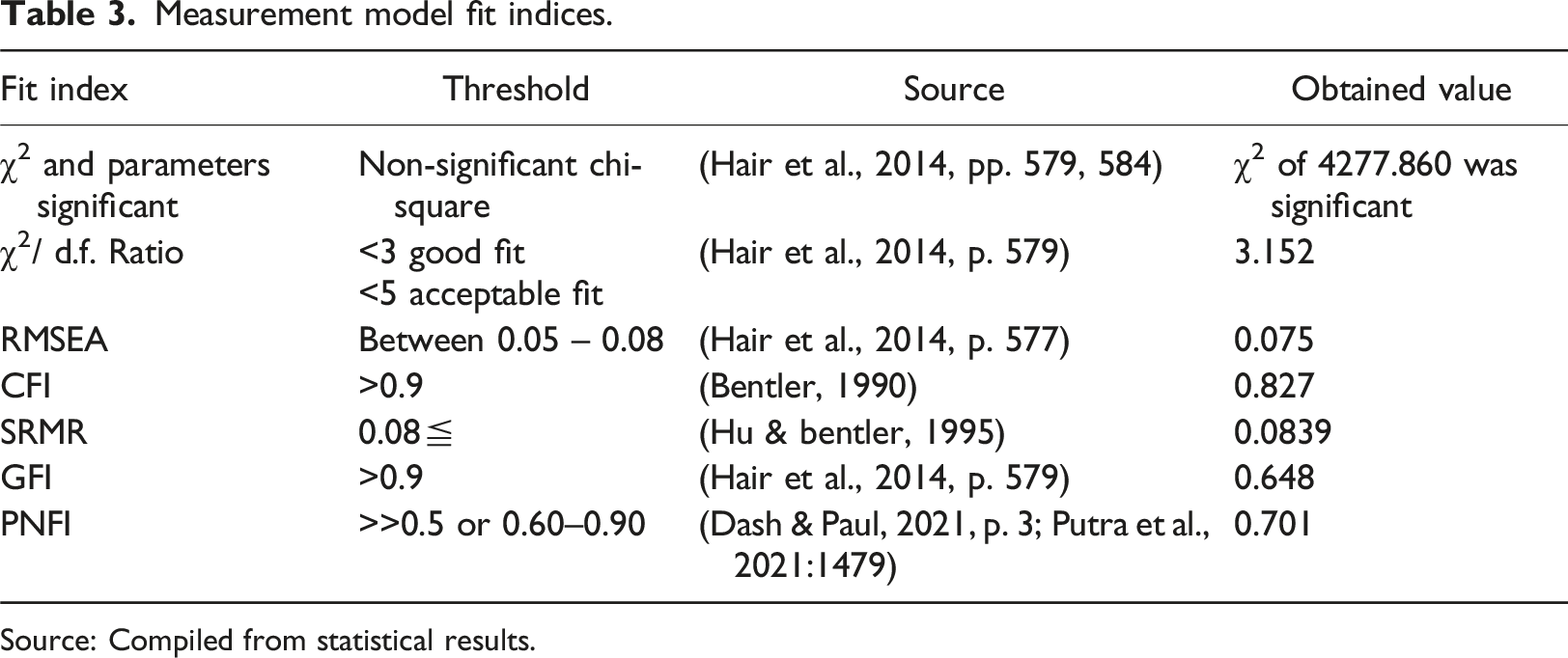
Source: Compiled from statistical results.
Model fit may also be calculated using the formula
Assessment of structural model
Following the validation of the measurement model above, this section examines the quality of the structural model by assessing the model’s quality using covariance-based model fit indices. Additionally, the model’s explanatory and predictive properties, which are additional and complementary quality parameters, are assessed based on the PLS-SEM approach.
Assessment of structural model fit using covariance-based indices
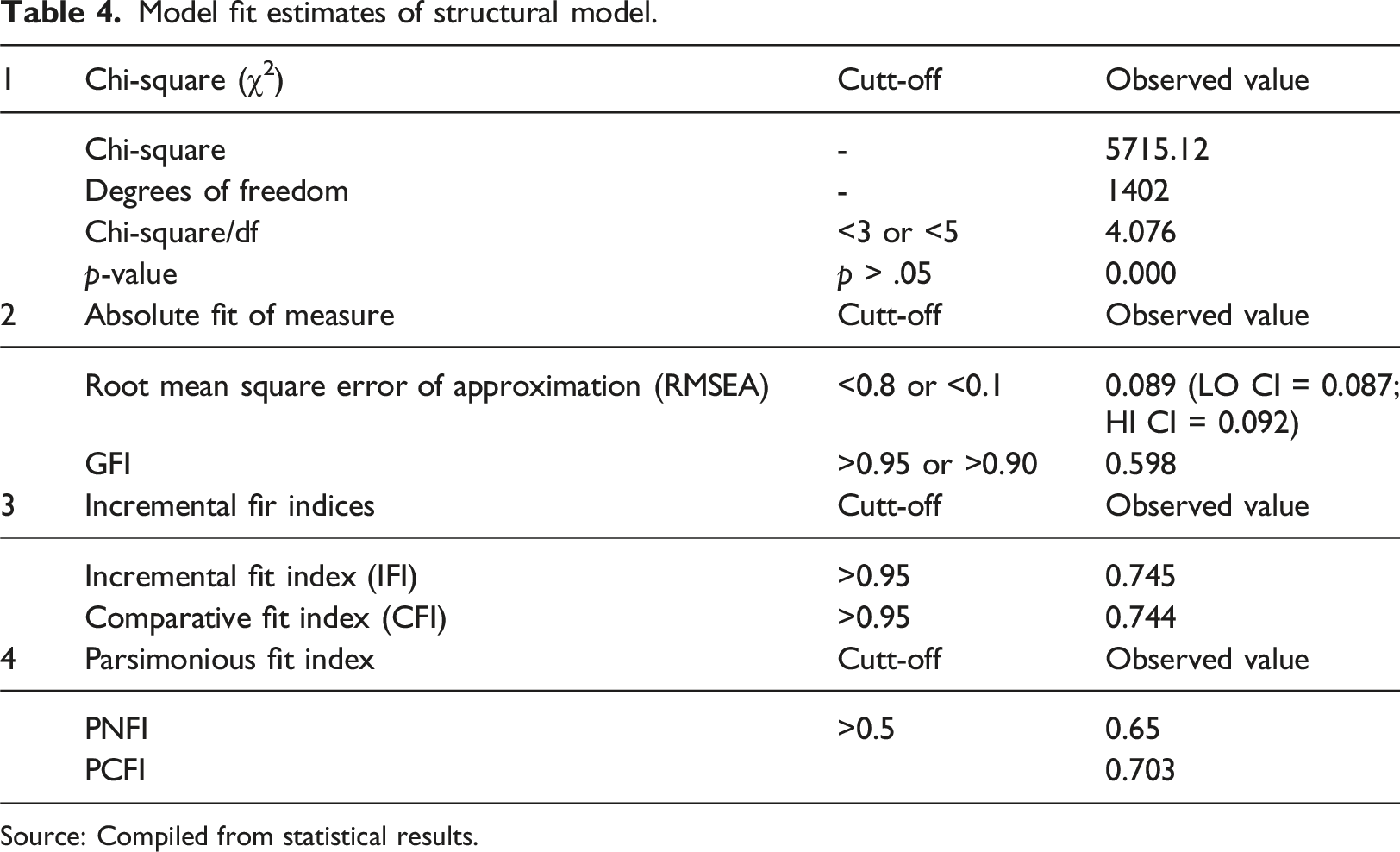
To evaluate model fit, Hair et al. (2014:651) suggest that researchers should at least assess and report one absolute index, one incremental index and the model’s χ2. Furthermore, Ockey and Choi (2015) advise that it is essential to report one parsimonious index as well. Rather than evaluating just one of each type of index mentioned above, this study examines two for each category.
Specifically, it assesses the Root Mean Square Error of Approximation (RMSEA) and the Goodness-of-Fit Index (GFI) as absolute fit indices; the Incremental Fit Index (IFI) and the Comparative Fit Index (CFI) as incremental fit indices; the Parsimonious Normed Fit Index (PNFI) and the Parsimony Comparative Fit Index (PCFI) for parsimonious fit indices; and the Normed Chi-square (χ2/df) along with the associated p-value for the chi-square category.
Model fit estimates of structural model.
Source: Compiled from statistical results.
The GFI, IFI, and CFI values were well below the recommended threshold. However, both parsimonious model fit indices, PNFI and PCFI demonstrated good model fit as both values were above the cut-off of 0.5. Overall, the hypothesised structural model demonstrated adequate model fit for half of the assessed indices (four out of eight), suggesting a fair level model fit. Figure 2 below presents a visual depiction of the structural model assessed by means of the fit indices discussed above. Construct Structural model. Source: Compiled based on statistical data from the study.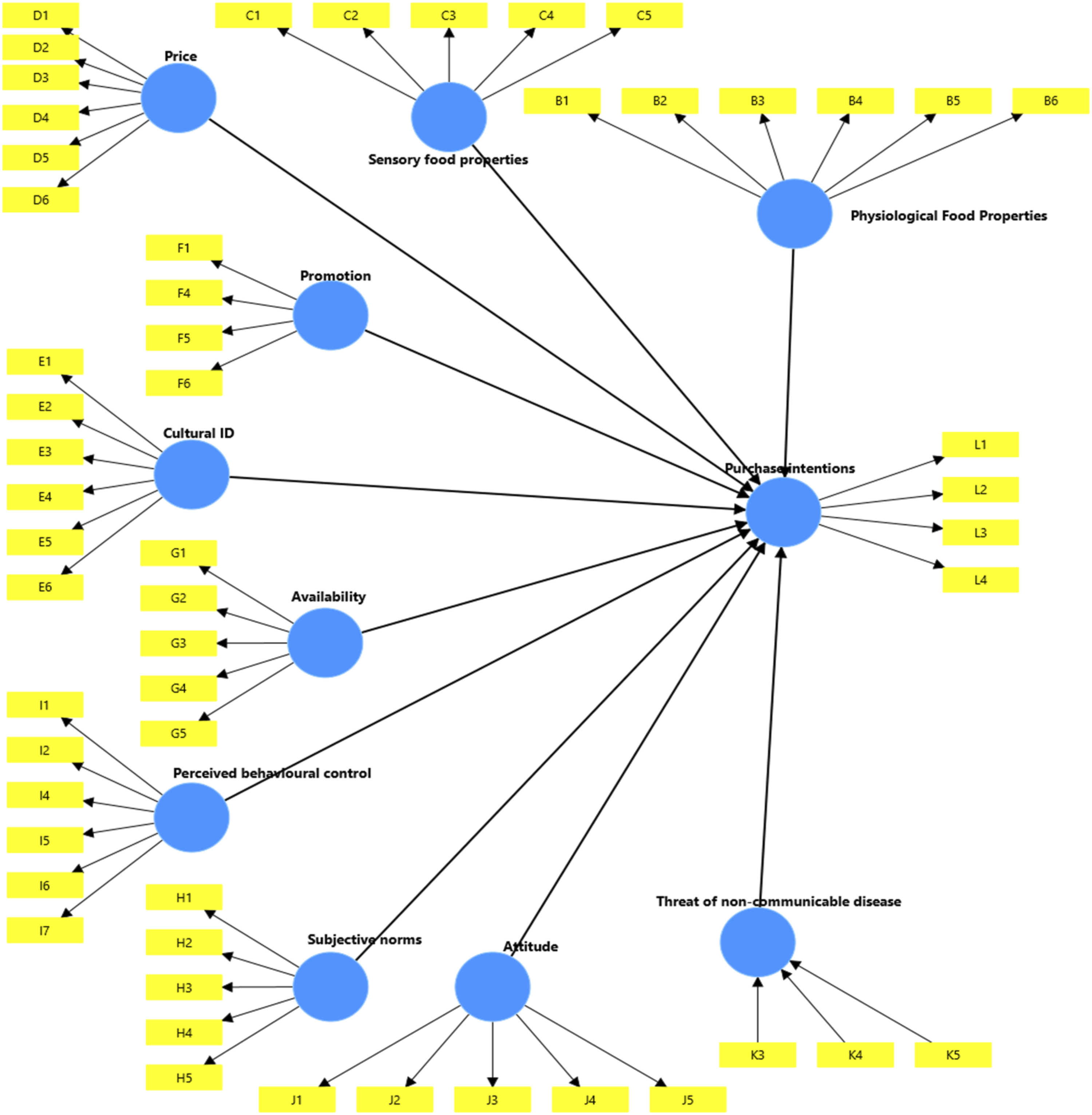
In addition to the use of CB-SEM based structural model fit indices, the quality of the model was also analysed by assessing the model’s explanatory and predictive power, as recommended by Hair et al. (2021). This approach is consistent with earlier guidance by Anderson and Gerbing (1988), who asserted that fit may be evaluated based on the percentage of variance explained in the specified regressions, which is basically a model’s explanatory power. Assessment of these additional aspects of model quality were performed using Smart-PLS 4 and the results are presented below. Having evaluated the quality of the structural model using covariance-based model fit indices, the following sections assess the explanatory and predictive capabilities of the structural model through the PLS-SEM approach.
Assessment of model explanatory power
The explanatory power of the structural model was assessed by examining the coefficient of determination (R2), which represents the proportion of endogenous construct variance explained by all the exogenous constructs linked to it (Ismael & Duleba, 2021). According to Hair et al. (2021), R2 values of 0.75, 0.50, and 0.25 indicate considerable, moderate, and low levels of explanatory power, respectively. The R2 for purchase intentions was 0.595 as obtained from SmartPLS4 results, showing a moderate predictive power. This implies that 60% of the variance observed in purchase intentions could be explained by the ten independent variables of the conceptual framework.
The effect size (f2), which illustrates the magnitude by which one exogenous factor contributes to explaining an endogenous factor in terms of R2, was also assessed for each independent factor. An f2 value below 0.02 denotes a small effect, a value between 0.02 and 0.15 signifies a moderate effect and anything above 0.15 indicates a strong effect (Ismael & Duleba, 2021). Attitude had the greatest effect size (f2 = 0.103) on R2, followed by price (f2 = 0.035) and cultural identity (f2 = 0.033), which may be classified as a moderate effect. The path with the least impact was threat of non-communicable diseases (f2 = 0.001), promotion (f2 = 0.003), physiological food properties (f2 = 0.008) and perceived behavioural control (f2 = 0.011), which may be classified as a small effect size. In summary, six out of the ten paths demonstrated moderate effect sizes (f2 > 0.002) while the remaining four displayed a small effect.
Assessment of model predictive power
The predictive performance of the structural model was assessed using predictive relevance (Q2). The predictive relevance (Q2) values were all greater than 0, indicating acceptable predictive power of the model (Fernández et al., 2018). The PLSpredict algorithm’s output was interpreted following guidelines by Shmueli et al. (2019), which suggested that the model exhibited a low out-of-sample predictive power.
Discussion
Attainment of research objectives
Psychometric analysis of the measurement instrument demonstrated positive results as illustrated by a Cronbach’s alpha and composite reliability (CR) that were greater than 0.70. Additionally, all factors achieved acceptable average variance extracted (AVE) levels by surpassing the minimum threshold score of 0.5 (Hair et al., 2014). Convergent validity criterion was met as all retained measurement items had a minimum standardised factor loading of 0.5.
The main objective was to propose an integrated model to assist marketing professionals and retailers in crafting strategies that stimulate consumer purchase intentions for traditional small grain foods. This objective was attained by empirically testing a conceptual framework, resulting in a validated Traditional Small Grain Food Preference Model. Empirical evidence demonstrated that the model is acceptable based on the structural model fit indices. Specifically, the model met 4 out of the 8 overall fit indices that were evaluated. In terms of index classification, the model satisfied at least 50% of the Chi-Square (X2), absolute fit and parsimonious fit indices. Only the incremental category of fit indices had less than half of the examined indices meeting the minimum acceptable thresholds.
Using the coefficient of determination (R2) as an indicator of explanatory power, the model exhibited moderate explanatory power as the 10 independent factors could account for about 60% of the observed variation in purchase intentions (R2 = 0.595). The model also demonstrated significant predictive power, though it was relatively low.
Contribution of the study
This study makes a significant theoretical contribution to the existing body of knowledge on consumer behaviour concerning traditional small grain foods in Zimbabwe. The study’s empirical results offer new insights that extend the boundaries of current knowledge for consumer behaviour scholars.
This study produced an empirically validated model that explains and predicts consumer purchase intentions towards traditional small grain foods in Zimbabwe. This model offers a novel conceptualisation of purchase intentions towards traditional small grain foods in Zimbabwe, a phenomenon that has not been comprehensively studied in the country. The model extends existing literature by providing a deeper theoretical understanding of the factors influencing consumer purchase intentions towards traditional small grain foods.
In addition, the triangulation of complementary approaches to statistical analysis offered a unique methodology never used before in consumer behaviour research on traditional foods. By employing both CB-SEM and PLS-SEM, this study leveraged complementary insights into investigated parameters thereby generating a more holistic understanding of the robustness of the model. Utilising both CB-SEM and PLS-SEM demonstrates methodological rigour and enhances the validity of the study’s findings. Finally, in a broader sense, this study addresses the identified gaps in African literature on consumer behaviour as identified by García-Barrón et al. (2021) and Moyo et al. (2023).
Implications for research
The utility of a moderately fitting structural model
The structural model showed a moderate fit to the data, as evidenced by meeting the criteria for half of the evaluated indices (50%). While the model did not pass the test for some model fit indices, it demonstrated substantial explanatory power, accounting for about 60% of the observed variance in purchase intentions. This demonstrates the practical utility of the model and emphasises that a model may still be practically useful despite not fitting the data perfectly. This reinforces Stone’s (2021) caution against focusing solely on achieving a perfect fit, which could lead to the rejection of practically useful models. The main lesson for consumer behaviour researchers is that a model’s value should be assessed based on a combination of its theoretical foundations, fit, and the practical utility it provides, as reflected by its explanatory and predictive power.
The value of triangulation in structural model analysis
The study adopted a sequential CB-PLS quantitative triangulation methodology that demonstrated utility in providing a holistic assessment of the structural model. The lesson for researchers is that even in structural equation modelling, there are opportunities for confirming the robustness of a model through triangulated analysis.
Implications for policy
Pricing and economic policies
The moderate effect size (f2 = 0.035) of price illustrates the importance of price in consumer decisions. Favourable economic policies impacting traditional small grain food prices along the supply chain could be considered as they could significantly improve purchase intentions. Subsidies for traditional small grain foods or taxes on unhealthy foods could be considered by government. This could help ensure that healthier options remain affordable for consumers, thereby encouraging purchase intentions.
Public health campaigns
The small effect of ‘threat of non-communicable diseases’ on purchase intentions suggests that public health campaigns focusing solely on this threat may be insufficient to change consumer purchase intentions (f2 = 0.001). More holistic campaigns aimed at improving factors with higher effect sizes, like attitude (f2 = 0.103), cultural identity (f2 = 0.033) and perceived behavioural control (f2 = 0.011) are needed.
Implications for market researchers
Understanding consumer behaviour
The study provides valuable insights into the factors influencing consumer purchase intentions for traditional small grain foods in Zimbabwe. Market researchers can leverage these insights to develop targeted strategies that resonate with consumers. For example, the study highlights key factors such as attitudes and cultural identity that significantly influence purchasing decisions. Researchers should prioritize these elements when designing marketing campaigns and interventions. Similarly, an understanding of consumer behaviour across various consumer demographics could be useful in segmenting and targeting the market, and positioning products appropriately.
Model validation
The validated Traditional Small Grain Food Preference Model serves as a reliable framework for future market research. Practitioners can use this model to assess consumer preferences and predict purchasing behaviours in similar contexts.
Practical utility of models
The findings emphasise that a model can be practically useful even with moderate fit indices. Market researchers should focus on the practical applicability of their models rather than sticking to those with a perfect statistical fit.
Marketing budget optimization
The results of effect size (f2) estimations are useful in guiding marketing resource allocation. To optimise returns on marketing investments, more resources ought to be allocated to the most influential factor, with surplus resources being allocated to the next important factor, and so forth.
Research limitations
Prior studies have found that factors affecting food preference may vary across countries (Paul et al., 2016). This suggests that while factors influencing consumer preference have been empirically established for Zimbabwe, these may differ slightly in other contexts. This limitation implies that caution is required when applying the measurement and structural model in other African countries, particularly those with cultural differences from Zimbabwe (outside southern Africa).
Apart from the validity of the model in different contexts, the generalisation of results obtained in Zimbabwe to other African countries is contingent upon various socio-economic, cultural and contextual factors (Makanyeza & Toit, 2017). Due to shared regional characteristics between Zimbabwe and surrounding countries such as Zambia, Botswana, Namibia, South Africa and Mozambique; results obtained in Zimbabwe may be applicable in the other countries. However, significant differences exist between Zimbabwean and far afield countries such as those in West and North Africa. Extending Zimbabwean results to these countries would be discouraged prior to cross-cultural comparison studies.
The use of non-probability quota sampling in this quantitative study is acknowledged as a limitation. Within a quota, sample elements are often selected based on convenience rather than randomisation (Welch, 2014), as the case was in this study, potentially introducing bias and preventing the calculation of margins of error typical of probability sampling (Szafran et al., 2017). Despite this limitation, quota sampling was still selected for two reasons: necessity and precedence.
Regarding necessity, the absence of a sampling frame made random sampling, particularly stratified random sampling by province, practically impossible. Quota sampling emerged as the only non-probability technique comparable to random sampling. O’Connor et al. (2018) argue that a well-structured quota sampling design can be as effective as probability sampling, especially when a specific demographic variable, such as province of residence, is crucial for the study. When conducted thoughtfully and with a clear understanding of the population’s characteristics, quota sampling can facilitate the generalisation of findings to the entire population (Burns et al., 2014).
Regarding precedence, Burns and Bush (2014) assert that while probability sampling is the preferred method for achieving generalisable results, statistical inferences frequently rely on quota samples and other non-random techniques. Recent quantitative marketing studies (Lesschaeve et al., 2021; Mntande et al., 2022; Suryani et al., 2021) have employed quota sampling. Despite its limitations, quota sampling can be used cautiously in well-designed studies, allowing for a careful generalisation of results to the broader population, as this study has done.
Finally, the exclusion of individuals aged 65 or older may restrict the generalisability of findings to older adult populations. This exclusion was necessitated by ethical considerations based on institutional guidelines for ethical approval at the time of the study. Relaxing the eligibility criteria to include older participants could have potentially enriched the study by generating additional insights and perspectives unique to this demographic.
Directions for future research
The contextualisation of this study to Zimbabwe opens opportunities for the Traditional Small Grain Food Preference Model to be empirically tested in other African countries. This would allow researchers across the continent to assess the model’s robustness in different settings. Furthermore, the Traditional Small Grain Food Preference Model could be employed to develop practical marketing strategies and interventions for increasing the demand for traditional small grain foods in Zimbabwe. To achieve this, further research into how responses to measured factors differ across demographic groups is necessary, which would aid the formulation of segmentation, targeting and positioning strategies. Additionally, regression analysis could be employed to examine the relative importance of each factor influencing purchase intentions, thus enabling marketing practitioners to better allocate resources to marketing initiatives.
Furthermore, while the ability to explain 60% of the observed variability (R2 = 0.595) is very significant, it shows that there is more to learn about drivers of purchase intentions towards traditional small grain foods in Zimbabwe. This is another opportunity for future research that could explore alternative model specifications to potentially enhance the model’s fit, explanatory power and predictive capability, provided such modifications are theoretically justifiable (Stone, 2021). Possible modifications could include increasing the number of factors or valid measurement items in the model, trying alternative configurations of construct relationships, or a combination of these approaches.
Conclusion
The study reveals important insights about traditional small grain food preference, building on the rich history of gastronomic practices in Zimbabwe. First, it confirms a validated model for understanding why consumers choose traditional grains like sorghum, millet and rapoko over more commonly consumed staples such as maize. This model highlights key factors that influence purchase intentions, including consumer attitudes, cultural identity and perceived control over their choices. This indicates that marketing strategies should focus on enhancing positive consumer attitudes and cultural connections to traditional grains.
The study also emphasizes the importance of pricing. It suggests that favorable economic policies, such as subsidies for traditional grains, could significantly boost their appeal. Moreover, the findings point out that public health campaigns should take a broader approach. Focusing solely on health risks may not be enough to change consumer habits. Instead, campaigns should also highlight the positive aspects of traditional grains, such as their taste and cultural relevance.
Ultimately, this research contributes valuable knowledge to the ongoing conversation about traditional small grain foods in Zimbabwe. It underscores the potential for these grains to regain their place in the diet of Zimbabweans, supported by informed marketing and policy strategies. This renewed focus could help connect consumers with their cultural heritage while also addressing modern health and environmental challenges.
Supplemental Material
Supplemental Material - Modelling purchase intentions towards traditional small grain foods in Zimbabwe
Supplemental Material for Modelling purchase intentions towards traditional small grain foods in Zimbabwe by Arnold Moyo, Felix Amoah and Marlé van Eyk in International Journal of Market Research.
Footnotes
Declaration of conflicting interests
The author(s) declared no potential conflicts of interest with respect to the research, authorship, and/or publication of this article.
Funding
The author(s) received no financial support for the research, authorship, and/or publication of this article.
Ethical statement

Data Availability Statement
The datasets generated during and/or analysed during the current study are available from the corresponding author on request.
Supplemental Material
Supplemental material for this article is available online.
References
Supplementary Material
Please find the following supplemental material available below.
For Open Access articles published under a Creative Commons License, all supplemental material carries the same license as the article it is associated with.
For non-Open Access articles published, all supplemental material carries a non-exclusive license, and permission requests for re-use of supplemental material or any part of supplemental material shall be sent directly to the copyright owner as specified in the copyright notice associated with the article.
