




Abstract
Social media marketing is evolving rapidly, with content marketing emerging as a prominent technique. Content marketing blurs the lines between content and advertising and aims to foster enduring positive relationships between brand and consumer. For gambling products, approximately 40–50% of social media adverts are content marketing. International advertising codes stipulate that advertising must be obviously identifiable as such. However, it remains unclear whether gambling content marketing is identifiable to children and young adults who are particularly vulnerable to wide ranging gambling harms. An online experiment with over 650 participants aged 11-78 investigates whether consumers in different age groups can recognise content marketing as advertising. The two main results are that firstly, children and young adults show significantly lower recognition rates for social media gambling adverts than older adults. Secondly, irrespective of age, content marketing is challenging to identify compared to conventional adverts. Recognition levels for gambling content marketing are around chance for children and young adults, while only slightly above for older adults. Yet gambling content marketing continues to appear in social media. The findings underscore the deficiencies in current advertising regulations. Other countries have banned gambling advertising completely. The authors recommend that GB regulators consider either banning gambling operators from using content marketing or stipulating mandatory inclusion of conspicuous “This is gambling advertising” labels. The authors also recommend the expansion of advertising literacy education in schools and third sector gambling education programmes. These measures would enhance consumer protection from gambling harms in the ever-evolving landscape of social media marketing.
Keywords
Background
“For years, mankind has tried to rid the world of ads. For our ancestors, ads couldn't be avoided. But everyone knew what was an ad, and what wasn't. (…) But ads adapted. They became smarter. They disguised themselves as news. All around the world people read news stories completely unaware that they were reading ads” (“Sponsors Content”. South Park created by Trey Parker and Matt Stone., 2015).
The days of billboard and TV-show break advertising are coming to an end and being replaced with creative online strategies. Whilst this creates opportunities for marketers, it also creates regulatory challenges. One challenge is the increasing use of stealth advertising techniques – in particular, content marketing. Content marketing is a relatively new form of online marketing which, like advertorials in magazines, blurs the lines between content and advertising (Pulizzi, 2014). Unlike the conventional approach of convincing consumers to take immediate action (e.g. “Order today and get one free”) or providing rational appeals (e.g. “High-resolution anti-reflective display”), its purpose is to create a long-term positive brand perception through emotional content (Holliman & Rowley, 2014; Lee et al., 2018).
When consumers are presented with content marketing, they are unlikely to know if they are looking at a news article, a funny meme about cats or, indeed, an advert. This poses a problem because advertising regulations in the UK (as in most countries) unambiguously stipulate that advertising must be clearly recognisable as advertising (FTC, 2015; ICC, 2018, 2014).
The thinking behind the regulations revolves around fairness. If consumers can identify an advert, then they can put up a cognitive defence or counter argument: “I realise someone is trying to sell me something. I’m going to take this with a pinch of salt.” This ability to counter-argue is referred to as advertising literacy and being able to engage this makes advertising “fair” (e.g. An & Stern, 2011).
However, a number of authors have shown that levels of advertising literacy are not the same in adults as in children (Livingstone & Helsper, 2006; Nairn & Fine, 2008; Wilcox et al., 2004). What is fair for adults is not necessarily fair for children. For products that are illegal for under 18s such as alcohol, vaping and gambling, which is the subject of this paper, it is obviously important that adverts are fair. It is particularly important right now as 40%–50% of all gambling adverts on social media are content marketing (Rossi et al., 2021, 2023a, 2023b). Yet it remains unclear whether younger audiences are able to engage advertising literacy when confronted by gambling content marketing. The study in this paper fills the gap. Two research questions are investigated via an online experiment. First, is there a difference in the abilities of under 18s (children in terms of legal access to gambling products); 18–24-year-olds (a group that has particular vulnerabilities to gambling addiction (Public Health England, 2021)); and older adults (25+) in recognising social media gambling advertising? Second, is content marketing less recognisable than conventional social media advertising to these three groups? These questions are important given the extent of gambling harms in Britain. Gambling harms are the short and long-term adverse impacts from gambling on the health and wellbeing of individuals, families, communities, and society. These harms are diverse but three commonly referenced categories are resource harms, relationship harms, and health harms (Wardle et al., 2018). An estimated 4.8 million adults experience ‘harms themselves and/or are negatively affected by someone else’s gambling (GambleAware, 2022). Estimations by Public Health England show that around 400 people a year take their own lives in Britain due to gambling harms (Ungoed-Thomas, 2021).
The paper is organised as follows: first, a brief review of the small literature on gambling advertising on social media is presented. Second, the current regulatory context is explained in more detail. Third, current thinking on children’s advertising literacy is discussed. Fourth, the research questions and methodology are expanded upon. Fifth, the results are discussed, and conclusions are drawn. Finally, suggestions are made for the regulators.
Gambling advertising on social media: review of literature
In countries where gambling is a legal pursuit, it is age restricted; however, there is a growing body of evidence that gambling harms are prevalent in children. Indeed, research suggests that 2.2% of 11-17-year-olds in Britain might have a gambling disorder (Gambling Commission, 2023). The high volume of gambling advertising, especially online, is thought to play a major role in this (McGrane et al., 2023). Rossi et al. (2021) reported that the five largest online betting operators in the UK, Ladbrokes, Bet365, Coral, Betfred, and Paddy Power sent 19,100 tweets within 8 months, equating to 78 per day. They found around 1m UK gambling adverts being published on Twitter/X over one year. Given the youth popularity of social media this has resulted in young people experiencing high exposure to gambling products (Djohari et al., 2019; Gainsbury et al., 2016; Noble et al., 2022; Rossi & Nairn, 2024; Sproston et al., 2015).
Whilst there is increasing research into gambling advertising on social media, a focus on content marketing is relatively new. Findings so far relate to the volume of content marketing used by gambling operators; engagement with content marketing; and how appealing it is to different age groups. Rossi et al. (2021) found that 40% of 888,745 gambling adverts on social media in UK were content marketing. This proportion is similar in other countries for example 33% in Germany (Singer et al., 2022) and 48% in Canada (Wheaton et al., 2024). Houghton et al. (2019) found that around 8% of social media posts by gambling providers used “brand engagement strategies” whilst Smith and Nairn (2019) found that UK gambling content marketing reaped much more engagement on Twitter (i.e. liking and sharing) than conventional adverts. Rossi and Nairn (2024) went on to study how appealing such adverts were, involving over 650 participants aged 11–78. They found that gambling content marketing was almost 4-times more appealing to 11–24-year-olds than to people over 24. Furthermore, 11 out of 12 gambling content marketing adverts were found to trigger positive emotions in 11- to 24-year-olds, compared to only 7 out of 12 in older adults. The authors suggested that the high level of appeal to children could be due to diminished advertising literacy. The study in this paper specifically tests this suggestion.
The regulation of content marketing
In the UK the Committee of Advertising Practice (CAP) creates the advertising regulations. These are then policed by the Advertising Standards Authority (ASA). Until recently, the ASA argued that content marketing “ do(es) not amount to ‘advertising’ as defined by the CAP Code (…) because they are editorial in nature” (2020). Consequently, advertisers were not subject to the advertising rules when disseminating content marketing. However, after considerable pressure from academic publications (Rossi et al., 2021; Rossi & Nairn, 2021), a subsequent debate on this research in the UK House of Lords (2022), and scrutiny by the media (Lycett, 2022), the regulator made a U-turn and brought content marketing under their jurisdiction (2022).
With content marketing now within the CAP remit, it must comply with one of the oldest and most established codes: advertising must be obviously identifiable as advertising. The consumer’s right to know when an organisation is attempting to sell them something has been a core principle of international advertising regulations since 1937 (Friestad & Wright, 1994). The International Chamber of Commerce (ICC, 2018) develops, updates, and debates codes to ensure a uniform benchmark for national systems. In article 7 of the most recent version of the code they stipulate that “Marketing communications should be clearly distinguishable as such” (ICC, 2018). This code is reflected in the Federal Trade Commission’s regulations (FTC, 2015) in the USA, the national advertising codes in the EU (e.g. The Dutch Advertising Code see Advertising Code Committee (2017)), as well as the Canadian Code for Advertising Standards (2024).
The implementation of the ICC guidelines in UK is CAP Code 2.1 (2014): ‘Marketing communications must be obviously identifiable as such’. However, the regulator does not provide any empirical test of “obvious identifiability” amongst consumers. Instead ASA argues that context is key. In the case of social media they maintain that posting content through a brand account (where the brand name and logo forms part of the post) makes it obvious to consumers that it is an advertisement (Advertising Standards Authority, 2023). In other words if a consumer sees the Paddy Power logo they automatically know that this is a gambling advert. Currently over 2,700 gambling brands are licenced by the Gambling Commission to legally operate in Britain (Gambling Commission, 2024). Accordingly, this argument seems flawed as it relies on consumers being aware of all commercial entities – long standing or new. In the case of gambling advertising it assumes that children can recognise gambling brands – despite being prohibited from using their services.
The regulator does not acknowledge that younger consumers may find it more difficult to identify adverts than older audiences. However, according to a substantial body of research over many years (e.g. Brucks et al., 1988; Nairn & Fine, 2008; Rozendaal et al., 2011; Wright et al., 2005), whether an advert is obvious identifiability depends not only on context but also on the advertising literacy of the individual consumer. The evidence on this is considered below.
Advertising literacy
Advertising literacy includes a broad range of knowledge, attitudes, and skills (An & Stern, 2011; Nairn & Fine, 2008). The latter are related to cognitive development in the young brain, including the evolution of self-regulation, resistance to interference, memory, cognitive resources, and message processing, (Brucks et al., 1988; Rozendaal et al., 2011; Wright et al., 2005). These cognitive skills continue to develop during adolescence, with young people believed to have adult-like theoretical cognitive capacity around 12 (John, 1999).
Beyond these cognitive skills, as children grow up, they also accumulate experience and knowledge related to market principles and the behaviour of marketing organisations. This is referred to as consumer socialization (John, 1999; Moses & Baldwin, 2005; Ward, 1974). Trial-and-error processes in coping with persuasive attempts (Friestad & Wright, 1994) and with advertising in particular are part of this socialization. Along with cognitive development a young person’s experience with the persuasive attempts they face in daily life determines their level of advertising literacy (Hudders et al., 2017). Of course, in practice, this means that there will be enormous variation in these skills as different children have different experiences with the commercial world.
It is assumed that once armed with cognitive defence and consumer socialisation, when children encounter advertisements, they will activate advertising literacy (De Jans et al., 2018; Hudders et al., 2017). However, research shows that the constantly changing advertising landscape, particularly online and on social media, means that children and young adults are often both distracted and inundated with adverts, which reduces their ability to naturally activate their advertising literacy (Buijzen et al., 2010; Harris et al., 2009; Livingstone & Helsper, 2006; Nairn & Fine, 2008; Rozendaal et al., 2011). Content marketing may well reduce this ability even further as it is an ‘implicit persuasion’ technique. Implicit persuasion is related strongly to emotional advertising content and takes place without high levels of conscious awareness (Heath & Wiley, 2012). Nairn and Fine (2008) found that individuals of all ages find it difficult to defend themselves against this type of advertising because if consumers cannot recognise the advert, they are not able to defend themselves. This makes it a particularly powerful form of advertising. The study presented in this paper aims to understand whether consumers are able to understand that content marketing is advertising – which is necessary to activate protection. An online experiment with over 650 participations aged 11-76 was conducted to investigate whether gambling content marketing is obviously identifiable as such.
Method
Research questions
The first research question asks whether there is a difference between under-18s (children), 18–24-year-olds (young adults) and older adults (25+) in their ability to identify social media gambling advertising (both content marketing and conventional advertising.) The second research question asks whether gambling content marketing is less recognisable than social media conventional gambling advertising to these three groups.
Study design and procedure
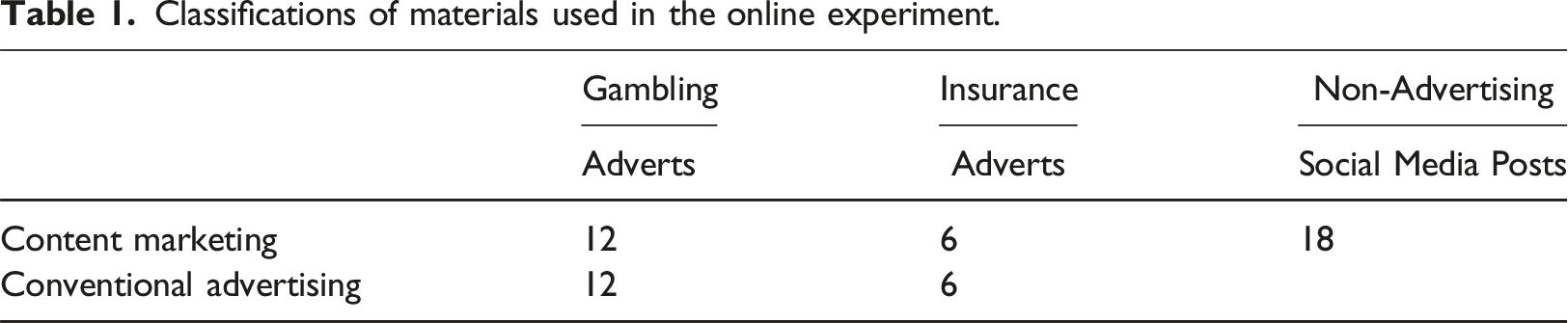
Classifications of materials used in the online experiment.
Stimuli development
The stimuli that the participants had to classify into ‘advertising’ and ‘not advertising’ were screenshots of original Twitter/X adverts by UK gambling and insurance brands. Twitter/X’s user base shows a fairly balanced age demographic with 30% of its users aged 18-29, 25% aged 30-49, and 20% aged 50 and older (Pew Research Center, 2023). Insurance was chosen as an active control group, because neither product can be purchased by under-18s; the products both involve risk and monetary benefits; and the two industries are dominated by big brands which use content marketing as well as conventional adverts on their Twitter/X accounts. In theory neither product’s advertising would be targeted at children. Half of the gambling and insurance posts were content marketing, and the other half conventional advertising. All selected adverts consisted of the brand’s logo and name (e.g. Betway), an image, and some descriptive text. To avoid mental bias of participants thinking ‘there must be some posts that are not adverts’ 18 non-advertising posts were included. To avoid data/privacy issue of screenshotting real users’ posts, mock user generated content was created imitating posts by social media users. These non-advertising stimuli consisted of the same characteristics as the adverts (i.e. account logo and name, image and text). All stimuli used were shown in same size and resolution. The number of likes, comments and other extra-message information was removed from the stimuli to reduce noise (e.g. Noel et al., 2018) (see Figure 1). Examples of content marketing and non-advertising post. Due to copyright issues, the posts had to be re-created for this publication. For gambling adverts, only real-live adverts from licenced GB gambling brands were used in the experiment. The left one shows gambling content marketing originally posted by Paddy Power. For non-advertising posts (on the right), mock-posts were created imitating user generated posts by social media users. Licenses: Left: Alexander Migl, CC BY-SA 4.0. Right: KoolShooters.
Sample
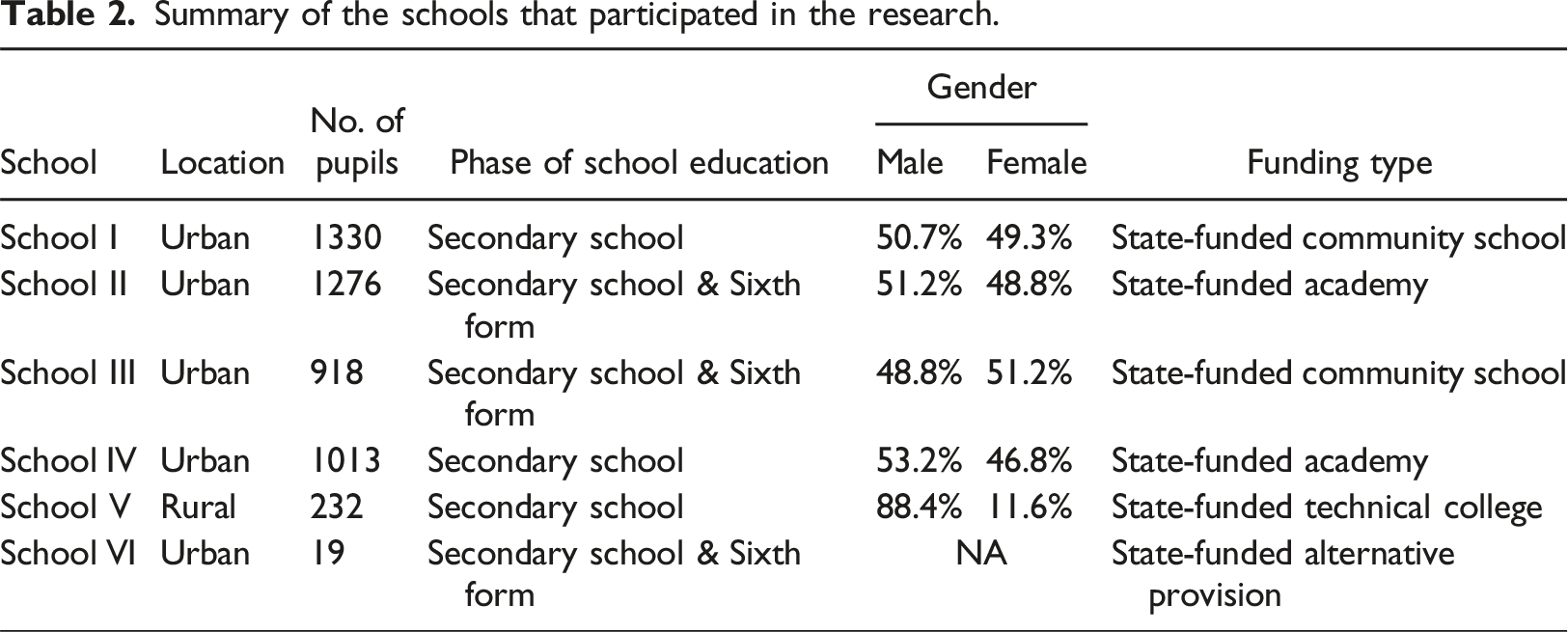
The research set out to collect data from three age-groups: children (in terms of gambling age-restrictions) (11–17), young adults (particularly vulnerable to gambling addiction) (18–24) and older adults (>24). To collect data from children, secondary schools within a 30 miles radius of Bristol were contacted. This is a common route to access a diverse and representative body of children (Testa & Coleman, 2006). To get a comprehensive list of all eligible schools, an official spreadsheet (available at https://www.gov.uk/school-performance-tables) was downloaded which consisted of 25,292 schools in England. The data set was then filtered to only include the target population: students aged 11-17 from secondary schools (including 16 plus schools; and 11-18 schools) in a 30 m radius around Bristol. This resulted in 201 eligible schools. Of the eligible 201 schools, 75 schools were randomly invited to participate in the research. Of the 75 schools contacted, six schools participated, a participation rate of 8%, which is comparable to other similar research (e. g. Lader and Matheson (1991) 15 out of 140 contacted schools (11%)).
Summary of the schools that participated in the research.
Sample Characteristics for each age group.
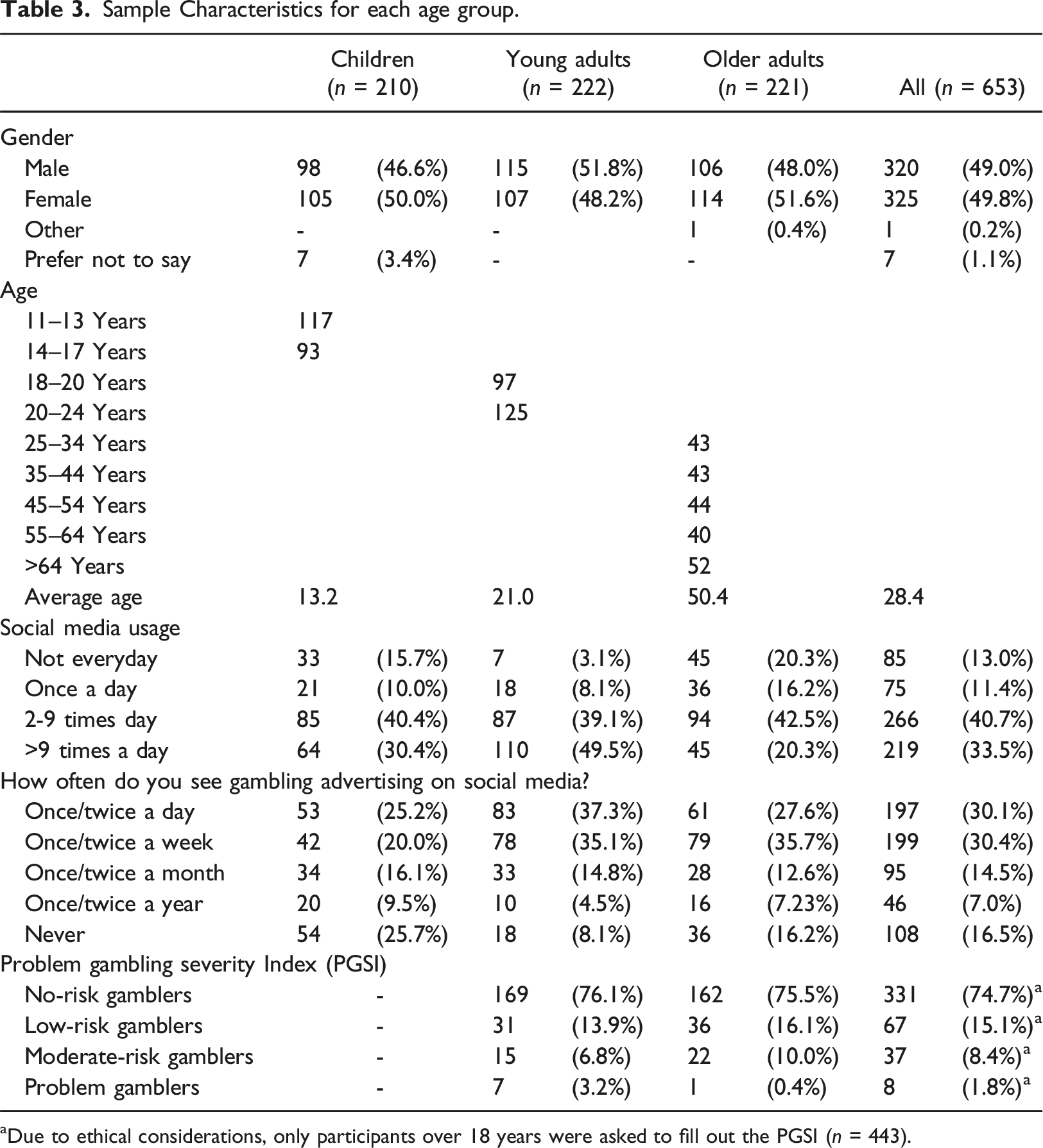
aDue to ethical considerations, only participants over 18 years were asked to fill out the PGSI (n = 443).
Measures
Advertising recognition scores
Social media advertising recognition was measured by forced-choice task (0 = not advertising, 1 = advertising). Similar one-item measures have been used in previous studies to assess advertising recognition (Boerman et al., 2012, 2017; Ham et al., 2015). Participants saw a mixture of conventional adverts and content marketing by gambling and insurance accounts, as well as non-advertising posts (i.e. posts by private users). Non-advertising posts were excluded from the analysis as they merely functioned to avoid response bias. The mean scores calculated for each of the 12 conditions that is age group (3) x content marketing (2) x conventional advertising (2) were calculated.
Control variables
To minimise the chances that the difference in social media advertising recognition between groups were caused by factors other than age, control variables were included. Social media usage was measured by asking participants how often they use social media (1 = not every day, 2 = once a day, 3 = 2-9 times day, 4 = >9 times a day). Self-reported exposure to gambling adverts was measured by asking how often participants see gambling adverts on their social media (1 = never, 2 = once/twice a year, 3 = once/twice a month, 4 = Once/twice a week, 5 = once/twice a day). The Problem Gambling Severity Index (PGSI) was included. This is a standardised 9-item measure using a 4-point Likert scale to indicate the severity of potential gambling problems (Currie et al., 2013). Age and gender information was also collected.
Results
Demographic characteristics
To enhance the generalisability of our findings, an examination of key demographic characteristics within our sample was conducted and compared with existing research on problem gambling prevalence, social media gambling advertising exposure, and social media usage. The sample appears broadly representative. Table 3 shows the gender split was close to 50% in all groups. The average age of the children was 13.2; 21.0 for young adults; and 50.4 for older. The older adult group was well spread, ranging from 25-78 year. 76% of our 18–24-year-old participants were no-risk gamblers as defined by the Problem Gambling Severity Index (PGSI). This mirrors findings from a previous study of 3,500 participants in South West England (Emond et al., 2019), where 78% of 18–24 year olds were no-risk gamblers. For those aged over 24, 74.7% were no-risk gamblers, aligning with previous figures ranging from 63% (Survation, 2021) to 96% (Gambling Commission, 2022).
In terms of exposure to gambling advertising on social media, the sample demonstrated satisfactory comparability with previous research. Among 11-17-year-olds, 45.2% reported exposure at least once per week, compared with 44% of 11–16 years olds in a Gambling Commission Survey (2022). 68% of our adult samples saw gambling advertising on social media at least once a week compared with 56% in a Gambling Commission Survey (2020).
87% of respondents in this study reported daily engagement with social media. This is slightly higher than a Department for Culture, Media, and Sport study (DCMS, 2016), where 68% of respondents reported daily social media usage. However, this data was collected in 2015 before TikTok and Snapchat.
Descriptive Results
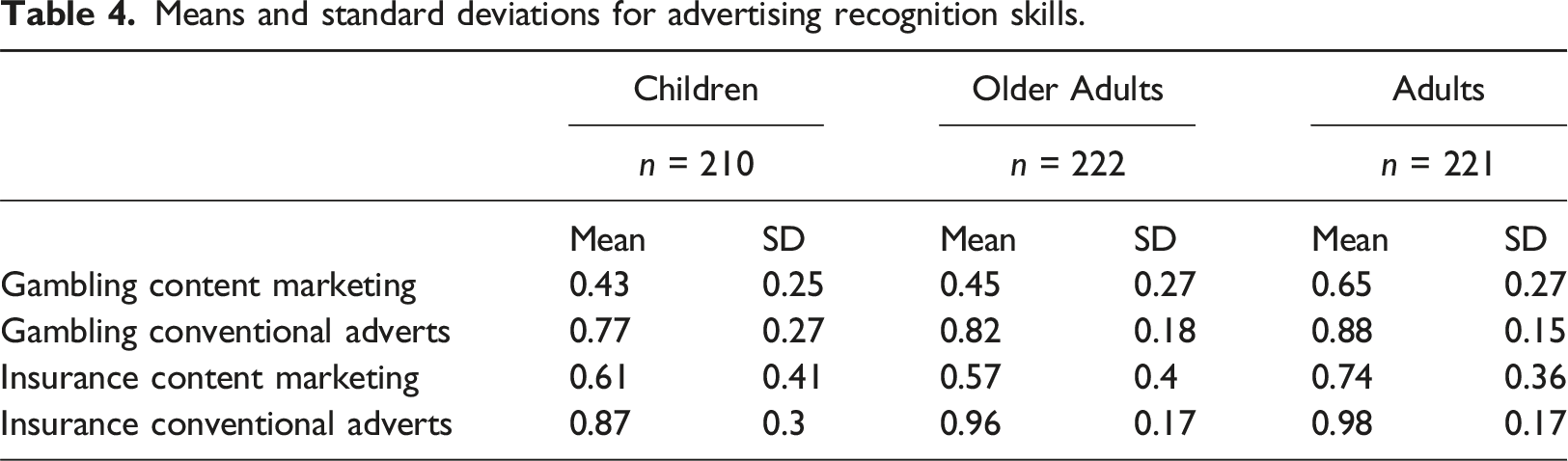
Means and standard deviations for advertising recognition skills.
Research question 1. Age difference in recognising gambling content marketing
The first research question aimed to investigate whether there is a difference between children (11–17), 18–24-year-olds (young adults) and older adults (25+) in their ability to identify social media gambling advertising (both content marketing and conventional advertising).
Table 4 shows that for social media gambling conventional advertising and social media gambling content marketing, children have lower advertising recognition skills than young adults and young adults, in turn, have lower advertising recognition skills than older adults. To ascertain whether the mean differences for gambling advertising are statically significant across the three groups, a one-way ANOVA and Tukey’s HSD Test for multiple comparisons were conducted. For conventional gambling advertising, recognition skills were significantly higher for adults than for young persons, (p < .001, MD = 0.059), which were in turn significantly higher than the advertising recognition skills for children (p < .01, MD = 0.051). For gambling content marketing the recognition skills mean for adults was significantly higher than for young adults (p < .001, MD = 0.206) and for children (p < .001, MD = 0.214). However, surprisingly, no significant difference was found between children and young adults (p = .468, MD = 0.009) (see Figure 2). In other words, 18–24-year-olds find it just as difficult to recognise this kind of advertising as 11–17-year-olds. Advertising recognition scores of gambling content marketing and conventional gambling advertising, split into children, young adults and older adults.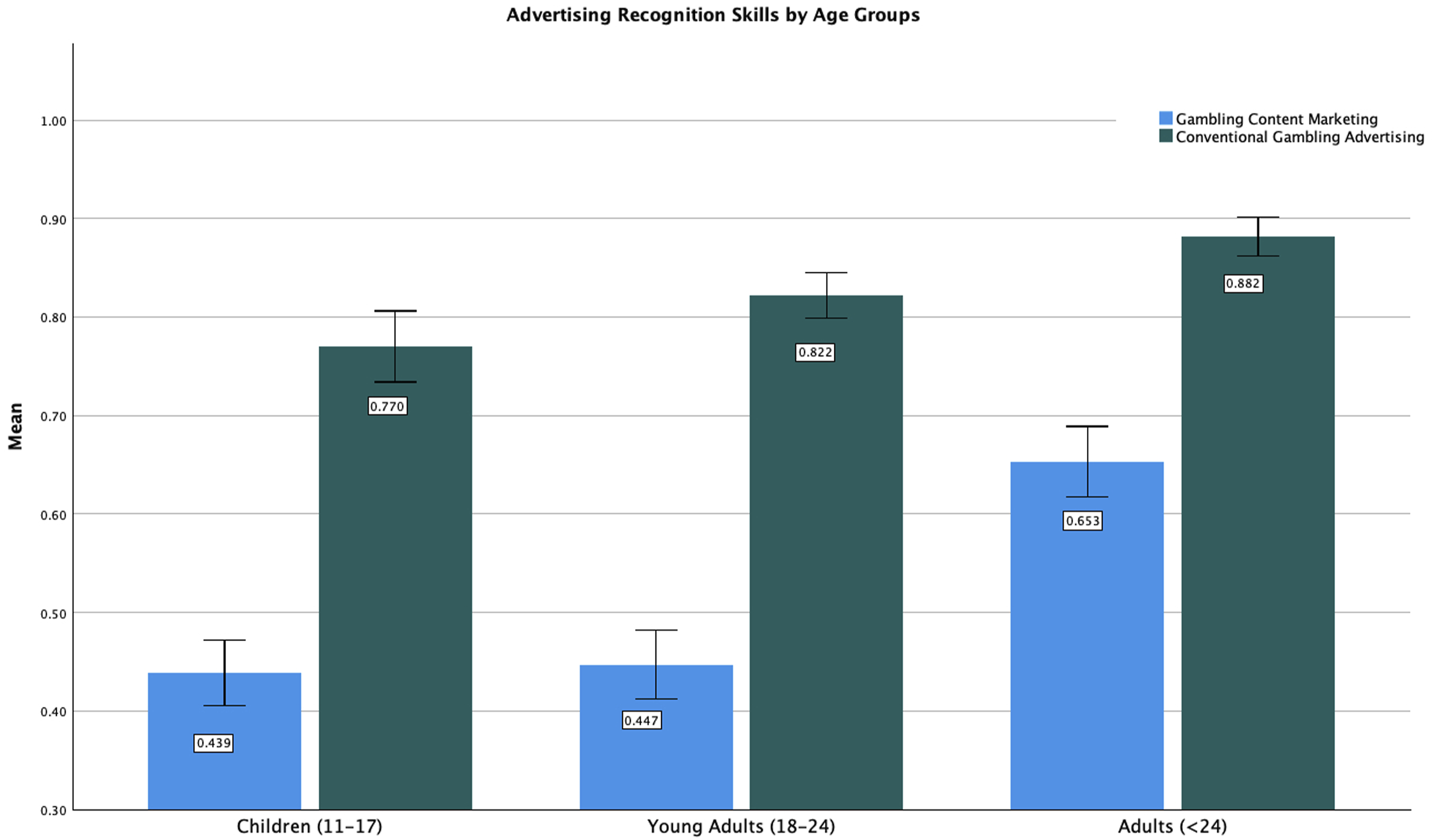
The age effect and insurance advertising
The results for the insurance control group (see Figure 3) showed that for insurance content marketing the mean for adults was significantly higher than for young persons (p < .001, MD = 0.128) and for children (p < .001, MD = 0.172). However, as with the gambling adverts, no significant difference was found between children and young persons (p = .118, MD = 0.372). For conventional insurance adverts, mean recognition skills were significantly higher for young persons than for children, (p < .001, MD = 0.086). However, there was no significant difference found between young persons and adults (p = .140, MD = 0.023). Advertising recognition scores of the insurance control group: insurance content marketing and conventional insurance advertising, split into children, young persons and adults.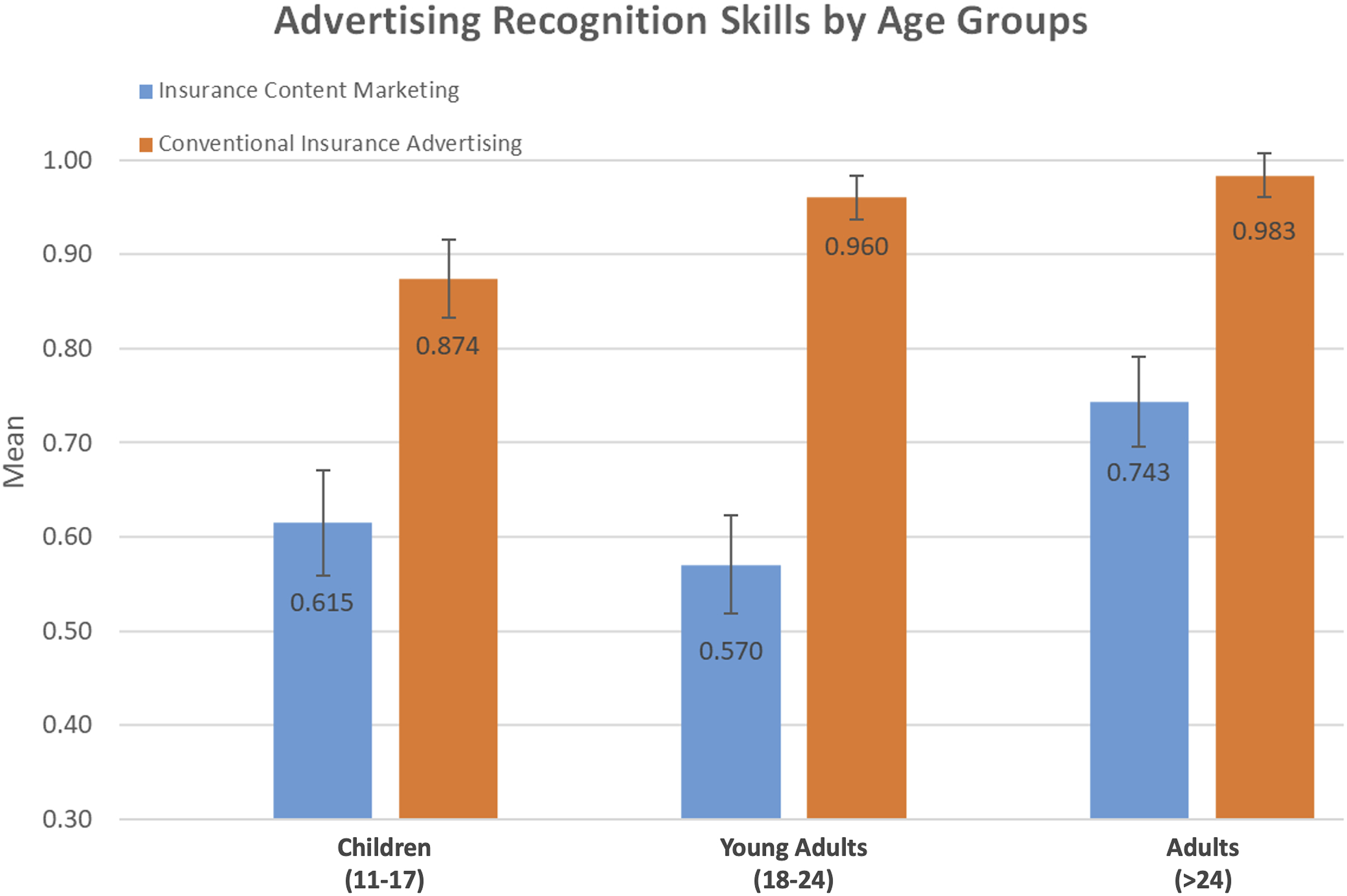
Research question 2. The recognisability of content marketing versus conventional adverts
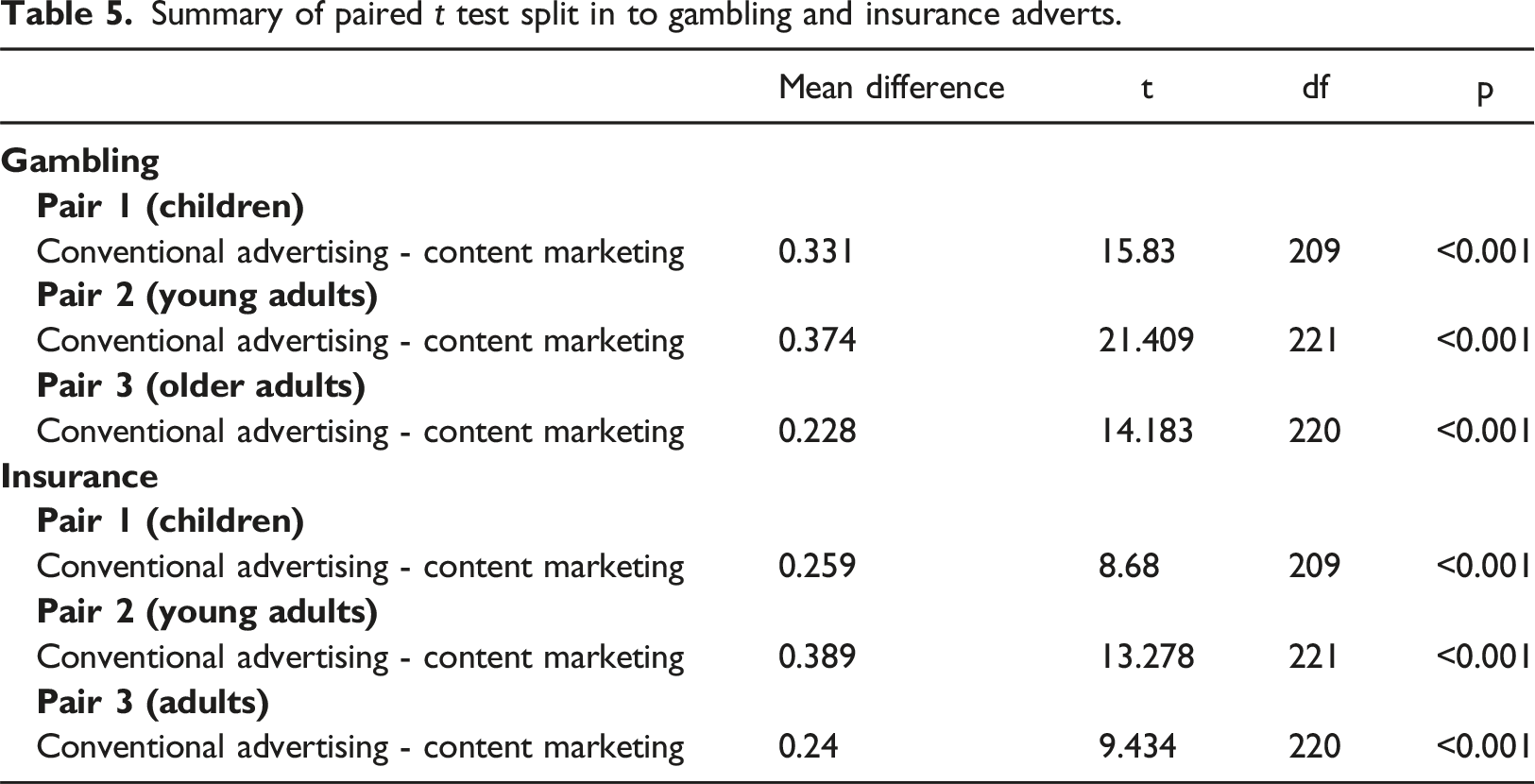
The second research question asked whether gambling content marketing is less recognisable than conventional gambling advertising on social media to the three age groups. The results show that levels of recognition for content marketing (both insurance and gambling) are lower than for corresponding conventional advertising for all three age groups. Insurance: children 0.61 versus 0.87; young adults 0.57 versus 0.96; adults 0.74 versus 0.98. Gambling: children 0.43 versus 0.77; young adults 0.45 versus 0.82; adults 0.65 versus 0.88. Recognition by children and young adults was below chance (43% and 45% respectively) and for older adults was also low (65%).
Summary of paired t test split in to gambling and insurance adverts.
Controls
Since the adult group included participants over a wide age span from 25-78, overall advertising recognition skill means and age were mapped on a scatterplot (see Figure 4 below). This would show whether advertising literacy continues to increase in a linear fashion with age. Whilst the trend line shows a slight increase, suggesting that the older participants, the better their recognition skills become, the effect was not statistically significant (p = .432). This implies that whilst there is a sharp disjuncture between 18–24-year-olds and those 25 and over, age effects are not seen in older participants. Overall advertising recognition of adults group (i.e. >24).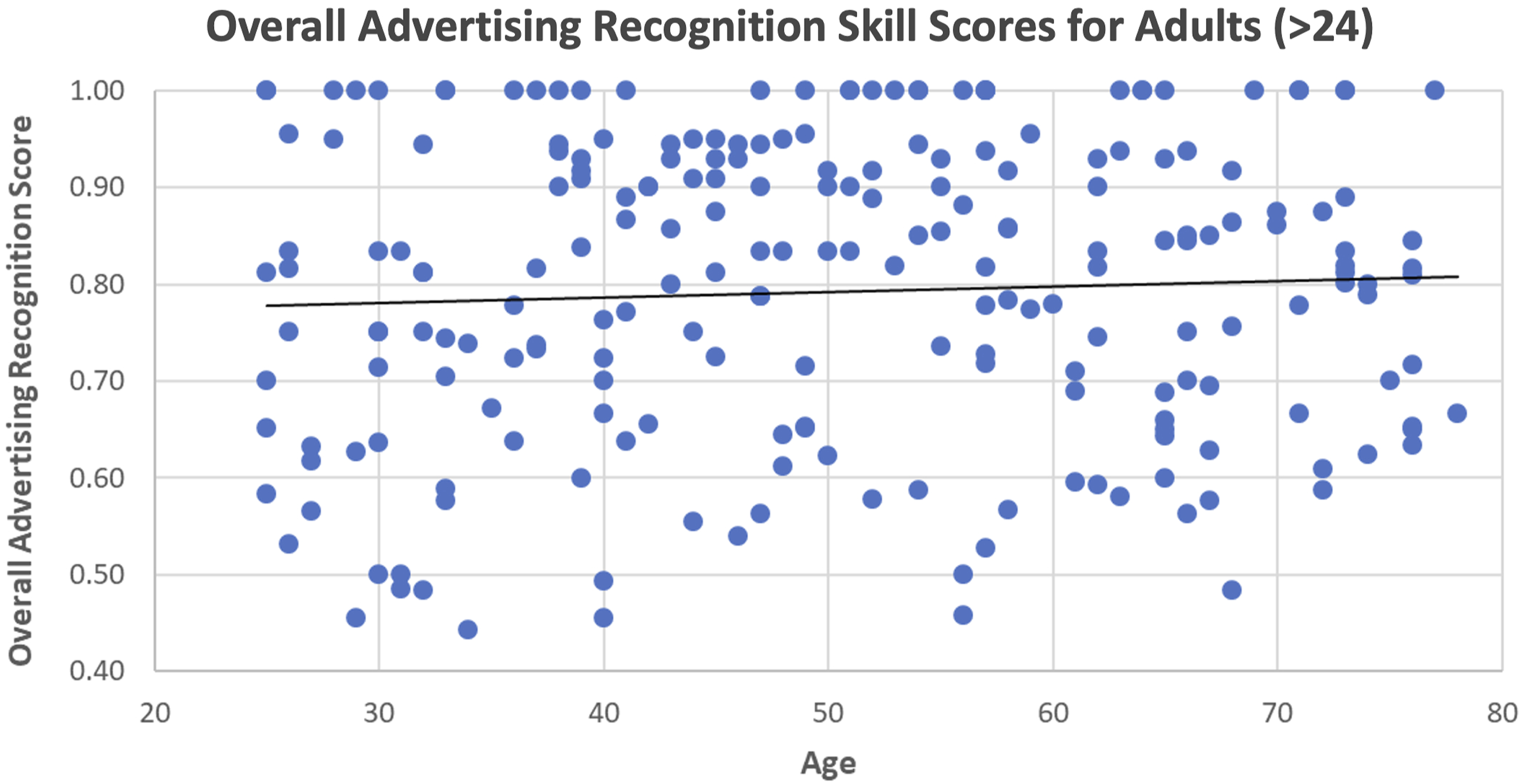
Whether gender and social media usage had a significant effect on the recognition skill was also tested. However, neither of gender nor social media usage showed a significant effect on the advertising recognition scores.
Discussion and conclusion
Content marketing has recently come under the remit of CAP and, therefore, must be ‘obviously identifiable’ as advertising according to the regulations. This is important, as 2.2% of children in the UK experience gambling related problems or are at risk (Gambling Commission, 2024) and 40%–50% of all gambling adverts on social media are content marketing (Rossi et al., 2021, 2023). However, it remains unclear if content marketing is ‘obviously identifiable’ as advertising to children. To address this concern, two research questions were posed in this paper.
Advertising literacy does not develop linearly with age for social media advertising
Our online experiment with over 650 participants aged 11-78 showed that children (11–17) and young adults (18–24) are significantly poorer at recognising social media adverts than older adults for all types of advertising. This result for children is consistent with a substantial body of previous research showing that children have lower levels of cognitive defence and consumer socialisation and are, thus, less able to activate advertising literacy (Uribe & Fuentes-García, 2020). This makes them more susceptible to persuasion attempts which is why the CAP has special provision to protect children. However, in line with previous literature (Wright et al., 2005) and marketing regulations (ICC, 2018, 2014) that assume individuals attain adult levels of advertising literacy by the age of 18 at the latest, it was an unexpected finding that there was no statistical difference in ability to recognise social media adverts between 11-17 year olds and 18–24 year olds for some conditions. Young adults were no better able than children to recognise content marketing for either insurance or gambling or for conventional gambling advertising. This group, with developed cognitive resource and experience of the commercial world appear to be more vulnerable than has been assumed. This is in line with the increasing attention being paid to the vulnerability of this group to both gambling harms (Public Health England, 2021) and marketing (Pechmann et al., 2005). This is of public concern as 18–24-year-olds report the highest exposure to gambling advertising on social media and are highly vulnerable to severe gambling harms.
In terms of regulation, whilst gambling adverts (of all sorts) must not be of strong appeal to children (CAP code 16.3.12) there are no specific regulations for young adults. Indeed, international advertising regulations tend to assume that after reaching adulthood (e.g. aged 18), young people do not need further protection. This runs counter to other gambling consumer protection measures for this age group. For example the UK government have recently put in place a maximum £2 stake limit for 18–24-year-old playing online slots (2024).
Content marketing is not obviously identifiable as advertising
The study shows that all groups find content marketing significantly more difficult to recognise than conventional advertising. Of course, blurring of the lines between content and advertising is a key feature of content marketing (Pulizzi, 2014) and has been found to be effective in creating positive brand perceptions (Holliman & Rowley, 2014; Lee et al., 2018). However, it also means that individuals (irrespective of their age) are exposed to persuasive content without being aware that they are being advertised to. The problem with this, is that it leaves consumers unprotected against the (gambling) brands’ persuasive attempts (Nairn & Fine, 2008), making them more vulnerable to consumption-related harm.
What does this mean for regulations?
The findings of this study highlight considerable regulatory challenges posed by social media content marketing in general and social media content marketing for gambling in particular. The study shows that social media content marketing is not clearly identifiable as advertising and thus, as a genre, in breach of the regulations. Despite recent regulatory adjustments in GB (2022), the issue of content marketing seems to be addressed insufficiently. The study shows that this form of advertising breaches CAP Code 2.1: marketing communications ‘must be obviously identifiable as such’. Given 400,000 gambling content marketing messages per year on Twitter/X alone (Rossi et al., 2021) this suggests a substantial breach of regulations that requires urgent intervention.
A foundational pillow of advertising regulations is that ‘Marketing communications must be obviously identifiable as such’ (2014). Unfortunately, the regulations lack a defined test for clear identifiability, relying on arguments rather than empirical data. Currently, when investigating potential breaches against this code, the regulator considers them at a case-by-case basis, considering the content and context of each ad and provides ruling based on judgements of individuals in the enforcement team. Our study clearly shows that most of our sample (irrespective of age) struggles to recognise gambling content marketing as advertising. In some domains, regulators employ numerical thresholds to determine breaches. For example, the CAP proscribes in GB that alcohol, gambling and other age-restricted adverts must not appear alongside media where children and/or young people form more than 25% of the audience (2022b). Following this logic, one can imagine a stipulation that if advertising is recognised by 85% of the population then it is deemed to be clearly identifiable as advertising. A shift towards the regular inclusion of consumer voices (e.g. via experiments, surveys etc.), seems crucial in developing regulations that are truly fit for the digital age. Codes and rulings developed without consumer input may quickly become inadequate in the rapidly evolving digital marketing landscape and may leave consumers unprotected. Given the extent of gambling related harms this is important.
Policy recommendations
The evident difficulty in recognising content marketing, especially for children and young adults, underscores the potential impact on vulnerable demographics, that requires intervention by stakeholders. That up to 50% of all social media gambling adverts seem to be in breach of CAP Code 2.1, is a serious issue. The authors suggest: (1) A ban on gambling content marketing should be implemented by the CAP, or the UK Gambling Commission. Recently, (2022a) described advertising-related harm for children and young people as something that: ‘affects attitudinal change that could result in participation later in life (either while the individual is underage or when they become of an age to gamble legally)’. Whilst previous research has shown that content marketing is strongly emotionally appealing to children (Rossi & Nairn, 2024), this research found that they are defence-less against content marketing. This makes it highly likely that the exposure indeed leads to attitude changes towards gambling. To protect children from gambling-related harms, many European countries have recently introduced stringent marketing restrictions, including near-total bans in Italy, Spain, Belgium, Ukraine, Bulgaria, and the Netherlands (Rossi et al., 2023). These restrictions are often tied to licensing conditions, providing the necessary enforcement to ensure their effectiveness. Given this context, banning gambling content marketing would not be a radical intervention but rather aligned with recent international developments. (2) A potential alternative to a ban would be a stipulation that gambling brands include a prominent ‘This is gambling advertising’ message on all content marketing. This message, however, needs to be big enough to be immediately seen, otherwise, the advert could already start affecting people subconsciously, making the labelling less effective. Moreover the effects of labelling in this context have not been tested and thus more research would be needed before implementing such a measure. (3) An expansion of gambling advertising literacy education in schools. Currently, gambling advertising literacy is not part of schools’ curricula in the UK. The changing advertising landscape, however, has been shown to reduce the ability of children and young people activate advertising literacy (Livingstone & Helsper, 2006; Nairn & Fine, 2008) leaving them unprotected against implicit persuasion. Incorporating advertising literacy education with focus on content marketing online could help children and young persons to develop crucial skills, making them less susceptible to marketing. (4) Incorporation of gambling advertising literacy skills into the programmes of gambling education charities. In the UK, several charities offer gambling harms education targeted at children and young adults (e.g. YGAM or GAMCare). Extend young persons’ understanding of gambling advertising techniques could further help reduce gambling harms.
Limitations and further research
Whilst this study provides novel insights into the recognition of content marketing, it has limitations. Firstly, the online experiment conducted may not fully capture the dynamic nature of social media exposure in real-life settings. The controlled environment of the experiment might not completely replicate the complexity of users' interactions with social media platforms. Future research could explore more ecologically valid methodologies, incorporating real-time social media use and varied contextual factors.
The sample population, while diverse in age, may not be fully representative of the broader population. The study focused on social media users, and the results might not generalise to individuals with different media consumption habits or those less familiar with digital platforms. Expanding the participant demographics and considering individuals with varying digital literacy levels could provide a more comprehensive understanding of content marketing recognition across diverse populations.
Finally, moving forward, the study’s focus on gambling content marketing opens avenues for exploration in other industries. Future research could extend the investigation to different sectors, comparing recognition levels and exploring industry-specific patterns in content marketing effectiveness. Additionally, examining the effectiveness of advertising labelling strategies to enhance the recognisability of content marketing represents another potential research direction.
Footnotes
Author contributions
We can confirm that both authors have contributed substantially to this work. R.R. and A.N. developed the research idea, carried out the experiment, analysed the data and wrote the paper.
Declaration of conflicting interests
The author(s) declared no potential conflicts of interest with respect to the research, authorship, and/or publication of this article.
Funding
The author(s) received no financial support for the research, authorship, and/or publication of this article.
