



Abstract
Free samples and loyalty cards are frequently used, but there is little rigorous empirical testing of their effects. We conducted a stepped wedge trial in 29 workplace food outlets to investigate their effects on sales of plant-based meals. Outlets were randomly assigned to three sequences that entered the intervention in the first, second, or third week of August 2022. Free samples of plant-based meals were given out in the first week of the intervention; loyalty cards were available throughout, entitling the bearer to a free meal after they had bought three. The intervention period ended in the last week of August for all outlets. The free meal could be redeemed until one month later. We did not find statistically significant effects of the interventions compared to the baseline period. Our process evaluation indicated that many participants preferred to eat their habitual meal or were unaware of the loyalty cards.
Keywords
Introduction
Spending on sales promotions—including in-store promotions and incentives, coupons, discounting and loyalty card promotions—has reached a 23-year high, according to an industry survey (IPA, 2023). The marketing industry claims that promotions are effective; for instance there are claims that that sales conversions from free samples reach up to 90% for some products (Lightspeed, 2022), and that loyalty programs can generate up to 20% of a company’s profits (Dube, 2020). However, these claims are hard to verify, they are based on commercially sensitive data and neither the data nor the method of evaluation are revealed. Even where companies make data available to researchers, it is hard to generate high-quality evidence of the effect of promotions on sales because promotions are usually introduced as part of a wider marketing initiative and evaluated using quasi-experimental designs, which cannot control for the other changes that were introduced at the same time (see, e.g.,(Glanz et al., 2012; Uncles et al., 2003).
Sales promotions may be used to stimulate sales of a new or unfamiliar product, and grow a new market. One type of new product that retailers are promoting is ‘plant-based’ (vegan and vegetarian) food. UK sales of meat-free and plant-based dairy products roughly doubled from 2016-2020 and are now worth close to £600m each (Glotz, 2021). There is an impetus towards plant-based foods because evidence suggests they are better for the environment than production of meat-based products (Gerber & Food and Agriculture Organization of the United Nations, 2013) and a shift in diets away from animal proteins will be needed if the UK is to make its Net Zero commitments (Dimbleby, 2021). In addition, consumption of animal products has been linked to negative consequences for human health, for instance, consumption of red and processed meat has been linked to an increased risk of some types of cancer, excess weight and non-communicable diseases such as type-2 diabetes (Ekmekcioglu et al., 2018; Wellesley & Colby, 2015).
Lower socioeconomic status (SES) groups present a market segment where there is particularly low penetration of plant-based foods. Research shows that they eat less plant-based food than higher SES groups (E. J. Lea et al., 2006; Pohjolainen et al., 2015). In the UK, an annual survey on eating trends found that half (50%) of people who are in lower supervisory and technical occupations said that they have never eaten meat alternatives, compared to a third (34%) of people in managerial, administrative and professional occupations (Armstrong et al., 2022). This is a large untapped market, with a potentially high value. However, it may be a difficult market to break into, since lower SES groups may also be less likely to change their eating behaviour than higher-SES groups (Lea et al., 2006; Pohjolainen et al., 2015). Nevertheless, it is a social imperative to reach this group, since differences in diet between social classes contribute to health inequalities (James et al., 1997; Shelton, 2005).
Free samples
Free samples may be particularly relevant to marketing new food products. The two most important determinants of food choice are price and taste (Osman & Jenkins, 2021). A number of surveys show that habit and taste may be particularly important for the purchase of plant-based food, with respondents not particularly looking to alter their consumption habits and being worried they won’t enjoy the taste (Beacom et al., 2021; Fehér et al., 2020; Graça et al., 2015; Lea et al., 2006; Lea & Worsley, 2001, 2003; Rosenfeld & Tomiyama, 2020). Convincing people that food is tasty may increase the likelihood that they purchase it: several empirical studies have found that labelling which aims to make food sound tasty can increase purchases of plant-based food (Swahn et al., 2012; Turnwald et al., 2017). If consumers are worried that they won’t like the taste of the product, offering a free sample may be an effective way to overcome this. Some marketeers have argued that this means that sampling promotions should be particularly effective for food products (Sedliačiková et al., 2020). The effectiveness of sampling for food purchasing is also implied by a prominent model of ‘benefit congruence’, which predicts that when consumers’ purchasing decisions are motivated by hedonic aspects of products (such as taste), then sales promotions offering hedonic benefits will be more effective than those offering monetary discounts (Chandon et al., 2000). Another marketing model suggests even greater benefits: if free samples lead to the accumulation of goodwill, then they should increase long-term sales as well as short-term (Heiman et al., 2001).
Although they are widely used and have theoretical support, the evidence base on the effectiveness of free food samples is limited. The existing literature focusses mainly on in-store purchases, with the sample handed out as a point-of-sale promotion. The evidence is mixed, with self-report studies generally finding positive results, but studies that observe behaviour often – but not always – finding no effect (Gilbert & Jackaria, 2002; Gittelsohn, J, Dyckman, W, Frick, KD et al., 2007; Hawkes, 2009; Heilman, C., Lakishyk, K. and Radas, S, 2011; Lammers, 1991; Lawley et al., 2016; Nin Ho & Patrick Gallagher, 2005; Oly Ndubisi & Tung Moi, 2006; Vigna & Mainardes, 2019). Out-of-home-eating, for instance in cafeterias and restaurants, presents an opportunity to intervene on purchases at point of consumption, not simply point of sale (Allan et al., 2017; Clohessy et al., 2019). Therefore, they may be effective places to introduce sales promotions on food products. However, evidence on free samples at point of consumption is limited. A lab experiment where people sampled at the point of choosing their lunch found that offering a free sample increased the proportion who chose healthy options (Schickenberg, B, Van Assema, P, Brug, J et al., 2011). Two quasi-experimental (pre-post) field studies did not find statistically significant effects; however, one had descriptive results in the right direction (Bleasdale et al., 2020) and the other was effective on a sub-sample of the population (Olstad et al., 2014). There is a gap in the literature for high-quality (randomised) evidence from a field setting.
Unlike free samples, it is quite well-known that price discounts impact purchases (Santini et al., 2016). What is less clear is whether the effects of discounts can be sustained after they are withdrawn. For instance, in the food outlet space, Horgen and Brownell (2002) ran an experiment to encourage healthy eating by using a price promotion in a cafe. During the promotion, the price of the target items was decreased by approximately 20%–30% and sales of the items increased. However, sales decreased again after the intervention was withdrawn. This result is consistent with a general finding that, although sales promotions can lead to significant sales increases over the short-term, this does not necessarily lead to long-term changes in food-consumption patterns (Hawkes, 2009). The marketing literature suggests that pure price promotions do not have a persistent effect after they are withdrawn (Balan, 2014; Dekimpe et al., 1998; Pauwels, 2007; Zhang et al., 2019).
Loyalty schemes
Loyalty schemes, where people get free goods after making a certain number of purchases, may be more effective than price discounts. Chan et al. (2017) found that behavioural rewards such as a reward-points programme (where points collected when buying healthy food could be redeemed as a cash discount on future purchases), increased intention to purchase a healthy food more than financial discounts did. In a supporting field trial, they also showed that healthy food sales were higher during the reward intervention than the price intervention (e.g., there was a 28.5% increase in salad sales with the behavioural reward compared to 5.5% increase with price discounts). The use of loyalty cards to incentivise the consumption of plant-based food also seemed to have some success in a university food outlet, although the approach has not been evaluated through a controlled study (Friends of the Earth, 2020).
There are various reasons why loyalty schemes may be effective. Chance et al. (2014) speculate that cards may be more effective than price promotions because they connect a financial incentive with a sense of progress towards a goal, combining extrinsic and intrinsic motivation. Loyalty schemes may also be better at encouraging repeat purchases than a one-off price discount (Berman, 2006). They can be enhanced by using the endowed progress effect, whereby giving people a sense that they have advanced towards a goal makes them more likely to achieve it (even if no real steps have actually been taken) (Nunes & Drèze, 2006). For example, a loyalty card where a customer needs to collect ten stamps, which is handed to the customer with two stamps already completed, may lead to greater completion than an eight-stamp loyalty card—even though in both cases the customer only had to make eight purchases to complete the card (Nunes & Drèze, 2006).
Aims and hypotheses
The aim of our trial was to investigate whether free samples of plant-based foods and a loyalty card with endowed progress could increase the purchases of plant-based meals in a blue-collar workplace food-outlet environment (cafes and food outlets).
The field trial sought to test the following hypotheses, in workplace cafeterias with a mainly low-SES customer base: H1. Offering free tastings and loyalty card promotions on sustainable plant-based food options will increase purchases of those foods during the period that the intervention is offered. H2. Offering free tastings and loyalty card promotions on sustainable plant-based food options will increase purchases of those foods after the intervention is withdrawn.
Trial methods
Trial design
We conducted a stepped wedge trial with a process evaluation. The trial ran over four weeks, from 1st - 28th August 2023 (see Figure 1). Food outlets were randomised to three sequences, with the transition from control to intervention happening at one of three steps in Week 1 (1st August), Week 2 (8th August) and Week 3 (15th August). All food outlets supplied baseline data for the four weeks prior to the trial (fourth −31st July) and five weeks of data after the intervention had been withdrawn (29th August – 2nd October). We used a stepped-wedge design to maximise power, given the number of outlets that agreed to take part (see Figure 1). Overview of stepped wedge trial design.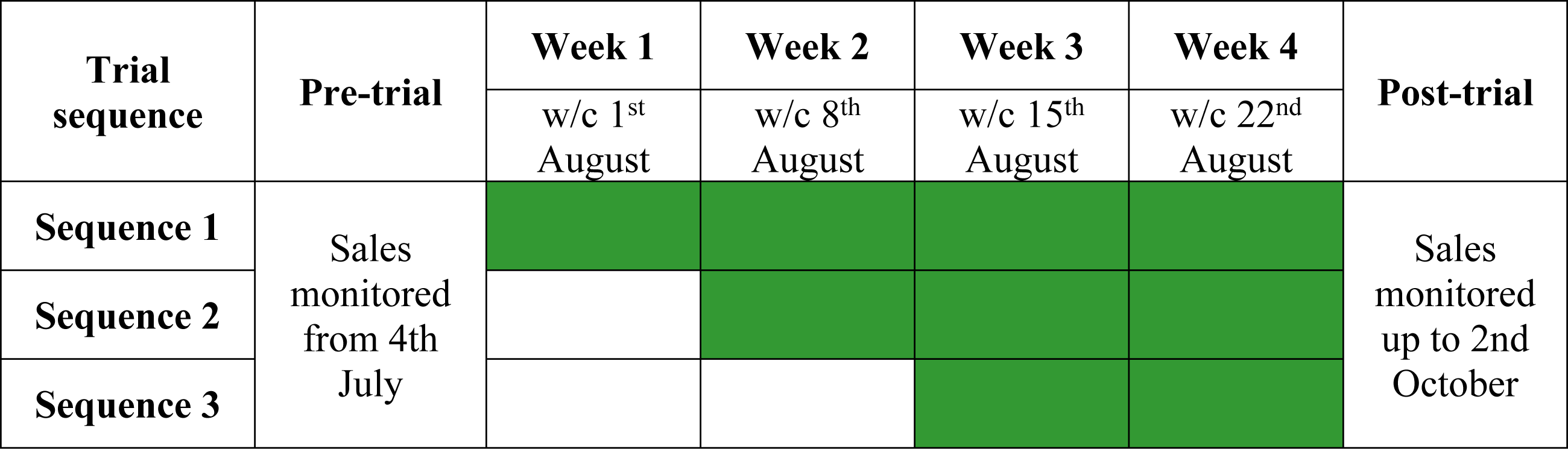
Participants
This trial was delivered via a workplace food outlet operator in blue collar workplaces across the UK. These food outlets were part of distribution centres for businesses that operate nationally in the UK (one grocery chain and one delivery business).
There were originally 32 sites allocated to enter the trial, which were randomly allocated into three sequences: 10 in the first sequence and 11 in both the second and third. However, due to staffing issues, three food outlets – one in each sequence – dropped out before entering the trial, leaving 29 food outlets that supplied data.
Intervention
Free samples
In the first week of the intervention, we gave out free samples of one of the vegan or vegetarian meals on offer that day in the food outlets (the meals on offer varied by outlet). We sent a fieldworker in to the food outlet at lunchtime on the Tuesday, Wednesday and Friday (the days of the week with highest footfall), who handed out the free samples.
Samples of the vegan or vegetarian hot meal of the day were offered in individual disposable containers and were also advertised on a promotional poster advertising the free samples and describing the meal on offer at the entrance to the food outlet. The free samples were not advertised beyond the materials in the food outlets as we sought to isolate the impact of the interventions themselves on sales (from any impact of wider advertising).
The free samples were prepared by the food outlet’s chefs and the fieldworkers did not handle any food directly. The fieldworker would approach visitors asking, “Would you like to try the vegan/vegetarian meal of the day?”. If the customer showed interest in the sample, the fieldworker proceeded to also introduce the loyalty card.
Loyalty card
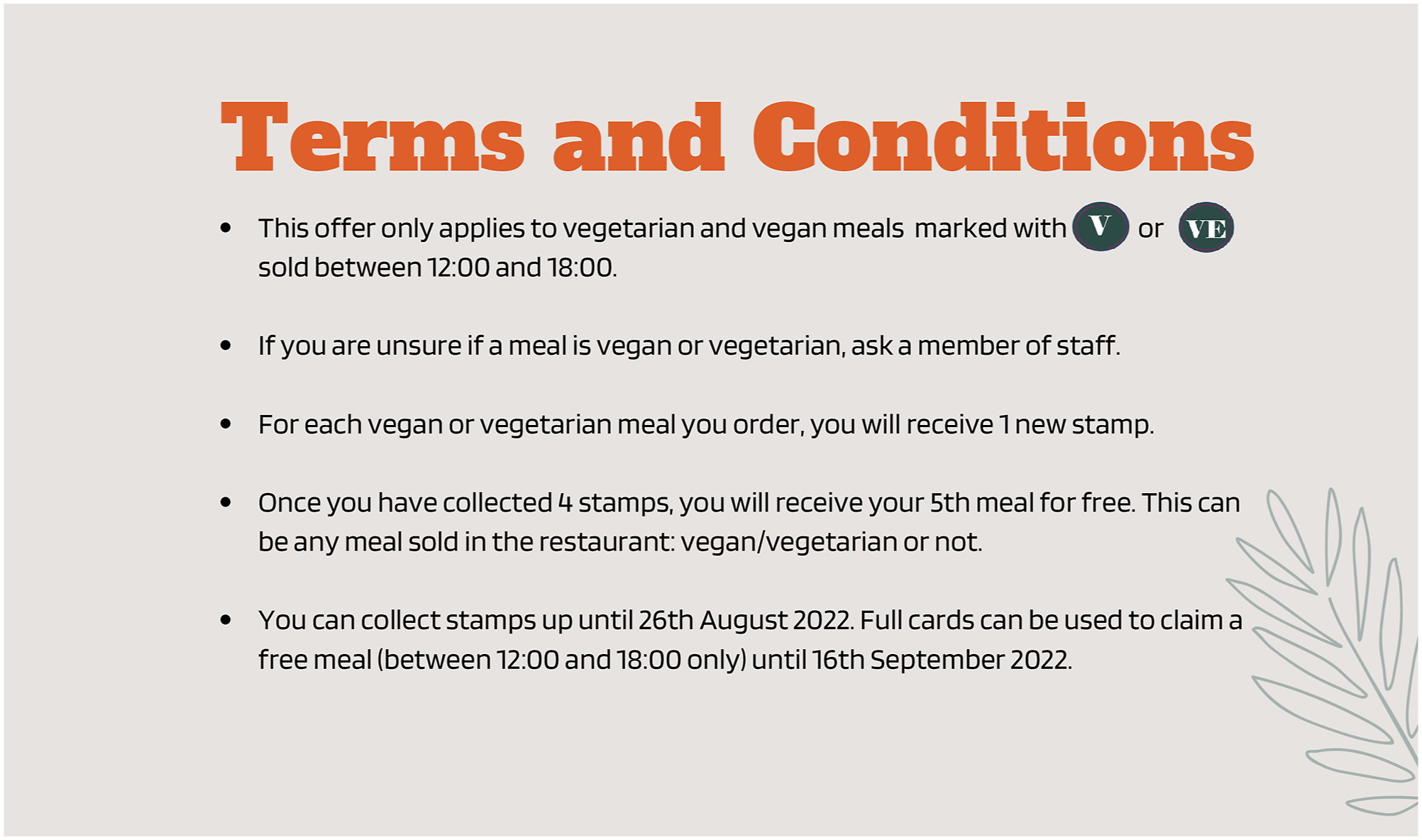
In each food outlet, loyalty cards were made available for the duration of the intervention period (which varied by sequence, see Trial design). Once customers had collected four stamps, they could exchange the card for any meal of their choice, vegan/vegetarian or otherwise, until September 25th 2022. However, the first stamp was given as ‘endowed progress’, so in practice, customers only needed to purchase three qualifying meals to receive a free meal. The design and terms and conditions of the loyalty cards can be found in Figures 2 and 3. Front of Loyalty Card. Back of Loyalty Card.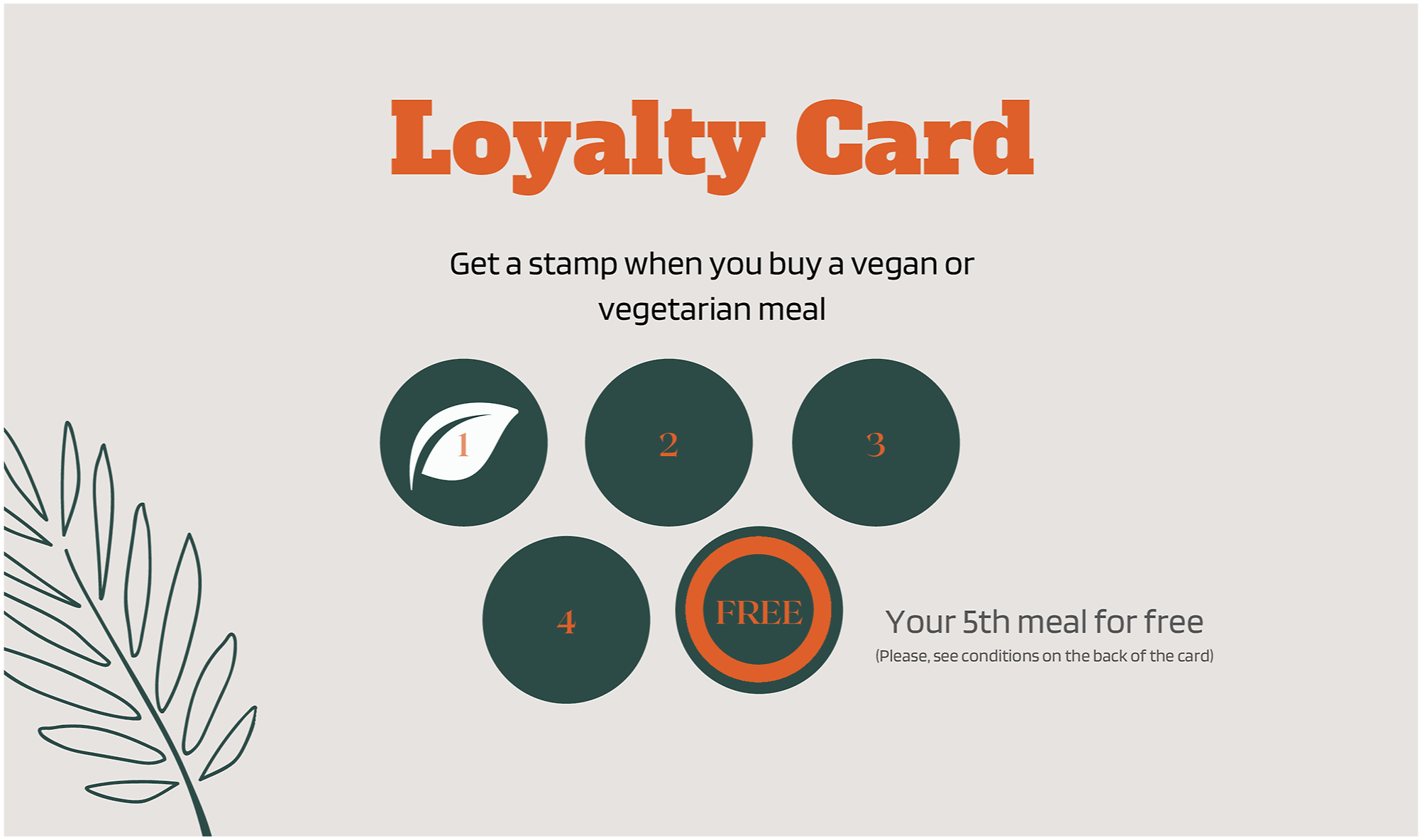
Loyalty cards were offered at the till to all paying customers and were also handed out to customers by the fieldworkers handing out free samples on Tuesdays, Wednesdays and Fridays during the week the workplace food outlet entered the trial. The loyalty cards were not advertised beyond the materials in the food outlets as we sought to isolate the impact of the interventions themselves on sales (from any impact of wider advertising).
Customers received a stamp for each vegan or vegetarian hot meal or baguette they ordered – excluding breakfast. Breakfast was excluded from the trial because the offering was the same each day, so there were no ‘novel’ items. The food outlet managers also informed us that customers’ food choices at breakfast seemed much more set, suggesting an intervention applied at this meal would have lower impact.
Implementation checks
To ensure compliance with the interventions the research team had a weekly call with the food outlets’ regional managers during the trial to track progress and ensure the implementation protocols were followed. Additionally, the free sample fieldworkers were asked to share a picture of their workstation and placement in the food outlet, as well as pictures of the samples with the research team.
Fieldworkers were also tasked with completing a short survey at the end of each shift, which consisted of five questions that captured information on the times of their shift, location, number of free samples provided to customers and number of loyalty cards available. This helped ensure that all sites had enough resources to deliver the trial successfully.
Outcomes
The primary outcome measure in this trial was the number of plant-based options (including main meals, jacket potatoes, made-in-house sandwiches, and salads) sold between 11:00am and 02:00am each day. The data was drawn from the company’s sales system, which records sales automatically through the till.
As an alternative measure of the primary outcome, we had the following secondary outcome: • Proportion of plant-based options sold daily between 11:00am and 02:00a.m.
To check the effects on non-plant-based food and that there were no spillover effects on total sales, we also had the following two secondary outcome measures: • Number of non-plant-based options sold daily between 11:00am and 02:00am • Total number of options sold daily between 11:00am and 02:00a.m.
Records of sales that occurred outside the specified trial period, or that did not concern products of interest, were excluded from the analysis. Since the window of interest for each date was sales that occurred within the period 11:00-02:00, sales that occurred after midnight but before 02:00 were recoded as having occurred on the previous day. Sales that occurred between 02:00-11:00 were excluded entirely. Each product was coded as either containing meat, vegetarian or vegan.
Sales records were aggregated such that, for each outlet, the total sales, total income, and the average cost of a product were recorded. Additional variables were derived which reflected the total sales, total income, and average cost of a product for meals that were vegetarian and for those which were specifically vegan. Further, there were also variables indicating the proportion of sales that were vegetarian, vegan or contained meat. Finally, each date was also coded to indicate whether it occurred after the treatment date, and whether it was in the pre- or post-intervention stage.
Sample size
Preliminary power calculations were performed to give an indication of the feasibility of intended designs. These calculations involved simulations – based on 2021 sales data (June to August) and assuming the participation of 38 food outlets, which was based on the original number of outlets that expressed an interest in participating, with 10% attrition – where the impact of the intervention was ‘varied’ upon total daily sales. This simulation was conducted using the simr package in R statistical software.
The power calculations assumed the following: • The use of a linear mixed effects model with a random intercept per outlet and time fixed effects • Three ‘steps’ in which the intervention is introduced, spread evenly across participating food outlets using random allocation; and • One month of baseline observations, one ‘treatment’ month in which the intervention is introduced in three steps (as noted above) and one month of ‘follow-up’ observations.
As Figure 4 shows, these indicative simulations suggest that with this design, we would have 80% power to detect an increase of approximately 20% in daily sales of plant-based meal options. Indicative power calculations.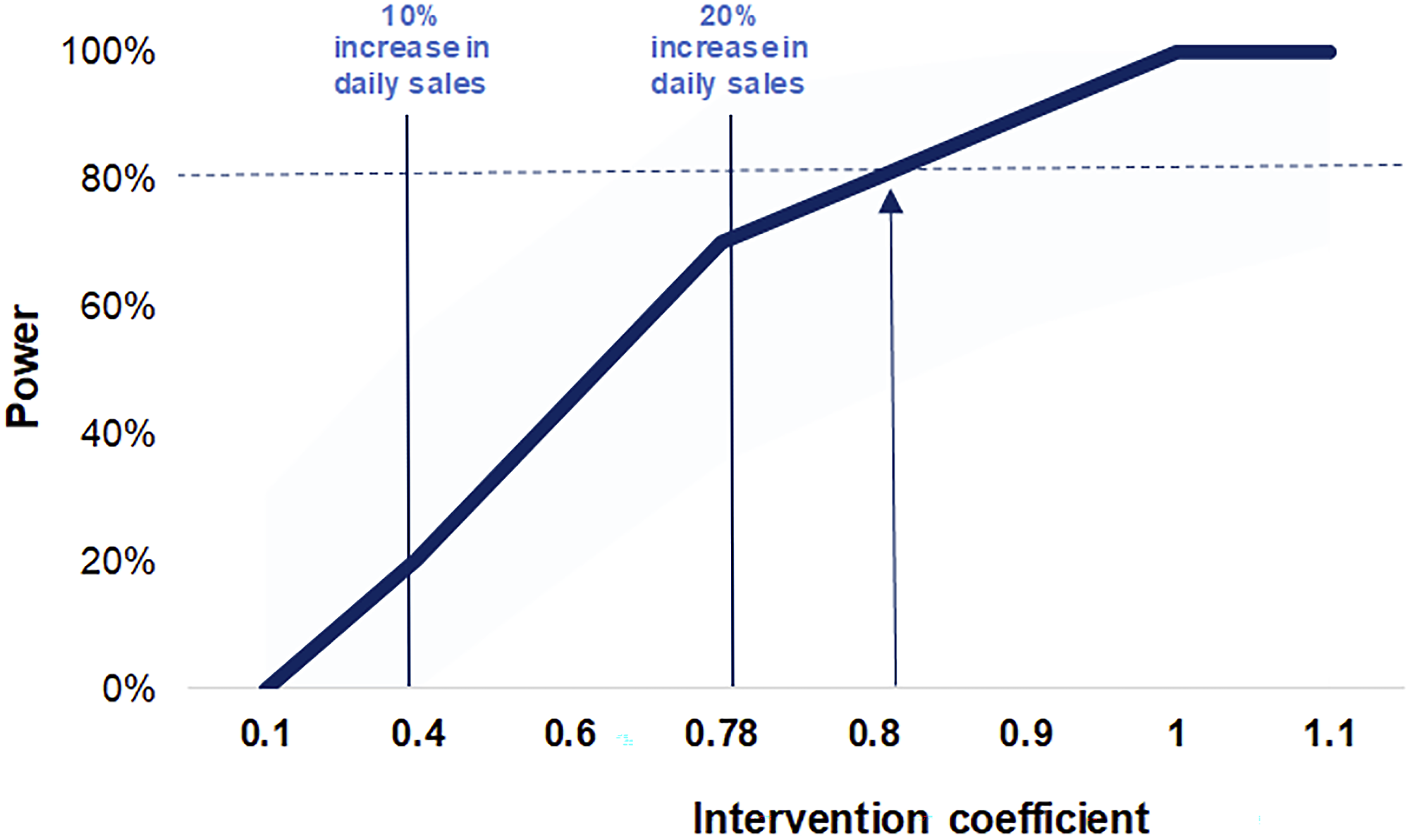
However, when engaging with the food outlets, several outlets indicated that they could no longer participate in the trial because the footfall was too low for it to be worthwhile, or they did not have vegetarian or vegan options. Therefore, 32 outlets were randomised (of which 29 eventually participated in the trial), which will have increased the minimum detectable effect size, assuming that the power calculation assumptions hold.
Randomisation
Random assignment to the sequences occurred at the food outlet level. During the food outlet recruitment process, we collected key information on food outlets – including estimated daily footfall and location. We stratified on the business the outlet serves and on average estimated daily footfall, to ensure the sequences were similar in terms of key characteristics. This process was executed via stratified random assignment, conducted using R’s randomizr package.
Blinding
Outlet managers knew that they were taking part in a trial, and in some cases the staff did as well. All staff knew they were taking part in a new programme, although we did not explicitly inform all that it was part of a research project. Customers would have seen the interventions, but were not told that they were being delivered as a part of a trial.
Statistical methods
After examining the raw data, we decided to exclude weekends from the analyses because most of the missing values were due to closures on weekends. Excluding weekends reduced the proportion of observations with missing values to 0.86% (10/1160 observations) from 12.25% (199/1624 observations). Given the low number of missing values, we decided not to impute the missing values, to avoid introducing spurious time series correlation. For a full review of the missing sales data per food-outlet, please refer to Web Appendix item 1.
We used the standard stepped-wedge model specification pre-registered in the trial protocol to examine the effects of interventions, as recommended by Hussey and Hughes (2007). It was a linear mixed-effects model that could be written as • • • • • • • •

To better capture the weekly seasonality of the outcome variables, we also ran an alternative model with day of the week fixed effects instead of the date fixed effects in the main specification. The same models were run for the three secondary outcomes. All statistical analyses were conducted in R Statistical Software. All tests were two-tailed and conducted using a significance level of α = 0.05.
Process evaluation
A process evaluation was conducted, in order to explore the factors influencing the impact of the interventions (i.e., why the interventions were or were not effective). The qualitative research also explored intervention fidelity (i.e., whether the intervention was delivered as expected) and evaluated the process of implementing the intervention in order to identify learnings and improve future trials. Interviews were conducted with managers, staff, fieldworkers and participants. For a detailed review of the process review methodology and results, please refer to Web Appendix item 2.
Trial results
Participant flow
There were originally 32 sites allocated to enter the trial, which were recruited in June and July of 2022 and randomly allocated into three sequences: 10 in the first sequence and 11 in both the second and third. However, due to staffing issues, three food outlets – one in each sequence – dropped out before entering the trial. This left 29 food outlets in total, 9 in the first sequence and 10 in both the second and third, which received the interventions. Data for all outlets that entered the trial and received the intervention was analysed. See the trial flowchart, in Figure 5. Participant flow.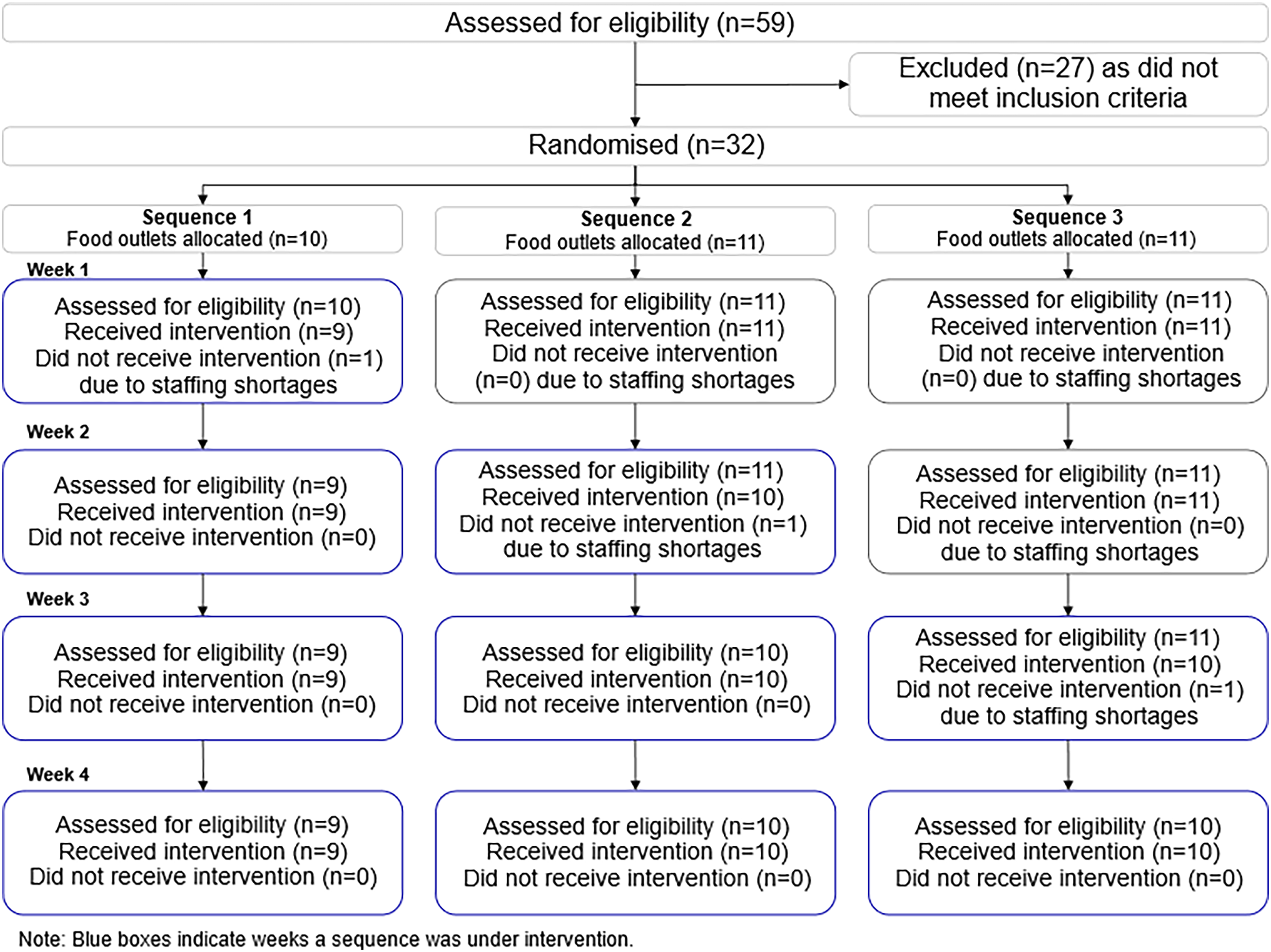
Recruitment
All participating food outlets were recruited through our delivery partner, Compass Group UK & Ireland, Compass Group Plc. and were part of their subsidiary, Eurest. The delivery partner provided data on all blue-collar sites they operate across England to assess their eligibility for participation in the trial.
The inclusion criteria for recruitment of sites were based on the following variables: • Location: balanced distribution across the country with outlets located in the Greater London area, South-East and Southwest as well as the North of England. • Operating hours: outlets that offered lunch and dinner services. • Offering: availability of vegan and vegetarian products. • Footfall: between 130 and 700 of daily visitors, on average (as estimated by the delivery partner). • Data: use of EPOS till system, in order to be able to provide high quality sales data
Baseline data
Food outlet-level key outcome variables during the baseline period.
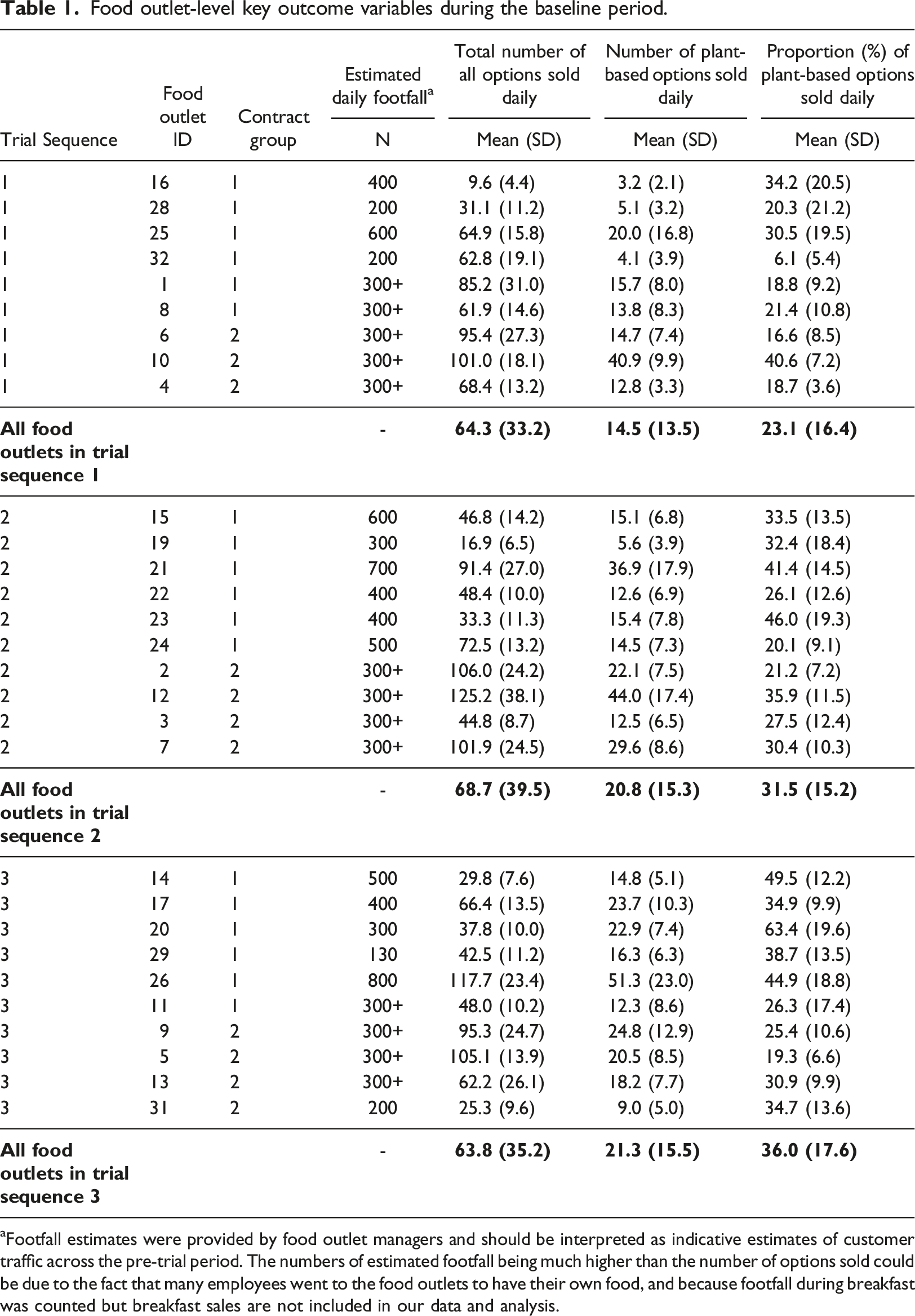
Footfall estimates were provided by food outlet managers and should be interpreted as indicative estimates of customer traffic across the pre-trial period. The numbers of estimated footfall being much higher than the number of options sold could be due to the fact that many employees went to the food outlets to have their own food, and because footfall during breakfast was counted but breakfast sales are not included in our data and analysis.
Outcomes and estimation
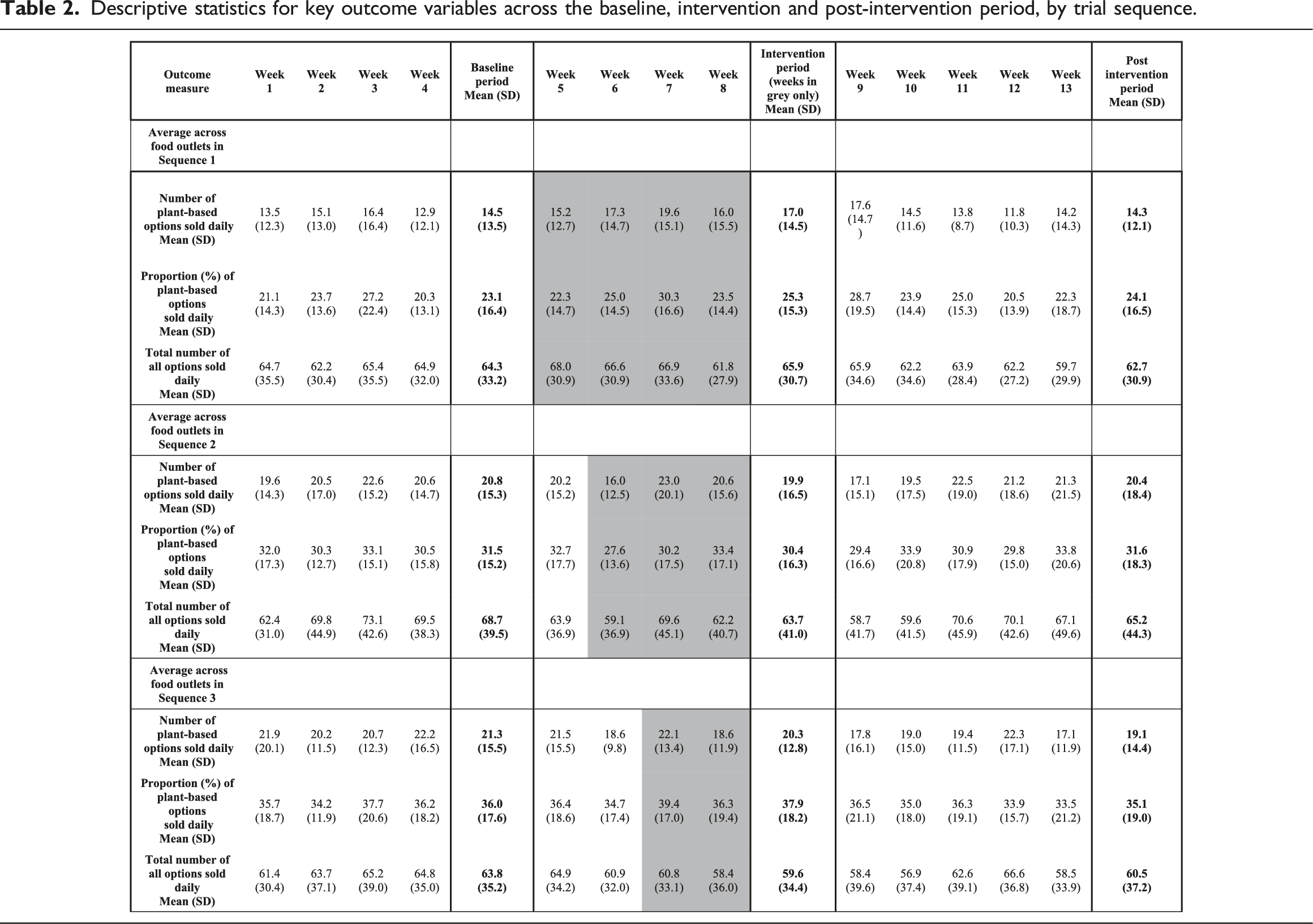
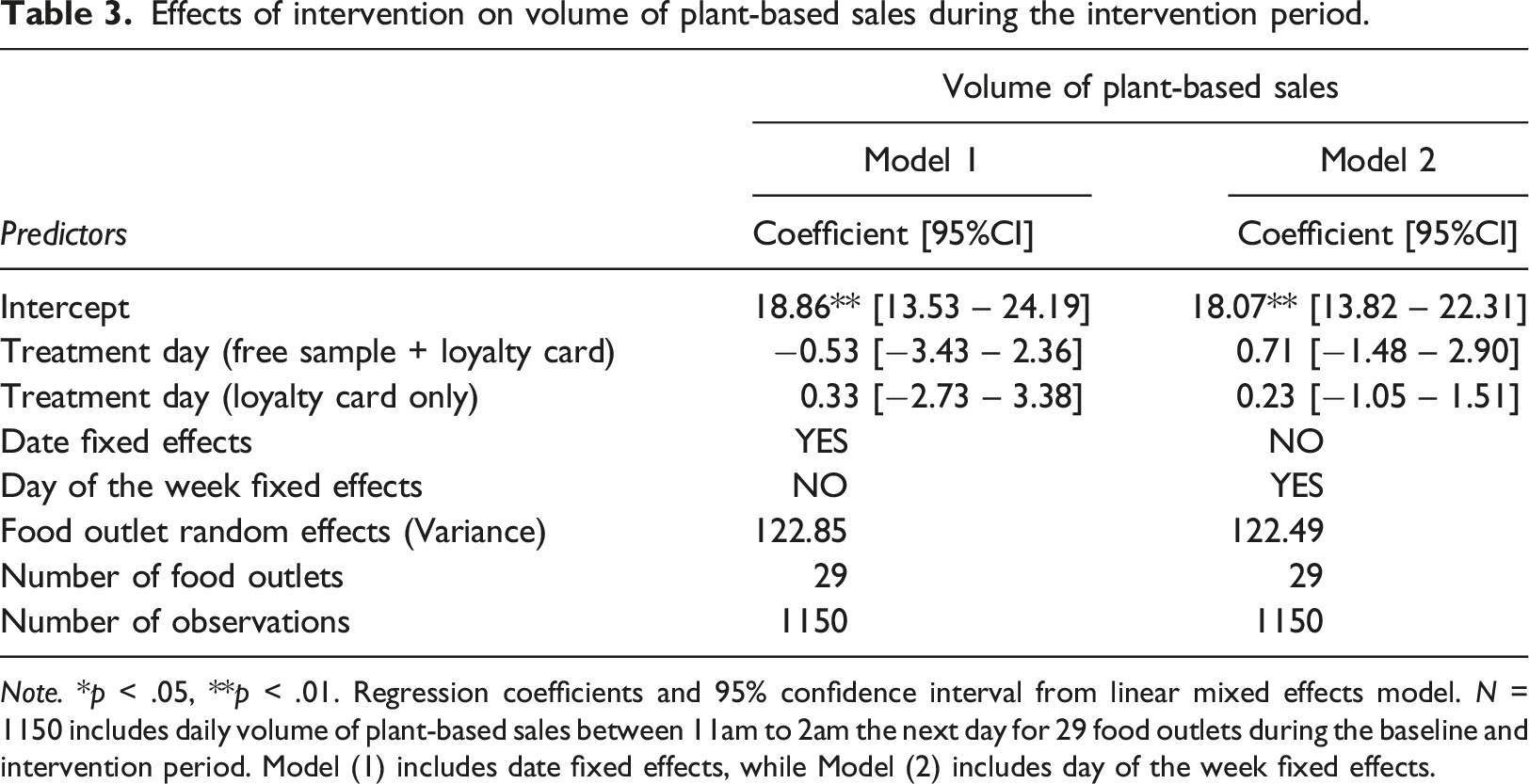
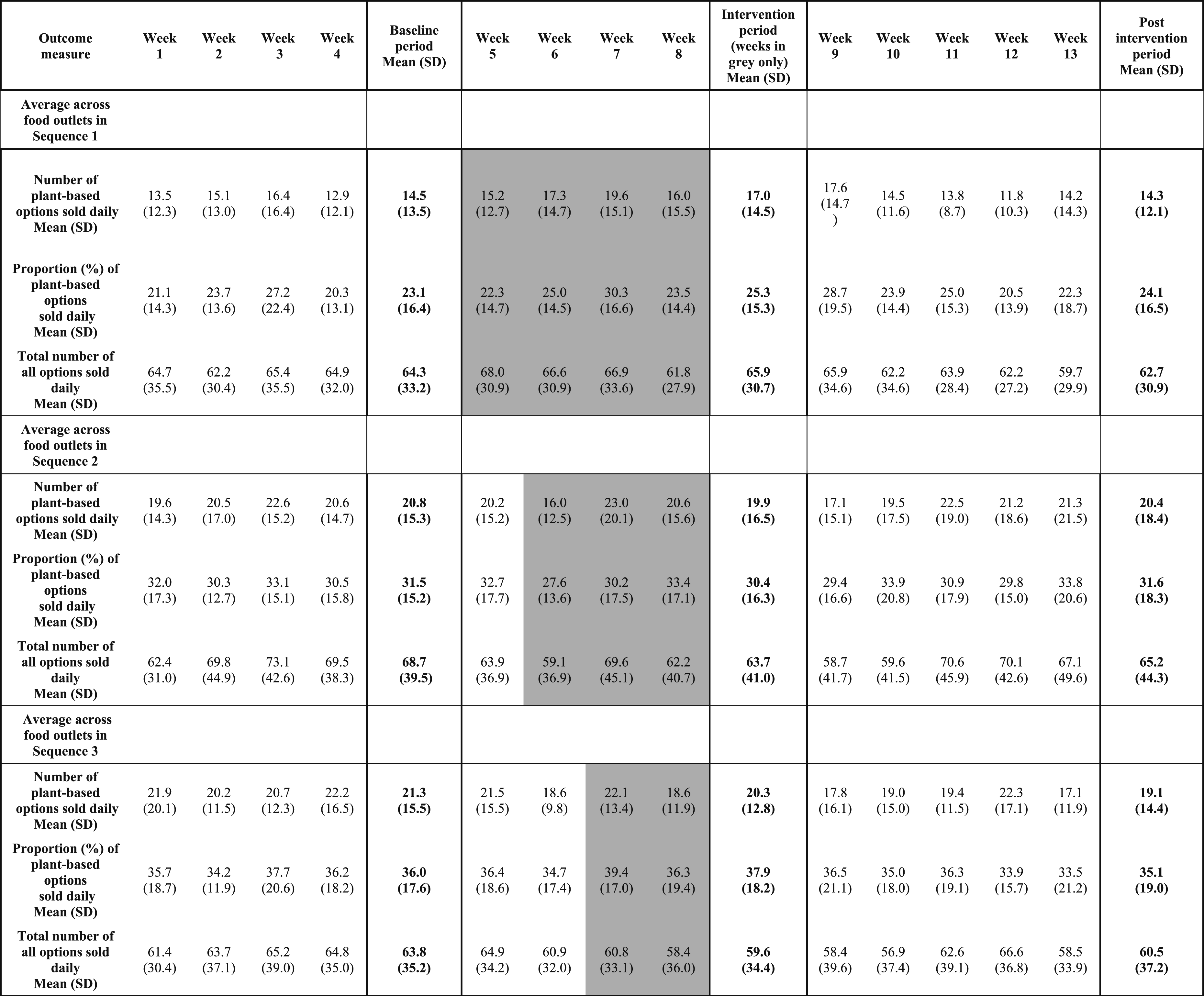
We did not find statistically significant effects of interventions on the volume of plant-based sales during the intervention period: the volume of plant-based sales on days when free samples were handed out was not different from that of the baseline period (coefficient = −0.53, 95% CI [-3.43 – 2.36], p = .718), nor was the volume different on days with the loyalty card intervention only (coefficient = 0.33, 95% CI [−2.73 – 3.38], p = .834). This lack of difference is highlighted in Figure 6, which tracks the daily volume of plant-based products sold across the trial period, as there is no observable sustained increase in sales during the intervention period Plant-based sales across the baseline, intervention and post-intervention period*. Descriptive statistics for key outcome variables across the baseline, intervention and post-intervention period, by trial sequence. Effects of intervention on volume of plant-based sales during the intervention period. Note. *p < .05, **p < .01. Regression coefficients and 95% confidence interval from linear mixed effects model. N = 1150 includes daily volume of plant-based sales between 11am to 2am the next day for 29 food outlets during the baseline and intervention period. Model (1) includes date fixed effects, while Model (2) includes day of the week fixed effects.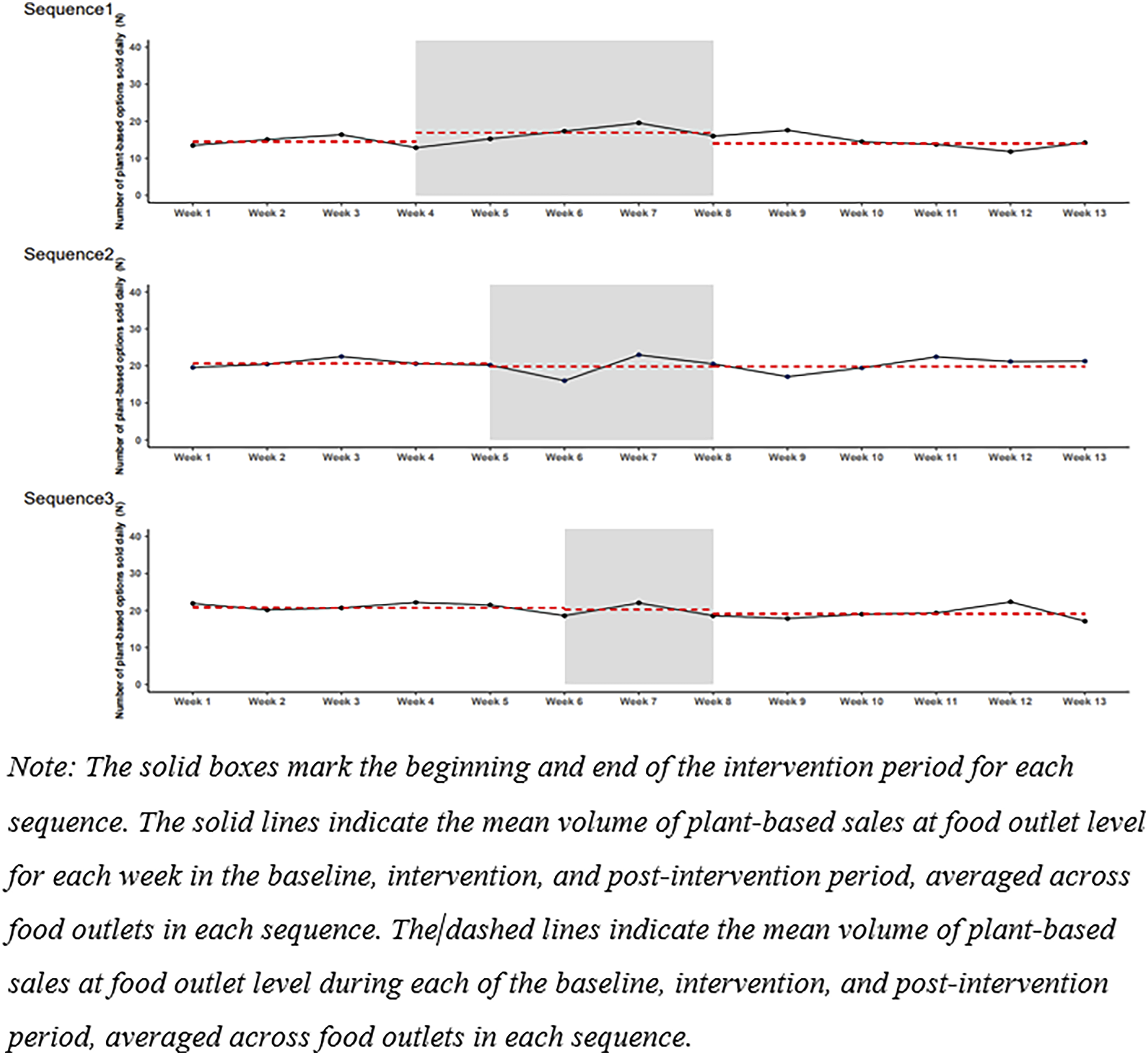
Effects of intervention on proportion of sales that are plant-based during the intervention period.
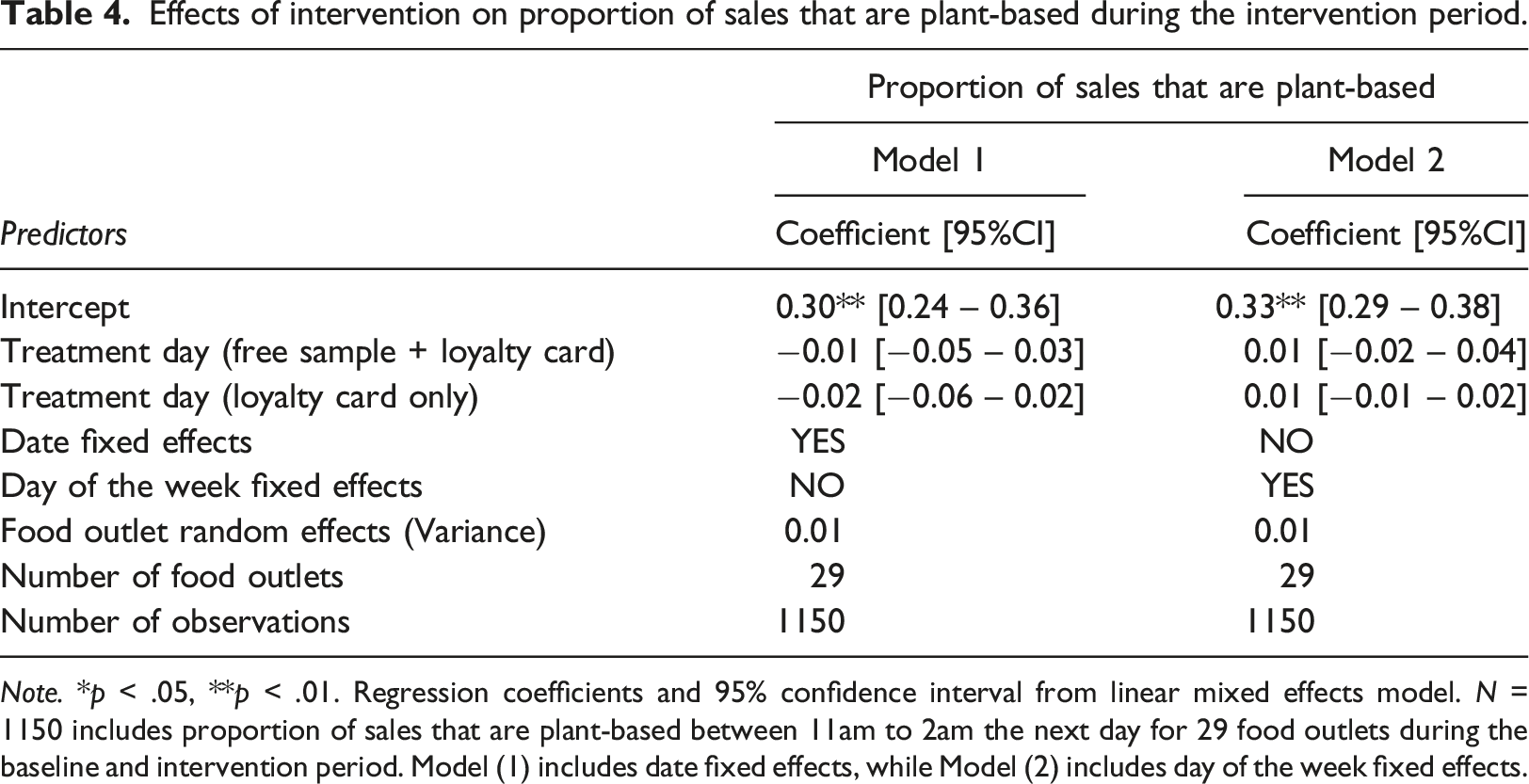
Note. *p < .05, **p < .01. Regression coefficients and 95% confidence interval from linear mixed effects model. N = 1150 includes proportion of sales that are plant-based between 11am to 2am the next day for 29 food outlets during the baseline and intervention period. Model (1) includes date fixed effects, while Model (2) includes day of the week fixed effects.
Effects of intervention on volume of non-plant-based sales during the intervention period.
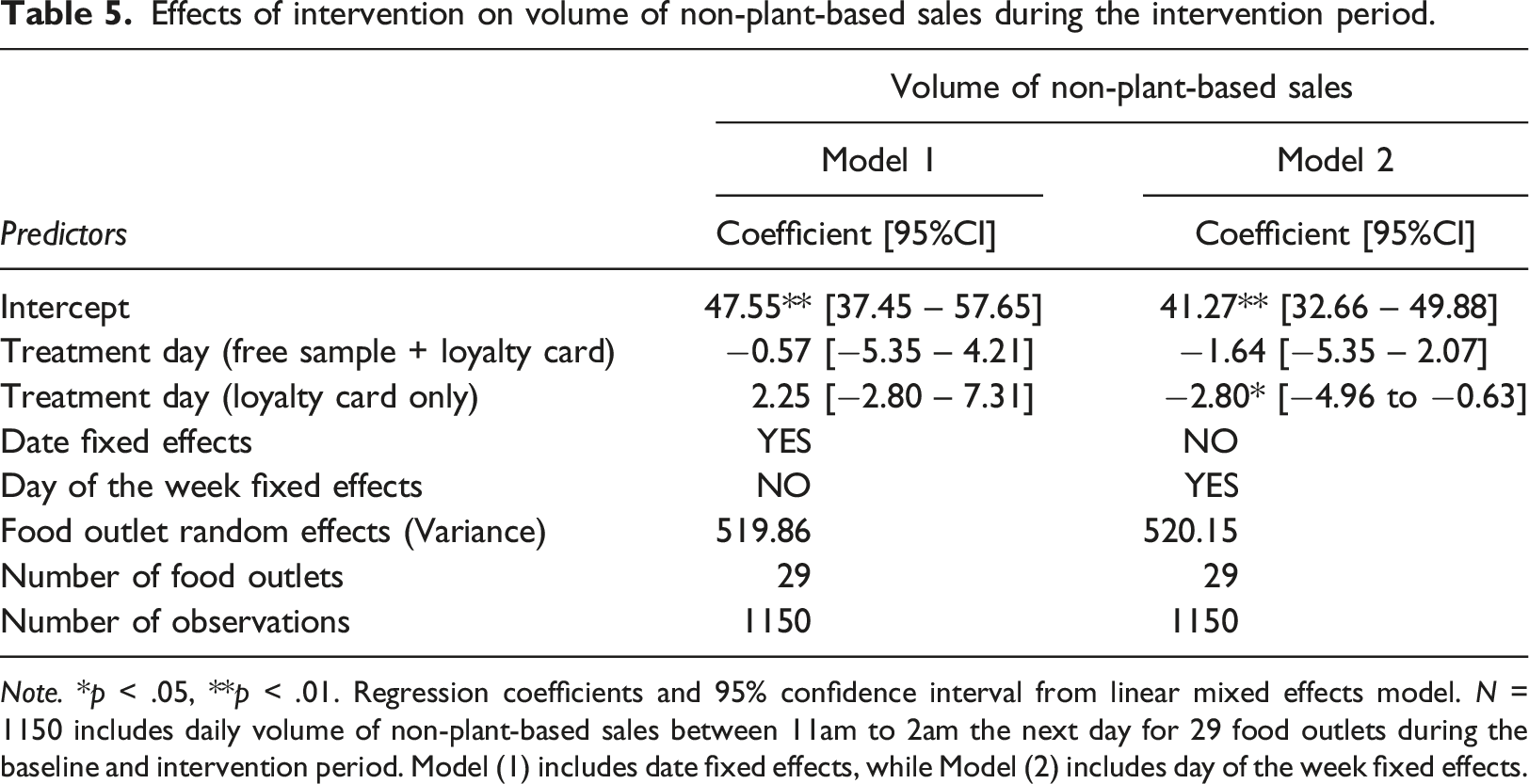
Note. *p < .05, **p < .01. Regression coefficients and 95% confidence interval from linear mixed effects model. N = 1150 includes daily volume of non-plant-based sales between 11am to 2am the next day for 29 food outlets during the baseline and intervention period. Model (1) includes date fixed effects, while Model (2) includes day of the week fixed effects.
As we found no effects of the interventions during the intervention period, we did not perform analyses on Hypothesis 2 (examining effects of the interventions after they were withdrawn).
Discussion
The free samples and loyalty cards did not increase purchasing of plant-based meals in this study. We did not detect any significant differences in the volume of plant-based sales during the intervention period compared to the baseline period on the free sample days (coefficient = −0.53, 95% CI [−3.43 – 2.36], p = .718) or on days with the loyalty card intervention only (coefficient = 0.33, 95% CI [−2.73 – 3.38], p = .834).
Free samples
The lack of effect of the free samples is consistent with two other studies that investigated free samples at point of consumption, but did not find a statistically significant effect (Bleasdale et al., 2020; Heilman, C., Lakishyk, K. and Radas, S, 2011). One thing that these studies have in common with each other – and the successful lab study that found free samples increased healthy eating (Schickenberg, B, Van Assema, P, Brug, J et al., 2011) – is that the researchers were present. During a free sample intervention in a weekly food sample event in Buffalo, New York, researchers had a table in a central pavilion (Bleasdale et al., 2020). When free samples were given out at concession stands at a swimming pool in Canada, there was no increase in sales volumes, but there was statistically significant difference in behaviour amongst a subsample of consumers whose behaviour was observed by a researcher (Olstad et al., 2014).
Our null finding is also consistent with two trials that were run in-store: there was no effect of free samples on purchases of wine (Nin Ho & Patrick Gallagher, 2005) or chocolate (Lammers, 1991). In contrast, offering samples of oysters in Australian seafood stores increased sales by 15%–20% (Lawley et al., 2016).
There are several reasons that could explain the differential effectiveness of free food samples across studies:
The effectiveness of sampling may vary depending on the product being sampled
A time series analysis in a supermarket suggested that samples could be effective, but that the effect depended on the product being sampled and the store characteristics (Chandukala et al., 2017). Another grocery shopping study, which combined multiple interventions to promote sales, also found that food promotions were effective for sales of some products but not others (Gittelsohn, J, Dyckman, W, Frick, KD et al., 2007). In a lab study, free samples of lunch options also had a different effect depending on the items: participants were more likely to choose juice after a sampling than they were to choose low-fat products (Schickenberg, B, Van Assema, P, Brug, J et al., 2011).
One reason that samples of food might be more effective with some products than with others is that people might not like the taste of the sample. In our study, the food that was offered was limited by what the food outlets were making and what they decided could be portioned up into samples (we had no influence on the meals offered). Interviews with staff and fieldworkers revealed that some food outlets portioned up all estimated samples for the day at the start of lunchtime, leading to samples getting cold as the lunch break progressed. The food might also have been culturally unfamiliar (in the process evaluation detailed in Web Appendix item 2, we found that many customers were not native English speakers). Maybe other meals would have been more successful in a free sample intervention. It might be hard to predict what meals would be successful, since preferences over flavours vary a lot between individuals and it is difficult to make generalisations about what tastes people will enjoy and want to re-experience (Sendra-Nadal & Carbonell-Barrachina, 2017). Further, flavour preferences are related to familiarity and behavioural learning theory suggests that multiple exposures to samples to reinforce their effect (Rothschild & Gaidis, 1981). It was not possible for us to conduct primary research on perceptions of the meals before our study, but more research on flavour preferences—and how to construct and change them—could be a valuable complement to research on how to increase healthy eating.
The effectiveness of free samples may depend on how they are operationalised
Our process evaluation found that the customers in our study did not necessarily connect the samples to the meals they were about to purchase. It might have been more effective if we had given an explicit prompt to consumers to buy the meal afterwards, for example by saying “Try this for free. If you like it, why not buy it as a main meal today?” in the poster for free sample or when the fieldworker promoted the free samples. In support of this, a promotion of low-fat products in a supermarket that used a combination of samples, price discount, and prompting was successful at increasing the purchase of low-fat frozen desserts (Paine-Andrews et al., 1996). A quasi-experimental study in a US supermarket found that interaction with the person distributing the sample, or with other consumers who were sampling at the same time, seemed to increase purchasing of the product (Heilman, C., Lakishyk, K. and Radas, S, 2011). In general, staff engagement with the promotion may increase effectiveness: the authors of the study where offering free samples increased the purchase of oysters credit management and staff commitment to the promotion campaign with positively impacting results (Lawley et al., 2016).
The effectiveness of free samples may depend on the presence of supporting interventions
Free samples may generally be introduced with advertising campaigns or other promotional materials, and may require these additional supporting promotions if they are to be effective. Point-of-sale promotions are most commonly introduced alongside advertising campaigns (Escaron et al., 2013); and other studies have found free samples to be effective in combination with advertising campaigns or other promotions (Gittelsohn, J, Dyckman, W, Frick, KD et al., 2007).
The effectiveness of free samples may depend on whether consumers have already made up their mind about what they want to purchase
Even if people enjoy the sample, they still may not purchase it at point of consumption because they may already know what they want to eat or they may want to purchase their habitual meal. Our process evaluation suggests that customers in our study who tried the meals generally liked them. However, our evaluation also revealed that many customers either did not try the meal or else they tried it but chose not to purchase it because they preferred to eat their usual meal or had brought their own lunch. In another study of interventions to promote healthy eating by children in restaurants, the authors found that many of the children already knew what they intended to order before arriving at the restaurant, especially if they ate there at least once a month (Castro et al., 2016). This goes back to the point that habit and taste are very important in food choice (Osman & Jenkins, 2021), and habits can be difficult to break. As well as habits, other factors may be more important than taste in terms of inducing a sale immediately following sampling (Nin Ho & Patrick Gallagher, 2005). Customers in our process evaluation mentioned price and calorie content as being a reason for buying other meals, despite having liked the sample.
However, even if they are not effective at increasing purchases of the product being sampled, free samples may serve other purposes for marketeers, for instance getting people into the store and increasing purchases in general. For example, Lammers et al. (1991) found that in-store free samples in a chocolate shop increased sales of other varieties, but not the one that was given out as a sample. Similarly, a time series study concluded that samples were associated with category expansion, and with more sales of everything rather than substitution to the sampled variety (Chandukala et al., 2017). Samples may also be used to increase product and brand recognition, brand image (Bettinger et al., 1979), and perceptions of product quality (Sprott & Shimp, 2004). If samples increase customer satisfaction, then that may also be associated with increased sales (Gomez & Kelley, 2013)—though note that this study only shows evidence of association, not causation.
Loyalty cards
The lack of an effect of the loyalty cards in our trial is surprising, given the known effectiveness of price discounts, including when combined with free samples (Bawa & Shoemaker, 2004). However, our finding is consistent with a small body of evidence from the marketing literature that loyalty programmes have at best small effects at encouraging repeat purchases in frequent flyer programmes (Sharp & Sharp, 1997), food retailers (Lin & Bowman, 2022), and coffee shops (Petkovic, 2018).
There are several reasons that could explain why the loyalty cards were not effective:
Consumers need to be aware of loyalty cards to use them, but they may not be aware
The results of our intercept interviews and fieldworker visits suggest that people were not aware of the loyalty cards, which were not widely utilised. This is also congruent with the results of other studies, which have found low awareness and usage of loyalty cards (Bolton et al., 2000; Petkovic, 2018; Wright & Sparks, 1999). For instance, only about 40% of customers were aware of a loyalty programme in an independent coffee shop; and only a quarter actually participated in the scheme (Petkovic, 2018). Contra the predictions of Chandon et al. (2000) the coffee shop customers were focussed on the end reward of free coffee (Petkovic, 2018). If loyalty programmes are mainly used by consumers who already regularly purchase a product, who are in search of a price discount, then they may have limited benefits.
Loyalty cards may need to run for a longer period in order to be effective
It is also possible that the cards would have needed to run for a longer period in order to be effective. The rapidly changing situation post-covid made it difficult for us to gather reliable data in the design stage, in order to estimate how often people bought food from the outlets and what meals they were buying. Further, we note that, in many cases, there were cheaper meals available than the plant-based option, even considering the indirect discount offered by the loyalty card. Thus, the impact of the reduced cost of the meal might have been limited in our trial setting.
Implications of our results for practitioners considering using sales promotions
Although there is a folk belief that sale promotions, including free samples and loyalty cards, can be effective at changing purchasing habits, our study does not provide any support for that. If managers are implementing free samples, then the samples may be more effective if they are actively promoted by sales staff or implemented alongside a larger campaign. They may also be best used to serve other purposes than sales of the item being sampled, for instance enhancing the in-store environment or promoting brand recognition. Similarly, it is not clear that loyalty cards bring in net sales revenue; but they may be a way of offering regular customers a lower price and increasing customer satisfaction. Again, loyalty cards may need active promotion in order to make customers aware of them, potentially combined with prompts to use them at point of sale.
Limitations
Several features of the trial may have impacted our ability to generate and detect an effect. The sample size was relatively small and limited by the availability of food outlets that were operated by the delivery partner, that used a reliable method to capture sales data, and that were willing to participate in this trial. The small sample size means that we were limited in our ability to detect an effect if there was one, and means that if there was a small effect we might not have detected this. Moreover, three out of the 32 randomised food outlets had to drop out, further reducing our statistical power. In the participating food outlets, the breakfast and dinner shifts are generally busier than the lunch shift. While we had determined the eligibility of food outlets based partially on footfall, in an effort to ensure sufficient sales per food outlet, there was no reliable data available at the point of randomisation on footfall during each specific mealtime and the number of transactions over lunch was lower than anticipated.
The food outlets included in this trial were all based in large distribution centres and were operated by just two large national employers. It is possible that features of the setting or the workforce influenced the impact of the interventions, and that results of these types of interventions might differ in other settings. Potentially other target groups would be more responses. We chose to target lower socioeconomic status (SES) groups, which have both a lower level of eating plant-based foods and may be less likely to change their diet than higher SES groups (E. J. Lea et al., 2006; Pohjolainen et al., 2015). Higher SES groups might be more receptive to the product and there is some suggestion that loyalty cards might have been effective in university food outlet; although the approach has not been evaluated through a controlled study (Friends of the Earth, 2020).
Features of the workforce and their shift patterns that may have impacted on the effect of our interventions also include the finding from the implementation and process evaluation that many employees (the food outlet customers) had a relatively short lunch break and sought to minimise time spent purchasing lunch – if they had not brought lunch from home. Several of the customers we interviewed highlighted that their lunch meal decision making was driven by habits and familiarity, and that this impacted on their willingness to engage with the interventions and to try an unfamiliar meal option. It is possible that in other settings where purchases are not quite so habitual, interventions that seek to encourage individuals to try something new might have a greater impact. The brevity of lunchbreaks also limited customers’ willingness to engage in conversation with the food outlet staff, which reduced staff’s ability to advertise the samples and loyalty cards.
Another feature of the specific settings in which the interventions were delivered is that a significant proportion of the workforce, that is, potential food outlet customers, spoke English as an additional language and had limited English proficiency and/or literacy. This could have reduced awareness of the interventions, as the free samples were advertised with English-language posters and the loyalty cards contained their terms and conditions in English.
Staff and fieldworkers alike highlighted that the fieldworkers played a significant part in encouraging take up of the free samples, in particular. The food outlet staff would not normally have enough time to actively advertise free samples in the way fieldworkers could, and it is possible that a wider rollout in which active distribution of free samples is not feasible might see less uptake of the samples (which we hypothesise would further reduce any potential small effect they may have had).
Conclusion
We tested the effect of handing out free samples and introducing loyalty cards on purchases of plant-based meals in a workplace food environment, servicing largely low SES workers. Neither intervention was effective. Workers who tried the free samples seemed to like them but did not go on to purchase the meal. The loyalty cards were not utilised very often; it seems that many customers were not aware of them. This contributes to a small literature that suggests that free samples do not increase purchases of the sampled product, at least not without other supporting interventions. However, free samples have a wider marketing purpose, meaning that they are still useful even if they do not immediately increase sales.
Supplemental Material
Supplemental Material - Exploring the impact of giving free food samples and loyalty cards on sustainable food choices: A stepped wedge trial in workplace food outlets
Supplemental Material for Exploring the impact of giving free food samples and loyalty cards on sustainable food choices: A stepped wedge trial in workplace food outlets by Natalie Gold, Pieter Cornel, Shi Zhuo, Katie Thornton, Rupert Riddle, and Robert McPhedran in International Journal of Market Research
Footnotes
Acknowledgements
Thanks to Brian Cook for his methodological advice. We thank Compass Group UK & Ireland and their subsidiary, Eurest, for allowing us to deliver this study in their food outlets.
Declaration of conflicting interests
The author(s) declared no potential conflicts of interest with respect to the research, authorship, and/or publication of this article.
Funding
The author(s) disclosed receipt of the following financial support for the research, authorship, and/or publication of this article: This research was funded by the FSA as part of a programme of work to understand what interventions change food choices.

Supplemental Material
Supplemental material for this article is available online.
References
Supplementary Material
Please find the following supplemental material available below.
For Open Access articles published under a Creative Commons License, all supplemental material carries the same license as the article it is associated with.
For non-Open Access articles published, all supplemental material carries a non-exclusive license, and permission requests for re-use of supplemental material or any part of supplemental material shall be sent directly to the copyright owner as specified in the copyright notice associated with the article.
