



Abstract
This study explores the effectiveness of qualitative projective techniques to explore the corporate political brand image of Pakistan Tehreek-I-Insaf party [PTI] from a multiple-stakeholder perspective. This study addresses core gaps in projective techniques research of eliciting responses from a large cross-section of multiple stakeholders in varied non-western contexts. A qualitative interpretivist approach was adopted. More specifically, expressive projective techniques were embedded within focus group discussions. Nine focus group discussions (comprising 37 participants) were carried out in Karachi and Lahore (Pakistan) from June to November 2020. Each focus group lasted 60 to 90 minutes. A six-phased contextualist thematic analytical approach was employed to interpret the findings generated from the projective techniques and subsequent discussions. Projective techniques were established as an efficient and effective tool for exploring corporate political brand image research in Pakistan. The leadership element of the corporate political brand trinity was revealed to be larger than policies and party and it had both positive associations as well as being perceived as opportunistic. Policies were associated with dissatisfaction and incompetence whereas, the party element of the brand was viewed as ineffective and a subordinate brand. This study addresses explicit calls for further insights and research on the use of projective techniques in dynamic contexts and settings. In addition, this research adds to the limited understanding of the choice of stimuli and appraisal of projective techniques. Finally, this study provides a systematic ten-step guide entitled the projective techniques toolkit which outlines how to successfully conduct research using projective techniques. This research and developed toolkit will benefit practitioners and academics alike.
Keywords
Introduction
This research explores the efficacy of using qualitative projective techniques to explore the corporate political brand image of Pakistan Tehreek-i-Insaf Party [PTI]. PTI is a Pakistani centrist political party founded in 1996 by former cricketer Imran Khan (Akram & Iqbal, 2020; Chaudhry & Bilal, 2021). The party, whose slogan is justice, humanity, and self-esteem, enjoys appeal among urban voters, youth, and Pakistani diaspora (Ahmad & Sheikh, 2020; Sarwar et al., 2020). PTI achieved a breakthrough in the general elections of 2018 when it emerged as the largest party in the National Assembly and appointed Imran Khan as Prime Minister (Ahmad & Sheikh, 2020; Saud, 2020). Nonetheless, in April 2022, Mr. Khan faced removal from office via a vote of no-confidence in the National Assembly, although his party continues to hold power in three of the five federating units of Pakistan (Iqbal, 2022). To investigate PTI’s corporate political brand image, encompassing the perspectives and beliefs of key external stakeholders, this paper adopted projective techniques (Balmer & Podnar, 2021; Phan et al., 2021).
Projective techniques are research methods that facilitate the articulation of otherwise repressed or withheld thoughts by allowing research participants to ‘project’ their thoughts onto something other than themselves (Boddy, 2007, 2020; Soley, 2010; Spry & Pich, 2021). The main appeal of projective techniques is their ability to uncover participants’ subconscious hidden and repressed feelings. Projective techniques have a demonstrated usefulness when participants are reluctant or unable to express themselves in straightforward terms. Hofstede et al. (2007) assert that stakeholders often lack the standard vocabulary to express their views on brand image since these are based on implicit knowledge and judgment. This research is of the view that such vocabulary exists and using the correct projective techniques facilitates participants to share their opinion of corporate political brand image among themselves and with researchers.
The application of corporate branding to politics is an emerging field of study. Corporate branding, where an organization is branded to serve as a unique resource (Foroudi et al., 2021; Garas et al., 2018; Melewar et al., 2020), can be used to understand politicians, political ideas, and political parties (Needham & Smith, 2015; Pich et al., 2016; Scammell, 2015). Contemporary research, however, has focused on exploring the political brand image solely from the perspectives of voters (Laaksonen et al., 2020; Pineda et al., 2022) and there are explicit calls for research that explores brand image from the perspectives of multiple stakeholders. Researchers have described corporate political brands as a trinity of political party, party policy, and party leader (Pich & Dean, 2015; Pich et al., 2016; Robertson & Meintjes, 2021). However, corporate political brands are multifaceted (Rutter et al., 2018) and complex (Flight & Coker, 2021) making it difficult to analyze them with traditional research methods. Consequently, alternative research methods, such as projective techniques, may prove useful in the exploration of corporate political brand image (Boddy, 2007, 2020; Bond & Ramsey, 2010; Hofstede et al., 2007).
This study seeks to address the existing gaps in the literature regarding corporate political brands and projective techniques. Previous researchers, including Spry and Pich (2021), have observed a scarcity of academic publications in non-western and varied contexts, particularly those that integrate different projective techniques (Campos et al., 2020; De Lima et al., 2017). Additionally, scholars like Boddy (2005; 2007; 2020) have highlighted issues related to stimulus design and methods of analysis. This research endeavors to contribute towards filling these gaps and responding to the calls from researchers such as Soley (2010), Bond and Ramsey (2010), and Campos et al. (2020) for studies that can provide a comprehensive projective techniques toolkit to support professionals in this field.
The paper starts by introducing projective techniques, explores theoretical overview, and states objectives of his research. It then highlights the research approach, methods, sampling techniques, piloting, and analysis before moving to the findings of the research. This is followed by the discussions section which covers theoretical and practical implications. The last section consists of conclusions and limitations of this research.
Theoretical overview
Projective techniques
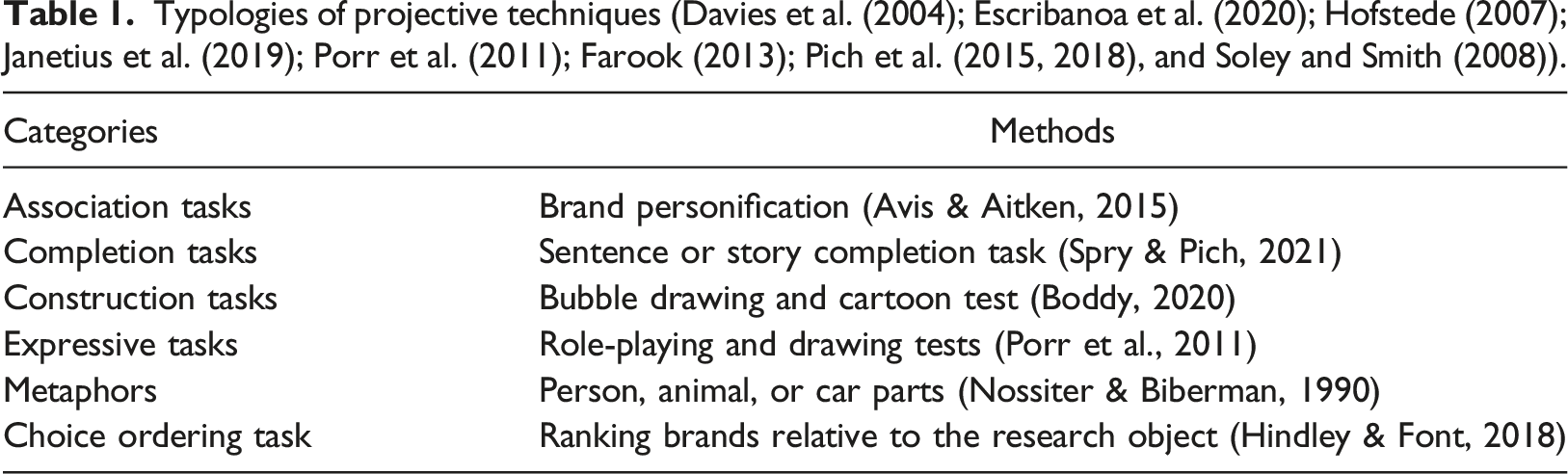
Typologies of projective techniques (Davies et al. (2004); Escribanoa et al. (2020); Hofstede (2007); Janetius et al. (2019); Porr et al. (2011); Farook (2013); Pich et al. (2015, 2018), and Soley and Smith (2008)).
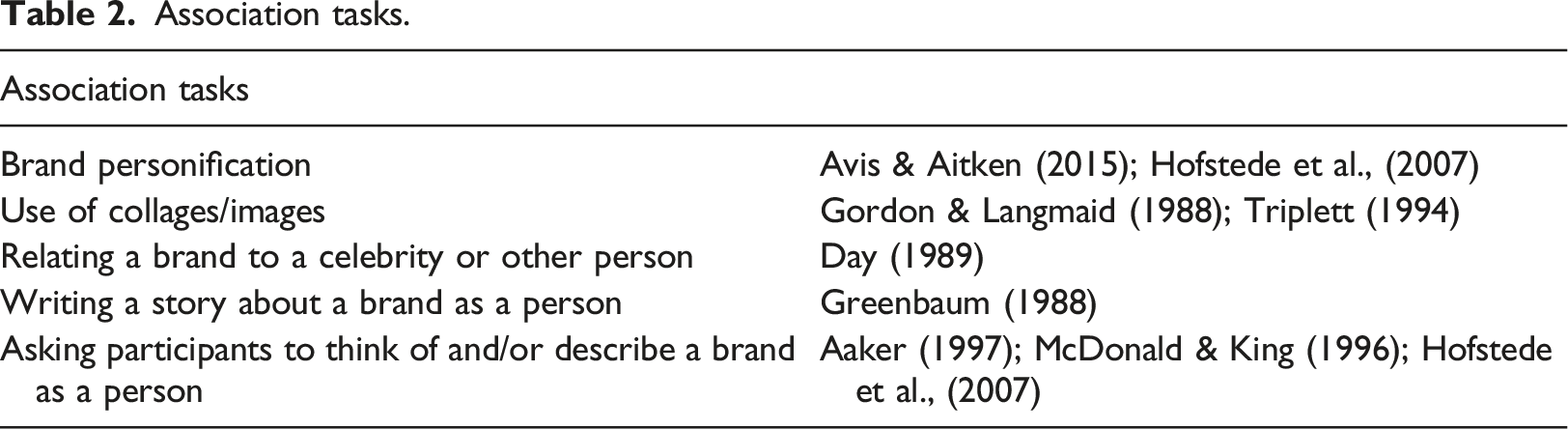
Association tasks.
Typologies of projective techniques
Projective techniques are broadly divided into five categories (Avis & Aitken, 2015; Boddy, 2020; Spry & Pich, 2021) which are briefly discussed below:
Association tasks
Association tasks involve participants ascribing attributes such as happy or cheerful, typically associated with human characteristics, to a brand or idea being discussed, using stimuli (Avis & Aitken, 2015). This enables researchers to uncover the personality of the brand or idea (Hofstede et al., 2007).
Completion tasks
Completion tasks or sentence completion tasks involve presenting participants with a sentence or a story that they must complete thus identifying their motivation for a particular attitude (Spry & Pich, 2021).
Construction Tasks
Construction tasks involve bubble drawings or cartoon tests (Boddy, 2020), composing a story, moulding a sculpture, or painting a picture (Janetius et al., 2019). These tasks are used to unearth hidden desires and motivations even for the most sensitive topics. Construction Tasks rely on the idea that someone will “project” their feelings or beliefs onto an imaginary person or situation (Boddy, 2020).
Expressive tasks
Expressive tasks involve asking participants to organize and incorporate a particular stimulus into a self-expressive process, such as role-playing, psychodrama, dance and drawing tests (Pich & Dean, 2015; Porr et al., 2011). These tasks are acclaimed for their simplicity, straightforwardness and depth of responses gathered (Abalos et al., 2022; Halder & Mahato, 2021).
Metaphors
Using metaphors to describe a brand in terms of another person, place or thing is another form of projective task (Capelli & Jolibert, 2009; Davies & Chun, 2003; Noble et al., 2013; Nossiter & Biberman, 1990; Oswick & Montgomery, 1999). While similar to associative tasks, metaphors differ from association tasks as the former assigns attributes to brands whereas the latter describes a brand in terms of something else.
Choice ordering tasks
Choice Ordering tasks involve asking respondents to explain why certain things are “most important” or “least important”, or to “rank” or “order” or “categorize” (Burns & Lennon, 1993; Gordon & Langmaid, 1988, pp. 112-113; Hindley & Font, 2018; Porr et al., 2011).
Another variation is a picture arrangement test which presents participants with a series of images that show a figure involved in different activities. The participants’ task is to arrange these images in order of how they believe the sequence of events occurred (Burns & Lennon, 1993; Roeckelein, 2004).
Criticisms of projective techniques
Whilst being a very powerful tool, projective techniques are not without criticism (Boddy, 2005, 2007, 2020; Campos et al., 2020; Spry & Pich, 2021). As with all qualitative research, qualitative projective techniques cannot be used for generalizations (Köhler et al., 2022; Mohajan, 2018; Morais, 2020). This according to Boddy (2016), is not a weakness as qualitative projective techniques can provide deeper insights that are worthy of further exploration to see if generalizations can be made. (Aspers & Corte, 2019; Azungah, 2018; Boddy, 2016; Erlingsson & Brysiewicz, 2013). Researchers have also highlighted issues with the design of stimuli, methods of analysis and interpretation (Boddy, 2005, 2007, 2020). In particular, researchers must take care not to allow their own bias to influence their analysis. Researchers must ensure that results generated via projective techniques reflect only the participants’ opinions (Campos et al., 2020). Therefore, according to Campos et al. (2020) and de Lima (2017), the inclusion of experienced researchers and interpreters in the research team is desirable. These researchers may need to apply echoic probing (Jain et al., 2018; Pich et al., 2018) to debrief participants (Decker et al., 2021; Toews et al., 2021) and ensure that it is solely the participants’ views that are presented in the analysis.
Gaps in current research
Gaps in the literature of projective techniques (identified by the authors).
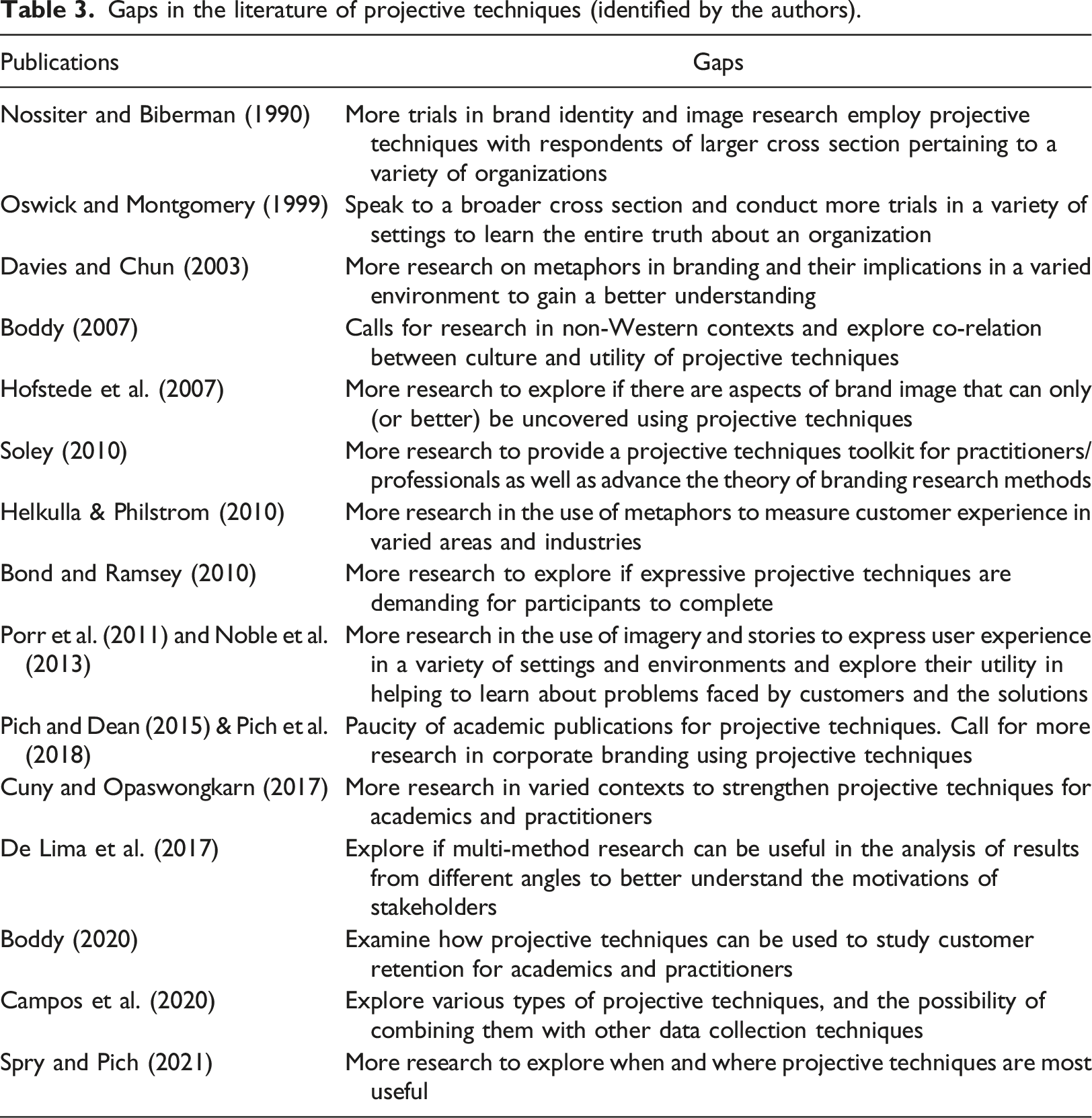
Hofstede et al. (2007), Cuny and Opaswongkarn (2017), Boddy (2007; 2020), and Spry and Pich (2021) have demonstrated that projective techniques offer an enjoyable experience for participants while uncovering valuable data that might otherwise be too embarrassing to share directly. Participants overcome such embarrassment by projecting their feelings onto external people, objects, and entities, thereby revealing profound insights into the motivations associated with brand identity, brand image, and brand personality. Despite these promising findings, these authors have emphasized the need for further research in diverse settings, particularly in non-Western contexts, to investigate potential correlations between different cultures and projective tasks, as well as to explore the specific contexts where projective techniques prove most effective. Pich et al. (2018) highlighted the paucity of academic publications on projective techniques and called for additional research to address this gap. Furthermore, these researchers raised the important question of whether projective techniques can offer unique insights into aspects of brand image that are not easily accessible through traditional research methods.
Porr et al. (2011), Pich and Dean (2015), and De Lima et al. (2017) explored the possibility of combining different projective techniques and called for more research using multi-method projective techniques using imagery and stories. Soley (2010), Bond and Ramsey (2010), and Campos et al. (2020) analyzed the current academic literature on projective techniques. They found most professionals learn projective technique skills on the job rather than in classrooms. To address this, Soley (2010), Bond and Ramsey (2010) and Campos et al. (2020) call for research that not only advances the theory of branding research methods but also provides a toolkit for professionals to use.
In summary, researchers have identified several gaps in the literature pertaining to projective techniques: 1. There is a need for more research conducted in diverse contexts and industries, involving a larger cross-section of respondents. 2. Additional research in non-Western contexts is necessary to explore potential correlations between different cultures and the efficacy of projective tasks. 3. There is a paucity of academic publications utilizing projective techniques, warranting further investigation and publication in this area. 4. There are explicit calls for publications that offer a practical toolkit for practitioners and professionals, enabling them to effectively employ projective techniques rather than learning them on the job.
Corporate brands and corporate brand image
Corporate brands are when an entire organization is branded in a way that it serves as a competitive advantage (Foroudi et al., 2021; Garas et al., 2018; Melewar et al., 2020). The internal view of the organization which consists of its values and culture is known as corporate brand identity (Black & Veloutsou, 2017; Markovich et al., 2018). In contrast, the corporate brand image is the mental picture or total impressions of an organization held by external stakeholders (Conz, 2019; Fetscherin & Usunier, 2012; Greyser & Urde, 2019; Iglesias et al., 2020). Several corporate brand images exist for an organization at any given time (Garas et al., 2018) since it is the sum of comprehensive associations held by a multitude of stakeholders (Markovich et al., 2018; Spry & Pich, 2021). Hatch and Schultz (2001; 2003) advise organizations to streamline their corporate identity and image to create a coherent corporate brand and use it as a competitive advantage. This is not as straightforward for corporate political brands due to their multiplicity of images caused by their complex multifaceted nature (Flight & Coker, 2021; Rutter et al., 2018) and a large number of diverse stakeholders.
Political brands and brand image
Key publications in political branding and brand image.
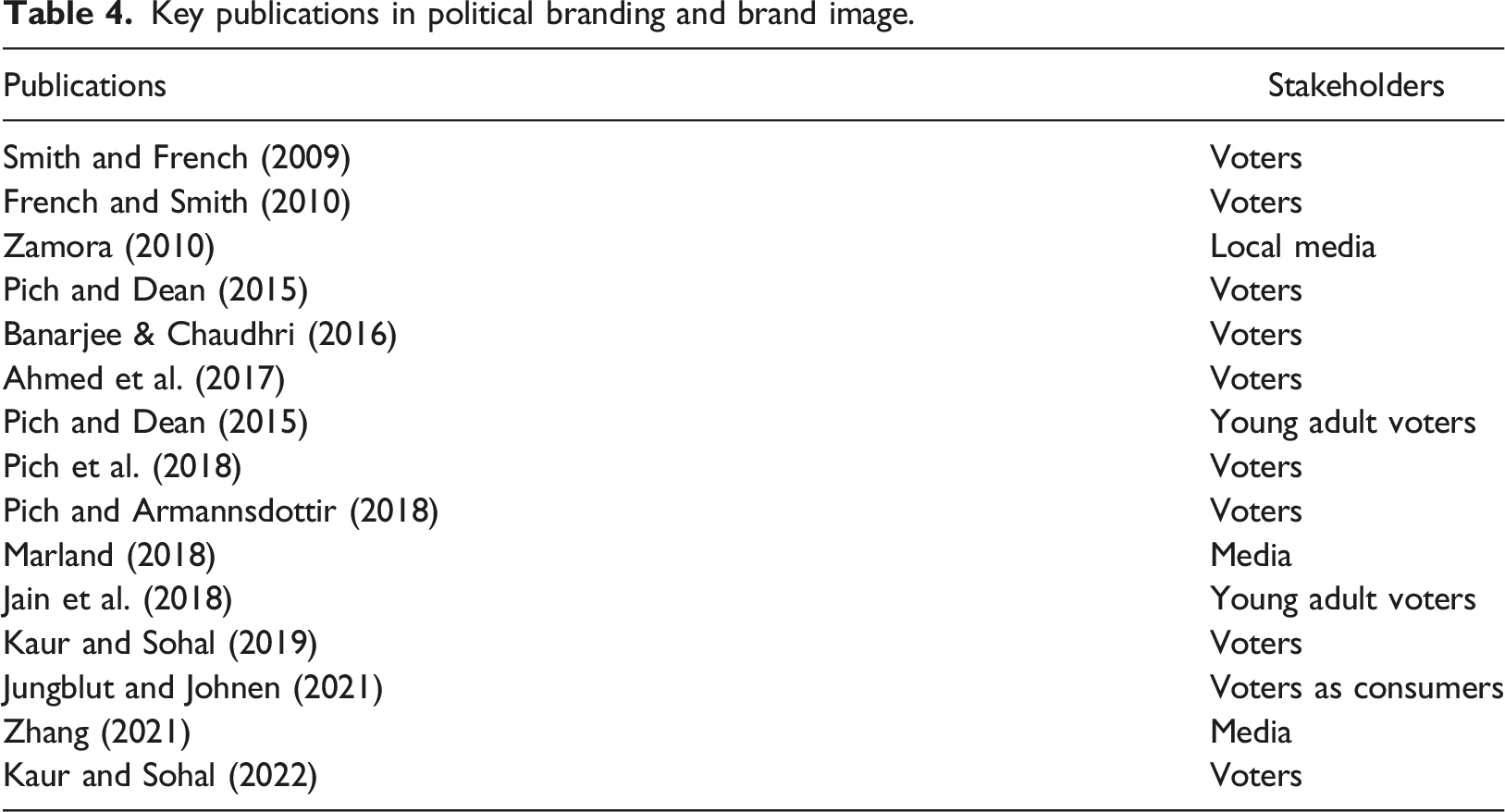
The limited research exploring political brand image using projective techniques has focused solely on voters’ perceptions of the political brand. Pich et al. (2015; 2018) & Pich and Dean (2015), demonstrated that projective techniques are useful for gaining insight into underlying attitudes and feelings toward political parties, politicians, and the strengths and weaknesses of political brand image. The researchers further confirmed that the corporate political brand image consists of a trinity of the leader, the party, and policies (Butler et al., 2011; Robertson & Meintjes, 2021; Smith & French, 2011). The research concluded that the brand image of the UK Conservative Party was complicated, multidimensional, and frequently contested. Additionally, the UK Conservative Party had not been able to fully dispel the preconceptions and connotations of being a party of the affluent (Ashcroft, 2010; Helm, 2010) and had not exhibited the desired inclusive image. Similarly, Jain et al. (2018), demonstrated that projective techniques can be highly useful for exploring the political brand personality dimensions of the leadership element of the political brand trinity for example sincerity, agreeableness, competence, conscientiousness, and emotional stability. The researchers further demonstrated that positive as well as negative aspects of the leadership’s image could be analysed using projective techniques. The researchers concluded that perceived religious partisanship had the potential to jeopardize the brand image of BJP leader Narinder Modi.
Objectives
Taking into account the explicit calls by researchers, the objective of this research are as follows (Boddy, 2007; Hofstede et al., 2007; Pich et al., 2015, 2018; Soley, 2010; Spry & Pich, 2021): 1) Explore the effectiveness of projective techniques for political corporate brand image research in the non-Western context of Pakistan. 2) To create a projective techniques toolkit to guide professionals and academics alike with a step-by-step guide on how to apply projective techniques.
Research approach
This research aims to evaluate the effectiveness of projective techniques in the context of corporate political brand image research in Pakistan. To achieve this, a qualitative research approach was chosen, as it allows for a comprehensive and in-depth exploration of participants’ worldviews (Azungah, 2018; Gephart, 2004; Mohajan, 2018). This approach enables a thorough understanding of the social phenomenon, encompassing behavior, values, beliefs, and contextual factors (Aspers & Corte, 2019; Erlingsson & Brysiewicz, 2013; Gelo et al., 2008). By placing participants at the central position of the research process, qualitative research emphasizes a humanistic focus, granting sensitivity to detail and context, and affording participants the freedom to communicate their perspectives on important issues (Ebbs, 1996; Grzanka & Cole, 2021).
Qualitative research’s flexibility and openness enable the exploration of new concepts, enriching the study of political brands (Cloutier & Ravasi, 2021; De Massis & Kotlar, 2014; Doz, 2011). In the present study, focus groups were employed as a research method to examine the corporate political brand image from the perspectives of different stakeholders in Pakistan, utilizing projective techniques (Cloutier & Ravasi, 2021; Hamilton & Finley, 2019). This approach seeks to delve deeper into the intricacies of political branding and offer valuable insights into this dynamic field.
Method
This study utilized focus group discussions to introduce projective tasks. Focus groups, being group-based discussions, offer a unique perspective by focusing on the participants' viewpoints, thus uncovering unexpected aspects of a social phenomenon (Acocella, 2012; Guest et al., 2017; Kruger et al., 2019). Furthermore, focus groups provide research versatility by capturing rich information at individual, group, and interaction levels (Cyr, 2016; Gailing & Naumann, 2018; Gundumogula, 2020; Sim & Waterfield, 2019) which is what this study sought to achieve.
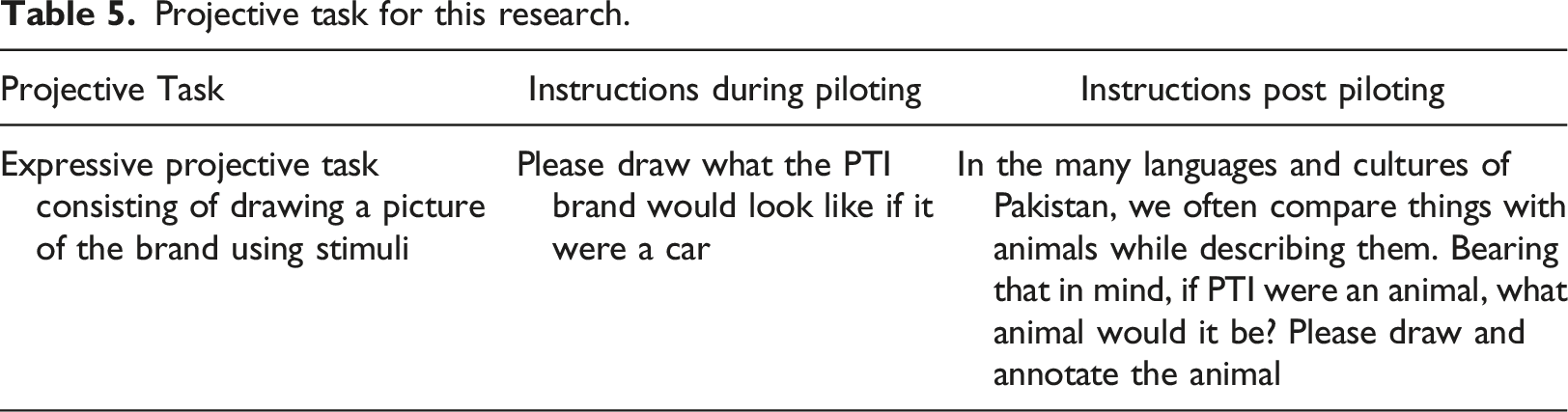
During the focus group sessions, participants engaged in discussions encompassing various topics related to the PTI corporate brand. Following these discussions, projective techniques were introduced by the moderator, becoming the specific focus of this paper, while the previous discussions lie beyond its scope. Projective techniques offered a seamless interaction with minimal moderator intervention, resulting in a wealth of information generated by the focus groups and aiding participants in recalling and expressing their thoughts more effectively (Adler et al., 2019; Cummings et al., 2021; Welz et al., 2018).
Projective Task
Projective task for this research.
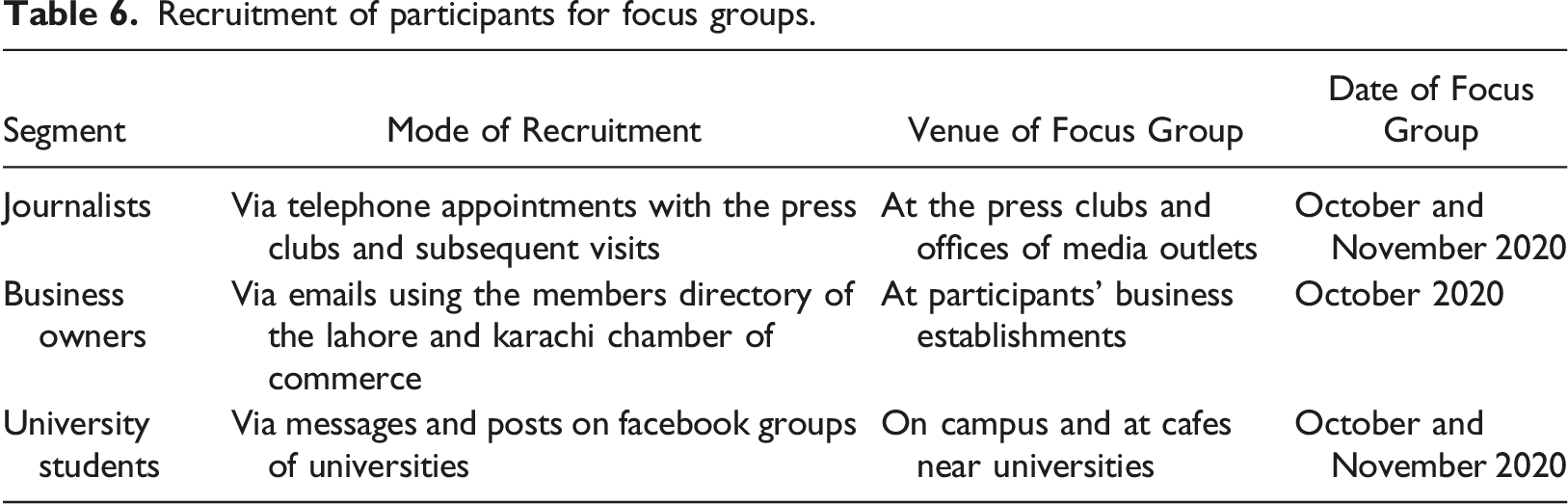
Sampling
Recruitment of participants for focus groups.
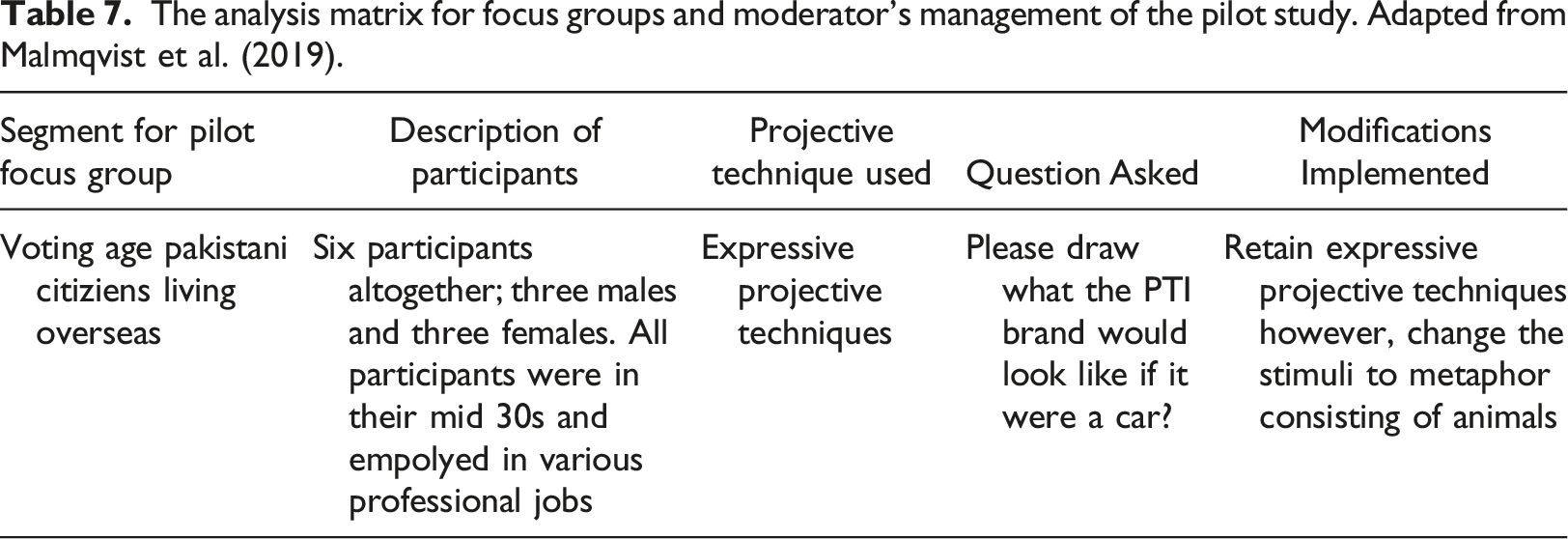
Piloting
The analysis matrix for focus groups and moderator’s management of the pilot study. Adapted from Malmqvist et al. (2019).
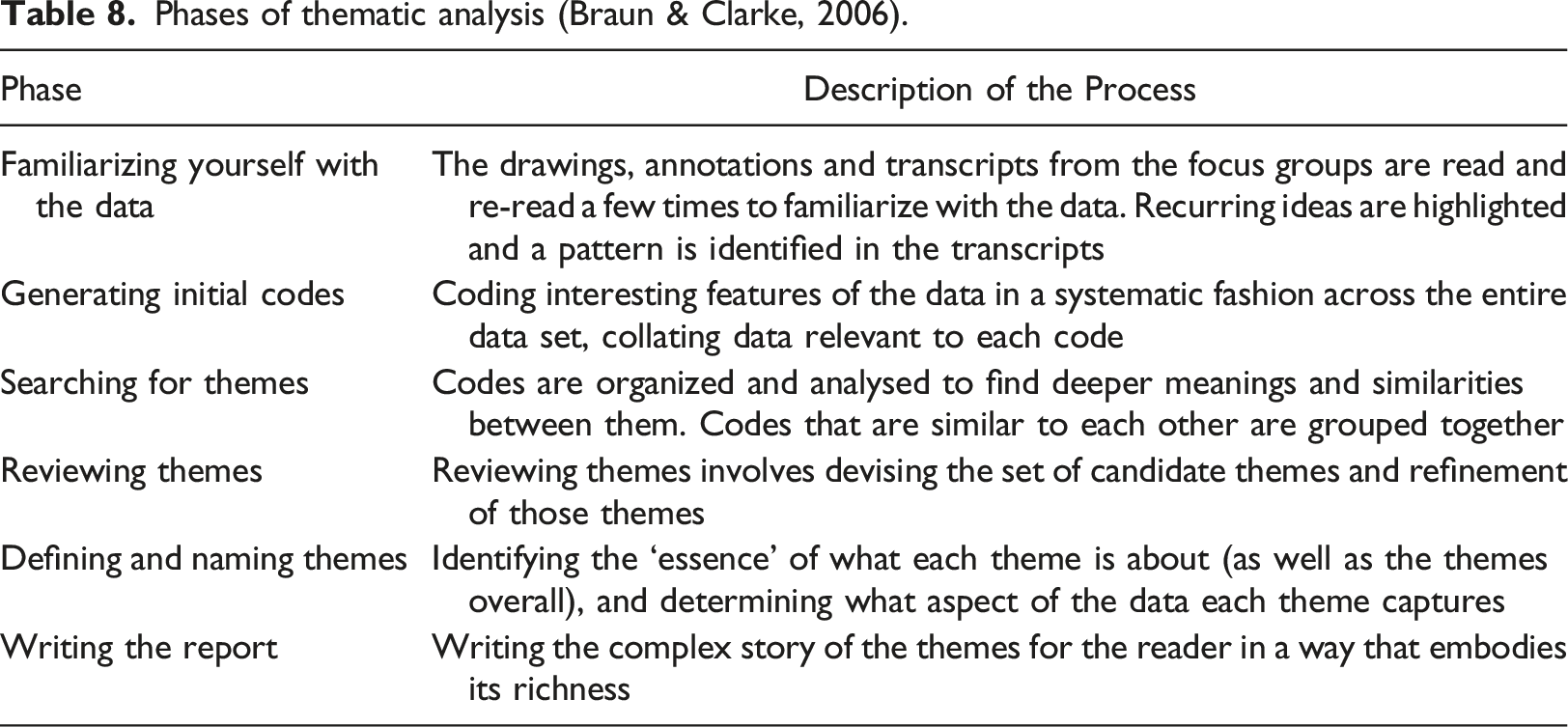
Phases of thematic analysis (Braun & Clarke, 2006).
Analysis
A ‘contextualist thematic analysis’ (Braun & Clarke, 2006, p. 81), which sits between the two extremes of essentialism and realism, was chosen for this research (Table 8). A contextualist approach, allows the researcher to appreciate that while the experiences, meanings, and realities of the participants may be their own, they at the same time are influenced by discourses in society (Braun & Clarke, 2006, 2015, 2019). The thematic analysis offers structure and flexibility, both of which were deemed essential to this research in view of the diverse backgrounds of the stakeholders involved. The six phases of thematic analysis are given in the table below:
The study followed a two-stage contextualist thematic analysis facilitated by mind maps (Figure 1) to help uncover sub-themes. A first-order analysis included familiarisation of all findings and identifying categories. This was followed by a second-order analysis which was more focused on reviewing identified categories and analyzing for hidden meanings and re-exploring concepts identified during the first phase (Boyes et al., 2022; Royster, 2020; Rudolph et al., 2021). Finally, the second-order themes were reduced to aggregate dimensions denoting the over-arching theme (Rudolph et al., 2021). Thematic map of findings.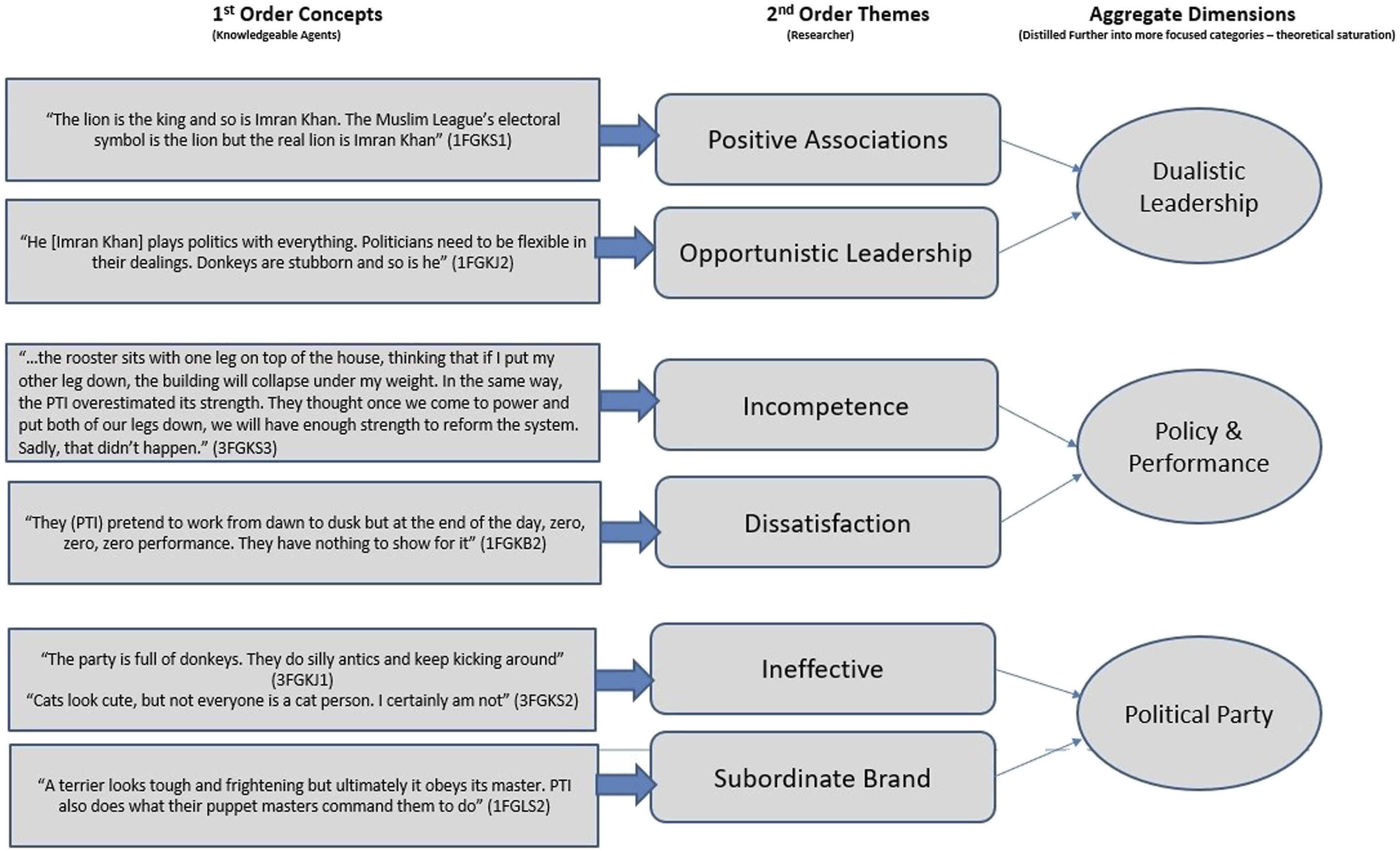
Findings
This research examines the efficacy of projective techniques while appraising the choice of projective tasks and the stimuli used for corporate political brand image research in Pakistan. This section presents the three core themes uncovered by this study solely from data analysis before proceeding to the discussion.
Altogether, 27 responses, consisting of 18 different animals, were received from 37 respondents. Eight participants preferred to write the names of animals whereas 18 respondents drew 19 different images. One respondent drew two images; one to indicate what the PTI brand currently was and another to indicate what it should be. A total of three overarching themes with two sub-themes were uncovered during the analysis. The overarching themes include Dualistic Leadership, Party Policy and Performance, and Political Party (Figure 1).
Dualistic leadership
The first theme discovered in this study pertains to the dual nature of the political brand’s leadership, particularly focusing on Imran Khan. Leadership emerged as the central and most frequently discussed theme among the participants. The analysis revealed two sub-themes: Positive Associations and Opportunistic Leadership.
Positive associations
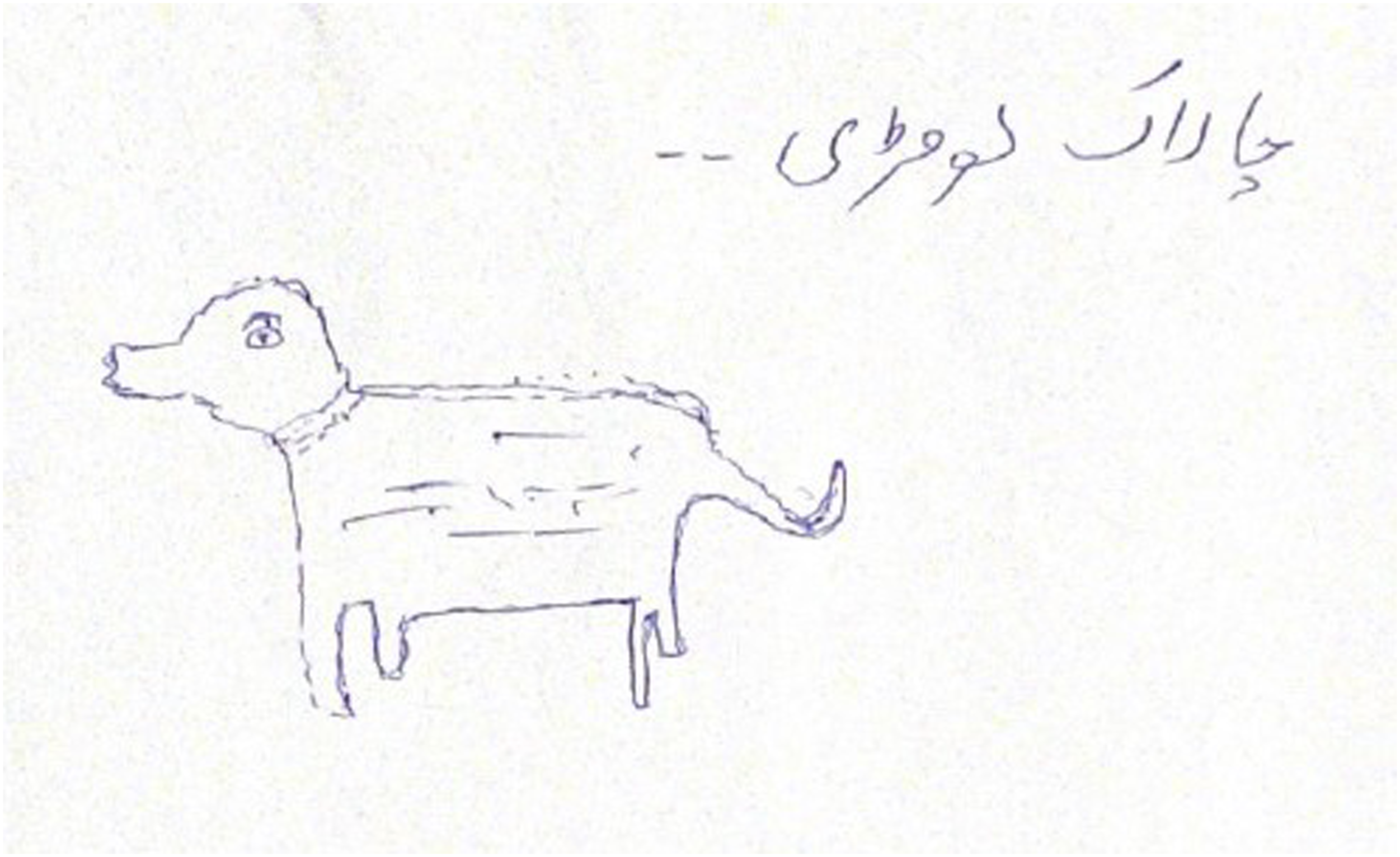
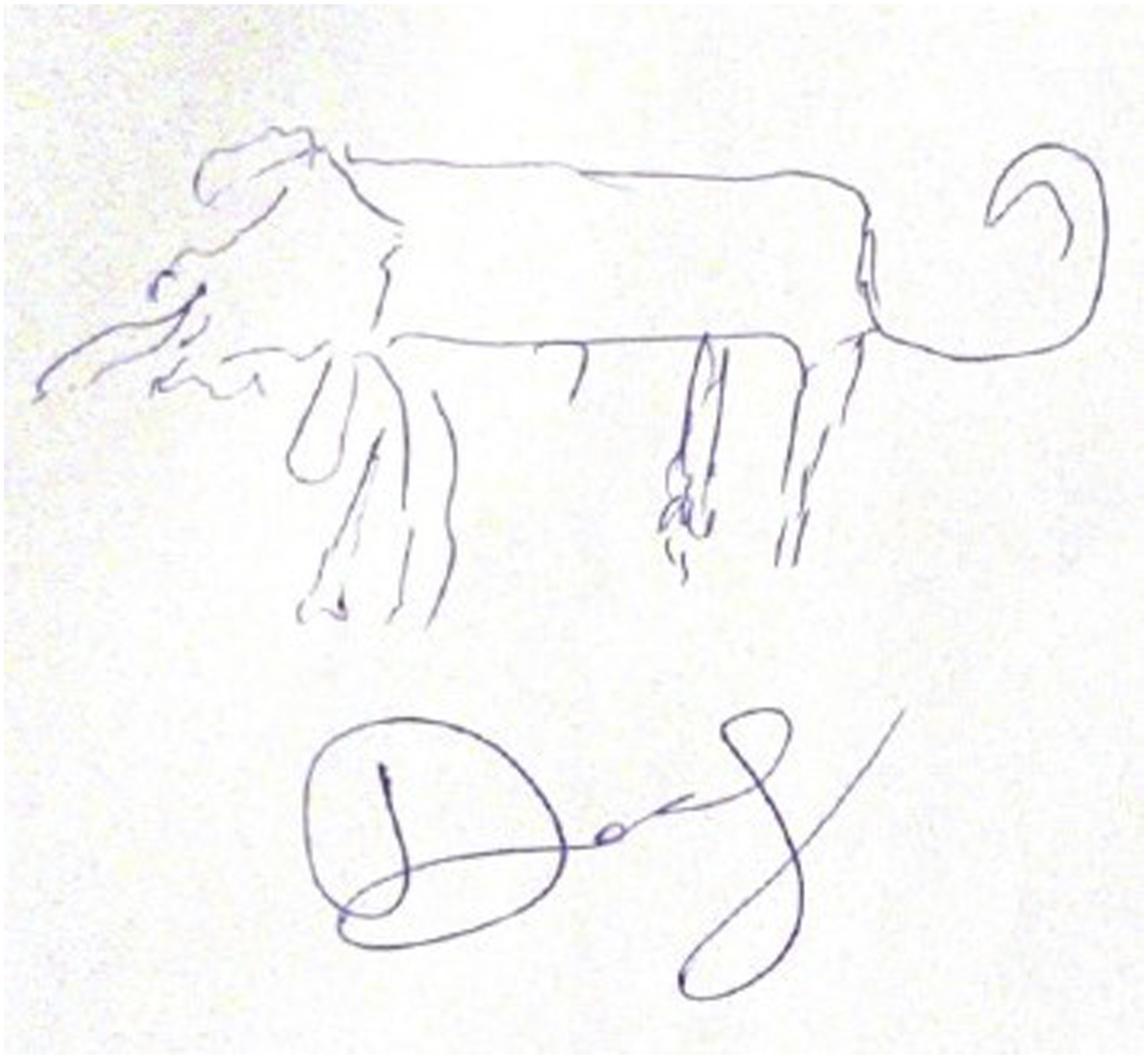
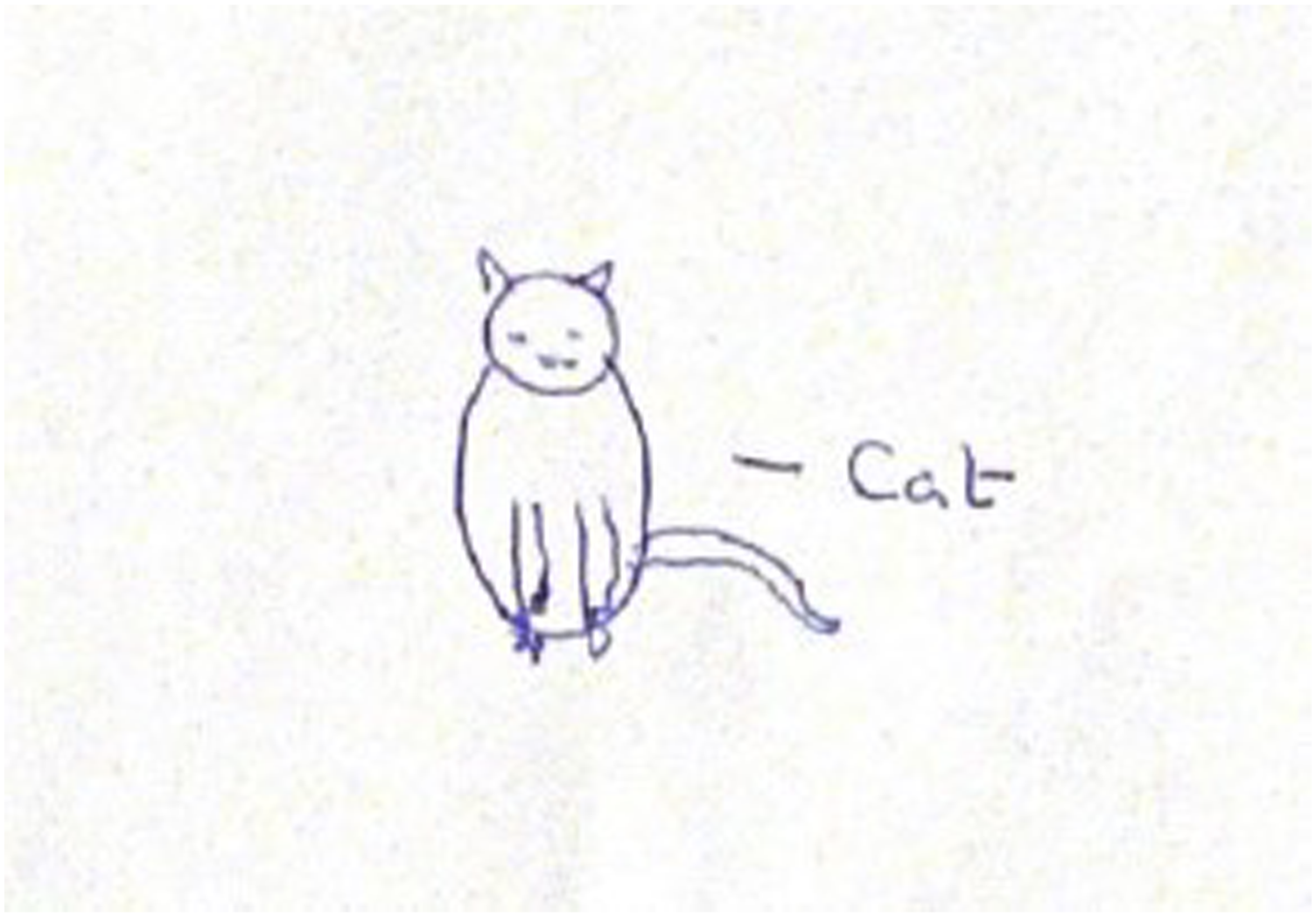
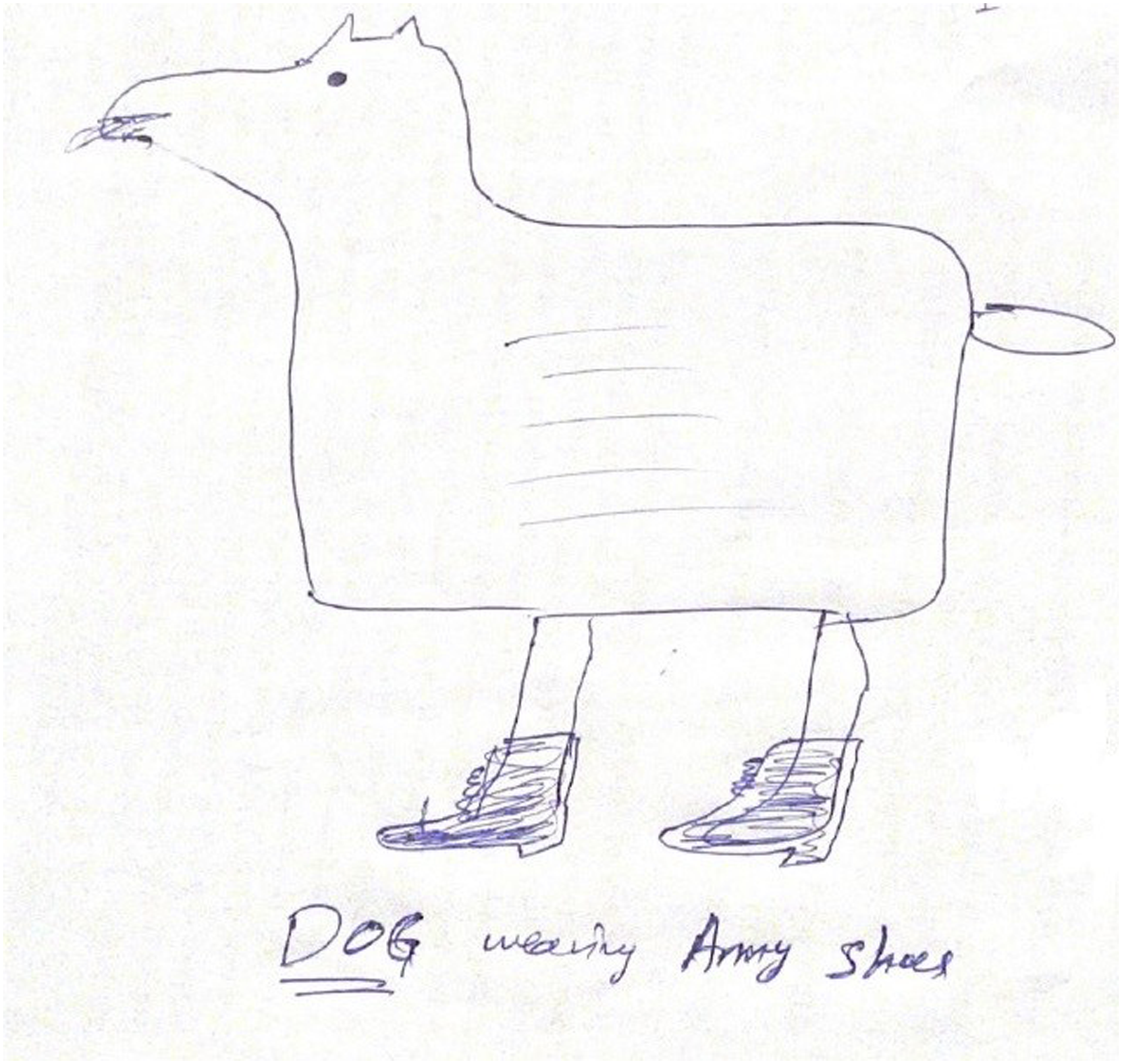
The first sub-theme uncovered was positive associations of the PTI brand with its current leadership. Figures 2–11 The most frequently drawn animal, by four respondents (S1F2, S2F2, S1F1, and S3F1) was a lion. When asked to comment on their drawings, respondents spoke about the strength, influence, leadership, and charisma of Imran Khan as justifications. Respondents used positive annotations such as charisma, vitality, authenticity, influence, and steadfastness to accompany their drawings. “The Old Lion” annotated in Urdu (S1F2). “The young lion” (S2F2). “Sly Fox” annotated in Urdu (S3F2). “Chameleon” with Urdu annotation in Latin Script “Girgit” (S2F1). Pashto metaphor about the “one-legged rooster on the rooftop” (S3F3). Slow speed of social and economic reforms (B2F2). “PTI should be a Donkey” (J1F4). “The barking dog” (J3F2). “Not everyone is a cat person” (S2F3). “Dog in boots” (S3F4).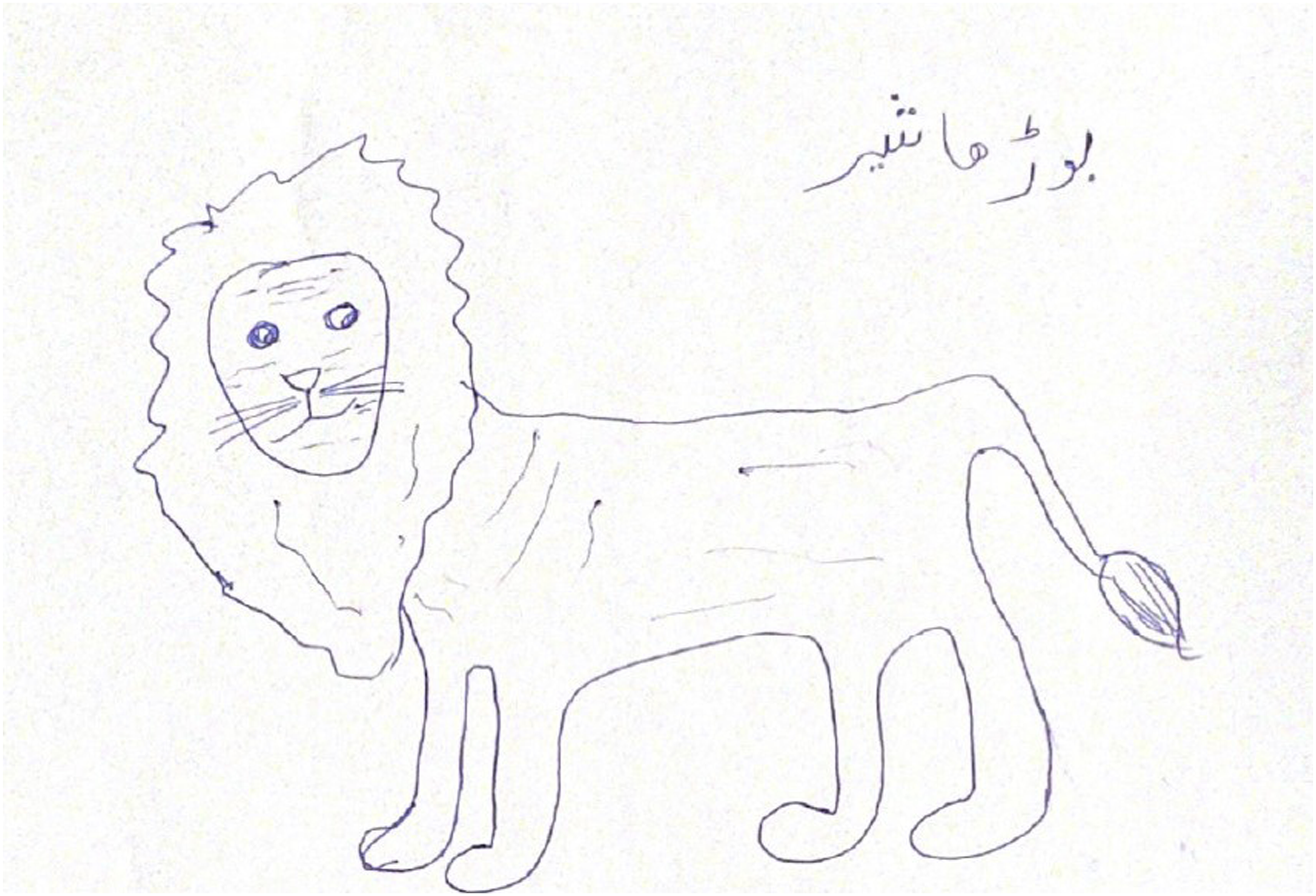
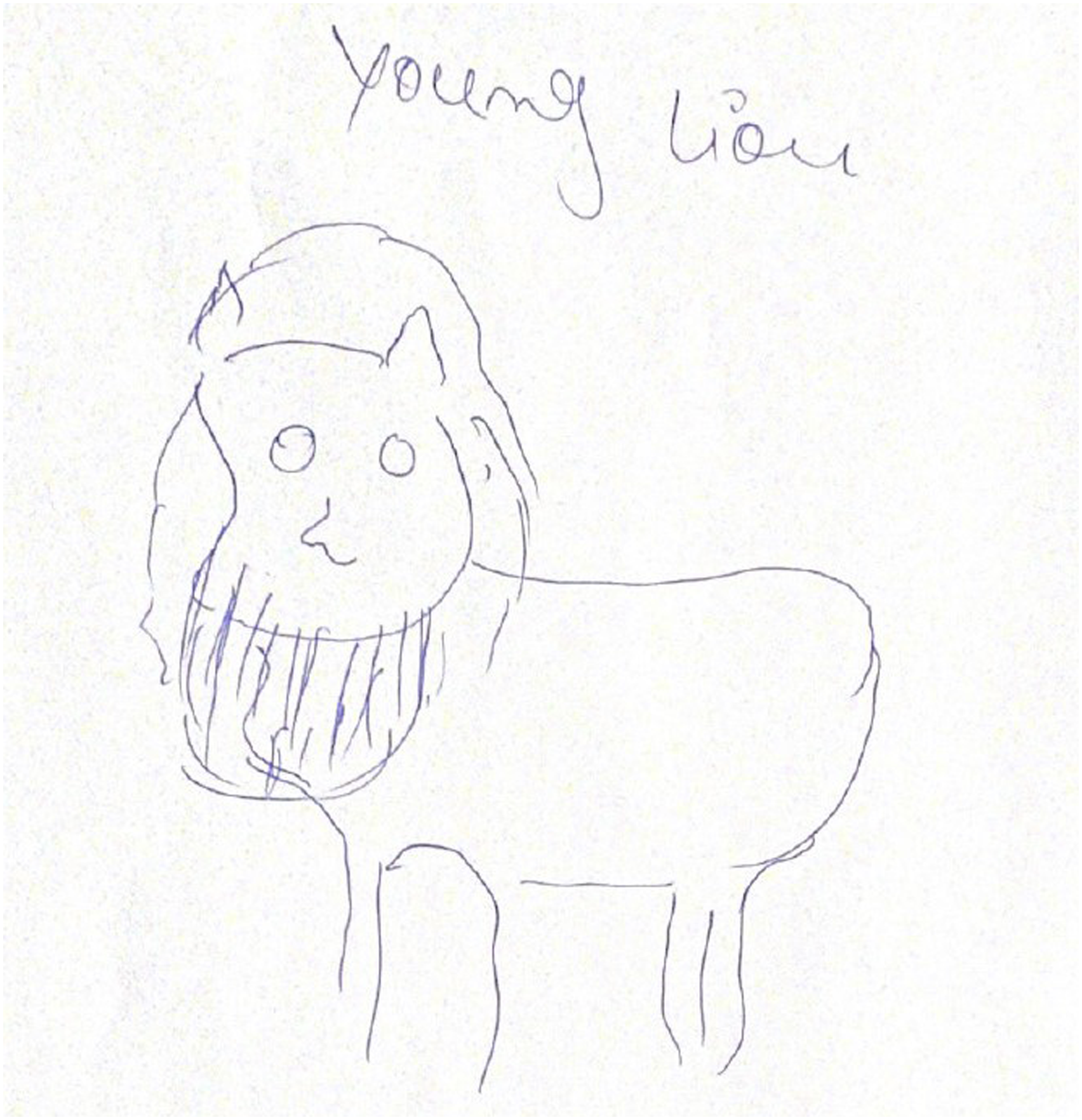
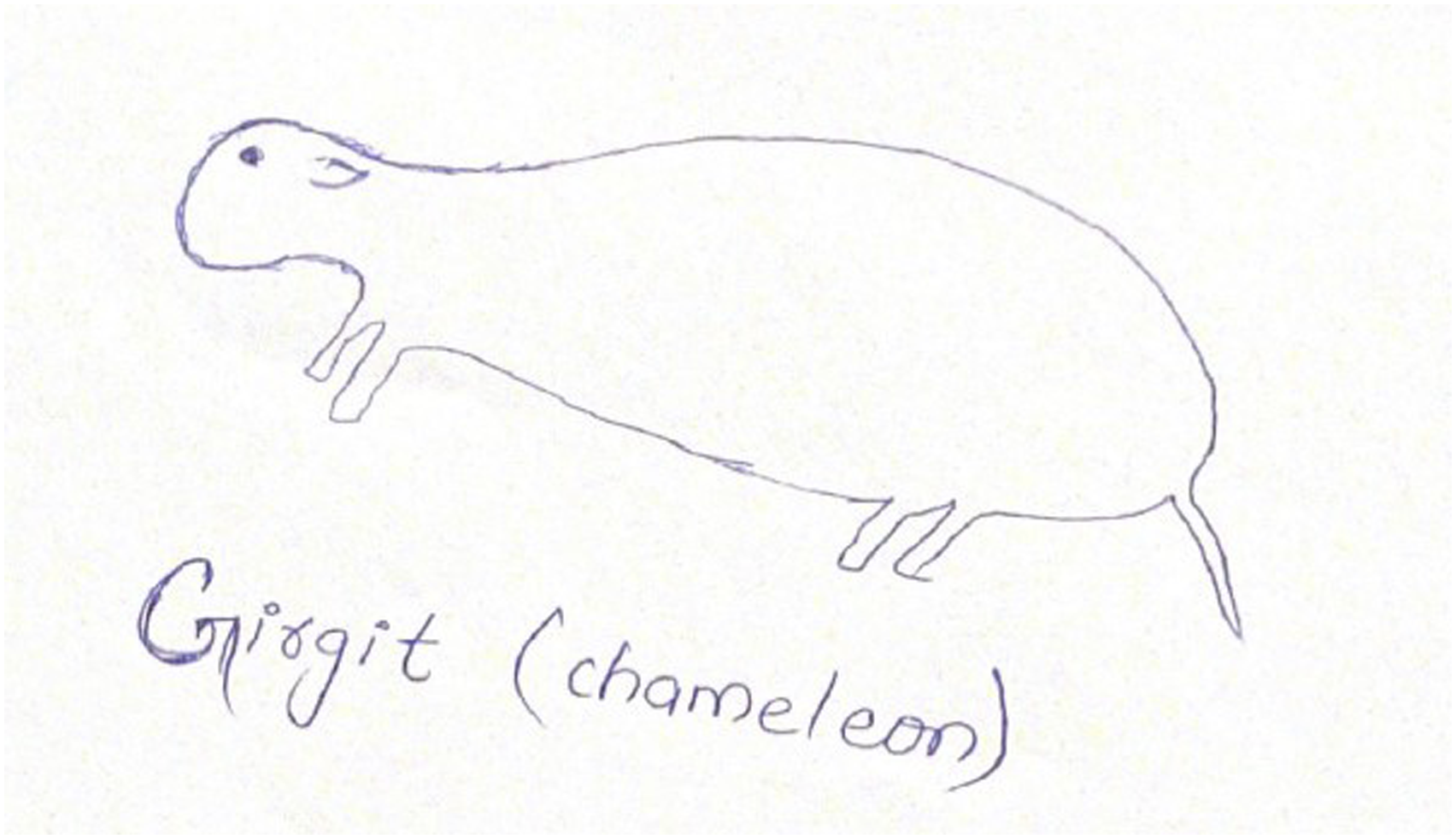
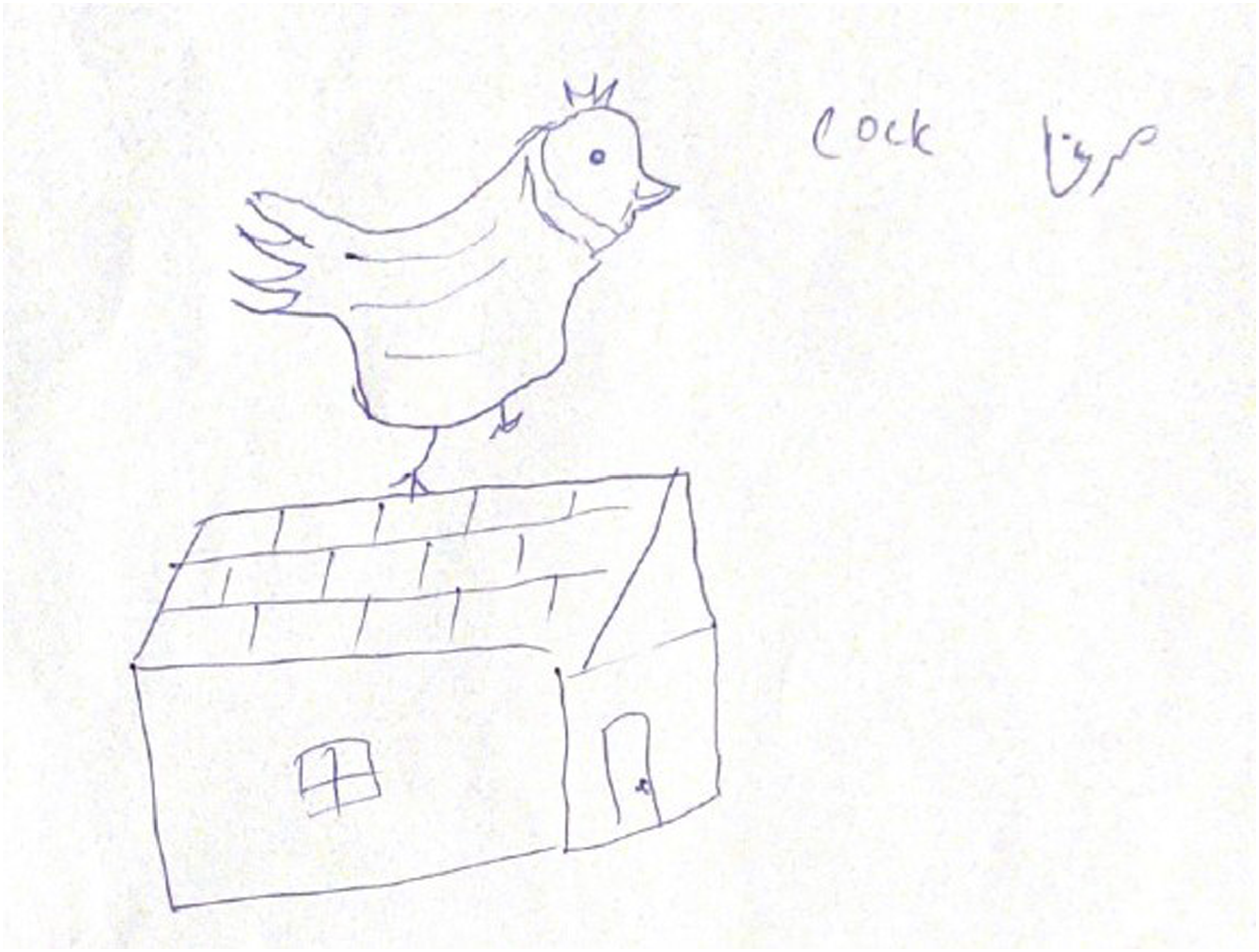
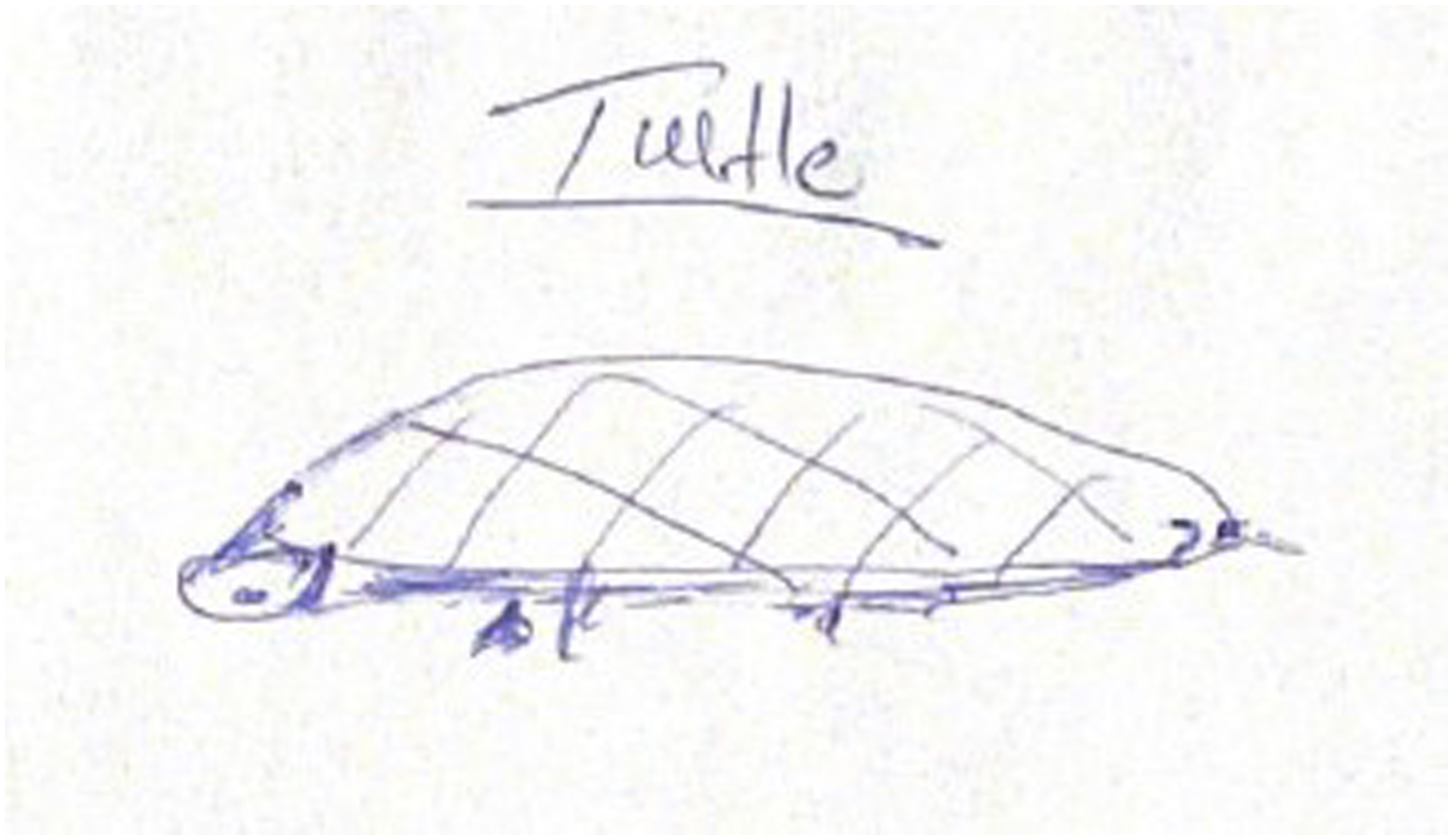
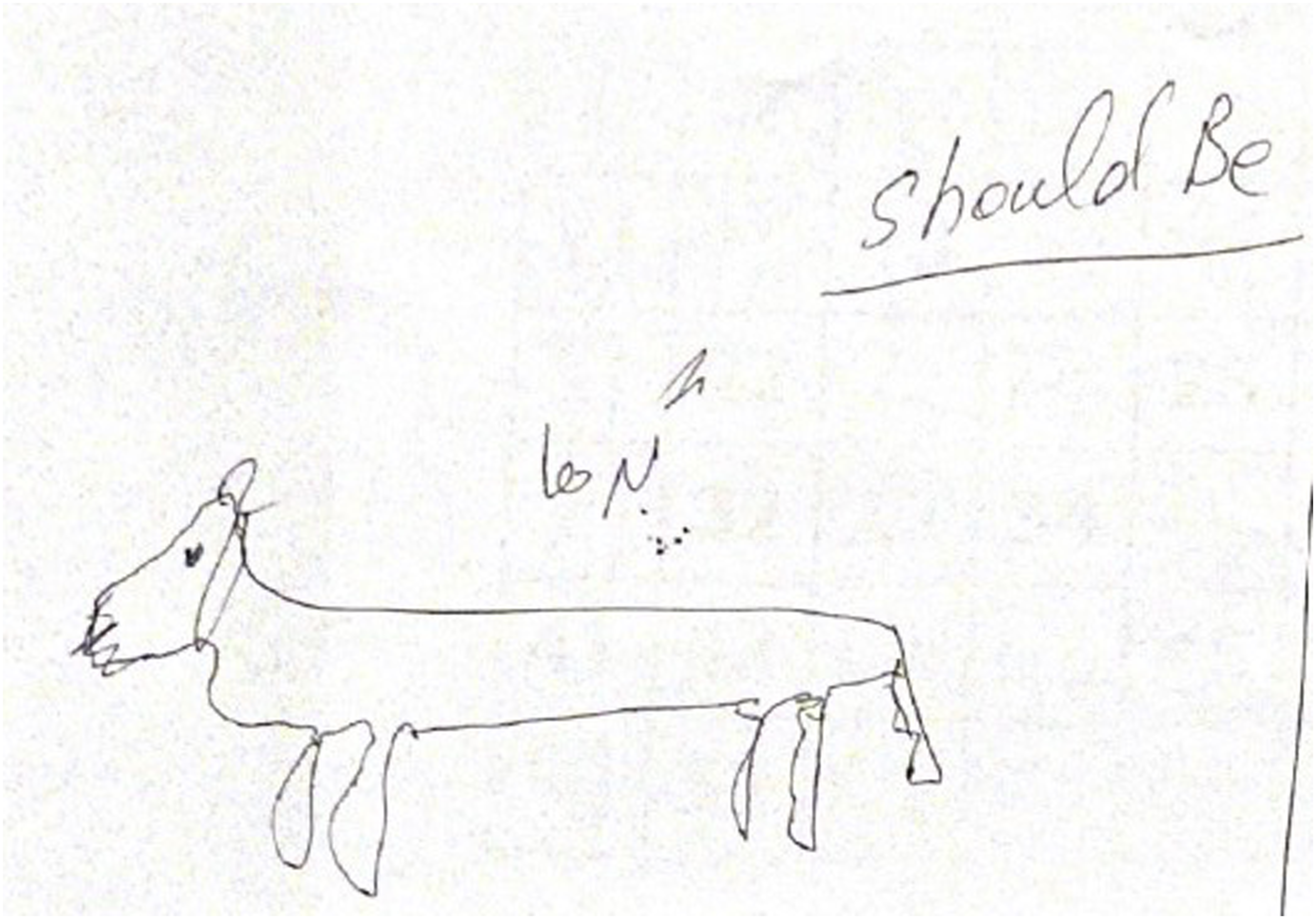
A student at Karachi University annotated their rendering of a lion as an ‘Old Lion’. They reasoned that “the lion signifies strong leadership. However, as a lion advances to old age, these leadership qualities decline” (S1F2). When another participant in the same focus group (S2F2) heard this, they differentiated their drawing of a lion with the annotation ‘Young Lion’. They reasoned that “Imran Khan himself is very energetic but you see, Imran Khan can’t do anything on his own. It takes a pride of lions to be effective” (S2F2). The respondent’s insistence on “pride of lions” suggests ideas about teamwork and cooperation being essential for effective leadership.
Another student (S1F1) who drew a lion, lauded the PTI brand while comparing it with one of its competitors, The Pakistan Muslim League [PML-N]. They said, “The lion is the king and so is Imran Khan. While the Muslim League’s electoral symbol is the lion it is Imran Khan who is the real lion” (S1F1). Such findings indicate that the leadership element of the brand trinity seems to be the central piece in the eyes of respondents.
Opportunistic leadership
Opportunistic Leadership was the second sub-theme uncovered during the analysis. A journalist (J2F1) drew the PTI brand as a donkey and explained, “he [Imran Khan] plays politics with everything. Politicians need to be flexible in their dealings. Donkeys are stubborn and so is he” (J2F1). Another journalist in the same group (J3F1) retorted by saying “Donkeys are very flexible animals and earn an income for their owner. You are making a bad comparison”. J2F1 justified their position by elaborating, “have you ever seen the stubbornness of a donkey? It’s impossible to get a donkey to do anything if he becomes stubborn and this is exactly true of Imran Khan”. Such critique suggests the presence of a multiplicity of views about the leadership style of the party.
Another valuable finding of this research was that critique of the leadership element was often accompanied by citing bad policies and inflation. A student from Karachi University drew the PTI brand as a fox and annotated it as “sly fox”. Their opinion was that “he [Imran Khan] knows how to placate people temporarily, however, he does nothing worthwhile to solve our problems” (S3F2).
Another participant visualised the PTI brand as a chameleon and complained that “he [Imran Khan] didn’t keep his election promises. He changed his policies as soon as he came to power” (S2F1). A different view of the PTI brand came from a journalist, who compared the PTI brand to a horse. Their reason was “a horse is a runner and he (Imran Khan) will start running soon. So far, he hasn’t had much success but, in the fourth, or fifth year of his term, he will deliver” (J1F1). Such findings indicate that the leadership element is central to the PTI brand regardless of whether respondents praise or criticize it.
Party policies and performance
The second most popular element of the brand was party policies which were almost always accompanied by economic performance and the cost of living. Two sub-themes uncovered are Incompetence and Dissatisfaction.
Incompetence
The party’s incompetence was a sub-theme featured in several drawings. One of which came from a student at Karachi University who drew the political brand as a rooster. They mentioned that it represented a Pashto metaphor about a rooster who overestimates its strength. They said “…the rooster sits with one leg on top of the house, thinking that if I put my other leg down, the building will collapse under my weight. In the same way, the PTI overestimated its strength. They thought once we come to power and put both of our legs down, we will have enough strength to reform the system. Sadly, that didn’t happen” (S3F3).
A similar view came from a business owner, who drew a turtle and complained about the slow pace of social and economic reforms (B2F2). In their view, the party lacked the competence to introduce and implement policies that were ultimately responsible for the rising inflation. When respondents criticized policies, they always mentioned how their own lives were impacted with stories and anecdotes.
Dissatisfaction
Dissatisfaction with the party brand was another sub-theme discovered during the analysis of the drawings and accompanying discussion. The donkey was featured once again and was drawn by a business owner. Their explanation was “they [PTI] pretend to work from dawn to dusk but at the end of the day, zero, zero, zero performance. They have nothing to show for it” (B2F1). This was followed by a discussion between respondents in this focus group about the merits of a donkey as a hard-working animal that earns a livelihood for its owner versus the donkey as a metaphor for low intelligence and stupidity.
Yet another criticism about policies and lack of performance came from a journalist who drew the party as a dog. Their justification was that “they (PTI) only know how to bark, no actions, just bark. When they were in the opposition, they used to bark but now that they are in power, they are still barking. Even though I supported them, I’m forced to say this” (J3F2). These discussions demonstrated that dissatisfaction with the party brand had the potential to cut into its popularity by disenchanting its voters. This also exemplified the significance of discussions to uncover participants’ motivations for disillusionment with the party brand while conducting research via projective techniques.
Limited Awareness of the Political ‘Party’
The political party element of the brand image was featured the least by respondents in this research. Only four respondents mentioned or drew animals related to the party brand. Two distinct sub-themes were identified for this element as well. They include Ineffective Party and Subordinate Brand.
Ineffective Party
The sub-theme of the ineffective party was exhibited by a rendering of a donkey. A journalist who drew the same explained that “the party is full of donkeys. They do silly antics and keep kicking around” (J1F3). A student drew the brand image as a cat and reasoned “cats look cute, but not everyone is a cat person. I certainly am not” (S2F3).
A business owner, (B1F2), spoke along the same lines when he compared the party’s brand image to a monkey. This respondent (B1F2) explained his choice by saying “[They] are jumping from branch to branch like a monkey, with nothing to show for it. My father died in 2016 and I had to sell my house to pay the medical bills. Weren’t we promised free medical care by PTI?”. These discussions revealed that the brand image of an ‘ineffective party’ had the potential to undermine the popularity and support for the party brand.
Sub-Brand
Some respondents perceived the PTI as a sub-brand of a bigger organization. These respondents were of the opinion that the PTI was a subsidiary or secondary brand of a larger brand seeking to increase its market share. One such view was shared by a student (S2F4) from Lahore who drew the party brand as a dog.
They reasoned, “a terrier looks tough and frightening but ultimately it obeys its master. PTI also does what their puppet masters command them to do” (S2F4). A similar view was presented by another student from Lahore (S3F4) who drew the PTI brand as a dog wearing military boots. S3F4 were of the view that “PTI is a puppet of the military and they do as they are told”. Respondents critiqued the party for not being free and independent to set its course.
In summary, a series of themes and sub-themes consistent across focus groups were uncovered during the analysis. While the participant’s drawings contributed to understanding their views, it was the annotations and subsequent discussions between participants which helped to understand the real motives for choosing a certain animal to represent their understanding of PTI.
Discussions and conclusions
This research aimed to evaluate the efficacy of projective techniques in examining the corporate political brand image within the context of Pakistan. By investigating the utility of these techniques in a non-Western setting, the study addressed the paucity of research on projective techniques in such contexts (Boddy, 2007; Pich et al., 2015, 2018; Soley, 2010; Spry & Pich, 2021). Building on Boddy’s (2007) proposition that certain projective techniques may be better suited to specific cultural contexts, this research extends the understanding by emphasizing the significance of stimuli selection in diverse settings. A pilot study revealed that utilizing animals as stimuli, which hold cultural references and regional metaphors, proved more successful than using cars. Animals enabled participants to draw upon a broader vocabulary and articulate their perceptions of the Pakistan Tehreek-i-Insaf Party (PTI) brand (Noble et al., 2013) in relation to its competitors, such as the Pakistan Muslim League (PML-N). Notably, participants found projective techniques to be engaging and conducive to providing heartfelt and personalized accounts of their feelings compared to more traditional methods (Boddy, 2020; Helkkula & Philstrom, 2010). For example, through their drawing of a dog in army boots and subsequent discussions calling PTI a sub-brand of the military, S3F4 highlighted their frustration with the military’s involvement in Pakistani politics and the history of military coups. Projective techniques literally provided participants with a blank page and freedom to articulate their opinions about the political brand image in the vocabulary and lexicon they felt comfortable with. This has great potential for researchers and practitioners alike who wish to use projective techniques as research tools for their own brands.
Furthermore, projective techniques allowed participants to express personal stories and experiences associated with the PTI brand (Dean et al., 2015). These techniques unveiled underlying reasons for stakeholders' sentiments of resentment towards the brand, as exemplified by a participant’s (B1F2) narrative of unfulfilled healthcare promises during the election campaign (Helkkula & Philstrom, 2010; Noble et al., 2013). Such insights are invaluable for understanding customer retention and loyalty (Boddy, 2020; Kaur & Sohal, 2019), as well as for practitioners seeking to address concerns and maintain support for their brand.
The research also advances the understanding of projective techniques' effectiveness in uncovering specific aspects of the brand image (Hofstede et al., 2007). Particularly, the study highlights how projective techniques empower participants to focus on distinct elements of multi-faceted political brands, with leadership being a dominant and frequently discussed element (Rutter et al., 2018). This enables participants to articulate attitudes and feelings towards intricate entities like political brands (Campos et al., 2020; De Lima et al., 2017; Rutter et al., 2018). This has implications for researchers and practitioners alike who can benefit from projective techniques to unravel their own corporate brands to explore the various constituent elements.
To enhance clarity and discern meanings associated with drawings, echoic probing (Jain et al., 2018; Pich et al., 2018) proved crucial. It facilitated discussions among participants, revealing diverse interpretations of the same animal depictions, such as lions, monkeys, donkeys, and dogs (Cyr, 2016). These probing interactions enriched the understanding of the political brand image and its nuances. Once again, both researchers and practitioners can leverage these findings to augment the comprehension of their respective brands through the effective application of echoic probing.
In conclusion, this research demonstrates the significance of projective techniques in examining the corporate political brand image within the unique context of Pakistan. The selection of culturally relevant stimuli and the application of echoic probing emerged as essential aspects of this investigative approach, offering rich insights into participants' perceptions and attitudes towards the PTI brand and political entities at large. The findings contribute to the advancement of projective techniques as a valuable tool for understanding complex brand images in non-Western settings and have implications for researchers and practitioners aiming to bolster stakeholder engagement and address concerns within the corporate brand landscape.
Projective techniques toolkit
Soley (2010), De Lima et al. (2017), Campos et al. (2020) and Spry and Pich (2021) suggest that practitioners learn projective techniques on the job rather than in the classroom. Moreover, there are limited guides to support practitioners and researchers unfamiliar with this method on how to use projective techniques. In response to their calls, this study created a guided toolkit (Figure 12), where researchers and practitioners can checkoff steps they have taken. Projective techniques toolkit created by the researchers.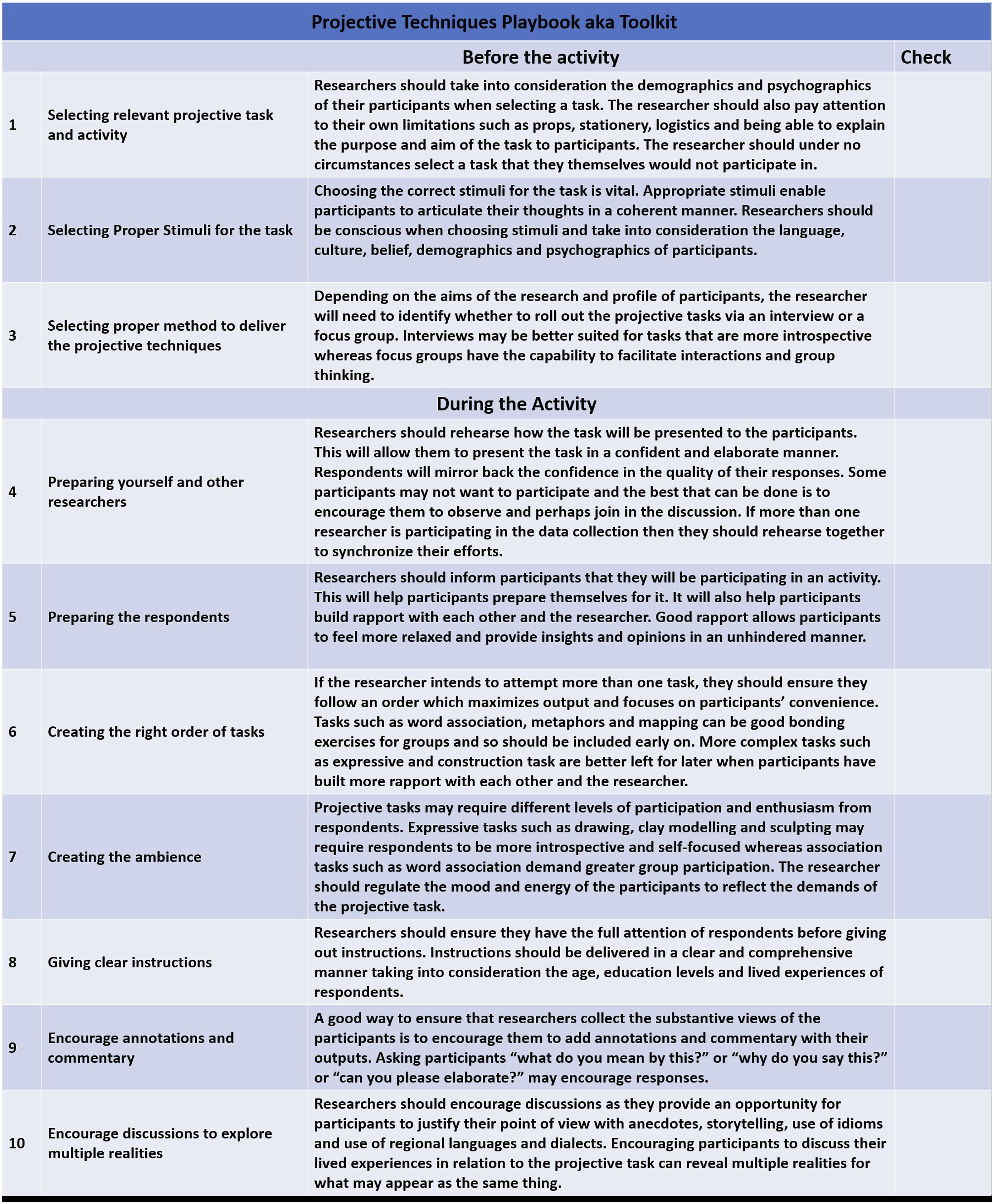
The toolkit created by this research (Figure 12) provides a systematic ten-step guide on how to successfully conduct research using projective techniques (Images 1–5 Sentence complete task (Spry & Pich, 2021, pp.184). Construction task (Boddy, 2020, pp.244). Construction task (Pich & Dean, 2015, pp.133). Image of an organization and need for change using metaphors (Oswick & Montgomery, 1999, pp. 505). Logo developed by using choice ordering tasks with graphic designers (Porr et al., 2011, pp. 37)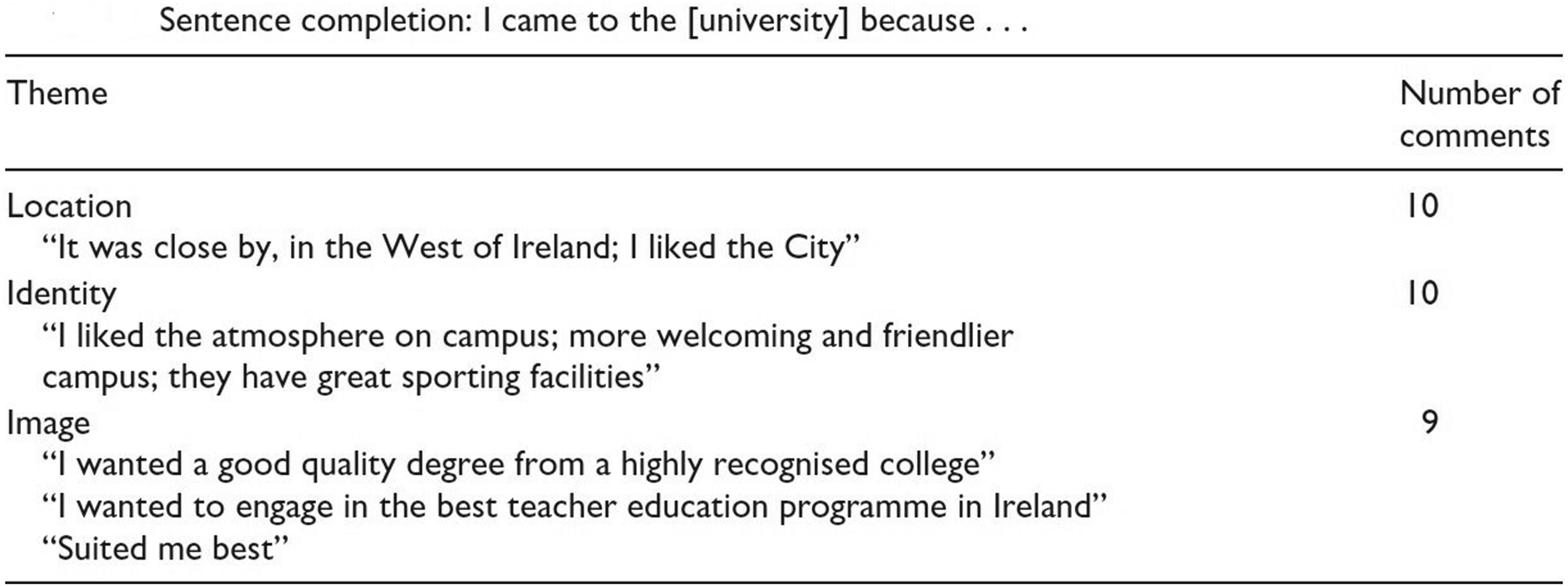
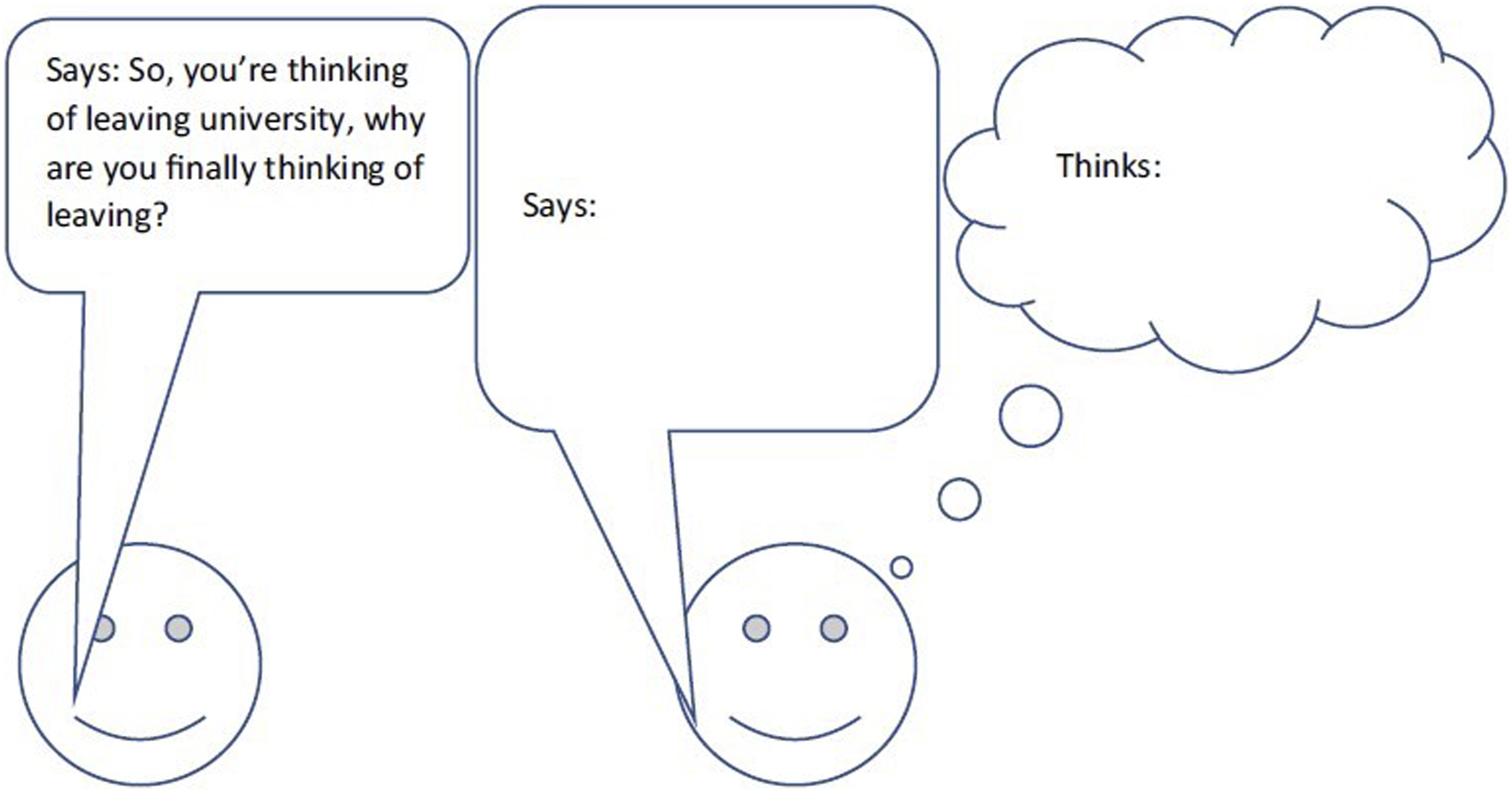
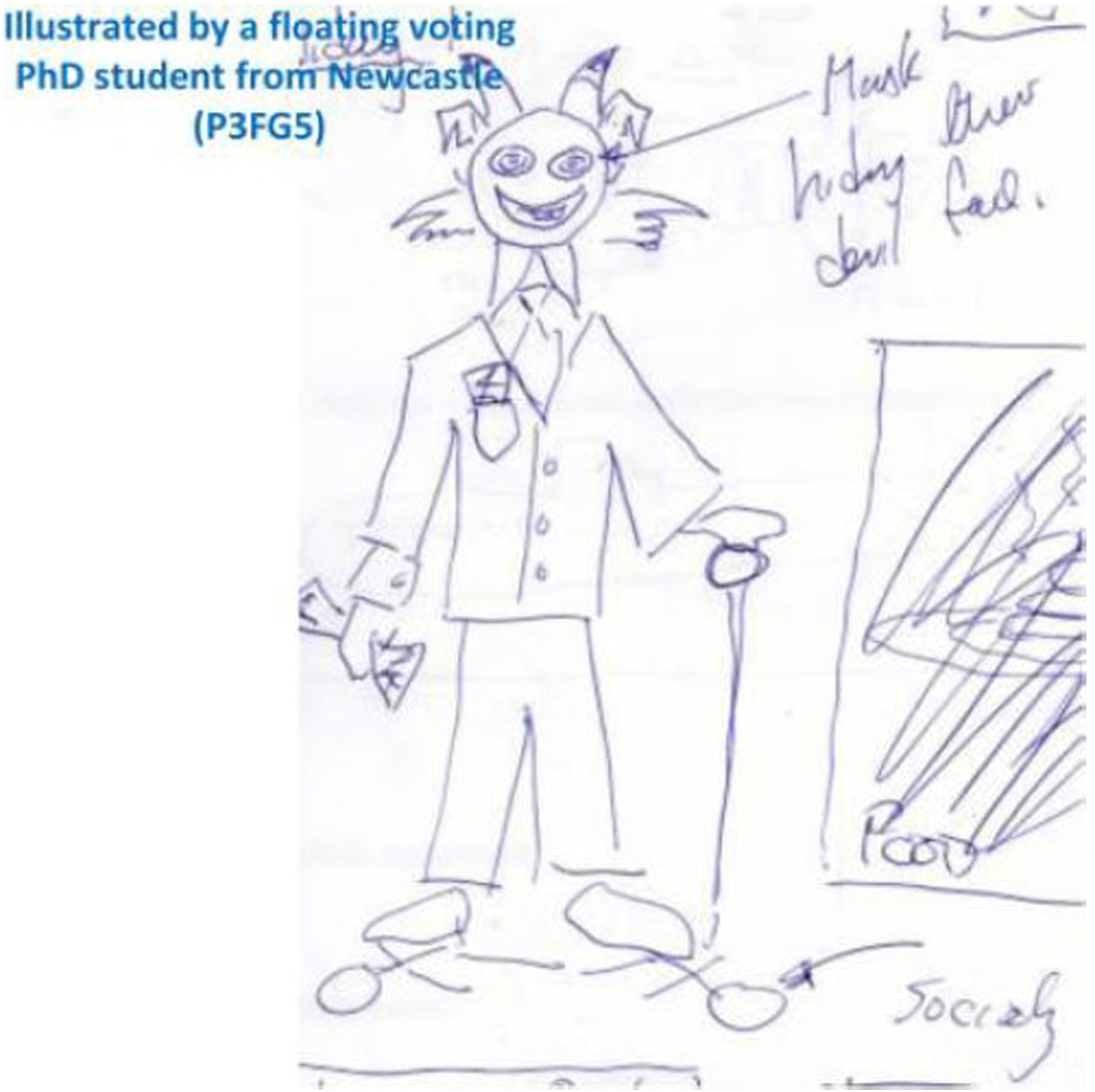
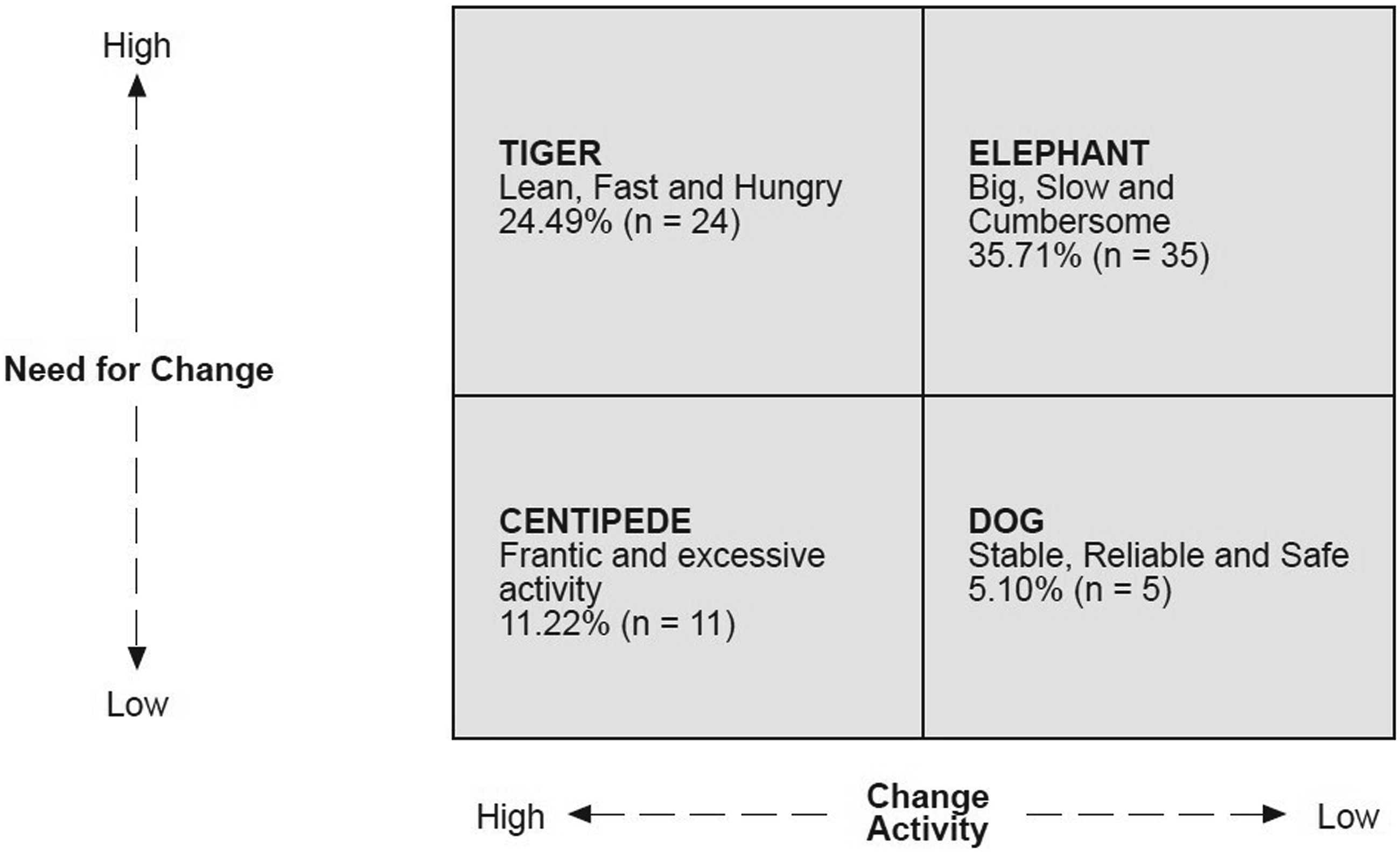
This research set out to explore the effectiveness of projective techniques for corporate political brand image research in the non-Western context of Pakistan. This study demonstrated that projective techniques effectively uncover the political brand image from a multiple-stakeholder perspective. Further, projective techniques provided participants with the means to articulate opinions about the corporate political brand image which would be impossible using more traditional approaches (Boddy, 2020; Campos et al., 2020; De Lima et al., 2017). Moreover, it was found that the stimuli and category of projective techniques were crucial points to consider when developing research design. Additionally, this research highlights the importance of embedding echoic probing while utilizing projective techniques to reveal deep insights which may be overlooked or lost (Decker et al., 2021; Pich et al., 2018; Toews et al., 2021). This indicates that researchers and practitioners intending to employ projective techniques must be mindful of choosing stimuli that resonate with participants and should consider implementing echoic probing to enrich the quality of the data obtained.
This study contributes to theory and practice, firstly, by advancing knowledge on the use and application of qualitative projective techniques by addressing explicit calls for more understanding of the effectiveness and operationalization of projective techniques in different contexts and settings (Boddy, 2007, 2020; Soley, 2010; Spry & Pich, 2021). Further, this study demonstrates that aspects of brand image can be uncovered using imagery-based (Porr et al., 2011 & Noble et al., 2013) expressive projective techniques (Hofstede et al., 2007; Spry & Pich, 2021). For example, participants used personal stories to discuss customer retention and political brand loyalty (Boddy, 2020). Finally, this study answers explicit calls by Cuny and Opaswongkarn (2017) by creating and presenting a systematic ten-stage framework entitled the Projective Techniques Toolkit. The Projective Technique Toolkit enumerates a step-by-step guide on applying, reflecting, and appraising projective techniques embedded within focus group discussions, interviews, or as a stand-alone method. The steps include selecting relevant tasks and stimuli, mentoring novice participants, and encouraging discussions to explore multiple realities. Lastly, the toolkit contributes to practice by providing practitioners with a simplified guide on using, implementing, and managing projective techniques as a stand-alone set of activities or those embedded within other data collection methods.
Limitations and future Research
As with all studies, this study has certain limitations, one of which is that this research took place in Pakistan with specific stakeholder groups using expressive projective techniques. Further research could focus on a variety of stakeholder groups such as foreign investors and other stakeholders outside the country. This will help to understand the corporate political brand image from different perspectives. Moreover, a variety of projective tasks should be considered such as role-playing, sculpting, or choice ordering. This will contribute to the current paucity (Boddy, 2007, 2020; Bond & Ramsey, 2010; Helkkula & Philstrom 2010; Soley, 2010; Spry & Pich, 2021) of research in non-Western contexts employing a variety of projective techniques and tasks to reveal new techniques while challenging existing ones. Future studies could take the form of longitudinal and comparative research to explore the utility and efficacy of projective techniques to add richness to their understanding. The projective techniques toolkit proposed by this study needs to be applied to a variety of settings and contexts such as industry and services. This will, on one hand, elicit the utility and transfer potential of the projective techniques toolkit to various contexts while on the other hand enhancing it by revealing which elements can be adapted, added, or removed. Therefore, further studies in varied contexts involving this framework are required.
Footnotes
Declaration of conflicting interests
The author(s) declared no potential conflicts of interest with respect to the research, authorship, and/or publication of this article.
Funding
The author(s) received no financial support for the research, authorship, and/or publication of this article.
