



Abstract
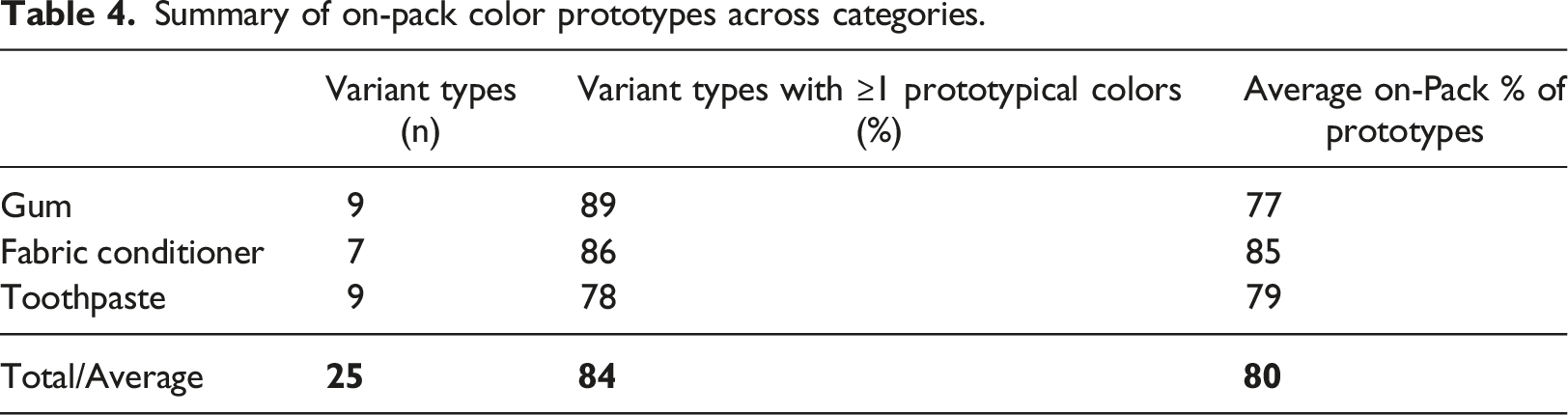
Line Extensions are among the most common form of product launch in packaged goods markets. As part of this process, brand managers must decide the visual design of the new variant’s packaging. To inform this decision making, this research aims to empirically quantify the efficacy of using colors versus images as signals of product variety on pack. We compare the use of color on 576 packs with perceptions of 1,853 category buyers across three categories in the USA. We find that for 84% of variant types, marketers use common colors to signal variety on pack, while consumers perceive that only 56% of variant types are represented by a particular color. Of greater concern, the colors used in practice and those expected by consumers align in only 16% of cases. By comparison, images are linked to variant types to a significantly greater extent (39% of cases). This suggests images are a stronger and more explicit signal of product variety than color. There are multiple implications arising from this study. It expands scholarly research on the use of colors in product extensions and, at the same time, provides a series of valuable benchmarks for industry practice in the portfolio management domain.
Introduction
The introduction of new products is a common strategy for brands in a wide variety of categories. For example, 30,000 new consumer packaged goods are launched each year in the United States alone. One of the most common types of new product are New Line Extensions (NLEs); this is when an existing brand launches a new variety, such as a new flavor or scent (Behrmann, 2019; Nielsen, 2019). These launch activities are expensive and risky, with an average of 40% failing to remain on shelf one year after launch (Castellion & Markham, 2013; Victory et al., 2021). When a brand launches a variant, there is a need to signal how the NLE is different from other parts of the brand’s portfolio. This research explores two visual devices that can achieve the goal of communicating the variant on pack: colors and images.
Unless the brand is the first to launch a variant type (e.g., new flavor, scent or formulation), marketers must consider any existing variant cues used in the category and decide the degree to which they conform to them. As an example, in 2014 Coca-Cola launched ‘Life’, a lower sugar cola sweetened with stevia. To signal the natural sweetener, Coca-Cola used a green can rather than its traditional red (Horovitz, 2014). Later that year, Pepsi Co launched a similar variant, Pepsi True. Also veering from the traditional brand color (blue), it is speculated that Pepsi Co chose to use a green can to leverage the inroads made by Coca-Cola in building the color as a signal for the natural sweetener (O’Reilly, 2014).
Variant prototypes, i.e., specific attributes used to represent product varieties, encourage practitioners to make packaging visual design choices that mimic competing brands (Orth & Malkewitz, 2008; Veryzer and Hutchinson, 1998). For example, blue is generally used to represent Ranch flavored dressing in the USA. The widespread adoption of prototypical attributes creates a packaging design paradox whereby brands must fit in with the variant prototype, while also standing out from competitor clutter (Ambrose & Harris, 2011).
Existing literature catalogues the use of product variety signals on pack (e.g., Chrysochou & Festila, 2019), and the potential benefits of a prototypical pack design (e.g., Nedungadi & Hutchinson, 1985). Nevertheless, these studies do not reconcile their findings with the essential quality that makes these signals functional, namely consumer understanding of their meaning.
From the consumer perspective, these colors and images deliver key product information prior to purchase. When a product is new to market, consumers must deduct product characteristics from the packaging alone. In this way the colors and images used by brands form a critical part of consumers’ evaluation of NLEs. Understanding how consumers perceive these signals is critical, as they can have significant impact on consumer behavior, as demonstrated by Coca Cola’s failed ‘Arctic Home’ Campaign in 2011. During the campaign, the signature red Classic can was replaced with a white and silver counterpart, colors previously reserved to signal Coca-Cola’s Diet variety. The cans were reverted to red just one month after launch because consumers, some of whom with health conditions such as diabetes, were mistakenly purchasing the full sugar variety, assuming it to be diet because of the can’s coloring (Shayon, 2011).
Our research endeavors to close this unaddressed gap between the widespread use of color to signal variety on pack, and the lack of empirical evidence supporting such a strategy. Ultimately, this research aims to reduce the risk and financial loss associated with launching NLEs, by building a sound foundation of academic theory that holds exceptional industry relevance and practicality.
The ability of color to convey meaning has long been documented (e.g., Nakshian, 1964). Accordingly, the significant impact of color on human behavior has been well documented, as summarized in a meta-analysis by Jalil et al. (2012). In a marketing context, many studies exist that provide a non-specific evaluation of color as an important element of packaging design (e.g., Ambrose & Harris, 2011; Clement, 2007). Yet very few investigate color empirically, or provide practical, strategic marketing implications to be applied by industry practitioners.
The limited research that meets these criteria has investigated color in the context of brand signaling (Bottomley & Doyle, 2006), and product experience (e.g., Kauppinen-Räisänen & Luomala, 2010). The closest known study of relevance to the present research is that of Chrysochou and Festila (2019), in which packaging design elements were recorded to understand signaling of organic products across four packaged goods categories in Europe. By contrast, our research investigates the efficacy of color to signal various and specific product varieties to consumers. We first establish the need for this research by demonstrating, for the first time, that prototypical use of the same colors to signal variety is prevalent across competing brands, present for 84% of variant types across three categories. This component of the study advances the theory of design prototypicality and contributes to existing research on product packaging design.
We further our contribution to existing knowledge by investigating the use of images as an alternative means to signal variety on pack. Images can incorporate color; for example, an image of a red raspberry to denote raspberry flavor, or can be color independent, such as the image of a target to indicate a source of pain for ibuprofen. The richness of cues comprised by an image result in a picture superiority effect in memory, which means images are processed quickly, and remembered easily (Paivio et al., 1968). Despite these advantages, existing research into the value of pack images to convey product attributes is largely confined to the heath domain, namely nutrition labels and logos (e.g.Talati et al., 2017).
Our research extends the understanding of pack images to a marketing specific context, in such a way that direct implications for industry practitioners are derived.
Most significantly, our research is the first to both audit industry practice on a large scale, and subsequently appraise this practice with empirical, consumer-based research. It draws on an analysis of existing packs from three different categories (toothpaste, fabric conditioner and chewing gum) in the USA. The study documents the colors used by packaged goods brands to signal product variety, and compares these to consumer perceptions, gathered from surveying 1,853 category buyers. In doing so, our research bridges paradigms of design prototypicality and psychological theories of semantic congruence and cross-modal correspondence.
Understanding how consumers view and interpret packaging signals is critical to evaluating their effectiveness. Our research helps to close this gap in knowledge, and guides marketers to make informed choices for their packaging design.
Literature review
The roles of color on packaging
Many shoppers spend five seconds or less choosing a packaged-goods brand in store and online (Anesbury et al., 2016; Dickson & Sawyer, 1990), and as little as two seconds looking at all products in a category (Clement, 2007). This makes having an eye-catching pack extremely important to maximize the chance of purchase, especially for newly launched variants that need to stand out on shelf. In the context of packaged goods, color is known to influence both consumer behavior, and attitude formation (Aslam, 2006; Spence & Velasco, 2018). Hence, color is a tool that can be used by marketers to visually communicate with category buyers, as packaging color can both attract attention and ascribe meaning (Kauppinen-Räisänen, 2014; Mead & Richerson, 2018).
To explain how consumers ascribe meaning to color, we draw on the Associative Network Theories of memory. According to these theories, information is stored in human memory as a series of nodes connected by associative links. The nodes represent stored information or concepts and the links represent how the concepts are related to one another (Anderson, 1983; Anderson & Bower, 1973). A particular color may form one such node in a consumer’s memory, to which all mental representations of that color are linked, forming a network of associations. These associative networks are what give the color its meaning. In the context of shopping environments, the associative meaning of color can help consumers to quickly navigate shelves (Huang et al., 2021). Prior studies have investigated the use of color to signal the brand (e.g., yellow for Pedigree dog food) (Bottomley & Doyle, 2006) and broad product characteristics such as price tier, or sustainable manufacturing (e.g. Steenis et al., 2017). However, color can also be used to signal the product’s variety type (e.g., yellow for lemon scented) (Madden et al., 2000; Romaniuk, 2018). Therefore, when choosing a color to signal a variant, it is essential for a brand to be clear on the desired meaning and confident this meaning is shared with consumers.
The influence of color on consumer attitudes, preference and behavior
Although color is broadly considered an important packaging design element for capturing attention (Velasco & Spence, 2019), and assisting in-store search (e.g. Jansson et al., 2004), few studies investigate the influence of packaging color on consumer attitudes and behavior. Where these studies do exist, they typically only consider the role that a consumer’s individual color preference has on self-reported purchase intent (e.g. Westland & Shin, 2015; Yu et al., 2018). Although these studies offer insight into the purchase behavior of individual consumers, they are not useful at the aggregate level required to inform effective design of New Line Extensions.
Color has been linked to favorable product attitudes more broadly in other studies, such as that conducted by Kauppinen-Räisänen and Luomala (2010), who found that packaging was evaluated positively where each of the product’s various design elements (including color, shape etc.) conveyed similar meanings. Likewise, Spence and Velasco (2018) found products that conform to a consumer’s color-flavor expectations will be processed more easily, and therefore preferred when compared to products that do not conform to these expectations. Similar findings have occurred in advertising research; for example in a study by White et al. (2021), positive attitudes towards online banner advertising increased when an analogous, or complimentary, color combination (such as green and blue) was used.
In contrast, a recent study by Theben et al. (2020) found no evidence to support that color is effective at influencing consumer attitudes towards a fictional fruit yoghurt product. Likewise, Beneke et al. (2015) found that the effect of packaging color on purchase intent was limited at the aggregate level, despite individual preferences for neutral tones.
Generally, the limited body of research into pack color and consumer attitudes and behavior suggests either a null effect, or that packaging color that conforms/is complimentary to expectations will be more positively evaluated, and therefore preferred. The following section details theory of prototypicality, one way consumer expectations about packaging design may be derived.
Theories of design prototypicality
Packaging design comprises many individual attributes, such as color, shape, and image that, when combined, present a holistic product to consumers. The incidence of a specific attribute appearing across products reflects the attributes’ prototypicality for that category or sub-category (Celhay & Trinquecoste, 2015; Rosch & Mervis, 1975). Similarly, within a category, prototypical attributes for variants can exist. For instance, a study by Chrysochou and Festila (2019) found that the use of paper materials, white and green colors and images of nature symbolize organic products across four packaged goods categories in Europe.
The theory of design prototypicality has established that design homogeneity determines the associative strength between the construct of a category and members of that category (e.g., Nedungadi & Hutchinson, 1985). Simply, the more common an attribute is to the category or variant, the more important it becomes for any individual product to have that attribute to be processed as a member of that category. For example, if red is prototypical of tomato ketchup, a new product should use the color red as it is key to being easily recognized by category buyers.
Recent research finds that consumers have an increasing reliance on visual information to comprehend and evaluate brands (Sample et al., 2020). The visual similarity between a product and the rest of the category has been found to positively influence the speed with which consumers notice that product, and place it within their consideration set for purchase (Keller, 1993; Scarpi et al., 2019). Package typicality is also found to have a positive relationship with aesthetic appreciation and purchase intent, particularly in instances of higher perceived risk (Celhay & Trinquecoste, 2015). Conversely, atypicality may increase consumer skepticism, meaning their tendency to question any aspect of the product (Garaus & Halkias, 2020).
The benefits of design prototypicality drive uniformity in the way product varieties are signaled by brands, as compliance to prototypes is considered essential to remaining competitive (Orth & Malkewitz, 2008).
Color to communicate category membership and product attributes
While some links between colors and attributes are intuitive, such as yellow and lemon, others are created through co-presentation of the variant type and color in line with the Associative Network Theories of Memory (Anderson & Bower, 1973). Returning to our earlier example, if Schweppes were to launch a stevia sweetened cola but not conform to the variant prototype of green, it could increase the risk that category buyers could not discern what the variant offers. This could make the product more difficult for consumers to find in retail contexts, such as crowded supermarket shelves, and therefore hamper the chance of success for the New Line Extension (NLE).
A study by Labrecque and Milne (2013) considers the importance of prototypical color use for category membership, however it examines the phenomenon from a brand, rather than product perspective. Within the study, brand logos are coded for their use of color to determine whether differentiation from category norms could harm brand equity. As it examines the use of color within logos, the paper does not consider the vital role of color to facilitate range navigation within a branded portfolio. i.e., the use of distinct colors to signify specific product varieties which may all carry the same logo. This brand-centric approach is most common to this line of research, with several authors investigating the ability of color to communicate brand personality (e.g. Underwood, 2003) including characteristics such as excitement or ruggedness (Labrecque & Milne, 2011).
Of closest relevance to the present study is research that investigates the role of color to communicate product characteristics. For example, Mai et al. (2016) found light and pale colors can present a subtle health cue, whilst also reducing perceived tastiness when used on food packaging. Marozzo et al. (2020) found that au naturel colors such as beige, convey that a product is more natural, meaning it has come spontaneously from the earth, and is devoid of artificial elements. Similarly, green labels can enhance consumers’ perceptions of the product’s environmental impact (Seo and Scammon, 2017).
While existing studies shed light on the valuable role of color to elicit perceptions about broad product characteristics, in this research we endeavor to understand the more specific role of color to distinguish product varieties within categories. This enables us to have a clearer understanding of the role that colors can play in range navigation, and whether there are specific nuances for color not captured by previous, more general studies of color meaning.
Currently, little knowledge exists as to how brands use color to signal the attributes of their different variants: what we call prototypical color use. To explore the complex and under investigated mechanisms of variant signaling in a real-world setting, we pose the following research question:
To what extent do packaged goods use similar tones of color to signal specific variant types on-pack?
Consumer perceptions of color-variant links
To effectively facilitate navigation and purchase of variant types, colors need to be evident on-pack and reflect the way consumers view the category by tapping into the expectations of packaging color that consumers hold in memory.
The assumed presence of these expectations can be rationalized using theories of cross-modal correspondence. Stemming from research into synesthesia, a neurological phenomenon whereby the brain experiences one sense through another, theories of cross-modal correspondence explain the cognitive matching between stimuli that activate multiple sensory nodes of sight, smell, taste and touch (Marks, 1975). Most commonly cited are the widely documented links between color and flavor (e.g. Heckler & Childers, 1992; Piqueras-Fiszman & Spence, 2015; Stillman, 1993). Correspondences between sight and smell have also been found by past research, such that color can facilitate strong and stable associations with scent (e.g. Gilbert et al., 1996).
Whilst these commonly held associations, or expectations, may at times be derived from the color of the key ingredient in a product (such as green and apple flavor), other studies suggest that the link between color and flavor is not universal. For example, the basic tastes (bitter, sweet, sour, salty, umami) have been found to consistently correspond to certain colors, despite differences in the color of source ingredients (e.g., red is frequently associated with sweetness, irrespective of the wide variety of red foods that cover other flavor profiles, such as chili) (Spence et al., 2015; Wan et al., 2014). Likewise, the associative links between scent and visual depictions of odor have been noted as inconsistent in the context of preference for cosmetics (Yang & Chen, 2015).
The strength of these cross-modal correspondences has a known mediator, semantic congruence. If the encountered information (e.g. a yellow bottle of lemon scented dish detergent) conforms with the concept or schema that already exists in memory (e.g. lemons are yellow), then this congruence can accelerate encoding of the information in memory, and support longer lasting, meaningful memory traces (Packard et al., 2017). Specifically, this is referred to as the Unity Effect, whereby stimuli that match in terms of their identity or meaning are more likely to be bound together in human memory (Spence, 2011).
In the marketing realm, conforming to these cross-modal expectations has been found to facilitate search for a product (Velasco et al., 2015). However, the value of any color as a variant signal depends on the degree to which category buyers hold this knowledge in their memory. While brands may use color signals on pack, this does not necessarily mean these signals will be noticed and processed by category buyers (Underwood et al., 2001). Likewise, it is also possible that consumers hold intrinsic associations between flavors and colors that are not being utilized by brand managers. Little is known about cross-modal color associations in a marketing context. Accordingly, we propose RQ2:
To what extent do category buyers hold expectations of packaging color for within-category variant types? Existing literature into signals of product variety on pack (e.g., Chrysochou & Festila, 2019) provide valuable intel into the use of prototypical attributes by brands. However, these studies do not investigate the efficacy of these signals from the consumer perspective. To effectively communicate product characteristics to consumers, it is crucial that these on-pack signals convey the correct meaning, and that this meaning is congruent with shopper expectations. Congruence between consumer perceptions and on-pack visuals is important to avoid two types of confusion. Firstly, a shopper may use a particular color to help locate a product in a purchase environment, for example, pink for strawberry flavored milk. When this expectation is not met, it can result in a color-flavor incongruency effect whereby search for the target product is slower and less accurate (Huang et al., 2021; Huang & Wan, 2019). In some instances, failing to use this color to signal the variant type may lead to exclusion from the consumer consideration set as the product is not ‘seen’ (Nedungadi & Hutchinson, 1985; Scarpi et al., 2019). Second, atypical use of packaging color can lead to incorrect assumptions of flavor (Garber Jr. et al., 2001). For example, if a shopper picks up a pink colored carton of milk expecting it to be strawberry, but it is in fact vanilla flavored, this will lead to confusion and disappointment as expectations are not met (Ludden et al., 2012). Therefore, the third research question involves understanding the extent to which color prototypes on-pack align with color expectations in consumer memory:
To what extent do the variant-color prototypes on-pack align with the variant-color expectations in category buyer memory?
Images as a potential alternative to signaling variety on-pack
It is established by prior research that color faces heavy competition for retrieval from consumer memory (Major et al., 2014; Ward et al., 2020). The ability of color to act as a unique and effective signal of product variety is therefore questionable. Hence, this study also explores the viability images as an alternative signal of product variety.
Images are rich in neural information that adds depth and speed to mental processing. Referred to as the picture superiority effect, pictures are more readily recognized and recalled than words (Childers & Houston, 1984; Lutz & Lutz, 1978; Paivio, 1969). This ease of processing facilitates images to operate as attention grabbing devices (Major, 2014), an effect particularly pertinent to low-familiarity brands such as private labels (Underwood et al., 2001). This suggests that images may be an effective means to cut through to consumers in shopping environments and effectively signal variety.
Despite the known benefits of using imagery for processing and attention, packaging imagery is an area relatively under-reached compared to other pack design elements (Gil-Pérez et al., 2020). Furthermore, empirical investigation into pack imagery exists near exclusively within the health science domain. The vast majority of this research investigates the use of nutritional labels, and indeed several meta-analyses exist to catalogue this information (e.g., Campos et al., 2011; Ikonen et al., 2020). In more recent years, studies have investigated how other image types can influence consumer evaluations of product ‘healthiness’ and nudge purchase propensities for healthy alternatives (e.g., Delivett et al., 2020; Delivett et al., 2022; Gil-Pérez et al., 2020; Talati et al., 2017). Whilst this body of work provides important insight into the ability of images to communicate product information, it exists only within the narrow context of health and nutrition perceptions. The present research contributes to this limited body of knowledge, and builds on the few studies to date that have explored the communicative power of images beyond the health discipline.
Several studies have demonstrated that the images shown on food packaging play an important role in the generation of consumer expectations. For example, consumer perceptions of soft cheese were found to vary depending on the accompaniment displayed on the pack (Rebollar et al., 2016). Likewise, expectations of the sweetness of yoghurt varied depending on the images shown on pack (Rebollar et al., 2019). A further study by Rebollar et al. (2017) found that the image of an oil cruet was more effective than allusive text at conveying the product attributes ‘crunchy’, ‘artisan’, ‘high quality’, ‘intense flavor’, and ‘healthy’. One study even found that an image of a lion could be used as a visual metaphor to influence consumers expectations of coffee strength before tasting (Fenko et al., 2018). Finally, image congruence with the product category was determined to be an important factor in image interpretation, as studied by applying an image of fire to 8 congruent categories (e.g., ribs) and 8 incongruent categories (e.g., lettuce) (Gil-Pérez et al., 2019).
Although demonstrating the potential of pack images to influence consumer expectations, these studies are limited in their application to only a single image, and often single category types. The present research extends this application to images representing 25 product varieties, belonging to three categories. Despite the potential advantage images pose for brands launching NLEs, this an area yet to be empirically investigated. Thus, the fourth and final research questions asks:
What is the comparative effectiveness of images as signals of product variety compared to colors?
Methods
We conduct two descriptive studies. Study One investigates 576 products belonging to 80 brands in three packaged goods categories including toothpaste, fabric conditioner and chewing gum. These categories were selected as they have taste and/or scent components conducive to cross-modal correspondences. The study involves the systematic coding of color on product packaging in the USA to identify how managers currently use color as a cue to signal product variety. Next, Study Two surveys 1,853 US consumers to uncover whether any common color-variant or image-variant associations are held. This data is used to investigate whether the color cues used by managers match consumer expectation, and to compare the efficacy of images as on-pack signals of variety.
Study one: Detecting the presence of on-pack prototypes
Study one method
Study One measures the prevalence of prototypical color use to signal product variety on-pack by cataloging pack images sourced from online retailers. This includes 187 chewing gum packs from 24 brands, 143 fabric conditioner packs across 20 brands, and 246 toothpaste packs across 36 brands.
Most of the research on cross-modal correspondence investigates common links between color and flavor. Hence, when selecting categories to analyze, we wanted to replicate these studies with a flavor dominant category (chewing gum) but also extend the area by investigating whether similar links exist between color and scent (fabric conditioner) and color and function (toothpaste).
Stimuli selection
We downloaded pack images from the USA’s leading supermarket retailers, Kroger and Walmart, and then removed duplicate products sold in both stores. We then grouped pack images into variant types based on the primary variant displayed on the front of pack. To meet sample size requirements, only variant types that accounted for ≥5% of the total category SKUs (Stock Keeping Units) in fabric conditioner and toothpaste and ≥4% in chewing gum were included.
The data collected includes every product available within each of the three categories, across two market leading retailers. It is, therefore, as practically close to a census as was possible via an online data collection method. Therefore, the small sample sizes evident for some variant types reflect the small number of brands producing those variants rather than an incomplete sample.
We conducted additional checks using descriptive statistics to ensure small sample sizes did not produce systematic biases in the results. In particular, we compared the distribution of prototypes among variant types with small and large sample sizes. We found no evidence that variant types with small sample sizes had a disproportionate number of prototypes. Further, we used Fisher’s Exact Test to significance-test our findings, a tool that is robust for all sample sizes. Therefore, we are confident that the small sample sizes do not impact the quality of the results.
Coding of stimuli
Three independent coders used a binary system (1 = present, 0 = not present) to record all the colors used on any given pack. To reduce subjective error in color coding, the coding spreadsheet specified 23 colors, and coders were provided with a document containing example pantones of each color.
Prototypicality measurement of stimuli
Prototypical design attributes are defined as those occurring frequently within a category, that is, those reflected across the majority of products (Rosch & Mervis, 1975). To address RQ1 we leverage this definition by recording the percentage of products of a given type that use a particular color (On-Pack %) and use it to create a construct we name On-Pack Color Prototype, defined as:
This definition captures high prevalence on pack, but avoids mistakenly coding category colors (e.g., white in toothpaste) as variant colors. To determine whether the use of certain colors is significantly higher for some variant types, we used a chi-square test with a significance level of p < .05. For variant types with a small sample size of products, Fisher’s Exact Test was used where the expected cell count dropped below five. As an additional check, prototypes were only recorded where the color was used by at least 50% of the brands that make a particular variant type. This criterion was actioned to ensure results are not driven by corporate colors used on large portfolios.
Study one results
Given the importance of category context when understanding color prototypes, results are first provided at a category level, and then a cross-category summary is provided.
Prototypical color use (On-Pack %) by the chewing gum category in the USA.
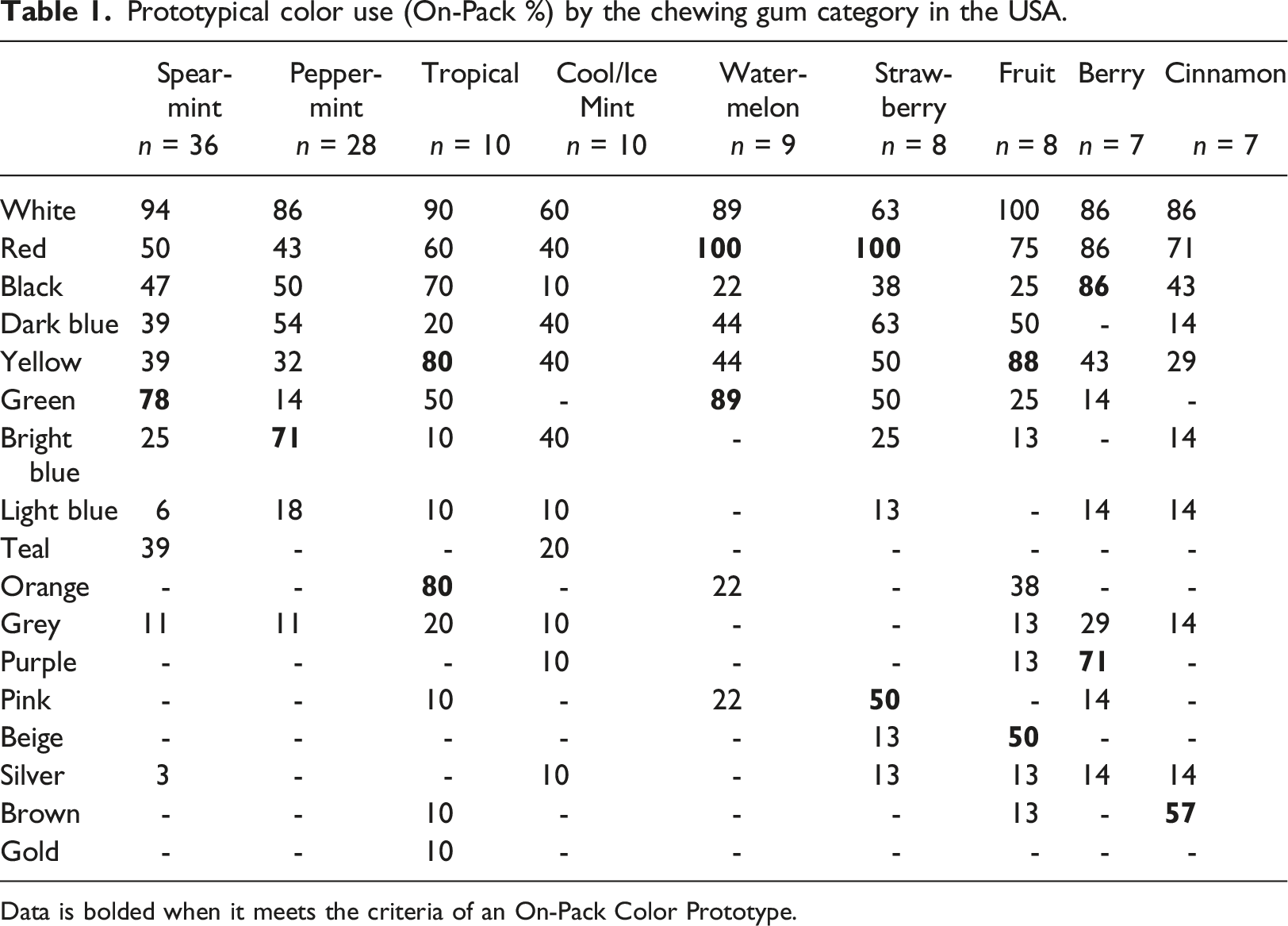
Data is bolded when it meets the criteria of an On-Pack Color Prototype.
Prototypical color use (On-Pack %) by the fabric conditioner category in the USA.
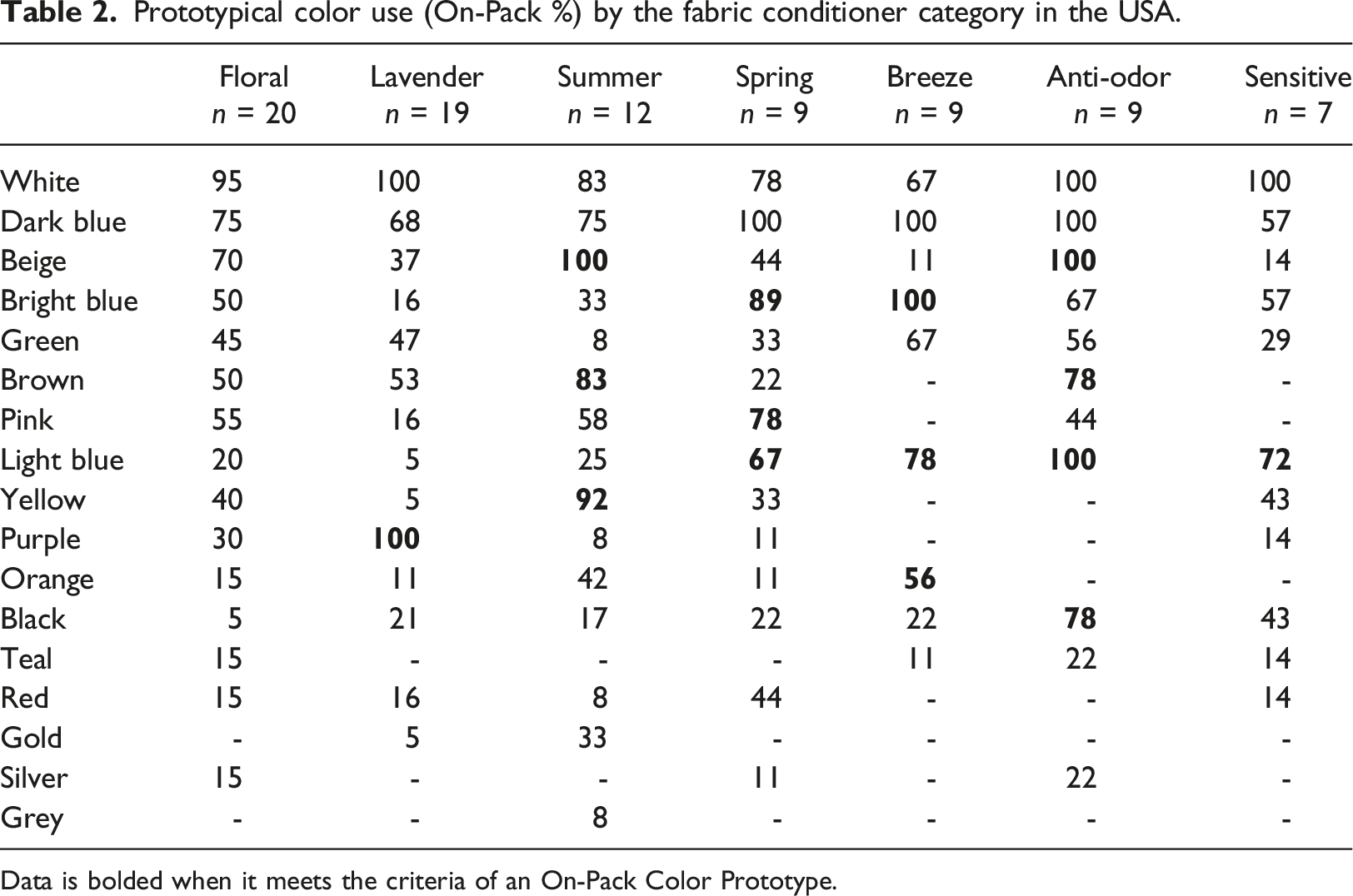
Data is bolded when it meets the criteria of an On-Pack Color Prototype.
Prototypical color use (On-Pack %) by the toothpaste category in the USA.
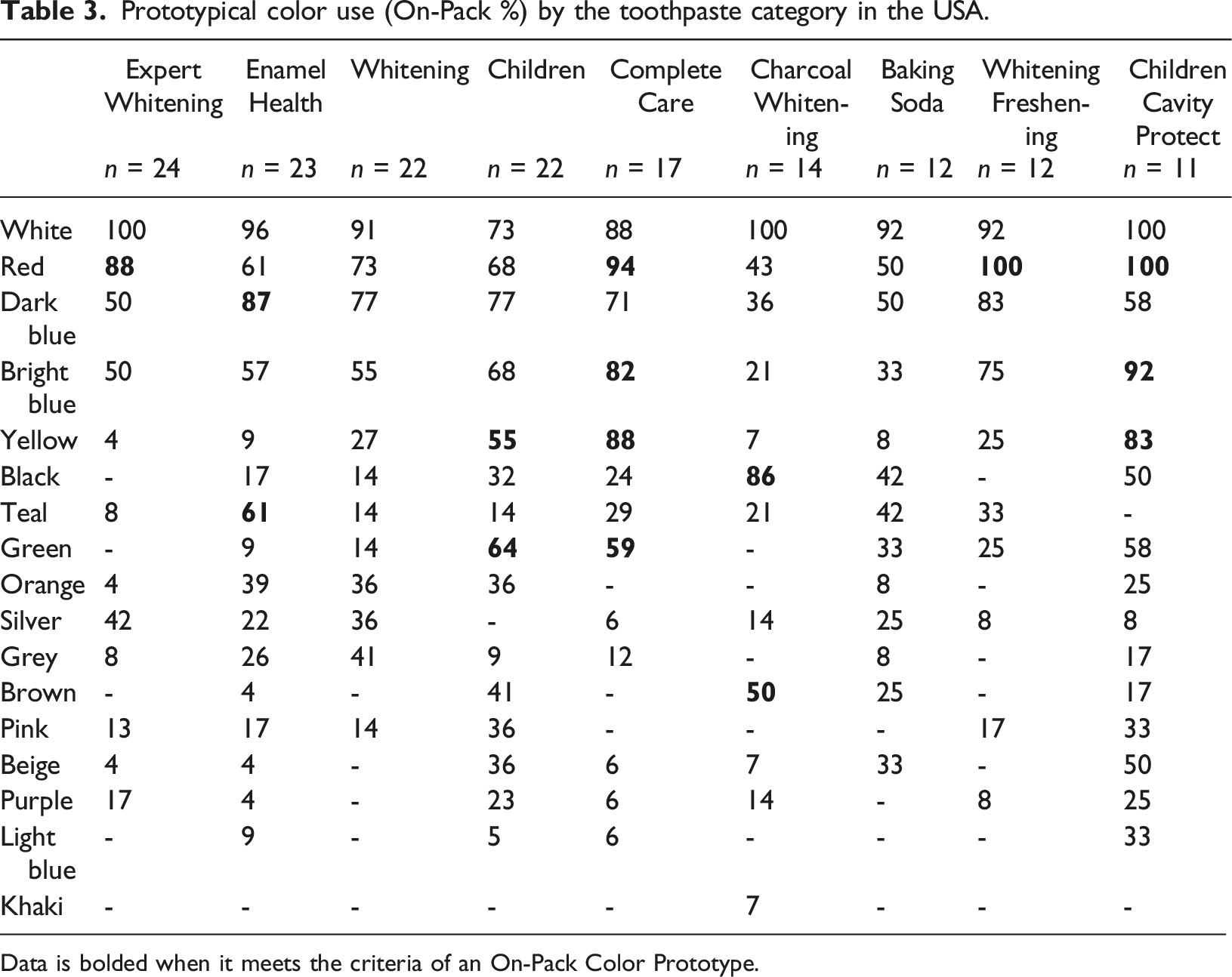
Data is bolded when it meets the criteria of an On-Pack Color Prototype.
Interestingly, most toothpaste varieties have a prototypical color despite no logical link to a source ingredient color (such as Charcoal and black). For example, all Whitening and Freshening toothpastes use the color red.
Cross-category summary of on-pack color prototypes
Summary of on-pack color prototypes across categories.
Study two: Detecting variant-color expectations in consumer memory
Study two method
Demographic split of Study Two sample.
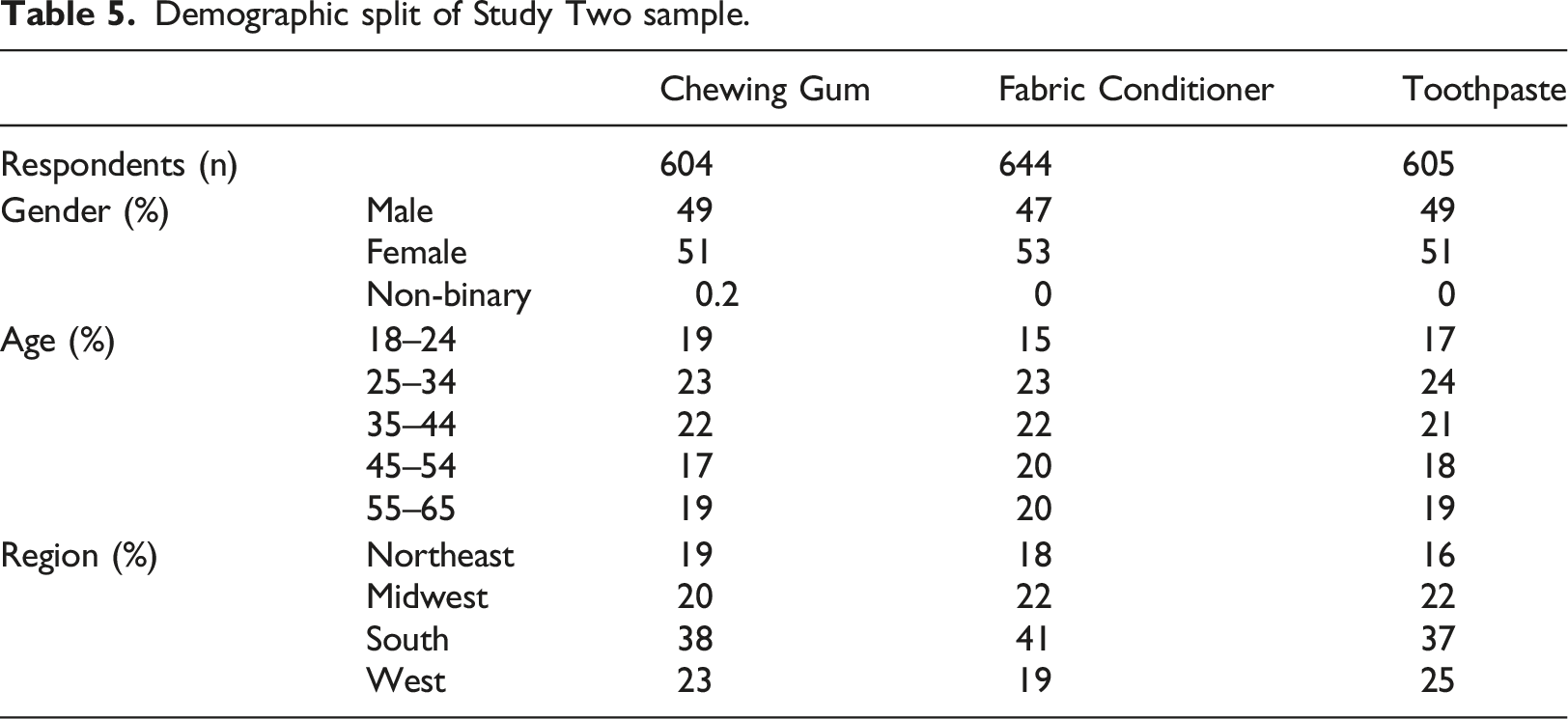
Following this, two Ishihara color plates were used to screen out participants with red-green color-blindness, which accounts for 99% of all color blindness and affects approximately 7% of men and .4% of women in the United States (IrisTech, 2019). In total, 57 respondents were screened from the Fabric Conditioner survey, 84 from chewing gum, and 47 from toothpaste due to color blindness.
Study two variants and colors tested.
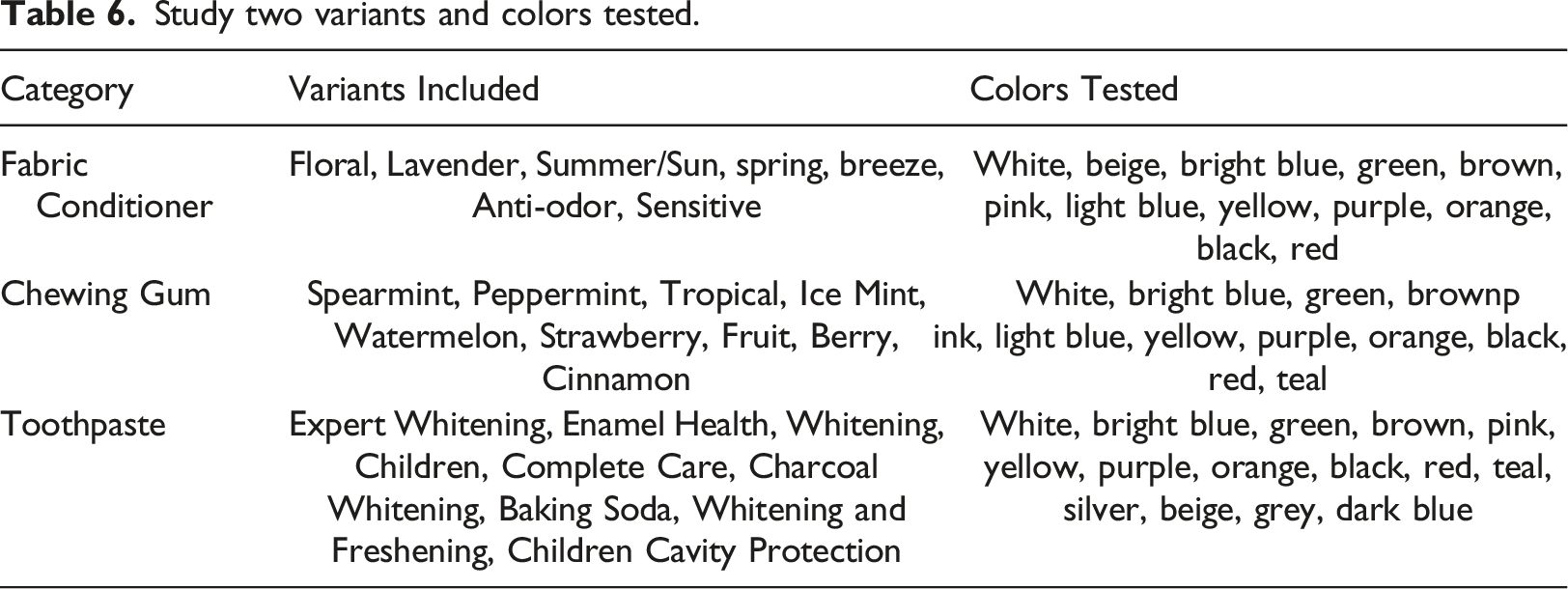
To minimize survey completion time and reduce the cognitive load on respondents, we excluded colors that were ubiquitous or absent across the entire category (as determined by Study One). White, however, was included in all questionnaires due to its omnipresence for all categories, variants, and brands.
To measure associations between colors and variants, respondents were presented with a color swatch, labelled with the name of the color. They were then provided a matrix of greyscale, mock-up product images for different variant types for a fake brand (Appendix). Respondents were asked to pick which, if any, variant was best represented by the color shown. Respondents were permitted to select as many or as few varieties as they liked. A ‘none of these’ option was also provided.
We tested the bilaterality of color-variant associations by repeating this task but presenting respondents with a mock
The order in which participants viewed the color-to-variant, and variant-to-color sections was randomized. Results of a Pearson’s correlation indicate variant-to-color, and color-to-variant associations are highly correlated in all categories (r = .86 in chewing gum, .77 in fabric conditioner and .76 in toothpaste). Color-to-variant data is presented within this paper due to higher overall response rates (i.e., fewer respondents selecting ‘Don’t know’).
Two criteria were used to classify a link between color and variant as something that is generally expected by consumers:
Statistical significance was determined using Repeated Measures General Linear Modelling and post-hoc pairwise comparisons with a significance level of p < .05. The Repeated Measures GLM was used due to the repeated nature of the survey design, in which the same respondent was exposed to different colors, and asked which, of a repeated set of variant types, they linked that color to.
Study two results
Consumer Associations (CA%) for chewing gum color in the USA.
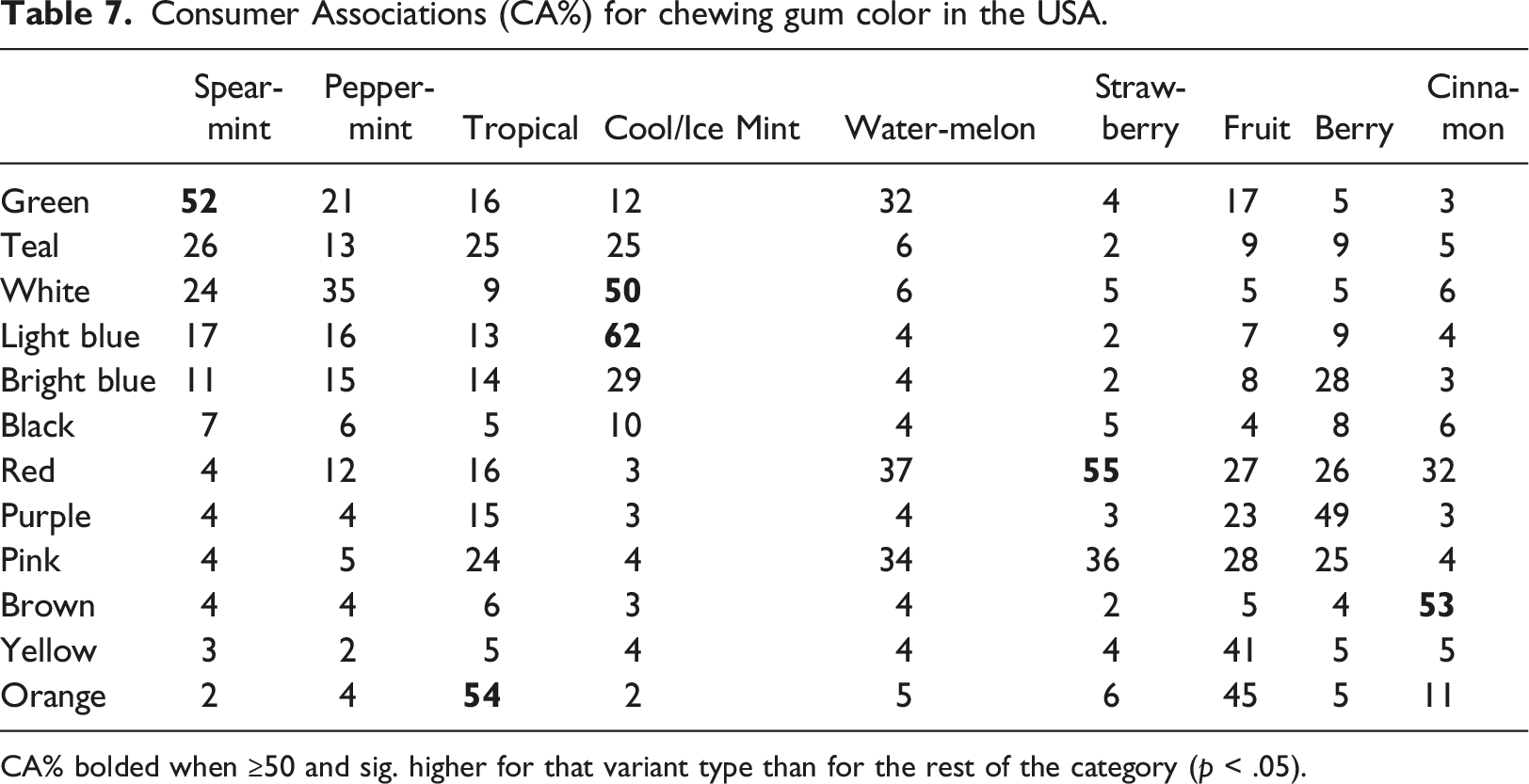
CA% bolded when ≥50 and sig. higher for that variant type than for the rest of the category (p < .05).
Consumer associations (CA%) for fabric conditioner color in the USA.
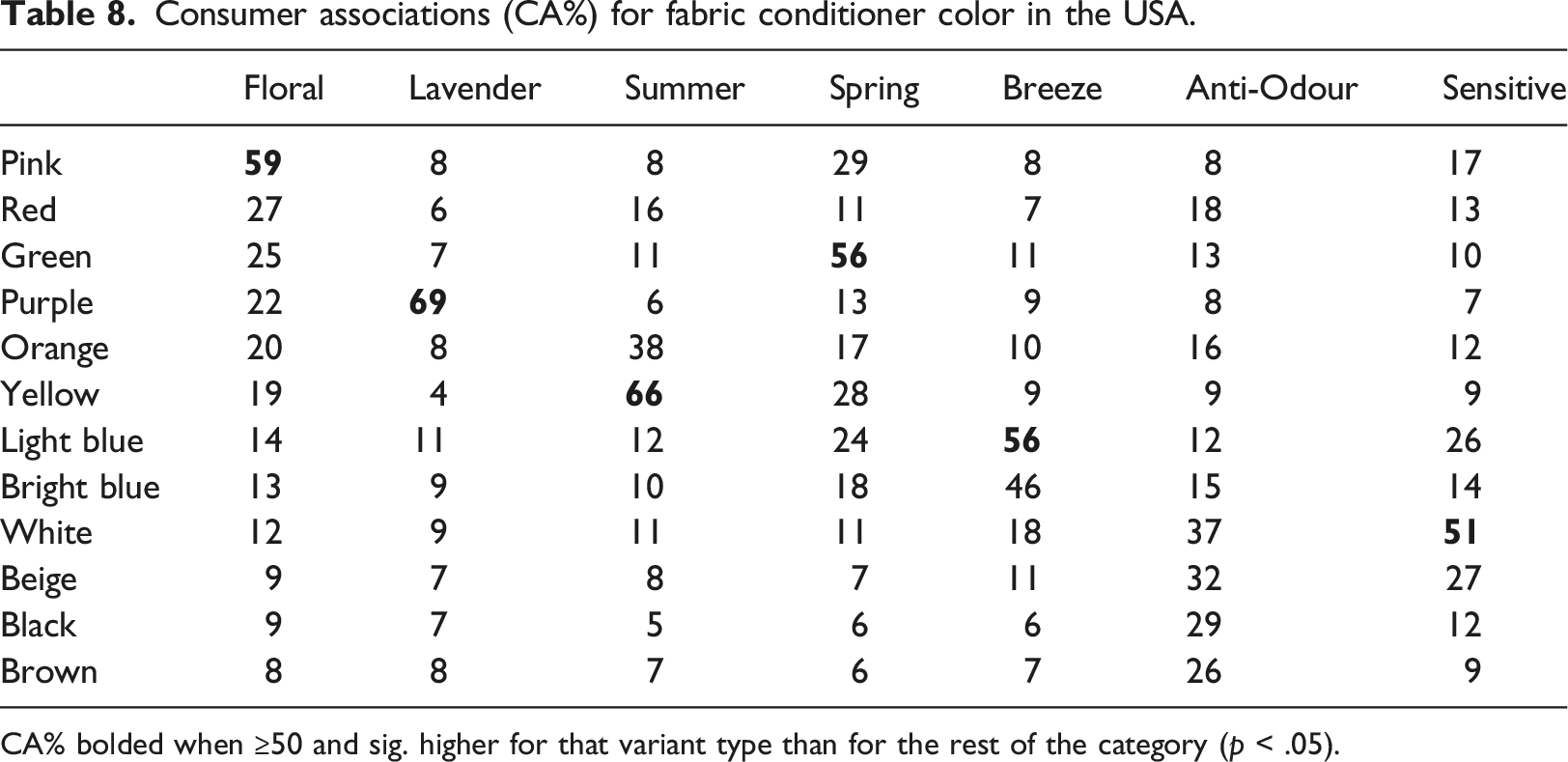
CA% bolded when ≥50 and sig. higher for that variant type than for the rest of the category (p < .05).
Consumer associations (CA%) for toothpaste color in the USA.
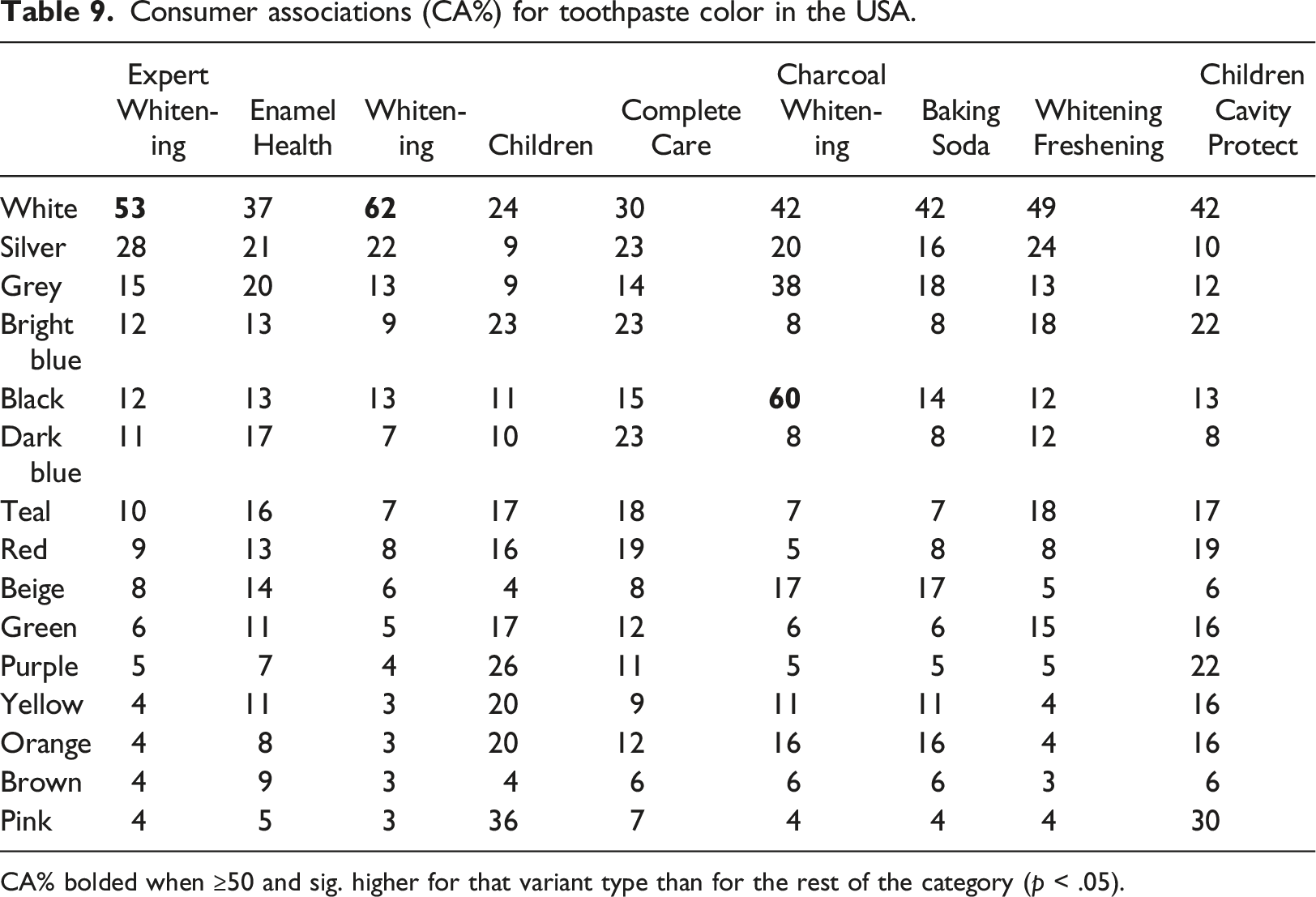
CA% bolded when ≥50 and sig. higher for that variant type than for the rest of the category (p < .05).
Cross-category summary of consumer color expectations
Across 25 variant types belonging to three product categories, 56% have at least one color that is commonly expected by category buyers. Nonetheless, variability within categories is far greater than what was observed in Study One. Consumers have an expectation of packaging color for 86% of fabric conditioner variants, 56% of chewing gum flavors, and just 33% of toothpaste varieties. Hence, in response to RQ2, it can be said that category buyers do have expectations of packaging color for specific variant types; however, the presence of an expected color in consumer memory will vary depending on the product category.
Alignment between on-pack prototypes and consumer color expectations
Alignment of color-variant associations and on-pack prototypes.
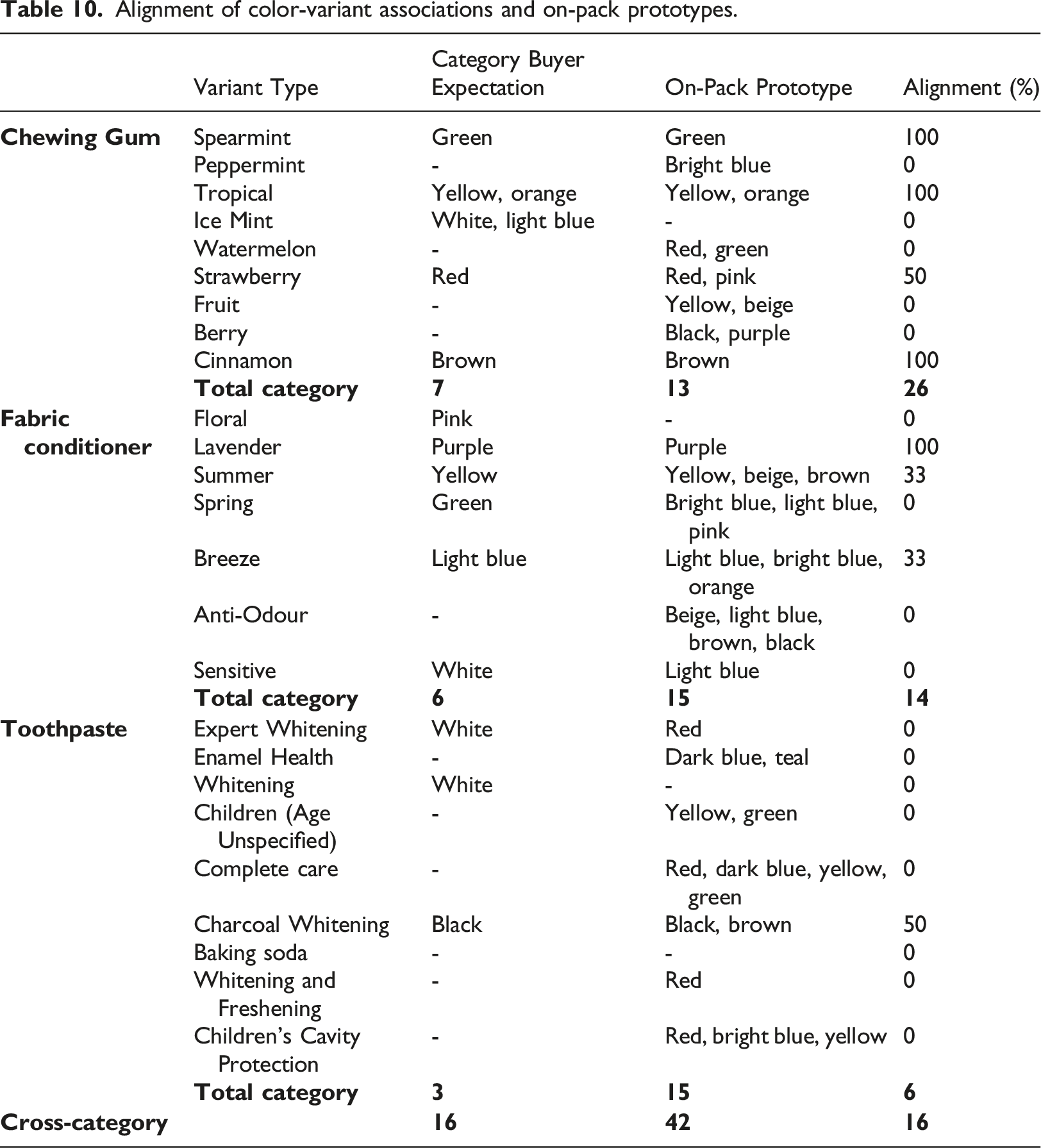
In relation to RQ3, the colors used to represent product varieties on-pack align with those expected by consumers in just 16% of cases on average. Alignment is strongest in the chewing gum category, albeit still only about one in four (26%). In the toothpaste category this overlap is just 6%, with only 14% of expectations corresponding with the same color on-pack for fabric conditioner.
For 11 of 25 variant types, on-pack prototypes exist despite no significant expectations in category buyer memory. For three variant types, the inverse is true, and consumers have an expectation that is not reflected on pack. For the remainder, both on-pack prototypes and consumer expectations exist, but the degree to which these align varies. Therefore, the answer to RQ3 stated is, variant color prototypes on-pack rarely align with the variant color expectations in category buyer memory.
Notably, of the eight variant types with aligned prototypes and expectations, six demonstrate direct congruence between the variant type and the color of the primary ingredient in nature (e.g., strawberry and red). For the two remaining variant types a semiotic link between the variant type and color is evident (e.g., the sky/breeze is blue).
After documenting the brand use and consumer expectation of colors on variant packaging, we now explore the comparative efficacy of images to signal product variety.
Use of images to signal product variety
To address RQ4, we sourced images from the first page of results in online royalty-free image databases using the variant type as the primary search parameter. Where no suitable image was available, we created one by combining several images. For example, the image for Anti-Odor Fabric Conditioner comprised an image taken from the first page of results when searching ‘odor’ and the prohibition sign (‘no symbol’). To address RQ4 the same 644 respondents were presented with a greyscale variant image and asked to select which, if any, variant(s) were best represented by the image shown. As per RQ2, variant types were presented in a matrix with a ‘none of these’ option also provided.
Comparative strength of variant image and color associations.
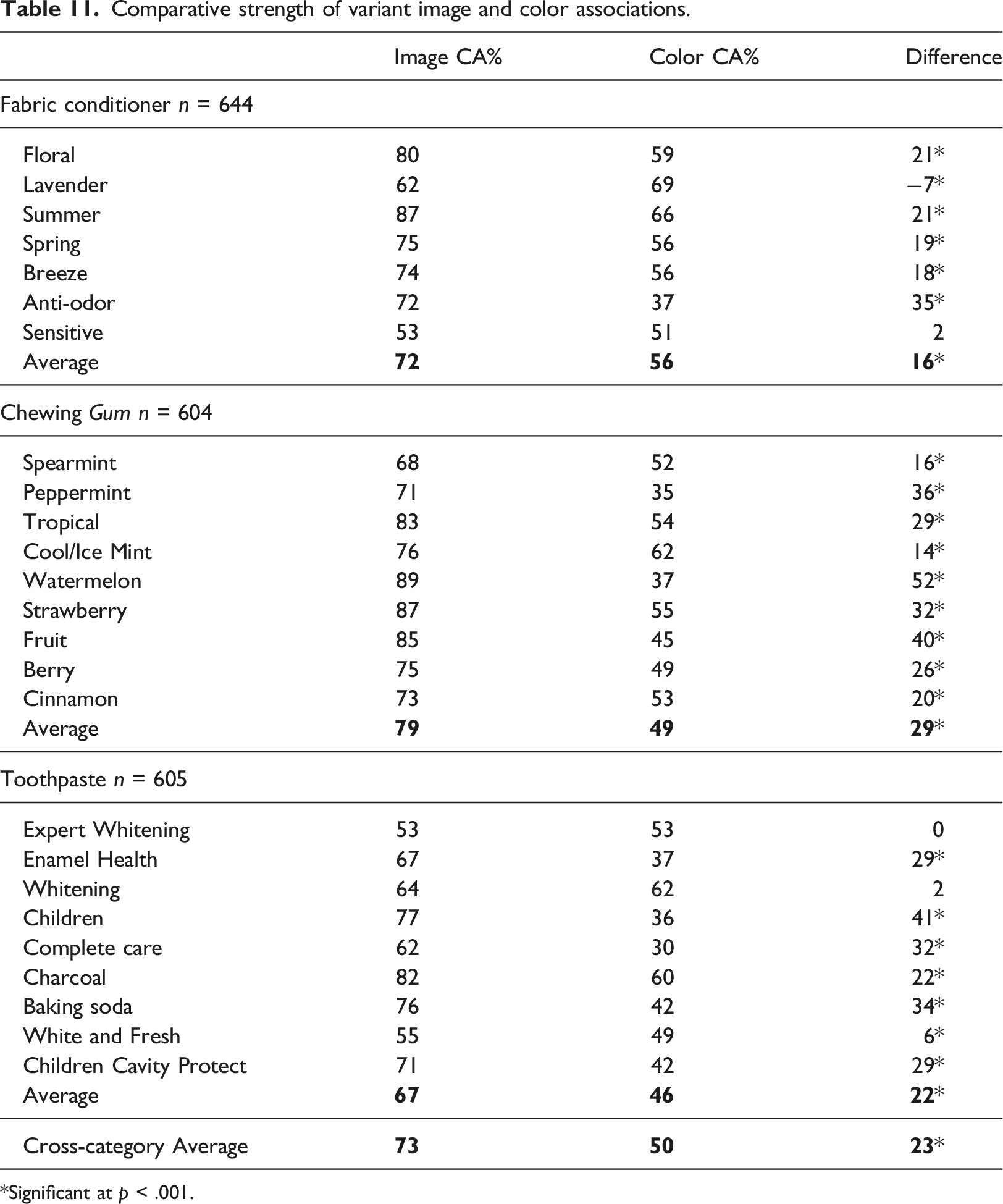
*Significant at p < .001.
Images more effectively signal product variety to consumers for 23 of 25 variant types tested. The exceptions are Expert Whitening toothpaste, for which the image and color white are equally linked, and Lavender fabric conditioner, for which purple is linked to the variant by an additional 7% of category buyers. In respect to RQ4, 23% more category buyers hold associations between images and variants than colors and variants (73% compared to 50% on average). In addition, significantly more consumers associate each image with its variant than they do with any other variety.
Discussion
Study one: Color prototypes used by brands
This research finds it is highly common for different brands to use the same or similar colors to signal product variety on-pack in the development of New Line Extensions. To the authors’ best knowledge, this is the most extensive documentation of in-market color use to signal variety on pack to date.
Regarding product design, prior research catalogues the use of packaging attributes to communicate the brand (Bottomley & Doyle, 2006), broad product characteristics (such as tastiness) (Steenis et al., 2017), or the category generally (Labrecque & Milne, 2013). However, this is the first time the use of color to signal variety (specifically flavor, scent or function) has been examined. Further, this body of knowledge, and indeed design prototypicality theory in general, typically examines holistic prototypicality. i.e., how typical of the category a product is based on the combinations of design features such as color, shape and materials. In comparison, this research contributes to this theory by demonstrating the prevalence and usefulness of prototypicality for one specific design element, color.
Most colors that are prototypically used by brands demonstrate a clear connection between the color and the core ingredient/concept as it appears in nature (e.g., red for strawberry, yellow for summer/sun). This finding conforms to, and extends the theory of semantic congruence, specifically, the ‘Unity Effect’. The Unity Effect suggests stimuli that match in terms of their identity or meaning are more likely to be bound together in human memory (Spence, 2011). The Unity Effect has previously been documented for color and flavor associations, but the present research extends its reach to categories defined by smell, rather than simply taste.
Study two: Colors expected by category buyers
Just over half of the variant types tested have a packaging color expected by category buyers, this means an almost equal proportion of variant types do not have an associated color. To understand how this finding contributes to theory, we detail how it differs by category.
Associated colors are most common in the chewing gum category, where variants are categorized by flavor. This finding aligns with psychology theories of cross-modal correspondence (e.g. Heckler & Childers, 1992; Marks, 1975). More specifically it advances the application of these theories to marketing theory and packaged goods. Previously, the presence of common associations between color and packaged goods flavors has been limited to four flavor varieties in the potato chips category (Velasco et al., 2014). The present research documents the presence of color/flavor cross-modal correspondences in a new category, chewing gum. In addition, the limited body of work into cross-modal correspondence between color and smell (e.g. Gilbert et al., 1996) is bolstered, with the addition of the fabric conditioner category studied within this research. Finally, this paper contributes by testing the boundaries of cross-modal correspondence and semantic congruence theories. Where previously effects of semantic congruence between flavor, scent and color have been explored, for the first time we investigate whether common associations are held between colors and specific functional benefits (such as ‘freshens breath’) by including the toothpaste category. We find some evidence that these associations exist, but are less common than those recorded for flavor or smell.
Study one and two comparison: Prototypes and expectations rarely align
While the existence of color/flavor correspondences have been examined previously, albeit to a limited extent for packaged goods, this research represents the first time that consumer expectations of color for variants have been directly compared to their in-market counter parts. Despite 84% of variants using a color prototype on-pack, and evidence of consumer expectations of color for 53% of variants, those variant colors align on just 16% of occasions. This indicates a disconnect between the expectations of consumers, and the way that variants are signaled in shopping contexts. As such, it might be one of the underlying causes of New Line Extension failures.
Prior research within the field of consumer attitude and behavior suggests that congruence to consumer expectations is an important precursor to positive product evaluations, preference, and purchase intent (Kauppinen-Räisänen & Luomala, 2010; Spence & Velasco, 2018; Yu et al., 2018). Nevertheless, these studies are of little practical value to industry practitioners designing New Line Extensions as they typically lack aggregated findings, instead reporting on how individual color preferences can influence self-reported purchase intent.
Similarly, a study by Huang et al. (2021) found that color-flavor incongruency lead to less efficient product search in a virtual shopping environment. Existing research such as this warns of the dangers of not conforming to consumer expectations, but offers little to no insight as to whether these expectations are being met by in-market products. Bridging this gap is a key theoretical contribution of this paper. This research provides empirical evidence of the consumer-held expectations of packaging color for 25 product varieties spanning three categories according to 1,853 category buyers in the USA and directly compares these expectations to the colors used by brands.
Images as an alternative signal of variety
Given the disconnect between color use and consumer expectation, the alternative of using an image to signal variety was explored. Results show 92% of variants tested maintain significant and unique links to an image. In addition, image associations are held by more consumers, 73% compared to 58% for color.
These results demonstrate images have a clarity of communication advantage over colors; whereby they are less ambiguous and have greater power to convey explicit meaning in a category context. This is consistent with the Picture Superiority Effect (Childers & Houston, 1984). This research therefore bridges paradigms of psychology and consumer research by demonstrating the Picture Superiority Effect in a new context, variant signaling on pack. It also supports existing research which finds color to be one of the most competitive brand assets in consumer memory (Major et al., 2014; Ward et al., 2020).
Furthermore, this research shows that clear links to variants can exist even when the connection between a variant and the natural environment is less literal. To demonstrate, 75% of category buyers link the image of butterflies to Spring varieties of fabric conditioner. This outcome suggests a collective understanding by consumers which may not be based on literal interpretation of their surroundings (e.g., a lavender flower is purple); rather, it may be based on universal experiences that form these associations (e.g., seeing butterflies during the Spring and extending this association to Spring related concepts) (Piqueras-Fiszman & Spence, 2011; Shankar et al., 2010; Velasco et al., 2014).
This research contributes to marketing theory as it is the largest empirical investigation into the communicative power of pack imagery outside of a health context. It examines the potential of pack images across three diverse categories, chewing gum, fabric conditioner, and toothpaste, thereby extending the historically limited focus of pack image research on food products and nutrition signaling (e.g., Campos et al., 2011; Ikonen et al., 2020; Rebollar et al., 2019). More broadly, this research helps to address the noted gap that pack imagery is under researched relative to other pack design elements (Gil-Pérez et al., 2020).
Implications for marketing practice
Results demonstrate there is little conformity between consumer expectations of variant color, and the colors actually used by brands to signal variety on pack. Where color is prototypical on pack, but not expected by consumers it can be concluded that the color lacks ‘cut-through’ as a variant cue. This result suggests that marketers’ use of a color for a variant is noticed and acted upon by other marketers, but typically fails to be noticed by category buyers. Example of this can be seen for Whitening and Freshening toothpaste, in which red is utilized on 100% of packs but is expected by only 8% of consumers. The implication of this is that communication of the variant name and color in advertising is of critical importance to build associative links in memory, as per Anderson and Bower’s (1973) Associative Network Theory, and improve category navigation.
Where consumers do have an expectation of variant color, but this is not reflected on-pack (e.g., green to represent Spring fabric conditioners), this could indicate that brands are missing an important cue to assist consumers in distinguishing between variants. To remedy the risk of a disconnect, brand managers should avoid inferring the packaging cues used by consumers based on anecdotal evidence, or common use of design attributes in their categories. Instead, the results here highlight the need for more consumer-based research by industry to develop an evidence-based approach to variant signaling.
When prototypes on-pack and the color-to-variant links made by consumers align, it is often congruent with the color of the primary ingredient in a natural environment (e.g., brown for cinnamon). Thus, color may be considered a useful signal and appropriate prototype to include on pack when there is a clear and obvious link to the natural environment (Spence, 2011; Velasco et al., 2014). Outside of this condition, the conformity between brands and consumers vary. Thus, it is a practical implication of this research that the use of color to signal variety is not without risk and can return varying degrees of success.
By comparison, images demonstrate stronger links to all variant types, except one. Image-to-variant associations were found to be present amongst a greater proportion of category buyers and demonstrated no significant overlap in variant groups even when conceptually similar (e.g., Floral and Lavender).
The specificity of variant images means they can create distinction between variants, without jeopardizing existing design features used to signal the brand (i.e., brand colors). Use of a color to indicate variant may create competition with brand colors, as the two will compete for attention and resources on pack (Ward et al., 2020). By comparison, variant imagery has a specific role that is distinct from brand building. Hence it is suggested that images present a stronger, more explicit alternative to color for communicating product variety. While it is acknowledged that the use of images may be less practical in certain categories, such as those with complex or highly specific variant types, where possible their use is recommended due to clear advantages for variant signaling.
Results suggest that it is common industry practice to signal a New Line Extension (NLE) variety by mimicking the colors used by competitors. Given limited evidence of the efficacy of this strategy, it is a key implication of this research that NLE design should instead prioritize the brand first, and variant signals second. Where possible, imagery should be used, rather than color, to signal the product’s variety. When color is used, it should be done in a way that does not disrupt the brand’s visual identity across the portfolio. It is suggested that variant colors should not exceed 25% of the total pack face to ensure brand colors remain prominent. For example, a colored banner could be used, such that the color of the banner changes for each variant, but the position, size, and style remain consistent to foster visual similarity across the portfolio.
Limitations and future research
It is recognized that product images sourced from online supermarkets may vary slightly from the packaging used in a physical store environment. However, these images are widely adopted by retailers globally and known to maintain core design elements that best communicate the brand (GS1, 2022). Therefore, these images represent an important means to evaluate on-pack signals, particularly in online shopping environments.
Second, prior research suggests that color-flavor expectations vary between cultures (Shankar et al., 2010; Velasco et al., 2014), and that the meaning of color will vary in different contexts (Kress & Van Leeuwen, 2002; Won & Westland, 2017). Further, it is acknowledged that this research is limited to only three packaged goods categories, chewing gum, fabric conditioner and toothpaste. Documentation of pack design prototypes in additional markets, and replication of the survey design would improve generalizability of these findings.
Within this research each product was, in a sense, given equal weight. However, it is pertinent for future research to consider that brands of a larger size that are purchased by more consumers may have a greater role in framing the expectation of category or variant prototypes when compared to smaller brands.
Lastly, a focus of this research has been to compare the efficacy of colors and images as signals of product varieties. A next logical step in this research stream is to investigate the effects of color versus images on consumer shopping behavior. For example, to determine whether the colors or images linked by consumers have a measurable effect on metrics such as purchase intent, attitudes, or product choice.
Footnotes
Declaration of conflicting interests
The author(s) declared no potential conflicts of interest with respect to the research, authorship, and/or publication of this article.
Funding
The author(s) disclosed receipt of the following financial support for the research, authorship, and/or publication of this article: This research was supported by University of South Australia Postgraduate Award (USAPA) [Application number: 110043169 (237952)]. This sponsorship did not have a role in study design, the collection, analysis or interpretation of data, writing of the report, or the decision to submit the article for publication.

Note
Example of color-variant association testing within Study Two