




Abstract
With the establishment of Māori medium education in the 1980s, picturebooks featuring Te Reo Māori have been needed and are increasingly being developed, produced, and used in full immersion and mainstream education in Aotearoa New Zealand. In recent years, the number of bilingual picturebooks featuring Te Reo Māori and English has increased. Improved access to bilingual picturebooks in a society that includes both an Indigenous and colonial language as two of its three official languages is vital to support the status of Te Reo Māori as an official language and to support English speakers learning Te Reo Māori. Studies by Daly (Dual-Language Picturebooks in Māori and English, 2016, and The Linguistic Landscape of English–Spanish Dual-Language Picturebooks, 2017) have explored the layout of such bilingual picturebooks, suggesting that the order of languages reflects the linguistic hierarchy or relative status of the two languages. Yet, to date, no empirical studies have investigated how designers’ typographic order choices affect readers’ perceptions of the status of languages. In this article, we present the findings from a mixed-methods study of 50 readers’ perceptions of typographic and linguistic hierarchy in pages of bilingual picturebooks when the order of languages was a variable. Results show that order did affect the opinions of readers, and this effect varied depending on the linguistic repertoire of the participants.
1.0 Introduction
Access to bilingual resources in a society that includes both indigenous and colonial languages is essential to support the revitalization, status and preservation of the marginalized language(s) in that society. Aotearoa New Zealand supports three languages: NZ English, NZ Sign Language and the Indigenous language Te Reo Māori. The power of language attitudes, or perceptions of relative language importance, has been explored concerning many aspects of language learning; for example, Dewi and Sedianti (2018) showed how positive attitudes towards the English language affected language learning among students at an Indonesian university. Lasagabaster (2017) explored the attitudes of Spanish students towards learning Spanish minority languages (Basque, Catalan, or Galician), as compared with English, making links to relative language attitudes. Similarly, Bell (2013) explored the impact of language attitudes on the revitalization efforts for two Australian Aboriginal languages programmes, namely, the Badjala (Butchulla) language programme in south-east Queensland, and the Jingulu and Mudburra programme in a remote Northern Territory community.
That language attitude is powerful in relation to language learning and revitalization is in no doubt; however, there is no research exploring the effects of language attitudes on how readers perceive printed text in bilingual picturebooks. We take the position that bilingual picturebooks are an important resource for language learning, preservation and status elevation in Aotearoa New Zealand. We further posit that their design and presentation will impact reader perceptions.
Kress (2003), Hassett and Curwood (2009), and Serafini and Clausen (2012) argue that picturebook typography serves a semiotic function, enhancing and complementing the visual communication provided by the images. The layout and design of text play a key role in shaping the reader’s understanding, often in nuanced ways that warrant deeper exploration (Phinney and Colabucci, 2010). We have identified in the literature that the design decisions made during the production of bilingual picturebooks extend meaning and contribute to the legibility and readability of the text. However, we identify a sparsity of the related work on reader perceptions of bilingual texts, especially for Indigenous languages. Similarly, the influence of picturebook typography and layout requires further investigation. To address this gap in the literature, our ongoing research (see Vanderschantz and Daly, 2023; Vanderschantz et al., 2022) seeks to investigate the impact that text presentation may have on the visual perceptions created by typographic decisions.
We present in this article a mixed-methods study of reader perceptions of typographic and linguistic hierarchy in Māori-English (both using Latin script) bilingual picturebooks when the order of language presentation and visual design of typographic presentation are variables. To test these typographic and language variables, we wrote and designed the research study material – a prototype 14-page printed bilingual picturebook – specifically for use in this research. Given that adults, particularly parents and educators, are the primary decision-makers in selecting reading materials for children (Anderson et al., 2001; Bergman et al., 2019; Saracho and Spodek, 2010), their perceptions of bilingual text presentation are critical to understanding the broader impact of typographic choices in picturebooks. By focusing on adults in this study, we align with this previous research that emphasizes the influential role of adult stakeholders in shaping children’s reading experiences and exposure to different languages. Adults as readers and selectors of books for children also serve as an audience for this study, given that they are likely to bring what Rosenblatt (1998) discusses as linguistic and life experiences which may influence their perceptions of status, hierarchy and importance. Further, research indicates that readers interpret texts through their sociocultural perspectives, drawing on personal and cultural experiences (Blue, 2012), and therefore, by conducting our research with adults, we are likely to see influences that their sociocultural context brings to bear.
1.2 Research questions
Recent work by Vanderschantz and Daly (2023) highlights the need for further research into the impact of typographic presentation in bilingual picturebooks. They argue that typographic choices not only shape visual and linguistic hierarchies but also influence reader perceptions of dominance between languages. Specifically, they call for investigation into: (1) how typography affects reader perceptions of importance in bilingual texts; (2) whether these design choices reinforce existing language hierarchies; and (3) the extent to which typographic settings influence readers’ attitudes toward different languages.
This article extends beyond the work of Vanderschantz and Daly (2023) with a first empirical investigation of the impact of typographic settings in bilingual picturebooks on reader perceptions. We explore the perceptions of adult readers in response to a bilingual Māori–English (both using Latin script) picturebook text in which the variables of size, order and typography have been manipulated. Specifically, our overarching research hypothesis is: The presentation order and typographic presentation of bilingual picturebook text will impact readers’ perceptions of the importance of language.
To investigate this hypothesis, we investigated two initial research questions (RQs):
RQ1: How does the typographic presentation of the text influence reader perceptions of language importance?
RQ2: Is there a language effect irrespective of typographic presentation?
2.0 Context Of This Research
Among the many languages spoken in Aotearoa New Zealand today, there are three official languages: Te Reo Māori (de jure), New Zealand Sign Language (de jure) and English (de facto). English dominates the linguistic repertoire of most New Zealanders, with over 90 percent of the population speaking this language but, among the other languages, De Bres (2015) has identified a hierarchy through analysis of policy and interviews with government officials. De Bres defines a language hierarchy as the differential perceived power of languages within a community, and her findings showed that, after English, the accepted language hierarchy is Te Reo Māori, followed by New Zealand Sign Language, the Pacific languages and then other community languages.
Although Te Reo Māori was once the only language spoken in Aotearoa, it was not recognized as an official language of Aotearoa until 1987. Prior to this, the language was endangered due to several factors relating to colonization, including the punishment of children in school settings for using Te Reo Māori and related stigma with the use of the language in public (Ka’ai-Mahutata, 2011). Widespread migration of Māori from traditional rural communities to cities during the 1950s also resulted in the dispersal of local and dialectic speech communities (Hoskins et al., 2020) and decreased use of Te Reo Māori in these urban environments compared to rural communities.
As of 1 July 2024, there were 344 schools in Aotearoa New Zealand, with children enrolled in Māori medium education. Over 27,000 children (3.19% of the total school population) received their education in Te Reo Māori (Education Counts, 2024). Additionally, the New Zealand Ministry of Education supports using Te Reo Māori in English medium classrooms and early childhood settings (Ministry of Education 2007, 2017). Recent statistics indicate a considerable change in attitudes towards Te Reo Māori among non-Māori New Zealanders. Te Reo Māori is considered by eight out of ten New Zealanders to be part of their national identity. One out of six Māori adults say they can speak Māori, and nearly a third said they could understand the language at least reasonably well. Just under half of Māori people have some ability to speak Māori (Statistics NZ, 2020).
With the establishment of Māori medium education in the 1980s, picturebooks featuring Te Reo Māori have been needed, and are increasingly being developed, produced and used in full immersion and mainstream education in Aotearoa New Zealand. A recent survey suggests that the use of Te Reo Māori in picturebooks published in Aotearoa New Zealand reflects changing governmental (educational and language) policies relating to Te Reo Māori (Daly, 2024). This survey showed there was an early focus on dual version picturebooks (e.g. one in Māori and one in English), which were developed to ensure reading resources for Māori medium educational settings. More recently, there has been an increase of bilingual picturebooks to meet a demand from New Zealanders learning Te Reo Māori alongside their children and grandchildren in home settings. Improved access to bilingual picturebooks in a society that includes both an indigenous and colonial language as two of its three official languages is important to support the status of Te Reo Māori as an official language and to support English speakers learning Te Reo Māori. Studies by Daly (2016, 2017) have explored the layout of such bilingual picturebooks using the Linguistic Landscape lens (Bourhis and Landry, 1997). These analyses suggest that the order of languages presented in bilingual picturebooks reflects the linguistic hierarchy or relative status of the two languages. Yet, to date, no empirical studies have investigated how designers’ typographic order choices affect readers’ perceptions of the status of languages.
3.0 Picturebooks
Picturebooks are a particular format of books where text and images work together to create meaning (Arizpe et al., 2023). Bader (1976) famously discusses picturebooks as text, illustrations and total design working to create a unified whole, where a narrative story is told through the use of words and pictures. We posit that picturebooks can vary widely, ranging from traditional narrative-driven stories to experimental designs prioritizing visual elements or themes. It should be noted that a book that does not necessarily carry a narrative or story but instead combines text and images to engage young readers who are at the ‘learning to read’ stage of development rather than those who are already ‘reading to learn’ (Kümmerling-Meibauer et al., 2015) may be considered one category of picturebook. These picturebooks aim to support early literacy by introducing basic language skills and concepts through visual and textual interaction and, therefore, bear investigation. For the purposes of our investigation, in order to control typographic variables, we created somewhat contrived image/text pairings, mimicking some forms of picturebook featuring simple text–image pairings and no strong narrative; we believe the insights from this study will support designers of bilingual picturebooks and other forms of storytelling using text and image.
Picturebooks are an essential tool in education, and dual-language picturebooks provide unique opportunities for the classroom and the home. Picturebook content and themes are regularly assessed within the literature (e.g. Chick, 2008; Nikolajeva, 2016; O’Sullivan, 2011), with broad literature considering educational benefits and use of picturebooks (e.g. Callow, 2018; Lewis, 2012; Lütge and Bland, 2013; Mourão, 2016). Design considerations including illustrative communication (e.g. Albers, 2008; Cotton and Daly, 2015; Serafini and Clausen, 2012; Serafina et al., 2018), interactivity (e.g. Figueiredo et al., 2013, Timpany and Vanderschantz, 2012, 2013; Timpany et al., 2014; Vanderschantz and Timpany, 2012; Wasik and Bond, 2001) and augmentation in printed and digital picturebooks is also discussed (e.g. Billinghurst et al., 2001; Scherrer et al., 2008; Vanderschantz et al., 2018, 2019, 2020). However, picturebook typography and layout, especially for dual-language picturebooks, have received less consideration in scholarly literature. We thus use the remainder of this section to synthesize and discuss the pertinent literature regarding language use in picturebooks and the typographic design of picturebooks.
3.1 Picturebooks and language
When discussing the use of language in dual-language picturebooks, several categories are usually referred to: bilingual (also called parallel) picturebooks feature the story in both languages fully; translingual (also called interlingual) picturebooks feature the story mostly in one language with words from another language woven into the story; and dual version picturebooks are books with the same illustrations and design, but one version is fully in one language, and one is fully in the other.
Between the 1980s and the early 2000s, most of the dual-language picturebooks published in Aotearoa were in the dual-version format, probably because of the development of Māori medium education where there was a need for books in Te Reo Māori (without English in the same book) to support the Māori medium educational settings (Daly, 2022). But, in the first decade of the 21st century, bilingual picturebooks featuring both Māori and English increased in number. Many of these appear to have been created to support English speakers either learning Te Reo Māori themselves, or reading to family members with fluency in Te Reo Māori.
A range of literature has explored the ways in which the use of more than one language in a picturebook can support the revitalization of endangered languages. For example, Hadaway and Young (2013) analysed the layout and content of picturebooks featuring indigenous languages from Australia, Canada and New Zealand, suggesting their potential for supporting the revitalization of indigenous languages from these countries. Smith and Pryor (2022) describe the community creation and production of bilingual picturebooks to support the revitalization of Gamilaray, an Indigenous Australian language. Brouwer and Daly (2022) describe a pilot programme introducing a range of dual-language picturebooks featuring English and Te Reo Māori to the whānau (family) of children in an English medium early childhood centre which is increasing its use of Te Reo Māori in everyday classroom interactions. Their findings suggest that the dual-language picturebooks being read at home support the children’s use of Te Reo Māori in both settings.
Recent research on the language hierarchies in children’s bilingual picturebooks in New Zealand and around the world (Daly, 2019) has used a linguistic landscape approach (Bourhis and Landry, 1997) to examine how languages are presented in bilingual and multilingual picturebooks. The linguistic landscape approach involves analysing the languages visually present in any context (e.g. in signage, notices) and critically examining how this reflects the status of languages in that context. In picturebook layout, a linguistic landscape approach involves examining the order, relative typeface and size, the information given in each language, and considering these factors in terms of the relative status of the languages. Daly (2019) analysed 24 picturebooks featuring between three and eleven languages, showing that the order of the languages often reflected either the sociolinguistic context of the country in which the picturebook was published or the linguistic repertoire of the author. A study of eight bilingual White Raven picturebooks published between 2015 and 2017 showed that a colonial language often dominated the outer and inner pages of the books, while inside the body of the book, the two languages were presented more evenly (Daly, 2017). An examination of over 200 bilingual Spanish/English picturebooks in the Marantz Picturebook Collection (Daly, 2018) showed that most books gave precedence to English over Spanish, reflecting the general status of these two languages in wider US society.
3.2 Picturebooks and typographic presentation
Typography describes the layout, design and text presentation of written language. When we consider picturebook production, a typographer or graphic designer must make typographic decisions regarding the arrangement and presentation of the book’s text or written language in such a way that is legible, readable and appealing for the reader. Creating legible and readable picturebooks requires the designer to select, use and manipulate a number of interrelated typographic variables. These typographic variables include typefaces, text sizes, line lengths, line-spacing, tracking, kerning, and foreground and background colour (see, e.g., Ambrose and Harris, 2010; Felici, 2011; Lupton, 2004; White, 2005). Printers, designers and typographers have shown through empirical investigations and designerly ways of knowing the effect of using typographic variables such as type size, type weight and type style to create typographic hierarchy (see, e.g., Ambrose and Harris, 2010; Felici, 2011; Lupton, 2004; White, 2005). Ambrose and Harris (2005) state that typographic hierarchy is the act of creating a logical organization of text using text to indicate different levels of importance.
The typographic presentation decisions of the designer can impact the ease and success a reader has when reading; however, the typographic presentation will also have an impact on the reader’s perceptions of a book or text. Reader perceptions of single-language and dual-language settings have limited research in scholarly literature. Of the research that has explored reader perception, this has often been with regard to typeface selection. Van Leeuwen (2005) discussed the impact of typeface connotations, noting that designers should not only consider the denotation of the text but also the connotation of the typeface. At a similar time, Stöckl (2005) demonstrated how semiotic theories can be used to understand typography through discussion of the ‘mode’, ‘code’, ‘body’ and ‘dress’ of typographic settings. Earlier than this, Bellantoni and Woolman (1999) suggested that typeset texts have two levels of meaning, which they defined as the ‘word image’ (the idea denoted by the word itself) and the ‘typographic image’ (the visual ideas provided by the typeface choice). Experiments by Brumberger (2003) and Shaikh et al. (2006) were able to show that the ‘personality’ or ‘persona’ of a typeface (for example, whether the typeface appears friendly, serious, casual, youthful, or mature) will impact reader perceptions.
Through our analysis of the literature, we have identified that bilingual or multilingual text presentation has typically been investigated in the context of adult readers, and in commercial and advertising settings (e.g. Baki, 2013; Pan, 2010; Tam, 2017). Further, we find that research reported in the literature has often considered the typographic setting of a language in a Latin script (typically English) with a language in non-Latin or logographic scripts such as Arabic, Chinese and Cyrillic scripts (e.g. Blum, 2014; Paek, 2014; Tam, 2012). Research into the presentation of text for children (Dyson and Kipping, 1998; Tinker, 1966; Vanderschantz et al., 2012; Walker, 2005; Walker and Reynolds, 2000) has provided guidance for designers and researchers. To date, much of this research is typically focused on single-language reading situations (Burt, 1959; Pettersson, 2010; Hughes and Wilkins, 2000; Katzir et al., 2013; Lonsdale, 2014; Pantaleo, 2014) with only very recent investigation of bilingual picturebook typography (Vanderschantz and Daly, 2023). Using five monolingual picturebooks, Serafini and Clausen (2012) build on the work of Van Leeuwen (2006), to explore the contribution of typographic weight, colour, size, slant, framing, formality and flourishes to meaning-making in a book. Painter (2017) also explores the contribution to meaning-making of both visual and verbal modes in Anthony Browne’s Voices in the Park to give the four perspectives of the same story. This work exploring typography in children’s books is extended by Vanderschantz et al. (2022) in their visual analysis of the typographic design features of five bilingual Māori–English picturebooks. In their study, they audited the typographic design of five published bilingual texts with respect to the elements of typeface, type size, type colour and page layout, discussing the design and audience implications of these factors for educational settings.
3.3 Bilingual picturebook typography open questions
We have shown through our discussion of the related work that the way languages are presented in bilingual picturebooks seems to reflect the status of languages in different countries, and this has been discussed in terms of the potential for books to support or disrupt existing language hierarchies. It is also evident that the typographic decisions made by designers will impact what is read, by whom it is read, and how it is interpreted. Significantly, however, we note there appears to be no empirical data exploring how readers of these books actually perceive the differential status of the languages in the text. Does coming first mean the language is perceived to be more important? Does bold seem more important than non-bold and is larger text seen as more important than smaller text? How do readers interpret italic typography?
We posit that typographic decisions made by designers in bilingual picturebook settings carry significant weight. As the literature has shown, these decisions will extend meaning and contribute to the legibility and readability of the text. However, given the sparsity of the related work on reader perceptions of bilingual texts, we propose that readers may also interpret these decisions to denote a perception not necessarily intended by the designer, author, or publisher. For instance, the choice of typeface, font size and order of presentation might not only affect the ease with which the text is read but also signal a hierarchy between the languages that reflects or even reinforces existing societal attitudes (Daly, 2019; Hadaway and Young, 2013; Vanderschantz et al., 2022). These unintentional signals could have profound implications, especially in educational contexts where the goal is to promote bilingualism and elevate the status of minority languages.
Finally, while previous studies have examined typographic choices in reading materials for adults and commercial settings (e.g. Baschfischer et al., 2008; Brumberger, 2003), there remains a gap in understanding how these decisions impact children’s perceptions and language attitudes when encountering bilingual picturebooks. This is particularly relevant in the context of Indigenous language revitalization, where the careful design of educational resources can either support or undermine efforts to sustain and promote the language. Therefore, our research aims to fill this gap by investigating the effects of typographic presentation on reader perceptions, focusing specifically on how these design elements influence the perceived importance of the languages presented. Providing designers with an understanding of these dynamics will contribute to the development of more effective bilingual educational resources and inform design practices that align with the goals of language preservation and revitalization.
4.0 Method
We conducted a series of in-person user observation studies with 50 participants. All participants who consented to participate completed a pre-study demographics survey. All participants were then presented with and read a 14-page printed bilingual picturebook that had been written and designed specifically for this study. Studies took approximately 20–30 minutes per participant. We will use the remainder of this section to describe our research and research study conditions, our participant recruitment method and sample, our user observation procedure and our data analysis.
4.1 Research study material
The research team wrote and designed a 14-page printed bilingual picturebook for this study. The research study material was developed to ensure we could control the study’s variables of specific interest. We aimed to investigate four typographic variables: order, size, boldness and italics. To ensure that participants focused on one design condition at a time, each spread was deliberately designed so that the left-hand (verso) page remained blank while the right-hand (recto) page displayed both text and images. This approach minimized distractions or influences from adjacent pages. Each recto page contained a single-clause sentence presented in both Te Reo Māori and English, accompanied by an illustration that was designed to provide an abstract–minimal–vector illustration that closely depicted the written content. To further reduce experimental bias, each page featured a unique sentence with corresponding translations and illustrations specific to that content. The text consistently appeared below the illustration, using the same typeface throughout the book. For uniformity, the capline of the uppermost text was positioned at the same vertical height on each page, ensuring consistent alignment across all pages. Figure 1 provides an example of a spread from the book showing content on the recto page and a blank verso page.
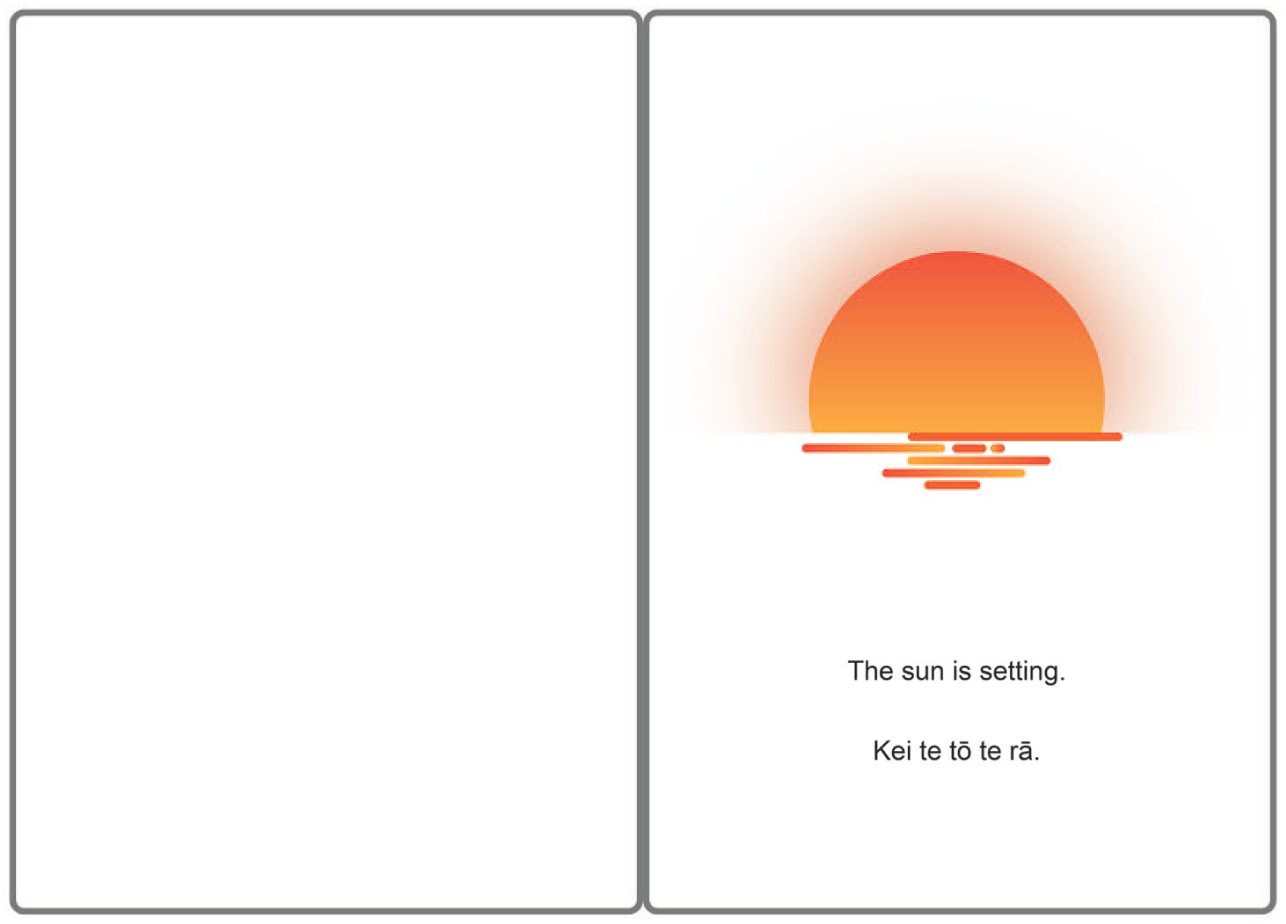
Example spread of research study material (NB: the verso page for this spread is blank, with the recto page providing the research study condition for the reader to read and consider during the interview).
4.1.1 Research study material language
A unique single-clause sentence was written in English for each research study condition. The sentences followed the patterns of commercially produced picturebooks written for early readers. A children’s educator with native fluency in Te Reo Māori was approached to translate the English sentences into equivalent Te Reo Māori sentences. The direct translations were developed to ensure that no connotation changes or nuances would impact the reading or understanding of either language for readers who were fluent in both languages.
4.1.2 Research study material typography
We used key insights from previous research to inform our decisions regarding spacing, typeface size and choice, and the placement and integration of text and images. Previous work highlights the significance of spacing and font size in enhancing readability and comprehension for children’s reading (e.g. Vanderschantz, 2008, 2009; Vanderschantz et al., 2010). This was taken into consideration when choosing typefaces and presenting text and image with suitable negative space surrounding the visual elements. Edwards and Walker (1995) discuss the impact of typographic settings on perceptions of language status. They define three potential ways that two languages might be presented when the two languages are placed one above another. They noted that the most common typographic setting for vertically placed languages was to separate the two passages of text with negative space. For our typographic setting, this is the approach that we have used for testing. Additionally, Walker et al. (1996) emphasize the importance of text and image placement to guide the reader’s eye, and support the narrative flow and translations that are stylistically natural to native readers. As both languages are read top to bottom and left to right and, commonly, children’s books place text below images, we, too, followed this convention for our research study material.
4.1.3 Research study material book order
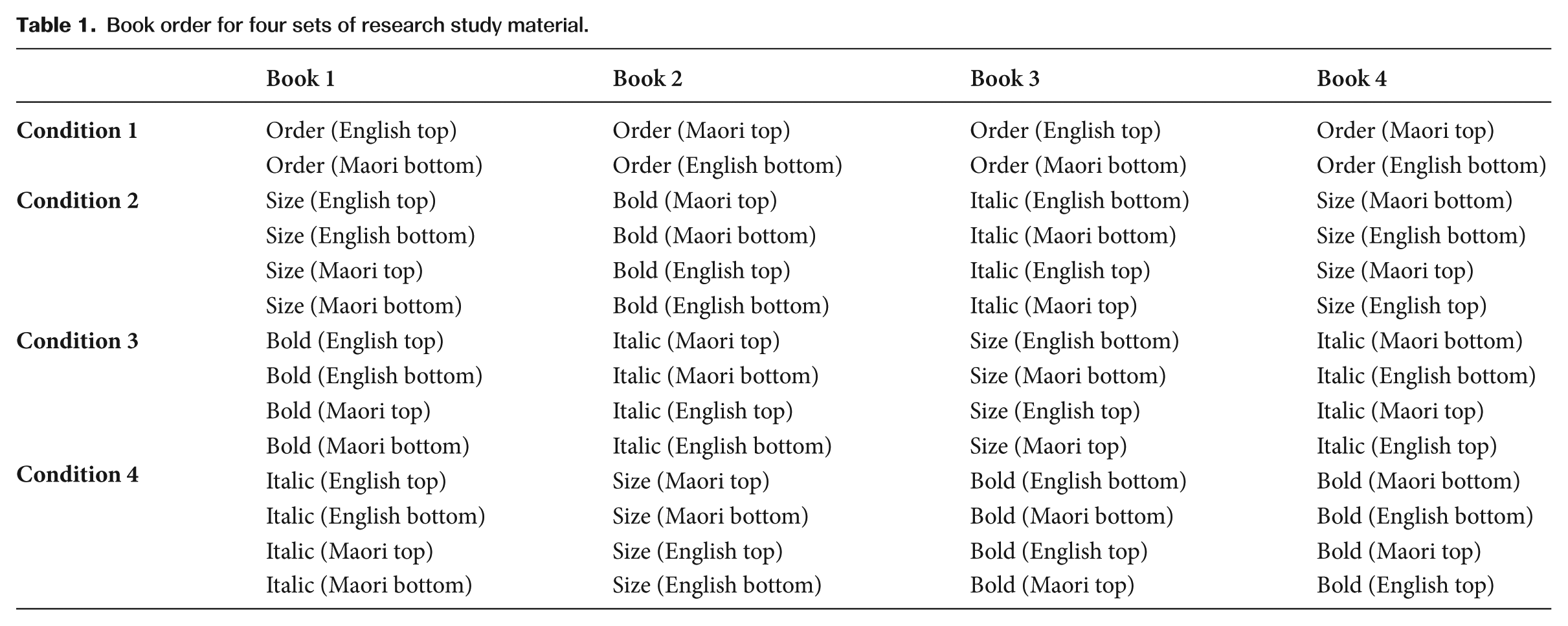
We developed four versions of the research study material to ensure there were no order bias effects. Participants were randomly assigned one of the book orders to use during their study. All four versions of the research study material presented the reader with the language order condition first (see Figure 2). Following this, an entire set of each typographic condition was presented. The presentation order of each of the four sets of research study material is shown in Table 1.
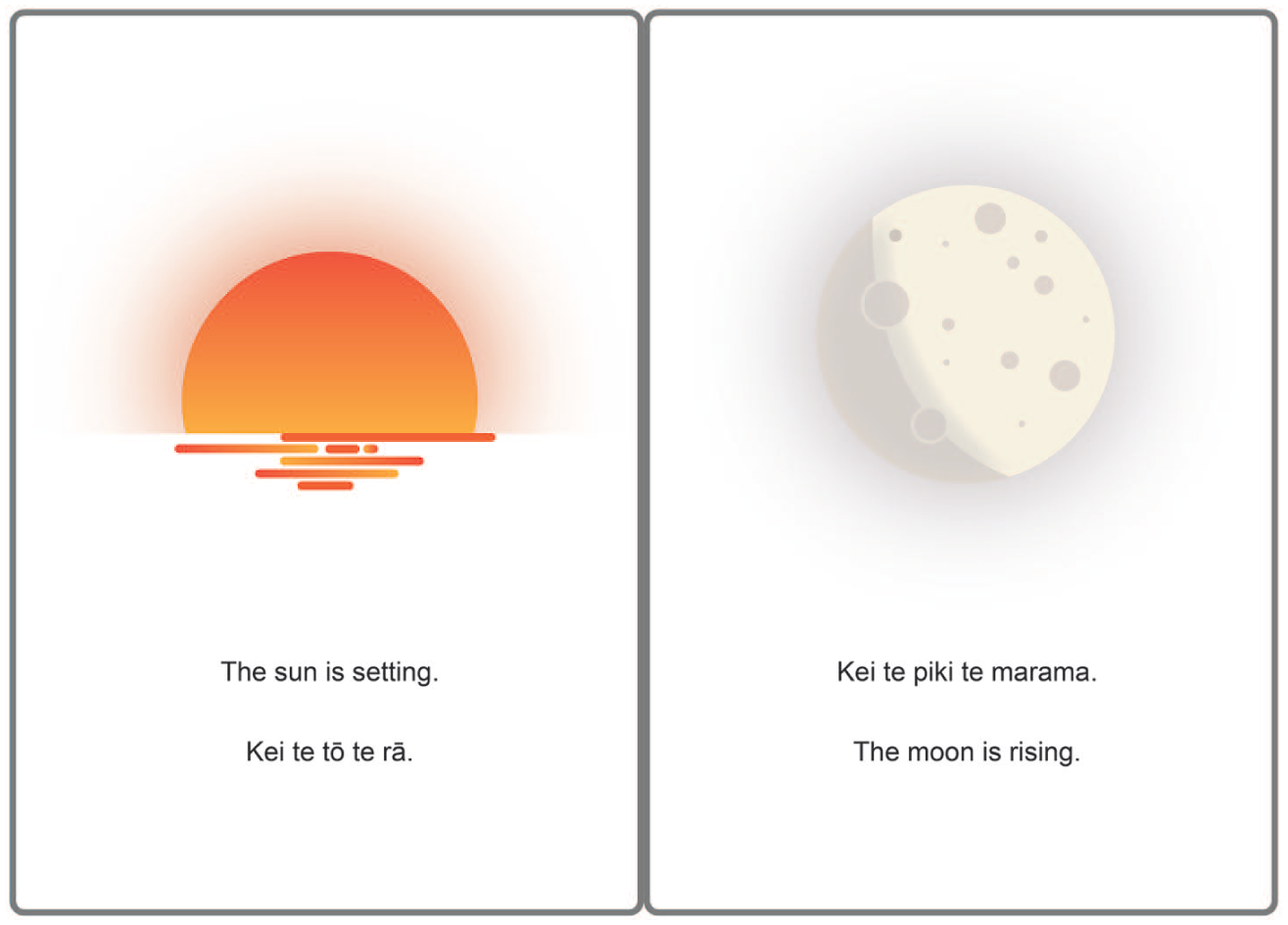
Condition 1. Order: (L) English top; (R) Māori top (NB: this figure does not depict a book spread). This figure depicts the design of the two recto pages that provide the research study conditions for the Order condition. In the experimental research study material, the verso page for a spread is always blank, with the recto page providing the research study condition for the reader to read and consider during the interview.
Book order for four sets of research study material.
4.2 Research study conditions
In our research, we investigated four typographic variables: order, size, bold and italics. In total, 14 book pages were developed in order to test these four typographic variables. We discuss these research study conditions in the following sections.
4.2.1 Language Order
The Language Order variable was developed to provide an investigation of the order of presentation of the languages – the Te Reo Māori sentence or the English sentence presented first (presented higher on the page than the other language). All typographic settings were exactly the same for the two pages in the Language Order condition, therefore, the two lines of text on these two pages used the same size and weight of font without any use of italics. Given that nothing else changes in this condition, only two pages were required to consider the impact of language order (see Figure 2).
4.2.2 Text Size
The Text Size variable was developed to provide an investigation of the impact of increasing text size. Text size increase is a common form of visual elaboration used by designers to create visual hierarchy and to impact reading order (Felici, 2011; Tinker, 1966). Given this typographic adjustment, we tested both an increase in text size for each language, as well as the order in which that language is presented, which required four individual page presentations – English larger first; English larger second; Māori larger first; Māori larger second (see Figure 3).
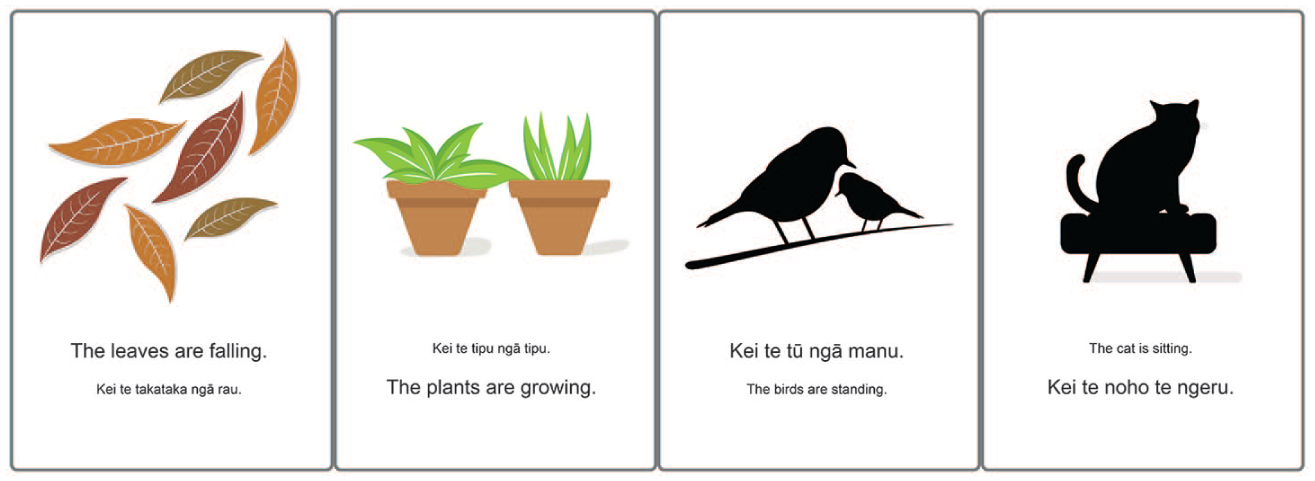
Condition 2. Text Size. (L1) English top bigger. (L2) English bottom bigger. (R1) Māori top bigger. (R2) Māori bottom bigger.
4.2.3 Bold Text
The Bold Text variable was developed to provide an investigation of the impact of bold text. Similar to text size adjustment is the use of bold as a common form of visual elaboration used by designers (Lupton, 2004; Tinker, 1966). Again, we tested the use of this single typographic adjustment and the presentation order of the languages, giving the four pages we see in Figure 4 – English bold first; English bold second; Māori bold first; Māori bold second.
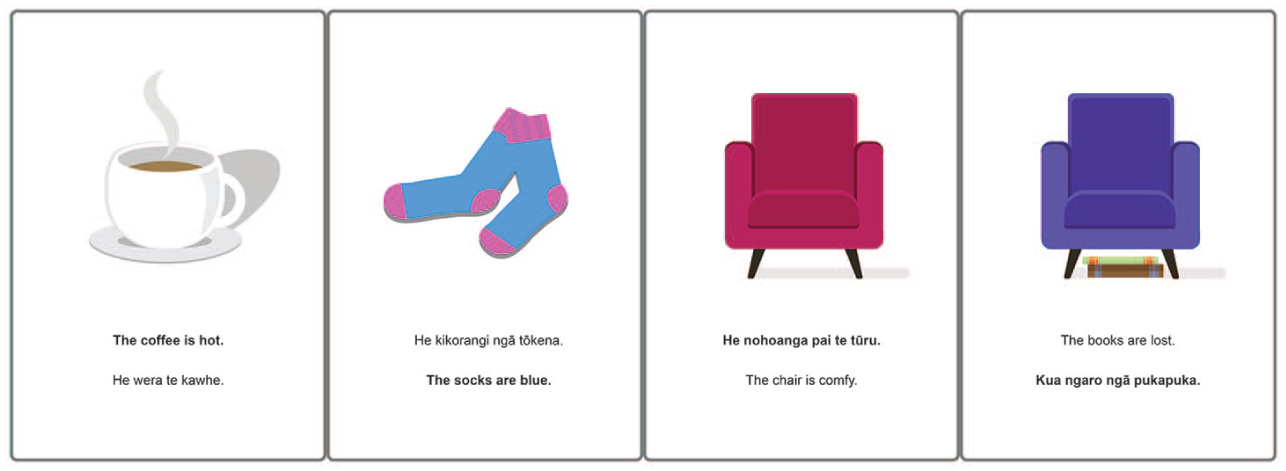
Condition 3. Bold Text. (L1) English top bold. (L2) English bottom bold. (R1) Māori top bold. (R2) Māori bottom bold.
4.2.4 Italic Text
The Italic Text variable was developed to provide an investigation of the impact of italic text. Italics are often seen in texts where more than one language is being used and, therefore, were considered important to examine in this study. Again, only the use of italics and the presentation order of the languages is implemented as a typographic tool for creating visual differences (no other typographic changes were used). This resulted in the need for the four pages shown in Figure 5 –English italic first; English italic second; Māori italic first; Māori italic second.
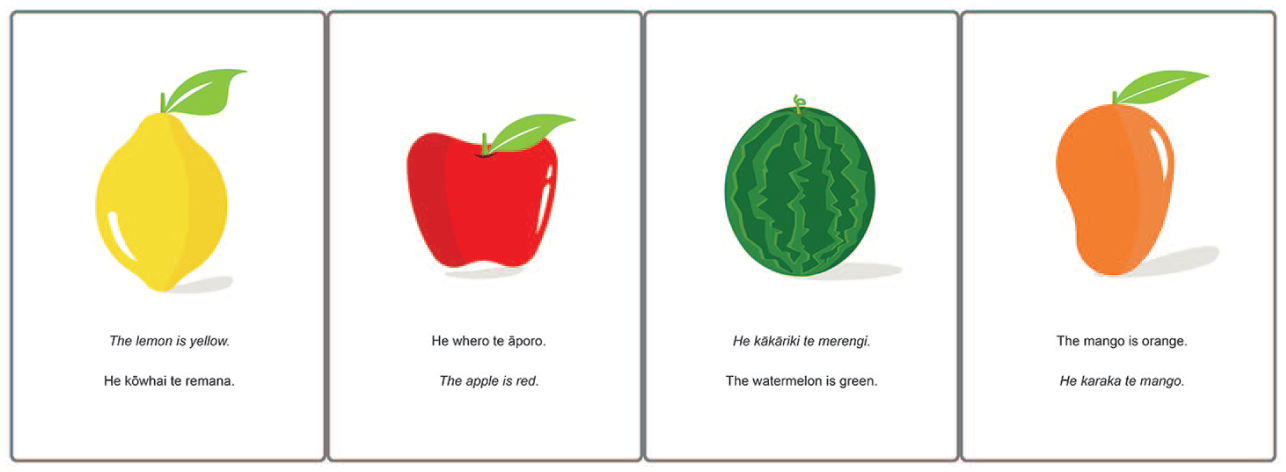
Condition 4. Italic Text. (L1) English top italics. (L2) English bottom italics. (R1) Māori top italics. (R2) Māori bottom italics.
4.3 Participant recruitment and sample selection
As noted above, the participant recruitment for this research was deliberately chosen to consist of adults rather than children. Considering the widespread acknowledgement that picturebooks have a dual audience – the adults who choose and often read to their children, and the children themselves (e.g. Scott, 2013) – we took the decision to begin research into reader perceptions of bilingual text presentation, with adult participants. Adults, who frequently make decisions about the reading materials available to children, such as teachers and parents, were seen as key stakeholders whose perceptions could provide valuable insights into language hierarchies and their influence on bilingual text presentation. We posit that adults are likely to have more defined and possibly stronger opinions about language hierarchies, given these will be shaped by their experiences and cultural contexts. This is particularly relevant given the complex socio-political landscape surrounding language use and preservation in Aotearoa New Zealand. Understanding adult perspectives can, therefore, inform how bilingual picturebooks are designed and selected for children, which will influence the linguistic landscape children are exposed to. In addition, the insights gained from this initial adult study will be invaluable in identifying potential challenges and opportunities when adapting the methodology for younger audiences in future research.
Participants were invited to participate using a snowballing technique, starting with acquaintances of the authors. The only restrictions to participation in this study were that a participant must be 16 years or older and able to read and speak English. As all authors worked at the same institute at the time of the study, several participants were academics, students and the friends or family of academics and students. There were 50 participants: 30 identified as female, and 20 as male. All participants could understand English, and 54 percent could understand Māori, with 14 percent reporting they knew and understood Māori ‘well’; 52 percent of participants knew more than one language, including knowledge of Japanese, Chinese, French, Spanish, Korean and Khmer. A total of 66 percent of the participants were between 17 and 25 years old, 10 percent of participants were between 26 and 35 years old, 10 percent of participants were between 36 and 45 years old, 6 percent of participants were between 46 and 55 years old, and 7 percent of participants were over 56 and 65 years old.
After explaining the purpose of the research and how the data would be used, if participants wished to take part, they were invited to sign an informed consent form as per the ethical consent procedures approved by the university. Participants were then surveyed using the following procedure.
4.4 Procedure
Each participant was provided with one of the four versions of the research study material. The participant was invited to read the first page of that printed book. Once the participant indicated that they had completed reading a page, the participant was asked the following question by the researcher: ‘Which sentence did you perceive as more important?’ Participants were then asked to describe why they perceived this sentence as more important.
We acknowledge that the word ‘important’ has connotations that may impact the interpretation of the question by participants. We chose not to define importance for the participants but let them answer in a manner they felt natural. We chose the word ‘important’ for our research as this concept of importance is often used in design literature when describing typographic hierarchy and emphasis (see, for example, Ambrose and Harris, 2005; Moys, 2014), and because perceptions of language statuses often imply perceptions of importance by a community. No participants asked us to elaborate on this term, and readily identified the language they considered to be ‘important’.
This data was noted by the researcher and entered into an anonymized spreadsheet for analysis. The participant was then invited to turn the page, the participant read that page and, after indicating they had read the page, they were again asked this question. All participants read all of the 14 mocked-up picturebook pages in the order of the book provided to them.
4.5 Data analysis
For the data analysis, both quantitative and qualitative data were entered into a spreadsheet for review. Statistical tests, including pairwise comparisons and ANOVA, were conducted; however, no statistically significant results were reportable, likely due to the complexity of the numerous typographic and language variables being tested. Future research may benefit from replicating parts or all of this study with a larger sample size – more than 50 participants – to explore potential statistical significance.
Additionally, an inductive grounded thematic analysis approach (Braun and Clarke, 2006) was used to analyse the qualitative data collected from participant responses. The three authors independently reviewed all participant responses, identifying patterns, recurring justifications and underlying reasoning for text-importance decisions. Initial open coding was performed to categorize responses based on the specific typographic variables (order, size, bold, italics) and language preferences that participants referenced in their explanations. The emergent themes identified were ‘reading conventions’, ‘typographic emphasis’, ‘language familiarity’ and ‘perceived hierarchy’.
In the following sections, we present our quantitative data as descriptive statistics representing the binary choices made by participants when answering the question, ‘Which sentence did you perceive as more important?’ We also present qualitative reasons given by participants as to why they reported which text they perceived as more important using quotes that were selected based on their representativeness of common themes and their ability to illustrate key findings from the quantitative data. Where possible, we prioritized responses that explicitly articulated participant reasoning or provided unique insights into bilingual text perception. Quotes were also considered in relation to the statistical findings, ensuring that qualitative data was used to contextualize and deepen the interpretation of the quantitative trends observed.
5.0 Results and Findings
In this section, we present the results and findings of our investigation with consideration of both the quantitative and qualitative data.
5.1 Influence of typographic presentation
In order to answer RQ1: How does the typographic presentation of the text influence reader perceptions of language importance? we present our results in relation to order, size, bold and italics.
5.1.1 Text order results
When participants were asked which text they believed to be more important on pages 1 and 2 (see Figure 2), 56 percent of the time, they reported the top sentence was more important (Figure 6).
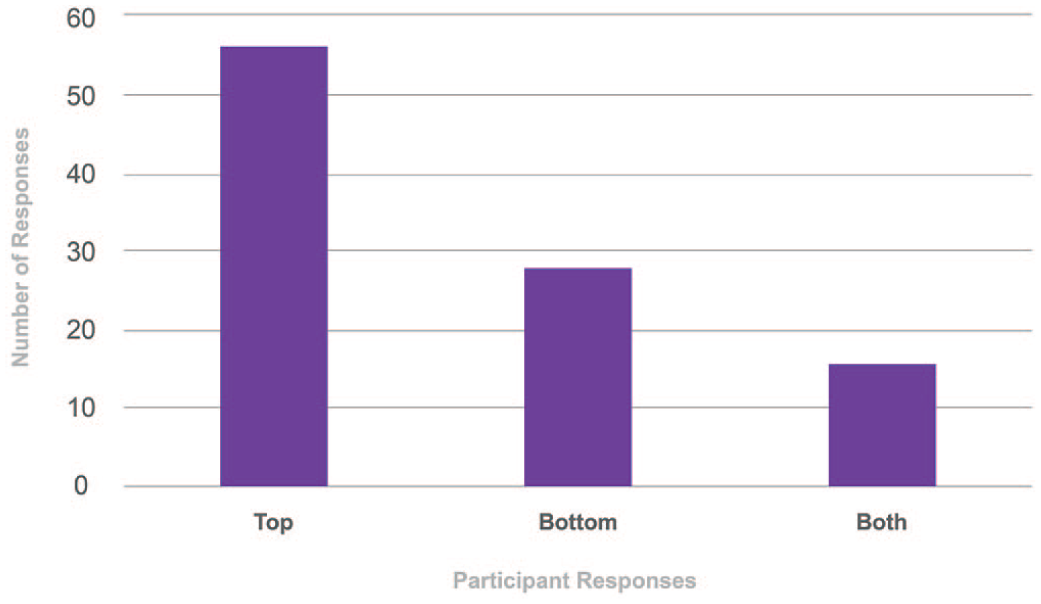
Text Order. The sentence participants reported perceiving to be more important according to the order of text.
Reading conventions were referenced in a few different ways to explain why one line of text was perceived to be more important than another. For example, one participant noted they had chosen the top text rather than the bottom, ‘because it was on top and I read top to bottom.’ Another had explained, a little less explicitly, that they had chosen one text as being more important than another, ‘because of the positioning’. One participant noted that ‘you usually see less of Māori [text] on top, so having it on top really makes a point.’ Explicitly related to the design of picturebooks, one participant also noted that a sentence was closest to the illustration, and this impacted its perception of importance.
We can see that when no typographic elaboration is applied, it is likely that the top text will be perceived as the most important text on the page. It is also of note that when order is the only typographic variable more participants reported both sentences as having a similar importance. Participants gave one of three reasons why they felt the text was of the same importance: the text is the same size and typeface, and therefore must have the same importance (3/16 participants); the text must say the same thing and, therefore, neither is more important than the other (7/16); or the participant could not explain why they thought these were of equal importance (6/16).
5.1.2 Text size results
When participants viewed page layouts in which the two language texts were presented in different-sized typefaces (see Figure 3), 82.5 percent (165 responses) of the time participants reported that the larger sentence was more important (Figure 7); 16.5 percent (33 responses) of the time said that the smaller text was described as more important; and only 1 percent (2 responses) of the time did a participant report that both sentences were equally as important as each other.
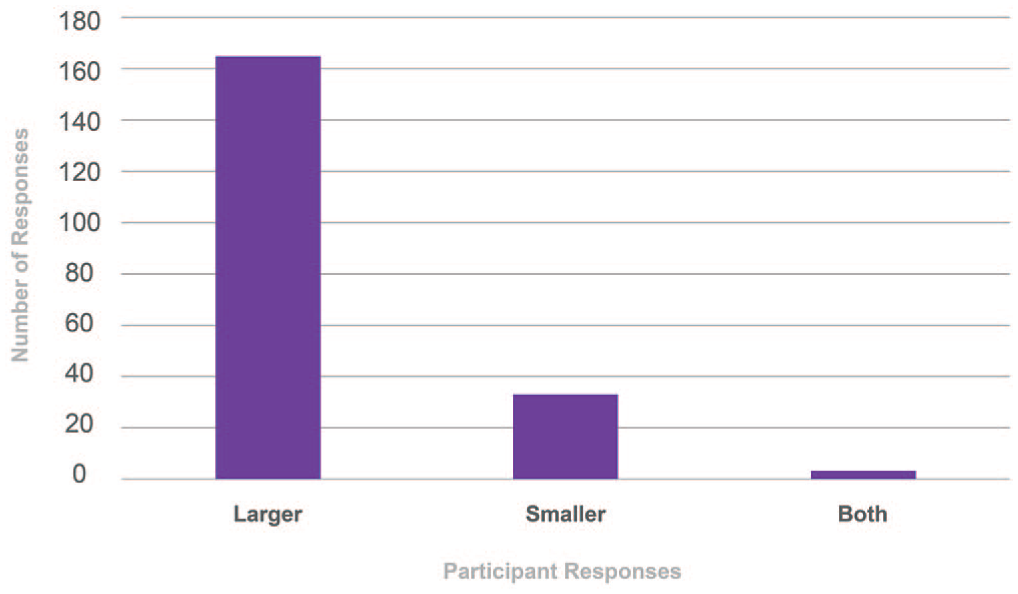
Text Size. The sentence participants reported perceiving to be more important in layouts with two text sizes.
Of the 16.5 percent (33 responses) when participants reported that the smaller text was more important, in 24 cases, the smaller sentence was English, which implies a language effect; that is, the status of the language may have affected whether the larger text was considered more important than the smaller text.
Style conventions and, indeed, reference style guides for headings often recommend a larger typeface for heading text, which was found to be a reason given by some participants, e.g. one participant noted it ‘looks like a heading when it’s on top and bigger’. Others commented on the relative size of the two lines of text on each page, saying, for example, that they had chosen the larger text as being more important ‘because it’s bigger’. Participants also reported that the text ‘stands out more because it’s bigger, “bolder”’.
5.1.3 Bold text results
Figure 4 shows the page layouts viewed by participants in which one language on each page is given in bold. After viewing these four pages, 83 percent (166) of the time participants responded that the bold sentences were more important than the unbolded text (Figure 8). Surprisingly, 15.5 percent (31 responses) of the time, participants said that the regular text was more important than the bold text, and only a small proportion, 1.5 percent (3 responses), participants noted that both texts were equally important. Looking more closely at the 15.5 percent (31 responses) of the time that participants said that the unbolded text was more important than the bolded text, 22/31 of these cases were for pages where the unbolded text was English rather than Māori.
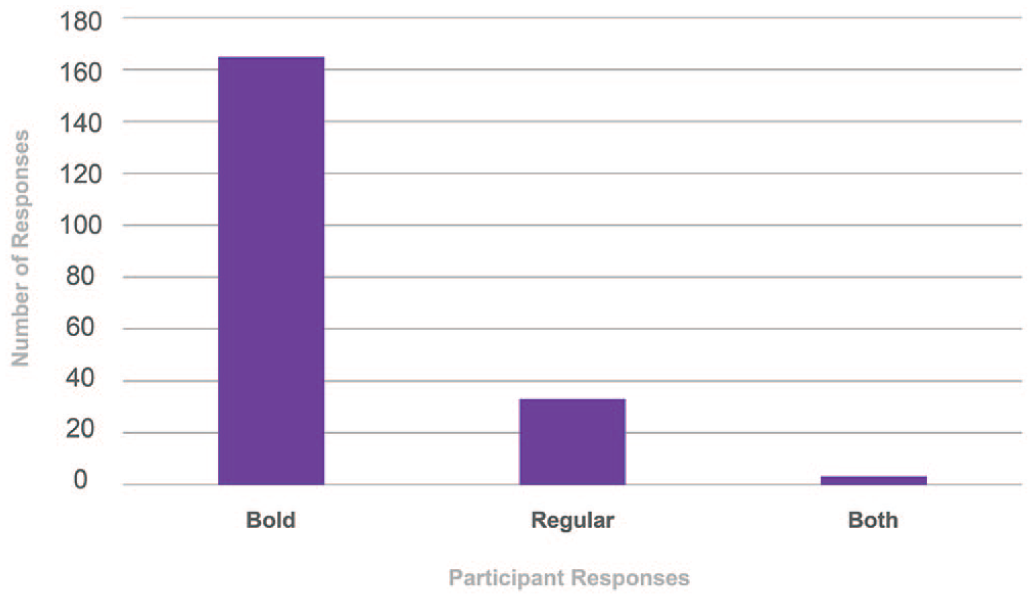
Bold Text. The sentence participants reported perceiving to be more important in layouts with bold and non-bold text.
The boldness of the text also came through in explanations for decisions made in relation to importance. Some participants said they had chosen the bold text as more important ‘just because it’s bold’. Another participant commented that it was a ‘stronger statement because it’s bold’. Emotive reasoning was also present for participants, for example, one participant noted that the bold text ‘feels more powerful/forceful’ and another participant also noted ‘it’s bam in your face!’ An interesting observation was made by one participant who selected the Māori text that was set in bold and on top as more important; ‘usually Māori is the alternative text (so either in italic or some sort), so because Māori seems more dominant here, it makes both the sentences equal because I am so used to seeing Māori as the alternative text.’
5.1.4 Italic text results
Figure 5 shows the four pages with layouts in which one line of text is given in italics and the other is not. After viewing these layouts, 48.5 percent (97 responses) of the time, participants reported the non-italic sentence was more important than the italic sentence (Figure 9). Participants explained their choice of the regular text as more important than the italic text as follows: ‘the regular font stands out because it’s not in italic. It looks straight and perfect.’ Another participant explained that ‘italics feels like a subtext and doesn’t feel quite as important.’ ‘Italic is meant to be used for text that is sidenotes, so it’s not as important.’ One participant was able to give a detailed explanation: Even though italic is there to show emphasis, for me italic means something different. So if you have a whole sentence that’s written in non-italic and you have an italic word it’s something different. So the normal is more important, different is something less as important. That’s how I read anyway.
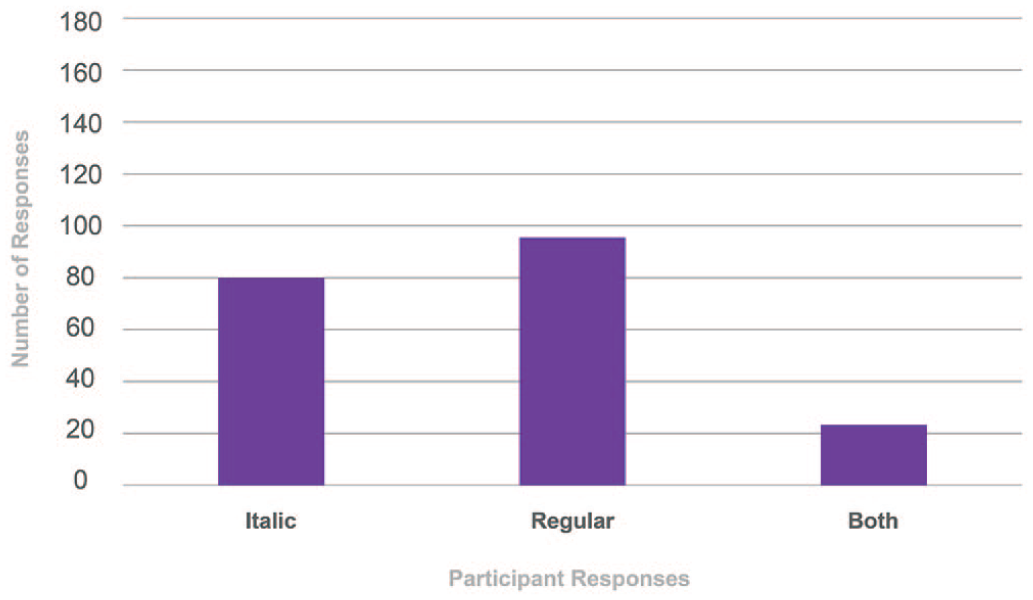
Italic Text. The sentence participants reported perceiving to be more important in layouts with italic and non-italic text.
In total, 21 times participants explicitly reported that they believed the regular text was more important simply because ‘it was not italics’.
A similar proportion (40.5%, or 81 responses) of participants reported the italic sentence was more important than the non-italic sentence. The explanations provided for why italics were more important did not refer to the visual features of the typography but instead the participant’s familiarity with the language. Participants reported 11 percent (22 responses) of the time that both sentences were equally important. When identifying both typefaces as having relative importance, one participant reported, ‘The type is similarly sized, and it’s not uncommon to have a language in italics in dual language books.’ Given that style guides often use italics for headings of lower importance than headings in bold or regular typeface and the convention for using italics to indicate words which are from other languages, we did expect that the text in regular typeface would be perceived as more important than the text in italics; however, this is a much less pronounced effect than for order, size or bold, as reported above.
5.2 Influence of language
Here we present the results and findings pertaining to our research question RQ2: Is there a language effect irrespective of typographic presentation?
It appears that there was a language effect for some participants. We reported in section 5.1.1 that, when the two sets of text were set with equivalent typographic settings but with one language placed above the other 28 times, participants reported the bottom text as being more important than the top text. In 20 of the 28 times, participants reported that the bottom sentence was perceived as more important; these sentences were English sentences. Of those 20 participants who reported perceiving the bottom English sentence as more important, 19 rated themselves as confident English readers, and 18 rated themselves as unconfident Te Reo Māori readers. Conversely, of the eight participants who reported perceiving the bottom Te Reo Māori sentence as more important, three participants rated themselves as confident Te Reo Māori readers and all eight rated themselves as confident English readers.
When we consider the language effect that was present across all 14 pages viewed by participants, our data shows that: 54 percent (380 responses) of the time participants reported that English was more important (see Figure 10), 40 percent (277 responses) of the time participants reported the Te Reo Māori was more important, and 6 percent (43 responses) of the time, participants said that both languages were equally important. This reflects the dominant status of English in Aotearoa New Zealand; it also shows that Te Reo Māori text is perceived as being important a great deal of the time, disproportionately to the relative number of speakers in the country (4%) but proportionate to the Indigenous and official status of Te Reo Māori in Aotearoa.
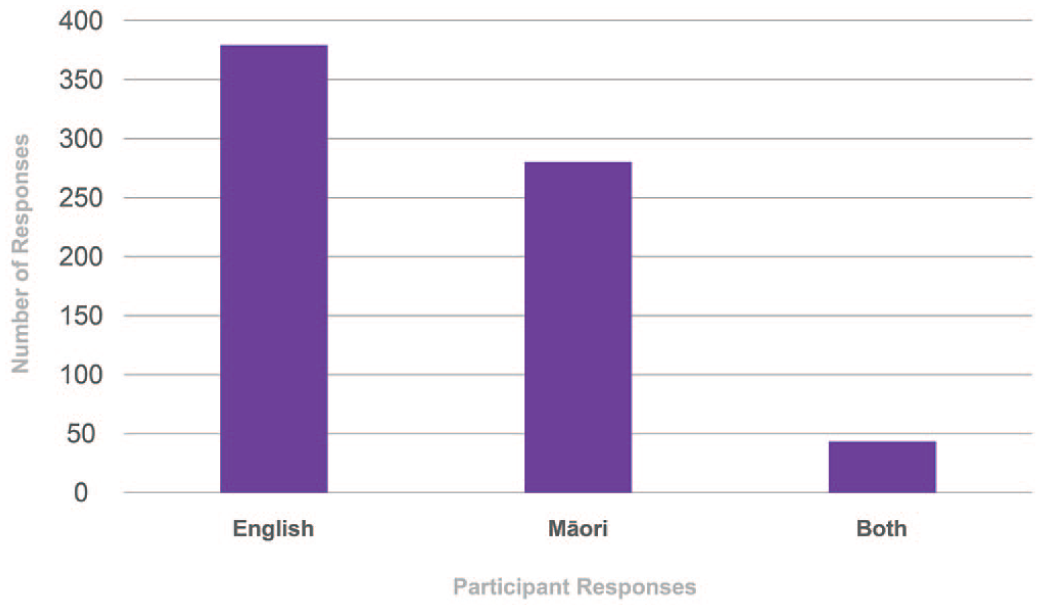
Language Influence. The sentence participants reported perceiving to be more important in layouts according to language.
Many comments were made concerning participants’ familiarity with the two languages represented in the text. One participant explained their decision about which text was more important on the page regarding their personal language hierarchy: ‘because Māori language is more important to me than English’. One participant regarded the Māori text on a one-page layout as more important because the word ‘marama’ was in the text, and this was their mother’s name.
Participants also gave other reasons for perceiving Te Reo Māori sentences as more important, including a personal preference for this language. For example, one participant who identified as a New Zealand Māori ethnically and a confident reader of Te Reo Māori explained their preference for Te Reo Māori on a page by saying, ‘because Māori language is more important to me than English language’. Another confident Te Reo Māori reader said they perceived higher importance for Te Reo Māori on the page because they were ‘thinking more in Māori and searching for Māori words . . . not really looking at the English’. Another confident Te Reo Māori reader stated, ‘English is too short and vague. Māori has more context.’ Similarly, and conversely, some participants indicated that they perceived the English sentence they were viewing on the bilingual pages as more important because they are able to read and comprehend English more confidently than they can read and comprehend Te Reo Māori.
A total of 23 times, participants noted that they perceived a sentence as more important if they could read the text and understand the connection between it and the illustration. In 20 cases where that connection with illustration was discussed, the participant reported a perceived importance of the English text on the page. When participants reported this, their decision was based on the connection of meaning provided by the illustration compared to the text they had read; a typical reason was ‘I understand the connection to the illustration.’ Unsurprisingly, the participants who discussed positive connections to illustration when referencing English text had rated themselves as confident readers and comprehenders of English (4 or 5 on a Likert scale). Similarly, the participants who noted the connection of illustration to Māori sentences rated themselves at least somewhat confident reading and comprehending Te Reo Māori (3 or 4 on a Likert scale).
One participant described the order effect of placing the Māori text above the English text as increasing the importance of the Māori text. This participant said the two texts are ‘equally as important. Māori is on top, which makes it somewhat more dominant, but I am so used to seeing English first, so when English isn’t first, it makes it equal.’
Visual features of the Māori language were identified as features of the language presentation that influenced a participant to report some sentences as more important. This included the use of macrons (used to indicate long vowels), the sentence structure and the length of comparable lines of text. One participant who was a very confident Māori language reader noted that the use of macrons on the Māori text on each page attracted their attention to the Māori text, leading them to perceive it as more important than the English text. Another participant reported the ‘macron on “a” made it feel more important and longer.’ Another noted Māori ‘has a different type of writing and makes the sentence longer’, with another participant similarly stating that Māori ‘has more “k’s”’ making the sentence longer or wider on the page.
Given that our research study material presented English in a typographic setting that prioritized English as many times as it presented Māori in a typographic setting that prioritized Māori, it appears that there is a language effect present that can influence the perceived importance of the text no matter the typographic setting used. We can see that the dominant language will likely impact the perception of the importance of two type settings even when variables such as order, typographic elaboration of size, bold and italics are applied.
6.0 Discussion
In summary, our findings show that the language presentation order and typography used in the text presentation in our research study material pages impacted reader perceptions of text importance. While this aligns with established conventions in English-language typographic design – where top-presented, larger and bold text are typically associated with greater emphasis – our study provides the first empirical evidence confirming that these conventions influence perceptions in a bilingual context.
These findings directly address RQ1, demonstrating that typographic presentation – through size, weight and order – clearly influences reader perceptions of language importance in bilingual texts. Prior literature has suggested that certain typographic layouts signal linguistic hierarchy in bilingual picturebooks (e.g. Daly, 2019; Vanderschantz et al., 2022), but these claims have primarily been based on design and reading conventions, and typographic style guides, rather than empirical testing. Designers frequently use bold text and size to indicate importance, structure and hierarchy, while italics are often used to mark foreign words (Ambrose and Harris, 2010; Felici, 2011; Lupton, 2004; White, 2005). Our study provides empirical validation of these assumptions, showing that readers consistently percieved larger and bolder text as more important, irrespective of language or text presentation order.
However, italics functioned differently. Instead of enhancing emphasis, participants often perceived italicized text as less important than text in a regular typeface. This finding suggests that italics may contribute to visual marginalization rather than emphasis, reinforcing conventions where italicized words are treated as secondary (Serafini and Clausen, 2012; Van Leeuwen, 2005).
Beyond typographic influence, our findings reveal that language familiarity and socio-cultural perspectives also shaped reader perceptions. While Māori and English were presented first an equal number of times, English was perceived as more important 54 percent of the time, while Māori was perceived as more important only 40 percent of the time. This suggests that pre-existing language attitudes influenced participants’ perceptions, overriding typographic emphasis in some cases. These findings align with research on language hierarchies in multilingual contexts (Bell, 2013; De Bres, 2015; Dewi and Setiadi, 2018; Lasagabaster, 2017).
Thus, while typography can reinforce or disrupt visual hierarchies, it cannot entirely counteract linguistic biases. This directly answers RQ2, indicating that a language effect persists irrespective of typographic presentation. Even when Māori was given typographic emphasis – through boldness, size, or top placement – English was still perceived as the more important language by a majority of participants. This suggests that sociolinguistic factors, such as language familiarity and hierarchies, can override typographic emphasis.
We reiterate Vanderschantz et al.’s (2022) recommendation to define the purpose of the book and the audience at the outset in order to create a book that uses an appropriate linguistic landscape that either supports existing language hierarchies or challenges them. Typographic decisions should support visual perception goals for the book and the audience, ensuring that linguistic equity is considered when determining language prominence in bilingual picturebooks.
6.1 Future work
We acknowledge that our findings only represent reported interpretations of importance and that the participants’ reports of perceived importance in the present study could be enhanced by further research using more objective measures such as eye tracking. There is no reason to believe our findings would be any different outside of the context of a bilingual picturebook, although further work is needed to establish this with certainty. Nonetheless, we suggest the fact that readers report their attention in ways that align with conventions is a novel and illuminating finding which could support designers of bilingual texts. Further work may investigate the potentials of alternative typographic strategies such as colour differentiation, layout reconfiguration, dual version, bi-directional, or tête-bêche, ‘upside-down book’ or ‘reversible book’ design methods, which might separate languages so that language dominance is diminished. In addition, involving participants in younger age groups would also be relevant for the intended readership of picturebooks and is a sensible next step in this research.
7.0 Conclusion
In conclusion, our research supports our hypothesis that language presentation order and typographic hierarchy of bilingual picturebook text does indeed impact reader perceptions of language importance. The data we have presented provides original empirical evidence for how the use of well-established typographic conventions to indicate text’s relative importance can be used in bilingual picturebooks. Our work shows that semiotic tools at typographers’ disposal for indicating importance in multilingual texts include the language order of the text, the use of font size and bold text. Further, our results also suggest that setting a language in italics will diminish its importance compared to another language set in a regular typeface.
We thus highlight the following insights for typographers and designers working with bilingual picturebooks:
The first text presented on a page is perceived to be more important than the second text
The larger text presented on a page is perceived to be more important than the smaller text
The bold text presented on a page is perceived to be more important than non-bold text
The italic text presented on a page is perceived to be less important than non-italic text
Perhaps most interesting for typographers and designers is to know that attitudes towards and familiarity with a language can override these design principles. Thus, knowing the language attitudes of your intended audience (Vanderschantz et al., 2022) is an important aspect of the design process.
Footnotes

Data Availability Statement
Data sharing is not applicable to this article as no datasets were generated or analysed during the current study
Biographical Notes
NICHOLAS VANDERSCHANTZ is a Senior Lecturer at the University of Waikato investigating the design of user-centred solutions to information seeking and use problems. Nicholas’s research focuses on the presentation and visualization of information in a range of contexts for users from all walks of life.
Address: The University of Waikato, Private Bag 3105, Hamilton 3240, New Zealand. [ email:
NICOLA DALY is a sociolinguist and Associate Professor in the Division of Education at the University of Waikato, New Zealand, where she teaches courses in children’s literature. Her research focus is multilingual picturebooks and she was a Fulbright New Zealand Scholar in 2019/20.
Address: as Nicholas Vanderschantz. [email:
VOUCHLEANG SAN was a fourth-year student in Design at the University of Waikato when she worked with Vanderschantz and Daly on the research presented in this article. She has since completed her Masters of Design at the University of Waikato focusing on the reader perceptions of language hierarchies in bilingual picturebooks.
Address: as Nicholas Vanderschantz. [email: