




Abstract
Agriculture has the largest visual and environmental impact on Australia’s landscape, ecologies and environments. It is frequently visually communicated through romantic imagery and reinforced by messaging that emphasizes trust, environmental stewardship, and ethical livestock practices. The quality of satellite imaging is generally inadequate for verifying these practices and illuminating the state of agricultural environments. This visual essay presents a photographic counter narrative based on a comprehensive visual research process spanning the breadth of the continent. It presents 56 unaltered still images selected from over 10,000 captured by the author using a consumer drone. Images have been chosen to represent all of Australia’s major commodities by economic value, all land-dominant practices, and all primary government classifications. Photographs are accompanied by industry quotes to challenge bucolic notions, and to posit that human production scales are superseded by commercial agribusiness. The research seeks to depict an ‘agri-industrial landscape sublime’ to highlight paradoxes within Australian agriculture as a Western practice providing food abundance from a weathered and volatile continent, while adversely affecting ecosystems and drawing animal suffering into question. Finally, the essay seeks to highlight the importance of recognising insensitive agribusiness as systemic of imposing neoliberal systems on Australian farmers and embracing extractive paradigms. Accordingly, this essay carefully composes imagery that both celebrates production capability while suggesting the need to evolve insensitive agri-philosophy and practice to food systems realising improved ecological, environmental, and animal welfare outcomes.
Keywords
… we injure the other beings we encounter through our anthropocentric attempts to force them to conform to our rules – rules developed by us, for us, at our native scale. We have extended the scales of our knowledge by disciplining it and are continually prying open new scales and forcing them to conform to the logics of our institutions and ideologies. (Horton, 2021: 2)
Imposition and Dominance of Western Agriculture in Australia
Since British invasion of the continent now known as Australia in 1788, the colonial duopoly of agriculture and mining have been central agents in reshaping and destroying over 60,000 years of Aboriginal culture, land practices, and knowledge systems (Harper et al., 2019; Lines, 1999). Western land practices geared to financial gain are diametrically opposed to First Nations’ knowledge systems and spirituality, which are embedded in place-based connections and ecological kinship (Jones, 2022; Ma Rhea, 2017). Calls for truth-telling (Wedesweiler, 2019) invoke agriculture and its historic and ongoing practices. Although Indigenous social justice and sovereignty are outside the scope of this research, this visual essay seeks to improve truthfulness and transparency of Western agricultural impacts in Australia with a view to realizing future environmentally just commercial agri-food systems.
This essay therefore seeks to contribute novel scholarship in critical agrarianism through challenging the archetypal imagery used to represent Australian agriculture through presenting counter-imagery focusing on visual states of the agricultural environment. Before exploring the visual methods of image gathering, agriculture in Australia is first analysed. This stems from Pink’s (2013) approach to photographic research where visual capture is guided by the research inquiry, the questions, and the context of the study. It thus reflects Zuev and Bratchford’s (2021: 9) argument for progression ‘away from a sociology of or through images … towards a sociology with images … [to] move away from the image per se and think more intensively about visibility, the process of becoming visible and relationality.’ An aim of this research was to systematically determine key subjects and practices for image capture based on a synthesis of the Australian agricultural industry as a whole, and emphasise its spatially and economically dominant practices.
Australia offers a unique test case in agri-imaging due to its vast size, agriculture’s spatial dominance, and its highly urbanised and concentrated population geographically separated from agricultural environments (Zeunert, 2024). Agriculture is Australia’s largest land use, directly constituting over half of the continent (Australian Bureau of Agricultural and Resource Economics and Sciences [ABARES], 2023) (Figure 1). As such, its spatial–environmental impacts on national-scale landscape systems are unprecedented. Although both mining and agriculture are preeminent in creating environmental impacts, mining is a concentrated land use while agriculture is a spatially diffuse practice. Agriculture thus occupies and modifies diverse ecosystems which are transformed and managed to produce yields of exotic foods and fibres.
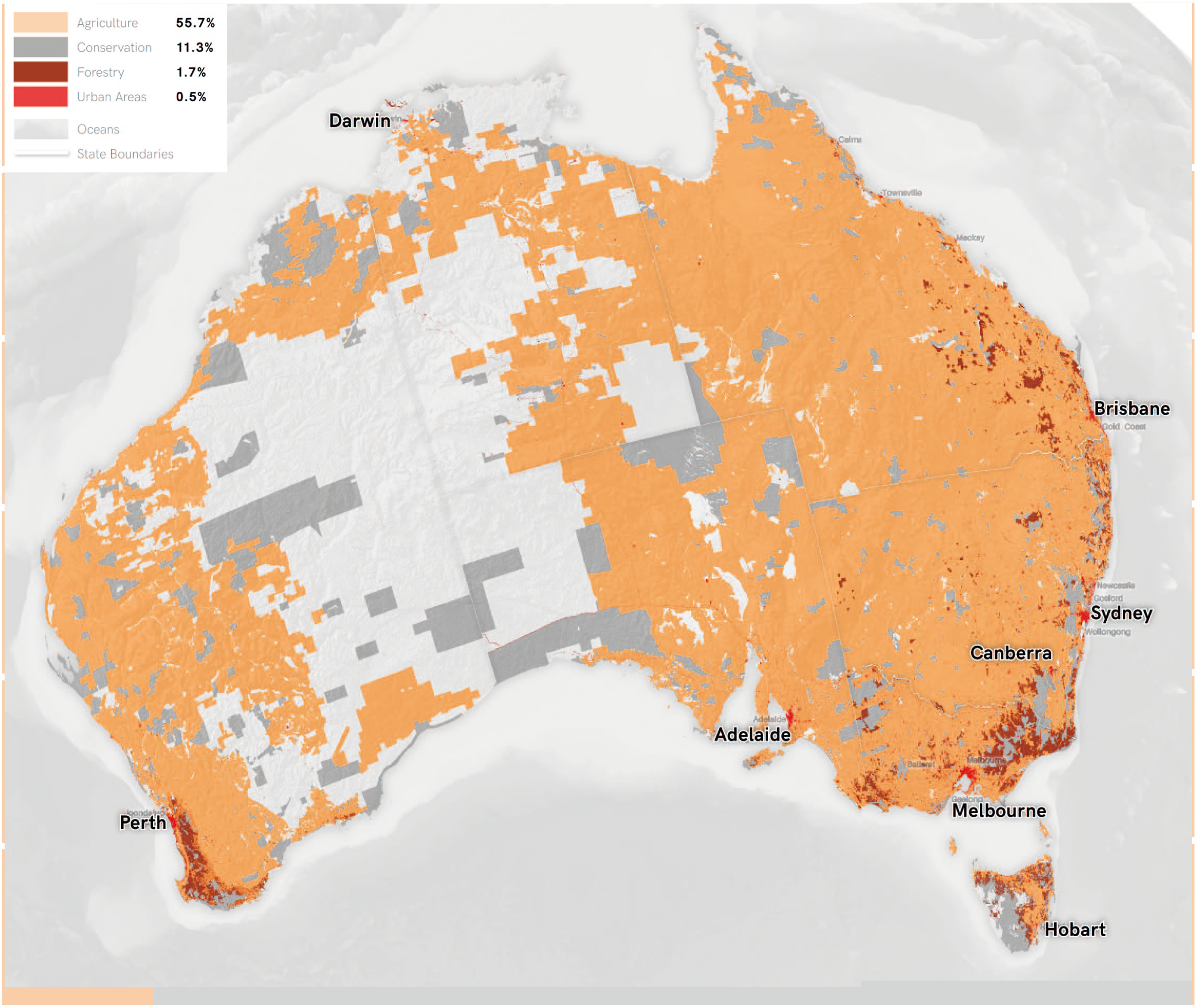
Contemporary agriculture in Australia is classified as a land use in which food and fibre are generated by ‘primary producers’ above a commercially-measured minimum threshold (AU$40,000 per annum). While the author is not aware of any quantitative studies, Australia’s population of around 27 million people are heavily or wholly dependent upon current systems of Western agriculture (as opposed to food obtained from wild foods or sources outside of commercial agriculture and food systems). Australia also exports the majority of its food and fibre to other countries – 72 percent by value from 2017–2020 (ABARES, 2022). Thus, not only does agriculture spatially shape Australia’s ecosystems more than any other land use (Zeunert, 2024) but agricultural conditions are relevant to all those dependent on, or utilizing, its edible commodities.
Despite this significance, agriculture is effectively excluded from Australia’s five-yearly ‘State of the Environment’ report (SOE, 2021). This essay seeks to reveal an agri-industrial landscape sublime in Australian agriculture through demonstrating paradoxes in food production systems.
Intensification, neoliberalisation and disconnection
Like other western nations, during the mid-20th century’s ‘green revolution’, Australia significantly industrialised its agricultural production practices. Mechanisation and synthetic approaches increased scales of farming, bolstered yields and displaced direct human labour on farms. Since the 1980s, neoliberal economic and governance systems of ‘competitive productivism’ (Dibden and Cocklin, 2005) commercially pressure agricultural operations to ‘get big or get out’ (Poole, 2022). Employing economies of scale, farming operations continue to grow, intensify and increase livestock stocking densities and/or head of livestock carried. This has led to the insolvency of many smaller urban and peri-urban enterprises or seen relocations and upsized agglomerations in regional and remote locations. Smaller regional councils, especially in inland locations, can be more welcoming of factory farming under the guises of job creation, rural revitalisation and community viability (Zeunert, 2024). Here, conflicts from separations between urbanised areas and industrial agriculture can be mitigated (Taylor et al., 2017). This is broadly straightforward to achieve, given that 86 percent of Australia’s population live in urbanized areas (World Bank, 2022) constituting less than 0.5 percent of Australia’s total land area (ABARES, 2020) (see Figure 1).
Consequently, Australian agriculture has consolidated in inland locations, away from the nation’s urbanised environments that hug the coastal fringes. The proportion of the Australian workforce engaged in agriculture has dropped to around 2.5 percent, more than halving over the last three decades (World Bank, 2023). Thus, in the past half century, urban visibility of food production substantially decreased. Separation between consumers and agricultural production landscapes is additionally exacerbated by: national population concentration in only eight capital cities and few regional centres (compared to the US, UK and most of Europe) (Bolleter, 2018); population growth focusing on established urban areas (Weller and Bolleter, 2013); failure to protect peri-urban agricultural land and businesses from urban development (Carey and James, 2018; Zeunert and Freestone, 2022); neoliberal Federal and State agribusiness policies encouraging large-scale producers; and a concentrated food retail sector favouring large suppliers of agricultural produce (Murray and Caraher, 2019).
Out of sight, out of mind?
As a result of this suite of factors, most Australians are separated from commercial food production environments, resulting in agriculture being ‘out of sight’ and therefore ‘out of mind’. This is exacerbated by a collective national gaze away from rural inland Australia, with focus instead placed on coastal environments and across the sea (Race et al., 2010). This can engender ‘imagined rurality’ (Taylor et al., 2017), which enables many agricultural industries and operations to function without public awareness of production practices and intensities, and landscape, environmental and animal welfare conditions. Cattle production offers a key example. Despite Australian commercial feedlots existing since the 1960s (Condon and Coombs, 2014), now numbering between 380 (ALFA, 2022) and 450 (Harper et al., 2019: 30) accredited cattle feedlots (plus an unknown number of unaccredited operations), many Australians have never sighted imagery of Australian cattle feedlots, let alone experienced one in situ. Nor are many aware of the degree of the market penetration of such concentrated feeding operations: in 2021, feedlot cattle constituted over half of Australian beef production and consumption through ‘grainfed’ beef (MLA, 2021). Disconnection has been compounded in recent years through increased Australian legislation known as ‘ag-gag’ laws seeking to criminalise animal rights and environmental activists, and anti-whistle-blower laws (Barnes and White, 2020; Gelber and O’Sullivan, 2021).
Agrarian Idylls
Projected agri-idylls convey a vastly different visual narrative. Despite the significant industrialisation and corporatisation in the past half-century, Australian agriculture continues to emphasise traditional agrarian tropes (Sutherland, 2020). Key messages include chimes of ‘clean and green’ and farms as emblems of environmental stewardship. Farmers regularly rank as the most trusted and/or a highly trusted industry (Henderson et al., 2011; NFF, 2019; Voconiq, 2020). Thus, Australian agri-marketing cultivates an agricultural idyll through industry and media images. This use of agricultural tropes parallels Greenwalt and Creech’s (2018) argument that visual framings of environmental nostalgia seek to create and reinforce contemporary patterns of sustainable citizenship through consumption. This is reflected, for example, in the wool industry’s use of sustainability narratives on Instagram (Ferrero-Regis and Gambi, 2023). Imagery used to convey and represent Australian agriculture therefore presents a bucolic and romanticised view of a landscape dominated by large-scale commercial agri-business that erases fragile ecologies and place-based identity.
While acknowledging the globalising placelessness and generic visual language of stock imagery (Machin, 2004), Figure 2 composes a combination of government imagery and stock photographs. The latter have been carefully selected to mirror imagery representing Australian agriculture by its chief organisations and advocates. This includes the Department of Agriculture, Fisheries and Forestry (DAFF) and Australian Bureau of Agricultural and Resource Economics and Sciences (ABARES) in their publications and websites (https://www.agriculture.gov.au/, https://www.agriculture.gov.au/abares); the National Farmers Federation (NFF) and, for example, their ‘Farm Facts’, ‘2030 Roadmap’ and website imagery (NFF, 2017, 2019); major food retailers such as Woolworths and Coles in their regular and various forms of advertising; and Google image search and stock imagery (e.g. Shutterstock, Alamy, Getty) displayed when using the terms ‘Australia(n) agriculture’.
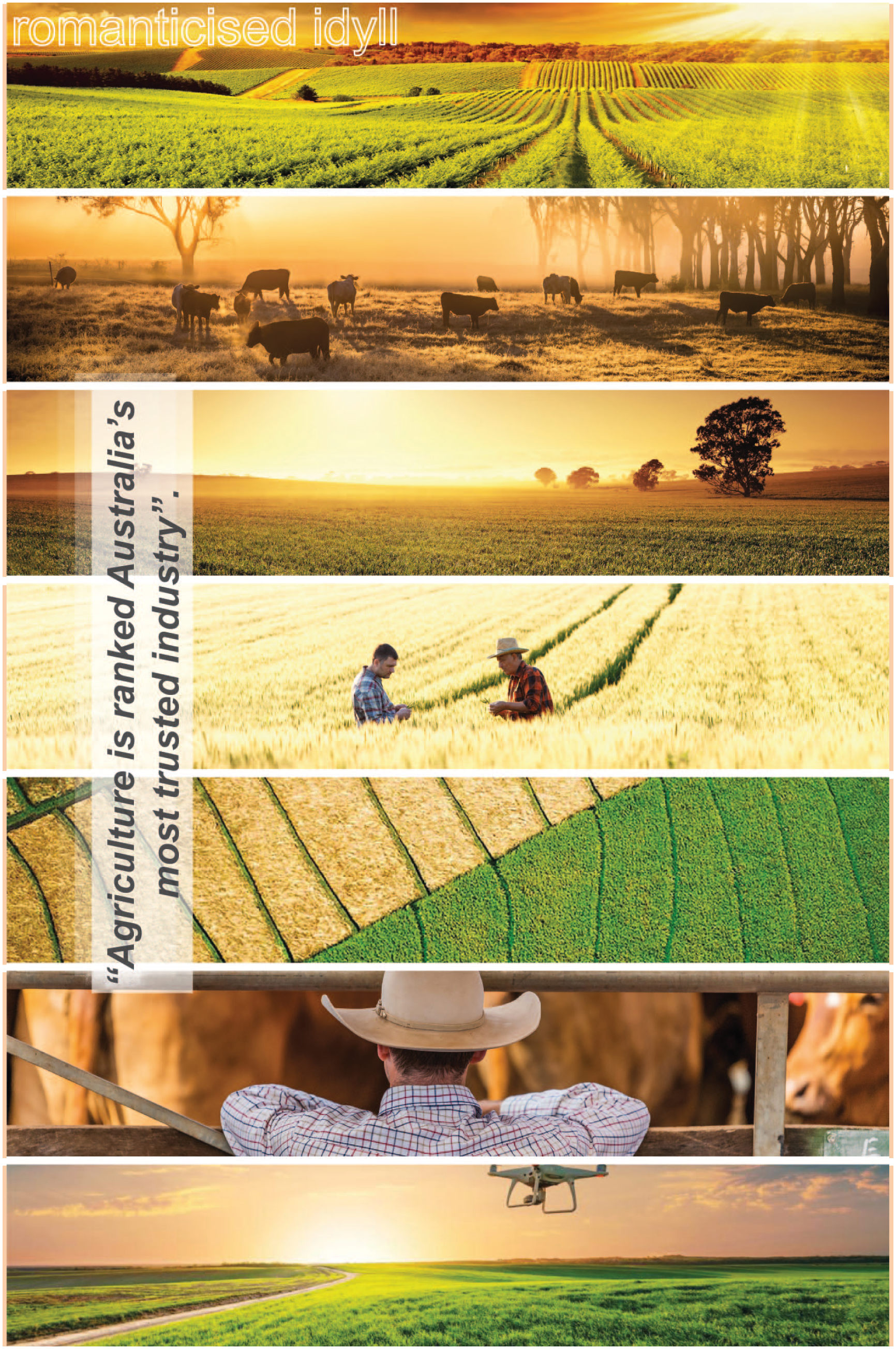
Archetypal imagery used to represent Australian agriculture by its chief organizations. Sources: Australian Government Department of Agriculture, Fisheries and Forestry, 2023 (CC BY 4.0), Shutterstock. Panels 3 & 5 from Australian Government Department of Agriculture, Fisheries and Forestry are licensed under CC BY 4.0. Panel 4 from Australian Government Department of Agriculture, Fisheries and Forestry is also licensed under CC BY 4.0. Panel 7 from Australian Government Department of Agriculture, Fisheries and Forestry. The remaining panels are from Shutterstock.
While Australia’s central agricultural bodies occasionally utilize drone aerial imagery, an analysis determined standard deployment of ground-based imagery. This provides careful framing of scenes relatable to our everyday experiences being created as terrestrial-bound. Landscape panoramas were occasionally deployed, but these were usually taken at ground level rather than the more abstract and wide perspectives enabled through drone cameras. Regardless of the fields of view employed, common visual characteristics in imagery include: colour saturated and colour-enhanced images; scenes shot in favourable lighting conditions (such as the ‘magic-hour’ of sunrise/sunset); verdant agricultural landscape scenes; healthy and stoic farmers (usually white male, albeit palpably trending towards greater (white) gender equity) and white nuclear families; a wholesomeness of life on the land; low stocking densities of healthy and happy livestock often surrounded by lush pastures; an overall agrarian romanticism; an atmosphere of optimism; and suggestions of ethical and sustainable practices. These evoke a ‘pastoral’ (see Oxford Reference, 2024), specifically ‘a romantic or idealized image of rural life’ (OED, 2023). The inherent danger of such a pastoral idyll is that it romanticises country life preserved in the imagination or memory, disassociated from everyday practices. In order to better manage Australia’s largest use of land, it is crucial to accurately see and gauge states of agri-environments, without rose-tinted glasses.
The Sublime
Sublime adj, n. That quality in nature or art which inspires awe, reverence, or other high emotion; the great beauty of the grandeur of an object, place, etc. … the emotion it evokes in the beholder encompasses an element of terror. (OED, ‘sublime’, 2023) The sublime – with its connotations of the elemental, the raw … the unfathomable and the disturbing. (Times Literary Supplement, 2004, in OED, ‘sublime’, 2023).
An Industrial Sublime
The sublime is used herein as an intentional device seeking to encourage and enact environmentalism through sublime experience (Williston, 2016). As noted in the definitions above, the sublime’s dual characteristics are those of inspiring awe and terror, usually through extremes of scale or depth. Building on this aesthetic foundation, this visual essay channels an anthropogenic sublime, or Jonathan Bordo’s (1992) notion of a postmodern sublime, where devastation of nature and ecological catastrophe are its source (see also Witt, 1999). An established photographic tradition exists in this vein, especially from environmental photographers. This regularly relates to heavy industries such as oil and gas, mining, manufacturing, forestry and land clearing practices. This industrial sublime is particularly strong at documenting, for example, heavily polluted areas, such as mines and their tailings dams and runoff, and fossil fuel sites (Widener, 2022). Of particular note is celebrated photographer Edward Burtynsky and his career-long endeavours revealing human domination over nature and a toxic sublime (https://www.edwardburtynsky.com/home) (Cammaer, 2009; Peeples, 2011; Ray, 2016). Other related works are not limited to photographer Alex Maclean and his book, OVER: The American Landscape at Tipping Point (2008), Richard Misrach’s photographs for Petrochemical America (Misrach and Orff, 2012) and environmental historian Cameron Muir’s exploration of fallout sites focusing on Australia (Muir, 2017).
An Industrial Agri-Landscape Sublime
An industrial sublime is less established in agricultural contexts, although not without existing works. It is found within indoor agricultural processing and food manufacturing contexts such as Burtynsky’s Deda Chicken Processing Plant (2005) and Alastair Philip Wiper’s Danish Crown Slaughterhouse (2014) (https://alastairphilipwiper.com/blog/danish-crown-slaughterhouse-denmark). In outdoor landscapes are Andreas Gursky’s Greeley (2002) and Fukuyama (2004) (https://www.andreasgursky.com/en/works) and Burtynsky’s ‘water’ series contains several agricultural works (https://www.edwardburtynsky.com/projects/photographs/water) – albeit neither include Australia. Most notable in the visual realm of agri-food is George Steinmetz and his Feed the Planet – globally illuminating on the extent of agribusinesses’ incredible scales of production, manipulation of landscapes and ecologies, and indoor contexts (https://www.feedtheplanet.earth/index; Instagram: @feedtheplanet). However, Steinmetz’s comprehensive series only includes a handful of images from Australia and features near exclusive use of still imagery. In Australia, agriculture can be presented as less visually striking than, for example, unnatural colour hues from industrial fallout sites and overt environmental toxicity and destruction. What makes agricultural impact particularly compelling is its unprecedented spatial scale as a nationally (see Figure 1) and internationally dominant land use, and its unceasing temporal rhythm.
Image Methods
Steinmetz and Wiper characterise their own agricultural works as presenting scenes without judgement, however this essay and its associated wider body of work (Zeunert, 2023) utilises a drone’s camera as a tool for citizen activism and protest (Zuev and Bratchford, 2020). Consumer drone technology provides the ability to capture high-quality imagery to enable novel fields of vision to arise (Jensen, 2020). Further, an approach of counter-imaging is employed. Similar to counter-mapping, counter-imaging enables visual narratives of dominant power structures to be challenged by articulating alternative, progressive, subversive and marginalised interests (Barnes and White, 2020; Hodgson and Schroeder 2002; Kindynis, 2014). Rather than seeking singular or even a themed series of images, this research employs ecological systems thinking to visually survey the systemic makeup of Australian agriculture. By establishing and capturing imagery of its major components, emphasis is placed on agricultural activities by land area occupied and financial value yielded. Captured imagery thus reveals a more systematic – rather than isolated – depiction of Australian agriculture. The comprehensive assemblage thus argues for the legitimacy of alternative portrayals.
While the drone sources its raw materials and energy from places of extraction and environmental degradation (Fish, 2022), it can nonetheless portray the decay of the Earth’s systems to illuminate what Val Plumwood (2008: np) terms the ‘shadow places’ of commodity culture. Namely, the ‘multiple disregarded places of economic and ecological support, a split between our idealised homeplace and the places delineated by our ecological footprint’. Tyson Yunkaporta’s (2019) ‘outsourced entropy’, invokes similar considerations, whereby consumers are separated from landscape and production violence supporting their lifestyles. Adapting Rob Nixon’s (2011) concept of ‘slow violence’ to the subtle ‘slow burn’ of Australian agriculture’s environmental degradation is apt due to its extensive spatial and temporal remit. Such ecosystem deterioration may be considered as theft against nature (Barnes and White, 2020) and/or intergenerational theft, both of which are concerning amidst unrelenting industrial and neoliberal systems of perpetual economic and population growth.
Drone photography and video recordings were gathered during national-scale field research covering 38,000 km of field travel during 2021–2023. Field research targeted key sites on a Google MyMaps database containing over 1,750 sites developed from 2019–2023. Image documentation thus spanned all states and territories, all agricultural commodity classifications and major industries, and all scales of commercial farming. A considerable degree of spontaneous and serendipitous image capture occurred during four months of field travel that, together with the systemic approach, revealed intertwined awe and terror of large-scale food systems – namely, the Australian ‘agri-industrial landscape sublime’.
A DJI consumer drone (Air 2 and Air2S) was used for all 56 images in Figures 3 to 10 in either still or video mode. Some of the images are still extracts from video files. All 56 images are panoramic-cropped strip excerpts from larger format imagery. This maximises coverage of Australia’s agri-industries within limits on journal figure inclusion. Drone images are structured into eight thematic areas covering Australia’s key agri-classifications and agricultural output by both value and land area occupied: livestock for meat; dairy; vegetables; aquaculture; fruits and nuts; dryland cropping; crops for livestock for meat; and miscellaneous. Images were selected from over 10,000 aerial drone videos and stills captured during field research and weighed based on balancing aesthetics, composition, light, scale, scope, topic and environmental impact. Based on the comprehensive counter-imaging methodology executed, what might the drone’s eye reveal of everyday food production landscapes in Australia?
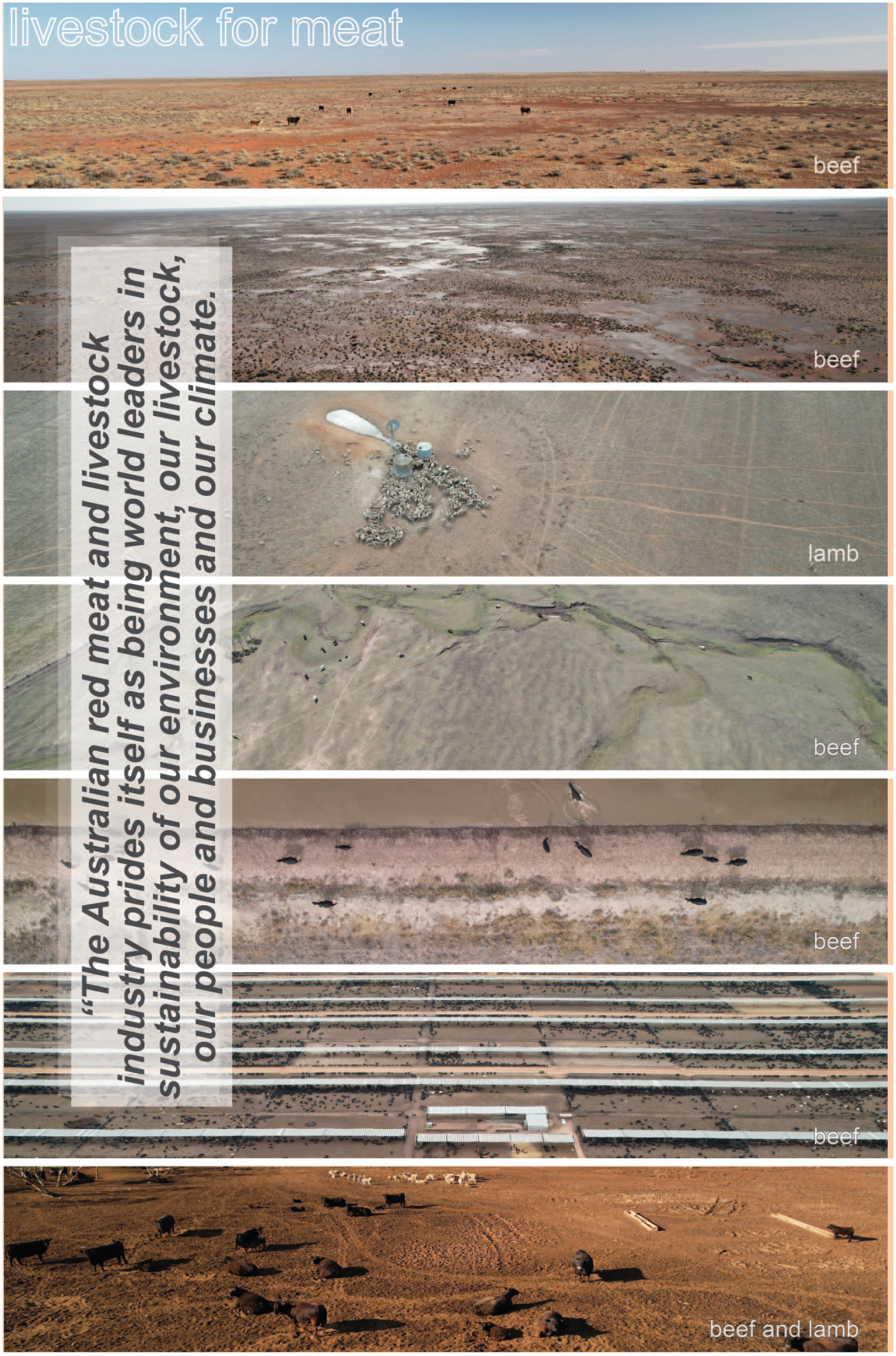
Australia’s agricomponents Overlaid with paradoxical industry and marketing quotes. All images by Joshua Zeunert, CC-BY-NC-ND 4.0
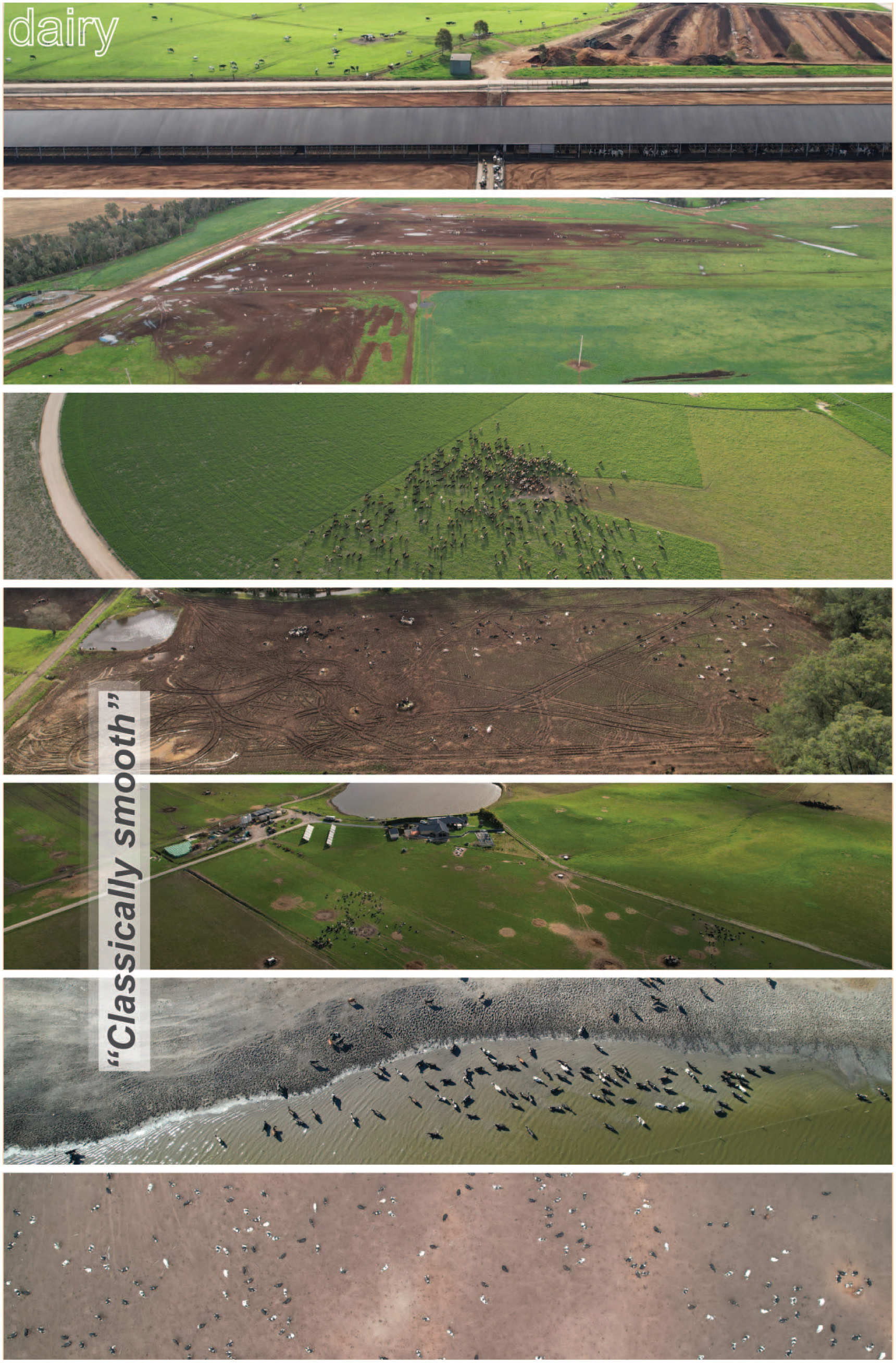
Australia’s agricomponents overlaid with paradoxical industry and marketing quotes. All images by Joshua Zeunert, CC-BY-NC-ND 4.0
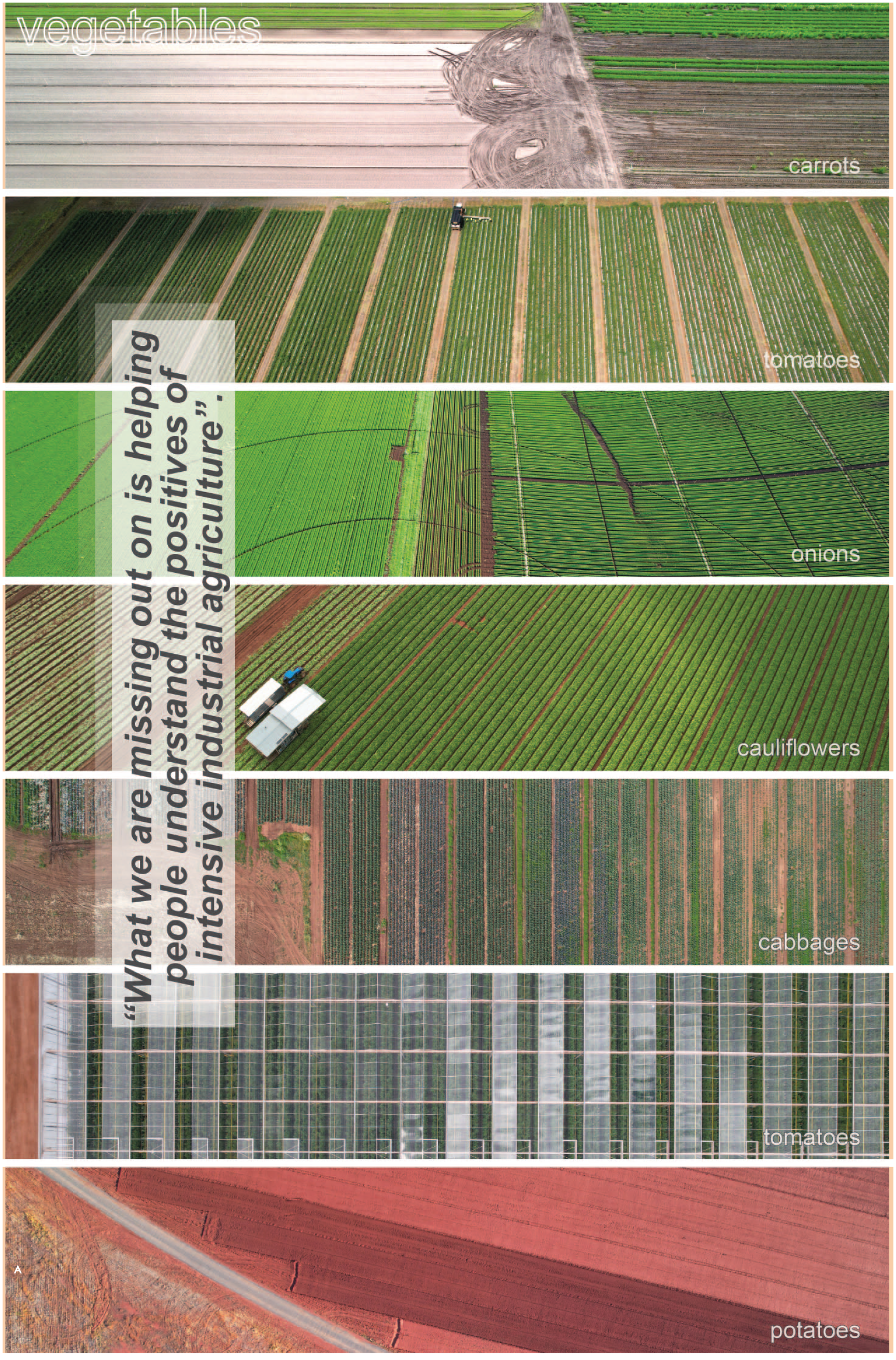
Australia’s agricomponents Overlaid with paradoxical industry and marketing quotes. All images by Joshua Zeunert, CC-BY-NC-ND 4.0
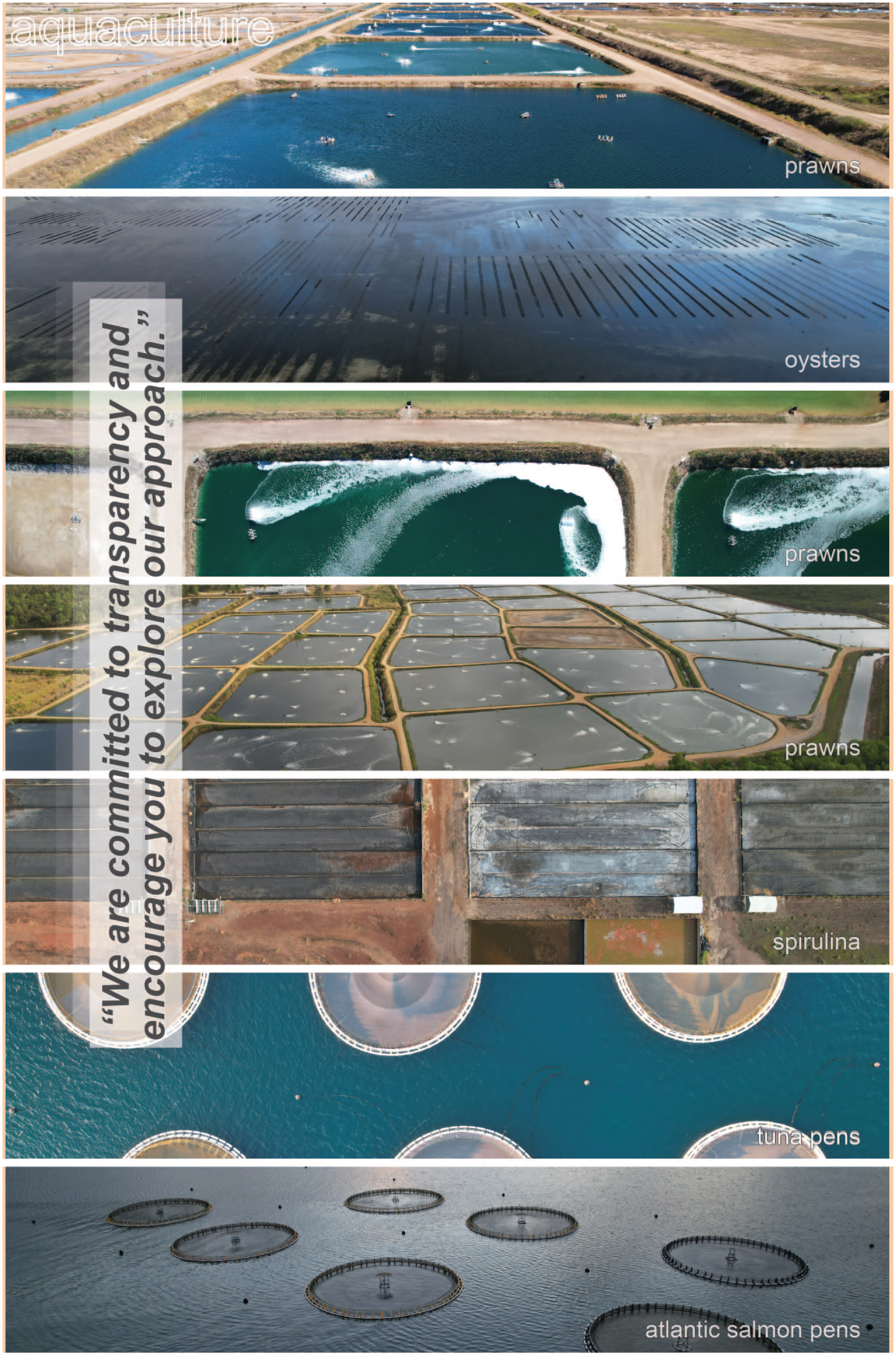
Australia’s agricomponents Overlaid with paradoxical industry and marketing quotes. All images by Joshua Zeunert, CC-BY-NC-ND 4.0
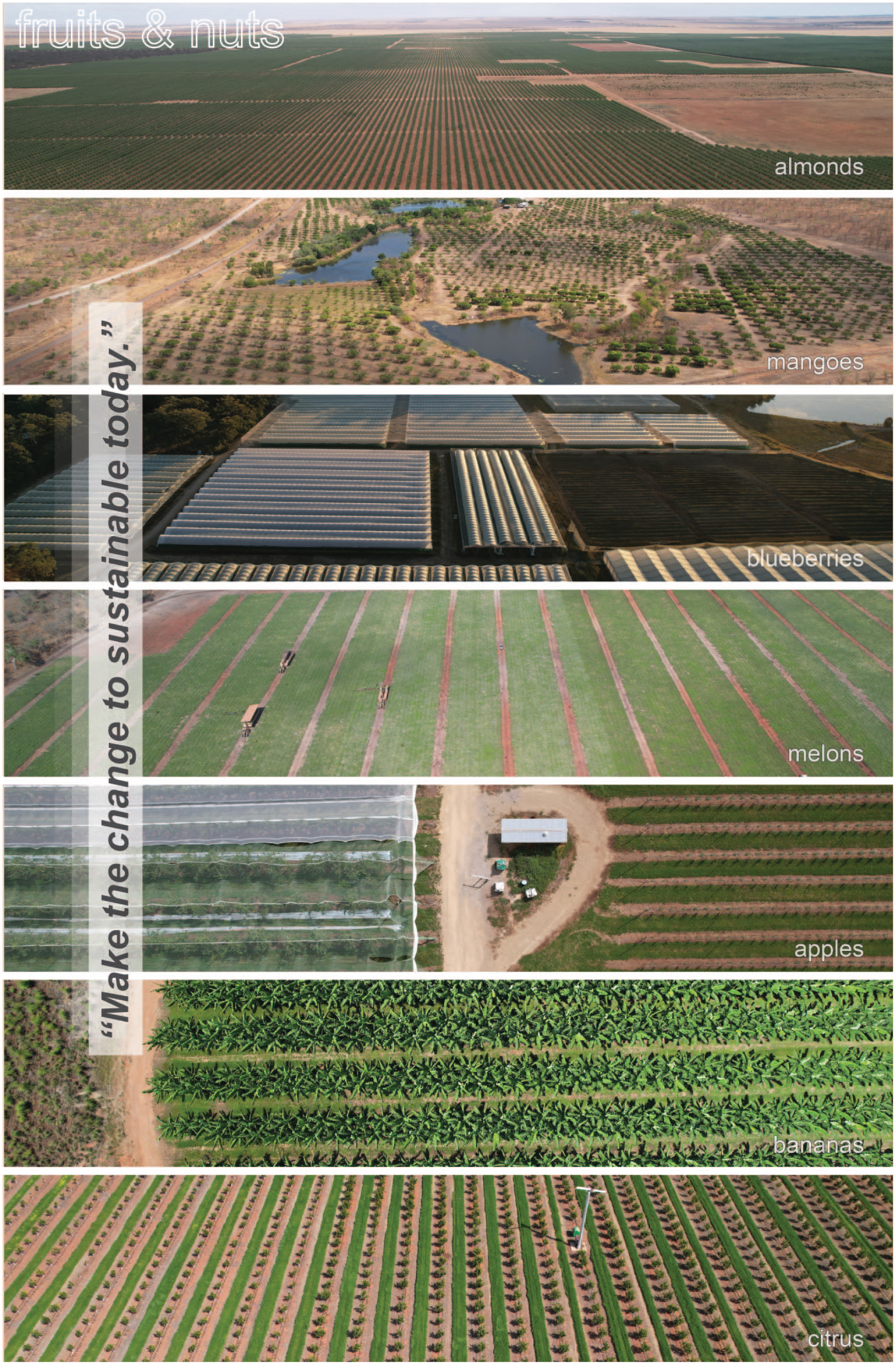
Australia’s agricomponents Overlaid with paradoxical industry and marketing quotes. All images by Joshua Zeunert, CC-BY-NC-ND 4.0
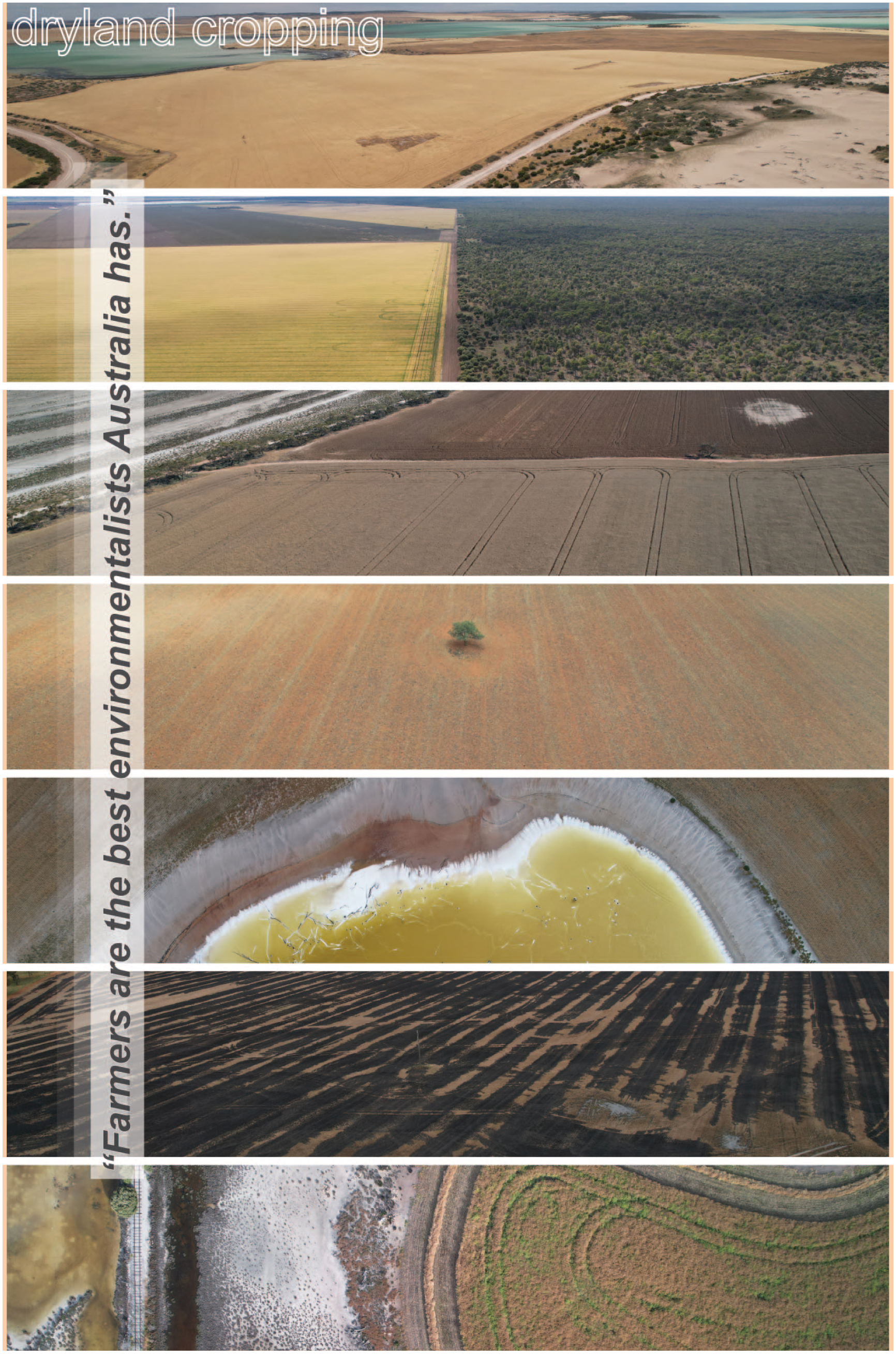
Australia’s agricomponents Overlaid with paradoxical industry and marketing quotes. All images by Joshua Zeunert, CC-BY-NC-ND 4.0
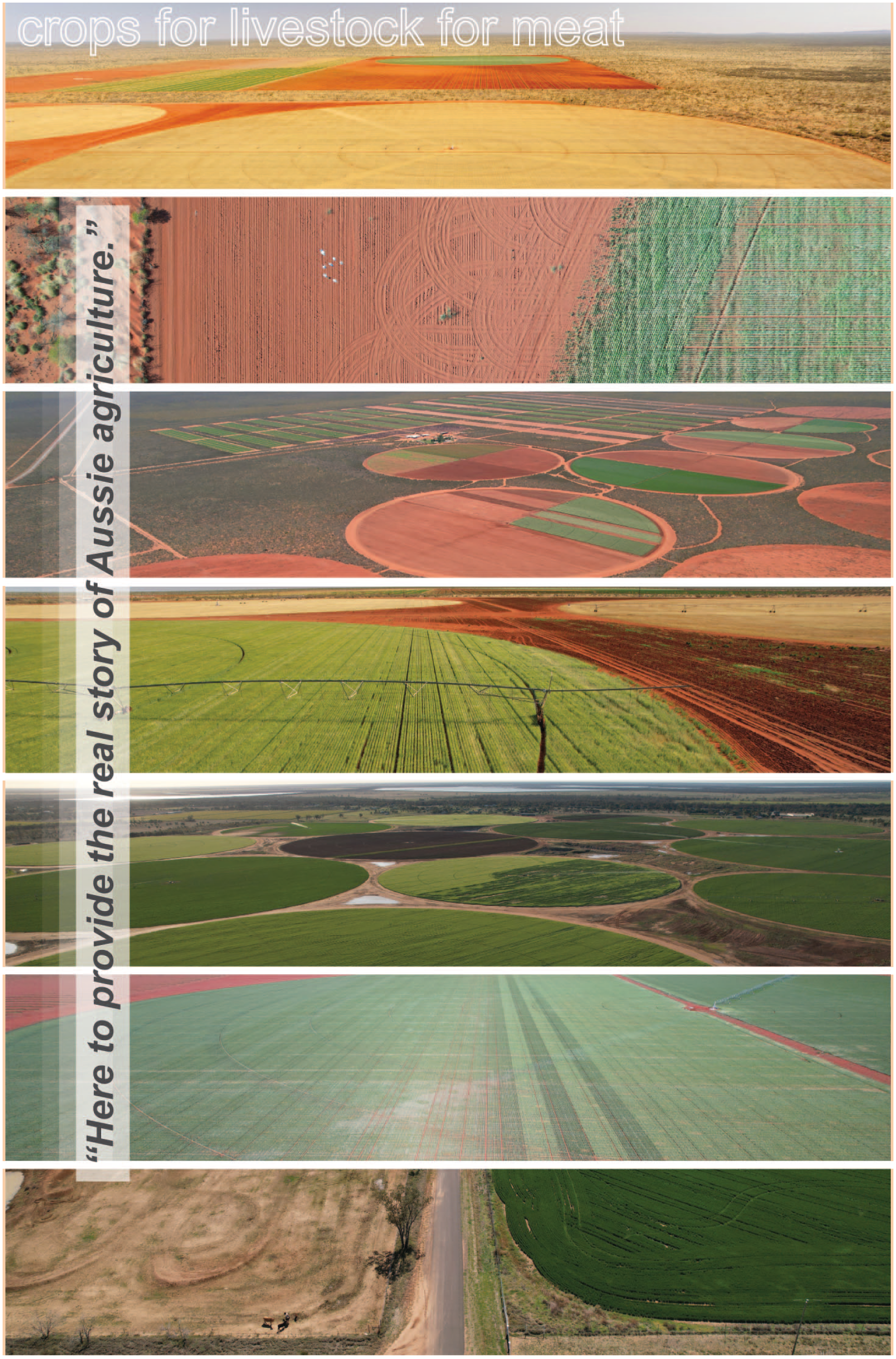
Australia’s agricomponents Overlaid with paradoxical industry and marketing quotes. All images by Joshua Zeunert, CC-BY-NC-ND 4.0
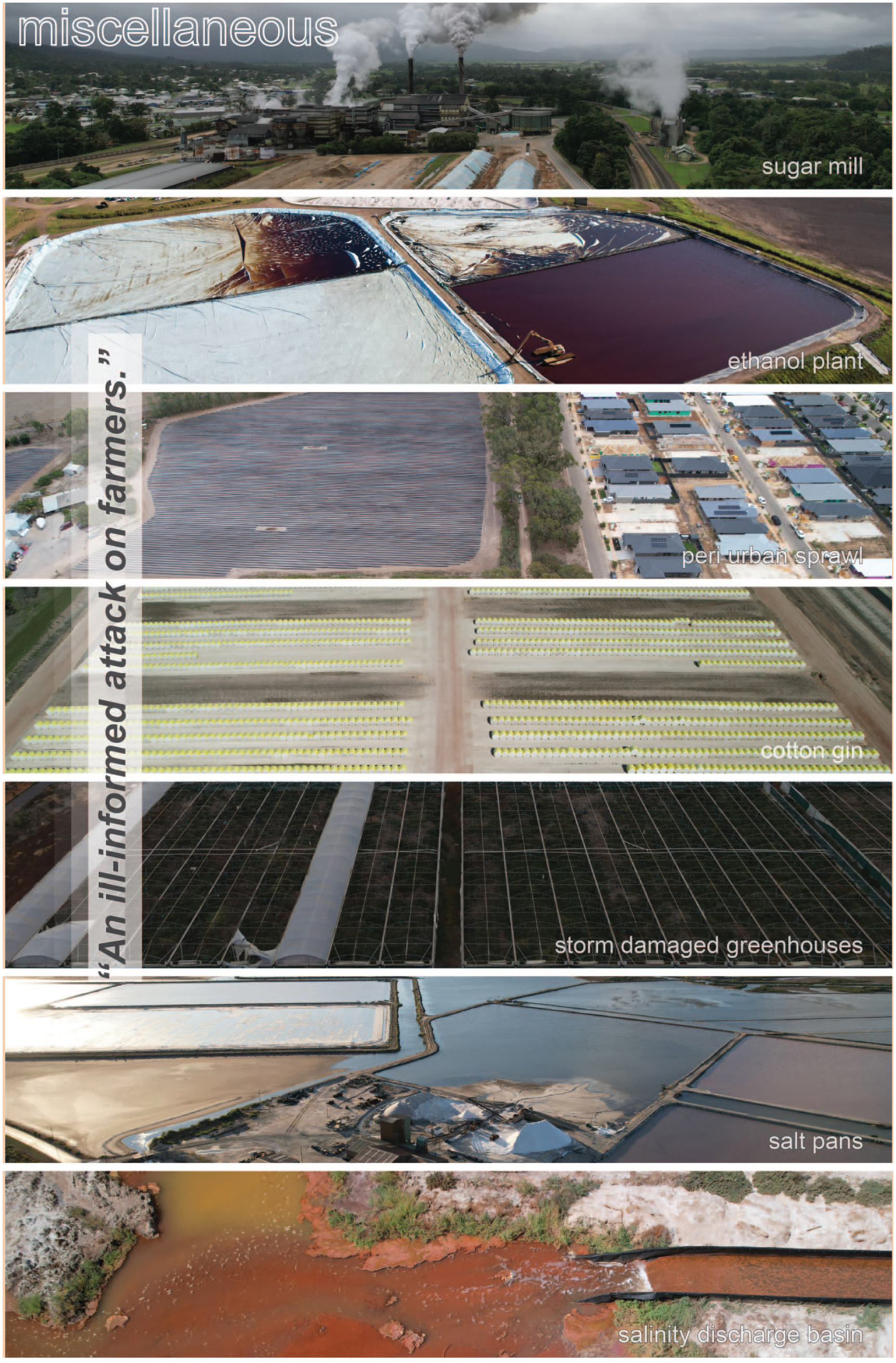
Australia’s agricomponents Overlaid with paradoxical industry and marketing quotes. All images by Joshua Zeunert, CC-BY-NC-ND 4.0
Figures 3–10 are composed as horizontal landscape vignettes with parallel configuration (Bender and Kanderske, 2022: 2488), offering slices of scalar difference (Horton, 2021) within a ‘small multiples’ arrangement (Tufte, 1990). They intentionally test scalar perception, with selective inclusion of features such as livestock, farm machinery and built elements aiding size comprehension amidst vast and geometrically repetitive agricultural landscape scenes. Their industrial aerial scales regularly extend well beyond the more tangible human scales regularly suggested in idealised imagery (Figure 2). Indeed the farms in Figures 3–10 are regularly sized beyond the scalar capabilities of the drone within Australia’s legal limit of 120 metres above take-off elevation. The fields of view are intentionally framed as intermediaries between on-ground imagery, which fail to adequately articulate scales of industrial agri-operations, and potentially imperceivable scales found in satellite imagery (and their poor image quality in rural Australian locations). Thus, the drone’s eye view helps to fill a scale gap in Australian agriculture and non-urbanised landscapes, offering potential further insights into states of the agri-environment.
To heighten at times subtle visual counter narratives, the quotes included on Figures 3–10 are intentionally incongruous and paradoxical. Quotes are sourced from Australian agriculture organisations and promotional campaigns by industry bodies, food and agricultural companies. In light of the aforementioned increase of ‘ag-gag’ legislation, they are intentionally unattributed. Similarly, identifiable elements are also intentionally absent from imagery, and viewers are directed to a bigger-picture view of landscape practices and impact. The broad food-identifying text (e.g. beef, lamb, prawns) on the figures highlights cause and effect between consumers’ eating choices and interlinked industrial modes of production. In other words, the images and text seek to reflect on individual responsibility and consumptive agency, while illuminating agri-shadow places to suggest feedback loops.
In addition to human environmental impacts, an ecological and industrial sublime is a useful device to suggest that human scales found in agricultural idylls and the romantic sublime are superseded by vast dehumanising scales of industrial agribusiness. As Ray (2016: 214) observes in Burtynsky’s work, Figures 3–10 aim to recalibrate perception to agri-production scales, reflecting destructive global forces of consumerism that ‘critique, rather than reinforce, the argument that [humans] are insignificant’. Thus, images seek to highlight intertwined environmental awe and terror – a juxtaposition of harsh industrial agri-landscapes of food production abundance, contrasting with the erosion of bio- and carrying capacity to support such surfeit.
While the 56 images in Figures 3 to 10 challenge ‘the assumption that farmers are producing important public goods and value to society simply by running their farm businesses’ (Sutherland, 2020: 1158), this essay does not seek to malign individual farmers or industries. While accountability is important, focusing on farmers when considering trust and transparency is arguably misdirected. Farmers and agricultural producers are required to operate within imposed market conditions set by state, federal, and global decision makers. Such parameters are influenced by industry and corporate lobbyists geared to maximising profitability of agribusinesses. Primary emphasis, instead, should focus on the neoliberal agribusiness system and its advocates imposed on farmers and land systems, and its consequences.
Conclusion
A lack of visual connectivity between states of agri-production contexts and food consumers is problematic for realising environmentally just commercial agri-food systems. Such disconnections can enable practices that may otherwise bring the social licence of agribusinesses industries into question due to ecological, environmental and animal welfare impacts. This visual essay seeks to catalyse a more accurate dialogue on the state of Australia’s agricultural environment and production landscapes. It challenges archetypal imagery used to represent Australian agriculture (Figure 2) through presenting counter-aerial imagery focusing on visual states of the agricultural environment (Figures 3 to 10). It demonstrates that human-scale agrarian and pastoral tropes, and romantic imagery commonly used by dominant agri-power structures in Australia fail to accurately represent industrial production scales. Such production can be considered an ‘agri-industrial landscape sublime’, due to its awe-inducing food production abundance, yet terrifying spatial and environmental impacts. An agri-industrial landscape sublime spans all major agri-facets, by value, land area, and government classifications. The research also highlights cause and effect – between consumption and production, and between Federal and State parameters of agricultural systems and farming outcomes.
Footnotes
Declaration of Conflicting Interests
The author declared no potential conflicts of interest with respect to the research, authorship and publication of this article.
Funding
This work was supported by the Australian Research Council [grant number DE200100529].

Data availability statement
Data sharing is not applicable to this article as no datasets were generated or analyzed during the current study.
Biographical notes
email: