




Abstract
There is little guidance for parents on how to support children during co-use, co-viewing, and co-playing with digital technologies. Given the critical role of the home learning environment and the widespread use of digital technologies in children’s homes, it is essential to gain a deeper understanding of current interaction patterns during digital technology use to inform relevant guidance and support for families. This scoping review overviews and consolidates the literature on young children aged birth to 8 years, and their social interactions with family members during shared use of digital technologies. It considers the types and features of interactions studied across the various contexts of children’s digital use and draws on this evidence to provide a forward-looking research agenda. Comprehensive searches of 4 electronic databases (SCOPUS, ERIC, PsycInfo, Web of Science) using terms focused on the child, other person/s, the social interaction, and the digital element were conducted for the years 2015 to 2023. This yielded 46 studies reporting on young children’s social interactions during shared digital experiences in family contexts. Synthesis of the findings were organised and discussed according to each study’s characterisation of interactions, including attributes of oral language, communication support of children’s understanding, social interactions and connections, and familial negotiations. These themes were explored to highlight patterns and trends in the literature. Across the studies, findings point to a complex and dynamic relationship between children, their parents, and digital technologies within the home context and family dynamics – highlighting the critical role of various child, adult, and digital factors (e.g., child age, parent digital literacies, app design) in shaping the interaction. Understanding how these factors influence children’s social interactions during digital experiences is crucial for developing effective guidance and support for families.
Keywords
Introduction
Young children’s use of digital technologies continues to receive significant attention in research, with investigations spanning disciplines including health, education, child development, human-computer interaction, and more. As digital technologies become increasingly prevalent in children’s homes (Mann et al., 2025; Winter et al., 2025), many countries are also simultaneously revising policies to limit children’s exposure to them. Parents are navigating a rapidly evolving and complex digital environment, where guidance on children’s use of technology is often mixed and contradictory (Straker et al., 2018). Given young children’s growing access to digital technologies and the crucial role of family interactions in the early years, it is important to understand how they interact with family members during digital technology use. Examining social interactions, including expressive and receptive forms of oral language, when digital technologies are involved is necessary in understanding how they can be effectively leveraged to support, rather than hinder, children’s development. The purpose of this review, therefore, is to consolidate the diverse literature across various disciplines on the nature of young children’s social interactions during their use of digital technologies. In this review, the term “young children” denotes children from birth to 8 years, as typically defined in early childhood literature.
Literature review
Early childhood represents a critical period for learning and development. During this time, the relationships that children have with significant adults, such as their parents and families, are important influences on their developmental trajectories. Within the context of these relationships, positive reciprocal interactions are associated with healthy child development (e.g., Landry et al., 2003; Lugo-Gil and Tamis-LeMonda, 2008). The literature on adult-child interactions is heterogeneous and discordant in findings, however specific features of ‘quality interactions’ such as sensitivity, responsiveness, and synchrony have shown positive impact on developmental outcomes such as language acquisition, cognitive development, and social competence (Deans, 2018; Howard et al., 2024; Leclère et al., 2014; Levickis et al., 2023).
Yet the nature of childhood and what it means to be a child is continually evolving. With the increasing presence of digital technologies over the past 15 years, there has been much discussion and debate about their influence on children’s development (Straker et al., 2018), including language development (Flewitt et al., 2024; Sundqvist et al., 2021). Despite this, digital technologies have an omnipresence in children’s day-to-day lives, and mobile devices such as tablets and smartphones have become embedded into the structures and routines of many families (Marsh et al., 2017). As part of this, and across the contexts in which children participate (e.g., home, early learning settings, community), they regularly observe others engaging with digital technologies. They are also frequently provided with opportunities to use and interact with digital technologies, for a range of purposes, including but not limited to education, communication, creative activities, and entertainment.
Internationally, recent estimates of young children’s use of digital technologies have shown high rates of digital access and use. For example, a report published by Common Sense Media of more than 1500 American children aged birth to 8 years showed that 98% have access to a mobile screen-based device in their home (Mann et al., 2025), with recent OECD data showing that about 70% of children have their own smartphone by age 10 (OECD, 2025). Another recent study from the UK (Winter et al., 2025) of more than 1400 younger children also reported high rates of access, noting that even very young children (aged birth to 3 years) have access to a wide range of devices in their homes (on average >7 different types) and interact with them regularly across various settings (e.g., home, car, restaurants). Yet digital technologies, and their accompanying apps, content, and software are continually and rapidly evolving. This creates challenges for researchers creating and sustaining an up-to-date evidence base, and for families in making informed decisions about children’s access to and use of digital technologies.
Access to and use of digital technologies in early childhood has important implications for children’s early relationships and interactions and ways of using language. Digital technologies offer children increased opportunities to connect with others beyond the family home (e.g., extended family, educators, and friends). The presence and use of digital technologies within the family home can also influence the social interactions that take place (Lewis et al., 2024). For example, the presence of background television in the home has been linked to decreased parent and child speech (Christakis et al., 2009; Pempek et al., 2014), and parents’ use of smartphones has been shown to be associated with fewer parent-child verbal and non-verbal interactions (Radesky et al., 2015). The presence and use of digital technologies might also influence how, where, and when families communicate with one another (e.g., through digital and non-digital mediums, in and out of the home), as well as the types of information they exchange (e.g., speaking, writing, video and image). For instance, a child might share information and communicate with family members in multimodal ways as they use images, recorded video, or emoticons, and share these in asynchronous and synchronous mediums (Zhao and Flewitt, 2020). Digital technologies can also and equally be used to occupy children while parents’ complete household tasks, to reward behaviour, and manage child’s emotional reactions and behaviour (Chong et al., 2023; Morawska et al., 2023).
Based on the review of evidence available, peak bodies have released statements that provide advice about children’s use of digital technologies (e.g., AAP Council on Communications and Media, 2016; Early Childhood Australia, 2018; World Health Organisation, 2019). Consistently, these statements advise that digital technologies, particularly in early childhood, are best used within the context of reciprocal relationships with significant others, and to support positive interactions through co-use, co-viewing, and co-playing. This advice also aligns with more recent discussions about the shifting of perspectives from emphasis on screen time, to acknowledging that children have access to digital technologies, looking instead to how families, educators and other stakeholders can better support children growing up in their digital world (Straker et al., 2018).
However, what is lacking is clear advice for parents and educators on how to interact and support their children during co-use, co-viewing, and co-playing with digital technologies. Given the paramount importance of the home learning environment for children’s development (Lehrl et al., 2020), and the prevalent use of digital technologies in the home (Mantilla and Edwards, 2019), it is important to understand in greater depth and nuance what interactions currently look like during use of digital technologies at home – in addition to what they use, with whom, for how long, and where. This would create a basis from which to develop learning and guidance that meets families’ current needs and practices.
To date and to our knowledge, only one study has attempted to consolidate aspects of the literature on social interactions during co-use of digital technologies. Ewin and colleagues (2020) reviewed research focusing on parent-child interactions during joint media engagement (JME) – which they defined as using smartphones or tablets to engage in activities together (e.g., playing, reading, creating, or viewing content). In their review, they examined (i) whether parents and children engaged in JME; (ii) the types of supports children and adults offered each other during JME; and (iii) how JME impacted interactions compared to non-digital activities. Their findings showed that parents and children did sometimes engage in JME, and when they did, they supported their children through cognitive, technical, physical and affective scaffolds (Ewin et al., 2020). Yet, when examining the impact of JME on parent-child interactions, the authors noted a complex relationship between various factors such as technology features (e.g., device, interactivity within the app), child and parent factors (e.g., age and experience), as well as other contextual features (e.g., the task/activity at hand) and features of the interaction (e.g., language, warmth, scaffolding).
Despite the informative findings of their review (Ewin et al., 2020), important questions remain. For instance, since young children engage with a range of digital technologies, it is essential to develop a more comprehensive understanding of how their social interactions emerge and evolve within and around digital contexts, which includes, but is not limited to smartphones and tablets (Johnson et al., 2022). Similarly, because not all of young children’s digital experiences involve co-use or co-play, or shared use in the same physical location (Ewin et al., 2020), we need to extend investigations to the social interactions that occur across the varied ways in which children engage with digital technologies in their homes. In our review, we used a broader definition of digital technologies, as well as the digital experiences considered (which included, but was not limited to, shared use in physical proximity). In addition, by acknowledging the importance of family and the home learning environment in shaping children’s digital experiences, we also include in the scope of our review interactions with other family members such as siblings – who have also been shown to be influential in shaping children’s digital experiences (Marsh et al., 2017).
Accordingly, the aims of this review are three-fold. Firstly, this study aims to overview and consolidate recent and relevant literature on young children’s social interactions with family members during their use of digital technologies. Secondly, it aims to consider the types and features of interactions studied across the various contexts of digital use (e.g., social, physical, and via digital platforms). Finally, drawing on this evidence and, by extension, what is not yet well understood, a forward-looking research agenda is shaped and proposed.
Method
To respond to these aims a scoping review was selected as a suitable method of synthesising the existing literature. Like a systematic review, a scoping review allows transparency and replication (Arskey and O'Malley, 2005) – yet it uniquely allows greater breadth in reviewing the broad scope of the literature and the varied research questions that have emerged. It also allows greater depth and insight into the nuances of investigations (e.g. context of digital use, affordances of digital technologies), methodologies, and the knowledge and understandings generated (Munn et al., 2018). Studies with similar aims and focus have also used this methodology as a means of mapping the existing literature and synthesising findings (e.g., Choy et al., 2024; Holme et al., 2023; Tricco et al., 2016).
This review provides a profile of the relevant research published since January 2015. This time frame was selected for several reasons. Firstly, because of the rapidly evolving nature of digital technologies – particularly in terms of their opportunities for interactivity, connectivity, and portability (Troseth et al., 2016) – research and uptake of digital technologies tends to lag behind. This is particularly so in terms of the digital platforms used by young children (OECD, 2020). Because we wanted to capture relevant studies of children’s interactions during their engagement with contemporary technologies (e.g., smart phones and tablets), we allowed for a time lag since the first evolution of the iPad in 2010.
Secondly, between the years 2013 and 2017, access to, use of, and ownership of mobile digital technologies increased rapidly for young children. Specifically, data from the large-scale study by Common Sense Media (Rideout and Robb, 2020), showed that children’s (aged 0-8 years) access to and ownership of a tablet device increased by 38% and 35%, respectively, over the four-year period with the amount of time children spent using screen-based digital technologies also increased dramatically during this time (Rideout and Robb, 2020).
Finally, alongside this increase in ownership and access around 2015, the use of digital technologies by young children was topical in the popular media and literature (e.g., Blum-Ross and Livingstone, 2016), leading to discussions and publication of international position statements and guidelines on optimal use of digital technologies by young children (AAP Council on Communications and Media, 2016; Canadian Paediatric Society, 2017; World Health Organisation, 2019).
This review was designed, conducted and reported in accordance with PRISMA guidelines for the reporting of scoping reviews (PRISMA-ScR, Tricco et al., 2018). The methodological framework for scoping studies by Arskey and O’Malley (2005) was also drawn upon to inform the reporting of the research. Specifically, in this paper we follow their five key stages: identifying the research question; identifying relevant studies; study selection; charting of data; and summarising and reporting findings.
Identifying the research questions
This research study aimed to consolidate and overview the relevant recent literature on young children’s social interactions with family members during their use of digital technologies. In doing so, it aims to explore the types and features of interactions studied, across the various ways that digital technologies are used in home/family context. Given this, the research questions for this study were set to be intentionally broad (Arskey and O'Malley, 2005). Specifically, we asked: (i) what features of social interactions have been studied during young children’s digital experiences? Building on this, we then asked, (ii) what do these studies tell us about young children’s social interactions during digital experiences?
Identifying relevant studies
Our understanding of social interactions is grounded in the assumption that they are inextricably linked to language and literacy (Snow, 1991). We look to oral language as a primary tool for communication and interaction. It is through language that individuals, including children, express thoughts, emotions, and social cues, in response to cultural norms and contexts. Literacy, in turn, enables social participation through the application of language. Together language and literacy shape how people connect, share, and function. Social interactions therefore are broadly defined and understood as the dynamic exchange of expressive and receptive uses of language that occurs between and among individuals within various social and cultural contexts. For this study, we examined the dynamic exchanges between two or more individuals within the family, at least one of which was a child up to the age of 8 years (e.g. parent-child, siblings, grandparent-child), and in the context of the child’s engagement with digital technology (Arnott, 2013). Accordingly, while the review centres on adult–child interactions, the search strategy allowed for the inclusion of studies featuring multiple family members.
To be included in this review, studies needed to measure or focus on specific features of social interactions (i.e., conversational turns, ratings of positive affect), or involve a qualitative analysis of a dynamic exchange between at least two family members (one of which is a child aged 0-8 years), occurring within the context of the child’s digital use (e.g. including but not limited to shared use, side-by-side use, or video calls) in home and family settings. Peer-reviewed journal articles were included if they were written in the English language, involved primary or original research, and published between 2015 and 2023. Qualitative, quantitative, and mixed methods studies were considered in order to capture the breadth of research available. Studies with special populations, such as children with intellectual or developmental disabilities, or hearing and/or speech impairments, were excluded due to variations in both access to and use of digital technologies (Winter et al., 2025), as well as the distinct communicative and interactive purposes digital technologies often serve for children with additional needs (Wyeth et al., 2023). This heterogeneity would make meaningful reconciliation of findings challenging. Similarly, studies carried out in the context of formal learning (e.g. in schools and preschools with educators) were also excluded due to the varied pedagogical intent of these interactions (Radović and Passey, 2016) and the expected differences in family-child versus educator-child interactions.
Electronic databases SCOPUS, ERIC, PsycInfo and Web of Science were chosen to carry out a broad and comprehensive search of the literature across relevant disciplines. These databases were selected for their extensive coverage of peer reviewed research across disciplines relevant to our study’s focus. Other scoping reviews focused on children and families have adopted a similar approach (e.g., Mak et al., 2021; Müller et al., 2020). Guided by the inclusion criteria, the search strings were focused on child age, the other person/s, the social interaction, and the digital elements. The following key search terms and Boolean operators were used to identify relevant studies within the databases: (‘child*’ OR ‘student’ OR ‘infant’ OR ‘toddler’ OR ‘preschool*’ OR ‘pre-school*’ OR ‘early childhood’) AND (‘parent’ OR ‘adult’ OR ‘sibling’ OR ‘peer’ OR ‘family’ OR ‘home’) AND (‘interact*’ OR ‘convers*’ OR ‘talk’ OR ‘language’ OR ‘collaborat*’ OR ‘play’) AND (‘digital technology’ OR ‘tablet’ OR ‘device’ OR ‘laptop’ OR ‘computer’ OR ‘smartphone’ OR ‘ipad’ OR ‘touch screen’ OR ‘app’ OR ‘android’). Searches were conducted in December 2023 and were limited to studies that were published since January 2015.
Study selection
The search strategy yielded 957 studies, which reduced to 926 after 31 duplicates were removed. Following a title and abstract screen, 793 studies were excluded as they did not meet the study criteria. The remaining 133 studies underwent a comprehensive full-text review. Ten percent of these were screened for inclusion by 2 raters, with inter-rater agreement at 100%. For subsequent studies, if there was any uncertainty, the full research team were consulted, and a collaborative decision made. Of the 133 studies, 36 studies met inclusion criteria and were therefore included in this review. Using a ‘snowballing’ strategy, reference lists of studies meeting inclusion criteria were reviewed to identify any other relevant studies not captured in the original database searches. This captured an additional 10 articles that met the study inclusion criteria, bringing the total number included in this review to 46 (Figure 1). Flowchart of the scoping review on children’s social interactions during their use of digital technologies.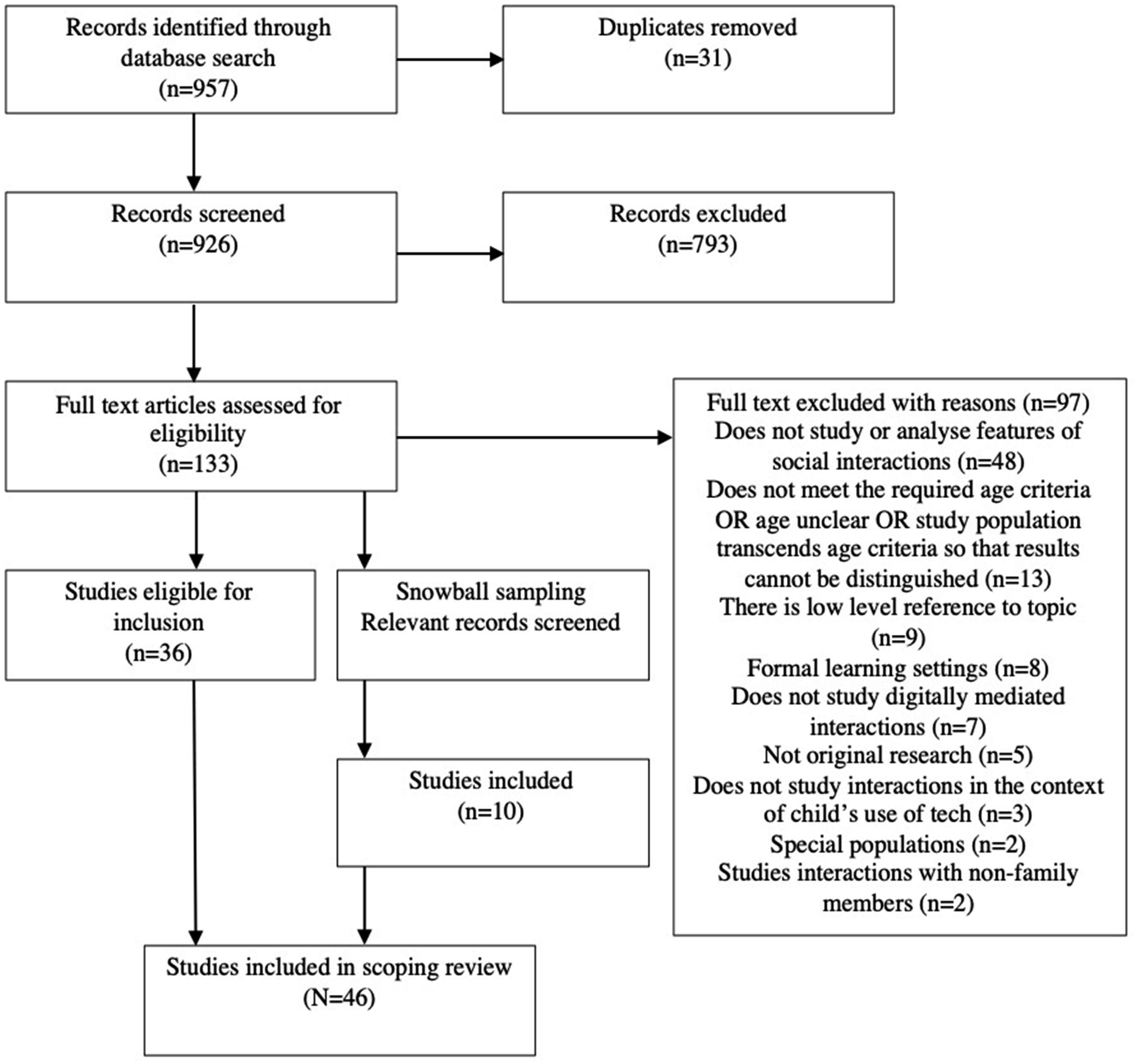
Charting of data
The charting and extraction of data was carried out by the first author but involved an iterative and consultative process with the full author team. Charting included the extraction of general study information (e.g., country of origin, study design, participant population, child age, study setting), as well as more specific study information to give context and inform the research questions (e.g., theoretical underpinnings, digital activity, digital resources used in the interaction, interaction characteristics studied, research questions and key findings).
Collating, summarising and reporting findings
Characteristics of 46 studies examining children's interactions during shared use of digital technologies
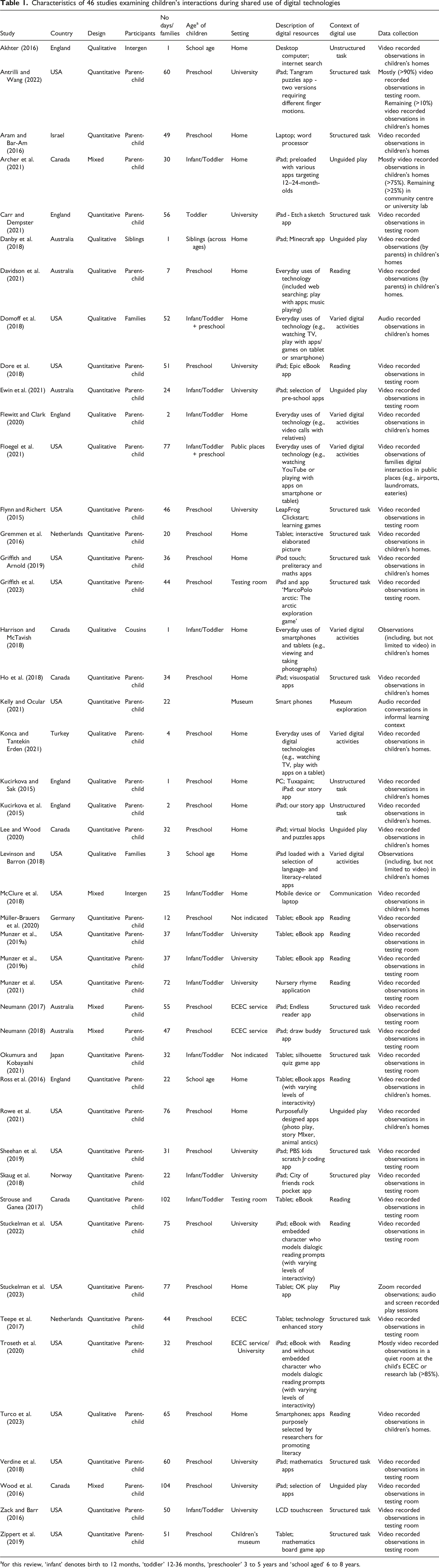
afor this review, ‘infant’ denotes birth to 12 months, ‘toddler’ 12-36 months, ‘preschooler’ 3 to 5 years and ‘school aged’ 6 to 8 years.
Findings
Overview of studies
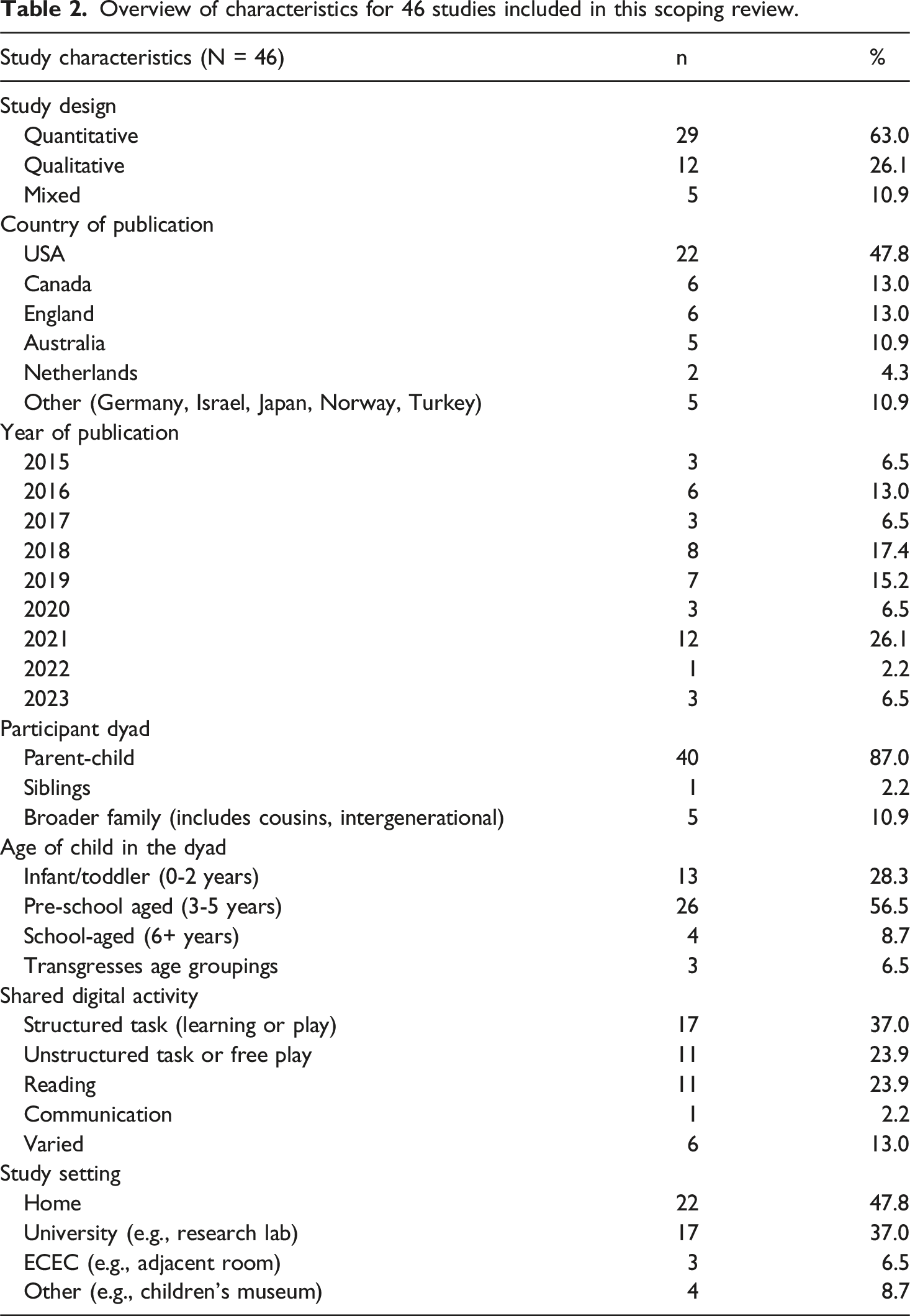
Overview of characteristics for 46 studies included in this scoping review.
What features of social interactions have been studied during children’s digital experiences?
Studies were diverse in how social interactions were defined, characterised, and reported. Some studies focused on the one-way communicative behaviours of one or both interactants in the dyad (e.g., parent/child use of language), and others provided more nuanced analysis of the communicative exchanges, the dyadic processes, and tone of the social interaction (e.g., conversational turns, dyadic synchrony, and reciprocity of exchanges between the dyad, positive and negative affect). Across all studies, oral language featured saliently as the focus for analysis, with some studies explicitly examining attributes of oral language (e.g., quantity and quality of talk, the focus and type of language used), and others investigating other interaction features that are enabled, to varying degrees, by the exchange of oral language (e.g., communication support of children’s understanding through strategies such as scaffolding, and relational aspects of the interaction such as sensitivity and warmth). These groupings, which are elaborated in Figure 2, are used to organise the synthesis of results for research question 2. Focus of analysis for 46 studies included in this scoping review. Note. Oral Language is the over-arching theme enabling interactions. The themes here are not exhaustive or exclusive but present characteristics that feature prominently.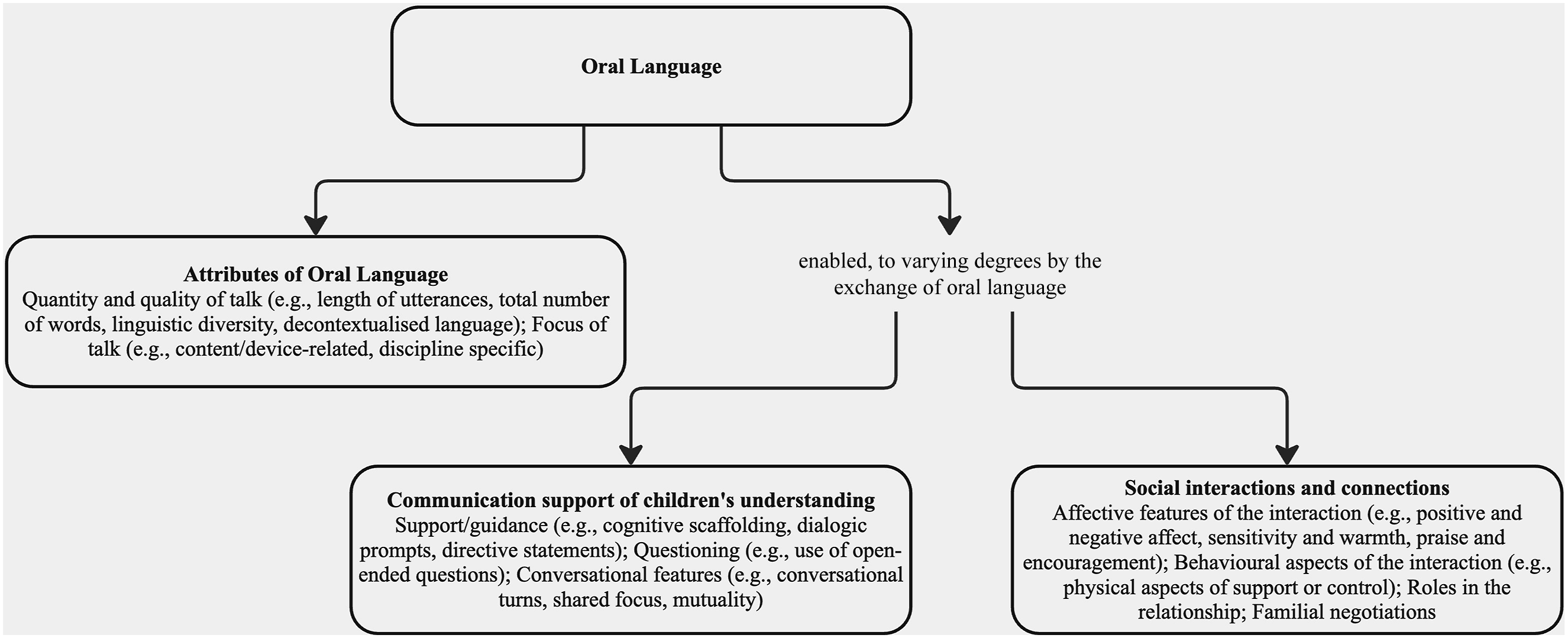
What do these studies tell us about social interactions during children’s digital experiences?
Although almost three-quarters of studies (73.9%) had multiple foci of analyses that transgressed across the themes presented in Figure 2, we organise and consider the findings for each theme individually below. This means that the findings of several studies are discussed across sections to reveal nuances.
Attributes of oral language
The emphasis across the archive was on expressive language, leading to a focus on talk. Features of parent and/or child talk during digital activities was a central focus for half of the studies (50%). Attributes of oral language were typically examined in instances of co-use of digital devices and clustered into two foci areas: (i) the quantity and quality of talk used by the adult and/or the child, and (ii) the focus of parent and/or child talk (e.g., content, device, procedural, or off-topic talk).
Quantity and quality of talk
Quantity and quality of talk in the included studies were represented by variables such as the length of parent and/or child utterances and total number of words used, as well as linguistic diversity and complexity (e.g. number of new words). Investigations of quantity and quality of talk were frequently conducted within the context of experimental designs, whereby researchers considered features of talk in digital versus non-digital conditions, or between activities with various levels of digital interactivity (e.g., an e-book vs a digitally enhanced e-book with hotspots and in-built games).
In studies with this focus, parent and child talk were most often reported to be either equivalent or lower in quantity and quality for digital versus non-digital contexts. This has been reported in studies involving infants, toddlers and preschoolers, and across digital activities such as shared reading, unguided play (e.g., free play with apps and toys) and structured tasks (e.g., digital and non-digital writing tasks; Ewin et al., 2021; Munzer et al., 2019b; Munzer et al., 2021; Neumann, 2018). To give an example, in 24 parent-child dyads, Ewin and colleagues (2021) reported that parents spoke fewer utterances (indicator of quantity) and fewer new words (indicator of lower quality) during shared play with a tablet and apps than during shared play with non-digital toys, despite the authors’ purposeful selections of apps that represent digital counterparts to non-digital toys (e.g., tangible and analogous digital grocery items).
Other researchers have considered the influence of varying levels of digital interactivity on the elicitation of talk within the dyadic exchange (e.g. Gremmen et al., 2016; Müller-Brauers et al., 2020; Okumura and Kobayashi, 2021; Rowe et al., 2021; Troseth et al., 2020). Findings of these studies point to the importance and potential of digital design features in influencing user interactions. Gremmen and colleagues (2016), for instance, found that parents and preschool-aged children used more decontextualised language (presented as an indicator of higher quality) when conversing over a purposely designed multimedia-elaborated picture on a tablet compared to a paper-elaborated picture. The authors attributed this finding to the embedded interaction eliciting features enabled by the technology, such as prompts, enlarging elements and providing hints.
Similarly, Troseth and colleagues (2020) developed and tested an enhanced e-book with an embedded character designed to model dialogic questioning techniques for the elicitation of talk. In 32 parent and preschool-aged child dyads, the authors reported that, compared to a control condition (the same e-book without the embedded character), the embedded character resulted in greater quantity (utterances and words) and quality (unique words) of talk for both parents and children. These findings point to the influence of digital design in the quantity and quality of talk within the dyadic exchange. Studies on discipline-specific talk – most often mathematics (e.g., spatial language, shape names) – show a similar pattern. That is, some experimental studies show some limited benefit of digital conditions over tangible, non-digital conditions in preschool-aged cohorts (Sheehan et al., 2019; Zippert et al., 2019), yet this is influenced by digital design features (e.g., Antrilli and Wang, 2022).
Focus of talk
Some studies investigated the focus of talk within the familial dyadic exchange. That is, whether parents and/or children talked more about the content of the app, game or story (e.g., the educational content, or the events and characters) or the technological or procedural functions of the app, game or digital device. Foci of these studies were diverse and varied in digital activities (e.g., shared reading, unguided play, structured learning tasks), study settings, and child age, and unsurprisingly yielded mixed results. In their preschool-aged cohort for example, Griffith and Arnold (2019) reported greater device-related talk during parent-child co-use of literacy and mathematics apps. Yet, in a similar aged sample engaging in similar learning activity, Flynn and Richert (2015) reported no differences in the amount of content-versus device-related talk. Findings from these and other studies have pointed to factors such as child age, academic foci (e.g., literacy, maths), and device/app familiarity and use as contributing factors in the exchange of talk during digital activities (Archer et al., 2021; Flynn and Richert, 2015; Griffith and Arnold, 2019; Müller-Brauers et al., 2020; Munzer et al., 2021). Teepe et al. (2017) found that parent–preschooler talk focused more on story content during open-ended digital tasks than closed-ended ones, highlighting how app design can shape dyadic interactions.
Support of children’s learning
Another focal area of the corpus of studies was parents’ use of expressive and receptive oral language to support, guide, and structure their child’s experiences towards a higher level of learning and understanding during digital activities (39.1%). Although characterisations differed, studies positioned greater engagement in various strategies as indicative of the quality of interactions between parents and their children (e.g. Wood et al., 2016). For example, some studies broadly focused on how parents’ guide their children through expressive language use to higher levels of understanding through ‘cognitive scaffolding’, ‘teaching’, or ‘structuring’ (e.g., Skaug et al., 2018), whilst others described specific strategies that parents used to support children’s understanding such as the use of directives, dialogic questioning, and making connections (e.g., Archer et al., 2021). Further information on the patterns of findings across these studies is provided below.
Scaffolding, structuring
Observational studies that focus broadly on how parents support (“scaffold”) their preschool-aged children’s learning during shared digital activities show they routinely try to scaffold and support different expressive and receptive language knowledge (e.g., task-related, procedural/technological functions; Kucirkova et al., 2015; Neumann, 2017). Some authors focus on comparison of the cognitive support provided by parents in digital and not-digital contexts. For instance, Lee and Wood (2020), also in a preschool-aged sample, compared parent ‘teaching’, which they defined as various verbal behaviours aimed to support children’s learning, across digital and non-digital play with blocks and puzzles. They reported that parents, although actively engaged across play contexts, offered more cognitive support to their pre-schoolers in the non-digital play context than they did in the digital play context. In a younger sample, however, Skaug et al. (2018) reported adult structuring–defined as a parent’s ability to guide, scaffold, and support a child’s learning–was more frequent during joint gaming than in non-digital toy play or TV viewing. Considering these findings, age of the children (amongst other contextual factors) appears an important contributor to the interaction.
Questioning, connections and directives
Whilst findings described above consider scaffolding practices more broadly, others have examined specific features of support that parents engage in during oral interactions with their children in digital contexts, such as questioning, connections, and directives. Some parents, for instance, have focused on the frequency of utterances that contain questions (Archer et al., 2021; Rowe et al., 2021; Verdine et al., 2018). These studies, although spanning different age groups, show parents frequently use different types of questions, although their frequency is associated with parent and child factors (e.g., parent education, child age). For example, studies reported that during shared digital play, the frequency of parent utterances containing a question increased with higher levels of parent education (Rowe et al., 2021) and increasing child age (Archer et al., 2021).
Experimental studies show that the number of questions parents ask their preschool-aged children can differ across digital and non-digital contexts. Verdine et al. (2018) found that parents produced fewer questions in a shape-focused touchscreen app than during play with tangible shapes. Yet, intervention studies also show that digital design features can support and enhance parent questioning. Troseth et al. (2020) showed that use of a digitally enhanced e-book with an embedded character modelling dialogic questioning techniques prompted parents to produce a greater number of open-ended and recall questions. In a follow-on study, Stuckelman et al. (2023), in a similar aged preschool sample, showed that consistent exposure to the e-book with the embedded character also resulted in significant growth in mutuality and positive affect in the dyadic exchange.
Relational aspects of the interaction
Across the corpus of studies, many examined the affective tone of the social connections and interactions, the behavioural expressions, and dyadic intersubjectivity within the reciprocal exchange that were enabled both by oral language, as well as non-verbal expressions and gestures. Several studies examined the overall affective tone of the dyadic exchange between children and adults during digital experiences (shared positive/negative affect), whilst others examined more specific features of affect such as warmth, sensitivity, responsivity, synchrony, and conflict as detailed below.
Affective features
Generally, studies reported a consistently positive or neutral affective tone during digitally mediated parent-child social interactions across age groups (Dore et al., 2018; Lee and Wood, 2020; Munzer et al., 2019a; Troseth et al., 2020). Similarly, studies demonstrated that adult-child co-use of digital technologies can provide a context for interactions characterised by warmth, sensitivity and responsivity (e.g., McClure et al., 2018; Sheehan et al., 2019). However, there is some evidence to suggest that there can be variations in affective tone between digital and non-digital activities (e.g. Carr and Dempster, 2021; Griffith and Arnold, 2019; Lee and Wood, 2020), yet findings are mixed. Carr and Dempster (2021) reported higher levels of dyadic warmth between parents and their toddlers in a non-digital versus digital drawing task. Yet Skaug et al. (2018) reported that parents of toddlers were more sensitive, emotionally available, and less hostile during joint tablet play, than non-digital toy play or TV viewing. Although it is difficult to discern the reasons for these conflicting findings, some studies have pointed to digital design features in influencing the affective tone of the interaction. Ross et al. (2016) found higher levels of positive emotion between parents and their 7-year-olds in conditions with higher digital interactivity than lower.
Parents demonstrate their affection in shared digital activities with their preschool aged children through praise and encouragement (Lee and Wood, 2020; Neumann, 2017, 2018; Wood et al., 2016), both verbally (e.g. “well done”, “great job”) and non-verbally (e.g. ruffling the child’s hair, high-five). Few differences have been reported across digital and non-digital contexts in these expressions of affection.
Behavioural features
Generally, studies were more focused on the verbal exchanges within the dyadic unit, however several also examined the behavioural exchanges between the parent and child. In some instances, this was focused on the physical supports parents provided (Archer et al., 2021; Flynn and Richert, 2015; Griffith and Arnold, 2019; Wood et al., 2016), and others, the intrusive and controlling behaviours that parents and children engage in (Aram and Bar-Am, 2016; Archer et al., 2021; Flynn and Richert, 2015; Munzer et al., 2019a). During shared digital play with preschoolers, studies showed that children were most often in control of operating the device (Griffith and Arnold, 2019), but parents offered frequent physical supports, such as holding the device, pointing to the screen and providing hand-over-hand support (Wood et al., 2016). Familiarity with the device, along with the age of the child, have been shown to be important determinants in the frequency and type of support offered to children. For example, Archer et al. (2021) found parents offered more support to their toddlers with novel devices. Wood et al. (2016) found parents offered less physical support as child age increased.
Positive parent behaviours such as engagement, playfulness and autonomy support have also been linked with positive child affect during digital experiences (Griffith and Arnold, 2019). Negative parent behaviours, such as high control and intrusiveness, have been shown to be more frequent in digital versus non-digital contexts. Munzer and colleagues (2019a), for example, examined the nonverbal aspects of social reciprocity during a shared digital and print reading activity. Amongst 37 parent-toddler dyads, they observed that parents and children both engaged in less social reciprocity and exhibited more social control behaviours (e.g. grabbing, pivoting away, or pushing away the other’s hand) in the digital versus print condition. Similarly, Aram and Bar-Am (2016), in a joint writing task (digital or pen and paper) with preschoolers, observed that parents entered their child’s space more frequently in the digital condition, rather than explaining or guiding the children as they did in the non-digital condition.
Roles in the relationship
Drawing upon sociocultural underpinnings, some exploratory studies observed how individuals in the dyad participated in the digital experience. For example, Danby et al. (2018) observed how siblings, across different ages construct a social order and engage in strategies (e.g., giving and receiving instructions) to achieve a shared goal in their digital gameplay. Akhter (2016) elaborated on the intricacies of these verbal and nonverbal exchanges and interchanges of knowledge and skills during shared use of computers in an intergenerational case study with a school-aged child. Studies of adult-child dyads have also reported on observed shifts in expected roles within the dyadic exchange in novel shared digital experiences. In their case study, for example, Kucirkova and colleagues (2015) observed that the traditional roles of teacher (adult) and learner (child) were blurred during parent-child play with a story creation app, noting that preschool-aged children too can act as the more knowledgeable other. Levinson and Barron (2018) made similar observations with older children, describing a re-shaping of adult roles “from teachers and caretakers to collaborators and co-learners” (p.167) when they had the opportunity to jointly engage with novel digital resources.
Familial negotiations
Although the scoping review comprised predominantly quantitative studies, and particularly experimental designs (examining digital vs non-digital contexts), the search also yielded ethnographic and field observation studies designed to capture, naturalistically, the familial negotiations leading to social interactions that occur around children’s use of digital technologies. These studies showed that although children do actively interact with others in the home during their digital experiences (e.g., Flewitt and Clark, 2020), much of the day-to-day family communication with pre-schoolers and school-aged children tends to be focused on governance and negotiations about access and use (e.g., Domoff et al., 2018), as well as informal conversations about managing the technical aspects of the devices, or other non-related activities (e.g., Konca and Tantekin Erden, 2021). Quantitative studies also examined the directives parents use to instruct their child on what to do during the digital gameplay (e.g., “touch the screen”), showing that these often occur more often than other behaviours and talk (e.g., motor skill help or other content-related talk), and feature more prominently with younger children (Flynn and Richert, 2015) and higher levels of interactivity (Okumura and Kobayashi, 2021).
Discussion
This study set out to further understandings about children’s interactions during shared digital experiences. With a focus on social interactions in home and family contexts, we overviewed studies carried out over the period between 2015 and 2023 and synthesised their findings. To date, there have been few attempts to systematically consolidate this literature, with existing reviews being narrower in focus (Ewin et al., 2020). In acknowledging the diverse and varied nature of children’s digital experiences, the current study is deliberately broad in focus and attempts to provide a high-level synthesis of this literature. Considering current recommendations for young children’s use of digital technologies (e.g., screen-time regulations, recommendations for co-use) and the ever-evolving nature of digital technologies, this research – which extends beyond oversimplified notions of screen ‘time’– has important implications for informing how parents can support their children’s digital activity to beneficial effect.
Despite claims that interactions during children’s use of digital devices are under-researched (Griffith et al., 2023), we have identified a developing and diverse literature base. The challenge is in consolidating this literature to enable a forward moving research agenda, and clear translation of findings for parents and families. In our attempt to consolidate the literature, we considered the study’s characterisation of interactions as a means of comparing and contrasting findings.
Across the 46 studies, oral language featured saliently as the focus of analysis, either explicitly (e.g., attributes of oral language), or by virtue of what it enabled (e.g., affective tone of the exchange). Across the corpus of studies, there was evidence that adults and children can and do have linguistically rich conversations during children’s digital activities. Specifically, these studies which focus explicitly on attributes of oral language show that during shared digital activities, talk often relates to the digital content (e.g., on-screen events or characters) or the technological functions of the device. Oral language, together with gestures and non-verbal cues (affective talk), also supported the dyadic intersubjectivity and the emotional tone of adult–child interactions.
Regarding content and task-focused talk, compared to non-digital activities, the prevailing finding across the corpus of studies was that oral language tended to be less during shared digital activities, and of poorer quality (as measured by various indicators, depending on the intended outcome of the activity), in digital conditions. Although measuring and characterising interactions in terms of word numbers and types may overlook other (equally) important interaction features (e.g., inference, joint shared gaze, affect), this work aligns with existing bodies of literature on co-viewing (Christakis et al., 2009; Lavinge et al., 2015) and technoference (McDaniel and Radesky, 2018; Radesky et al., 2015) which shows that digital presence can interfere with children’s oral language interactions.
Yet despite this reported tendency for less talk in digital activities, studies have shown that parents do engage in a variety of scaffolding techniques during shared digital activities to support children’s learning, such as questioning, making connections, and giving directives – albeit with parent, child, and digital variations. Investigations of the relational aspects of social interactions have also shown positive and warm family interactions can and do also occur in digital contexts (Skaug et al., 2018), as demonstrated through both verbal and non-verbal expressions and gestures (affective talk).
However, across the themes identified in this study (attributes of oral language, support of children’s learning, relational aspects of the interaction), various child, adult and digital factors were shown to be important contributors to how interactions transpire in digital contexts. Child age, for example, was found to influence how parents support children during co-use of digital technology, with authors of these studies suggesting that parents adjust the frequency of scaffolding (e.g., questions, comments) to suit their child’s developmental capabilities in relation to the cognitive requirements of the task (Archer et al., 2021; Wood et al., 2016). Adult factors too, such as parents’ own familiarity and level of education with digital technologies also appeared to have some impact on the language exchanged within the dyad and the support offered. Higher levels of parental education, for example, was linked to more frequent scaffolding behaviours (e.g., more question asking; Rowe et al., 2021). Parents took greater control of the device (e.g., holding the device and hand-over-hand support) within the dyadic exchange when the technology was novel to them (Archer et al., 2021).
Although these findings are not all unique to the digital context (e.g., Carr and Pike, 2012; Raviv et al., 2004), they do provide some insight into the nuances of adult-child interactions in digital contexts and the role that adult competence and familiarity with digital technology plays, and can help to inform guidance on how adults can refine their support for children in digital contexts. Also, an important consideration – though not addressed in the reviewed studies – is how parents’ attitudes and beliefs about digital technology shape both their own use and the support they provide their children. Research has shown that these beliefs influence the opportunities parents offer and how they mediate their children’s engagement with digital technologies (Kucirkova and Flewitt, 2020).
Across the themes, some studies discussed the influence of digital design on adult-child interactions. For example, in-built features (e.g., a digital character with prompting questions), have been shown to elicit linguistically rich conversations between parents and children, such as those marked by more talk, greater word diversity, and longer task-focused reciprocal exchanges (Troseth et al., 2020). Overall, open-ended design (enabling exploration and flexibility) was shown to be important for increasing quantity and quality of talk within the dyadic exchange (e.g., Teepe et al., 2017), as well as the affective tone of the interaction – with higher levels of positive emotion connected to higher levels of digital interactivity (e.g., Ross et al., 2016). Other research has shown that open-ended features of apps/digital tasks are also important contributors in the support of children’s play, creativity, and learning (Marsh et al., 2018). The value in open-ended versus closed-ended design, however, does not appear to be widely acknowledged by parents or educators – with some research showing features of closed-ended apps (such as tailorable and controllable content, challenges, and rewards, and focus on educational curricula) are valued features amongst parents in their app selections for children (Broekman et al., 2018; Dias and Brito, 2021).
Although there is some evidence to suggest that parents can engage in more intrusive and controlling behaviours in digital contexts (i.e. entering the child’s space, Aram and Bar-Am, 2016; Munzer et al., 2019a), intentional design features such as prompts, enlarging elements and embedded characters, have also shown promise in eliciting adult support (Stuckelman et al., 2022; Troseth et al., 2020) and language within the exchange (Gremmen et al., 2016; Zippert et al., 2019). However, the potential of such features appears to be under-realised in real world settings, with studies showing there tends to be few design features that promote and support adult participation across popular children’s apps (Hiniker et al., 2018; Meyer et al., 2021).
Limitations and future directions
In consolidating the literature, this study employs characterisations of interactions as a basis for comparing and contrasting findings. This is one of many possible, and fruitful approaches to synthesising and organising the literature. It is, however, important to consider that the ways in which these interactions are understood and defined are shaped by the authors’ ontological and theoretical assumptions, as well as the disciplinary and contextual contexts from which these studies emerge. These underlying frameworks, in turn, influence how interactions are observed, interpreted, and analysed. Thinking about interactions through a socio-cognitive approach for instance, differs considerably from a sociocultural perspective, just as both diverge from interpretations grounded in relationality from either a sociomaterial or posthuman perspective. By using the study’s characterisations of interactions through an oral language frame as a basis for comparing and contrasting findings, the theoretical and ontological assumptions from which the studies emerge remain peripheral to the analysis. Although further exploration of this was out of scope for this scoping review, future research would benefit from further exploration of social interactions (in digital contexts) from diverse theoretical perspectives.
Social interactions too, are inherently complex and nuanced, and attempts to assess their quality by focusing on a limited set of features risk oversimplifying their richness and variability. For instance, measuring social interactions in terms of word numbers or types of language used, overlooks other (equally) important components of high-quality interactions (e.g., grammatical complexity, inference, joint shared gaze, and multimodal interaction), and fails to capture the dynamic nature of exchanges within diverse social and cultural contexts. The archive shows an overwhelming focus on the use of expressive language (i.e. talk) and much less of receptive language (i.e. listening and responding) pointing to a need to focus more holistically on the complexity of oral language for both interaction and communication. Relatedly, by focusing on oral language, this study’s conceptualisation of social interaction may overlook the rich, embodied, and multimodal communication of children with emerging language skills. While our search terms, including more encompassing terms such as “play” and “interact” (as well as “infants”) did capture some of these patterns, the applicability of our findings to adult–child interactions with infants and toddlers may be limited. Future research would therefore benefit from more nuanced and in-depth investigations into more multimodal and nuanced examination of communication used in digital and non-digital contexts for children with emerging language skills (e.g., Zhao & Flewitt, 2020).
Importantly too, while the review centres on family interactions, most focused on parent-child dyads with only a few considering multiple children and/or caregivers. It is possible that this predominance of dyadic sampling, through the choice of search terms and characterisation of interaction, may have influenced the findings by emphasising patterns of interaction in one-to-one exchanges and underrepresenting the more complex dynamics that occur in children’s homes (Lewis et al., 2024).
As with any systematic or scoping review, this study is subject to potential methodological biases. Selection of search terms and databases for instance – albeit selected intentionally for extensive and broad coverage or peer-reviewed research across disciplines relevant to our study’s focus, might have led to the omission of some value adding studies. Limiting to English-only studies might too have influenced the conclusions drawn, although fluency in a limited set of languages is a limitation of most other reviews (e.g., Choy et al., 2024; Holme et al., 2023). Similarly, imposing time parameters on returned studies (e.g., after 2015) is also likely to lead to the omission of some value adding studies, including those concerning TV viewing and studies with earlier evolutions of contemporary digital devices (e.g., Kucirkova et al., 2013). Despite these methodological considerations, this study is able to generate high-level insights into children’s digital engagements, and is nevertheless an important step forward in making sense of a diverse and methodologically heterogenous literature on children’s social interactions during their digital experiences in familial contexts.
This study highlights the importance of individual factors (adult and child) and design features on how the dyadic exchange unfolds. Yet, there are some inconsistencies in findings between studies. More focused investigations into how various individual and design features influence the interaction, across digital contexts and outcomes, must be pursued. Additionally, although content-focussed talk is often considered to be of higher value for learning outcomes, other kinds of talk considered in non-digital play contexts as valuable for the development of language and social-emotional skills have not yet been considered (e.g., self-talk or private speech; Day and Smith, 2013). Nor have the various purposes of adult-child talk, including to express emotions, listening and response, thinking and demonstrate knowledge, reflect on experiences, make connections, and solve problems. Further investigation into how expressive and receptive forms oral language are represented in digital contexts for social interactions would be a valuable contribution to the literature.
Importantly, the synthesis of findings presented here draws heavily upon quantitative studies conducted in controlled settings. Although possibly partly due to the study’s conceptualisation of interactions and focus on talk and oral language, the return of predominantly quantitative studies was unexpected. Social interactions emerge in naturalistic, rather than experimental designs where it is framed by and limited to specific conditions that are likely to influence the ways in which children and adults interact (Gardner, 2000).
There are however a small number of studies that focus on children’s habitual use of digital technologies, which tends to show a disproportionate amount of talk focuses on governance and negotiation (Domoff et al., 2018; Konca and Tantekin Erden, 2021). These findings align with research showing that children’s digital use and social interactions often occur within parental mediation (Chaudron et al., 2018). Thus, although adult-child interactions can feature linguistically rich and emotively positive conversations and learning in digital contexts, this might not always hold true given the complexities and competing demands of authentic home settings (Gardner, 2000). More nuanced, qualitative, and ecologically valid situations are needed to understand authentic adult-child interactions with digital technologies. In addition, few studies in this review considered children’s digitally mediated interactions in the context of intergenerational or sibling relationships, despite emphasis in existing research on their important role in children’s developing digital literacies (Akhter, 2016; Danby et al., 2018). To inform a more holistic understanding of children’s digital experiences, future research should also explore children’s digitally mediated interactions beyond the parent-child dyad.
Finally, some qualitative studies showed that beyond more typical adult-child conventions, digital technologies have potential to challenge the traditional adult-child dynamic of adults as more knowledgeable others. For example, one study showed parents were not only as supporters of their children’s learning, but also as ‘co-learners’ or ‘co-partners’ as they navigated the technology together (Levinson and Barron, 2018). Another described parents as ‘helpers’ or ‘commentators’ in the digital activity that is ‘led’ by the child (Griffith and Arnold, 2019). Few other learning contexts enabled such phenomena. This challenging of roles within the context of relationships lends itself to positive digital experiences, and opportunities for children to express agency, autonomy, and competence. Such experiences, which align with self-determination theory principles (Deci and Ryan, 1985), are important for children’s identity development, motivation, and overall engagement and satisfaction in life (La Guardia, 2009). Albeit small in number, these findings offer a promising line of research into the contextual conditions that might support such adult-child interactions (Lewis et al., 2024).
Conclusions
This review provides a comprehensive synthesis of a large and diverse body of literature. As with any review, choices in conceptualising complex terms (e.g., interaction), selecting databases, and defining search terms may have influenced the studies retrieved and the conclusions drawn. Nevertheless, the findings point to a complex and dynamic relationship between individuals and digital technologies within the family context. In this study, findings supported other research indicating the significance of parent in shaping their children’s opportunities and interactions with digital technologies (Marsh et al., 2017). The findings also speak to the important role of digital design in shaping digital experiences and interactions that take place within the context of family relationships. Importantly, although this review provides evidence that digital technologies can and do provide a rich context for expressive and receptive oral interactions and learning, studies carried out in naturalistic settings also shows that they are not always leveraged to this effect (e.g., Domoff et al., 2018). Further work should further investigate and address this gap – to better understand what is, and what could be. An important question, therefore, is how we can harness modern digital technologies to transform, enhance, and extend children’s learning and social interactions, while also supporting parents in facilitating these experiences.
Footnotes

Funding
The authors disclosed receipt of the following financial support for the research, authorship, and/or publication of this article: this work was funded by the Australian Research Council (DP190101256).
Declaration of conflicting interests
The authors declared no potential conflicts of interest with respect to the research, authorship, and/or publication of this article.
Data Availability Statement
Data available upon request.