



Abstract
The demand for alternative methods of providing informed consent is increasing, especially in research with marginalised (or illiterate) research participants. This article discusses the co-creation of a visual informed consent (VIC), in collaboration with an artist. The VIC was inspired by the experience of obtaining informed consent from a group of migrant women with limited English proficiency, in empirical research undertaken on agroecology and health in Coventry, UK. Reflecting further on its creation and wider utility, this article explores the inner values that might guide researchers and lead to the co-creation of care-full tools that meet the needs of research participants. Specifically, this includes, reflecting on the iterative process of developing a VIC and using an ethics of care as a primary conceptual framework. Findings reveal that participants’ understanding of ethical issues is facilitated using visual illustrations. It is argued that the creation of a VIC requires the researcher to be attentive to the embodied nature of research practice and guided by an ethics of care. A conceptual framework that integrates care and embodiment is presented, with the intention that it may further support the development of care-full research by others.
Introduction
In social science research, obtaining informed consent is required as part of good academic practice. The significance of obtaining consent may result from the global impact on research of issues regarding individual liberty and social equality (Beauchamp, 2011; Fluehr-Lobban, 1994; Lie and Witteveen, 2017). I 1 was in the early stages of my empirical fieldwork within a Marie Sklodowska-Curie innovative training network when I experienced a comparable situation to that stated in the quote above. My research aimed to explore the links between agroecology, motherhood and health for a marginalised women's group in an urban context. The participating women in the empirical part of the study hesitated to sign the lengthy informed consent form, both due to potential repercussions stemming from their unsettled residence status and their limited English language skills. This experience encouraged me to create an engaging methodological tool, a visual informed consent (VIC) (a full version can be accessed via https://zenodo.org/records/10461228), which is more suited to help participants to overcome the aforementioned challenges. We argue that using such a tool can facilitate understanding of the rights, roles and responsibilities of research participation (i.e., informed consent) and also give participants more confidence and encouragement to participate in research.
When investigating sensitive topics, or working with marginalised groups, informed consent becomes even more pertinent because of the higher risk of harm the study might cause (Ghandour et al., 2013). In the research context presented here, working with migrant groups who barely understand the language of the research (English, in this case) or who are illiterate (even in their native language) and often unfamiliar with legal forms becomes challenging. They might experience a sense of powerlessness and mistrust towards the researcher, which in turn might pose a challenge to the whole process (Wax, 1980). In this research we experimented with an alternative way of presenting informed consent. In recounting and reflecting upon this we emphasise the significance of the ‘right to be informed’ (Lie and Witteveen, 2017: 1) and the need for more context-sensitive approaches which appreciate cultural and socio-demographic factors.
The next section of this article discusses the various approaches to informed consent and how an ethics of care framework might be applied to research contexts. This is followed by an overview of the methodological approach and an extended reflection on the iterative process of developing a VIC. This includes highlighting the main relationship dimensions (artist, institutional and participatory ethics) that had to be navigated while creating the VIC. An adapted ethics of care framework is then presented to illustrate how a care-full scholar acts in a research setting. The results are discussed in light of this framework. Finally, we conclude on the significance of using an ethics of care lens to guide research practice. In doing so we cite the VIC as one way of becoming better able to respond to the needs of participatory ethics, and also to the relational tensions between institutional and participatory ethics.
Informed consent in institutional and participatory ethics
Informed consent is a documented legal process rooted in medical and clinical research (Nijhawan et al., 2013) and is considered one of the pillars of institutional ethics in the case of field research (Nijhawan et al., 2013). It is a way to notify participants about a study, its purpose, methodological approach and the associated risks and benefits of participating in it (Ghandour et al., 2013). It allows participants to choose how their data (e.g., images, audio recordings) and anonymity will be handled (Beauchamp, 2011; Kustatscher, 2014). It also helps ensure research institutions remain accountable for their use of data gathered from society and avoid legal disputes (Cahill, 2007). However, despite the importance placed on protecting participants, the language of participant information sheets (PIS) and consent forms risks becoming overly legalistic, discouraging participation, and failing to facilitate understanding (Kirkby et al., 2012; Mariner and McArdle, 1985; Meneguin and Ayres, 2014). Moreover, providing lengthy documents to the participants in social or clinical studies can lead to participants not reading the content or only skimming through it (Ghandour et al., 2013; Meneguin and Ayres, 2014; Perrault and Keating, 2018). As a result, informed consent may fall short of its goal of properly informing the participants, especially if the researchers do not explain verbally and verify that the participants are fully aware of their rights and the aim of the study.
In social science, debates over informed consent are primarily dominated by discussions regarding the ethical procedures applied by institutional review boards (IRB) and ethics committees (Elwood, 2007; Pyne, 2019; Lie and Witteveen, 2017). These procedures commonly include protocols that require every step in a research process to be identified in advance (Blake, 2007). In the context of participatory research, where social justice concerns and a commitment to pursuing non-hierarchical relations can play a major role in shaping research plans, this requirement of pre-identifying all aspects of a research process can be problematic (Brannelly, 2018; Lie and Witteveen, 2017). Accordingly, a more participatory ethical approach has emerged, which is based on a reflective dialogue between the researcher and the participants to address and, ideally, overcome any ethical challenges as and when they arise (Elwood, 2007; Pyne, 2019).
The aforementioned ethical approaches both aim to ensure that research practices protect the participants’ health from any physical or emotional harm (Elwood, 2007). A significant fundamental difference between them is the approach to defining and identifying harm. It is assumed in institutional ethics that ethical challenges are universal and they can be anticipated in advance. Within non-participatory approaches, one of the ways to minimise risk is through fixed standards and rules (Blake, 2007; Elwood, 2007). Conversely, in the participatory approach, ethical dilemmas are seen as situated and context-based, meaning also that there may be a limit to which they can be identified and resolved in advance. Instead, they are resolved through an interactive dialogue between the researcher and the participants (Elwood, 2007). The VIC presented in this article aims to find common ground between the two ethical models by emphasising the shared values between them.
There is an increased demand for alternative, more accessible ways of presenting PIS and informed consent forms to research participants (Creed-Kanashiro et al., 2005; Farinella, 2018; Grootens-Wiegers et al., 2015; Kustatscher, 2014; Lie and Witteveen, 2017; Perrault and Keating, 2018). To date, however, less attention has commonly been given to how a researcher's values, motivations and relational engagement in a research setting can also impact upon the process of securing informed consent (Herron and Skinner, 2013). In addressing this gap, this research looks to care-full scholarship and how an ethics of care can be applied in primary (social science) research (Bozalek, Zembylas, 2021; Moriggi et al., 2020b). In doing so we understand research as a situated and relational process, punctuated by an on-going need for mutual attentiveness, responsiveness and responsibility (Lawson, 2007; Tronto, 2013). We begin, in the following section, with a brief overview of some alternative formats for securing informed consent which are already in circulation.
Alternative formats of informed consent
Participatory ethics is built upon grassroots social movements, activism and feminist theories, which call for equal relationships of power and challenge the dominant hegemonic system (Cahill, 2007; Manzo and Brightbill, 2007; Pyne, 2019). It promotes a broad concept of informing participants about all aspects of the research process, such that they can make their own decisions about how the research should be conducted (Manzo and Brightbill, 2007). This is achieved through ‘the development of an informed critical perspective among participants (not just researchers)’ (Manzo and Brightbill, 2007: 37). Accordingly, the ethical choices that might be considered moral in a specific context may vary in another (Manzo and Brightbill, 2007). Despite this, Manzo and Brightbill (2007: 36–39) identify some essential dimensions in participatory ethics:
Various approaches to dealing with informed consent have evolved, embracing the above identified core elements of participatory ethics. One of these is a negotiated consent form. The core of this approach is shared decision-making between the researcher and the participant at the different stages of the research process; it is widely applied in various fields, including especially gerontological nursing (Lie and Witteveen, 2017). This approach shows us that securing consent is not a single act. On this matter, scholars have also separately developed a way to capture the entire consent process by conducting video recordings. This approach is guided by the belief that by recording participants their motivation and enthusiasm to engage in research can be more comprehensively captured. Their verbal statements are complemented by any visible nonverbal cues, including facial expressions, body language and emotional responses. This way of obtaining consent is called ‘visual informed consent’,
2
which has emerged and been applied explicitly to interpretive social science (Lie and Witteveen, 2017). Other scholars (e.g., Hammond and Cooper, 2010) have developed short video clips, labelled as ‘Participant Information Clips’, as an alternative to the standard written information sheets. The aim of these clips is to convey the information in an easy way and keep the attention of participants to ensure they are fully informed.
Another attempt to deal with securing informed consent is ‘educated consent’, which focuses on educating the participants rather than giving them only information (Lie and Witteveen, 2017). For instance, Mannay (2014) explains how she shows participants actual examples of a journal article or thesis. She has also taken participants into conference sessions, so they can understand how their life stories will be shared. In general, though, educated consent is most commonly utilised in research with children and youth (Lie and Witteveen, 2017). For example, in an ethnography study, movable ‘photo magnets’ of the researcher and of each child in the classroom were introduced to identify the children's willingness to participate (Kustatscher, 2014). Here, consent was then attained through marking two spaces in the classroom: one with a green encircled picture of the researcher for ‘opt in’ and one with a red encircled and crossed out picture of the researcher for ‘opt out’. Then each child was invited to place their photo magnets, accordingly, accompanied by an oral description of the research (Kustatscher, 2014). Also, Edwards (2019) developed, from her work with school children, a ‘case of ethics’ to materialise consent. The case consists of 12 compartments, each containing an object that reflects an ethical issue and sparks a conversation - such as using masks to start the discussion around anonymity.
In medical fields comic 3 representation has been used to facilitate understanding of the research process. According to Farinella (2018), comics significantly improve understanding and recall of medical conditions, promote informed consent, facilitate interactions, and improve public engagement with medical issues. For example, in a clinical study, comic strips were developed to assist children's understanding of the main medical issues requiring informed consent and also essential research aspects. This was accomplished by giving groups of school children a draft of comic strips (designed by a science communicator and a paediatrician) and asking them to provide feedback (Grootens-Wiegers et al., 2015). This strategy of co-creating informed consent can be crucial to achieve a relatable, understandable outcome for the target group.
A common goal of the various approaches to dealing with informed consent is to engage participants in the study environment and make the procedure easier for them to grasp. Manzo and Brightbill (2007) suggest that the underlying driver here could be the researchers’ feelings of commitment and empathy toward the participants, rather than an objective decision. This affective engagement in a setting, to maintain or enrich it, is inherent in ethics of care.
Ethics of care in research practices
Ethics of care originated as a theoretical framework rooted in feminist philosophy that builds connections between morality and politics (Ward and Gahagan, 2010). It offers an alternative critical framework for theorising social justice through valuing relational interdependencies that extend to non-humans (Herron and Skinner, 2013; Tronto, 2013). According to Herron and Skinner (2013), scholars have used ethics of care as an analytical tool to interpret data or used different qualitative methods to see how care is manifested in various contexts. However, there is limited literature on how care can be applied through the research process and how to develop more ‘care-full’ research practices (Herron and Skinner, 2013).
According to Tronto (2013), care is a complex process that consists of five dimensions; each dimension is combined with a moral quality. Caring practices are a sum of all the dimensions that are intertwined and nested with one another. This entanglement reflects the coupled nature of care practice, which is dynamic, iterative, and embedded into ethical principles and embodied practices (Moriggi et al., 2020a; Stangret, 2021; Tronto, 2013). A good care practice is one that results from the alignment and collective integration of all the elements of the care process, which are context-specific; this is known as the integrity of care (Brannelly, 2018; Tronto, 2013).
A visual representation of the care process and related moral principles set out by Tronto (2013) is provided by Moriggi et al. (2020a) (see Figure 1). This framework is helpful in the context of this research to provide an analytical framework to reflect on our development of the VIC.
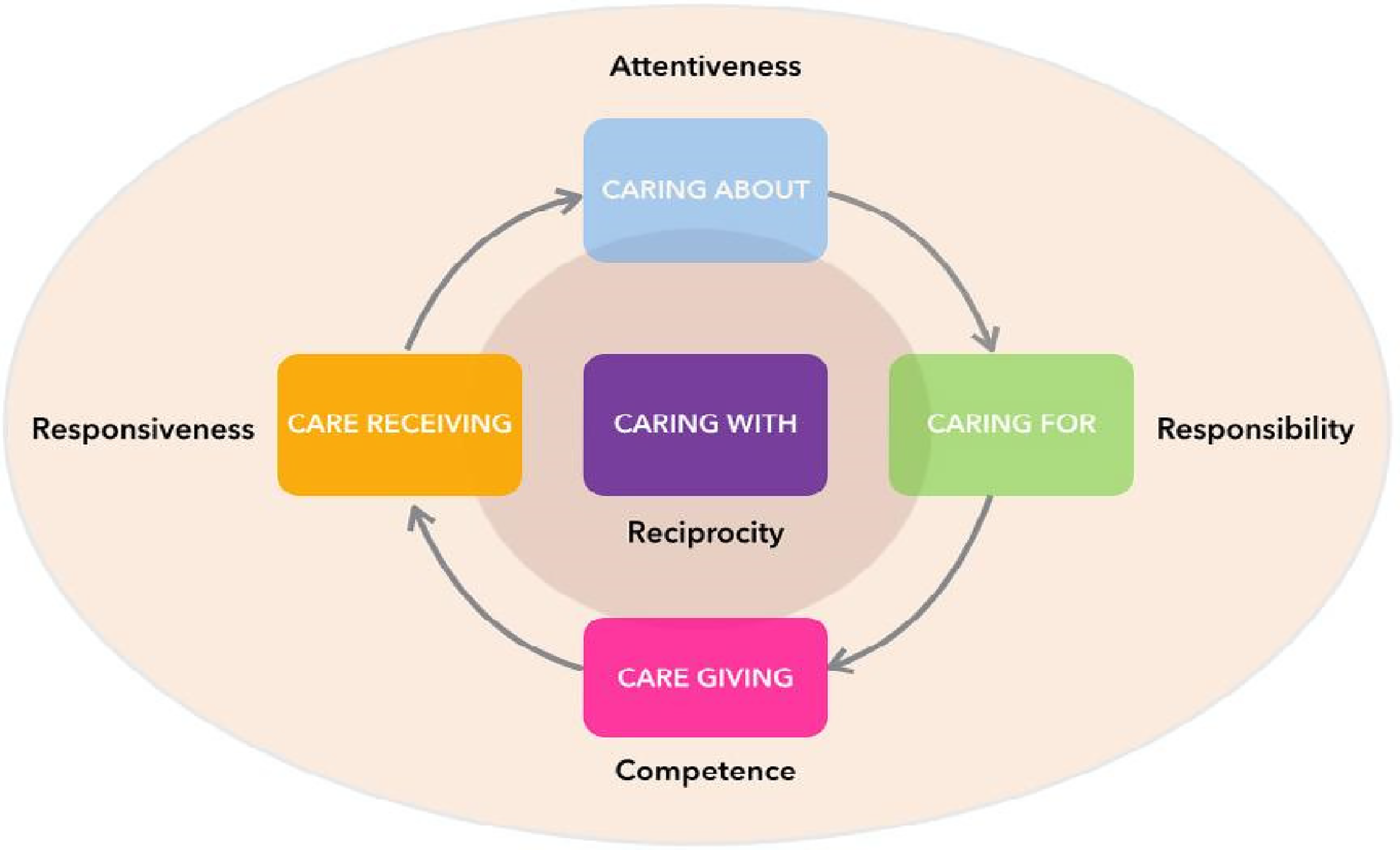
Visual representation of the five stages of care (Source: Moriggi et al., 2020a).
The five-stages are commonly described as beginning with ‘caring about’ which, tied with the moral quality of attentiveness, helps the individual identify others’ unmet needs (Tronto, 2013). Recognising the unmet needs and acting to fulfil them leads us on to ‘caring for’, which is linked with responsibility. In the following step, ‘care giving’, the actual work of care takes place; it requires the moral quality of competence (Tronto, 2013). Care practice is a reciprocal relationship between the caregiver and receiver; this is reflected in the fourth dimension ‘care receiving’. This stage is centred around the response of the care receiver. Observing these responses helps identify whether caring is being practiced in accordance with specific needs and whether other needs have emerged (Tronto, 2013). This leads us to the fifth stage of ‘caring with’, which emphasises that care process should be implemented in a way that attains the care receiver's dignity and empowerment; several moral values are included in this stage, such as trust, respect, justice and commitment and solidarity (Tronto, 2013). In Figure 1, Moriggi et al., subsequently use the term ‘reciprocity’ over solidarity as, for them, it highlights the opportunity for mutual learning and co-becoming (Moriggi et al., 2020a). The ethics of care framework views human beings as relational and interdependent members of an entangled web of connections with each other and with their surroundings (Moriggi et al., 2020b). As such, we need to understand our world in terms of the associations that bind us together (Lawson, 2007).
Introducing the care framework into research practice enriches the debate on how research can lead to and be a driver for transformation (Moriggi et al., 2020b). In that regard, the feeling of responsibility, which Tronto associates with ‘caring for’, is considered a crucial value for taking actions required to transform a particular situation (Brannelly and Boulton, 2017). For instance, at this point of the care process, the carers take physical action or decide to fulfil the unmet needs (Habrana and Battard, 2019). Responsibility is a dynamic and relational process; the relationships that can lead to responsibility are formed through various means of interactions, which can also extend to non-human matters (Tronto, 2013). A significant point here is that these interactions should be accompanied by a deep understanding of the situated context, interdependency and relationality, among others (Brannelly, 2018), which allows the responsibility value to flourish in a care process.
According to Moriggi et al. (2020a), responsibility is an outcome of embodying relationality and interdependence, and this dimension of care is associated with affective force (Puig de la Bellacasa, 2010). Building on this, we argue that care-full scholarship is a consequence of the embodiment of relationality at all the stages of the care and research process. Attending more consciously to such relationality might potentially create a transformation in research (Brannelly, 2018; Moriggi et al., 2020b), including by addressing the emotional and affective dimensions of empirical research processes and facilitating the iterative development of accompanying research tools - such as the VIC presented here. With regards to the latter, though, it is important to clarify that, care is not considered here as a methodological tool, but rather an approach in research, which contains and reconstructs relational powers through engagement and response among researchers and research participants (Stangret, 2021). This view aligns with participatory ethics by emphasising the continuity of the approval process (Pyne, 2019). Ethical research practice requires responsibility and commitment (Elwood, 2007; Bussu et al., 2020), which goes beyond not ‘harming’ (Cahill, 2007). In other words, this dynamic of interaction involves a certain ‘rationality of care’ (Pyne, 2019: 209), and applying this framework in social research practices moves it from the stage of documentation to the creation of change (Brannelly, 2018). This is achieved through acknowledging empathy and restructuring social relations in research settings (Manzo and Brightbill, 2007). Through reflecting on the development of VIC, in the remainder of this article we highlight how feelings of mutuality and moral values of care can guide the creation of new research tools which are more attuned to participants’ needs.
Methodology
The broader context, gaining entry and role of researcher
The main aim of the research project, within which the VIC was created, is to explore to what extent engagement in urban gardening and related environmental practices affects the health of migrant women, with a particular focus on the relationship between agroecology, motherhood and health. 4 To investigate this connection, migrant women were involved in various activities, ranging from learning how to grow plants at home following principles of agroecology to learning about their health benefits and producing some food/health products with these plants via action-learning workshops. After comprehensive scoping for prospective projects, the workshops were conducted at a women's group run by Coventry Refugee and Migrant Centre (CRMC), with which I was already serving as a volunteer. I recorded detailed notes during (and immediately after) the workshops. In follow-on, four participants also agreed to participate in a semi-structured interview allowing me to delve deeper into their workshop experiences. Here, I focus on one of the first-hand experiences that I faced while working with the women's group, which led to the emergence of the VIC.
Over three months of volunteering with the women's group, I developed amicable relationships with the mothers, which fostered a sense of trust that later helped me come forward to introduce my research project. The volunteering experience brought me closer to the women's daily lives and struggles, which I can relate to, being myself a migrant-coloured woman residing in a country that does not speak my mother tongue. We often live and belong to several groups at the same time, and this gives us the fluidity to be insiders and outsiders from each of them (Roberts, 2018; Adeagbo, 2021): while a migrant, I was still a researcher who belongs to an academic institution. Thus, I was neither only a researcher, a migrant or a volunteer during the research process; I was entangled in multiple worlds with a corresponding status described by Roberts (2018) as a ‘transient insider’.
The commonalities with the participants informed my actions; for instance my wish to support these women so that they might feel empowered (Cornwall, 2016), to enhance their quality of life by providing them with the tools to take care of their bodies and health. This willingness to support the women was my inner compass. This is in line with (Horlings et al., 2020: 479) description of an ‘embodied researcher [who] ideally practices research informed by the heart’. Therefore, having this role as an embodied researcher and a feeling of responsibility toward the women's group led me to continue working with the participants regardless of the challenges faced. The main challenge manifested in the difficulty of communicating the research project and the informed consent. The women had limited knowledge of the English language, and it was hard to ascertain in advance, their ability to read it. This in turn also speaks to the wide range of differences simultaneously in play between myself and the participants, including my residency status and fluency in English due to my educational background. That the latter could lead to participants’ assuming that I am of a higher socioeconomic status inescapably created a power inequity between us.
Moreover, as a researcher affiliated with an academic institution, I had to begin my field work by asking the women for their informed consent to participate. As the women hesitated to sign the informed consent, I began to reflect deeper on how their social condition impacted on our interaction. As I learned, this hesitancy was due to their unsettled residence status and fear of formal processes. I therefore had to resort to verbal consent, which I did with the help of a language interpreter to explain the process in detail. But still, if the participants wanted to reconsider later on, it would not be simple for them to read the forms again to know their rights. I concluded that, going forwards, by also communicating informed consent visually this would maintain the participants’ rights to be informed and their dignity in reconsidering and taking an independent decision regarding their participation in the study. Notably, the VIC duly developed is not intended to eliminate the significance of explaining and securing informed consent with the support of an interpreter or by translating the original written documents into the participants native language; rather, it is proposed as a care-full accompaniment.
Development of the VIC
To ensure that all the required information would be present in the VIC to fulfil the legal and ethical requirements, I sought advice from an ethics committee member at Coventry University. Also, the third co-author of this article was involved in the process and facilitated discussion and reflections with the Ethics Committee as the Ethics lead of CAWR 5 at the time. The ethics committee reacted positively regarding the VIC. Based on our discussion, we defined the following components, which are illustrated in Figure 2.
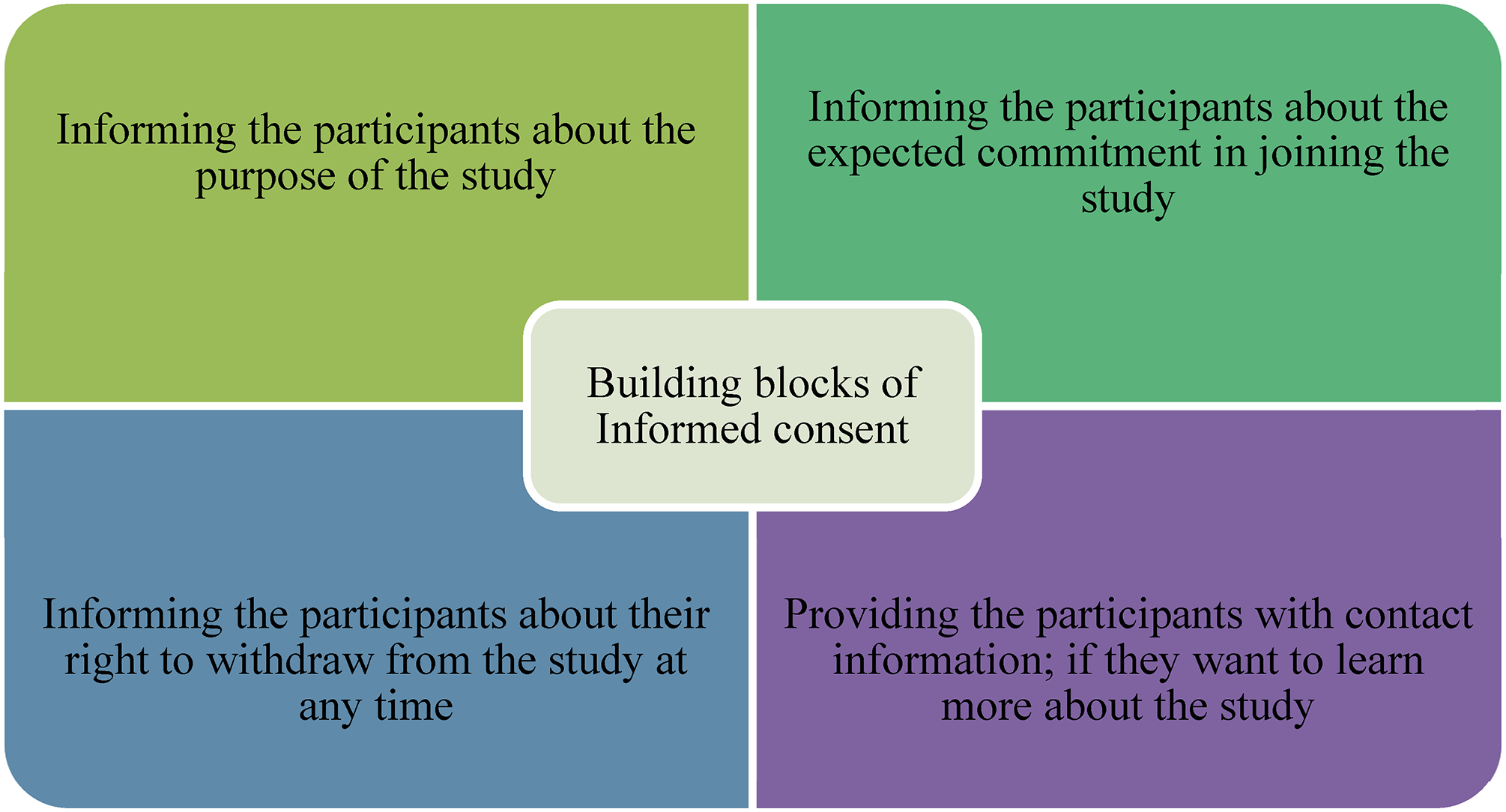
The building blocks of informed consent.
Considering these points and the fact that Coventry University requires PIS and consent forms, I developed a script without involving the target group. This top-down approach was used at this stage to ensure that all the essential information was present. A storyline was developed about a young researcher recruiting women to participate in her study, with her explaining the whole research process to the participant via interactive dialogue. I developed the VIC in comic format, where sequential images were used in the first part of the VIC, ‘the PIS’. Furthermore, different graphics were used to clarify each statement in the second part of the visual document, ‘certificate of consent’.
The images were developed in collaboration with a visual artist who is experienced in graphic recording and facilitation. She was briefed on the aim of the VIC and what is required for informed consent in an institutional ethics review context. She was given freedom to come up with the primary draft of the drawings. Then we went through an iterative process of modifying the graphics. According to Pettersson (1988), image content can be perceived differently among different people. The emotional state of the same person affects how they perceive images (Stoeckel et al., 2007). To reduce this gap and ensure that the intended message is delivered to the audience, the primary researcher and other academic colleagues - some of whom were non-native speakers of English - reviewed each draft of the drawings. The review process happened independently with each colleague to avoid influencing each other's opinions and perceptions. Without a doubt, their suggestions were valuable and included in the feedback communicated to the artist. This iterative process of review by different academic colleagues helped integrate different perceptions and emotions into the development of VIC.
Receiving feedback
The revised version of the VIC was then further tested with community members who were otherwise unfamiliar with ethical research processes. The first round of this occurred between May and June 2020 with four mothers in the West Bank, Palestine, as it was hard to reach the women's group in Coventry due to COVID-19 restrictions. The age of the participating women ranged from 45 to 60 years old; they were all mothers and their exclusive work was caring for their families. They had limited knowledge of the English language and could not continue their education after high school. The second round occurred in September 2021, as part of my return to the field for data collection in Germany once the pandemic regulations had been eased. I interviewed four women all aged between 30-40 years; although all were fluent in English, it was still not their first language. They all had a bachelor's degree and were all professionally employed. The participating women had the choice to read and sign the official informed consent and the VIC; they were subsequently asked to critically reflect on the VIC. The participatory action process for developing the VIC is summarised in Figure 3.
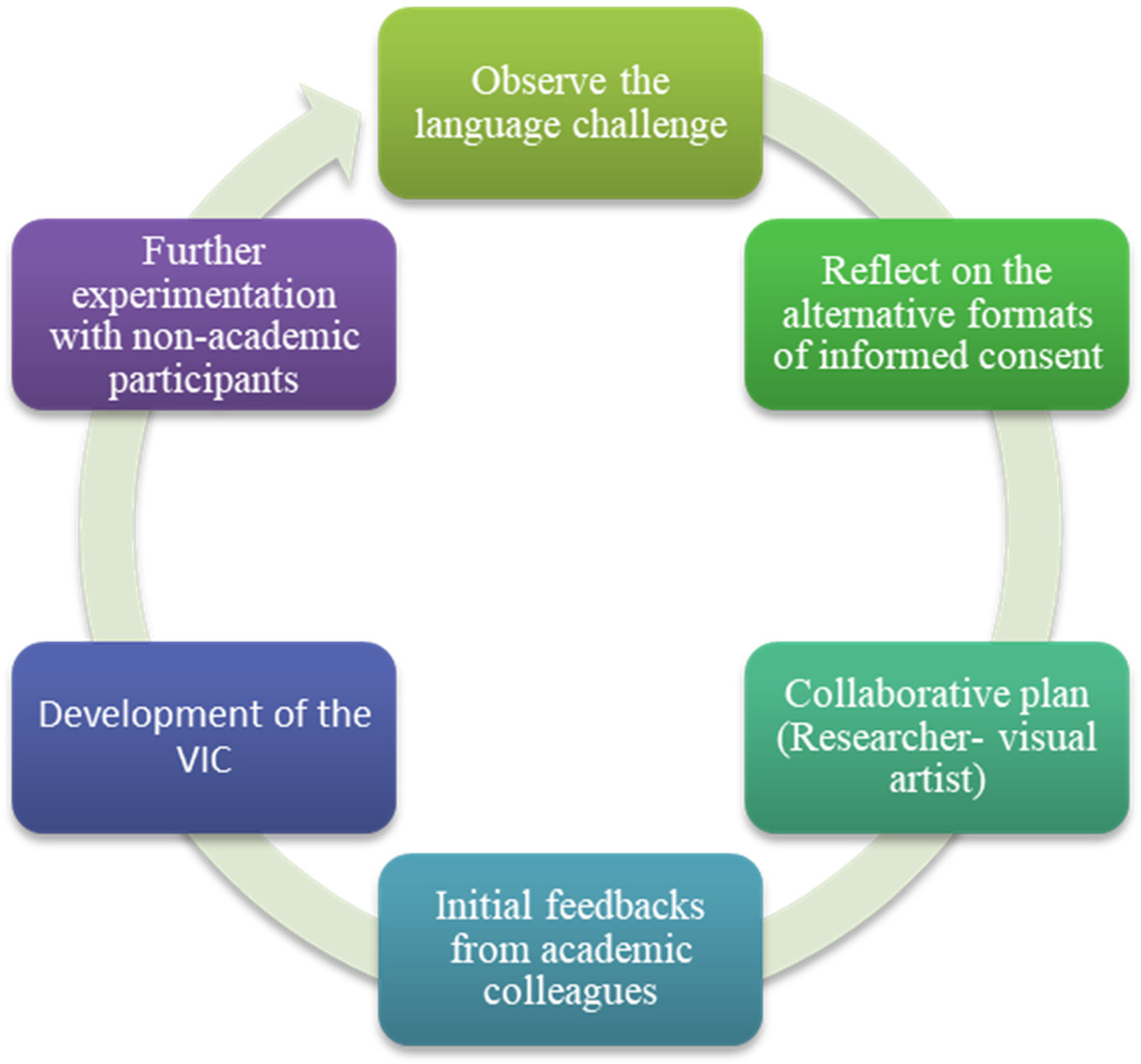
Summary of the iterative process of developing VIC (inspired by Anderson and McLachlan, 2016).
Results
During the process of developing the VIC, I had to respond and reflect on four prominent dimensions. The first aspect manifests in the nature of the research participants; in this context, migrant women. The second aspect is my relationship with the visual artist, which includes discussing style, format and illustrating objects. The third is the academic institution I was associated with, which is reflected in ensuring the presence of the main building blocks of informed consent (see Figure 2). The fourth dimension is the participatory approach in research, which is manifested in the co-dependency in the research process between the researcher and the participant, considering the research context and being responsive to the participant's needs. All the dimensions are nested within each other and entangled with the participant's social, cultural and educational aspects to develop a situated tool tailored to their needs. As the first dimension has been discussed above, this section will focus on the remaining three.
Researcher-artist
The VIC aimed to meaningfully integrate words and images using simple language, to which individuals with limited English skills could understand and relate. I drew on my acquired embodied knowledge during the volunteering time and informal interaction with the women's group run by CRMC. Hence, I tried to minimise the dependency on words and chose an artist whose style is simple, attractive and relatable to the women's daily lives, which would help them make a self-reference and emotional attachment with the drawings. Accordingly, I chose a visual artist with a simple, cartoon-like drawing style. This drawing style is found to catch the eye and engage people (Shurkin, 2015); as such, it can make communication more effective and informative. Moreover, the selected artist uses lots of colours to identify different characters and objects; this makes the visual transition between the comic's panels easier by highlighting the key components. The use of colours is also more engaging and attractive to the readers (Augereau et al., 2018).
The participant's responses in the second testing phase of the VIC were positive and acknowledged these aspects. The colours of the comics attracted them to read and made the information easier to grasp. One of the participants said: ‘The green colour was used a lot in the drawings which gives a comfortable feeling, catches the eye and gave me an idea that your research is related to the environment’ Ha23
Another way to reduce the dependency on words was by using more symbols and ideograms. These support understanding and also help to ensure that potential research participants will not feel alienated from the drawings. For example, ✓ and × were used to indicate yes and no, whilst a lock symbol (see Figure 8) was used to indicate protection and safety. However, sometimes more than one object was needed to represent a word. For instance, in describing a researcher, we used different objects associated with a researcher: a university, a notebook and a backpack (see Figure 4).
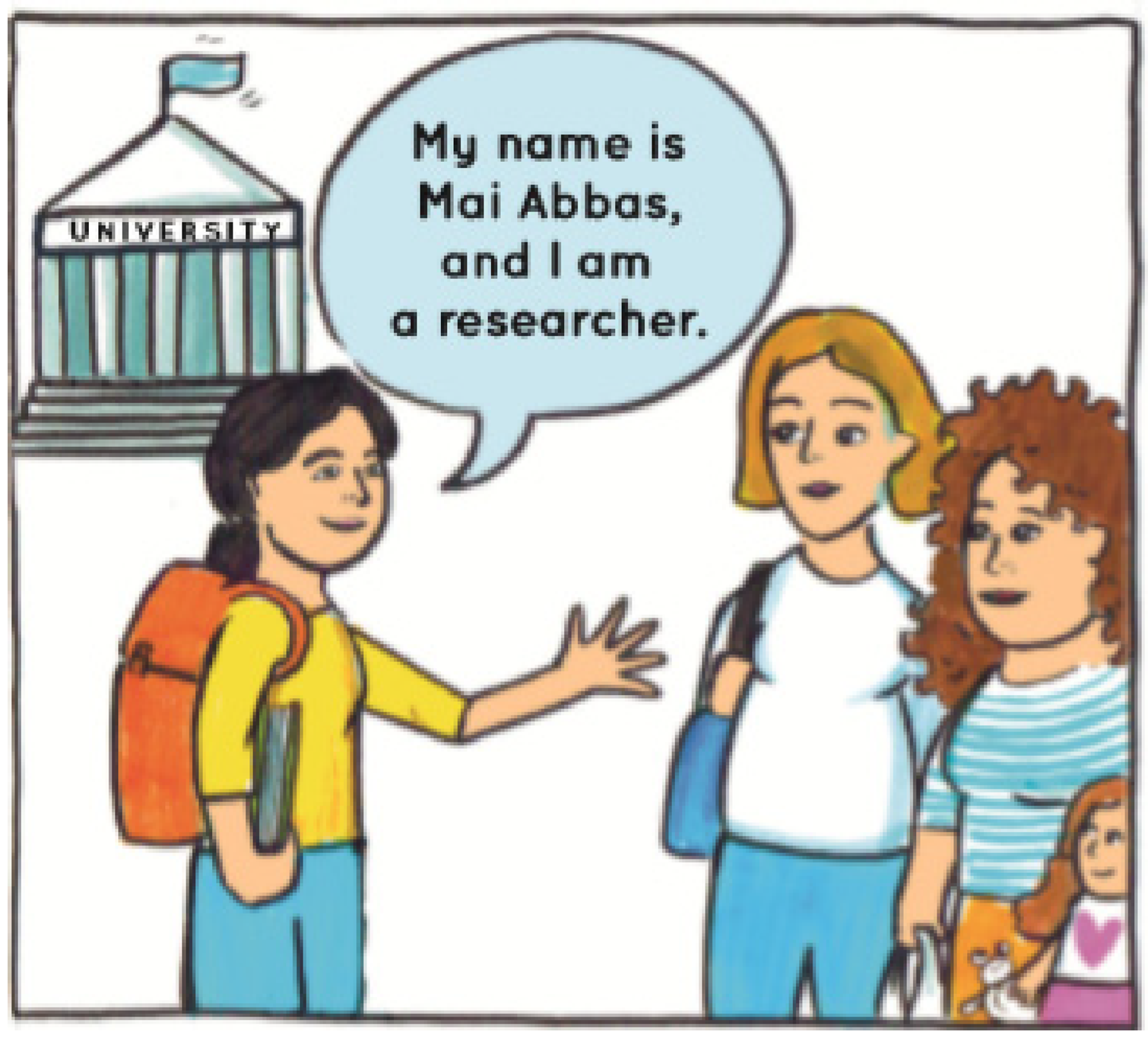
Representing a concept using different objects.
During the first round of the testing phase, I found that the comics’ text was not as simple and easy to grasp as I had intended. For example, the participating women did not know some words in the dialogue, such as ‘researcher’ and ‘withdrawal’. Nevertheless, they could still get the researcher's meaning and relate to it from the drawing. For instance, the participants realised from the pictures that Mai is a university student, because of the backpack and the notebook she holds and from the university in the background. However, the women did not fully understand the meaning of the withdrawal concept; this will be discussed in the coming section.
Researcher-institutional ethics
Within an institutional ethics framework, researchers need to be clear and explicit with the participants about how data will be collected and handled within the institution. Ensuring participant comprehension of this both adds to the integrity of the research and corresponds with the rights of research participants, especially with the development of the General Data Protection Regulation (GDPR). Due to sensitive data issues in research, I collaborated with the artist in an effort to show how data will be handled in a simple way that meets the participants’ capabilities. For instance, a notebook was used in the drawings to represent the different stages the data go through (see Figure 5).
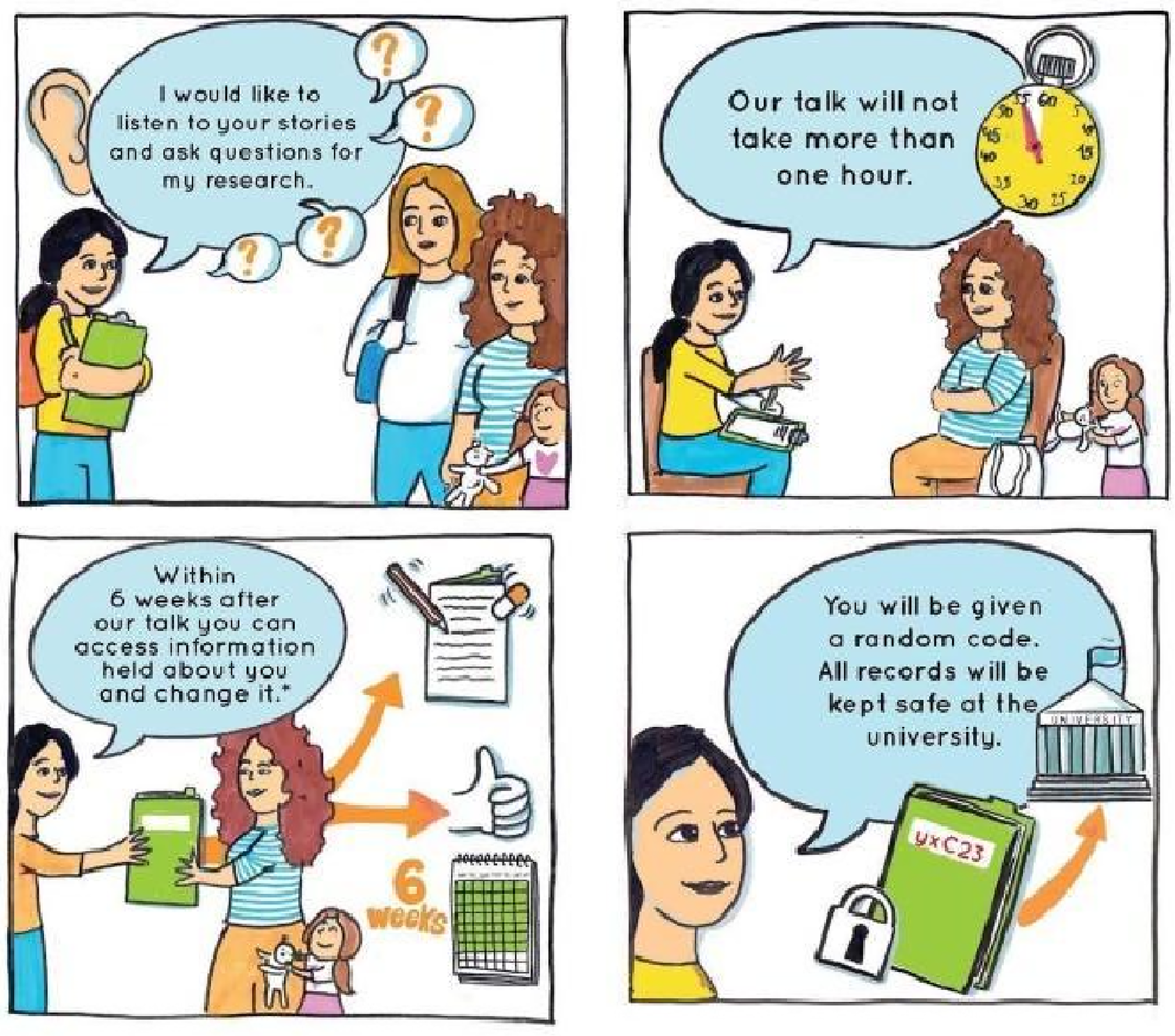
Different stages of handling the data in a study.
Another one of the main pillars of informed consent is explaining clearly the withdrawal process and a participant's right to withdraw from the study at any time. Visualising this concept was one of the main challenges; it is not only one action, but a series of steps, which is hard to show in one drawing. We responded to this challenge by using two approaches to represent the concept to ensure that participants will have a higher chance of comprehension. The first approach was described in the PIS, showing that the participant could rip-up the study. The other way was depicted in the certificate of consent, where the participant changed her mind and did not want her interview to go into the study. Going through this challenge of representing the withdrawal concept made me further appreciate what laypeople have to bear when dealing with official documents.
According to the women's responses during the first phase of testing the VIC, it was unclear why the participant could shred the document within six weeks. This observation indicates that representing the withdrawal concept by showing a shredded document was ineffective. However, the participants could comprehend the withdrawal concept from the second visual attempt to represent it, with all of them identifying that the woman did not want her interview to be used in the study anymore. Reaching this final version of the drawing was not one step, and the drawing went through many revisions. For instance, the first attempt shown in Figure 6 has three arrows and a tick in the middle, which I and the colleagues I approached in the initial stage of review found complicated and challenging to understand.
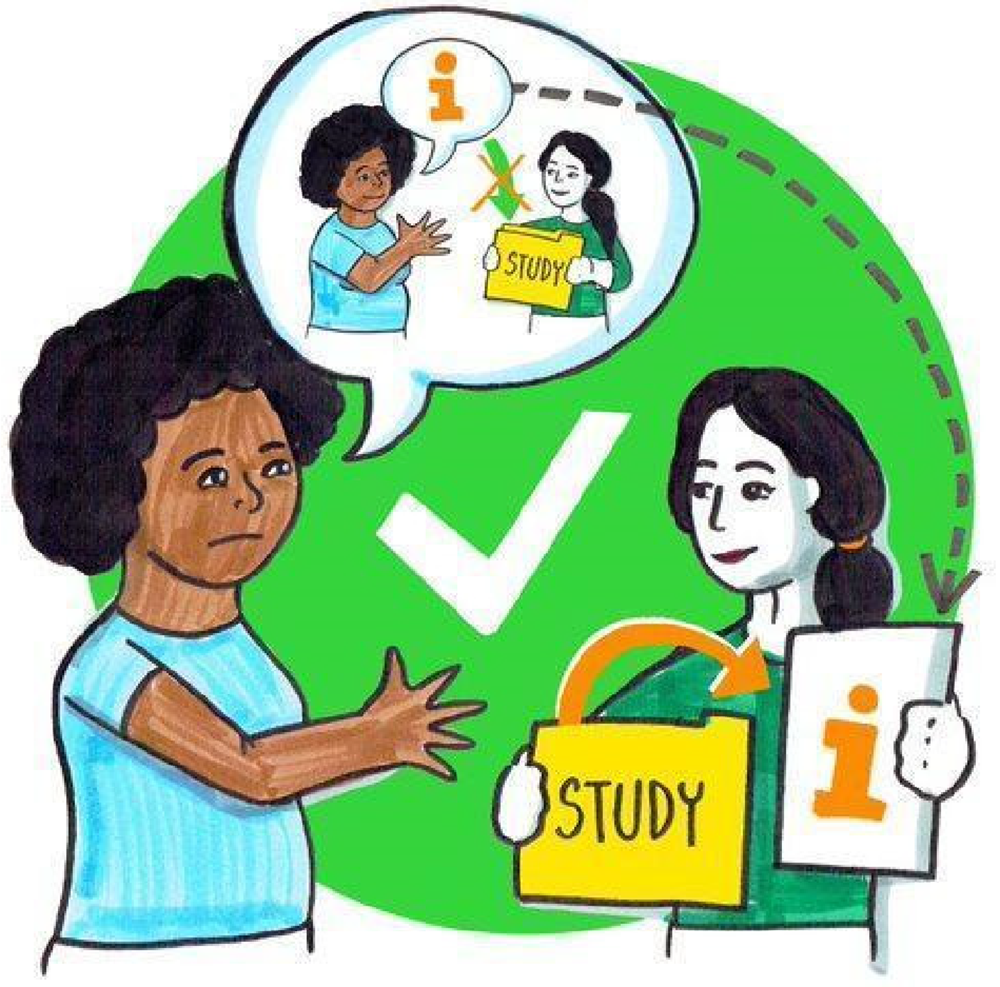
First attempt at illustrating the withdrawal concept.
Accordingly, I collected their insights and discussed further with the artist and we came up with modifications to make the drawing more straightforward and understandable. We concluded by removing the back arrow from the speech bubble and making the researcher interact directly with what the participant shares, as shown in Figure 7.
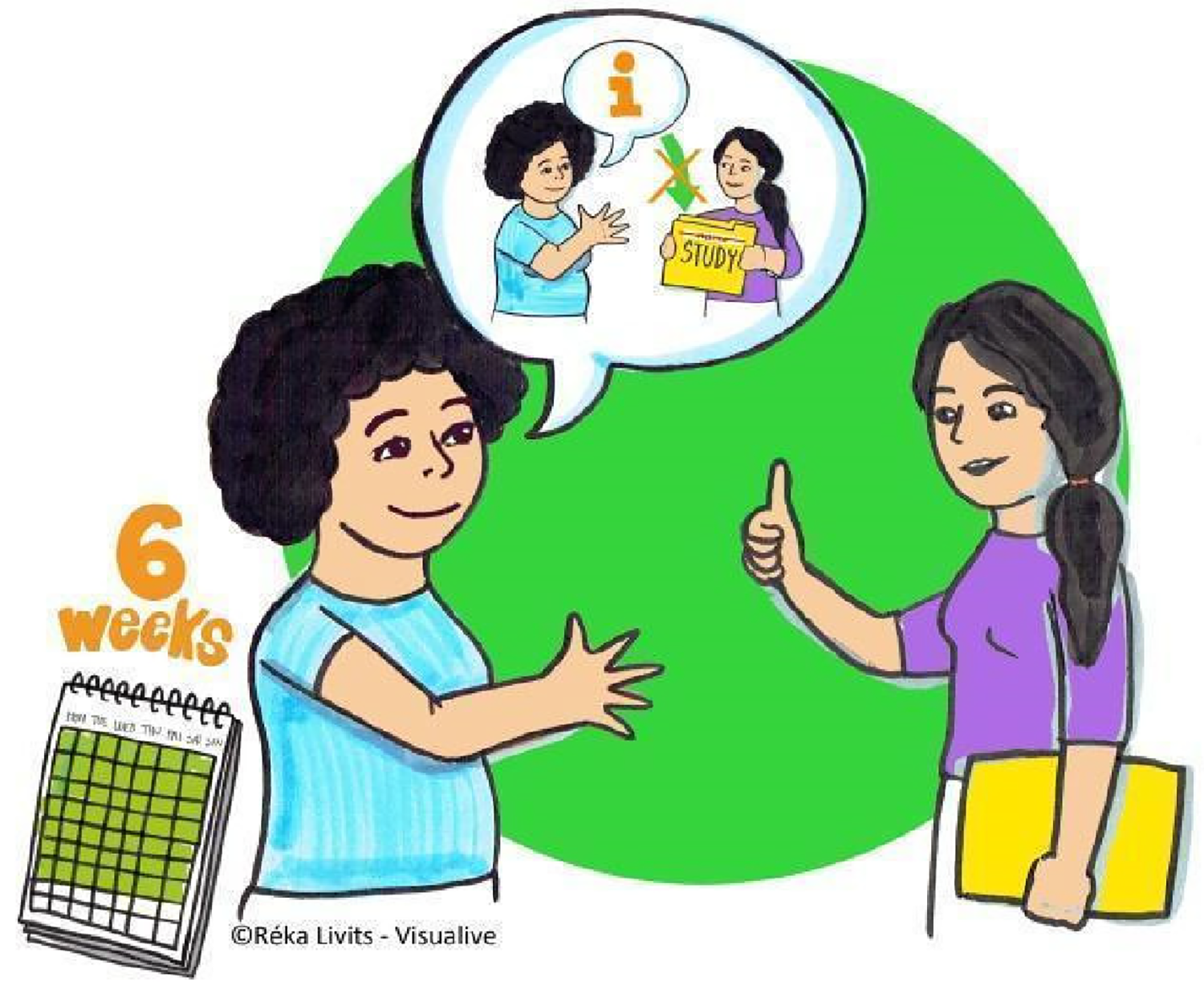
The second attempt to illustrate the withdrawal concept.
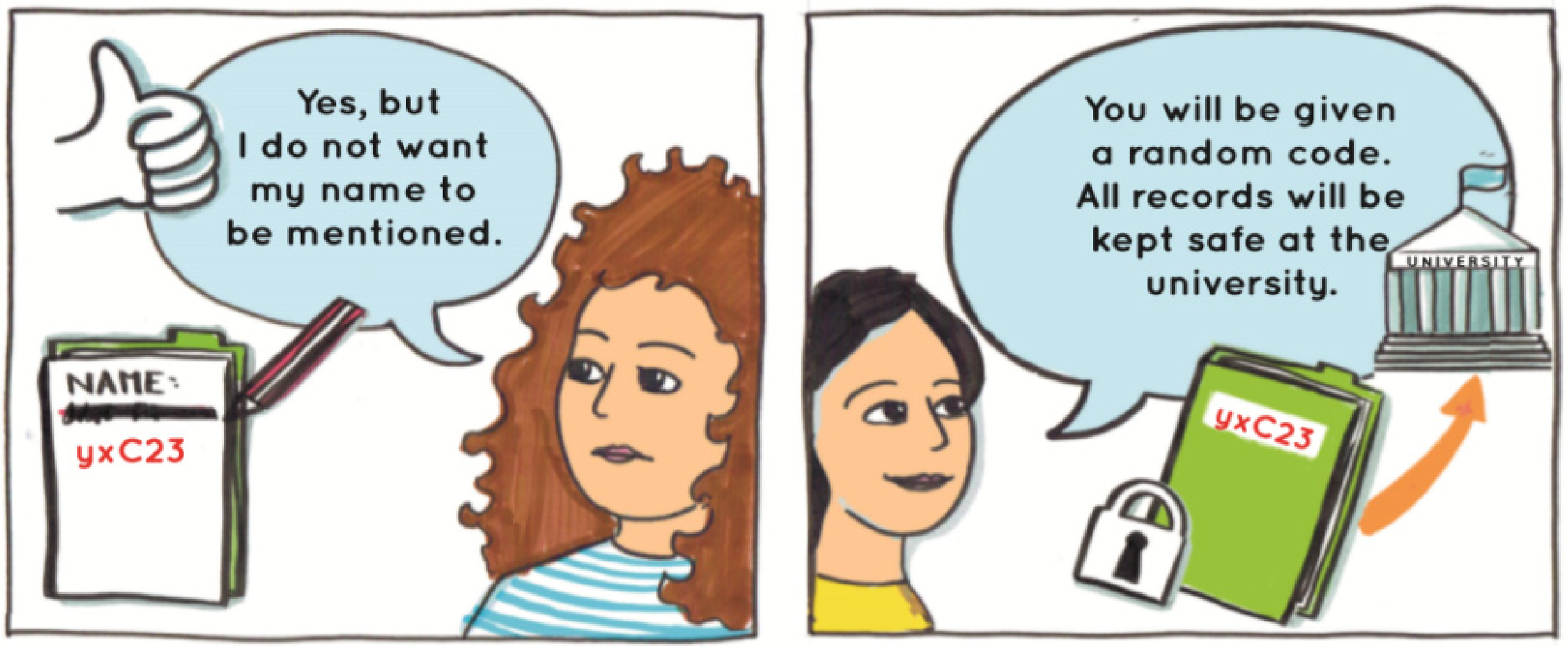
Coding and keeping data safe.
Researcher-participatory ethics
Through my attentive engagement with the marginalised women's group in Coventry, I realised the need for a feeling of security. It is a significant point to keep in mind when preparing a VIC for marginalised groups who have limited knowledge of the English language, unsettled status, or are subjected to violence. I tried to address this in the drawings by showing an immediate response to the participant's wish for anonymity. For example, in Figure 8, the woman does not want her name to be mentioned, and as a quick response, the researcher deleted her name and gave her a code (picture on the left). Intentionally, I tried to make the code look a bit complicated with a combination of letters and numbers. I aimed to give the participant an impression that the code is hard to guess and is not associated with anyone's identity, which provides a feeling of security. This emotional aspect was emphasised more in Figure 8 (picture on the right). The researcher shows the participant that coded data will be kept safe in the university; the lock indicates this.
The participants in the testing phase responded positively when asked how they received the lock and the code representation. They stated that it was clear how the data would be treated. The combination of letters and numbers gave them the feeling of a high level of privacy, which is not associated with their identity. For instance, Mo22 commented: ‘Also, the idea of changing/coding the name was really nice and I liked it. I liked how you scraped the name and gave a code. [Interviewer:] What does that mean to you? The participant will not be known and guessed’.
One of the main challenges was choosing the skin colour of the participants and the researcher. Crucial here was to not imply a superiority of one ethnicity over another and also to break down the colonial stereotype of the ‘white’ researcher, which was exactly what the artist had offered at their first attempt (see Figure 6). I searched for different skin indices and decided to choose the medium skin colour index, as I felt it identifies better with the participants’ and the researcher's skin colour. To avoid any skin tone bias and the risk of stereotyping in the VIC both the researcher and the participants had the same skin colour. During the testing stage, one of the participants acknowledged the diversity of people in the graphics and mentioned no bias toward a particular ethnicity or body shape. She said ‘I liked the drawing style, and it covers a wide range of people, so it is not biased toward a certain ethnicity’ Ha23.
In the research context depicted in the current VIC both the researcher and the participants were females, with no male representation in the VIC. Obviously, this may not be the case in other settings. Thus, whilst many of the graphics are relatively universal in their application, some are not. Either way, researchers should think critically about the appropriateness of each graphic before using it in their study. This can be achieved through knowing and having an explicit discussion with participants about how they are represented in the VIC, especially regarding gender, skin colour and ethnic -distinguished facial features, and accordingly whether they are able to identify with the drawings.
Another significant issue in participatory research is the desire to achieve a non-hierarchical relation in a research context and highlight the role of participants in knowledge creation. I tried to emphasise this type of relationship and the participant's active role in the research process by showing a participant holding the study and agreeing with its content (see Figure 9).
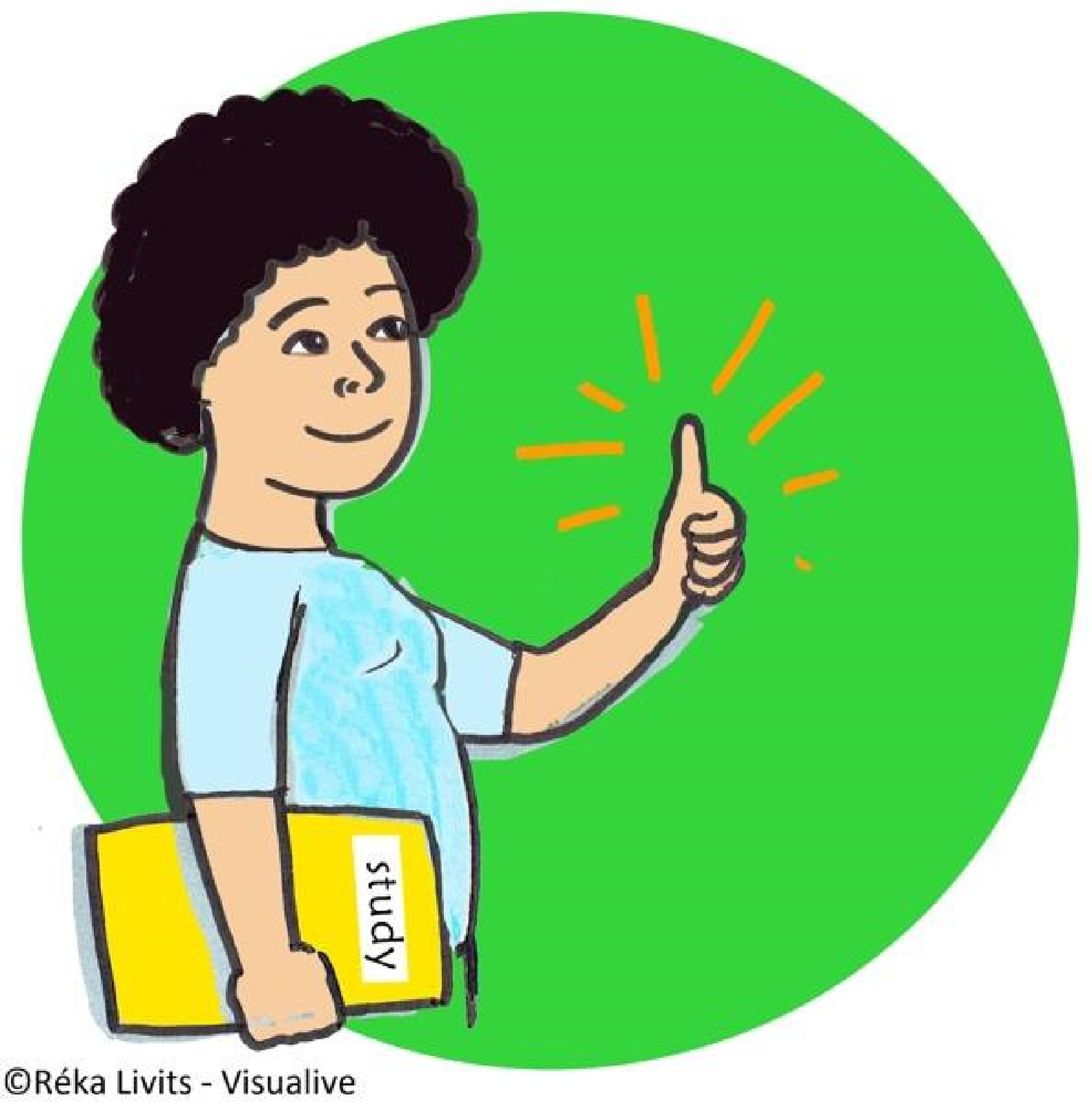
The participant has a role in knowledge creation.
Discussion
Insights of being a care-full scholar
While creating the VIC, I reflected on my positionality as a researcher; I found a balance between my desire to support the participants in the CRMC group, to adhere to the institutional context I was associated with, and to fulfil the requirements of informed consent. More broadly, the written reflection on the iterative process of developing VIC shared in the previous section provides rich insights into different relations that social scientists are engaged in within the context of empirical fieldwork. This comprises institutional and participatory ethics dimensions and substantial emotional aspects toward participants. Using an ethics of care lens provides a deeper understanding of the role of the researcher and the ability to respond to the different relational ties in a research context. Therefore, based on the situated experience of developing VIC, we propose the following framework (Figure 10) to illustrate how an ethics of care can be applied to research practices.
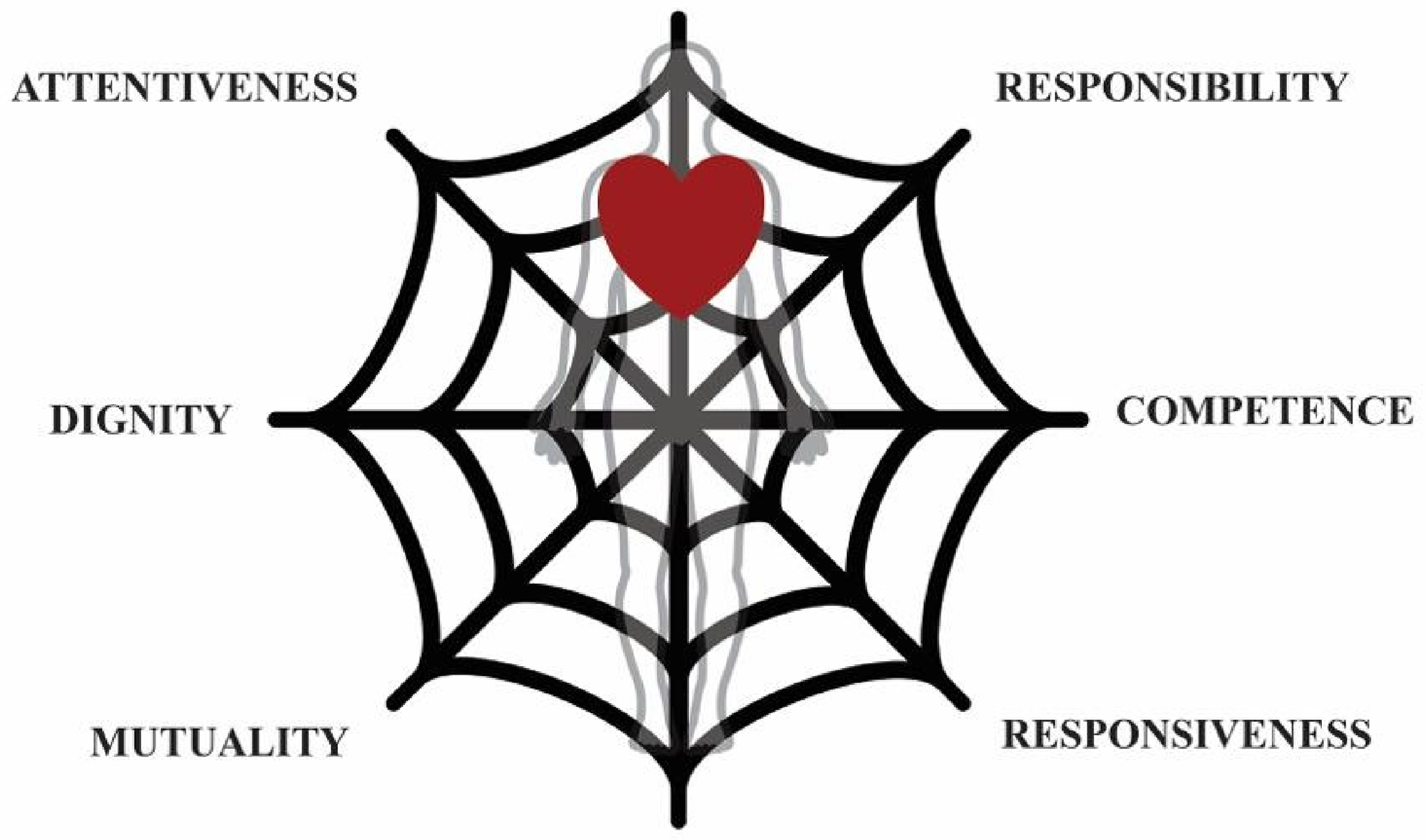
A framework of being a care-full scholar.
The figure represents an embodied researcher (Horlings et al., 2020) who is embedded into a web of connections; their decisions are informed by the heart and guided by the morals of the ethics of care. These ethical values are interrelated with each other; therefore, they are placed in a spider web. Ethics of care considers ethical behaviours as relational (Bozalek and Zembylas, 2021; Brannelly, 2018; Manzo and Brightbill, 2007; Tronto, 2013) and emphasises empathy in the research context (Manzo and Brightbill). These core elements helped in the development of a VIC, with an ethics of care framing providing a more profound understanding of the situated interactions, interdependency and relationality among the various connecting parts. In this research, I dealt with six interrelated values to develop the VIC. Furthermore, the depiction of these interrelated values shows three circles radiating from the researcher: the most inner circle representing the close tie to the participating women, the middle circle representing the collaboration to the artist, and the outer circle representing the institutional element, i.e., Coventry University rules. Realising this web of interconnections and being aware of my role was a significant element in allowing me to respond and create an innovative tool that mimics the context I am embedded in. Also, this allowed the relationality of care to flourish and enhanced my ability to respond to emerging issues and experiment, which was of crucial interest in this study.
Based on my empirical fieldwork experience, I realised that some moral values facilitate and enrich others. This is represented in Figure 10 by placing these values on the same line. Also, instead of the reciprocity moral mentioned in Figure 1 and put forward by Tronto and Fischer, mutuality and dignity were used as more befitting for explaining my inner motivation of developing the VIC. For instance, a feeling of mutuality with the participants is a crucial point to change intention into action (Moriggi et al., 2020a), which in turn creates responsibility. Thus, in Figure 10 mutuality is located on the same line as responsibility. Also, that a researcher's competence builds over the research process, further supports the development of research tools or processes that respect participant dignity (Smith, 2012). And finally, attentiveness and responsiveness are on the same line on the basis that the researcher needs to be attentive to the participant's needs, as well as to their responses to the context.
Building a care-full tool
Common ground between participatory ethics and an ethics of care lies in the relational powers, where both approaches work towards decolonising research aiming for social justice (Lie and Witteveen, 2017; Brannelly and Boulton, 2017). According to Smith (2012), the main goal while conducting research is to develop effective and culturally appropriate respectful approaches for communicating with communities as a way to maintain their dignity. This occurs through an active engagement with the community members, which contributes to building trust and honesty between the researcher and the participant (Algeo, 2012; Raheim et al., 2016). During the volunteering period at the women's group, I built tight relational ties with the participants. Through active and attentive engagement with them, I was able to identify the unmet needs which fall in the stage of ‘care about’ (Tronto, 2013). Being a non-native speaker of English who was realising mutuality with the community members made me more aware of the challenges the women are going through. When it subsequently came to conducting research, this preceding awareness was a crucial step to act, i.e., a responsibility to find an alternative format for the written informed consent.
Attentive engagement and embodiment in the research context are essential to get to know the participants and build a VIC to meet their needs and cultural background, while still considering the research goal. Consequently, each VIC should be tailored to the research context. For instance, the gender and the skin colour of the participants in the presented drawings can change, in a way that community members can still self-relate with the characters. Also, the visual elements should be chosen according to people's understanding, culture and environment. Besides that, the illustrated research activities in the VIC should be modified to meet the research goal. Thus, the development of the VIC is an iterative and experiential process, which is valued in care ethics (Brannelly, 2018). For example, in the second stage of testing the VIC, one of the participants suggested having informational video clips instead, which could be in the form of an animation, talk-to-camera, PowerPoint talk-over, or a mix of everything as an effective and playful way to deliver the information. This suggestion is in line with Hammond and Cooper's (2010) approach of informing participants via digital podcasts. This highlights the potential value of also engaging other senses in the informed consent process.
A potential limitation in the presented VIC is that it is in English and not in the native language of the research participants. The focus in the development of the document was on using detailed and enriched visuals with the support of simple English, as some of the participants in the women's group were illiterate. Thus, the presented work can still be improved by simplifying the text more, adding more visual elements, adopting a different graphic style with several sequential drawings to illustrate a concept, or by translating the document into the native language of the participants. A more participatory strategy can be adopted for developing the VIC, which could be achieved by more cooperation in the production process (between researcher-artist-participants) and by eliciting the participants’ views regarding the drawings at different stages.
Visualising concepts in VIC
One of the goals of VIC is to reformulate lengthy informed consent into a more user-friendly format. For instance, in their work Perrault and Keating (2018) shaped the informed consent in to different visual presentations using bullet points, diagrams and larger line spacing. They found that participants preferred short forms and brief messages. In our VIC, we tried to achieve the latter by developing short and concise messages in each image, which were all bound together to form a comic-style document. This form of representation of information facilitates memory formation, improved knowledge acquisition, and enhanced readers’ engagement (Farinella, 2018; Friesen et al., 2018, Fleming et al., 2018). Based on our experience, the participants in the testing phase appreciated the VIC regardless of their English level. They acknowledged that the use of comics facilitated and supported the consent process. It made the information more engaging and easier to grasp and saved them time reading long documents. Researchers in the medical field have made similar observations (Creed-Kanashiro et al., 2005; Farinella, 2018; Grootens-Wiegers et al., 2015). Thus, using visuals to communicate is proved to be an effective tool. It goes beyond merely facilitating participants’ understanding of ethical issues, to working towards empowering them to also better understand their agency in the unfolding of all stages of the research process.
To avoid misinterpretation in the VIC, a combination of text and images was chosen, as having only graphics can lead to freedom of interpretation (Pettersson, 1988). In particular, there is no one way to illustrate a concept since each person has different perceptions. This diversity may lead to conflict when more than one person is involved in the production of the form. Due to this, effective communication and openness between all those involved is essential (Tatalovic, 2009). In the case of our VIC, if I had the skills to create the drawings by myself, the process of visualising would have been shorter. I would not, for example, have needed to clarify in advance the concepts used in the informed consent to the artist, or even the sensitivity of how to represent the characters. This falls in line with Eisner's (1996) view that the ideal situation in science communication is when the writer and the artist are the same person. The artist can distort the writer's vision when translating the script into images by adding different elements and views (Eisner, 1996). However, based on our experience, this challenge can be overcome through regular and open communication feedback sessions, which are based on respect. This way of interaction helps to find common ground and harmony between the researcher and the artist. In our case it is also worth noting that in the end it was constructive to work with an external artist. Such transdisciplinary working with someone outside academia helped break the relative rigidness around the institutional ethics process without diminishing its vital elements. This was accomplished by describing the consent process to the artist while she drew preliminary sketches of the components that resonated with her. In projects where there is no funding available to employ an artist, an alternative way of constructing a VIC could be using a collage method. This method is based on using various pictures, words, fabrics, and other available materials, bringing them together on the page to deliver a certain message and story.
Through the process of visualising concepts, I not only responded to my different relationships (academic institutions, artists, and community members), but I also changed by co-learning new skills. For instance, I built competence in the field of science communication by learning about different methods of communication and styles of visualisation via literature review and conversations with the artists. Also, I gained experience in breaking down concepts into several elements and delivering the information in short, concise messages.
Mediating between institutional and participatory ethics
The VIC tried to highlight the common ground between institutional and participatory ethics. This mutuality is reflected in protecting and respecting participants’ privacy, safety, physical and emotional wellbeing (Pyne, 2019). Furthermore, the images in the VIC were enriched by highlighting the core elements of participatory ethics mentioned in section 3 and this necessitated having a shared dialogue between the researcher and the participant at all the steps of the consent process. This collaboration contributed to reconstructing relational powers in the research process (Brannelly and Boulton, 2017; Lie and Witteveen, 2017). The latter points were highlighted in the VIC by showing that securing consent is not a one-step activity but requires ongoing interaction between the researcher and the participants. This interaction is based on transparency, mutual respect and fruitful discussions. Even though the VIC is far more user friendly, the legal standards of academic institutions (in this context Coventry University) still require the extensive written version.
Accordingly, the VIC should be introduced to the participants in a quiet place, where they feel comfortable and at ease. The participant is required to go through the form and take their time reading it and then come back to the researcher if there are any questions or a need for clarification. After that, to ensure that the participant understands the points in the VIC clearly, the researcher should go through the different sections of the VIC with the participant and clarify them. In the end, the researcher will introduce the extensive written version, explaining that this version provides more detailed information. The researcher should also demonstrate that the participant has the right to take time to read this more elaborated form and that there is the possibility to raise any questions that might occur. The participant needs to keep the extensive written version of the informed consent for future reference if they do not remember some of the details in the visual version. Through this approach to developing and implementing VIC, the main elements of participatory and institutional ethics can be navigated whilst also promoting a space for a dialogue between the two approaches.
Conclusion
The present work aims to provide an empirical contribution to how ethics of care can be applied throughout the research process. This article achieves this by reflecting on my personal journey and inner motivations for creating a new research tool, a ‘VIC’, which is more responsive towards the participants’ needs and capabilities. This reflection process led to the realisation of my positionality as an embodied researcher guided by an ethics of care. Accordingly, we brought together feminist care ethics and the notion of the embodied researcher into a single conceptual frame.
VIC represents a practical, applied, tangible means of achieving informed consent; it encourages a deeper understanding of the role of the researcher and research participant, as well as their ability to respond to one another and to the different relational ties circulating within their particular research context. VIC is versatile and can be used with any target group. It is believed that it will be especially beneficial when working with marginal groups, children, the elderly, and participants with learning difficulties or those having limited knowledge of the research language. The presented experience may also encourage researchers to use more visual and creative methods of communication when going through the complex, uncertain journey of securing ethical consent. Ultimately incorporating a VIC offers a way of becoming better able to respond to the needs of participatory ethics through a care lens.
To conclude, introducing an ethics of care framework into research practice enriches the debate of how research can lead to and be a driver of transformation. Care-full scholars can call upon care ethics as a theoretical lens but they need to also attend to translating it into tangible practice, as practice lies at the centre of this lens. More research is needed to understand better how collaboration and integration of ethics of care can be applied throughout the research process and how it can be incorporated into the relationship between institutional and participatory ethics.
Footnotes
Acknowledgements
We want to express our sincere gratitude to the resilient and inspiring women who generously participated in this study, demonstrating their time and commitment. We also appreciate the Refuge and Migrant Center in Coventry for their invaluable support and collaborative efforts. Special thanks to Talita Reitz for her valuable contribution in illustrating the conceptual framework of “being a care-full scholar”, figure 10.
Declaration of conflicting interests
The authors declared no potential conflicts of interest with respect to the research, authorship and/or publication of this article.
Funding
The authors disclosed receipt of the following financial support for the research, authorship and/or publication of this article: This work was supported by the European Union’s Horizon 2020 research and innovation programme, (Marie Sklodowska-Curie grant agreement No 765389).

Notes
Correction (February 2024):
The article has been updated to replace ‘BOKU University’ with its translated English name ‘University of Natural Resources and Life Sciences, Vienna’ in Stefanie Lemke's affiliation.
Author biographies
Mai Abbas is a PhD candidate at the University of Hohenheim, Germany. Her research work unfolds at the interconnection between urban agroecology, human health and food-related knowledge using a feminist ethics of care lens.
Alex Franklin, a Professor of Social Sustainability Science at the Centre for Agroecology, Water & Resilience (CAWR), Coventry University, UK. Her research explores collaborative forms of environmental action and care, with a particular focus on place-based practice, situated knowledge and more-than-human relations.
Stefanie Lemke is a Professor and the Head of the Institute of Development Research at BOKU University, Austria. Her research work lies at the interconnection between social sciences and nutrition with a particular focus on human right to adequate food and nutrition, gender and intersectionality.
Chiara Tornaghi is an Associate Professor in Urban Food Sovereignty and Resilience, at the Centre for Agroecology, Water and Resilience (CAWR), Coventry University, UK. Her research work unfolds at the intersection between urban agroecology, grassroots critical pedagogies, feminist social reproduction and alternative urbanisms.