




Abstract
Informed consent (IC) is a cornerstone of ethical research, ensuring participants are informed and provide voluntary agreement to participate. Yet IC remains complex, especially in research with young people, and practical examples for engaging youth meaningfully in IC processes are limited. Participatory visual methodologies engage youth as knowledge producers to think creatively, express diverse perspectives, and engage in dialog. This study explores how participatory visual methodologies can involve youth in IC by inviting them to create and discuss visual representations of its key concepts. Grounded in literature on research ethics with young people, we ask: How do young people in Cameroon represent some of the core concepts within IC visually, and what kinds of conversations emerge around these representations? To address these questions, we conducted workshops with 56 young people (10–16 years old) in Cameroon’s Southwest and Northwest Regions. Participants took photos to represent and discuss the benefits and risks of research, voluntary participation, and confidentiality as key elements of IC, and created visual representations of IC forms. Findings show that incorporating visual elements in IC prompted participants to critically engage with IC, facilitating a deeper contextualized and nuanced understanding and meaningful dialog about both the notion of consent and the study they are potentially consenting to. This study presents a case on adolescents and IC in an African context, emphasizing the importance of social and cultural factors in IC and contributing to literature that largely focuses on younger children in Western settings. Integrating participatory visual methods reframed IC as a collaborative, group-centered process rather than a researcher-driven, one-time event. These findings highlight the potential of participatory visual approaches to deepen youth engagement in research ethics, contributing to more equitable and locally relevant research practices.
The need to do informed consent differently
Informed consent (IC) is a cornerstone of ethical research practice intended to protect participants’ rights to be fully informed about the research and to provide their voluntary consent to participate. Emerging on the global stage in the Nuremberg Code (Finch, 1947) in response to human rights atrocities of the Holocaust, the concept is now enshrined within international ethics codes such as the Helsinki Declaration (PP, 1964), the European Convention on Human Rights and Fundamental Freedoms (Myers, 1954), and the Belmont Report (National Commission for the Protection of Human Subjects of Biomedical and Behavioral Research, 1979). These ethics codes establish IC as expected criteria of ethical research within institutional review processes.
Within this wide uptake of IC, it is widely recognized that IC is a complex ethical terrain. From concerns about the nature of voluntariness and how to ensure participant understanding of the information provided about the study (Ruiz-Casares and Oates, 2018) to the tokenistic implementation of IC and inaccessibility of long and technical forms, the practice is certainly not without questions. Through its institutionalization, IC has sometimes become a routinized box-ticking procedure. These concerns about IC also reflect wider ethical questions about the bureaucratization of research focused on legally protecting researchers and institutions considering the need to address larger questions about power, social inequities, and the realities of who benefits from research. One area of contention questions the appropriateness of standardized, universal approaches to IC developed for invasive biomedical research for qualitative social science research (Flewitt, 2019).
Regardless, IC remains a fundamental and important element of training and practice for social science research involving human participants. Both necessary and complex, IC is more ambivalent than often acknowledged (Gallagher et al., 2010). Despite standardization, “one-size-fits-all” approaches to IC are clearly insufficient; IC must be situated and responsive to the research participants and context (Goredema-Braid, 2010). In this regard, researchers often compelled to address the challenges with IC are those working in contexts where the social differences between researchers and participants are most significant—such as research with children and young people. Here, we agree with Gallagher et al. (2010) that young people are not the ethical problem and that ethical issues inherent within all research simply become more apparent, because the power differentials between researchers and participants (which are always there) become more amplified. Therefore, researchers can learn much from research with young people (Kirk, 2007). This paper focuses on IC with young people (between 10 and 16 years old) to explore innovative approaches to IC that provide opportunities for meaningful dialog about research participation.
Paradigm shifts in recent decades have changed the landscape for youth participation in research. This shift generally recognizes the critical importance of including the experiences and perspectives of young people to generate richer, more diverse, and nuanced understandings of the world. Article 12 in the United Nations Convention on the Rights of the Child (1989) establishes the need for appropriate involvement of children in a range of scholarly work distinguishing different types of children’s participation (Hart, 1992; Richards-Schuster and Plachta Elliott, 2019; Shier, 2001; Wong et al., 2010). Thus, the ways that researchers involve children and young people has undergone radical changes, including their understandings of research ethics with young people (Graham et al., 2013). Much of this change emphasizes rights arguments and legal frameworks, alongside discussions of risk and vulnerability (Flewitt, 2019; Mayne et al., 2016). On the one hand, focusing on the competence of young people underpins discussions about their age and capacity to understand the research process and give their informed, valid, and voluntary consent. On the other hand, young people have the right to express their views and participate in research as competent actors and knowers, and that research processes should adapt to include and respond to their lived realities.
Within these tensions, IC offers an entry point for ethical discussion. Alderson and Morrow (2004) defined IC as “the invisible act of evaluating information and making a decision, and the visible act of signifying the decision” (p. 96). This definition aligns with the idea that IC involves the information provided, how the information provided is understood, and how the decision to consent is communicated (Cocks, 2006). While the legal age of consent varies in different contexts, the term assent is often used for young people’s permission to participate in research, whereas consent is reserved for their parents or guardians. This distinction encapsulates beliefs that children are not competent to consent and privileges the authority of parents and guardians to act as gatekeepers (Gallagher et al., 2010). Assent is generally considered a more passive form of agreement, often associated with lower levels of understanding, whereas consent is assumed to be more informed, active, and legally binding (Mayne et al., 2016). In practice, many youth researchers use the term consent (instead of assent) as a way to signal the importance of respecting the voices, views, and self-determination of young people rather than reinforcing age hierarchies (Flewitt, 2019; Mayne et al., 2016). However, on IC forms this is often not accepted by institutional review boards in jurisdictions where consent is legally reserved for adults (e.g., in North America and Europe; Coyne, 2010). Questions and challenges remain about how to obtain meaningful IC with young people. These include dilemmas around how to provide adequate information about the study in a way that is accessible, the extent to which young people understand the information, and what it means to create a space for genuine voluntary participation without undue influence by adults (Gallagher et al., 2010; Mayne et al., 2016; Ruiz-Casares and Oates, 2018).
To explore these concerns with young people, we turn to situated, dialogic, and relational ethical practices (Flewitt, 2019), where participatory spaces offer opportunities to foster autonomy and agency (McLaughlin, 2020). Here, “knowledge gained through the relationship between the research and the research participant becomes integral to ethical decision-making” (Flewitt, 2019: 67). This relationality reinforces the core idea that IC needs to be an ongoing process that is renegotiated throughout the research rather than a one-off decision (Gonzalez and Ruiz-Casares, 2022).
Amidst the rich burgeoning literature on research ethics with young people, there remains a paucity of practical guidance about how, concretely, to engage young people through the consent process (Arnott et al., 2020; Lambert and Glacken, 2011; Robinson, 2024; Sherwood and Parsons, 2021). Researchers have begun integrating multimedia such as visuals and sound within IC processes to complement or replace standard written consent forms, for example, with interactive storybooks (Mayne et al., 2016; Mayne and Howitt, 2019), storyboards (Kumpunen et al., 2012), and cartoons or comic books (Lambert and Glacken, 2011). These approaches have been found helpful for increasing understanding and dialog between researchers and participants. They are at the forefront of creative adaptation to meet the needs of young people and strive to obtain IC differently. However, given the shifts toward situated and relational approaches to IC, it is worth noting many of these adapted IC processes seem to rely on researchers’ understandings and representations of IC components. Aligned with questions about the dominance of adult-oriented ethics guidance and the need to shift toward youth-centered approaches (Mayne et al., 2016; Parsons et al., 2016), we turn to the possibilities of participatory visual methodologies for enhancing meaningful dialog within the IC process with young people.
Building on our work integrating photographs on consent forms (Thompson, 2009) and developing Visual Informed Consent (VIC) forms with children (Ruiz-Casares and Thompson, 2014), in this article, we explore how participatory visual methodologies (PVMs) involve research participants as actors and knowers in the research process (Cuevas-Parra and Tisdall, 2019). By inviting participants to co-construct and discuss visual representations of IC, PVMs respond to several recommendations in the literature on research ethics with young people. First, participatory approaches offer ways to co-create ethical research spaces with youth by engaging them as agents who are experts in their lives (McLaughlin, 2020). Second, PVMs invite young people to make and discuss images about their experiences, provide opportunities to elicit creative thinking and discussion in ways that center and amplify the viewpoints of young people, and offer space for debate and contrasting points of view (Mitchell et al., 2017). Third, using digital cameras can also contribute to the underexplored field of incorporating digital technologies within IC processes with young people (Parsons, 2015). Specifically, we draw on early work on the use of participatory photography with young people (Ewald, 1985) and decades of work with photovoice which invites research participants to represent and discuss their experiences using photography (Wang, 1999). We tailor this work to specifically focus on young people’s understanding of and ideas about IC, which as Alderson and Morrow (2004) note involves both visible and less visible processes. We explore PVMs to make the elements of IC more visible and therefore available for discussion. We ask: How do young people represent some of the core concepts within IC visually, and what kinds of conversations emerge around these representations?
To proceed, we first situate ourselves as researchers and describe participant recruitment at two secondary schools in Cameroon. We then present the research design through a series of workshops that we developed for exploring IC concepts through PVMs. Specifically, we outline the steps and guidelines that we used to support participants to make and discuss new visual IC forms containing photographs. Finally, we describe and discuss how young people engaged with IC components such as the benefits and risks of participation, voluntariness, and confidentiality.
Method
Situating the researchers
The research was conducted in the Anglophone area of Cameroon in Central Africa, where the first author had existing research relationships conducting participatory visual research with young people. The first author had already spent almost 1 year in the country and developed collaborative relationships with local organizations and researchers, through which connections were made with local schools. The second author works on participatory visual research with youth-serving and youth-led organizations in Canada and internationally, and joined the team post-fieldwork as a “critical friend” (Costa and Kallick, 1993) to help foster critical reflection within the data analysis and writing processes. The third author has extensive research experience with children and youth cross-culturally, including in Sub-Saharan Africa, with a particular focus on the ethical conduct of research with young people.
Recruitment and participants
The research was conducted in two urban public secondary schools, one in the Southwest Region and one in the Northwest Region (Table 1). Institutional approvals were obtained at each school, including authorization from the school administrator in the Southwest Region and from both the Regional Delegate of the Ministry of Secondary Education and the Principal in the Northwest Region. The Principal at each school assigned teachers to work with the first author on recruitment of students from a “junior” group from Form 1 to 2 classes (typically ages 11–12 years) and from a “senior” group from Form 4 classes (typically ages 15–16 years), with equal representation of male and female students. One school’s Principal and teacher selected students based on interest, willingness, and whose academic performance would not be negatively affected by their participation (as some workshops occurred during class time). In the other school, the first author and teacher made announcements in target classes to invite volunteers.
Study participants by region, education level, age, and gender.
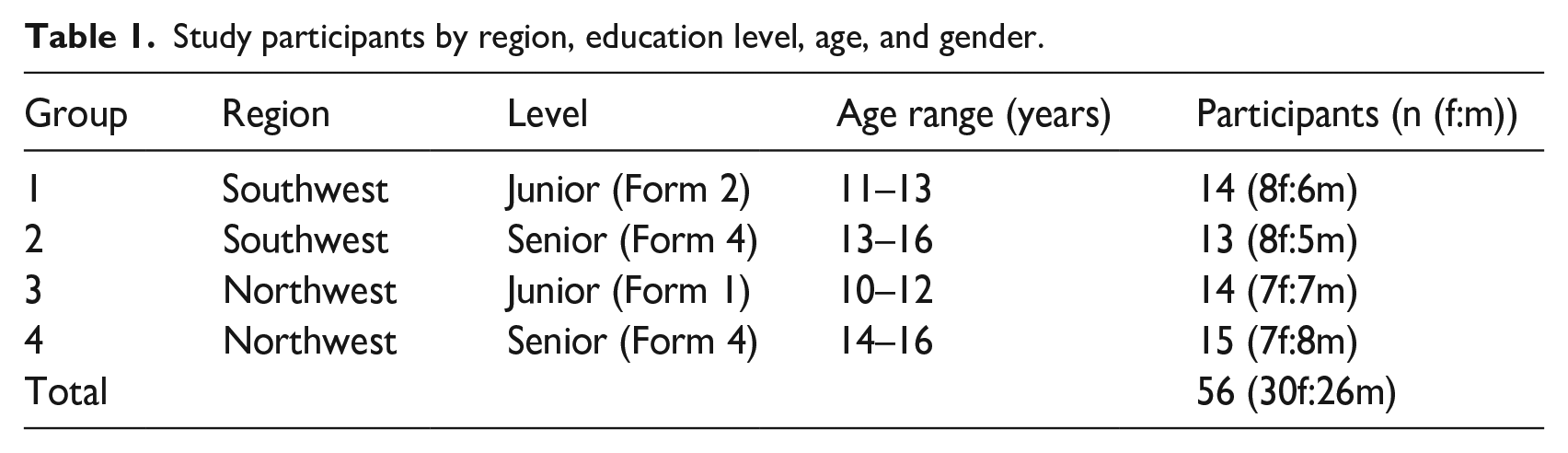
Students were then invited to a 30-minute information session with the first author and the teacher, where they received the study consent form. The first author, teachers, and students read through this consent form together, providing time for the students to ask questions. We used the same consent forms for young people and parents/guardians to avoid confusion and opted for the term consent because we find it to be a more common and accessible term than assent. The form was presented in English, the official language of instruction in both schools. The first author also communicated that she was available to speak in the local lingua franca Pidgin, should the participants or their parents feel more comfortable. A few students opted not to take the forms home. A few parents also called the first author with additional questions. In total, we recruited 56 participants (30 girls and 26 boys) between 10 and 16 years old (Table 1). This variance in age could be due to several reasons, including grade repetition, attrition, gendered inequalities, and educational exclusion (UNESCO Institute for Statistics, 2023). All participants submitted IC forms signed by both their parents/guardians as well as by themselves before the beginning of the research workshops.
Workshop design
Each of the four groups participated in two or three workshops (1.5–2.5 hours each) held either during or after school. The number and duration of the workshops varied due to several reasons. The timing of the workshops was decided by the school administration following the school’s academic schedule. The duration of the workshops was responsive to each group’s context and progress. Workshops during school were shorter to respect scheduled breaks (recess and lunch), whereas after-school workshops were more flexible since participants could stay longer. Groups also varied in the time they took to complete the activities. In general, the junior groups accomplished the activities more quickly, relying largely on photographs with shorter verbal descriptions. In contrast, the senior groups provided more detailed verbal explanations and engaged more in discussions. Despite initial concerns from school administrators about younger students’ challenges with activities, the junior groups seemed to use visual methods to communicate their ideas effectively. One teacher suggested that junior students were less familiar with oral presentation formats like our research activities, whereas some of the senior students were engaged in their school’s debating club, and were familiar with raising counterpoints and alternative viewpoints.
Each workshop followed a similar process involving the following steps:
Step 1. Reading the IC form. Each participant received a hard copy of the “traditional consent form” they were asked to sign to take part in the research, that was the basis for the study. They took turns reading the form aloud, followed by a question-and-answer period. The first author and the teacher also asked questions to assess comprehension.
Step 2. Brainstorming and planning a new consent form. Participants divided themselves into working groups of three or four people (some single-sex and some mixed groups, as per students’ preference) and created a group name. In groups, the students were given instructions and general guidelines about how to approach the activities (Figure 1), both of which were written on flipchart paper and posted on the wall for the duration of the workshop activities.
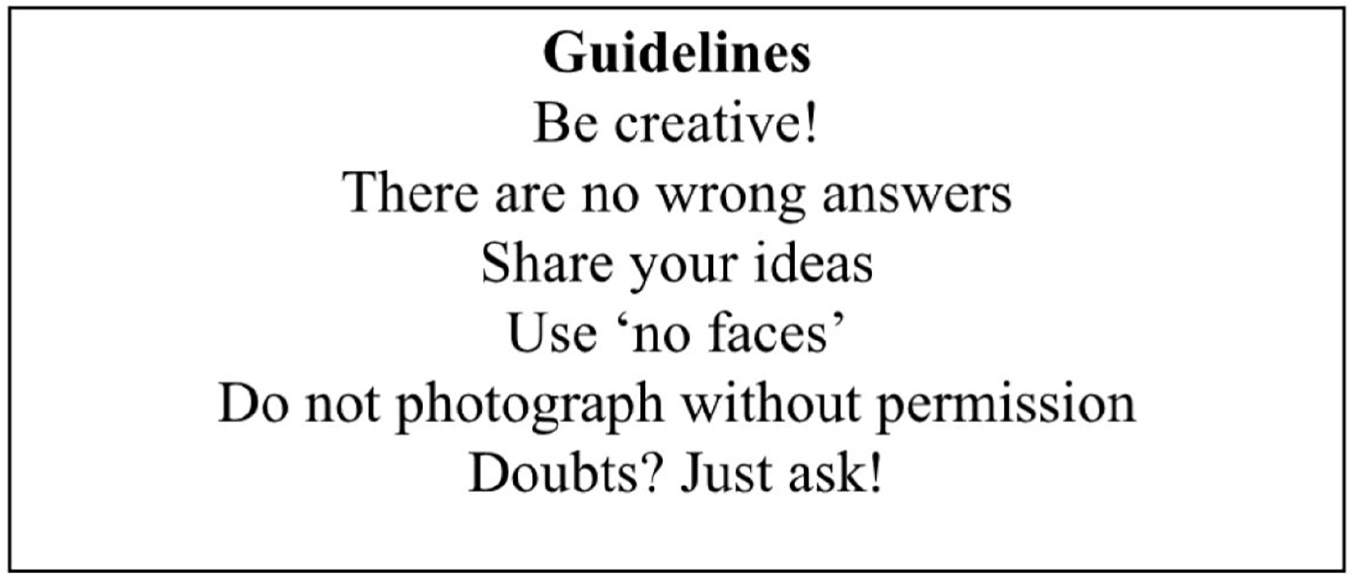
General guidelines shared with young people to follow during the activities.
Each group received flipchart paper to brainstorm and plan their new VIC poster, with copies of their IC forms in hand. The first author and teacher circulated among groups, prompting students to talk through their ideas (without leading them), and reminding them about the activity’s objectives.
Step 3: Learning to use the camera. The researcher provided each group with a simple point-and-shoot digital camera. Students practiced using the cameras before beginning the photography activities.
Step 4: Taking and printing photos. We encouraged participants to be creative and to take as many photos as they wanted. Given that students were taking photographs on the school grounds, we reminded students to always ask permission before photographing anyone and not to photograph anyone who was not part of the research activities and who had not consented to participate. A “no faces” approach to photography was introduced to help increase the anonymity of people in photographs, focusing on objects, hands or feet, or distance shots (Mitchell et al., 2017). Each group then selected and printed up to 10 photos on a portable photo printer provided by the researcher.
Step 5: Making a new consent form. Using their printed photographs, each group created a VIC poster on poster boards. They were invited to write captions on their VIC posters (Figure 2). Some groups included drawings and illustrations.
Step 6: Doing an exposé. Each group did a short oral presentation (exposé) about their new IC posters and chosen photos. The group presentations and subsequent discussions were audio-recorded.
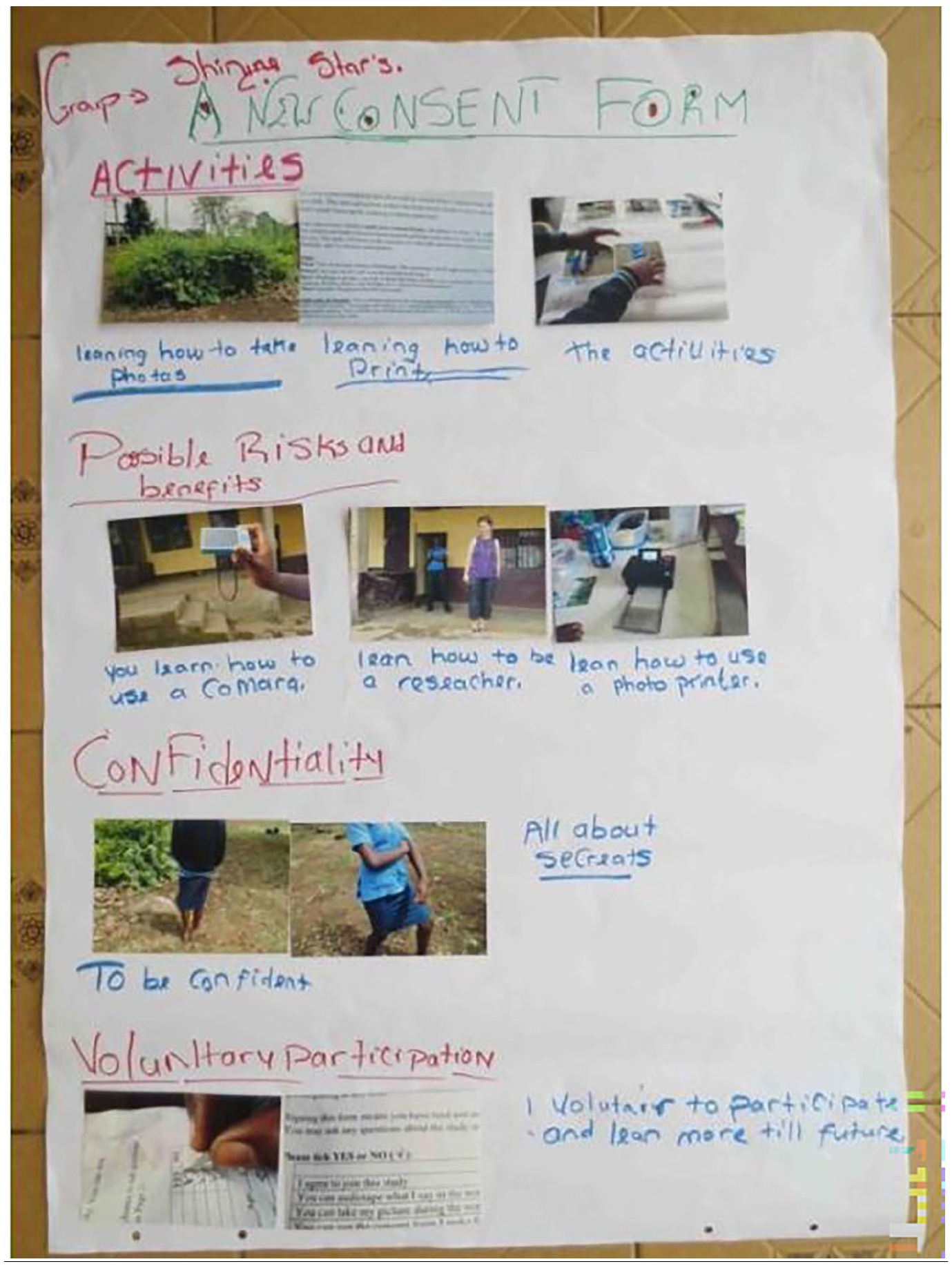
VIC poster created by young people that incorporates their writing, drawing, and photographs.
For all steps, the first author collaborated and co-facilitated with the teachers. Before the workshops, the first author met the teachers to explain the process. Teachers, although initially uncertain, eventually assumed more active facilitation roles and helped explain concepts and research steps using language that was more familiar to students. They also communicated with students who might have been shy at first, reminded the students about school rules (that the first author was not aware of), and managed noise in the classroom as the group work was oftentimes lively and exciting. The teachers and school administrators identified this collaboration as an important risk management strategy for ensuring the safety and security of participants. For example, in building trust with the researcher and ensuring that research activities were aligned with school rules to keep participants safe.
Data and analysis
In total, 154 photographs were compiled on 16 posters (four per workshop). The audio recordings of the workshop presentations and discussions were transcribed verbatim. The first author and teachers took process photos and the first author took field notes to document the research process.
To analyze the data, we developed a multi-level analysis process, which is a common approach to photovoice analysis (Delgado, 2015). To begin, we read the transcripts to connect participant discussions and photographs. The transcripts capture a first level of participatory analysis conducted by young people, such as their choices of photographs and how to represent particular issues, how different issues are explained, and where young people identified tensions or diverging viewpoints on different aspects of consent. From this reading, we conducted a content analysis to identify key themes across the photographs (Delgado, 2015) and from this analysis identified six categories related to the key components of IC: (1) Informed consent (what this term means); (2) Benefits; (3) Risks; (4) Voluntary participation; (5) Confidentiality; and (6) Study objectives and activities. At this stage, one poster was omitted from the analysis because it did not address the research objectives in a way that is comparable with the other groups. All data sources (photographs, captions, oral presentations, and discussions) were grouped into these six categories, and organized by age (junior and senior groups), to allow for comparisons across age groups.
Within each category, we analyzed each photograph to identify key trends and themes related to each topic (Delgado, 2015). Dominant narratives related to each category were identified, focusing on the common ideas discussed, language and phrases used, emerging questions, tensions, and contradictions, with special attention to diverging expressions of IC concepts. Certainly, participants’ understandings of IC concepts are closely linked to the specific instructions that were provided on the IC forms and in the workshops; therefore, we also integrate the wording into our analysis. The guidelines provided during the workshops (e.g., a “no faces” approach) also informed participants’ understandings of IC, helping participants connect the activity instructions with concepts in the IC form. All photos and captions included in this manuscript were created by participants. Participants (and their parents/guardians) provided consent to publish the photos and new VIC posters. Given the group nature of participation in the study, if one participant did not consent to publication, the work from that participants’ group was included in analysis but excluded from publication.
Ethics review and approvals
The study received ethics approval by the Institutional Review Board of the Faculty of Medicine and Health Sciences at McGill University. In Cameroon, the first author collaborated with a researcher from the University of Bamenda to obtain appropriate approvals within the schools at the local and district levels, although there were reportedly no official institutional ethical approval processes in place. According to the local researchers, appropriate approvals involved meeting with relevant educational officials to explain the purpose of the study and seek their permission to conduct the research.
Findings
Young people’s engagement with informed consent components
Research, its associated vocabulary, and the research activities were novel to all participants, who had no prior research experience. Below, we focus on how young people represented three core IC concepts: (1) The benefits and risks of research participation; (2) Voluntary participation; and (3) Confidentiality. We found significant overlap with participants often combining concepts in their images and explanations (especially the junior groups). We present the findings in an order reflecting an increasing level of complexity, and address young people’s depictions of risk as a cross-cutting theme.
Benefits and risks of research participation
In the original IC form shared with participants and their guardians, the benefits and risks of participation were described as follows: Your child will learn about being a researcher, planning a study, and the risks and benefits of participation. Your child might also learn to use a digital camera and photo printer and have fun taking creative photos. In addition, your child will receive one personal photograph of his or her choice. As far as we know, there are no risks for your child to join this study.
In general, participants spoke at length about research being a positive opportunity. The benefits were the single largest topic covered by photographs, with almost one-third of the photos (49/155) depicting how the research activities benefited participant learning. These photos depict the research process and activities, the different phases of the research, the location of the research, and the people and equipment involved (see Figure 3).
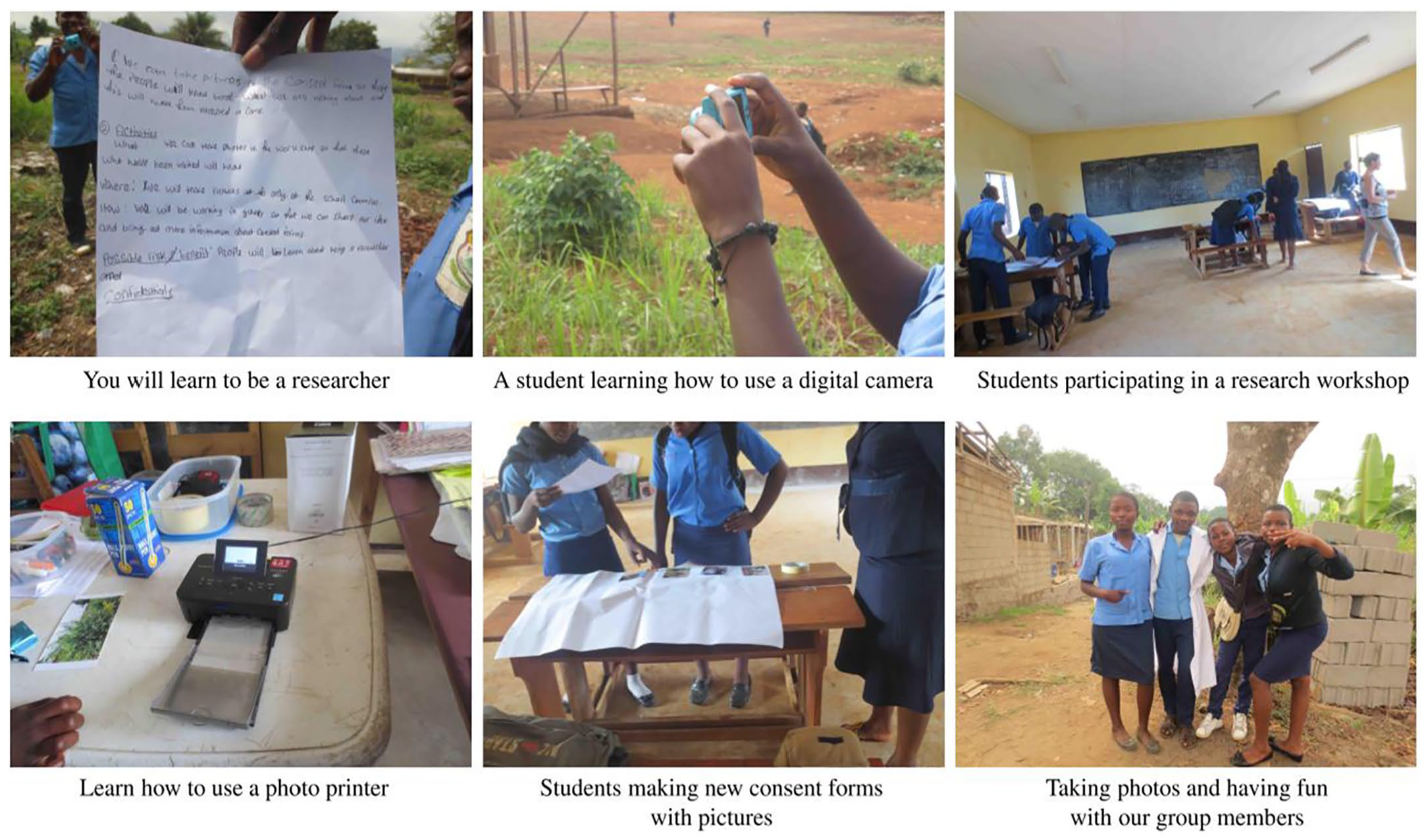
Participant-produced photographs and corresponding captions depicting the benefits of research participation.
Friendship
One unanticipated benefit that many groups highlighted was the possibility of building friendships through research participation. Many groups were excited to have the opportunity to share ideas with current and new friends through research activities. Many participants included photos of their group, deciding to disclose both their own identity and the collectivities that they had established through working together. The benefits of interactive collaboration were understated on the original IC forms. While the IC form did include potentially having fun, we did not make any suggestions about friendship. Friendship and togetherness might play an important role for young people participating in research, and for creating safe, ethical, and youth-friendly research spaces.
Adults
Many groups included photos of the first author and teacher(s) as integral components of research participation. Posters depict and/or name the first author posing alone or with groups or facilitating the research activities alongside participants. Indeed, she played a key role in the workshops, facilitating and guiding the process, being available for questions and support, and helping participants learn to work with the digital photography equipment. For the participants, the first author’s identity (perhaps as a researcher, as a White woman from Canada, and as a visitor at their school) and involvement (interacting with groups in the workshop setting, spending time on the campus getting to know the students) signified more than just a name on the IC form.
Risk
Risks were seldom represented in the photos and discussions. This absence may be in part because we did not foresee significant risks associated with the study, and as noted earlier, the original IC form indicated no risks for participating. Regardless, some groups identified risks based on our conversations and interactions in the workshops. One junior group identified risks involved in learning how to use a camera. We had guided students to put the camera’s “rope” handle around their wrist while walking around to protect the camera from falling. Participants noted that there was a risk of making a mistake by not using the rope and the camera falling and breaking. Visual ethics guidelines informing the workshop activities emphasized asking permission before photographing anyone, avoiding taking photographs of anyone who was not part of the study, and encouraging a “no faces” approach to photography. This guidance (not included on the original consent form) was represented in four images taken by senior groups to identify the risks associated with taking someone’s photograph without their permission. For example, one image represents a girl turning away from the camera with both hands in front of her face, as if in fear or as if offended, with the caption “Risks of taking pictures without permission.”
Voluntary participation
Voluntary participation is linked to the research activities and questions about who benefits from the research. The original consent form described voluntary participation as: “You can decide whether you want to take part in the study. You can stop participating at any time.” During workshops, we clarified this using phrases like “It is your decision,” “It is not by force,” “If you want to stop, you can leave at any time,” and “I will not be mad if you say no.”
Participants depicted voluntary participation through photographs of people reviewing consent forms (Figure 4). Junior participants focused on the research activities (e.g. photo-taking, poster-making), while senior groups extended the concept to broader school or community-based activities like choir practice or labor activities. Senior groups represented voluntary participation alongside broader ideas of IC, such as thinking it over, deciding to join (or not), participating with others, and joining out of their own will (willfully). Sometimes voluntary participation was represented by someone walking away from a group, to show that they could leave at any time. Unlike other types of research methods where research participation occurs individually, participants aptly captured the group nature of this study and emphasized the importance of giving people time to thoughtfully consider the information in the form.
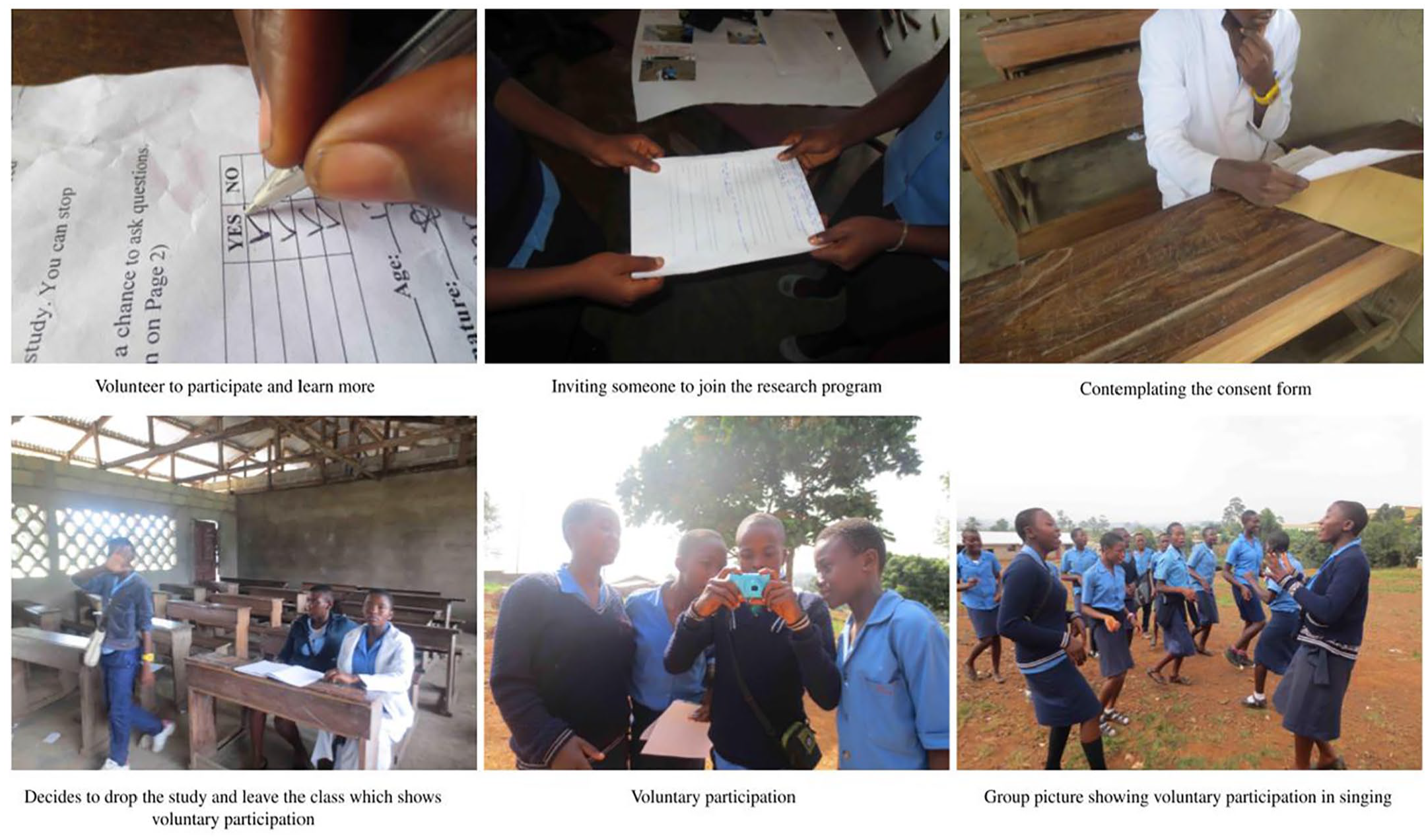
Participant-produced photographs and corresponding captions depicting voluntary participation in research.
Understanding what research participation might look like—what kinds of activities participants would be doing—was important. Because most of the activities were new to participants (such as using a camera and printer, and making VIC posters), many saw the study as a learning opportunity. Participants’ willingness to participate was connected to their desire to learn and gain new experiences, as seen in the photographs of themselves learning to operate a camera and enjoying themselves in the workshop. Voluntary participation was represented by doing the research activities to show their agreement to participate voluntarily, and by leaving the study to illustrate their right to opt-out.
An interesting discussion arose around one photo captioned, “Student willfully going to school” (Figure 5). While some participants aligned voluntary participation with school attendance, others challenged this, noting that school fees were not voluntary. Additionally, volunteering meant helping others, not oneself. However, the group that took the photo argued that students who pay fees but skip school exercise a choice, and that attending school can benefit families and communities by showing them “the money they raised for his school fees is not wasted.” They saw going to school as voluntary because it served a greater good.
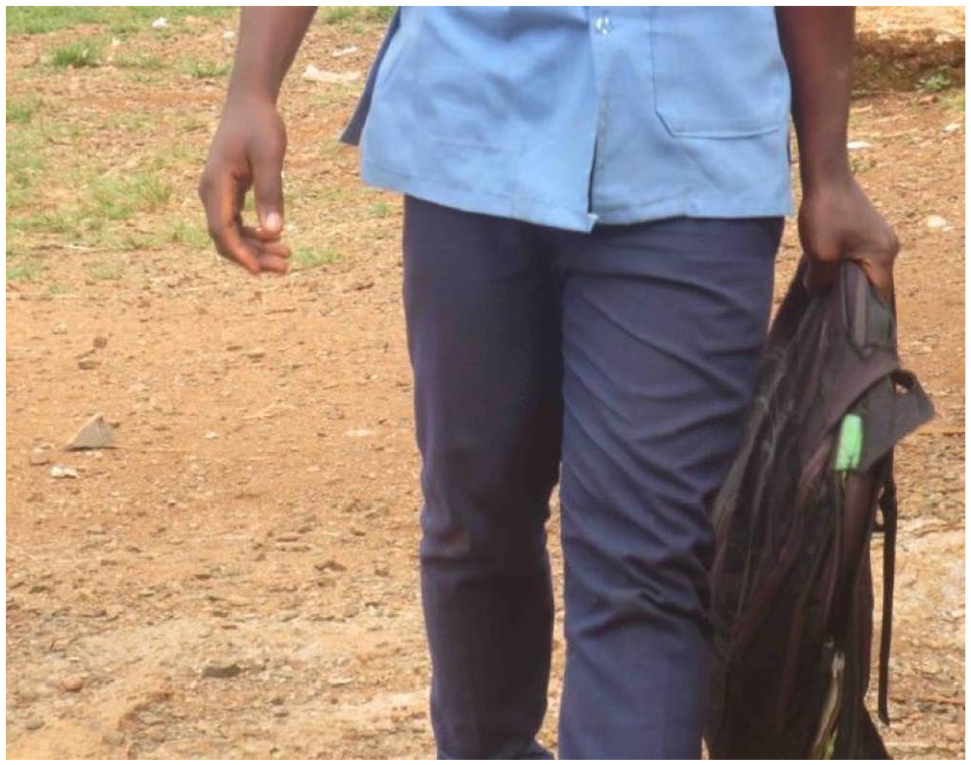
Participant-produced photograph representing a “student willfully going to school.”
Motivated by participants’ photographs, this conversation grounded critical dialog in terms that made sense to them. Viewing voluntary participation as a type of volunteering, a concept more familiar to participants shifts the narrative of young people from vulnerable or passive toward social agents actively contributing to making research more child-friendly. This contrasts with more didactic approaches to IC where researchers provide information. Instead, IC can invite reflection on more complex understandings where young people themselves identify and question what voluntary activity looks like and entails.
Confidentiality
In discussions, confidentiality was evidently a more challenging concept. The original IC form presented confidentiality as follows: With your permission, we will audiotape and photograph the workshops and keep copies of the [IC form] that your child makes. Everything your child says will be kept confidential. We will not tell anyone your child’s name. Your child can choose a “pretend name” instead. If the study results are published or presented at conferences, we will never use your name, your child’s name, or any other identifying information, unless you grant us written permission. The documentation will be safely stored in a password-protected computer for the next two years, and later archived in a locked cabinet in [researcher’s] office in Canada.
In the workshops, we supplemented explanations with phrases like “I will share your pictures, your consent form, and what you said, but I will not tell people your identity, your name, or your personal information. Your identity will not be attached to your photos. I will keep this information safe.” However, using visual methods in group settings, especially on school campuses, introduces challenges to confidentiality and increases the potential for youth’s identities to be shared, making it a more difficult concept for participants to grasp.
Participants generally represented confidentiality through photographs of the body, including feet, legs, backs of heads, and hiding their faces from the camera (Figure 6). They intentionally omitted faces to emphasize anonymity, which aligned with the “no faces” ethical approach to photographs. In contrast, other young people included fully identifiable images of themselves, posing and looking directly at the camera, with captions emphasizing the decision of whether or not to disclose your identity to the public.
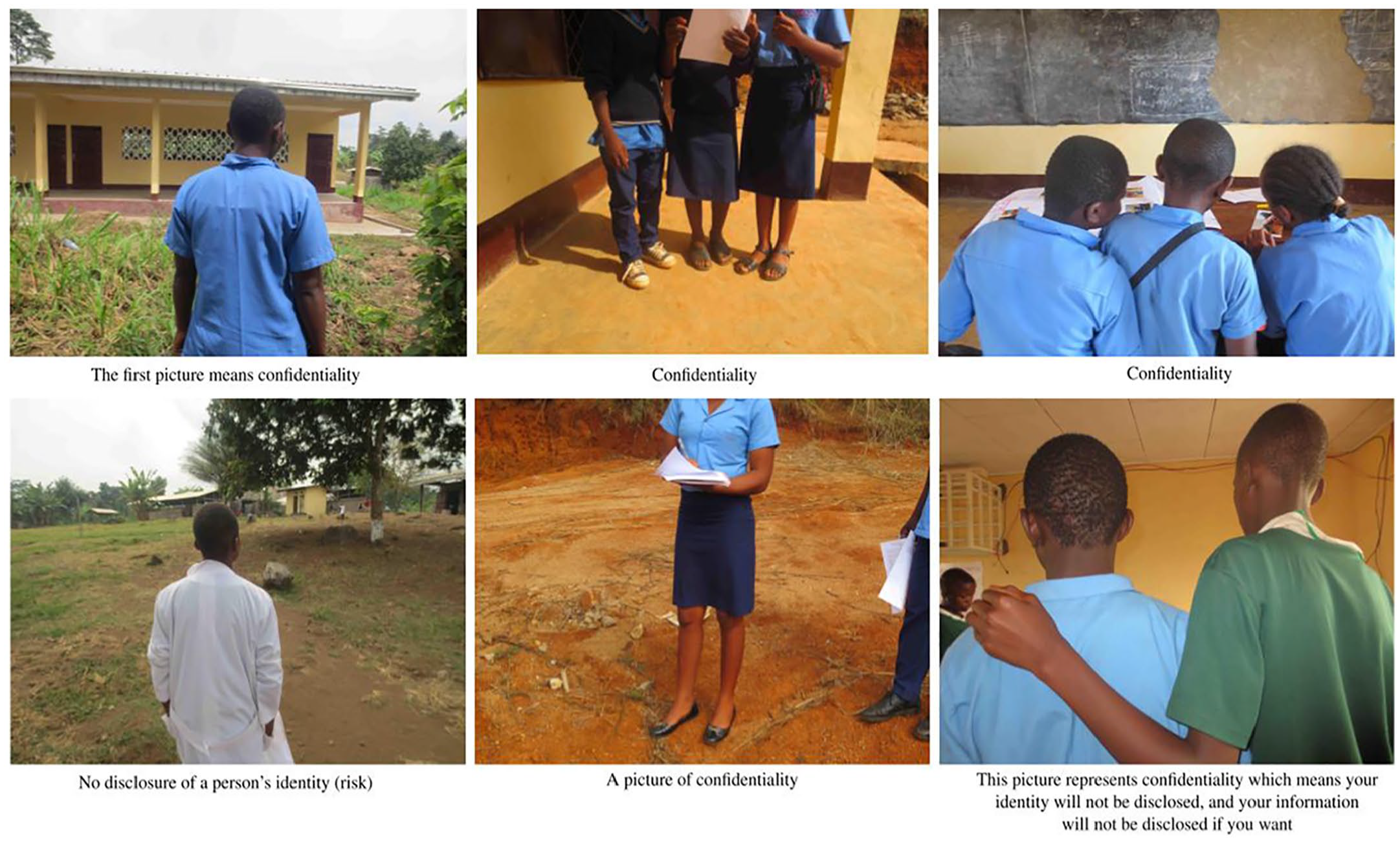
Participant-produced photographs and corresponding captions depicting confidentiality.
Two contradictions related to confidentiality emerged that departed substantially from the original IC form, potentially due to the semantic and conceptual connections between confidentiality and the related ideas of confiding and self-confidence, and that highlight the complexities of trust.
Confidentiality and secrecy
Many groups interpreted confidentiality as secrets and confiding in others. Photographs depicted gestures like handshakes or holding papers to symbolize making a trust-based agreement. We did not use the terms “secrets” or “confiding in” on the IC form or in our explanations. Here, participants highlighted the often implicit yet critical aspect of trust in confidentiality, and how participants confide in researchers and trust them with their information, and their stories.
Self-confidence
Participants also related self-confidence with not wanting confidentiality. One group asserted the perspective that if you are confident, you have the confidence to say who you are rather than hide your identity. Related to trust, self-confidence involves an expression of self-assurance and certainty, important qualities for participants in their decision to participate in research (Figure 7). This tension reinforces the need for ongoing negotiation of IC, doing the research in stages, and allowing time for participants to develop comfort in their decision to participate.
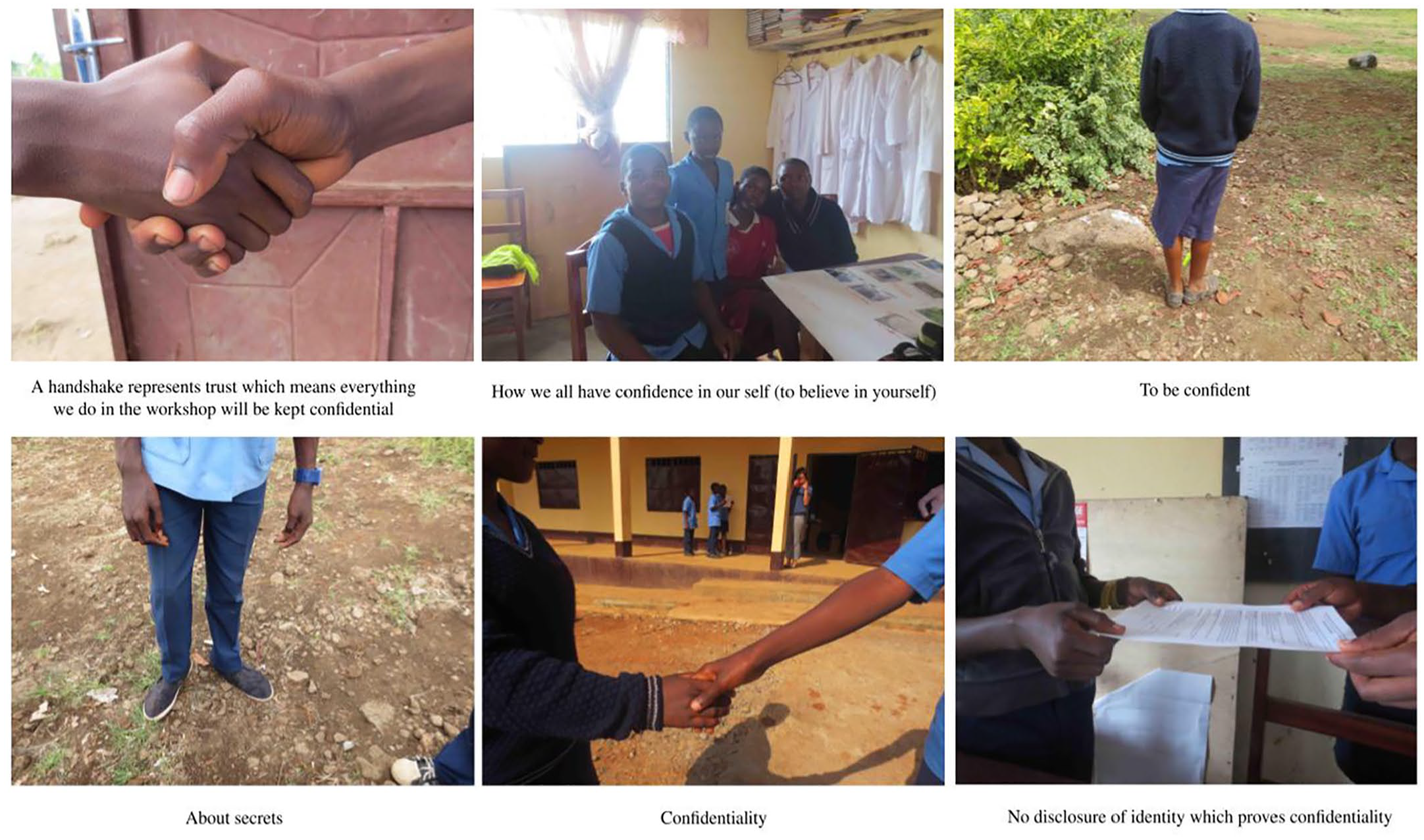
Participant-produced photographs and corresponding captions depicting confidentiality and issues related to trust.
Within these tensions related to confidentiality and trust, participants implied an underlying negative interpretation of confidentiality. When confidentiality is viewed as keeping secrets, hiding something on purpose, or having a lack of confidence, confidentiality is therefore sometimes interpreted with skepticism or disdain. Young people viewed participating confidentially as being afraid, lacking confidence, or hiding something. This was evidenced by some comments about how revealing one’s full identity shows the confidence to participate without fear. During IC, the teacher at one school insisted that students use their full (rather than pretend) names on their VIC posters despite the first author’s assertion that this decision was up to participants (Allen and Wiles, 2016). For this group, being able to identify “who said what” seemed important for the credibility of the research.
Additionally, many participants expressed that if participation was truly voluntary, they would not want to do it confidentially. For example, “If you are doing it willingly, you would not want your face to be hidden” and “You can see the student participating voluntarily because they are showing their face.” This suggests that confidentiality can imply lacking volition, or confounding agreement to participate with agreement to be identified. With this, participants effectively identified a social risk that we had not initially considered. IC needs to be contextualized and consider cultural understandings of privacy and social risk.
Discussion
This study examined how PVMs invite research participants to collaboratively create and discuss visual representations of IC. Grounded in literature on research ethics with young people that encourages centering the viewpoints of young people, creative thinking approaches, and intergenerational relationship-building and dialog, we have explored how young people in Cameroon visually represented and discussed IC concepts with a focus on the benefits and risks of participation, voluntary participation, and confidentiality.
Visual ethics with young people
Inviting young people to reflect on IC as they were learning about IC was admittedly ambitious, especially given that IC and research participation were generally new concepts. This meta analysis required significant scaffolding by the first author and the teacher(s), and higher order thinking from the participants. However, it is precisely this scaffolding and ensuing questions and conversations that enabled more interaction and genuine dialog to emerge. Participants processed and appropriated the ideas in different ways as they explored the concept of consent in groups and through photos. We also gained insight into participants’ ways of processing information and potential gaps in their understanding. The steps presented above were iterative; as participants began taking photographs, they became more familiar with the task, and the VIC posters evolved. In an interactive setting, groups inevitably looked over the shoulders of other groups and found inspiration—developing novel or different ways to represent their ideas visually.
Young people in this study represented voluntary participation by photographing themselves engaged in the very activities involved in research. Alderson’s (1993, cited in Lambert and Glacken, 2011) critical work with young people (ages 8–15 years), their families, and doctors in the UK found children’s competence to consent to participation to develop through experience and relationships. Similarly, others have found that allowing time for trust-building enables young people opportunities to get to know and build relationships with the researchers, to ask questions, and for researchers to attend to the non-verbal cues such as levels of engagement, body language, and silences (Flewitt, 2019; Spyrou, 2016), including less obvious indicators of dissent (Hurley and Underwood, 2002). In our study, visualizing the (possibly) new activities that participants may engage in can help them get a better idea of what it means to agree to participate. Photos of the activities can enable participants to better express IC concepts through tangible actions that participants could relate to. Moreover, the photography process reinforces IC as ongoing and evolving rather than a one-time event, with two major moments to document consent (before and after image production). Additionally, we highlight the understated idea that, as a methodological issue, consent needs further unpacking and tailoring to the specific research method and context.
The social and cultural context for IC
Much of the literature on IC and young people focuses on children under 12 years old, particularly very young children (ages 3–5 years old). While this age group poses unique challenges regarding power, literacy, and understanding, less research explores how adolescents understand and make decisions during IC processes, as well as the facilitating and inhibiting factors at play. Additionally, much of the existing research on IC with young people focuses on Global North contexts, including England, Ireland, and Australia (e.g., Humpage et al., 2019; Mayne et al., 2016). Our findings nuance scholarship on IC by contributing the perspective of adolescents in an African context.
This study emphasizes the importance of describing and depicting the nature of research participation within particular socio-cultural contexts. For example, exploring language and local understandings of IC terms such as voluntary and confidentiality can elicit different perspectives on IC. Regarding the term “voluntary,” we note that in this part of Cameroon, labor practices where residents contribute to community development are associated with “volunteerism.” These pre-colonial practices were appropriated by colonial governments as official development policy (Page, 2005). The connection between voluntary participation in research and voluntary participation in community development is represented by one group of girls who photographed themselves digging in the soil to show an example of voluntary participation. This raises interesting questions about the political context and histories of voluntariness. Community members more generally are called upon by their leaders and expected to contribute labor, financial resources, and time on committees, to be considered contributing members of society. Students are expected to do agricultural and cleaning labor at school. Thus, while voluntary participation might be considered a form of “volunteerism”—as the stories above suggest - this alignment might have implications for group membership and community integration.
Similarly, the complex, multi-layered concept of confidentiality remains underrepresented in research with young people (Huser et al., 2022). From a research ethics perspective, confidentiality means we will share what you say, but your name and identity will not be attached to it, whereas anonymity means what you share cannot be traced back to your name or identity. In our conversations with participants, we found that confidentiality can represent a promise made by researchers about sharing young people’s perspectives without associating these with their identities, which is different than keeping a secret. Young people do not always have the same levels of privacy as adults. Promoting secrecy can potentially be seen as problematic because of how young people have often been coerced into keeping secrets by abusive adults and peers. How, then, to discuss confidentiality within research participation in ways that promote transparency and trust without reinforcing negative tropes? How is confidentiality similar to yet different from a secret? How does it relate to self-confidence? Our study suggests there might be a need to explain more clearly the differences between confidentiality, privacy, and secrecy.
The tension between “no faces” and naming identities
Given the skepticism about confidentiality, this study also raises questions about the “no faces” approach to taking photographs. Institutional review boards often focus on the potential risks associated with participant identification. Yet, anonymity in visual research is complicated and risks producing images of nameless and faceless children. While largely effective in protecting participant identity, other questions persist. Blurring faces is often proposed as one option to avoid disclosing participant identity in visual research, with current developments in technology offering new avenues for altering images. However, we also tap into ongoing ethical debates within visual research communities about the value of faces and how the practice of blurring faces may be disrespectful and dehumanizing and deny participants the right to disclose their identity (Cox et al., 2014). In Thompson’s (2018) community-based work with adults in Cameroon, many participants insisted that the validity and authority of their photographs, words, and perspectives relied on the disclosure of their identity. We are also conscious of the ongoing histories of exploitation and erasure in how African children are constructed in research, media, and international development discourses. When one of the funders for this study showcased the research online, they illustrated the article with a stock photo of Black children, raising questions for us about the children in the stock image and whether they had the opportunity to consent for its use. In visual research, we wonder how the naming of children is important for valuing diversity, agency, and willfulness in young people’s perspectives and decisions to participate in research. At the same time, while researchers may deliberate carefully about the use of images, visual images can also take on a life of their own once they are published online and beyond the researcher’s control (Cox et al., 2014). This incredibly complex area deserves further investigation.
Conclusion
This study expands the literature on adolescents and IC in an African context, offering an alternative perspective to the extant literature focusing on younger children in Western contexts. The findings highlight the possibilities of group processes and asking young people how they see IC. Incorporating PVMs within IC processes can provide opportunities for participants to actively and critically engage with IC and to discuss it collectively with other participants facilitating a deeper local and contextualized understanding of both the notion of consent and the study they are potentially consenting to. This is a radical shift from one-on-one interactions of the researcher-to-participant model. This approach emphasizes friendship, researcher identity, and the need to better unpack the complexities of confidentiality as key considerations for future social science research with young people.
Footnotes
Acknowledgements
The authors would like to thank the research participants for their interest and participation in the study. The study would not have been possible without the support of local district leaders, and the teachers and Principal at participating schools. We are grateful for Dr. Sunday Shende Kometa, who was teaching at the University of Bamenda at the time of fieldwork, for facilitating introductions between the first author and the participating schools and leadership.

Ethical considerations
The study received ethics approval by the Institutional Review Board of the Faculty of Medicine and Health Sciences at McGill University. We will provide the ethics approval certificate if required. In Cameroon, the first author collaborated with a researcher from the University of Buea to obtain appropriate approvals within the schools at the local and district levels, although there were reportedly no official institutional ethical approval processes in place. According to the local researchers, appropriate approvals involved meeting with relevant educational officials to explain the purpose of the study and seek their permission to conduct the research. Thus, institutional approvals were obtained at each school, including authorization from the school administrator in the Southwest region and from both the Regional Delegate of the Ministry of Secondary Education and the Principal in the Northwest region.
Consent to participate
Written informed consent for participation was obtained from all research participants as well as from the parents or guardians of all participants.
Consent for publication
Written informed consent for publication was provided by the participants and parents/legal guardians. Written consent was also obtained from the individual mentioned in the acknowledgments.
Funding
The author(s) disclosed receipt of the following financial support for the research, authorship, and/or publication of this article: This work was supported by a research internship at the University of Buea granted to the first author, funded by the Fonds de recherche du Québec – société et culture [grant number 163095].
Declaration of conflicting interests
The author(s) declared no potential conflicts of interest with respect to the research, authorship, and/or publication of this article.
Data availability statement
The datasets generated during and/or analyzed during the current study are not publicly available because they contain personally identifiable data, and are considered owned by the participants. The data are also qualitative and highly contextualized and therefore not useful for researchers working in other contexts.