



Abstract
Qualitative research has utilised focus groups and interviews to gather information from participants while conducting ethnographic research. This article explores the potential of alternative forms of collecting data that are more in line with the participants’ feelings, emotions and expectations. Charlas (chats) and Comidas (meals) were utilised in an ethnographic study with English teachers and their students in marginalised high schools in Bogotá, Colombia. I found that opening a safe space for participants to share their ideas, suggestions and comments while chatting informally or having a meal encourages leadership of the research process. This generated a sentiment of trust and bond which strengthen their sense of belonging to their academic community. This article contributes to the literature on alternative, critical and decolonial forms of doing research by considering ways to implement methods that acknowledge the cultural and linguistic backgrounds of the participants which strengthen humanising relationships, especially in marginalised contexts.
Introduction
The field of qualitative research is currently moving towards a more humanising, collaborative, and inclusive approach in which participants are involved in the process. For example, participatory action research has for a while enabled traditionally marginalised groups to actively reflect with academic researchers to jointly develop local knowledge and fresh insights into social concerns (Herr and Anderson, 2014; Reason and Bradbury, 2007; Salazar, 2022). Non-traditional methods of data collection are more in line with a humanising approach, which can offer fresh perspectives on the social, cultural, practical, affective and ethical relationships they produce. Also, using alternative forms such as WhatsApp for focus group data collection has afforded inclusion for populations who cannot gather in one space at a specific time (Colom, 2022). This and other data collection tools might help to better understand the transformative and emancipatory potential that emerging qualitative research has for education to level the power dynamics (Wilson et al., 2022).
This article adds to this body of literature as it describes an alternative form for data collection in qualitative research, especially in marginalised contexts in which culturally relevant approaches are necessary. In many Latin American countries, bonding around meals and having conversations are key for family and friendship (Casotti, 2006). Cooking and eating is an act of solidarity, understanding and loving each other, coupled with some coffee and a nice chat after each meal, fellow Colombians strengthen their relationships and their bonding. Eating becomes a human ritual that goes beyond nurturing bodies with nutrients to survive but to nurture collective spaces of encounter (Marovelli, 2019). As such, I assess the effectiveness of ‘Charlas (Chats) and Comidas (Meals)’ – a culturally based vernacular communicative practice in Colombia – for research purposes. Adopting a more humanising form of data collection methods in language teaching and learning research is key in moving towards a more open and just empirical science (Irizarry and Brown, 2014; Paris and Winn, 2014) – and much necessary in this age and time of decolonisation. I offer a narrative approach (Keen and Todres, 2007) to describe my challenges and learning experiences as I grappled with questions about representation in an attempt to humanise my research. I understood from my initial experiences that I would not be considered an objective researcher, and had to negotiate my biased insider researcher positionality. A way of navigating the insider/outsider positionalities among researchers of the Global South who aim to do decolonising research in their own communities is a second contribution I wish to make to scholarship on humanising research.
With this in mind, as an insider/outsider researcher who holds the privilege of working in the Global North but being born in the similar conditions of my participants, I attempted to humanise my approach to conduct focus groups. These efforts responded to the participants’ immediate needs to know who I was before I engaged in research. In this article, I provide my view of the possibilities and challenges of how Charla and Comidas were utilised as form of data collection that were more accessible and allowed for more participation. Understanding the ways in which data collection methods function, makes an important contribution to expand humanising qualitative research that is more democratic, transformative and liberatory.
In light of critical research scholarship (Archibald et al., 2019; Denzin et al., 2008) and throughout this article, I aimed to move forward a reflection on what it means to collect data as I experienced that it was more than just collecting notes, observing classes and analyzing data. I do so first by discussing the background and objectives of the research project. Then, I detail the methodological approach I utilised in my efforts to accomplish this humanising goals for data collection by gaining trust, creating bonds and strengthening relationships with the participants.
During this process, I was able to be more critical of the objectivity concept and ask myself: Is this about me, analyzing the world, or analyzing others? (Eisner, 1992). It became clear that my research methodology needed to include my participants as much as I could. I realised that I needed to frame my work in a very inclusive form of research that was accountable but still critical. To this, Smith (1999), in the spirit of methodological resistance, reminded me that researchers need to take seriously the ‘roles that knowledge, knowledge production, knowledge hierarchies and knowledge institutions play in decolonization and social transformation’ (p. xii). As such, the experiences with my participants, and the conversations we had were transformative for both as we were not only trying to legitimise the knowledge produced but to learn and understand where each other was coming from. In the end, I hope to encourage further reflections and analysis on what it means to be in solidarity with the research participants’ lives and their struggles as a transformational practice within the context of qualitative research (Ross et al. 2022).
Positionality
The researcher’s stance or positioning in regard to the study's social and political context – the community, the organisation, and the participants – is referred to as positionality. Every element of the research process is affected by a researcher's position, from how the issue or research question is first formed, designed, and conducted through how others are invited to participate, how knowledge is constructed and used, and, finally, how results are distributed and published (Coghlan and Brydon-Miller, 2014). The fact that I was born and raised in a similar context to where the participants in this study grew up, made me feel that I belonged to the community. Although I have struggled for more than 20 years as an immigrant in North America, the students participating in the study saw me as a role model to be followed. In a sense, I was an insider and outsider of my own study within a reciprocal relationship with both the student and teacher participants. When I was a teenager, I was able to work and pay the tuition for private English classes which gave me the skills I needed to travel to an English-speaking country. As a result, some of the student participants were inspired to learn English so they could also possibly benefit from opportunities abroad.
I grappled with this positionality because although I wanted to conduct research that responds to the participants’ needs, sometimes I feel was losing the research focus and perspective of my role in the process. Therefore, having Charlas with the students and Comidas with the teachers gave me the possibility to deeply reflect and engage in who I was during my fieldwork. In a sense, such conversations represented in the form of ‘everyday talk became a methodological tool to collect data and an analytical tool to reflect on the role of positionality in the research processes’ (Kohl and McCutcheon, 2015: 749). In a sense, teachers and students somehow helped me to exorcise the constant internal tensions and conflicts. For example, cooking, serving and engaging in meal conversations with the teacher participants became a type of ‘Kitchen table reflexivity’. These were instrumental for knowledge creation with my participants and me as an insider/outsider researcher allowing for a space to talk freely (Kohl and McCutcheon, 2015) but also attempting to decentred the hierarchies of domination (Lichterman, 2017). As Hadasa and Sol, two of the teachers, pointed out in one of our Comidas conversations, they felt freely to talk to me about school issues they have not been able to talk otherwise within school boundaries. I was not seen as an outsider anymore; I was one of them – a teacher.
Methodology of the study
In this study, I used an ethnographic approach because it locates culture at the centre of the research inquiry (Blommaert and Jie, 2010). Creswell (2009) describes ethnography as ‘procedures for describing, analyzing, and interpreting a culture-sharing group's shared patterns of behaviours, beliefs, and language that develop over time’ (p. 462). This method provided me with a systematic, holistic means of studying the interactions among students, teachers and the entire school community at different levels of engagement.
Specifically, I engaged in critical ethnography, in which typically, interpretive ethnographers seek to explore ways to interpret phenomena to change unjust societal structures and to understand how culture relates to individuals’ behaviours (Anderson, 1989). As a critical ethnographer, I considered my participants as equal to understand their belief systems, behaviours and actions in order to identify and critique those which negatively affect them as a community. Drawing on a decolonial perspective, this empirical work has been in consultation and work with the participants, something that Cusicanqui (2015), in her Sociología de la Imagen [Sociology of the Image] book, considers research as a rebellious praxis that liberates the subaltern, those involved in the process of representational reflexivity. She argues that: La sociología de la imagen, en cambio, observa aquello en lo que ya de hecho participa; la participación no es un instrumento al servicio de la observación sino su presupuesto, aunque se hace necesario problematizarla en su colonialismo/elitismo inconsciente [The sociology of the image accounts for what the researcher is already doing in participating and not as an instrument outside of the observational realm, but it requires to problematize the subconscious colonialism/elitism]. (p. 21)
In other words, equalising the hierarchies should be important in the research process. To this, Silvia Rivera Cusicanqui suggests that ‘no podemos estar solos en le proceso investigativo, tenemos que trabajar en conjunto con nuestras comunidades [we cannot work alone in the research process, we need to work with our communities]’ (Personal communication, 22 August 2021). This resonates with the idea of how ‘inclusive research can be usefully thought of as research that changes the dynamic between research/researchers and the people who are usually researched’ (Nind, 2020: 3). In my ethnographic work, it became clear to not only be critical of my own positionality but to find ways of how the participants’ voices could be included and amplified.
With this methodological context in mind, I conducted this research in a high school from a marginalised community in which displaced people have experienced violence, unemployment and social exclusion due to the long-standing Colombian war between the government and leftist guerilla army. I met one of the teacher participants (Sol, pseudonym) at a conference in 2016 and we worked for 2 years in a collaborative project for English teaching through the lenses of peace education to address bullying (Ortega, 2019). In 2018, I expressed my interest to continue working with her for my doctoral research and she was eager to help me with other two teachers (Hadasa and Camello, pseudonyms). All the three teachers had more than 20 years of experience teaching English in primary, secondary and postsecondary private and public institutions; their students were from grades 10 and 11 at the time of data collection.
I decided to work with these three English teachers because they were mainly interested in doing social justice work in their English classes and were opened to including a stranger in their classrooms. Between May and December 2018, I spent 6 hours a day with them and in this process, I was immersed in their day-to-day lives as my goal was to understand how their social justice approach to teaching would be incorporated in the lessons. As such, the research study attempted to respond the following research question: How is a social justice approach to teach English envisioned, enacted, and experienced by English teachers and their students in a Colombian public high school? As I wanted to know how teachers would go about their teaching methodology, the resources they use and how they would engage students in classroom tasks. I was also interested to know how the students would respond to teaching practices and how social justice was promoted through classroom activities to generate discussions and critical reflections about their experiences.
Although classroom observations, document analysis and artefacts were used as part of the research process, this article will only describe my experiences with two forms of focus groups – Charlas and Comidas (chats and meals).
Opportunities in data collection: Charlas and Comidas
In qualitative research, interviews are conducted to gather and record data, especially in educational research where grouping people with similar backgrounds and interests is very common (Cohen et al., 2000).
This is presented in the form of a focus groups which typically presents the interview questions in a very linear, structured and focused manner on characteristics which correspond to the research topic (Kamberelis and Dimitriadis, 2013; Krueger and Casey, 2014).
In my research project, my intention was to focus my attention on the students’ and teachers’ experiences in relation to the pedagogical approaches while maintaining objectivity. However, because I quickly gained trust with students and teachers, the initial idea of a focus group turned into more personal, nuanced and descriptive group interviews. Although this type of methodological approach to collecting data was not new in the field of qualitative research (Bernal et al., 2017; Hamzeh et al., 2020; Huber, 2012), this specific mode of data collection resonates with decolonial forms of doing research (Denzin et al., 2008). Connecting to students and teachers evoked my honest interested in learning more about them, and as such, relevant to the project's context, I conduced what I called Charlas and Comidas because in the words of Linda Tuhiwai Smith: People were genuinely interested in talking in a focused way about their lives. They were interested also in finding out what people who were just like them thought. I found that people entrusted me with information about themselves that was highly personal. I felt honoured by that trust, and somewhat obligated as well – in the sense of having to be very careful and very respectful about how I handled such information. (Smith, 1999: 362)
This type of group focus groups was selected and inspired by decisions and conversations taken by students during our meetings and teachers while attempting to schedule time for interviewing which will be described in detail in the two sections below.
Charlas
It was the morning of 31 August 2018, I was at Sol's classroom, and she said, ‘now is a good time for you to take the students out and conduct your focus group’. She selected four students (Magdalena, Carlos, Damian, and Jazmin – pseudonyms) and asked me to take them to an open space where other teachers could see me with the students. This allowed students to feel safe and comfortable. I explained the procedures to record the conversations, I put the audio recorder on the table and took out a print copy of my questions. I described how the audio recording was going to be step by step and asked permission to start the recording.
Students seemed to be excited about this experience and once I turned on the recorder, they all were asking me personal questions. I tried to explain to them that I needed to follow a protocol, but they encouraged me that before doing that I should answer some questions about myself, my profession, my experiences, and my personal life. Hesitantly, I spent about ten minutes engaging in conversations about me as students were jumping in giving examples of how their lives were similar to mine. At one point, Damian stopped the conversations and said, ‘…but teacher, this is not an interview, this is better, this is a charla, we can know you and you can know who we are, much better, more exciting’ (Charla, 31 August 2018). The other students seemed to agree to what Damian had said and I told them that I needed to ask some questions from my set of prepared questions. They insisted that they needed to know me more before engaging in such rigid and soulless (sin alma) questioning as Jazmin said. I went ahead and briefly told them a bit about me and soon after I shifted my prepared and rigid questionnaire into an embedded set of questions which started from my personal experiences, then the students’ experiences and then the research questions. Students told me that this form of questioning them was much better than how they have conceived an interview or a focus group. For me as a researcher, this form of collecting data was richer and provided more nuance data to be analyzed because students felt more comfortable and open to engage with the questions.
Based on this experience, I define Charla as a form of conversational engagement about a specific topic in which the participants explore an issue, problematise it and offer possible solutions within a research context. In fact, similar forms of collecting data in action research has already been used to examine how conversations among teachers can serve as a research methodology in which the sharing of knowledge and the growth of understanding occurs through meaning making processes (Feldman, 1999). However, in my research, I use the term Charla which in Spanish means ‘a conversation or a personal chat’ because it was more relevant to the research participants as the discussions were richer and culturally embedded; more in tune with the context as the participants did not see me as a researcher but as one teacher more in the school. Drawing on Brinkmann's (2013) earlier work, I must agree that these type of intimate conversations are ‘magical’ as ‘conversations are the stuff that human life is made of, it becomes pertinent to study the specific qualities of our conversations and ask what kinds of persons we become through different forms of conversation’ (p. 152). In fact, this magical moments while engaging with students allowed me to gain knowledge of their perspectives and experiences in their English class as I connected with them during the 8 months of fieldwork.
Expanding from this experience with the student participants, a similar process was executed with the teachers. Although I could not meet the teachers in the school for interviews, I was able to gather data in the form of a participatory exchange of ideas while having lunch and dinners. Details of this process are described on the next section.
Comidas
On 1 October 2018, I asked Sol to set up a date and time to get together with Camello and Hadasa to conduct a focus group. As a researcher, I felt it was necessary to conduct the focus group within the school boundaries, however I noticed that teachers were extremely busy during the school day. Sol agreed that it was going to be a very daunting as they have their days and weeks full, and it would not be appropriate. At school, she would feel unsafe because she could not speak her mind or tell the truth as someone might hear what she really thinks and could run the risk of being reported to the administration.
She suggested conducting the focus group outside the school facilities and beyond the school time as this was less stressful and would allow her to answer questions without the pressure of the school daily hustle. She asked Camello and Hadasa for possible dates to meet, and they agreed for a day the week after. After several discussions on where to conduct the focus group, Sol proposed to meet with Hadasa and Camello after school hours at her house; I agreed on the condition that I cook for them and she marked the following Wednesday on her calendar.
In Colombian culture, food sharing is very important, especially to connect with families and friends. Whether is at lunch on a Sunday afternoon or an evening date with friends, food is about partaking, loving and caring about others. Food sharing has always been a tradition among Latin American families for self-determination and racioethnic identity in a world of constant change, especially for disadvantage communities (Morales, 2019; Venturoli, 2022). As a Colombian, who was born in a marginalised community, it was natural for me and the teachers to move our conversations to home. It signalled the importance to provide an opportunity for us to connect more as food is so essential to share experiences and memories – a millenary practice in the country.
On the allocated day, after Sol finished her school hours at around 12:30 pm, we took a taxi and left. Once we arrived at Sol's neighbourhood, we did some grocery shopping and went straight to her house. As I was preparing all the cooking, Sol and I spent a long hour talking about the difficulties about being a teacher in that part of the city – the challenges she faced while teaching and her pedagogical practice. After a while, Camello called that he could not come and then Hadasa arrived. When I finished cooking, Sol and Hadasa helped to set the table and I served (Figure 1), then I explained the recording protocols, I read the consent forms and turned on the audio recorder. During the next 2 hours, although we talked about personal and academic experiences, I was able to interweave my research questions effortlessly and they had the opportunity to ask questions to each other and me. As I ask them about how their pedagogical approach to teach English, memories and stories about their years of experience emerged, they commented on the strong relationships with the students and parents. They also discussed how they use their English class as an attempt to encourage students to solve the most immediate problems experienced in their community (drug addiction, homelessness, unemployment, etc.).
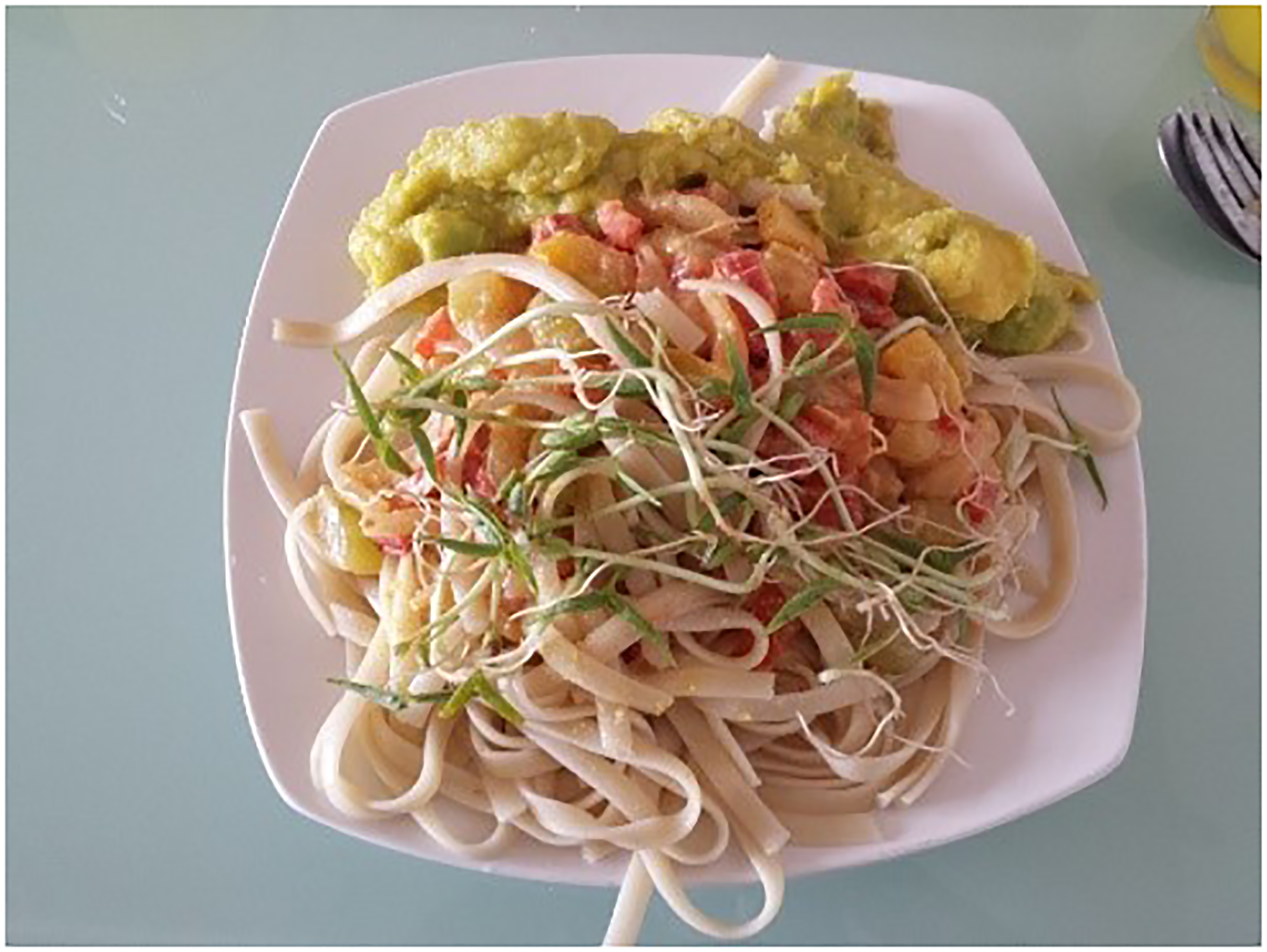
Lunch prepared for the teachers.
Similar to this experience at lunch, towards the end of the academic year, we had a final meal meeting to discuss the challenges and opportunities that teachers and students experienced during English classes. This time, teachers suggested not to meet at a house, but to treat ourselves to a nice restaurant to celebrate the end of the academic year. I agreed and was happy we chose one of the Colombian restaurants that employs single mothers; the teachers and I thought that in the spirit of social justice, we might as well have dinner in a place that is socially conscious. On 1 December 2018, Sol, Hadasa, Camello and I met at the restaurant and sat down for a delicious Colombian meal (Figure 2). I went through the protocols, I pulled out the consent forms, they signed them, and I placed the tape recorded in the middle of the table. As we ate, I recorded roughly 2 hours of conversations in which we talked about their classes, their students and what this means for Colombia and the world.
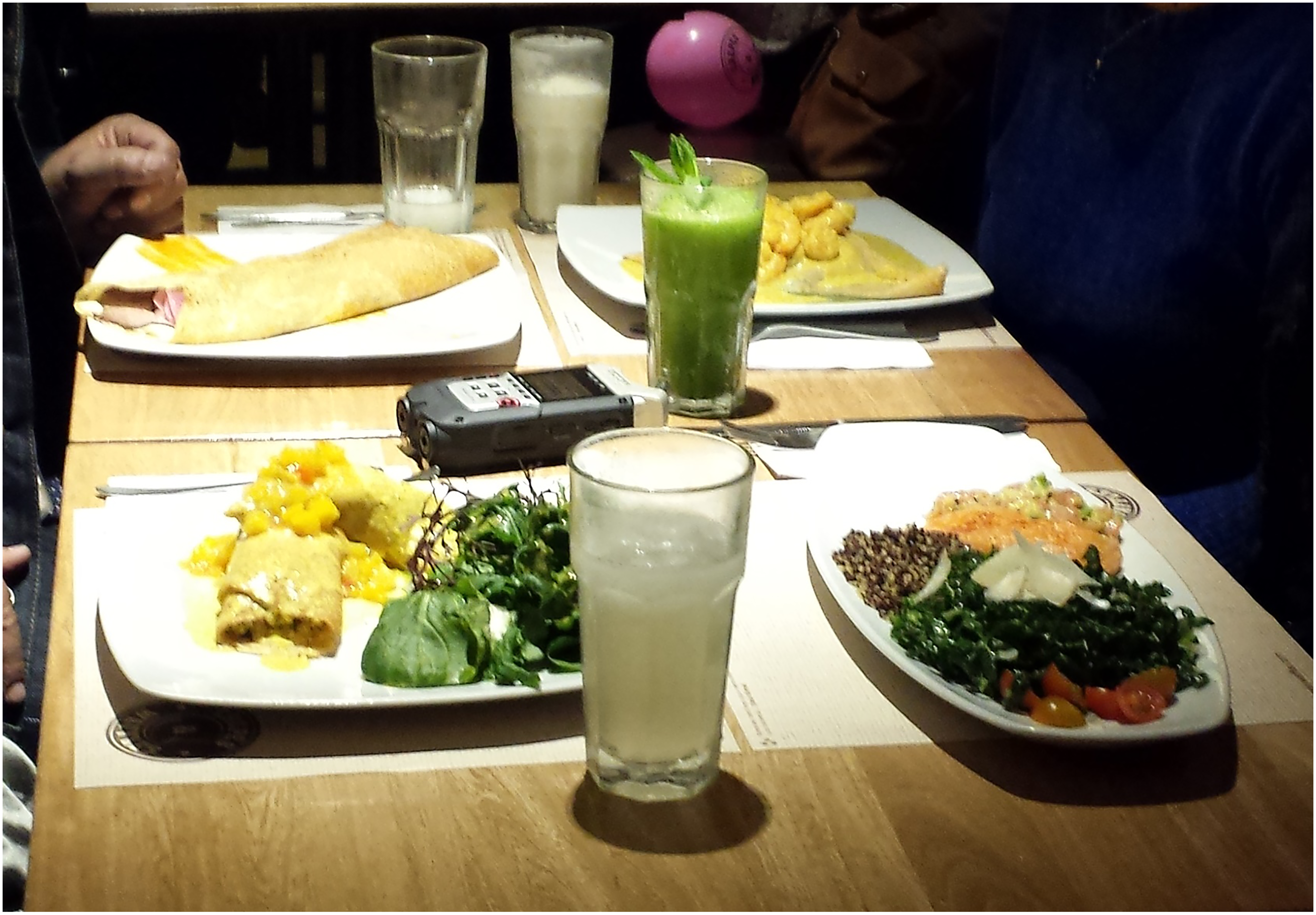
Final Comida with teachers at a local restaurant.
As we went through the different courses of the meal, we had a personal and intimate conversation as we discussed the ups and downs of the academic year. During this meal, teachers discussed details about their future for the next academic year, their projects with the students and the possibilities to collaborate more. They even mentioned that they wish school meetings were more like these, having the time to sit down to have a meal and relax. They felt in this way, they were more productive than their regular 2-hour meetings at school, they felt less pressure and managed to discuss core issues happening at school and how to solve them.
I learned that this focus group in the form of Comida became culturally relevant as it allowed the space for friendly, open and honest conversations about not only their academic life but their personal experiences in relation to school, the students and the parents. I was glad to know this form of collecting the data promoted a more equalising power relationship between the teachers, the students and me. This approach was in line with what other activists and participatory action researchers have done in the past in an attempt to democratise knowledge engagement and production (Bell et al., 2021). Certainly, the participants felt more at ease, less stressed and less vulnerable because they did not see me as a researcher out of the boundaries of the school but one of their teachers. In the end, it seemed that Comidas as a form of data collection was a mode of Horizontalizar (equalise) the social relations and decrease the distance between me as a researcher and them as participants in our professional and personal everyday life.
Findings as learning experiences
Utilising these two forms of data collection allowed me to understand the participants lived experiences from an insider's perspective. These Charlas and Comidas not only shaped my skills as a researcher but strengthen my sense of belonging as the teachers and students welcomed me to contribute to their classroom projects and activities. In this section, I offer my learning experiences as findings while I gained trust, bonded with the participants and got close to a vibrant community.
Trust and bonding
Charlas and Comidas helped me to create a stronger bond with teachers and students. Like any other ethnographic work, it is expected to gain trust with the community and in this project, the in-depth conversations over time helped me to gain their respect and trust. Charlas allowed students to be themselves and be opened about their identities and concerns related to their own education. Comidas made me connect with the teachers’ intimate lives, what they do in their private lives and how they bring their own identity into the classroom. I learned that any research looking to allow some contribution from their participants needs to establish trust and respect with each other (Creswell, 2009).
Cohen et al. (2000) posit that the key to the successful qualitative research projects lie in establishing good relations. This involves the development of a sense of rapport between researchers and their participants that lead to feelings of trust and confidence. The students and teachers in the project saw me more as a colleague and a friend rather than a researcher. The way I geared my conversations with them became informal, less academic and easygoing.
Gaining this trust and connecting with them required commitment as it was an iterative and ongoing process. Although Sol had explained to students who I was and the reasons why I was visiting her class and conducting research. I really got their attention as soon as I showed interest in their lives – what they do with their friends, the music they like, the sports they play, what they do after school, etc. For example, in one our first Charlas, one of the students shows more interest when I introduced myself and mentioned how much I like rock music. Teacher, I also like rock music, that is how I learn English, I translate the songs and then I sing them when I play them on my phone. (Alberto, Charla, 31 August 2018)
I also told them my story of immigration and how I became a Canadian citizen. After various classroom visits, they saw me with different eyes, they were more relaxed with my presence and asked me questions when there was any opportunity during recess or at the end of the school day. When Sol sent me with some students for the second set of Charlas, it was an effortless task as most of them were eager to chat with me. In a sense, overtime, it looked like I became their role model, they wanted to know more about me.
Gaining trust with the teachers was easier because I had known Sol from a previous collaborative action-research (Ortega, 2020). When I asked Sol that I wanted to conduct my doctoral research with her, she proposed that other two teachers would be involved. Once I was at the school, she introduced them to me and immediately we got along with each other. They asked me questions about my experiences living in the United States and Canada and they invited me to share these experiences with their students. In one of the first meetings, as I was introducing myself, I remember Hadasa (one of the teachers) mentioning that she was vegan, she later exchange recipes with me because I am vegetarian. Since that moment, we became closer and she wanted to know more about my experiences abroad. She also invited me to one of her classes to teach her students about my cultural experiences from different countries. Another day, Camello (another teacher) invited me to his classroom and showed me what his students had been doing for the English class, posters and pamphlets in English describing various aspects of the Colombian culture. He mentioned that his goal as a teacher is to spark students’ curiosity to learn more about their own culture and other foreign cultures. He had also lived abroad, and this is how he connected with me; we exchanged a few anecdotes of cultural shock. Yecid, when I lived in Finland, I also missed my family, my food, my culture. It is not easy to just leave the country to pursue our dreams. Here I am teaching these children how to love not only Colombian culture but also others. (Personal communication, 12 May 2018)
Connecting and bonding with these teachers became easier during the research process as we exchanged more personal experiences. Sol inviting me to go out with her husband to the local mall for shopping; exchanging vegan recipes with Hadasa and buying her organic home-made tofu; sharing stories of travelling abroad with Camello helped to strengthen our relationships. This just made my fieldwork more than a research project but a personal and transformative experience which had impact on my own identity, my personality and my ways of bonding and gaining trust with communities (Pole and Morrison, 2003).
Community and belonging
The bond that was created with teachers and students was the product of my commitment to really knowing them and learning from them. This is expected from a critical and decolonial scholar when conducting research with community (Paris and Winn, 2014) and I was not the exception. Teachers and students welcomed me and made me part of their daily activities – I was one of them, I felt I belonged to the school as well. As an example of this sentiment, in the following excerpt documented from the data, one of the students invites me to celebrate with them at the end of the academic year, which demonstrated that I had become part of their community. Teacher, next week, we celebrate the end of the semestre and we want you to come to our end of the year party, we can have vegetarian pizza for you. (Laura, Grade 10, Charla, 27 October 2018)
I realised that sense of belonging does not come in isolation; it was the everyday work to maintain and strengthen the relationships constantly. During the fieldwork, I observed how teachers’ pedagogical approaches were about how individuals (students and teachers) come together to create community and operate organically to support each other (Carspecken, 1996). Some of the activities created during the English class demonstrated this sense of committed work. During the Comidas, teachers were happy to share details about their pedagogical approaches. I captured a good example of this as Hadasa described a classroom activity – Dreams and Hopes. In this one, Hadasa explained how she asked her students to think about the future and how they would contribute to the growth of their community. Figure 3 describes one page of her student's artistic renditions of the project in which her support and contributions to her community is depicted.
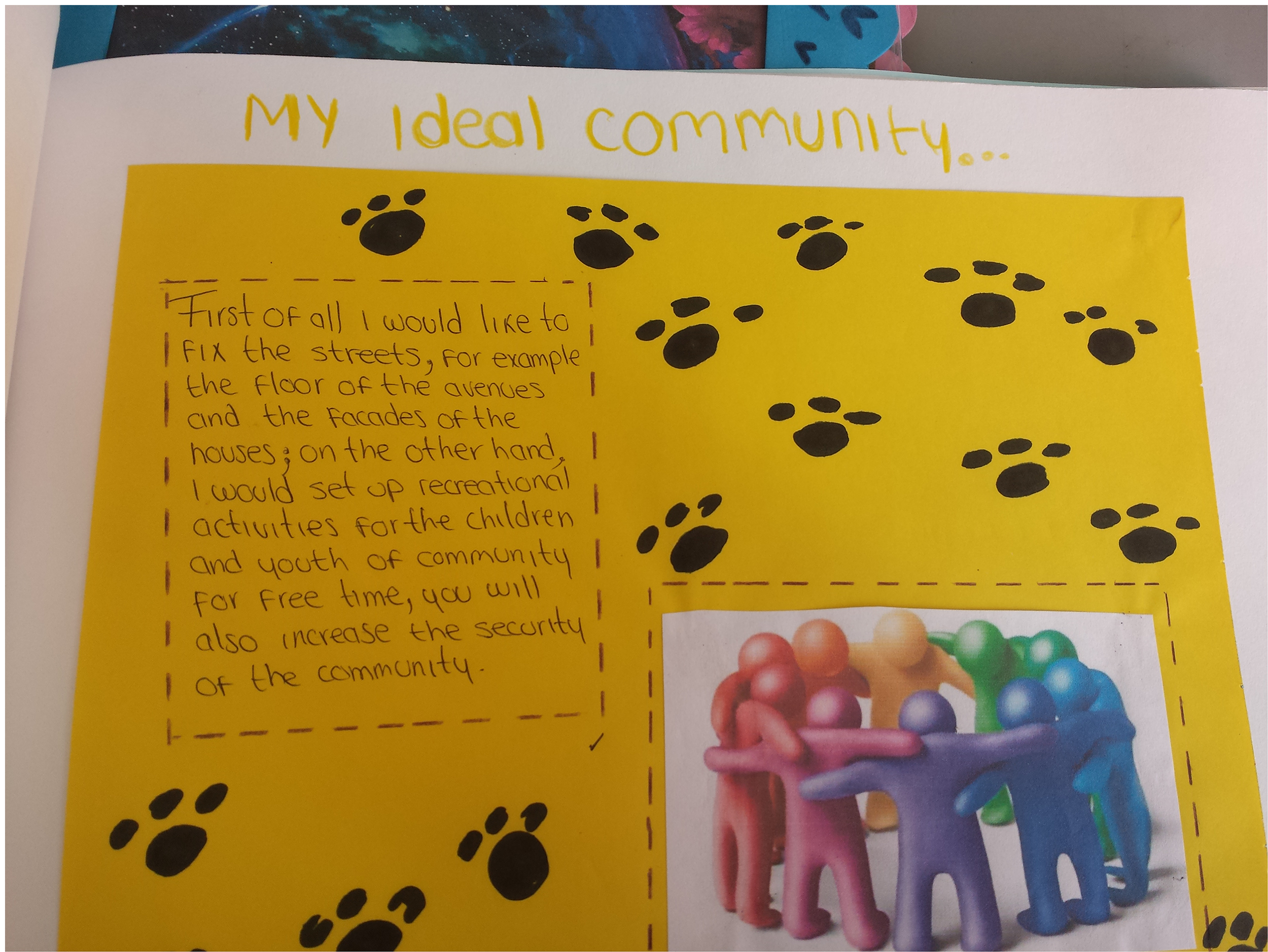
Posters about community.
Furthermore, during my Charlas with the students, it was constantly mentioned their commitment to their community after graduating from high school as they want to pursue a career that help them strengthen the relationships with all members of their community. According to Hadasa, helping students to see their future as community builders sparked a sense of belonging within her students.
Such experiences of bonding as a community in the research process have also helped students and teachers to recognise the social power of their connectedness. Engaging with students and teachers not only allowed me to understand how important connecting with the community is during the research process but to understand the potential to produce feelings of solidarity with a larger cause, an affective stance often thought to be necessary for sustaining efforts at social transformation (Bosco, 2007). What I learned as a researcher from this experience resonates with what (Maguire, 1996) argues, we ‘must first create a community base before [we] can do collective investigation’ (p. 115). During the Charlas and Comidas, this was something that became real because I felt I belonged, and I was able to open myself not only as a researcher but as a person. Teachers, students and I exchanged experiences that helped us build trust, bond relationships and create a sense of belonging as a collective – key elements towards humanising data collection methods.
Advantages and challenges
Like any other form of collecting data, focus groups might be useful to understand the research issues for different perspectives of a similar group. Involving collective engagement is necessary to promote dialogue to understand a critical issue and attempt to transform or respond to the conditions affecting the group or community. Drawing on Kamberelis and Dimitriadis (2013), I propose some advantages of focus groups which were in line with my experiences while conducting both Charlas and Comidas.
Involving a group promotes dialogue to understand the needs of the community, thus mitigating the power relations between the researcher and the participants. As a researcher, my participants never made me feel an outsider. As they welcomed me in their community, I felt the lines between the researcher and the participants were blurred. Promoting more democratic decisions among the members of the group for solidarity building. During my conversations, my questions were the building blocks of other questions and responses with the participants. As we were engaging in dialogue, we both were constructing knowledge based on each other's responses or comments. Generating rich, complex and nuanced perspectives that account for the lived experiences of the group. Most of the questions and comments were deeply related to who the students are, their personalities and identities and their relationship between the school and their personal lives. Similarly, teachers’ conversations turn intimately personal. For example, Sol and Hadasa were very open about their Christian identity and Camello about his strong commitment to the school and his students. Understanding the problem and responding to possible conditions of marginalisation or oppression. Teachers’ main pedagogical approach was about solving the community problems such as unemployment, drug addiction, teenage pregnancy, etc. During the Comidas, they were very open and vocal about how their work must resolve society's problems at all costs. Understanding the group closer to their natural interactions. Having in-depth Charlas with the students allowed me to know more about them, their friends and family relations and the impact school has had on them. Comidas allowed me to learn more about the rationale and reasons for teachers to develop a social justice inspired curriculum, projects and lessons as well as their personal and professional daily routines. Promoting synergy among participants which build on the collective memory of the social group. As a researcher, I definitely felt welcome not only during the Charlas but elsewhere when students asked for advice or because they wanted to know more about my personal life as I became a role model for them. During Comidas, teachers made me feel part of them, in many other occasions they mentioned that I was also a teacher and as such I must engage with students during classroom activities. Making evident or visible what is invisible to the eyes of the researcher or society as the group is an insider of the common knowledge of their communities. As I gained trust, during Charlas and Comidas, I was able to find information not only relevant to the research but information about teachers’ and students’ fears, emotions and hopes about their lives and the future.
Readers interested in this form of data collection should also note the tensions and difficulties when it comes to group participants. The information I found about the teachers’ pedagogical approaches are not only related to how they do things in their classroom but how these relate to their personal lives and relationships with their students. When I heard stories of trauma and pain, I tried to remain objective and calm not to show any emotions and as a researcher, I struggled to analyze such intimate data as I was going through the transcripts. I found the support among peers who encouraged me to see the biggest picture on how students and teachers resiliency helped them to find solutions to what the communities are experiencing.
One particular challenge presented in the study was time. This one became a constraint because it was difficult to know how much time it would take to conduct the Charlas or the Comidas. Finding the balance between the ideal time and the actual time from recording and analysis of the data can constrain the researcher's goals (Krueger and Casey, 2014). Although, I only had 60 min for each Charla with the students, we needed to schedule another time to continue the conversation. Similarly, it was really hard to find time to meet the teachers for the focus group, even for the first Comida, it was hard to find a time that would work for the teachers as they had to juggle between family responsibilities and personal matters. In the end, it felt that it was never enough time to talk to students or to have conversations with the teachers as they have busy lives with their own families and personal projects, I did not want to take much of their time.
Finally, one thing I grapple with was my position as an insider/outsider researcher. During the research process, I was constantly aware of how to reduce the authority of my presence as a researcher by allowing more airtime to the participants, so they take over or own the interview time. At times, I felt like a second person, during Charlas, students took time to tell their stories, tell anecdotes and even asked questions to each other. Although I felt I was losing control of the interviewing process, I was able to reframe questions and guide students to discuss the topic related to my research questions. Similarly, during Comidas, teachers were inclined to dominate the conversation as they had many stories and experiences to share, and although I felt I was also losing control, I stepped back and had them continue as I though these were important. In both cases, I was fearful that losing the control may lead to premature closure of the interview process and lead to weak collection of evidence and eventually damage the authenticity of the data (Kamberelis and Dimitriadis, 2013). However, in the end, richer data was provided and connection and trust with students and teachers became stronger making the research process more balanced by decentering the power of who gets to ask the questions.
Discussion: Humanising relationships and intentions
Beyond sharing food or having conversations as a form of data collection, what this research demonstrated was the capacity for us to feel solidarity in pursuit of a larger cause. This sense of solidarity was cultivated in our bodies, our actions and our convictions. Solidarity became an act against individualism in which we were learning, understanding and supporting each other (Brown and Yaffe, 2017; Freire et al., 2014; Søren, 2013).
Our relationships, intentions and behaviours were based on clear ethical and political commitments which are required when teaching and conducting research. Educators and researchers must understand how the principles underlying these commitments establish the distinctions between ‘us’ and ‘them’ (Gaztambide-Fernández, 2012, 2020). In a sense, the lines between me (as a researcher) and them (as subjects) were blurred by those commitments. For example, I was committed to go to school from 6am to 1pm and participate as much as possible in the school and classroom activities. Students and teachers were committed to the research process because we created bonds. For example, one day, Sol invited me to sit down and have a meal with other teachers at the teacher's lounge during recess. The social studies teacher kindly said ‘but teacher, you are one of us, you are our friend, please sit with us and have a snack’ (Research notes, 20 October 2018). He continued saying that colleagues become friends, and then become long-term relationships for emotional, personal and professional support.
As a researcher trained in the north, these close relationships were something that cannot be possible – I was supposed to be objective as described by peer researchers. Some scholars might argue that by having a close relationship with participants I might run the risk of contaminating the data, or being bias or not being objective enough nor rigorous enough during the process to qualify as high-quality research (Biggs and Büchler, 2007; Maher et al., 2018). However, what I learn from collecting data via Charlas and Comidas was that the research process does not have to be soulless to be rigorous (Bernal et al., 2012, 2017). My experiences demonstrated that in order to gain more in-depth information and really understand the issues, it was necessary to really be human, a human in relation to others (Paris and Winn, 2014). This research experience allowed me to understand humanisation as the process of becoming more fully human as social, historical, thinking, communicating, transformative, creative people who participate in and with the world (Freire, 1970).
From decolonial and critical perspectives, research is a form of allowing all the voices of the participants to emerge, especially for those from marginalised communities (Archibald et al., 2019; Denzin et al., 2008; Smith, 1999). For me, this research became a ritual (Wilson, 2008) that would involve not only asking and answering questions but really preparing myself for the fieldwork, learning about the community, understanding where all are coming from and allowing for all conversations to emerge naturally. I remember in the beginning of my fieldwork that the interviews with pre-prepared questions were unreal to me and rushing teachers and students to respond to questions during their busy 6-hour schedule made me look for other forms of collecting data. Charlas and Comidas became a more nuanced and culturally relevant form of engaging with them, I noticed less stress and tensions. I saw teachers and students more relaxed and more open and honest with their responses. I really captured who they were and where they were coming from – their cultural and personal identities emerged flawlessly (Rivera Cusicanqui, 2015).
This interviewing process and conducting focus groups in the form of these chats and meals with the participants not only helped me to gain data for my research but taught me about connecting with others on a human level. I learned about the students’ dreams and expectations when they graduate from high school, I learned details about the teachers’ personal lives and how deeply their identities are reflected in their classroom lessons, activities and projects. The stories of their lived experiences are not isolated but connected to others, their families, relatives, acquaintances, peers, classmates and colleagues. I learned how teachers’ work has a broader purpose than just teaching English, their work is embedded in actions to change the world.
In other words, my own take on data collection helped me to gain a deeper self-awareness and understanding of enacting qualitative research and furthermore, recognised ethnography as a powerful tool for active collective humanisation. This entails being consciously aware of one's position in the world and deciding to act on the world in which one finds themselves in order to change it (Freire, 1970). In a sense, humanisation is a collaborative mechanism that takes place within the culture in which individuals are empowered to engage in decision-making processes and actions that attempt to transform themselves and their communities.
Conclusion
Focus groups and one-on-one interviews have progressed across the social research from limited groups with targeted and limited questions to more opened conversations with large and small groups (Kamberelis and Dimitriadis, 2013). Charlas and Comidas is one example of how qualitative research methods are moving towards a more culturally appropriate practice that equalises the research process and levels the playing field between the researcher and the participants, thus affording for more reflexivity in the process (Lichterman, 2017).
In this article, I have presented these forms of collecting data with teachers and students in an attempt to be more appropriate to their context and more open to their suggestions and comments. On the one hand, interviewing students by allowing their questions to emerge enhanced a more democratic and inclusive approach to research, but on the other hand, these can also present challenges. Some students may feel intimidated by some of the questions posed by other students or the researcher, however, I learned that the role of the researcher is to function as a bridge to tailor the questions and set the mood to create a safe space for all. This approach suggested an alternative way of ‘seeing and doing’ ethnography motivated by an ethical commitment to the participants and the desire to respect their knowledge and experiences (Manning, 2018).
Additionally, this article has addressed how Comidas as a data collection tool helped me as a researcher to gain trust with the teachers for more nuanced and in-depth conversations that allows participants to share their lived experiences in locations where they feel comfortable (Krueger and Casey, 2014). Whether it was at one of the teacher's house or at a local restaurant chosen by them, the spaces provided the perfect atmosphere to understand, learn and discuss the issues that affect their communities with the aim to transform those conditions. I posit that Charlas and Comidas may provide more rich data that aligns directly with the research goals and questions as they allowed for more personal connections between the research and the participants, thus blurring the divisive lines of power relations.
Charlas and Comidas as a methodological tool for collecting data worked in the Colombian context because, as a Colombian myself, I understand the importance of how dialogue, conversations, meals and friendship are embedded in the culture. This lens can be taken by researchers doing ethnography research in different culturally rich contexts in which they can use the language that is more useful for them. For example, this has already been evident in Latinx, Chicano and Chicanx studies in which a form of Testimonios and Pláticas have been used for collecting data in an attempt to disrupt a narrowly defined process of knowledge production in academia, informed by specific ideological beliefs (Bernal et al., 2012; Huber, 2009, 2012).
This research project was a sound example of ‘humanizing research, creating a space in which individuals and communities can work collaboratively toward more fully realizing their human potential’ (Irizarry and Brown, 2014: 94). Certainly, I witnesses how students wanted to do greatly to changing the social conditions the live by creating projects that respond to social problems and to the necessity of approaching research practices that are at once theoretically infused and socially engaged, rigorous, collaborative and practice driven (Bell et al., 2021).
This study contributes to the field of qualitative research through a humanistic approach. That is, less objective by allowing full participation of the research process and by using other forms of exchanging knowledge (Archibald et al., 2019; Denzin et al., 2008; Paris and Winn, 2014; Wilson, 2008). It is suggested that a fundamental piece of this idea is the co-creating of knowledge between academics and community members. To this end, it may be useful to further develop the idea of allowing participants to take the leadership in asking and answering questions in an attempt to de-hierarchise the research process and problematise who the subject/object of the study is.
In conclusion, I propose that educational research consider using alternative forms of collecting data similar to Charlas and Comidas as an approach that actively includes participants of the research process. This way, the divide between the researcher/participant, objectivity/subjectivity, scientific/emotionality can be blurred and actively problematise claims of validation, knowledges legitimisation and authoritative representation (Smith, 1999). This goes in tandem with the current critical turn in qualitative research towards discourses and practices against post/extractivism in which research implies not just taking from the research subjects and communities, but in fact, giving and exchanging in reciprocity (Grosfoguel, 2016, 2019; Gudynas, 2016; Rivera Andía and Vindal Ødegaard, 2019; Rivera Cusicanqui, 2010).
Ultimately, such call for a change to a more humanistic form of qualitative research would require a culturally responsive approach to understand participants as peers rather than subjects of study. In this research project, I definitely saw myself as one more member of the community, as teachers and students invited me to all their activities and on many occasions they called me a colleague, a friend and one more of them. Charlas and Comidas not only was as an exchange of information but a gift from my participants, a gift that I will always bring with me as I walk with communities in my new adventures as a critical and decolonial researcher.
Footnotes
Acknowledgements
I would like to thank the teachers and students involved in the research process for all the work they do to address issues of social injustice in a country like Colombia, especially in the English as a foreign language class. I would like to thank the reviewers for their important insights on my work and Dr Suresh Canagarajah for his academic support thought the process of disseminating this knowledge.
Funding
The author(s) disclosed receipt of the following financial support for the research, authorship, and/or publication of this article: This research was supported by the Social Sciences and Humanities Research Council of Canada (SSHRC) Doctoral Fellowship # 752-2018-2534 and The International Research Foundation for English Language Education (TIRF).
Notes
Provided interview transcripts are translations from the original Spanish language which have been pee- reviewed. Words in Spanish have been italicised.
