




Abstract
This paper evaluates the use of self-curated photo elicitation as a new method for exploring self-identity by reflecting on its design and use in a study of Scottish identity. The approach builds on the work of others in the fields of visual analysis and interpretative phenomenological analysis (IPA). Participants were style influencers who were asked to select and discuss a sample of their own Instagram posts that they felt represented their Scottish identity. The approach enabled deep and meaningful engagement with research participants and encouraged further revelations through asking them to reflect on how they went about choosing their posts. Participants spoke passionately and at length about the story behind these and began to understand more about themselves in doing so. Recommendations are made as to how self-curated photo elicitation could be used in future. It is proposed that this method is particularly adaptable to IPA research and studies of self-identity.
This paper reflects on the design and use of self-curated photo elicitation as a technique to investigate the construction of Scottish identity and place as expressed online through visual social media. It builds on the work of others who have used photo elicitation in qualitative research (Collier, 1957) and evolving techniques such as photo voice (Wang and Burris, 1997; Wang and Redwood-Jones, 2001). As the online world evolves, attracting interest from a variety of academic perspectives and subject disciplines, it is argued that this methodology could be useful to others who wish to explore the presentation of personal, group or even brand or corporate identities.
Background to the study
Identity is a field that has attracted the interest of scholars for many years: notably in the work of social scientists such as Goffman (1956) who explored the construction of identity in everyday social situations and Erikson (1959) who was the first to conceptualise stages of identity across the life course. Harper (2012) in his book Visual Sociology argues that visual approaches can be helpful in uncovering new meanings and ideas. He highlights the significance of family and documentary photography in curating and performing identities, engaging the viewer through the subject and/ or the image composition.
Turkle explored Life on the Screen (1997) at a time when the Internet was in its infancy and early users began to experiment with their identities online, sometimes deviating dichotomously from their offline selves. Since then, social media has revolutionised communication and self-presentation online (Doster, 2013), providing opportunities for interaction between online and offline networks. These platforms enable users to construct their identity, selecting what they consider to be the best aspects of their offline self, transferring and sometimes exaggerating their persona online (Bullingham and Vasconcelos, 2013).
A number of studies focus on fashion bloggers, now more commonly termed ‘influencers’, as a compelling example of how online identity can be constructed and stylised for an audience (Abidin, 2016; Rocamora, 2011; Titton, 2015). Instagram, in particular, is recognised as a platform through which social interaction, human behaviour and personal style can be explored (Abidin, 2016; Dumas et al., 2017; MacDowell and de Souza e Silva, 2018; Sheldon and Bryant, 2015). Tomanić et al. (2013: 175) consider ‘the centrality of the image in everyday life experiences’ and Mota (2016) investigates fashion communities who buy and sell clothing on Facebook. She argues that, in these digital interactions, the body itself becomes a commodity through the way in which it is visualised.
Instagram is a photo-sharing social-media application that has experienced significant growth and success since its inception in 2010. Although viewable on a desktop device, Instagram is most commonly used as a mobile application, designed for users to share personal photographs instantaneously (MacDowell and de Souza e Silva, 2018). Instagram reports over 500 million daily active users who spend an average of 53 minutes on the platform each day (Hootsuite, 2019). It has been described as the fastest-growing social-media platform in the world (Song, 2016).
It is argued that Instagram’s success is emblematic of an increasingly ‘visual culture’ (Hu et al., 2014; MacDowell and de Souza e Silva, 2018: 8). It is a medium that facilitates the sharing of personal photos as part of a digital feed, where images appear together as a set and are viewed as part of a personal narrative (Van House, 2009). Instagram has attracted interest in the field of cultural studies where it is suggested that the medium has transformed ‘amateur photography’, which has become ‘immersed in the texture of every-day life’ and increasingly accessible to a wide audience (Utekhin, 2017: 185). Its Geotag feature enables users to signal their location and access a visual map to enjoy other images from that place, heightening its significance to tourism and the marketing of a place.
Instagram is a key outlet for influencer marketing (Abidin, 2016). It is recognised as a platform through which users can build high follower numbers based on their ability to project and communicate an attractive and fashionable lifestyle; these individuals have become known as ‘influencers’ due to their impact on consumer tastes and behaviours (Abidin, 2016: 86). Building on the success of personal fashion bloggers (Rocamora, 2011), influencers use Instagram to engage more freely and immediately with their followers, sharing fashion and lifestyle choices. Although physically situated in a geographic location, the digital nature of an influencer’s audience and the priority placed on pictures over written communication, allows them to appear placeless (Luvaas, 2013). However, there are also influencers who promote their place and national identity as part of their online identity and style.
This study explores Scotland as a particular instance of national identity and place. Scotland is recognised as a small stateless nation but one that has great resonance amongst a global population, with a strong iconography surrounding its cultural history and tradition (Crane et al., 2004; McCrone et al., 1995). Scotland is part of Britain and the United Kingdom (made up of Scotland, England, Wales and Northern Ireland) and conforms to what Billig (1995) describes as a sub-national identity, where individuals might consider themselves as Scottish and British. Scotland has a devolved parliament with some political autonomy, e.g. educational policy, but many powers rest with the UK parliament in Westminster, London.
The behaviours and experiences of Scottish style influencers were explored in order to draw conclusions around how they construct their national identity online using Instagram. The research adopted an interpretative phenomenological analysis (IPA) approach and self-curated photo elicitation as a new methodology. This paper discusses the design and use of self-curated photo elicitation, through reflection and evaluation of its use in the context of a particular study. Some key findings are reported and recommendations are made as to how the method could be used as a qualitative tool through which issues of identity can be explored.
The use of photo elicitation in qualitative research
Photo elicitation in social science research has traditionally involved the researcher selecting images and showing these to participants during an interview in order to stimulate a response and enhance memory recall (Collier, 1957). It is regarded as particularly useful in gathering data from children and young people (Alejandro-Wright, 1985; Capello, 2005; Croghan et al., 2008; Epstein et al., 2006). However, a stream of research has evolved using participants’ own photographs (Croghan et al., 2008) and this is referred to as photo voice (Wang and Burris, 1997; Wang and Redwood-Jones, 2001), reflexive photography (Ziller, 1990) or participatory photography (Allen, 2012) – where participants are asked to take photos that tell a story about a particular issue, event, experience or place (Photovoice, 2017). These photos are usually discussed during a subsequent interview or as part of a focus group.
Yip-Frazer et al. (2015) carried out a study using Instagram in an alternative form of photo voice, where adolescents were asked to use the medium to share photos documenting their experiences with diabetes. Croghan et al. (2008) use photo elicitation to explore products and the meaning they hold for young consumers. They argue that the method allows researchers to explore more ‘subjective meanings’, where photos ‘act as a trigger to memory and are likely to evoke a more emotional many-layered response in participants’ (Collier and Collier, 1986; Croghan et al., 2008: 346; Prosser and Schwartz, 1998; Samuels, 2004). More recently, Marston (2019) explores digital intimacies amongst LGBT+ youth participants through a three-stage participant-led visual process consisting of mapping exercises, digital tours captured via screenshot and photo interviews. She observes some of the challenges in carrying out visual research, such as image selection and ethical concerns, as well as its ability to produce rich data and unexpected findings.
Vila (2013) maintains that photo elicitation is particularly useful in helping understand issues of personal identity. Van House (2009: 1077) uses the photo elicitation technique in her study into self-presentation through personal photographs. Participants were given camera phones, access to relevant applications and their usage was observed and formed part of a later interview. She describes this as an ‘interventionist’ technique and cites the importance of allowing time for participants’ activity to steady.
There are a number of studies that use photo elicitation to facilitate what Anderson (2004: 254) describes as ‘conversations in place’, whether relating to physical place or issues of ethnicity. Tonge et al. (2013: 43) explore visitors’ attachment to an Australian national park through the use of photo elicitation and suggest that, when accompanied by an interview, the method can obtain ‘greater emotional depth’ from participants. In a study of the role of the main street in strengthening individuals’ sense of place and cultural identity in the Scottish rural town of Kirkwall, Baxter et al. (2015) used existing photographs – old and new – of the town’s main street. These were shown to participants during face-to-face interviews and via discussion groups on Facebook. This approach was also utilised by Hood and Reid (2018), who explored user engagement with local history in the North East of Scotland. Leddy-Owen (2013) uses participatory photography to explore the issue of belonging, national identity and place amongst residents of a suburb in South London. Participants were asked to take photographs that represent Englishness in the context of their suburban London setting.
The IPA approach seeks to ‘explore in detail participants’ personal lived experience and how participants make sense of that personal experience’ (Smith, 2004: 40) with a focus on the specific rather than the typical (Larkin and Thompson, 2012). Smith (1996) developed this approach in the field of psychology and argues that IPA is valuable in exploring issues of personal identity; he (2004) invites its use in other contexts beyond the medical domain.
The use of supplementary materials (e.g. journals or creative output) and presentation of participants as individual cases is often recommended when using IPA to ensure a suitable level of depth and meaning can be obtained from participants. Allen (2012) describes the data that is obtained during photo elicitation as personal narratives, where photos can convey stories and experiences of research participants, making the approach particularly adaptable to IPA. Larkin and Thompson (2011) maintain that IPA is well suited to subjects that are important to the participants being studied and where it is expected that they can provide a valuable viewpoint. Therefore, research questions tend towards an individual’s ability to make sense of their own experiences and, in this particular case, their Scottish identity and social media output. These reflections and experiences are then used to form meaning around a subject. Some studies, in health sciences, combine photo elicitation and IPA as a particularly powerful combination through which identity can be explored (Burton et al., 2017; Ramalho et al. 2016; Rodham et al., 2012). The current research is grounded in the IPA philosophy where the self-curated photo elicitation approach was designed as an adaptation of traditional photo elicitation and photo voice in order to explore why and how participants construct their Scottish identity and place through Instagram.
Self-curated photo elicitation as a qualitative research method
This paper reflects on the design and use of self-curated photo elicitation in an exploratory study into the construction of Scottish identity amongst style influencers on Instagram. The research investigates the interaction between offline and online identity, in terms of national identity, place and how these attributes influence the online self. Immediacy was not a sought characteristic in participant response, as it is in many of the studies using traditional photo elicitation where the researcher might seek to explore individuals’ instant reaction to an issue; extended and conscious reflection were more important in this study, which examined the ways in which actors understood and constructed their identities online.
The study sample consisted of 14 research participants and this number was informed by other comparable qualitative studies that reported data saturation at around 9–10 interviews (Bullingham and Vasconcelos, 2013; Crane et al., 2004). Small sample sizes are recommended when using an IPA approach (Smith, 2004) and where the aim is not to generalise about a research population but rather to explore the individuality of each participant – in this case, to uncover new meanings around how Scottish identity is constructed online through a predominantly visual platform. This idea is reflected in the way in which the findings are reported, where individual participants are introduced and discussed as case examples in order to illustrate key ideas and themes. The current paper is a reflection on methodology and therefore only an indicative sample of findings can be reported in order to illustrate how the use of self-curated photo elicitation helped develop the research as a whole.
Participants were identified and purposively sampled on the basis that they identified themselves explicitly in their biographical Instagram description as Scottish or Scotland-based. Whilst undertaking the primary research, the researcher maintained a public profile on Instagram. Participants were contacted and interviews arranged using the private message function that is available through the platform. An initial sample of three influencers was identified and snowball sampling was used to help uncover additional participants who met the research criteria.
Participants were asked if they were willing to be interviewed and to select, in advance of the interview, Instagram posts that they felt demonstrated their identity as a Scottish style influencer in what is termed a self-curated photo elicitation approach. These posts consist of a single photographic image and written text, where the photos act as key signifiers and the accompanying caption as the contextual narrative surrounding these. Interviews were carried out face-to-face or through video call. Participants’ posts formed an integral part of this interview, where they were encouraged to reflect on their choice of imagery in terms of how and why these were chosen and how easy they found the selection process. In most cases, participants preferred to use their phone to look back at the images as they discussed these. Interviews were semistructured and also included some questions around national identity and Instagram use more generally.
This approach differs from other examples of photo elicitation: in the present study, the individual posts that participants were asked to provide and discuss already existed on Instagram, constructed and shared by the research participants independently as part of their own personal narrative (Allen, 2012). By asking participants to draw on existing imagery, this study adopted a ‘naturalistic’ as opposed to an ‘interventionist’ approach (Van House, 2009: 1077). As well as providing a rich visual data set, the elicitation of participants’ posts enabled the researcher to gain insights into how participants understood their own constructions and how this was shaped by their Scottish identity. The technique resulted in a double reflection opportunity for participants: (i) the process of thinking about, identifying and selecting posts as being indicative of their national identity; and (ii) articulating this process verbally as part of an interview.
Although the approach collected a set of pre-existing photos, the interview enabled these to be grouped together and considered in a subset for the first time. One participant reflected on her sample posts saying ‘I just thought that all of them together showed a different part of me’; suggesting that the bringing together of photos in this way was particularly revealing of her identity, which was made up of individual parts. Another participant said of her images ‘I feel like those are the kind of images that speak of me so strongly. They just have my style all over them’. This particular example emphasises the consistency that participants liked to associate with their online identity where they all spoke of spending time and effort curating their online selves. It also illustrates how a set of images that are brought together in this way can create a narrative and elicit deep insights into an individual.
Asking participants to choose a sample of posts gave them freedom to choose any number of images and to decide for themselves what they thought of as images indicative of their national identity. This also ensured that the researcher imposed no bias in selecting imagery, which can be an issue when using visual methods, particularly where a researcher is familiar with the subject matter or community (Mannay, 2010). Indeed, it would have been difficult for any researcher undertaking a study of this sort to select photographs without being influenced by dominating symbols of Scottish identity, particularly when these are so strong throughout the literature (Brown, 2010; McCrone et al., 1995). Image sets ranged from 4 to 12 posts per participant, providing a total corpus of 77 photographs. Some participants responded very quickly, within an hour of receiving the request and others took time to consider this more deeply, taking 2–3 days to provide their imagery.
The analysis of the data was trifold: (i) the posts were discussed in the interview and the interview transcript was analysed thematically; (ii) the posts were analysed separately for their denoted and connoted meaning (Barthes, 1957); and (iii) the posts were analysed alongside themes in the interview data and literature in order to explore these within the wider context of Scottish identity. This level of interrogation is considered appropriate in an IPA approach where multiple interactions with the data are advised (Smith, 2004). Semiotic analysis of imagery enabled new meanings around Scottish identity and fashion to be captured, addressing a gap in the literature (where research into Scottish fashion typically focuses on traditional textiles) and contributing new knowledge to the field of Scottish identity. These findings cannot all be discussed within this paper, but the key ideas that were revealed through self-curated photo elicitation are reflected upon.
Although research in the field of blogging and social media influence is expanding, only a small number of studies directly involve the producers of these texts (e.g. Reed, 2006; Bullingham and Vasconcelos, 2013; Palmgren, 2010; Pedroni, 2015). There is currently no research in the field of fashion blogging and influence that involves participants’ individual reflection and interaction with their own output. Use of the word ‘self’ in this context refers to the online identity being studied (in this case the participant) and not the researcher. Use of the term ‘self-curated’ rather than ‘participant-curated’ will enable the approach to be translated to other contexts, where for example the ‘self’ might signify a brand or group identity.
Ethical considerations
A challenge in conducting this research was the difficulty in assuring participant anonymity due to the inclusion of personal photographs. Mannay (2016: 119) refers to this as ‘the ethics of representation’. This ethical dilemma is debated by researchers who favour visual methods, where universities’ policies around open access have added fuel to this discussion (Mannay, 2014). Kara (2018) argues that, where there is potential for the misuse of research findings, they should not be published for ethical reasons but where the research can have more positive outcomes then these are worthy of inclusion. For the purpose of the current research, it was necessary to include self-curated photographs as ‘the visual [provided] a powerful way to question dominant essentialising stereotypes’ (Mannay, 2016: 113; Mitchell, 2011), in this case conceptualisations of Scottish identity and fashion, which was part of the scope of the study. However, although participants’ photographs already exist in the public domain on Instagram, the stories behind these do not and this is where ethical considerations take on a new complexion.
Marston (2019: 284) in her study of identity and social media highlights the ‘importance of evaluating ethical relations as they emerge in the unfolding process of research, rather than judging them in advance’. Similarly, the use of participants’ self-curated imagery was a key ethical consideration and something that evolved. Richardson (2015) reflects on some of the ethical tensions that exist in carrying out qualitative research and puts forward the argument that anonymity can actually lead to researchers misusing data due to a lack of accountability for their participants and their stories. He argues that the notion of anonymity is also at odds with creative processes and outputs, where in other settings images and output would be credited to their owners. It was decided that, for the purpose of this study, participants could not be assured full anonymity due to the need to synthesise interview data and self-curated photographs. However, a pseudonym was adopted in order to protect names and personal details as well as to equalise participants across the sample.
The researcher’s academic institution granted ethical approval for the study to commence and participants were given full disclosure of research intent before agreeing to take part in the study and curating imagery. This raises the question of whether or not participants were more selective on this basis – potentially omitting more personal images. Self-curation provided an ethical safeguard for participants who were able to exercise some control over the research agenda. One participant selected imagery where she was less visible and where the emphasis was on photos that she had taken herself, most of which depicted Scottish landscapes or Scottish brands. This was revealing in terms of how she imagined her Scottish identity but also interesting, given that she was very visible in a number of her other photographs on Instagram, which she chose not to include. Two participants included photographs that contained unconsenting friends and family members within their sample, which are not included in this paper (Mannay, 2016; Richardson, 2015).
At the final stage of the research, participants were issued with a follow-up consent form that included an overview of the findings and a personalised document containing interview quotations and self-curated Instagram posts. This is in line with Mannay’s (2014: 113) recommendation that ‘concrete examples’ should be issued to participants to help facilitate openness and honesty. Participants were given the option to provide approval for all the data to be included or for quotations and photographs to be removed and participants granted full approval. Only one participant failed to respond within the time period and her photographs were removed from the data set. This final request for participant consent occurred 18 months after the initial request to take part in the study and this time period could go some way towards addressing Brady and Brown’s (2013) concerns around ‘time immemorial’ where participants’ consent is ‘based on the present’ (Mannay, 2016: 113).
It is worth noting that the images that were gathered during this research are considered to be useful in conveying contemporary cultural representations in a context that is fast-paced and dynamic (fashion and digital media). The purpose of the research was not to portray participants in a particular manner but rather to understand the nature of the phenomenon at a particular time and place. Fashions change and digital media evolve and participant influencers are likely to adapt their views, styles and identities in line with personal and societal influences (Erikson, 1959). So, although the representations of research participants that exist within this paper were accurate at the point of carrying out the research, these accounts are not intended to be static portraits of the individuals but rather to shed light on the construction of Scottish identity and fashion on Instagram as an example of social media.
Representations of Scottish identity and fashion on Instagram
This paper draws on the methodology and findings of a larger project investigating the construction of Scottish identity and style on Instagram. Participants used Instagram as a form of escapism, where they could revel in their own identity and enjoy experiencing that of other people through photos. Instagram was regarded as more akin to a book or film than other examples of social media. Participants’ posts, which exist in the public domain, might be considered modern cultural productions that are important in shaping the way in which the nation is imagined (Anderson, 1983; Crawford, 2007). The use of self-curated photo elicitation resulted in the collection of a corpus of texts that could be considered illustrative of contemporary Scottish identity and style and which, in and of themselves, provided a rich data set. The photographic nature of these texts underpinned the identification of key visual themes as well as conceptual theory around Scottish identity and its expression through image.
When selecting posts demonstrative of their identity as a Scottish style influencer on Instagram, participants presented various conceptualisations, including people-less landscapes, historic settings, warm clothing and the promotion of Scottish designers (Figure 1). However, the underlying theme, observable across the sample, was that the chosen images were particularly memorable to participants who, during the interview, often recalled the story behind these in great detail. This is considered a key strength of self-curated photo elicitation as a method and forms the focus of this paper and the discussion that follows.
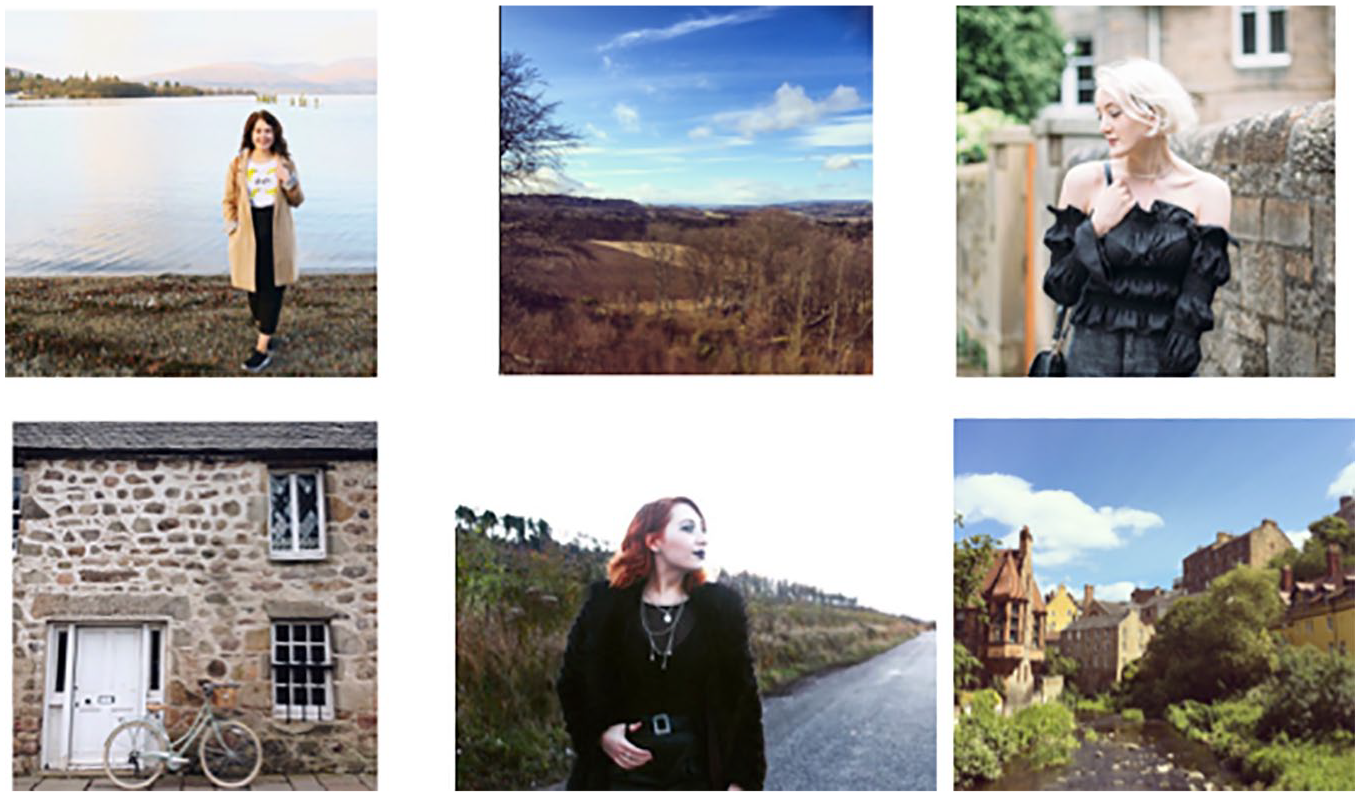
Illustrations of Scottish identity.
The use of self-curated photo elicitation helped uncover meaningful insights into the participants’ identities, experiences, motivations and behaviour by stimulating deeper reflection around the research topic before and during the interview. Participants’ choice of posts tended to be image-led where they spoke of ‘scrolling’ through their Instagram profile feed and selecting images that stood out to them as illustrative of their Scottish identity. Some participants found this more difficult than others, and the influencers who were most conscious in the construction of their Scottish identity (and intentionally projected the most stable and consistent identity) tended to find image selection easier.
The self-curated photo elicitation method enabled a corpus of imagery to be gathered that could be regarded as illustrative of contemporary Scottish identity and fashion. In the analysis of participants’ photographs, it became clear that some of the dominant tropes and stereotypes that surround Scottish style, in particular traditional textiles like tartan, which have been the focus of academic studies (Brown, 2010; Young and Martin, 2017), were absent. This illustrates the value of the method in helping uncover new and unexpected ideas, supporting Mannay (2010) who maintains that visual methods help overcome researcher and participant bias, producing interesting and unpredictable responses to research problems. The absence of what might be regarded as more obvious symbols of Scotland enabled new conceptualisations to emerge, such as participants’ preference for autumn-winter styles. Although this autumn aesthetic was observed during semiotic analysis of the imagery, it was only during interview discussions that connotations of comfort and familiarity were uncovered, predominantly amongst those participants who had been born (but who were not all necessarily still living) in Scotland. This illustrates the need for a trifold approach to analysing the data.
One participant who found it difficult to select posts actually went on to provide the largest image-set consisting of 12 images. She reflected: ‘when I first read your question I was like, oh “I don’t know if I can do that,” it’s quite hard because I don’t think I do really portray that I’m that Scottish on Instagram’. She had clearly spent time considering her Scottish identity in advance of the interview and appeared to understand more about herself in doing so. In the interview she was reflective and referred to ‘deep thinking’, making statements like ‘what I’ve realised is. . .’ It became clear she preferred to reveal less of her physical location when at home in the city of Aberdeen but was more apt to share place-related imagery online when visiting other parts of Scotland, such as the bigger city of Edinburgh. Her photographs were mostly of a landscape nature, denoting historic buildings or unique rural settings. Although the absence of images of her hometown was evident during the semiotic analysis of the imagery, it was only during the interview that the themes of safety and security emerged. This participant had been born and brought up in Aberdeen, where she still lived in her family home and where the place connoted a sense of belonging, which she preferred to keep private.
In his seminal work The Presentation of the Self in Everyday Life (1956), Goffman observed the tension between backstage and frontstage identity. He explored identity in the context of everyday social situations and found that individuals tended to perform to a set of rules when interacting with others. Bullingham and Vasconcelos (2013) apply Goffman’s theories to an online setting and found that bloggers tend to be selective in the parts of their offline (backstage) identity that they convey online (frontstage), portraying an idealised self that is influenced by a sense of their followers (audience). In this sense, the blog or indeed Instagram, might be regarded as a metaphorical stage (Goffman, 1956).
The participants all demonstrated a consciousness of their audience and this influenced (to varying degrees) their identity, personal style as expressed through fashion, lifestyle and ultimately the photos they chose to share. This was evident in the way in which participants responded to interview questions and also in the way in which they went about selecting their posts. During the interviews, participants often reflected on the tension between their online and offline identities where the use of attractive imagery often masked the harsher reality of backstage, e.g. weather conditions or unhappy memories.
Instagram is recognised as a useful tool to record experiences but one that encourages narcissistic traits amongst its users (Dumas et al., 2017; Sheldon and Bryant, 2015). Most of the participants in the current study admitted to spending significant time viewing their own profile and photos: recollecting experiences but also deconstructing and critiquing their identity – trying to see themselves as if from their audience’s perspective. Participants were also very conscious of their frontstage selves, where receiving likes and comments in relation to particular types of imagery appeared to influence content creation. One participant demonstrated this duality in her imagery observing: ‘those are the ones that people would recognise as me, because it’s the signature style that I would do. Plus they’re the kind of images that do the best’. The hyper-consciousness participants appeared to have towards their audience demonstrates the applicability of Goffman’s (1956) theory.
The following discussion draws on a sub-sample of four research participants in order to illustrate three key ideas that emerged through the self-curated photo elicitation approach.
Front versus backstage identity
As was explored in a study of blogger identities (Bullingham and Vasconcelos, 2013), the idea of Goffman’s (1956) metaphorical stage can easily be applied to Instagram and the way in which style influencers use the platform to construct their identities. Participants tended to feel they portrayed a genuine version of themselves online using Instagram and that it was important to do so. However, they all admitted to being selective in the fashions, places and experiences they chose to convey frontstage, preferring to highlight the ‘best bits’ of their offline identity for their online audience. Overall, they preferred to show a positive outlook on life through Instagram and one that, at times, masked the backstage reality, which was sometimes less pleasant. For the participants in this study, it was often the internal backstage elements of the photographs that most strongly influenced their choice of imagery.
It was actually raining in that photo [Figure 2] and it just made me laugh because on Instagram you’d think “aw that’s such a nice photo” but actually it was pouring with rain. That’s in London as well. Yeah it does rain. In fact, most of the time when I take photos. . . We went through a stage when my flatmate and I, every time she took photos of me, it rained. She’s Scottish as well so we’re both used to that.
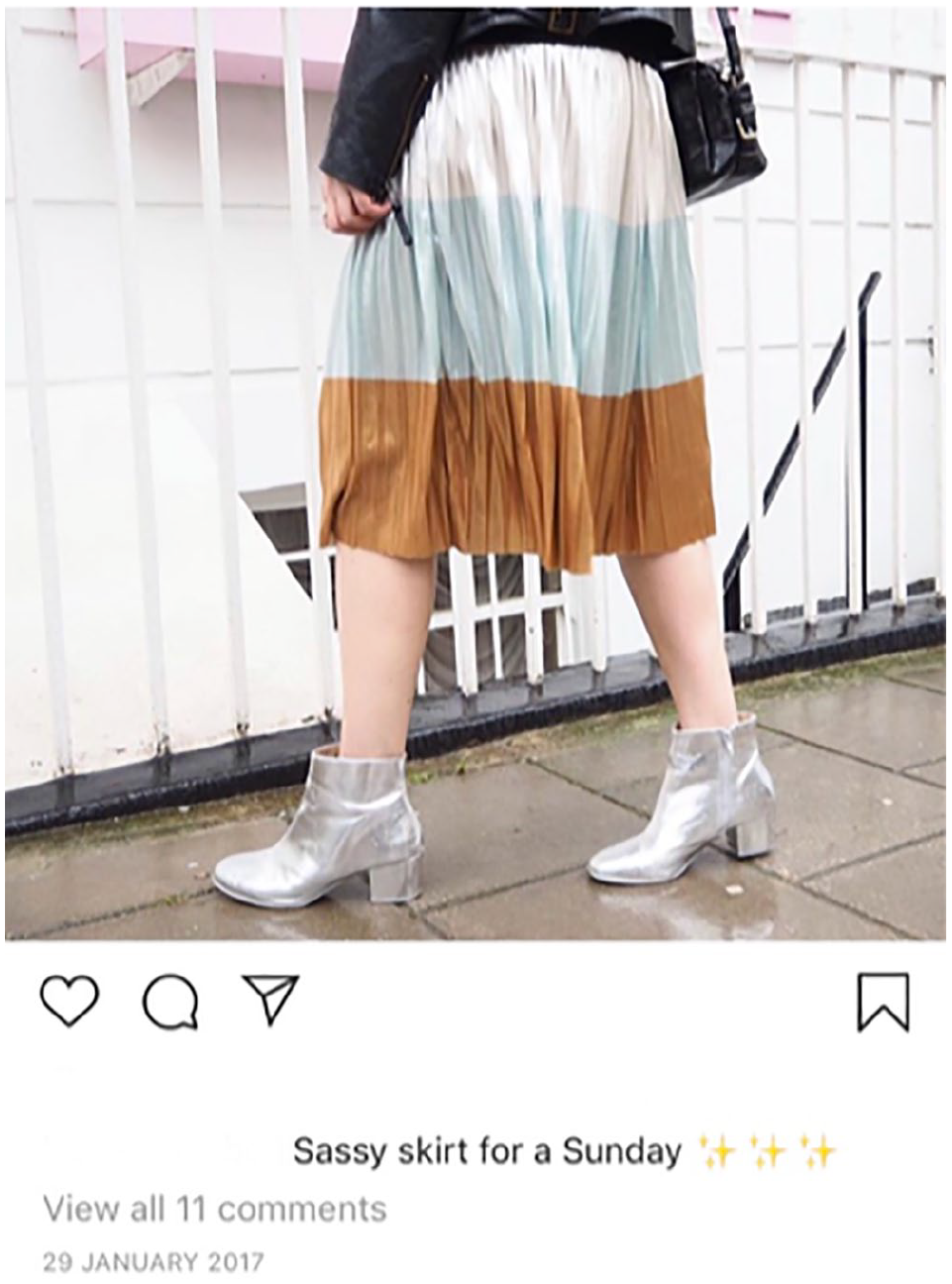
Gunna’s rainy day.
Gunna (24) was born and brought up in Scotland but living in London at the time of interview. She was particularly conscious of her personal style and selected sample posts with a strong sense her fashion identity in mind. Gunna referred to herself as a ‘Scottish girl in London’ and felt this made her unique in online and offline settings. Despite regularly visiting her ‘home’ in Scotland, most of her sample photos were taken in London.
Gunna felt Figure 2 was representative of her Scottish identity and style through her acceptance of the rainy weather conditions, which she had become used to whilst growing up in Scotland. Although she remembered this in the interview, the post itself does not reference the rain in an obvious way, other than the reflection cast by the wet pavement. Gunna’s explanation suggests a conscious disparity between the ‘sassy’ mood of the outfit that is depicted in the photo and the backstage reality of the unpleasant weather conditions, which she recollected vividly in the interview.
Van House (2009: 1082) argues that ‘memories and the narratives by which we make sense of them play a major role in how we construct our self-narrative and self-understanding’. When discussing their photos, most participants spent significant time revealing the memory behind these, often selecting posts on this basis; for example, Gunna revealed: I feel like my shots in Scotland have more of a story behind them. Maybe because it was harder for me to actually get photos, or because I have memories attached to them. Whereas here [in London], my outfit posts, I’ve put on the outfit purely for that shoot. I love the photos, I love the outfits, but there’s not an emotional connection like there would be with the Scottish ones.
Throughout the interviews, participants distinguished between meaningful and non-meaningful photos, where the meaningful denoted more authentic experiences; these were captured in the moment and triggered happy memories. Gunna included Figure 3 as an example of a more meaningful post. Similarly to Figure 2, this might be categorised as an outfit post, but where she presents herself against a historic street in Edinburgh city centre. In Figure 3, the location is undoubtedly more significant than in Figure 2. This is clear from the semiotic analysis, for example in the way the image has been framed where the background is awarded more space. Indeed, the caption further suggests that the setting is the key signifier. During the interview, whilst discussing this photograph, Gunna revealed that it was taken during a family visit home and so it held more meaning. She also felt it was representative of her style in Scotland, which she described as classic and casual. Although the idea of a classic, casual style was supported in the semiotic analysis (where the trainers and jeans signify a fashionable but dressed-down look), the connotations of family and the fact that Gunna associates a more relaxed and informal style with her Scottish roots was only revealed during the interview discussion.
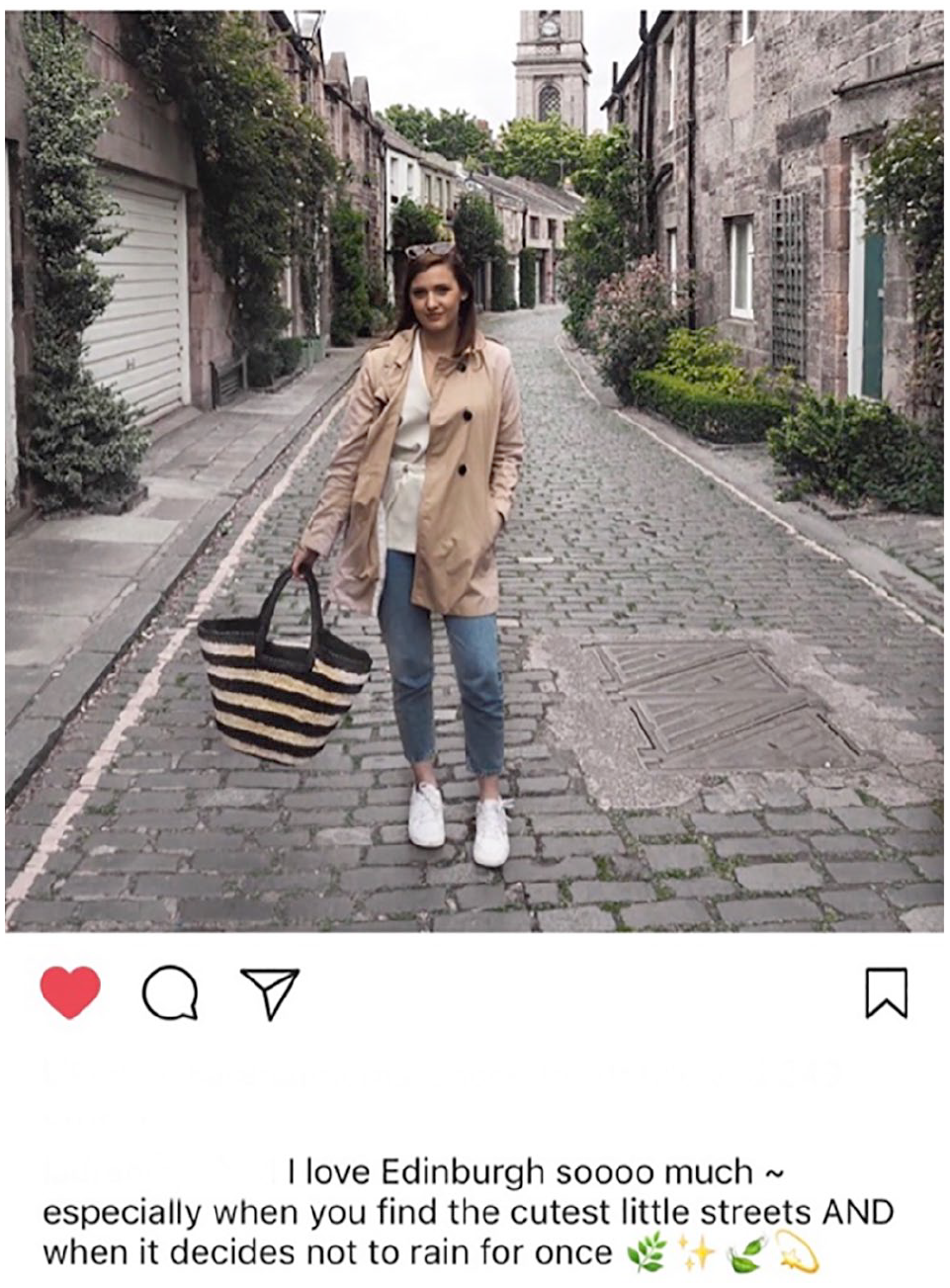
Gunna’s visit home.
In contrast, participants’ less meaningful posts tended to be more stylised and constructed intentionally around their persona as a fashion influencer, where the emphasis was on the clothing and accessories. Participants included both meaningful and non-meaningful photographs as part of their sample imagery but appeared more attached to the meaningful posts that elicited happy memories and drew on these more strongly in their discussion of Scottish identity. They liked that Instagram made it possible for them to recollect these experiences and reminisce at any place or time. This emphasises the power of Instagram as a tool through which individuals can preserve memories in a visual and immediately accessible manner (Dumas et al., 2017; Sheldon and Bryant, 2015). The findings of this study suggest that even the internal backstage aspects of that experience, such as a feeling or mood (which are not always visible), can also be preserved and revisited through Instagram.
The tension between meaningful and non-meaningful posts is illustrated further in Barra’s sample posts (Figures 4 and 5). Barra (26) described herself as a ‘history geek’ and Instagram as a place for escapism, inspiration and entertainment. She enjoyed sharing outdoor imagery and visits to heritage sites in Scotland, styling the place as well as herself.
Barra’s happy memory.
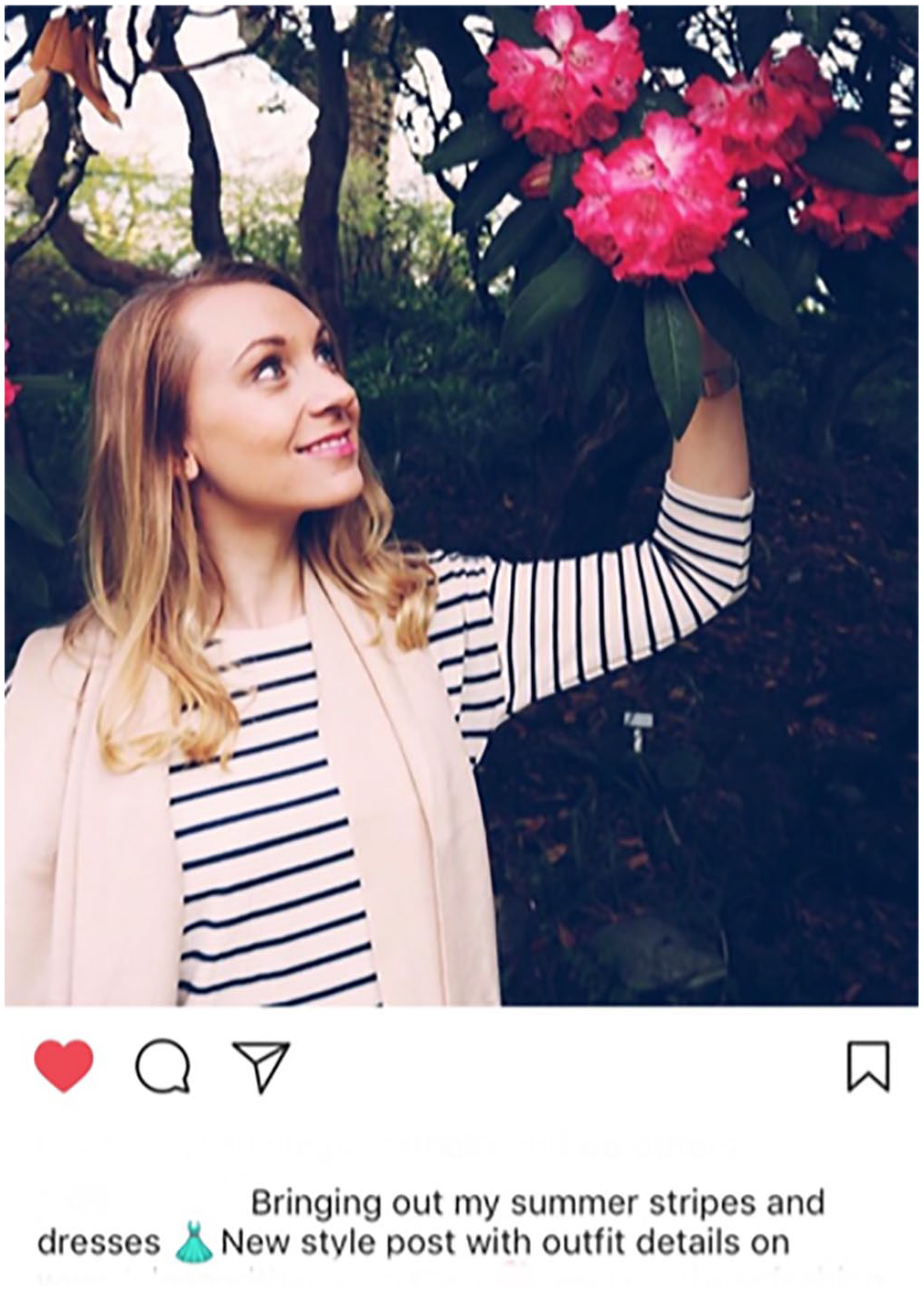
Barra’s outfit post.
To an audience, Figures 4 and 5 are similar: they show the same person, styled in a similar way, the settings are beautiful but unremarkable and the weather appears sunny; in both images, the style that Barra presents appears consistent and natural. However, to the participant herself, these posts are valued differently due to the memory that she has attached to them. Figure 4 was taken on a family trip to a Scottish tourist attraction, which Barra remembers fondly as a time when she was happy; whereas Figure 5 represents one in a series of photos she shared on Instagram to promote her personal style, where she teamed up with another influencer on a Spring day to take photos that could be used as Instagram and blog content.
Barra revealed that she would ‘happily delete’ Figure 5 from her phone (which she used to store photographs), indicating no real attachment to the image. This further illustrates the tension between backstage and frontstage identity whereby participants’ offline activities were often motivated by a desire to share content online. Although this enabled them to curate an idealised vision of themselves, they tended to place higher value on images that they felt depicted more authentic styles and experiences (e.g. Figures 3 and 4). In reflecting on their attachment to photos, participants appeared to place higher value on connotations of family and enjoyable experiences over images that were constructed around their personal style.
In Barra’s examples, it is interesting to note that the two images appear so similar in style to a potential audience, where the happy moods she described would not translate any more or less strongly from either photograph. She appears posed rather than candid in both images and is happy and smiling. Her gaze appears off camera in each, although her eyes are hidden in Figure 4 adding, perhaps, an element of anonymity and privacy to the shot. This further illustrates the value of the self-curated photo elicitation method when combined with an interview, where Barra’s sentiments were not revealed through image analysis alone. It was her curation and engagement with the imagery that enabled these ideas to come to the fore.
Throughout all the interviews, participants revealed the memories behind their photographs and spoke at times about hidden elements that were not denoted in the images themselves or visible in semiotic analysis. Most often this was the memory of an experience or activity that they were undertaking that day and sometimes feelings or moods were also revealed. Some participants spoke of the memory behind their clothing in photographs, e.g. one reflected on a dress her mum had bought her that connoted a connection to her family. Another participant discussed an autumn scene that was important to her because that season held personal meaning around new beginnings.
Reminiscing through Instagram
Danna (27) was born and brought up in Scotland but was living in Perth, Australia, at the time of interview. Throughout the interview, she spoke fondly of her love of Scotland as her homeland, which was synonymous with significant life events. Of all the participants, Danna was the farthest removed from her family physically and took comfort in imaging them ‘at home’ in Scotland. In addition, Danna often visited her family in Scotland and enjoyed documenting these trips on Instagram. Documentation of this sort has been recognised as a key motivation for keeping a blog (Reed, 2006) and using Instagram (Dumas et al., 2017; Sheldon and Bryant, 2015).
Danna described her Instagram as ‘an online diary’, which she used to feel closer to her family from whom she was physically separated. She also enjoyed sharing her Scottish identity with her online audience, which was not exclusive to Scotland, where she felt this feature made her stand out as different and acted as an online conversation starter. This is in line with Rose (2010) who explores family photographs as material objects and argues that the practice of sharing these publicly can help individuals feel connected and also signal social standing to an online audience. Although Danna had a relatively large following on Instagram (in excess of 17k), her main motivation for using the platform appeared to be to capture and record her own memories, rather than for commercial gain. It was the way in which she selected, described and reflected on her posts in the interview that revealed her deeply personal motivations for sharing imagery that she associated with Scotland on Instagram.
Danna’s sample posts were all of a family nature, in line with her online identity, which was strongly constructed around herself as a mother. She provided only four posts: the first included her husband; in the second she was visibly pregnant; and the final two included her young son. These tell a story and Danna appeared to have selected her posts entirely due to the memory she had attached to them: I could have probably picked a few more but those were the ones that kind of stuck out to me where I have posted them at times when I’m feeling homesick or when I’m thinking of home. So, for me, it’s probably more obvious in my head that they mention Scotland than to the outside eye. But, people always seem to know I’m Scottish.
Danna used Instagram to remember her Scottish roots and did so publicly where some of her posts were shared retrospectively. The retrospective sharing of imagery was a strong theme throughout the findings and one that was often only apparent through discussing the posts first hand with participants. Some participants spoke of sharing photographs to relive happy memories on Instagram and others spoke of sharing images to relive fashion choices and specific lifestyle elements, such as holidays, special occasions and celebrations. For some participants, this even extended to food and drink.
The relationship between place, mood and how this is revealed online through Instagram
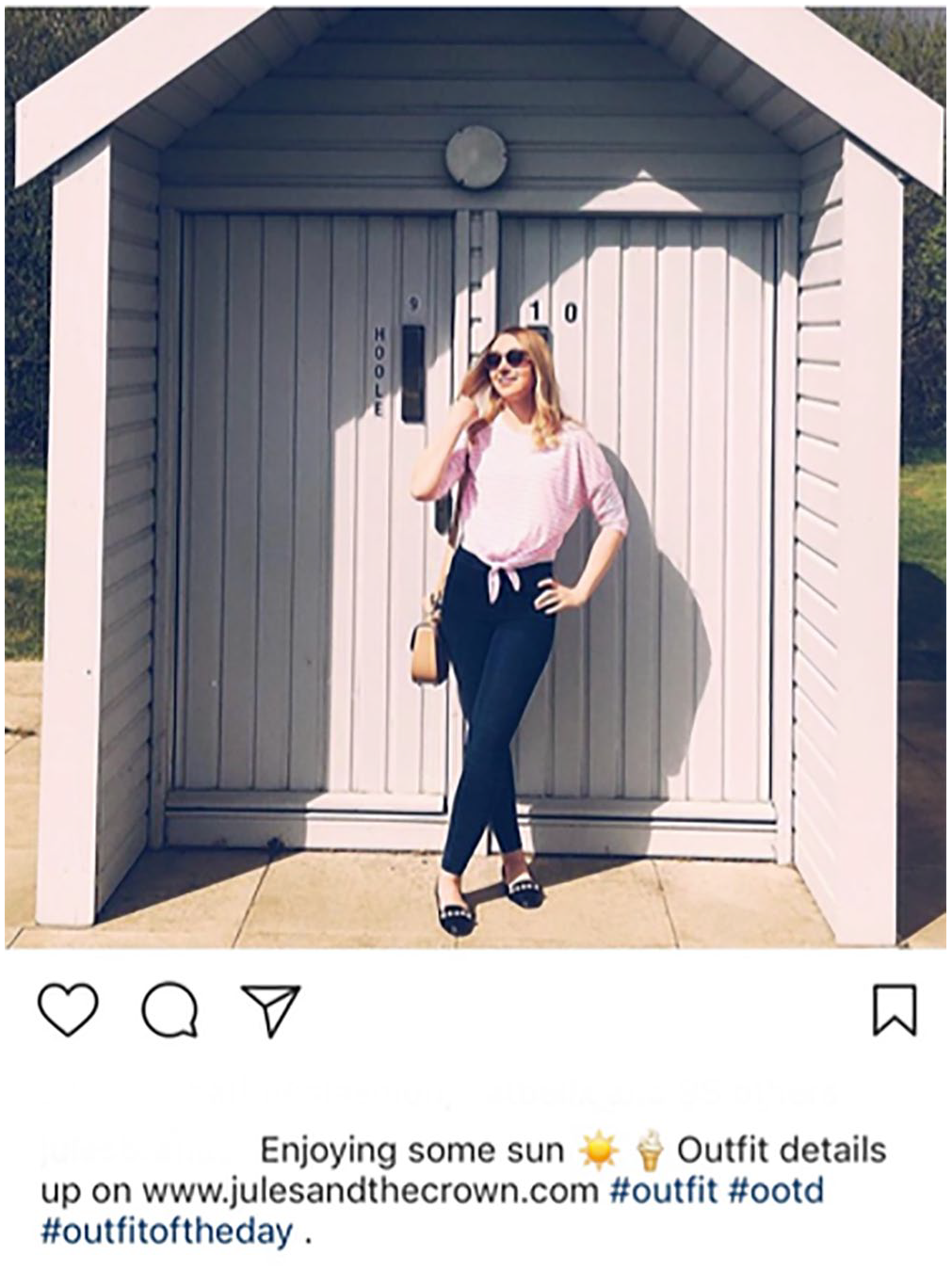
For Hirta (24), place was strongly linked with her mood and sense of wellbeing where she admitted to feeling more confident, comfortable and at ‘home’ in Scotland. She was born and grew up in Buckinghamshire, England, but was living in Scotland at the time of interview. She spoke of growing attached to Scotland during childhood holidays visiting family and the pinnacle of her Scottish identity appears to have been getting married in Scotland.
In the interview, Hirta drew on two of her sample posts (Figures 6 and 7) as examples of how her sense of self was impacted by place and how this was acted out online through Instagram.
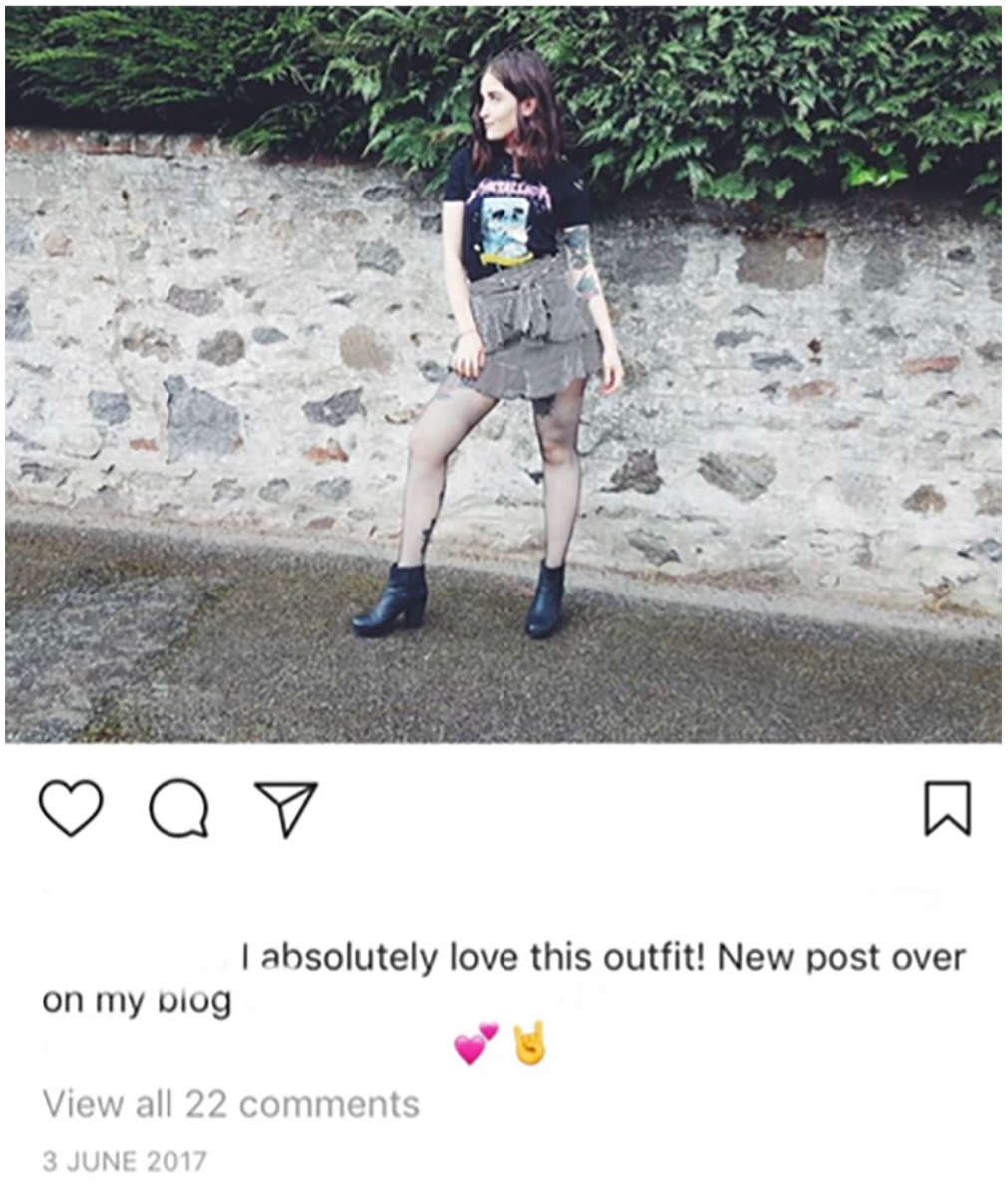
Happy and sassy.
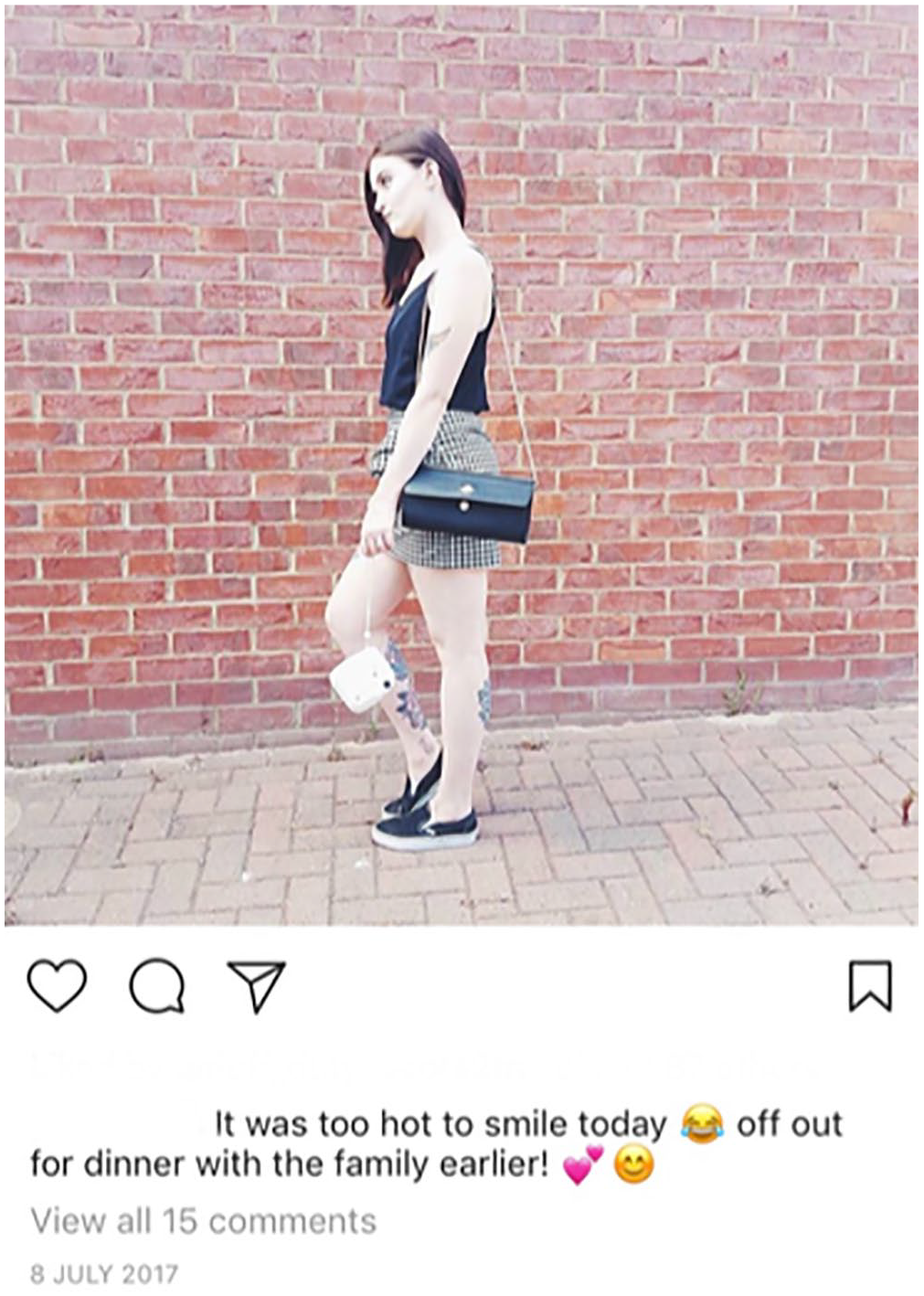
Grumpy but still sassy.
In Figures 6 and 7, Hirta’s fashion choices are very similar, but otherwise her style appears differently. She looks off camera in both posts but appears strong and confident in Figure 6 and this is evident in the way she is standing, her expression and even her hairstyle. During the interview, Hirta revealed that the photograph elicits the happy memory of a walk with her husband where she felt ‘happy and sassy’. In Figure 7, she assumes what is still a strong pose, but one that is more aggressive. Her hair appears lank – perhaps because of the unexpected rise in temperature she alludes to in her caption. During interview, Hirta described the unhappy memory behind this photograph where she felt ‘grumpy but still sassy’. Figure 6 was taken in Scotland and Figure 7 was not, suggesting she felt more comfortable and at ease in Scotland, where she considers her home. In Figure 7, Hirta does not look as though she wanted her photo taken and revealed in the interview that her husband proposed the photo because he liked her outfit. This suggests that, if it were up to her then this post (and the memory or mood that Hirta attaches to it) would never have appeared online at all.
Throughout all 14 interviews, participants were not forthcoming in revealing what could be regarded as less positive experiences on Instagram. They preferred to present a healthier and more positive outlook for their followers, often through bright outdoor imagery and colourful styles. One participant opened up about having battled ‘eating issues’, revealing: ‘I always try to make myself look bigger [online]. I’ll wear a [UK] size four, but you wouldn’t tell that from the images’. Although Figure 7 represents a less happy moment for Hirta, the caption connotes a light heartedness where she jokes ‘it was too hot to smile today’, casually reflecting on her negative mood and perhaps also signalling her Scottish identity through her discomfort with the warmer weather. It was only through asking participants to reflect on their imagery that they revealed some of the more negative moods and experiences behind their online identity.
Participants in this study made the connection between Instagram and mood, with the medium connected to both positive and negative feelings. They were all found to be constructing their identity through Instagram as a ‘positive place’, a destination within which their followers could escape and be inspired. However, in order to do this, most participants considered it important to conceal more negative backstage moods and experiences (Goffman, 1956). Two participants spoke of temporarily removing themselves from Instagram or unfollowing accounts that made them feel bad about themselves; in both cases, this was related to following other influencers whose content portrayed idealised and unattainable styles that made the participants feel dissatisfied with their own lives. This suggests that, in their own construction of a positive identity on Instagram (concealing negative moods), they could actually have a similar effect on their followers.
Although the participants all recognised their Scottish identity as a point of interest online and a way in which they could stand out on Instagram, the findings suggest that participants understood their Scottish identity as something internal and this was revealed by the way in which they curated and discussed their choice of imagery. Although some of these themes and ideas were revealed during the semiotic analysis, the interview discussion was more helpful in uncovering participants’ deeper insights and motivations for sharing photographs.
Conclusions and implications for qualitative research
In exploring the production of Scottish identity and place through a medium that is largely visual, a verbal narrative was not deemed sufficient to convey this and draw meaningful conclusions about a notionally complex issue (Larkin and Thompson, 2012). The use of self-curated photo elicitation as part of an IPA approach enabled easy engagement with a small sample of participants around this subject.
It can be assumed that Scottish identity is something that mattered to the participants in this study because of the sampling criteria that they were voluntarily revealing this as part of their character-limited Instagram biography. However, for the most part, Scottish identity was an important but intrinsic part of their online identity and one that they constructed in an often less conscious manner. Photo elicitation appeared particularly well suited to this research, which combined the ideas of place, belonging, national identity and the visual communication of these concepts. Asking participants to select imagery in advance of the interview required them to consider their Scottish identity before discussing this as part of an interview, enabling them to reflect more thoughtfully and for more meaningful data to emerge.
A key strength of self-curated photo elicitation is its trifold approach, whereby (i) participants were asked to select pre-existing imagery and this was revealing in terms of how they understood their national identity and how this was acted out online; (ii) the images themselves acted as a data set where semiotic analysis of these uncovered new and unexpected insights into contemporary Scottish identity and fashion; and (iii) an interview enabled the expression of ideas and deeper meanings that might otherwise have remained invisible. In this particular study, the process of image selection itself was revealing in helping make sense of the research problem.
In asking participants to select from pre-existing posts rather than taking new photos, this enabled more natural and, perhaps, therefore genuine themes around their portrayal of Scottish identity to be uncovered. It is believed that this approach helped eliminate researcher bias, where analysis of Scottish identity would have involved either the projection of assumptions around what constitutes Scottish identity and imagery or where a random approach might not have yielded sufficient data. Online identities are increasingly recognised as multifaceted with different identities coming to the fore at different times (Pedersen, 2010), and thus this method could be particularly useful where a researcher wishes to explore a particular feature, motivation or behaviour of the online self. It would be less useful in a study where a researcher seeks to explore audience perceptions around imagery and where meanings might be polysemous.
It is believed that this approach will work best when used flexibly. During the interviews, there were two examples where participants introduced and discussed a new image and these were added to the sample retrospectively. As a result, it became clear that participants were thinking through the interview themes and questions with their imagery in mind and thus the addition of these new images appeared natural, relevant and appropriate.
The method encouraged further revelations through asking participants to reflect on how they went about choosing their posts. Participants spoke enthusiastically and at length about their choice of imagery and this allowed further themes to emerge: particularly the importance of personal memories, where participants expressed varying levels of attachment to their photos and the meaning behind these. Reflecting on their identity in this way evoked strong memories and the expression of greater self-awareness by participants, enabling them to gain new insights into their own beliefs about national identity, place and the way in which they presented themselves online. It enabled them to be both the communicator and the audience and encouraged reflection around their frontstage and backstage selves (Goffman, 1956).
Participants were all able to select imagery and it was interesting and often surprising to see the posts they had chosen and hear the story behind each image, where some of the more obvious and stereotypical symbols associated with Scottish identity and fashion were notably absent. Although participants were very conscious of their audience and some selected their posts with their followers in mind, generally they were far more attached to imagery that elicited strong, happy memories of more authentic experiences. They spoke about these posts for longer, appearing more enthusiastic and reflective in doing so.
Self-curated photo elicitation offers a valuable new way of exploring issues of identity, in terms of how this is understood and portrayed through visual platforms, such as Instagram. This approach is perhaps most appropriate when exploring this from the perspective of the actors themself in uncovering motivations, experiences and behaviour that might be less conscious and intentional. It could also be used as part of comparative studies that seek to explore user intent and audience reception in order to draw further conclusions around frontstage and backstage identity (Goffman, 1956).
Ethics would be a key area of consideration for future research incorporating this approach. If the images themselves are to form a critical part of the data and be incorporated into the findings, as they were in this study, then participant consent is something that must be considered very carefully across the research period. It is advised that any researcher who attempts to undertake visual analysis of this sort should engage very closely with ethical practices and procedures relating to the context of their study. However, this would be less of a key concern for studies where the images do not need to be reproduced and do not form part of the findings.
Footnotes
Disclosure
The authors report no conflict of interest. The authors alone are responsible for the content and writing of the paper.
Funding
The author received no financial support for the research, authorship, and/or publication of this article.
